Supernova Remnants

The ghosts of dead stars

Cosmos: Cosmos is a quarterly science magazine. We aim to inspire curiosity in ‘The Science of Everything’ and make the world of science accessible to everyone.

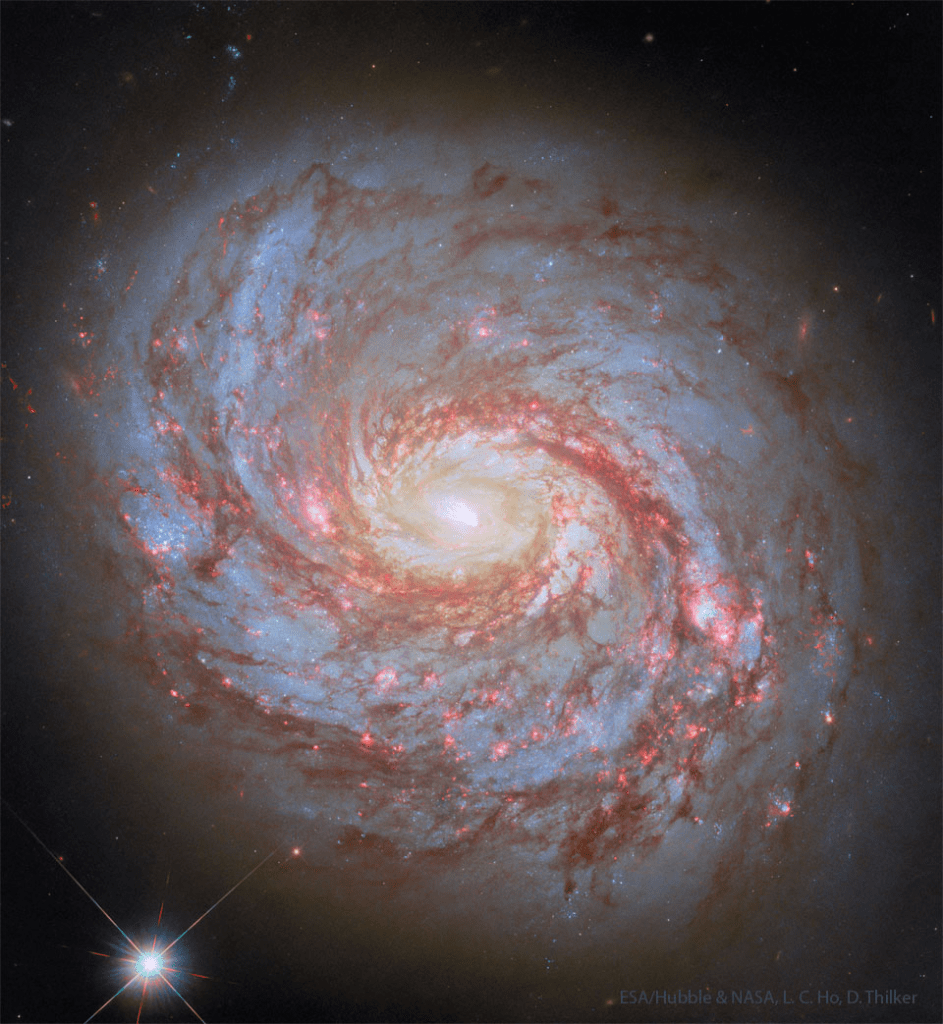
Supernova remnant G278.94+1.35, dubbed ‘Diprotodon’, captured by CSIRO’s ASKAP radio telescope. Credit: Sanja Lazarević

Supernova remnants are some of the most visually impressive objects in space. Astronomer Kovi Rose offers us a unique window into these violent and powerful celestial events.

Something explosive always seems to be happening in space. We often see headlines in the news about dramatic events like a flaring star, a gravitational wave from colliding neutron stars, or the latest supernova erupting in a galaxy far, far away.

The stories normally tend to focus on the peak periods of these energetic events, which generate in a week roughly a trillion-trillion times as much energy as we generated on Earth last year. But what remains after a star’s collapse – a supernova remnant, as astronomers call it – is both spectacular and scientifically interesting.

Purple cloud like ripples in a donut shape on a dark background.
Supernova remnant G295.5+09.7 captured by the ASKAP radio telescope at Inyarrimanha Ilgari Bundara, CSIRO’s Murchison Radio-astronomy Observatory. Cloud-like ripples and filaments of interstellar gases are illuminated along the boundaries of the supernova remnant. Credit: ASKAP Evolutionary Map of the Universe (EMU) Team & Kovi Rose

The end of a star

Stars are endlessly collapsing under gravity. This immense pressure drives a fusion reaction, where hydrogen particles join together into heavier elements. The energy produced by this fusion reaction pushes outwards, stopping the star from collapsing in on itself. However, when a star starts to run out of fuel for its fusion engine, the balance breaks down and things get interesting.

For stars roughly the size of our Sun, there is no big explosion as they reach their final years. Instead, when they run out of fuel, they gently shrink into a glowing lump of carbon and oxygen called a white dwarf. White dwarfs don’t collapse entirely under the force of gravity, because the electrons in the remaining atoms are strong enough to push back. This is thanks to a quirky quantum effect called electron pressure.

A white dwarf can produce a supernova, but only under very specific circumstances, when the white dwarf is orbiting another star. When a white dwarf gets too close to the other star – which could even be another white dwarf – its gravitational influence will start to pull in material from the other star. This breaks the balance between gravity and those simmering electrons, ultimately causing the white dwarf to explode!

Bigger stars do end their lives in a supernova, and usually without any outside help. These stars – with more than 8 times the mass of our Sun – live fast and die young. They burn through their nuclear fuel faster than their smaller cousins, with lifetimes of millions (not billions) of years. These stars start by fusing hydrogen into helium in the core. As that runs out, they start fusing helium atoms together instead. And so it continues up the periodic table. The heavier the element, the faster the star runs out of fuel – with carbon and oxygen burning for mere years and months, respectively. But this can’t go on forever.

Once the core is made of iron, the fusion process grinds to a halt. With no new energy keeping the star inflated, its layers suddenly collapse. The rush of material inwards hits the remaining iron core and produces a shockwave that moves outwards at speeds nearing a quarter of the speed of light. These aptly named core-collapse supernovae usually leave their densely packed remains behind in the form of a neutron star – or, depending on how massive they were, a black hole.

Tuning the radio

For both classes of supernova, the stellar matter from the explosion is launched out across space at thousands, or even tens of thousands, of kilometres per second. Moving at these speeds, the leading front of the supernova can take tens of thousands of years to slow down, usually after spreading out across several light-years of space (one light-year is about 9.5 trillion kilometres) and sweeping up any additional material they encounter along the way. This is a supernova remnant: an interstellar bubble created by the wake of one of nature’s most energetic explosions.

This powerful blast wave contains fast-moving electrons that interact with nearby material in a fascinating way. The space around a supernova is filled with magnetised matter, and because of the special relationship between electricity and magnetism, the electrons curve rather than flying straight. As their paths change, the electrons are forced to slow down. Some of their energy is converted into light – but not always as light our eyes can see.

Pinky purple circular shape on a purple background
Supernova remnant SN1006 captured by CSIRO’s ASKAP radio telescope. SN1006 is the remnant of a supernova that was observed in the year 1006 by astronomers all over the world, from Egypt to China. It was first recognised as a supernova remnant in 1965, following radio observations at Murriyang (the Parkes radio telescope). Credit: Dr Emil Lenc & Kovi Rose.

Visible light is just one window into the full spectrum of electromagnetic waves. It has a short wavelength of a few hundred nanometres; for context, the average width of a single human hair is nearly 100,000 nanometres. Most of the light in supernova ‘bubbles’ has much less energy, with a wavelength of tens of centimetres or even metres. This particular type of light is called radio.

Radio astronomers have built just the right instruments to detect this kind of light emitted by supernovae. From the initial blast to the giant bubble-like structures they create as the explosion moves out through space, radio telescopes can detect these explosive supernova ‘bubbles’ expanding and eventually slowing down as they become a remnant.

We also see the brightness and energy of the light changing depending on how much material the shockwave sweeps up as it expands, or how strongly magnetised the surrounding material is. By studying the radio light generated by supernova remnants, we can learn when and how they formed, as well as what kind of dense objects the explosion left behind.

Australia’s view

Radio astronomy has a long, continuous history in Australia. We were one of the first countries in the world to use radio instruments to study celestial objects. The American radio engineer Karl Jansky, widely considered the founder of radio astronomy, first detected radio emission in 1933 from a dense region somewhere in the Milky Way. However, in 1954, CSIRO astronomers in Sydney figured out that the source of Jansky’s detection was located right at the centre of our galaxy.

As the field of radio astronomy developed, astronomers and engineers began exploring different types of telescopes that could be used to study a range of objects in the sky. Depending on the design of the instrument, we can use them to detect point-like radio sources – like the centres of distant galaxies – or diffuse clouds and filaments, like the boundaries of a supernova remnant. And using advanced image-processing techniques and modern telescopes like CSIRO’s ASKAP radio telescope, we can create images that show the beauty of the radio sky at both small and large scales.

Man sitting in a dish shaped hole adjusting wires radiating from the centre.
This 24-metre-wide ‘hole-in-the-ground’, originally dug out by a few radio astronomers during their lunch breaks, was used to locate Sagittarius A. At the time it was the second-largest radio telescope in the world. Credit: CSIRO
Close up of three satellite dishes in a red sandy flat landscape.
CSIRO’s ASKAP is a telescope made of 36 smaller (12-metre) dish-like antennas spread over a large area on Wajarri Yamaji Country in Western Australia. Credit: Laura Driessen

Exploring our galaxy

Supernova remnants are stunning markers of the explosive history of our galaxy. And luckily for astronomers, we’ve already discovered hundreds of them. Observations of that white road of stars that runs across the sky, the Milky Way, have revealed a foamy sea of interstellar bubbles created by ancient supernovae.

The shapes of supernova remnants reflect the circumstances of their formation and their encounters with neighbouring objects, including cosmic clouds of gas and dust. Some appear symmetrical, while others take on distorted forms, moulded by interactions with nearby material or overlapping with other expanding bubbles. In fact, our whole solar system sits near the centre of a ‘superbubble’ – a vast cavity containing most of the stars visible to the naked eye. Scientists reckon the superbubble was carved out by the cumulative explosions of multiple supernovae over millions of years.

Radio astronomers estimate that as many as 1,500 supernova remnants may be still hiding in our galaxy undiscovered. New observations with highly sensitive radio instruments like ASKAP and the upcoming SKA telescopes will help us uncover these elusive interstellar bubbles, and reveal more details about the energetic processes that shaped the Milky Way.

Cloudy green wavelengths as seen through the radio telescope.
The central band of the Milky Way seen at radio wavelengths. This image combines observations from the Parkes and ASKAP radio telescopes to reveal the network of supernova remnants and gas clouds in the central region of our galaxy. Credit: R Kothes (NRC) and the PEGASUS team.

Kovi Rose is an astrophysics PhD candidate at the University of Sydney who studies the radio light from nearby dwarf stars and distant supernovae.

Originally published by Cosmos as The ghosts of dead stars

August 10th, Already! Moses Fleetwood Walker, & Harry Hay, Show Up For Equality, + More in Peace & Justice History For This Date

August 10, 1883
Adrian “Cap” Anson refused to field his visiting Chicago White Stockings team in an exhibition baseball game if the Toledo Mud Hens included star catcher Moses Fleetwood Walker in their lineup. Chicago’s Captain Anson, who grew up in slaveholding Iowa, said he wouldn’t share the diamond with a non-white player. After more than an hour’s delay, Charlie Morton, the Toledo manager, insisted that if Chicago forfeited the game, it would also lose its share of the gate receipts; Anson relented.

Moses Fleetwood Walker
Morton had not planned to have Walker catch due to injury, but insisted on putting him in at centerfield, despite Cap Anson’s objections.
August 10, 1948

Gay rights activist Harry Hay organized what later became the Mattachine Society (originally ~ Foundation), a groundbreaking 1950s gay rights organization. The group was named after the Mattachines, a medieval troupe of men who went village-to-village advocating social justice.
Mattachine: Radical Roots of Gay Liberation 
August 10, 1984
Two Plowshares activists, Barb Katt and John LaForge, damaged a guidance system for a Trident submarine with hammers at a Sperry plant in Minnesota. In sentencing them to six months’ probation, U.S. District Judge Miles W. Lord commented, “Why do we condemn and hang individual killers, while extolling the virtues of warmongers?”

Barb Katt
More on the Sperry Software Pair  
More plowshares actions 
August 10, 1988
President George H.W. Bush signed legislation apologizing and compensating for the World War II internment of Japanese Americans.
President Franklin Roosevelt had authorized the round-up of hundreds of thousands of Americans of Japanese ancestry, some of whom were American citizens, as security risks. Most lost all their property and were moved to relocation camps for the duration of the war (though not in Hawaii, then not yet a state, where public opposition would not allow it).

August 10, 1993
Ruth Bader Ginsburg is sworn in as the second woman and 107th Justice to serve on the U.S. Supreme Court.
 
August 10, 2005
Mehmet Tarhan was sentenced to four years’ imprisonment on two charges of “insubordination before command” and “insubordination before command for trying to escape from military service” because he refused to serve in the Turkish Army.
He would not sign any paper, put on a uniform, nor allow his hair and beard to be cut. He went on two extended hunger strikes to protest his arrest and abuse while in Sivas Military Prison. War Resisters International has supported his efforts throughout his ordeal. He was released unexpectedly from prison after one year.

Read more

https://www.peacebuttons.info/E-News/peacehistoryaugust.htm#august10

“Nest Helpers”

I Read This Substack Every Chance I Get; About Louisiana Culture, History, & Food, & Now Survival

This one’s about trouble for all coastal states, coming from Louisianans.

Louisiana Fights Against Becoming Another Not There No More Statistic by Jerileewei

Terrebonne Parish: Where the Rivers Meets the Sea Read on Substack

CCJC Audio Podcast Episode 00086, Season 2

“It’s not just the land we’re losing. It’s the stories. The way we talk. The smell of the air before a big storm.” — Emile Navarre

Staff meeting at Cajun Chronicles Podcast Corp in New Orleans, with Blind Writer/Editor Emile Navarre and others.
Cajun Chronicles Audio Podcast – Bringing you the heart of Louisiana. Artwork generated with Google Docs Image Maker.

Back from his month long vacation in Chacahoula, Louisiana, Cajun Chronicle Podcast, Writer/Editor, Emile Navarre arrived for our first staff meeting armed with fresh material for a future episode, as soon as Marie Lirette, our Outreach Coordinator can reach out to potential experts on the topic of “Ain’t There No More” – a nation wide trending group talk everywhere these days, as our world changes in ways none of us could have imagined.

Here is his recount of his lifelong story telling to his family’s youngest children:

Emile Navarre in his rocking chair on front porch in Louisiana.
Cajun Chronicles Audio Podcast – Bringing you the heart of Louisiana. Artwork generated with Google Docs Image Maker

Come closer, chérs,” he said, his voice a low rumble like the last Lafitte skiff shrimping boat of the day heading down the Bayou Lafourche over Galliano or Golden Meadow way. His cane bottom rocking chair seat creaked a steady rhythm against the worn Cedar floorboards as he said that.

The sun, a too warm blanket he could feel, but not see, was sinking somewhere behind the great oak in the yard he will always remember. He ran a hand over the cane of his chair, then rested it on the knee of a boy sitting on the steps below him. He lifted his walking stick and pointed off to the right side. “You see that big fence, hein?

Or that levee your mamans and pépère have to climb to get home from work at the Bollinger Shipyard, just to get up to the house? We didn’t have such a thing when I was a boy. Back then, my feet knew every dip and bump in this land”.

“From our porch right down that oyster shell road to the bayou where the shrimp jumped so high, you’d swear you could catch them in your mouth, if you were quick.” A ripple of giggles ran through the children.

Ah, oui,” he chuckled, “I lost a good tooth catching shrimp that way. But the land, it was different. We were like a river familyShe’d bring us a big muddy hug every spring, and we’d be happy for it.”

The floods, they were always a part of life. We’d move our things up high, sing songs, and wait for the water to go down. When it did, Mother Nature would leave behind a gift, a rich, dark mud that made our gardens burst with life. You could feel it in your toes, a soft, giving sponge of sandy soil that told you everything was going to be alright.”

He paused, and the laughter faded, replaced by the chirping of crickets.

My pépère, he’d sit right here on the back porch with a fishing line tied to his toe, but in his mind, Gaia was always busy with the water. He’d talk about how the Lafourche river was a living thing, always moving, always changing. ‘She builds, and she takes away,‘ he’d say.”

We knew that. A little bit here, a little bit there. It was a fair trade. But then came the men with the big ideas. They came from places where the land didn’t move so much. They told us we could stop the river’s big hugs. They said we could make a straight line and build high walls, so the water would stay in its place.”

Emile’s voice dropped to a conspiratorial whisper. “The young people, they thought it was wonderful. No more floods! No more moving furniture to the attic! But my pépère, he just shook his head. ‘You can’t trap a wild woman, not for long,’ he said. ‘She will find her way, and she will be angry for it.'”

And she was,” he said, his hand now clutching his walking stick. “For years, the river was quiet, but our land, she was not. I can’t see it anymore with my eyes, but I felt it with my feet. The soil grew tired, no longer receiving her yearly gift.”

The ground began to sag, and the bad marsh saltwater, it came closer in to say hello, not from a storm, but like a thief in the night, creeping up through the channels les Américains dug for the oil. They were for the big machines, the big money, but they were also a wound. A wound in the land that never healed.”

He turned his head toward the silent children, his milky blind blue eyes fixed on something only he could see. “Now, this levee you have, it protects you from the river, oui? But it holds the land in a box. It cannot breathe. The land is sick, and the ocean is hungry, taking a football field from our home every hour, the experts say.”

I hear it in the wind now, not just the storms, but also in the sad whispers of the marsh, of the birds that have no place to land anymore. The land is leaving us, and we are left behind. We traded our river’s muddy hugs for a straight line and some high walls, and now we pay for it. Now, it’s not just the water that takes. It’s the land that gives itself away.”

The porch was silent, a stillness that was heavier than the humid air. The children looked at each other, not understanding all the words, but feeling the weight of them. One of the little girls, her braids tied with pink ribbons, quietly moved her hand to rest on the Emile’s knee as she headed inside for bed.

Emile smiled, his face creasing with a thousand invisible memories. Talking to the breeze, he raised his fist and threatened, “But you know what else my pépère said? He said, ‘As long as we tell the stories, the land is not truly gone.’ So listen, chérs, listen closely to my bedtime stories. Because now, it is your turn to remember.”

Emile Navarre with his horse, once a cattleman always a cattleman.
Cajun Chronicles Audio Podcast – Bringing you the heart of Louisiana. Artwork generated with Google Docs Image Maker

He had felt the last of the children’s light footsteps fade into the dusk, and the porch was still again except for his rocking chair. His head turned to the quiet rustling of the adults lingering on the porch. “You hear my stories, oui?” he said, his voice now lower, rougher.

You too remember what I said about the river’s gift of mud? We didn’t know it, but we were like a family that had a big, generous table. Rivers brought food, and our land ate it. Every year, she’d get fat and happy. We thought we were so smart, so clever, when we built those high walls.”

We told Gaia to stop eating for a while, believing for a while that she didn’t need the mud. ‘Don’t worry,’ we said, ‘We’ll protect you from the floods.’ But what we really did was put the food in a box and send it out to sea. Now, the land is starving. You cannot see it in a day, or a year. But that’s happening rapidly.”

But I feel it in every part of my mind and body. Every year, she gets thinner, weaker. And like a sick old person who can’t stand anymore, Mother Earth’s starting to melt away. The medicine to save her is that very food we cut her off from. But the walls of levees and the canals the Corps of Engineers built? They are so high.”

How will we get the food back to Louisiana’s coast before she’s gone entirely? That is the story my heart tells me now. And that is the story for you all to worry about. Time’s running out. I’m 75 years young this month. In another 75 years I won’t be here to see that my beloved Louisiane will be added to that dreaded list, “Ain’t Here No More.


Cajun Chronicles Note: Sediment Starvation: The settlers’ levees and later government agencies built, while protecting their land from floods, also had an unintended consequence that would become a major factor in today’s coastal crisis. By containing the rivers, they prevented the natural flooding that would have deposited sediment into the wetlands.

This sediment was the building block of the delta. Without it, the land began to sink (subsidence) and slowly disappear. The settlers since the 1800s and later colonists were unaware of this long-term process and the vital role of the Mississippi’s and other rivers’ sediment in sustaining the land.

Water’s Takin’ Our Land, Gulf’s Hungry & She Ain’t Slowin’ Down

Cartoon image of Gulf ocean swallowing coastal Louisiana in a lunch box.
Cajun Chronicles Audio Podcast – Bringing you the heart of Louisiana. Artwork generated with Google Docs Image Maker

Louisiana has the highest coastal land loss rate in the United States. Since the 1930s, the state has lost about 2,000 square miles of land. This is a significant amount, roughly the size of the state of Delaware.

Without major intervention, the state of Louisiana is projected to lose an additional 700 to 1,000 square miles of land by the year 2050. This is an area roughly the size of the greater Washington D.C.-Baltimore area.

By the year 2100, the projections are even more dire, with some worst-case scenarios suggesting that up to 3,000 square miles of land could be lost. Some scientists have even warned that the entire remaining 5,800 square miles of Louisiana’s coastal wetlands in the Mississippi River delta could eventually disappear.


A Word of Wisdom:

Our fictional and non-fictional tales are inspired by real Louisiana and New Orleans history, but some details may have been spiced up for a good story. While we’ve respected the truth, a bit of creative license could have been used. Please note that all characters may be based on real people, but their identities in some cases have been Avatar masked for privacy. Others are fictional characters with connections to Louisiana.

As you read, remember history and real life is a complex mix of joy, sorrow, triumph, and tragedy. While we may have (or not) added a bit of fiction, the core message remains, the human spirit’s power to endure, adapt, and overcome.

© Jerilee Wei 2025 All Rights Reserved.

Enjoy Your Morning Beverage, and See 25 Years Into The Future-

How The World Will Look Very Different in 2050, According to Neil deGrasse Tyson

Neil deGrasse Tyson says you’ll regrow organs and vacation in space by 2050 — lock in.

By Asheea Smith Published August 2, 2025

Leave it to Neil deGrasse Tyson to casually predict the next 25 years like it’s no biggie. During episode 1904 of the Joe Rogan Experience, the astrophysicist, author, and science celeb offered a bold glimpse into where humanity might be headed in the next 25 years. While flying cars didn’t make the cut (sad face), his projections are closely aligned with today’s advances in science and technology — and some could be closer than we might expect. 

So, who exactly is Tyson, and what does he think the world might look like by 2050? Get in — we’re going exploring.

Who is Neil deGrasse Tyson?

If you’ve ever caught the eye-watering space series, “Cosmos” or heard someone break down the mysteries of the universe without sounding like a textbook — you’ve probably heard of Tyson. Born in New York City, Tyson graduated from the Bronx High School of Science. He later earned his Bachelor of Arts in Physics from Harvard University in 1980 and went on to complete a Masters and Ph. D in Astrophysics from Columbia University in 1989 and 1991, per Britannica

Tyson is best known for hosting the celestial TV series, “Cosmos: A Spacetime Odyssey” and his radio program, “StarTalk.” Beyond his obsession with exploding stars, black holes, and dark matter, he gives viewers a grip on what the heck is going on in the cosmos, and what it has to do with us.

Now, for his next trick, Tyson’s turning that cosmic lens toward laying out what he believes is next for humanity.

Mental Illness Will Be Cured

(Photo by Eric Kayne/Getty Images)

“Neuroscience and our understanding of the human mind will become so advanced that mental illness will be cured, leaving psychologists and psychiatrists without jobs,” Tyson, 66, said during the interview.

The Take Over of Self-Driving Cars

(Photo by Mario Tama/Getty Images)

“Self-driving electric vehicles will fully replace all cars and trucks on the road. If you wanna be nostalgic with your fancy combustion engine sports car, you can drive on specially designed tracks,” Tyson explained.

Space Tourism

“The human space program will fully transition to a space industry, supported not by tax dollars, but by tourism,” Tyson said.

It seems that in Tyson’s vision, regular folks will be able to book a trip to orbit. Voyager Station — a space hotel set to open in 2027 — is already in the works, complete with a bar, restaurant, concert hall, gym, and a cinema theatre, per Astronomy.

The Cure for Cancer & Tailored Medicine

(Photo by Pablo Blazquez Dominguez/Getty Images)

“We develop a perfect ani-viral serum and cure cancer. Medicines will tailor to your own DNA, leaving no adverse side effects,” Tyson predicted to Rogan.

We’ll Regrow Limbs and Organs

(Photo by Leon Neal/Getty Images)

“We will learn how to regrow lost limbs and failing organs, bringing us up to the level of other regenerating animals on earth, like salamanders, starfish, and lobsters,” the “Cosmos” host stated.

Artificial Intelligence Won’t Become Our Overlords

(Photo by Spencer Platt/Getty Images)

“Instead of becoming our overlord and enslaving us all, artificial intelligence will be just another helpful feature of the tech infrastructures that serve our daily lives,” Tyson concluded.

“Hanging on in Hawaiʻi”

Samuel L. Jackson!

Snagged it from Jeff Tiedrich’s Substack.

Snippet: here are your heroes of the day: the Swedish state-owned energy company Vattenfall, who hired Samuel L. Jackson to star in a commercial entitled “Motherfucking Wind Farms.”

enjoy.

Some News Of The Day

Senate Democrats Estimate DOGE Caused Billions of Dollars In Government Waste by TPM
Read on Substack

A lot of things happened. Here are some of the things. This is TPM’s Morning Memo. Sign up for the email version.

What DOGE Cost Us

Democrats on the Senate Permanent Subcommittee on Investigations yesterday released a jaw-dropping report attempting to document the scope and scale of financial waste, personnel upheaval, and human suffering caused by the so-called Department of Government Efficiency and Elon Musk’s giddily uninformed strike force of Peter Thiel acolytes. In all, the Democrats, led by Richard Blumenthal (CT), estimated DOGE cost the government $21.7 billion.

“DOGE-generated waste could also have easily funded monthly food assistance for the 5.3 million families losing an average of $146 in monthly food security assistance ($9.3 billion per year) under the new budget; or it could have been used more broadly to support the 40 percent of taxpayers that will see a net increase to their taxes as a direct result of the Trump tax plan,” the report contends.

Major news coverage focused on the cost of the government paying over 150,000 federal workers who accepted the Trump administration’s deferred resignation incentives, under which they had to stop working but are continuing to be paid through September or even December. The minority’s report, which estimated that 200,000 workers took these buyouts, calculated that paying workers for not working cost the government $14.8 billion.

Neither the buyouts nor paying workers while on administrative leave (costing an additional $6.1 billion) increased government efficiency, as was always obvious and predictable. The report details many other costs, from the petty and pointless (millions of hours of wasted employee time writing the Musk-required email listing their weekly accomplishments) to the catastrophic (the elimination of the United States Agency for International Development, “projected to cause millions of additional deaths globally while simultaneously endangering domestic public health by reducing essential medical staff and programs.”)

As it rampaged through the government, DOGE destroyed valuable assets, wasting money already set aside to be spent, or depriving the government of income-generating programs. Product spoilage of USAID supplies of food and medicines cost the government nearly $10 million. DOGE’s elimination of the Internal Revenue Service’s Direct File program, the report estimates, wasted a more than $33 million investment in it, not to mention that taxpayers no longer have a free electronic filing option. DOGE caused the loss of more than $263 million of interest and fee income by shutting down Department of Energy loans from a program to modernize the electricity grid. The actual cost of the mass cancellations of medical research grants at the National Institutes of Health has yet to be fully calculated.

This summary represents a fraction of the entire report, and much is still not even known about the scope of the DOGE destruction. Yesterday, Blumenthal wrote to the inspectors general at 27 agencies, requesting they “initiate a comprehensive review of DOGE’s activities within your agency in order to determine the full scope of costs that DOGE’s careless actions have imposed,” particularly “the financial impact of the reorganization of federal agencies through mass layoffs, the canceling of grants, contracts, and other projects for partisan reasons, and the stifling of income-generating activities.”

Is MAGA Turning on Trump over Israel?

I spotted two stories this week in the inside-the-Beltway press, one in Politico and the other in Axios, suggesting MAGA is turning on Trump because of his continued support of the Netanyahu regime and its assault on Gaza that even Israeli human rights organizations have called a genocide. The Axios piece even suggests a “GOP realignment” on the issue may be underway. The Politico piece is more measured on that possibility, but neither piece mentions the critical role of Christian Zionists — that is, evangelicals who vigorously support Israel’s far right, like Ambassador to Israel Mike Huckabee — in the Trump coalition.

It is hard to know now this possible coalitional split will play out. In the meantime, can we talk about how the MAGA figures turning against Israel are saying things that have gotten foreign students detained and universities’ funding cut off?

(snip-MORE, + other subjects)

Clay Jones, Open Windows

Henchman Pam Bondi by Ann Telnaes

who prosecutes on behalf of Trump Read on Substack

Bondi tweet:

(original hanging in the Hay-Adam’s Off the Record bar)

My colleague KAL has also a post about the coasters he, Matt Wuerker, and I created for the bar.

(Note from A: Click through on KAL’s-you’ll love it!)

Irritating Screechy Blowhole by Clay Jones

Look, Europe! Our president (sic) is a raving lunatic Read on Substack

It’s one thing for Donald Trump to display his deteriorating mental state here at home, like ranting about lightbulbs or batteries so heavy that they sink boats to waiting sharks, but it’s another thing for TACO to go overseas and reassure our friends and allies that the United States of America has an insane racist at the helm (he howled about immigration into Europe).

While sitting next to European Commission chief Ursula von der Leyen, Trump went on a rant about windmills…again.

Trump said in a long-winded rant, “And the other thing I say to Europe, we will not allow a windmill to be built in the United States, they’re killing us. They’re killing the beauty of our scenery, our valleys, our beautiful plains. And I’m not talking about airplanes, I’m talking about beautiful plains, beautiful areas of the United States, and you look up and you see windmills all over the place, it’s a horrible thing. It’s the most expensive form of energy; it’s no good. They’re made in China, almost all of them. When they start to rust and rot in eight years, you can’t really turn them off, you can’t bury them, they won’t let you. But the propellers, the props, because they’re a certain type of fiber that doesn’t go well with the land, that’s what they say. The environmentalists say you can’t bury them because the fiber doesn’t go well with the land; in other words, if you bury it, it will harm our soil. The whole thing is a con job.”

Keep in mind, Trump’s Environmental Protection Agency is fighting its own power to fight Climate Change. Talk about a con job. (snip-yadayada [Trump] I mean MORE)

A Positive Way To Take Back Identity:

Black Indigenous Chefs Are Reclaiming Identity Through Food — One Dish at a Time by Michael Harriot

Black Native food workers are passing down culinary traditions, restoring lost connections and feeding body and soul. Read on Substack

Crystal Wahpepah (Photo courtesy of Crystal Wahpepah)

The Indigenous food movement has seen a renaissance in North America, with restaurant openings, cookbook releases and community initiatives that announce the presence, expertise and heritage of Indigenous food workers. Amidst this moment, Black Native food workers have seen both the beauty and the harshness of living at the intersection of Blackness and Indigeneity, as the dominant settler colonial culture of the United States often tries to erase or flatten all parts of their identities.

But those attempts at erasure have also provided moments of reflection and insight, and a realization that the mission of Black Indigenous food workers is profoundly spiritual and political healing work. For Stephan Oak, a Black and Lakota forager and woodworker who lives in Detroit, the threads of connection that Black Indigenous people hold in their family stories that are “steeped in violence, but also steeped in love and resistance” are also guides that allow them to connect in the past, present, and future — a shared cosmology.

Crystal Wahpepah, who is Black and Kickapoo and the executive chef and owner of Wahpepah’s Kitchen in Oakland, Calif., says that often, through representation and education, Black Native people in the food industry come to a deeper peace about their identity and heritage. At Wahpepah’s Kitchen, over cornbread dishes from the Ute and Kickapoo people, wild rice from the Great Lakes tribes and bison from the Great Plains, people often find themselves.

“I meet so many people who are Black and Native but never felt connected to their Indigenous side, and when they meet me, they start talking about it, about culture, about those things that have been lost,” she says. Wahpepah is also opening a new restaurant, A Feather and a Fork, which is also the title of her upcoming cookbook.

That loss is something felt in both Black and Indigenous communities and can often feel pronounced because of family separation through residential schools, land expulsions, the trans-Atlantic slave trade and the domestic slave trade that broke up Black families across the country. “Because of colonial violence, there’s a fractured relationship to home or your connection to your ancestors,” says Oak. “The intent of the colonizer is to stop you from looking … to accept the identity of the conditions they’ve placed on you.”

Food is one of the ways Oak and others are reclaiming autonomy over their identities, especially as governments use food as a weapon by depriving communities of affordable, culturally relevant food. Oak points out that even amidst food deserts on reservations and urban Black communities, people find ways to be more self-sufficient and connect back to the land, which helps them reconnect with the essence of who they are. (snip-MORE; lots more but not too long)

Crystal Wahpepah’s wild rice salad with strawberries and pecans (Courtesy of Crystal Wahpepah)