Some News From Bilderberg

Secretive Bilderberg group just met – but who knows what global elite said?

Charlie Skelton

This year’s conference had plenty of newsworthy aspects, but it’s a mystery why the press fails to talk about it

The 72nd meeting of the Bilderberg group, the elite and secretive policy conference that is the longtime subject of endless conspiracy theories, was held at the weekend in Washington DC. A security cordon went up around the opulent Salamander hotel for the notoriously media-shy summit, which was packed as ever with prime ministers, military leaders, tech billionaires and the heads of giant investment companies.

Bilderberg, which since the 1950s has been the intellectual engine room of Nato, took place this year at a time of immense crisis and uncertainty for the alliance. In recent weeks, with Trump threatening at every turn to withdraw from the “paper tiger” of Nato, the “Trans-Atlantic Defence-Industrial Relationship” (as it’s called on the agenda) has reached a strained breaking point.

The head of Nato and Bilderberg regular Mark Rutte arrived at the conference fresh from a “very frank” conversation at the White House. But away from Trump’s bluster, and for all his rhetoric about abandoning Nato, there were no signs that the Americans are withdrawing from Bilderberg. Far from it – the Americans were there in force.

Wall Street titans, including the CEOs of KKR and Lazard, and the heads of huge corporations like Pfizer, met behind closed doors with a delegation of senior politicians close to the president. Big business lobbying in private is Bilderberg’s speciality, and this secretive mix of the private and public sectors fits perfectly with Trump’s brand of crony-capitalism.

Trump’s trusted secretary of the interior, Doug Burgum, was attending, alongside his favourite trade guru, Robert Lighthizer. They were joined by Trump’s economic ally Jason Smith, the chair of the influential House ways and means committee, and his secretary of the army, Dan Driscoll, known as Trump’s “drone guy”.

It was no surprise with the conflict in Iran dominating the global news cycle that this year’s conference had a wartime flavour: with the “Future of Warfare” on the agenda, and a participant list including the four-star admiral Samuel Paparo, head of the US Indo-Pacific Command. From the private sector there was a healthy contingent of military contractors and drone manufacturers, led by the Bilderberg insider Eric Schmidt, who’s the former head of Google and a keen evangelist for drone warfare.

Earlier this year, Schmidt told the FT that “future wars are going to be defined by unmanned weapons”, with “swarms of drones operated remotely and increasingly automated with AI targeting”. Thriving in this rich overlap between drones and AI are companies like Anduril Industries, whose co-founder and CEO, Brian Schimpf, is attending the Washington conference, alongside his collaborator in Trump’s “Golden Dome” project, Palantir’s CEO, Alex Karp.

Karp is close to fellow billionaire tech-bro Peter Thiel, whose name, remarkably, is absent from this year’s participant list. Thiel has been a member of the group’s steering committee since 2008, and it was unheard of for him to miss a Bilderberg. Thiel’s reach runs deep into the Trump administration, and his influence within Bilderberg has also been growing through the years. Through the American Friends of Bilderberg Inc, he largely funds the lavish Washington-based meetings, alongside fellow steering committee member and billionaire Schmidt.

Thiel operates in the powerful liminal area between big finance and big intelligence – most notably, he set up Palantir with the help of funding from the CIA. This shady intersection was the birthplace of Bilderberg, and is baked into its history: the group was set up by British and American intelligence, and there’s always a handful of spy chiefs at the conference. This year, three intelligence directors were present, including the head of MI6, Blaise Metreweli. It is a fascinating backstage world which Thiel will now miss along with the strategising, the talent spotting and the big ideological discussions on “China” and “the west”.

It was no small thing for the arch-networker Thiel to skip Bilderberg. After all, Bilderberg is all about the chance to stay three steps ahead with all that lovely, off-the-books access to policymakers such as breakfast with the president of Finland, tea with the head of the IMF, and cocktails with the King of Holland.

Quite why the press fails so spectacularly to talk about Bilderberg, such a major annual summit with so many senior politicians present, is an enduring mystery. This year’s conference had plenty of newsworthy aspects, not least the presence of Vivian Motzfeldt, the former Greenlandic foreign minister and ex-speaker of the Inatsisartut (Greenland’s parliament).

Motzfeldt was the first Greenlander to appear at Bilderberg, and her presence was a clear signal to the Trump administration that Greenland has powerful allies within the Trans-Atlantic partnership. Motzfeldt no doubt contributed to the session on “Arctic Security”, and might even have been moved to quote the final sentence of Trump’s recent anti-NATO vent: “REMEMBER GREENLAND, THAT BIG, POORLY RUN, PIECE OF ICE!!!”

But as there was no press oversight for this conference, it is something that we will probably never know.

Doctor Reports from Gaza | Dr. Tarek Loubani | TMR

Dr. Tarek Loubani, a Canadian emergency room physician who has been volunteering in Palestine joins the program from Gaza for a harrowing interview. If you can, please support Dr. Loubani’s Glia Project, a medical solidarity organization that empowers low-resource communities to build sustainable, locally-drive healthcare project.

Every State Has One Of These Candidates Running For Something

Find them, and help them. Then remember to stay on their rear once they’re in office.

Science And Wonder And Beauty

Whale filmed giving birth, with a little help from her friends

Paris (France) (AFP) – Scientists have managed to film a spectacular event rarely witnessed by humans: a sperm whale giving birth while other females worked together to support the mother and her newborn.

A team from Project CETI, an international effort seeking to understand how whales communicate, were in a boat near a pod of 11 whales off the coast of the Caribbean island of Dominica on July 8, 2023.

A 19-year-old female named Rounder was surrounded by family members and others as she was about to give birth to her second calf.

Over nearly five and a half hours, the scientists documented the group’s behaviour, watching them from the boat, filming them with drones and recording the sounds underneath the waves.

The data they collected, which was published in the journals Scientific Reports and Science on Thursday, represent an exceptional rarity in the history of science.

Out of 93 species of cetaceans — a group that includes whales, dolphins and porpoises — only nine have ever been observed giving birth in the wild.

Rarer still was that whales not related to the mother were helping out.

“This is the first evidence of birth assistance in non-primates,” Project CETI team member Shane Gero told the New Scientist.

“It is fascinating to see the intergenerational support from the grandmother to her labouring daughter, and the support from the other, unrelated females.”

Lifting up the newborn

The birth lasted 34 minutes, from their tails emerging from the water to the calf being born.

During labour, other adult females dove under Rounder’s dorsal fin, often on their backs with the heads facing her genital slit.

Immediately after the birth, the pod’s behaviour “rapidly changed” as every member became active, according to the study in Scientific Reports.

All the adults were “squeezing the newborn’s body between theirs, touching it with their heads”, the researchers wrote.

The whales pointed their noses towards the newborn, “pushing it around, under the water, and onto and across their bodies above the surface”.

The remarkable behaviour dates back more than 36 million years and is believed to be due to the unique history of cetaceans.

After their distant ancestors left the water and adapted to life on land, cetaceans are the only mammals that returned to the ocean.

This dive back into the water required some evolutionary tricks to prevent newborns from drowning.

For example, whale calves are born tail-first, rather than head-first like other mammals.

However, while newborn sperm whales become talented swimmers within a few hours, they still sink right after birth.

So other whales have to lift the calf up “to prevent the newborn from sinking while also facilitating its first breaths”, the researchers suggested.

Primates — including humans — are the only other mammals known to help assist each other out during birth.

Excited vocal sounds

The scientists also recorded the whales making many sounds, including significant changes in “vocal style” during key events, the study said.

This included when a group of pilot whales approached the pod after the birth.

The changes in vocalisation suggest that the group was coordinating to support the birth — or protect the newborn, the researchers said.

Sperm whales have one of the longest pregnancies in the animal kingdom, with a gestation period that lasts up to 16 months.

When calves are born they are already four metres (13 feet) long. They will rely on their mother’s milk for at least two years.

As they grow, the young become the centre of their pod’s social unit, with others helping out with babysitting while the mother searches for food.

After the birth was filmed in 2023, the pod was not spotted again for over a year. Then the newborn was spotted with Accra and Aurora — the other young members of the pod — on July 25 last year.

Surviving its first year is a good sign that the sperm whale will reach adulthood, the Project CETI team said.

© 2026 AFP

Space Stuff

What’s New at the Earth Observatory April 7, 2026

Image of the Day

NASA’s Earth Observatory brings you the Earth, every day: sharing images, stories, and discoveries about the environment, Earth systems, and climate that emerge from NASA research, including its satellite missions, in-the-field research, and models.

Drought Parches Florida

4 min read

The state was unusually dry for much of 2025, but the intensity of the drought has ratcheted up since January…

Apr 7, 2026

——————————————-

Faster Detection of Forest Loss

7 min read

Scientists pioneered a new system that combines data from multiple Earth-observing satellites to identify forest clearing up to 100 days…

Apr 6, 2026

——————————————–

Barents Sea Tied to Low Arctic Sea Ice

4 min read

Patches of open water in the region contributed to low sea ice extent across the Arctic in March 2026, which…

Apr 3, 2026


Space Purge

Hegseth is firing Black generals

Clay Jones

The crew of Artemis II set a record for the farthest-traveled humans from Earth, and they still could not get away from Donald Trump. The mission had a 45-minute blackout from communication with Earth while flying over the dark side of the moon, and Donald Trump was waiting for them when they came out of it.

The astronauts had a very uncomfortable and awkward 12-minute Earth-to-space call, facilitated by NASA administrator and Trump acolyte, Jared Isaacman. During the call, Trump told the astronauts how they would be honored if he got their autographs. They were also honored by Trump blowing smoke up their asses and telling them that he had saved NASA from extinction when, in reality, he tried to cut their budget by 24% when he returned to office for his second term. Not just that, (snip-MORE)


And now, this brilliant story from a friend of the blog:

Clay Jones, Leading Kansas

He Has Risen

To vote yes

Clay Jones

This cartoon was drawn for the Fredericksburg Advance. But don’t yell at them for it; you can yell at me.

If you live in Virginia, you have been bombarded with flyers about the special election on redistricting. And it’s not just flyers but also TV commercials, which are also popping up online. We are getting these things from both sides.

There is a special election in November on a state constitutional amendment that would give Democrats as many as four seats in Congress. The measure would also temporarily bypass the state’s redistricting commission to redraw maps in the middle of the decade.

The state’s Supreme Court approved the measure to be on the ballot less than a week before early voting began. State Republicans repeatedly tried to stop Democrats from moving forward with the referendum. The irony here is that Republicans claim that voting yes will disenfranchise voters, while they literally tried to keep this off the ballot so people couldn’t vote on it.

This is a direct response to Donald Trump and Republicans redistricting mid-decade to give themselves more seats. Donald Trump even said he was entitled to have more congressional seats. This is one reason why we need to No Kings protest. Donald Trump already believes he’s entitled to win elections he’s lost. (snip-MORE, and it’s on point)


The Parsons Project

by André Swartley

Leading Kansas

Key points at a glance

  • Energy company Deep Fission is in the process of building a new and untested type of underground nuclear reactor in Parsons, KS
  • The Trump administration has reduced regulations to encourage nuclear power production
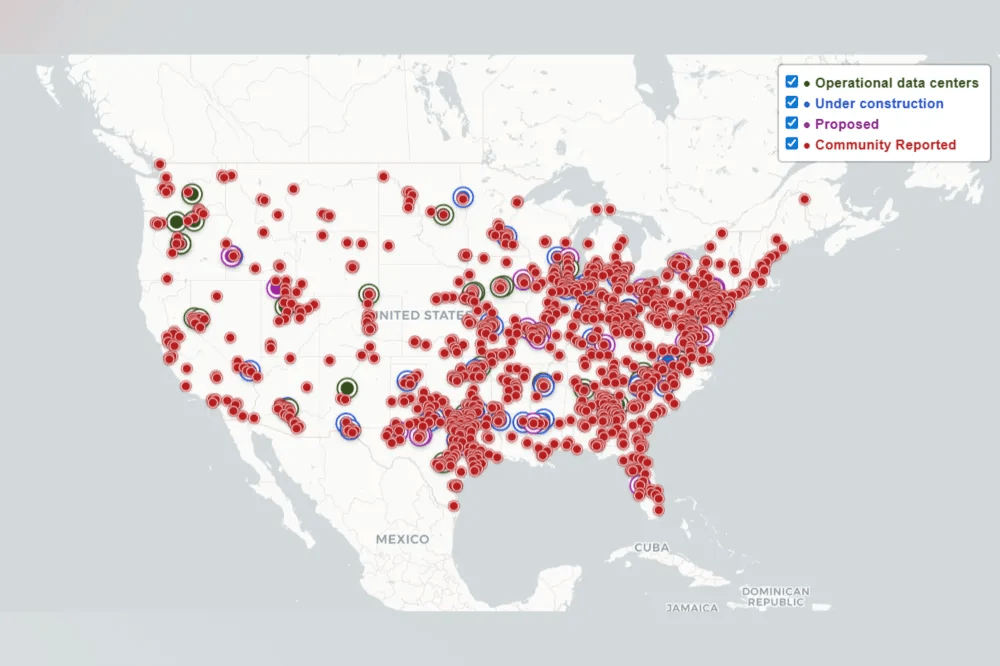
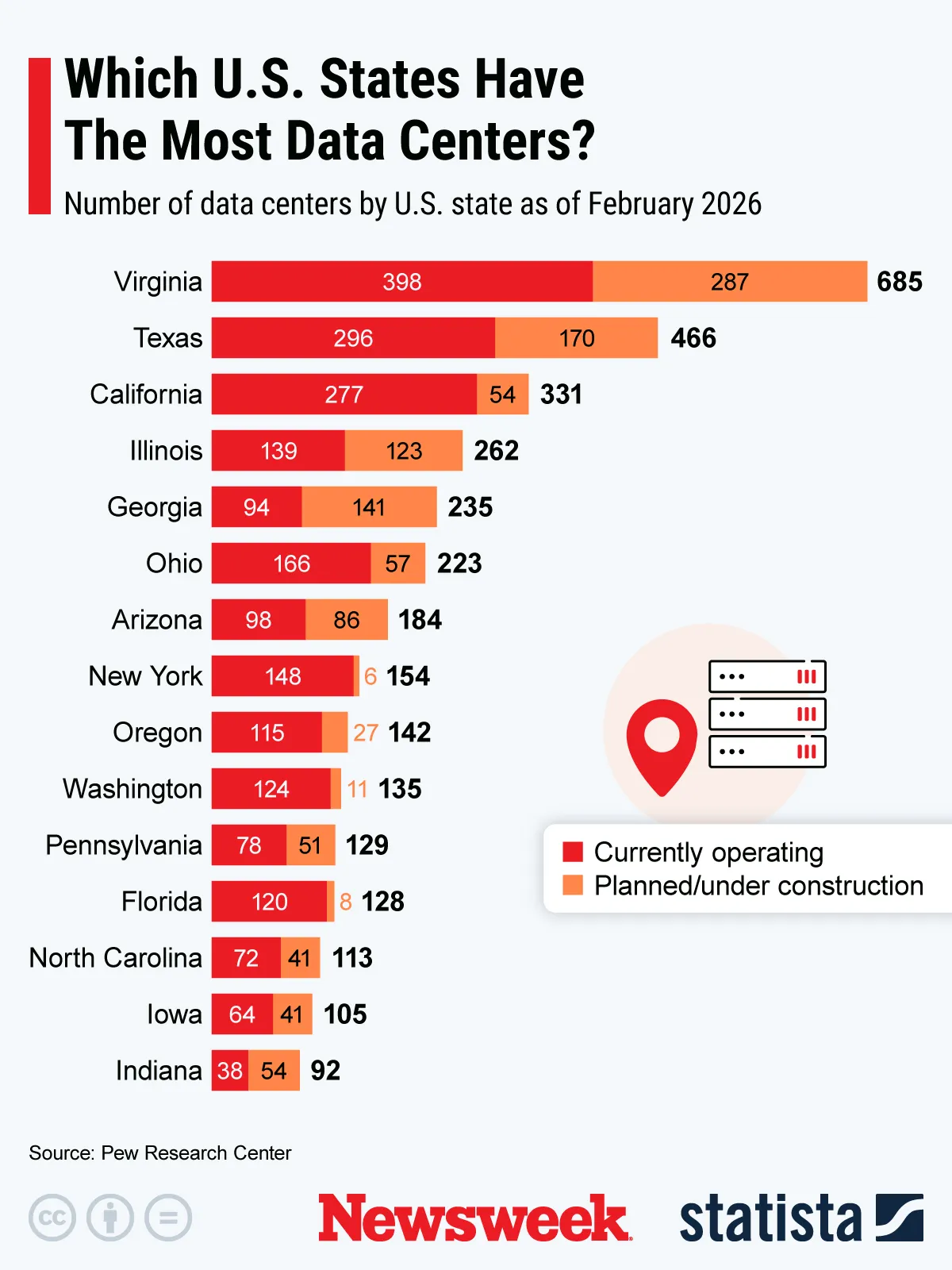
  • The reactor will likely power data centers for artificial intelligence
  • Large data centers consume huge amounts of water and energy and produce different types of pollution, leading to health risks for nearby residents

In November 2025 a two-year-old energy company called Deep Fission broke ground in Parsons, Kansas. They hope this project will enable them to install the second ever energy producing nuclear reactor in the state, after Wolf Creek, potentially with more reactors on the way in the future. If the early “characterization” drilling goes to plan, they claim the reactor could begin pumping electricity into the grid in the near future.

Parsons is a city of 10,000 in southeastern Kansas, near the Oklahoma border. I’ve lived in Kansas for most of my life and I had not heard of Parsons until last week. So, why is Deep Fission in Parsons, Kansas, and why now? Not coincidentally, the Great Plains Industrial Park, also located in Parsons, has lately been advertised as a prime location for new data centers to power the trillion-dollar (yes, trillion with a T) artificial intelligence boom forced upon us by large technology corporations and their venture capitalist backers. Which means the Parsons nuclear reactor project would likely come as a package with one or more new data centers, along with potential economic prosperity and a host of legitimate concerns that community members have already raised.

Part 2: The New Nuclear Power

While the Department of Energy set a goal for the Parsons reactor to go online in July of this year, Deep Fission themselves are aiming to connect to the grid by 2027 or 2028. Two years is still an unusually rapid rollout for a nuclear power plant, which usually takes 6-10 years from groundbreaking to full operation.

This reduced timeline comes by way of the Trump Administration’s efforts to slow the national and worldwide adoption of renewable energies like wind and solar power. In February of this year alone, Trump’s Department of Energy halted the approval of “168 projects – those that focused on renewable energy projects” while allowing nearly 11,000 other energy projects to proceed as planned, including new nuclear energy projects. Executive Order 14301 in May of 2025 provided Deep Fission with the means to build their experimental nuclear reactor on such a short timetable.

Nuclear energy is typically labeled as “clean” energy compared to coal, oil, and natural gas, meaning that it releases fewer pollutants into the air and water than fossil fuel consumption. Still, there are two main concerns. First is the disposal of nuclear waste, which ranges from the lightly contaminated clothing of plant workers to the lethally radioactive spent fuel a plant produces over time. This latter “accounts for just 3% of the total volume of waste, but contains 95% of the total radioactivity.”

A relatively new method in the US and Europe for disposing of our most dangerous nuclear waste is to bury it very deep underground, so that it can be surrounded by solid rock to provide the same level of pressure containment as required at structure at a surface nuclear reactor facility. The father-daughter team that eventually founded Deep Fission originally created Deep Isolation to dispose of nuclear waste. Deep Fission takes their concept a step further by placing the entire reactor, and therefore its most dangerously radioactive elements, into a borehole drilled one mile underground.

The second main concern related to nuclear energy production is, of course, accidents or attacks. It is true that large-scale nuclear accidents are very rare, but when they happen, they become instant, globally recognized disasters whose names we all know: Chernobyl, Three Mile Island, Fukushima. The effects are so widespread as to be practically impossible to quantify. The reactor explosion and meltdown in Chernobyl, for example, caused several dozen deaths directly related to radiation exposure, but various studies have predicted anywhere from thousands up to a million eventual additional cancer deaths. Not to mention the environmental and economic cost to the entire region around Chernobyl. And radioactive boars still terrorize people and farmland in the region around the Fukushima plant in Japan.

But those issues are known, and regulations have historically attempted to shore up potential dangers posed by new plants. In contrast, nothing like the underground nuclear reactor in Parsons, Kansas has ever been attempted before, and thanks to Executive Order 14301, will not need to go through long established design and testing phases that other types of nuclear reactors have been subject to in the past. John Young, a mining environmental regulatory specialist who lives in Sedgwick County, asks, “Why abandon the current regulatory process for something created out of whole cloth with no public input? And no one can define the current regulatory pathways for Federal and State authorizations.

“What,” Young asks in frustration, “could possibly go wrong?”

Part 3: Data Centers and Artificial Intelligence

So that is a glimpse into the nuclear energy side of things. Next we must address concerns around data centers and artificial intelligence. Data centers come in different sizes, like the smaller center being proposed in Wellington, KS, which would reportedly “use roughly 30% of the city’s electrical capacity while generating an estimated $1.3 million in annual electric utility revenue” while consuming only two gallons of water per day. Larger data centers consume resources less modestly. “Around the country, and the world, there is a land race among the big tech companies for sites for their data centers,” claims a November 2024 investigative report by Rolling Stone. Data centers are much newer than nuclear energy technology, yet the ways in which they harm communities near them have already become apparent.

Water: “Large data centers can consume up to 5 million gallons per day, equivalent to the water use of a town populated by 10,000 to 50,000 people,” according to a June 2025 study by the Environmental and Energy Study Institute (EESI). And data centers built explicitly to power AI represent the fastest growing portion of the market.

Last year, researchers at the University of California, Riverside calculated that ChatGPT—one of several popular Large Language Models (LLMs) vying for marketplace dominance—answered about 10,000 queries per second. The processing load to do so guzzled about 6,000 liters (or about 1,000 toilet flushes) of fresh water per second, all day, every day. That is only generating written text. AI photos require more water, and still more for AI video. “The extraction process is permanent,” explains the University of Alabama at Birmingham Institute for Human Rights. Water used to cool data centers evaporates as it cools hot components, meaning it can no longer be used by people in the region who need water for drinking, cooking, bathing, laundry, and general survival.

Pollution: Unfortunately, it is not only consumption of water to worry about. The evaporation of water cooling data centers leaves behind higher concentrations of nitrates and other contaminants leaked through agricultural fertilizers and pesticides into local water supplies, drastically increasing incidents of “rare cancers, muscle disorders, and miscarriages” among people who live nearby. Geographically, Parsons, Kansas sits atop the Alluvial and Ozark Aquifers.

Reports of noise pollution have increased near data centers as well. Residents in different Virginia towns experienced disturbing high and low frequency humming in a wide radius around two new data centers.

Energy: New York City is the most populous city in the United States. The population consumes about 11 billion watts of electricity per hour. However, by 2030, “power usage of…data centers is projected to rise to nearly 2967 trillion watts an hour,” increasing load and wear on current energy infrastructure and raising energy prices for regular people while tech companies receive sweetheart discounts from local and state institutions.

Gradual Disempowerment: Artificial Intelligence scholars and ethicists have identified a trend they call “gradual disempowerment.” As AI becomes more capable, people will continue to offload, “almost all societal functions, such as economic labor, decision making, artistic creation, and even companionship” to their favorite AI service. The scariest part is that these studies have actually measured reduced cognitive ability “at neural, linguistic, and behavioral levels” after only a few months of using services like ChatGPT.

These same experts predict that the disempowerment will not only come at the individual level, but also at the societal level, as lawmakers turn their attention and favor even more toward tech companies and AI services that increasingly take over tasks that used to be performed by human beings.

DHS and ICE: The Department of Homeland Security (DHS) and Immigration and Customs Enforcement (ICE), and have been using AI models to power their violent and unpopular immigration raids across the country. They are also surveilling, threatening, and creating databases of protesters.

Part 4: What Next?

The purpose of this article is not to overwhelm with doomsaying or inevitability. If the Deep Fission underground reactor works as advertised, it could genuinely provide cleaner energy than fossil fuel and mitigate some of the effects of climate change. But to get there safely, we need to demand transparency and regulatory protections from political and corporate leaders. If enough of us speak up in place like ParsonsTopekaSedgwick County, and every corner of our town, state, country, and world, we embolden those watching, each other, and ourselves to continue building the world we want and deserve.

The Active Month Of April

Lots of awareness items for this month! Of course, one designation I’m fully aware of is for Autism, another for Earth Day/Month. I was feeling a bit overwhelmed thinking of blogging these things, which are pertinent to our interests, then thought, well, I don’t want to omit anything. So, I did a search, and holy cow. There are a lot! Below see some; click through to see them all. I ain’t bloggin’ everything, but I love NATIONAL MONTH OF HOPE – April Founded in 2018 by National Day Calendar® and Mothers In Crisis, Inc., so I’ll try to include it this month.

April – Month

NATIONAL ARAB AMERICAN HERITAGE MONTH | April

NATIONAL ARAB AMERICAN HERITAGE MONTH | April

NATIONAL PICKLEBALL MONTH | April

NATIONAL PICKLEBALL MONTH | April

LIMB LOSS AND LIMB DIFFERENCE AWARENESS MONTH | April

LIMB LOSS AND LIMB DIFFERENCE AWARENESS MONTH | April

NATIONAL AFTERNOON TEA MONTH | April

NATIONAL AFTERNOON TEA MONTH | April

Founded in 2022 by National Day Calendar® and Tea Tea and Company.

ESOPHAGEAL CANCER AWARENESS MONTH | April

ESOPHAGEAL CANCER AWARENESS MONTH – April

NATIONAL BRUNCH MONTH | April

NATIONAL BRUNCH MONTH | April

Founded in 2021 by National Day Calendar® and Ebb & Flow.

(snip-so much MORE!)

April 1st, But Not Foolish

A new covid variant called Cicada, ticks and a new Lyme vaccine, common cold, and good news

The Dose (March 31)

Katelyn Jetelina

Good morning!

Spring is here, and so is a shift in what’s circulating. Flu season is officially behind us, tick season is just getting started, and a new Covid-19 variant is making the rounds in the news and on social media (but has not yet been felt in hospitals). And with Lyme disease season upon us, the news of a long-awaited vaccine couldn’t be more timely, though there are some real caveats worth understanding.

Here’s what’s going on and, more importantly, what it means for you.


Disease “weather” report: what’s spreading right now?

Good riddance, flu season. We are officially out, as rates have now fallen below the “epidemic threshold.” Some states are still high, like New Mexico, but the trend is the same. The other main fall/winter viruses, including RSV and Covid-19 are all decreasing, too.

Odds are that if you get sick in the next month or two, it will be the common cold (the gray line below). This will continue to increase until May/June.

Percent of positive tests for respiratory viruses. Source: NREVSS; Annotated by Your Local Epidemiologist

Enter tick season. Emergency department visits for tick bites are low but climbing, which is normal for this time of year. Expect two waves: one peaking in May and another in mid-October. By year’s end, more than 500,000 people will likely be diagnosed and treated for Lyme disease.

Source: CDC Tick Bite Data Tracker; Annotated by Your Local Epidemiologist.

Ticks thrive in warm, lush spring environments and can carry pathogens responsible for over a dozen diseases. Lyme is the most well-known. It can cause flu-like symptoms and, if untreated, serious complications including neurological and cardiac issues.

Not all ticks carry disease. Risk depends on the species, geography, and duration of a tick’s attachment. Currently, tick-borne illnesses are most concentrated in the Northeast, with emergency department (ED) visits at 13 per 100,000 people.

What this means for you: You can take several steps to protect yourself from ticks, including applying DEET or picaridin, treating clothing and gear with products containing 0.5% permethrin, and conducting thorough tick checks after engaging in outdoor activities. Here is a YLE deep dive on tick threats.


A new Covid-19 variant is getting attention. What’s going on?

Covid-19 continues to mutate, and the latest variant attracting attention is BA.3.2 (nicknamed “Cicada”), a descendant of Omicron that has been circulating globally for some time.

BA.3.2 now accounts for 11% of U.S. cases, but it’s too early to tell how quickly it’s growing. What is clear is that it has yet to trigger a surge. Wastewater levels, emergency department visits, and hospitalizations all remain low. Historically, a variant doesn’t drive a significant new wave until it reaches ~50% of cases.

% of circulating variants for Covid-19. Source: CDC; Annotated by Your Local Epidemiologist.

What’s drawing attention is the spike protein, which has 75 mutations compared with the strains included in last fall’s Covid-19 vaccines. The spike protein acts like a key that unlocks our cells, and when that key changes enough, existing antibodies struggle to recognize and block it. Lab studies confirm this is happening, but antibodies are just one layer of defense. The immune system has other tools that protect against serious illness, and current immunity is expected to hold up.

One thing researchers are actively tracking: early signals suggest BA.3.2 may be infecting kids at higher rates than previous variants. It’s hard to know whether this is real or just random chance, but if it is real, it’s likely due to a combination of many factors. For example, younger kids might not have seen as many Covid-19 variants or had as many coronavirus infections as adults, so they might be less immune to it.

Q: Could this cause a spring/summer wave? A: We have very little data on how fast this is growing, so time will tell. My guess is this will cause a spring/summer wave, but not a nothing burger or a tsunami.

Q: Should people over 65 get a spring Covid-19 shot? A: If it’s been at least three months since your last dose, a spring shot is a reasonable call. Timing it around May or June tends to align well with how Covid-19 seasons typically play out.

Q: Is a second shot within a year a booster? Or is it only a booster if the formulation is different? A: The term gets thrown around loosely. Generally, a booster means a repeat dose of the same vaccine, not necessarily a new formulation. The strains for the next updated Covid-19 vaccine haven’t been selected yet, so there’s no new version available right now. If a pharmacist tells you there’s no booster available, they may be thinking specifically of an updated formulation. A repeat dose of the current vaccine is still an option worth asking about.

Q: Could BA.3.2 spark the next pandemic? A: No. In fact, researchers have argued that another coronavirus pandemic is now less likely, not more, precisely because Covid-19 and the vaccines that followed built widespread, robust immunity across the global population.


A Lyme disease vaccine may finally be on the horizon

Ticks spread Lyme disease, one of the most common and debilitating infections in the country, and for the first time in over two decades, a vaccine to prevent it may finally be on the way. The only vaccine we had before, LYMErix, was pulled from the market in 2002. Not because it was unsafe (the FDA found no real problems) but because rumors about arthritis side effects, amplified by bad press and lawsuits, scared people.

Now Pfizer and French vaccine company Valneva have announced their new vaccine candidate worked in more than 70% of cases in a large late-stage trial of 9,400 people aged five and older.

How does the Lyme disease vaccine work?

The vaccine works differently from most other vaccines in a very cool way. Instead of just protecting you, it actually works inside the tick:

  1. The vaccine trains your body to make antibodies against a protein (called OspA) found on Lyme-causing bacteria.
  2. When a tick bites you, it drinks your blood along with those antibodies.
  3. The antibodies neutralize the bacteria in the tick’s gut, stopping it from ever reaching its salivary glands and getting into you.
Graphic from Janet Loehrke at USA TODAY. Annotated by Your Local Epidemiologist.

But there are a few things worth understanding

  • The trial hit a statistical snag. The trial had fewer Lyme disease cases than expected, making the results too uncertain to be conclusive. Researchers had planned two ways to measure the vaccine’s effectiveness before the study began: one starting 28 days after the final dose, which fell just short of the required confidence threshold, and one starting the day after the final dose, which cleared it. Pfizer cited both results in deciding to seek regulatory approval.
  • The regulatory path is murky. The manufacturer will seek FDA approval, and if granted, the vaccine will go to ACIP for a policy recommendation. The problem: ACIP currently has no members. What happens next is genuinely unclear.
  • The bigger question is whether people will actually use it. The vaccine requires four doses over about a year, plus what looks like an annual booster before tick season. That’s a real commitment. Lyme disease is far better known today than it was in 2002, which gives people more reason to seek protection. But wanting a vaccine and completing every dose are two very different things.

Good news

  • Big Tech’s Big Tobacco moment. Last week, a Los Angeles court found Meta and YouTube negligent in the design of their platforms, ruling that features like infinite scroll and autoplay deliberately built addiction into the apps, and that executives knew it and failed to protect young users. The decision could set a precedent for more than 1,500 similar pending cases.
  • TB rates are falling after years of post-pandemic rise. New CDC data show that last year, 10,260 TB cases were reported, representing a 2% decline in the national rate compared with the year before. Cases fell across 26 states and Washington, D.C.
Source: https://www.cdc.gov/tb-data/aboutprovisionaldata/2025-provisional-data.html
  • Birthday celebration! Remember that infant botulism outbreak? Amy Mazziotti, mother of Hank, who was hospitalized for 12 days for botulism after drinking ByHeart baby formula, just celebrated Hank’s first birthday. She received a letter from the public health response team that helped her. Each year, this public health team mails roughly 200 cards to babies who recovered from botulism. Program assistant Robin Hinks decorates them with drawings, like frogs in party hats and penguins with balloons. A small, loving, above-and-beyond act. Read more about this from Matt over at YLE CA.

Bottom line

The seasonal transition brings real shifts in disease risk, and a little awareness goes a long way. Have a wonderful week!

Love, YLE

Your Local Epidemiologist (YLE) is founded and operated by Dr. Katelyn Jetelina, MPH PhD—an epidemiologist, wife, and mom of two little girls. YLE reaches over 425,000 people in over 132 countries with one goal: “Translate” the ever-evolving public health science so that people will be well-equipped to make evidence-based decisions.

Important Words From Rev. William Barber

Rev. William Barber: Why the Midterm Election is So Important

Rev. Barber: We have to start teaching people that when we talk about politics, there is not an aspect of your life—from your birth to your death—that is not impacted.

By Rev. William Barber II

Published March 30, 2026

When we look at the midterm elections, we have to start with the basics. We are electing every member of the United States House of Representatives and one-third of the United States Senate. In most places, we are electing their entire state general assemblies, and many are electing governors, attorney generals, and so forth. We are electing the very people who impact every aspect of our lives. These elections determine whether we will have people in office who want to ensure everyone has health care or who want to take health care away; whether we want people in office who will vote to make sure everyone is paid a living wage versus just giving more money to corporations; whether they will care about poor and low-wage voters and the resources for people to afford a basic life, or whether all they will care about is giving more wealth to the already wealthy. That is what’s on the line.

Rev. Dr. William Barber, co-chair of the Poor People’s Campaign speaks at the Poor People’s Campaign: A National Call For Moral Revival Rally at the US Supreme Court on October 27, 2021 in Washington, DC. (Photo by Jemal Countess/Getty Images for Repairers Of The Breach)

What is at stake is whether or not you have a Congress that will demand that the President, whoever that President is, cannot just act unilaterally, but must get congressional approval for war; whether or not we have a budget; whether or not TSA agents are paid; whether or not government employees are paid; whether or not we have a Congress that will stand up and not just be a rubber stamp to what an authoritarian President wants to do or will just “go along to get along.”

We have to start teaching people that when we talk about politics, there is not an aspect of your life—from your birth to your death—that is not impacted. You’re not officially recognized without a birth certificate, which is the result of a political decision. You can’t guarantee your Medicaid, Medicare, or Social Security without political decisions. Even as you die, people must understand that politics is not just about personality; it’s about people being put in place and the kinds of policies and vision they will enact.

Rev. Dr. William J. Barber II, is a Professor in the Practice of Public Theology and Public Policy and Founding Director of the Center for Public Theology and Public Policy at Yale Divinity School. He serves as President and Senior Lecturer of Repairers of the Breach, Co-Chair of the Poor People’s Campaign

Snips & Toons & The King

Trump’s rat

Senator Lindsey Graham is spotted enjoying Disney World

Ann Telnaes Mar 30, 2026

Trump’s war cheerleader chows down breakfast at Chef Mickey’s.


He was arrested while repainting Dallas’ rainbow crosswalks. He’d do it all again

Before he was detained, Mason Whiteside, 25, said he spray-painted more than a dozen crosswalks.

By Jamie Landers

Mason Whiteside of Carrollton poses for a photo in front of the Oak Lawn United Methodist Church, Tuesday, March 24, 2026, in Dallas. Chitose Suzuki / Staff Photographer

It was already dark when Mason Whiteside finished his workday at a Deep Ellum brewery. By the time he was done cleaning and closing up, it was nearing midnight, but there was another job to do.

Whiteside, 25, called a Waymo to take him to Oak Lawn, where he’d lugged a backpack full of chalk and spray paint: red, orange, yellow, green, blue and purple.

“Does anyone want to color with me?” Whiteside asked as people walked by.

No one stopped. He didn’t need them to.

Over the course of three and a half hours, Whiteside alone repainted more than a dozen crosswalks, what he considered a vibrant act of defiance less than 24 hours after the city began stripping the roads of their color. Dallas is among several Texas cities complying with a state directive to remove “political ideologies” from public roadways.

“I wasn’t hurting anybody,” Whiteside, who is queer, told The Dallas Morning News Tuesday. “I didn’t damage anything. I literally just put back the same things that had been there.” (snip-a bit MORE; click the title)


Idris and Sabrina Elba are on a mission to transform an entire West African island 

Off the coast of Sierra Leone, the actor and model are fighting against tourists traps with their own vision: a tropical “eco-city” of the future.

Sherbro Island, a tropical outpost of farmers and fishermen nestled in the crook of Sierra Leone’s arcing Atlantic coastline, is about the size of Chicago, but its population of 40,000 wouldn’t even fill Wrigley Field. Electrical power and wireless internet are scarce. Fishermen can’t refrigerate their catches long enough to sell them on the mainland, and farmers often lack the expertise and equipment to harvest much more than they need to survive. But Sherbro Island has some enviable resources, including miles of unblemished beaches and lagoons, as well as an abundance of replenishable fresh water.

One other invaluable asset: the support of Golden Globe–winning British actor Idris Elba and his wife, Canadian model Sabrina Elba. The couple see an opportunity there to marry ecological sustainability with economic growth in a way they hope can be a template for development projects across Africa—and perhaps help rewrite a whole continent’s narrative. Idris’s father is from Sierra Leone, Sabrina’s mother is from Somalia, and growing up, Sabrina says, “there were particular stigmas attached with being African.” She remembers seeing ads that seemed to show abject people waiting for a handout. “We wanted to see Africa represented the way that we knew it to be,” she says. “We wanted to change the storytelling.”

Her husband—known for the baritone potency he brings to prestige TV dramas like Luther and The Wire, along with films like last year’s critically acclaimed thriller A House of Dynamite—first heard about Sherbro Island years ago. A close family friend had tried to convince him it could become a world-class holiday destination. “At that juncture, I was just like, Oh, OK, that sounds interesting,” says Idris, 53, who co-owns a wine bar in London’s King’s Cross neighborhood. “Like, maybe I’ll build a nightclub, maybe build some tourism.” He made a mental note to visit someday.

He got the opportunity in 2019, while he and Sabrina, now 37, were in Sierra Leone touring small family farms as part of their ambassadorial roles with the International Fund for Agricultural Development (IFAD). It was during that trip, Idris says, that he had something of an epiphany. He’d been venturing into philanthropy as his celebrity grew: supporting childhood education and hunger-relief programs in Africa, as well as campaigning on behalf of at-risk youths in the United Kingdom (work for which he was recently knighted). But on that trip, the Elbas saw an opportunity to build something more enduring and meaningful than a fancy vacation spot—and “to reframe the conversation,” Sabrina says, “[from] one of aid to one of investment.” (snip-a little more on the page; click through on the title, please)


Wrong Island

Everyone’s talking about Kharg Island, but there’s another island we should not forget about.

Clay Jones