
I have the same idea as the Reverend on this issue. It is how I handle my comments on my blog. Attack the ideas, not the person expressing them. Hugs
Category: Diversity / Inclusivity
All About The Birds
Ollie has endeared himself to some house finches who come here to eat. He’s done this by chasing the squirrel off the feeder they prefer. He doesn’t realize he’s doing favors for the birds; he wants to play with the squirrel, especially zoomies. But, for 2 days in a row, I’ve watched house finches, in pairs, chase a squirrel back in Ollie’s direction by swooping the squirrel. They also are, so far, the only birds who don’t fly up away from this feeder when Ollie goes outside. Even the crows tend to fly into the trees until he comes back inside. So the house finches fascinate me this year. Anyway, here are these about more birds, and a bat, too.
Also Known As
- Trile (Colloquial, Chile)
- Alférez (Colloquial, Uruguay)
- Varillero ala amarilla (Spanish)

About
The Yellow-winged Blackbird is a conspicuous species of the Southern Cone of South America, congregating in colonies in marshes during the breeding season, and forming larger flocks in wetlands, grasslands, and agricultural fields the rest of the year. These birds are also extremely vocal, giving a startling variety of calls, including sharp and percussive sounds, clear and musical whistles, and a range of other rattling, chirping, whining, whirring, and gargling vocalizations. Their song in particular makes use of virtuosic trills, robotic whistles, and mechanical whirring or buzzing sounds, coming across as half bird, half sci-fi robot. This iconic song is also the source of one of the Yellow-winged Blackbird’s nicknames, “trile,” and some authors propose it may also be the origin of the name of the country Chile! As if to make the most of their raucous acoustic capacity, the males of an entire colony will sometimes sing together in one big, cacophonous chorus.
In addition to nesting together in the same space, Yellow-winged Blackbirds also synchronize their nesting in time. Most of the females in a colony will lay within several days of each other. As a result, most of the nests in the colony will be on the same timeline, with eggs and nestlings developing at about the same time across the marsh. (snip)
Historic Oregon Bill Generating Conservation Funding Is Signed Into Law
Oregon will soon have a new, dedicated source of conservation funding to support the recovery of struggling bird and wildlife species across the state. House Bill 4134, dubbed 1.25% for Wildlife Bill, passed the Oregon State Senate in February and has now been signed into law by Governor Tina Kotek. American Bird Conservancy (ABC) strongly supported the 1.25% for Wildlife Bill, a proactive measure expected to raise up to $30 million annually for wildlife conservation in the state.
“This is monumental: Oregon has chosen to invest in its wildlife and its future with the passage of this historic law. Habitat restoration, recovery programs, and anti-poaching efforts are just a few of the programs that will be funded by this landmark legislation,” said Hardy Kern, ABC’s Director of Government Relations.
The Act will create a sustainable funding source dedicated to conserving imperiled species like the Marbled Murrelet, a seabird that nests in mature and old-growth forests in the state. Nest predation by jays and ravens contributes to the species’ declining population. Actions that could boost nesting success, such as campground cleanup efforts to reduce jay and raven numbers near sensitive nesting sites, are currently unfunded, but could benefit from the revenue generated by the newly signed law. (snip-MORE)
Trans Children’s Lives Were Endangered Based on a Lie
I did some reviews on the Cass report because it was supported by so many anti-trans bigots. Turns out there were so many lies and errors in the report that it became clear the purpose was to discredit the clinic and get it shut down. The report was driven by anti-trans people and even Cass herself was well known to be anti-trans. But what is so irksome is the lies still get told and circulated repeatedly even when they are pointed out. The idea of social contagion was found to be entirely made up by people desperate to keep their child from transitioning. The idea came from a website set up for parents that had kids transitioning and they hated it. The Cass report used lies from that site as if they were medical facts saying that parents were not told and children were being rushed to transition, when even the parents admitted they had all the information in writing that they had to sign and the biggest complaint was how long it took to get seen by the clinic with many kids going through puberty before they got gender affirming care. The idea of large amounts of detransitioners is totally made up as real studies have found it is less than 2% and the regret levels are well below any other medical procedure. I wish haters and bigots would understand if they have to make up stuff and lie to prove their point then they have no point to make. They just hate the idea of people not accepting they are the gender / sex assigned at birth and don’t want to accept new medical data. Hugs
Some Peace & Justice History for 4/16 & 17:
| April, 16, 1971 The Internal Revenue Service (IRS) estimated over 2,000 people openly refused to pay part or all of their income tax. “If a thousand [people] were not to pay their tax bills this year, that would not be a violent and bloody measure, as it would be to pay them and enable the state to commit violence and shed innocent blood.” – Henry David Thoreau on the Mexican War  National War Tax Resistance Coordinating Committee |
| April 16, 2000 Between 10,000 and 20,000 activists blockaded meetings of the World Bank and International Monetary Fund in Washington, D.C. Sitting down at intersections and locking arms to form human chains, the protesters were opposed to Bank and IMF policies that increased third-world indebtedness and did little to directly benefit the poor in those countries. “The World Bank is subjugating our economic and social independence,” Vineeta Gupta, a doctor from the Punjab in India, said in a letter he delivered to World Bank President James Wolfensohn at his home. “It is time that we shut the bank down, and this boycott is a great start.” |
More from National War Tax Resistance Coordinating Committee:
War Tax Resistance
What is War Tax Resistance?
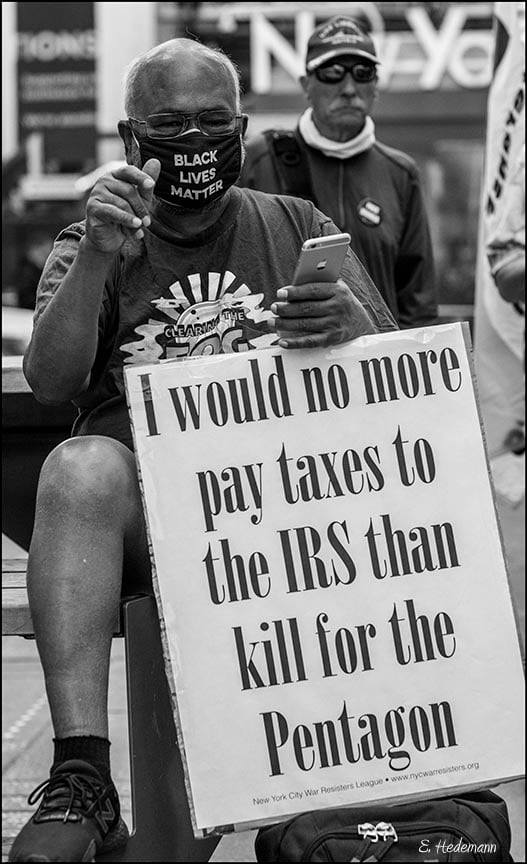
War tax resistance means refusing to pay some or all of the federal taxes that pay for war. While you can refuse income tax legally by lowering your taxable income, for many people war tax resistance involves civil disobedience.
In the U.S. war tax resisters refuse to pay some or all of their federal income tax and/or other taxes, like the federal excise tax on local telephone service. Income taxes and excise taxes are destined for the government’s general fund and about half of that money goes for military spending, including weapons of war and weapons of mass destruction.
People take many roads to war tax resistance. Most are motivated by a combination of reasons and actively work for peace in many other ways too. If you consider your motivations this will help you determine your method of resistance.
Refusing to pay federal income taxes is an act of civil disobedience with a long history in the U.S. America’s most well-known war tax resister was Henry David Thoreau, whose refusal to pay his poll tax because of the Mexican-American War earned him an night in jail and the experience that led him to write his influential essay, Civil Disobedience. While those of us who refuse to pay war taxes believe our refusal is just and imperative — and some of us cite international law to back up this belief — the government considers the refusal to pay these taxes to be illegal, and there are potential repercussions through the IRS collection system. For most of us who resist, the dire consequences of voluntarily paying for war are far worse that what the IRS and government can do to us. (snip-MORE)
| April 17, 1959 22 were arrested in New York City for refusing to take shelter during a civil defense drill. |
| April 17, 1960 Inspired by the Greensboro sit-in of four black college students at an all-white lunch counter, nearly 150 black students from nine states formed the Student Nonviolent Coordinating Committee (SNCC). Meeting in Raleigh, North Carolina, with Ella Baker, James Lawson and Martin Luther King, Jr., the founders set SNCC’s initial goals as overturning segregation in the South.   They also considered it important to give young blacks a stronger voice in the civil rights movement, as many had participated in sit-ins that had proliferated to dozens of cities over the previous three months. At the Raleigh conference Guy Carawan sang a new version of “We Shall Overcome,” an adaptation of an old labor song. This song would become the national anthem of the civil rights movement.People joined hands and gently swayed in time singing “black and white together,” repeating over and over, “Deep in my heart, I do believe, we shall overcome some day.” What SNCC did to make change happen |
April 17, 1961 Cuban leader Fidel Castro during the Bay of Pigs invasion. An army of 1500 anti-Castro Cuban exiles, mercenaries equipped and trained at a secret Guatemala base by the CIA, landed at Bahia de Cochinos (Bay of Pigs) in an attempt to “liberate” Cuba from Communist rule. Within three days, the invasion proved disastrous with nearly 1200 members of Brigade 2506 (who had been trained in the U.S.) taken prisoner. Known as Operation Zapata, it was conceived by Vice President Nixon, planned and approved by the Eisenhower administration, and executed shortly after President John Kennedy’s inauguration.  President Kennedy receives the Brigade 2506 flag in Miami in 1962 and declares: “I promise to return this flag in a free Havana.” Soviet General Secretary Nikita Kruschev sent a telegram to President Kennedy: “Mr. President, I send you this message in an hour of alarm, fraught with danger for the peace of the whole world. Armed aggression has begun against Cuba. It is a secret to no one that the armed bands invading this country were trained, equipped and armed in the United States of America. The planes which are bombing Cuban cities belong to the United States of America, the bombs they are dropping are being supplied by the American Government . . . .” What actually happened |
April 17, 1965 The first national demonstration against the Vietnam War took place in the nation’s capital. Students for a Democratic Society (SDS), the organizers, had expected about 2000 marchers; the actual count was 15,000–25,000. This was the largest anti-war protest ever to have been held in Washington, D.C. up to that time. The number of marchers approximately equaled the number of U.S. soldiers in Vietnam. Several hundred students in the protest broke away from the main march and conducted a brief sit-in at the U.S. Capitol’s door. An exam prepared by SDS about the Vietnam War (answers available) |
April 17, 1965 Gay rights advocate Jack Nichols The first demonstration promoting equal treatment of homosexuals, Jack Nichols, Barbara Gittings and others picketed in front of the White House. There were no media present. Read more (Go-it’s interesting!) |
| April 17, 1986 Reverend Jesse Jackson, future congresswoman Maxine Waters and others co-founded the Rainbow Coalition, initially intended as a progressive public-policy think tank within the Democratic Party.  Representative Maxine Waters, Harry Belafonte, John Sweeney, President of the AFL-CIO, Reverend Jesse Jackson, and Willie Nelson August 6, 2005-Atlanta, Georgia. Brief history of Rainbow Push Coalition |
| April 17, 1992 On Good Friday morning, about 50 people accompanied Fr. Carl Kabat and Carol Carson to Missile Silo Site N5 at Whiteman Air Force Base in Missouri, the same silo that Carl and other members of the Silo Pruning Hooks (see below) disarmed in 1984. They cut through a fence and, once inside, Carol used a sledgehammer on the concrete lid of the silo while Carl performed a rite of exorcism. Eventually, the police arrived and arrested Carl and Carol. They were jailed and held until their court appearance. At that time, they made a preliminary agreement with federal prosecutors wherein they would plead “no contest” to trespass in exchange for the property destruction charge being dropped; they were sentenced to six and three months, respectively, in a halfway house.  Carl Kabat Carl KabatA History of Direct Disarmament Actions About the Silo Pruning Hooks action |
An Abundance Of News
I was especially interested in the Justice Clarence Thomas comments, which I read, then became disinterested for reasons you’ll get if you read them. Lots of news of the day here.
Hegseth to Reporters: Whose Side Are You On?
INSIDE: Sonia Sotomayor … John Eastman … Bitcoin Jesus
Compares Press to the Pharisees
A thin-skinned and prickly Defense Secretary Pete Hegseth went off on journalists in his press conference this morning, resorting to the classic “attack the messenger” defense to a unpopular war going poorly.
It’s not the first time Hegseth has succumbed to blaming a lack of patriotism among reporters for unfavorable headlines and critical reporting on a Middle East conflict ignited by the Trump administration. But today’s screed was striking for how it mixed the old worn-out reflexive questioning of the loyalty of reporters with biblical references that reflect Hegseth’s personal Christian nationalism:
“Sometimes it’s hard to figure out what side some of you are actually on,” Hegseth said. “It’s incredibly unpatriotic.”
In the decades since the Vietnam War, the Pentagon had haltingly moved away from the defensive crouch it often took in the face of criticism toward a more transparent and self-reflective public response to bad news. It was not always consistent and the backsliding was dramatic during periods of sustained setbacks, like in Iraq during the aughts, but the general trajectory was away from the kind of knee-jerk circle-the-wagons approach that Hegseth rolled out this morning.
Questioning the loyalty of journalists — or any regime critics — harkens to earlier dark eras of America history and to authoritarian regimes worldwide. But Hegseth’s diatribe came with a strong Christian twist, as he compared journalists to the Pharisees who rejected Jesus in the Bible:
“The Pharisees, the so-called and self-appointed elites of their time, they were there to witness, to write everything down, to record, but their hearts were hardened, even though they witnessed a literal miracle, it didn’t matter,” Hegseth said.
“They were only there to explain away the goodness in pursuit of their agenda. As the passage ends, the Pharisees went out and immediately held counsel against him, how to destroy him,” he continued.
“I sat there in church and I thought, our press are just like these Pharisees, not all of you, not all of you, but the legacy Trump-hating press, your politically motivated animus for President Trump nearly completely blinds you from the brilliance of our American warriors,” he added.
Hegseth — callow, reactive, driven by a warped theology of nationalism, and poorly grounded in history — personally represents a dramatic break from decades of training, education, and refining of a professional officers corps. In 15 months in office, Hegseth has done more to politicize the military than any secretary of defense in at least the last half century.
Third Boat Strike in Three Days
The accelerated pace of unlawful strikes against alleged drug-smuggling boats continued in the eastern Pacific, with the third such strike in the last three days. Three people were killed in the 51st strike of the U.S. campaign, bringing the death toll to at least 177 people.
What Trump Foreign Policy Looks Like
- USA Today: Pentagon ramps up planning for possible military ops in Cuba
- WSJ: Pentagon Approaches Automakers, Manufacturers to Boost Weapons Production
- WaPo: Trump administration pushes nations to sign ‘trade over aid’ declaration
SCOTUS Watch
- Justice Sonia Sotomayor apologized privately to Justice Brett Kavanaugh and followed up with a public apology released by the Supreme Court for remarks last week that, without naming him, attributed his defense of what have become known as “Kavanaugh stops” to his posh upbringing.
- In a public appearance at Yale Law School, Justice Ketanji Brown Jackson blasted the Roberts Court’s handling of its emergency docket.
- In unusually pointed remarks carried live by CSPAN, Justice Clarence Thomas launched a broadside at progressivism.
Jan. 6 Never Ends
- Trump lawyer and coup plotter John Eastman was officially disbarred in California after the state Supreme Court declined to take up his appeal.
- Trump I White House chief of staff Mark Meadows is seeking reimbursement from the Trump DOJ of his legal fees incurred as a witness in both of Special Counsel Jack Smith’s investigations.
Must Read
Heather Cox Richardson draws a straight line from Lincoln’s assassination to Jan. 6 and the events of this week.
Do as We Say Not as We Do
NBC News: “Anti-abortion advocates met with Justice Department officials Wednesday, just hours after the Trump administration fired prosecutors it accused of coordinating too closely with abortion-rights advocacy groups during the Biden administration.”
Election-Year Islamophobia
When all else fails and their election prospects look dire, Republicans fall back on various forms of racist appeals to solidify their base and wrong-foot Democrats. This year, top Texas Republicans have landed on Islamophobia as the racist appeal of choice. TPM’s Josh Kovensky reports on the ground from Grapevine, Texas, where he talks to right-wing activists who are back again to warning about Sharia law and portraying Muslims as an external threat to “real” Americans.
Too often, gullible national media outlets treat these racist effusions like an organic upwelling of nativism, rather than a calculated election year strategy. TPM, I’m proud to say, has never been suckered in.
Thread of the Day
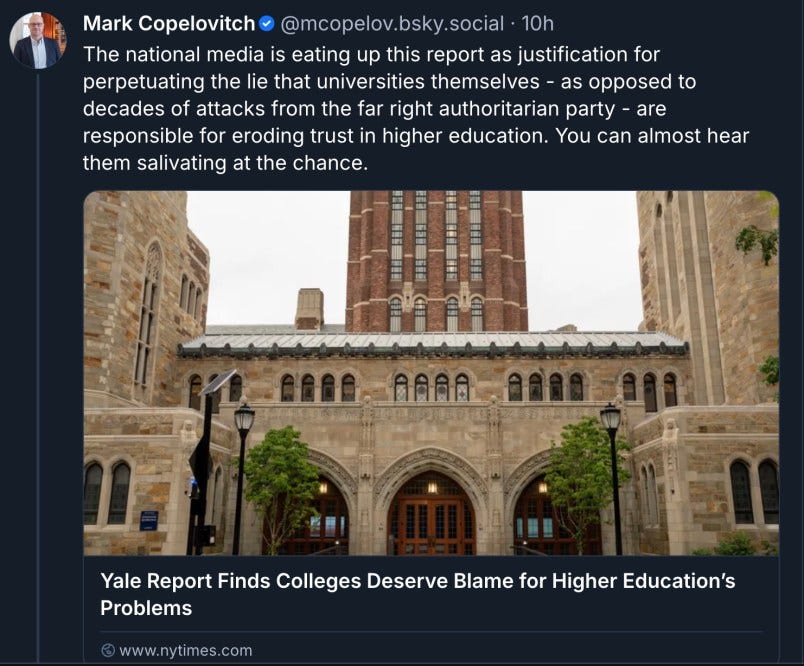
The Corruption: Bitcoin Jesus Edition
ProPublica offers a casebook study in the erosion of white-collar crime prosecutions under Trump II that includes the intervention of DOJ political appointees and the retention of a former Trump criminal defense attorney to outright kill one of the largest-ever cryptocurrency tax fraud cases.
Creepy Text of the Day
“Hearing u/r in town. Wishing you would let me know. I could have made some excuses to get out and show u around. Please keep this private.”—Richard Chavez, father of Labor Secretary Lori Chavez-DeRemer, in a text to a young female staff member working for his daughter
Hot tips? Juicy scuttlebutt? Keen insights? Let me know. For sensitive information, use the encrypted methods here. (snip)
One More Short Video, & A Story
These are informational, rather than fun, except that Pete Buttigieg is fun even while serious. I’d like to see him run for something this time. Then, any time a very wealthy person thinks of others before themselves, it’s good news; Meals On Wheels is a fine thing.
Billionaire philanthropist MacKenzie Scott has donated again—a week after gifting millions to a colege, she’s just given $70 million to Meals on Wheels America

MacKenzie Scott, worth $41.1 billion, is on a philanthropic tear and has donated an estimated 46% of her net worth.Dia Dipasupil / Staff / Getty Images
While billionaires have come under fire for not living up to their philanthropic promises, one person is rising from the rest: MacKenzie Scott. She’s pouring billions into education, public health, and the environment—and now, she just funneled some of her fortune to help feed and support millions of Americans. (snip-MORE)
Zohran’s First 100 Days Of Sewer Socialism Success In New York City
This is what working for the people, working for the public means. This is what representing the will of the people / public looks like. This is what is attracting the people / public voters to the democrats, yet Chuck Schumer as yet to endorse Mamdani. Why? Because the two are the opposite sides of the political coin. One wants to serve and represent the people / public and the other is a corporate democrat beholden to big money donors and major lobbyist groups. Same with Hakeem Jerofies who only endorsed Mamdani when on election night it became clear he would be the winner. Hugs
Will They Do It?
Something to keep track of.
Trump administration agrees to return rainbow Pride flag to New York’s Stonewall monument
By JENNIFER PELTZ and MICHAEL R. SISAK
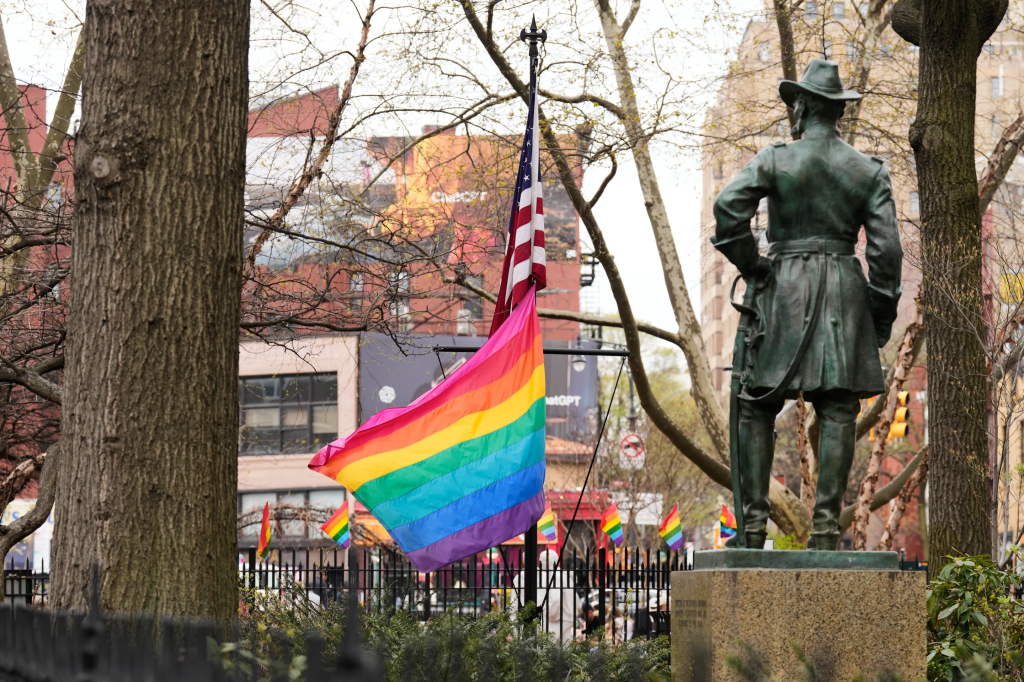
NEW YORK (AP) — The Trump administration said Monday it will resume flying a rainbow Pride flag on a federal flagpole at the Stonewall National Monument in New York City, reversing course two months after removing the banner from the first national monument commemorating LGBTQ+ history.
The government revealed the decision in court papers as it agreed to settle a lawsuit filed by advocacy and historic preservation groups who had sought to block the Feb. 9 removal. A judge approved the deal.
The Interior Department and National Park Service “have confirmed their intention to maintain a Pride flag at Stonewall,” lawyers for the government and the groups wrote in a joint court filing.
The flag — one of several Pride banners at the 7.7-acre (3.1-hectare) park — won’t be removed, except for “maintenance or other practical purposes,” the filing said. (snip-details of position and measurements of the Pride flag)
Trump Admin Fires Top US Army General In The Middle Of A War
Ron flew to Texas on Saturday. We used Uber to take him. He is driving his sister back here. They should be here tomorrow. I need a few days of rest then I will start replying to comments and bogging again. Hugs
Heather ‘Digby’ Parton joins the program to recap the week’s news. Check out Digby’s work at Salon as well as her blog Hullabaloo. Topics include the American right-wing’s desperation to keep Victor Orban in power in Hungary, Trump firing all the women around him, Iran and more.
From Jenny Lawson, Between Tour Appearances
Mentally though, I’m here
Hello friend!
I am leaving for the second part of my book tour in 10 hours and I have not done laundry, packed, or (if I’m being honest) unpacked from the first leg of book tour. In spite of the fact that the first stops were so lovely and fun and filled with fellow weirdos who completely understood my anxiety, I am once again convinced that everyone will hate me and no one will show up and probably I will be eaten by sea lions. So right now I am writing this to you and reminding myself that everything will be okay.
I did lots of little drawings this week but Hunter S. Thomcat is laying on my sketch pad and I don’t want to move him so instead I’m sharing a drawing from the book because I drew it when I was having a high anxiety week and it feels fitting to come back to it now. Just a reminder that even when things feels scary, you can always make a little oasis in your mind. My spell check tried to change that to “you can always make a little oatmeal in your mind” and I’m feeling very relieved that I caught that because that’s even weirder than my normal letters to you.

WAIT, DID I TELL YOU HOW TO BE OKAY WHEN NOTHING IS OKAY IS #4 ON THE NYT BESTSELLER LIST?
Sorry. Didn’t mean to yell. It’s just late and my meds have worn off.
If you’re in California, Oregon or Austin, come join me?
Barnes & Noble in California
Powell’s in Oregon
Book People in Austin
I super crazy love you,
~ me

