Teaching tolerance isn’t indoctrination. It’s protection

https://www.advocate.com/voices/mahmoud-v-taylor
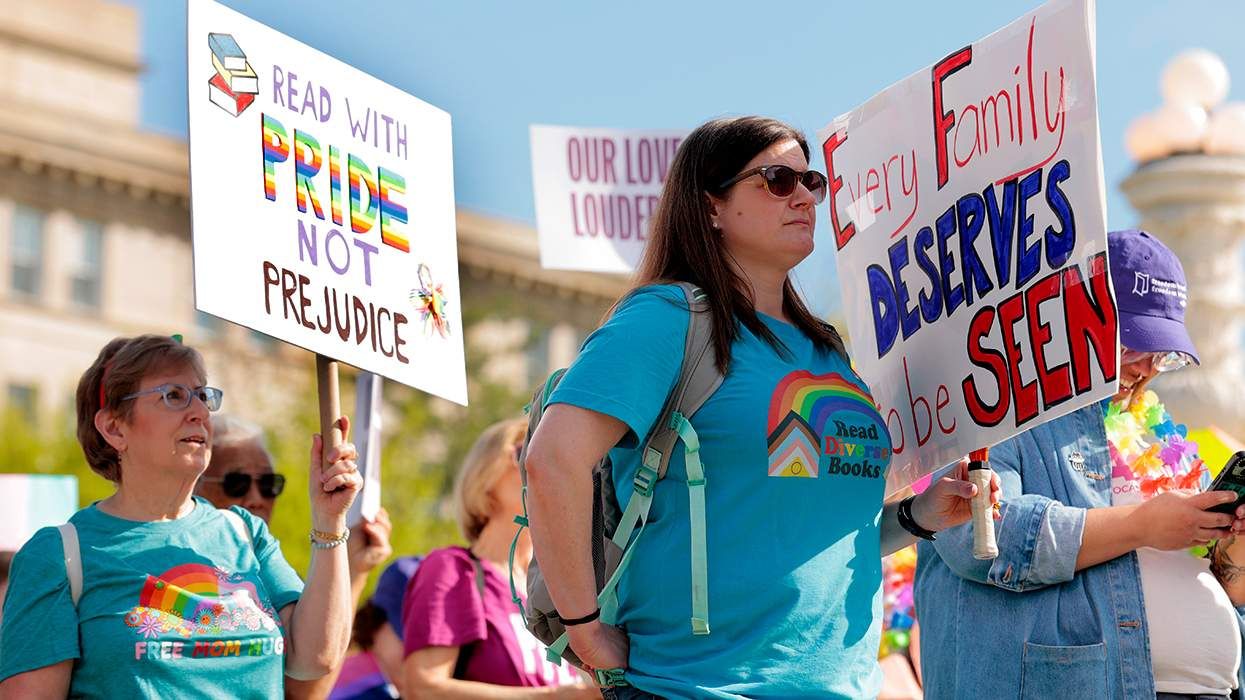
Mahmoud v Taylor LGBTQ rights protesters with signs outside US Supreme Court building washington DC April 2025

Anna Moneymaker/Getty Images

Protesters in support of LGBTQ+ rights and against book bans demonstrate outside of the U.S. Supreme Court Building while the justices heard arguments for the case of Mahmoud v. Taylor in Washington, DC., April 2025

Opinion: In Mahmoud v. Taylor, the justices gave bigotry a permission slip and ruled that parents can “opt out” of LGBTQ-inclusive lessons, further diminishing lessons and practices on inclusivity in civic society, argues Darek M. Ciszek.

The U.S. Supreme Court made a decision earlier this summer that has a significant impact on classrooms nationwide. In their 6-3 decision in Mahmoud v. Taylor, the majority completely missed the point as to why LGBTQ-inclusive education matters. By giving parents the option to pull their kids out of lessons that include LGBTQ+ characters or content, the Court prioritized personal religious objections over creating schools where students can learn without feeling invisible.

Justice Alito‘s majority opinion is especially troubling. He treats LGBTQ-inclusive education as if it were some optional “add-on” that schools can easily work around. As a former teacher, I can confidently say that is not how education works, especially when it comes to curriculum and lesson planning. And while Justice Thomas calls LGBTQ-inclusive education “ideological conformity,” he fails to see that most LGBTQ+ adults today grew up in a school system that forced us to conform to a cisgender and straight worldview. Ironically, I’d consider the Court’s narrow view of public education to be ideologically driven.


Let’s be clear about what LGBTQ-inclusive education is and isn’t. When teachers include books like Uncle Bobby’s Wedding in their curriculum, they are not trying to convert anyone’s child or attack anyone’s faith. They are trying to show students that families come in all colors, shapes, and sizes, reflecting our diverse society.

LGBTQ+ people are also part of every community. We have always been a part of human history, and we deserve to be represented in our nation’s schools. The goal is not to change what students believe at home; it is to teach them how to be respectful in a democratic and diverse world. Luckily, in her dissent, Justice Sotomayor got it right when she said that LGBTQ-inclusive education is “designed to foster mutual civility and respect.”

I could not agree more.


But here’s what the Court’s majority really got wrong: they ignored the anti-bullying efforts that motivate many LGBTQ+ inclusive education programs in the first place. According to the latest National School Climate Survey from GLSEN, 68% of American students reported feeling unsafe in school due to their SOGIE (sexual orientation, gender identity, and/or gender expression) characteristics.

That is two out of three LGBTQ+ youth.

These aren’t just statistics. These are real children trying to learn while dealing with a school environment that tells them, whether implicitly or explicitly, that their identities or families are somehow wrong or shameful.

When schools include diverse families in their lessons, they are not pushing an agenda. They are teaching kids that being different does not mean bad. They are giving LGBTQ+ students a chance to see themselves reflected in their education and helping other students see and understand those who are different from them.


Research shows inclusive education works. Studies have found that an LGBTQ-inclusive curriculum can improve the social and emotional well-being of LGBTQ+ youth. When kids learn about different types of families early on, they are more likely to treat their classmates with kindness instead of cruelty. In other words, when implemented correctly, LGBTQ-inclusive education can be an essential anti-bullying and student well-being strategy.


For instance, as a result of my doctoral research, I have learned that some schools around the world are starting to address LGBTQ+ bullying head-on, and, not surprisingly, it’s through curriculum and instruction. In Scotland, LGBTQ-inclusive education became required in 2021 across both primary and secondary, and most major subject areas. When I interviewed government staff about their experience implementing the new policy, I learned that they even worked with religious groups to inform the effort. Faith communities could agree that inclusion was important for reducing homophobic bullying, even if they had some religious concerns. Scottish students now learn how homophobic language hurts people and develop the social-emotional skills needed for creating safer schools. It’s not ideological instruction; it’s teaching kids critical peer relationship skills.

Similar to the Scottish experience, the U.S. Supreme Court could have left the door open for education authorities to find a balance that respects both religious families and vulnerable LGBTQ+ kids. Real inclusion programs do not ask anyone to abandon their faith. They ask people to treat others with respect and dignity, a lesson I believe everyone should support in class. Kids can learn that some families have two moms without being told their family is wrong. They can remember that using “gay” as an insult hurts people without abandoning their religious beliefs. Getting to know your neighbor does not go against faith.


Unfortunately for the U.S., the impact of the Court’s decision may be severe and widespread, especially in ideologically conservative states. Instead of dealing with complicated opt-out policies, I fear many school districts will probably remove LGBTQ+ inclusive materials entirely. Unfortunately, it can be easier to bow to political pressures than to fight, especially when faced with potential lawsuits or a loss of school funding. This means LGBTQ+ kids lose representation, and all students miss out on critical lessons in diversity and inclusion.

The Court’s decision also has broader implications beyond the LGBTQ+ community. By way of a new precedent, the case approves a heckler’s veto, allowing parents to claim a religious objection to any educational content they may not align with at home. This is because the majority opinion wasn’t apparent on how opting out of inclusive education would work in practice, or what would even qualify as a personal religious objection. We might start seeing opt-out forms for instruction on topics like human evolution, women’s rights, or civil rights history. Thanks to the Court, there is no line in the sand.


When we remove students from lessons about diverse communities, we fail everyone. But the call for truly inclusive education is not going anywhere. Our kids—all of our kids—deserve better.

Darek M. Ciszek is a PhD Candidate in Education at UCLA with a research focus on curriculum, learning, and social development.

Voices is dedicated to featuring a wide range of inspiring personal stories and impactful opinions from the LGBTQ+ community and its allies. Visit Advocate.com/submit to learn more about submission guidelines. Views expressed in Voices stories are those of the guest writers, columnists, and editors, and do not directly represent the views of The Advocate or our parent company, equalpride.
What do you think of GOP Chip Roy saying our king is Jesus?

Let’s talk about how a sign of Trumpian things to come is waiting in the dark….

So Many

things that are just wrong about this; things to be said about him being full of BS; things to be said about him being full of himself; that he presents as if he is actually designing and building these; that he names them Optimus (from Optimus Prime, a hero in “Transformers”), and so on, and so on, and so on…

Elon Musk Wants ‘Strong Influence’ Over the ‘Robot Army’ He’s Building

In a Tesla earnings call Wednesday, the world’s richest man pondered the future of his company’s Optimus robots—and his control over them.

Tesla might be an electric auto maker, but CEO Elon Musk has made clear that he thinks of it as much more: an innovator in artificial intelligence and software, a builder of world-shaking robots. He’s also argued that Tesla should be worth a lot more than it is today: up to $20 trillion, he posted in July, more than five times the current worth of Nvidia.

Musk has also made it clear that he wants to get paid, a lot. In November, Tesla shareholders will vote on the board’s proposal to pay the CEO a remarkable $1 trillion over the next decade. The deal would also increase Musk’s stake in Tesla from 13 percent to a quarter. But Musk would only get that big figure—and the extra control—if he hits a series of ambitious metrics, including 20 million vehicles delivered, 1 million robotaxis in commercial operation, and an $8.5 trillion valuation. And also, 1 million Optimus humanoid robots delivered.

On a call with investors on Wednesday, Musk locked on to that last point to make his most threatening argument for a gigantic payday yet. “My fundamental concern with regard to how much voting control I have at Tesla is, if I go ahead and build this enormous robot army, can I just be ousted at some point in the future?” he said. “If we build this robot army, do I have at least a strong influence over this robot army? Not control, but a strong influence … I don’t feel comfortable building that robot army unless I have a strong influence.”

Generally, Musk talks about Tesla’s Optimus project as more of a force for peace than war. He’s said that Optimus will upend the job market and free humanity from the drudgery of work. (“Working will be optional, like growing your own vegetables, instead of buying them from the store,” he posted this week.) Elsewhere on the investor call Wednesday, he said that Tesla’s robots would “actually create a world where there is no poverty, where everyone has access to the finest medical care.”

Optimus, he added, “will be an incredible surgeon, and imagine if everyone had access to an incredible surgeon.” For Tesla, Optimus will be “an infinite money glitch,” Musk said, arguing that everyone will want a humanoid robot who can do their work for them.

At Tesla events—and at the Tesla Diner in Los Angeles—Optimus robots are usually seen doing service work: serving drinks and popcorn, or entertaining visitors by dancing or playing rock, paper, scissors. (Optimus participants in a 2024 Tesla event were later acknowledged to be not fully autonomous, but remotely operated by humans.)

Whether Optimus chooses to do laundry or battle, Tesla’s vision of a robotic future still seems a ways away. On Wednesday’s call, Musk dwelled on the challenge of building humanoid hands and forearms, seeming to confirm earlier reporting that the features were proving especially hard for Tesla engineers to hack. And while Tesla set internal goals to produce 5,000 Optimus units this year, The Information reported this month that the company scaled down those production plans over the summer. On Wednesday, Musk said Tesla would have a “production-intent prototype” ready by February or March. Full-scale production, he said, would start at the end of next year.

Let’s talk about Trump, SNAP, Ramen, and his new record….

Centrist Dems Push Anti-Government Healthcare BS

ICE Makes Huge Mistake In New York City, Jeffries Goes Full ‘Tough Guy’ During Liberal Message Discipline Failure, and Cuomo Experiences Personality Crisis Live On Air


Criminal Israel and the IDF set a Palestinian US citizen up to be attacked and murdered by West Bank illegal settlers. They routinely attack and beat / kill Palestinians while simply stealing their stuff at gun point.

This was the first report I watched on this.  This one is longer because he tells the whole story and shows clips he took on his phone at  the time.  The mob was going to kill him after the IDF set the group up to be murdered at the hands of illegal settlers.   The military told them to go to the spot where the settlers were hiding.  Please watch to see the very illegal and horrific ways Israeli is treat people to simply drive them off of and steal their lands.  Hugs


US Embassy ABANDONS Journo After Israeli Mob Attack


VIDEO: Disturbing Israeli Settler Attack Video Sparks Outrage, Elderly Palestinian Woman Hospitalized

A 55-year-old Palestinian woman, Umm Saleh Abu Alia, was hospitalized after being brutally attacked by a masked Israeli settler in Turmus Ayya, West Bank. Captured on video by US journalist Jasper Nathaniel, the unprovoked assault shows the woman struck unconscious and hit again on the ground. Settlers continue to harass Palestinian farmers during the olive harvest, while the Israel Defense Forces claim to have intervened. This horrifying incident highlights escalating tensions and ongoing violence in the occupied West Bank.

Israeli settlers burn trees, assault Palestinians in occupied West Bank olive harvest attacks

In the occupied West Bank, armed Israeli settlers systematically attack Palestinian olive harvesters and farmers, burning trees and beating farmers. These assaults, often protected by Israeli forces, have caused severe injuries. Palestinians, joined by international activists, continue harvesting to avoid surrendering their land, despite the violence and threats aimed at driving them away. For them, this is a fight for their very livelihood and homeland.

Israel’s Next Move: Create ‘Six Little Gazas’ In West Bank | Jasper Nathaniel | TMR

Some Important Info; May Not Be Everywhere Because the U.S. Gov’t Is Observing the Epstein Shutdown

Lead in protein powders. What you need to know by Katelyn Jetelina

The Dose Read on Substack

Happy Monday from Atlanta! I just tried to convince thousands at a public health conference that it’s time to reimagine systems—not just defend the status quo. I’m happy to report that tomatoes weren’t thrown my way. This is my fourth state in five days, and the highlight is actually seeing the seasons change and meeting a lot of you in person. I couldn’t be more excited to see my girls (and survive another round of the KPop Demon Hunters soundtrack).

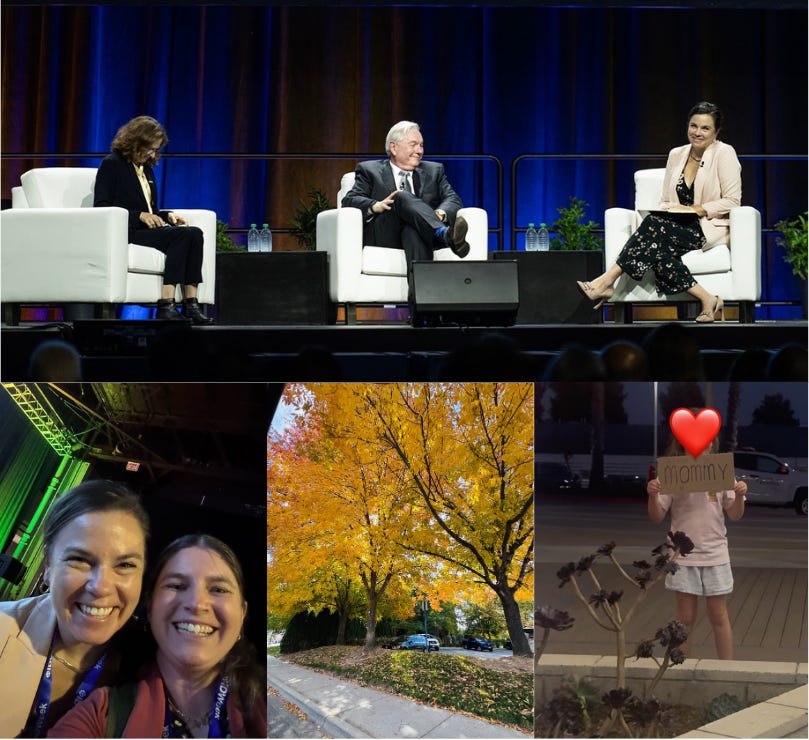
Top: Plenary stage with Mike Osterholm; From the bottom left: Met YLE reader Krisandra Allen at the conference. Fall leaves in Idaho. My daughter welcoming me home at the airport.

This week’s Dose runs the gamut: from what’s really going on with lead in protein powders (and whether you should be worried), to a refreshing burst of leadership as 15 governors join forces to strengthen public health collaboration, to falsehoods swirling around mammograms. We’ll wrap with an infectious disease weather report and a quick note for dog owners on an FDA recall.

Let’s go!


Consumer Reports found lead in protein powders. How bad is it?

Last week, Consumer Reports released an analysis revealing elevated lead levels in several popular protein powders and shakes. Google searches for “lead in protein powder” spiked 300%, and influencers lit up social media. Depending on which news source you read, it was either a five-alarm fire or no big deal.

So what’s actually going on? Lead is everywhere—soil, food, water, and air. Thankfully, overall exposure has dropped dramatically since the 1970s, and modern lab tests can now detect vanishingly small amounts (down to parts per billion). But detection does not necessarily equal danger.

How bad is bad? That’s where things get tricky because not everyone agrees:

  • California limit: 0.5 mcg/day. This number comes from a very conservative calculation: regulators took the “no observable effect” level for reproductive harm for inhaled lead exposure in workplaces and divided it by 1,000. Many experts argue that this threshold is unrealistic. It’s also not linked to adverse health outcomes.
  • FDA’s limit: 2.2 mcg/day for kids, 8.8 mcg/day during pregnancy, and 12.5 mcg/day for other adults based on blood lead levels, toxicology data, and a built-in 10x safety factor.
  • European Union limit: Allows up to 3 mg/kg (3 ppm) in food supplements—roughly 90 mcg per 30-gram scoop of protein powder. In this case, the FDA is far more cautious than Europe (and that’s not usually how things go).

Back to the report: of the 23 protein supplements they tested, two-thirds exceeded “Level of Concern.” One brand (Naked Nutrition Vegan Mass Gainer) hit nearly 16 times the limit. But because Consumer Reports used California’s exceptionally strict benchmark, those numbers sound scarier than they really are.

The average American already gets 5.3 mcg of lead daily from food and the environment. That’s another reason California’s cutoff doesn’t make much sense. Still, some products identified in the report could push intake close to the pregnancy (8.8 mcg) or adult (12.5 mcg) daily thresholds.

What this means for you: Don’t worry too much. While the FDA continues to reduce lead exposure through programs like Closer to Zero and the Total Diet Study (that is, if the funding continues), there are several things we can do in our own homes, especially for parents of kids and during pregnancy.

  • Check to see if your protein supplement (or any supplement, really) has third-party testing for heavy metals (like USP or Informed Sport).
  • Advocate for more pre-market regulatory oversight in the supplement industry (which has very little, if any at all) by writing to your local representative.
  • Eat a diet that includes a variety of nutrient-dense foods, which helps limit exposure to specific food sources and ensures we get an array of protective nutrients.
  • Prioritize getting your protein from whole food sources.

Big thanks to YLE’s Megan Maisano—Registered Dietitian Nutritionist— for writing this section.


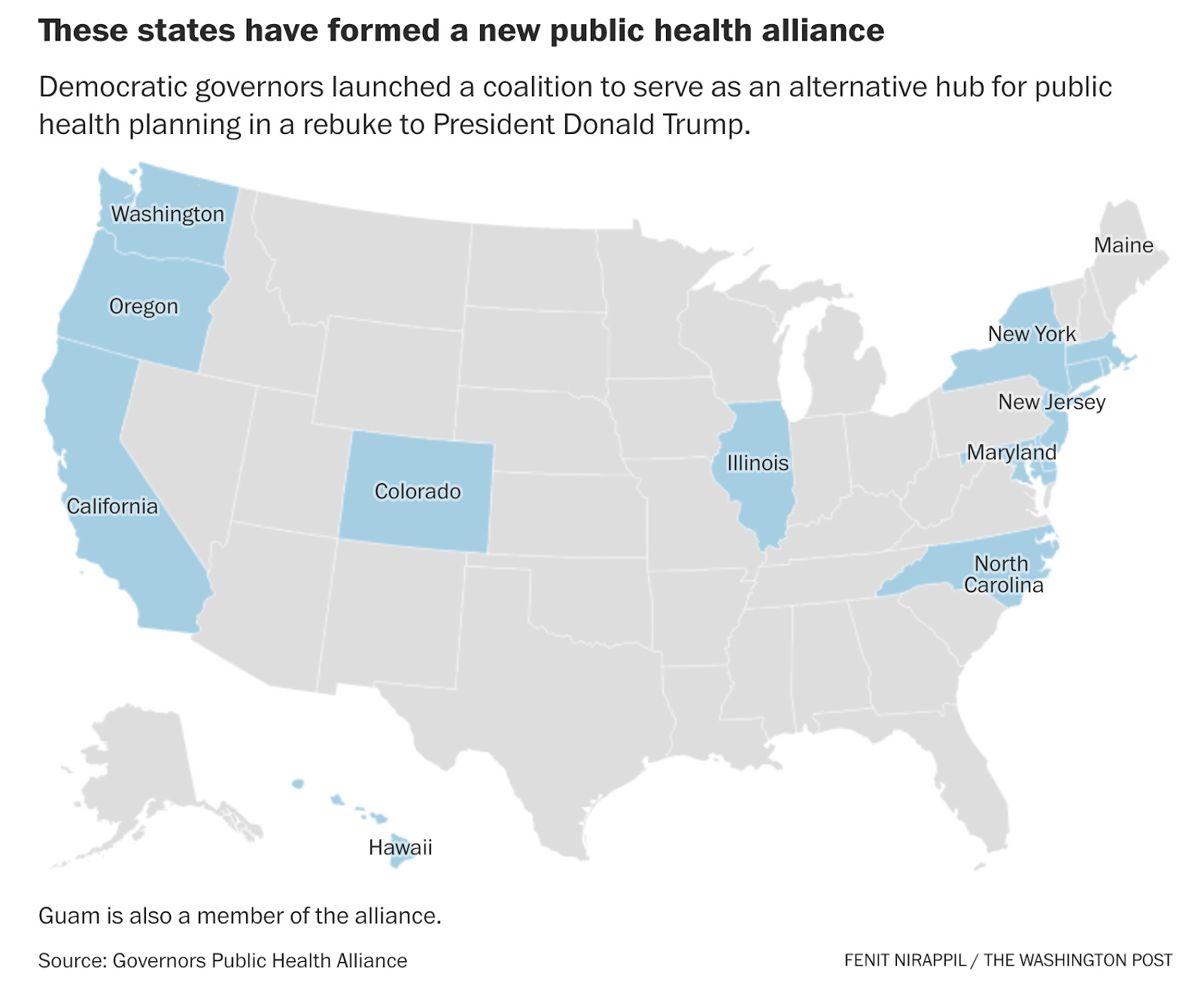
Fourteen states and Guam join forces to launch Governors’ Public Health Alliance

Governors from 14 states and Guam announced the creation of the bipartisan Governors’ Public Health Alliance, which is a new effort to strengthen coordination and collaboration across state lines.

Why do we need this? In the U.S., authority over health rests with the states, not the federal government. Health (encompassing both health care and public health) is not only the highest budget item for a state but also the primary reason for state bankruptcy. In other words, governors hold enormous power over your health.

Today, though, federal support is shifting fast, funding is drying up, and states are being forced to get creative. States must decide whether to maintain their public health departments (due to funding cuts), how to continue purchasing vaccines (if the federal government stops recommending them), whether to negotiate drug prices (like insulin), and more. We saw a similar challenge during the pandemic with bulk purchasing of PPE.

In general, the more coordinating, collaborating, and innovative thinking, the better.

However, I’m growing increasingly concerned about the partisan gaps in public health. Although some Republicans are on the advisory board and the initiative was framed as bipartisan, no Republican-led states have joined. This worries me for my friends in red states, like Texas, but it also has implications for everyone, as diseases don’t care about borders.

What this means for you: If your state is included, you can rest assured your governor is talking to others, which is a helpful step toward innovative solutions. You could argue it was needed before this moment, too. Public health has been siloed for far too long.


Mammograms save lives. They’ve been wrongly targeted.

Happy Breast Cancer Awareness month! Unfortunately, this month has driven some influencers to post false claims about the harms of mammograms. So let’s clear this up.

Breast cancer is the second leading cause of cancer death in women in the U.S., and accounts for 1 in 3 new cancers among women each year. (It affects men too, just at lower rates.) There is strong scientific consensus in support of routine mammograms to prevent breast cancer and detect it early:

  • Randomized trials show that mammograms reduce the risk of death from breast cancer by 12-20%, depending on age. For every 1,000 mammograms, one death is prevented.
  • Regular mammograms starting at age 40 are recommended for everyone, but may have even greater benefit for Black women, who are 40% more likely to die from breast cancer than white women and more likely to have aggressive cancers, younger.

There’s some critical nuance here:

  • With each mammogram, breast tissue is exposed to a small amount of ionizing radiation. But! We’re exposed to this type of radiation every day in our natural environment. At high doses, radiation exposure can change DNA and cause harm, but the amount of radiation exposure during a mammogram is about the same as flying from California to New York.
  • Organizations disagree on whether mammograms every year or every other year are optimal. Screening recommendations are based on evaluating science to maximize benefit (lives saved) while reducing patient worry, unnecessary costs, and diagnosing and treating cancers and pre-cancers that ultimately wouldn’t cause health problems—also called “overdiagnosis.” This is a balancing act.
  • Mammograms are just one tool for detecting cancer, and women with dense breasts or high risk for cancer (e.g., family history, known genetic predispositions, or other key risk factors) may benefit from additional screening, such as through an MRI.

What this means for you: The benefits of mammograms far outweigh the risks. The U.S. Preventive Task Force, the American College of Radiology, the American Society of Breast Surgeons, and the American College of Obstetricians and Gynecologists recommend routine mammograms starting at age 40 for women at average risk of breast cancer. If you have risk factors for breast cancer, dense breasts, or you’re 75 or older, talk to your doctor about your screening goals and plan. Don’t know your risk? Here’s one risk assessment tool.

For more, see YLE’s deep dive on breast cancer screening recommendations.


Infectious disease “weather report”

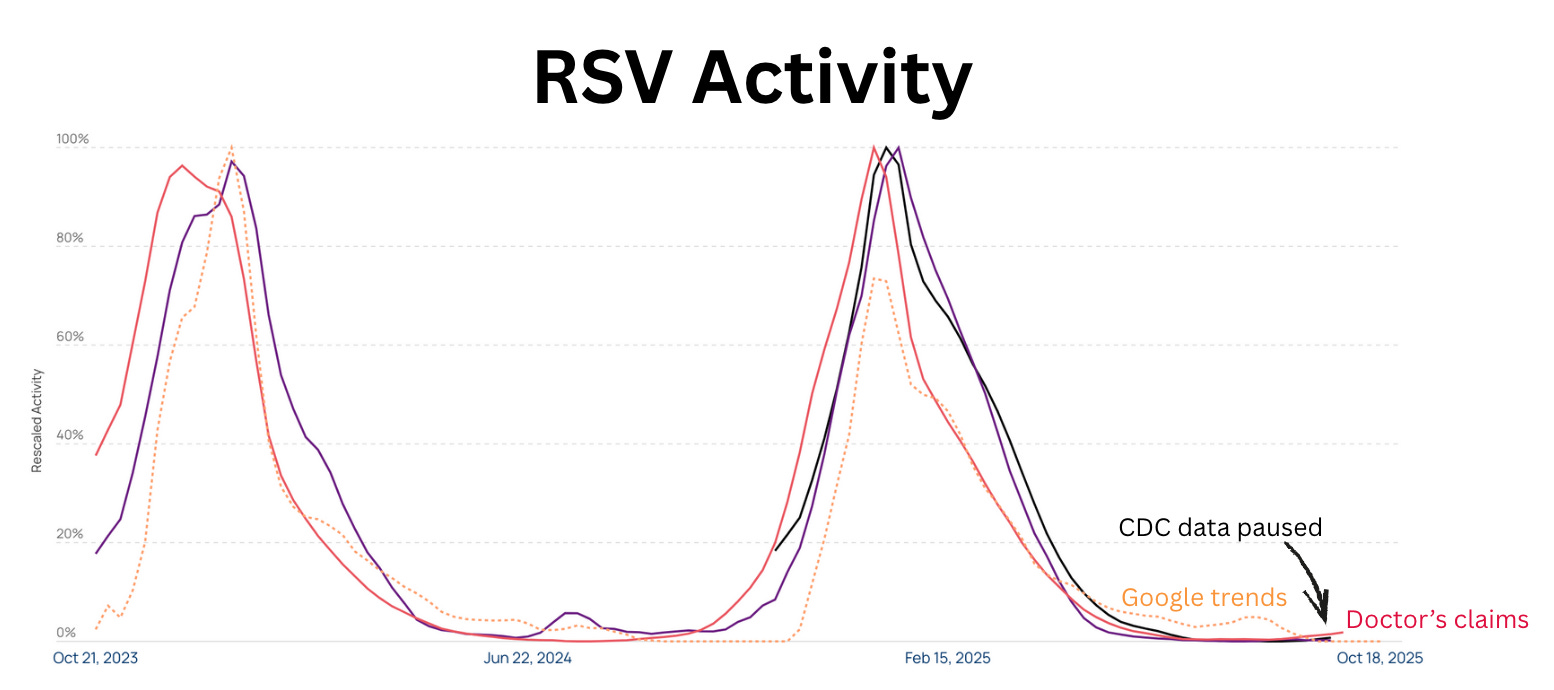
In the U.S., flu and RSV are still quiet. CDC data is still on pause because of the government shutdown, so we’re continuing to reference PopHive data. RSV activity is still low but growing in southern states, like Louisiana and Texas.

RSV Activity in the U.S. Figure from PopHIVE

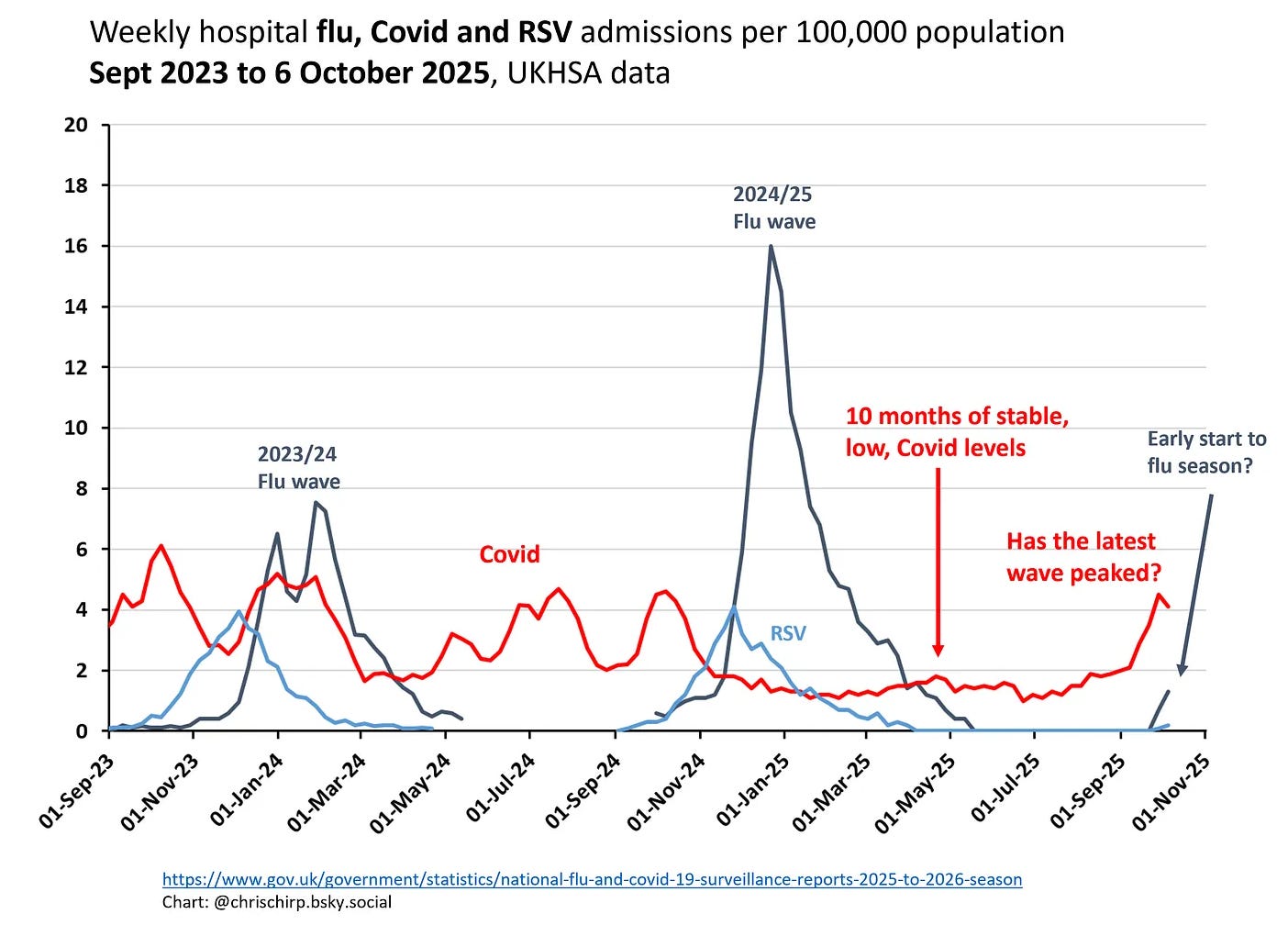
However, Covid-19 is having a moment in the U.K., with hospitalizations increasing exponentially after a 10-month lull. This isn’t driven by a dramatic variant, but rather by a lack of immunity building up over time. Flu might also be increasing, which suggests it’s coming soon (as expected) for the U.S.

Figure from Dr. Christina Pagel’s Substack.

Dog owners, check your pup’s food

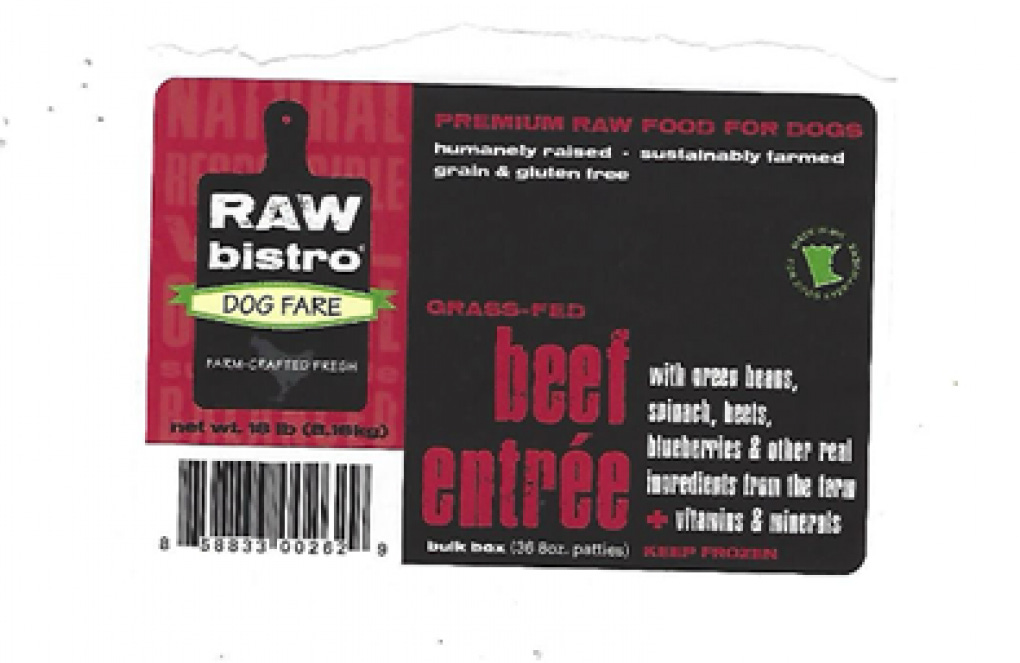
The FDA ​​recalled Raw Bistro frozen beef dog food for possible Salmonella contamination. The recalled products were sold directly to consumers and to select distributors between Sept. 1 and Sept. 17 in California, Colorado, Illinois, and Minnesota.

Salmonella can make dogs sick, just like humans. Contaminated food can cause illness days later in dogs. And dog owners can get sick from handling contaminated food or dog bowls.

What this means for you: Check the lot numbers on your dog’s food, and toss it if they are included in the FDA recall notice. Sanitize bowls if they held contaminated food, wash your hands, and watch for warning signs in your dog: lethargy, vomiting, diarrhea, and loss of appetite. If you notice these signs, take your pet to the vet.


That’s it for this week! Share your fall leave pics in the comments below so that I can continue to live vicariously through you.

Love, YLE


Your Local Epidemiologist (YLE) is founded and operated by Dr. Katelyn Jetelina, MPH PhD—an epidemiologist, wife, and mom of two little girls. YLE is a public health newsletter that reaches over 400,000 people in more than 132 countries, with one goal: to translate the ever-evolving public health science so that people are well-equipped to make evidence-based decisions. This newsletter is free to everyone, thanks to the generous support of fellow YLE community members. To support the effort, subscribe or upgrade below:

Trump Finally Pisses Of Republican Farmers