
Category: Food
The women leading the farmworker movement won’t let it be defined by Cesar Chavez
The sexual abuse allegations against Chavez have rocked them. But their focus is still on protecting other women.
This story was originally reported by Chabeli Carrazana, Shefali Luthra and Marissa Martinez of The 19th. Meet Chabeli, Shefali and Marissa and read more of their reporting on gender, politics and policy.
Monica Ramirez has spent much of her life spotlighting the pervasiveness of sexual violence against women farmworkers. She, like many in that movement, considered civil rights leader Cesar Chavez an icon.
Since allegations came to light this week that Chavez sexually assaulted women and girls as young as 12 — including fellow movement leader Dolores Huerta — Ramirez and the larger farmworker community have been left reeling. Now, they’re trying to reconcile how this man who so many revered — whose name is on streets, schools and even a holiday — could perpetrate the violence that has plagued women farmworkers for decades.
The community has been “shaken to its foundation,” said Ramirez, the founder of Justice for Migrant Women, a civil rights organization focusing on farmworker and migrant women. She and other leaders are now trying to push forward the farmworker movement and continue the work that many women — not just Chavez — spearheaded.

“The farmworker movement is a leaderful movement, and women have always been part of that leadership,” Ramirez said. But their work has often been made invisible, sometimes by the very men who stood beside them in building worker power for Latinx people in the United States.
“In order to have a movement, in order to have a boycott, in order to organize any kind of action, it’s often women who are helping to organize the meetings, helping to bring their compañeras,” Ramirez said.
Chavez was one of the most revered figures in the Latinx civil rights movement. The labor leader cofounded what became the United Farm Workers union alongside Huerta, and was most known for a series of strikes and protests that grew unionization efforts across California. After Chavez’s death in 1993, he was posthumously awarded the Presidential Medal of Freedom, the nation’s highest civilian honor. In 2014, former President Barack Obama designated his birthday, March 31, as a federal holiday to celebrate his legacy, which many states had already marked.
Now, many of those celebrations are being canceled or renamed after a bombshell, yearslong investigation published by The New York Times Wednesday found evidence of a pervasive pattern of sexual abuse perpetrated by Chavez. Two women said Chavez sexually abused them for years as girls, when the organizer was in his 40s and had already become a powerful global figure. Ana Murguia said Chavez first assaulted her when she was 13; Debra Rojas was 12.
In the years following the abuse, both suffered from depression, panic attacks and substance abuse.
“I feel like he’s been a shadow over my life,” Rojas told the Times. “I want him to stop following me around. It’s time.”
Huerta, the renowned activist who coined the rallying cry, “Sí, se puede,” spoke at length about emotional and physical abuse from her longtime organizing partner — a disclosure she had never made publicly. She told the Times that he raped her in a secluded grape field in 1966, and had pressured her to have sex with him another time during a work trip in 1960. Both encounters resulted in children. Huerta concealed the pregnancies and arranged for the baby girls to be raised by others.
She was shaken upon hearing the allegations from other women, and told the Times she struggles to reconcile the man she knew and the one who assaulted her.

In a statement released Wednesday, Huerta said she carried her secret for 60 years because “building the movement and securing farmworker rights was my life’s work. The formation of a union was the only vehicle to accomplish and secure those rights and I wasn’t going to let Cesar or anyone else get in the way.”
She said she spoke up because she learned there were others coming forward.
“The farmworker movement has always been bigger and far more important than any one individual. Cesar’s actions do not diminish the permanent improvements achieved for farmworkers with the help of thousands of people,” she said. “We must continue to engage and support our community, which needs advocacy and activism now more than ever.”
Magaly Licolli knew exactly what Huerta was talking about in her statements about Chavez.
Licolli is the co-founder and executive director of Venceremos, an organization advocating for poultry workers in Arkansas, and she’s heard stories about sexual harassment and assault on women for years.
Before she started Venceremos, she was fired from another poultry worker organization after speaking up about multiple accusations of sexual harassment and assault against a well-known organizer.
“Women came forward and accused the organizer of sexually assaulting them or sexually harassing them. When I brought that to the board, they didn’t believe it,” Licolli said. “I had to stand with the women … I cannot do this work pretending I’m doing justice when I’m hiding injustice.”
Licolli felt that echoed this week.
“Women of color, we are not trusted on what we go through. We have to prove with pictures, with testimony, our own stories for our own stories to be validated,” she said. “I’m happy that now it’s something that people are talking about, and I’m happy that people are now reflecting about what is the role of women in the movement and when we have to be silenced toward that kind of injustice to protect the work that we do.”

A growing share of farmworkers are women, according to the U.S. Department of Agriculture: about 26.4 percent in 2022, the most recent year for which data is available. Most are Latina.
A 2012 report by Human Rights Watch, an advocacy organization, found that women farmworkers are often at risk of sexual harassment or assault, with virtually every worker interviewed for the report saying they either had experienced harassment or assault or knew someone who had. Farmworkers work in mixed-gender settings, and they have limited worker protections But women typically lack avenues to report their experiences, the report’s authors wrote, in large part because of immigration status. As of 2022, most farmworkers were immigrants without U.S. citizenship.
“Sexual violence and harassment in the agricultural workplace are fostered by a severe imbalance of power between employers and supervisors and their low-wage, immigrant workers,” the report said.
A 2024 review published in the Journal of Agromedicine suggested that as many as 95 percent of women farmworkers in the United States have experienced workplace sexual harassment.
None of the women in the Times story spoke publicly until recently because of the shame and fear associated with reporting abuse against prominent organizers.
But over the past decade, after the growth of the #MeToo movement and the release of millions of Epstein files that have implicated numerous people in powerful positions, survivors have been more willing to speak up about their experiences.
Ramirez, who also founded the public awareness campaign known as the Bandana Project to raise awareness of sexual violence against farmworker women, said she now expects more women to come forward with their own stories. At an event Wednesday night shortly after the news broke, she said one woman came up to her to tell her how sexual assault was a problem in the fields where she worked as a teenager.
“Now that we understand clearly that this issue of sexual violence is an endemic problem in our society … the question we have to answer is: Knowing that, how serious are we going to get in our commitment to ending the problem?”
California lawmakers already plan to change the name of Cesar Chavez Day on March 31 to “Farmworkers Day,” and efforts are underway to remove his name from landmarks. But the real work to come will be about investing resources and support to improve the culture that has protected perpetrators in organizing spaces over victims.
Rep. Delia Ramirez, an Illinois Democrat who worked in organizing before entering politics, said it was “devastating” that the claims took so long to come out. She said when she became an executive director of a nonprofit at 21, she, too, had faced situations that in hindsight were not appropriate, and left the organization with a responsibility to create safer environments for other young women.
“Oftentimes women, especially women of color, we end up having to hold so many things for the sake of the movement, family, community,” Delia Ramirez told the 19th. “I don’t believe that there is one hero for our movements. Movements are led by a collective, and you can’t create some pedestal for one person, because humans will always fail you.”

Moving forward, Monica Ramirez said people will be watching how leaders in the farmworker movement respond to the allegations. Do they take a defensive posture or question the veracity of the survivors’ accounts? The revelations about Chavez come at a time when sexual misconduct by powerful men has been in the spotlight, all while the country grapples with a wave of immigration enforcement actions that are targeting Latinx people.
Licolli, the poultry organizer, said she has “never romanticized the immigrant community and the immigrant movement.” Sexual abuse happens in every movement and it doesn’t negate the work that’s been done to secure worker power, she said.
And for the farmworker women who are leading this work, it feels more urgent than ever that they continue leading.
Rosalinda Guillen, a farmworker and organizer in Washington state, leads Community to Community Development, an explicitly feminist and women-led organization — a perspective that she said lends itself to advocating for workers who are also parents, and that she said offers space for women farmworkers to assert their needs.
Guillen never met Chavez but was inspired to devote herself to organizing on behalf of farmworkers after his death. The news has been a “revision of everything that many of us know about the farmworker movement,” she said.
Her organization is removing images of Chavez from its office, Guillen said. “We revisited our values and principles in how we work together, reiterating there is no room for that,” she said, referring to sexual misconduct.
On Wednesday, while staff were still processing the reports, five farmworkers walked in. They had just lost their jobs.
Her staff switched gears, turning to figure out what those workers needed and how they could support them.
“They walked in reminding us this is the focus,” Guillen said. “This is why we’re here: To protect farmworkers.”
It is not just the oil


Trump and Hegseth do not understand supply chains. Or China, or Russia, or Yemen. They only follow Israel.
They were blackmailed into war.
The Majority Report clips about AIPAC and Israel’s genocide in Gaza along with other places. And other clips dealing with the ignorant right
Let me explain the lack of posts, and I do feel bad about it.
Since Ron came home we have been very intuned with each other. Each of us trying to give the other space and as much positive interaction as possible. Yet I started to get irritable and Ron was noticing so I apologized this morning. This morning is important, but let’s get back to that.
Ron needs interaction and attention. Plus I have gone back to making meals and making sure he eats. That takes two hours out of my morning at least, but even more when I tell you what happened this morning.
I got up at five, fed the cat who clings to me even though he is Ron’s cat. I settled down to “work” putting together the cartoon / meme / news roundup that has not gone out in recent days. Then Ron surprised me. He got up early at 6:30 am. OK.
TMI to come.
It is my birthday and knowing how sexual I am he appeared at my office door offering sexual relations. One of the issues Ron had with the effects of the libido killing medication is he felt pressured some times to meet my needs when he really did not want to or feel it. I had made a promise to not put such pressure on him when we talked about it when he got home at the same time he was trying to tell me he realized how important it was and wanted to work to be more sexual and he was starting to feel more sexual desire as the medications worked out of his system. But when he appeared with his grand offer I had to gently tell him I felt that because today was my birthday he would feel pressured to offer me favors. I did not want him to feel that pressure and because I am hypersexual … Again TMI… I masturbated in my office to porn before he got up… Twice. When I explained that to him at first he seemed surprised and then I got the reaction I wanted when I explained it. He blossomed and lite up understanding I was respecting him.
Then I went back to my posting and and for the next three hours Ron kept coming to my door to talk to me, to ask my opinion on this or that or could I go with him to another part of the house to talk about something. I guess I started to show irritation because Ron suddenly said this will be the last time I bother you.
But this is what has been happening since he has been home. He doesn’t seem to understand I need time and ability to do the posts. I need to understand he needs and wants my interactions. I try to divert him to his own projects but he is not easy to divert.
OK one of the reasons I voluntarily went to therapy was I was lashing out at Ron in irritation of everything. I have PTSD and according to the therapist, I am OCD. I use the OCD to try to manage my PTSD. So when Ron is being himself and is not ordered, not picked up, not… well Ron is a old never reformed youngest child frat boy. He leaves everything where he last used, he folds towels like if he just gets it somewhat near a shape he can push it on the shelf, or he will root for a towel leaving the rest looking like a possum made a nest of them. He will leave his socks on what ever surface in the livingroom he takes them off near. His shoes are all over the house I trip over them. The end of last year I was exploding and very angry. I went to therapy.
Before I saw “Sally Sunshine” I had already figured out the problem and the solution. I have lived with Ron for 36 years. I knew and accepted what he was in the first few months. I thought over the years I could change him but over the last year I was lashing out at him for these things and he was getting very defensive and withdrawing from me. I realized the truth before I ever saw the therapist, and she was shocked I figured this out.
The problem was not Ron nor his actions which he always apologized for and said he would correct. The problem was my reaction to it and how I was letting my irritation build to massive anger. I got to the point when the towel shelves were messed up I would angrily demand he come back down to the bedroom and refold every towel. He would do it but he was hurt. Once I steped back from it all then realized something important. He was hurt!
Before I went to therapy I realized the simple truth of the situation. If it bothered me so much I could simply correct it myself. Why humiliate him and make him feel bad for something he couldn’t help as it was ingrained in him and he couldn’t stop it anymore than I could stop the nightmares at night that leave me screaming that he tries to save me from? I vowed to change and I did. Now when the towels are rooted through I simply take them out and refold them my self like I want them to be. That is what I should have done from the start. I love him.
Back to this morning. While he was standing there nude in my office doorway I went to him and hugged him. I apologized for my irritability the last few days and told him it was wrong of me. I also told him it was OK for him to call me out on it if I get acting irritable with him again. Boy did he put that to the test this morning with three hours of needing / wanting my attention. But it worked out. I gave him the attention he wanted.
This afternoon he went out. Did I mention it is my birthday? He came back with two big steaks, something I have always loved but on our income have not had in nearly a year. He also had flowers he arranged and put in a vase. He got all the things I might like such as baking potatoes and the fixing for them. He had gone out for prime rib but he couldn’t find it, his other choice was to take me out, but sadly I have gotten to dislike leaving my home. I know I need to change that but even as I offered to go out Ron realized I wouldn’t enjoy it. I only leave the house now for doctor’s appointments or to accompany him on large shopping trips. I have developed an anxiety about leaving the house just like I have for voice conversations on the phone.
So Ron is making a large birthday meal complete…


So Ron called me to eat. He had set up the folding table we use as a dining room table while the remodeling is going on. He had a vase of flowers and our plates of steak and spiral potatoes. I could see he was frustrated as he apologized he never got the broccoli with cheese sauce done. It was a good meal, everything was tasty and good. I ate my fill of decent steak something I have not had in a long time and Ron cooked them on the grill. It was wonderful.
I did ask him what he wanted for his upcoming 71st birthday, and he suggested several things not available in our area that he got in Texas. But then he said he would think on it. What ever makes him happy I will do.
But I had started tomorrow’s cartoons / memes / and news roundup but it is late here after 7 pm, and I am wearing down. By this time normally I am thinking of bed and to tell the truth I am now. I will try to do a bit more and get up at 4 am to get it out at a resonable tiime. Just letting everyone know why posts have been sporadic and not timely. Thanks in advance for your understanding. This is our 36th year together and I am not going to jeopardize our relationship. But I have to get him to find a balance. I need to find a balance as well. Hugs
Taxpayer money used as a personal slush fund. The entire corrupt administration acts like the money is bottomless and they can buy what ever they want with it.
Think of all the public safety nets we have lost this year. Slashing Medicare for the poor, cutting the ACA subsidies, ending food programs for poor kids, and ending heating assistance for the elderly. We also lost funding for education. Noem before she got fired ordered three planes for her personal use inclusing a luxury jet with a bar and bed. Hugs
“The Goal Is Torture”
This caller is a well know immegration lawyer who calls in often. There has been a long running joke about the buttons on Sam’s shirts so ignore that part. The lawyer talks about what ICE is doing to help the detained people and he describes how horrific the conditions are. The goal is to make it so horrific these people will self-deport willingly. But the government is doing everything possible to hurt and harm the immigrants and detained people because of hate and bigotry of ICE and the white supremacists in the US government. Hugs
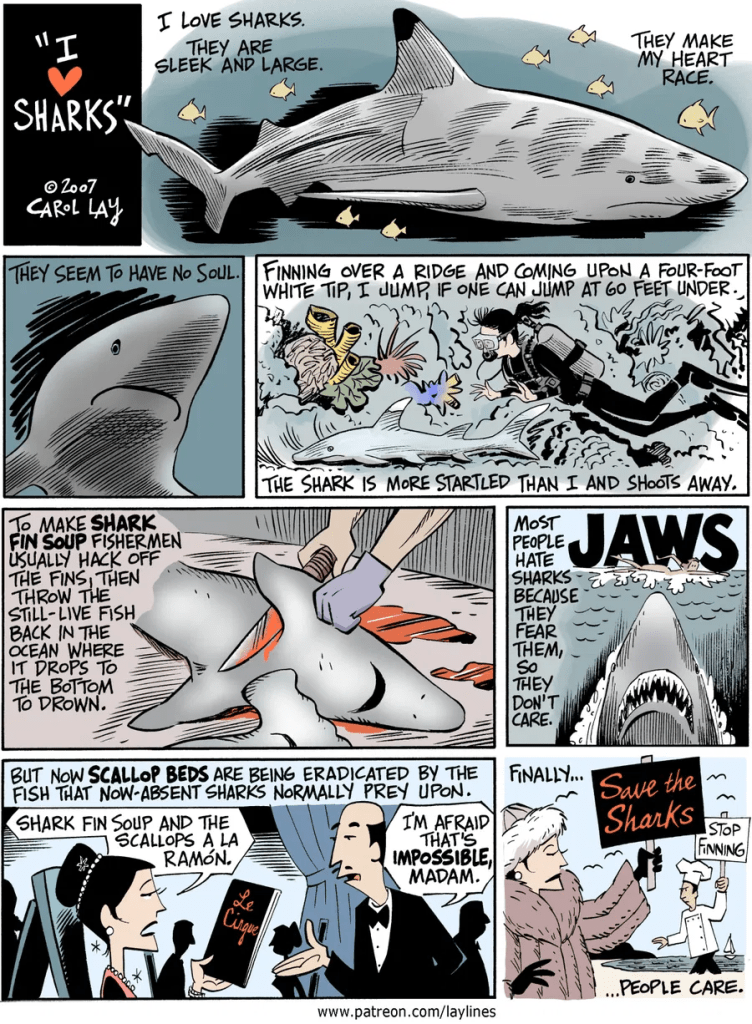
Lay Lines, As Requested
Well change of supper plans and I am OK with it.
Hi every wonderful person who comes here. If you read my last post you might have noticed that Ron and I talk over what to cook for supper. Tonight we were going to eat up the few left overs and we got talking of what I wanted to cook tomorrow. I was planning to get the fryer out and then do french fries and deep fried chicken patties. Ron had already bought a bunch of cheese slices because he was thinking of me making another red tomato sauce to have chicken parmesan with spaghetti. But I suggested today doing the french fries and chicken patties with putting cheese on them while they were hot out of the fryer, and that way I wouldn’t have to make another red sauce, but we could have the thing Ron suggested later. He thought about it and he loves the idea. So I am off to cook supper. Making both my husband and me happy. Does this make me a traditional wife or just a happy partner in a same sex relationship? I don’t care really either way. It makes Ron really happy and he makes me really happy. Isn’t that what it is to be about? Hugs
This is our Tupac
Tupac was hurt and struggled to survive for so long with no home. When Ron and I first met him and the other cat he was barely hanging on. I was getting up at 2 or 3 am and feeding them both them. They were ravenous. They got so little food they scarfed down what they could get. The female was feral, but Tupac had been an inside cat and slowly moved into being inside. During the hurricane Ian James got Tupac in and he stayed inside, but she did not. We don’t know what happened to her, but Ron adopted Tupac then, renamed him and we paid for his vet bills. And both Ron and I let the neighborhood know he was now our cat and anything dealing with him needed to go through us. The costs have been a lot, but he has filled out, he has been given back a chance at life, and he loves us so. And even though I keep telling everyone he is Ron’s cat I am the one that dotes on him and who he snuggles with in the bed at night. But make no mistake, Ron wanted him, Ron insisted, Ron named him, he is Ron’s cat. Who just happens to lie purring quietly on my arm in the bed at night. But he still wakes up at between 3 and 4 and cries out to me for food. You can guess what I do. When I get back to bed Ron is he had been awakened will say , I would have done that if you wanted. But he can sleep through Tupac’s cries for food and I cannot. So I do it. Hugs

 Scottie's Playtime