3 Women In History Who Rocked

Kickass Women in History: Tarenorerer

by Carrie S · Apr 4, 2026 at 2:00 am 

Please be advised that this post contains the names of deceased persons. In lieu of images of the deceased, which are offensive to Aboriginal persons, this post contains images of art by contemporary Aboriginal artists.

TW: genocide, slavery, exile, sexual violence, imprisonment, forced labor

For this month’s Kickass Women in History, we go to Tasmania, an island state of Australia, home of the Palawa people. The Palwala people called their home Lutruwita, and early British colonizers referred to it as Van Diemen’s Land. From 1803 to 1853, Van Dieman’s Land was Australia’s primary penal colony. Later on, the island’s name was changed to Tasmania to avoid the stigma of its penal colony history.

Tarenorerer was a Tommeginne woman born around 1800. Between 1800 and 1850, more than 70,000 people were exiled from England and forcibly deported to Van Diemen’s land and subjected to forced labor. This was an incredibly violent time in Tasmania. The convicts were disproportionately male and sexual violence against women was pervasive, while the convicts in general struggled to survive a harsh environment and harsh treatment from their overseers.

Two Women, by Alison Munti Riley

While life was difficult for the convicts, it was worse for the Aboriginal people who were murdered on sight. The convicts and their overseers carried out systemic genocide against Aboriginal Tasmanians during a conflict known as ‘The Black Wars.’ While most of the genocide focused on mass murder, George Augustus Robinson developed the “Friendly Mission,” a plan to forcibly deport Aboriginal Tasmanians to Flinders Island.

When Tarenorerer was in her teens, she was captured and taken from her family by another clan and sold to White sealers on the Bass Strait Islands. During her captivity, she learned to speak English and to use guns.

Tarenorerer escaped in 1828 and became the leader of the Plairhekehillerplue clan of Emu Bay. She led them in a guerilla war against the colonizers.  (snip-a bit MORE)


Kickass Women in History: Queen Himiko

by Carrie S · Mar 7, 2026 at 2:00 am ·

For this month’s kickass woman, we turn our attention to Japan and the legendary life of Queen Himiko, the first recorded ruler of ancient Japan – not only the first female ruler, but the first ruler, period. I’m going to do a little summarizing here, but I’m also going to be very link-heavy. So much legend surrounds Queen Himiko that I am waaay over my head in terms of describing her life, but I do want to give you some links to explore so that you can learn about this fascinating woman.

Once upon a time, before Japan was a country, in the Yayoi (300BC-300AD) and Kofun (250-538AD) periods, there were all these island city-states. Rulers were also religious figures, and female shamans were highly regarded.

The written records of this period come from Chinese historians, who referred to this region as “The Land of Wa”, home of the “Eastern Barbarians.” We also have writings from Korean historians. As summed up in the article “Queen Himiko: Badass Women in Japanese History” by Chelsea Bernard:

During the second half of the 2nd century (ca. 147-190 AD), the lack of a capable leader plunged the Land of Wa into political turmoil and violent upheaval. Finally, in 190 AD the unmarried shamaness was chosen by the people to rule. Installed in a palace with armed guards and watch towers, she was served by “1,000” female attendants while her “brother” acted as a medium of communication, transmitting her instructions and pronouncements to the outside world. After ascending to the throne, she went on to restore order and maintain peace like a boss for the next 50 or 60 years.

Queen Himiko pulled about 100 kingdoms and confederacies and clans together. She sent diplomatic missions to China, which formally recognized her rule. This video explains her role as a verifiable person in written record and archeology. It’s pretty dry but also very detailed.

(snip-a little MORE on the page)


Kickass Women in History: Arnarulunnguaq

Feb 07, 2026 02:00 am | Carrie S

I don’t know why, but I am a total sucker for books about Arctic and Antarctic exploration. Bring me your frostbite, your scurvy, your long marches, and, above all, bring me my warmest pajamas and a hot cup of tea and we have what I consider to be the perfect ingredients for a cosy night in.

The Heroic Age of Antarctic Exploration (1897ish – 1922ish) and the many efforts to locate the Northwest Passage in the Arctic are simply crammed with stoic imperialist White men who suffer terribly for what, frankly, does not strike me as terribly good reasons. Perhaps my ability to read of their sufferings with ghoulish fascination stems from the fact that none of these guys needed to be either North or South in the first place. To borrow and bend a common phrase: you live by the poorly sealed canned goods, you die by the poorly sealed canned goods*.

black and white photo shows a smiling young woman in furs
Arnarulunnguaq on the Fifth Thule Expedition

Of course, in the case of the Arctic, people were already living there long before any White explorers staggered upon the scene. Yu’pik and Inuit peoples were instrumental in exploratory expeditions in the Arctic and, less directly, the Antarctic. I’ve already written about Ada Blackjack, an Inupiaq woman who survived on Wrangel Island alone for eight months after the other members of her party died.

Other Indigenous women often supported expeditions, especially Arctic ones, by sewing, skinning and preserving fur and leather and cooking. Taqulittuq (also known as Tookoolito and as Hannah), an Inupiaq woman, accompanied Charles Francis Hall on many expeditions including one in which she and some crew members were marooned for months and survived because of the skills of Taqulittuq and her husband. Many other Indigenous women accompanied and supported expeditions and were never formally recognized for their valor.

Arnarulunnguaq, the first woman to travel from Greenland to the Pacific, was born in Greenland in 1896. She related that when she was six or seven, her father, a hunter, died and the family became so desperate for food that they prepared to sacrifice Arnarulunnguaq so the the rest of the family could live, having one less mouth to feed. However, at the very last minute, her brother started crying and her mother decided not to kill Arnarulunnguaq after all. Arnarulunnguaq was (of course) powerfully changed by this experience. According to the explorer Knud Ramussen:

She says herself that the gratitude that she came to feel many years later, and the life she had almost received as a gift, has made her placid towards people.

Arnarulunnguaq married a hunter named Iggiannguaq (allegedly she had a previous marriage that failed because she was “too lazy,” a trait which truly does not match the historical records of her life!). The two planned to accompany Knud Rasmussen on his Fifth Thule Expedition (1921 – 1924). This trip involved travelling from Greenland to Siberia via dogsled. Iggiannguaq died before the trip commenced, and Arnarulunnguaq asked to be allowed to continue with the trip. Her cousin, Qaavigarsuaq Miteq, filled the role of hunter.

(snip-MORE on the page)

Trump’s Miami Library Monstrosity Is A Total Scam

tRump couldn’thelp himself but he had to attack Obama making claims of how bad Obama’s library is.  Then Sam describes tRump’s grift / scam on his library, using tax free dollars to build a hotel that he will make money from.  Then Sam talks about the citizenship birthright case.  Hugs

Clay Jones, Walt Whitman?

Walt Whitman, Abraham Lincoln, and the “Terrible Duties” of Democracy

Abraham Lincoln’s faith in the Declaration of Independence ultimately influenced Walt Whitman’s harsh but optimistic appraisal of the American experiment.

Ryan Reft

Walt Whitman and Abraham Lincoln (Library of Congress)

“The United States are destined either to surmount the gorgeous history of Feudalism, or else prove the most tremendous failure of time,” wrote American poet Walt Whitman in his 1871 work, Democratic Vistas. Despite writing in the wake of a brutal civil war and a failing Reconstruction Era, Whitman remained optimistic. “Not the least doubtful am I on any prospects of their material success.”

Known more for his poetry, exemplified by Leaves of Grass (1855), Whitman’s dark 1871 treatise on the nation remains a harsh but ultimately optimistic appraisal of the American experiment. It serves as a useful tool for thinking about the nation’s current state on the 250th anniversary of the Declaration of Independence.

Whitman’s revolutionary patriotism had long been part of his worldview. He celebrated the Declaration of Independence and the Revolution in the preface to Leaves of Grass, noting that a poet must “enter the essences of the real things and past and present events,” among them “the haughty defiance of ’76, and the war and peace and formation of the constitution.”

But for all his celebration of the Declaration and the nation’s founding, he did not mince words regarding the nation’s failings. He wrote of a “hollowness” at the center of American life at the time, calling the business classes depraved and the government saturated in corruption. (snip-go see the rest!)


Trump Age

Trump threatens to bomb Iran back to the Stone Age

Clay Jones

Donald Trump is threatening to bomb Iran back to the Stone Age, which, if he does, would be a war crime.

Trump’s chosen war is with the government of Iran, not the people, yet he continues to threaten to destroy its infrastructure. The more Donald Trump and Pete Hegseth brag about their success in the war, the more it seems that Iran fights back.

Trump tells us that the war is won and that Iran’s ability to wage war is nearly depleted if not already destroyed, yet missiles still rain on Israel and our other allies in the Gulf. And if Iran doesn’t have any weaponry left, then how did they shoot down two American jets? If the war is already won, then why are we still fighting? (snip-click on the title to get the rest!)

Rogan FLIPS OUT On Theo For Mentioning Gaza

The problem is the money AIPAC uses to either entrap politicians and these podcasters / influencers or uses its money to threaten and punish them.  Hugs


Democrats Are FED UP With Party Leaders

This is a great clip on the situation with the democratic party, democratic leadership, and the democratic message.  Also the polls on democratic leader ship is in the negative numbers.  One reason is the Israeli genocide in Gaza and the minority leader in the Senate, Chuck Schumer has said his number 1 priority is making sure the left keeps supporting israel.  The democratic party leadership has been totally captured by the big money donors, corporations, and large lobbying groups like the Israeli lobby AIPAC. It doesn’t make the people feel they are important to him or the party leaders.  Hugs

What do you think about this CHRISTIAN NATIONALISM truth?

2 Items Regarding Book Bans, & Time Travel For World Improvement

What to Know About the National Book Ban Bill

House Resolution 7661 is a potentially significant piece of book ban legislation. Here’s what you need to know about it.

On March 17, the U.S. House Committee on Education and the Workforce advanced H.R. 7661. There is no word regarding when the bill will be voted on, but the vote is expected to occur sometime in the coming weeks. While that bill number may not sound familiar, there’s a good chance you have recently heard it referred to as the National Book Ban Bill.

Though that title is not formally associated with the proposed resolution, it does speak to the concerns many have regarding the bill’s language, intentions, and potential long-term impact. While it can understandably feel overwhelming to keep up with every potentially impactful piece of legislation in the modern United States government, the details of H. R. 7661 (including those not printed, which only exist between the lines) make it worth knowing about for anyone who opposes the growing trend of book bans and public education funding.

What is H. R. 7661, or the Stop the Sexualization of Children Act?

Formally, what is sometimes referred to as the National Book Ban Bill is being presented as H.R. 7661 or the “Stop the Sexualization of Children Act.” You can read that act here. It has also been referred to as the “National Don’t Say Gay bill,” a reference to a 2022 statute that triggered significant school policy changes, including legislation that restricted public schools from introducing material in kindergarten through 3rd-grade classrooms that was deemed to be related to matters of sexual orientation and gender identity. The law also included requirements specific to students in higher grades and age ranges.

A sweeping initiative, the Don’t Say Gay bill (formally referred to as the “Parental Rights in Education” bill) established several education restrictions regarding both curricula and school policies that could be enforced via various means (including potential legal action). It required schools to inform parents if their children received any mental health services at school, it allowed parents to have greater access to formerly private documents related to their kids, and it enacted a series of moderation policies that effectively enabled legislators to have greater control over what is (and isn’t) taught to students in those age ranges via funding decisions and similar policies. Said policies included book bans, which are also at the heart of H.R. 7661’s many potential effects.

The Main Provisions of H. R. 7661

The primary purpose of H. R. 7661 is to enable the U.S. government to deny federal funding to schools that use those funds for programs and materials the bill deems to be inappropriate.

The bill is effectively an amendment to the Elementary and Secondary Education Act of 1965. The act was designed to provide expanded federal funding to public schools to ensure that their students (more specifically, public school students in lower-income areas) didn’t continue to fall far behind students at schools with access to more resources. It was a milestone piece of legislation that remains one of the cornerstones for federal public school funding in the United States to this day.

While H. R. 7661 would not eliminate that act, it would, in the bill’s own language, “prohibit the use of funds provided under such Act to develop, implement, facilitate, host, or promote any program or activity for, or to provide or promote literature or other materials to, children under the age of 18 that includes sexually oriented material, and for other purposes.”

The broad nature of that language is one of the more controversial aspects of the bill. For instance, it would deny schools the ability to use federal funding for programs, literature, and related texts that include “sexually oriented material” and “material that exposes such children to nude adults, individuals who are stripping, or lewd or lascivious dancing.” H. R. 7661 also includes exemptions for scientific texts, works related to major religions, as well as “classic works of literature” and “classic works of art” (more on those in a bit) that may naturally include references to the content it intends to restrict. Furthermore, the authors of the bill note that “sexually oriented material” includes “any depiction, description, or simulation of sexually explicit conduct (as defined in subparagraphs (A) and (B) of section 2256(2) of title 18, United States Code).” You can read those United States Code subparagraphs here. They largely reference material such as “bestiality” and “sadistic or masochistic abuse” but also include the far more general idea of “sexual intercourse… whether between persons of the same or opposite sex” as sexually explicit content. It is a rather large collection of topics which could potentially fall under that umbrella definition.

However, H. R. 7661 would expand the definition of “sexually oriented material” to include material that “involves gender dysphoria or transgenderism.” Along with suggesting that matters of identity should be considered a sexually obscene topic, the inclusion of that language has significant legal implications. That choice of wording makes it clear that this bill will most directly and immediately affect transgender students, transgender-related materials, and it could be argued, gender non-conformity topics in general, which may include discussions of specifically prohibited subjects in affected schools. 

What’s important to remember is that the bill specifies works that will be excluded, but it is more vague regarding what, exactly, could be impacted. It could, for instance, be determined that a variety of LGBTQIA+ books that make passing reference (or even perceived passing references) to such materials could also be effectively banned from federally funded schools. The policies for such determinations and review procedures are not set. It should also be noted that the use of “sexually oriented material” and similar pieces of broad language have often been contested as the basis for similar pieces of legislation (more on those below). 

There are undoubtedly concerns regarding the direct targeting of students and materials that would be most obviously impacted by the “gender dysphoria or transgenderism” language. The reason that this is being referred to as a “National Book Ban Bill,” though, is due to both the bill’s relationship with current federal funding policies (and thus its potential reach) and the ways that its language could be used to legally justify a variety of bans or create a precedent for similarly sweeping bills. 

What Would Happen If H. R. 7661 Passes?

(snip-More, at link right up there. Go read it, so you know what we each need to know-)


Five Time Travel Stories About Taking Out Hitler

Exploring very different takes on a familiar thought experiment.

By Lorna Wallace

It’s a familiar question in time travel narratives: If you could go back in time and kill Adolf Hitler, would you? Sometimes, of course, there are time travel rules in place that prevent such interference; for instance, in About Time (2013) time travelers can only go back to moments in their own pasts. But there are plenty of other stories where the opportunity does present itself (although not everyone is able to follow through with it, including antihero Deadpool).

While the basic premise—removing Hitler from existence in some way (often as a baby, or before he can be born)—is sometimes only briefly touched on in time travel narratives, there are a number of stories that explore the problems and ramifications of such an action in a bit more depth. Here are five short stories (well, four stories and one comic, which is arguably a short story with art) that do just that.

I Killed Hitler” by Ralph Milne Farley (1941)

Just a few years into World War II—before America had even joined the fight—Ralph Milne Farley wrote the earliest known story about using time travel to kill Hitler. The unnamed main character is one of the Nazi leader’s distant cousins but he lives half a world away in Massachusetts. He’s deeply unhappy about Hitler’s warmongering—partly because the genocidal leader’s actions are unequivocally wrong, but also partly (and honestly… largely) because being drafted into the war is going to interfere with our narrator’s painting career.

After complaining to a friend about all the Allies who haven’t taken the chance to assassinate Hitler during their face-to-face meetings, our protagonist gets the chance to go back in time and murder the Führer while he’s still a young boy. Although the outcome is now a fairly basic rendition of the theme, this story remains notable for being the first take on the idea.

I Killed Adolf Hitler” by Jason (2006)

Set in a world where being a killer-for-hire is a legitimate profession, this comic book sees our protagonist, an anthropomorphic dog who is once again unnamed, take on an unusual job: killing Hitler. The time machine that sends him back only has enough energy for one round trip every 50 years, so it’s crucial that he doesn’t mess it up—which, of course, he does. Not only does he fail to kill Hitler, but the Führer uses the time machine’s one ride back to the present and then promptly blends in with modern society.

Our hitman still needs to finish the job, though, and now he’s tasked with tracking down the Nazi leader, in spite of the fact that he’s much older once he’s caught up to his target (because, after being stranded in the past, he had to live through the years to get back to the present). He decides to enlist the help of his (now much younger) ex-girlfriend and the journey they go on together is filled with both dry humor and unexpectedly tender moments. Sure, their goal might be murder, but there’s still room for touching character growth along the way…

Missives from Possible Futures #1: Alternate History Search Results” by John Scalzi (2007)

Written in the second person, this short story sees you sampling a technology called Multiversity™, which is essentially Google Search for the multiverse. You enter “THE DEATH OF ADOLF HITLER”—one of the most popular searches—and are shown eight sample realities based on the various ways that Hitler has died in alternate histories. This story is short and sweet, with only a few sentences outlining each scenario (although you’re informed that you can get a more detailed breakdown for the low, low price of $59.95!).

The hilarious scenarios become increasingly unhinged (and one does explicitly feature time travel!), but because there are only eight I don’t want to spoil any of them by going into too much detail, here. What I will say is that I would absolutely pay to find out more about the squids in Scenario #8…

This short story served as the basis for the “Alternate Histories” episode in the first season of Love, Death & Robots—so if this concept seems familiar to you, that might be why.

Wikihistory” by Desmond Warzel (2011)

“Wikihistory” is written entirely as a series of online forum posts from members of the International Association of Time Travelers. The first post in the story comes from FreedomFighter69, a new member of the IATT who is celebrating their first excursion: going to the opening of the 1936 Olympic Games to kill Hitler. SilverFox316 is none too impressed with this move and a few minutes later posts to say that they’ve successfully gone back and stopped FreedomFighter69. Much to the frustration of SilverFox316, new members continue making this same mistake (which could be avoided if they’d simply read Bulletin 1147 as they’ve been repeatedly asked to do!).

The forum format is inventive, the time travel plot is chaotically fun, and the bickering dynamic between the posters feels hilariously true to life.

It’s OK to Say if You Went Back in Time and Killed Baby Hitler” by Jo Lindsay Walton (2018)

This is another short story written in the second person; this time you’re a member of a small group of anti-fascists intent on using a time travel rig to kill baby Hitler. Umeko volunteers for the gruesome mission and when she returns, she’s confident that she got the job done. But then she learns that history hasn’t changed, which makes no sense because she’s certain that she beheaded baby Hitler.

While the group squabble over this unexpected result, you as the protagonist take the opportunity to slip into the rig and go back to 1890 to figure out what went wrong with the original mission. You get your answer, but unfortunately both time travel and group projects are a very messy business, so combining the two isn’t exactly a recipe for success.


Although using time travel to put an end to Hitler and his rise to power is a fairly well-trodden trope at this point, hopefully this list has proven that there are still plenty of creative ways to tell this kind of story. I’d love to hear if you have any particularly intriguing, thoughtful, and/or original stories that riff on this theme, regardless of format!

(no snip; they’re all here.)

History Repeats

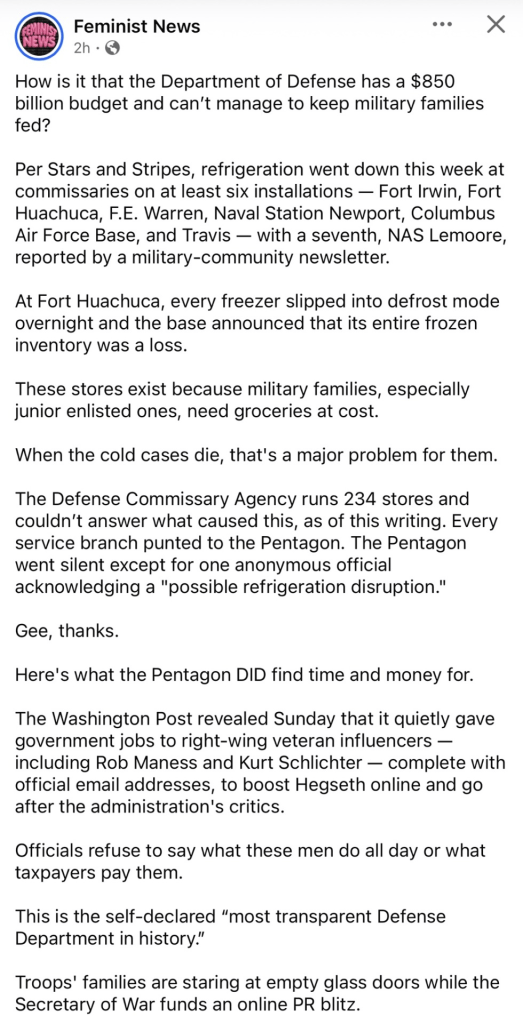
While I dread the idea that people in the US will be starved to this degree of desperation, well.

TODAY IN HISTORY

Today In History StarApril 2

Featured Event

1863

Today in History—April 2: The Story of the Richmond Bread Riot

April 2, 1863: “Bread or blood!”

On this day in 1863 more than 100 women armed with knives, axes, and pistols marched to Richmond, Virginia’s capitol to demand a meeting with the governor. When questioned by passersby, some held up their emaciated arms in explanation: They were starving.

Nine inches of snow had just fallen, the 20th storm that winter. Routes into the city had become rivers of mud, making food transport nearly impossible. Farming was suffering because of labor shortages (with farmers enlisted in the Civil War) and fields damaged by battles. Inflation had sent food prices to 10 times the prewar cost.

Then Confederate president Jefferson Davis issued a proclamation declaring March 27 “a day of fasting, humiliation, and prayer.”

For many of the city’s working-class residents, that was what they were already doing.

As the Confederate capital, Richmond’s population had swelled to 100,000, crowded with troops and government workers. Because it was such an important spot, the Union had set up a blockade of its ports. What little food made it through was requisitioned to feed troops.

On April 1 a group of women—wives and mothers of soldiers—met at Belvidere Hill Baptist Church. Led by Mary Jackson and Minerva Meredith, they agreed to confront the governor the next day.

Some sources say the governor’s feeble answers failed to appease the women; other sources say he declined to meet. Either way, the crowd marched on—toward government food supplies, mercantile facilities, and private businesses. By now they had a rallying cry: “Bread or blood!” Their ranks swelled to hundreds or even thousands. They seized flourhambacon, clothing, and shoes. The public guard was summoned but quickly overrun.

Fun Fact

May Walker, a “toothless old woman,” took an axe to the warehouse door and made off with 500 pounds of bacon.

It only ended when Davis ordered the guard to open fire—in five minutes. He waited, holding his watch. The crowd still debated defiance but dispersed at the last possible moment.

In the aftermath, more than 60 men and women were arrested. The city council met that day and dismissed the riot as “uncalled for”—then stationed cannons near the food supplies.

Two days later, however, another meeting was held to discuss how to feed the “meritorious poor,” which did not include the women who’d rioted; they were villainized in the press.

But two weeks later an additional $20,000 was allocated to keep Richmond’s citizens fed.

Some Joe My God headlines that caught my eye

I got up at 3 am this morning and was able to respond to almost all the comments.  That gave me a few minutes while I ate some apple oatmeal for breakfast to read some news from Joe My God that he posted yesterday.  Here they are in no particular order. Hugs


Yes it would make me want to sign up to work grueling hours and possibly die for a country that wants to use my graduation to arrest and deport my family members. Great move.  Hugs.

ICE Agents To Attend USMC Boot Camp Graduation Ceremony To Arrest Undocumented Family Members


I wonder what makes a person so hateful, bigoted, and racist.  How much do you fear not being in a super majority and why? Do they worry that the new majority will treat them the way they treated the minorities when they were the majority? Hugs

Politico: Architect Of 2020 Fake Elector Scheme Is Main Driver Of Campaign To Overturn Birthright Citizenship


More racism.  This program they are now stopping claiming it is DEI and woke is because the first program illegally excluded black people in an attempt to be racist.  Hugs

USDA Cancels $300M “DEI” Program To Help Farmers

I was not sure whether to put this under corruption or racism.  But as they are clearly using race, skin color, and language/accents to stop and detain people, racism won the toss.  Hugs

DHS Halts Plans To Purchase More Warehouse Gulags

OK more bigotry if not racism.  The joy these people get from forcing kids to be cis or straight rather than let people just express themselves as they are is something I don’t understand. Seriously, why the need to go against all the medical science, medical studies that show conversion therapy to not only not work but to be very harmful to those who experiance it.   It is torture and child abuse.  Kids who are forced into it, who have to suffer through conversion therapy are much more likely to try to commit suicide.  For what goal, to please their god?  Their god created the trans / gay person as trans or gay.

Ex-Gay Torture Group Celebrates Supreme Court Ruling

Grift, graft, and corruption run rampant in the tRump administration.  Hugs

Duffy Partners With MTV’s “Real World” Producers For Reality Series About His Family On Extended Road Trip


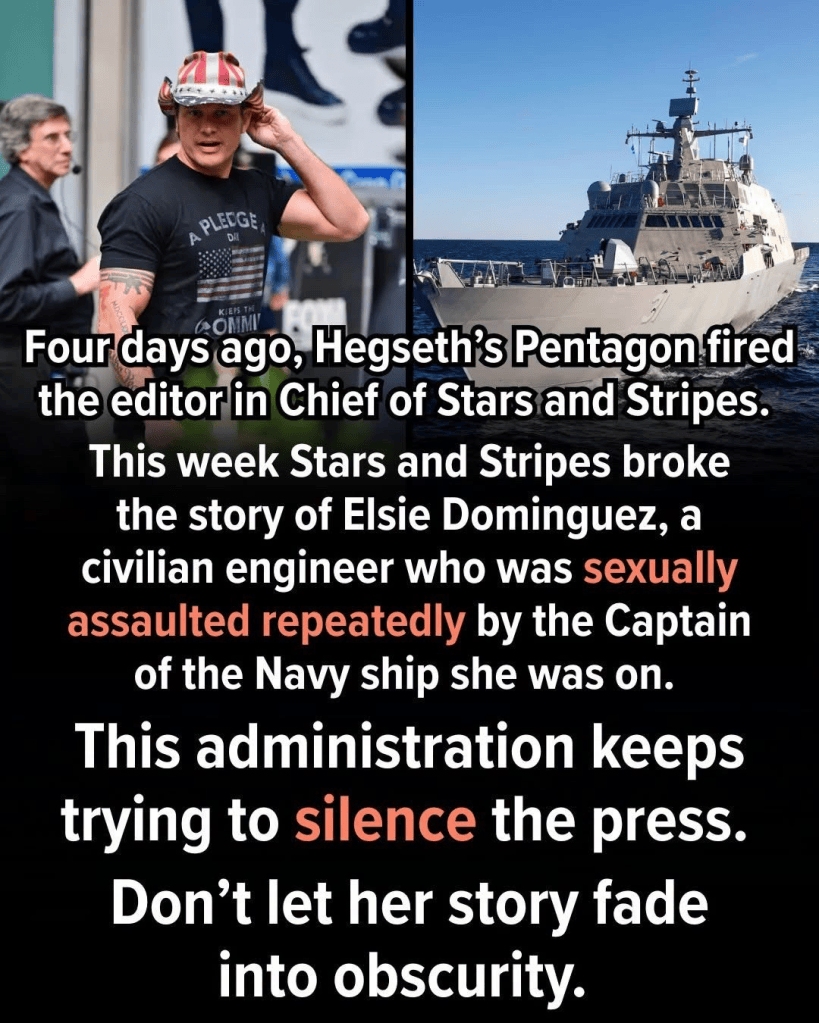
The Army felt it was important enough breach of regulations and rules along with a waste of taxpayer money to suspend and investigate those involved.   Pete Kegseth our Fox host wannabe big time war general secretary of defense over ruled their decision and undermined their authority because it looked cool.  He is acting like a 10 year old boy playing army with his toys.  Kegseth also illegally removed 4 officers from being promoted to flag rank.  Two because they were female and two because they were black.  The rest he wanted to be promoted were white men of course. Hugs

Hegseth Kills Army Probe Into Kid Rock Fly-By: “Pilots Suspension Lifted, No Punishment, Carry On Patriots”

More illegal actions by the wannabe dictator and his administration who believe anything tRump mumbles is the law of the land and they do not have to follow any rule or law.  Hugs

Judge: Trump Illegally Ended Legal Status Of Migrants

tRump illegally deciding that his administration can decide who gets to vote and how voting is done.  All by his decree.  The dear leader has spoken.  Hugs

Trump Signs Order To Create List Of “Eligible Voters”

More crime? Why am I surprised that people that rioted and attacked the US Capitol, breaking in and causing mass damage might not respect the laws?  In that act they assaulted police, staff, and tried to kill congress members.  Hugs

NYT: “People Trump Pardoned Are On A Crime Spree”


Important Words From Rev. William Barber

Rev. William Barber: Why the Midterm Election is So Important

Rev. Barber: We have to start teaching people that when we talk about politics, there is not an aspect of your life—from your birth to your death—that is not impacted.

By Rev. William Barber II

Published March 30, 2026

When we look at the midterm elections, we have to start with the basics. We are electing every member of the United States House of Representatives and one-third of the United States Senate. In most places, we are electing their entire state general assemblies, and many are electing governors, attorney generals, and so forth. We are electing the very people who impact every aspect of our lives. These elections determine whether we will have people in office who want to ensure everyone has health care or who want to take health care away; whether we want people in office who will vote to make sure everyone is paid a living wage versus just giving more money to corporations; whether they will care about poor and low-wage voters and the resources for people to afford a basic life, or whether all they will care about is giving more wealth to the already wealthy. That is what’s on the line.

Rev. Dr. William Barber, co-chair of the Poor People’s Campaign speaks at the Poor People’s Campaign: A National Call For Moral Revival Rally at the US Supreme Court on October 27, 2021 in Washington, DC. (Photo by Jemal Countess/Getty Images for Repairers Of The Breach)

What is at stake is whether or not you have a Congress that will demand that the President, whoever that President is, cannot just act unilaterally, but must get congressional approval for war; whether or not we have a budget; whether or not TSA agents are paid; whether or not government employees are paid; whether or not we have a Congress that will stand up and not just be a rubber stamp to what an authoritarian President wants to do or will just “go along to get along.”

We have to start teaching people that when we talk about politics, there is not an aspect of your life—from your birth to your death—that is not impacted. You’re not officially recognized without a birth certificate, which is the result of a political decision. You can’t guarantee your Medicaid, Medicare, or Social Security without political decisions. Even as you die, people must understand that politics is not just about personality; it’s about people being put in place and the kinds of policies and vision they will enact.

Rev. Dr. William J. Barber II, is a Professor in the Practice of Public Theology and Public Policy and Founding Director of the Center for Public Theology and Public Policy at Yale Divinity School. He serves as President and Senior Lecturer of Repairers of the Breach, Co-Chair of the Poor People’s Campaign