New month, new collection of queer romances, and this month we’re going heavy on historicals! Treat yourself to love throughout the ages with these sweet new reads.
A sizzling sapphic enemies-to-lovers romance between two rival tennis superstars, taking place during the US Open!
Nothing fades faster than a former prodigy—and Inés Costa is dangerously close to disappearing.
Once queen of the court, Inés is limping through qualifiers. And after losing her biggest sponsor to Chloe Murphy, the sport’s fiery new favorite, she and her bank account are running on fumes.
Chloe, known as much for her talent as her temper, is a top seed for the upcoming US Open. But thanks to broken rackets, code violations, and the inability to play well with others, her “favorite” status is slipping away.
However, when they are forced to share the same side of the court, and the world surprisingly doesn’t implode, Chloe makes an she’ll fund Inés’s journey to the US Open, but only if Inés agrees to be her hitting partner and teach her to keep a level head.
It’s strictly business, but somewhere between practice drills and tour stops, the line between rival and something more begins to blur.
As the summer burns toward Flushing Meadows, their sizzling tension catches fire. With a trophy in sight and emotions running high, will their romance double fault at set point?
The Game, Set and Match series gets its first f/f in this third book, bringing a heated rivalry to the tennis court. This one’s chock full of favorite tropes and is decidedly steamy, the perfect pick to tide you over until nonfictional players hit the US Open in a few months. (snip-MORE, plus ordering info, on the page)
On March 31, the Supreme Court sided with a Christian therapist in Colorado and tossed out the state’s ban on conversion therapy for minors. The therapist, Kaley Chiles, challenged the state’s ban on the grounds that it violated her First Amendment rights. The Court agreed with Chiles by an 8-to-1 vote.
Conversion therapy is a practice that generally involves treatment intended to “cure” same-sex attraction or gender dysphoria. Every major medical study has determined that conversion therapy does not work and often leads to serious mental health problems for patients who are subjected to it. Timothy Schraeder Rodriguez knows that from personal experience.
Rodriguez is the author of Conversion Therapy Dropout: A Queer Story of Faith and Belonging, which will be released on May 5. The memoir unpacks the eight years Rodriguez spent in conversion therapy, struggling to reconcile the tension between the version of Christianity he had been taught growing up and his sexual identity. For Rodriguez, the path to healing began when he accepted that there was no tension.
Rodriguez told Sojourners the Supreme Court’s decision is deeply personal and painful, and he hopes that his story will both help LGBTQ+ Christians feel a little less alone and help convince non-affirming Christians to rethink their convictions.
This conversation has been edited for length and clarity.
Tyler Huckabee, Sojourners: When critics talk about the harm that conversion therapy can cause, particularly for minors, what sort of harm are we talking about?
Timothy Schraeder Rodriguez: Where to begin? There’s documented research to show that anyone who experiences conversion therapy, especially as a minor, is subject to higher rates of depression and anxiety. The suicidal ideation rate nearly doubles for LGBTQ+ youth who have experienced conversion therapy, and then the long-term effect of it tends to show up in the inability to create lasting relationships, substance abuse, all those kinds of things. It’s a very devastating practice in the sense that it attacks body, mind, and spirit. When all three of those parts of yourself have been attacked, disengaging from the harm that that causes takes a lot of time and a lot of real therapy. But a lot of folks who have experienced conversion practices are untrusting of therapeutic spaces.
What arguments did conversion therapy advocates use that convinced the Supreme Court to side with them?
They were able to successfully reduce the idea of what the role of a therapist in a therapeutic setting is: that it’s just a space for conversation, that this is a free speech zone, that this is a space where we should all be allowed to say what we believe. Really, it shifted the definition of what happens in therapists’ office from approved therapeutic practices, to saying, “Well, actually, if a therapist has a different viewpoint, they should be allowed, with their First Amendment right and religious freedom, to be able to interject their own thoughts and go against what has been the conventional therapeutic practices.”
Tell me about your experience with this practice. You call yourself a conversion therapy dropout.
Yeah, I grew up in an evangelical Christian home in Illinois and was insulated in the evangelical Christian culture of the late 1990s and 2000s. Not much was said about homosexuality, but everything around me led me to believe that to be anything but straight was a problem.
So, when I was 19-years-old, I finally admitted for the first time that I was “struggling with same sex attraction,” as I called it back then. I was working at a church in Washington state and was dismissed on the spot for even admitting that it was a struggle that I had. I was told that I was broken and that there was no place for people like me in churches.
I was 19.
No one forced me in [to conversion therapy]. I opted myself in because I thought that was the only option someone like me had to maintain my relationship with God, my family, my community, the church.
I first was involved with the organization under the umbrella of Exodus International. It was an online forum that existed for folks who didn’t have access to a local ministry in their area. I was a part of that for about a year. I did talk therapy with a therapist for eight years, and then when I moved to Chicago and had access to in-person ministries, I started going to in-person support groups. And then all throughout that, I also attended an annual conference put on by Exodus that was their flagship event. It took a lot of different forms over eight years. It was a wild journey.
When somebody like me hears about conversion therapy, we assume a lot of Jigsaw-type Saw torture traps with gay people being violently forced to recant their sexuality. But in reading your book, you describe it as a process that can be deceptively gentle and cloaked in the language of love and acceptance. You even found some community there.
The experiences that people see portrayed in movies or documentaries—just the lore of conversion therapy—those do exist. But when I encountered conversion therapy, it was much more insidious. I was in talk therapy. I thought I was talking to someone who was trying to help me process my past, but all the information that I gave my therapist was weaponized against me and used as proof as to why I was struggling with what I was struggling with.
And so, from that side, you know, I was trained to moderate myself, to police my mannerisms, to change my behaviors, to change my interests, to try to be more like a man, all those kinds of things. And then there was a spiritual component to it: Pray, seek God, do what all good Christians are supposed to do.
And there was a community component to it. I think it was probably the thing that I’m most grateful for that I got out of it, but also the most dangerous. Most of us were on our own little islands and had no one around us who knew what we were going through. And when we’d go to these groups or go to these events, we’d be around hundreds or thousands of people who were facing the same struggle. There was a camaraderie in the community that formed. Most of us didn’t realize it then, but that was the first time we were ever really, truly experiencing queer community and what it was like to be around others who are like us. Even though we were trying to do all we could to not be ourselves, there was still that underlying connection that bonded us all together. As harmful as all of it was, some of the closest friends that I have in my life today are people that I met in conversion therapy. We were in the trenches together.
But there was an underlying sense throughout all of it that I didn’t measure up, that something was wrong with me because I wasn’t experiencing the change that other people experienced. They were really good in those settings at bringing people out to share their testimonies: “Hey, I went from darkness to light, and here’s my wife and kids! God really can work miracles!” There was this whole system of shame, self-hatred, and self-doubt. But on the surface, it was hard to see that at first.
What was your breaking point with this process?
After eight years, I had done everything. I followed the rule book, and I was also working in evangelical Christian megachurches. I was becoming a rising star in that space for helping churches understand digital marketing and communication. The whole time, I never questioned the program. I was always taught to question myself. If there was something that I wasn’t experiencing, it wasn’t because the program was wrong; it was that there was something in me that wasn’t adding up.
So that was just this constant state of depression and anxiety and fear and all those things raging. I started drinking a lot. I was just a shell of a person. I threw myself into my work, and thought maybe if I just work hard enough, God will finally do the work that I wanted God to do in me.
I was at a big Christian conference—Catalyst—and there was a pastor speaking there, talking about how we needed to fight against gay marriage, that we needed real men, no more sissies, that we needed to fight the gay agenda. And I watched this whole stadium of people erupt and stand on their feet and cheer, knowing that they were talking about me. That led me to have a nervous breakdown.
It just came to a point where I thought I would rather end my life than keep going. But thankfully, I chose to end the way I had been living my life and decided to figure out how I could integrate my faith and sexuality, quit conversion therapy, and figure out what it could look like to become a gay Christian.
There were—especially during the late 2010s—not a lot of openly gay Christian blueprints to follow. Today, many parts of the church obviously remain very hostile to the LGBTQ+ community, and that feeling is often understandably reciprocated. What’s it like having a foot in both worlds?
It’s the weird experience that we carry. I understand why queer people leave the church when they come out, because they’ve been told their whole lives by this particular religious community that they’re broken, that God doesn’t love them, that there’s not a place for them. Why would you want to stay there?
Thankfully, right after I dropped out of conversion therapy, I was connected with Q Christian Fellowship—it was called the Gay Christian Network back then—but it’s one of the leading organizations that’s working with queer Christians to help them reconcile their faith and sexuality.
I went to one of those conferences in 2010, and it was such a weird experience, because it felt just like Exodus or any of the other conferences I had gone to, except it was OK for me to have a crush on other attendees and admit it [laughs].
It just exposed me to a whole new way of reading the Bible, understanding what scripture says, and just seeing other folks who were still engaged with their faith. It gave me the hope and courage that I could find affirming spaces where I could be loved and accepted just as I was as a gay man.
So, given all of that, tell me about how it feels to see this ruling come from the Supreme Court, largely on the pretext of religious freedom. I imagine this feels like the war that you experienced within yourself for so long made manifest in the legal system.
It’s disheartening, but it’s not surprising. As long as the church continues to other people and to draw lines around who is accepted, this will, sadly, be a fight we’ll have. I am grateful, though, for the churches that have made room at the table for queer people and that have courageously gone against the conventional wisdom.
But the Christian nationalism that we’re experiencing today is emboldening people to do a lot of horrible things in God’s name. I think people like me are very frustrating to them, because it would be a lot easier for their narrative if I were a person who had been in the church and left it because now I’m gay and hate the church.
But there’s a growing number of us where that’s not the case. We still love God. My relationship with God is stronger today than it ever was when I was in conversion therapy. I’m being fully honest with who I am and who God created me to be.
I hate that my story and my book are very relevant right now, but I’m grateful too. I didn’t have those mentors or those people or that guidebook to follow when I was on this journey early on. I can hopefully help others like myself—that younger version of myself—to know that you know who they are, loved just as they are.
For any queer people reading this—maybe they’re out, maybe they’re not—who are scared or alone, what would your message be?
Take care of yourselves, keep your chosen family close. There are affirming church communities out there. Church Clarity is a great resource that can help you connect with those if you feel like you need that kind of support.
But church can be complicated. Tony Campolo said at that Q Christian conference I went to that the church may be a whore, but she’s your mother. And so remember that what the church did to you is not how God feels about you, and it’s not the truth. Remember that God is love, and God loves you just as you are.
And for folks who have experienced conversion therapy, this is a time for all of us to be emboldened to share our stories. Our lived experience is the thing that can counter all the narratives that are out there now. We can bring a human face and voice to what this decision means, and hopefully, our experience can help the next generation.
I get the sense that there are a lot of Christians who, inside, wish they could be affirming, but don’t feel like they can, maybe because of their jobs, or their community, or just because they feel that the Bible doesn’t allow them to be. That’s a place I know that you yourself were in for quite a while as well. What would you say to them?
Listen to our stories. Talk to queer Christians who have walked this path. Matthew Vines’ book God and the Gay Christian is an excellent starting point just to understand how you can start to look at scripture in a different way and examine all the things that were shoved down all our throats about how we were taught to believe.
Also, look at churches that are affirming and learn from them. See what they’re doing and how they’ve chosen to read scripture and care for and love people.
I didn’t know that affirming denominations existed. I mean, I knew that they did in the ether, but it was a foreign world to me. And I think one of the challenges, particularly for those churches now, is to really become bold in their stance and in how they are speaking about these issues. It is a life-or-death issue, and I think many mainline denominations that have historically been affirming can tend to rest on their laurels. You just start thinking: “Hey, we’ve got this. We’re good. Everyone’s welcome.” But someone like me, who’d never set foot in a church like that, doesn’t even know how to even begin to navigate that space. We see your rainbow flags. We see the “All Are Welcome” signs. But I think that we need some love and coaxing in, just because it feels like we’re crossing an enemy line going into those churches. It felt that way for me at first.
I think the article is self explaintary and clear. The hate directed against the LGBTQ+ seems irrational and immoral. Why is it immoral if it is being done by religious groups? Because they have no qualms about lying, giving false and misleading information, and forcing their church doctrines on others who don’t agree with those doctrines. Below are just a few quotes from the article. The last one from florida would make pointing out the truth about how a person is acting or speaking illegal, but doing the racist bigoted stuff would stay legal. Hugs
Anti-trans bathroom bans made a comeback, with four passed in Alabama, Idaho, Ohio and South Carolina.
Policy changes enacted barriers to gender markers and name changes for IDs/personal documents in Arkansas and Florida.
Florida introduced a bill that limited free speech, making public accusations, whether true or false, of a person being homophobic, transphobic, racist or sexist equivalent to defamation and punishable by fine. The bill did not pass.
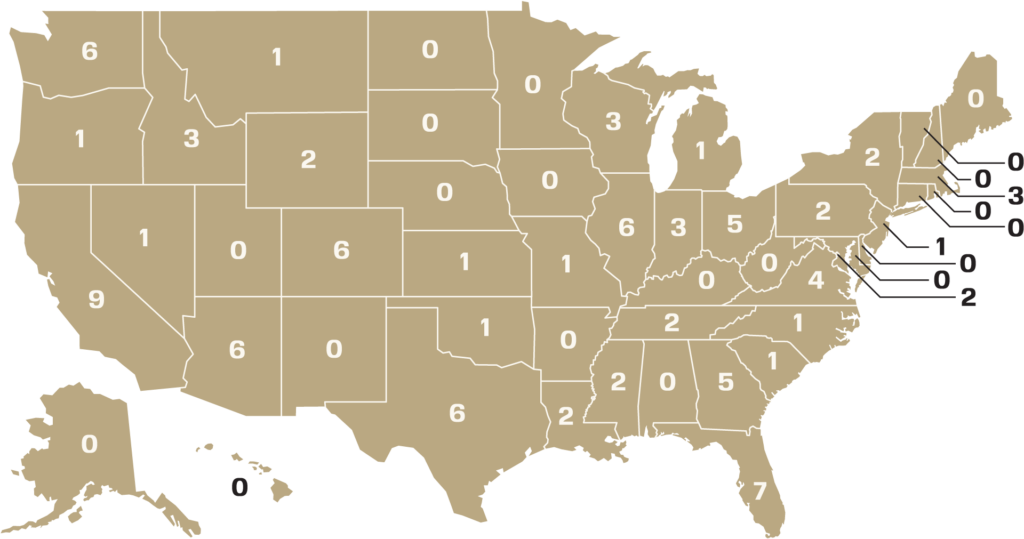
A central theme of anti-LGBTQ+ organizing and ideology is the opposition to LGBTQ+ rights or support of homophobia, heterosexism and/or cisnormativity, often expressed through demonizing rhetoric and grounded in harmful pseudoscience that portrays LGBTQ+ people as threats to children, society and often public health.
Top Takeaways
In 2024, the number of anti-LGBTQ+ groups increased by about 13% from the previous year. Anti-LGBTQ+ groups maintained a trend in heavy mobilization across multiple strategies with increasing political and financial support from the hard right.
Anti-trans narratives were instrumental to the 2024 election at all levels of government, especially at the local level where anti-LGBTQ+ and anti-inclusive education activism continue to heavily overlap. The politicization of gender-affirming health care and LGBTQ+-inclusive school curricula contributed to what has been characterized as the “most Anti-LGBTQ election in decades.” Republicans spent almost $215 Million on TV ads to smear trans people, surpassing ads on rival issues such as economy, immigration and housing. Another wave of anti-LGBTQ+ legislation broke records at state and federal levels, but such bills were not as nearly as successful as last year.
Anti-LGBTQ+ groups are heavily invested in the courts and pushing policy change by judicial decision. Hard right and anti-LGBTQ+ extremists on social media continue their campaign to “make pride toxic” by targeting inclusive business and marketing practices while anti-LGBTQ+ legal groups take up administrative law and lobbying strategies to eliminate diversity, equity, and inclusion practices in the public and private sectors under the guise of “viewpoint diversity” and “religious freedom” advocacy.
Key Moments
Throughout the state legislative sessions, anti-LGBTQ+ movement organizations continued their facilitation of a decades long effort to foment anti-trans moral panic in public discourse. Legislative assaults broke records for the fifth consecutive year, albeit with fewer successes.
Several factors slowed the trend, including coordinated community responses and reporting, such as the SPLC’s Project CAPTAIN, on the networks that perpetuate anti-LGBTQ+ talking points and legislation. Legislation trends of concern include:
A Florida bill promoted insurance coverage conversion therapy for detransition. The bill passed the House, but died in the Senate.
Anti-trans bathroom bans made a comeback, with four passed in Alabama, Idaho, Ohio and South Carolina.
Policy changes enacted barriers to gender markers and name changes for IDs/personal documents in Arkansas and Florida.
Florida introduced a bill that limited free speech, making public accusations, whether true or false, of a person being homophobic, transphobic, racist or sexist equivalent to defamation and punishable by fine. The bill did not pass.
In February 2024, anti-trans influencers spun a disinformation campaign to exploit the tragic shooting at Lakewood Church in Houston by alleging the shooter was trans. Hard-right social media influencers, equipped with talking points that help fuel gun purchases, used this and other mass shootings in 2024 to perpetuate anti-immigrant and anti-trans conspiracy theories. Despite claiming anti-trans activism helps “protect children,” the SPLC reported that in the wake of mass shootings, anti-trans extremists divert attention from meaningful reforms to prevent gun violence, which is the leading cause of death for children in the United States.
In response to online campaigns by hard-right social media personalities, many major brands scaled back Pride merchandise in 2024. Armed Conflict Location and Event Data (ACLED) reported anti-LGBTQ+ protests at Pride events decreased in 2024; however, GLAAD documented 110 anti-LGBTQ+ incidents during June 2024. In addition, the SPLC monitored at least 74 bomb threats targeting LGBTQ people and events between January 1 and June 30, 2024.
The Colorado Republican Party posted “Burn all the #pride flags this June” and shared a video clip titled “God Hate F__s.” There was no shortage of vandalism: In Poulsbo, Washington, 14 Pride banners were slashed, and over 200 pride flags were stolen from the town center in Carlisle, Massachusetts. Throughout June, SPLC tracked dozens of protests, bomb threats and harassment campaigns directed at civil society groups like Pride committees and LGBTQ+-inclusive religious congregations. Hate groups including MassResistance, Gays Against Groomers, Protect Texas Kids, White Lives Matter, and Aryan Freedom Network were active at Pride events in June 2024.
In July and August 2024, anti-trans influencers manufactured controversy over the gender identity of Olympic athletes Imane Khelif and Lin Yu-ting. This anti-trans controversy exclusively targeted Taiwanese and Algerian athletes, scrutinizing the legitimacy of their womanhood. The crux of arguments made by the anti-trans actors re-animated misogynoir stereotypes to exclude women of color from being considered women based on white Eurocentric beauty standards of femininity. The series of events suggests eugenics and racism underlie transphobia and exhibited how anti-trans hysteria disproportionately impacts women of color on an international scale.
In September 2024, the anti-LGBTQ+ hate group Family Research Council held its annual Pray Vote Stand conference. FRC hosted a variety of anti-immigrant commentary ranging from Katy Faust, president of the anti-LGBTQ+ hate group Them Before Us, urging attendees to “breed out” immigrants and trans people. At the conference, Oklahoma superintendent of public instruction Ryan Walters alleged illegal immigrants were bringing fentanyl into schools; and the summit featured population control myths espoused by both anti-abortion and anti-vax panelists. FRC devoted multiple plenary sessions to anti-trans, anti-abortion and anti-immigrant coded topics.
The election of the first trans member of congress, Sarah McBride, was immediately met with a trans bathroom ban on all restrooms on the House side of the Capitol complex. The resolution was introduced by Nancy Mace and supported by House Speaker and former Alliance Defending Freedom attorney Mike Johnson. Mace posted anti-trans slurs on X following a bathroom sit-in at the Capitol in protest of the bathroom ban. The protesters were arrested and taken to the Capitol Police station; Mace then posted a video showing her outside the stations saying, “Some tr——s got arrested protesting my ban.” She then began reading them their Miranda rights along with demeaning commentary about the protesters.
States will continue to be labs for experimenting with anti-LGBTQ+ public policy. The legislative early filing period in Texas shows 32 anti-trans bills already filed for the 2025 legislative session. This year will show a continued pressure on erasing trans people from public life. With Donald Trump’s re-election, federal civil rights enforcement litigation will likely swing against LGBTQ+ inclusion.
Authors of Project 2025 are being tapped as cabinet picks for the second Trump administration. Project 2025 is an authoritarian and theocratic road map, and anti-trans scapegoating makes up key policy recommendations.
Background
Anti-LGBTQ+ groups in the United States oppose LGBTQ+ rights but also generally support heterosexism, an ideology that assumes heterosexuality is the only “normal” sexuality, and/or cisnormativity, an ideology that assumes one’s gender identity always matches the sex one was assigned at birth. Anti-LGBTQ+ groups primarily consist of Christian Right groups but also include such organizations as the National Association for Research and Therapy of Homosexuality (NARTH) that purport to be scientific. Anti-LGBTQ+ groups in America have employed a variety of strategies in their efforts to oppose LGBTQ+ rights or support heterosexism and/or cisnormativity, including engaging in the crudest type of name-calling.
Anti-LGBTQ+ groups on the SPLC hate list often link being LGBTQ+ inherently to criminal behavior; claim that the marriage equality and LGBTQ+ people in general are dangers to children and families; contend that being LGBTQ+ itself is dangerous and support the criminalization of LGBTQ+ people and transgender identity. These groups also believe in a false conspiracy that LGBTQ+ people seek to destroy Christianity and the whole of society. More recently, hard-line anti-LGBTQ+ groups have promoted their discriminatory laws and policies that limit the rights of LGBTQ people under the guise of religion, blurring the lines between the separation of church and state and discarding anti-discrimination civil rights policies. These same groups have promoted legislative models to push anti-trans legislation into law under a conservative religious assumption that gender can only be understood as either “male” or “female.”
Many leaders and spokespeople of SPLC-designated anti-LGBTQ+ groups have used degrading and derogatory language to describe LGBTQ+ people. Others disseminate disparaging information about LGBTQ+ people that are simply untrue – an approach no different from how white supremacists and nativist extremists propagate lies about African American people and immigrants to make these communities seem like a danger to society. Viewing LGBTQ+ people as unbiblical or simply opposing marriage equality does not qualify an organization to be listed as an anti-LGBTQ+ hate group.
2024 Anti-LGBTQ+ Hate Groups
* – Asterisk denotes headquarters.
Abiding Word Baptist Church, Revival Baptist Church
Orange Park, Florida
Advocates Protecting Children
Arlington, Virginia
Alliance Defending Freedom
Scottsdale, Arizona
American College of Pediatricians
Gainesville, Florida
American Family Association
Indianapolis, Indiana
Tupelo, Mississippi *
Franklin, Pennsylvania
American Vision
Powder Springs, Georgia
Americans for Truth About Homosexuality
Columbus, Ohio
ATLAH Media Network
New York, New York
California Family Council
Fresno, California
The Campus Ministry USA
Terre Haute, Indiana
Center for Christian Virtue
Columbus, Ohio
Center for Family and Human Rights (C-FAM)
New York, New York*
Washington, D.C.
Chalcedon Foundation
Vallecito, California
Child and Parental Rights Campaign
Johns Creek, Georgia
Church Militant/St. Michael’s Media
Ferndale, Michigan
Concerned Christian Citizens
Temple, Texas
D. James Kennedy Ministries
Fort Lauderdale, Florida
Do No Harm
Glen Allen, Virginia
Faith2Action
North Royalton, Ohio
Faithful Word Baptist Church
Tempe, Arizona
Straight Paths Baptist Church
Tucson, Arizona
Family Action Council of Tennessee
Franklin, Tennessee
The Family Foundation of Virginia
Richmond, Virginia
Family Policy Alliance
Colorado Springs, Colorado
Family Research Council
Washington, D.C.
Family Research Institute
Colorado Springs, Colorado
Family Watch International
Gilbert, Arizona
First Works Baptist Church
Anaheim, California
Florida Family Voice
Orlando, Florida
Focus on the Family
Colorado Springs, Colorado
Frontline Policy Council
Atlanta, Georgia
Gays Against Groomers
Fountain Hills, Arizona
California
Georgia
Kansas City, Missouri
Monroe, North Carolina
Vancouver, Washington
Milwaukee, Wisconsin*
Generations
Elizabeth, Colorado
Genspect
Chicago, Illinois
Heterosexuals Organized for a Moral Environment (H.O.M.E.)
Downers Grove, Illinois
Illinois Family Institute
Tinley Park, Illinois
Liberty Baptist Church
Rock Falls, Illinois
Liberty Counsel
Orlando, Florida
Louisiana Family Forum
Baton Rouge, Louisiana
MassResistance
Torrance, California
Pocatello, Idaho
Idaho
Waltham, Massachusetts*
New Jersey
Fort Worth, Texas
Houston, Texas
Kenosha, Wisconsin
Gilette, Wyoming
Lander, Wyoming
Massachusetts Family Institute
Wakefield, Massachusetts
Mission: America
Columbus, Ohio
Montana Family Foundation
Laurel, Montana
Pacific Justice Institute
Sacramento, California
Santa Ana, California
Miami, Florida
Mississippi
Reno, Nevada
Salem, Oregon
Seattle, Washington
Partners for Ethical Care
Chicago, Illinois
Pass the Salt Ministries
Hebron, Ohio
Pennsylvania Family Institute
Harrisburg, Pennsylvania
Pilgrims Covenant Church
Monroe, Wisconsin
The Pray In Jesus Name Project
Colorado Springs, Colorado
Probe Ministries
Plano, Texas
Public Advocate of the United States
Merrifield, Virginia
Revival Baptist Church
Clermont, Florida
Ruth Institute
Lake Charles, Louisiana
Save California
Sacramento, California
Scott Lively Ministries
Springfield, Massachusetts
Society for Evidence-Based Gender Medicine
Twin Falls, Idaho
Stedfast Baptist Church
Oklahoma City, Oklahoma
Cedar Hills, Texas *
Strong Hold Baptist Church
Norcross, Georgia
Sure Foundation Baptist Church
Indianapolis, Indiana
Vancouver, Washington*
Seattle, Washington
Spokane Valley, Washington
Them Before Us
Seattle, Washington
Tom Brown Ministries
El Paso, Texas
True Light Pentecost Church
Spartanburg, South Carolina
United Families International
Gilbert, Arizona
Verity Baptist Church
Sacramento, California
Warriors for Christ
Mount Juliet, Tennessee
Westboro Baptist Church
Topeka, Kansas
World Congress of Families/International Organization for the Family
Rockford, Illinois
I got up at 3 am this morning and was able to respond to almost all the comments. That gave me a few minutes while I ate some apple oatmeal for breakfast to read some news from Joe My God that he posted yesterday. Here they are in no particular order. Hugs
Yes it would make me want to sign up to work grueling hours and possibly die for a country that wants to use my graduation to arrest and deport my family members. Great move. Hugs.
I wonder what makes a person so hateful, bigoted, and racist. How much do you fear not being in a super majority and why? Do they worry that the new majority will treat them the way they treated the minorities when they were the majority? Hugs
More racism. This program they are now stopping claiming it is DEI and woke is because the first program illegally excluded black people in an attempt to be racist. Hugs
I was not sure whether to put this under corruption or racism. But as they are clearly using race, skin color, and language/accents to stop and detain people, racism won the toss. Hugs
OK more bigotry if not racism. The joy these people get from forcing kids to be cis or straight rather than let people just express themselves as they are is something I don’t understand. Seriously, why the need to go against all the medical science, medical studies that show conversion therapy to not only not work but to be very harmful to those who experiance it. It is torture and child abuse. Kids who are forced into it, who have to suffer through conversion therapy are much more likely to try to commit suicide. For what goal, to please their god? Their god created the trans / gay person as trans or gay.
The Army felt it was important enough breach of regulations and rules along with a waste of taxpayer money to suspend and investigate those involved. Pete Kegseth our Fox host wannabe big time war general secretary of defense over ruled their decision and undermined their authority because it looked cool. He is acting like a 10 year old boy playing army with his toys. Kegseth also illegally removed 4 officers from being promoted to flag rank. Two because they were female and two because they were black. The rest he wanted to be promoted were white men of course. Hugs
More illegal actions by the wannabe dictator and his administration who believe anything tRump mumbles is the law of the land and they do not have to follow any rule or law. Hugs
tRump illegally deciding that his administration can decide who gets to vote and how voting is done. All by his decree. The dear leader has spoken. Hugs
More crime? Why am I surprised that people that rioted and attacked the US Capitol, breaking in and causing mass damage might not respect the laws? In that act they assaulted police, staff, and tried to kill congress members. Hugs
Someone whose gender identity differs from the one that was assigned to them at birth.
Many transgender people identify as either male or female, while others may see transgender as an umbrella term and identify as gender nonconforming or queer. How transgender people choose to express their gender is individualistic, as is their transition.
(NOTE: Avoid using transgender as a noun, as in “a transgender,” or with an extraneous -ed on the end, as in “transgendered.”)
“For me, being transgender is going through a journey to find yourself. Cis people know who they are from the moment they are born but transitioning is a journey to that same point. Like any journey, there are many different ways to get there. Even the outcome might not be the same or it might change. You never stop transitioning as your gender expression will change. I would advice other youth to do this journey how they want. To take how long or short they want. To explore or just go for what they want. Do not let anybody pressure you to take a different path.” – Kiki, 14 years old, New Jersey Youth Voices, Class of 2022
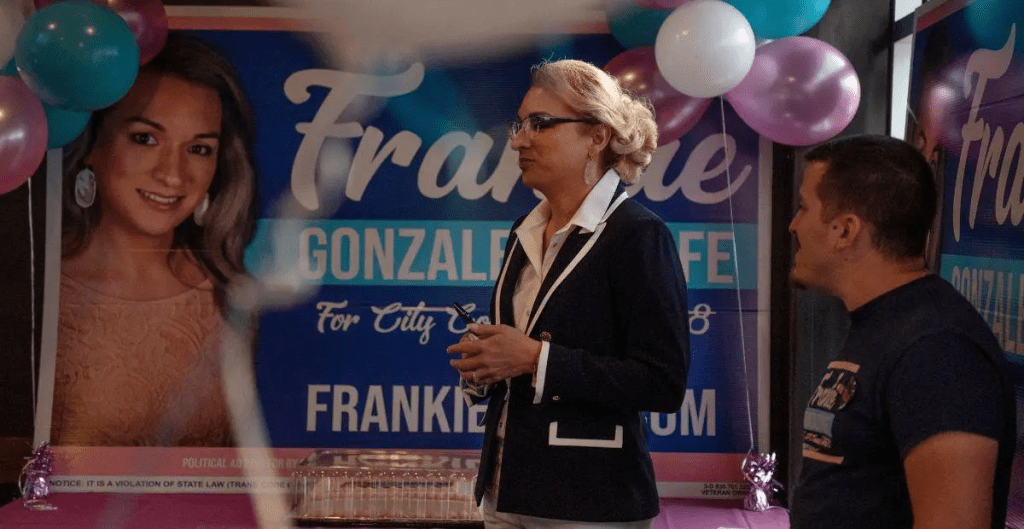
Frankie Gonzales-Wolfe is the subject of the documentary, “A Run for More.” – Photo credit: A Run for More
When we think about elections, so many of us focus on presidential elections and forget about congressional, statewide or even smaller, local elections. The documentary film, “A Run for More,” focuses on Frankie Gonzales-Wolfe as she runs for one of those local positions—city council member in San Antonio, Texas. Focusing on Gonzales-Wolfe as the first openly transgender woman to run for such office, the film shows how the campaign gave Gonzales-Wolfe a deeper sense of self. I was lucky enough to chat with her and the film’s director, Ray Whitehouse, about their friendship, the campaign, making the film and Frankie’s future political plans. (snip-MORE)
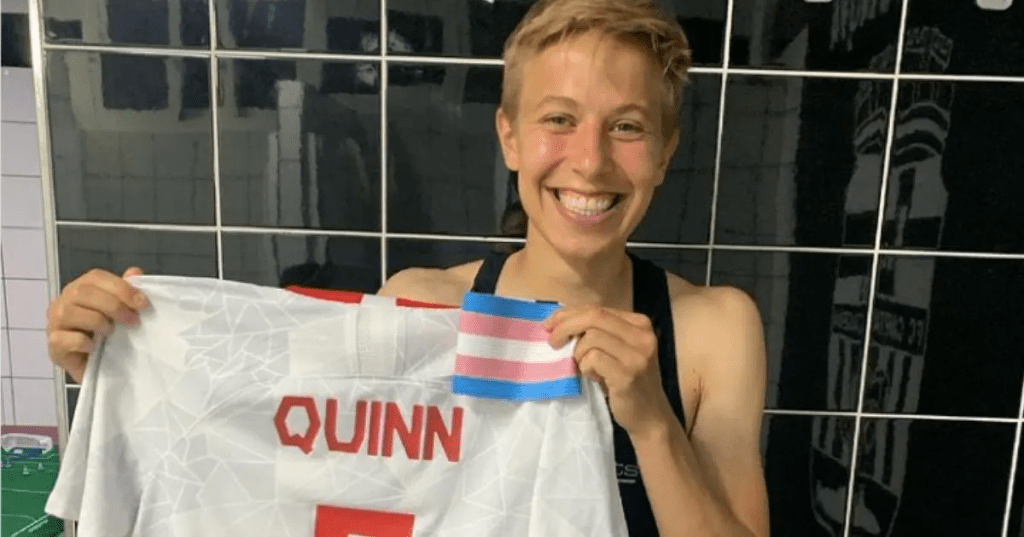
As Canada’s women’s soccer team prepares for its gold medal match against Sweden this week in Tokyo, it also prepares to make history as the first Olympic team to have an openly transgender, non-binary athlete win a medal at the games. Quinn, the 25-year-old midfielder, announced their non-binary identity on social media last September, adopting…
As Canada’s women’s soccer team prepares for its gold medal match against Sweden this week in Tokyo, it also prepares to make history as the first Olympic team to have an openly transgender, non-binary athlete win a medal at the games.
Quinn, the 25-year-old midfielder, announced their non-binary identity on social media last September, adopting they/them pronouns and a singular name. Quinn said they’d been living openly as a transgender person with their loved ones, but this was their first time coming out publicly.
“I want to be visible to queer folks who don’t see people like them on their feed. I know it saved my life years ago,” they wrote. “I want to challenge cis folks ( if you don’t know what cis means, that’s probably you!!!) to be better allies.” (snip-MORE)
Rev. Barber: We have to start teaching people that when we talk about politics, there is not an aspect of your life—from your birth to your death—that is not impacted.
When we look at the midterm elections, we have to start with the basics. We are electing every member of the United States House of Representatives and one-third of the United States Senate. In most places, we are electing their entire state general assemblies, and many are electing governors, attorney generals, and so forth. We are electing the very people who impact every aspect of our lives. These elections determine whether we will have people in office who want to ensure everyone has health care or who want to take health care away; whether we want people in office who will vote to make sure everyone is paid a living wage versus just giving more money to corporations; whether they will care about poor and low-wage voters and the resources for people to afford a basic life, or whether all they will care about is giving more wealth to the already wealthy. That is what’s on the line.
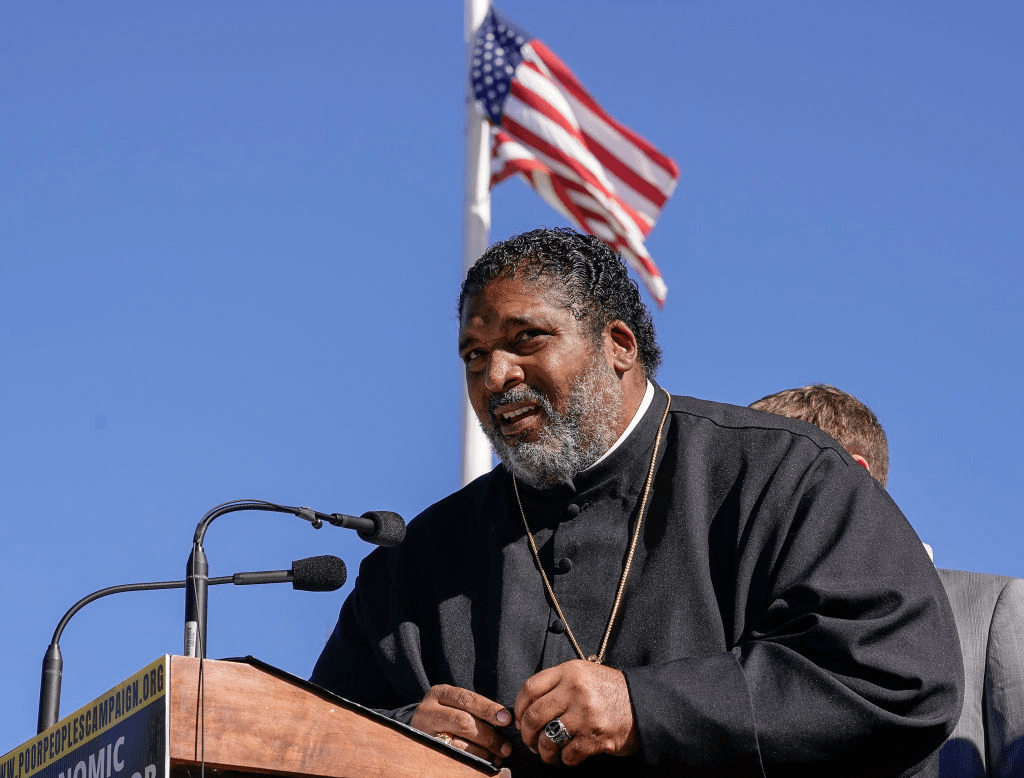
Rev. Dr. William Barber, co-chair of the Poor People’s Campaign speaks at the Poor People’s Campaign: A National Call For Moral Revival Rally at the US Supreme Court on October 27, 2021 in Washington, DC. (Photo by Jemal Countess/Getty Images for Repairers Of The Breach)
What is at stake is whether or not you have a Congress that will demand that the President, whoever that President is, cannot just act unilaterally, but must get congressional approval for war; whether or not we have a budget; whether or not TSA agents are paid; whether or not government employees are paid; whether or not we have a Congress that will stand up and not just be a rubber stamp to what an authoritarian President wants to do or will just “go along to get along.”
We have to start teaching people that when we talk about politics, there is not an aspect of your life—from your birth to your death—that is not impacted. You’re not officially recognized without a birth certificate, which is the result of a political decision. You can’t guarantee your Medicaid, Medicare, or Social Security without political decisions. Even as you die, people must understand that politics is not just about personality; it’s about people being put in place and the kinds of policies and vision they will enact.
Rev. Dr. William J. Barber II, is a Professor in the Practice of Public Theology and Public Policy and Founding Director of the Center for Public Theology and Public Policy at Yale Divinity School. He serves as President and Senior Lecturer of Repairers of the Breach, Co-Chair of the Poor People’s Campaign
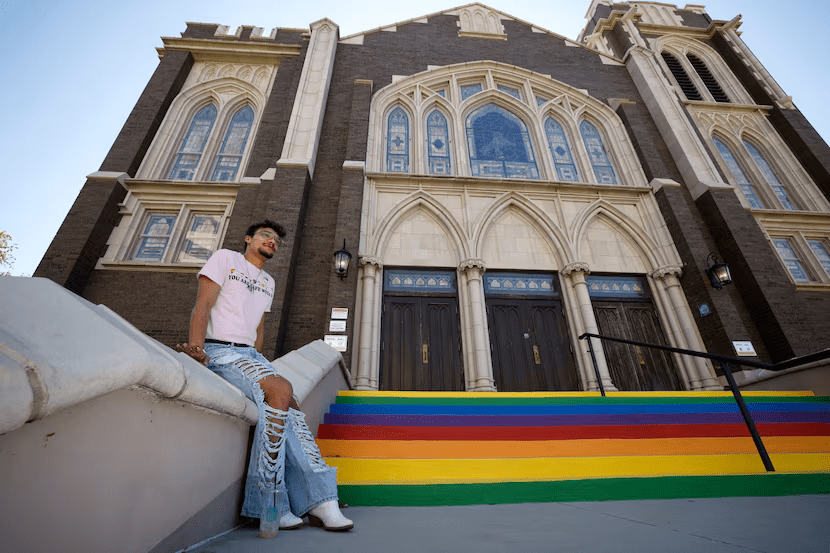
Mason Whiteside of Carrollton poses for a photo in front of the Oak Lawn United Methodist Church, Tuesday, March 24, 2026, in Dallas.Chitose Suzuki / Staff Photographer
It was already dark when Mason Whiteside finished his workday at a Deep Ellum brewery. By the time he was done cleaning and closing up, it was nearing midnight, but there was another job to do.
Whiteside, 25, called a Waymo to take him to Oak Lawn, where he’d lugged a backpack full of chalk and spray paint: red, orange, yellow, green, blue and purple.
“Does anyone want to color with me?” Whiteside asked as people walked by.
No one stopped. He didn’t need them to.
Over the course of three and a half hours, Whiteside alone repainted more than a dozen crosswalks, what he considered a vibrant act of defiance less than 24 hours after the city began stripping the roads of their color. Dallas is among several Texas cities complying with a state directive to remove “political ideologies” from public roadways.
“I wasn’t hurting anybody,” Whiteside, who is queer, told The Dallas Morning News Tuesday. “I didn’t damage anything. I literally just put back the same things that had been there.” (snip-a bit MORE; click the title)
Off the coast of Sierra Leone, the actor and model are fighting against tourists traps with their own vision: a tropical “eco-city” of the future.
Sherbro Island, a tropical outpost of farmers and fishermen nestled in the crook of Sierra Leone’s arcing Atlantic coastline, is about the size of Chicago, but its population of 40,000 wouldn’t even fill Wrigley Field. Electrical power and wireless internet are scarce. Fishermen can’t refrigerate their catches long enough to sell them on the mainland, and farmers often lack the expertise and equipment to harvest much more than they need to survive. But Sherbro Island has some enviable resources, including miles of unblemished beaches and lagoons, as well as an abundance of replenishable fresh water.
One other invaluable asset: the support of Golden Globe–winning British actor Idris Elba and his wife, Canadian model Sabrina Elba. The couple see an opportunity there to marry ecological sustainability with economic growth in a way they hope can be a template for development projects across Africa—and perhaps help rewrite a whole continent’s narrative. Idris’s father is from Sierra Leone, Sabrina’s mother is from Somalia, and growing up, Sabrina says, “there were particular stigmas attached with being African.” She remembers seeing ads that seemed to show abject people waiting for a handout. “We wanted to see Africa represented the way that we knew it to be,” she says. “We wanted to change the storytelling.”
Her husband—known for the baritone potency he brings to prestige TV dramas like Luther and The Wire, along with films like last year’s critically acclaimed thriller A House of Dynamite—first heard about Sherbro Island years ago. A close family friend had tried to convince him it could become a world-class holiday destination. “At that juncture, I was just like, Oh, OK, that sounds interesting,” says Idris, 53, who co-owns a wine bar in London’s King’s Cross neighborhood. “Like, maybe I’ll build a nightclub, maybe build some tourism.” He made a mental note to visit someday.
He got the opportunity in 2019, while he and Sabrina, now 37, were in Sierra Leone touring small family farms as part of their ambassadorial roles with the International Fund for Agricultural Development (IFAD). It was during that trip, Idris says, that he had something of an epiphany. He’d been venturing into philanthropy as his celebrity grew: supporting childhood education and hunger-relief programs in Africa, as well as campaigning on behalf of at-risk youths in the United Kingdom (work for which he was recently knighted). But on that trip, the Elbas saw an opportunity to build something more enduring and meaningful than a fancy vacation spot—and “to reframe the conversation,” Sabrina says, “[from] one of aid to one of investment.” (snip-a little more on the page; click through on the title, please)
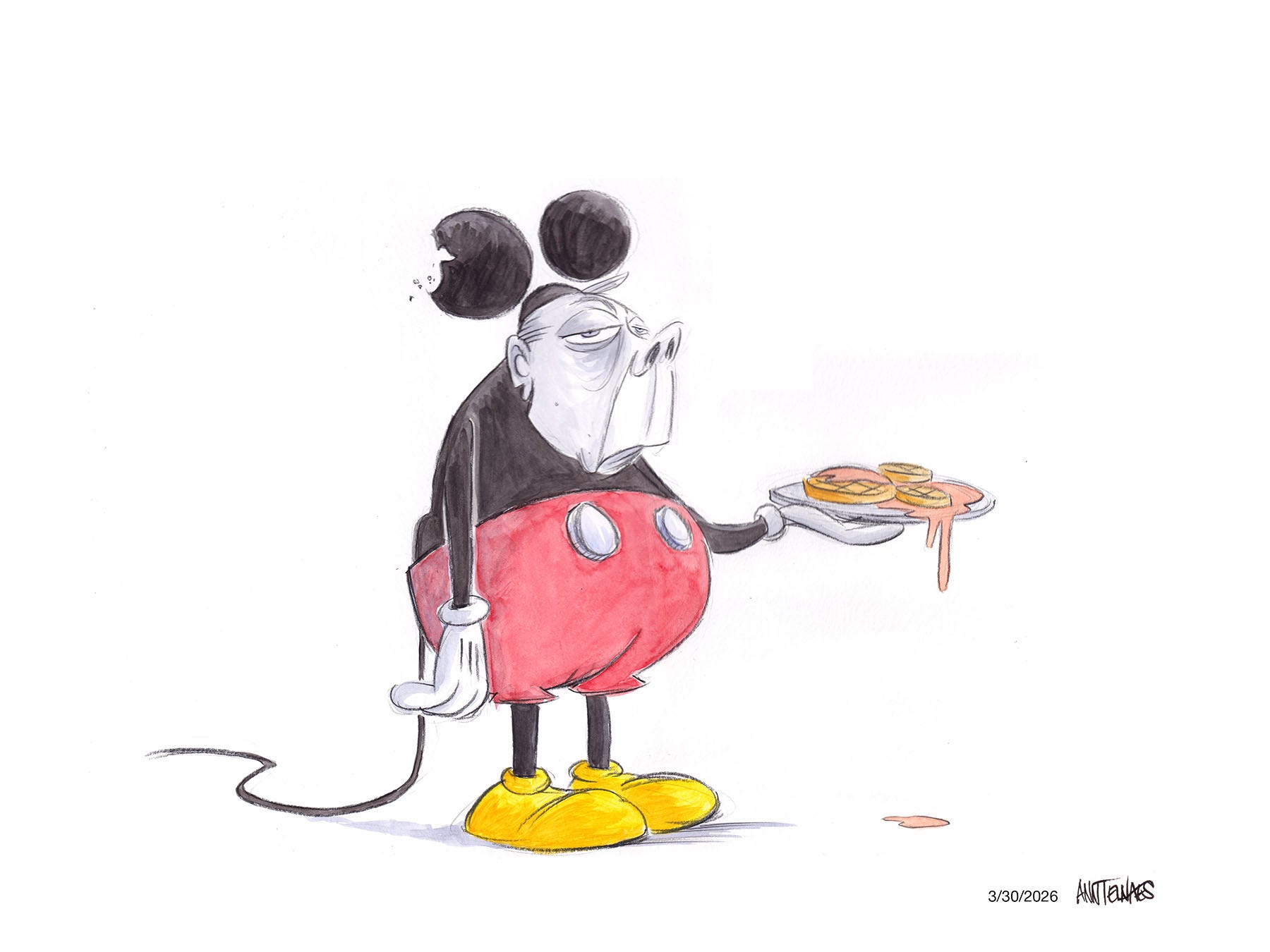
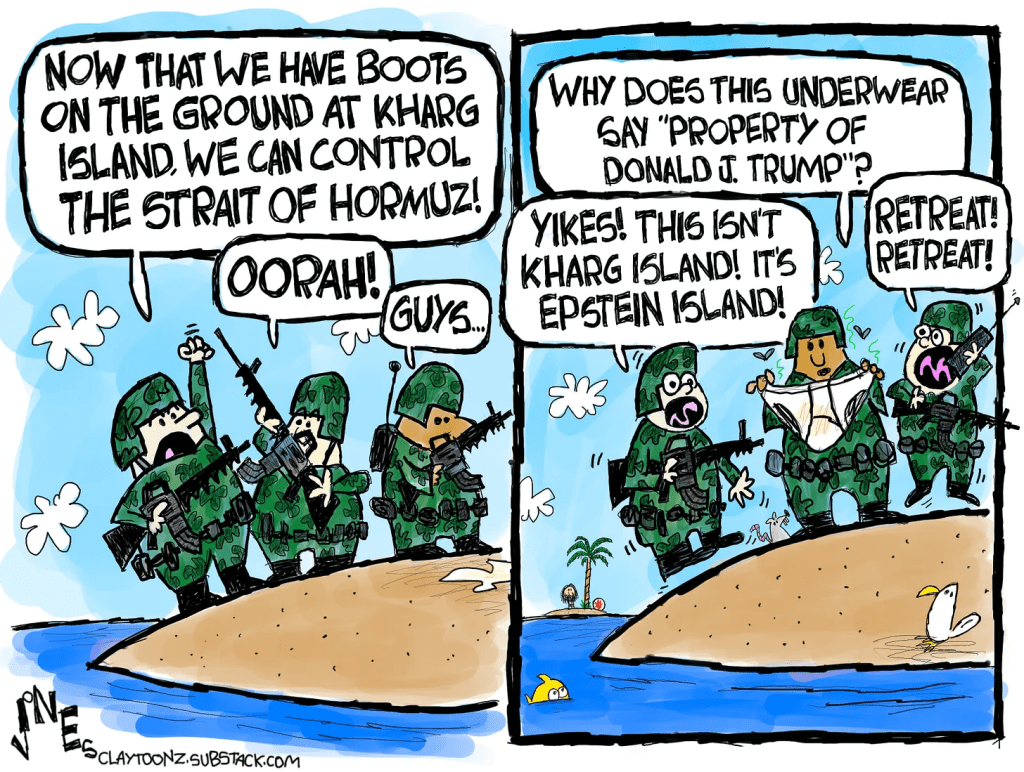
(Clay Jones writes commentary with his comics; click through on the title to read this one)
(My ophthalmologist referred me to this site one time, because I always have a dog. It’s a hoot most of the time on its own, but recalling that an ophthalmologist subscribes makes it kinda funnier!)
Not about bathrooms, but about testing women. Either test everyone, or take people’s word for it, when reporting is required.And all should prepare for the consequences of this. Women will need more protection from molestation than before, and transpeople need to specifically have that protection, as well. I think the XY carriers will be fine, of course, but they should be tested, too.I mean, who knows, right? And this should not happen in US communities at all, but the door will be wide open.
On Thursday, the International Olympic Committee announced that it would ban transgender women and many cisgender women athletes from competing in women’s events and institute mandatory genetic screening of all female athletes. The decision is significant—the Olympics has allowed transgender women to compete since 2004, yet none has ever won a medal, and only a single transgender woman has ever competed: weightlifter Laurel Hubbard of New Zealand, who failed to place at the 2021 Tokyo Games. The ban applies to all sports, including those where no male performance advantage exists, and will require every woman to undergo a genetic test to participate. It will also exclude many cisgender women who produce elevated testosterone due to genetic or medical conditions, such as two-time Olympic champion Caster Semenya. And it is not the first time the Olympics has subjected women to mass sex testing—the last time it did, from 1992 to 1999, the results were disastrous, with cisgender women discovering they had intersex conditions they never knew about, leading to public humiliation, career destruction, and at least one suicide before such testing was abolished.
Under the new policy, every woman seeking to compete in a female event at the Olympics or any IOC competition must undergo a one-time SRY gene screening—a cheek swab or blood test that detects the presence of a gene on the Y chromosome associated with male sex development. The test is similar to the one the IOC abolished 27 years ago after it produced disastrous human consequences. Because the screening identifies the presence of XY genetics, it will target not only transgender women but also intersex people—including cisgender women who carry a genetic condition that some argue makes them “male” despite having been born with a vagina and uterus, raised as girls, and having lived their entire lives as women. In at least 15 documented cases, women with 46,XY karyotypes—the same genetics this test screens for—have successfully carried pregnancies to term and given birth, including women with XY karyotypes that naturally produce testosterone. Under the IOC’s new framework, a woman who has been pregnant and delivered a child could be classified as male and barred from competition for failing this test.
Genetic sex testing was introduced at the Olympics in 1992, but it existed for only a short time. In the two Summer Games it covered—Barcelona in 1992 and Atlanta in 1996—over 20 female athletes who were assigned female at birth, had lived their entire lives as women, and had female anatomy were told they were genetically “male” due to conditions they had never known about. The consequences were disastrous. Dr. Myron Genel, a Yale physician who was a prominent critic of the program, reported that the testing was “highly discriminatory” and caused “emotional trauma and social stigmatization” for women with intersex conditions who had been screened out of competition. For athletes from countries where being labeled male could carry severe social or physical consequences, the disclosure was not merely humiliating—it was dangerous. Indian swimmer Pratima Gaonkar died by suicide after her failed sex verification test became public and she was subjected to blackmail attempts; Indian runner Santhi Soundarajan attempted suicide after being stripped of her Asian Games silver medal. The testing was abolished in 1999.
The ban also applies to sports where a male genetic advantage is dubious or nonexistent. In rifle shooting, ESPN reported that women are “as good as, if not fractionally better than, men” in 10m air rifle, and yet these athletes will still have to prove their femininity with a genetic test. In sailing, the competition was mixed for nearly a century at the Olympics, from 1900 to 1988. In archery, men and women shoot the same 70-meter Olympic distance and the world records are extremely close. In December 2025, women’s Olympic champion An San exactly matched the men’s indoor qualification round record of 599 in Taipei. And outside the Olympics, transgender bans have spread even further—to darts, pool, disc golf, competitive dancing, and even chess.
The scientific evidence, meanwhile, does not support the blanket ban the IOC has imposed. A 2026 meta-analysis published in the British Journal of Sports Medicine—the most comprehensive to date, drawing on 52 studies and nearly 6,500 participants—found that while transgender women on hormone therapy for one to three years retained higher absolute lean body mass than cisgender women, there were no statistically significant differences in upper-body strength, lower-body strength, or aerobic capacity. The researchers concluded that “the convergence of transgender women’s functional performance with cisgender women, particularly in strength and aerobic capacity, challenges assumptions about inherent athletic advantages” and that the current evidence “does not justify blanket bans.” A separate review in the Journal of Clinical Endocrinology and Metabolism found that after two years of hormone therapy, no advantage was observed for physical performance measured by running time, and that muscle strength corrected for lean mass, hemoglobin, and cardiovascular capacity were no different from cisgender women. No study has demonstrated that transgender women on hormone therapy for more than two years retain a measurable performance advantage in any specific sport.
Some intersex athletes who would be impacted by the decision are already speaking out. Caster Semenya, a two-time Olympic gold medalist, was assigned female at birth in South Africa and has naturally elevated testosterone levels due to a difference in sex development. On Sunday, she expressed her disappointment with IOC President Kirsty Coventry, a fellow African woman and former Olympic swimmer. “Personally, for her as a leader, she’s an African, I’m sure she understands how, you know, we as Africans, we are coming from, as a global South, you know, you cannot control genetics,” Semenya said at a press conference in Cape Town. “For me personally, for her being a woman coming from Africa, knowing how, you know, African women or women in the global South are affected by that, of course it causes harm.”
“Reintroducing sex testing brings the IOC back to policy that it had discontinued exactly thirty years ago. Back then, they rightfully concluded that sex testing was scientifically inconclusive and caused considerable harm to athletes. Then, in 2021, they approved a Framework on Fairness, Inclusion and Non-Discrimination to best support trans athletes and athletes with sex variations. Now, they are retreating from their own decisions and ignoring the recommendations of various UN bodies, the World Medical Association, and athletes worldwide. But the evidence is clear: sex testing exposes women and girls to privacy violations, public humiliation, and abuse. And it is profoundly discriminatory, too. No one is asking men and boys to undergo these tests. Women and girls shouldn’t either,” said Gurchaten Sandhu, ILGA World Director of Programmes.
The policy takes effect at the 2028 Los Angeles Summer Games and is not retroactive. Affected athletes are expected to bring challenges before the Court of Arbitration for Sport in Lausanne, as Caster Semenya has done with previous eligibility rules. Over 100 civil society organizations, including the Sport & Rights Alliance, ILGA World, and Humans of Sport, have called on the IOC to reverse the decision.
These hateful Christian bigots think any mention or media showing that LGBTQ+ people exist is pornography. It isn’t and makes a mockery of protecting kids from real porn. But they use these words and equate any mention or sign of LGBTQ+ with porn to make it seem as harmful and dangerous as showing hardcore rape porn to children. See the quote below. Their goal is again to wipe any mention of the LGBTQ+ from society and public view. They learned from Putin who used the same protect the children tactic. Think of this if this bill passes how do they justify the Bible in libraries and schools? But these people want a straight cis white male dominated society where they get to force their church doctrines on the public. However these same people scream parental rights or religous freedoom if you ask them to give others respect and equality. They want to oppress everyone else but any attempt to get them to give the same respect they demand for their ideas to others who have different beliefs is persecuting them. Hugs
On the full House floor, sponsor Rep. Doug Bankson called HB 1119 a “commonsense policy that answers a simple question: Should pornography be available to minors in our schools?”
‘Our focus right now is on making legislators aware of the bill’s constitutional problems.’
The Foundation for Individual Rights and Expression (FIRE) is urging the Senate to kill a bill passed by the House that First Amendment advocates fear will increase book banning in Florida schools.
“Library book removals can raise serious First Amendment issues,” FIRE’s Public Advocacy Director Aaron Terr wrote in a letter last week to Senate President Ben Albritton. “The bill creates a powerful incentive for individuals to object to any book they dislike or consider inappropriate, knowing it will be immediately pulled from circulation for all readers.”
The House passed HB 1119 via a 84-28 vote following a partisan debate. An identical Senate bill (SB 1692) has not moved in the upper chamber since it was filed last month.
HB 1119 would block schools from considering the literary, artistic, political or scientific value of books if the material is deemed otherwise harmful for minors.
On the full House floor, sponsor Rep. Doug Bankson called HB 1119 a “commonsense policy that answers a simple question: Should pornography be available to minors in our schools?”
“The answer is an emphatic no,” he told lawmakers.
Bankson and other Republicans argued some inappropriate books still exist on the shelves because of a loophole from the application of the Miller Test, which is a Supreme Court decision dealing with adult material.
The Apopka Republican filed similar legislation last year that advanced in the House but died in the Senate.
FIRE argues that HB 1119 goes too far.
“To be clear, not every book is appropriate for every student,” the Philadelphia-based First Amendment advocacy nonprofit wrote in the letter.
“Again, FIRE recognizes that school districts have a responsibility to assess whether library materials are appropriate for students of different ages. But any such assessment must be carefully crafted to ensure that students are not broadly denied the opportunity to read age-appropriate works that speak to their particular interests.”
The bill wouldn’t allow school officials to take into account the full content of the book or if the work has serious literary, artistic, political, or scientific value for minors of any age since it doesn’t consider grade levels, FIRE said.
“These elements of the Miller test are critical to preventing censorship of literature, art, medical textbooks, history texts, and other speech that depicts or alludes to sex simply because someone finds them offensive,” FIRE said.
“In other words, older students’ access cannot be restricted based on what may be unsuitable for younger children. But HB 1119 disregards this commonsense principle. It requires districts to ‘discontinue use of the material’ if they determine it is ‘harmful to minors,’ without regard to age or grade level.”
Florida passed a 2023 law that allows people to challenge book titles they find offensive for young people in schools.
“Under the current statute, Florida school districts have removed hundreds of books from libraries, including titles that are by no stretch of the imagination ‘pornography’ and come nowhere close to the legal definition of obscenity,” FIRE said in the letter.
“The Florida Department of Education’s own report shows that during the last school year, literary classics and widely acclaimed modern works — including ‘One Hundred Years of Solitude,’ ‘A Clockwork Orange,’ ‘The Human Stain,’ ‘The Kite Runner,’ and ‘Life of Pi’ — were removed even from libraries serving students in grades 9-12. If enacted, HB 1119 will only accelerate this trend and further narrow the range of ideas on school library shelves.”
When asked by Florida Politics whether FIRE would sue if the Legislature passes the bill, the organization did not answer.
“Our focus right now is on making legislators aware of the bill’s constitutional problems,” FIRE spokesman Jack Whitten said. “That’s a decision that would require internal discussion and depend on various factors.”
Gabrielle Russon
Gabrielle Russon is an award-winning journalist based in Orlando. She covered the business of theme parks for the Orlando Sentinel. Her previous newspaper stops include the Sarasota Herald-Tribune, Toledo Blade, Kalamazoo Gazette and Elkhart Truth as well as an internship covering the nation’s capital for the Chicago Tribune. For fun, she runs marathons. She gets her training from chasing a toddler around. Contact her at gabriellerusson@gmail.com or on Twitter @GabrielleRusson .


 Gabrielle Russon

