
Earlier (yesterday by now,) I told Scottie I’m taking some time off posting because it’s become busy at my place, but I can’t not post Josh Day! Enjoy, and all keyboard protection protocols should be in place. 🤣
Category: News / Information
And now to more recent news. Yes! I finally caught up. Oh wow
This is incredible and the best I have felt in 5 months. I have had so much old news, many hundreds of back logged news I wanted to share. I recently found out that the mail stuff I would share was stuck on my phone so did not post. I cleared that. Today right now all old news mail articles are posted, the stuff I want to share is posted. I still have to do the video on what happened because I got long term Covid. Sadly I was able to do this because Ron was gone to Texas to help his sister and now they are on their way home. More pressure to do as much as I can with my pain and disability. So I have two more rooms to work on before they get here later this week. I want to do a video on the entire thing but may not. My goal was to clear all these tabs and then do videos …. but we will see, Hugs
Prices / affordability /
tRump Admin trying to hurt workers and lower incomes
Grifting / Cons / tRump family scams / tRump family news

DAMAGE CONTROL: White House Has Entire Cabinet Post Defenses Of WH Chief Of Staff Susie Wiles On X
Hate / DEI / Racism / ICE
Mr. Bessent opted instead for the more general, and much whiter.
The city, home to one of the largest Muslim populations in the United States, has recently become a repeated target for out-of-state activists who falsely claim it operates under “Sharia law.” The tensions began when Jake Lang, a Jan. 6 rioter who has described himself as a political prisoner, arrived on Michigan Avenue attempting to burn a Quran.
Federal law enforcement agencies are detaining US citizens who do not carry proof of their citizenship in what civil rights advocates describe as a flagrant violation of constitutional rights—and a top Trump administration official is claiming the government has the authority to do so. Bovino recently lied in court about being hit with a rock by anti-ICE protesters, despite video showing that never happened. According to reports, some Border officials privately refer to Bovino a “Little Napoleon” due to his height and volatile temper.
Things that are just wrong on too many levels / Medical Misinformation / tRump’s illegal war to steal oil / Rule by decree
The only one making concessions here is Ukraine
The pilot of a JetBlue flight reported on Friday that he narrowly avoided colliding with a U.S. military aircraft over the Caribbean after an Air Force refueling tanker passed in front of the commercial plane without broadcasting its position, according to air traffic control radio communications.


so fuking stupid, it’s an fda approved drug

It would reduce in prominence the headquarters of U.S. Central Command, U.S. European Command and U.S. Africa Command by placing them under the control of a new organization known as U.S. International Command. Those familiar with the plan said it aligns with the Trump administration’s national security strategy, released this month, that declares that the “days of the United States propping up the entire world order like Atlas are over.”
Their way to rid themselves of officers who will refuse to follow an illegal order and put command in the hands of those who will. All of this is to reduce the number of Admirals and Generals who could credibly disobey the illegal orders that will be coming soon.
This past September, the Trump administration terminated these agreements. The center’s former head, James Rubin, called this decision “a unilateral act of disarmament,” and no wonder: In effect, the United States was declaring that it would no longer oppose Russian influence campaigns, Chinese manipulation of local politics, or Iranian extremist recruitment drives. Nor would the American government use any resources to help anyone else do so either.
Things that are good and need to be mentioned.
Yes more recent news. But wow has the US gone nuts! The grifting, hate, and denying basic facts of reality is really scary.
Foreign nationals can now pay $1 million plus a $15,000 processing fee for the Trump Gold Card, which grants them U.S. residency “in record time,” the website states. Corporations, meanwhile, can also partake in the program by making a $2 million contribution and paying the $15,000 processing fee.
The St. Louis-based lawyer declined to share copies, citing his clients’ privacy, but said most are seeking $1 million to $10 million for alleged injuries and property damage during their arrest, prosecution and, in many cases, imprisonment. Earlier this year, US officials agreed to pay nearly $5 million this year to settle a claim brought by the family of Ashli Babbitt, who was shot and killed by a police officer inside the Capitol on Jan. 6.

In the lawsuit filed Wednesday, Uthmeier’s office alleged that for the “past five years and continuing to the present day, defendant has excluded or disfavored nonminorities in numerous employment practices and programs.”
The move is part of the administration’s wider campaign to scrub federal institutions of “corrosive ideology” recognizing historical racism and sexism. The directive instructs park staff to report by Friday any retail items that have content that “inappropriately disparages Americans past or living” or that includes “matters unrelated to the beauty, abundance or grandeur” of a natural feature in its description.
Hit the link for many photos of Key West homes now sporting rainbow picket fences. As for Ms. Walker, the self-proclaimed “Christian Republican” felt compelled to boast about her complaint on X.
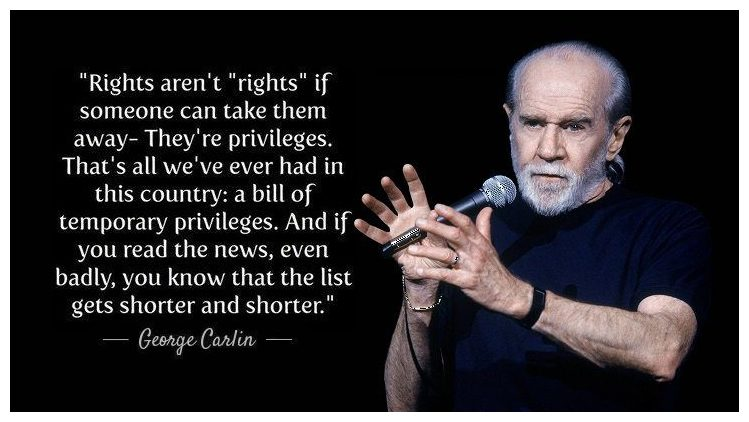
Yet the Russian oil shadow fleet is left totally alone by the tRump admin? I wonder why the oil tankers off Venezuela are OK to attack yet the same sanctioned oil tankers of Russia are off limits? What is the difference between illegal sanctioned oil tankers? Oh yes Putin has something over on tRump. Hugs
“States have the statutory duty to preserve and protect their constituents from vote dilution,” said Assistant Attorney General Harmeet K. Dhillon of the Justice Department’s Civil Rights Division.
This is code for balck people voting which white supremacist feel makes their votes less important. Hugs
FBI Guy Can’t Prove Antifa Exists When Grilled By Democrat
News For The Upcoming Week:
SCOTUS works, mass shootings, Judge Hannah Dugan’s case, and more this week, from Joyce Vance.
The Week Ahead
Joyce Vance Dec 14, 2025
Saturday was shattered by two mass shootings. The first, at Brown University in Rhode Island, happened as students prepared for exams. Two people were killed and nine injured. A “person of interest,” which is a law enforcement term that means someone law enforcement wants to speak with about a crime, but whom they are not yet prepared to charge, is in custody.
Frequently, a person of interest will evolve into a suspect. But tonight, there is news that individual has been released. Rhode Island Attorney General Peter Neronha explained that although there was “some degree of evidence” that pointed to a 24-year-old Wisconsin man who was detained Sunday morning, “that evidence needed to be corroborated and confirmed, and over the last 24 hours leading into just very, very recently, that evidence now points in a different direction.”
It’s important to give law enforcement the time it needs to do its job here, to ensure that all threats to the community are fully mitigated, and as much as possible is learned about what prompted the shooting, so victims can have closure.
What seems unimaginable to people who graduated before the epidemic of school shootings is all too real for this generation of students. Today is the anniversary of the deadliest school shooting in our history, at Sandy Hook Elementary school, where the shooter killed 26 people, 20 six- and seven-year-old children and six adults. The shooter killed his mother before he drove to Sandy Hook and took his own life as law enforcement arrived at the school.
This post on threads got it absolutely right:

The second shooting was a terrorist attack launched by two men against Jews celebrating Hanukkah at the beach in Sydney, Australia, another incident in a tide of rising antisemitism. The death toll continues to climb. The shooters took the lives of a beloved rabbi and at least 14 others who were at the event for families. A Holocaust survivor and a 10-year-old girl were also among the victims. It seems impossible that this explanation needs to be offered, but increasingly, it is essential: killing innocent Jews does not help people in Gaza, if, indeed, that was the motivation here.
One point of light in the tragedy was the bravery of a local fruit shop owner, Ahmed El Ahmad, who ran towards the violence and snatched an enormous, long gun from the hands of one of the shooters. Ahmad was shot by the other terrorist and is recovering in hospital.
After this turbulent weekend, we head into a week that promises more chaos.
Judge Hannah Dugan’s Trial Starts Monday
After jury selection began late last week, trial gets underway for Wisconsin state Judge Hannah Dugan, who was indicted by the Justice Department last May for helping a noncitizen try to evade arrest by immigration authorities at the county courthouse where she sits, last April.
If you want to review the facts and the background, we discussed this situation when the Judge was first arrested and again when she was indicted.
Judge Dugan’s capable lawyers will put on a solid defense. She has maintained she was simply trying to keep order in her courtroom and permitted the non-citizen to use one of the doors leading out of her courtroom that was less public, but that didn’t prevent agents and officers from accosting him. The message behind the indictment is clear: If they can arrest judges, no one is safe. And in the months since Duggan’s indictment, the administration has certainly expanded on it, indicting Kilmar Abrego Garcia on stale charges in apparent retaliation for his efforts to insist he was illegally deported and bringing now-failed indictments against a former FBI Director, Jim Comey, and current New York State Attorney General, Letitia James, whom Trump views as political enemies.
The good people of Wisconsin seem to understand this threat. They have been protesting even since the Judge was first detained.
We will follow the trial’s progress this week. Tuesday night at 6:30 p.m. Central, we’ll be joined by legal reporter Adam Klasfeld of All Rise News, who will be in the courtroom this week and will join us to share what’s transpiring. Make sure you mark your calendars.
Friday, DOJ is required to release the Epstein Files
On the heels of House Democrats’ release of photographs from Jeffrey Epstein’s estate last week, the Justice Department has a deadline on Friday. This is the result of the law Congress overwhelmingly passed in mid-November to force the DOJ to release its files related to Jeffrey Epstein.
Whether DOJ will comply is an entirely different matter. Trump demanded that his attorney general open an investigation into only Democrats whose names have surfaced. Bondi may well try to use that new investigation to block demands for release. We’ve already lived through a government shutdown, which seemed to be contrived at least partially to prevent the passage of the law requiring this disclosure and the record-breaking 50-day delay in swearing in newly elected Congresswoman Adelita Grijalva of Arizona. So it’s clear the administration is determined to protect the president from further disclosures like Friday’s photo of “Trump Condoms.”
Survivors deserve justice and the public demand for it is what’s driving the process here. Keep demanding.
But ultimately, if DOJ balks, that could require intervention in the courts and delay matters. Democrats, who are in the minority in both the Senate and the House, lack the ability to issue subpoenas to obtain further information from Epstein’s estate, information that could provide the source of and context for photos that were released last week and additional information like financial records and testimony from witnesses. A process like this is essential if there is going to be accountability for Epstein’s operation and the people who participated in it, benefited from it, and helped to conceal it. So it’s worth noting that Republicans currently hold a very slender majority in the House, which will narrow further with the departure of Marjorie Taylor Greene and perhaps others, even before the midterm election.
Control of the House likely determines whether the full files ever get released.
SCOTUS
The Court is done hearing oral arguments until it picks back up with them on January 12. But that doesn’t mean we might not hear from them in the form of decisions off of the shadow docket as we head into the holidays, with National Guard cases, among other issues, developing in multiple states.
Trump Excesses
This afternoon, Trump posted “Get Your TRUMP CARD today!” on Truth Social. It’s an advertisement for the so-called Trump Card, a golden ticket for those wealthy (and presumably white) enough to buy immigration status in the U.S.

Trump even helpfully added a link to where people could go to apply—on what’s being billed as “an official website of the U.S.” at trumpcard.gov

There are two options:
- The Gold Card “For a $15,000 DHS processing fee* and, after background approval, a contribution of $1 million, receive U.S. residency in record time with the Trump Gold Card.”
- The Platinum Card, billed as coming soon. “Foreign nationals can sign up now and secure their places on the waiting list for the Trump Platinum Card. When launched, and upon receipt of a $15,000 DHS processing fee and $5 million contribution, they will have the ability to spend up to 270 days in the United States without being subject to U.S. taxes on non-U.S. income.”
The ick factor is high here. It reduces the presidency and this president to the position of a cheap huckster, hawking U.S. residency to the highest bidder while violently deporting hardworking people, and in some cases, getting it wrong and grabbing American citizens and military veterans.
On September 19, Trump signed Executive Order 14351, which authorized the creation of the Gold Card program, claiming that he was “prioritizing the admission of aliens who will affirmatively benefit the Nation, including successful entrepreneurs, investors, and businessmen and women.”
There are obvious questions about the legality of this pay-for-play spectacle and the decision-making process for who qualifies. Potential immigrants make their million-dollar payments, which are referred to as a “gift.” The Executive Order says that suffices as evidence of “exceptional business ability” and “national benefit,” which is sufficient for the person paying the money, regardless of where they got it from, to receive a waiver that permits entry under the statute titled “Allocation of immigrant visas.”
A group of 20 state Attorneys General filed a lawsuit last week challenging the program.
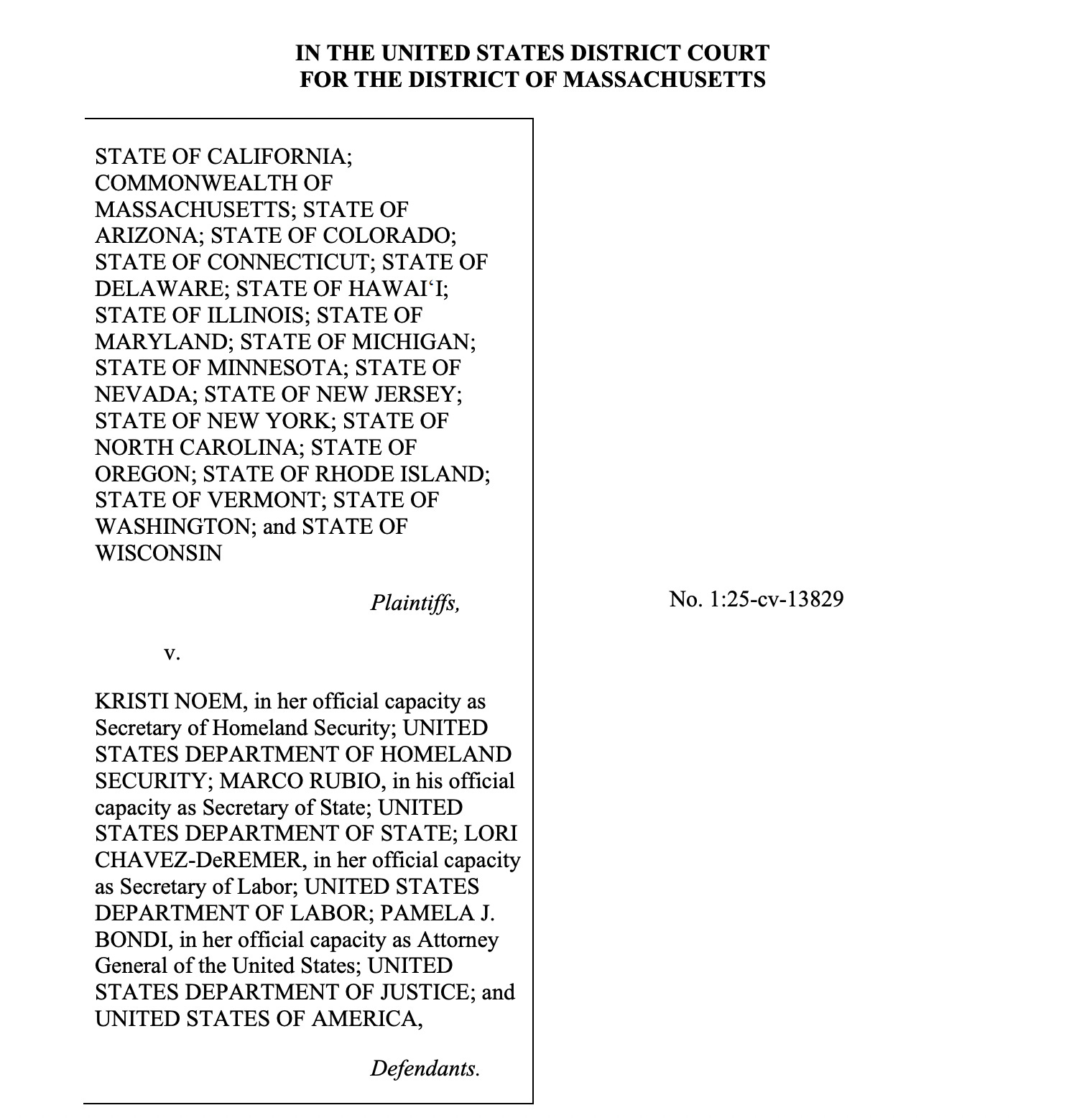
California and Massachusetts are the lead plaintiffs in the case, which alleges that the plan violates the Administrative Procedure Act and the separation of powers and asks the court to enter a ruling that the policy is unlawful and that no action can be taken under Trump’s Executive Order and the Proclamation seeking to implement it. The plaintiffs are also asking the court to enter an injunction that would prohibit the federal government from moving forward with the plan.
It’s going to be another interesting week.
Thanks for being here with me at Civil Discourse and staying informed about what’s happening to our democracy. If you value access to the information and analysis you receive here, I hope you’ll consider getting a paid subscription if you don’t already have one.
We’re in this together,
Joyce
A New Zealander’s Counterpoint to 12/14/94’s “U.S. ‘Honoring'” New Zealand’s Nuclear Free Policies
Reblogged with my thanks to Barry.
I am down to just 12 old news stories before I get to something more recent. Old news is important also. At least to me.
The Department of Homeland Security recently signed a contract worth nearly $140 million to purchase six Boeing 737 planes for deportations — a move that will allow the agency to operate its own fleet after receiving a massive funding increase from Congress.
Feds Extradite Woman To The US To Face Smuggling Charges Then Declare She’s In The Country Illegally
The Department of Justice (DOJ) will potentially treat opponents of President Donald Trump’s policies as “domestic terrorists,” according to a leaked memo from Attorney General Pam Bondi to all U.S. law enforcement agencies.

Man Charged With Ripping Down PA Shop’s Rainbow Flag: “Call 1-800-Who Cares, No Gay People” [VIDEO]
 Scottie's Playtime