ICE officers are facing backlash after a viral video showed them pepper-spraying a peaceful protester in the face without provocation during a chaotic street arrest.
The American Federation of Labor (AFL) voted to boycott all German-made products as a protest against Nazi antagonism to organized labor within Germany.
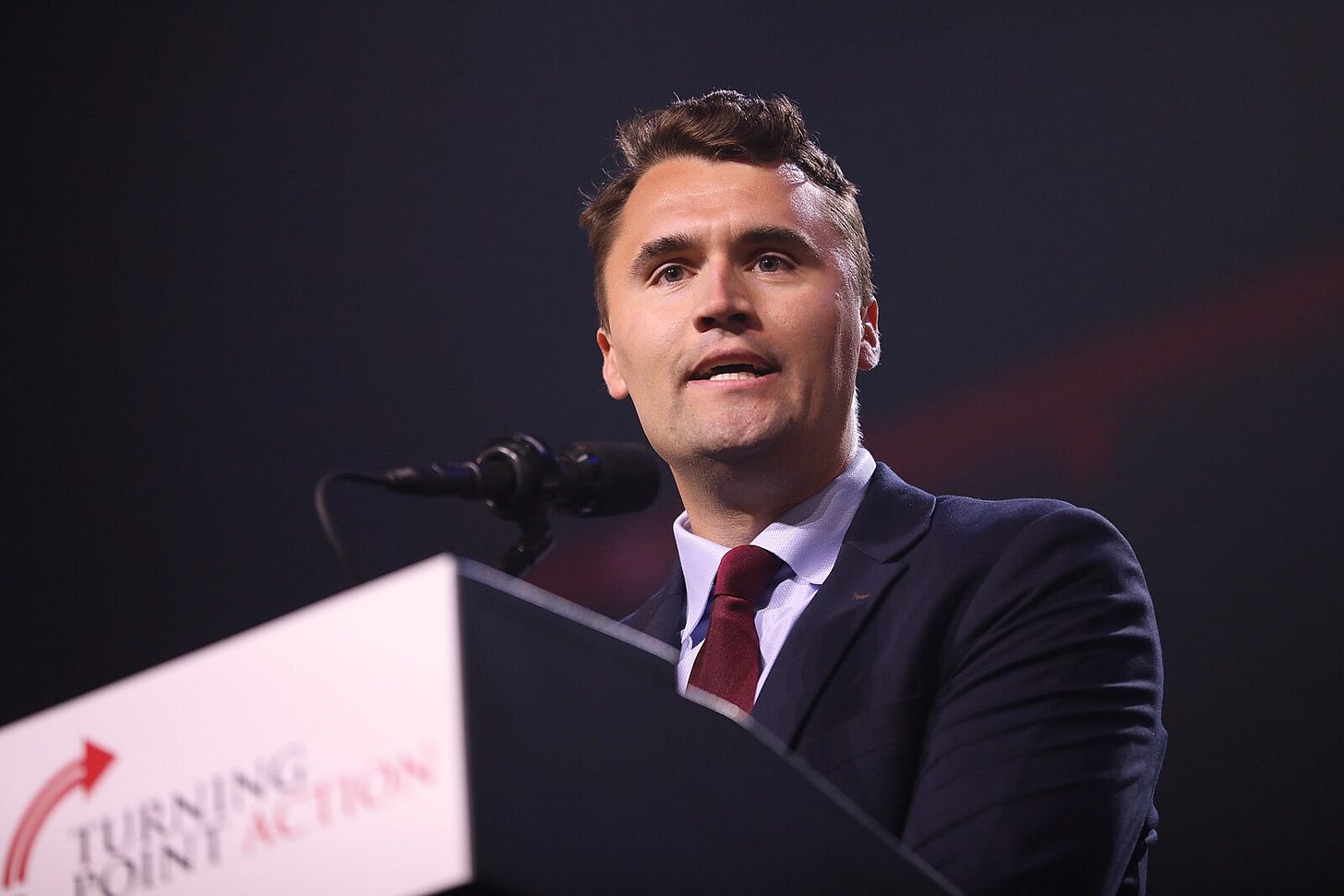
Following the assassination of Turning Point USA (TPUSA) co-founder Charlie Kirk on Sept. 10, there’s been significant posthumous discussion about who he was and what he left behind. President Trump and the Republican Party have described him as a martyr, making his funeral into a 200,000-person event comparable to those of deceased presidents, while calling for retribution against the “radical left” and trans people, despite the fact that the man who killed him is cisgender and his political affiliation is unclear.
Some liberals have mourned Kirk, casting him as a champion of civil dialogue. Meanwhile, critics of his often hateful beliefs have faced repercussions, with retaliatory firings of educators, writers and reporters.
Given the volume of discussion about Kirk and his legacy surrounding LGBTQ issues, Uncloseted Media decided to assemble the receipts. Here’s a track record of Kirk and TPUSA’s actions and statements on the queer community.
Oct. 4, 2016
TPUSA co-founder Charlie Kirk publishes a manifesto that outlines the group’s vision and political strategy, where he complains that “personal and overall freedom” are being lost in “exchange for ‘micro’ freedoms like taxpayer-funded contraception and gay marriage.”
He writes that TPUSA’s strategy is inspired by what he describes as the LGBT movement:
“We are using the same message delivery methods and many of the same organizing tactics. They use social media, rallies, and pop-culture messaging, just like we do. Despite our very different agendas, there is no question we have adapted our movements into the times in which we live.”
Kirk also references Jonathan Haidt, a professor of ethical leadership at New York University Stern School of Business, who has likened being a conservative graduate student on campus today to being a closeted gay student in the 1980s.
Nov. 21, 2016
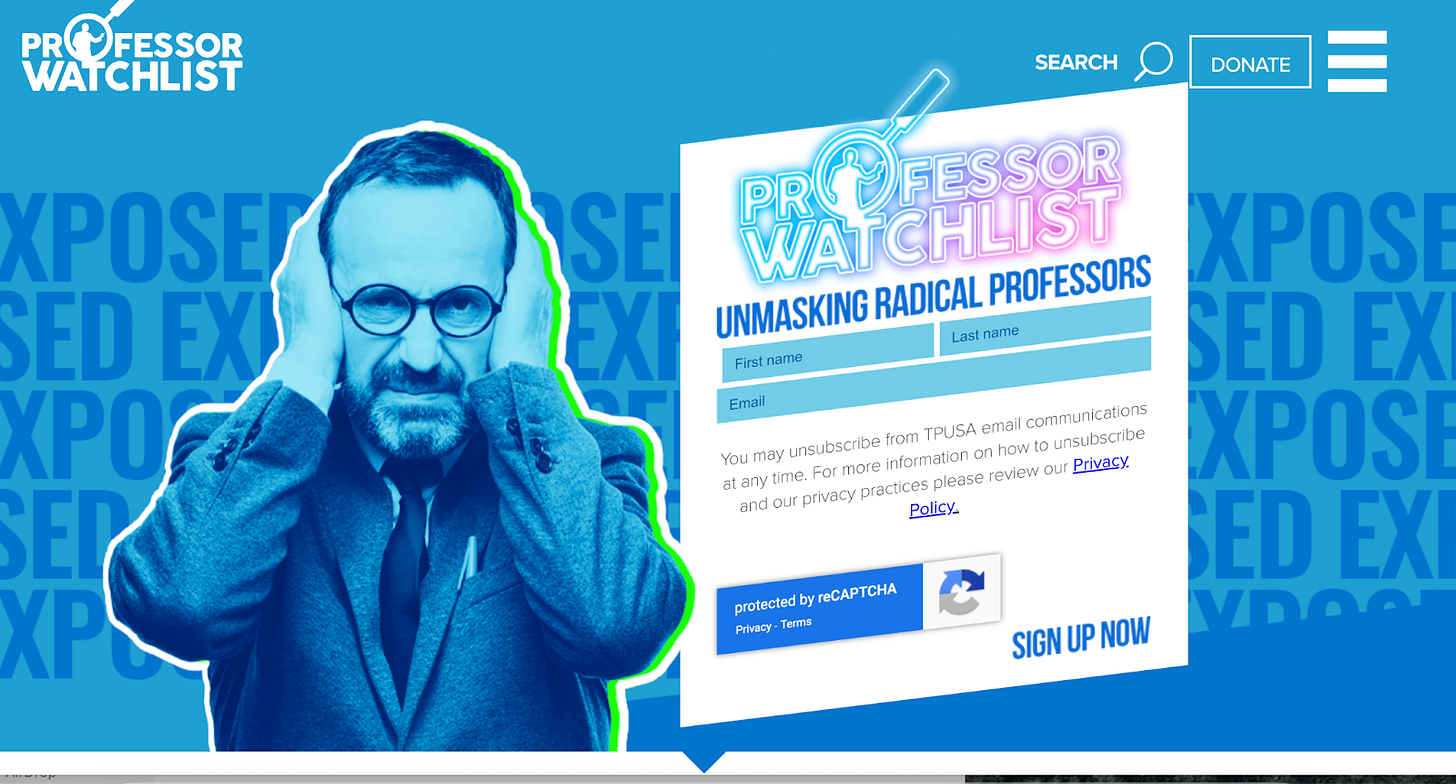
Screenshot of Professor Watchlist.
TPUSA launches the Professor Watchlist, a database cataloging “anti-conservative” college professors. Many targeted professors later face harassment. A gay professor says that when they were placed on the watchlist, they began receiving anti-LGBTQ emails on their work account. And a tenured professor at the University of Florida who was placed on the watchlist and tagged with sharing a “racial ideology” says that all four professors at her university who are on the watchlist are either a person of color or someone who identifies as LGBTQ.
Subscribe
Jan. 25, 2017
TPUSA co-hosts an event with College Republicans at CU Boulder called “Why Ugly People Hate Me.” The event features far-right provocateur Milo Yiannopoulos, who was in the middle of his Dangerous Faggot Tour which challenged “political correctness” on college campuses. Yiannopoulos claims to be an “ex-gay,” born-again Christian who “demoted” his husband to “housemate.”
April 25, 2018
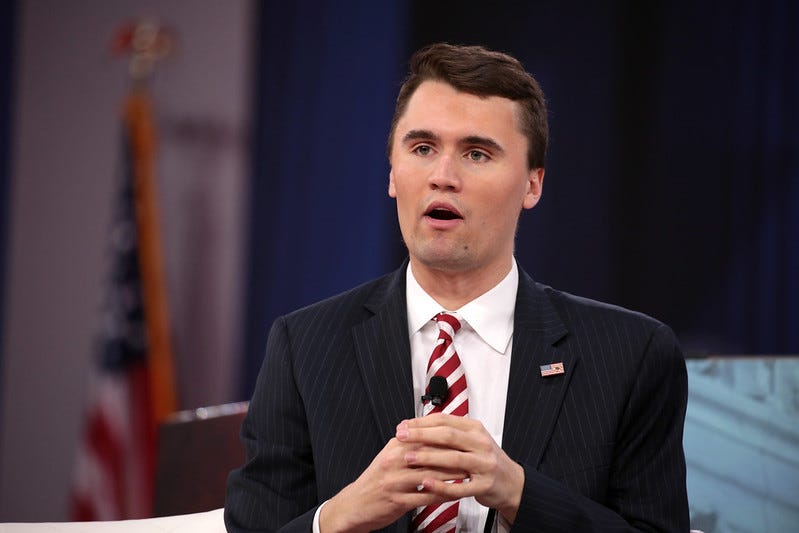
Kirk at the Conservative Political Action Conference in 2018. Photo by Gage Skidmore.
A Huffington Post report finds that Shialee Grooman, then TPUSA’s national field director, had a long history of racist and homophobic posts, including one that read, “Okay. All of you are f*ggots.” In a statement to HuffPost, Kirk says Grooman is a “former employee,” and TPUSA issues a company-wide memo announcing social media background checks and offers to assist employees in making their social media posts less public.
Nov. 22, 2019
At a TPUSA event called “Culture War” in Florida, Kirk addresses a heckler who accuses him of betraying conservatism by tolerating gay and transgender individuals and warns of a slippery slope to normalizing pedophilia. Kirk tweets, “I believe marriage is one man one woman biblically” but goes on to say that he doesn’t think gay people should be excluded from the conservative movement.
Sept. 14, 2020
TPUSA launches TPUSA LIVE, a new media hub that they say provides “daily conservative content” that includes “hot takes, opinions, and reactions to breaking news.”
Other articles include transphobic headlines inspired by conspiracy theories that trans women are actually male creeps trying to invade women’s spaces. Some headlines include:
TPUSA launches the School Board Watchlist, modeled after their Professor Watchlist, to monitor high school officials they deem too progressive. The watchlist now seems to be defunct.
Oct. 14, 2021
Kirk publishes an op-ed titled “On Sexual Anarchy” that is rife with anti-LGBTQ animus. He writes:
“The facts that there are only two genders; that transgenderism and gender ‘fluidity’ are lies that hurt people and abuse kids; and that God’s good, loving, and joyful ideal for our lives is for a man and woman to be joined in a lifelong marriage covenant—these are all under official opprobrium in 2021.”
Feb. 18, 2022
A University of South Carolina student posts screenshots of racist and homophobic messages from two group chats affiliated with the school’s TPUSA chapter. The president of the chapter later releases a video apology, saying that “these remarks have no place being made in our organization,” though this video would later be taken down.
Subscribe for accountability journalism.
Subscribe
April 8, 2022
On his podcast, Kirk says: “[Gay people] are not happy just having marriage. Instead, they now want to corrupt your children.”
In another episode the following week, Kirk falsely links trans people to inflation.
“There’s a direct connection to inflation and the trans issue. You say, ‘Charlie, come on. They couldn’t be further apart.’ No, they’re exactly the same. They’re the same in this aspect—when you believe that men can become women, why wouldn’t you also believe that you could print wealth?”
June 2022
Drew Hernandez, host of TPUSA FRONTLINE on YouTube, spends Pride Month calling LGBTQ people “mentally ill” and dubs it “groomer month.” Hernandez also says parents who bring their children to Pride events should be arrested. Months later, YouTube would remove the videos.
July 6, 2022
On his podcast, Kirk rejects a previous perspective he held: “There is no separation of church and state. It’s a fabrication. It’s a fiction. It’s not in the Constitution. It’s made up by secular humanists.”
Oct. 12, 2022
The Student Government Association at Maryland’s Towson University formally condemns the university’s TPUSA chapter after leaked messages show the group’s members allegedly using racist, homophobic and ableist slurs. Some of the messages refer to Pride Month as “f*ggot month” and the monkeypox outbreak as the “f*ggot virus.”
Feb. 17, 2023
Discussing trans women in women’s bathrooms, Kirk says, “These people are sick. … I blame the decline of American men. … Someone should’ve just took care of it the way we used to take care of things in the 1950s or 60s.” Journalist Erin Reed, whose reporting focuses on the trans community, responds to Kirk’s remarks by saying he is “openly calling for the lynching of transgender individuals.”
May 28, 2023
Kirk defends TPUSA’s partnership with Shawn Bergstrand, a registered sex offender who served time in federal prison for attempted “coercion and enticement” after trying to persuade “a minor female” to “engage in sexual activity.”
He defends Bergstrand on X and simultaneously attacks Target for selling Pride merchandise: “I’m told … that he’s a nice person who did something wrong over a decade ago, and unlike Target, he repented and the experience led him to his faith. Good for him. That’s the Gospel.”
Sept. 11, 2023
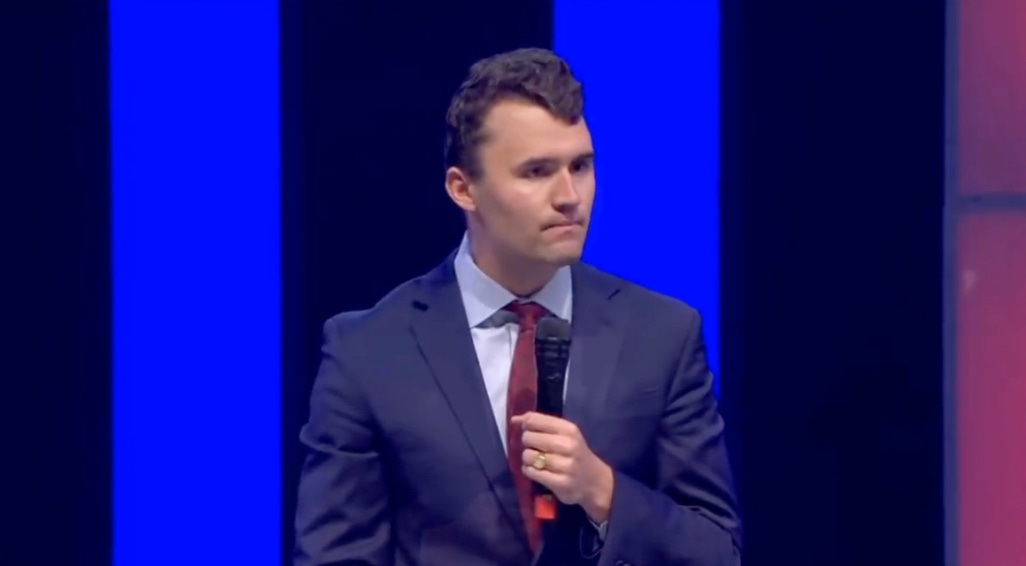
Screenshot of 2023 speech.
In a speech, Kirk describes transgender people as a “throbbing middle finger to God” and trans swimmer Lia Thomas as “an abomination to God.”
Oct. 11, 2023
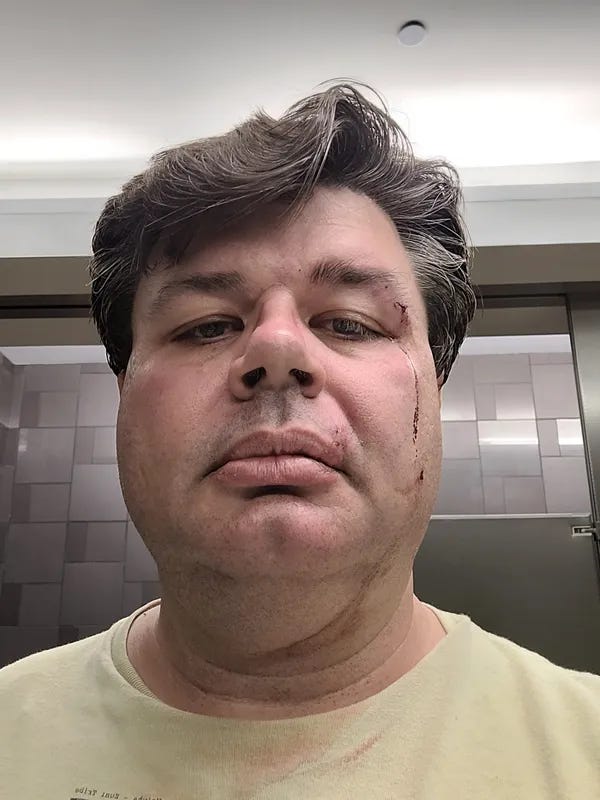
David Boyles, an instructor at Arizona State University, posts a photo of his injuries on Instagram. Photo courtesy of David Boyles.
A TPUSA-affiliated crew assault David Boyles, a queer Arizona State University professor who teaches English and is a co-founder of Drag Story Hour Arizona. The crew shouts accusations about drag shows and sexuality, “accusing [him] personally of pedophilia and hating America,” and ultimately shove him to the ground after he tries to block their camera from recording. Campus police say they investigated the interaction as a “potential bias or prejudicially motivated incident.” Both suspects would plead guilty in court. The professor had been featured on TPUSA’s Professor Watchlist in part for teaching an LGBTQ-themed class on pop culture and politics.
Subscribe for LGBTQ journalism.
Subscribe
March 20, 2024
In a debate, Kirk says, “I believe marriage is between one man and one woman, but if you ask me do I have hate in my heart for somebody that doesn’t choose the [heteronormative] lifestyle … of course not.”
April 1, 2024
Kirk calls for gender-affirming clinics to be banned: “We need to have a Nuremberg-style trial for every gender-affirming clinic doctor.”
June 6, 2024
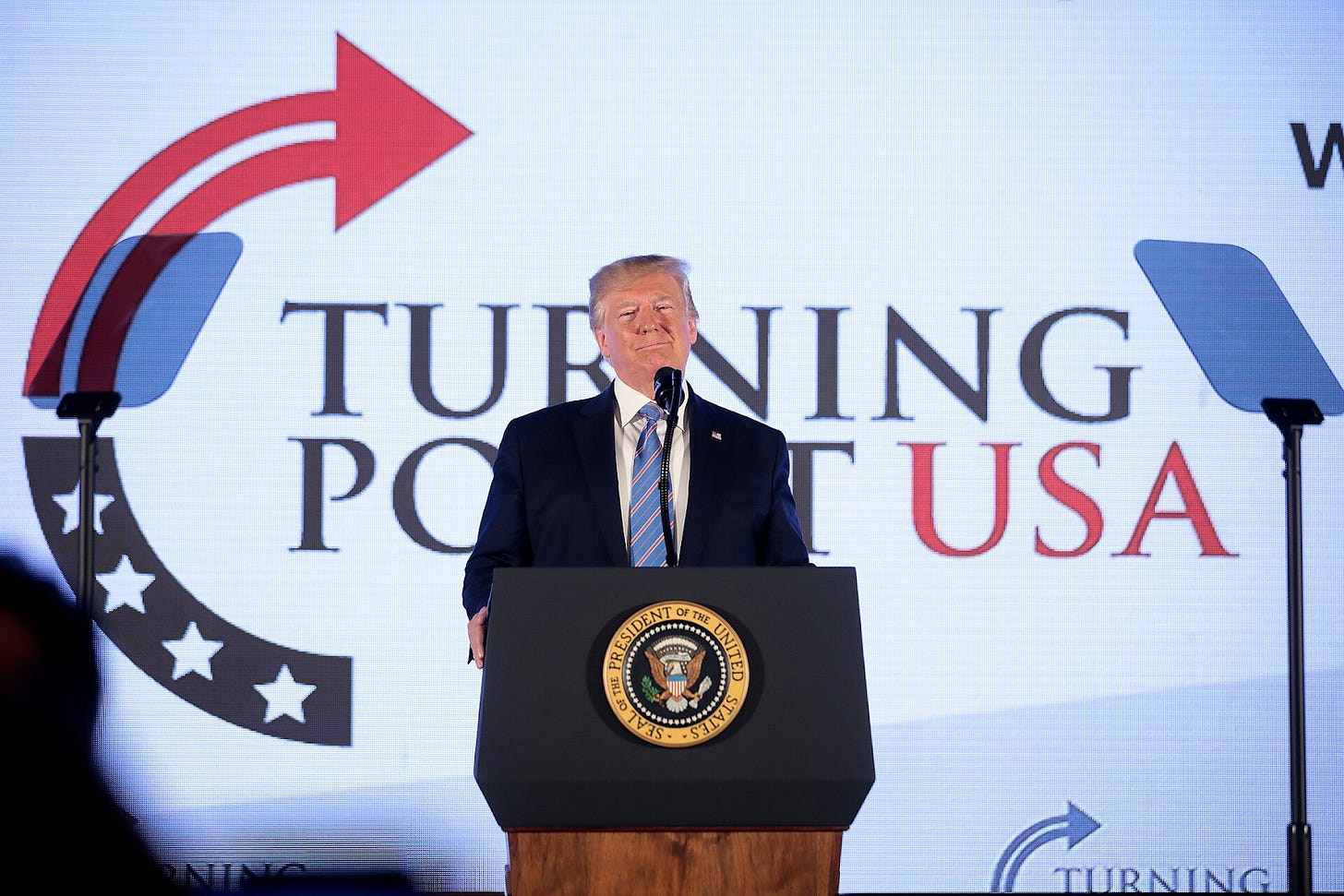
Trump has spoken at multiple TPUSA events through the years. Trump appears here at the 2019 TPUSA Teen Student Action Summit. Photo by Gage Skidmore.
Trump appears at a TPUSA event, signaling collaboration with Kirk’s organization for his second presidential campaign, which was centered around anti-trans ads. Trump delegates many campaign responsibilities to Turning Point Action, the political advocacy arm of TPUSA. Trump tells the crowd, “Arizona is being turned into a dumping ground for the dungeons of the third world.”
June 8, 2024
Speaking on a podcast, Kirk attacks Ms. Rachel for quoting “love your neighbor” to defend Pride celebrations on “Songs for Littles,” her YouTube series that uses music and games to help toddlers develop language and social skills.
“Ms. Rachel, you might wanna crack open that Bible of yours. … Leviticus 18 [says] that ‘thou shall lay with another man, shall be stoned to death.’ … Ms. Rachel, you quote Leviticus 19, ‘love your neighbor as yourself.’ The chapter before affirms God’s perfect law when it comes to sexual matters.”
When opining about how Christians should act towards gay people, Kirk calls homosexuality an “error” and equates it to an addiction: “How do you love somebody? You love them so much to correct their error. … If you meet an alcoholic or you meet a drug addict, do you affirm their struggle? No! You say, ‘You’re better than this, let’s get you free from that.’”
When speaking about LGBTQ rights advocates, Kirk says, “First, they wanted you to affirm, and then they wanted you to celebrate and then they wanted you to participate. And if you don’t, they are willing to destroy your life.”
Oct. 28, 2024
Kirk wears a T-shirt with the slogan “xy = man” at an election rally in Arizona, referencing that sex and gender are biological and insinuating that trans people don’t exist.
Jan. 10, 2025
TPUSA and The Daily Wire release Identity Crisis, a documentary that cherry picks stories from detransitioners and parents fighting to protect children from gender ideology. The main expert in the documentary is Dr. Drew Pinsky, a TV personality who is not a gender specialist.
March 3, 2025
Kirk speaks at the 2025 TPUSA Young Women’s Leadership Summit in Texas. Photo by Gage Skidmore.
When asked by a gay conservative college student for advice, Kirk responds, “You are a complete human being. … We act as if the most important part of your identity is what you do in the bedroom. It doesn’t mean that much to me. If you asked from a perspective as a Christian, I don’t agree with that lifestyle.”
Aug. 25, 2025
“While we’re talking about flags, we should work to overturn every conviction for those arrested, fined, or otherwise harassed for the ‘hate crime’ of doing donuts over Pride flags painted on public streets,” Kirk writes on X, referencing a teenager who was arrested in St. Petersburg for doing circular “doughnut-burnouts” on a rainbow pride mural.
In a separate post, Kirk writes that “it should be legal to burn a rainbow or BLM flag in public.”
Sept. 10, 2025
Charlie Kirk is shot and killed while speaking at a TPUSA event at Utah Valley University in Orem, Utah. In the moments leading up to his death, Kirk is speaking about gun violence.
The mainstream media spreads disinformation based on falseleaks from the Bureau of Alcohol, Tobacco, Firearms, and Explosives that say the shooter had “expressions of transgender and anti-fascist ideology” written on the bullets.
Trans hate has risen since Kirk’s death, and trans students unaffiliated with the shooting have been doxxed and harassed.
“[People online] were asking for my class schedule,” Simone Goodheart, a trans woman and UVU alum, told Uncloseted Media. “A few of them made awful comments about my appearance and who I am as a person.”
Sept. 12, 2025
Kirk’s widow, Erika, issues a statement at the TPUSA headquarters in Phoenix, Arizona, signaling an escalation of tension:
“If you thought that my husband’s mission was powerful before, you have no idea. You have no idea what you just have unleashed across this entire country, and this world. … You have no idea the fire you’ve ignited within this wife. The cries of this widow will echo around the world like a battle cry.”
Two weeks after Kirk’s assassination, a Texas man faces charges for threatening to open fire at the Abilene Pride Parade as “revenge” for Kirk’s death. In Facebook messages, he urges a friend to “lock and load and pay them back” and suggests they go “hunting fairies.” The FBI says his threats were targeted toward Pride participants.
Sept. 30, 2025
TPUSA returns to Utah for the first time since Kirk’s death to host a panel at Utah State University.
The panel discusses political tolerance. Jason Chaffetz, a former Utah State Representative, says, “I worry that we’re putting too much tolerance. You do not need a man with junk in a woman’s bathroom. End of story.”
When discussing LGBTQ allies who lit up the iconic Brigham Young University’s “Y” in the color of the trans flag, the moderator calls it “some of that evil that’s just seeping in throughout the state.”
If objective, nonpartisan, rigorous, LGBTQ-focused journalism is important to you, please consider making a tax-deductible donation through our fiscal sponsor, Resource Impact, by clicking this button:



 Scottie's Playtime