from Florida, too! I’m not sure how liberal he’ll be, but there’s a lot of work to get done before worrying about that, and we know this guy can do the work.
This is an older report that I missed. But this is a school with children and according to witnesses ICE gang thugs acted like animals attacking people and assaulting children. Hugs
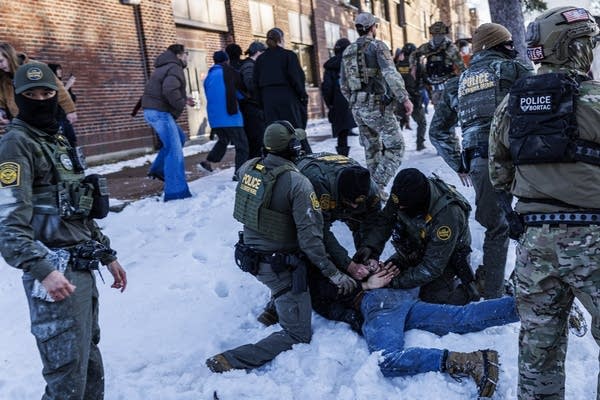
U.S. Border Patrol agents detain a person on the ground near Roosevelt High School during dismissal time on Wednesday in Minneapolis.
Kerem Yücel | MPR News
Minneapolis Public Schools on Wednesday canceled classes district-wide for the remainder of the week “due to safety concerns,” following the killing of a woman Wednesday by an ICE agent. The district said it was acting “out of an abundance of caution.”
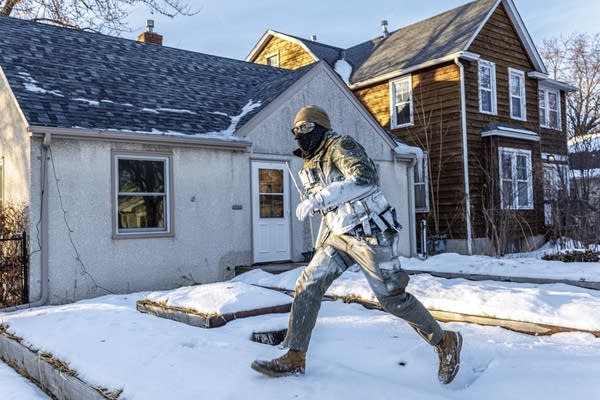
The move came after officials at Roosevelt High School said armed U.S. Border Patrol officers came on school property during dismissal Wednesday and began tackling people, handcuffed two staff members and released chemical weapons on bystanders.
“The guy, I’m telling him like, ‘Please step off the school grounds,’ and this dude comes up and bumps into me and then tells me that I pushed him, and he’s trying to push me, and he knocked me down,” a school official, who spoke to MPR News on condition of anonymity said.
“They don’t care. They’re just animals,” the official added. “I’ve never seen people behave like this.”
Greg Bovino, a U.S. Border Patrol commander, argues with protesters near Roosevelt High School during dismissal time on Wednesday.
Kerem Yücel | MPR News
The school leader said armed officers with apparent Border Patrol insignia on their uniforms arrived at a street near the school in several SUV vehicles during dismissal on Wednesday afternoon. They broke out the window of a vehicle.
“There’s a car that got hit. I don’t know how it got hit. They broke out the window,” the school official said. “Then different Neighborhood Watch, people, everybody, people, the staff in the school came out. And then they started coming on the property of the school and pushing people and tackling people and shooting pepper spray and pepper balls. And they handcuffed two of our employees.”
Video shared with MPR News show armed, masked officers with apparent Border Patrol insignia on their uniforms dragging a person on a sidewalk outside of the high school and tussling with another person as bystanders blow whistles and shout.
A U.S. Border Patrol agent runs after a person near Roosevelt High School during dismissal time on Wednesday.
Kerem Yücel | MPR News
The school official said some high school students were involved in altercations with officers. Many sheltered at a nearby library.
Kate Winkel, who lives in the neighborhood near Roosevelt said she saw the Border Patrol agents on her drive home from work and witnessed agents pull a person into one of their vehicles.
In a video shared with MPR News, a Border Patrol official is shown pushing 47-year-old Winkel to the ground after telling her to get out of the street.
Winkel said she witnessed agents in other physical confrontations with school staff and parents on and near school property.
“I think school property should be off-limits. I think our kids need to feel safe at school,” Winkel said. “The federal government doesn’t need to attack schools.”
Federal agents face off with protesters near Roosevelt High School during dismissal time on Wednesday.
Kerem Yücel | MPR News
In an email sent to school families on Wednesday, school principal Christian Ledesma said the school “instituted a lockout due to law enforcement presence outside of our school involving a vehicle that stopped near our building” after the school’s regular dismissal time. Staff and students “witnessed law enforcement engage with people at Roosevelt,” Ledesma added.
He said school counselors, social workers and district personnel would be available to any students who needed support.
Late Wednesday, district officials told staff and families in an email that all district-sponsored programs, activities, athletics and Community Education classes would be canceled and that it would collaborate with the City of Minneapolis on emergency preparedness and response.
It is clear they are not going after the worst of the worst but simply they are white supremacist trying to remove non-white people from the country. How is this making anyone safer? Hugs
Organizers say ICE agents have been targeting African nationals amid surge focused in Portland and Lewiston
A woman films a Homeland Security Investigations agent in Portland, Maine, on Friday. Photograph: Robert F Bukaty/AP
Three days into its immigration crackdown in Maine, the Department of Homeland Security said Immigration and Customs Enforcement (ICE) agents had arrested “more than 100 illegal aliens”.
In a statement to the Guardian on Friday, the DHS assistant secretary of public affairs, Tricia McLaughlin, said some of those taken into custody were “the worst of the worst” and had been “charged and convicted of horrific crimes”, but cited the same four examples it released earlier in the week.
Speaking to Fox News, Patricia Hyde, deputy assistant director of ICE, said the agency had compiled a list of 1,400 individuals in Maine it intends to target.
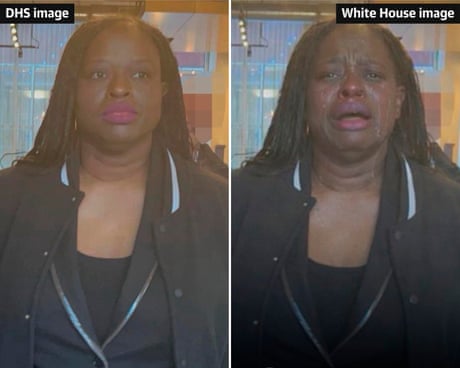
White House posts digitally altered image of woman arrested after ICE protest
Read more
Immigrant rights groups have been on alert as ICE concentrates its operation on Maine’s two largest cities, Portland and Lewiston. Organizers say agents have been targeting African nationals from Somalia, the Democratic Republic of the Congo and Angola, many of them asylum seekers who have made the coastal state home in recent decades.
On Wednesday, a local ICE sighting hotline – organized and run by the Maine Immigrant Rights Coalition – said they received more than 1,100 calls, a 35% increase in calls from the previous day. Immigrants in Maine represent only about 4% of the state’s total population, most of whom have legal status to live and work in the US, according to a recent report by the Migration Policy Institute.
At a press conference in Portland on Thursday, Janet Mills, the state’s Democratic governor, said the Trump administration had not returned her calls since the operation began. She added that her office had received reports of people with no criminal record being detained and urged homeland security to be transparent in its actions, saying she would be “shocked” if federal law enforcement located 1,400 individuals with criminal backgrounds.
“If they have warrants, show the warrants,” she said. “We don’t believe in secret arrests or secret police.”
Mills also described widespread fear in schools, workplaces and businesses that are losing employees who have either been detained or are not showing up, despite living in the state legally.
Earlier this week, a video by 28-year-old Cristian Vaca – an Ecuadorian immigrant living in Maine with valid immigration status – went viral online. In the footage, federal agents appear outside Vaca’s home in Biddeford, 18 miles south of Portland, where he lives with his wife and young son. In an interview with the Associated Press in Spanish through a translator, Vaca said that he approached the officers when they were taking pictures outside his house.
When Vaca refused to go outside, the video shows one of the agents telling him that they will “come back for your whole family” through Vaca’s screen door.
“I have been in this country since September 2023,” Vaca, who works as a roofer, told the AP. “I have immigration status … the judge postponed my court date to another day. Now I have a new court date. I have my work permit. I have my social security number [sic].”
Local authorities also decried the scope of the federal immigration dragnet this week. The Cumberland county sheriff, Kevin Joyce, said that on Wednesday evening one of his corrections officer recruits was arrested by ICE agents.
“This is an individual that had permission to be working in the state of Maine. We vetted him,” the sheriff said of the unnamed recruit.
Joyce was one of more than 100 national sheriffs who met with Trump’s border czar, Tom Homan, last year. “The book and the movie do not line up,” Joyce told reporters on Thursday. “We’re being told one story, which is totally different than what’s occurring.”
Later, Joyce said that ICE officials contacted him to say all detainees held at the Cumberland county jail were being moved on Thursday. In an interview with the Portland Press Herald, he said “about 50” people were removed from the jail. The DHS did not respond to the Guardian’s request for comment about where detainees are being held as Maine does not have a dedicated immigration detention facility.
The Maine Immigrants Rights Coalition’s advocacy and policy manager, Ruben Torres, said that family members are now finding it “extremely difficult to be able to find their loved ones once they have been picked up”.
The Immigrant Legal Advocacy Project (ILAP), Maine’s only statewide immigration legal services organization said it had received several fearful calls as the crackdown continues. This includes a pregnant woman who reached out to ILAP because she was “terrified to leave her home to go to a medical appointment”. Another person called and said someone had “pulled the fire alarm in her building, desperately trying to save people from ICE”. ILAP said that they received reports of teachers escorting immigrant children home from school who had agents follow them and push their way into an apartment building lobby.
“It is clear the overall operation is anything but targeted,” said Sue Roche, ILAP’s executive director. “People are being racially profiled on the streets and in their cars. As is their playbook, ICE is doing everything they can to inflict maximum cruelty and chaos.”
In Lewiston, it was “hard to overstate the level of fear within the community”, according to the Democratic congressional candidate Jordan Wood, who is running to replace the outgoing US representative Jared Golden. “I have heard that as many as 20% of students at certain schools did not show up,” Wood, who was born, raised and lives in the area, told the Guardian.
He added that the community response to the ICE surge – from ensuring immigrants know their rights to sharing where agents have been spotted – has been hugely encouraging. “It’s important to just know the community that they’re coming after won’t stand idly by while our neighbors are terrorized,” Wood said.
At her press conference in Portland, Mills still wanted more information about the decision to target the Pine Tree state. “Why Maine? Why now? What were the orders that came from above? Who’s giving the orders?,” she said, adding that state officials have reached out to the Trump administration but still “have no answers”.
According to Alison Gill of the Daily Beans news podcast the food where this boy is kept is rotten and bug ridden, there is no temperature controls, the conditions are horrific on purpose so that people will self deport or agree to deportation just to get relief from the torture they are enduring. Also they are rounding up and holding other children instead of sending them to family services and other family members as the law requires. They are just breaking laws and using kids as pawns. We still never recovered and found the kids they stole and sold the first tRump term. Those kids and their parents will never be reunited. That is child trafficking and the maga don’t care. Hugs
Texas A&M University, earlier this month, banned a philosophy professor from teaching about Plato’s Symposium because it’s too gay (well, in their words, for discussing “gender ideology”), and, while obviously philosophy classes should be allowed to teach about Plato and state lawmakers and administrators shouldn’t be interfering in curricula… they are right that the specific texts that they banned are pretty gay.
If the legislators’ and administrators’ goal is to make LGBTQ+ people feel more isolated and alone as a way of getting them to conform and pretend to be cisgender and heterosexual, this won’t be enough to accomplish that goal — however, it’s a necessary step towards that goal.
I grew up in the ’90s in a conservative part of central Indiana, and I went to college on the other side of the country, determined to get away from everyone I knew and to live my life as I wanted. One of the classes I had to take in my first semester at college as an 18-year-old freshman was a survey of Western civilization-type class that included Symposium as one of its readings.
I still remember the professor warning us in the class prior to reading Symposium that the text was about “love” and that, for Plato, that very much included love between two men. This was 2001, pre-September 11, just a couple of years after Ellen DeGeneres came out, and at a time when homosexuality was illegal in many states, so, yes, we got a “trigger warning,” and the potential trigger was a discussion of homosexuality.
It’s hard to say what impact that book had on me. Pretty much the only mentions of homosexuality in grade school that I remember from Indiana were the slurs kids would throw around every other sentence, the jokes and insults that were never any deeper than calling someone gay, the Christians randomly arguing (against no one!) that homosexuality was sinful, the casual discussions of violence against gay people (I grew up in the days when fantasizing putting all gay men on an island and dropping a bombshell on them was just a normal thing for people to talk about, like the weather)… and here I was — a freshly minted adult among other adults — talking about Plato, the famous philosopher who (pretty much every adult my whole life had said) was an important historical figure. And Plato was gay. Maybe not “gay” in the modern sense, but he was writing books about loving men, and that was close enough for me.
[This] is why MAGA wants to end liberalism itself. To them, people are workers, soldiers, baby-producing machines, not human…. It’s a cold and sad way of looking at the world.
One of the passages that Texas A&M University had an issue with was Aristophanes’ speech about the origin of love. The short version is that, in the distant past, humans rolled around like balls with four arms and four legs and two faces. Some people were all male, some all female, and some a mix. They were powerful and a threat to the gods, so Zeus cut them all in half. Now they (we) spend our lives looking for our other half and holding on when we find them.
While the point of the story isn’t an explanation of why some people are gay and others are straight, it’s baked in, and modern readers are going to notice that Aristophanes is saying that same-sex love has the same origin as opposite-sex love. They’re all just normal variants of human sexuality, and it’s not something that anyone else in the book even comments on. That is, same-sex love is just another legitimate expression of love that comes from the same place, at least for Aristophanes. Others in the book have different opinions about male same-sex love, but none are disapproving.
I wasn’t the only one to take that message from that story. I have heard it mentioned by other queer people throughout my adult life. It featured prominently in the late-90s musical (and later film) Hedwig and the Angry Inch. It’s a part of the queer lexicon.
“The ‘gender ideology’ of this tale comes to us from the fourth century BC,” writes Guardian columnist Osita Nwanevu. “And philosophers in the many centuries since have examined it not only for what it tells us about the Greeks in Plato’s day but for what it might tell us, as far removed as we might be from ancient Athens, about sex, love, and longing. It is a tale about universal aspects of the human experience philosophers have examined in the service of understanding what it means to be a human being.”
Nwanevu’s larger point is that the underlying ideology of the presidential administration — as shown in Stephen Miller’s claim that the world is “governed by strength” and Vice President J.D. Vance’s statement that America is nothing more than a “homeland” for “people with a shared history and a common future” — is really selling people short. What it means to be human is much more than mere strength and domination, and America is supposed to be an idea and an ideal, not just a piece of land where we live.
LGBTQ+ rights flourished in the post-war world, as did other human rights protections; ending the constant spats over pieces of land inspired people to understand that there’s a lot more to being human…
That is, America is supposed to be about all people’s inherent value and right to “Life, Liberty and the pursuit of Happiness,” not Miller’s “iron laws of the world” — those of “might makes right” — that Nwanevu rightly calls “the laws of animals.”
This is fundamental to how the global neo-fascist movement sees the world: For them, everything is about domination and resource-hoarding. All other considerations are secondary.
It can be seen in the attacks on LGBTQ+ rights that are often justified by pointing to a decline in the birthrate, or in the attacks on humanities and social sciences at universities, degrees that many claim (often incorrectly) don’t pay well. This can be seen in the complaints that schools shouldn’t teach kids to be more tolerant of diverse people — a necessary skill in a multicultural world where we all get along — and should instead teach them the bare minimum of reading, writing, and arithmetic (and, since it’s the 21st century, how to code). It can be felt in the right-wing mockery of art and arts funding when they never have complaints about spending money on military equipment that will never (and should never) see combat.
And it’s in this horrifying Greenland business, which is what Miller was talking about when he was discussing “the iron laws of the world.”
| Shutterstock
On the one hand, invading Greenland would end NATO, end all sorts of ties between the U.S. and Europe, and end the peaceful world created in the latter half of the 20th century that led to prosperity in the West and an end to the wars for territorial expansion that defined Europe for millennia.
On the other hand, Greenland looks kinda big on Mercator-projection maps, and adding a big splotch to the part of the world labeled “United States” would make the president feel like he actually accomplished something of value in his life.
It shouldn’t be surprising that LGBTQ+ rights flourished in the post-war world, as did other human rights protections; ending the constant spats over pieces of land inspired people to understand that there’s a lot more to being human, to be concerned with their own and other people’s happiness, and to try to live up to the ideals laid out in previous centuries.
Which is why MAGA wants to end liberalism itself. To them, people are workers, soldiers, baby-producing machines, not human. Our worth is measured in terms of how much stuff we can produce, how much we can contribute to our nation’s domination over other nations. Individuals’ fulfillment and happiness are secondary. It’s a cold and sad way of looking at the world.
So Plato, of all people, is taking a beating in Texas. Learning about philosophy opened my mind when I was young and taught me to ask questions about what life could offer. (The part of Symposium about how homosexuality results in intellectual reproduction instead of biological reproduction like heterosexuality wasn’t even on the syllabus at Texas A&M, but I still haven’t forgotten about it.)
In the war on human-ness itself, LGBTQ+ identities will always be one of the first victims. That’s why they don’t want us learning about ourselves.
Subscribe to the LGBTQ Nation newsletter and be the first to know about the latest headlines shaping LGBTQ+ communities worldwide.
A progressive who ran as a progressive and is governing as a progressive. This shows how it can and should be done. It terrifies the corporate democrats. Hugs
Early Tuesday morning, final appropriations bills for the Departments of Labor, Health and Human Services, and Education—and related agencies—were released, marking the last major funding measures to be negotiated in the aftermath of the record-breaking government shutdown fight in 2025. That standoff featured multiple appropriations bills loaded with anti-transgender riders and poison pills for Democrats, ultimately ending in a short-term continuing resolution that punted many of those provisions to the end of January. While other “minibus” packages funding individual agencies moved forward, the Education and HHS bills were conspicuously absent, as they contained some of the most sweeping and consequential anti-trans riders ever proposed in Congress. Now, with the final bills released, it is clear that no anti-transgender riders were included—meaning transgender people will largely be spared new congressional attacks through most of 2026 should they pass as-is.
As the government shut down on Oct. 1, the state of appropriations bills needed to reopen the federal government for any extended period was extraordinarily dire for transgender people. Dozens of anti-transgender riders were embedded across House appropriations bills, even as those provisions were largely absent from the Senate’s versions. The riders appeared throughout nearly every funding measure, from Commerce, Justice, and Science to Financial Services and General Government. The most extreme provisions, however, were concentrated in the House HHS and Education bills, including language barring “any federal funds” from supporting gender-affirming care at any age and threatening funding for schools that support transgender students. Taken together, those measures would have posed a sweeping threat to transgender people’s access to education and health care nationwide.
Those fears eased somewhat when the government reopened under a short-term continuing resolution funding operations through the end of January. In the months that followed, Democrats notched a series of incremental victories for transgender people, advancing multiple appropriations “minibus” packages that stripped out anti-trans riders as the government was funded piece by piece. As amendment after amendment fell away, those wins grew more substantial, including the removal of a proposed ban on gender-affirming medical care from the NDAA—even after it had passed both the House and Senate. Still, the most consequential question remained unresolved: what would ultimately happen to the high-impact anti-trans provisions embedded in the HHS and Education bills.
Now, the package has been released—and for the moment, transgender people can breathe again. The final HHS and Education bills contain no anti-transgender provisions: no ban on hospitals providing gender-affirming care to transgender youth, no threats to strip funding from schools that support transgender students or allow them to use the bathroom, and no mandate forcing colleges to exclude transgender students from sports or activities like chess or esports. The bills are strikingly clean. As such, they avert yet another protracted shutdown fight in which transgender people are once again turned into political bargaining chips—and, at least for now, remove Congress as the immediate vehicle for new federal attacks, should they pass as-is.
When asked about the successful stripping of anti-trans provisions, a staffer for Representative Sarah McBride tells Erin In The Morning, “Rep. McBride works closely with her colleagues every day to defend the rights of all her constituents, including LGBTQ people across Delaware. In the face of efforts by the Trump administration and Republicans in Congress to roll back health care and civil rights, she was proud to work relentlessly with her colleagues in ensuring these funding bills did not include anti-LGBTQ provisions. It takes strong allies in leadership and on committees to rein in the worst excesses of this Republican trifecta, Rep. McBride remains grateful to Ranking Members DeLauro, Murray, and Democratic leadership for prioritizing the removal of these harmful riders.”
This does not mean that transgender people will not be targeted with policies and rules that affect them in all areas of life. The Trump administration has acted without regard to law in forcing bans on sports, pulling funding from schools and hospitals, and banning passport gender marker updates. The Supreme Court has been increasingly willing to let the office of the presidency under Trump do whatever it would like to transgender people. However, the lack of passage of bills targeting transgender people means that these attacks will only last for as long as we have Trump in the White House, and a future president should hopefully be easily able to reverse the attacks.
This is an important story of growth and rejection of your core identity. The fact that those closest to you can not accept you and that which makes up who you are. I have not changed the text of the story in any way as I want the voice of the author and his agony of his childhood to shine clearly. This is the way the right wing Christian Nationalist bigots want every family member to be and all children raised. Remember this was only the 1990s. In the 30 years since great progress was made in acceptance, tolerance and education of / about LGBTQ+ kids and how to raise them in loving acceptance of how they feel inside themselves. The Christian hate groups that make their living trying to return the country to a much more regressive hateful time rolling back all rights gained by minorities. And in a very short time they have had a huge effect on how LGBTQ+ people especially LGBTQ+ kids are treated. They stated their goal of driving these kids back into hiding terrified of being outed for fear of being beaten, harassed, and ostracized. That is what they want. Several Christian lawmakers who are trying to make being an out LGBTQ+ kid illegal along with showing any media that represents the LGBTQ+ community have said that when they were kids in school they used to gang up and beat the shit out of LGBTQ+ kids. I know in the 1970s I was not out but targeted as a “faggot” and constantly harassed and attacked. How any adult would want to return to such a time, to having any kid or adult be treated that way is horrendous. Especially from those trying hard to force the country to follow their idea of a Christian lifestyle. Hugs
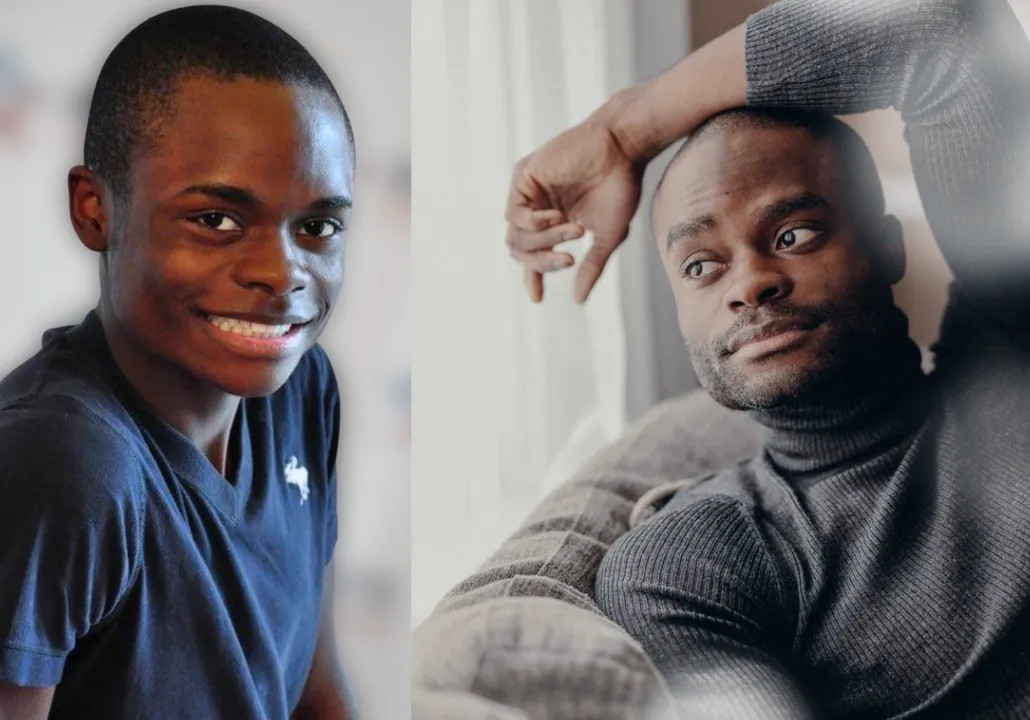
At 30, I’m finally living as myself. But the man whose acceptance I wanted most still can’t say the word gay.
Jan 10, 2026
Content warning: This story includes mentions of homophobia, childhood trauma and suicidal ideation.
By CorBen Williams
The seventh time I came out to my father wasn’t dramatic. It didn’t happen at a kitchen table or in a parking lot or after he’d found one of my journals. It happened casually, slipped into a conversation like it was nothing:
“As a gay man—” I began.
“You’re not gay,” he interrupted.
“Dad,” I replied. “We’ve done this too many times before.”
Even now, at 30 years old, married to the man I love, fully myself in ways I once thought impossible, my dad still can’t say who I am out loud. It hangs there, suspended between us, as though acknowledging my homosexuality would unravel something he’s built his entire life around.
I’m not sure what exactly. Control? Image? Masculinity? Maybe he simply doesn’t have the language.
Photo courtesy of CorBen Williams.
I grew up in North Pole, Alaska, in a red-sided house at the end of a gravel turnaround. It was the kind of home where the winter light never quite reached the living room and silence carried through the walls like a second language.
North Pole felt like its own universe. A 2,500 person military town where there’s snow on the ground for up to 187 days a year and the Christmas lights never come down. About 70% of the town is white and roughly 30% of the voters are registered Republican, with almost half listed as “undeclared,” which in Alaska is usually just Republican without saying it out loud.
Most families were tied to the church or the base, so you learned fast what was considered normal and what was not. People knew your parents and your business.
Growing up Black and queer made me stand out without trying and forced me to learn early how to tuck parts of myself away.
My parents had both served in the military, and even though my mother had the warmth and softness to move past it, my father emulated parental rejection. Dad demanded respect and expected excellence in the way a man shaped by the military does: loud and without room for negotiation.
You could feel his energy before you heard his footsteps because there was always a tension that entered the room with him. He yelled more than he spoke, and as a kid I was told to listen to what he was saying, not how he was saying it, even when he was screaming in my face.
My father didn’t know what to do with a son who felt things deeply, and before I ever came out to him—the first of seven times—he had already shown me exactly which parts of myself were unsafe to reveal.
But that didn’t stop me from trying. The first time I came out, I was in first grade, sitting in the parking lot of a McDonald’s on Geist Road, right beside my future high school.
“Dad, I think I’m bisexual,” I said.
I knew my ass was gay. But I also knew enough about my father to try to ease him into it. He asked if I knew what that meant, and even though I did, I told him “no.”
“It means you like sucking penis,” he spat harshly.
I was six.
People think kids don’t understand things, but children clock everything. That moment didn’t confuse me about who I was. It clarified who he was. It showed me that there were parts of me he couldn’t handle and wouldn’t protect. I didn’t leave that day understanding my sexuality better. I left understanding the risk of telling the truth.
The second time, I was forced out when my father found my journal. I was 10 years old, and in those pages, I’d written unpolished thoughts about men, about how I felt around them, questions I didn’t yet know how to ask anyone.
He burst into my bedroom and tore the journal up in front of me, little pieces of paper flying around me as I sat in my bed. I tried not to cry.
“As long as you’re a kid in my house, you don’t get privacy,” I remember him barking. It showed me that I need to be wary about how much I trust people and what information I give them.
This rejection led me to the darkest part of my childhood.
“I am tired of living,” I remember muttering to my sixth grade teacher.
I was exhausted by my dad, exhausted from hiding, exhausted from feeling wrong in my own skin.
I should have stopped writing after that, but writing was how I survived. When you don’t have anyone to talk to, you talk to the page.
By 13, I had another journal. This one had drawings of a classmate and fantasies about kissing him. When my dad found it, he brought it up on the car ride home from school, saying “the correct way” to feel about other boys was “brotherly love” and nothing else.
But the third journal set off the biggest explosion.
It was filled with details, drawings and fantasies about my first hookup with a boy. The way I wrote about them, at 15, was more adult. The kind of writing he didn’t want to believe his son was capable of.
“I fucking told you about this shit,” he shouted, with the journal gripped tightly in his hand. “This isn’t appropriate. This isn’t what we do.”
My mom was sitting next to me, shocked, both of us caught off guard by how quickly he had gone from discovery to explosion. I almost cried, but I swallowed it down. My mom guided him into the other room to calm him down.
He didn’t speak to me for seven days. He couldn’t look at me. Each day felt like another nail in the coffin.
Photo courtesy of CorBen Williams.
I kept coming out to my dad anyway. At 17. At 22. At 24. Nothing changed.
Part of me used to think that I was an embarrassment to my family. I felt for so long that I needed to apologize for being the mistake. But in my late teens, I started to see it differently. I realized I just wanted his acceptance and his love in a way that I was never gonna get.
Because of this, I don’t think I ever really got to be a child. Even in first grade, when other kids were talking about Barbies and Legos, I felt like I was always bracing for impact, performing a version of boyhood that never fit. My childhood was spent preparing for adulthood and a career. People would always say to me, “You seem so much older. You seem so mature.”
I left North Pole for good and moved to New York City when I turned 19. I became a performer, a traveler, someone who learned to build softness and resilience, where my childhood had taught me to live in fight-or-flight mode. And then, almost when I wasn’t expecting it, I met Travis.
He was older. Wisconsin-born. A wildlife biologist. Patient in a way I didn’t even realize I needed. My mother said he softened me, brought grey into my black-and-white worldview. With him, I don’t brace for criticism. I don’t edit myself. I don’t shrink. I don’t hide my journals.
We’ve been together five years now, married for three. He’s met everyone in my life, except for my dad.
Photo courtesy of CorBen Williams.
Now, when I think about my upbringing in North Pole, I think about the path through the woods that led to my house, hoping someone on the other side would understand me. I think about how many times I tried to hand my father my truth, and how many times he handed it back to me with rage.
Even now, with the life I’ve built and the love I’ve chosen, acceptance is still complicated. I wish I could say that learning to love myself erased the sting of not being understood, but the truth is I still wrestle with where I fit—inside my family, inside Black spaces, inside queer spaces, inside the places that were never built with someone like me.
I’ve learned to be confident, to be gracious, to be the person who makes others feel seen, maybe because I know exactly what it feels like not to be. But some days, even as a grown man, I feel an instinct to shrink.
I’m learning that acceptance is a practice, one I have to return to again and again. I don’t have it all figured out. But I’m trying. And maybe that’s the real truth at the end of all this: I haven’t just been coming out to my father all these years—I’ve been slowly, steadily learning how to come home to myself.
Uncloseted Media and GAY TIMES reached out to CorBen’s father for comment, but he did not respond.
Sam Donndelinger assisted with the writing and reporting in this story.
If objective, nonpartisan, rigorous, LGBTQ-focused journalism is important to you, please consider making a tax-deductible donation through our fiscal sponsor, Resource Impact, by clicking this button:
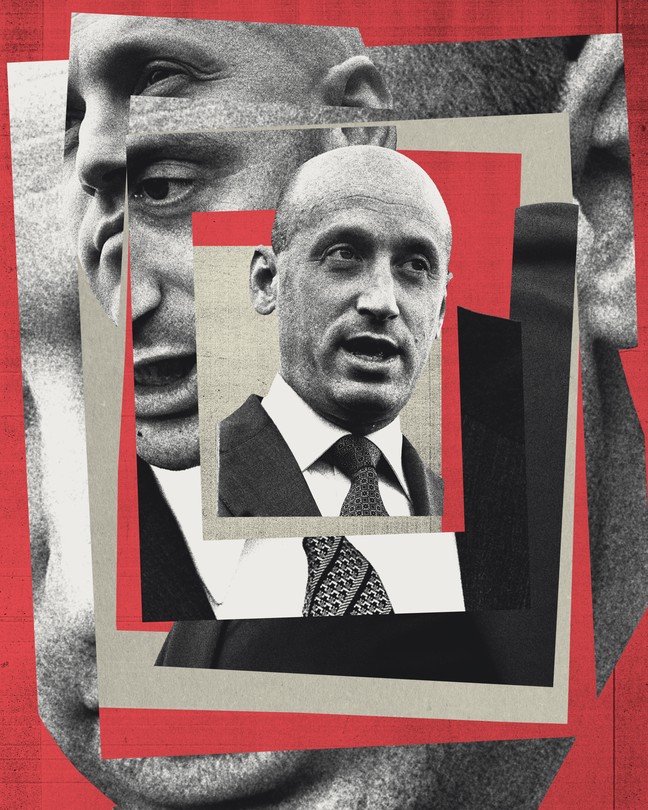
Illustration by Ben Kothe / The Atlantic. Sources: Demetrius Freeman / The Washington Post / Getty; Kayla Bartkowski / Getty; Samuel Corum / Sipa / Bloomberg / Getty.
January 7, 2026
Stephen Miller runs his daily 10 a.m. conference calls—yes, even on Saturdays—less like a government adviser and more like a wartime general. His is the dominant voice, as he plays the role of browbeater, inquisitor, and bully. He accepts no excuses, entertains no dissent.
Donald Trump’s deputy chief of staff for policy ruthlessly pursues the president’s vision, especially when it comes to pushing immigrants out of the country, and he runs a tight, efficient meeting. Consensus is not the goal.
Instead, Miller demands progress reports on his mass-deportation campaign and issues orders to the full alphabet soup of federal enforcement agencies, including the FBI, CBP, ICE, HHS, and the DOD. One senior official who has participated in the calls told us that the intensity and urgency often veer into hectoring. “He pushes everybody to the absolute limit because he knows that the clock is ticking,” this person said. “He gets on the phone and he yells at everybody. Nobody is spared from his wrath.”
In May, Miller told Immigration and Customs Enforcement officials that he wanted 3,000 immigration arrests a day, a nearly tenfold increase over the number they’d arrested on U.S. streets in 2024. He demands daily updates on the ICE hiring surge too; the administration had pledged to deploy 10,000 new deportation officers by this month—more than doubling the agency’s workforce. And Miller expects regular updates on detention capacity, deportation flights, and border crossings.
Miller publicly shames bureaucrats he feels are falling short or resisting orders. “If there’s a problem and you’re the owner, you have to fix it quickly,” another frequent conference-call participant told us. “It’s not a place where you can say, ‘I have to get back to you.’”
A third official told us that the calls are unlike any other government meetings they’ve attended. “If you say something stupid, he’ll tell you to your face. You are expected to perform at a certain level, and there’s no excuse for not meeting those expectations,” this person said.
In Trump’s inner circle—even with the president himself—Miller is known as a dogmatic force whose ideas are sometimes too extreme for public consumption. “I’d love to have him come up and explain his true feelings—maybe not his truest feelings,” the president joked at an Oval Office briefing in October. But in Trump’s second term, Miller finds himself at the height of his powers—the pulsing human id of a president who is already almost pure id.
Miller has tried to recast the nation’s partisan political disagreements as an existential conflict, a battle pitting “forces of wickedness and evil” against the nation’s noble, virtuous people—a mostly native-born crowd that traces its lineage and legacy “back to Athens, to Rome, to Philadelphia, to Monticello.” He accuses federal judges of “legal insurrection” for ruling against Trump’s policies, describes the Democratic Party as a “domestic extremist organization,” and dismisses the results of even legal immigration programs as “the Somalification of America.” And he has declared an end to the post–World War II order of “international niceties” in favor of a world that rebukes the weak, “that is governed by strength, that is governed by force, that is governed by power,” as he put it this week when discussing recent military action against Venezuela.
Along with Secretary of State Marco Rubio, Miller was the chief force behind Trump’s decision to capture the Venezuelan strongman Nicolás Maduro. “We are a superpower, and under President Trump, we are going to conduct ourselves as a superpower,” Miller told CNN’s Jake Tapper on Monday, articulating a worldview that started with the fear of immigration but has gradually expanded to a broader national-security and rule-of-law argument. (In this Darwinian vein, Miller also declared that the U.S. military could seize Greenland without a fight, echoing a social-media post that his wife, Katie Miller, had made two days earlier, showing an American flag superimposed on a map of the icy landmass alongside the word: SOON. NATO leaders have nervously affirmed Denmark’s claim to the territory.)
Miller’s official titles—he is also the director of the interagency Homeland Security Council—understate the full sweep of his purview. Steve Bannon, a former Trump adviser and a Miller ally, describes him as Trump’s “prime minister.” Miller has a role in nearly every area about which he cares deeply: immigration and border security, yes, but also national security, foreign policy, trade, military action, and policing. He may draft a flurry of executive orders one day, lead a meeting on lowering domestic beef prices the next, and travel to deliver a fiery speech of his own—think Trump at his angriest and most dystopian, without any of the president’s impish humor—the following week. (Miller declined to comment for this story.)
Early in Trump’s second term, he invoked the Alien Enemies Act of 1798 to treat migrants as part of a foreign invasion, directed Congress to pass $150 billion in new funding for homeland-security enforcement, and captained the administration’s assault on elite universities such as Harvard and Columbia. Late last year, he helped orchestrate Trump’s authorization of military strikes on suspected drug-smuggling boats in the Caribbean Sea and eastern Pacific Ocean, setting the stage for the military operation against Maduro.
The force behind Miller’s directives became clear during Signalgate—in which the Trump administration accidentally included The Atlantic’seditor in chief, Jeffrey Goldberg, on a private Signal chat about a bombing campaign in Yemen. It was Miller—not Trump’s national security adviser, Pentagon chief, or even vice president—who ended the debate and directed the group to move forward with the strikes. Trump has described Miller as sitting “at the top of the totem pole” inside the White House.
“He oversees every policy the administration touches,” White House Press Secretary Karoline Leavitt told us. “I can’t tell you the number of times a policy matter is discussed in the Oval and Trump will say, ‘Where’s Stephen? Tell him to get that done.’”
To critics, Miller is the smirking embodiment of everything they view as dangerous and authoritarian about the Trump administration. He has been called a Nazi, a neo-Nazi, a white supremacist, a kapo, and Lord Voldemort. Posters of Miller—pursed lips, furrowed brow—have been plastered around the nation’s capital, stamped with CREEP and FASCISM AIN’T PRETTY. His own uncle has denounced him, writing at one point that if Miller’s immigration policies had been implemented a century ago, their family—which fled anti-Jewish pogroms in Europe—“would have been wiped out.”
Yet if Miller has internalized any of the criticism, or acknowledged the parallels to his own lineage, he has not shown it, even among friends or colleagues. Miller is now acting as an accelerant for the president’s most incendiary impulses and shaping the lives of individual Americans in nearly every realm. He has demonstrated neither the interest nor the ability to moderate his views—even for tactical purposes. He is apt to overreach. And he has shown that he’s not afraid to use the power of the government to go after those who try to stand in his way—even his liberal neighbors, whom he has accused of threatening his family.
During Trump’s first term, Miller pushed the family-separation policy at the southern border, a measure long considered too extreme to implement. It triggered such a massive backlash that Trump’s wife and eldest daughter urged him to stop it. The separations became the defining immigration policy of Trump’s first term, undermining his ability to run on the issue in 2020. Now that he’s back in office, the latest polling shows eroding support for the president’s immigration crackdown, especially among the Latino voters who helped carry him to victory in 2024.
But Miller has continued to push not just for the deportation of people in the country illegally but also for narrowing or closing legal immigration pathways, especially for people from poor, not-majority-white, non-Christian nations. His actions have struck many Americans as racist and xenophobic. (In 2019, for instance, the Southern Poverty Law Center reported on leaked emails in which Miller urged the conservative Breitbart News to promote ideas from The Camp of the Saints, a 1973 French novel popular in white-nationalist and neo-Nazi circles.) Colleagues who have worked with him for years say they have never heard him utter a racist slur, even in private. His devotion is not to white supremacy per se, they insist, but to the political and intellectual thesis he has been pushing since before he arrived in Washington. He wants to halt and reverse America’s post-1960s immigration boom, and he pursues that goal with a fervor that has made him the public face of Trump’s restrictionist immigration policies.
During debate prep for the 2024 campaign, Miller found himself in a contentious back-and-forth over immigration with a more moderate Trump ally. Finally, a frustrated Trump interrupted the two men: Stephen,he said, if you had it your way, everyone would look exactly like you, someone familiar with the exchange told us.
“That’s correct,” Miller said, before turning back to continue sparring.
The nexus of Miller’s power is a vestige of President George W. Bush’s War on Terror. Weeks after the attacks of September 11, 2001, Bush established the Homeland Security Council to coordinate the government’s domestic response to the new threats from abroad. More than two and a half decades later, Miller has attached that rubric of national emergency to a new target, turning the council into a daily war room to track and fine-tune Trump’s campaign to deport 1 million people a year.
The September murder of the right-wing activist Charlie Kirk, who was close to many in the administration, including Miller, plunged Trump’s already single-minded martinet into a maximalist frenzy. A portrait of Ronald Reagan hangs prominently in the Oval Office—just over Trump’s left shoulder when he’s seated at the Resolute Desk—but Miller has made it abundantly clear that this is no longer Reagan’s Republican Party.
Former Senator Jeff Flake, the Arizona Republican who retired during Trump’s first term, told us that he has noticed a clear shift from one Trump administration to the next. “Before, it was more subtle, more nuanced, but now it’s pretty plain. He wants to see more immigration from the Nordic countries, and not so much from the Third World countries. It’s just a clear break from the huddled masses yearning to breathe free,” said Flake, who, as a senator, worked unsuccessfully to pass a bipartisan immigration overhaul. “It’s not the Reagan vision. It’s not the traditional Republican vision.”
Flake said that although the immigration system has serious problems, Trump and Miller’s goal seems to be “to change the nature of who we are as a country.”
Beyond immigration, Miller specializes in turning the president’s whims and rantings into government policy. As Trump griped about the homeless encampments near the State Department one day, Leavitt recalled that he turned to Miller and said: “Get it done.” “And within six hours,” she said, “I looked at Twitter, and there were cranes cleaning them up.”
“Stephen is the most effective political aide of this generation—and probably since James Baker,” the former Trump adviser Cliff Sims told us in a text. “No one is more deft at moving the levers of government to turn the President’s policies into action.”
May Mailman, who last year worked closely with Miller to punish elite universities that the administration claims are rife with anti-Semitism and “woke” ideology, explained to us how Miller approaches a problem. In March, for instance, upset with Columbia University for several reasons—including prominent pro-Palestinian protests on campus—Trump posted a message on social media that began, “All Federal Funding will STOP for any College, School, or University that allows illegal protests.” Miller told Mailman to come up with some options, but, with Trump’s buy-in, Miller was ultimately the one who approved pulling federal funding from the school.
Then he carefully watched for the reaction. “If taking money from Columbia was a bad idea and backfired in some way, then Stephen would be the one to demand a course correction,” said Mailman, who first worked with Miller during Trump’s first term. “But because that worked out pretty well, he then tries to figure out: How can we use that tool in other areas?”
Close observers of Miller say that his total command is a marked contrast to his role during the first Trump term, when, despite being a senior adviser, he was limited in his ability to direct others. David Lapan, a retired Marine Corps colonel and aide to former Homeland Security Secretary John Kelly, told us that he remembers attending a 2017 meeting at which Miller urged officials to send him examples of crimes committed by immigrants so he could publicize them. The difference then, Lapan said, is that Miller had an advisory role, and the other meeting attendees could disregard requests that they felt were too outlandish. “We came out of that meeting and said, Yeah, we’re not doing that,” Lapan recalled. “We knew that Kelly would cover for us.”
“Are there stories like that out there? Sure,” Lapan said. “But they’re the exception, not the rule. Cherry-picking a few bad cases to paint all immigrants in a negative light is not something that we were willing to do.”
Although Miller views himself as the president’s loyal servant, Trump’s stances appear to have shifted under Miller’s direction. The president used to speak favorably about certain immigrant groups he liked, such as DACA recipients and the employees at his golf resorts. But lately, his occasional pro-immigrant chatter has quieted. “‘America First’ is becoming ‘Americans Only,’” Lapan said.
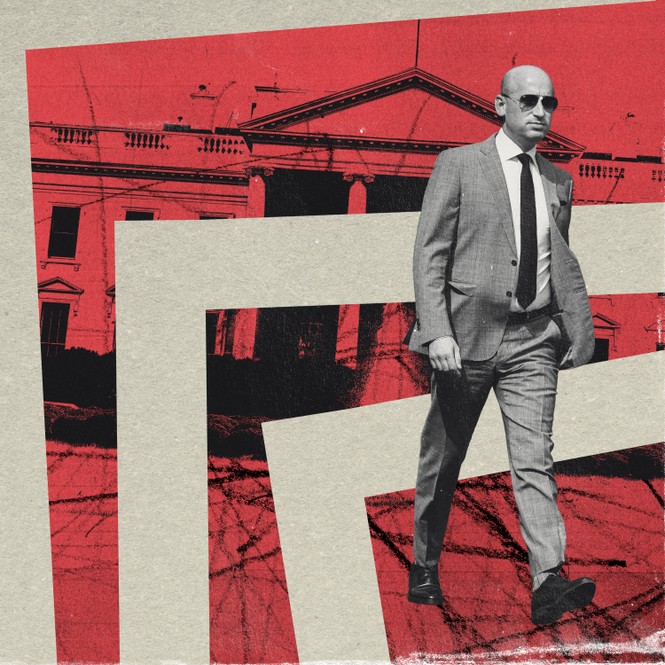
Illustration by Ben Kothe. Sources: Getty; Jim Watson / AFP / Getty.
Miller turned 40 in August and celebrated with a surprise party at the Ned, a chic members-only club blocks from the White House. The president did not show up, but just about everyone else did: White House Chief of Staff Susie Wiles, House Speaker Mike Johnson, conservative influencers, nearly every Cabinet secretary. Miller did not have a speech prepared but spoke self-deprecatingly, thanking Wiles for putting up with his ideas and suggestions. The turnout was a show of not just Miller’s immense power but also his popularity in an administration that has been rife with infighting and backstabbing, especially during Trump’s first term.
The gleeful brawler Miller plays on TV is no act, his colleagues told us, and he behaves similarly in private (although often with a dash of deadpan humor). Several people told us that they appreciate how dogmatic he is, for a possibly surprising reason: They always know where he stands on the issues, and where they stand with him. As Trump’s speechwriter during the first administration, he built goodwill with colleagues by warning them when the president was about to say something contrary to their plans, so they had time to try to convince him otherwise.
“The lazy and clearly false hit on him is to call him these disgusting names,” White House Communications Director Steven Cheung told us, about the accusations that Miller is a Nazi or a fascist. “If you dig deeper and aren’t suffering from Trump Derangement Syndrome, he’s not what the media portrays him as. He’s actually a very nice and cordial person who cares about this country and wants to do a good job. He’s very easy to work with. I’ve been in Trump world a long time, and he’s probably the easiest to work with.”
Several people described Miller as an exacting boss, even a micromanager, but one who looks out for his team—including younger aides. In Trump’s first term, he was not yet married, and he spent many of his nights out, grabbing drinks or dinner with everyone from Cabinet secretaries to more junior staff, who were eager to get time with him. When Trump’s first term wound down, Miller helped ensure that everyone on his staff (and even some not on his team) had a job lined up.
Friends and colleagues say he has rarely seemed hurt by the criticism and caricatures. But he can be vain about his appearance; in Trump’s first term, he once showed up to Face the Nation with what was roundly mocked as spray-on hair. (In Trump’s second term, the hair is gone.) And after a recent Vanity Fair photo shoot of senior West Wing staff, the photographer—whose close-up, often unflattering photos went viral—recounted to The Washington Postthat Miller “was perhaps the most concerned about the portrait session,” asking whether or not he should smile. Colleagues also describe a proud sartorialist who regularly debated fashion and traded menswear tips with another West Wing fashionista, Hogan Gidley, a deputy press secretary during Trump’s first term.
“We would talk about the difference in fabrics for seasons, and lapel size and width of ties and these types of things,” Gidley told us, before describing Miller’s style as “sophisticated and smart and chic but also daring at times.”
In a recently resurfaced 2003 video, a 17-year-old Miller—prominent sideburns and tightly coiled brown hair—sits in the back of a moving school bus, opining on the war in Iraq. In the video, Miller smirkily suggests that the “ideal solution” for “Saddam Hussein and his henchmen” would be “to cut off their fingers”; he argues that torture is the proper punishment in a nonbarbaric society. (In a barbaric society, he implies, death would be the appropriate punishment.) “Torture is a celebration of life and human dignity,” he continues, briefly unable to hide his delight as his latest outlandish proclamation illicits titters from his peers—his mouth widens into a toothy grin, and he emits an audible chuckle before taking a breath and continuing.
This is Miller the troll, who has confided in friends that he enjoys starting a fire, then dousing it with gasoline. But after more than two decades relishing his role as the gleeful contrarian, the persona has now become more true character than occasional outlandish caricature. “He has a flair for the dramatic, and you can tell that now with the way he comports himself on TV,” Bannon told us. “He plays the character well, knowing he always wants to have the libs’—the progressives’—heads blow up.”
After graduating from Duke in 2007—where he vigorously defended white lacrosse players who were falsely accused of rape by a Black stripper—Miller landed a job with newly elected Republican Representative Michele Bachmann of Minnesota. As young Capitol Hill aides, he and Sergio Gor—who recently became Trump’s ambassador to India—helped launch the supernova ambitions of Bachmann, a right-wing darling whose then-fringe ideology presaged the rise of MAGA. By the time Bachmann’s 2012 presidential bid flamed out, Miller was already firmly ensconced with then-Senator Jeff Sessions of Alabama, who shared his hard-line obsession with immigration, and Bannon, who provided a broader nationalist, populist scaffolding.
As Sessions’s aide-de-camp, Miller helped his boss sabotage the bipartisan “Gang of Eight” immigration bill, which passed the Senate by a wide margin in 2013. At the time, a post-2012 Republican autopsy was calling for a gentler, more inclusive GOP, and the proposed immigration overhaul had the support of business and tech leaders, interest groups, and wealthy donors. But Miller was undaunted, buttonholing reporters in the hallways of Congress to press his anti-immigrant case, and calling them later at home to talk—for hours, if they’d let him—about the bill’s minutiae and why it would harm American workers. The bill died in the House, where it never came up for a vote.
Miller pushed colleagues to keep the same round-the-clock hours as he did, including calling meetings on Friday afternoons, when most Hill staffers were eager to skip out early to happy hours. Instead, Republican staffers sullenly reported to messaging meetings to talk about immigration.
Working with Bannon, Miller made Breitbart News the communications arm of his effort. And, understanding that data and statistics, however dubious, could lend their cause the sheen of legitimacy, they elevated obscure anti-immigration groups—the Center for Immigration Studies, NumbersUSA—into prominent sources. “The more outrageous the headline, the better,” Bannon said.
By the time Miller joined Trump’s 2016 campaign—officially launched with claims that Mexico was sending “rapists” and criminals across the border—his immigration bona fides were well established, and he learned to channel Trump’s voice into policy prescriptions. The baby-faced Miller quickly moved from the back of Trump’s plane to the inner circle at the front.
By March 2016, Miller was Trump’s opening act, riling up crowds across the country with an anti-immigrant, anti-Washington populism that sometimes threatened to overshadow Trump himself. “I said, ‘Listen, the point of an introduction is that Trump doesn’t have to top it,’” Bannon said. “He was so insane over-the-top. But of course the MAGA base can’t get enough of him.”
In Trump’s first White House, Miller made quick use of the various levers available to him, no matter how buried in the bureaucratic bowels. He took a particular interest in the office of the staff secretary, a little-known but powerful team that vets any memo or speech or policy before it reaches the president. Not a lawyer himself, he nevertheless leaned on creative and expansive interpretations of statutes to push the president’s agenda. In the early days of COVID, for instance, he successfully urged the administration to invoke a 1944 emergency public-health law to shut down the border and rapidly expel migrants to Mexico or their home country. In a White House staffed partly by amateurs, he also benefited from his deep understanding of policy issues, which he’d been honing since high school. He coached Trump and others into even more extreme immigration positions, explaining why, for instance, he believed that giving merit-based green cards to promising foreign students was problematic.
Even his allies find Miller to be something of an “acquired taste,” as one put it. Another quipped that he has the bedside manner of Heinrich Himmler, one of Adolf Hitler’s earliest followers and a key architect of the Holocaust. But Mailman said that Miller could be strategic when making a policy pitch. On immigration, he instinctively understood if someone was a “type person” (who cared about the type of immigrant coming to the country) or a “numbers person” (who cared simply about the sheer number of immigrants) and often tailored his message accordingly. “He thinks about the rationale of how someone is approaching something,” she said.
Because Miller’s views—especially on immigration—were so well known, he earned Trump’s trust despite also, at times, vigorously disagreeing with him. “Miller is 100 percent firm in every conviction and feeling he has, and he just says it the way he believes it, and if it aligns with what the president wants to do, then great,” a first-term Trump aide told us. “And if it’s nuanced or different, then Miller stakes out his position—he doesn’t care if it’s different from what other people think or what the president wants—but then once the president makes his position clear, Miller executes on it, whether or not he agrees with it.”
Despite his years as Sessions’s protégé, Miller quickly distanced himself from his longtime mentor, several people told us, when Sessions, then Trump’s first attorney general, recused himself from the investigation into Russian interference in the 2016 election, angering the president. In fact, the rupture was more acute than was publicly known; Miller was enraged by what he viewed as Sessions’s unforgivable betrayal of Trump.
During the first term, Miller aligned himself with Ivanka Trump and her husband, Jared Kushner, once it became clear that they held tremendous sway with the president. The pairing was unusual, given that the president’s daughter and son-in-law were seen as misguided “globalists” by much of the far-right base. One person familiar with the dynamic described Miller spending hours with Ivanka Trump on her key initiatives—paid family leave and tax credits for parents. The charitable explanation, this person continued, is that Miller was being generous with his time and expertise; the more cynical one is that Miller understood that Ivanka Trump was less likely to complain to her father about Miller’s hard-line immigration policies if the two had a good relationship.
“He always understood where power lies,” Bannon said. “No matter what—he can be coaching a Little League team—Miller can very quickly analyze.”
Miller’s fealty to his boss was on display right up until the end of Trump’s first term. On January 6, 2021, Miller’s wife—who had worked as Vice President Mike Pence’s communications director—was on maternity leave but still employed by Pence. But when Trump called Miller that morning to discuss adding lines to his speech attacking Pence, Miller—ever the good soldier—did as he was told.
Later that day, angry Trump supporters marched to the Capitol, calling for the vice president to be hanged for treason.
The enemy arrived at the Millers’ doorstep on a warm September morning in the form of a retired gender and peace-studies professor in a loose striped dress. Barbara Wien, who had been protesting the family’s presence in Arlington, Virginia, pointed her index and middle fingers at her own eyes, then directed those fingers at Katie Miller, who was on the front porch.
Stephen Miller took the gesture at his wife, which was captured on video, as a call to violence—an offense that he uniquely had the power to punish.
The Millers had already felt under siege, facing threats and fearing that the entire family was being surveilled by sophisticated actors. A Rhode Island man had been indicted in August for publicly threatening to kill Miller and other officials. A law-enforcement official told us that Katie Miller had been surreptitiously photographed in her neighborhood—while going to the gym, and at least once while walking with her kids—and said that there was a “coordinated” and “malicious” effort to, at the very least, intimidate them. Someone had also posted flyers at neighborhood parks where their kids played, revealing their home address and calling him a Nazi. The Millers had stopped allowing their children to play in front of the house or in the backyard.
But they were not going to be intimidated by a 66-year-old activist.
“You want us to live in fear? We will not live in fear,” Miller said days later, in an appearance on Sean Hannity’s Fox News program. He had gone on the program to discuss the federal response to Kirk’s recent assassination, but although he was focused on “domestic terrorists,” he included doxxing on the list of related offenses. For those familiar with the Millers’ personal lives, it sounded less like he was talking about Kirk’s assassin than about Wien, who’d distributed flyers with his address.
“You will live in exile,” he continued, “because the power of law enforcement under President Trump’s leadership will be used to find you, will be used to take away your money, take away your power, and, if you have broken the law, to take away your freedom.”
Miller set about drafting a series of executive orders, later signed by Trump, that directed federal law enforcement to refocus counterterrorism efforts on people with “anti-fascist” ideas, such as “extremism on migration, race, and gender” and “hostility towards those who hold traditional American views on family, religion, and morality.”
This fall, Miller also began describing a central divide in the country, pitting “legitimate state power” against what he termed left-wing “street violence.” His definition of the latter was broad. He accused Democratic politicians who called him or Trump “authoritarian” of “inciting violence.” (Never mind that he had repeatedly called the Biden administration “fascist.”) He placed doxxing—what his family faced—on the continuum that leads to violence. (Also never mind that Vice President J. D. Vance encouraged calling out those who celebrated Kirk’s murder, including at their place of employment.)
As Miller announced federal policies aimed at combatting the threat, he was also fighting a private battle against the very enemy he described. In the weeks after Wien made her gesture in front of his wife, the Millers decided that they were no longer safe in their six-bedroom, roughly $3 million Northern Virginia home. They sought out military housing at a nearby base, arguing to friends and allies inside the administration that their safety depended on it.
But the legitimate powers of the state repeatedly declined to fully cooperate with the Millers’ attempt to turn their own situation into a catalyst for the sort of crackdown they claimed was necessary. The FBI was initially hesitant to take a major role in the investigation of Wien, prompting the Millers to demand its involvement, according to a person briefed on their efforts. A Democratic Virginia state prosecutor became concerned about the federal involvement in a search warrant on Wien, and sought to narrow its scope. A federal magistrate judge refused to approve federal search warrants, according to a report by Axios.
Katie Miller, who hosts her own podcast, recently appeared on Piers Morgan’s YouTube show and accused a progressive guest, Cenk Uyger, of attacking her Jewish children by merely having a difference of opinion with her. She then offered a veiled threat to have Uyger’s citizenship revoked. (Uyger is a naturalized citizen; in a text message, he described Katie Miller’s threat as “not an attack on me as much as it’s an attack on America.”) When the investigation against Wien appeared to stall, Miller’s longtime ally Jim Jordan, the House Judiciary Committee chair, announced that he had opened an inquiry into the Democratic prosecutor in Virginia who had sought to narrow the search warrant and raised concerns about federal involvement.
“This is so cool,” Katie Miller said on social media. “Thank you.”
Days later, the prosecutor said that she would not cooperate with Jordan’s inquiry, because the investigation was ongoing and Congress lacked the ability to intervene in a state law-enforcement matter. There were still some powers of the state that Miller did not control.





 Shutterstock