I really like the reporting of this person. I strongly suggest everyone subscribe to her substack and support her efforts if you can. But even though this is 7 days old it is really important as it shows how feelings are changing on protecting trans people. Hate won’t win if we and our politicians fight back. When they had the right takes advantage to attack the rights of the LGBTQ+. Hugs
Erin In The Morning is a reader-supported publication. To receive new posts and support my work, consider becoming a subscriber.
Early Tuesday morning, final appropriations bills for the Departments of Labor, Health and Human Services, and Education—and related agencies—were released, marking the last major funding measures to be negotiated in the aftermath of the record-breaking government shutdown fight in 2025. That standoff featured multiple appropriations bills loaded with anti-transgender riders and poison pills for Democrats, ultimately ending in a short-term continuing resolution that punted many of those provisions to the end of January. While other “minibus” packages funding individual agencies moved forward, the Education and HHS bills were conspicuously absent, as they contained some of the most sweeping and consequential anti-trans riders ever proposed in Congress. Now, with the final bills released, it is clear that no anti-transgender riders were included—meaning transgender people will largely be spared new congressional attacks through most of 2026 should they pass as-is.
As the government shut down on Oct. 1, the state of appropriations bills needed to reopen the federal government for any extended period was extraordinarily dire for transgender people. Dozens of anti-transgender riders were embedded across House appropriations bills, even as those provisions were largely absent from the Senate’s versions. The riders appeared throughout nearly every funding measure, from Commerce, Justice, and Science to Financial Services and General Government. The most extreme provisions, however, were concentrated in the House HHS and Education bills, including language barring “any federal funds” from supporting gender-affirming care at any age and threatening funding for schools that support transgender students. Taken together, those measures would have posed a sweeping threat to transgender people’s access to education and health care nationwide.
Those fears eased somewhat when the government reopened under a short-term continuing resolution funding operations through the end of January. In the months that followed, Democrats notched a series of incremental victories for transgender people, advancing multiple appropriations “minibus” packages that stripped out anti-trans riders as the government was funded piece by piece. As amendment after amendment fell away, those wins grew more substantial, including the removal of a proposed ban on gender-affirming medical care from the NDAA—even after it had passed both the House and Senate. Still, the most consequential question remained unresolved: what would ultimately happen to the high-impact anti-trans provisions embedded in the HHS and Education bills.
Now, the package has been released—and for the moment, transgender people can breathe again. The final HHS and Education bills contain no anti-transgender provisions: no ban on hospitals providing gender-affirming care to transgender youth, no threats to strip funding from schools that support transgender students or allow them to use the bathroom, and no mandate forcing colleges to exclude transgender students from sports or activities like chess or esports. The bills are strikingly clean. As such, they avert yet another protracted shutdown fight in which transgender people are once again turned into political bargaining chips—and, at least for now, remove Congress as the immediate vehicle for new federal attacks, should they pass as-is.
When asked about the successful stripping of anti-trans provisions, a staffer for Representative Sarah McBride tells Erin In The Morning, “Rep. McBride works closely with her colleagues every day to defend the rights of all her constituents, including LGBTQ people across Delaware. In the face of efforts by the Trump administration and Republicans in Congress to roll back health care and civil rights, she was proud to work relentlessly with her colleagues in ensuring these funding bills did not include anti-LGBTQ provisions. It takes strong allies in leadership and on committees to rein in the worst excesses of this Republican trifecta, Rep. McBride remains grateful to Ranking Members DeLauro, Murray, and Democratic leadership for prioritizing the removal of these harmful riders.”
This does not mean that transgender people will not be targeted with policies and rules that affect them in all areas of life. The Trump administration has acted without regard to law in forcing bans on sports, pulling funding from schools and hospitals, and banning passport gender marker updates. The Supreme Court has been increasingly willing to let the office of the presidency under Trump do whatever it would like to transgender people. However, the lack of passage of bills targeting transgender people means that these attacks will only last for as long as we have Trump in the White House, and a future president should hopefully be easily able to reverse the attacks.
Erin In The Morning is a reader-supported publication. To receive new posts and support my work, consider becoming a subscriber.
I have never understood the rights hate of LGBTQ+ people just for being different. I used to think it was they couldn’t understand it because they did feel that way. If they did not feel that way then it must be wrong or not exist. The very same things they say about trans people they said about gay people when I was a school kid. I remember that people were pushing to ban gay guys, and it was always gay guys just like it is always trans women, from teaching because they would molest the kids. Now it is we can’t let trans people use the bathroom that corresponds to their gender identity because of some fear they will molest the little girls. Always to protect the kids but if that was the goal then may I mention religious leaders? I think also the fear some religious right wingers have is that they find trans women attractive and that terrifies them. They want to force kids to go through the wrong puberty so it is harder for them to fit in with the stereotypes people have of what is masculine or feminine. For some they think they are doing the bidding of their deity but I don’t remember reading Jesus saying anything about trans people. But he did preach love and tolerance a lot. Maybe the pain and cruelty is the point after all. Hugs
Trans youth almost always feel less suicidal while undergoing treatment. (Getty
Trans youth almost always feel less suicidal while undergoing treatment. (Getty)
Yet another study proving that trans youth almost always feel less suicidal on gender-affirming care has been thrown on the pile of evidence that puberty blockers are safe and effective.
Research set to be published in the Journal of Paediatric’s February volume has once again proved that trans adolescents show “meaningful reductions” in depression and anxiety after beginning clinically-endorsed hormone therapy.
Co-written by paediatricians in Nevada, Texas, and Missouri, the study examined the wellbeing of 432 patients before and after undergoing treatment.
The participants, aged 12 to 20, were surveyed on their mental health before and at least 364 days after beginning appropriate medical treatment such as puberty blockers and hormone replacement therapy (HRT).
Trans youth regularly come under attack by politicians. (Getty)
Using the Ask Suicide-Screening Questions (ASQ) toolkit – an internationally acknowledged assessment of suicidality in young people and adults – researchers found significant improvements in the mental health of patients across the board.
Suicidality among participants decreased significantly over time, according to the study’s results, with rates continuing to decrease as time went on.
The reductions, clinicians noted, were consistent regardless of gender identity, treatment duration, and, interestingly, the age at the start of therapy.
This not only once again proves that gender-affirming care is remarkably effective in improving the wellbeing of trans patients, but that its effectiveness in reducing suicidal tendencies does not diminish as patients get older.
Clinicians recommended following-up the study with a “larger sample and longer follow-up” to sufficiently prove the consistency of gender-affirming care’s mental health treatments.
Politicians continue to ban puberty blockers despite evidence
Numerous studies across the globe have proven that gender-affirming care is almost always a good thing for trans people, especially trans young people.
One study from October 2024 found that 97 per cent of trans under-18s were “highly satisfied” with the results of gender-affirming treatment, while another from March in the same year found that, out of 548 patients who accessed trans healthcare, just two regretted it.
Regret rates for gender-affirming treatment are very low according to a paper from May 2024, which found that patients are more likely to regret knee surgery, breast augmentation, and even having children than those starting gender-affirming care.
Despite the mountain of evidence proving that gender-affirming care can be, and almost always is, life-saving, anti-trans politicians and political pundits regularly claim trans young people shouldn’t be allowed to access clinically-approved medical treatment.
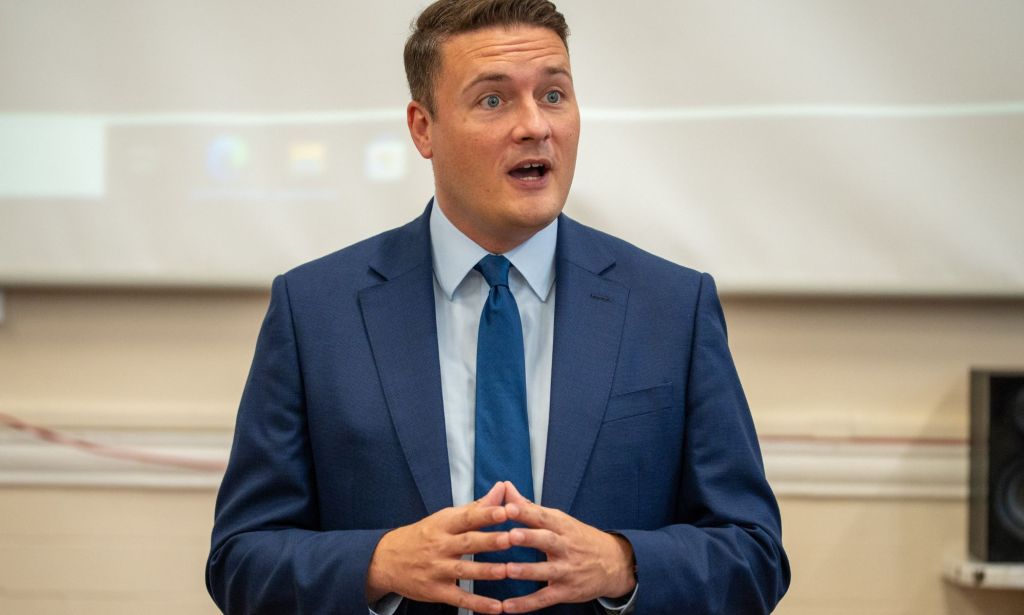
Wes Streeting has routinely come under fire for his policies on trans people. (Getty)
At least 27 states in the US ban gender-affirming care in some capacity, preventing over 40 per cent of America’s trans youth population from accessing care. Puberty blockers are also banned for trans youth in the UK, despite being freely available for cisgender youth.
The Trevor Project, an LGBTQ+ suicide prevention organisation, warned these bans have “detrimental impacts” on the mental health of trans young people, who are already disproportionately likely to feel suicidal.
Research conducted by Dr Natacha Kennedy in the University of London found that Wes Streeting’s ban on puberty blockers for trans young people is “significantly, extensively, and relentlessly harming trans children and young people”.
She spoke to the parents of trans young people who were once “happy, well-adjusted, and little different from most cis children”, but who have now resorted to self-harm because of an inability to access care.
Suicide is preventable. Readers who are affected by the issues raised in this story are encouraged to contact the Samaritans on 116 123 (www.samaritans.org), or Mind on 0300 123 3393 (www.mind.org.uk). Readers in the US are encouraged to contact the National Suicide Prevention Line on 1-800-273-8255.
Early Tuesday morning, final appropriations bills for the Departments of Labor, Health and Human Services, and Education—and related agencies—were released, marking the last major funding measures to be negotiated in the aftermath of the record-breaking government shutdown fight in 2025. That standoff featured multiple appropriations bills loaded with anti-transgender riders and poison pills for Democrats, ultimately ending in a short-term continuing resolution that punted many of those provisions to the end of January. While other “minibus” packages funding individual agencies moved forward, the Education and HHS bills were conspicuously absent, as they contained some of the most sweeping and consequential anti-trans riders ever proposed in Congress. Now, with the final bills released, it is clear that no anti-transgender riders were included—meaning transgender people will largely be spared new congressional attacks through most of 2026 should they pass as-is.
As the government shut down on Oct. 1, the state of appropriations bills needed to reopen the federal government for any extended period was extraordinarily dire for transgender people. Dozens of anti-transgender riders were embedded across House appropriations bills, even as those provisions were largely absent from the Senate’s versions. The riders appeared throughout nearly every funding measure, from Commerce, Justice, and Science to Financial Services and General Government. The most extreme provisions, however, were concentrated in the House HHS and Education bills, including language barring “any federal funds” from supporting gender-affirming care at any age and threatening funding for schools that support transgender students. Taken together, those measures would have posed a sweeping threat to transgender people’s access to education and health care nationwide.
Those fears eased somewhat when the government reopened under a short-term continuing resolution funding operations through the end of January. In the months that followed, Democrats notched a series of incremental victories for transgender people, advancing multiple appropriations “minibus” packages that stripped out anti-trans riders as the government was funded piece by piece. As amendment after amendment fell away, those wins grew more substantial, including the removal of a proposed ban on gender-affirming medical care from the NDAA—even after it had passed both the House and Senate. Still, the most consequential question remained unresolved: what would ultimately happen to the high-impact anti-trans provisions embedded in the HHS and Education bills.
Now, the package has been released—and for the moment, transgender people can breathe again. The final HHS and Education bills contain no anti-transgender provisions: no ban on hospitals providing gender-affirming care to transgender youth, no threats to strip funding from schools that support transgender students or allow them to use the bathroom, and no mandate forcing colleges to exclude transgender students from sports or activities like chess or esports. The bills are strikingly clean. As such, they avert yet another protracted shutdown fight in which transgender people are once again turned into political bargaining chips—and, at least for now, remove Congress as the immediate vehicle for new federal attacks, should they pass as-is.
When asked about the successful stripping of anti-trans provisions, a staffer for Representative Sarah McBride tells Erin In The Morning, “Rep. McBride works closely with her colleagues every day to defend the rights of all her constituents, including LGBTQ people across Delaware. In the face of efforts by the Trump administration and Republicans in Congress to roll back health care and civil rights, she was proud to work relentlessly with her colleagues in ensuring these funding bills did not include anti-LGBTQ provisions. It takes strong allies in leadership and on committees to rein in the worst excesses of this Republican trifecta, Rep. McBride remains grateful to Ranking Members DeLauro, Murray, and Democratic leadership for prioritizing the removal of these harmful riders.”
This does not mean that transgender people will not be targeted with policies and rules that affect them in all areas of life. The Trump administration has acted without regard to law in forcing bans on sports, pulling funding from schools and hospitals, and banning passport gender marker updates. The Supreme Court has been increasingly willing to let the office of the presidency under Trump do whatever it would like to transgender people. However, the lack of passage of bills targeting transgender people means that these attacks will only last for as long as we have Trump in the White House, and a future president should hopefully be easily able to reverse the attacks.
Discover the cosmos! Each day a different image or photograph of our fascinating universe is featured, along with a brief explanation written by a professional astronomer.
Explanation: Apollo 14’s Lunar Module Antares landed on the Moon on February 5, 1971. Toward the end of the stay astronaut Ed Mitchell snapped a series of photos of the lunar surface while looking out a window, assembled into this detailed mosaic by Apollo Lunar Surface Journal editor Eric Jones. The view looks across the Fra Mauro highlands to the northwest of the landing site after the Apollo 14 astronauts had completed their second and final walk on the Moon. Prominent in the foreground is their Modular Equipment Transporter, a two-wheeled, rickshaw-like device used to carry tools and samples. Near the horizon at top center is a 1.5 meter wide boulder dubbed Turtle rock. In the shallow crater below Turtle rock is the long white handle of a sampling instrument, thrown there javelin-style by Mitchell. Mitchell’s fellow moonwalker and first American in space, Alan Shepard, also used a makeshift six iron to hit two golf balls. One of Shepard’s golf balls is just visible as a white spot below Mitchell’s javelin.
I love Erin’s posts and reporting. The attack on trans rights and health was planned and coordinated by religious conservatives who felt they lost the culture war on gay acceptance and same sex marriage so they decided to jump quickly on the trans issue with lots of money. Their first attempt failed because they went after the idea of trans people itself. So then they changed to the old “protect the children” play book with the entire focus on protecting little cis girls but they never mention the trans boys that cis boys need to be protected from. See how patristical it is? It is all about males needing to protect the little womans. They don’t care about trans kids, they don’t care about female sports. It is about not letting trans kids transition with puberty blockers and the correct hormones as then the kids will grow up as they are fitting the societal view of what men and women look like. That scares the straight cis male religious guys because they are terrified they will be attracted to a trans woman. Imagine the horror if trans people moved freely in society not raising any question of their gender because they conformed to how society sees each gender. That sounds like a grand thing to me, but it terrifies these fanatical religious grifters that want to control how everyone lives to please their god. They make up untrue and scary what ifs, what if a man uses the letting trans people use the bathroom of their gender ID to go into a girls … notice they phrase it girls not womans because that make people more protective from the start, and they harm a little girl, your little girl? Well nothing stops a man from doing that now! Predators don’t need permission and won’t wait for it. And that has happened where a straight cis male dragged a little girl into the male bathroom and raped her while his friend watched. There was a famous court case on it. Look it up if you want. Want to know what has not happened, a trans woman going into the female’s bathroom and assaulting a female. Sorry. The right has tried hard to make one happen, but each claim of a trans person in a locker room or bathroom acting inappropriate has been debunked and disproven. This is all a made up scandal and crisis by people who can not accept the society progressing beyond the old traditional binary they grew up with and they think their holy books claim must be as their god insists on it. Weird how it is always how their god insists on what they already believe or promote. Handy that. So many people can not move past the idea that if it dangles you MUST be a boy regardless of how you feel and if it is an inny you must be a girl regardless of anything else idea. They can not seem to grasp personal feelings, needs, or medial science. Hugs
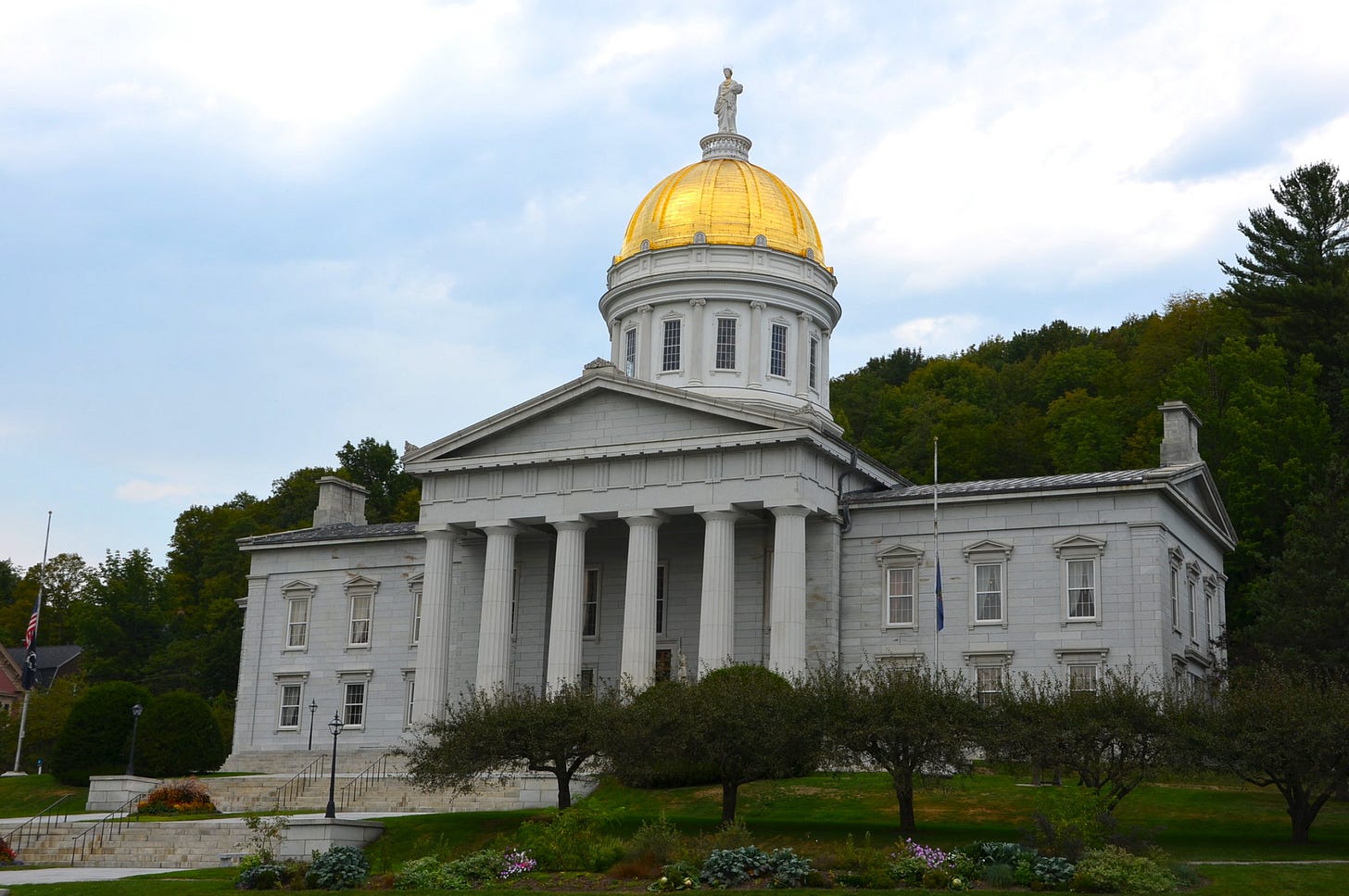
The bill would establish the Affirming Health Care Trust Fund, administered by the State Treasurer, to support clinics and providers outside the reach of federal funding threats.
Vermont Bill Would Create State Trust Fund For Private Trans Youth Care Clinics As Trump Threatens Hospital Funding
The bill would establish the Affirming Health Care Trust Fund, administered by the State Treasurer, to support clinics and providers outside the reach of federal funding threats.
Erin In The Morning is a reader-supported publication. To receive new posts and support my work, consider becoming a subscriber.
Across the United States, gender-affirming care has come under sustained attack in Republican-led states and from the Trump administration. For transgender youth, those attacks have been especially severe, with roughly half of U.S. states now banning such care outright. At the federal level, the administration has waged an intense pressure campaign against hospitals, threatening funding and prompting many systems to drop their care programs altogether. That campaign has now escalated further, with the federal government moving to threaten hospitals’ entire Medicaid and Medicare funding if they continue providing transgender youth care. In response, some states and cities are beginning to fight back by establishing their own funding mechanisms for trans healthcare. The latest example comes from Vermont, where lawmakers have introduced a bill to create a trust fund for gender-affirming care designed to be entirely insulated from federal funding threats.
H.576, introduced by Representatives Daisy Berbeco, Tiffany Bluemle, and Troy Headrick, would establish the Affirming Health Care Trust Fund. Administered by the State Treasurer, the fund would provide direct monetary support to healthcare providers and nonprofits offering gender-affirming care in Vermont. It would cover costs for patients who would otherwise go without treatment, fund the establishment of Vermont-based clinics, and pay for malpractice and liability insurance for clinicians who continue offering care. The bill is part of an increasing movement towards private clinics as a mechanism to survive federal threats.
The bill also includes provisions designed to protect patient information from both federal pressure and out-of-state threats, going further than the recent “refuge” or “shield” laws passed in several blue states to protect transgender youth care. It explicitly bars the board and other state actors from disclosing patient-identifiable data, the identities of providers, or the identities of award recipients to the federal government. This is a significant protection given the wave of abusive legislation and attempts to subpoena transgender healthcare records nationwide. While federal preemption may ultimately be litigated, these provisions give clinics a stronger legal footing to resist such demands—particularly as similar subpoenas have been repeatedly quashed in recent court cases.
The bill comes as families scramble to locate alternatives to hospital systems that are abandoning them. With more than 20 hospitals closing their doors to transgender youth care out of fear and preemptive compliance with the Trump administration, many families have been forced to seek alternatives. Just this week, major hospital systems across Colorado, for example, have stopped providing care. Groups like the Trans Youth Emergency Project say they have the capacity to refer displaced patients to private clinics, and in many places those clinics do exist and are absorbing demand. But as hospital-based programs continue to shut down and demand rises, those private providers will need sustained support—and more clinics will need to be created. Bills like this are a targeted way to do exactly that.
If this bill passes, Vermont would be the latest state to protect care in this way—but it would not be the only one. Massachusetts passed a similar measure last year, allocating $1 million toward transgender youth care clinics, though that funding has already come under criticism as insufficient to meet statewide need in the wake of major clinic closures. In New York City, newly elected mayor Zohran Mamdani has pledged $65 million for transgender healthcare. If that funding is realized, it would position New York City as a major hub for private clinics capable of absorbing demand created by hospital closures across the country. This strategy could prove to be a critical backstop for private providers that are already emerging—and that are likely to come under increasing strain in the years ahead.
The bill allows funding from state appropriations, private donations, grants, and—importantly—federal funds under a future administration that is protective of transgender healthcare. It would take effect immediately upon passage, with the board required to convene by August 1, 2026. There are still hurdles ahead: the bill must advance through committee, pass both chambers, and ultimately receive meaningful funding to function as intended. But its introduction alone signals something important. At a moment when hospitals are retreating and families are being forced into crisis planning, Vermont lawmakers are putting forward a concrete framework to protect access to care rather than surrender it. For Vermonters who want to see their state take a clear stand, residents can find and contact their legislators through the Vermont General Assembly website to make clear where they stand on protecting transgender healthcare.
Erin In The Morning is a reader-supported publication. To receive new posts and support my work, consider becoming a subscriber.
According to a new study published in the Journal of Mammalogy, the number of living mammal species has increased by 25% since 2005 — meaning that more than 1,300 new species have been added to the scientific record.
“Our recognition of 25% more mammal diversity now than 20 years ago indicates an overall improvement in our understanding of how global mammals interact with their environments,” Dr. Nathan Upham, lead researcher and Arizona State University professor, told A-Z Animals.
“Each species is genetically unique, not interbreeding with their close relatives, and thus presumably doing something unique on the landscape — specializing in different food or habitat type or location of activity,” he explained.
Upham’s research centered on a series of mathematical equations.
Since 2005, the Mammal Diversity Database has listed an additional 1,579 species.
Of those new species, 805 were newly described and 774 were “splits,” or offshoots, of what was originally thought to be a single species. 226 species were also merged after new evidence came to light.
In total, that means 1,353 species have been discovered since 2005, amounting to an average of 65 new mammal species being introduced to the scientific record every year.
In his interview with A-Z Animals, Upham emphasized that species are not evolving at a faster rate; they are simply becoming easier to find and identify.
“Next-generation DNA sequencing technologies have dramatically lowered the cost of obtaining DNA across the genomes from hundreds of individuals simultaneously,” Upham said.
Upham’s spotlight on mammalian research is supported by a larger, separate study published in Science Advances by John Wiens, a professor in the University of Arizona Department of Ecology and Evolutionary Biology.
“These thousands of newly found species each year are not just microscopic organisms, but include insects, plants, fungi, and even hundreds of new vertebrates,” Wiens told the University of Arizona.
In 2025, Wiens also spearheaded research on the rate of species extinction and found that it lags significantly behind new species identification.
“Our good news is that this rate of new species discovery far outpaces the rate of species extinctions, which we calculated to about 10 per year,” Wiens said.
“Discovering new species is important because these species can’t be protected until they’re scientifically described,” he added. “Documentation is the first step in conservation – we can’t safeguard a species from extinction if we don’t know it exists.”
Photograph of a newly discovered mammal, the Bassaricyon neblina, or “Olinguito,” taken in the wild at Tandayapa Bird Lodge, Ecuador. Header image via Mark Gurney / Wikimedia Commons (C. C By 3.0)
The Naked Pastor’s art has been posted here more than once. I receive newsletters since he got off Substack, (I think that’s how it happened? Or someone on Substack linked him.) Anyway, today’s newsletter is really nice to post with today’s news. I don’t have a link for the newsletter, so I’ll copy-paste it below. This is the link to his About page on his site. His site where all the art is!💖
Now here comes the letter. Many of the links go to his art pages, or authors’s Amazon pages, and he does sell his art to sustain his work (his work is not on Amazon, to be clear.) It doesn’t hurt to windowshop, but it’s perfectly fine to not click the links (except his About page!) I wanted to say something just in case going to a page might put someone off that this is all about advertising; it’s not. Again, here’s the newsletter! (And Bless The Badass is a fine piece of art!)
=====
I’ve been thinking a lot lately about how deep some of our cultural assumptions run, especially the ones that have shaped how women are treated. Some of these ideas are so old, so embedded, we don’t even notice them. But they are still here, quietly shaping how we build our systems, our theology, our science, and even our car seats. Let me show you what I mean. Cartoon: Bless The Badass! Dad Joke: ‘Jod’ Quote: Violence against women Original: All I Need is a Sliver of Light Merch of the Week: Question Everything T
Cartoon of the Week Bless the Badass! I bless the badass that you are! I am so inspired by so many women to be a badass myself! (BTW… several people have commissioned me to draw “Badass” for a loved one to make the person look like them.)
Dad Joke What if God just came down one day and said, “It’s pronounced ‘Jod’! and then left?
Quote From an expert criminologist on violence against women: “Statistically, we know now that once the hands are on the neck, the very next step is homicide… They don’t go backwards!” – Kate Manne, Down Girl: The Logic of Misogyny. This next one is a fascinating book because it exposes just how thoroughly embedded is the patriarchy in our thoughts, attitudes, and treatment of women. “… if a woman became pregnant following her rape, it meant she had ultimately enjoyed herself.” – Eleanor Janega, The Once and Future Sex: Going Medieval on Women’s Roles in Society.
Women Suffer The above quote about a woman getting pregnant from her rape meant that she enjoyed it is based on the “two seed theory”. This theory, which lasted more than 2,000 years, taught that the man and the woman each contributed a seed when they both orgasmed, that these two seeds mixed, and that the dominant one determined the formation of the child. The only way a woman could get pregnant then was if she orgasmed. How condemning! I believe the residue of that bad theology and science is still deeply embedded in the patriarchal psyche. Janega’s research also reveals that whenever women began to succeed, men would attempt to put an end to it. For example, it was believed that embroidery was a woman’s task. But when women began to build successful businesses by embroidering clothing for the wealthy… that is developing a fashion industry… the men took over the businesses, and put the women to work as labourers. There are so many stories like that. Interestingly, though, all of this patriarchal maneuvering is rooted in philosophy, theology, and even science. It wasn’t just the ancient philosophers who proposed and espoused the two-seed theory, but theologians like Tertullian and Augustine, and scientists like Hippocrates. The assumption was that man was the gold standard of what it meant to be a person, and women were a spin-off of that ideal and therefore second-rate. This, of course, is rooted in the creation story of Adam and Eve. But once this assumption of supremacy is embedded in our thinking, then it determines every other thought that follows. I have a personal story. Lisa and I finally got a new car… something we’ve needed for a long time. It’s a Toyota Rav4. We need a reliable All Wheel Drive because Lisa often drives to work as a nurse before the plows clear the roads of snow. I want her to be safe and secure. We love it. Or, I should say, I love it, and Lisa isn’t so sure anymore. Why? Because she can’t get the driver’s seat comfortable. I was talking to a neighbour about her work car, also a Rav4, and she said she wouldn’t get one. Why? Because she can’t get the driver’s seat comfortable. I’ve heard of a few other women with the same complaint. I googled it, and it is a thing. This reminded me of another book I read by Caroline Criado Perez, Invisible Women: Data Bias in a World Designed For Men. As the title suggests, the book is filled with data illustrating how the world is designed by men for men. It’s not necessarily malicious. But when a car seat used to be designed, manufactured, and tested by men, women inevitably suffered. (Is this still going on?) This included seatbelts, especially for pregnant women. As well as little things like lower temperature settings in offices where men warmly wear suits or at least sleeves, while women are expected to bare their arms, upper chests, and legs. Like I said, it’s not necessarily malicious, but women suffer as a result. Just like science believed that women could only get pregnant if they orgasmed. It wasn’t necessarily malicious, but women suffered for centuries. This is why I think it is so important to question everything, including our most cherished assumptions, and to consider the consequences these assumptions have on those around us.
So my friend, if we want to build a more just, compassionate world, we have to be willing to ask hard questions about where our ideas come from and who they are leaving out. It is not just about our personal beliefs. It is about recognizing the ripple effects those beliefs have on others. Sometimes the harm was not intentional. But it is harmful nonetheless. I say, let’s ask more questions!!!







 Scottie's Playtime