I watched this on one of the sunday news shows. From the way he describes it the event was very scary and he was afraid. The settlers were damaging the vehicles. Pointing machine guns at the congressman. The IDF soldiers that were there said they agreed with the settlers and wouldn’t get involved. This is an official of the US government. Think of what would be the outcry from Israel if the situation had been reversed. I want all funds for the israeli military stopped until they apologize at the highest level for this and promise it won’t ever happen again. Hugs
Another person who has questions about the reporting and evaluating what was said in in those reports. Suris is trying very hard to be even handed and fair to all involved. He does point out some of the issues many people have with the entire affair. Again this is a serious accusation that is not only at this point. Again no one is under oath and some of the things reported have been found incorrect. Such as her telling her ex at the time it happened, but that is not true. Now she is not under any obligation to tell anyone. Every person who has been abused deals with it and opens up about it in their own time when they feel they can do so. Some never do. But if you are using the fact that you told someone and it turns out you did not, that is important information to know. I want to add two things. Suris is not a misogynist and is very openly pro-female and pro-LGBTQ+. He is really trying to just understand the facts and evaluate them without making a moral snap judgment or purity testing either party. But he has no advanced training in sexual abuse nor in court procedures of interrogation. He simply is listening and giving his best reasoning on it. Hugs
Again more information is coming out. Details that give credit to Platner’s side of the story. The news doesn’t excuse him, but it sets up why he was at her house and why he was touching her. Again the media has a bias and it is being reported with that bias totally one sided. This report says he was wasted out of his mind black out drunk but again no proof of that. Was the woman here drinking also like the first woman was? I think Saagar is trying too hard to brand Platner, again we need more facts. As he said the woman is accusing Platner of a serious felony and now we need to see if this is going to be a trial in the media which is a slander hit job or a trial in court. The question I have is more going to come out. I like that on morning Joe the host asks for colaberating evedince. She asks what do you have to show him raping the victim? Again if he did it he needs to pay for his crime, I just don’t like how it is coming out, being played up in media, and the timing. Again the reporter admits he can’t produce any evidence. The therapist did not verify that it happened, yet that was reported. The very account I had heard about the exchange between the therapist and the victim has been proven out, it was not about the assault or at the time or the assault. The therapist said she did not recall the victim’s account of the assault but said she vaguely supports women who say they are assaulted. Therrapest keep notes, mine always have so why did she blank on the case details. This is looking a media hit job to drive a progressive candidate out of politics. Hugs
NOTE: Politico’s response to Breaking Points and Drop Site News on the gaps in reporting follows: “This story is based on extensive reporting and interviews and reflects our editorial standards. In interviews with us and in accounts she gave to other outlets, Jenny Racicot said that she told Graham Platner not to come to her home and that he nevertheless showed up there uninvited. POLITICO gave Platner and his campaign ample opportunity to respond to our reporting and to provide any information or documentation they believed contradicted it. If presented with information that materially challenges our reporting, we will report it.” Ryan and Saagar discuss exclusive reporting on key details missing from the Graham Platner story.
The Texas attorney general appears to have used an address where he did not live while voting in six elections in the past two years — despite his warning voters that “it is illegal to misrepresent your residence on election records.”
Emily Scherer for ProPublica and The Texas Tribune. Source images: Library of Congress, Texas Tribune, and documents obtained by ProPublica and The Texas Tribune.
Two weeks before this year’s primary elections, Texas Attorney General Ken Paxton announced the creation of a tip line for the public to report people or groups suspected of voter fraud.
“Free and fair elections are a cornerstone of a thriving republic, and with the authority granted to my office by the Legislature, we will stop at nothing to uncover and stop any illegal voting activity,” Paxton said in a February news release announcing the tip line.
The announcement linked to guidance from his office about election laws in Texas, which included a requirement to be a U.S. citizen, a prohibition on collecting mail ballots on behalf of others and a warning that “it is illegal to misrepresent your residence on election records or to establish a residence for the purpose of influencing the outcome of an election.”
“You must register to vote using the address where you reside,” the attorney general’s guidance stated.
Despite his own warnings, Paxton appears to have used an address where he did not live while voting in six elections in the past two years, including in May’s runoff that made him the Republican nominee for U.S. senator, according to records obtained by ProPublica and The Texas Tribune.
State Sen. Angela Paxton said in a 2025 divorce filing that Paxton, whom she accused of adultery, moved out of their Collin County home a year earlier. But Paxton continues to list the home’s address in the northern Dallas suburb on his voter registration. Angela Paxton declined to be interviewed. A source close to the Paxtons said the attorney general has not moved back into the home since leaving.
It is unclear where Paxton has lived for the past two years, but reporting by ProPublica and the Tribune has linked him to a home in neighboring Denton County since February.
Three election lawyers told the news organizations that Paxton may have violated the same Texas laws his office cautioned about in its news release.
ProPublica and the Tribune reached out to Paxton’s campaign on June 3, 15 and 25, asking why he remained registered to vote in Collin County when he appeared to no longer live there and about his connection to the Denton County property. A reporter also left a voicemail on his personal cellphone on June 25. The news organizations sent his government office and campaign staff an email on Monday with a detailed list of questions, including a request for Paxton’s response to election lawyers’ belief that he may be violating the law.
Paxton and his office did not reply until Monday’s email. Campaign spokesperson Madison Cercy did not answer the questions from the news organizations. Instead, she issued a statement saying that the attorney general has been “a national leader on election integrity, with a long record of defending Texas elections.” Cercy said that “attempting to insinuate otherwise and tear him down with a baseless, lie-filled tabloid story is not real reporting.”
Asked twice to provide specifics about what they believed was inaccurate, the campaign did not respond.
Voting in an election when the voter is ineligible is a second-degree felony under Texas law and is punishable by up to 20 years in prison and a fine of up to $10,000. But prosecutors rarely bring cases challenging individual voters’ residency claims because they are hard to prove, the election lawyers said.
State courts have repeatedly ruled that there is no single way to determine where someone lives, and judges must consider multiple factors, such as where a voter sleeps or stores personal belongings. Prosecuting such cases also requires proof that a voter “knowingly” or “intentionally” broke the law.
Even if it’s clear that someone doesn’t live at the address where they are registered to vote, state law allows them to remain registered if their absence is temporary and they intend to return. The provision is commonly used by college students and military service members.
“So long as you truly intend to return, I think you’re fine,” said Beth Stevens, an election lawyer who worked for the Harris County clerk and the Texas Civil Rights Project. “When you start doing things that suggest, ‘Oh, I’ve fully moved. I’m just wink-wink saying I intend to return,’ that’s when you get into questionable territory.”
Paxton’s public and contentious split from his wife could make it difficult to argue that he intended to return to the home they own and where she continues to reside, said David Becker, a former voting rights lawyer for the Justice Department.
“I think there would be questions raised about a residence where someone does not live, does not spend the night and can in no way have the intent to continue to reside. Those would probably raise red flags in any state,” Becker said.
Becker, who is now the director of the Center for Election Innovation and Research, a Washington, D.C.-based nonprofit that works to build public trust in elections, added that the situation is particularly problematic because Paxton’s job is to enforce election laws.
“Certainly, the chief law enforcement officer of the state of Texas, someone who has made claims about election integrity and made it a priority of his office, should be charged with knowing the laws of residencies of the state of Texas with regard to voting,” Becker said.
Paxton has advocated for strict enforcement of the state’s election fraud law, including in cases against voters his office alleged had falsified records about where they lived. In 2018, the attorney general’s voter fraud unit arrested nine people on suspicion of using residential addresses where they did not live to vote in a municipal election in Edinburg, in the state’s Rio Grande Valley. County prosecutors, acting on behalf of Paxton, later dismissed the charges after failing to secure a conviction against the mayoral candidate they alleged had encouraged those voters to register at false addresses. The candidate, Richard Molina, said he was innocent and said the prosecution was politically motivated.
Clark Birdsall was not the attorney on those cases but defended another resident whom Paxton prosecuted for illegal voting. Birdsall was stunned that the attorney general appears to have voted under an address where he does not live.
He called it “especially egregious that someone such as Ken Paxton appears he’s not conforming to the law.”
State privacy laws allow some politicians and law enforcement officials to shield their voter registration information from public view. Paxton does not do so. His opponent in the Senate race, Democratic State Rep. James Talarico, does. Talarico’s campaign said he lives and is registered at the north Austin home he purchased in 2022. ProPublica and the Tribune were not able to independently confirm this.
Paxton’s campaign did not raise any issues with Talarico’s voter registration. In her statement to ProPublica and the Tribune, however, Cercy said, “Talarico has actively campaigned against voter security measures” and has said he opposes voter identification requirements. She pointed to a 2021 Fox News interview in which the state representative said he opposed voter identification rules that would require Texans to provide their driver’s license number or partial Social Security number for mail ballots. Talarico said hundreds of thousands of Texans, who don’t drive, lack a driver’s license. He did not directly answer a question about Social Security numbers during the interview.
The Talarico campaign did not respond to a request for comment.
Paxton’s living arrangements since he separated from his wife are not public, but information obtained by ProPublica and the Tribune offers some indication of where he may have been residing since February.
In mid-February, a trust bought a 5,000-square-foot home listed for $2.4 million in a gated community in Denton County, according to the appraisal district and the seller’s real estate agent. The trust did not disclose its ownership to Denton County officials. Trusts are not required to by law, a spokesperson for Travis County’s appraisal district said.
Paxton shares a separate blind trust with his wife, Angela, that they have used to purchase property and other assets. For years, the address listed for that blind trust had been an office building in Collin County. But that address was changed to the Denton County home a week after the property was purchased.
Angela Paxton said through a spokesperson that she has no connection to the Denton County home or the trust that purchased it. The trustee of the Paxtons’ trust, family friend Chip Loper, did not respond to questions about the address change.
In June, a reporter knocked on the door of the Denton County home. No one answered. When the reporter placed a letter for Paxton in the mailbox, an envelope addressed to Warren Paxton, the attorney general’s given name, was visible.
Later that week, Paxton appeared on a podcast with Texas Lt. Gov. Dan Patrick. Video from the podcast showed Paxton seated in front of a fireplace and mantle that were nearly identical to those depicted in the home’s online real estate listing. One resident also told the newsrooms that they spotted Paxton in the gated community.
In a podcast appearance in June, Texas Attorney General Ken Paxton was seated in front of a gray fireplace that appeared to match real estate listings for a Denton County home.Obtained and edited for privacy by ProPublica and The Texas Tribune
Separately, the Daily Mail reported in May that Paxton had moved into the Denton County home with Tracy Duhon, whose extramarital affair with Paxton, the news outlet said, prompted his wife’s divorce filing. The Daily Mail also published a video of Paxton and Duhon that it reported was taken at an airport in Iceland in late June. The video was quickly seized upon by Talarico, who depicted Paxton as out of touch with Texans. Duhon did not respond to questions about her connection to the Denton County property or about the Daily Mail reporting.
Paxton is not registered to vote in Denton County, voter rolls show. Instead, since February, he has voted in Collin County twice: once in the March Republican primary and once in the May runoff. Each Texas county elects its own slate of local officials, which is why state law requires voters to register where they live.
Ekow Yankah, a law professor at the University of Michigan whose expertise includes election law, said Paxton’s voter registration situation should remind the attorney general of what studies have consistently shown: that intentional illegal voting is rare.
“You would think that somebody who’s going through this would learn a little bit of humility that lots of things which look on their face, like technical violations of the law, are usually explained by totally ordinary things,” Yankah said. “It’s only if you’re utterly cynical and ignore all the evidence that you make a claim that, in fact, these cases are attributable to nefarious criminal intent.”
Paxton cannot claim ignorance of the law because he enforces it, said Joshua Blank, research director of the Texas Politics Project at the University of Texas at Austin. In fact, as attorney general, Paxton should avoid even the appearance that he is not following the law, Blank said.
“We expect these laws to be understandable by ordinary citizens,” Blank said. “When our elected officials who are tasked with passing and enforcing these laws exhibit troubles in engaging with the voting process themselves, that raises serious questions.”
While most Americans this past year were struggling with high gas prices, inflation, rising energy costs, rising housing and food costs, rising insurance rates and more, Trump made around 2 billion dollars on his various business ventures. This averages out to roughly $228,310 per hour or $3,805 per minute, for every day of the year. I hope those who struggle to take out a 35-year loan to buy a quarter million dollar house feel much better knowing Trump would have to work for nearly 70 minutes to pay off such a house. No wonder he sets his sights on a half-billion dollar ballroom that WE will pay for. To put it in perspective, Mangy Fetlocks wrote a song.
House Democratic subcommittee report outlines web of alleged corruption, wire fraud and pay-to-play schemes
The interim report, “From Vanity to Insanity: How the White House Cheated the American People Out of Their 250th Birthday”, outlines a web of alleged corruption, wire fraud and pay-to-play schemes orchestrated through a shadow corporation embedded within the National Park Foundation (NPF).
The document was produced by Democratic staff of the House of Representatives’ natural resources committee’s oversight and investigations subcommittee. It has not been officially adopted by the committee.
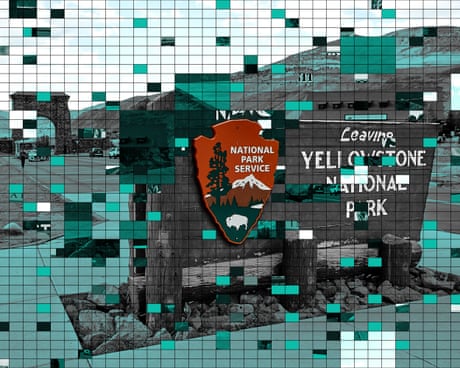
‘A sanitized view of America’: inside Trump’s campaign to erase US history from national parks
Read more
———————————————————————————————————–
“Under President Donald Trump, this anniversary has been hijacked and perverted into a hotbed of corruption and self-enrichment,” it states, contending that the machinery built for a national commemoration was converted “into an apparatus for raising and spending money in service of the President’s ego, political ideology, and pet projects”.
How Trump is making the US’s 250th anniversary about himself – video
In 2016 Congress established the US semiquincentennial commission, operating as the non-profit America250 Foundation, to plan the nation’s 2026 celebrations on a non-partisan basis. However, under Trump, the White House launched a sustained pressure campaign to subsume the commission.
When America250 leadership resisted its demands to shift focus toward partisan, campaign-style spectacles, the Trump administration created Freedom 250 as a wholly owned subsidiary of the congressionally chartered NPF.
The interim report finds that, by taking control of the NPF board and installing key campaign operatives such as Meredith O’Rourke and Chris LaCivita, the White House secured an opaque vehicle that enjoyed the NPF’s non-partisan credibility and tax-exempt status while operating outside standard government transparency laws.
Jared Huffman, a California congressman who is the top Democrat on the natural resources committee, said: “I can’t, in my time here in Congress, remember anything even remotely like this: watching this trusted, venerable charity organisation, the National Parks Foundation, literally be hijacked for a craven political agenda that tries to steal the celebration of America’s 250th anniversary and turn it into something that’s all about Trump, advancing this very divisive agenda and even enriching Trump and those around him.”
The interim report alleges that Freedom 250 surreptitiously diverted resources intended for America250 for its own benefit, leaving America250 scrambling for funds.
Sources interviewed by Democrats on the committee said fundraisers including O’Rourke misled prospective America250 donors by providing them with Freedom 250’s banking and routing numbers instead. The report finds this could constitute wire fraud and charitable solicitation fraud under federal and District of Columbia law.
This deceit extended to the entertainment industry. Artists recruited for the kickoff of the Great American State Fair – including Martina McBride and Young MC – were assured the event was non-partisan, only to face social media backlash when the event was revealed to be a Trump-backed rally. In the words of Young MC, the booking was a “bait and switch”.
The investigation also outlines how Freedom 250 effectively put a price tag on presidential access, circulating sponsorship packages starting at $500,000 and climbing above $10m for tiered recognition, culminating in a “historic photo opportunity” with Trump.
The report also points to perhaps the most clear example on 14 June when the White House hosted a huge Ultimate Fighting Championship (UFC) event on the South Lawn to celebrate the president’s 80th birthday. The event was heavily sponsored by corporations facing impending federal regulation and used vast government resources for “Super Bowl-level security” marshalled by the Department of Homeland Security (DHS).
Fighters received bonuses in “USD1”, a cryptocurrency issued by World Liberty Financial, a trust run by the president’s children, and Trump personally bought up to $50,000 in stock in the UFC’s parent company weeks before the event.
Freedom 250 has also functioned as a conduit for steering federal funds to Trump campaign loyalists. Event Strategies – the same firm that planned the January 6 rally that preceded the US Capitol attack – was awarded 18 federal contracts totalling roughly $40m, along with an indefinite delivery master contract worth up to $100m.
Beyond lucrative contracts, the administration is accused of building a partisan political database disguised as a government domain. Freedom 250’s website, initially managed by former “Department of Government Efficiency” (Doge) employees known for past data leaks, extensively logs user data.
Event registration is powered by Campaign Nucleus, a firm founded by Brad Parscale, a veteran of Trump election campaigns. Campaign Nucleus openly boasts about using artificial intelligence to analyse personal data and target “persuadable” voters. Unsuspecting visitors, such as attenders of a free Fifa World Cup Fan Zone on the National Mall, unwittingly fed their personal information directly into this Republican campaign apparatus.
The report also focuses on the ideological overhaul of the semiquincentennial. Freedom 250 replaced America250’s civic engagement focus with overt Christian nationalist programming, operating in tandem with the Religious Liberty Commission, which recently recommended repealing the Johnson amendment to allow churches to engage in partisan politics.
A central feature of this effort was “Freedom Trucks” – a federally funded fleet of mobile museums dispatched to schoolchildren across the nation. Supplied with content from the conservative PragerU [the Prager University Foundation] and Hillsdale College, these exhibits recast the founding of the US as an exclusively Christian project, embracing demonstrable falsehoods.
Exhibits include an AI-generated George Washington claiming that “our rights are a gift from God”, a statement the first president is not documented as having made, alongside antisemitic tropes suggesting that Jewish merchants financed the revolutionary cause while omitting they also fought and died for it.
Concurrently, the administration aggressively moved to erase historical realities, removing national park signage detailing slavery, forced removal of Indigenous peoples and climate change. Huffman said it amounted to an attempt to reshape American identity to fit a narrow rightwing agenda.
“It’s a fantasy that airbrushes out the more complicated parts of our history – slavery, the Native American genocide, the actual secular ideals on which our government was founded. It wasn’t the opening of the clouds and some revealed covenant with God as they would have you believe.”
As Washington barrels towards Fourth of July, with another Trump speech and a big fireworks display planned for the national mall, Huffman acknowledges that Freedom 250 is unstoppable. But his goal now is exposure.
“The one thing we can do is make sure the American people know what they’re doing in our name and with our tax dollars,” the congressman said. “We should do that because what they have pulled off here is a potential template for other betrayals of public trust that they and maybe future generations will attempt if we don’t challenge them.”

Emily Scherer for ProPublica and The Texas Tribune. Source images: Library of Congress, Texas Tribune, and documents obtained by ProPublica and The Texas Tribune.

Illustration: Guardian Design