Remember the clip I posted of the house invasion yesterday? Well this is the full clip. With no warrant ICE gang thugs broke into the home that had kids in it, stormed the house like they were in a war zone going after enemy combatants, and manhandled the woman and her kids. This is not police behavior, and it is not legal. But what can a person do if twenty heavily armed guys broke into your home? Where are the police who are to be protecting the public from gangs like this. No one knows who these guys are, they could be there to rob someone or rape them. Maybe traffic the kids? Who knows. I am tired of this. These armed criminal gang thugs are not going into bad areas, areas with other gangs, areas that they might be hurt, they are going after suburban parents and homes with kids? Hugs
Amanda: This gives me Barbie animated movie vibes.
Sarah: His head is so big, and his neck is so long, and I’m also confused by the size of her head and the length of her arms.
This is giving me the uncanny valley vibes of that one Julie Anne Long Cover – not the smirking git one, the giant head lady one.
This one:
Sarah: “Head too big, arms too short” will be the name of my podcast about disturbing cover art.
Elyse: That’s similar to my favorite kitten/puppy stage “ears too big, legs too long”
Sarah: His neck is long, right? It’s not just me?
Elyse: I think it’s not long, it’s broken.
Sarah: “How.” ” How what?” ” How did you know that my father was Gumby?” ” Everyone knows your father is Gumby, my lord.”
Elyse: LMAO
Sarah: “I thought we had hidden it.”
“You thought you had hidden your lineage and connection to Lord Gumbert Rubberthwaite, Earl of Stretetshingtonshoreley?” … “Which is pronounced ‘Stretchley?’ Really, you thought that was a secret?”
Elyse: I would read that book.
From Kelly B: One-the title is Behind the Net but they are clearly in front of the net. And two-the physics required to sit on a hockey net like that.
Sarah: This is just awful on so many gravitational and proportional levels.
Amanda: Girl has got to be engaging her core like crazy.
(snip-go read it-it’s hilarious! And post your own comments below!)
The government take over of thoughts and what material people can read is happening with the assistance of the tech community. The limiting what people can see or read started with the idea of restricting any media that positively presented the LGBTQ+ community so to protect the children they claimed. See how quickly it has progressed in less than a year to simply the government telling / demanding the right to tell people what they can read or view so that the government is never disfavored or contradicted. Totally as China and Russia work. How do you like living in such a society. Remember the people who had these books on their device had paid for them and Amazon did not return their money, they just reached in and deleted the material they did not want you to read. Once the precedent is set it will be used by any new government who wish to control the population and how they feel about the society they live in. Hugs
A commuter using an Amazon Kindle while riding the subway in New York.Credit…Lucas Jackson/Reuters
In George Orwell’s “1984,” government censors erase all traces of news articles embarrassing to Big Brother by sending them down an incineration chute called the “memory hole.”
On Friday, it was “1984” and another Orwell book, “Animal Farm,” that were dropped down the memory hole by Amazon.com.
In a move that angered customers and generated waves of online pique, Amazon remotely deleted some digital editions of the books from the Kindle devices of readers who had bought them.
An Amazon spokesman, Drew Herdener, said in an e-mail message that the books were added to the Kindle store by a company that did not have rights to them, using a self-service function. “When we were notified of this by the rights holder, we removed the illegal copies from our systems and from customers’ devices, and refunded customers,” he said.
Amazon effectively acknowledged that the deletions were a bad idea. “We are changing our systems so that in the future we will not remove books from customers’ devices in these circumstances,” Mr. Herdener said.
Customers whose books were deleted indicated that MobileReference, a digital publisher, had sold them. An e-mail message to SoundTells, the company that owns MobileReference, was not immediately returned.
Digital books bought for the Kindle are sent to it over a wireless network. Amazon can also use that network to synchronize electronic books between devices and apparently to make them vanish.
An authorized digital edition of “1984” from its American publisher, Houghton Mifflin Harcourt, was still available on the Kindle store Friday night, but there was no such version of “Animal Farm.”
People who bought the rescinded editions of the books reacted with indignation, while acknowledging the literary ironies involved. “Of all the books to recall,” said Charles Slater, an executive with a sheet-music retailer in Philadelphia, who bought the digital edition of “1984” for 99 cents last month. “I never imagined that Amazon actually had the right, the authority or even the ability to delete something that I had already purchased.”
Antoine Bruguier, an engineer in Silicon Valley, said he had noticed that his digital copy of “1984” appeared to be a scan of a paper edition of the book. “If this Kindle breaks, I won’t buy a new one, that’s for sure,” he said.
Amazon appears to have deleted other purchased e-books from Kindles recently. Customers commenting on Web forums reported the disappearance of digital editions of the Harry Potter books and the novels of Ayn Rand over similar issues.
Amazon’s published terms of service agreement for the Kindle does not appear to give the company the right to delete purchases after they have been made. It says Amazon grants customers the right to keep a “permanent copy of the applicable digital content.”
Retailers of physical goods cannot, of course, force their way into a customer’s home to take back a purchase, no matter how bootlegged it turns out to be. Yet Amazon appears to maintain a unique tether to the digital content it sells for the Kindle.
“It illustrates how few rights you have when you buy an e-book from Amazon,” said Bruce Schneier, chief security technology officer for British Telecom and an expert on computer security and commerce. “As a Kindle owner, I’m frustrated. I can’t lend people books and I can’t sell books that I’ve already read, and now it turns out that I can’t even count on still having my books tomorrow.”
Justin Gawronski, a 17-year-old from the Detroit area, was reading “1984” on his Kindle for a summer assignment and lost all his notes and annotations when the file vanished. “They didn’t just take a book back, they stole my work,” he said.
On the Internet, of course, there is no such thing as a memory hole. While the copyright on “1984” will not expire until 2044 in the United States, it has already expired in other countries, including Canada, Australia and Russia. Web sites in those countries offer digital copies of the book free to all comers.
Again we see the institutionalized casual racism in the US. This was the basis of the CRT higher education classes were about. All the media latched on to and went into great detail over a white woman’s shooting by ICE but only report vaguely and sporadically on the shooting of the black / brown people shot by ICE. But when you read the report below think on how racist ICE gang thugs are, the fact that they have broken other laws and assaulted other people with impunity as they are defended by the power of the US government. One last thing to think on. The ICE thug was clearly angry and he had his gun out, ready, and pointed in front of him allowing him to shoot the man without raising his gun. The reported statements from the government never mention him drawing his gun nor raising it, just that he fired his weapon defensively. If he felt threatened why openly approach the man with the long gun? Why no call for back up? Depending on the time was the ICE thug wakened up by the noise of gun fire? Hugs
Friends and family of the 43-year-old man who was fatally shot by a Department of Homeland Security agent in Northridge on New Year’s Eve gathered on Sunday to demand accountability and hold a candlelight vigil for their lost loved one.
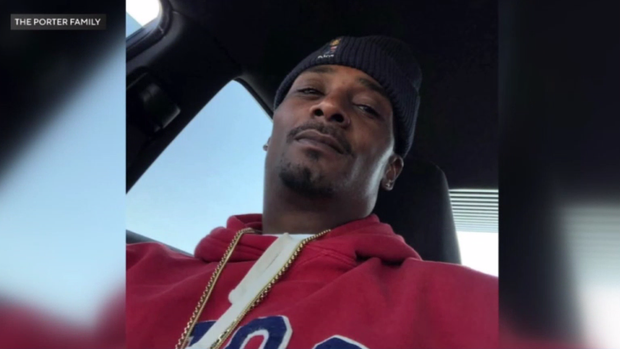
They identified the victim as Keith Porter, who they say was a well-known and well-liked person in the community.
“If I could say anything to the ICE agent, it’s that you’re a murderer,” said Jasané Tyler, Porter’s cousin. “You stole my cousin from me. You stole their father from them. You stole Francine’s son from her.”
Porter’s loved ones are demanding justice after the father of two died on New Year’s Eve. He was shot by an off-duty U.S. Immigration and Customs agent at the apartments where they both lived.
Keith Porter, the 43-year-old man fatally shot by a DHS agent in Northridge on New Year’s Eve. Porter Family
His family contends that he was shooting a gun in the air to mark the new year. A statement from DHS on the incident contends that it was an “active shooter situation.”
“On December 31st, an off-duty ICE Officer bravely responded to an active shooter situation at his apartment complex,” the statement said. “In order to protect his life and that of others, he was forced to defensively use his weapon and exchanged gunfire with the shooter.”
Another statement from DHS Assistant Secretary Tricia McLaughlin provided further details. She said that the agent was “in his apartment, when he heard what he suspected were multiple gunshots. The suspected gunfire grew progressively louder, indicating to the officer that whoever was firing a gun was approaching his apartment. The officer took his ICE-authorized firearm and left his apartment to investigate. He moved to the ground level and went outside, where he believed the suspected gunfire was coming from.”
McLaughlin’s statement says that the officer rounded the corner of the building, where he encountered Porter, who they said was allegedly armed with a long rifle.
“The ICE officer identified himself as law enforcement. In response, the individual pointed his weapon at the ICE officer. The officer ordered the subject to put the weapon down, McLaughlin said. “When the subject refused to comply, the officer fired defensively with his service weapon at the subject to disarm him. The subject fired at least three rounds at the officer.”
Porter’s friends and family don’t buy it, especially with members of law enforcement in their own family.
“Every one of them says this is not standard, this is not protocol,” Tyler said.
Black Lives Matter leaders, who hosted the Sunday night vigil, are outraged by what happened.
“Were this anyone else, there would’ve been an arrest,” said Dr. Melina Abdullah, with BLM. “You don’t get to just murder people because you don’t like what they’re doing or how they’re celebrating.”
Los Angeles Police Department officers tell CBS LA that their investigation into the shooting is still ongoing. They also told the LA Times on Sunday that they haven’t yet spoken with the ICE agent due to protocol on how deadly force investigations are conducted when they involve federal law enforcement officers.
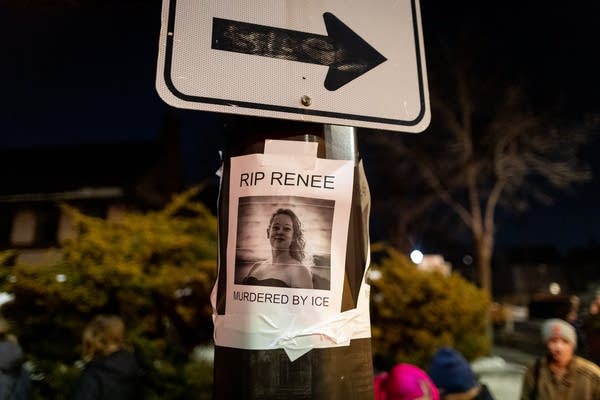
A photo of Renee Macklin Good, who was shot and killed by an ICE officer in Minneapolis earlier in the day on Wednesday, is taped to a light post near the site where she was killed at 34th Street and Portland Avenue.
Ben Hovland | MPR News
Renee Macklin Good’s wife, Becca Good, said that the 37-year-old poet and mother of three was made of sunshine.
“She literally sparkled,” Becca Good said in a statement. “I mean, she didn’t wear glitter but I swear she had sparkles coming out of her pores. All the time.”
But behind that light was a well of deep values that Macklin Good lived by, including a conviction that every person — regardless of “where you come from or what you look like” — deserves compassion and kindness.
“Renee was a Christian who knew that all religions teach the same essential truth: we are here to love each other, care for each other, and keep each other safe and whole,” Good said.
Those were the values that brought the Goods to stop during an ICE operation in south Minneapolis on Jan. 7. Though they were relatively new in town, Becca Good said they wanted to support their neighbors.
“We had whistles,” she said. “They had guns.”
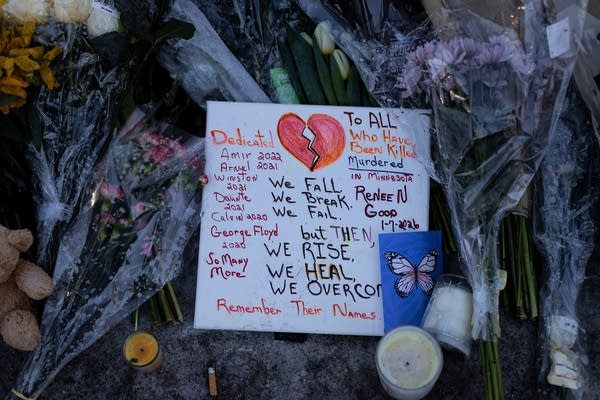
An offering at the memorial for Renee Good in Minneapolis on Friday.
Ben Hovland | MPR News
Bystander videos show a federal agent grabbing the handle of Good’s car and demanding she open the door. As she begins to pull away, footage shows another officer — since identified as Jonathan Ross — pointing his gun at her and firing through the windshield of the car.
A video taken by Ross that began circulating Friday also shows Macklin Good saying to the agent, “That’s fine dude. I’m not mad at you.”
The Trump administration has cast Macklin Good as a “domestic terrorist” who tried to run over federal agents, though that is not supported by eyewitness accounts or footage from the scene.
Her presence made ‘folks feel good’
Macklin Good was born in Colorado Springs as Renee Nicole Ganger. She graduated from Old Dominion University in Virginia in her early 30s, with a degree in English. In 2020, she won a prize from the Academy of American Poets for a poem called “On Learning to Dissect Fetal Pigs.”
MPR newscaster and poet Emily Bright reads Renee Macklin Good’s poem “On Learning to Dissect Fetal Pigs.”
While at Old Dominion University, she took a fiction workshop with associate professor Kent Wascom. That class with Macklin Good was the first class he taught there.
He said he could still clearly remember how her warmth and positivity shaped the experience for everyone as they shared their own writing with the class.
“She was incredibly warm with her peers, generous with their work, and was just a bright and engaging presence that made folks feel good,” he said. “When the temptation to offer a biting critique might have fallen on another student, she was there with something kind to say, something positive to say about the work or something insightful that might be helpful.”
He said at the time that she was taking his class, she was pregnant with her son. It was the early days of the pandemic too, and despite all she was balancing, she stood out in how she continued to uplift others, even remotely.
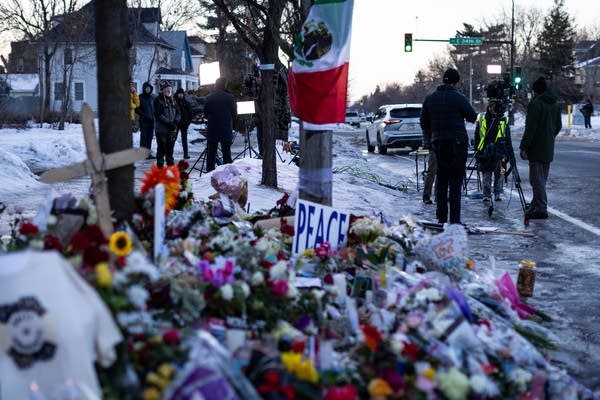
News crews film near the memorial for Renee Good on Portland Avenue in Minneapolis on Friday.
Ben Hovland | MPR News
Along with her son, who is now six years old, she was also a mother to two other older children. Her wife described them as “extraordinary children” and said the youngest had already lost his father.
The Minnesota Star Tribune quoted Macklin Good’s mother Donna Ganger, who described her as “extremely compassionate.”
“She’s taken care of people all her life. She was loving, forgiving and affectionate,” she said.
Macklin Good and Becca Good had moved recently to Minneapolis, in search of a new home.
When Macklin Good, her wife and their six-year-old son road-tripped to Minnesota for the chance to make a better life, the couple held hands the entire car ride, Becca Good said. Their son made drawings on the windows as the miles stretched on toward Minneapolis.
When they arrived, they found a vibrant and welcoming community and a “strong shared sense here in Minneapolis that we were looking out for each other.” Becca Good said she finally found peace and safe harbor.
But “that has been taken from me forever.”
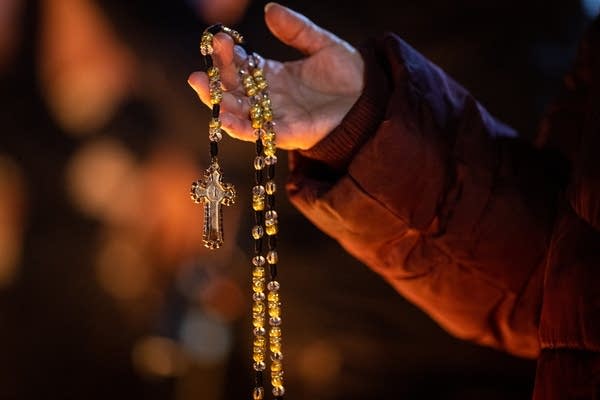
A woman prays the rosary during a vigil for Renee Good, a woman who was shot and killed by an ICE officer in Minneapolis earlier in the day on Wednesday.
Ben Hovland | MPR News
Each night since Macklin Good was killed, thousands of people have shown up to protest ICE and hold candles in support for Macklin Good and her family, locally and in other cities. Online, a GoFundMe that aimed to raise $50,000 in support of the family, has surpassed $1.5 million and has since closed.
The support has come in from out of state and out of the country.
“I’m sorry that you lost your life so senselessly simply because you were brave enough to stand up for your neighbors,” one donation read. “Please rest in peace knowing that we will take it from here. Tyranny will not stand, Good will prevail.”
“Renee, your death weighs heavily on my heart. You stood up for your neighbors and for immigrants like me, a Somali who knows how much that protection matters. I am heartbroken for your children, who must now live without you,” another read.
“I’m truly sorry for your loss, we all know the truth and I hope you get justice,” read another.
Becca Good expressed gratitude for the wave of support and called for honoring Macklin Good by living her values and coming together “to build a world where we all come home safe to the people we love.”
“The kindness of strangers is the most fitting tribute because if you ever encountered my wife, Renee Nicole Macklin Good, you know that above all else, she was kind,” Becca Good said.
“In fact, kindness radiated out of her.”
Here’s the full statement from Becca Good:
First, I want to extend my gratitude to all the people who have reached out from across the country and around the world to support our family.
This kindness of strangers is the most fitting tribute because if you ever encountered my wife, Renee Nicole Macklin Good, you know that above all else, she was kind. In fact, kindness radiated out of her.
Renee sparkled. She literally sparkled. I mean, she didn’t wear glitter but I swear she had sparkles coming out of her pores. All the time. You might think it was just my love talking but her family said the same thing. Renee was made of sunshine.
Renee lived by an overarching belief: there is kindness in the world and we need to do everything we can to find it where it resides and nurture it where it needs to grow. Renee was a Christian who knew that all religions teach the same essential truth: we are here to love each other, care for each other, and keep each other safe and whole.
Like people have done across place and time, we moved to make a better life for ourselves. We chose Minnesota to make our home. Our whole extended road trip here, we held hands in the car while our son drew all over the windows to pass the time and the miles.
What we found when we got here was a vibrant and welcoming community, we made friends and spread joy. And while any place we were together was home, there was a strong shared sense here in Minneapolis that we were looking out for each other. Here, I had finally found peace and safe harbor. That has been taken from me forever.
We were raising our son to believe that no matter where you come from or what you look like, all of us deserve compassion and kindness. Renee lived this belief every day. She is pure love. She is pure joy. She is pure sunshine.
On Wednesday, January 7th, we stopped to support our neighbors. We had whistles. They had guns.
Renee leaves behind three extraordinary children; the youngest is just six years old and already lost his father. I am now left to raise our son and to continue teaching him, as Renee believed, that there are people building a better world for him. That the people who did this had fear and anger in their hearts, and we need to show them a better way.
We thank you for the privacy you are granting our family as we grieve. We thank you for ensuring that Renee’s legacy is one of kindness and love. We honor her memory by living her values: rejecting hate and choosing compassion, turning away from fear and pursuing peace, refusing division and knowing we must come together to build a world where we all come home safe to the people we love.
As the flu and covid are on the rise again vaccines are on the decline due to the tRump admin claiming that the best science we have is wrong based on feelings and in the case of the people like JFK Jr it is greed. People don’t realize he makes his money suing drug manufacturers that produce vaccines. Every time he thinks he has some wacked out idea he sues and nothing they can show him will matter to him, all he wants is money and to stop vaccines for other people, as his families kids are protected. Think on it, he is vaccinated, their family has the money to get the vaccines without medical insurance, all he is doing is making it harder and more costly for your kids to get them because you need the medical insurance to help pay for it. Hugs
Under Robert F. Kennedy Jr.’s guidance, the CDC no longer recommends routine vaccination to protect against meningococcal disease.
Jan. 11, 2026, 7:00 AM EST
By Kaitlin Sullivan
Deaths from a rare and dangerous bacterial infection could rise if fewer teens are vaccinated, doctors warn.
After the Centers for Disease Control and Prevention recommended that all adolescents get vaccinated against meningococcal disease in 2005, cases of the potentially deadly illness plummeted in the United States by 90%.
However, cases have sharply risen since 2021, likely due to a combination of mutating bacteria and declining rates of vaccination overall, especially among teens getting a booster dose for bacterial meningitis, doctors suggest.
Dr. Luis Ostrosky, an infectious disease doctor at UT Health in Houston, is concerned that as cases of bacterial meningitis climb in the United States, the CDC’s recent overhaul of the childhood vaccine schedule could lead to more deaths.
Under Health Secretary Robert F. Kennedy Jr.’s guidance, the CDC is no longer recommending a meningitis vaccine for all adolescents. The vaccine and booster protect against the most common types of the infection in the U.S., serogroups A, C, Y, W.
“We see quite a few cases of meningitis per year,” Ostrosky said.
Under the new guidance, the vaccines will be recommended for “high-risk groups,” although parents can still ask doctors to vaccinate their children through a process called “shared clinical decision making.”
Teenagers and college-age adults, who often spend a lot of time in groups or communal living spaces such as dorms, and people with HIV are considered at highest risk for the infection, caused by a group of bacteria called Neisseria meningitidis.
Vaccination is important not because the disease is common — around 3,000 people are diagnosed with bacterial meningitis in the U.S. each year — but because the infection is both extremely serious and fast-moving.
Bacterial meningitis can progress quickly, causing the brain to swell and limbs to develop gangrene and sepsis, and can kill within 24 hours.
Symptoms such as headache, stiff neck, vomiting and fever come on suddenly, and may be mistaken for other minor illnesses. It can be treated with antibiotics, but even with rapid diagnosis, about 15% of patients die.
Fast-acting and life-threatening
Why some people are susceptible isn’t well understood. The infection develops when usually harmless bacteria travel through the respiratory tract and infiltrate the membranes surrounding the brain and spinal cord, causing severe inflammation. These bacteria, which commonly live in the back of the throat, can spread from person to person through close contact.
It can lead to a life-threatening infection in someone whose immune system is compromised — sometimes by a simple cold or flu virus — or who doesn’t have immunity to those bacteria. Viruses and fungi can also cause meningitis, but bacterial meningitis is the most serious.
Among patients who survive, as many as 20% have lifelong disability or complications, including amputated limbs, hearing impairment and neurological problems.
“You can die from a brain hernia, or from sepsis,” Messacar said. “And if you survive a brain hernia, you will most likely have severe complications.”
In 2024, the CDC issued an alert about a rise in cases of a type of invasive meningococcal disease. More than 500 cases were reported, the highest since 2013. Most of the infections were due to a specific strain of the Y serogroup of bacteria, which is included in the previously recommended vaccine. The cases were more common in adults ages 30 to 60, in Black people and in people with HIV.
“It’s even more important now that we get meningococcal vaccines out to people given that we are seeing a spike in this Y strain,” Messacar said.
The Food and Drug Administration has approved three types of meningitis vaccines. In 2005, the CDC began recommending that 11- and 12-year-olds get vaccinated against the most common meningococcal serotypes, A, C, Y and W. Because of waning immunity, the CDC in 2011 added a booster recommendation for 16-year-olds to protect them through young adulthood. A vaccine for meningitis B and a combined shot are available for children or babies who are considered at high risk.
In a statement Monday, Kennedy said that the CDC’s new childhood vaccine schedule was “aligning the U.S. childhood vaccine schedule with international consensus.”
Dr. Peter Chin-Hong, an infectious disease doctor at the UCSF School of Medicine in San Francisco, said the new approach to meningitis vaccination in the U.S., which is based on Denmark’s, is flawed.
“You can’t just look at another country’s vaccine approach and photocopy it. You really have to look at what is happening in your own country,” Chin-Hong said. Given the safety of meningitis vaccines, “it makes sense to vaccinate.”
Alicia Stillman, who serves on a World Health Organization task force for eliminating meningitis, worries that by moving the vaccine into shared decision making, the CDC is creating hurdles for parents who want to protect their children.
Stillman’s daughter, Emily, died from meningitis B in 2013. Emily had been vaccinated against meningitis A, C, W and Y, but the FDA didn’t approve a vaccine for meningitis B until 2014.
Emily Stillman, pictured with her mother, Alicia, was 19 when she died from meningitis B. Courtesy Alicia Stillman
Because many types of bacteria can cause bacterial meningitis, different vaccines are needed. The meningitis B vaccine hasn’t been recommended for all children but is available for people at high risk through the shared decision making process.
“I have watched medical professionals not bring [meningitis B vaccination] up,” said Stillman, who is the co-executive director of the American Society for Meningitis Prevention. “I have watched parents who are maybe a little less educated and not know how to ask about it, or they go to a public clinic instead of a private clinic where they have less time with a provider.”
She believes that could happen more broadly with the changed guidance.
What the research says
A CDC statement said the changes to the recommendation reflect the need for more data on certain vaccines, “including placebo-controlled randomized trials and long-term observational studies to better characterize vaccine benefits, risks, and outcomes.”
While there haven’t been placebo-controlled trials for meningitis vaccines — which would test how well a vaccine works either by deliberately infecting people with bacteria or by seeing how well they fare if they are infected in the real world — there have been many randomized clinical trials and other studies that use decades of data collected from both vaccinated and unvaccinated individuals in the real world.
Chin-Hong said placebo-controlled trials aren’t realistic or ethical for every drug, especially for life-threatening and rare diseases.
“A well-designed observational study, especially using decades of experience, can be just as informative as a randomized controlled trial,” Chin-Hong said.
A 2020 CDC report analyzed 20 clinical trials on meningococcal disease vaccines, including data from the Vaccine Adverse Event Reporting System (VAERS) and the Vaccine Safety Datalink (VS). The most common reported side effects were “mild to moderate,” and included swelling, fever and headache.
In 2005, Katie Thompson, now 39, was infected with an antibiotic-resistant strain of bacterial meningitis when she was a college freshman, the same month the FDA approved the first MenACWY vaccine.
“I don’t know how to describe it besides it’s pure hell,” she said.
After five weeks in the hospital and nearly dying, she went home, but not without lifelong complications. Thompson, who lives outside of Charleston, South Carolina, still struggles with migraines and vestibular disorders that cause vertigo and nausea. The infection was hard on her organs and she uses a bladder stimulator that helps regulate both her bladder and nerves in the base of her spine.
“It’s just not a disease that you want to take a risk on,” she said. “It’s not one that you want to gamble with your child’s life.”
Two vaccines that remain universally recommended by the CDC — the Haemophilus influenzae type b, or Hib, vaccine and the pneumococcal vaccine — protect against some causes of bacterial meningitis. However, these vaccines don’t protect against meningitis A, C, W, Y or B.
Kaitlin Sullivan
Kaitlin Sullivan is a contributor for NBCNews.com who has worked with NBC News Investigations. She reports on health, science and the environment and is a graduate of the Craig Newmark Graduate School of Journalism at City University of New York.
Belle talks about the right wing propaganda being generated to discredit the woman shot by ICE in Minnesota, Renee Good. It was not even a good fake hit piece as Belle describes it. I posted a few weeks ago about Russian and other enemy off the US countries posting stuff that is not true so that once it is circulated it discredits the real news in peoples minds. Ron fell for that himself.
Ron watches YouTube clips in the morning with his coffee. Yesterday he was listening to what he thought was a financial newsgroup called Buffet Unfiltered. That site reported that Deutsche Bank had called in tRump’s loans and seized tRump Towers. I questioned it because no other news source reported anything and I felt with news that important they would have. Today they reported how underwater on loans and to creditors tRump was, again that is believable but not the way Ron was telling me was being reported. So I again warned him about misleading propaganda. He asked me who to check the stuff out. I showed him how to both search out the group, which on their YouTube about page said they were fictional dramatizations, then I showed him how to search new groups like ground news for the story reported. Now he is upset these groups do this. But it was a good lesson for both of us. I post a lot of what I think is real news. However I have made mistakes and posted stuff not true or quite accurate. Thankfully the people who come here are smart and have pointed these out to me and I can correct or take the posts down. Thank you for helping keep this site as honest and correct as it is important to me. Hugs
This is an important story of growth and rejection of your core identity. The fact that those closest to you can not accept you and that which makes up who you are. I have not changed the text of the story in any way as I want the voice of the author and his agony of his childhood to shine clearly. This is the way the right wing Christian Nationalist bigots want every family member to be and all children raised. Remember this was only the 1990s. In the 30 years since great progress was made in acceptance, tolerance and education of / about LGBTQ+ kids and how to raise them in loving acceptance of how they feel inside themselves. The Christian hate groups that make their living trying to return the country to a much more regressive hateful time rolling back all rights gained by minorities. And in a very short time they have had a huge effect on how LGBTQ+ people especially LGBTQ+ kids are treated. They stated their goal of driving these kids back into hiding terrified of being outed for fear of being beaten, harassed, and ostracized. That is what they want. Several Christian lawmakers who are trying to make being an out LGBTQ+ kid illegal along with showing any media that represents the LGBTQ+ community have said that when they were kids in school they used to gang up and beat the shit out of LGBTQ+ kids. I know in the 1970s I was not out but targeted as a “faggot” and constantly harassed and attacked. How any adult would want to return to such a time, to having any kid or adult be treated that way is horrendous. Especially from those trying hard to force the country to follow their idea of a Christian lifestyle. Hugs
At 30, I’m finally living as myself. But the man whose acceptance I wanted most still can’t say the word gay.
Jan 10, 2026
Content warning: This story includes mentions of homophobia, childhood trauma and suicidal ideation.
By CorBen Williams
The seventh time I came out to my father wasn’t dramatic. It didn’t happen at a kitchen table or in a parking lot or after he’d found one of my journals. It happened casually, slipped into a conversation like it was nothing:
“As a gay man—” I began.
“You’re not gay,” he interrupted.
“Dad,” I replied. “We’ve done this too many times before.”
Even now, at 30 years old, married to the man I love, fully myself in ways I once thought impossible, my dad still can’t say who I am out loud. It hangs there, suspended between us, as though acknowledging my homosexuality would unravel something he’s built his entire life around.
I’m not sure what exactly. Control? Image? Masculinity? Maybe he simply doesn’t have the language.
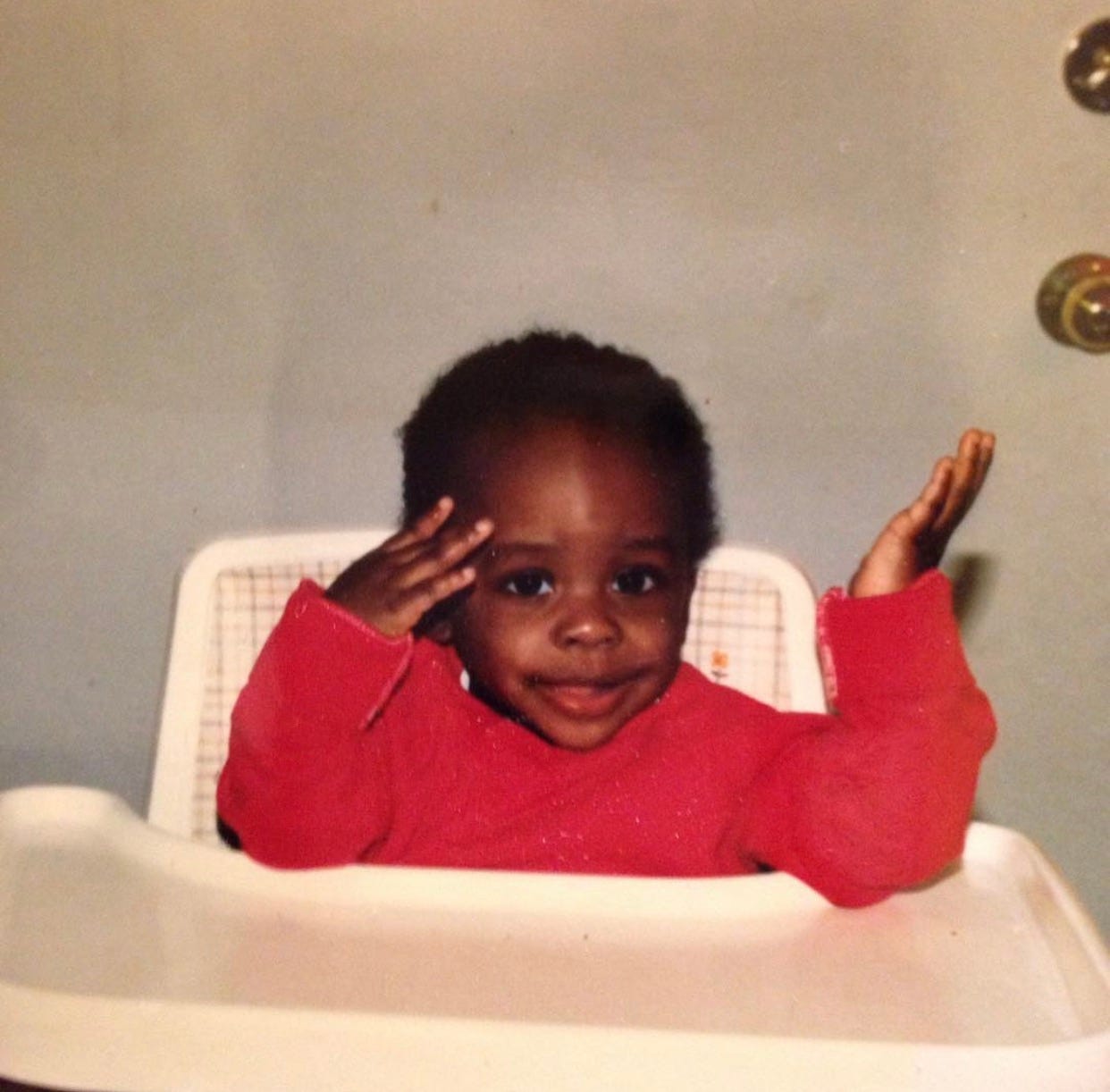
Photo courtesy of CorBen Williams.
I grew up in North Pole, Alaska, in a red-sided house at the end of a gravel turnaround. It was the kind of home where the winter light never quite reached the living room and silence carried through the walls like a second language.
North Pole felt like its own universe. A 2,500 person military town where there’s snow on the ground for up to 187 days a year and the Christmas lights never come down. About 70% of the town is white and roughly 30% of the voters are registered Republican, with almost half listed as “undeclared,” which in Alaska is usually just Republican without saying it out loud.
Most families were tied to the church or the base, so you learned fast what was considered normal and what was not. People knew your parents and your business.
Growing up Black and queer made me stand out without trying and forced me to learn early how to tuck parts of myself away.
My parents had both served in the military, and even though my mother had the warmth and softness to move past it, my father emulated parental rejection. Dad demanded respect and expected excellence in the way a man shaped by the military does: loud and without room for negotiation.
You could feel his energy before you heard his footsteps because there was always a tension that entered the room with him. He yelled more than he spoke, and as a kid I was told to listen to what he was saying, not how he was saying it, even when he was screaming in my face.
My father didn’t know what to do with a son who felt things deeply, and before I ever came out to him—the first of seven times—he had already shown me exactly which parts of myself were unsafe to reveal.
But that didn’t stop me from trying. The first time I came out, I was in first grade, sitting in the parking lot of a McDonald’s on Geist Road, right beside my future high school.
“Dad, I think I’m bisexual,” I said.
I knew my ass was gay. But I also knew enough about my father to try to ease him into it. He asked if I knew what that meant, and even though I did, I told him “no.”
“It means you like sucking penis,” he spat harshly.
I was six.
People think kids don’t understand things, but children clock everything. That moment didn’t confuse me about who I was. It clarified who he was. It showed me that there were parts of me he couldn’t handle and wouldn’t protect. I didn’t leave that day understanding my sexuality better. I left understanding the risk of telling the truth.
The second time, I was forced out when my father found my journal. I was 10 years old, and in those pages, I’d written unpolished thoughts about men, about how I felt around them, questions I didn’t yet know how to ask anyone.
He burst into my bedroom and tore the journal up in front of me, little pieces of paper flying around me as I sat in my bed. I tried not to cry.
“As long as you’re a kid in my house, you don’t get privacy,” I remember him barking. It showed me that I need to be wary about how much I trust people and what information I give them.
This rejection led me to the darkest part of my childhood.
“I am tired of living,” I remember muttering to my sixth grade teacher.
I was exhausted by my dad, exhausted from hiding, exhausted from feeling wrong in my own skin.
I should have stopped writing after that, but writing was how I survived. When you don’t have anyone to talk to, you talk to the page.
By 13, I had another journal. This one had drawings of a classmate and fantasies about kissing him. When my dad found it, he brought it up on the car ride home from school, saying “the correct way” to feel about other boys was “brotherly love” and nothing else.
But the third journal set off the biggest explosion.
It was filled with details, drawings and fantasies about my first hookup with a boy. The way I wrote about them, at 15, was more adult. The kind of writing he didn’t want to believe his son was capable of.
“I fucking told you about this shit,” he shouted, with the journal gripped tightly in his hand. “This isn’t appropriate. This isn’t what we do.”
My mom was sitting next to me, shocked, both of us caught off guard by how quickly he had gone from discovery to explosion. I almost cried, but I swallowed it down. My mom guided him into the other room to calm him down.
He didn’t speak to me for seven days. He couldn’t look at me. Each day felt like another nail in the coffin.
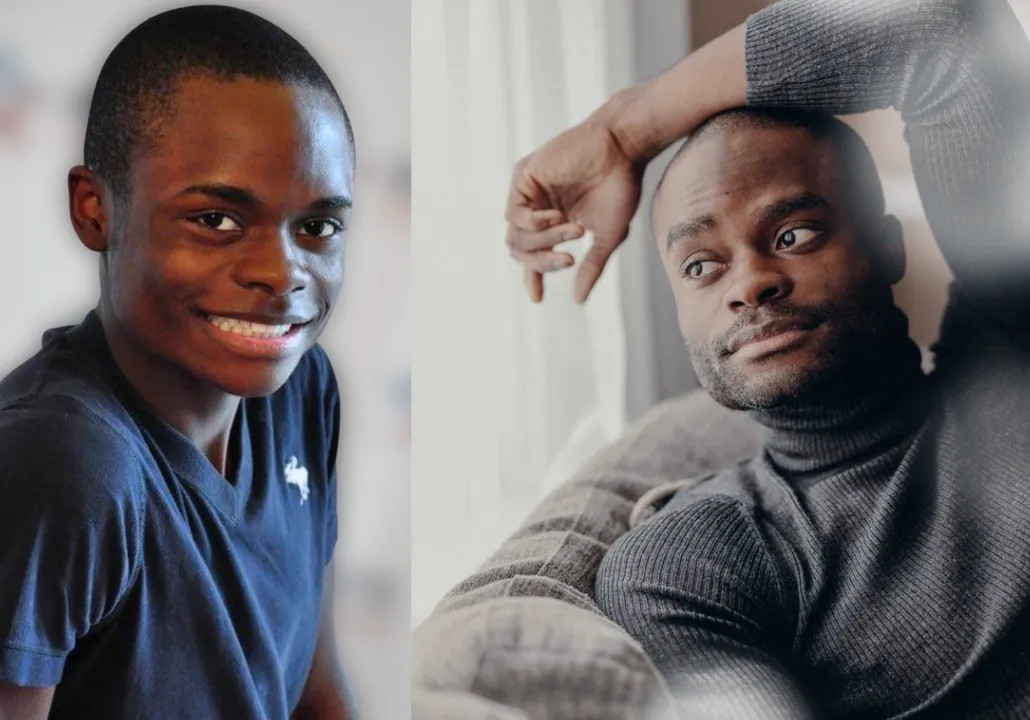
Photo courtesy of CorBen Williams.
I kept coming out to my dad anyway. At 17. At 22. At 24. Nothing changed.
Part of me used to think that I was an embarrassment to my family. I felt for so long that I needed to apologize for being the mistake. But in my late teens, I started to see it differently. I realized I just wanted his acceptance and his love in a way that I was never gonna get.
Because of this, I don’t think I ever really got to be a child. Even in first grade, when other kids were talking about Barbies and Legos, I felt like I was always bracing for impact, performing a version of boyhood that never fit. My childhood was spent preparing for adulthood and a career. People would always say to me, “You seem so much older. You seem so mature.”
I left North Pole for good and moved to New York City when I turned 19. I became a performer, a traveler, someone who learned to build softness and resilience, where my childhood had taught me to live in fight-or-flight mode. And then, almost when I wasn’t expecting it, I met Travis.
He was older. Wisconsin-born. A wildlife biologist. Patient in a way I didn’t even realize I needed. My mother said he softened me, brought grey into my black-and-white worldview. With him, I don’t brace for criticism. I don’t edit myself. I don’t shrink. I don’t hide my journals.
We’ve been together five years now, married for three. He’s met everyone in my life, except for my dad.
Photo courtesy of CorBen Williams.
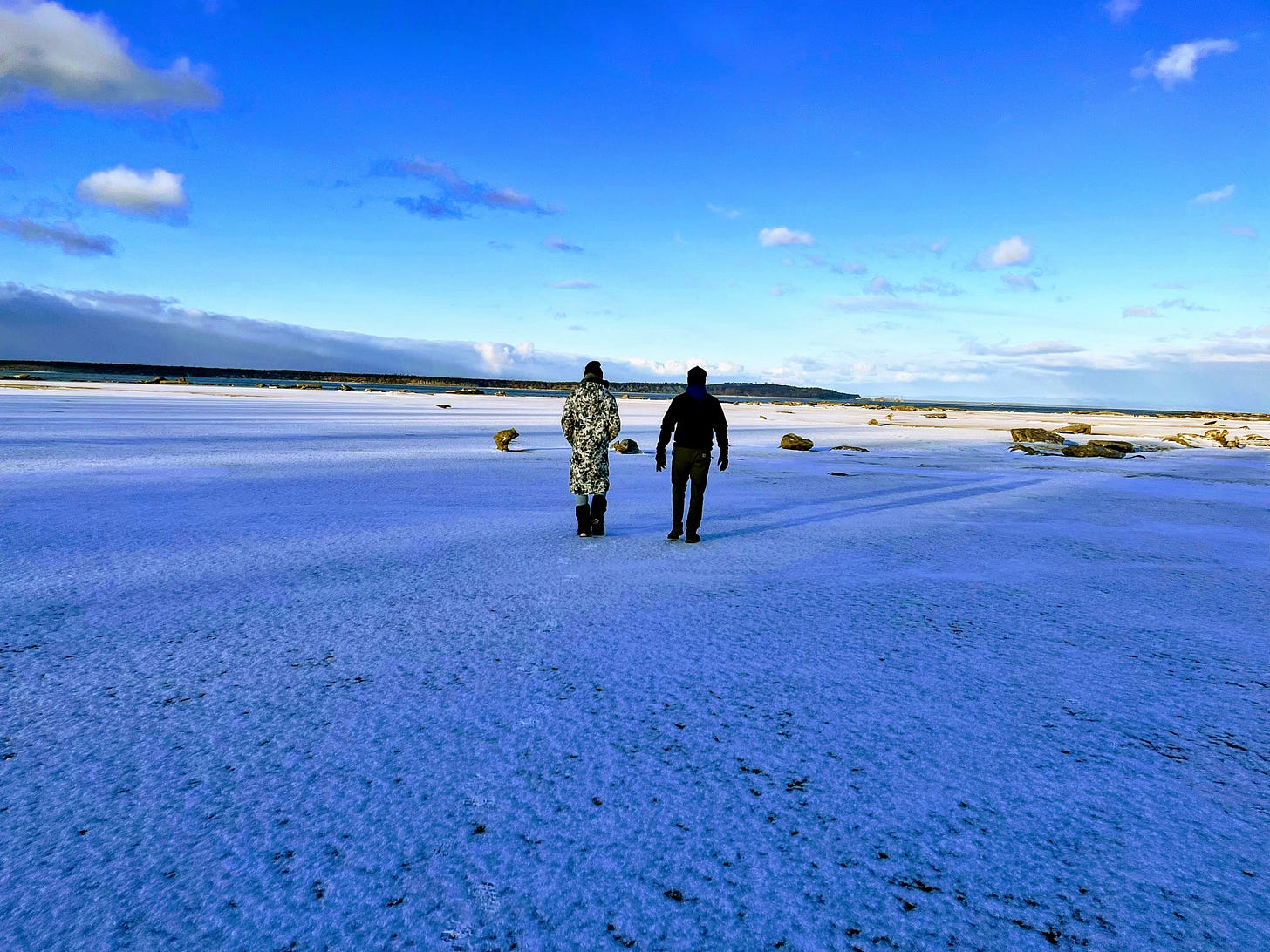
Now, when I think about my upbringing in North Pole, I think about the path through the woods that led to my house, hoping someone on the other side would understand me. I think about how many times I tried to hand my father my truth, and how many times he handed it back to me with rage.
Even now, with the life I’ve built and the love I’ve chosen, acceptance is still complicated. I wish I could say that learning to love myself erased the sting of not being understood, but the truth is I still wrestle with where I fit—inside my family, inside Black spaces, inside queer spaces, inside the places that were never built with someone like me.
I’ve learned to be confident, to be gracious, to be the person who makes others feel seen, maybe because I know exactly what it feels like not to be. But some days, even as a grown man, I feel an instinct to shrink.
I’m learning that acceptance is a practice, one I have to return to again and again. I don’t have it all figured out. But I’m trying. And maybe that’s the real truth at the end of all this: I haven’t just been coming out to my father all these years—I’ve been slowly, steadily learning how to come home to myself.
Uncloseted Media and GAY TIMES reached out to CorBen’s father for comment, but he did not respond.
Sam Donndelinger assisted with the writing and reporting in this story.
If objective, nonpartisan, rigorous, LGBTQ-focused journalism is important to you, please consider making a tax-deductible donation through our fiscal sponsor, Resource Impact, by clicking this button:
tRump has never purchased anything personally like normal people. He doesn’t go to stores and shop. He has always been a pampered rich boy even in bankruptcy. I don’t know about anyone else but Ron and I have to stretch our first half of the month income to be able to afford groceries and medications. We ended last month with $30 in the checking account. This month is always bad for us. So I want to know where this lowering of costs are. Ron wears me and the car outgoing from store to store to get the best deals. We suffer in too cold or too warm a house to keep the electric bill down. But yes Florida is a high cost of living state, would love to move, but … yup we can’t afford it. Hugs.
Donald Trump’s claims about bringing down prices comes just weeks after he told families to limit the number of presents that they buy for their children