Please watch. As she says the site is called Dunning Kruger and states it is not fake news or lies because it is totally fictional and made up. But tRump believes it. Hugs
The shutdown is over.Well, not officially, but it’s over. Seven Democrats and a Dem-caucusing independent caved, providing Republicans with the eight votes necessary to shove through a funding bill that will eventually reopen the government.
Once again, Republicans’ will to do the wrong thing was greater than Democrats’ to do the right thing.
Amazing how often that happens. With Medicare-for-all. With Senate representation for Puerto Rico and D.C. With revamping the U.S. Supreme Court. With simply seating a properly nominated Supreme Court justice.
Every single time, when the fight got hard, there were just enough Democrats willing to tuck tail and run to give Republicans another win. Just enough Democrats willing to believe that this time the GOP Lucys won’t move the football.
It’s coming again, sure as you’re reading this.
There will be no negotiation over Affordable Care Act subsidies—the lone concession that Democrats received for their spineless fold. Anyone with a working brain can see the end of this thing.
Republicans are going to renege. There’s going to be shock and outrage. Republicans and their media partners will not care. They’ll spin it in the dumbest possible way. Four million Americans will lose health care coverage. The costs of insurance premiums will go up substantially for all of us.
It’ll probably end up being Obama’s fault somehow.
Because this is how bad the Democrats are at messaging. Even when every single fact is on their side—and the facts were decidedly on their side—they can’t even get their own caucus to buy in.
I want you to consider what was happening. Take a step back. Consider all of the facts. And behold the breathtaking failure that the Democrats snatched from the jaws of accomplishment.
You have a country that is extremely angry with its current president, because that guy has failed to do anything that he promised he was going to do. (Probably because he lacks both the intelligence and the will to do any of those things.) This guy, whose policies have driven up prices and bankrupted American farmers and businesses, was publicly snatching food from the mouths of hungry children and poor people. At the same time, his party’s disastrous spending bill, which included ridiculous tax breaks for the wealthy and corporations at the expense of health care subsidies for the poor and working class, was in the beginning stage of jacking up monthly premiums from barely affordable to “I guess we’ll just die” rates.
For 41 days, the Democrats told everyone who would listen that they simply could not stand aside and allow this pain to fall upon good Americans. That this was a fight they wouldn’t abandon. That this was a fight they were in until the end.
Or until the airports got real busy.
I mean, people starving because food stamps were cut off was one thing. But long lines and cancelled flights, pfft, what are we, some sort of third-world country?
So, seven of them caved. Like sniveling, pathetic cowards.
Because more wasn’t demanded of them.
I’ve been preaching for some time now about the absolute necessity of researching and voting for the right people. For not simply voting for the party-affiliated candidate. To demand more. To vote for the people who best represent you and who have the best answers to your issues.
For most of you, particularly the working class and poor, that will be a Democrat. It just needs to be the right Democrat. We have to stop electing weak, ineffective, soft candidates, and choose people who will fight with intelligence and grit.
Look, let’s keep in mind the reality here. The things that were at the center of this fight—food stamps, health care subsidies, Medicaid, Medicare, Social Security—none of them would exist without Democrats, without a progressive party that governs based on morals and decency. A party that made sure the poor have food on the table and access to medical care. A party that said senior citizens deserved to live with dignity and some security.
But what happened with the shutdown cave should highlight the fact that it’s not enough to simply elect Democrats. You have to demand more. You have to demand a commitment, a willingness to fight.
Anything less, as we’ve seen, is just a waste of everyone’s time.
Top Democratic officials put out a new guide, entitled “Deciding to Win,” that encourages Democrats to be a little more like Republicans on “identity and cultural issues.”
Left: David Axelrod // Public domain, Middle: James Carville // JD Lasica // Wikimedia Commons, Right: David Plouffe // Noam Galai // Wikimedia Commons
Erin In The Morning is a reader-supported publication. To receive new posts and support my work, consider becoming a subscriber.
Subscribe
This week, the self-styled centrist group WelcomePAC released a document entitled “Deciding to Win”—advised on by some of the Democratic Party’s most prominent strategists, including David Axelrod, James Carville, and David Plouffe—urging Democrats to act a little more like Republicans on so-called “identity and cultural issues.” The 58-page memo reads like a compendium of the consultant class’s worst instincts, encouraging candidates to become little more than poll-tested avatars and walking focus groups, trading conviction for triangulation. While the document rarely defines which “cultural issues” it means, the few times it does make it clear: queer and transgender people stand to lose the most if this vision of the Democratic Party takes hold.
The document begins with five key pillars for the party. Some of them make a lot of sense, such as “messaging on an economic program centered on lowering costs, growing the economy, creating jobs, and expanding the social safety net,” critiquing “the outsized political and economic influence of” the “ultra-wealthy,” and support for a $15/h minimum wage. Others, though, encourage the party to abandon platforms that have been central to its identity and mission to protect the most vulnerable in society, calling for the party to “Moderate our positions where our agenda is unpopular, including on issues like immigration, public safety, energy production, and some identity and cultural issues.”
While the document rarely defines what “identity and cultural issues” means, the examples make its targets clear. Support for the Equality Act—legislation that would codify gender identity and sexual orientation as protected classes under federal law—is cited as proof the party has “moved left.” Another section lists “protecting the rights of LGBTQ+ Americans” as a priority voters supposedly don’t want Democrats to emphasize. Elsewhere, a discussion of how to mobilize voters “sitting on the couch” reveals that the most popular policy among them is “defining sex as binary and based on biology at birth across federal agencies.” Later in the document, it explicitly calls out transgender sports participation as an issue that the party should “moderate” on.
Screenshot of Deciding to Win Chart of “moderate” policies
Imagine a world where Democrats actually heeded this advice. The “define sex as binary” policy—already championed in Republican-led states and now embedded in everything the Trump administration does—has had devastating consequences for transgender Americans. It has stripped trans people of the ability to update their passports, creating serious barriers to travel; defunded organizations that affirm gender diversity; and fueled crackdowns on college campuses that allow trans students to use restrooms matching their gender identity. It’s a policy of bureaucratic erasure, one that threatens to undo decades of hard-won progress—yet it’s presented, almost casually, as a “moderate” position Democrats might adopt to win votes.
It’s a vision of politics that would turn Democrats into little more than Republican Lite—a “big tent” party spacious enough for those who despise us but not for those who most need protection. In that world, Democrats would lose not just the meaning of leadership but the very soul of why the party exists. And it’s a fantasy built on delusion: no amount of fine-tuned messaging or poll-tested calibration will ever transform the party into the perpetual winner these consultants imagine.
We don’t have to imagine what happens when Democrats follow this playbook — we’ve already seen it. In New Hampshire, Democrats capitulated on multiple anti-trans bills, including bans on youth sports participation and gender-affirming surgery, only to suffer one of the party’s worst defeats of the 2024 election cycle, losing 20 seats. By contrast, Democrats in Montana fought hard against similar measures and mounted some of the most visible resistance to anti-LGBTQ+ legislation in the country, picking up ten seats in the state House—one of the party’s strongest showings nationwide, in a state Trump carried easily. In Kentucky, Governor Andy Beshear vetoed anti-trans bills, including a sports ban, and still won reelection in a Trump +31 state. And in New York, a ballot measure enshrining gender identity protections outperformed Kamala Harris’s statewide margin by a wide margin.
Despite the evidence, a faction within the Democratic Party still treats queer and trans people as expendable—convinced that by trimming the edges of equality and tolerating “a little” discrimination, they can win back power. It’s a ruinous illusion. This kind of triangulation doesn’t blunt Republican attacks; it validates them. Every state that once embraced sports bans or “compromise” restrictions has since escalated to banning medical care, censoring books, and policing bathrooms. Capitulation has never advanced LGBTQ+ rights—not in policy, not in public opinion, not once. Democrats aren’t losing because they’ve been too loud or too firm in defending equality; they’re losing because the far right invests in its own moral narrative while Democrats second-guess theirs. The only way forward is to stand unapologetically on principle—as Andy Beshear did in Kentucky, citing it as the very reason for his success—not to chase the approval of consultants who mistake cowardice for strategy and appeasement for leadership.
Erin In The Morning is a reader-supported publication. To receive new posts and support my work, consider becoming a subscriber.
America’s biggest export might soon be its own citizens. According to the American Psychological Association’s Stress in America 2025 survey, 63% of adults ages 18 to 34 have considered leaving the country this year because of “the state of the nation.” Among parents, more than half—53%—say the same.
These aren’t impulsive fantasies about Parisian cafés or permanent vacation visas. The study, conducted between August 4 and 24 among more than 3,000 adults, found that stress about the country’s future has hit a historic high. Seventy-five percent of Americans say they’re more worried about the direction of the nation than they used to be, and 76% call that fear a “significant source of stress.”
The anxiety isn’t limited to politics. Half of all adults reported feeling lonely, and 69% said they needed more emotional support this year than they received. “People are overwhelmed by societal division, technology, and uncertainty about what’s next,” said APA chief executive Arthur C. Evans Jr. “It’s affecting how they relate to each other and themselves.”
Almost Two-Thirds of Young Americans Are Thinking About Ditching the U.S. for Good
That division has started to show up physically. Among adults who named it a major stressor, 83% experienced physical symptoms in the past month, like headaches, fatigue, or anxiety, compared to 66% of those who didn’t. The same group was more likely to lose patience with family, cancel plans, or struggle to plan ahead.
AI is also creeping into the collective stress index. Fifty-seven percent of adults now say the rise of artificial intelligence adds to their anxiety, up from 49% last year. Among students, that number has nearly doubled to 78%. As automation expands and misinformation spreads, Americans are increasingly uneasy about how technology will reshape work, privacy, and even identity.
Still, the survey found that most people haven’t given up. Seventy-seven percent say they have some control over their personal futures, and 84% believe they can build good lives despite national instability. Family, friendships, and health remain top sources of meaning.
But optimism has its limits. Sixty-six percent of adults think they’ve sacrificed more than previous generations, and many feel the country isn’t keeping up its end of the bargain. For young Americans, especially, the American dream feels more like a relocation plan.
As stress levels rise and passports renew, the question hanging in the air isn’t whether they love their country, it’s whether they can still live in it.
Photo Illustration by Victoria Sunday/The Daily Beast/Getty Images
Homeland Security Secretary Kristi Noem and her alleged lover Corey Lewandowski ordered 10 Spirit Airlines jets before realizing the planes had no engines.
Officials warned the pair that purchasing the jets—which they said would be used to increase deportations and for their own travel—was impractical, and that simply hiring additional flight contractors would be far less costly, The Wall Street Journal reported
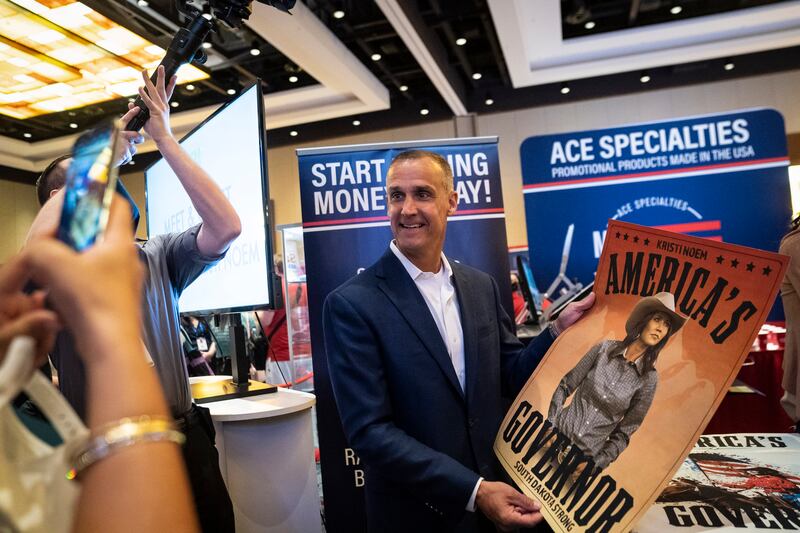
Corey Lewandowski and Kristi Noem, who are both married, deny reports that they are having an affair.Jabin Botsford/The Washington Post via Getty Images
But Noem and Lewandowski went ahead and blew through the funds allocated by Congress. Officials realized the pair’s blunder when they looked deeper into their spending spree and realized that Spirit—which has filed for bankruptcy twice—didn’t own the planes in the first place, and that the engines would have to be purchased separately, according to the Journal.
Noem and her shopping partner then purchased two Gulfstream jets for $200 million. However, shortly after, DHS notified the Democrats on the House Appropriations Committee that the project to increase deportation flights had been paused.
Noem looks pensive after a press conference held to discuss the “Midway Blitz” immigration enforcement operation in Chicago.Jamie Kelter Davis/Getty Images
Lewandowski—whose alleged relationship with Noem has been described as D.C.’s “worst-kept secret”—has been referred to as Noem’s “gatekeeper,” operating as a special government employee who travels with her, weighs in on personnel, and shapes enforcement.
He has also spearheaded efforts to replace ICE leaders across the country with Border Patrol veterans to impose a more heavy-handed, military-style approach to Trump’s immigration crackdown, such as the hostile situation dubbed “Midway Blitz,” unfolding in Chicago.
Gregory Bovino has a background in chasing migrants and drug smugglers through border terrain.Chicago Tribune/Brian Cassella/Chicago Tribune/Tribune News Service via Getty Images
Led by Border Patrol Chief Gregory Bovino, the operation’s militarized enforcement tactics and aggressive approaches have sparked public outcry. Footage and testimony have shown federal officers firing pepper-ball rounds and tear gas—even near children—while clashing with protesters. ICE agents have also been spotted roaming quiet neighborhoods, questioning landscapers and decorators.
Still, the militant approach hasn’t appeased the White House or met its steep daily deportation quotas.
ICE and Border Protection agents had made 3,000 arrests in Chicago over two months as of late October—the same number the White House has demanded they make in a single day, the Journal reported.
Noem’s methods—and the mounting pressure from the White House—have sparked infighting among DHS officials as they grapple with Lewandowski’s informal authority.
Kristi Noem and Greg Bovino visit the ICE facility in Chicago in October.DHS photo by Tia Dufour
Border czar Tom Homan and ICE Director Todd Lyons favor an old-school, less hostile approach, including using police research to develop target lists and focusing on those with criminal histories, sources told the Journal. But while Homan is influential in the White House, Noem has the final say.
Trump, however, is on the side of aggression, saying in a 60 Minutes interview last week that ICE officials “haven’t gone far enough” in Chicago.
The Daily Beast has reached out to DHS and ICE for comment. A spokesperson for DHS denied there were divisions in the department in a statement to the Journal, adding that Trump’s administration is on pace to “shatter records and deport 600,000 people by the end of Trump’s first year.”
Noem’s shake-up comes even as a federal judge on Thursday accused Bovino, 55, of lying to her in court as she imposed sweeping limits on a hardline anti-migrant crackdown in Illinois.
Bovino previously claimed he was hit in the head with a rock before he lobbed gas at anti-ICE protesters in Chicago—a claim he later admitted was false after DHS could not produce evidence to support it.
In an oral ruling, U.S. District Judge Sara Ellis said, “I find the government’s evidence to be simply not credible,” after weeks of tear-gassings, pepper-ball strikes, and hard takedowns against journalists, clergy, and residents during “Operation Midway Blitz,” with excessive violence that, she said, “shocks the conscience.”
Ali offered two comments to add additional information. I am going to repost this to get that information to more people. Thank you Ali for the volunteering work you have done. Hugs
If you’re giving to humans directly (like a little food pantry or a local drive where people don’t have to sign in to a bank,) as well as to a food bank, canned meats are good with the skillet helpers. It does help to check with your food bank before bringing fresh items in; some don’t have storage available to keep fresh food safe. Which could be a fundraising idea for those inclined to help in such a fashion! 🙂
Also, the top thing that will help a food bank is money. It doesn’t have to be a lot of money, either. The food bank in Wichita charges only .20 per pound to food banks, but a bag of food is going to cost, well, what a bag of food costs. We need our food banks, because it’s another example (like SNAP) that bigger entities can do more. But sometimes people who use or cannot use a food bank need a little in between food bank visits and the little food pantries help there. So many ways to help at little cost and trouble-thanks, Scottie!
That’s probably confusing, about money and the .20 per pound. Frequently, there is a large food bank that collects foods, etc., then distributes it to local food banks. The example above is our local food bank (yeah, I volunteered there for 4 years before going to work as a para). We received food donations, and money, but what really helped our bank (which keeps records on families served, allergies, etc.) was the money, because they could take the truck up to Wichita, and for 10.00, get 50.00 worth of food to bring back for our bank. It’s a simple thing, and I mucked it up with lots of words, as is my wont. 🙂
That said, I bring up other points for getting food to people because in some places, the food bank is only open one or two days per week, for a few hours. Depending upon volunteers, many of whom are retired, those hours are going to be during working hours, so people can’t always get to a food bank. So those little pantries make a big difference, too!

Left: David Axelrod // Public domain, Middle: James Carville // JD Lasica // Wikimedia Commons, Right: David Plouffe // Noam Galai // Wikimedia Commons
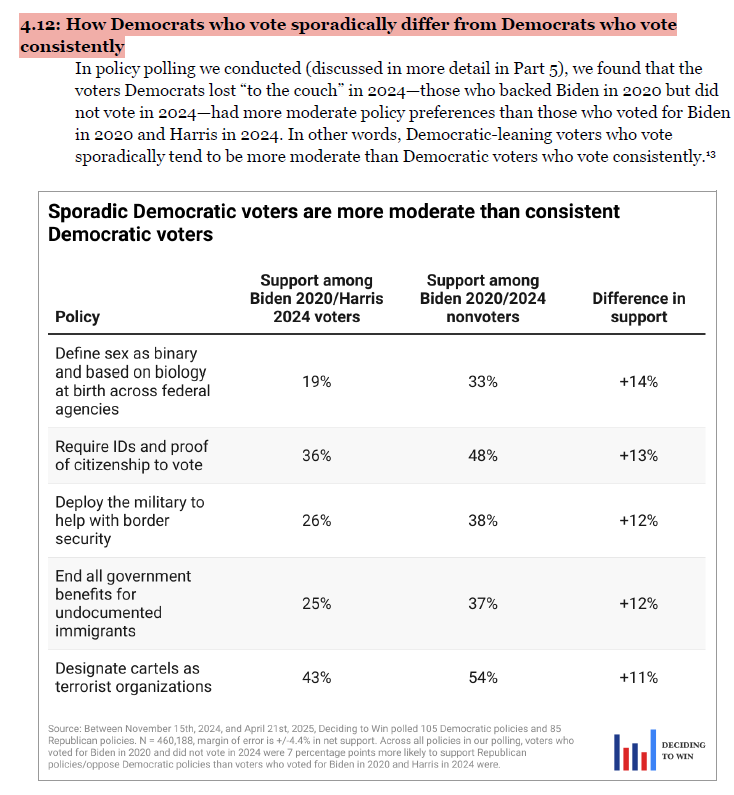
 Photo Illustration by Victoria Sunday/The Daily Beast/Getty Images




 Scottie's Playtime