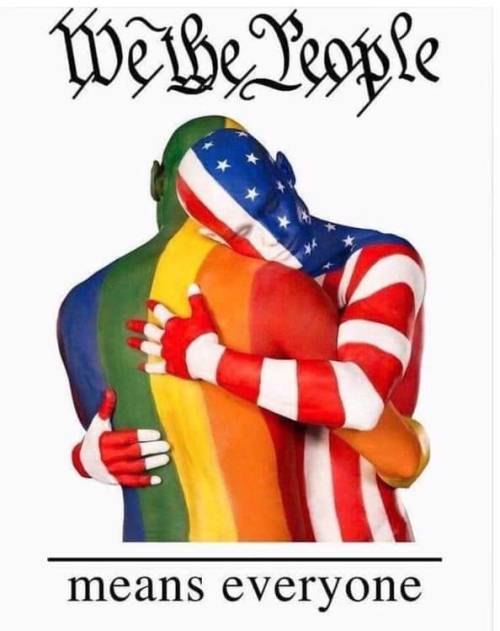












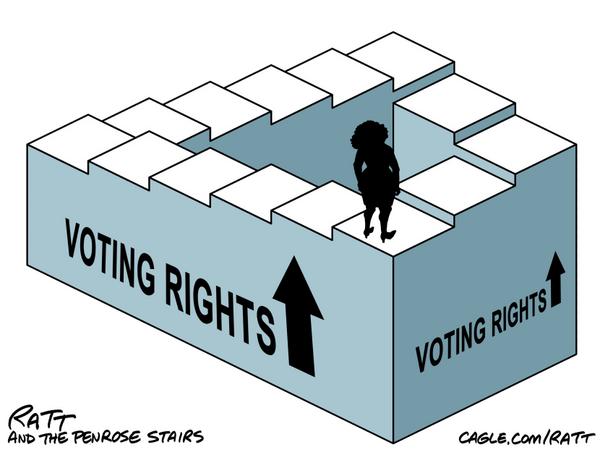






















Congress can set up a 22nd amendment and this video explains how. Hugs
This is a doctor working in Gaza. He describes the conditions. The Israelis are sniping World Health doctors. Israelis are moving the “yellow line” that they are claiming is the new boundary line between Israel and Palestinians. They are slowly moving the line deeper ad deeper into Gaza. The Israeli snipers were shooting the young boys in different areas on different days, now they are using drones to fire on young children alone with horrific results. Remember from the last clip he was saying how Israel is blocking and destroying the medical supplies and equipment. Israel is deliberately shooting and killing children. They want the chaos it causes, they like the fear it promotes, and they like that no new generations of Palestinians are growing. The doctor spoke of other atrocities that Israel is inflicting daily on the Palestinians. Israel is a criminal nation doing a genocide, and much of our democratic leadership is deeply in the pockets of AIPAC. Notice that Hakeem Jeffries was also at the same event. People here have asked why I am so anti-democratic leadership; this is one of the reasons why. They are beholden to the big money donors and lobbies doing their bidding while ignoring the desires and will of the people they are supposed to represent, not rule over. Hugs
Senate Minority Leader Chuck Schumer has emphasized his commitment to maintaining pro-Israel sentiments within the Democratic Party. In recent statements, Schumer articulated that his role is to ensure that the left remains supportive of Israel, a position he conveyed during an interview with The New York Times. This assertion reflects a broader concern regarding the changing dynamics of the Democratic Party’s support for Israel and Jewish causes. Schumer’s comments have sparked discussions about the implications of this shift, particularly in light of the party’s historical alignment with pro-Israel policies. Opinion pieces have noted that Schumer views the preservation of American institutions as integral to protecting religious minorities, highlighting the intersection of Jewish identity and political advocacy. https://deepnewz.com/middle-east/chuck-schumer-emphasizes-role-keeping-left-pro-israel-says-job-to-keep-the-left-f0ff217c

“I have many jobs as [Senate] leader… and one is to fight for aid to Israel — all the aid that Israel needs,” Schumer said at a gathering of Jewish leaders and community members in New York on Sunday.
“I will continue to fight for it.,” Schumer continued. “We delivered more security assistance to Israel, our ally, than ever, ever before.”
According to Jacob Kornbluh, who provided footage of the remarks while reporting for The Forward, Schumer told the audience that his support for Jewish security funding will only continue growing under his leadership, calling it his “baby.” https://www.commondreams.org/news/schumer-israel-aid
Sen. Chuck Schumer (D-New York) said on Sunday that one of his most important jobs as Senate minority leader is to “fight for aid to Israel,” as the Trump administration’s masked federal agents continue their deadly raids of the U.S. with little to no pushback from Democrats.
In remarks at a breakfast gathering of Jewish leaders in New York City, Schumer said, “I have many jobs as leader … and one is to fight for aid to Israel, all the aid that Israel needs.” Part of the remarks at the UJA-Federation of New York gathering were posted online by The Forward reporter Jacob Kornbluh. House Minority Leader Hakeem Jeffries (D-New York) also spoke at the event. https://truthout.org/articles/as-trumps-dhs-ravages-us-schumer-says-his-job-is-to-fight-for-aid-to-israel/
Dr. Tarek Loubani, a Canadian emergency room physician who has been volunteering in Palestine joins the program from Gaza for a harrowing interview. If you can, please support Dr. Loubani’s Glia Project, a medical solidarity organization that empowers low-resource communities to build sustainable, locally-drive healthcare projects.
We were told we couldn’t take a joke, and that social media isn’t real life. Now the misogyny of early chatrooms and Gamergate has reached the White House

Harrison Sullivan, known as HSTikkyTokky, in Louis Theroux: Inside the Manosphere. Photograph: Netflix/PA
Why has it taken so long for us to treat misogyny as a political problem? The modern manosphere has been metastasising for many years – and for years, mainstream culture has responded with a helpless shrug. There was nothing unusual about men hurting women, even if the technology was new.
In the early aughts, angry and alienated men began indulging in recreational misogyny online, bombarding women and girls in the public eye with threats, insults, harassment, hacking, and hideous “revenge porn”. Strange as it may now sound, though, “the internet” was still seen as separate from “real life”.
That, at least, was what I was told the first time I went to the police about the death threats I was receiving as a young columnist. Nothing could be done, because what happened on social media wasn’t real and didn’t count. If I didn’t like it I should get offline, and presumably continue my work via rotary phone and fax. Those of us who were early targets of what would become the manosphere did not have the luxury of ignoring the issue. For us, it was easy to see that this was something new and serious, easy to understand how the tactics used against us might be deployed elsewhere – and how quickly matters could escalate.
Which is what happened in 2014. In May of that year, the terrorist Elliot Rodger killed six people and brought global attention to “incels” – young men radicalised by sexual resentment.
Three months later came Gamergate, a global orgy of online harassment targeting women in the video game industry. It all started when up-and-coming game creator Zoe Quinn was attacked by a bitter ex-boyfriend in a book-length tirade of sexual and professional jealousy. The non-scandal became a lightning rod for tens of thousands of gamers furious that women were intruding on a medium that was meant to be their personal power fantasy.
On anonymous forums like 4chan, men coordinated an extraordinary campaign of abuse dressed up as concern for “journalistic ethics”. Quinn and other creators were driven from their homes, but the firestorm was already out of control. Over the next few years, as “incels” continued to carry out acts of mass murder, every entertainment industry, from comics and publishing to film and TV, was besieged by obsessive trolls casting themselves as brave rebels against illiberal “social justice warriors”. The more they got away with it, the more they treated it like a game.
Gamergate brought together the disparate strands of what we now call the manosphere: the grifting pickup-artists, the Christian nationalists, the bitter “incels” and the furious fans triggered into mass social vandalism whenever they heard a story they weren’t the hero of. This slurry of half-formed fixations congealed into a coherent ideology of aggrieved entitlement, with its own language – “escaping the matrix”, “taking the red pill” – and their own logic of heroic victimhood in the face of women’s sexual power. The rage and alienation of men abandoned by post-crash capitalism was channelled towards a common cause – one ripe for co-option by the worst possible actors.
Throughout the mid-aughts, mainstream media continued to underestimate the manosphere. The fringes of the right did not make the same mistake. Gamergate was the proving ground for some of the central propagandists of the new “alt-right”. Steve Bannon, the political svengali and co-founder of Breitbart News, saw the potential in this cohort of cranks. He went on to run Donald Trump’s first presidential campaign, helping to deliver that key demographic to a president who personified everything the new cult of male supremacy most admired, as he crowed about sexual violence and held the notionally free world hostage to his every emotional spasm.
In hindsight, it is startling that all of this was normalised for so long. It was apparently inconceivable that violence against women could constitute a crisis – unless, of course, the violence was blamed on immigrants or on transgender people, at which point women’s safety suddenly shot to the top of the political agenda. When feminists and others in the infected eye of the storm tried to raise the alarm, we were told we were exaggerating for attention, or that we couldn’t take a joke. Under the posturing, cartoon frogs and memespeak, these were lost young men who deserved patience and understanding, and if we didn’t offer it we were heartless, humourless killjoys.
Identical arguments were used to dismiss the rise of Maga until it was far too late. The playbook tested out on feminists and on Black, queer and female creators in the mid-aughts was replicated in far-right movements across the global north – as was the response of muted both-sidesism. Then as now, politicians, pundits and industry leaders officially disapproved of the worst excesses of the manosphere, but declined to take an explicit stand, terrified that any display of moral integrity would alienate their base.
As the 2010s turned into the 2020s and the manosphere continued to expand, funnelling its recruits towards ever more extreme, explicitly racist ideas, it became fashionable to cast “social justice warriors” as the pressing danger to human freedom. Politicians and public figures seemed far more concerned about the #MeToo movement, which seemed proof positive that feminists had gone too far – and deserved, perhaps, to be punished for it. After the third or fourth time a documentary crew came to interview me about all the death threats, I realised that they didn’t want to help – they wanted to watch.
Lots of people did. After Gamergate, bigotry became a growth industry for enterprising young lads unburdened by conscience. As a journalist, I interviewed many young far-right men who admitted that what they really wanted was to be influencers and film-makers. For clicks and views they courted controversy and flirted with the far right – but it didn’t take long for the relationship to get serious. As Kurt Vonnegut writes in his anti-fascist masterpiece Mother Night, “we are what we pretend to be, so we must be careful what we pretend to be”.
Today, nobody is pretending that this is a joke any more. Trump, in his deranged dotage, is openly courting the manosphere, and the young men of gen Z are veering towards the far right en masse. There’s a clear line from the social vandalism of Gamergate to the mega-grifting male supremacists, scamming their followers with the promise of a reality where women and girls are non-player characters, to be defeated, exploited or traded for tokens in a brutal marketplace of human value. Many young men have lived their entire lives in the shadow of this weaponised misogyny – and so have young women. And that sinister ideology is still gnawing at the heart of power.
A few weeks ago, in a break from encouraging his deranged president to take over Greenland, White House adviser Stephen Miller found time to post a tweet on X that appears to be mocking the new Star Trek series for being too diverse. Elon Musk emerged from his fug of racial conspiracy theories and transphobia to agree. This is embarrassing, and not just because any half-literate nerd knows that Star Trek has been woke since 1966. Because even after turning the world into their personal thunder dome, the representatives of aggrieved white male power are still unsatisfied, still demanding we cater to their every petty whim. They will continue to do so until the rest of us, at last, refuse to tolerate their nonsense.
Dr. Tarek Loubani, a Canadian emergency room physician who has been volunteering in Palestine joins the program from Gaza for a harrowing interview. If you can, please support Dr. Loubani’s Glia Project, a medical solidarity organization that empowers low-resource communities to build sustainable, locally-drive healthcare project.
Hello friend!
I am leaving for the second part of my book tour in 10 hours and I have not done laundry, packed, or (if I’m being honest) unpacked from the first leg of book tour. In spite of the fact that the first stops were so lovely and fun and filled with fellow weirdos who completely understood my anxiety, I am once again convinced that everyone will hate me and no one will show up and probably I will be eaten by sea lions. So right now I am writing this to you and reminding myself that everything will be okay.
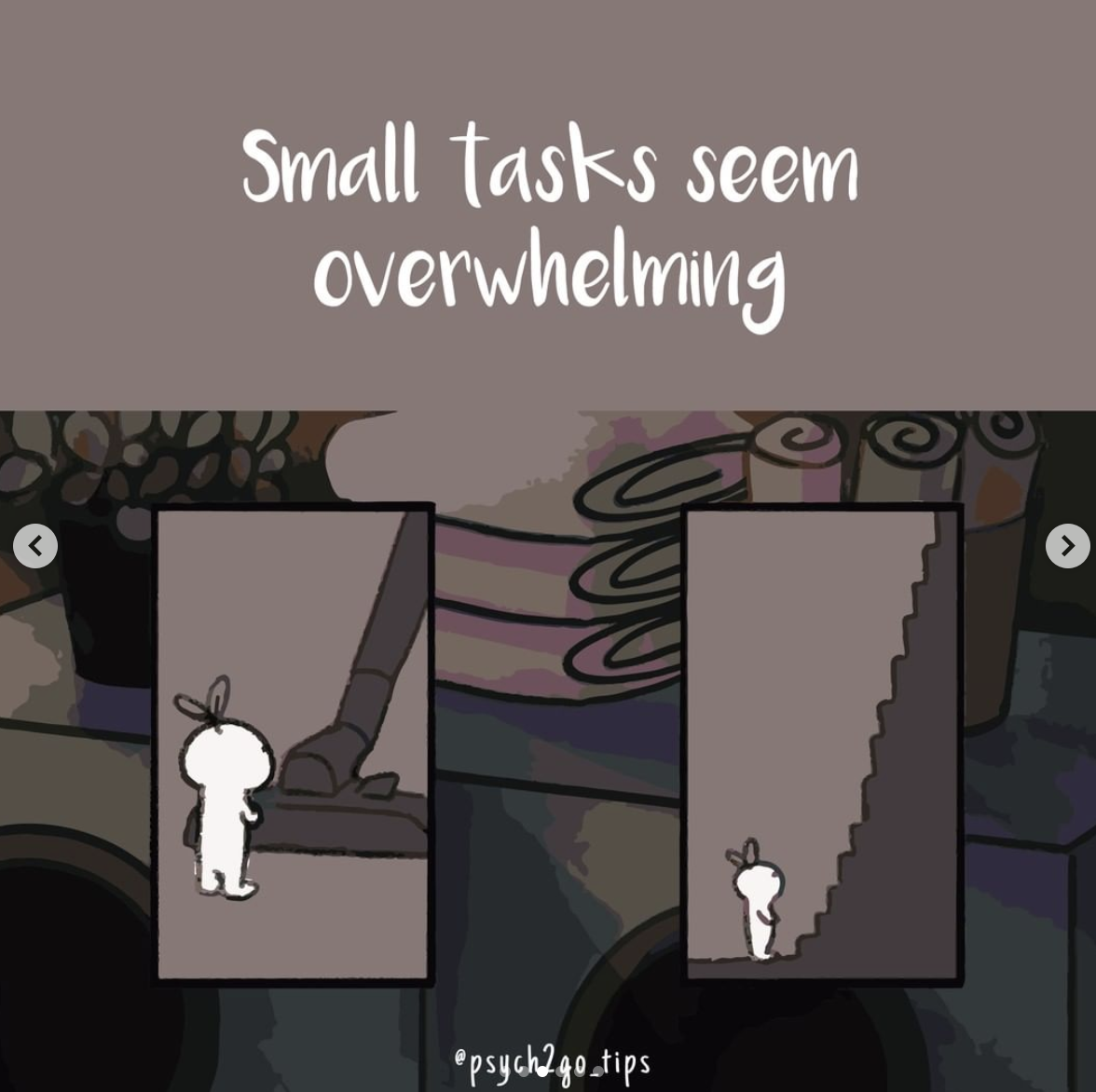
I did lots of little drawings this week but Hunter S. Thomcat is laying on my sketch pad and I don’t want to move him so instead I’m sharing a drawing from the book because I drew it when I was having a high anxiety week and it feels fitting to come back to it now. Just a reminder that even when things feels scary, you can always make a little oasis in your mind. My spell check tried to change that to “you can always make a little oatmeal in your mind” and I’m feeling very relieved that I caught that because that’s even weirder than my normal letters to you.

WAIT, DID I TELL YOU HOW TO BE OKAY WHEN NOTHING IS OKAY IS #4 ON THE NYT BESTSELLER LIST?
Sorry. Didn’t mean to yell. It’s just late and my meds have worn off.
If you’re in California, Oregon or Austin, come join me?
Barnes & Noble in California
Powell’s in Oregon
Book People in Austin
I super crazy love you,
~ me
Apr 08, 2026 Errin Haines
This story was originally reported by Errin Haines of The 19th. Meet Errin and read more of their reporting on gender, politics and policy.
This column first appeared in The Amendment, a newsletter by Errin Haines, The 19th’s editor-at-large. Subscribe today to get early access to her analysis.
When Alexis McGill Johnson took the helm as leader of Planned Parenthood in 2020, the nation’s largest provider of reproductive care and a major force in American politics was already at a critical juncture.
The organization’s last president had lasted just eight months; she followed Cecile Richards, the charismatic and connected leader who was in the role for a dozen years. The future of abortion rights looked potentially shaky, and Donald Trump was in his first term.
In the six years since, the U.S. Supreme Court ended federal protections for abortion, a major challenge both for providing care and for the organization’s political arm — then Trump won a second term and moved to take away federal funding, slashing a third of Planned Parenthood’s budget. Under the first Trump administration, Planned Parenthood had more than 600 health centers. Since the start of 2025, 53 have closed. More are threatened since Trump on July 4 signed into law a measure to block them from accepting Medicaid.
The end of federal abortion protections led to a surge in energy around the issue from Democrats and the left. It has faded since then as the president’s military actions and mass deportation strategy dominate attention — but McGill Johnson still has to figure out how to galvanize supporters; keep Planned Parenthood clinics serving patients; and elect Democrats in key races in states including Georgia, North Carolina and Ohio.
As one of the abortion rights movement’s key standard bearers, McGill Johnson is navigating expectations from activists, donors and voters who want a fighter and expect her to deliver. Their sense of urgency can obscure what it means to both lead the fight and provide essential care to millions of Americans in an intentionally overwhelming and chaotic news cycle.

“When I look at where Planned Parenthood is in this moment, we are navigating all of the chaos, but also looking for where the opportunities are inside that chaos,” McGill Johnson said. “Chaos is a strategy: throw everything at people so they don’t know where to look or how to fight.”
McGill Johnson describes her style as collaborative; those who know her best say she’s a master strategist, confronting a challenging political climate with courage, clarity and creativity.
The political climate in which McGill Johnson has led can really not be compared to any other past leader, said Fatima Goss Graves, president of the National Women’s Law Center.
“This isn’t something that’s happened over three decades; this has been the last six years,” said Goss Graves, who first met McGill Johnson in 2017 after Goss Graves became the first Black woman to head her organization. “Alexis was the right person at the right time. It is a big deal that surviving the level of attacks they have faced, that they are still here, they are serving patients, they are still committed, and they have had to make adjustments. The work is what she’s doing.”
Planned Parenthood is shorthand for dual entities: Planned Parenthood Federation of America, the nonprofit supporting affiliate clinics across two dozen states; and Planned Parenthood Action Fund, the group’s political arm, focused on organizing, advocacy and voter education.
McGill Johnson’s path to leading both came after a career working on voting rights and civil rights, and she approaches the work through a racial and gender lens. She is only the second Black woman leader in the organization’s existence of more than a century.
Her presence at the top of Planned Parenthood reflects a broader pattern in American institutions, in which Black women are often called on to lead in moments of crisis, with limited room for error and a lack of support.
McGill Johnson talked about the added weight of doing this work as a Black woman in a movement that has been largely White at the national level. She said that having lived and worked at the intersection of race and gender has been an asset in her current role.
McGill Johnson is familiar with leading in moments like the one Planned Parenthood is facing, “moments where our leadership is judged more harshly, where we may be granted more scrutiny, less grace.”
“Those are the places where I’ve had to find my center, to remind myself that I’m in this role to be unapologetic about fighting for the liberation of women of color, Black women, at the center of that liberation, because I think that actually transforms the liberation of everyone else,” she said.
Former Democratic U.S. Sen. Laphonza Butler, the first Black woman to head EMILY’s List, the political action committee focused on electing Democratic women, put it this way when asked about the challenges of leadership for Black women: “It is an expectation whose bumper sticker reads: ‘Fix it for us, please.’ When you look across the movement spaces where both crisis and care are on a collision course, it is Black women like Alexis who are stepping up.”
The Supreme Court’s 2022 decision in Dobbs v. Jackson Women’s Health Organization, which ended the nearly 50-year precedent of legal abortion access nationwide, angered many Democratic women and motivated them in record numbers in the 2022 midterm elections.
Then-Vice President Kamala Harris championed reproductive rights as a pillar of her 2024 presidential campaign — but her loss was criticized by some, in part, as prioritizing abortion access over the economy. Now, the Democratic Party’s uncertainty around whether and how to talk about abortion to voters adds to McGill Johnson’s challenges in this moment.
The stakes on the ground are still life and death for many Americans, but political strategists say the issue of abortion has proved less politically potent as the national spotlight has moved on.
“For someone fighting on this issue, the progressive movement that was so galvanized is less so because they’re focused on many of the other things that Trump is doing that are dangerous to the country,” said Democratic strategist Karen Finney.
Abortion can still be a motivating issue for Democrats — especially as it’s related to the two biggest issues at the moment, health care and affordability, said Democratic pollster Celinda Lake.
“It’s still motivating to voters for turnout,” Lake said. “Right now, everything is being pushed out by the war and the economy. I think it will reemerge as a much more powerful issue in 2028. Health is the number one issue, the number one pocketbook issue. When you talk about abortion and broaden it, it’s very powerful there.”
McGill Johnson worked to do just that, emphasizing Planned Parenthood’s presence particularly in communities with a lack of options for reproductive care. Politically, she has framed the issue as one of affordability and of democracy, and is focused on a message to voters about how the administration’s actions in recent years are impacting them.
“It may not feel as though abortion is as front and center as it was in the year or two after the Dobbs decision … but when you bring it to people and remind them that these things are happening, it taps directly into that rage,” McGill Johnson said.
She added that part of the job now also looks like acknowledging the concerns of those in the movement as a leader of a complex organization with little room for error. Supporters of abortion rights — and even supporters of McGill Johnson herself — have criticized her for not responding strongly enough to attacks on access, saying they don’t see her fighting in the way they want.
What does it mean when some on the left are more in the mood for a wartime general than a collaborator?
“In the day-to-day, it is a lot of navigating people’s frustrations, anxieties and hopes, and how to keep people focused on that hope and a strategy for how to get there,” McGill Johnson said. “We’re living in moments where philanthropy has pulled back from a number of institutions where there is a federal defund, which has impacted a lot of my colleagues. One day, you’re navigating ICE and the next day, the country’s at war, right? All within the same time period. I think my kind of special superpower is the ability to kind of keep myself at the 30,000-foot view to understand how all of these things are interacting with each other.”
McGill Johnson said the urgent question for her is: Who are we going to be now that we’re no longer defending Roe? It’s one that no other president of Planned Parenthood had to grapple with after the landmark 1973 case that made abortion the law of the land.
Since 2019 when she became interim leader, Planned Parenthood’s supporter base — which includes volunteers, donors, activists and email subscribers — has grown from 13 million to 20 million.
In addition to her focus on the campaign trail, McGill Johnson will also have to continue the work of reimagining Planned Parenthood’s network of clinics as part of the national health care infrastructure. According to the organization, 1 in 3 women in the United States has visited a Planned Parenthood clinic.
“I believe that Planned Parenthood could become the Cleveland Clinic of sexual and reproductive health care, because we have such great clinical excellence,” McGill Johnson said. “We are already a leader in standardizing best-in-class care, on sexual, reproductive health care, including abortion, so I think a lot about what it would mean for us to to focus on seeing as many patients as Planned Parenthood can, but to also export that influence into ensuring everybody else’s is standard of care is raised.”
To get there, McGill Johnson will have to endure and survive the current climate and the demands of the post-Roe era. Reproductive Freedom for All President Mini Timmaraju said meeting the multiple challenges at the local, state and federal level with diminished resources and competing areas of attention is daunting.
“We have to do more than we’ve ever done before, and the funding is not what it should be,” said Timmaraju, the first woman of color to lead her organization. “We are all scrambling to make sure that in the moment where abortion funds need funding, clinics need funding, we also have enough resources for advocacy at every single level, and that’s really challenging in an environment where donors are understandably a little frustrated with progressive entities right after 2024 so we’re having to prove ourselves again, and continually having to prove and reprove, over and over again, the salience of abortion electorally.”
It was a yesterday’s Wonkette tab, but I just got to that email over lunch. It’s a horrible story. Of course, the hospital likely is understaffed thanks to policies and practices of our government, but still. Here is this-
Conor Hylton’s family alleges in a lawsuit that he was pronounced dead by a “provider on a video screen” who had been monitoring him remotely
Cara Lynn Shultz is a writer-reporter at PEOPLE. Her work has previously appeared in Billboard and Reader’s Digest. People Editorial Guidelines
NEED TO KNOW
A dental student died in a Connecticut ICU where he wasn’t being cared for by an on-site doctor, but instead, was monitored remotely by an off-site physician via video.
The family of Conor Hylton has filed a wrongful death lawsuit against Yale New Haven Health-Bridgeport Hospital after the 26-year-old died in the Milford Campus’s intensive care unit. According to the complaint obtained by PEOPLE, the site is a “tele-ICU meaning there are no qualified ICU intensivists on site.” The complaint further states, “ICU intensivists are located off-site at a centralized remote location, purportedly monitoring critically ill patients through a video screen.”
In a statement to PEOPLE, a representative for the medical group said, “Yale New Haven Health is aware of this lawsuit and is committed to providing the safest and highest quality of care possible, however, we are unable to comment on pending litigation.”
Hylton first arrived at the hospital at 11:08 a.m. on August 14, 2024, with abdominal pain and vomiting, per the complaint, which says he was admitted and diagnosed with “pancreatitis, dehydration, metabolic acidosis, and alcohol withdrawal.” His condition “continued to change and deteriorate over the evening.”
At 4:30 a.m., the complaint says, “Mr. Hylton slid down in bed, his eyes rolled back and he became unresponsive and exhibited seizure-like activity, vomited, became bradycardic and code was called. He was intubated, but he could not be resuscitated, and he was pronounced dead.”
The complaint states that although the pronouncement of Hylton’s death was said to be made by an on-site doctor, it was actually done by a ‘tele-health’ provider on a video screen.”
According to the complaint, an on-site doctor was called to intubate Hylton, but “the provider summoned to perform the intubation did not know how to find the ICU and had to find someone else to show him where it was located. This led to a delay in [care].”
An expert medical opinion included with the lawsuit wrote, “no on-site doctor assessed Mr. Hylton from the time he was admitted to the ICU until after he exhibited seizure activity at 4:30 a.m.”
Joel T. Faxon, partner at Faxon Law Group, which is representing Hylton’s family, said in a press release: “It’s alarming to think in a supposedly intensive care setting: Where is a doctor? Where are the nurses? How does the emergency doctor not know how to get to the ICU to provide life saving care?”
Faxon confirmed to PEOPLE that neither Hylton nor his family were informed there were no on-site doctors at the ICU. As Faxon told PEOPLE exclusively, “If the Hylton family knew that their son was being placed in a fake icu with no doctor present they would have demanded he be transferred to a hospital that could properly treat him. They were never given that option and, tragically, Conor died as a result.”
*** Personal Note. By Monday things here should be back to normal. Ron will be in Texas driving his sister home. I will have had the weekend to rest. Ron is on his last full day of doing no exertion not even house work. They went into a major artery in his wrist. He had a wrist board to keep the wrist from flexing for 24 hours, shower lightly but leave the large bandaid on. Change the bandaid after showering for 72 hours. Call 911 if it starts to bleed. On Saturday morning he is off restrictions and flies to Texas. Then he and his sister will drive to Florida. She will stay with us for a few days as her house here is emptied and then she will settle her stuff and go to New Hampshire. She is flying up there. Hugs ****
Axios reports:

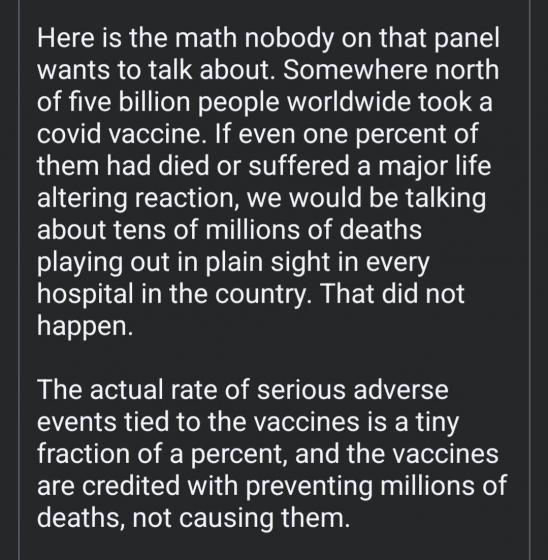
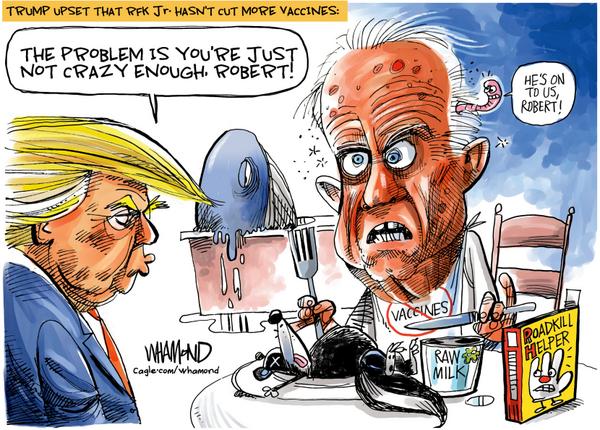
Trump administration health officials are giving serious consideration to a plan that would make injuries from COVID-19 vaccines a formal diagnosis that can be coded in medical records. Increasing documentation of what’s still a loosely defined condition could help lay the groundwork for future lawsuits against vaccine manufacturers.


The ICD-10 system already covers general vaccine injuries and reactions to some specific vaccines, but it doesn’t have a designation for the COVID shot, whose safety has become a major point of contention within the administration.
The new code could allow providers “to identify, track, and study patients who experience adverse effects specifically related to COVID vaccines,” Mary Stanfill, a CDC health information specialist, said during a public meeting on code proposals last week.
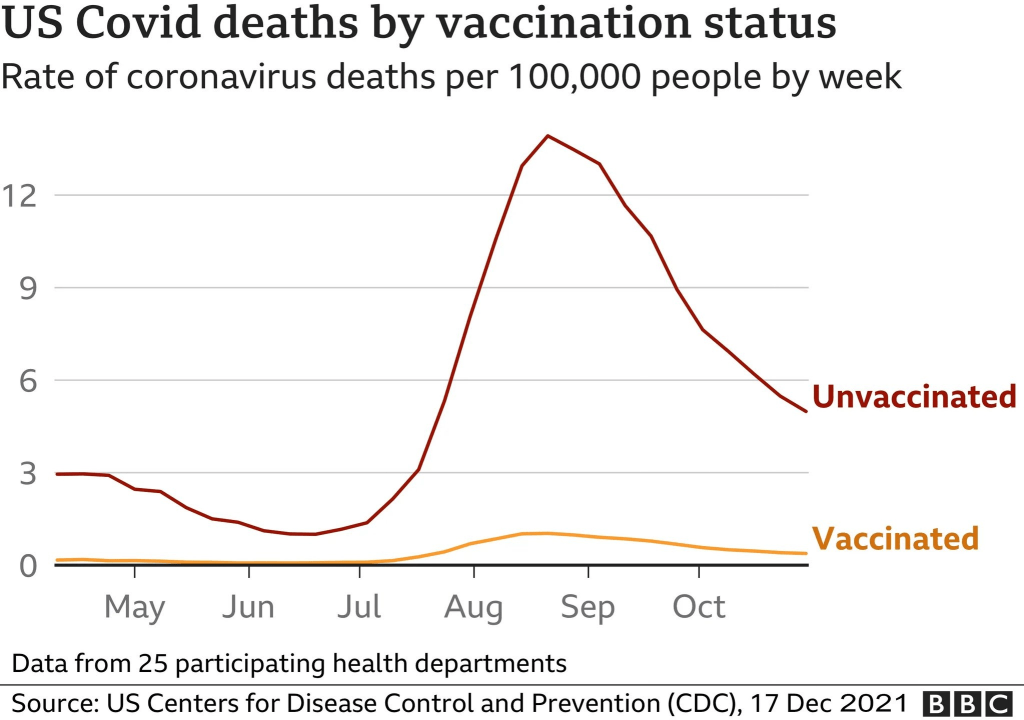
Read the full article. You will recall that the cult has claimed that COVID vaccines cause the human body to become literally magnetic, and that they cause “turbo cancer,” autism, miscarriages, myocarditis, pericarditis, hearing loss, and taste loss. Oh, and the vaccines also supposedly contain graphene nanobots meant to connect people to the internet for the purpose of mind control.
https://www.erininthemorning.com/p/olympic-athletes-rapinoe-and-bird
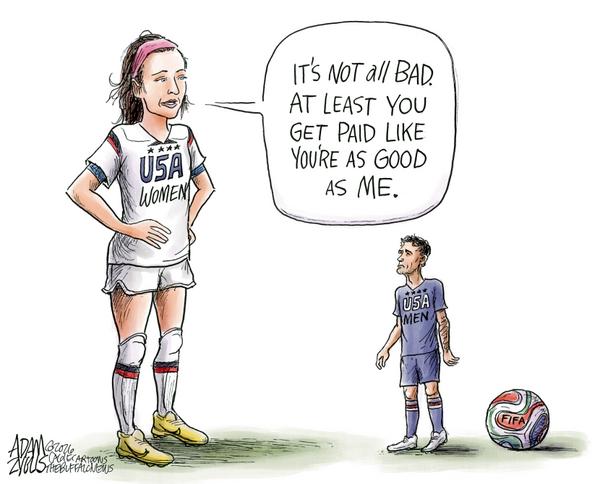
“It’s just a total acquiescence to the Trump Administration,” Rapinoe said.