From The “MUTTS” Blog:

Helping Pets and People When the World Feels Uncertain

There are many ways in which the world feels uncertain, and with every news update, we ask ourselves questions: What role do we play? How can we help? We know many readers turn to Mooch and Earl for a daily dose of comfort and joy. Recently, someone told us MUTTS is their “place to go for a warm hug each day.” Will raising a particular issue interrupt that sense of refuge that readers value here?

Not long ago, we received a letter from a reader named Tyla. With her permission, we’re sharing part of it below. 

“With recent ICE raids impacting Minneapolis and communities across the country, some families are being separated very suddenly, and in many cases this has meant pets are left without caregivers. Animal shelters and rescues have shared that they’re seeing more animals being taken in or surrendered unexpectedly, and in some situations, people have stepped in to foster or adopt pets whose families were detained.

“The health and well-being of both people and animals isn’t always part of the conversation when issues like this come up, even though both are affected. Animals, especially, rely entirely on their families for care and stability, and sudden disruptions can be very hard on them.

“I was wondering if this is something the [MUTTS] team might feel comfortable acknowledging this, specifically from the perspective of how animals are affected.

“I understand this is a sensitive and complicated topic … I also know that many readers, including myself, turn to MUTTS as an escape from the real world, and I truly respect that. I just wanted to offer this suggestion thoughtfully, since when people are affected in situations like these, animals are often affected too, and their needs can easily be overlooked.”

Tyla’s letter moved us. We’d been thinking about this, too. We started drafting a blog post based on one specific concern: What happens to pets when their families are detained or deported? We were discussing this internally, and considering ways to help, when the scope widened. The news headlines, unfortunately, have not slowed down.

The world feels increasingly uncertain, but one thing we know for sure is that pets depend on the humans who love them. They don’t understand geopolitics or political parties. And the truth is, preparing for any unexpected event — from a natural disaster to a family emergency or something else — is an act of love and responsibility.

At MUTTS, we believe in compassion for all creatures. With that spirit, here are practical ways we can all help our human and animal neighbors.

If You’re a Pet Parent: Plan Ahead

  • Choose a backup caregiver. Identify a trusted friend, neighbor, or family member who could step in temporarily if you can’t be home. Make sure they’re willing and understand what would be involved. Share basic care information in advance so nothing is left to guesswork. If you’re comfortable with it, you may even want to give them a spare key to your home (or tell them where one is hidden).
  • Keep identification current. Ensure your pet’s tags and microchip records are up to date. Consider listing a secondary contact (such as your backup caregiver) on file with your vet.
  • Prepare a small “just in case” kit. Put together a bag with essentials: medications, vaccination records, feeding instructions, favorite comforts like a blanket or toy, and a short written profile of your pet’s personality and needs. Think of it as something you’d want ready in any unexpected situation.

If you currently need assistance caring for your pet, know that there are many community resources around the country that may be able to help. You can start your search with PetHelpFinder.org, which allows you to search for pet pantries, affordable veterinary services, and other resources in your area. You might also contact your local animal shelter for guidance. Many shelters offer community assistance — and even if yours does not, it’s very possible they can help point you in the right direction. 

If You Want to Help In Your Community

  • Volunteer at a local shelter. Many animal shelters are already stretched thin, and shelters across the country are receiving pets whose guardians were detained or unexpectedly displaced. Time, donations, and supplies all help. 
  • Consider fostering. This is an incredibly impactful way to help pets in your community, especially right now. Fostering gives an animal stability during a time of upheaval. In some cases, it provides time and space for an eventual reunion with their family. It also helps shelters by freeing up room so they can care for more animals.
  • Offer to be a backup pet caregiver for friends, family, or neighbors. You don’t need a specific reason to make this offer. You can simply say you’ve been thinking about family preparedness and realized how comforting it would be to know someone nearby could step in for your own pet if needed. Sometimes people hesitate to ask for help, and by offering proactively (and gently), you can remove that barrier and replace it with reassurance.
  • Create or strengthen local support networks. If your area doesn’t have a pet food pantry, consider starting one. Offer to deliver pet food or walk dogs for families facing temporary hardship. Some communities have organized quiet grocery or supply deliveries for neighbors who are unable to leave home. No pet should go hungry because their family is going through a difficult time.

Build Real Connections In Your Community

This may sound simple, but it really matters. Support systems don’t appear overnight. They grow from familiarity and trust. If you don’t already have a close-knit community, consider planting the first seed. For example:

  • Start a “take one, leave one” table or box. This could include books, baked goods, even extra apples or herbs from plants in your own yard.
  • Bring back front-yard or porch time. Read or drink your coffee outside. Smile and wave at anyone who passes. This invites casual conversation without any pressure.
  • Check on neighbors during extreme weather. A quick knock before a storm or heat wave can go a long way. 

Remember that when communities feel connected, pets are safer too.

Share Your Ideas to Help Pets and People

If you have ideas we haven’t mentioned, we would love to hear them. In the spirit of MUTTS, we ask that comments remain friendly and constructive, aimed at helping animals and strengthening compassion. That’s something we can all stand behind.

— Ali Datko

Political cartoons / memes / and news I want to share. 4-6-2026

Tomorrow is Ron’s heart catheterization.  Today I have reached a breaking point.  After I did the things that had to be done this morning I am dissociating.  I find my mind simply shutting down.  I am losing time not hearing or seeing anything. My mind keeps parking itself in neutral.  I have to keep it together one more day. I made Ron his lunch and got him into bed making sure he had his CPAP on.  I took out a pork tenderloin for supper, and I will make potatoes and what ever vegitable Ron wants for supper.  I am so tired and sore. Hopefully one more day. Hugs


image

image

image


Image from Bowlby's Bric-a-brac


oh-shit-a-baby: “I was about to fucking scream then I finished reading it lmao ”


#The Princess Bride from What Are You Really Afraid Of?


image


whatareyoureallyafraidof: “ Trumpettes, in one sentence. ”


#white people twitter from White People Twitter


#Bernie Sanders from What Are You Really Afraid Of?


#white people twitter from White People Twitter


Some Shorts & A Story

Science-y, funny, not as or at all funny, plus a big surprise. Enjoy!


A man planted tomato seeds from two McDonald’s burgers. Three months later, whoa.

“I expected this tomato to grow,” James Prigioni said, “but I did not expect this.”

By Annie Reneau

In many ways, fast-food restaurants feel like the opposite of a backyard vegetable garden. But one gardener has tied a McDonald’s hamburger directly to a garden harvest in a way that even surprised him.

James Prigioni makes popular gardening videos on YouTube. In one, he wanted to see if he could grow a whole tomato plant by planting the seeds from a tomato on a McDonald’s burger. He picked up a Deluxe Quarter Pounder with cheese, pulled out a tomato slice, and removed two seeds. After rubbing the seeds on a paper towel to remove the protective coating, which can inhibit sprouting, they were ready to plant.

Trying out different seed-planting methods

But like any good scientist, Prigioni wanted to try a different method for testing McDonald’s tomato seeds. So he pulled a slice of tomato from a second Quarter Pounder and, instead of extracting the seeds, planted the entire slice.

With the help of a heat mat and a grow lamp, both sets of seedlings germinated and sprouted in soil-filled red Solo cups in about a week. After they were fully established, Prigioni separated the plants so they could thrive individually before being planted outside.

He planted one of the plants in the ground outside and another in a 5-gallon bucket. He then showed how he culled the lower leaves as they developed blight and used a tomato cage to support the plants as they produced fruit and grew heavier. He also added extra fertilized soil and mulch to the bucket plant.

The harvest was unexpected

After three months, the plants were producing abundant fruit. The bucket plant didn’t perform as well as the in-ground plant, which Prigioni said was due to insufficient watering during very hot days. The bucket plant also ripened faster, likely due to the stress it had been under. Still, it was an impressive harvest, especially for a plant that started on a McDonald’s burger.

The in-ground McDonald’s plant was even more incredible, with dozens of tomatoes dripping from it.

“I expected this tomato to grow,” Prigioni said, “but I did not expect this.”

The fruit from both plants tasted good and sweet, he said. By the fourth month, the in-ground plant was starting to struggle with its health, but not with its fruit production.

“The plant had so many tomatoes on it that it seemed like it was having a little difficulty ripening that much fruit at one time,” Prigioni said. “I mean, I have had some plants with a lot of tomatoes on them, but never in my life have I seen a single tomato plant with this much fruit on it. I was completely blown away.”

How the McDonald’s tomatoes compared

He said one of his favorite parts of the experiment was seeing what kind of tomatoes would grow from the seeds. He thought it might be a beefsteak variety, but it turned out to be a Roma type. However, he surmised that the McDonald’s tomato was likely a hybrid, based on its ripening characteristics.

Prigioni also shared how the McDonald’s tomato plants compared with his other tomato plants.

“In another area of the garden, I grew Roma tomatoes that I got from Lowe’s, and I planted them at the same time as the McDonald’s tomatoes,” he said. “The harvest from them wasn’t quite as large, but the fruit ripened way more evenly, and I was able to harvest a lot more fresh fruit right off the vine that was ripe.”

A ripe harvest of Roma tomatoes growing in a garden
There’s nothing like a tomato right off the vine. Photo credit: Canva

“Overall, I was shocked with the level of production,” he continued. “And this is probably my favorite experiment that I’ve ever done. I mean, to be able to take a cheeseburger, grab a tomato from it, then grow a tomato plant, and then harvest pounds and pounds of tomatoes from it is just such a unique and refreshing experience.”

Perhaps an unexpected result, but a great way to challenge our assumptions and demonstrate the power of nature, even in the context of fast food.

You can follow The Gardening Channel with James Prigioni on YouTube for more gardening education.

For Those Of US Who Wondered…

Scottie mentions restroom etiquette sometimes. Turns out, there’s an actual etiquette, as he says, and here’s a story about it!

1976 research study confirms science behind ‘urinal etiquette’

The “buffer urinal” is more important than we realize.

By Evan Porter

There’s a theory that most men, and people in general, intuitively understand “urinal etiquette.” It’s the art and science of where to stand in relation to other men when using a public restroom. Stand too far away, and you risk coming across as standoffish or rude. Stand too close, and you’ll make the other person uncomfortable.

Most people prefer to have a “buffer” between themselves and strangers, and it’s not limited to urinals or public restroom stalls. When given the option, most of us will sit at least one seat away from the nearest stranger in a movie theater or auditorium. We’ll leave a bench or treadmill between ourselves and a fellow gym-goer.

The buffer may seem like common decency and consideration for the people around us, but there could be more to it than that, according to a decades-old research study.

Scientists put theory to the test

In 1976, a team of researchers actually got the idea to test whether the proximity of a stranger had an effect on the way men urinated. Yes, really.

More specifically, they wanted to test what happens when someone invades your personal space. Do you just feel awkward or uncomfortable, or are there more measurable things happening in the body.

Objectively, the worst kind of urinal. Photo Credit: Photo credit: Wikimedia Commons

For the experiment, researchers began with a pilot study in a men’s public restroom. An observer stood by the sink, appearing to busy himself with washing and grooming, all while secretly keeping tabs on the men who entered. The published study takes it from there:

“When a potential subject entered the room and walked to a urinal, the observer recorded the selected urinal and the placement of the next nearest user. He also noted (with a chronographic wristwatch) and recorded the micturation delay (the time between when a subject unzipped his fly and when urination began) and the micturation persistence (the time between the onset and completion of urination). The onset an cessation of micturation were signaled by the sound of the stream of urine striking the water in the urinal.”

Ethical concerns about observing unsuspecting men in a restroom aside, the study found that none of the 48 subjects chose to stand directly next to another “user” at the urinal banks. The data also showed that men urinated longer the farther they were from the nearest person.

The study was repeated, but this time, confederates were involved. Volunteers were stationed at specific distances from unsuspecting bathroom users, while another observer hid in a nearby stall and used a “periscope” to get a clear sightline of the urine stream.

The surprising findings

Once again, the data was extremely conclusive: men who stood directly next to a confederate while urinating took longer to begin and also urinated for longer overall.

“These findings provide objective evidence that personal space invasions produce physiological changes associated with arousal,” the authors noted in their abstract.

It was an important, if controversial, study in advancing the field of proxemics—the study of physical space in human nonverbal communication. Research like this unusual bathroom study has helped us understand “intimate distance,” a space very close to our bodies that we reserve for romantic partners, children, and close friends.

Research in the field has also mapped the “personal bubble,” or “personal distance,” typically reserved for family members and friends. However, when strangers invade this space—in a crowded elevator, a packed subway car, or by standing next to us at the urinal—that’s when things get really interesting.

Our bodies respond, and MIT Press notes that people often deal with an invasion of personal space by “psychologically removing themselves from the situation” by listening to music or staring blankly at a wall.

Now we know a little more about the physiological response behind this aversion, and it makes urinal etiquette make much more sense. It’s not just “machismo” or homophobia—it’s a way of avoiding a serious stress and anxiety trigger. Or, at the very least, a way to have a much more satisfying pee.

Political Tests?

How gender-affirming care is becoming a political test for top medical groups

Orion Rummler

This story was originally reported by Orion Rummler of The 19th. Meet Orion and read more of their reporting on gender, politics and policy.

The largest medical association in the United States supports gender-affirming care — a stance it has reiterated in different ways over the last 10 years. But as Republicans press leading medical organizations on health care for transgender youth, the American Medical Association (AMA) is the latest group caught between political rhetoric and the complex realities of specialized care that few people receive.  

As patients, families and doctors navigate this care in an increasingly confusing and hostile landscape, what medical groups say matters. But lately, what they’ve had to say — and how politicians interpret it — has only caused more uncertainty. 

The AMA’s stance was already in question after a January meeting between leaders of major medical groups and Dr. Mehmet Oz, the head of the Centers for Medicare and Medicaid Services. After that meeting, which was first reported by The New York Times, one group in attendance — the American Society of Plastic Surgeons (ASPS) — muddied the waters about whether it had taken a more restrictive stance on gender-affirming care.

Questions soon followed for the AMA, the nation’s most prominent organization representing doctors.

Twenty Republican state attorneys general are pushing for the AMA to broadly oppose gender-affirming care for minors, in response to news coverage about their recommendations around youth surgeries. The attorneys suggest that the AMA may be violating state consumer protection laws by confusing, or even misleading, medical providers and patients about their stance. They mention wanting to “avoid a formal investigation” into the issue. 

The attorneys, led by Steve Marshall in Alabama, wrote a letter in February asking whether the group recommends hormone therapy or puberty blockers to treat gender dysphoria in minors. 

“If you agree that there is insufficient evidence to support using surgical interventions to treat gender dysphoria in minors — as your recent statement indicates — we do not understand how you can find that there is sufficient evidence to support using hormonal interventions to treat gender dysphoria in minors,” their letter reads. 

This is an escalation of a familiar tactic, said Khadijah Silver, director of gender justice and health equity at Lawyers for Good Government. And if it works, it will be a major weapon in the political fight to delegitimize gender-affirming care, they said. 

“If you can convince the public that they have shifted stance, that’s extremely powerful,” they said, referring to the AMA. 

In some ways, that impact is already being felt.

In a recent congressional hearing on rising health care costs, the board of trustees chair for the American Medical Association was asked about how patients across the country are struggling to find doctors. Two hours into the hearing, he was also asked about gender-affirming care for trans youth — a topic that affects few Americans, but takes up a lot of political air. 

Rep. Erin Houchin, a Republican from Indiana, asked why the medical group changed its position on surgeries for trans youth. 

But the AMA maintains that it has not changed its position. 

“In surgery and minors, our belief is that it should generally be deferred until adulthood. But, we respect the physician-patient-family relationship in determining that,” Dr. David H. Aizuss answered in response to the question from the congresswoman. 

That exchange took only a few minutes out of a hearing that spanned the gamut of crises facing the U.S. health care system, like skyrocketing insurance premiums and a worsening physician shortage. But it represents a growing tension between Republicans and medical groups, as elected officials who oppose gender-affirming care push for major health care organizations to do the same. 

The American Medical Association declined to comment on the attorneys general’s letter, which had asked for a response by March 25. In a broader statement, the medical group said it supports gender-affirming care. 

“We support evidence-based treatment for medical care, including gender affirming care,” an AMA spokesperson said in an email. “Currently, the evidence for surgical intervention in minors is insufficient for us to make a definitive statement. In the absence of clear evidence, surgical interventions in minors should be generally deferred to adulthood. Treatment decisions should be made between the physician and the patient (and family) based on the best medical evidence and clinical judgment.”

That position aligns with the World Professional Association for Transgender Health (WPATH), an authority on medical care for trans people. WPATH recommends that patients generally wait until adulthood before seeking surgery. Trans youth rarely undergo surgery of any kind; of the small number performed on adolescents, the majority are mastectomies. 

If an adolescent does need surgery, WPATH recommends they meet extensive criteria — including a full understanding of reproductive side effects, a year’s worth of hormone therapy, sustained gender incongruence, plus emotional and cognitive maturity. 

The questions surrounding surgery come on the heels of the American Society of Plastic Surgeons’ response to the January meeting with Oz. In what the Times described as a “tense” meeting, Oz pressed leaders of organizations including the AMA and the ASPS on why they recommend gender-affirming care for trans youth. At that meeting, the surgeons group said it would be changing its position, per the Times.

Weeks after the meeting, ASPS released a nine-page statement saying that gender-affirming surgery should be delayed for minors until a patient is at least 19. The surgeons’ group cited insufficient evidence that benefits for surgery outweigh risks, and pointed to a controversial report created by the Trump administration to back its position. 

The surgeons group noted that it still opposes criminalization of such medical care. The Trump administration celebrated the announcement. 

“Today marks another victory for biological truth in the Trump administration,” said former Deputy Health and Human Services Secretary Jim O’Neill, in a press release. Oz, who has compared gender-affirming care for minors to lobotomies, applauded the American Society of Plastic Surgeons “for placing itself on the right side of history.”

In the following days, the surgeon’s group appeared to backtrack. The American Society of Plastic Surgeons reportedly told NPR that its position “does not include a blanket recommendation for surgery for minors.” The ASPS did not respond to a request for comment on this story. 

The AMA has had its own trouble communicating its position. In a recent internal newsletter from the board chair, the association said that its policy on gender-affirming care has not changed at all; and that it requested a correction from The New York Times in response to the outlet’s coverage of its initial statement on youth surgeries. However, the Times says it has received no such requests.

This back-and-forth is taking place against an intense political backdrop: Six states have made it a felony for doctorsto provide gender-affirming care to trans youth. Hospitals across the country have shuttered gender clinics in response to pressure from the administration. As a result, some young patients are cut off in the middle of treatment and medical professionals are grappling with how the law impacts them. 

And despite ample news coverage, gender-affirming care is still not widely understood. 

Very few transgender youth seek and access surgeries. More rely on hormone therapy and puberty blockers to treat gender dysphoria, which is a medical condition that can cause significant distress for trans people. 

Puberty blockers delay the hormones that cause kids to go through puberty, which can be an intense and emotionally fraught time for trans youth. Many families say this treatment is crucial for their child’s wellbeing and prevents distress caused by dysphoria. There are potential risks, like decreased bone density, which is monitored by medical providers. Some providers recommend weight-bearing exercise or diet optimization to boost calcium and vitamin D levels while on puberty blockers. 

Hormone therapy, which involves taking testosterone or estrogen to cause physical changes that align one’s body with their gender identity, is another treatment that some trans youth receive to alleviate dysphoria. As with puberty blockers, clinics require a mental health assessment as well as parental or guardian consent for the treatment. 

Multiple studies have found that access to these treatments decrease depression and anxiety for trans youth. Butthey are now banned in much of the country, after Republican politicians and conservative lobbying groups flooded statehouses with bills aiming to restrict the care for minors. 

The Endocrine Society and the American Academy of Pediatrics are under federal investigation over their support for gender-affirming care. Both medical groups have sued, as the government seeks information to determine if they have made “false or unsubstantiated representations” regarding the care. 

The attorneys’ general letter to the American Medical Association is leveling up that pressure on medical groups, Silver said. 

“Because the care is so politicized, any association that stands up and asserts its support for physicians who provide the care, will be made an example of,” they said. 

The Word

The Bird’s The Word:

Least Flycatcher

Empidonax minimus

Also Known As:

  • Chebecker
  • Mosquero Mínimo (Spanish)
  • Mosquerito Chebec (Spanish)
  • Papamoscas Chico (Spanish)

About

The Least Flycatcher is a small but fierce bird of North American forests, known for its fearlessness in confronting birds much larger than itself, including formidable foes like Blue Jays and even hawks. They often share habitat and compete with American Redstarts, a fly-catching warbler, which they exclude from the best habitat through repeated chases and attacks. Of course, Least Flycatchers defend their territories from their neighbors as well.

However, despite their intense territoriality, these flycatchers are widely known to form dense clusters of breeding territories, even in areas with plenty of suitable habitat. Interestingly, the males closest to the center of a cluster are the healthiest, and the first to find mates. Conversely, birds that don’t join a cluster usually do not mate at all that season. While other factors may contribute to this pattern, the main influence seems to be that it facilitates birds mating with their neighbors in addition to their social mate.

Least Flycatchers are socially monogamous, pairing with a single bird during the breeding season with whom they defend a territory and raise young. But these birds are also quite promiscuous. More often than not, the nest of a mated pair will have at least one nestling sired by another male. “Spreading the love” in this way benefits both males and females — females end up with more genetic diversity in their nests, while males don’t have all their eggs in one “basket,” in case a nest fails. This breeding system, where territories are clustered together, females seek matings outside of the pair, and paired males compete for each other’s mates, has been described as a “hidden lek.” In some ways, this system is quite similar to the communal display areas, or leks, where birds like Lesser Prairie-Chicken and Greater Sage-Grouse defend small arenas to display for females.

One big difference between a classic lek and the so-called “hidden lek” of Least Flycatchers is that both the male and female in a pair are looking to mate with other birds without their own mate knowing about it. Also, the displays are a bit less dramatic. Rather than elaborate plumages, dances, and bizarre methods of sound production, these drab males instead opt to sing the same monotonous two-note song several thousand times an hour.

Threats

Though fairly common in appropriate habitat, Least Flycatcher populations have been declining since the 1970s. There are now a little over half as many Least Flycatchers as there once were. As such, Partners in Flight lists them as a Common Bird in Steep Decline. More research is needed to better understand the causes of this decline, but factors affecting the structure and health of forests probably play an important role. (snip)

Ron remembered something I had long forgotten.

Due to the Stephen Miller pogrom against anyone not white and the red states wanting to prove they are more maga than everyone else, but really it is just about how very unpopular Republican policies are that they are on a restrict voting to republicans only drive.  I have been talking about how I would need a passport to vote.

Ron has been pushing for us to get passports and has been looking into it.  One of the things he read was if you had a prior passport all the massive amount of information wouldn’t be needed.  Ron told me he remembered I had a passport.  I told him I had to have a red diplomatic passport due to the sensitive nature of my military job but I had to return it when I left the military.  

He said Scottie you have an old blue passport. I said, Really?.  Yes I remember seeing it he replied.  The more he talked the more it jogged my memory and I did remember having a blue passport.  I was not sure if I needed it to go to Germany or if it was issued after I turned in the red one. I had forgotten about all of this.  But Ron is excellent at keeping our files and he remembered it.  The thing that is a problem is that my passport has my prior to marriage name.  But Ron says it is better to have this as the needed paperwork is not needed.  I hope so.  I am so tired these days.  Ron is worried.  Normally I jump out of bed at 3 or 4 and an charged up for the day.  I am barely able to drag my self out of bed now at 5 and I am going to bed early.  

Right now the cat screams at me to get up and feed him.  I fell into a deep sleep last night and Ron got up and made his side of the bed and went out to the livingroom. Normally I hear Ron’s every move and wake up and if needed talk to him. But an hour later the cat was upset I was not up came to the bedroom and howled until I woke up.  Then he got on the bed and purred. Ron claims he never heard him.  But I got up and went to my office with the cat following me.  I sat at my desk and Tupac jumped up on the desk on his towel and purred madly happy to have his desk time with me.  

But this being so tired and going back to bed more often during the day and sleeping not just resting my back, is upsetting to me. I have been getting up early like 3 or 4 am and going to bed between 7 or 8 pm most of my life unless required to not do it.  I would jump out of bed so energetic it would upset Ron and his sister laughed at how when she visited every time she got up I was already up.  Now I am so tired Ron can get up and out of the bed get dressed and not wake me.  When I do get up I feel I am dragging my body along.  I have no energy to even think. Something has changed in my body and it scares me at how hard this shift has been.  My doctor did not seem concerned about the blood results, saying since I have struggled with anemia before, it is likely I am facing it again making me tired. Plus there is the stress I am under.  He did mention a screening for colon cancer and that asked if I struggled with depression.  His nurse came in an asked me a bunch of questions resulting in the fact that I struggle with depression more than 2 days a week.  He said he will have me check the results in 3 months and then he will go at it because by then my stress should be decreased.  Hugs

A central theme of anti-LGBTQ+ organizing and ideology is the opposition to LGBTQ+ rights or support of homophobia, heterosexism and/or cisnormativity,

I think the article is self explaintary and clear.  The hate directed against the LGBTQ+ seems irrational and immoral.  Why is it immoral if it is being done by religious groups?  Because they have no qualms about lying, giving false and misleading information, and forcing their church doctrines on others who don’t agree with those doctrines. Below are just a few quotes from  the article.  The last one from florida would make pointing out the truth about how a person is acting or speaking illegal, but doing the racist bigoted stuff would stay legal. Hugs


  • Anti-trans bathroom bans made a comeback, with four passed in Alabama, Idaho, Ohio and South Carolina.


  • Florida introduced a bill that limited free speech, making public accusations, whether true or false, of a person being homophobic, transphobic, racist or sexist equivalent to defamation and punishable by fine. The bill did not pass.


https://www.splcenter.org/resources/extremist-files/anti-lgbtq/

A central theme of anti-LGBTQ+ organizing and ideology is the opposition to LGBTQ+ rights or support of homophobia, heterosexism and/or cisnormativity, often expressed through demonizing rhetoric and grounded in harmful pseudoscience that portrays LGBTQ+ people as threats to children, society and often public health.

Top Takeaways

In 2024, the number of anti-LGBTQ+ groups increased by about 13% from the previous year. Anti-LGBTQ+ groups maintained a trend in heavy mobilization across multiple strategies with increasing political and financial support from the hard right.

Anti-trans narratives were instrumental to the 2024 election at all levels of government, especially at the local level where anti-LGBTQ+ and anti-inclusive education activism continue to heavily overlap. The politicization of gender-affirming health care and LGBTQ+-inclusive school curricula contributed to what has been characterized as the “most Anti-LGBTQ election in decades.” Republicans spent almost $215 Million on TV ads to smear trans people, surpassing ads on rival issues such as economy, immigration and housing. Another wave of anti-LGBTQ+ legislation broke records at state and federal levels, but such bills were not as nearly as successful as last year.

Anti-LGBTQ+ groups are heavily invested in the courts and pushing policy change by judicial decision. Hard right and anti-LGBTQ+ extremists on social media continue their campaign to “make pride toxic” by targeting inclusive business and marketing practices while anti-LGBTQ+ legal groups take up administrative law and lobbying strategies to eliminate diversity, equity, and inclusion practices in the public and private sectors under the guise of “viewpoint diversity” and “religious freedom” advocacy.  

Key Moments

Throughout the state legislative sessions, anti-LGBTQ+ movement organizations continued their facilitation of a decades long effort to foment anti-trans moral panic in public discourse. Legislative assaults broke records for the fifth consecutive year, albeit with fewer successes.

Several factors slowed the trend, including coordinated community responses and reporting, such as the SPLC’s Project CAPTAIN, on the networks that perpetuate anti-LGBTQ+ talking points and legislation. Legislation trends of concern include:

A Florida bill promoted insurance coverage conversion therapy for detransition. The bill passed the House, but died in the Senate.

  • Anti-trans bathroom bans made a comeback, with four passed in Alabama, Idaho, Ohio and South Carolina.
  • Policy changes enacted barriers to gender markers and name changes for IDs/personal documents in Arkansas and Florida.
  • Florida introduced a bill that limited free speech, making public accusations, whether true or false, of a person being homophobic, transphobic, racist or sexist equivalent to defamation and punishable by fine. The bill did not pass.

In February 2024, anti-trans influencers spun a disinformation campaign to exploit the tragic shooting at Lakewood Church in Houston by alleging the shooter was trans. Hard-right social media influencers, equipped with talking points that help fuel gun purchases, used this and other mass shootings in 2024 to perpetuate anti-immigrant and anti-trans conspiracy theories. Despite claiming anti-trans activism helps “protect children,” the SPLC reported that in the wake of mass shootings, anti-trans extremists divert attention from meaningful reforms to prevent gun violence, which is the leading cause of death for children in the United States.

In response to online campaigns by hard-right social media personalities, many major brands scaled back Pride merchandise in 2024. Armed Conflict Location and Event Data (ACLED) reported anti-LGBTQ+  protests at Pride events decreased in 2024; however, GLAAD documented 110 anti-LGBTQ+ incidents during June 2024. In addition, the SPLC monitored at least 74 bomb threats targeting LGBTQ people and events between January 1 and June 30, 2024.

The Colorado Republican Party posted “Burn all the #pride flags this June” and shared a video clip titled “God Hate F__s.” There was no shortage of vandalism: In Poulsbo, Washington, 14 Pride banners were slashed, and over 200 pride flags were stolen from the town center in Carlisle, Massachusetts. Throughout June, SPLC tracked dozens of protests, bomb threats and harassment campaigns directed at civil society groups like Pride committees and LGBTQ+-inclusive religious congregations. Hate groups including MassResistance, Gays Against Groomers, Protect Texas Kids, White Lives Matter, and Aryan Freedom Network were active at Pride events in June 2024.

In July and August 2024, anti-trans influencers manufactured controversy over the gender identity of Olympic athletes Imane Khelif and Lin Yu-ting. This anti-trans controversy exclusively targeted Taiwanese and Algerian athletes, scrutinizing the legitimacy of their womanhood. The crux of arguments made by the anti-trans actors re-animated misogynoir stereotypes to exclude women of color from being considered women based on white Eurocentric beauty standards of femininity. The series of events suggests eugenics and racism underlie transphobia and exhibited how anti-trans hysteria disproportionately impacts women of color on an international scale.

In September 2024, the anti-LGBTQ+ hate group Family Research Council held its annual Pray Vote Stand conference. FRC hosted a variety of anti-immigrant commentary ranging from Katy Faust, president of the anti-LGBTQ+ hate group Them Before Us, urging attendees to “breed out” immigrants and trans people. At the conference, Oklahoma superintendent of public instruction Ryan Walters alleged illegal immigrants were bringing fentanyl into schools; and the summit featured population control myths espoused by both anti-abortion and anti-vax panelists. FRC devoted multiple plenary sessions to anti-trans, anti-abortion and anti-immigrant coded topics.

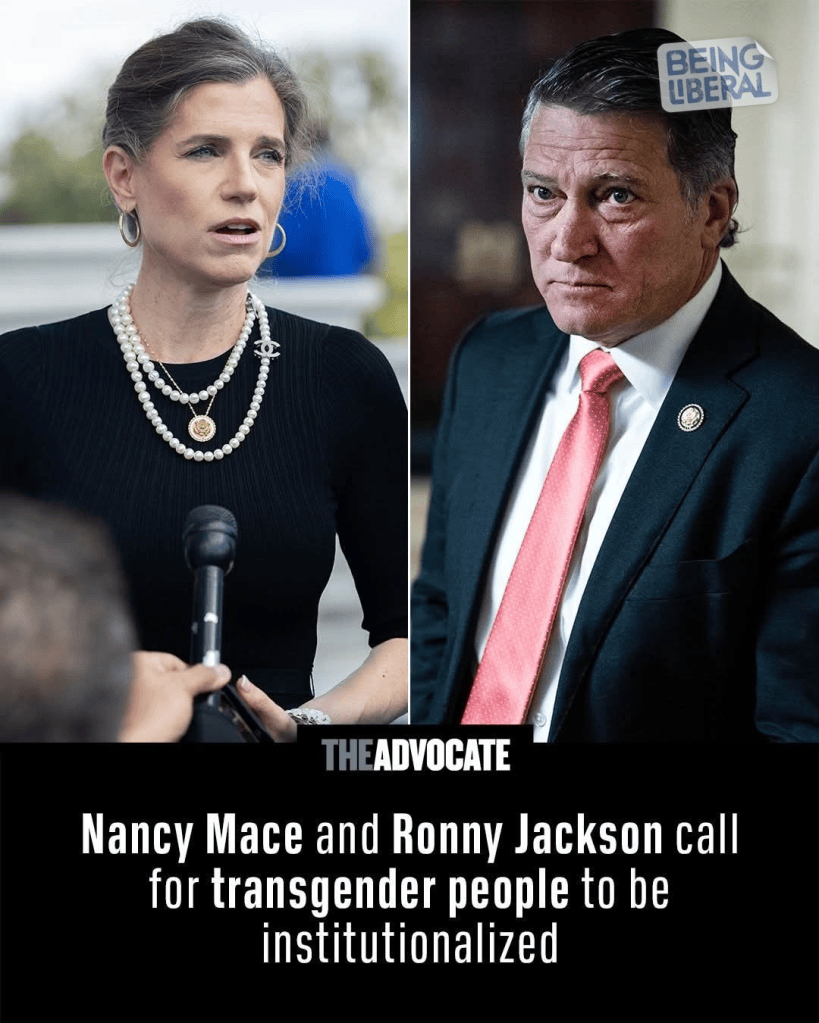
The election of the first trans member of congress, Sarah McBride, was immediately met with a trans bathroom ban on all restrooms on the House side of the Capitol complex. The resolution was introduced by Nancy Mace and supported by House Speaker and former Alliance Defending Freedom attorney Mike Johnson. Mace posted anti-trans slurs on X following a bathroom sit-in at the Capitol in protest of the bathroom ban. The protesters were arrested and taken to the Capitol Police station; Mace then posted a video showing her outside the stations saying, “Some tr——s got arrested protesting my ban.” She then began reading them their Miranda rights along with demeaning commentary about the protesters.

On Dec. 4 the Supreme Court heard a challenge to the Tennessee ban on gender-affirming care for minors. Over 20 anti-LGBTQ+ and antigovernment groups filed amicus briefs in support of the ban, including Gays Against Groomers (GAG), American College of Pediatricians (ACPeds), American Family Association (AFA), Family Research Council (FRC) and Alliance Defending Freedom (ADF). Groups and individuals associated with a network of anti-LGBTQ+ pseudoscience purveyors filed another 10% of the amici opposing gender-affirming healthcare.

What’s Ahead

States will continue to be labs for experimenting with anti-LGBTQ+ public policy. The legislative early filing period in Texas shows 32 anti-trans bills already filed for the 2025 legislative session. This year will show a continued pressure on erasing trans people from public life. With Donald Trump’s re-election, federal civil rights enforcement litigation will likely swing against LGBTQ+ inclusion.

Authors of Project 2025 are being tapped as cabinet picks for the second Trump administration. Project 2025 is an authoritarian and theocratic road map, and anti-trans scapegoating makes up key policy recommendations.

Background

Anti-LGBTQ+ groups in the United States oppose LGBTQ+ rights but also generally support heterosexism, an ideology that assumes heterosexuality is the only “normal” sexuality, and/or cisnormativity, an ideology that assumes one’s gender identity always matches the sex one was assigned at birth. Anti-LGBTQ+ groups primarily consist of Christian Right groups but also include such organizations as the National Association for Research and Therapy of Homosexuality (NARTH) that purport to be scientific. Anti-LGBTQ+ groups in America have employed a variety of strategies in their efforts to oppose LGBTQ+ rights or support heterosexism and/or cisnormativity, including engaging in the crudest type of name-calling.

Anti-LGBTQ+ groups on the SPLC hate list often link being LGBTQ+ inherently to criminal behavior; claim that the marriage equality and LGBTQ+ people in general are dangers to children and families; contend that being LGBTQ+ itself is dangerous and support the criminalization of LGBTQ+ people and transgender identity. These groups also believe in a false conspiracy that LGBTQ+ people seek to destroy Christianity and the whole of society. More recently, hard-line anti-LGBTQ+ groups have promoted their discriminatory laws and policies that limit the rights of LGBTQ people under the guise of religion, blurring the lines between the separation of church and state and discarding anti-discrimination civil rights policies. These same groups have promoted legislative models to push anti-trans legislation into law under a conservative religious assumption that gender can only be understood as either “male” or “female.”

Many leaders and spokespeople of SPLC-designated anti-LGBTQ+ groups have used degrading and derogatory language to describe LGBTQ+ people. Others disseminate disparaging information about LGBTQ+ people that are simply untrue – an approach no different from how white supremacists and nativist extremists propagate lies about African American people and immigrants to make these communities seem like a danger to society. Viewing LGBTQ+ people as unbiblical or simply opposing marriage equality does not qualify an organization to be listed as an anti-LGBTQ+ hate group.

2024 Anti-LGBTQ+ Hate Groups

Map outline of US states with number of anti-lgbtq+ hate groups.

* – Asterisk denotes headquarters.

Abiding Word Baptist Church, Revival Baptist Church
Orange Park, Florida

Advocates Protecting Children
Arlington, Virginia

Alliance Defending Freedom
Scottsdale, Arizona

American College of Pediatricians
Gainesville, Florida

American Family Association
Indianapolis, Indiana
Tupelo, Mississippi *
Franklin, Pennsylvania

American Vision
Powder Springs, Georgia

Americans for Truth About Homosexuality
Columbus, Ohio

ATLAH Media Network
New York, New York

California Family Council
Fresno, California

The Campus Ministry USA
Terre Haute, Indiana

Center for Christian Virtue
Columbus, Ohio

Center for Family and Human Rights (C-FAM)
New York, New York*
Washington, D.C.

Chalcedon Foundation
Vallecito, California

Child and Parental Rights Campaign
Johns Creek, Georgia

Church Militant/St. Michael’s Media
Ferndale, Michigan

Concerned Christian Citizens
Temple, Texas

D. James Kennedy Ministries
Fort Lauderdale, Florida

Do No Harm
Glen Allen, Virginia

Faith2Action
North Royalton, Ohio

Faithful Word Baptist Church
Tempe, Arizona

Straight Paths Baptist Church
Tucson, Arizona

Family Action Council of Tennessee
Franklin, Tennessee

The Family Foundation of Virginia
Richmond, Virginia

Family Policy Alliance
Colorado Springs, Colorado

Family Research Council
Washington, D.C.

Family Research Institute
Colorado Springs, Colorado

Family Watch International
Gilbert, Arizona

First Works Baptist Church
Anaheim, California

Florida Family Voice
Orlando, Florida

Focus on the Family
Colorado Springs, Colorado

Frontline Policy Council
Atlanta, Georgia

Gays Against Groomers
Fountain Hills, Arizona
California
Georgia
Kansas City, Missouri
Monroe, North Carolina
Vancouver, Washington
Milwaukee, Wisconsin*

Generations
Elizabeth, Colorado

Genspect
Chicago, Illinois

Heterosexuals Organized for a Moral Environment (H.O.M.E.)
Downers Grove, Illinois

Illinois Family Institute
Tinley Park, Illinois

Liberty Baptist Church
Rock Falls, Illinois

Liberty Counsel
Orlando, Florida

Louisiana Family Forum
Baton Rouge, Louisiana

MassResistance
Torrance, California
Pocatello, Idaho
Idaho
Waltham, Massachusetts*
New Jersey
Fort Worth, Texas
Houston, Texas
Kenosha, Wisconsin
Gilette, Wyoming
Lander, Wyoming

Massachusetts Family Institute
Wakefield, Massachusetts

Mission: America
Columbus, Ohio

Montana Family Foundation
Laurel, Montana

Pacific Justice Institute
Sacramento, California
Santa Ana, California
Miami, Florida
Mississippi
Reno, Nevada
Salem, Oregon
Seattle, Washington

Partners for Ethical Care
Chicago, Illinois

Pass the Salt Ministries
Hebron, Ohio

Pennsylvania Family Institute
Harrisburg, Pennsylvania

Pilgrims Covenant Church
Monroe, Wisconsin

The Pray In Jesus Name Project
Colorado Springs, Colorado

Probe Ministries
Plano, Texas

Public Advocate of the United States
Merrifield, Virginia

Revival Baptist Church
Clermont, Florida

Ruth Institute
Lake Charles, Louisiana

Save California
Sacramento, California

Scott Lively Ministries
Springfield, Massachusetts

Society for Evidence-Based Gender Medicine
Twin Falls, Idaho

Stedfast Baptist Church
Oklahoma City, Oklahoma
Cedar Hills, Texas *

Strong Hold Baptist Church
Norcross, Georgia

Sure Foundation Baptist Church
Indianapolis, Indiana
Vancouver, Washington*
Seattle, Washington
Spokane Valley, Washington

Them Before Us
Seattle, Washington

Tom Brown Ministries
El Paso, Texas

True Light Pentecost Church
Spartanburg, South Carolina

United Families International
Gilbert, Arizona

Verity Baptist Church
Sacramento, California

Warriors for Christ
Mount Juliet, Tennessee

Westboro Baptist Church
Topeka, Kansas

World Congress of Families/International Organization for the Family
Rockford, Illinois

Perkins Celebrates SCOTUS Ruling On Ex-Gay Torture Because “God Created” All People To Be Heterosexuals

Remember a couple of things as you read this below.  First there is nothing wrong with being LGBTQ+ and the feelings associated with those letters.  Second most children are desperate to fit in to the majority, to be “normal”.  The country was well on the way to reassuring these kids / adults that those feelings were normal and OK.  That the child was not damaged not an abomination to god, and did not need to be fixed.  Then the right wing religious hate machine managed to pass don’t say gay laws, bathroom bills, and “lets make those who are not straight or cis be attacked outcasts again” laws. 

There are two errors not really mentioned here. Minors who are going to these “religious anti-LGBTQ+ be straight cis only” therapest  / religious leaders are normally forced there by parents who have been convinced by religious leaders in their church that their child is damaged and needs to be fixed as they are sinning just for feeling as they do and so will be going to hell.  (Side note Jesus never said anything like that.  I remember being told that I was “acting gay / doing gay things” because I liked sinning.  To which I replied, You have it backwards.  I was born gay and I like doing / being gay and so I don’t care that it is sinning to you.)  The child is often told this to the point where even if they don’t fully hate themselves they are willing to do anything their parents want to “be normal” or get their parents off their backsides about it. And often the child is threatened with being thrown out of the home if they don’t go to conversion therapy.  And then the religious therapist reinforces the message that they are damaged, broken, that they cannot be as they are but must be fixed, must be healed of the sin / feelings.  Every major medical association has reviewed and studied conversion therapy and they conclude it is harmful, has no basis in science and those kids who go through it are far more likely to try to end their lives  so they recommend helping young people to accept themselves and their feelings except for the minor one started by a religious group that has rejected all the studies and findings for the religious belief that god wouldn’t create anyone that way and because we are not that so those people / kids that feel that way must be forced to change to make them and their god happy.  

There are facts, and then there are religious beliefs that disregard those facts.  The fact is that the data and medical studies show that helping non-straight non-cis children accept that they are normal also shows that gender afirming care is the most beneficial way to help young people who are LGBTQ+ and struggling with the idea of wanting to be “normal” or like the other students are.  I did not want to be gay as a kid growing up. I knew my attraction perhaps sooner than most kids due to my childhood situation. But all the time growing up I heard about how bad and horrible people who had the feelings I did were and how doing what I was being forced to do made me the worst possible human.  I was attacked at school even though I was not out but some thought I was different and that was enough.  When I had to join the church to get to leave my abusive home to get to safety I heard constantly how bad / sinfull / an abomination I and people like me were to god who wanted mankind to wipe me out… wait why does god need mankind to do that, especially white Christian men to do that, can’t he just stop making  gay people with out a demon in them? 

At my church school a lot of the boys were flirting with same sex attractions as they were horny teen boys separated from girls. Similar to the situation I found in the military where I had a group of “straight” guys asking me to go on passes with them.  And it was very fun, but they always claimed not to be able to remember what happened on those trips.  But each of those kids and some of those adults I had consensual fun with blamed themselves for failing god and failing to be normal.  I had one really cute fun guy who I would go on passes with who couldn’t wait to get into the hotel room to have sex.  And it was not just one way either.  He received as he gave and what he enjoyed he returned if you catch my trying not to be too explicit. But that was the same with all the guys, they were not hung up on straight norms while in a hotel room with me.  But this one guy would always on the way back to base tell me we couldn’t do that again.  It was wrong.  It was something we shouldn’t do.  I did not argue.  But 3 weeks or a month later he was begging me to go on a four day pass with him.   

My point was this guy was 18 / 19 like me.  I had already long accepted who I was and how I felt. He had taken the be normal message to heart.  He could have used therapy to accept his feelings and needs.  But the one thing he did not need and would have been harmful was conversion therapy. That guy was with me in Germany, after a wonderful weekend he again said we couldn’t do that again,  He got married and it lasted a year, then he got divorced.  I lost touch with him.  But lives were harmed because he just couldn’t face he was gay, couldn’t tell his religious parents he was gay, and would have been placed in conversion therapy if his parents had known as a teen he struggled with same sex attraction and was not straight. Hugs


Perkins Celebrates SCOTUS Ruling On Ex-Gay Torture Because “God Created” All People To Be Heterosexuals

From the Family Research Council’s website:

The Supreme Court on Tuesday delivered a major win for the free speech rights of counselors and therapists, ruling in an 8-1 decision that a Colorado law prohibiting licensed counselors from engaging in talk therapy to help a person “reduce or eliminate unwanted sexual attractions, change sexual behaviors, or grow in the experience of harmony with [their] bod[ies]” unconstitutionally violated the First Amendment right to freedom of speech.

FRC President Tony Perkins called the decision “A Supreme Court win for free speech and biological reality.”

“I’m encouraged to see the muzzle removed from therapists seeking to help willing patients come to terms with, and be at peace with, how God created them,” reflected Perkins in a statement to The Washington Stand.

“The Left is using the levers of government to block families and individuals seeking help. Under Colorado law, a girl could legally seek a therapist’s help to change her gender but could not seek help from that same therapist to align her identity with her biological sex. Where is the fairness or logic in that? I commend the court for striking down this deeply invasive and unjust law.”

Read the full article. In 2013, Exodus International – then the nation’s largest ex-gay group – disbanded. Its longtime president Alan Chambers declared that not one of his group’s thousands of victims had ever become heterosexual.

Conversion therapy is discredited junk science that inflicts harm on LGBTQ youth.The Supreme Court’s decision is disappointing and puts vulnerable kids at risk.

Governor Gavin Newsom (@governor.ca.gov) 2026-03-31T17:09:16.486Z


Medicaid cuts threaten hundreds of hospitals, new report finds


https://www.nbcnews.com/health/health-news/medicaid-cuts-threaten-hundreds-hospitals-new-report-finds-rcna265789?cid=sm_npd_nn_tw_ma&taid=69cb9b30ce3e6b00011e356d&utm_campaign=trueanthem&utm_medium=social&utm_source=twitter


Medicaid cuts threaten hundreds of hospitals, new report finds

Together, the hospitals provide care for nearly 7 million patients across the U.S., according to the analysis.

Senior man sitting on hospital bed

Across the country, hospitals have already warned they may need to lay off staff members or scale back care, including maternity and mental health care, because of Medicaid cuts.Image Source / Getty Images

More than 400 hospitals across the United States are at high risk of closing or cutting services because of the Medicaid cuts in President Donald Trump’s “big, beautiful bill,” according to an analysis from the progressive watchdog group Public Citizen.

The fallout could make it harder for millions of people to get care and put thousands of health care workers’ jobs at risk as hospitals lose a key source of federal funding. Medicaid covers about a fifth of all hospital spending.

The Medicaid cuts come in phases, with more significant changes, including work requirements, in 2027 and limits on how states raise funds in 2028. Overall, the law is expected to reduce federal Medicaid funding by roughly $1 trillion over the next decade.

“We’re seeing hospitals that are already under severe financial strain having to make decisions about how to stay financially solvent,” said Eileen O’Grady, a researcher in Public Citizen’s Congress Watch division and the report’s author. “That has pretty clear implications for people who live in that community. It also has ripple effects on other hospitals in those communities.”

The analysis draws on hospital financial data from the Centers for Medicare and Medicaid Services from 2022 through 2024, covering about 95% of U.S. hospitals. The group defined at-risk hospitals as those in which Medicaid and other low-income government programs made up at least 20% of revenue and that have been operating at a loss in recent years.

The report doesn’t estimate when hospitals could close or cut services.

“Closure is the worst-case scenario, but it also doesn’t preclude hospitals from having to make really tough decisions about cutting services that might be essential to those communities but are just no longer financially viable,” O’Grady said.

Across the country, hospitals have already made statements warning they may need to lay off staff or scale back care, including maternity and mental health care, because of the Medicaid cuts.

For many patients, hospitals are the last place to turn when there are few or no other options for care.

“When hospitals close, patients have less access to the care that they need,” said Gideon Lukens, director of research and data analysis on the health policy team at the Center on Budget and Policy Priorities, a nonpartisan research group. “They have to travel further or wait longer in other hospitals that become overcrowded. That additional time can be the difference between success and failure of time-sensitive, potentially life-saving treatments.”

The closures also add strain to the hospitals that take on the extra patients. O’Grady said doctors end up having “less patience, less time, less capacity to provide the highest quality care.”

“It can be very dangerous for hospitals to be under this kind of strain,” she said.

The analysis found a total of 446 at-risk hospitals, with at least one at-risk hospital in 44 states and Washington, D.C.

About 60% of the at-risk hospitals — 267 facilities — are in urban areas, even as much of the debate around Medicaid cuts has focused on rural hospitals. Black and Latino people stand to be the most affected by the cuts.

The hospitals span both Democratic and Republican-led states, though the states with the largest number of at-risk hospitals are California, New York, Illinois and Washington.

Republicans also represent several congressional districts with the highest number of at-risk hospitals. House Republicans who voted for the Medicaid cuts have 196 at-risk hospitals in their districts, while Senate Republicans — all of whom back the cuts — represent 146 at-risk hospitals in their states, according to the analysis.

The cuts could lead to a worsening crisis, especially for rural hospitals, said Zachary Levinson, the project director of the KFF Project on Hospital Costs.

He said that by his estimates, Trump’s law sets aside $50 billion to support rural communities, but could reduce federal Medicaid spending in rural areas by far more — about $137 billion over a decade.

James Jackson, the CEO of Alameda Health System in Oakland, California, said the Medicaid cuts represent an “existential threat.”
Alameda Health System, which gets 60% of its revenue from Medicaid payments, announced in December that it would lay off nearly 300 employees and lose more than $100 million annually by 2030. (The health network was not included on Public Citizen’s at-risk list, though the report notes its financial troubles.)

The layoffs, set to take effect in March, have since been delayed.

Proposed cuts included mental health services, care for patients with chronic conditions and an ambulatory plastic surgery program. Jackson said closing hospitals is not on the table, but the system has continued to look at scaling back services.

“I don’t think the impact is going to be a positive one,” he said. “We are often the provider of last recourse, so if we’re not able to provide a service, there will be a delay in receiving care at one of the other systems in the area or they may not provide it at all.”


Trinity Health, a Michigan-based hospital system with facilities in other states, said it’s projected to lose $1.5 billion due to “recent and future government policy changes.”

In January, it said it was laying off 10.5% of its billing staff. One of its hospitals, St. Mary’s Sacred Heart Hospital in rural northeast Georgia, announced last October it was closing its maternity unit.

In a statement, a Trinity Health spokesperson shared a previous statement that said in part that “more reductions” are being considered by the federal government and it’s “not possible to simply absorb such a significant financial impact without making thoughtful, forward-thinking changes.”