
Tag: Health
Some what like what I am dealing with

Things That Matter
‘Like walking through time’: as glaciers retreat, new worlds are being created in their wake
As Swiss glaciers melt at an ever-faster rate, new species move in and flourish, but entire ecosystems and an alpine culture can be lost
Photographs by Nicholas JR White By Katherine Hill
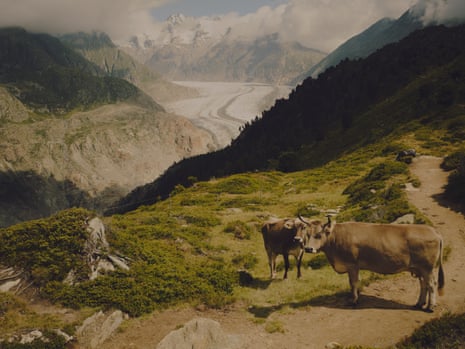
From the slopes behind the village of Ernen, it is possible to see the gouge where the Fiesch glacier once tumbled towards the valley in the Bernese Alps. The curved finger of ice, rumpled like tissue, cuts between high buttresses of granite and gneiss. Now it has melted out of sight.
People here once feared the monstrous ice streams, describing them as devils, but now they dread their disappearance. Like other glaciers in the Alps and globally, the Fiesch is melting at ever-increasing rates. More than ice is lost when the giants disappear: cultures, societies and entire ecosystems are braided around the glaciers.
The neighbouring Great Aletsch, like the Fiesch, flows from the high plateau between the peaks of the Jungfrau-Aletsch, a Unesco region in the Swiss canton of Valais and Europe’s longest glacier. It is receding at a rate of more than 50 metres a year, but from the cable car above it remains a mighty sight.
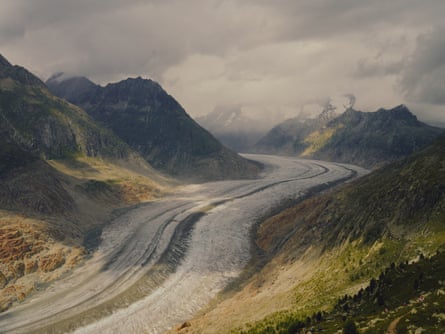
Clouds scud across the sky and shafts of light marble the ice. On the rocky slopes leading down to the glacier from the ridge, there are pools of aquamarine brilliance, the ground speckled with startling alpine flowers. The ice feels alive, with waterfalls plunging into deep crevasses and rocks shimmering in the sun.
“It’s just so diverse, these harsh mountains and ice, and up the ridge, a totally different habitat,” says Maurus Bamert, director of the environmental education centre Pro Natura Aletsch. “This is really special.”
Participants now pray for the glacier not to vanish, but they once prayed for it to retreat and stop swallowing their meadows
Many of the living worlds in the ice and snow are not visible to the human eye. “You don’t expect a living organism on the ice,” Bamert says. But there is a rich ice-loving biotic community and surprising biodiversity that thrives in this frozen landscape.
Springtails or “glacier fleas” survive on the snow’s crust – this year alone, five new species were identified in the European Alps. But there are also algae, bacteria, fungi and ice worms, as well as spiders and beetles, which feed on springtails.
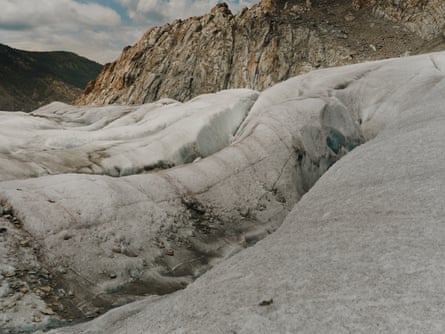
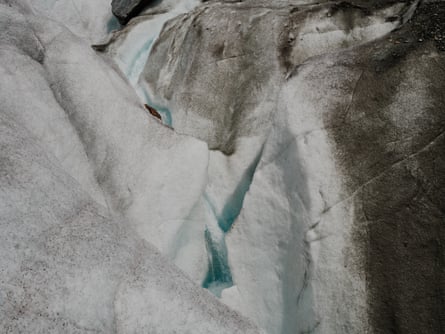
As ice melts, this landscape and its inhabitants, human and non-human, are all affected. Along the glacier’s path, ice turns to water and the rushing sound of the river becomes audible. In 1859, at the greatest extent of its thickness, the glacier reached 200 metres higher than it does now.
The landscape revealed by the melt is mostly bare rock, riven with fissures that spill across the hillside. Jasmine Noti from Aletsch Arena, the regional tourism organisation, says these widen each year, new cracks appear and routes are redesigned. The ice acts like a massive buttress, gluing the hillside together, and as it melts, slippage and instability increase.
As the edges of the glacial valley descend into the cool cover of the Aletschwald forest, “it’s like walking through time”, says Bamert. On the higher slopes, older pines dominate, but lower down the trees thin, and the pioneer species of larch and birch cover the hillside: early signs of newer postglacial reforestation.
It only takes about five to 10 years for plants to colonise the land. Further down yellow saxifrage and mountain sorrel cling to the rocks. All this was once under ice sheets, but the succession of growth tells a story of glacial retreat, historic and recent.
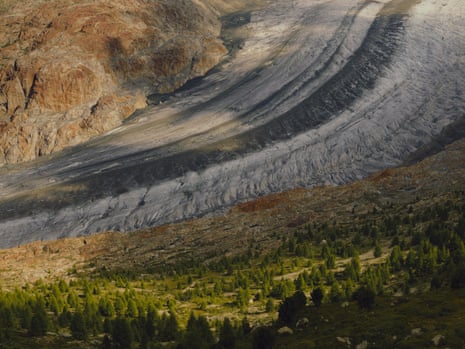
Tom Battin, professor of environmental sciences at Lausanne’s Swiss Federal Institute of Technology, says glacial margins are a transitional landscape where ecosystems are vanishing and appearing. An expert on the microbiology of stream ecosystems, Battin led a multiyear project on vanishing glaciers and what is lost with them.
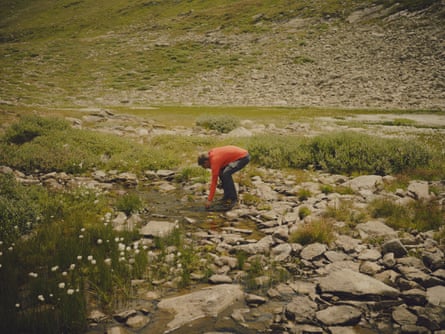
As he walks down to the Märjelensee, one of the Aletsch’s glacial lakes, this transition is readily apparent. In this mountain hollow, there was once an expansive lake with ice cliffs around its rim. Today, the pools of water are lit by patchy sun and rain, fish jumping and bog cotton dancing in summer light.
Battin points to aquatic mosses. These, he says, could never live in glacial streams which are fast flowing and extreme. Wading into the water, he searches for the golden-brown blooms of a particular alga, Hydrurus foetidus, which is a keystone species that thrives in glacier-fed rivers, fixing carbon dioxide into organic matter.
Lee Brown, professor of aquatic sciences at Leeds University, has studied invertebrate communities in glacier-fed rivers around the world, and says we do not yet know the full importance of those that are likely to disappear.
“It’s a challenge to communicate,” he says, pointing out the crucial roles that tiny organisms have in the “trophic networks” – the nutrients flowing between organisms within an ecosystem – that connect ice, rivers, land and oceans. Biofilms, or communities of micro-organisms that stick to the surface of ice and rivers, filter the water. Glaciers wash down vital nutrients from the mountain, but their rivers may run dry when the ice melts.
Without this biodiversity which you can’t see, all that other biodiversity that people care about might disappear
Tom Battin
There are whole worlds in and around the ice, poorly known and understood until recently. Mountains are like high islands, Battin says, with unique ecosystems and endemic species.
“Without this biodiversity which you can’t see,” he says, “all that other biodiversity that people care about might disappear.”
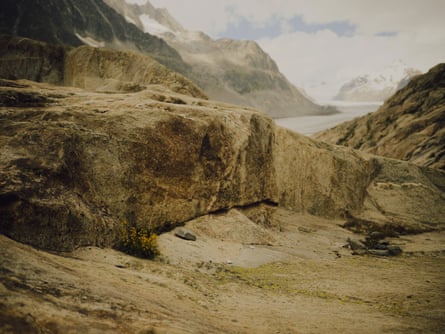
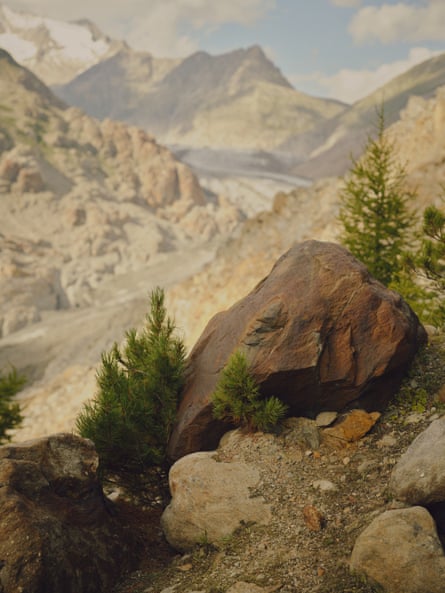
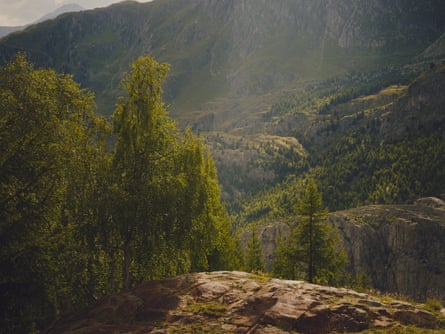
Francesco Ficetola is a professor of environmental science at Milan University who leads the PrioritIce project examining emerging ecosystems in glacial forelands, or land exposed by the retreating ice. As it melts, he says, “there’s a powerful combined effort of organisms” to create new and increasingly complex habitats.
As something is gained, however, much is lost. Cold-climate specialists such as ptarmigan and Alpine ibex are retreating up mountains, their habitats becoming ever smaller. The Swiss pines, on whose seeds nutcracker birds feed, are also moving upwards. Specialist alpine flowers and other pioneer plants at glacier edges are threatened, pushed out by the succession of forests and meadows.
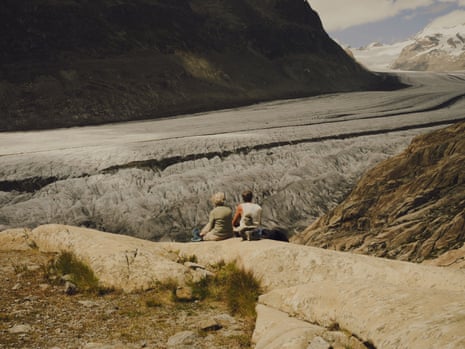
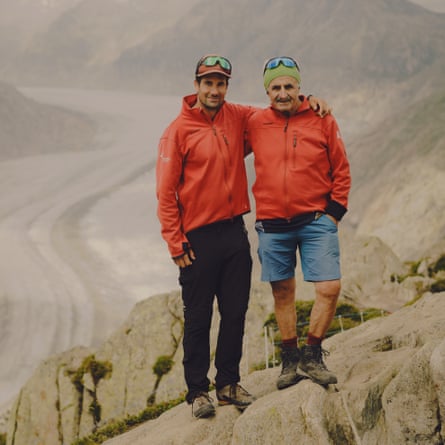
For the people of this region, too, life alongside the glacier is changing. The guides Martin Nellen and his son, Dominik, have lived with the Aletsch glacier all their life. Martin jokes that the older he gets, the farther he must climb from the ridge to the glacial valley as the ice melts. “It’s rubbish,” he says.
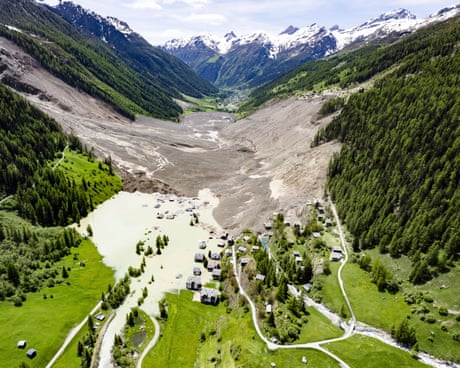
Martin was instrumental in raising funds for information boards, which he also helped design, that explain the life story of the Aletsch. Dominik says they feel “sad, of course” about the glacier’s retreat, but they are also proud to educate people about glaciers and the distinctive landscape of snow-covered peaks and lush pastures.
Every year at 6am on 31 July people gather for a procession that winds from the church in Fiesch to the Mariahilf chapel in the forest above. Participants now pray for the glacier not to vanish, but they once prayed for it to retreat and stop swallowing their meadows and grazing land.
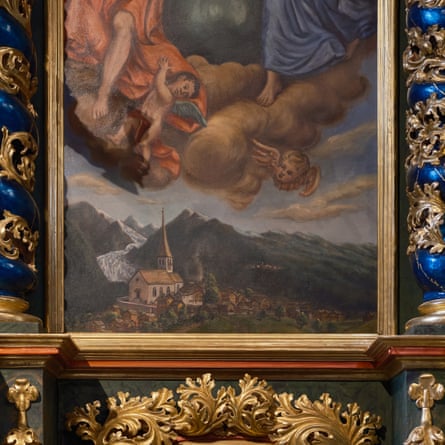
Divine assistance was first requested in 1652. Rosa, one of those gathered for the pilgrimage, remembers the deep snow and cold of past years. “I have been going since I was five,” she says. “There used to be more people.”
This procession is special for the reversal of its request, but similar stories exist across the Alps. They are a reminder that something intangible is lost as glaciers disappear. The great rivers of ice have shaped the imaginations of inhabitants and visitors. Not everyone sees the glacier through the lens of faith, but many visitors – whether praying, guiding or educating – worry what the future holds.
At a place called Baseflie, a cross still stands, erected in 1818 to banish the Aletsch glacier when it threatened pastures. Today, the wooden silhouette against a blue sky seems like a memorial to all that may be lost as glaciers vanish.
Find more age of extinction coverage here, and follow the biodiversity reporters Phoebe Weston and Patrick Greenfield in the Guardian app for more nature coverage
The Trump Slump Is Real
Both Ron and I worked ICUs and we have seen people who had strokes. I had a small stroke in early 2023. Ron and I agree that tRump has suffered a stroke and that was why he was out of sight for a week and why he has repeated bruising on his hand. Hugs
Reblogging A Reblog-
Yes, it will be 2 more clicks. Trust me, you’ll be better for the clicking!
16-year-old Florida boy held in Israeli prison
My Last Days in Reality
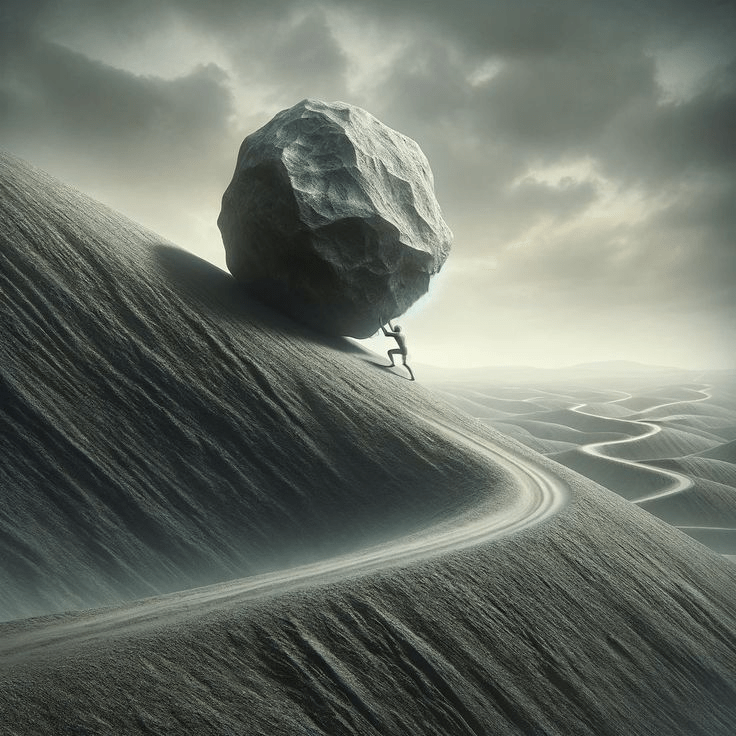
I’m not sure how to begin this tale. It seems like a fruitless endeavor, a constant push that yields little result but loss. I’ve watched the company I came to as an opportunity for a new start some five years ago slowly dwindle through decreasing ups and increasing downs to the point that I find myself frustrated with an inability to keep up with the disappointments.
These images I use are meant to be hyperbolic, nonetheless, they do well to express this lament, my own and others in this country, that I’m losing the fight.
The past weeks have seen our shop lose half of our workers due to layoffs, and more to leaving the fight to better opportunities elsewhere even as I am also dealing with reduced pay.


I thought I would learn so much at this job, and I have – though not quite the way I’d hoped, and not the things I’d hoped. And, now… Now I find that I am faced with a decision to fight the good fight and do what I can to save this floundering vessel, or am I committing slow suicide riding a sinking ship.
I am faced with the question of who is owed my loyalty? When the stone reaches the tipping point, do I push harder or do I get out of the impact zone? Our jobs are more than a way to put beans on the table; it is our identity, our productivity, our impetus to face the day and the very slings and arrows of life. I’ve sacrificed blood, sweat, tears, agility, health and a great deal of my sanity. Now I wonder if I’m too old, too broken down and jaded to begin anew.


These are the thoughts that have ravaged my spirit these past weeks. Some days reality sucks, the sky is dark and storms rage, but does that define my life or does it just describe my moment?
So, now, here I sit. A generally frugal nature and a number of blessings in my life has allowed me to realize some things: I’m not going to starve, I’m not going to be homeless, I’m just going to have a bit more time. The horror of being forced to deal with many of the things I just didn’t have the time or energy for earlier!!! So, no, I’m not worried for me. And, if I am so fortunate to ride out this storm I will be better for the opportunity to care for the things I’ve allowed to wallow in neglect. But, I very much do worry for those who will truly suffer under our Dear Leader.
-randy
‘I Look Like an Expert’: The Sexologist Testifying Against Trans Youth Care [WATCH]
This article is long but worth the read. This expert refuses to talk to trans people and has never treated a trans person. His knowledge is from what he believes to be true color by his biases, so he also ignores the views of the majority of medical societies opinions and views. The so called expert refuses to accept that anyone at any age felt they were trans without someone putting the idea in their head someway. To him it is not natural so it can’t exist. He thinks being gay is wanting to be the other sex, so a gay male wants to be female and he questions if they can be any happier as the other sex. And he is a gay man himself. This is who the anti-trans Christian haters hire to lie about trans issues so that they have cover to make bans on needed gender-affirming medical care. Plus he is a real prima donna wanting the center stage and being the star. Hugs
No. See? It’s not either one. The tiny fraction of repris- One in tens of thousands who, at this point, kind of essentially born gay, but so gay, they really are happier living as the other sex. Won’t know it until later in life, but they exist.
No 8-year-old ever said that. Eight-year-olds repeat what they’re told, and what they are getting told are from activists. It’s not credible to say that all of this existed, this was so extreme and obvious, and nobody ever noticed it, including the experts doing the research on it who could have gone either way. But everybody all of a sudden noticed it at exactly the same time when smartphones got invented and hit 15 percent. That’s just a coincidence that the demographic who is doing this the most are exactly the same demographic most given to other social contagion issues. Usually young adolescent females, the same group most likely to report suicidality. Not actual suicide, but suicidality. Most likely to report eating disorders. Most likely to dislike their bodies. All sheer coincidence!
But what about so there’s 8-year-olds can’t say that? Sure, I understand that argument. But there’s 14-year-olds, 17-year-olds, 25-year-olds, 40-year-olds. There are people of every single age.
JC:Find me one who didn’t get it from the website.
SM: Who didn’t get being transgender from a website?
JC: Ah ah ah.The “my rights, you’re hurting us,” the “suicide.” Verbatim they are all saying the same thing. None of these are their words. These are words that they’re repeating because of everybody else in their social group.
SM: I want to be clear, because I want to make sure we characterize everything accurately. Do you believe that all transgender people are trans due to social contagion?
JC: No.
SM:. So you believe a lot of people are born trans and feel that way from birth?
JC:
SM: But you said one in 10,000—
JC:We also have a cluster who, until they’re in their 40s or 50s, are just turned on by the idea of being female. They’re attracted to women. They’re not gay. They’re always men. So we have one in tens of thousands and one in tens of thousands. And then we have this 5% of the entire population which came out of nowhere when smartphones were invented. They are dominating the conversation. They, except for one in ten thousand, they are not trans. They just hate their own bodies and here’s a narrative that’s close enough that says, “It’s not me, it’s everybody else on the planet and somebody else, no effort to me, I just have to lie there, the doctor will come and fix me. It’s not that I have issues to work on because I hate my body.” Taking the easy way out.
———————————————————————————————————————————–
https://www.unclosetedmedia.com/p/i-look-like-an-expert-the-sexologist
James Cantor, who has never treated a trans kid, has testified in dozens of cases concerning gender-affirming care for minors in the U.S.
About The Foreign Aid Funding Case-
The D.C. Circuit’s realpolitik orders in the foreign aid funding case by Chris Geidner
What happened? Law Dork digs in. Read on Substack
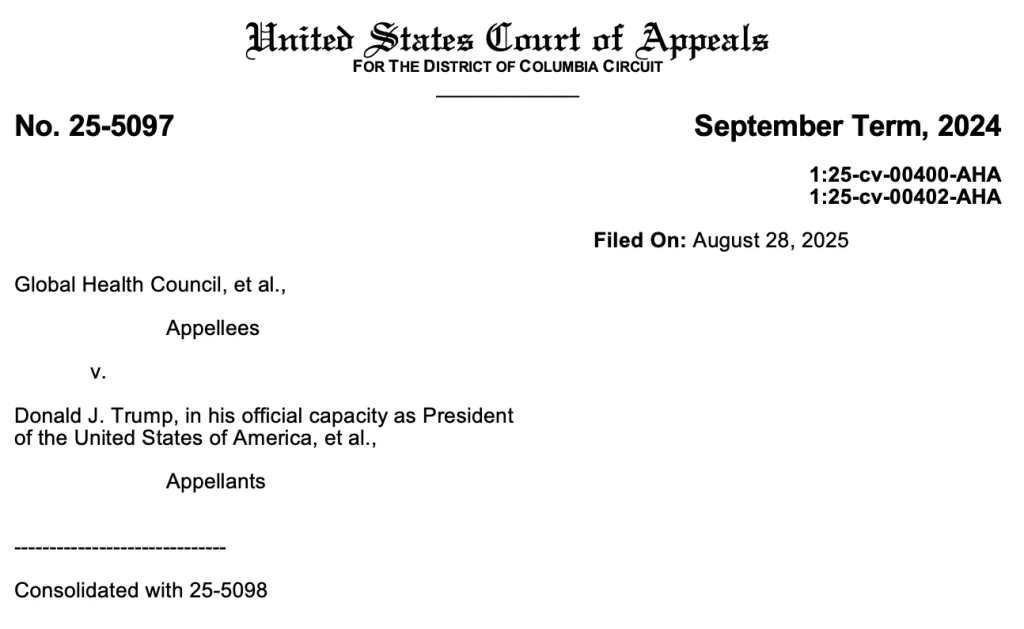
A federal appeals court on Thursday evening took steps that Democratic appointees wrote could represent that best possible way of helping organizations funded by foreign aid payments to get money before a quickly approaching September 30 deadline.
It was the latest unusual sets of rulings in a case challenging the Trump administration’s efforts to cut foreign aid funding — raising the “impoundment” question about the president’s ability not to spend money that Congress has, with its control over appropriations, directed the federal government to spend — that has been up to the U.S. Supreme Court already twice this year.
On Thursday evening over the course of 30 minutes, the U.S. Court of Appeals for the D.C. Circuit took seven actions that ultimately sent the case — technically, a pair of cases — back to the district court, where it is before U.S. District Judge Amir Ali.
It was a stark sign of where we’re at: Judges on the court generally thought of as second only to the Supreme Court taking strategic steps to try to protect people and organizations’ rights due to the ways other branches — and actors within their own branch — are failing to do so. (snip-go read the rest, if you’re interested. It’s very well-written.)
This is a thread on Bluesky. One doesn’t need an account to read there. It’s also an excellent explanation.
This was an extraordinarily shrewd *and* principled resolution by the en banc court, in a case in which the various arguments in the trial court and on appeal were *almost* hopelessly entangled and hard to parse. Of greatest importance are two things: [1]
[image or embed]— Marty Lederman (@martylederman.bsky.social) August 28, 2025 at 7:48 PM
And I got this all on Friday, but was out for a while, so here it is for Saturday mid-morning beverage. https://morningmemo.talkingpointsmemo.com/i/172269056/for-the-legal-nerds –A.
Here’s To Quick Recovery For Scottie
after his first cataract surgery. Eat all the ice cream, Scottie!

Open comments for well wishes, jokes, etc. —
 Scottie's Playtime