Homeland Security Secretary Kristi Noem | Steven Spearie/The State Journal-Register / USA TODAY NETWORK
Rep. Robert Garcia (D-CA) confronted Homeland Security Secretary Kristi Noem about the administration sending a gay man to a prison camp in El Salvador and not even knowing if he’s still alive. Noem said that it wasn’t her problem.
Noem, who has bragged in the past about shooting her dog to death, appeared before the House Homeland Security Committee for a hearing yesterday, where Garcia asked her about Andry Hernandez Romero, a gay hair dresser from Venezuela who came to the U.S. legally to escape anti-LGBTQ+ violence and who was sent to the CECOT camp in El Salvador, which is known for torturing inmates, earlier this year.
The administration, which sent immigrants to the CECOT without letting courts determine if they were in the country illegally or if they had committed any crimes, has refused to try to bring anyone back from the camp.
“Would you commit to just letting his mother know – as a mother-to-mother – if Andry is alive?” Garcia asked Noem. “He was given an asylum appointment by the United States government. We gave him an appointment, we said, Andry, come to the border at this time and claim asylum, he was taken to a foreign prison in El Salvador.”
“His mother just wants to know if he’s alive. Can we check and do a wellness check on him?”
Noem said she doesn’t “know the specifics” of Hernandez Romero’s case but said that since he’s in El Salvador, Garcia should be asking El Salvador’s government about him.
“This isn’t under my jurisdiction,” Noem said.
Garcia reminded her that she said that the Salvadoran prison is a “tool in our toolkit” for fighting crime.
“You and the president have the ability to check that Andry is alive and not being harmed,” he said. “Would you commit into at least looking and asking El Salvador if he is alive?”
“This is a question that is best asked to the president and the government of El Salvador,” Noem responded drily.
Hernandez Romero is a Venezuelan immigrant who trekked to the U.S. and entered legally last year at San Diego. There, he asked for asylum, saying that he was being targeted in Venezuela for being gay and due to his political beliefs. He was held in a CoreCivic detention center, where he was screened by Charles Cross Jr.
“The government had found that his threats against him were credible and that he had a real probability of winning an asylum claim,” his lawyer, Lindsay Toczylowski, said.
In March, he, along with over 200 other immigrants, was taken in shackles to the CECOT camp in El Salvador. Even his lawyer said she didn’t know what happened to him until he was gone and missed a hearing in his immigration case.
In a video from the CECOT, Hernandez Romero could be heard saying, “I’m not a gang member. I’m gay. I’m a stylist,” as he was slapped and had his head shaved.
It was later revealed that the evidence Immigration and Customs Enforcement (ICE) had against Hernandez Romero was his tattoos, which came from a report from the contractor CoreCivic, specifically from former police officer Charles Cross Jr., who lost his job with the Milwaukee police after he drunkenly crashed into a house and allegedly committed fraud. His name was subsequently added to the Brady List, a list of police officers who are considered non-credible for providing legal testimony in Milwaukee County.
Cross claimed that Hernandez Romero had crown tattoos associated with a gang. The tattoos are labeled “Mom” and “Dad” and are common symbols associated with his hometown of Capacho, Venezuela. Capacho is known for its elaborate festival for Three Kings Day, and a childhood friend, Reina Cardenas, told NBC News that it was that festival that awakened Hernandez Romero’s desire to be an artist.
“Andry dedicated his life to arts and culture, and he worked hard to better his craft,” Cardenas said.
Subscribe to the LGBTQ Nation newsletter and be the first to know about the latest headlines shaping LGBTQ+ communities worldwide.
This AG was not elected to any office, he was handpicked and given his job by DeathSantis. Both are Christian nationalist who feel it is great to force their religion on others even as they do not live by their own church doctrines in any way. They seem to feel forcing the public to live by their church doctrines or what ever view they think their god endorses is perfectly fine regardless if others disagree. They are the first to scream the loudest if their rituals or they think their rights to oppress others is interfered with, but they also seem unable to give others the same rights they demand for themselves. Hugs
Florida Attorney General James Uthmeier (R) is urging the Pensacola City Council to shut down a Christmas-themed drag show, which he has deemed “demonic” and “harmful” to children, despite how it is exclusively for adults over the age of 18.
The city’s Saenger Theatre plans to host “A Drag Queen Christmas” on December 23. The website says fans should “expect a fabulous remix of classic Christmas hits, dazzling themed variety performances, and interactive moments to share your Christmas cheer.”
A letter from Uthmeier claimed the show “openly mocks one of the most sacred holidays in the Christian faith” and expressed horror that some of the queens evoke “satanic imagery” in their outfits or characters. He also decried the fact that it will be playing at the same time as the city’s family-centered Winterfest.
“So, while Penscola children are taking pictures with Santa, men dressed as garish women in demonic costumes will be engaged in obscene behavior mere feet away,” he ranted, even though the drag show will take place inside a theater where the children at the festival won’t be able to see it.
The Pensacola city attorney has reportedly refused to cancel the show, saying it would violate the drag show production company’s First Amendment rights and the city’s contract with the theater’s management company.
Uthmeier, however, said the city – which owns the theater – has a legal right to supersede the management company’s decision to put on the show if it deems a performance detrimental to public health or safety. He said the drag show meets this criterion because it will be taking place near children at Winterfest, even though they won’t be able to see it.
“While the First Amendment safeguards freedom of expression, it does not require a city to platform and endorse disgusting, obscene content that denigrates its residents’ religious beliefs,” Uthmeier concluded.
He claimed it may even amount to religious discrimination and could cause legal issues for the city, especially if one of the “deranged performers” were “to expose themselves to the kids” nearby. The preposterous idea that LGBTQ+ people are inherently a danger to children has long been used by the right to fearmonger and stir anti-LGBTQ+ sentiment.
The letter comes after a group of churches in the city launched a campaign to pressure the Pensacola City Council to cancel the drag show. The controversy has caused an uproar in the community, the Pensacola News Journal reported, where pro- and anti-LGBTQ+ residents continue to clash over whether the drag show should be permitted to go on.
At a packed and contentious city council meeting in early October, resident Jermaine Williams called out the hypocrisy of those claiming to oppose the show on religious grounds.
“I mean, we see how y’all vote,” Williams said. “Half of these people that spoke today wouldn’t know Jesus if they stared him in the face.”
Another resident, Stephen McCollum, gushed that drag queens are “more than entertainers.”
“They’re small business owners. They’re advocates and they’re educators who use creativity to uplift others and welcome all. They welcome all, demonstrating that this art form is more than just a performance. It’s a form of connection, and it’s a form of community, and it’s a form of hope.”
Uthmeier has long used his position to vilify and terrorize LGBTQ+ people. Earlier this year, he launched a crusade against a Life Time Fitness in Palm Beach Gardens after discovering that the private business had a trans inclusive policy. State law requires people use facilities aligned with their sex assigned at birth, but that does not apply to private businesses.
Uthmeier, however, claimed otherwise in a letter sent to the gym. He falsely claimed that trans inclusion leads to “assaults, exploitation, and fear” and that he was merely doing this to protect women and girls.
Even after Life Time said it would comply with his demands, Uthmeier posted a video in which he visited the gym in person to make sure they are “not allowing trans women into women’s bathrooms, not in Florida,” and “actually following the law.”
“It appears they are,” he reported to followers, though it’s unclear how he could have confirmed this without major privacy violations of the individuals entering and exiting the locker rooms there.
This past October, Uthmeier also filed a friend-of-the-court brief in support of a parental rights activist who dubiously claims her child’s middle school helped her child secretly transition. She has now petitioned the Supreme Court to take her case.
Uthmeier’s brief claims government officials across the United States “are fundamentally altering the upbringing of children and keeping parents in the dark” with “secret transition” policies.
These policies do not involve schools encouraging students to be trans or transition, but rather to support any students who willingly communicate that their gender identity differs from their sex assigned at birth and to allow the student to choose when to share that private information with their parents. For some students with anti-trans parents, telling them could be dangerous.
Subscribe to the LGBTQ Nation newsletter and be the first to know about the latest headlines shaping LGBTQ+ communities worldwide.
At the national level, the Trump administration cut the LGBTQ youth suicide hotline just weeks after Pride Month, despite a recent study by The Trevor Project finding that 39% of LGBTQ young people seriously considered suicide in the past year, more than 1 in 10 actually did attempt suicide and 90% of queer youth said political attacks on LGBTQ people directly harmed their overall well-being.
While these numbers reveal an urgent crisis, there are silver linings. Last year, 91% of anti-LGBTQ bills were defeated. Countless kids marched in the No Kings protest. Parents are organizing. And allies are popping up in unexpected places.
Photo by Adam Athas
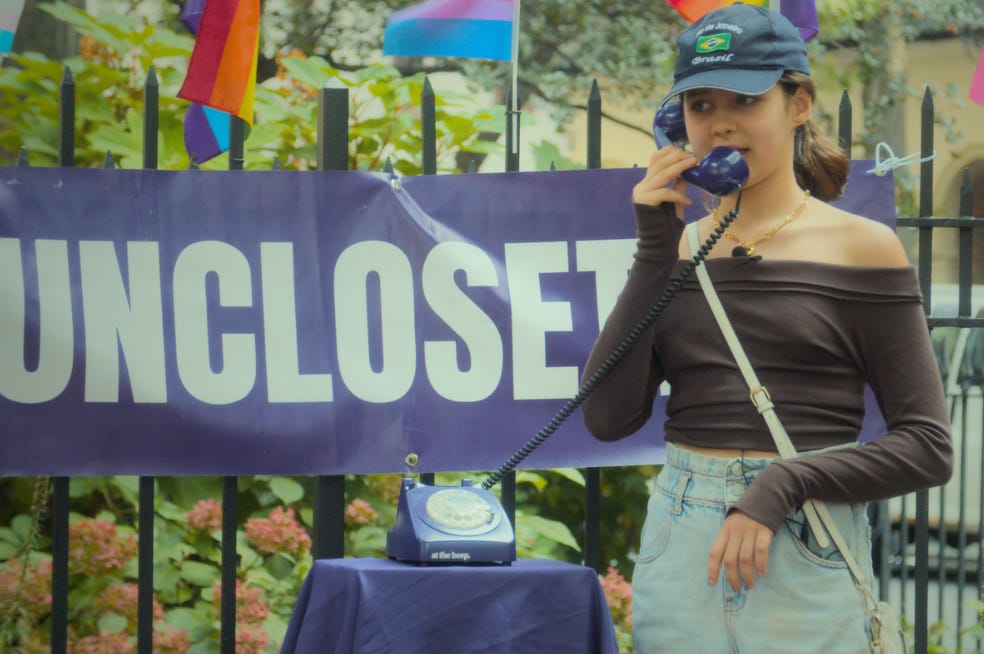
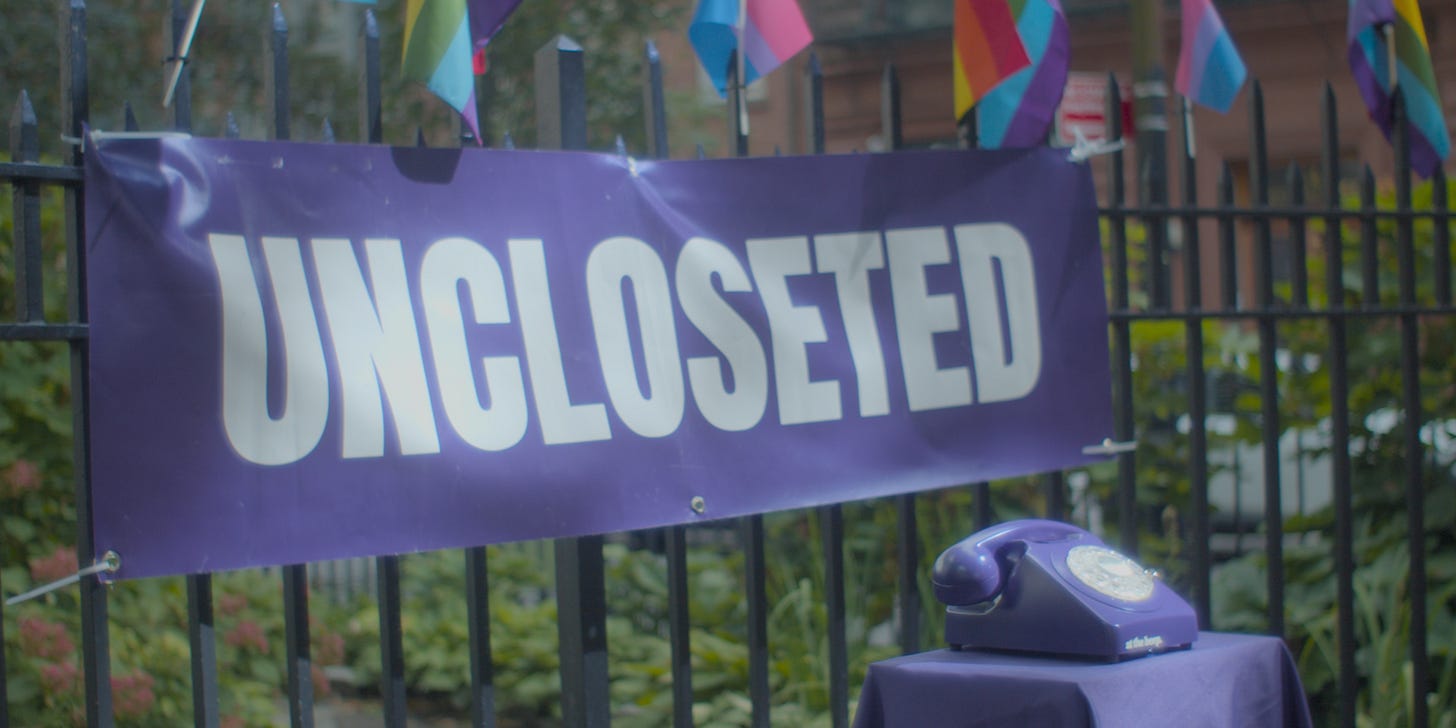
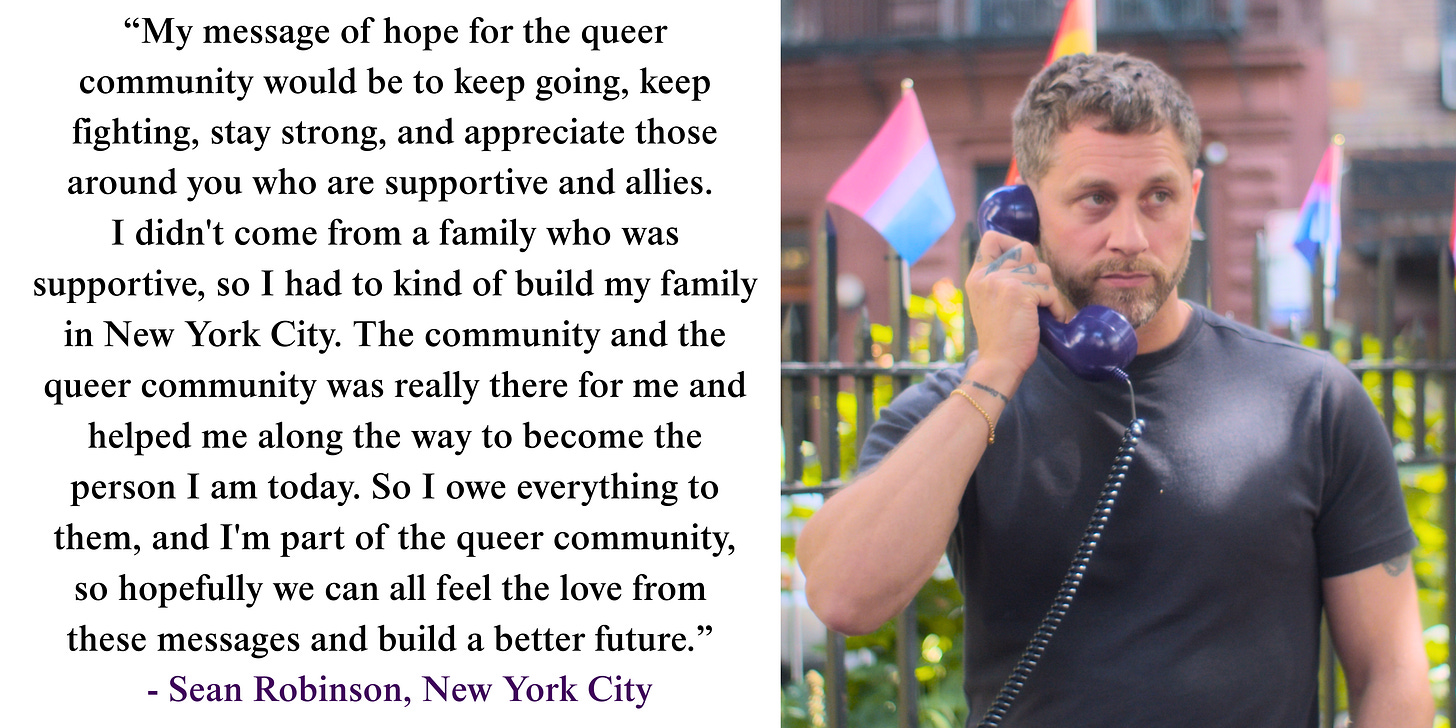
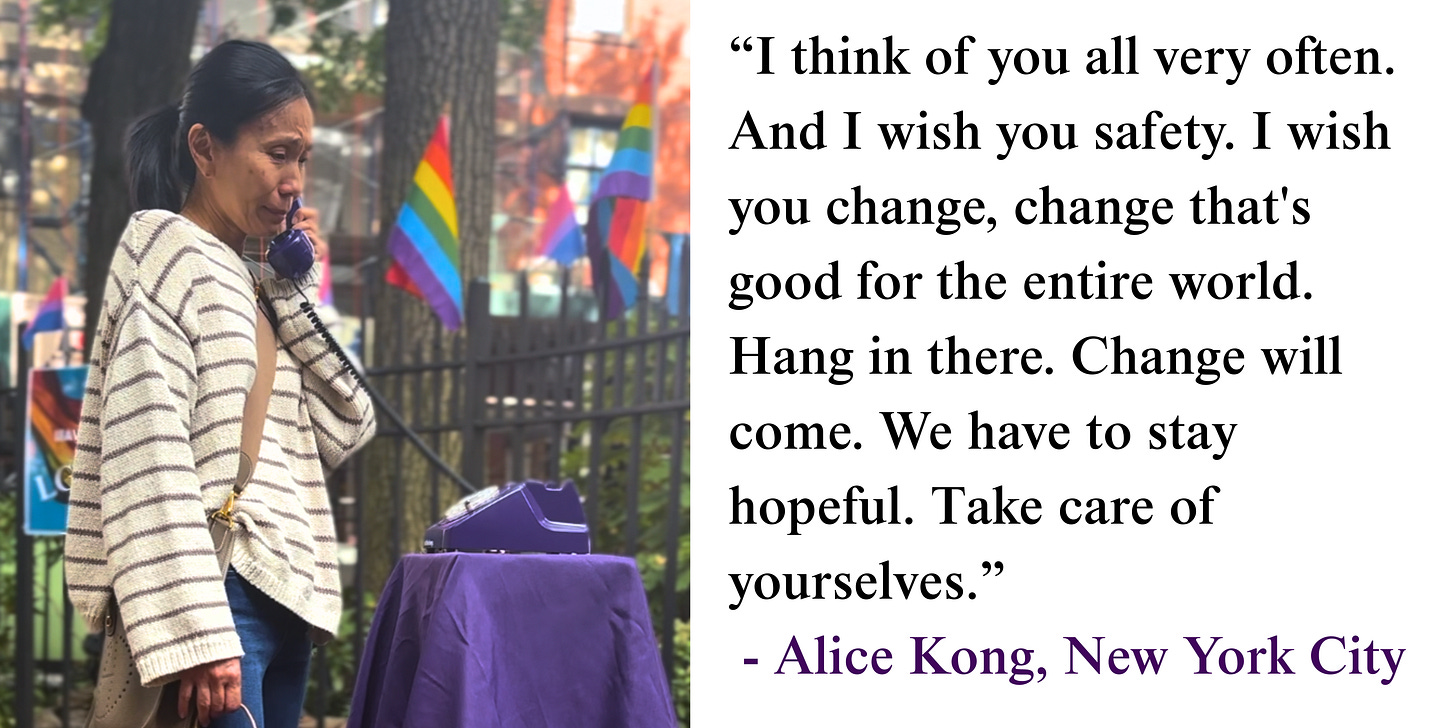
Uncloseted Media has reported on dozens of stories that expose hate. But this holiday season, we decided to pause for a brief moment. In September, we launched a national campaign inviting people across the country to leave messages of hope for LGBTQ youth. The campaign culminated at the historic Stonewall Inn, where we installed a rotary phone and invited visitors to leave voicemails of resilience, positivity and joy for queer kids. Here are just a few of the most powerful messages.
In recent years, the language of parental rights has been used to stigmatize LGBTQ people as threats to children, with GLAAD finding that false “grooming narratives remain a central anti-LGBTQ disinformation tactic.
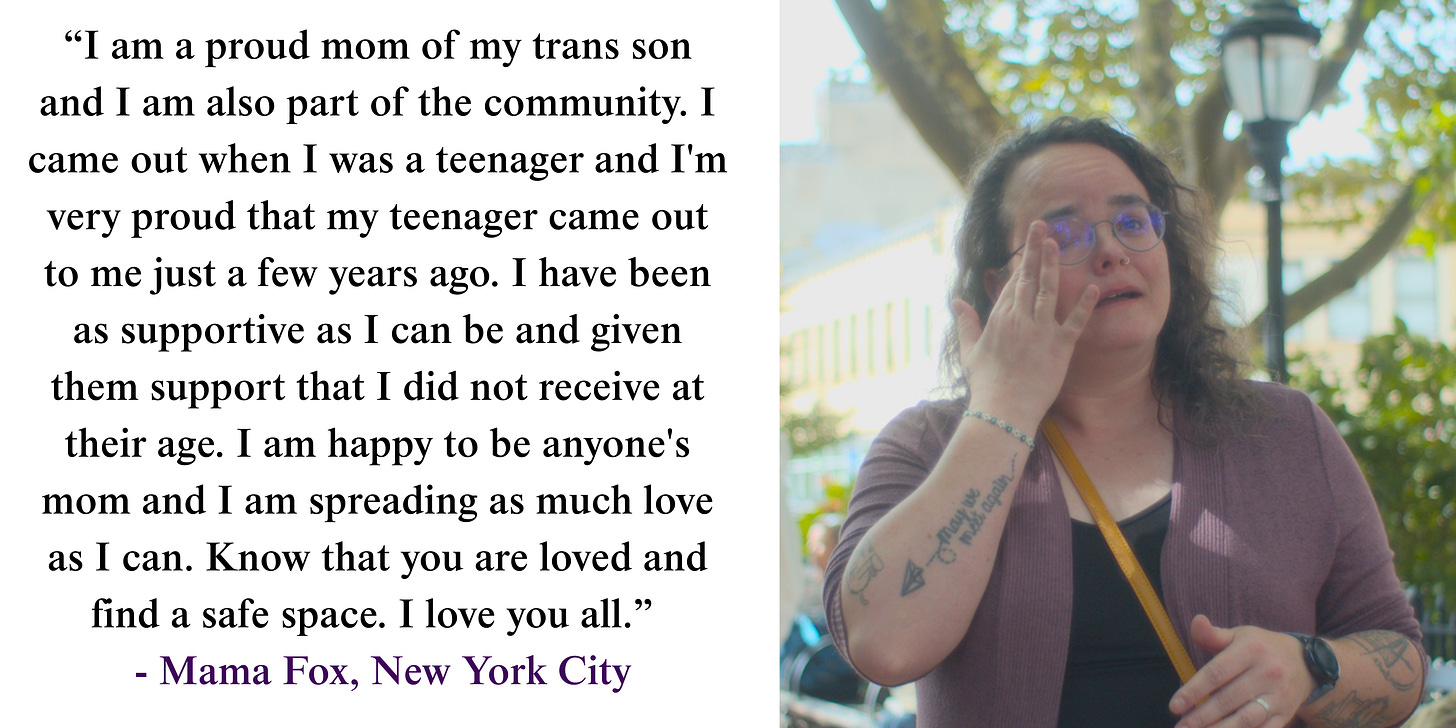
The positive impact of Mama Fox’s love for her kid is reflective of research that shows that supportive parenting is associated with lower suicide risk for queer youth, including when parents use correct names and pronouns and actively defend their child’s identity.
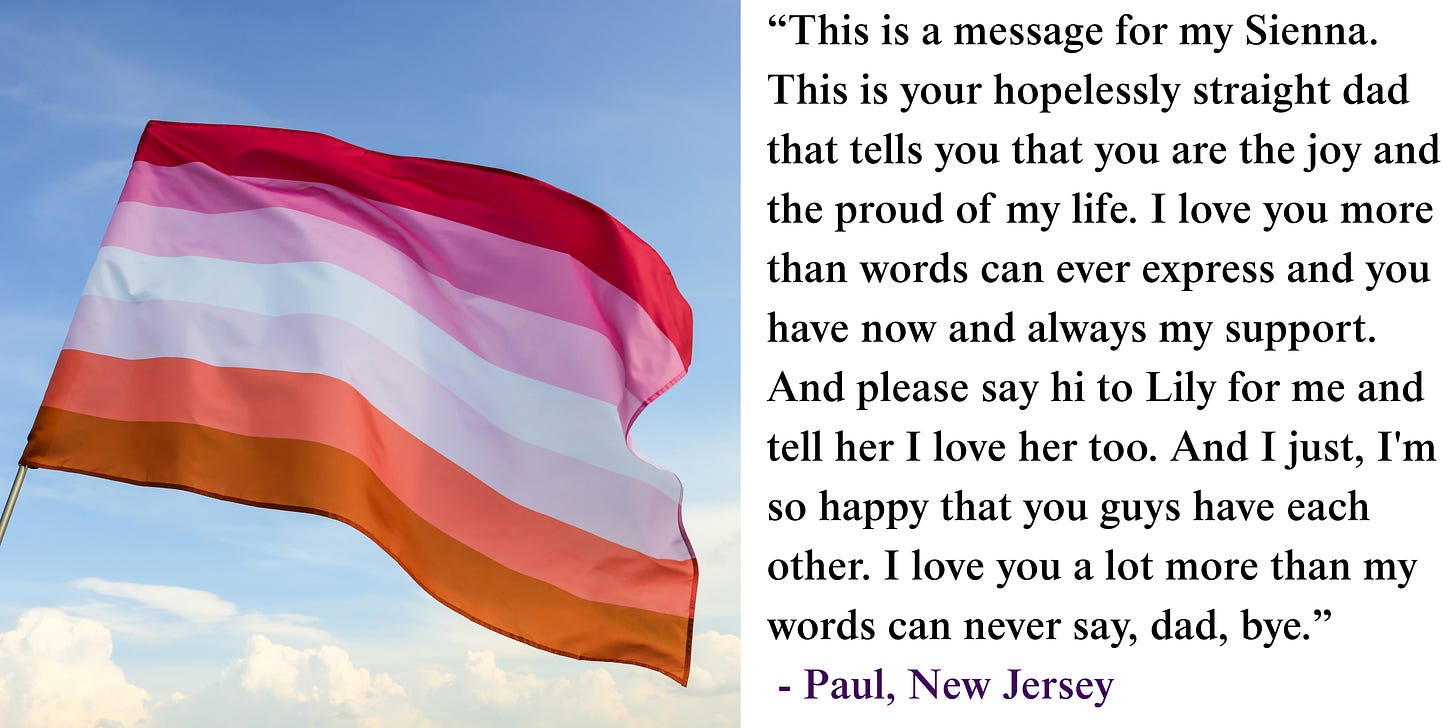
Paul, who has a lesbian daughter, is one of those parents.
Listen to Paul’s message above.
For those who can’t find acceptance within their families, there is still hope. Mark, an actor and singer from New York City, came of age in the 1980s during the height of the HIV/AIDS crisis.
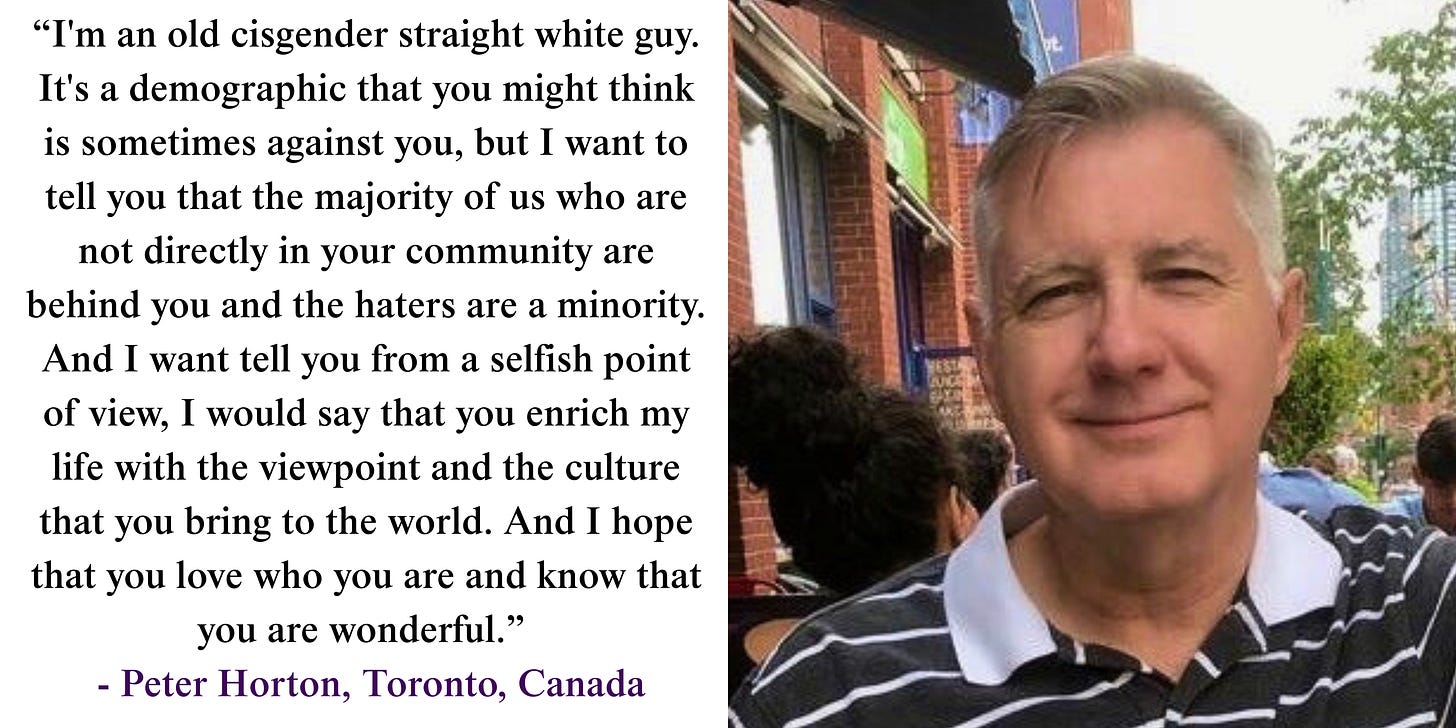
A lot of the hate aimed at LGBTQ people still comes from the same demographic that has historically held the most social power: white, cisgender straight men. But what often gets left out of the conversation is that there are many allies who are part of this demographic, including West Wilson, Anthony Siteman and Toronto’s Peter Horton.
Listen to Peter’s message above.
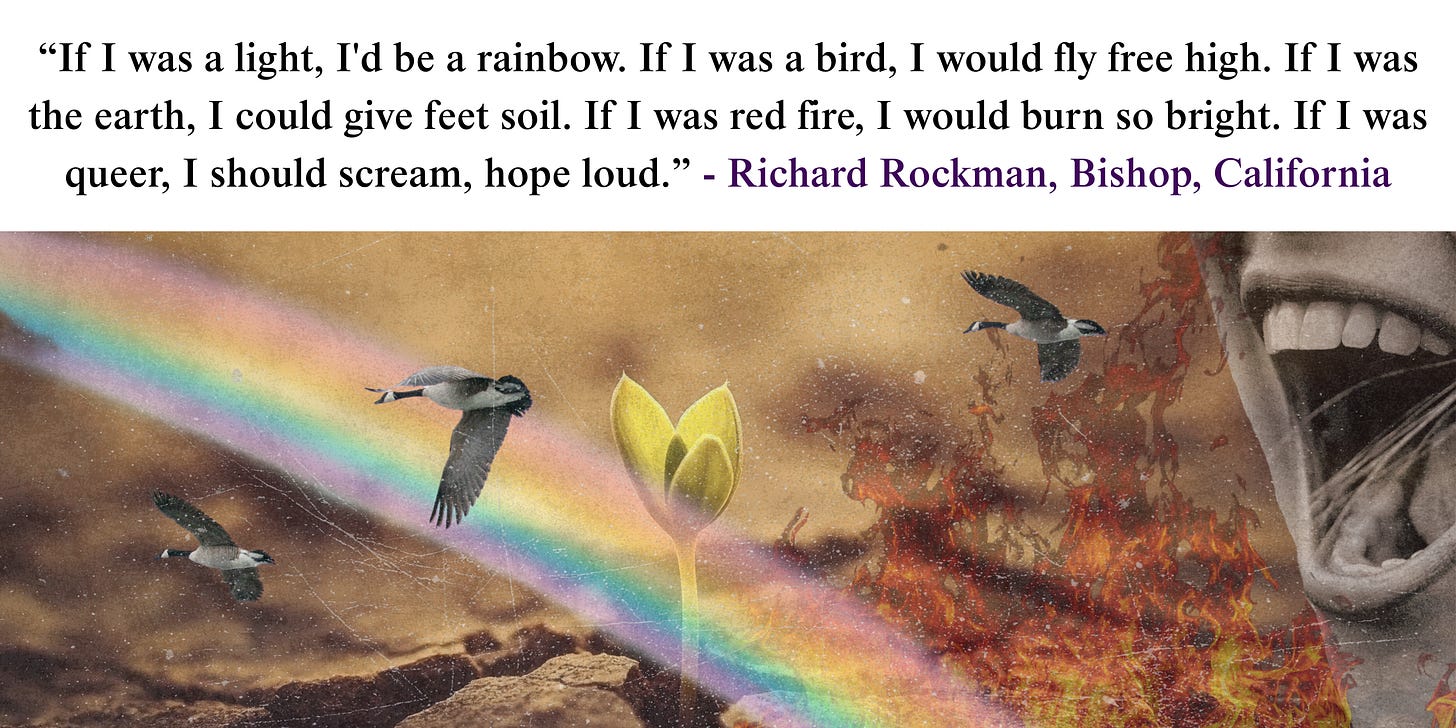
According to a Trevor Project survey, about a fifth of LGBTQ young people have participated in protests, a sign that civic engagement is surging. LGBTQ people continue to be among the most active groups in public resistance. Richard Rockman’s poem reminds us to stay active, engaged and hopeful.
Listen to Richard’s poem above.
And that hope is coming from so many people from all corners of the world.
Listen to Alice’s message above.
Listen to Lara’s message above.
Even as so many LGBTQ youth struggle, change is coming. More people in Gen Z identify as LGBTQ than any other living generation.
Listen to Lloyd’s message above.
Uncloseted Media wishes everyone a joyful holiday season. For people of all ages who are struggling, we want you to know that you are loved. You are not alone. And there is help.
If objective, nonpartisan, rigorous, LGBTQ-focused journalism is important to you, please consider making a tax-deductible donation through our fiscal sponsor, Resource Impact, by clicking this button:
2025 has been filled with relentless and unprecedented attacks against the LGBTQ community in the U.S. President Donald Trump’s anti-LGBTQ policies have spilled over to countries abroad, including heading north to some conservative Canadian provinces like Alberta.
Despite this, there have been moments of hope. Here is Uncloseted Media’s 2025 LGBTQ year in review.
Jan. 1
Liechtenstein’s Marriage Act, passed in 2024, officially takes effect, opening marriage to same-sex couples and aligning the microstate with 21 other European nations that already recognize same-sex marriage.
Meta introduces new rules to their platforms. They remove their third-party fact-checking program and roll back hate speech restrictions, which allows anti-LGBTQ rhetoric to flourish. A report by Uncloseted Media identifies users who spew trans and homophobic language. One user wrote, “Look at this disgusting piece of fag shit here !” Another told someone to go to “the insane asylum where you belong, tranny freak.” Both of these comments are still up on the platform.
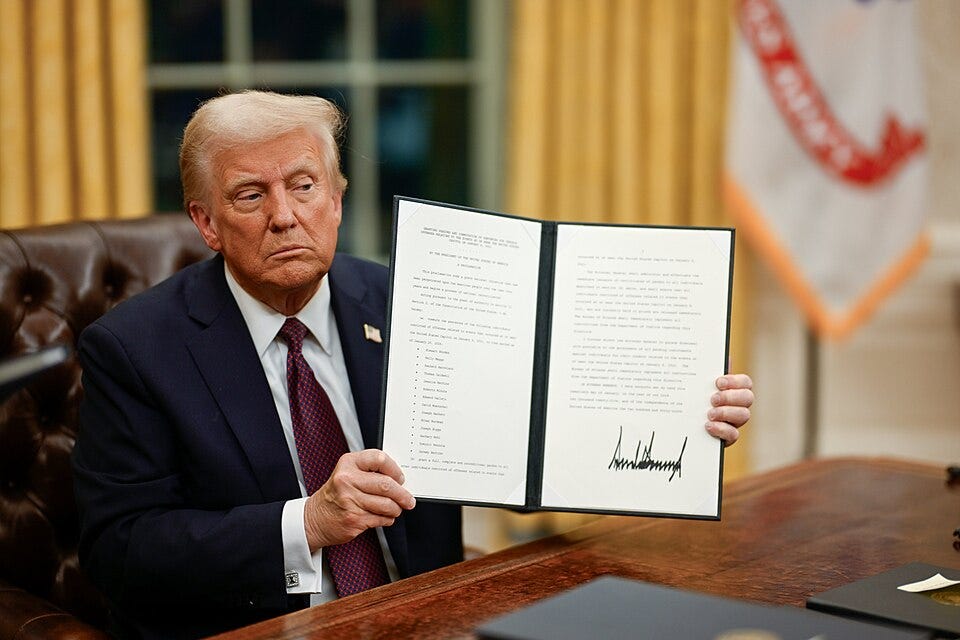
On the first day of his second term, President Trump signs an executive order titled “Defending Women from Gender Ideology Extremism and Restoring Biological Truth to the Federal Government.” The order forces federal agencies to treat sex as a fixed male and female binary “assigned at conception,” calls for “gender” to be scrubbed from federal guidance, halts federal funding for gender-affirming care and mandates trans women in prison to be sent to male facilities. Trump also issues a stop-work order for PEPFAR, the biggest HIV/AIDS relief program in the world. This kicks off a broader pattern of cuts to HIV prevention and research.
Over the next three months, Trump continues his attacks on the LGBTQ community by signing another executive order that bans trans women and girls from competing on sports teams that match their gender identity. He also directs agencies to curb gender-affirming care for anyone under 19 and to strip funding from schools that allow social transition, inclusive bathrooms or the use of affirming names and pronouns.
Jan. 23
Same-sex marriage becomes the law of the land in Thailand, making it the first country in Southeast Asia to recognize marriage equality and equal adoption rights for gay couples.
Jan. 27
The Idaho House passes a resolution urging the U.S. Supreme Court (SCOTUS) to revisit and overturn Obergefell v. Hodges, signaling a renewed appetite to attack marriage equality at the federal level.
Feb. 6
Australia amends its federal Criminal Code to add sexual orientation, gender identity and intersex status as protected characteristics in hate-crime law. This creates stronger penalties for perpetrators of anti-LGBTQ hate crimes across the country.
Feb. 13
Sam Nordquist, a trans man from Minnesota, is found dead in Upstate New York after a woman he met online kidnapped and tortured him for weeks in a hotel room. Seven people connected to his death have been charged with murder. Sam’s friend, Jax Seeger, spoke to Uncloseted following the tragedy:
“From my understanding, they came out and said it wasn’t a hate crime … and part of their reasoning was because one or two of the suspects self-identified within the [LGBTQ] community. … Like, you can’t say that just because they identified as LGBTQ, they’re incapable of committing a hate crime. Sammy wasn’t just physically abused. He was psychologically abused and they didn’t go into what that consisted of, but I think that’s something to keep in mind. As well as just the level of abuse you know? Trans people deserve the same respect and the same love as everyone else.”
The week after our interview with Seeger, prosecutors upgrade the charges against Nordquist’s accused killers to first-degree murder.
Feb. 14
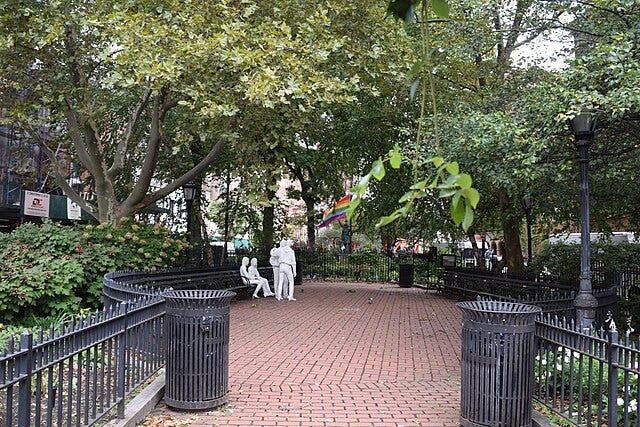
The Stonewall National Monument. Photo by TheCatalyst31.
The National Park Service (NPS) erases mentions of transgender people from the Stonewall memorial, furthering conservative efforts to push “LGB” without the “T.” A few months later, NPS would go on to remove mentions of bisexuals as well.
Feb. 25
Mexico City Pride 2025. Photo by Wotancito.
Mexico City’s Congress approves a resolution to reform the Law for the Recognition and Attention of LGBTTTI+ Persons. This move effectively recognizes nonbinary people.
Feb. 28
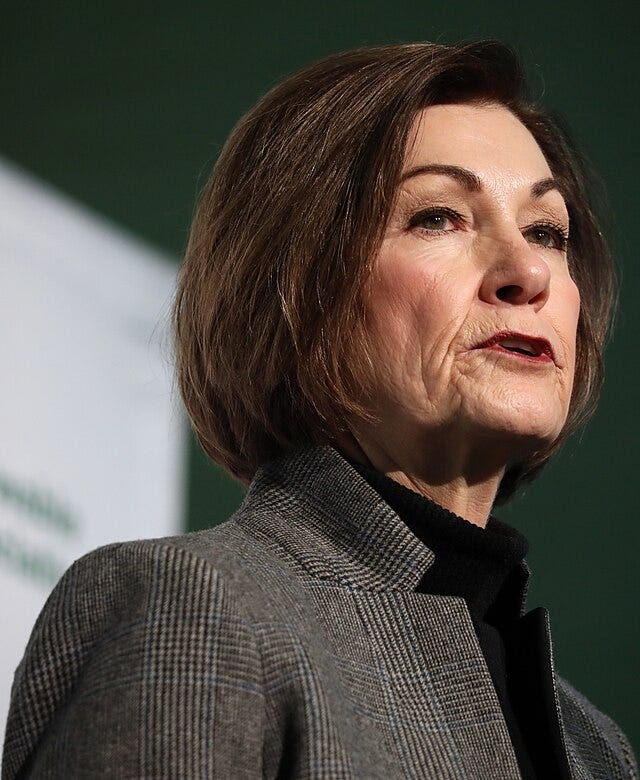
Kim Reynolds in 2024. Photo by Gage Skidmore.
Iowa Gov. Kim Reynolds signs SF 418 into law. This move officially removes “gender identity” from the Iowa Civil Rights Act’s list of protected classes in housing, employment and public accommodations. Iowa becomes the first state to remove civil rights from a previously protected group.
March 27
Gov. Spencer Cox announces that Utah will become the first state to ban LGBTQ pride flags in government buildings and public schools, effective May 7. While the move is framed as a “neutrality” measure, it is widely seen as part of a broader effort to erase public displays of queer identity. In protest, the Utah Pride Center unveils what it calls “the world’s largest transgender flag” in front of Utah’s State Capitol building in Salt Lake City.
April 4
A conversion therapy ban in New South Wales (NSW), Australia, goes into effect. This makes it illegal for therapists and religious leaders to practice conversion therapy on gay and trans people. In a media release, the NSW attorney general writes:
“This follows ongoing work by the NSW Government to progress reforms that ensure all members of our community feel valued, respected and equal.”
“This report not only rejects health care best practices for transgender people — it goes a step further by recommending conversion therapy, though under a new, rebranded name, ‘exploratory therapy’. Despite the report’s claims, this is, in fact, the same harmful practice of conversion therapy, just using friendlier language.”
May 6
Trump’s transgender military ban goes into effect. The change requires active trans service members to self-separate from the military or risk losing some of their Veterans Affairs benefits. Alaina Kupec, a retired transgender U.S. Navy lieutenant, says the decision punishes people who are qualified and want to serve the country:
“[This is] a really dark day for our country where basically we’re allowed to discriminate against a class of people.”
May 19
A Russian court fines Apple roughly $130,000 for four offenses, including the violation of Russia’s expanded “LGBT propaganda” law. The Russian law labels the “international LGBT movement” as extremist and treats queer visibility as a threat to state security. Anything that promotes “non-traditional sexual relations” violates the law.
May 30
Puerto Rico’s Supreme Court rules that residents can request an “X” gender marker on their birth certificates. This move explicitly recognizes nonbinary people and strengthens case law around self-determined gender in the U.S. territory.
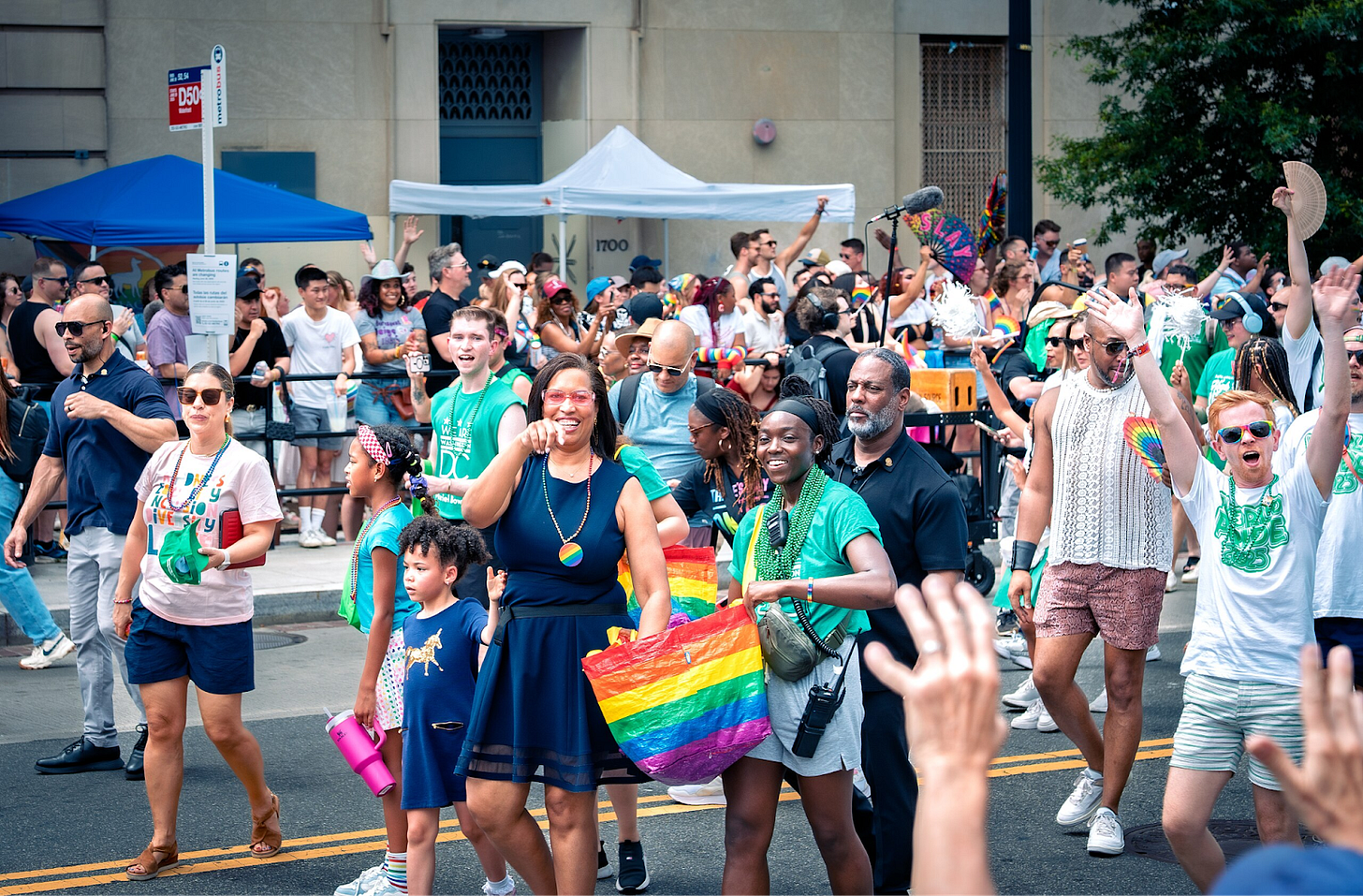
Amid relentless attacks from the federal government, WorldPride takes place in Washington D.C. Ahead of the event, the African Human Rights Coalition calls for a boycott because of Trump’s swath of anti-LGBTQ policies. While roughly 1.2 million people attend, The Washington Post reports that the turnout is less than half of what organizers expected.
June 18
In a 6–3 decision, SCOTUS upholds Tennessee’s law banning gender-affirming care for minors, including puberty blockers and hormones. The ruling signals that similar bans in other Republican-controlled states are likely to stand, sharply narrowing access to medically recommended care for trans youth nationwide. Ten days after the ruling, five trans youth speak to Uncloseted Media, with Dylan Brandt, 20, saying:
“Lawmakers don’t need to be involved in my doctor visits. They have no right. They have no knowledge. … They’ve got a lane and they should stay in it.”
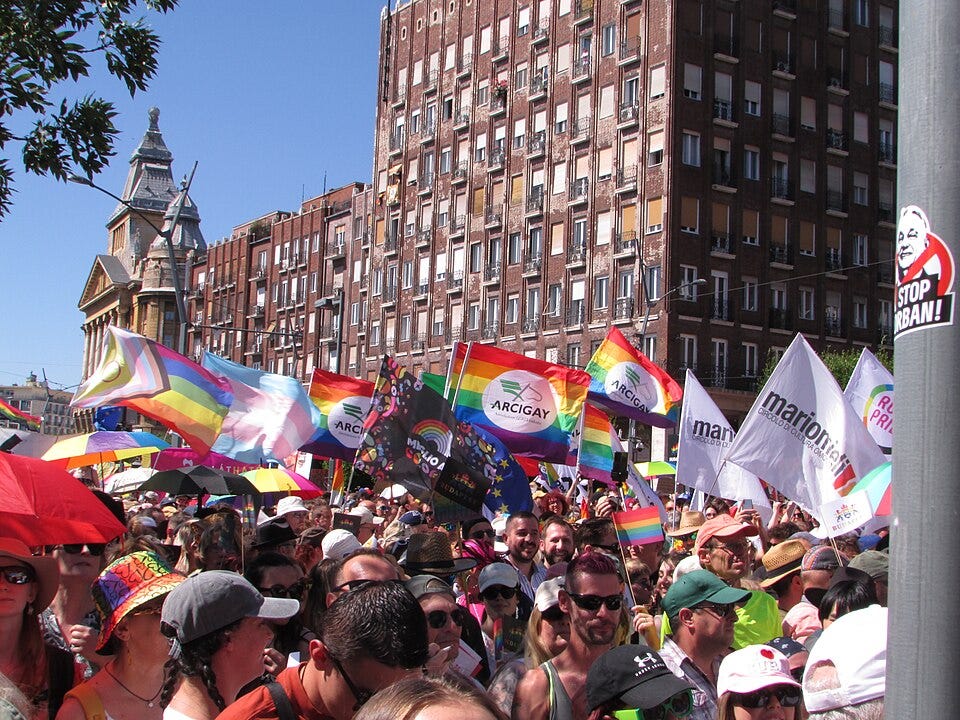
In defiance of a government ban on Pride events, roughly 100,000 people march the streets of Budapest, Hungary, to celebrate. The march was seen as both a showing of support for LGBTQ rights and a protest against Prime Minister Viktor Orbán’s conservative government.
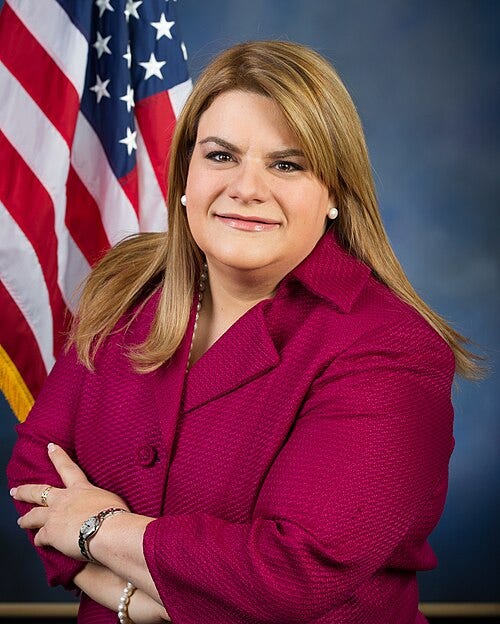
Puerto Rico’s governor, Jenniffer González-Colón, signs one of the harshest anti-trans health care laws in the northern hemisphere. The law bans gender-affirming care for anyone under 21 and threatens to cut off public funding for hospitals that don’t comply. It also threatens doctors with up to 15 years in prison and loss of licensure for violations. Puerto Rico’s LGBTQ+ Federation and GLAAD release a joint statement condemning the bill:
“Banning this care and stripping the rights of parents to make the best medical decisions for their families would create unbearable burdens for the most marginalized in Puerto Rico. Lawmakers must vote to protect access to health care that saves lives, and allow families to make private health care decisions that help loved ones be themselves, be safe, and to thrive.”
July 17
The Trump administration shuts down the LGBTQ suicide hotline, a life-saving resource that had received over 1.3 million calls, chats and texts since it launched in 2022. Genna Brown, a 16-year-old queer kid in North Carolina, who had used the hotline, spoke with Uncloseted Media about the impact it had on her mental health:
“I was an extremely self-loathing, suicidal kid who was under the impression that God hated me and I was gonna burn in hell for eternity. … Connecting with someone who gets it was really helpful. … Because at home, I was so isolated and I didn’t really interact with other queer people.”
July 18
Cuba’s National Assembly passes a law allowing trans people to change their legal gender without any requirement for genital surgery. In a post on X, Minister of Justice Oscar Silvera Martínez writes that the new law “will allow the country to have a modern civil registry” provided by “the issuance of digital documents with full validity and efficiency.”
July 29
In a move hailed by human rights groups, the Caribbean nation of St. Lucia strikes down colonial-era laws criminalizing “buggery,” effectively decriminalizing consensual same-sex intimacy between adults.
Aug. 20
In the middle of the night, Florida’s Department of Transportation paints over a rainbow crosswalk made to honor the victims of the Pulse nightclub terrorist attack that left 49 people dead. Advocates respond in protest by installing rainbow-colored bike racks.
Sept. 1
Burkina Faso’s Transitional Legislative Assembly passes a law explicitly criminalizing homosexuality. The law imposes a two- to five-year prison sentence and fines on people convicted of same-sex activity, deepening the criminalization of queer people in West Africa.
Sept. 10
The assassination of Charlie Kirk at Utah Valley University (UVU) kicks off a wave of anti-trans vitriol, including calls to criminalize the community and designate them as terrorists. In September, Uncloseted Media interviewed five current and former LGBTQ students at UVU. Simone Goodheart, a trans woman who had recently attended the school, spoke about how students were suggesting she was the murderer and how they were harassing her on campus:
“I would say a few of them were asking me to share my school schedule, which thankfully I’m not a student right now. But like damn, if that was the case? A few of them just make awful comments about my appearance, who I am as a person. Basically they just wanted to make sense [of it], but also they wanted to get their outrage out. Because yeah, somebody they cared for died. They are going through the grieving process and like there is outrage and frustration but they were misdirected and misconnected and just utilized by awful algorithms that try to boost the most amount of outrage possible in order to encourage engagement.”
Sept. 26
Slovakia’s parliament passes a constitutional amendment that formally recognizes only two genders, restricts legal gender transition and prohibits adoption by same-sex couples nationwide.
Oct. 6
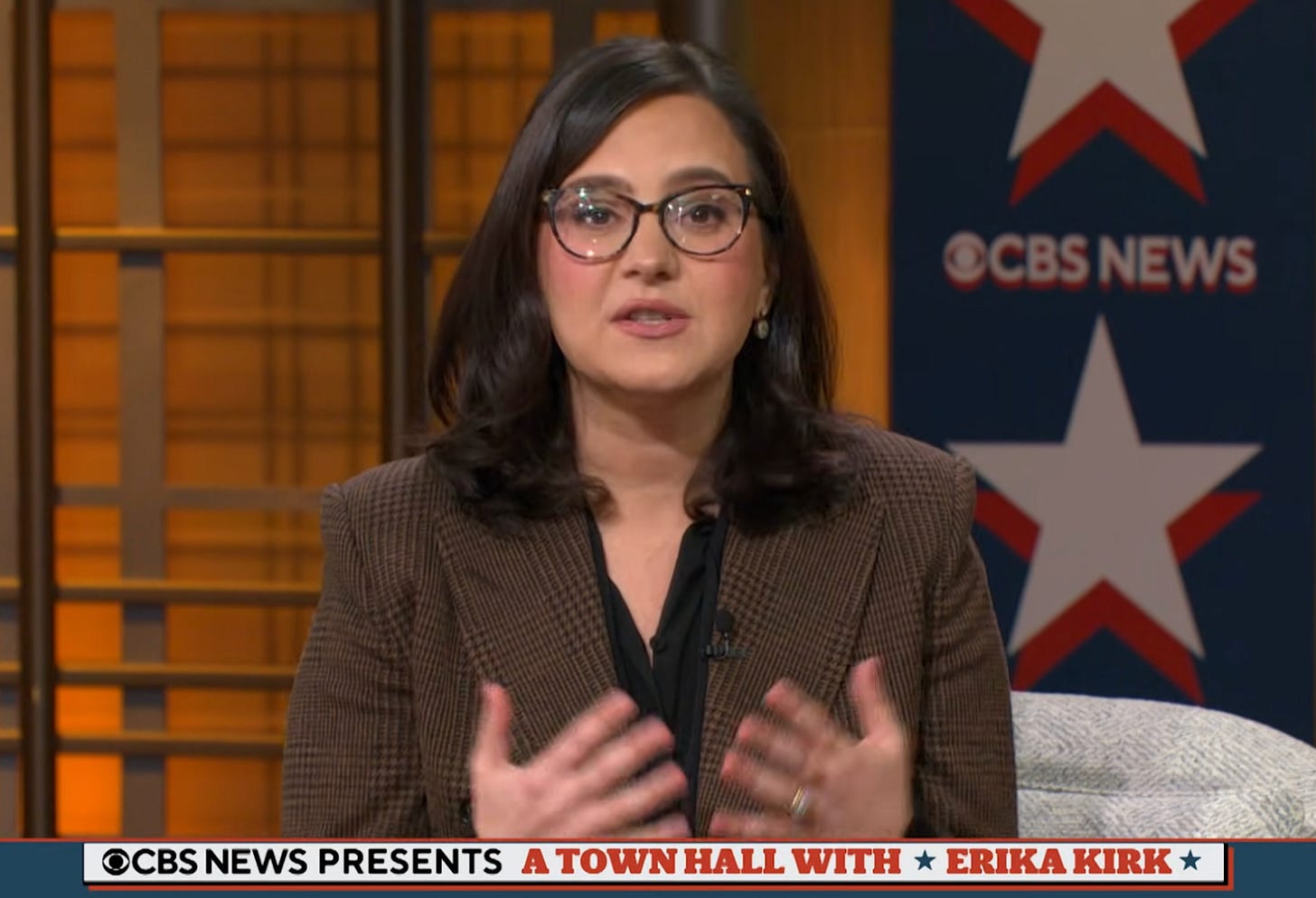
Bari Weiss hosting a CBS News Town Hall with Erika Kirk. Screenshot/CBS News.
Bari Weiss is appointed editor-in-chief of CBS News, making her the first openly gay person to lead the network. Weiss often angles herself as an independent thinker and is known for criticizing the mainstream media. She has no experience in broadcast news and has surrounded herself in controversy, accusing former colleagues at The New York Times of bullying her. She has also railed against Diversity, Equity and Inclusion (DEI) initiatives, writing articles with headlines such as “Bari Weiss: End DEI.”
“It is time to end DEI for good. No more standing by as people are encouraged to segregate themselves. No more forced declarations that you will prioritize identity over excellence. No more compelled speech. No more going along with little lies for the sake of being polite.”
Oct. 7
SCOTUS appears poised to rule against a Colorado law that bans the discredited practice of conversion therapy on minors. The justices repeatedly question the state over whether the law hinders free speech.
The high-stakes case could roll back the rights of LGBTQ youth across the country. Colorado is one of more than 20 states that have banned conversion practices, and a ruling in favor of removing the ban could make those laws in other states vulnerable to similar challenges.
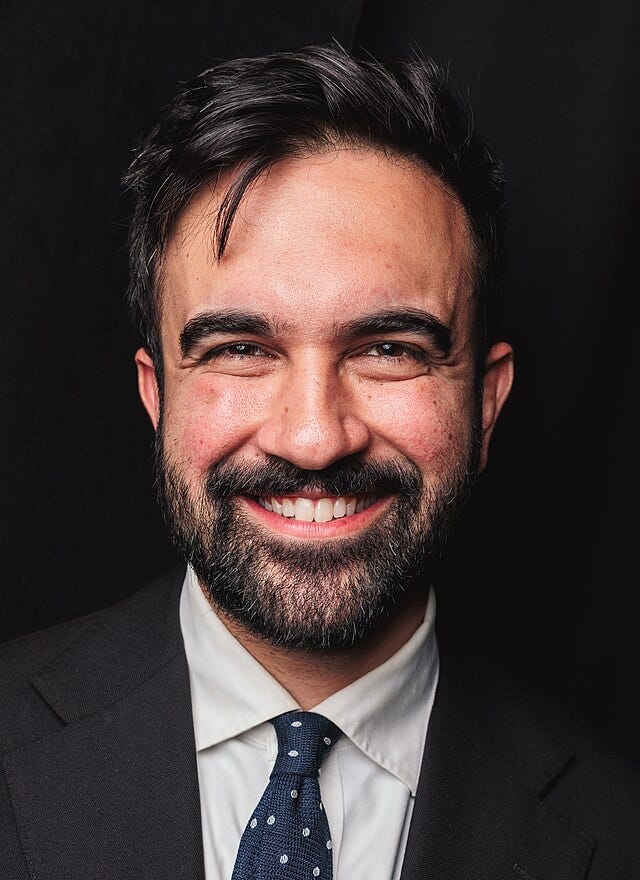
Zohran Mamdani, one of the most outspokenly pro-trans politicians in the country, is elected mayor of New York City. Meanwhile, anti-LGBTQ Republicans are defeated in Virginia’s and New Jersey’s gubernatorial elections. On the night of his win, Mamdani reaffirms his support for those who elected him:
“In this moment of political darkness, New York will be the light. Here, we believe in standing up for those we love, whether you are an immigrant, a member of the trans community, one of the many black women that Donald Trump has fired from a federal job, a single mom still waiting for the cost of groceries to go down, or anyone else with their back against the wall. Your struggle is ours, too.”
In a massive win for gay rights, SCOTUS rejects Kim Davis’ appeal and won’t revisit the landmark decision that legalized same-sex marriage nationwide in 2015. This signifies a major defeat for the new push to overturn the ruling, which was spearheaded by Davis and her lawyers from Liberty Counsel.
Nov. 17
Across Alberta, Canada, anti-trans legislation takes effect. A trans sports ban for students also forces sports organizations and schools to collect sensitive personal information that risks outing trans and gender diverse youth. Alberta Premier Danielle Smith announces plans to circumvent legal opposition to the province’s ban on gender-affirming care for minors by invoking the notwithstanding clause, a constitutional provision that will stop such challenges for five years. The measure was also used in Alberta in 2000 to advance legislation opposing gay marriage.
Nov. 19
New Zealand’s health minister, Simeon Brown, announces a halt to new prescriptions of puberty blockers for minors with gender dysphoria. Brown says the ban will remain until a British clinical trial is completed. Existing patients can continue treatment.
Nov. 25
The European Union’s (EU) top court rules that member states must recognize same-sex marriages contracted in any EU country for purposes such as residence and free movement, binding more conservative governments such as Poland, Bulgaria, Romania and Slovakia to acknowledge queer couples’ marital status even if they refuse to perform such marriages at home.
Dec. 2
ADF International, the global arm of U.S. anti-LGBTQ legal group Alliance Defending Freedom, publicly backs a South Australian woman threatening legal action over a Headspace Berri mental-health presentation that mentioned LGBTQ issues, incest and bestiality in a classroom context. Elenie Poulos, an expert on the intersection of religious and political discourses, describes their impact as “huge,” saying:
“They have a very longstanding and aggressive approach to the rights of LGBTIQ people. They fight it in the courts in the US, they fight it politically, locally and in communities, and their aggressive anti-gay stance is extremely harmful.”
Dec. 18
Robert F. Kennedy Jr. and Dr. Oz announcerestrictive measures designed to block minors’ access to gender-affirming care. The plan proposes federal Medicare and Medicaid cuts to all hospitals that provide this care to minors. “The multitude of efforts we are seeing from federal legislators to strip transgender and nonbinary youth of the health care they need is deeply troubling,” says Rodrigo Heng-Lehtinen of The Trevor Project.
Dec. 21
CBS News shelves a planned 60 Minutes segment on men deported to CECOT, an infamous prison in El Salvador. Internal sources indicate that the move to cancel the story came from the network’s editor-in-chief Bari Weiss, who reportedly raised concerns about the Trump administration’s lack of response to the reporter’s outreach.
If objective, nonpartisan, rigorous, LGBTQ-focused journalism is important to you, please consider making a tax-deductible donation through our fiscal sponsor, Resource Impact, by clicking this button:
Claims about economy, war in Ukraine, measles were among the top falsehoods of past year
President Donald Trump listens during a ceremony for the presentation of the Mexican Border Defense Medal in the White House on Dec. 15, 2025. (Anna Moneymaker/Getty Images)
ANALYSIS —Since he entered politics, President Donald Trump has been a regular on our end-of-year list of the most egregious and noteworthy falsehoods and distortions. With Trump back in the White House in 2025, it’s no surprise that he dominates this year’s whoppers.
Trump is known for rhetoric that uses inaccurate and exaggerated claims, which he repeats again and again. In his second term, several such claims were used to justify a whirlwind of policy changes and announcements. Using a method economists said wasn’t legitimate, he calculated “reciprocal tariffs” for goods imported from other countries. In firing the head of the Bureau of Labor Statistics, he claimed without evidence that low job growth figures were “phony” or “rigged.” In supporting a freeze on foreign aid, Trump said $50 million was being used to buy condoms for Hamas in Gaza, a claim refuted by the contractor identified by the State Department.
In a falsehood-filled press conference, Trump, along with Health and Human Services Secretary Robert F. Kennedy Jr., touted an unproven link between autism and taking Tylenol during pregnancy. Kennedy, long known for spreading inaccurate information about vaccines, also features prominently in this year’s compilation. In his efforts to change the nation’s vaccine and public health recommendations, he pushed unproven therapeutics for treating measles and made false claims about the COVID-19 vaccines.
There are other politicians on our full list below, which is in no particular order.
Analysis
Tylenol and autism. Trump said a late September press conference would reveal “one of the biggest [medical] announcements … in the history of our country,” but instead the headline news was an unproven link between autism and the use of Tylenol, or acetaminophen, during pregnancy. Trump repeatedly told pregnant women, “don’t take Tylenol,” and offered the unsound medical advice to “tough it out.”
The administration didn’t point to any new original research on the topic, which has been studied. Some studies have shown an association between using acetaminophen during pregnancy and an increased likelihood of having a child with autism, but no causal link has been established. Recent research indicates there likely isn’t a link.As for Trump’s medical advice, untreated pain or fever during pregnancy can be harmful to both mother and child, and medical groups have long recommended pru45reeeeeeeeeeeeeeeeeeeeeeeeeeeeeeeeeeeeeeeeeeeeeeeeeeeeeeeeeeeeeeeeeeeeeeeeeeeedent use of the drug — taking acetaminophen when needed in consultation with a doctor.
HHS Secretary Kennedy later falsely claimed that two circumcision-related studies provided evidence that acetaminophen causes autism when given to children. That’s not what the studies found. In November, the Centers for Disease Control and Prevention changed a webpage to say that its previous statement that “vaccines do not cause autism” is “not an evidence-based claim,” echoing Kennedy’s prior misrepresentations of science.
Inflation has not “stopped.” As cost-of-living issues continue to be a top concern for voters, Trump has repeatedly claimed that inflation is “stopped,” “dead” or at a lower rate than it actually is, falsely saying the country saw “the worst inflation” in history (or “probably” did so) under former President Joe Biden. That’s not the case. This month, in a speech about the economy in Pennsylvania, Trump wrongly said he “inherited the worst inflation in the history of our country.”
The annualized inflation rate was 3 percent when Trump took office in January, and it was 3 percent again for the 12 months ending in September, the latest data available from the Bureau of Labor Statistics. Inflation did rise considerably in the first half of Biden’s term, but it then cooled substantially. From July to December 2024, the annual increase in the Consumer Price Index was below 3 percent.
The CPI went up 2.7 percent for the 12 months ending in November, BLS said today, noting that data collection for the month began Nov. 14 due to the government shutdown.
The worst inflation increase year-to-year occurred after World War I, a 23.7 percentrise from June 1919 to June 1920. There have been numerous other times with inflation higher than the peak point under Biden.
As we head into the midterms, we’d caution voters that politicians often blame their opponents for rising prices, but the causes of inflation are usually more complicated than that. For instance, Labor Day claims from the Democratic Congressional Campaign Committee blamed House Republicans for “driving up the price of burgers.” But drought conditions in recent years, among other factors, drove up the cost of ground beef.
Russia, not Ukraine, started the war. After U.S. and Russian officials met in Saudi Arabia in February to discuss an end to Russia’s war in Ukraine, Trump falsely reprimanded Ukraine, saying, “You should have never started it.” He said Ukraine “could have made a deal.” As we wrote, the war started on Feb. 24, 2022, when Russia launched a full-scale invasion, two days after Russia recognized two separatist territories in eastern Ukraine as independent states and sent Russian troops into Ukraine’s Donbas region. While Russian President Vladimir Putin gave “a long list of grievances” to justify the attack, Jeffrey Mankoff, a senior associate with the Europe, Russia, and Eurasia Program at the Center for Strategic and International Studies, wrote in an April 2022 report that the “fundamental issue” was “the legitimacy of Ukrainian identity and statehood.”
Throughout the year, Trump also repeatedly and wrongly claimed that the U.S. has provided more money in aid to Ukraine than Europe has. The opposite is true.
“Twisted and manipulated” report that wasn’t.When the Washington Post reported via anonymous sources that a government intelligence assessment concluded the Venezuelan government was not directing the migration of members of the Tren de Aragua gang to the U.S., Tulsi Gabbard, the director of national intelligence, dismissed the report.She said those “behind this illegal leak of classified intelligence” had “twisted and manipulated [the information] to convey the exact opposite finding.” But when a redacted copy of the intelligence memo was publicly released the following month, it corroborated the Washington Post’s account. According to the intelligence memo, Venezuelan President Nicolás Maduro’s “regime probably does not have a policy of cooperating with TDA and is not directing TDA movement to and operations in the United States.”
A few months later, Gabbard wrongly claimed to have uncovered “overwhelming evidence” that former President Barack Obama and others in his administration manipulated intelligence to “lay the groundwork for what was essentially a years-long coup against President Trump.”
RFK Jr.’s dubious measles therapeutics. In March, during a measles outbreak in Texas, Kennedy claimed there were “very good results” from treating patients with a certain steroid and antibiotic, as well as cod liver oil, saying “those therapeutics have really been ignored” by the CDC “for a long, long time.” Neither the steroid nor antibiotic is a specific treatment for measles, experts said, and cod liver oil, which contains vitamin A, also isn’t recommended.
Vitamin A itself is recommended around the world for measles, as a couple high-dose bursts of the vitamin have been shown to reduce measles mortality in lower-income countries where deficiencies exist. But the benefit is unclear in the U.S. and countries without such deficiencies. Cod liver oil would need to be consumed in a potentially dangerous amount to get the vitamin A dosage used for measles.
In other comments, Kennedy downplayedthe outbreak, which ultimately killed two children, and made unsupported and misleading claims about the measles vaccine, which is safe and effective in preventing the highly contagious disease.
No evidence of “phony” Bureau of Labor Statistics numbers. After a BLS report showed less-than-stellar job growth, Trump lashed out at the BLS commissioner, saying “her numbers were wrong,” “phony” and “rigged,” and firing her. There’s no evidence anyone manipulated the data.William Beach, the BLS commissioner during Trump’s first term, wrote on X that the firing of Commissioner Erika McEntarfer, a Biden appointee who had worked in the federal government for more than 20 years, was “totally groundless” and “sets a dangerous precedent and undermines the statistical mission of the Bureau.”
Trump also wrongly claimed that “days before the election,” McEntarfer “came out with these beautiful numbers trying to get somebody else elected” and then reduced the employment estimates “right after the election.” That’s not what happened. On Nov. 1, 2024, just before the election, the BLS report showed growth of just 12,000 jobs in October and downward revisions for the prior two months.
Signalgate: Not “total exoneration.” Defense Secretary Pete Hegseth claimed that he received “total exoneration” in an investigative report by the Defense Department’s Office of Inspector General regarding a Signal group chat about a military attack in Yemen. But the report contradicted that assessment, concluding that Hegseth’s messages “created a risk to operational security that could have resulted in failed U.S. mission objectives and potential harm to U.S. pilots.” The report also faulted Hegseth for using a personal cell phone to relay sensitive DoD information and for not retaining the Signal conversations as official records, as required by federal law and Pentagon policy.
Trump’s chart on “reciprocal” tariffs. In a Rose Garden announcement in April of sweeping new “reciprocal tariffs,” Trump held aloft a chart that claimed to give a breakdown of the tariffs other countries charge the U.S. and the corresponding tariff that the U.S. would as a result impose against those countries. But it turned out the values assigned to other countries were not, in fact, the tariff rates other countries were placing on imports of U.S. goods, but rather a calculation of what the administration deemed would be necessary to balance trade with various countries. Economists told us that was not a legitimate way to calculate reciprocal tariffs for countries.
The misleading “reciprocal tariffs” chart, which informed the tariff rates he then set, was just one of the president’s false and misleading talking points on tariffs. Among them, Trump repeatedly, and wrongly, claimed that the tariffs he imposed would be paid by other countries and not, at least partly, by American consumers in the form of higher prices.
mRNA vaccine misinformation. Kennedy, and HHS, made a series of false statements about mRNA vaccines, the technology behind the Pfizer/BioNTech and Moderna COVID-19 vaccines. In announcing the termination of half a billion dollars of funding for mRNA vaccine projects, Kennedy said: “We reviewed the science, listened to the experts, and acted,” claiming that “the data show these vaccines fail to protect effectively against upper respiratory infections like COVID and flu.”
The science — peer-reviewed scientific literature — and many experts refute that. Studies repeatedly demonstrated the vaccines’ effectiveness and safety, with some estimates of millions of lives saved during the pandemic, and the technology has shown encouraging results against the flu. HHS later released a 181-page list of papers that claimed to show vaccine harms, a document that wasn’t peer-reviewed and was written by people who have spread unsupported claims about COVID-19 vaccination and treatment.
Kennedy also claimed the COVID-19 vaccines posed a “profound risk” to children, even though serious side effects are rare. In ending funding to Moderna for developing mRNA vaccines against influenza viruses, HHS spokespeople wrongly said the mRNA technology is “under-tested.”
DOGE distortions, $50 million not for condoms for Gaza. Before taking office, Trump said entrepreneur Elon Musk would head his new Department of Government Efficiency. Musk had initially promised to cut “at least $2 trillion” in wasteful government spending. Foreign aid was one of the first targets, with Trump setting the tone for questionable information that would plague the program by claiming, “We identified and stopped $50 million being sent to Gaza to buy condoms for Hamas.” The contractor identified by the State Department said it provides hospital services in Gaza and has not used U.S. funds “to procure or distribute condoms.”
In his address to Congress in March, Trump made the inflated claim that DOGE had “found hundreds of billions of dollars of fraud.” However, the DOGE website at the time stated that the department had only generated $105 billion in savings and only purported to provide evidence to support $19.8 billion of that total. (The website currently claims DOGE created $214 billion in savings, providing information on about $61 billion. It’s unclear how much, if any, of that is related to fraud.)
Trump also claimed DOGE had identified millions of dead individuals who were incorrectly labeled as alive in the Social Security database, and misleadingly claimed that “money is being paid to many of them.” Social Security Administration internal audits showed that the number of dead recipients still being sent benefits is likely in the thousands, not the millions.
Crime claims behind National Guard deployments. In making claims about high crime or lawlessness in cities as justification for the deployment of National Guard troops, Trump at times exaggerated or got the facts wrong. In early October, he claimed that Portland, Oregon, “is burning to the ground” or has “fires all over the place.” But Portland Fire & Rescue reported few calls about potential fires near a federal building, the site of protests against Immigration and Customs Enforcement, and Portland Police told us the protests “are nowhere near city-wide.”
Trump’s statements about the need for National Guard troops in Portland and Chicago focused on overall crime. “These are unsafe places,” he said. But in court filings and other correspondence, the administration said troops were needed to protect ICE officials and federal property.
In Washington, D.C., where the president is the commander in chief of the National Guard, Trump wrongly said that “murders in 2023 reached the highest rate probably ever.” Murders had been declining since 2023, when the rate was less than half the rate in 1991. After a federal takeover of the city’s law enforcement, Trump falsely said an 11-day period with no murders was the “first time that’s taken place in years.” There was a 16-day period earlier this year.
tRump’s illegal military war crime actions / tRump’s gift to the oil companies that paid him prior / This is a war crime and illegal / tRump trying to get other countries resources for his own profits / tRump grifts and seeking bribes
It has nothing to do with US national security and all the minerals / traffic rights to make ships pay / and the “rare earth” metals that tRump wants a piece of. It is about profit. Hugs
The paying tribute and bribes to tRump and his slush funds is so anti what the US should and used to stand for. It is the very thing the founding fathers were most against. The courts have gutted the holding of tRump to account but the emoluments cause is what this was designed to stop. Ask yourself if Biden / Obama / Clinton had been so blatant in demanding bribes would you tRump cult supporters be OK with it still? Hugs
The appeals court told her to have it completely wrapped up by the first week of January and this is not doing that. I expect more to happen fast with this. She ignored the appeals court order to please tRump.
“There was blood everywhere, screams, people crying, people who couldn’t take it and were urinating and vomiting on themselves,” the college student from Venezuela who sought U.S. asylum, said. “Four guards grabbed me, and they beat me until I bled until the point of agony. They knocked our faces against the wall. That was when they broke one of my teeth.”
Mr. Miller’s belief that seven decades of immigration has produced millions of people who take more than they give — an assertion that has been refuted by years of economic data — is at the heart of the Trump administration’s campaign to restrict immigration and deport immigrants already in the country.
tRump trying to hold on to power illegally / Jan 6th insurrectionists / trying to change the history everyone seen live / Scamming / Using the US treasury & taxpayer funds to pay off tRump cult members.
The U.S. Air Force will provide Jan. 6 rioter Ashli Babbitt with military funeral honors, reversing a Biden-era decision that denied her family’s request, according to a legal group that has represented her family.
In June 2025, the Pentagon agreed to pay the Babbitt family a $5 million “wrongful death” settlement. Below, see the latest from Proud Boys leader Enrique Tarrio, who is himself reportedly suing the DOJ for $100 million.
So let me get this straight: people were FIRED from their jobs and doxxed for quoting Charlie Kirk’s own words to his supporters, but TPUSA is literally cosplaying his murder and that’s acceptable?
These conservatives have been groomed. They are so unaware of how they have been groomed.
Charlie died in vain for vanity. TPUSA have moved on and are using a recreated crime scene for selfies. It’s embarrassing.
This is not true. The construction industry has crashed in Florida. No workers so nothing being built. Half crews means nothing built. The work is far to hard for most people. Hugs
In his first year back in office, Mr. Trump has unabashedly adopted the trappings of royalty just as he has asserted virtually unbridled power to transform American government and society to his liking. In both pageantry and policy, Mr. Trump has established a new, more audacious version of the imperial presidency that goes far beyond even the one associated with Richard M. Nixon, for whom the term was popularized half a century ago.
Trump is expected to announce plans to build a new, large warship that Trump is calling a “battleship” and is part of his larger vision to create a “Golden Fleet” that includes as many as 50 support ships, according to people familiar with the matter who were not authorized comment publicly.
Bigotry / Hate / Racism / DEI Misinformation / White Supremacy



















 Alex Bollinger (He/Him)May 15, 2025, 9:14 am EDT
Homeland Security Secretary Kristi Noem | Steven Spearie/The State Journal-Register / USA TODAY NETWORK
 Molly Sprayregen (She/Her)November 10, 2025, 11:00 am EST
Florida Attorney General James Uthmeier speaks about the arrest of 28 members of the Mongols motorcycle gang during a press conference at the Stephen Saboda Training Center near Daytona Beach, Wednesday, July 2, 2025. | © Nigel Cook/News-Journal / USA TODAY NETWORK via Imagn Images
































































 Scottie's Playtime
_(cropped).jpg)
.jpg)

#/media/File:2025.06.07_World_Pride,_Washington,_DC_USA_158135_05745_(54582538995).jpg)

.jpg)
.jpg)