I really love how he talks about his job regarding his religion. How he is to be a light but not force people to live by his faith. It was how the man who saved me when I was 17 by sending me to an SDA church school summer program felt. He never sought to impose his faith on anyone, he tried only to show them how his faith helped him and let them decide if it was correct for them. Hugs
There is a video at the site linked. How ever as you read through this remember that this is the group that wrote project 2025 and the main author of that Christian nationalist screed is Russell Vought who has a powerful position in the tRump administration. This is entirely about pushing a fundamentalist Christian lifestyle and worldview on the US public with heavy emphasis on quiverful which ishave as many children as possible for Christian families most of whom in that movement lived impoverished on one income. The idea is more kids butts in church pews now leads to more adult butts in those pews increasing tithes and money in the collection plates. Church attendance has decreased steadily and this is designed to increase it again. Plus it removes rights for women and LGBTQ+ families. The parents get the money only if women / the mothers marry young, forgo an advanced education, stay out of the work place, and have child after child after child like a breeding stock farm animal. It is only for the “right or correct types of families” and harms those who are not the “right” kinds of families. Plus it is totally racist with the poor people being cut out of the funds. The fact is minorities make on average far less than white families due to inherent racism and CRT, which is a real thing. Hugs
Last week, I wrote about the Heritage Foundation’s Saving America by Saving the American Family: A Plan for the Next 250 Years. The plan is, essentially, to make women drop out of school, marry young, have tons of babies, rely financially on their husbands, be unable to divorce, and wind up in the poor house if they don’t follow these rules. But I wanted to zero in specifically on the policy section of the piece, which comes at the very end and which I haven’t seen get the coverage it deserves. Because what the Heritage Foundation is proposing is a massive cash transfer from poor single mothers to better-off married couples. This really is the plan: Take from the poor to give to the “right” kind of families. Make poor mothers work, and pay better-off ones to stay home. Further impoverish single mothers to force them to marry.
The Heritage Foundation wants to eventually end cash welfare as we know it (“Credits designed specifically to benefit poor single mothers may be well intended, but they have proven to incentivize single motherhood in poor communities,” Heritage laments). They don’t propose totally doing away with welfare benefits here, I suspect because they realize that would be a nonstarter. But they do propose taking resources that currently mostly benefit poorer families and redirecting them to wealthier ones, so long as those wealthier families have married parents. The Heritage proposal would only give its proposed benefits to married couples (policies should “privilege marriage as directly and explicitly as possible,” Heritage writes, emphasis theirs). It would only give benefits to married couples in which one partner works and makes above a certain income. And it would incentivize women dropping out of the workforce… unless they’re poor or single.
Here are the specifics.
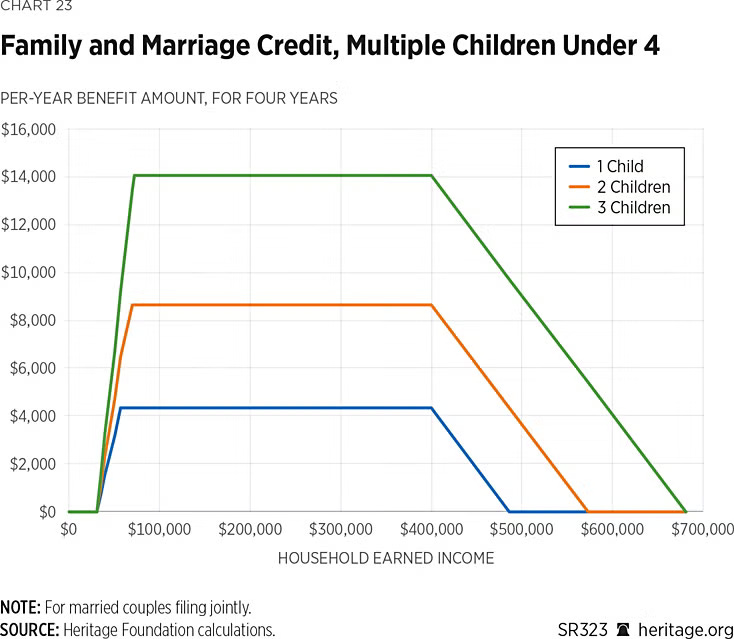
Child tax credits only for married couples who are the child’s biological parents, who are working, and who make at least $30,500. The Heritage proposal would get rid of the Earned Income Tax Credit, because that credit gives more money to struggling single parents than better-off married ones, as well as the Child Tax Credit, and replace them with what they call a Family and Marriage (FAM) tax credit of $4,418 per child per year for four years. But this credit would phase in for families once they’re earning $30,500 per year — in other words, poor families wouldn’t qualify. It would only go to married parents — single parents wouldn’t qualify. It would only go to biological parents — step parents wouldn’t qualify. A person could be working full-time, but even if they’re earning above minimum wage, they may not qualify for this tax credit.
Bonuses for larger families — but only for married couples, only for biological parents, and not for the poor. Additionally, Heritage proposes a 25% per-child bonus to their FAM tax credit for third children and beyond. But, again, poor families are out of luck, as only couples with at least one working spouse qualify, and that spouse has to make at least $30,500.
More money for higher earners, none for the lowest. The FAM credit phases in at $30,500, and goes up from there relative to income. That’s right: This is government family support that gives more money to families that already have more money. And it gives the most money to families that are the most stable: Those with two married parents who make more than six figures. The credit doesn’t begin to scale down until a family makes $110,000, and even then, the wind-down is small (beginning at just 5%). Why set up a program that gives people more money as they make more money? Because “the FAM credit’s phase-in would incentivize work.” All of this means that a married couple with three children making $400,000 a year would get $14,000 additional dollars from the US taxpayer — while a single mom making $20,000 a year would get nada.
No help after a child’s fourth birthday. As it stands, parents can claim the Child Tax Credit until a child’s 17th birthday. The Heritage plan cuts parents off when their kid turns four. They claim that these early years are when parents need the most help. But children don’t stop needing food and a roof over their heads once they’re kindergarten age. The Heritage Foundation is clear that the purpose of this plan isn’t to support children, but to incentivize parents to have more of them: “The FAM credit is designed specifically for families with newborns or young children. Lawmakers interested in family policy may be inclined simply to expand the CTC. However, this approach would be inefficient as a family formation incentive. Only a small fraction of the benefit would go toward new parents, while most of it would go to families that are already formed.” They continue: “many other family benefits, such as the CTC, are backloaded to later in life when many parents are on more solid financial footing and may be past their prime child-bearing years.” Emphasis mine, because this is truly stunning: The Heritage Foundation only wants to give parents tax credits for their (expensive) children if those parents (mothers) are in their “prime child-bearing years” and might make more babies. Eggs too old? No child tax credits for you.
Pay women to stay home. The Heritage Foundation could have proposed a generous paid leave program, which would allow parents of newborns to stay home and care for them in that crucial first year. But their aim is not to make sure that young children receive the best possible care. Their aim seems to be to get women out of the workforce. And so they’ve instead offered a $2,000 per-child credit for one parent (almost always the mother) to stay home and care full-time for her child — but again, this only applies to married couples where one spouse (almost always the husband) is working and makes more than $30,500 per year. You’re a single mom who wants to stay home with your child? Tough luck, get to work. You’re a low-income married parent who wants to stay home with your child? Tough luck, get to work. If the concern really were for children — if the view really was that young children are best off being cared for at home by a parent — then this policy would apply to all parents of young children. But that’s not the concern. The concern is that women aren’t living their lives in the way Heritage deems acceptable.
Fund this whole scheme by getting rid of Head Start. Head Start is an incredible program that has had vast positive impacts, increasing high school and college graduation rates, adult incomes, health outcomes, and overall wellbeing. Studies have found it even decreases child abuse and neglect. This proposal would effectively end it, and use the money saved to give tax breaks to wealthy married couples with children.
Pay people to marry young. The final Heritage policy is a $2,500 deposit into a savings account for every new baby born in the US — but the only way to get the full benefit of that money as an adult is to marry well before the age of 30. That is, when an American is born, the government will deposit $2,500 into a savings account for them, which they cannot touch until they either marry or turn 30. At either marriage or age 30, they can start to withdraw from the account, but only over three years — so about a third of the original value per year. They get the full withdrawal amount each year (roughly one-third of the total account value) if, in each year, they are married but not yet 30. If they’re over 30, whether they’re married or not, they pay a tax penalty. In other words, to get the full benefit, you have to marry by 27 — below the average age of first marriage for women (28.6) and men (30.2) alike. Again, the point is not to incentivize marriage; it’s to incentivize women especially marrying as young as possible, despite early marriage being tied to higher divorce rates.
xx Jill
Subscribe to Throughline by Jill Filipovic
Hundreds of paid subscribers
Connecting the dots. Politics, culture, women’s rights, foreign affairs, law, and more.
Again all this is about is a Christian nationalist desire to mimic Russia and remove all LGBTQ+ representation from the public view in the name of “protecting children from porn” as if just being or media representing LGBTQ+ people is pornographic and sexual. These people feel anything not straight and cis is sexualizing and abusing children simply because they do not want the LGBTQ+ people to exist. Hugs
Side note. Ron got home last night 3-2-2026 about 6 pm. I made him a supper of a salad and two hamburgers with the fixings. He was so happy. I was happy. We went to bed and snuggled which made Tupac who has snuggled me every night a bit unhappy but he pressed in from the other side. All day Ron and I have been together, unloading the car, doing laundry, Ron started on the floors in the kitchen, and we are making a pork tenderloin, potatoes, brown gravy, carrots, and greenbeans for supper. It is so good to have my husband home. I understood why he had been gone for the better part of three months but it sure is grand to have him home. I feel better, anxieties lower, and happy feeling up. Also for those worried I was not eating which I was not, I ate like a pig at a trough tonight, having a first heaping plate of everything and then going back for a second heaping plate. The end of the second one was a bit challenging to finish but I did. I offered to pick up the last bits of left overs but ron said he would do it. I think he noticed I was trying to hide that I was swaying and wobbleing when I walked due to my pain levels. Hugs
Discussion of gender is not sexualization. Making books available to students that represent the diversity of their experiences and showcase the numerous ways to be a person in the world is not sexualizing them. Such an interpretation says far more about the adults and the perspectives they’re applying to books than it does about the books or their intended audiences.
Following this week’s State of the Union Address, House Republicans worked quickly to advance legislation to ban books from public schools nationwide. House Resolution 7661 (H.R. 7661), also known as the “Stop the Sexualization of Children Act” would modify the Elementary and Secondary Education Act of 1965 by prohibiting use of funds under the act “to develop, implement, facilitate, host, or promote any program or activity for, or to provide or promote literature or other materials to, children under the age of 18 that includes sexually oriented material, and for other purposes.”
The bill was introduced by House Representative Mary Miller (Republican, Illinois). 17 additional Representatives cosigned it.
H.R. 7661 is an anti-trans bill, and tucked within its provisions are those that ban books for those under 18 that “include sexually oriented material.” This is the same vague language used in numerous states across the U.S. to ban books from public schools and public libraries. This bill includes “lewd” and “lascivious” dancing as prohibited topics or themes. No such books for young readers exist, but facts don’t matter to a regime seeking total and complete control.
The bill goes on to further define “sexually oriented material” as anything broaching the topics of “gender dysphoria or transgenderism.” The latter is an intentionally harmful word used as a cudgel to harm trans people. Such a broad definition also ensures that this kind of bill could be applicable in any situation where it would benefit the banners. It isn’t a stretch to see a bill like this used to outright ban all books by or about LGBTQ+ people under the guise of it being “sexually oriented.”
Though this legislation would apply to institutions using funds from the Elementary and Secondary Education Act of 1965, there’s little question that it would expand to include all public libraries, not just those in public schools. We’ve already seen this very thing play out across the country.
These local-level policies, alongside state-level policies like Iowa’s Senate File 496 and Idaho’s House Bill 710–both still working their way through numerous lawsuits–provided the roadmap for the proposal of federal-level book ban legislation. It was only a matter of time, and the ongoing onslaught of anti-trans legislation and rhetoric that has grown exponentially under the Trump-Vance regime made this the prime moment.
Discussion of gender is not sexualization. Making books available to students that represent the diversity of their experiences and showcase the numerous ways to be a person in the world is not sexualizing them. Such an interpretation says far more about the adults and the perspectives they’re applying to books than it does about the books or their intended audiences.
You can read the full text of H.R. 7661 here, including its list of cosponsors. Right now, your best way to have your voice heard about this hateful and discriminatory bill is to call your House representatives and urge them to veto this bill at every opportunity. There are years’ worth of resources from which you can pull about where and how all of these bills are calculated and targeted, and you can pull from the numerous ongoing lawsuits challenging similar bills and policies at the local and state level. Let your lawmakers know that you’re watching them and their voting records, especially if they’re among the roster of those proposing the legislation.
These bills aren’t about removing books; books are just one of the tools. These bills are about the complete and total erasure and removal of queer people from American life.
Don't be fooled by this bill's name– this is a book banning bill that will exclude LGBTQ books from all public schools NATIONWIDE.Call your congresspeople and tell them to VOTE NO on this nakedly bigoted book banning bullshit. http://www.congress.gov/bill/119th-c…
The conflation of porn and LGBTQ (but specifically trans) issues is purposeful. It's part of the Project 2025 plan to criminalize LGBTQ+ ppl.It starts with books. It moves to bathrooms. Then it moves to govt IDs. We're in it already.You don't need to be an expert to see where this goes next.
Nazi Republican Mary Miller who has quoted Hitler in the past now wants to ban strippers in public schools…and she's all in with banning any book that dares mention LGBTQ+ issues…www.lgbtqnation.com/2026/02/gop-…
Texas is at the forefront of pushing Christian nationalism along with all its prejudices. Misogyny, strict gender stereotypes, and enforced being straight. They require young people to marry in opposet gender marriages and produce as many children as possible. Why? It promotes their faith while filling church pews which funds more money for the church. Hugs
Suit against Debra Lynch is latest from Texas’s Republican attorney general amid ongoing attacks on abortion pills
Ken Paxton, Texas’s attorney general, outside the US supreme court in Washington DC on 1 November 2021. Photograph: Rod Lamkey/Newscom via Alamy
As part of its ongoing crusade against abortion pills, Texas sued a nurse practitioner on Tuesday, accusing her of shipping pills into Texas in defiance of the state’s abortion ban.
The nurse practitioner, Debra Lynch, operates a Delaware-based group called Her Safe Harbor, which mails abortion pills to women living in states with abortion bans. Now, Texas wants a court to block Lynch from “performing, inducing or attempting abortions” in Texas, on the grounds that Texas law only permits physicians to facilitate abortions in cases of medical emergencies.
Groups like Her Safe Harbor have proliferated in the four years since the US supreme court overturned Roe v Wade, as Delaware and a handful of other blue states have enacted so-called “shield laws”. These laws typically aim to protect abortion providers from out-of-state prosecutions, lending legal cover to providers who ship pills across state lines.
But such efforts have enraged anti-abortion advocates and sparked a legal war between states that protect abortion rights and states that ban the procedure. Texas has already sued a New York-based doctor, Margaret Carpenter, over allegations that she mailed abortion pills into the state, while Louisiana has indicted both Carpenter and a California-based doctor named Remy Coeytaux. Officials in New York and California, which also have shield laws on the books, have refused to cooperate with those efforts.
The safeguards offered by each state’s shield law vary. Eight states, including New York and California, clearly allow providers to use telemedicine to prescribe abortion pills to patients located in states where the procedure is banned. But legal experts have questioned whether Delaware’s shield law, which was first passed in 2022, always protects providers who offer telemedicine across state lines.
Delaware’s law was expanded in late 2025, in part to clarify that officials may not aid out-of-state investigations into abortion providers – a move that may offer Lynch additional protection. The Texas case may then depend on when, exactly, Lynch mailed abortion pills into the red state, according to Mary Ziegler, a professor at the University of California, Davis school of law, who studies the legal history of reproduction.
But, Ziegler added: “It doesn’t sound like they know when any of the abortions happened.”
The cases against Carpenter and Coeytaux largely rest on allegations of specific abortions. The Texas case against Lynch, however, focuses on media reports that feature Lynch saying she mails pills to Texans or advises Texans who want abortions.
After Ken Paxton, the Republican attorney general of Texas, sent a cease-and-desist letter to Her Safe Harbor and other abortion-providing groups in August, Lynch said she had no plans to stop mailing pills. In fact, in the hours after news of the letter broke, the group received more than 150 requests for pills from Texas, Lynch said at the time.
“None of our providers are primarily concerned with our own wellbeing or our own legal status,” Lynch previously told the Guardian. “All the horrors that women are facing because of these ridiculous bans and restrictions outweigh anything that could possibly happen to us as providers, in terms of a fine or a lawsuit or even jail time, if it were to come to that.”
Lynch did not immediately respond to a request for comment on Tuesday.
I often say that a lot of anti-trans anti-gay anti-LGBTQ+ people have their feelings because they don’t feel different from the cis straight majority so can’t understand or accept that such things because they simply don’t feel that way. If they don’t feel it it can’t be real which is the same with how many white people feel about racism. Remember the old question of how do you know you’re gay or trans or lesbian or nonbinary or what ever simply because the people who grew up straight and cis felt normal in society? But if you ask them when they knew or how they knew they were straight and / or cis they are confused. If a boy at 10 comes out as gay the parents freak out, but if that same kid starts showing interest in girls the parents are ecstatic about their boy growing up. Why the difference? Because one fulfills their expectations and the other … well it just is not like them. It simply comes down to tradition and what feels normal for them. Every person who asked me if I tried to change my sexual orientation and there have been so many, to them I ask have you? They act offended. Why would I do that and I reply, then why should I. Then if they persist for some reason that I should do conversion therapy I ask could they convert from their straight / cis desires to being LGBTQ+? Again they are stunned why they would do that and instantly claim not I couldn’t do that. Then again why ask me to do it? Hugs
Providing objective, nonpartisan, rigorous, original journalism that investigates America’s anti-LGBTQ landscape and elevates everyday American heroes. Expect two rigorously reported stories every weekend.
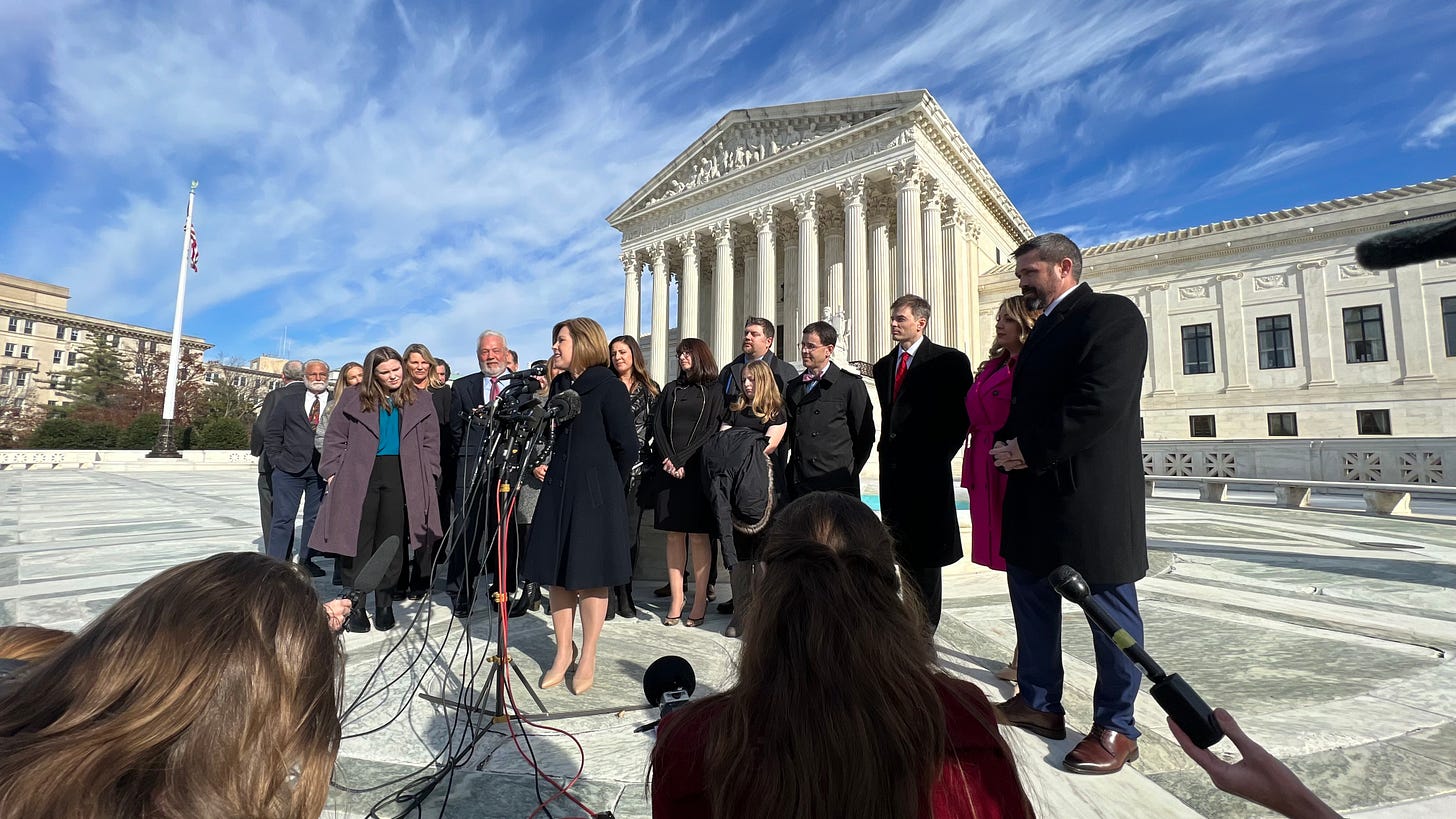
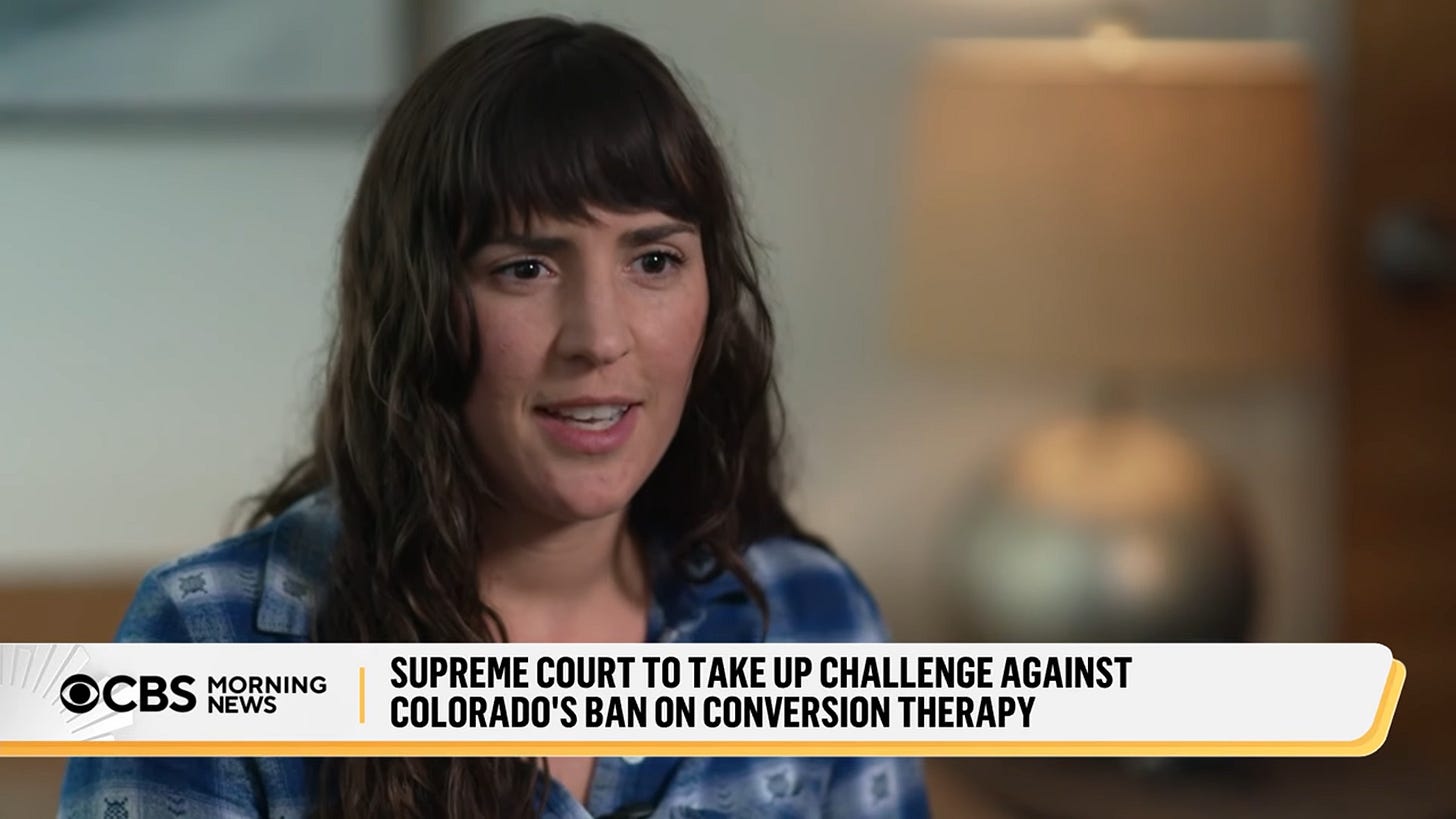
On Oct. 7, the U.S. Supreme Court heard oral arguments in Chiles v. Salazar, a case that challenges Colorado’s ban on conversion therapy.
Shortly after, Alliance Defending Freedom (ADF) sent an email to their supporters quoting Paul in Ephesians 6:12: “For our struggle is not against flesh and blood, but against the rulers, against the authorities, against the powers of this dark world and against the spiritual forces of evil in the heavenly realms.”
The email goes on to say, “You might think that a law like this might be just a ‘Colorado problem.’ Sadly, laws like this exist in 22 other states,” referencing other parts of the U.S. that have instituted conversion therapy bans.
This sort of language about conversion therapy is nothing new for the Christian legal group representing Kaley Chiles. Unlike most legal organizations, ADF is sharply anti-LGBTQ. Since their inception over 30 years ago, the group has fought to maintain anti-sodomy laws, uphold the right to discriminate against gay couples and overturn Roe v. Wade.
In recent years, a major element of their fight has been to legalize the discredited practice of conversion therapy.
The Supreme Court appears poised to rule in favor of ADF, which could effectively invalidate conversion therapy bans for minors by licensed professionals across the U.S. This victory would add to the organization’s already-high win streak, which they say is around 80%.
“I don’t think anyone is undermining LGBTQ rights as relentlessly as ADF,” Peter Montgomery, research director at the advocacy group People for the American Way, told Uncloseted Media and GAY TIMES. “They’re shaping the culture for generations to come.”
Although nearly every major medical association has denounced conversion therapy, ADF is arguing that disallowing the practice is a violation of the U.S. Constitution’s First Amendment.
“This case is part of its crusade to turn religious freedom into a license to harm others,” says Amy Tai, the co-author of an amicus brief in Chiles v. Salazar that is urging the Supreme Court to uphold the Colorado law. “It is part of a larger effort and movement to harm LGBTQ people and strip them of their constitutional rights.”
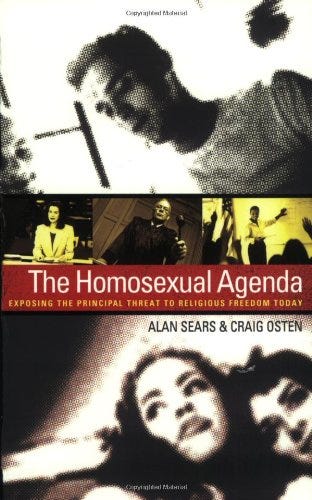
ADF, originally the Alliance Defense Fund, was founded by evangelical anti-gay activists in 1994. Alan Sears, their former CEO and president, co-authored “The Homosexual Agenda: Exposing the Principal Threat to Religious Freedom Today.” The book calls homosexuality a “disordered sexual behavior” and equates it with pedophilia and states that gay people on college campuses are involved in “the promotion of sexual relations between adults and children.”
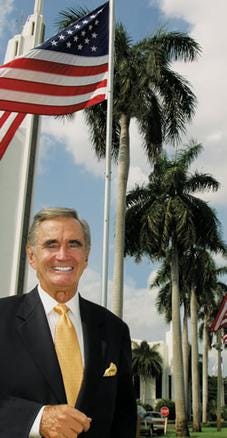
D. James Kennedy, another founder, has preached about “reparative” therapy for gay folks. In a 1993 fundraising letter for his Christian media organization Coral Ridge Ministries, he asked “Would you want your son, daughter, or grandchild sharing a shower, foxhole, or blood with a homosexual?”
A third founder was the late James Dobson, who advised several presidents and argued that conversion therapy could “cure” people.
Since ADF launched, many powerful political figures with anti-LGBTQ beliefs have worked for them. While working as an ADF spokesperson between 2002 and 2010, House Speaker Mike Johnson described gay folks as “destructive” and argued that support for homosexuality could lead to support for pedophilia.
Kristen Waggoner speaking at a press conference in 2018 (Groversawit)
And their current president, Kristen Waggoner, has delegitimized the harm conversion therapy causes by defining the practice as merely having conversations.
Today, their influence in the U.S. government is stronger than ever, with ties to all three branches. In addition to Speaker Johnson, Supreme Court Justice Amy Coney Barrett has been a paid speaker for ADF at least five times since 2011. And in May, President Donald Trump appointed Waggoner to the newly-formed Religious Liberty Commission.
All of these resources and connections are employed to advance an anti-LGBTQ agenda. “They want to see what they see as the God-defined order for gender and marriage be imposed into law,” Montgomery says. “They are trying to create a legal regime in which people can claim religious beliefs to opt out of laws that apply to everyone else.”
History of Fighting to Criminalize Homosexuality and Legalize Conversion Therapy
Over time, ADF has incorporated these viewpoints into their litigation to try and dismantle legal protections for LGBTQ people.
“Just 20 years ago, they were still arguing in court that states should be able to criminalize gay people,” says Montgomery.
In 2000, for example, ADF funded amicus briefs in Dale v. Boy Scouts of America, a case where an assistant scoutmaster sued the Boy Scouts after the organization revoked his membership for being gay. The Supreme Court ruled in favor of ADF.
In 2003, when support for gay marriage was still low in the U.S., they filed an amicus brief to uphold the criminalization of gay sex in Lawrence v. Texas, arguing that the state has a right to regulate “public health and morality.” The group lost the case and sodomy laws were banned nationwide.
As public opinion changed and gay marriage became legal across America in 2015, ADF shifted to more nuanced arguments. “Now, because they know that most Americans favor LGBTQ equality, they’ve really reframed their arguments [around] religious liberty and free speech,” says Montgomery.
The organization has since set its sights on overturning state bans on conversion therapy. In 2018, ADF Senior Counsel Matt Sharp argued against a California bill that classified conversion therapy as fraud. And in 2019, the group sued New York City for a similar law, which led the city to reverse the ban out of fear the case would reach the Supreme Court.
A few years later, in 2021, ADF fought to overturn a statewide conversion therapy ban in Washington, where they represented Christian therapist Brian Tingley. In this instance, they argued that Washington’s law censored Tingley from speaking about gender dysphoria.
A federal appeals court unanimously upheld Washington’s law, with Circuit Judge Ronald Gould shutting down ADF’s argument, writing that: “Washington, like other states, has concluded that health care providers should not be able to treat a child by such means as telling him that he is ‘the abomination we had heard about in Sunday school.’”
Learning from their mistakes, ADF tried again with Chiles v. Salazar, claiming the Colorado law discriminates against Chiles’ viewpoint. Chiles is an evangelical therapist who received her counseling training and education from a seminary.
In their arguments to the Supreme Court, ADF says the conversion therapy ban encourages therapists to help minors explore LGBTQ identities and condemns assisting patients to align with their assigned gender.
Though intended to ban conversion therapy for all LGBTQ people, ADF’s case focuses on gender identity, capitalizing on souring U.S. public opinion on trans rights.
“Chiles believes that people flourish when they live consistently with God’s design, including their biological sex,” ADF wrote in a petition to the Supreme Court.
“ADF has tried to draw a connection between laws prohibiting conversion therapy and states attempting to force mental health professionals or doctors to treat transgender youth,” Christopher Stoll, senior staff attorney at the National Center for LGBTQ Rights, told Uncloseted Media and GAY TIMES. But if the law passes, conversion therapy would become legal to practice on all LGBTQ people.
Another part of ADF’s success stems from manufacturing legal battles to advance cases that match their goals.
Chiles, for example, had not incurred any legal penalty from the Colorado district attorney. Instead, ADF filed a pre-enforcement lawsuit, claiming that she had censored herself and stopped accepting patients for conversion therapy following the law’s passage.
“All of these cases are, in a sense, made up cases. … They’re brought on behalf of therapists who have not actually been subject to any kind of investigation or penalty by either state or local governments,” says Stoll, who is representing Kansas City, Mo. as ADF and Missouri’s Attorney General challenge the city’s ban on conversion therapy.
This strategy is what makes ADF stand out. Montgomery says that unlike many other legal organizations, ADF also helps file lawsuits and writes the bills that directly challenge precedents and legislation they hope to change.
This was in part how they were effective in overturning Roe v. Wade. ADF drafted the Gestational Age Act, which banned abortion in Mississippi after 15 weeks of pregnancy. That law then became the central point of the Dobbs case, which overturned abortion rights nationwide.
“They’re just engineered to test these legal arguments, when really no dispute has arisen,” says Stoll.
When asked for comment, an Alliance Defending Freedom Media Relations Specialist redirected Uncloseted Media to a website criticizing the Southern Poverty Law Center, saying the group mischaracterizes ADF as a hate group.
How ADF Operates Globally
ADF’s efforts to dismantle conversion therapy and LGBTQ rights span far beyond the U.S. Alliance Defending Freedom International (ADFI) boasts about efforts in 70 countries, where they push anti-LGBTQ legislation as far as possible in each country.
In 2012, ADF’s then-legal counsel Piero Tozzi spoke at a conference in Jamaica, advocating for the prohibition of gay sex, stating that the “retention of the legislation prohibiting sodomy is a bulwark against this agenda.” And in 2013, members of ADF defended a statute in Belize that characterized LGBTQ sex as “carnal intercourse against the order of nature.”
“They’re one of the most powerful and influential Christian right religious extremist groups that we have operating in Europe,” Neil Datta, executive director of the European Parliamentary Forum on Sexual and Reproductive Rights, told Uncloseted Media and GAY TIMES.
Datta says with offices in six cities with international human rights centers, ADFI contacts political allies throughout the continent, feeding them legal briefs and direct arguments. Then, those partners take that information and rejig it to align with their country’s political discourse.
“They’re hiring Europeans, training them in the American model of social issues litigation from an anti-rights perspective, and then hoping that [they] will be running with this in European courts,” Datta says. “They bring know-how and capacity to the continent.”
Datta says the U.S. is where the organization conducts its litmus tests for anti-LGBTQ laws and legal arguments: “In the U.S., you have 50 little courts that you can try things out in,” he says. “[ADF] has their own range of different areas that they would like to be active in, and they hunt for opportunities where they can make some progress.”
That includes the defense of Finnish politician Päivi Räsänen, who in 2021 was tried for hate speech for condemning a Lutheran church for supporting a Pride event. With ADFI’s assistance, Räsänen was acquitted in 2023.
Making Headway to Ban Conversion Therapy Abroad
While ADFI has yet to succeed in overturning conversion therapy bans in Europe, Datta says some politicians with links to the group have promoted reintegrative therapy, another form of therapy that attempts to help folks suppress same-sex attraction. While the term attempts to distance itself from conversion therapy, it uses similar procedures to the condemned practice.
However, Datta says ADFI is taking steps to shift the discourse by lobbying against the Digital Services Act, a European Union regulation for online hate speech.
In October, ADFI penned a letter to the European Commission asking the organization to review the law. ADF has also posted various blogs on the legislation, one posing a hypothetical about gender identity, stating, “Let’s say you went on Facebook … to post something as common sense as believing that there are only two genders. … If someone were to report that as hate speech, the E.U. could pressure Meta … to remove the post lest it face those stiff financial penalties.”
ADFI has also expanded its horizons to Africa. In May, Bettina Roska, an ADFI legal officer based in Geneva, joined a consortium of anti-LGBTQ advocates in a Pan-African conference on “family values” in Nairobi, Kenya.
“They are trying to do the same thing in Africa, around the African Union, and the African human rights system,” Jamie Vernaelde, senior researcher at Ipas, a non-governmental organization that focuses on reducing the harm of U.S. foreign policy, told Uncloseted Media and GAY TIMES.
Back in the U.S., the Supreme Court will rule on Chiles v. Salazar before the end of its current term next year. Their decision will potentially clear the way for conversion therapy to be practiced nationwide and abroad.
Vernaelde says that if Chiles v. Salazar is successful, ADF is hoping to bring their fight against conversion therapy worldwide in the same way they are expanding their anti-abortion lawsuits. Today, the group is attempting to undo abortion protections in the U.K. with the help of allies in the country’s right-wing Reform party.
“This is a template that they can use in other places that they can spread as widely as they want through their networks,” says Vernaelde.
If objective, nonpartisan, rigorous, LGBTQ-focused journalism is important to you, please consider making a tax-deductible donation through our fiscal sponsor, Resource Impact, by clicking this button:
Just like maga a small very vocal group of people are demanding the entire country roll back all progress made since the 1950s by minorities. Any new discovery by science no matter the field because it clashes with their holy book which they misread to form their warped view of reality. They do not care to let other others live their lives as they get to live theirs in peace and freedom. No they demand that everyone follow and live by their church doctrines because that way their god will favor them, come back sooner to give them rewards while killing the rest of us. Think of it, these people are OK with creating a situation where the majority die horribly to please his god as long as they get rewarded. Seems selfish to me not Christian. Also another important point is the constant repeating of the Christian surge of republican voters despite it being a lie is to shore up the idea that there was voter fraud that stole the midterms from the republicans. Think of it tRump people used a normal occurrence of vote totals shift as mail in votes are counted as evidence of fraud leading to the Jan 6th insurrection. Below I will post a quote from the article that will be used by republicans to show the democrats stole the midterms. Hugs.
Even as GOP leaders who can read a poll know that the upcoming elections are not looking good for their party, this fantasy of a Christianizing America is leading the everyday MAGA faithful to believe otherwise. A September poll from September shows that 89% of Republicans think their party will win the midterm elections, which is up seven points from April. In fact, the party is forecast to lose seats as its support continues to erode under Trump’s chaotic mismanagement.
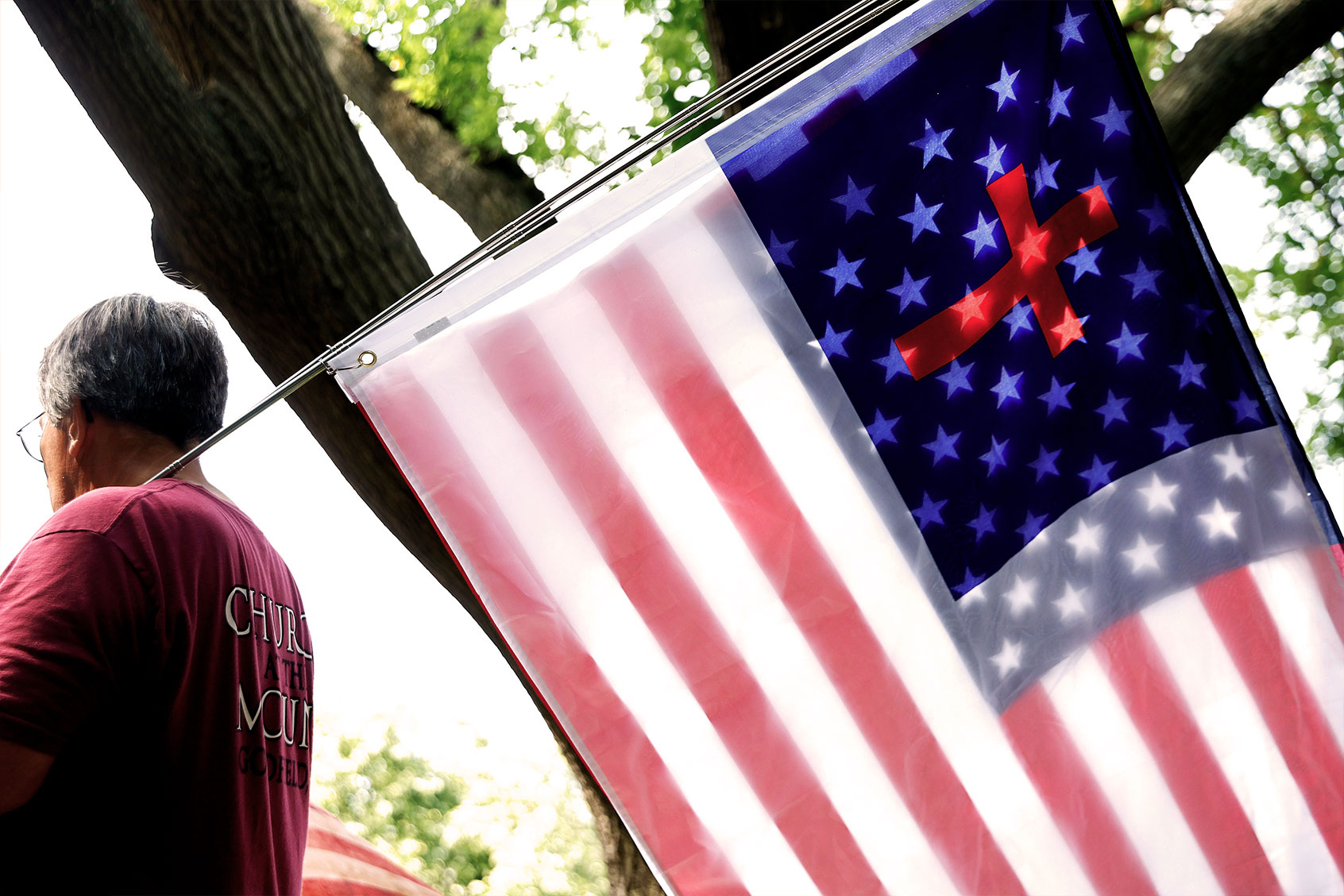
A United States and Christian flag are sandwiched together (Chip Somodevilla/Getty Images)
Turning Point USA ended 2025 with AmericaFest, a blowout conference for the MAGA powerhouse organization started in 2012 by the now-deceased Charlie Kirk. As described by Teresa Wiltz at POLITICO, “the vibe felt less like a political panel than an evangelical revival.” Watching the speeches from this fireworks-laden shindig, Wiltz’s observation felt like an understatement. Many speeches from the event’s main stage were simply sermons extolling a fundamentalist, evangelical Christianity as the one true faith.
“We’re here for one name, and that’s Jesus,” declared Bryce Crawford, a 22-year-old who makes videos of himself accosting strangers, including mentally ill homeless people, under the guise of “winning souls” for Christ. He went on declare that “we’re in the last days” and that every person who doesn’t believe in his version of the gospels will soon “be cast into hell.”
“We’re all on our knees, shoulder to shoulder, under the blood of Christ,” proclaimed the British comedian Russell Brand, who is facing seven charges of sexual assault, including three rape charges, in the United Kingdom. He included Ben Shapiro, by name, in his list of believers, even though Shapiro is Jewish. He then proceeded to insist that Christianity is the key to resolving the conflict between Israel and Gaza, which have primarily Jewish and Muslim populations.
Even rapper Nicki Minaj, newly out as MAGA, understood the primary assignment was talking up Christianity, claiming that she has had “the kind of faith that you think a person is crazy” since she was a little girl.
AmericaFest, as its name implies, is supposed to be a political event, not a church service. By including speakers like Shapiro and Ohio gubernatorial candidate Vivek Ramaswamy, who is Hindu, TPUSA’s organizers were even nodding to the idea that the GOP is supposed to believe in religious freedom and diversity. Or, as Vice President JD Vance put it, “We’re all part of the same American family.” Yet he quickly undercut that message by proclaiming that “By the grace of God, we will always be a Christian nation.” While Vance may claim that you don’t have to be a Christian to be an American, implicit in his words is the idea that only Christians are truly Americans, and everyone else is, at best, second class.
The blunt reality is that AmericaFest wasn’t just overtly religious — it was steeped in Christian nationalism. They equated being an American with being a Christian. But being a Republican, as Crawford suggested in his speech, is synonymous with being an evangelical Christian whose main duty is to convert non-believers. The political message of the event was inseparable from a religious one: that the purpose of the GOP and the MAGA movement is to usher in a religious revival and turn a decadent, secular country into one devoted to a narrow, right-wing version of Christianity.
For decades now, the Christian right has been the most powerful and influential force in the GOP, and yet even by their standards, this marked a dramatic shift toward the theocratic impulse. From a purely rational perspective, this is bad politics. Only 23% of Americans identify as evangelicals. Trump was able to win in 2024 only by convincing large numbers of people outside of evangelical Christianity that he has a secular worldview. This was aided by the fact that he quite clearly doesn’t believe all the Christian language, both coded and overt, his aides coax him to say.
The hype at AmericaFest suggests they are pinning their hopes on this imaginary religious awakening to deliver big wins to the Republicans in November’s elections.
But none of that seems to register with MAGA leadership right now. They’ve convinced themselves — or at least are trying to persuade their donors and followers — that the U.S. is undergoing a massive religious revival. Right-wing media has been pushing the view that huge numbers of Americans, especially young Americans, are converting to fundamentalist Christianity. The hype at AmericaFest suggests they are pinning their hopes on this imaginary religious awakening to deliver big wins to the Republicans in November’s elections.
As my colleague Russell Payne and I reported on in November for Salon’s “Standing Room Only,” Fox News in particular has been running a number of stories claiming a “Charlie Kirk effect” — that the MAGA influencer’s killing in September led to a tidal wave of Americans, especially young Americans, discovering or returning to Christianity.
Since then, there’s been a constant drumbeat of similar claims from right-wing media. “Gen Z embracing faith as more young people return to religion,” Fox News declared again on Dec. 21. NewsNation ran a new year segment that reported a “religious revival” was taking place among the young. This follows many similar segments from both channels dating back months, all swearing to their largely elderly audience that the Zoomers are flooding church services, despite what they may be seeing at their own local congregation. Conservative ministers keep insisting on social media that waves of young people are converting, even as no such numbers show up in surveys with more rigorous research methods.
Much of AmericaFest was also devoted to propping up the narrative that young adults are giving up sex and secularism for Christian nationalism in record numbers. Anti-trans activist Riley Gaines, 25, spoke about how Christianity calls on women to “Get married, have babies, have as many as you can and as early in your married life as you can.” Pastor Keenan Clark, 30, preached, “If you have not submitted to the lordship of Jesus Christ, though you were a conservative, you will find yourself in the bowels of a devil’s hell.” Angela Halili, 29, and Arielle Reitsma, 36, hosts of the “Girls Gone Bible” podcast, preached about saving sex for marriage because “sexual immorality is the only sin that you commit against your own body.”
The presence of Halili and Reitsma is a big clue that this Christian hype may be rooted in something other than an outpouring of faith. As I reported last year, there’s overwhelming evidence that the two podcast hosts were working as poker girls — women who make money at underground poker games by offering flirting and often much more to male players — while launching a Christian channel devoted to preaching the virtues of chastity to young women. Whatever they personally believe, their entire endeavor is rooted in dishonesty, a sin the Bible tends to have more to say about than sexual “immorality.”
There is no evidence-based reason to believe there’s a religious revival among the young that is about to create massive election windfalls for Republicans. On the contrary, a December report from Pew Research found that, “On average, young adults remain much less religious than older Americans. Today’s young adults also are less religious than young people were a decade ago.”
But there’s little doubt that the kind of people who write massive checks to organizations like TPUSA — wealthy, older Republicans — are very interested in hearing that there’s a religious revival in the U.S. It’s worth remembering that TPUSA began as a secular organization, but in 2020, Kirk started to shift to the Christian nationalist cause, arguing there should be no separation between church and state. With this newly religious agenda, money started to pour into TPUSA. Better yet, Kirk nabbed the support of extremely rich Republicans, with half of TPUSA’s $55 million haul in 2020 coming from 10 anonymous donors. In contrast, the organization raised only $8 million in 2016.
TPUSA and right-wing media aren’t the only groups that have a strong interest in creating the illusion of a mass revival swelling among America’s young. Conservative Christian audiences are notoriously gullible, so there’s a big market out there for attention-seekers and outright grifters to cash in using social media. Platforms like Instagram, Facebook and TikTok are awash in young people claiming they have access to Biblical prophecy or know how to perform exorcisms, or who, like the hosts of “Girls Gone Bible,” pair glamorous packaging with claims that young people are embracing an especially sex-free and fundamentalist Christian faith.
There are various degrees of sincerity in these influencers, yet one thing is undeniable: They are exploiting huge audiences of conservative Christians who want desperately to believe in a religious revival and would rather give their time and money to people who are telling them it’s real than to look at the statistics that show that it’s not.
Between groups like TPUSA, right-wing media outlets and social media influencers, there’s now an entire machinery propping up this false narrative that young people are stampeding into the pews. Even as GOP leaders who can read a poll know that the upcoming elections are not looking good for their party, this fantasy of a Christianizing America is leading the everyday MAGA faithful to believe otherwise. A September poll from September shows that 89% of Republicans think their party will win the midterm elections, which is up seven points from April. In fact, the party is forecast to lose seats as its support continues to erode under Trump’s chaotic mismanagement. But none of that matters: TPUSA is here to take Republicans’ money and sell them a story about how all the kids are coming to Jesus — and to the GOP.
Ellie House and Mike Wendling Gainesboro, Tennessee
BBC/Ellie House
Real estate developer Josh Abbotoy on the site of his planned future development outside Gainesboro. Abbotoy’s customers, including two self-described Christian nationalists, have caused controversy locally
As Josh Abbotoy gazes out at lush green woods and pastureland nestled among Tennessee’s Appalachian hills, he describes what he intends to build here: a neighbourhood with dozens of residential lots, centred around a working farm and, crucially, a church.
“A customer might very well buy and build roughly where we’re standing right now,” he says as we hike up to the top of a ridge.
Mr Abbotoy is founder of the real estate company Ridgerunner, which has bought land here and in neighbouring Kentucky. But his is no garden-variety housing development.
Mr Abbotoy is prominent in US conservative circles and describes his development as an “affinity-based community” – marketed to people not only interested in the peace and quiet of rural life, but in a constellation of right-wing ideals.
“Faith, family and freedom,” he says. “Those are the values that we try to celebrate.”
BBC/Mike Wendling
Josh Abbotoy points to a map of his development in the Ridgerunner offices in Gainesboro
Initially he didn’t attract much local attention after setting up shop in Jackson County.
But in late 2024, a local TV news report broadcast controversial statements made by two of Mr Abbotoy’s first, and most outspoken, customers: Andrew Isker, a pastor and author originally from Minnesota, and C Jay Engel, a businessman from California.
They are self-described “Christian nationalists” who question modern values, such as whether female suffrage and the civil rights movement were good ideas, and call for mass deportations of legal immigrants far in excess of President Donald Trump’s current plan. Another thing they sometimes say: “Repeal the 20th Century.”
The TV report raised an alarm bell amongst some local residents.
“You don’t know who these people are, or what they’re capable of,” says Nan Coons, a middle-aged woman who spoke in a firm southern accent during a recent interview near the town square in Gainesboro – of which this land is a part.
“And so it’s scary.”
Although Abbotoy himself does not identify as a Christian nationalist, he says concerns about his tenants are overblown.
The Ridgerunner development has since drawn national attention. And people in Gainesboro, home to around 900 people and one traffic light, have now found themselves in the middle of a dispute that is a proxy for much bigger political battles.
Podcasters move in
Mr Isker and Mr Engel announced their move to Gainesboro last year on their podcast Contra Mundum – Latin for “against the world”.
On their show, which is now recorded in a studio within Ridgerunner’s Gainesboro office, they have encouraged their fans to move into small communities, seek local influence, and join them in their fight to put strict conservative Christian values at the heart of American governance.
“If you could build places where you can take political power,” Mr Isker said on one episode, “which might mean sitting on the [board of] county commissioners, or even having the ear of the county commissioners and sheriff… being able to do those things is extremely, extremely valuable.”
Contra Mundum
C Jay Engel (l) and Andrew Isker (r) shown during an episode of their podcast
On X, Mr Engel has popularised the idea of “heritage Americans” – a fuzzy concept but one that applies mainly to Anglo-Protestants whose ancestors arrived in the US at least a century ago. He says it is not explicitly white, but it does have “strong ethnic correlations”.
He’s called for mass deportations of immigrants – including legal ones – writing: “Peoples like Indians, or South East Asians or Ecuadorians or immigrated Africans are the least capable of fitting in and should be sent home immediately.”
In their broadcasts and writings they have also expressed anti-gay sentiments. The podcasters deny they are white nationalists.
Both are Ridgerunner customers, and Mr Isker’s church will move into the community’s chapel when it’s complete.
The ‘resistance’
Their hardcore views have alarmed residents, with some locals setting up an informal resistance group.
“I believe that they have been attempting to brand our town and our county as a headquarters for their ideology of Christian nationalism,” says town matriarch Diana Mandli, a prominent local businesswoman who until recently owned a pub on Gainesboro’s central square
Late last year, Mandli led the charge by writing a message on a chalkboard outside her business: “If you are a person or group who promotes the inferiority or oppression of others, please eat somewhere else.”
BBC/Mike Wendling
More signs opposed to the new development followed. When people caught wind that the Ridgerunner guys were holding a meeting at a nearby fast food joint, dozens turned up to confront them.
Ms Coons, whose ancestors have lived in Gainesboro since around the time of the US Revolutionary War, says she engaged Mr Engel in conversation.
“He explained to me that what they’re promoting is what he called ‘family voting’… one vote per family, and of course, the husband in that family would be the one voting” with women frozen out of the electorate.
Mr Engel has since said publicly that it’s not “wrong” for women to vote, although he does support the idea of household suffrage.
BBC/Mike Wendling
Local residents put up a billboard outside of town
In a county that voted 80% for Donald Trump in the last election, Ms Coons is used to living next door to neighbours with conservative views.
But she and others came away from the protest convinced more than ever that the beliefs of their new neighbours were too extreme.
They say they don’t want to run them out of town, but intend to sound the alarm about what they say are extreme views, as well as thwart any future attempt to take over the local government.
“This is where we have to draw the line,” Ms Coons says.
What is Christian nationalism?
Christian nationalism is a nebulous worldview without a single coherent definition.
At the extreme end, as outlined by theorists including author Stephen Wolfe, Christian nationalists advocate for rule by a “Christian prince” – an all-powerful religious dictator, who reigns over the civil authorities and leads his subjects to “godliness”.
Less extreme versions take the form of calls for Christian law to be explicitly enshrined in American legal codes, for religious leaders to get heavily involved in politics, or simply for an acknowledgement of the Christian background of America’s founding fathers.
This multiplicity of definitions has created a strategic ambiguity that experts say has helped Christian nationalism seep into the mainstream.
Big ideas or far-right plan?
Mr Abbotoy’s development is still in the early stages – his company is building roads and organising sanitation infrastructure. When the BBC visited in November, workers were busy knocking down a decrepit old barn, one of many that dot the Appalachian landscape.
But business is brisk. Around half of the lots are already under contract. Mr Abbotoy anticipates that the first houses will be built and new customers will begin moving in at the beginning of 2027.
BBC/Ellie House
Building on the Brewington Farms site will start within months, with new residents moving in soon, in just over a year
Many of his customers, he says, are moving to heavily Republican Tennessee from Democratic-majority states like California and New York.
“People want to live in communities where they feel like they share important values with their neighbours,” he says.
Mr Abbotoy says he doesn’t call himself a Christian nationalist, but describes the criticism of his customers as “absurd” and says they have no intention to try to take over local government.
“They’re talking about big ideas and books,” he says. As for some of their more controversial views, he insists that “rolling back the 20th Century can mean a lot of things. A lot of conservatives would say we took a lot of wrong turns.”
Mr Isker and Mr Engel did not respond to multiple requests for comment and a list of questions.
BBC/Ellie House
Nan Coons belongs to an informal group of Gainesboro residents who are alarmed at their new Christian nationalist neighbours
Small-town fight goes nationwide
The fight here in Gainesboro has drawn in players far from small-town Tennessee.
Mr Abbotoy, who was educated at Harvard Law School, is also a partner at a conservative venture capital fund, New Founding, and a founder of the American Reformer, a website that has published the writings of a number of other prominent Christian nationalists.
His opponents meanwhile have received research assistance and advice from a national organisation, States at the Core, established last year to tackle authoritarianism in small communities. It is funded by a constellation of left-wing organisations. States at the Core declined our request for an interview.
The men of Ridgerunner have pointed to the organisation as evidence that the pushback against their project has been orchestrated by powerful liberals. The locals say this is ridiculous.
“Nobody’s cut me a cheque to say anything,” Ms Coons says.
In Gainesboro, people on all sides see a much bigger story – one of large-scale political fights playing out in rural America.
Republicans have made huge gains in rural areas this century, and in 2024 Trump stretched his lead in rural communities, winning 69% of the vote. The Democratic Congressional Campaign Committee recently announced a reported eight-figure investment ahead of the 2026 midterm elections, a chunk of which will be dedicated to winning rural voters.
“There’s definitely a renewed, [Democratic Party] focus on rural engagement,” Mr Abbotoy says. “And at the same time, there’s been a wave of people moving to small town America precisely because they like the Bible Belt, they like the conservative traditional culture.”
But Nan Coons and her allies say they aren’t ready to concede rural areas like her hometown to Christian nationalists.
“If we are going to turn this tide, it starts on your street, it starts in your neighbourhood, it starts in your small town,” she says.
“I have to stand for something, and this is where I stand.”
2025 has been filled with relentless and unprecedented attacks against the LGBTQ community in the U.S. President Donald Trump’s anti-LGBTQ policies have spilled over to countries abroad, including heading north to some conservative Canadian provinces like Alberta.
Despite this, there have been moments of hope. Here is Uncloseted Media’s 2025 LGBTQ year in review.
Jan. 1
Liechtenstein’s Marriage Act, passed in 2024, officially takes effect, opening marriage to same-sex couples and aligning the microstate with 21 other European nations that already recognize same-sex marriage.
Meta introduces new rules to their platforms. They remove their third-party fact-checking program and roll back hate speech restrictions, which allows anti-LGBTQ rhetoric to flourish. A report by Uncloseted Media identifies users who spew trans and homophobic language. One user wrote, “Look at this disgusting piece of fag shit here !” Another told someone to go to “the insane asylum where you belong, tranny freak.” Both of these comments are still up on the platform.
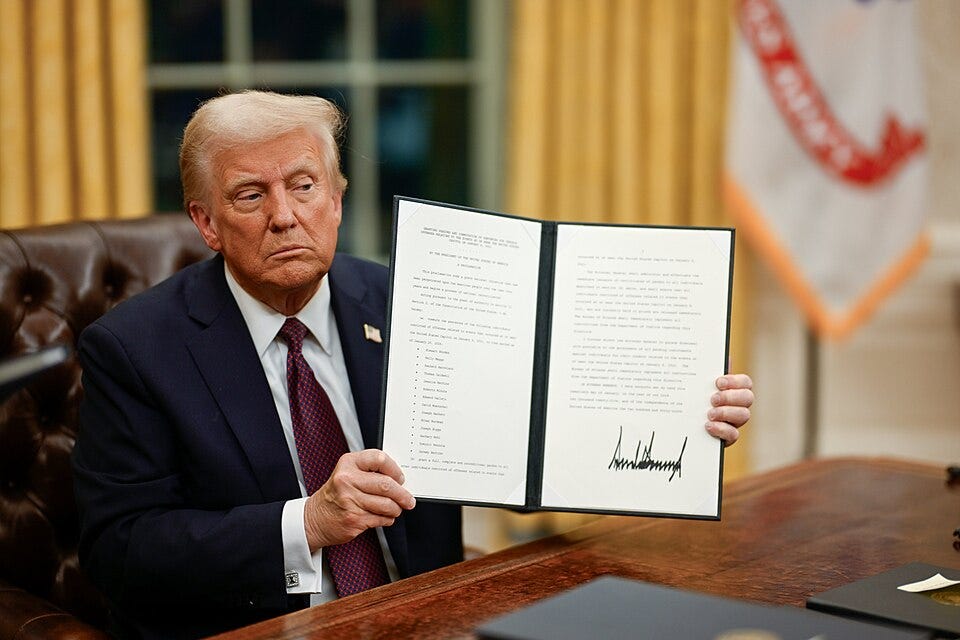
On the first day of his second term, President Trump signs an executive order titled “Defending Women from Gender Ideology Extremism and Restoring Biological Truth to the Federal Government.” The order forces federal agencies to treat sex as a fixed male and female binary “assigned at conception,” calls for “gender” to be scrubbed from federal guidance, halts federal funding for gender-affirming care and mandates trans women in prison to be sent to male facilities. Trump also issues a stop-work order for PEPFAR, the biggest HIV/AIDS relief program in the world. This kicks off a broader pattern of cuts to HIV prevention and research.
Over the next three months, Trump continues his attacks on the LGBTQ community by signing another executive order that bans trans women and girls from competing on sports teams that match their gender identity. He also directs agencies to curb gender-affirming care for anyone under 19 and to strip funding from schools that allow social transition, inclusive bathrooms or the use of affirming names and pronouns.
Jan. 23
Same-sex marriage becomes the law of the land in Thailand, making it the first country in Southeast Asia to recognize marriage equality and equal adoption rights for gay couples.
Jan. 27
The Idaho House passes a resolution urging the U.S. Supreme Court (SCOTUS) to revisit and overturn Obergefell v. Hodges, signaling a renewed appetite to attack marriage equality at the federal level.
Feb. 6
Australia amends its federal Criminal Code to add sexual orientation, gender identity and intersex status as protected characteristics in hate-crime law. This creates stronger penalties for perpetrators of anti-LGBTQ hate crimes across the country.
Feb. 13
Sam Nordquist, a trans man from Minnesota, is found dead in Upstate New York after a woman he met online kidnapped and tortured him for weeks in a hotel room. Seven people connected to his death have been charged with murder. Sam’s friend, Jax Seeger, spoke to Uncloseted following the tragedy:
“From my understanding, they came out and said it wasn’t a hate crime … and part of their reasoning was because one or two of the suspects self-identified within the [LGBTQ] community. … Like, you can’t say that just because they identified as LGBTQ, they’re incapable of committing a hate crime. Sammy wasn’t just physically abused. He was psychologically abused and they didn’t go into what that consisted of, but I think that’s something to keep in mind. As well as just the level of abuse you know? Trans people deserve the same respect and the same love as everyone else.”
The week after our interview with Seeger, prosecutors upgrade the charges against Nordquist’s accused killers to first-degree murder.
Feb. 14
The Stonewall National Monument. Photo by TheCatalyst31.
The National Park Service (NPS) erases mentions of transgender people from the Stonewall memorial, furthering conservative efforts to push “LGB” without the “T.” A few months later, NPS would go on to remove mentions of bisexuals as well.
Feb. 25
Mexico City Pride 2025. Photo by Wotancito.
Mexico City’s Congress approves a resolution to reform the Law for the Recognition and Attention of LGBTTTI+ Persons. This move effectively recognizes nonbinary people.
Feb. 28
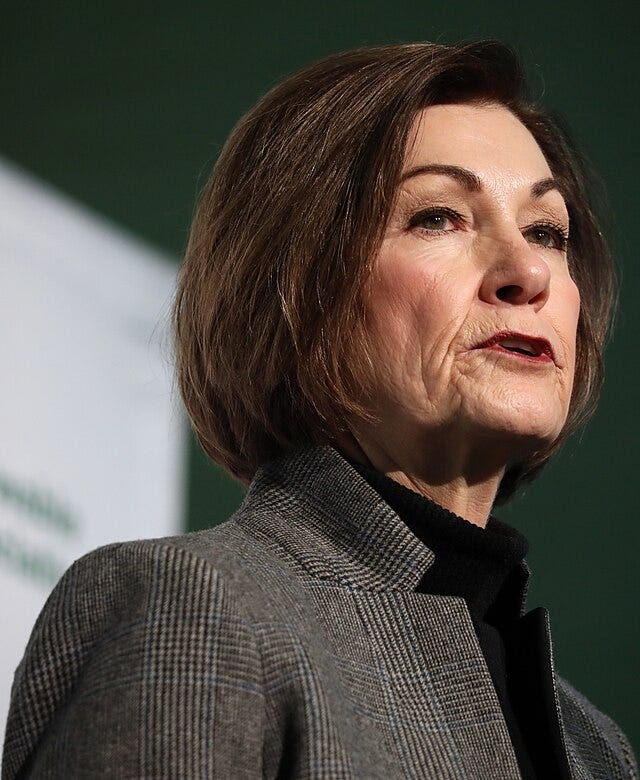
Kim Reynolds in 2024. Photo by Gage Skidmore.
Iowa Gov. Kim Reynolds signs SF 418 into law. This move officially removes “gender identity” from the Iowa Civil Rights Act’s list of protected classes in housing, employment and public accommodations. Iowa becomes the first state to remove civil rights from a previously protected group.
March 27
Gov. Spencer Cox announces that Utah will become the first state to ban LGBTQ pride flags in government buildings and public schools, effective May 7. While the move is framed as a “neutrality” measure, it is widely seen as part of a broader effort to erase public displays of queer identity. In protest, the Utah Pride Center unveils what it calls “the world’s largest transgender flag” in front of Utah’s State Capitol building in Salt Lake City.
April 4
A conversion therapy ban in New South Wales (NSW), Australia, goes into effect. This makes it illegal for therapists and religious leaders to practice conversion therapy on gay and trans people. In a media release, the NSW attorney general writes:
“This follows ongoing work by the NSW Government to progress reforms that ensure all members of our community feel valued, respected and equal.”
“This report not only rejects health care best practices for transgender people — it goes a step further by recommending conversion therapy, though under a new, rebranded name, ‘exploratory therapy’. Despite the report’s claims, this is, in fact, the same harmful practice of conversion therapy, just using friendlier language.”
May 6
Trump’s transgender military ban goes into effect. The change requires active trans service members to self-separate from the military or risk losing some of their Veterans Affairs benefits. Alaina Kupec, a retired transgender U.S. Navy lieutenant, says the decision punishes people who are qualified and want to serve the country:
“[This is] a really dark day for our country where basically we’re allowed to discriminate against a class of people.”
May 19
A Russian court fines Apple roughly $130,000 for four offenses, including the violation of Russia’s expanded “LGBT propaganda” law. The Russian law labels the “international LGBT movement” as extremist and treats queer visibility as a threat to state security. Anything that promotes “non-traditional sexual relations” violates the law.
May 30
Puerto Rico’s Supreme Court rules that residents can request an “X” gender marker on their birth certificates. This move explicitly recognizes nonbinary people and strengthens case law around self-determined gender in the U.S. territory.
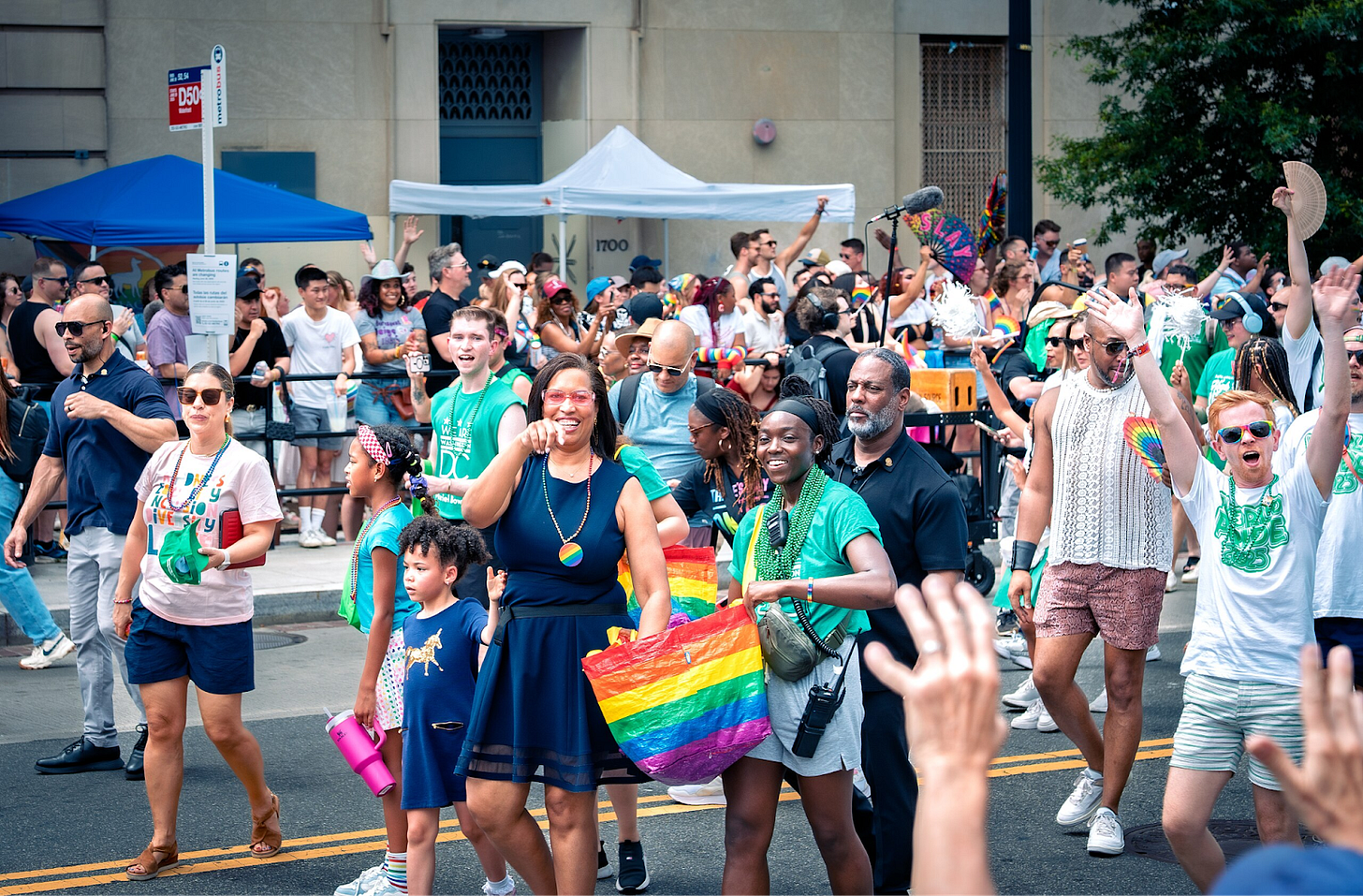
Amid relentless attacks from the federal government, WorldPride takes place in Washington D.C. Ahead of the event, the African Human Rights Coalition calls for a boycott because of Trump’s swath of anti-LGBTQ policies. While roughly 1.2 million people attend, The Washington Post reports that the turnout is less than half of what organizers expected.
June 18
In a 6–3 decision, SCOTUS upholds Tennessee’s law banning gender-affirming care for minors, including puberty blockers and hormones. The ruling signals that similar bans in other Republican-controlled states are likely to stand, sharply narrowing access to medically recommended care for trans youth nationwide. Ten days after the ruling, five trans youth speak to Uncloseted Media, with Dylan Brandt, 20, saying:
“Lawmakers don’t need to be involved in my doctor visits. They have no right. They have no knowledge. … They’ve got a lane and they should stay in it.”
In defiance of a government ban on Pride events, roughly 100,000 people march the streets of Budapest, Hungary, to celebrate. The march was seen as both a showing of support for LGBTQ rights and a protest against Prime Minister Viktor Orbán’s conservative government.
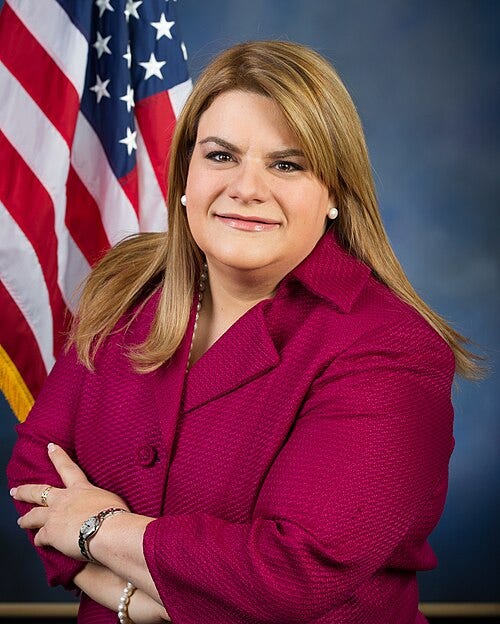
Puerto Rico’s governor, Jenniffer González-Colón, signs one of the harshest anti-trans health care laws in the northern hemisphere. The law bans gender-affirming care for anyone under 21 and threatens to cut off public funding for hospitals that don’t comply. It also threatens doctors with up to 15 years in prison and loss of licensure for violations. Puerto Rico’s LGBTQ+ Federation and GLAAD release a joint statement condemning the bill:
“Banning this care and stripping the rights of parents to make the best medical decisions for their families would create unbearable burdens for the most marginalized in Puerto Rico. Lawmakers must vote to protect access to health care that saves lives, and allow families to make private health care decisions that help loved ones be themselves, be safe, and to thrive.”
July 17
The Trump administration shuts down the LGBTQ suicide hotline, a life-saving resource that had received over 1.3 million calls, chats and texts since it launched in 2022. Genna Brown, a 16-year-old queer kid in North Carolina, who had used the hotline, spoke with Uncloseted Media about the impact it had on her mental health:
“I was an extremely self-loathing, suicidal kid who was under the impression that God hated me and I was gonna burn in hell for eternity. … Connecting with someone who gets it was really helpful. … Because at home, I was so isolated and I didn’t really interact with other queer people.”
July 18
Cuba’s National Assembly passes a law allowing trans people to change their legal gender without any requirement for genital surgery. In a post on X, Minister of Justice Oscar Silvera Martínez writes that the new law “will allow the country to have a modern civil registry” provided by “the issuance of digital documents with full validity and efficiency.”
July 29
In a move hailed by human rights groups, the Caribbean nation of St. Lucia strikes down colonial-era laws criminalizing “buggery,” effectively decriminalizing consensual same-sex intimacy between adults.
Aug. 20
In the middle of the night, Florida’s Department of Transportation paints over a rainbow crosswalk made to honor the victims of the Pulse nightclub terrorist attack that left 49 people dead. Advocates respond in protest by installing rainbow-colored bike racks.
Sept. 1
Burkina Faso’s Transitional Legislative Assembly passes a law explicitly criminalizing homosexuality. The law imposes a two- to five-year prison sentence and fines on people convicted of same-sex activity, deepening the criminalization of queer people in West Africa.
Sept. 10
The assassination of Charlie Kirk at Utah Valley University (UVU) kicks off a wave of anti-trans vitriol, including calls to criminalize the community and designate them as terrorists. In September, Uncloseted Media interviewed five current and former LGBTQ students at UVU. Simone Goodheart, a trans woman who had recently attended the school, spoke about how students were suggesting she was the murderer and how they were harassing her on campus:
“I would say a few of them were asking me to share my school schedule, which thankfully I’m not a student right now. But like damn, if that was the case? A few of them just make awful comments about my appearance, who I am as a person. Basically they just wanted to make sense [of it], but also they wanted to get their outrage out. Because yeah, somebody they cared for died. They are going through the grieving process and like there is outrage and frustration but they were misdirected and misconnected and just utilized by awful algorithms that try to boost the most amount of outrage possible in order to encourage engagement.”
Sept. 26
Slovakia’s parliament passes a constitutional amendment that formally recognizes only two genders, restricts legal gender transition and prohibits adoption by same-sex couples nationwide.
Oct. 6
Bari Weiss hosting a CBS News Town Hall with Erika Kirk. Screenshot/CBS News.
Bari Weiss is appointed editor-in-chief of CBS News, making her the first openly gay person to lead the network. Weiss often angles herself as an independent thinker and is known for criticizing the mainstream media. She has no experience in broadcast news and has surrounded herself in controversy, accusing former colleagues at The New York Times of bullying her. She has also railed against Diversity, Equity and Inclusion (DEI) initiatives, writing articles with headlines such as “Bari Weiss: End DEI.”
“It is time to end DEI for good. No more standing by as people are encouraged to segregate themselves. No more forced declarations that you will prioritize identity over excellence. No more compelled speech. No more going along with little lies for the sake of being polite.”
Oct. 7
SCOTUS appears poised to rule against a Colorado law that bans the discredited practice of conversion therapy on minors. The justices repeatedly question the state over whether the law hinders free speech.
The high-stakes case could roll back the rights of LGBTQ youth across the country. Colorado is one of more than 20 states that have banned conversion practices, and a ruling in favor of removing the ban could make those laws in other states vulnerable to similar challenges.
Zohran Mamdani, one of the most outspokenly pro-trans politicians in the country, is elected mayor of New York City. Meanwhile, anti-LGBTQ Republicans are defeated in Virginia’s and New Jersey’s gubernatorial elections. On the night of his win, Mamdani reaffirms his support for those who elected him:
“In this moment of political darkness, New York will be the light. Here, we believe in standing up for those we love, whether you are an immigrant, a member of the trans community, one of the many black women that Donald Trump has fired from a federal job, a single mom still waiting for the cost of groceries to go down, or anyone else with their back against the wall. Your struggle is ours, too.”
In a massive win for gay rights, SCOTUS rejects Kim Davis’ appeal and won’t revisit the landmark decision that legalized same-sex marriage nationwide in 2015. This signifies a major defeat for the new push to overturn the ruling, which was spearheaded by Davis and her lawyers from Liberty Counsel.
Nov. 17
Across Alberta, Canada, anti-trans legislation takes effect. A trans sports ban for students also forces sports organizations and schools to collect sensitive personal information that risks outing trans and gender diverse youth. Alberta Premier Danielle Smith announces plans to circumvent legal opposition to the province’s ban on gender-affirming care for minors by invoking the notwithstanding clause, a constitutional provision that will stop such challenges for five years. The measure was also used in Alberta in 2000 to advance legislation opposing gay marriage.
Nov. 19
New Zealand’s health minister, Simeon Brown, announces a halt to new prescriptions of puberty blockers for minors with gender dysphoria. Brown says the ban will remain until a British clinical trial is completed. Existing patients can continue treatment.
Nov. 25
The European Union’s (EU) top court rules that member states must recognize same-sex marriages contracted in any EU country for purposes such as residence and free movement, binding more conservative governments such as Poland, Bulgaria, Romania and Slovakia to acknowledge queer couples’ marital status even if they refuse to perform such marriages at home.
Dec. 2
ADF International, the global arm of U.S. anti-LGBTQ legal group Alliance Defending Freedom, publicly backs a South Australian woman threatening legal action over a Headspace Berri mental-health presentation that mentioned LGBTQ issues, incest and bestiality in a classroom context. Elenie Poulos, an expert on the intersection of religious and political discourses, describes their impact as “huge,” saying:
“They have a very longstanding and aggressive approach to the rights of LGBTIQ people. They fight it in the courts in the US, they fight it politically, locally and in communities, and their aggressive anti-gay stance is extremely harmful.”
Dec. 18
Robert F. Kennedy Jr. and Dr. Oz announcerestrictive measures designed to block minors’ access to gender-affirming care. The plan proposes federal Medicare and Medicaid cuts to all hospitals that provide this care to minors. “The multitude of efforts we are seeing from federal legislators to strip transgender and nonbinary youth of the health care they need is deeply troubling,” says Rodrigo Heng-Lehtinen of The Trevor Project.
Dec. 21
CBS News shelves a planned 60 Minutes segment on men deported to CECOT, an infamous prison in El Salvador. Internal sources indicate that the move to cancel the story came from the network’s editor-in-chief Bari Weiss, who reportedly raised concerns about the Trump administration’s lack of response to the reporter’s outreach.
If objective, nonpartisan, rigorous, LGBTQ-focused journalism is important to you, please consider making a tax-deductible donation through our fiscal sponsor, Resource Impact, by clicking this button:
Uthmeier focused on how he’s working to ensure that concerned parents can continue their “movement … based on faith, based on family, ensuring that we have the freedom to raise our kids in God’s image.”
“I’m about eight months on the job now as Attorney General, and as I tell my team every day, our No. 1 priority is, and will always be, protecting our kids. There’s a lot of evil out there. There’s a lot of evil, a lot of danger. There will always be crime, no matter how much we fight it. But our first priority must always be protecting our kids,” he said to applause.
Uthmeier went on to describe his Office’s legal actions against Target for its “transgender children’s clothing line” with “bras for little boys, some tuckable underwear.”
“Gross. Absolutely disgusting,” he said. “We’re going to hit them in their wallets.”
“Predators are all over that app, all the apps, but that one in particular. It’s their preferred vehicle to go after kids,” Uthmeier said.
“And they’re crafty, they’re smart, they’re patient. They’ll use fake pictures. They’ll talk in a dialect. They’ll get your kids to, you know, drop their guard. They’ll tap into their insecurities, and they’re willing to spend weeks or months to develop a relationship before they start soliciting information, soliciting photos, soliciting locations. And since we’ve sued them, we’ve made dozens of arrests of child predators that have gone after kids through this app.”
Uthmeier also described how his Office is able to enforce the law, including by serving as a “law firm for parents out there” who might be concerned by what school districts do.
“If you’re identifying one of these wrongs that’s violating your rights and that’s subjecting our kids to danger and evil, then we want to know about it, and we’re going to bring the heat in court to shut it down.”
The AG also quipped about a recent call to people to report their exes for immigration violations, noting one gender predominantly was dropping the dime on the other.
“Y’all ladies are savage, I’ve got to tell you. These calls come in and these ladies, I mean, they’ve got date of birth, nickname, frequented bars. I mean, all the details. So to the handful of men out there, treat your women right or they will absolutely get you.”

Ken Paxton, Texas’s attorney general, outside the US supreme court in Washington DC on 1 November 2021. Photograph: Rod Lamkey/Newscom via Alamy
BBC/Ellie House
Real estate developer Josh Abbotoy on the site of his planned future development outside Gainesboro. Abbotoy’s customers, including two self-described Christian nationalists, have caused controversy locallyBBC/Mike Wendling
Contra Mundum
BBC/Mike Wendling
BBC/Mike Wendling
BBC/Ellie House
BBC/Ellie House





 Scottie's Playtime


_(cropped).jpg)
.jpg)

#/media/File:2025.06.07_World_Pride,_Washington,_DC_USA_158135_05745_(54582538995).jpg)

.jpg)
.jpg)