April 12, 1935 60,000 students across the U.S. took part in the first nationwide student strike. The protest was against fascism and participation in any war. Posters from the anti-war movement of the 1930’s One of the events that day
April 12, 1963 Martin Luther King, Jr. and his fellow ministers Fred Shuttlesworth and Ralph Abernathy, along with 60 others were arrested on Good Friday in Birmingham, Alabama, for marching downtown. They had been denied a parade permit, and were violating a court order banning them from all protest activities. Public Safety Commissioner Theophilus Eugene “Bull” Connor had sought the injunction to put an end to a series of sit-ins, kneel-ins, boycotts and other nonviolent actions designed to challenge the local and state segregation laws. Fred Lee Shuttlesworth (left), Ralph David Abernathy (center), and Martin Luther King Jr. (right) march on Good Friday on April 12, 1963, in Birmingham. The Birmingham campaign of 1963Arrest in Birmingham
April 12, 1971 Protest at Fessenheim The first European demonstration against nuclear power brought together 1300 peacefully to oppose construction of a nuclear power plant at Fessenheim, on the Rhine in the Alsace region of France. The four 900 megawatt reactors have been in operation since 1977.
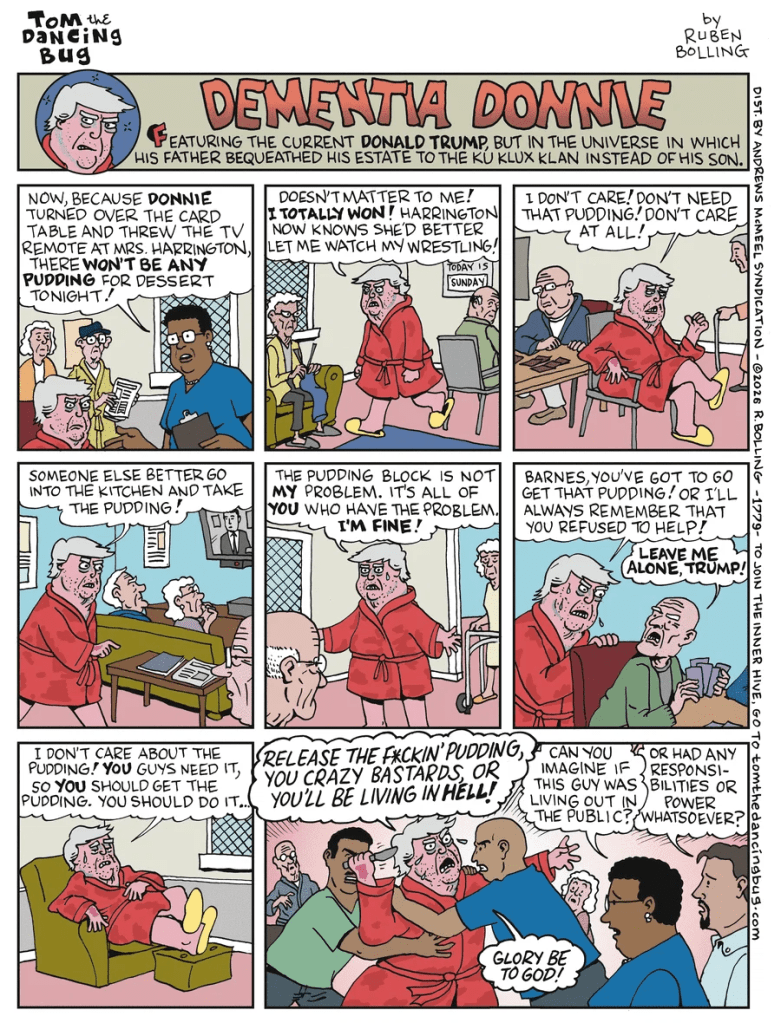
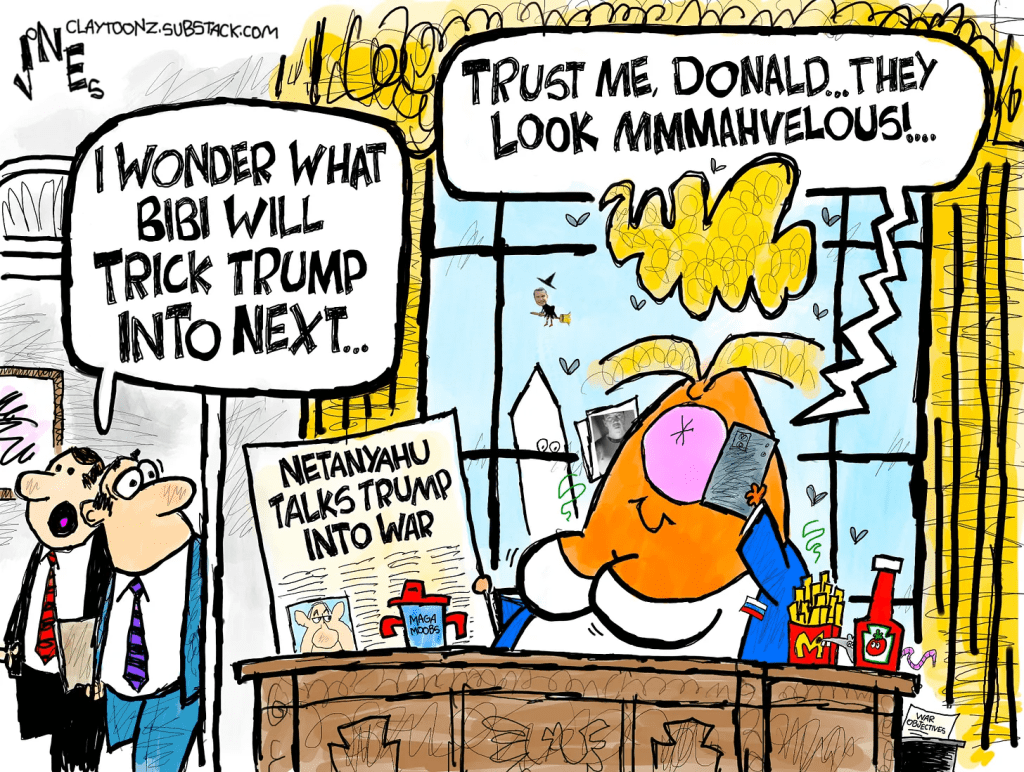
A new report by The New York Times details how Israeli Prime Minister Benjamin Netanyahu persuaded Donald Trump into going to war with Iran. Details in the story show that Donald Trump was oversold on the idea. But Trump wasn’t just oversold; he wanted to be told what he wanted to hear, even if it was wrong.
There was deep skepticism from his inner circle about going to war, and despite polling his top advisers, he often only heard “what he wanted to hear,” and his team wound up serving as an echo chamber for his gut instincts.
According to story written byJonathan Swan and Maggie Haberman, JD Vance was the most vocal in his opposition to the United States going to war with Iran, while CIA Director Jim Ratcliffe, Secretary of State Marco Rubio, and Gen. Dan Caine, Chairman of the Joint Chiefs of Staff, warned Trump that Netanyahu had “oversold” him on what could be achieved by the bombing campaign. Defense Secretary Pete Hegseth, on the other hand, was gung-ho on going to war. (snip-MORE, and it’s hot)
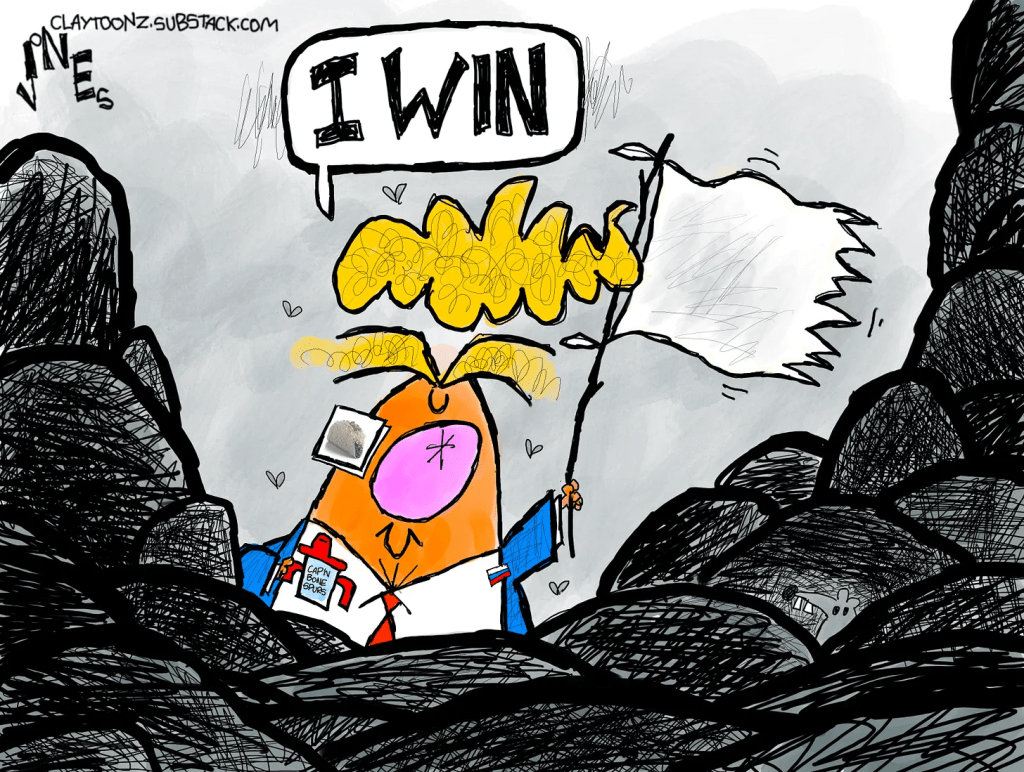
As predicted, Donald Trump taco’ed out again after threatening to commit genocide against the Iranian people.
Make no mistake about it, threatening to destroy an entire civilization is threatening genocide. Donald Trump was threatening to commit war crimes. (snip-MORE, also hot)
At a New York party, attendees spent Trans Day of Visibility dancing, DJing, and learning how to become less visible online.
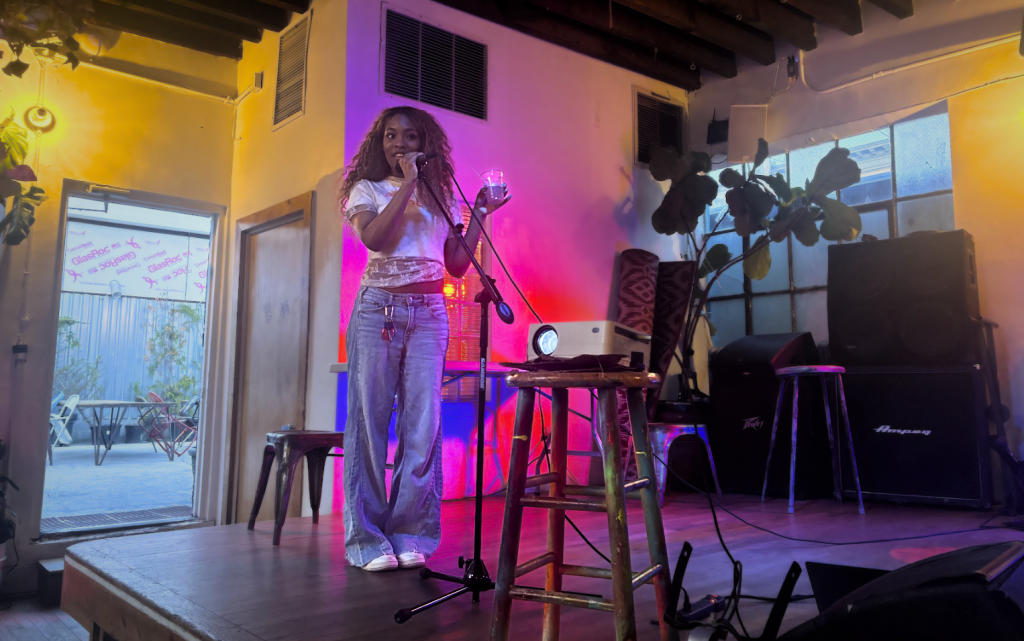
Imani Thompson, digital security trainer and organizer of the event / Photo by Janus Rose
It’s Trans Day of Visibility, and I’m at an event space in the heart of New York City’s Commie Corridor to learn how to become less visible online.
The crowd gathered at the aptly-named Trans Pecos in Ridgewood, Queens is here for “404: Deadname Not Found,” a digital self-defense workshop which promises to teach trans people how to find and remove their sensitive personal information from the internet (and which also has no relation to this website). The vibe is giving OpSec rave happy hour—attendees sip colorful drinks, groove to DJ sets, and huddle around laptops using online tools to track down their own digital footprints.
The goal of the exercise is to find holes in your digital defenses, a practice cybersecurity folks call “red-teaming.” A slide deck guides participants through this “self-doxing” ritual, instructing them to use websites like IntelBase, PimEyes, and haveibeenpwned to find addresses, selfies, passwords, old names and aliases, and other personal info that might have been left sitting around on the open internet.
It makes for great cocktail party banter. One participant raises their arms in triumph upon receiving a clean bill of health while checking if their information was leaked in a data breach. Others swivel laptop screens and compare notes on the various places their digital detritus had cropped up. In my case, I was lucky: I mostly found data brokers with incorrect information, a long-forgotten MySpace page, and a woman whose spam calls I’ve been receiving for the past 10 years. Finally, participants are directed to various pages where they can request data to be removed, or sign up for discounted services like Kanary and DeleteMe that do the removals on your behalf.
Behind the fun and light atmosphere, everyone here knows the unspoken reality that drives tonight’s activities: an unrelenting wave of discriminatory bills and executive orders that are rapidly demolishing trans rights across the US. “Trans Visibility” is a nice idea, but it turns out it really sucks to be visible in a fascist surveillance state where the highest levels of government are obsessively trying to destroy your ability to live.
“In this world of hyper-surveillance, I want to make sure all my stuff is safe and that no one is trying to harvest my data for anything,” Anna, a workshop participant, told 404 Media. Anna asked to use a pseudonym to protect her identity, which is not surprising given that the goal of the workshop is to make it harder to be doxed. “Especially now that there’s lots of incentives for the federal government to get into that business, I just wanna make sure all of that is under wraps.”
Like the event’s name suggests, many attendees are looking for traces of their “deadnames,” which is how some trans folks refer to the names they were given pre-transition. Trans people face a disproportionatelyhigh risk of being doxed online, and deadnames and other sensitive info are frequently dug up on right-wing hate forums like KiwiFarms and social media sites like Elon Musk’s X, where harassment campaigns and hate speech are allowed and even encouraged.
“We have to protect ourselves,” said Ryan, who also used a pseudonym. “It’s great to know how to find stuff like this, because you never know what’s still out there.”
Imani Thompson, a digital security trainer who organized the event as part of her series Cache Me Outside, says she started hosting the free workshops at queer bars in Brooklyn a year ago, after noticing trans and intersex friends who were noticeably shaken by the opening salvos of the second Trump administration.
“I hadn’t seen cybersecurity events that looked like they would attract or resonate with the crowds I felt needed this information the most,” she told 404 Media. “I wanted to make this fun and un-intimidating and doing digital security training at the bar is kind of silly and fun and gives us a built-in VPN and protection from sensitive convos being recorded.”
There are specific reasons many trans people are anxious about their personal data and online presence these days. For one, trans identities often don’t fit neatly into government boxes, and the name and gender they are assigned at birth may or may not match their government-issued IDs. Recently, a new law in Kansas resulted in hundreds of trans people being told that theirdrivers licenses and IDs had been invalidated overnight, forcing them to obtain new documents that revert to the sex marker assigned at birth. JournalistMarissa Kabas later reported that the 300 trans IDs in question had been flagged and not immediately invalidated, but the goal of the law and its ensuing chaos was clear: requiring trans people to have IDs that don’t match their appearance or lived reality, forcing them to out themselves and introducing friction and discrimination into their everyday lives.
The same Kansas law also implemented the first state-level “bathroom bounty,” making it a crime for trans people to use appropriate bathrooms and changing rooms and promising rewards to random passersby who feel “aggrieved” by someone they think might be trans. Lawmakers in Idaho have passed an even harsher bill, which would charge repeat trans bathroom-users with a felony and up to 5 years of jail time. These bills threaten not only trans people, but anyone whose appearance might fall outside of someone’s normative expectations of “male” and “female.” And they are especially dangerous at a time when facial recognition can near-instantly identify someone with a quick search.
Thompson also worries about the information that queer folks can reveal while asking for help online. Trans people experienceunemployment,housing insecurity, andviolence at exponentially higher rates than cis people, and it’s not uncommon to see Gofundme pages and Venmo accounts flooding social media feeds. These posts will sometimes include personal details like a person’s name, face, transition status, location, immigration status, and even how much they have in their bank account—great for getting donations, but not so great for the doxable breadcrumbs they leave behind.
“I think the risk is tenfold for the dolls and Black trans siblings because of disproportionate scrutiny in light of these bathroom bills and also how we do mutual aid,” said Thompson. “Whenever I see a mutual aid request being reposted or processed it makes me nervous, because we’re basically doxing our most vulnerable friends.” To reduce risk, she recommends people take down mutual aid posts as soon as needs are met and set their Venmo activity to private. “I feel like the intention in listing off how all these systems of oppression impact our friends are meant to create a sense of urgency and care, but then months later it’s still floating around and is a goldmine for someone who wants to claim they were made to feel unsafe in a bathroom so they can claim $3k or further an agenda.”
The privacy attitudes on display at the event contrast with the dominant media narratives about trans communities a decade ago. Fresh off the Supreme Court victory in Obergefell vs. Hodges that legalized same-sex marriage, many at that time were convinced that trans visibility would pave the way to equality, as glossy magazine covers featuring stars like Laverne Cox declared a “Trans Tipping Point.” But while conditions for some trans people marginally improved, we all know what happened next: a wave of reactionary anti-trans state laws, culminating in the re-election of Donald Trump and a series of executive orders aimed at destroying trans peoples’ access to healthcare, sports, bathrooms—essentially the ability to live a normal life.
At the same time, protection can’t be a retreat back into the closet. “It’s still important for trans voices to be heard in online spaces,” said Anna. “It’s not like I wanna go into the shadows or anything. I just don’t want people to know my personal data, my personal records, any of that.”
“Being Black, I also understand the distinction between visibility and hypervisibility and the precarity and lack of agency that hypervisibility creates,” said Thompson. “It’s tricky to find language around digital security that doesn’t imply queerness is something to hide or a shameful thing, because of course it’s not. I think having agency and purpose in how we can show up online and interact with tech as well as literacy around how technology and surveillance operates makes us better equipped.”
Janus Rose is New York City-based journalist, educator and artist whose work explores the impacts of A.I. and technology on activists and marginalized communities. Previously a senior editor at VICE, she has been published in digital and print outlets including e-Flux Journal, DAZED Magazine, The New Yorker, and Al Jazeera.
Leading off: Very liberal Americans, who have rated the Democratic Party poorly relative to other partisans since 2024, have swung sharply back toward congressional Democrats over the last few months. A new poll also finds voters who dislike both parties now prefer Democrats by 31 points. These gains should reassure a party that has faced internal strife since Trump’s second term began, but look less due to renewed faith in the Democrats and more like anti-Trump consolidation. That might not matter for the midterms — a vote won is a vote won — but it will matter for 2028 and beyond.
On deck this week: Tuesday’s Deep Dive will cover some new research on the level of ideological thinking in the electorate and the value (or not) of ideological moderation by the Democrats, and Friday’s Chart of the Week will respond to whatever’s in the news. I’m also finalizing questions for our April Strength In Numbers/Verasight poll this week — so subscribers, send in your question recommendations if you haven’t already! (Email or comments are fine.)
On with the data.
1. Anti-Trump sentiment, not pro-Democratic enthusiasm, is uniting Democrats again
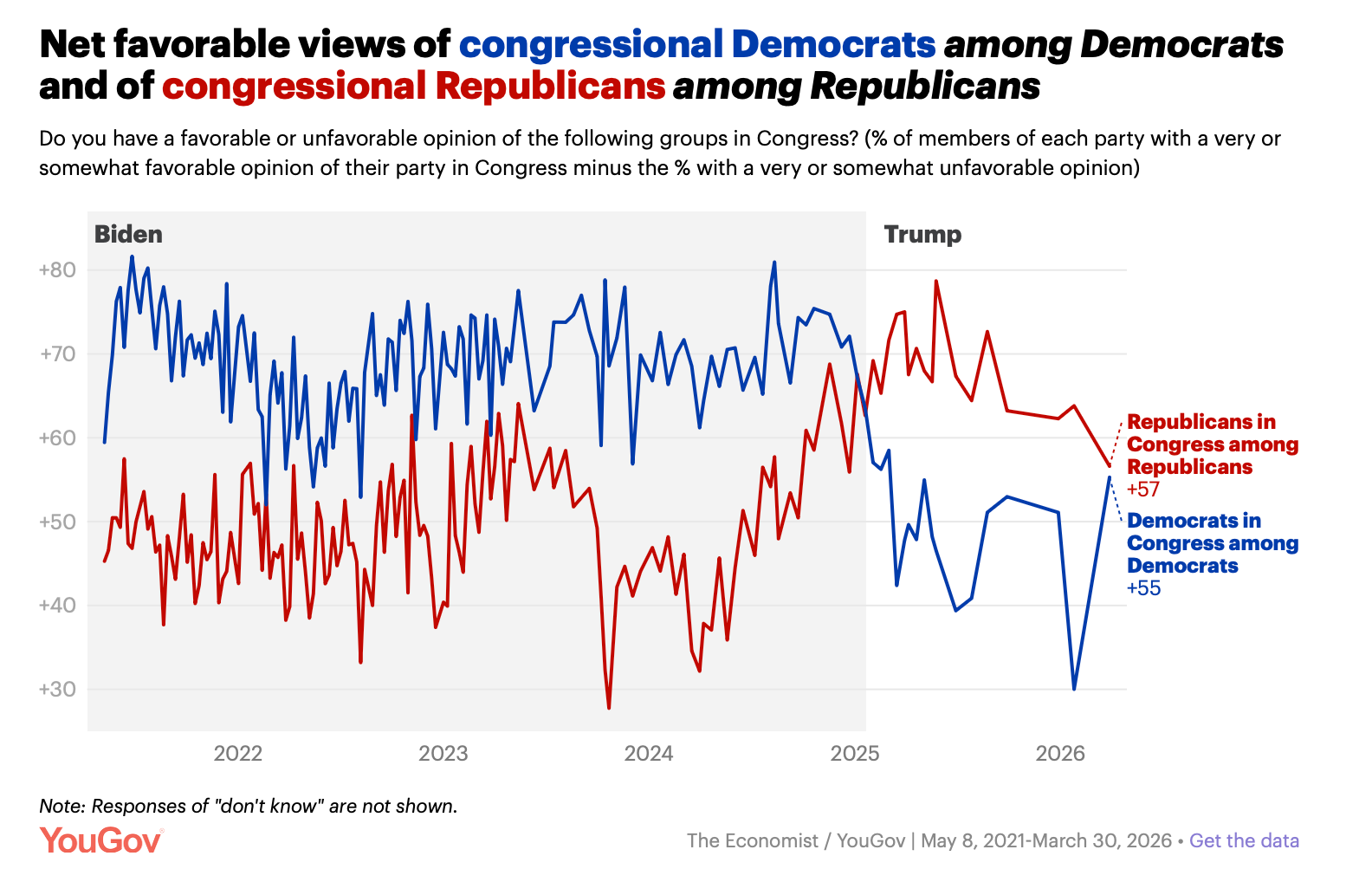
A new YouGov/The Economist poll, fielded from March 27 – 30, finds that Democratic voters have grown significantly warmer toward their members of Congress over the last few months. Earlier in 2026, Democrats said their party’s MOCs were favorable at a rate just 30 points higher than the rate they said their party was unfavorable. That gap has now grown to +55 — rivaling the favorability of Republican MOCs among Republican voters.
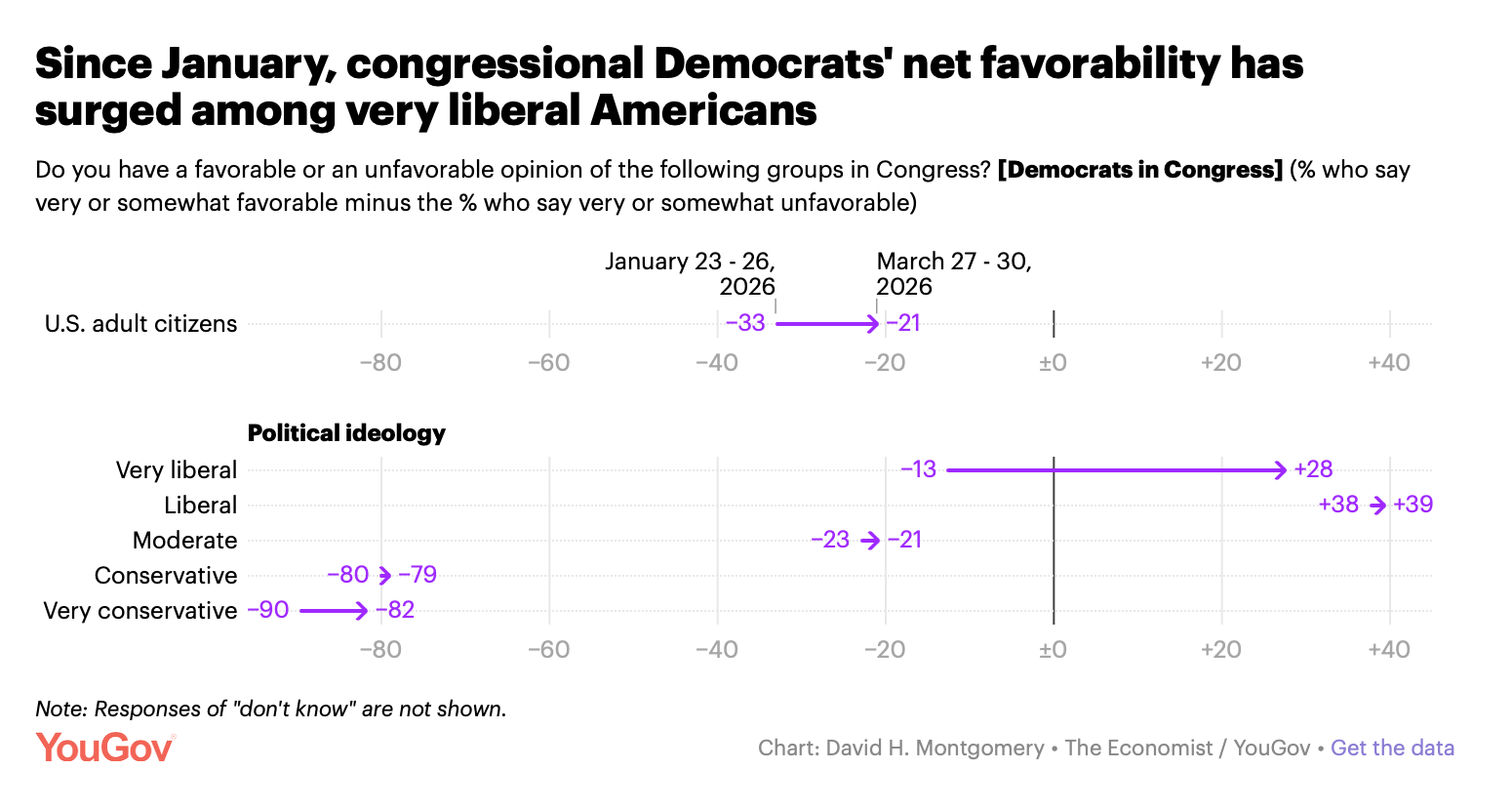
Aggregate Democratic views have increased because very liberal Americans have become sharply more favorable toward congressional Democrats since January. This group evaluated the party’s members of Congress favorably by a net +28 points margin — up from a -13 deficit in January. That’s a 41-point shift in two months:
Among Americans who are liberal but not very liberal, moderate, or conservative (basically everyone else), views of congressional Democrats barely budged.
Overall, U.S. adults give the Democrats a favorability rating of -21, 5 points higher than the rating they currently give Republicans.
That is a meaningful change. Last summer, Strength In Numbers documented that Democratic party favorability was unusually weak even as the party remained competitive on the generic ballot. We dug into the survey microdata and found out that this was because many left-leaning Americans were frustrated with their own side after the 2024 loss. Charles Franklin, who conducts the Marquette University Law School Poll, has been tracking the same dynamic in both national and Wisconsin polling. Among Democratic identifiers in Wisconsin, his data shows a net +56 favorability rating for their party, compared to +74 among Republican identifiers for the GOP.
Franklin finds that while Democrats still disagree about what they’re for, they are virtually unanimous in what they’re against: Donald Trump.
The simplest explanation for Democrats’ gains is that politically active party members on the left — who have had a lot of complaints about how the party is handling Trump 2.0 — are now responding to the same thing many other Americans are right now. That is, the president has moved public policy on many issue domains far to the right and up on the authoritarian axis (certainly far past the policy temperature “set point,” to use the language of the thermostatic model), and progressives are setting their differences with the Democrats aside for the moment as they focus on defeating an increasingly unpopular Republican president. This looks more like anti-Trump unity than pro-Democratic enthusiasm.
But it’s not just the base
The Democrats’ consolidation of left-wing liberalism is one piece of a broader backlash to Trumpism that shows up in the polling data right now. Another notable finding this week is from a new CNN/SSRS survey that found that about one-quarter of the public holds an unfavorable view of both parties. These are the so-called “double haters.” This group prefers Democrats on the 2025 generic ballot by 31 points.
This is a big deal for two reasons. First, that’s a massive shift; Double haters broke for Trump in 2016 and again in 2024. Now they’re swinging hard the other way.
Like Franklin’s polling, the CNN report also finds that Democrats’ gains are driven largely by opposition to the GOP, not enthusiasm for Democrats themselves. When asked what they dislike about Democrats, 22% of double haters called the party “do-nothing” and 11% said they aren’t standing up enough to Trump and the GOP, while 10% said they’re too liberal.
Will 2026 be a Democratic fake out?
So we’ve got two layers of anti-Trump consolidation happening at once. YouGov’s data shows the Democratic left is coming home, and the CNN poll shows voters who dislike both parties — a swing group that has been decisive in recent elections — are breaking heavily toward Democrats for the first time in years. Neither group is necessarily enthusiastic about Democrats. But both are currently heavily voting against Republicans. According to the CNN poll, 79% of voters who plan to support Democrats say their vote is a message of opposition to Trump. (Only 46% of Republican voters say they’ll vote to show support for the president.)
This could make for a big electoral win for Democrats in November, despite the division in the party and its overall nominally unpopular rating. According to CNN, Democratic-aligned voters are 17 points more likely than Republicans to call themselves “extremely motivated” to vote in 2026 — even though they’re 14 points less likely to view their own party favorably. Meanwhile, the Democrats have opened up a large lead in the U.S. House generic congressional ballot for 2026. They are up +6 in both the CNN and YouGov surveys, and closer to +5 on average.
This is the pattern I’d expect in a midterm environment that favors the out-party. But with many Americans (including the vaunted “double-haters”) still viewing the Democrats as weak and ineffectual, a big electoral victory will not completely solve their deeper problems of identity and division.
The trend in this data is good for the Democrats, in other words — but don’t misread a positive trend for a positive level.
2. What Strength In Numbers published last week
Readers of Strength In Numbers got three articles last week — a lighter load, since I was out sick Monday and Tuesday.
This week’s Deep Dive asked a question I’ve been getting a lot lately: if Trump is 20+ points underwater, why aren’t Democrats leading the generic ballot by 20?
Erin In The Morning is a reader-supported publication. To receive new posts and support my work, consider becoming a subscriber.
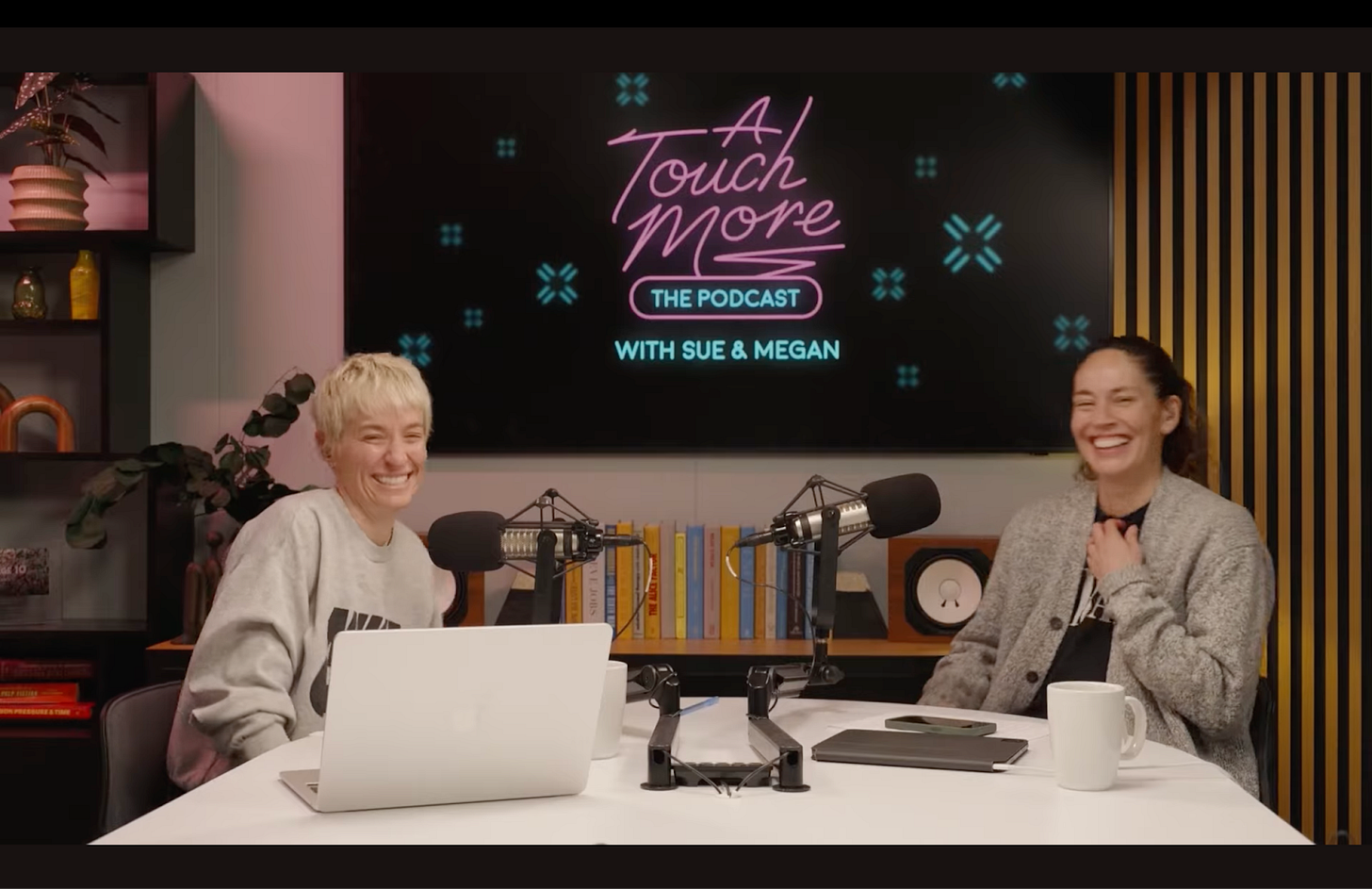
In the latest episode of their podcast A Touch More, all-star athletes Megan Rapinoe and Sue Bird denounced the International Olympic Committee’s new rule requiring sex testing for athletes competing in the women’s category.
The anti-trans policy will subject athletes competing in the women’s division—and only women’s, not men’s—to invasive sex testing to determine whether they have an SRY gene. Why this is where the International Olympic Committee chose to draw the gender line is arguably arbitrary.
No major medical organization endorses this litmus test as a reliable marker of athletic skill or “biological sex.” Even the scientist who discovered the SRY gene has slammed this practice in sports, saying “science does not support” this “overly simplistic” approach. Rather, it’s an arbitrary line in the sand used to cram unscientific ideas about gender and sex into manmade, binary boundaries.
Nonetheless, if a woman tests positive for the gene, she could be forced to compete in the “male” category. This has had dire consequences the last few times it was deployed against women’s athletes. From 1992 to 1999, cisgender women were forced into testing and found out, on the world stage, that they had intersex conditions they never knew about. The spectacle led to ostracization, disqualification, and at least one suicide before such testing was abolished.
“What we’re doing is subjecting everybody, all women and all people who are identifying as women, to this really invasive testing that only to me just says like, oh, so we’re just trying to whittle it down to a certain type of woman,” Rapinoe said.
Rapinoe is one of the most high-profile athletes in the country, a soccer player with three Olympic competitions under her belt and a decorated career in the U.S. Women’s National Team (USWNT). Bird, meanwhile, is among the most successful athletes in history—the retired WNBA legend spent her 20-season professional career as a point guard for the Seattle Storm, and is a record-breaking Olympian in her own right. The athletic power couple has been engaged since 2020. Together, they’ve long been outspoken advocates for the LGBTQ community.
Rapinoe connected the anti-trans vitriol in sports to the right wing’s broader attacks on queer and trans people, calling the push for sex testing “hateful.”
“They sort of like, lost the battle on gay marriage,” Rapinoe said. “So, it’s just like, we’re going to have this whole campaign for all these years to just hate trans people, which is such a small percentage of the population.”
Countless women, cisgender and transgender alike, have faced harassment and persecution because of the anti-trans athlete witch hunt.
“It’s just a total acquiescence to the Trump Administration,” Rapinoe said. “It’s just horrible, and I’m just sickened by it.”
The IOC rule is part of a broader pattern. In the United States, sports bans have served as a Trojan Horse for more sweeping anti-trans policies. The DOJ’s recent lawsuit over “women’s sports,” for example, also demands that transgender students be banned from bathrooms and locker rooms.
“Can we please stop obsessing over trans people and, I don’t know, maybe focus our time, energy, and resources into real problems women’s sports face?” Bird chimed in. She rejected the idea that sex testing, as the IOC claims, “protects women,” instead calling it a “fear-mongering” political ploy meant to generate support from conservative voters.
“That’s all this is,” Bird said. “If you crack this door open, it gets blown open. You’re now policing women’s bodies across the board.”
Erin In The Morning is a reader-supported publication. To receive new posts and support my work, consider becoming a subscriber.







 Scottie's Playtime