
Month: May 2026
Political cartoons / memes / and news I want to share. 5-5-2026


Did I ever tell you that I went through extensive therapy “to make me less girly” between 3rd and 5th grade?
Here’s a picture of the results to show you how well it worked ❤
To support my work : www.patreon.com/sophielabelle






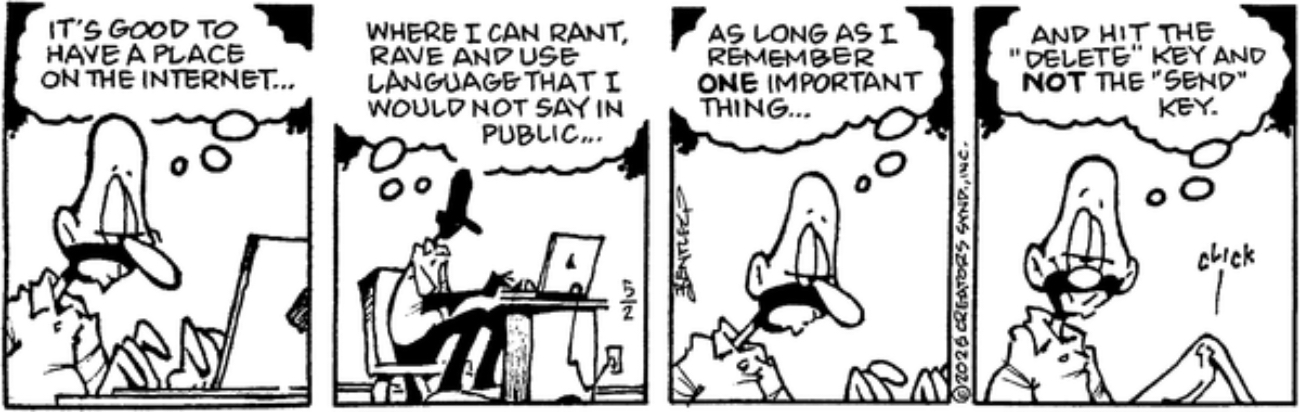
2:00 Break!
If you don’t care to read the poetry, scroll on down to the photos-guaranteed to cheer you!
Now I’ve heard The Man With No Name tellin’ folks I don’t like people laughin’- says I get the crazy notion they’re laughin’ at me… Well, that’s a load of hee-haw, for sure:
Jennifer Burville-Riley -Mule Musings
Mule Musings
by Jennifer Burville-Riley

Now I’ve heard The Man With No Name
tellin’ folks I don’t like people laughin’-
says I get the crazy notion
they’re laughin’
at me…

Well, that’s a load of hee-haw,
for sure:
I’m about as self-assured and confident a Mule
as you’re likely to find
either side of the Mexican borderline.
See, my Momma was a skittish chestnut mare,
and I get my fine set o’ teeth
and my elegant hooves from her
but my Pappy gave me
a donkey’s patience and an even temper…
shame about the ears.

So y’see I ain’t generally too fussed when folks are laughin’.
I confess, I do hate it when folks start shootin’.

Been shot at by Confederates,
been shot at by the Union,
been shot at by bandits, outlaws, inlaws,
mulateers, racketeers, pistoleers,
pursuin’ posses and ambushin’ enemies.
Been fired on by cannon, by pistol and by rifle…

By my rump, I sure could do without this rumpus nowadays.
Truth be told, I’d settle
for a quiet life,
a little paddock on the prairie.
Sometimes, I say to the cowboy:
look here, friend,
if we don’t take it easy soon,
I’m gonna tell all the folks in the next saloon
just what your Momma really christened
The Man With No Name.
Then we’ll see who gets the crazy idea
that people are laughin’.
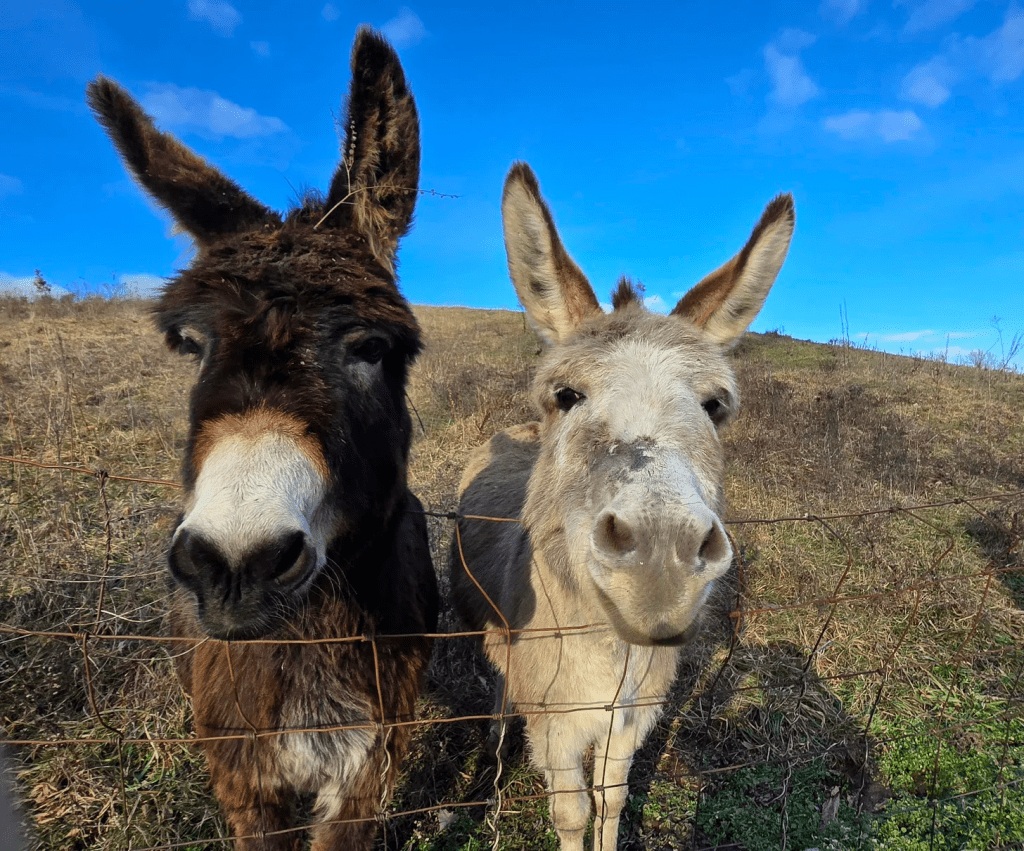
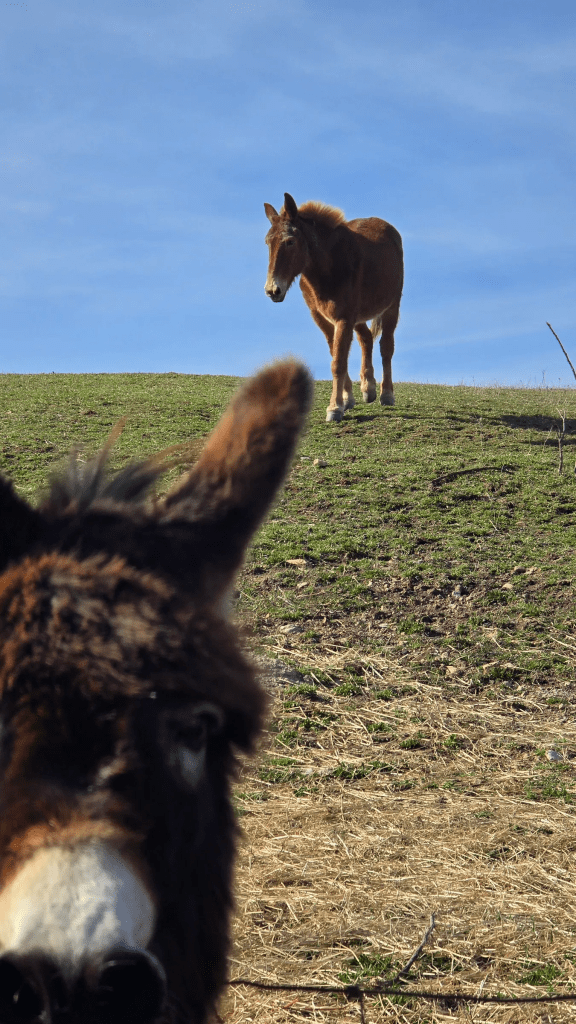
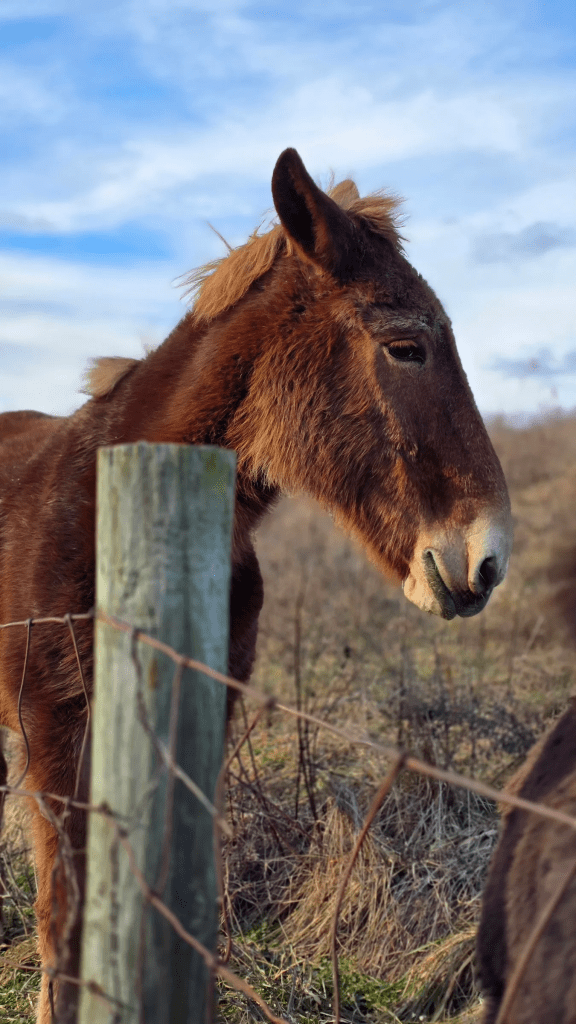
I found a file full of photos of Amos and the Minions I hadn’t used.I went looking for a suitable poem and found this one.
And here we are! The poem is clever and funny! (Used for educational purposes only , btw) I’m glad I found it !
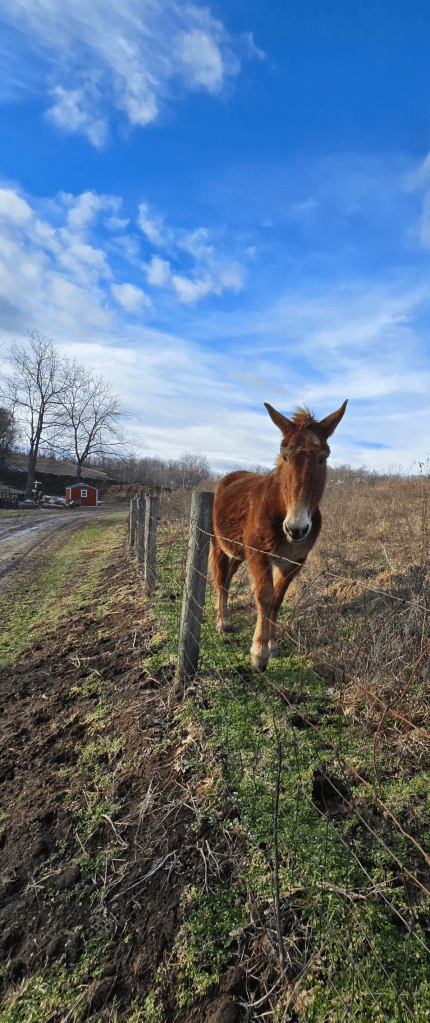
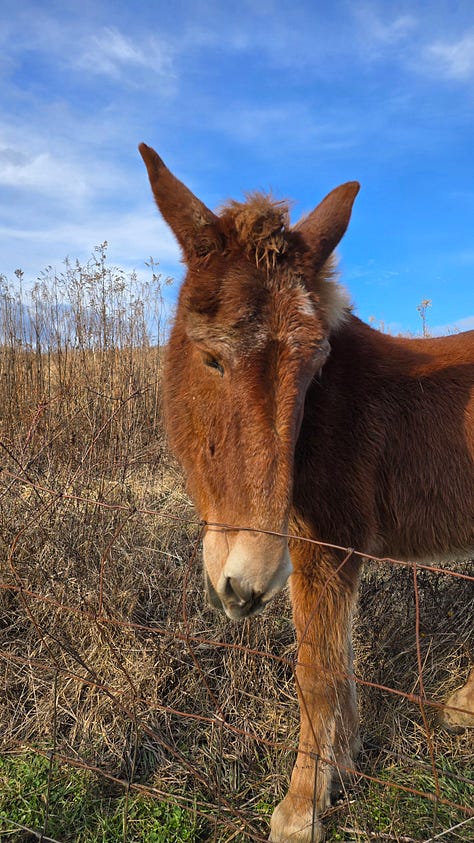
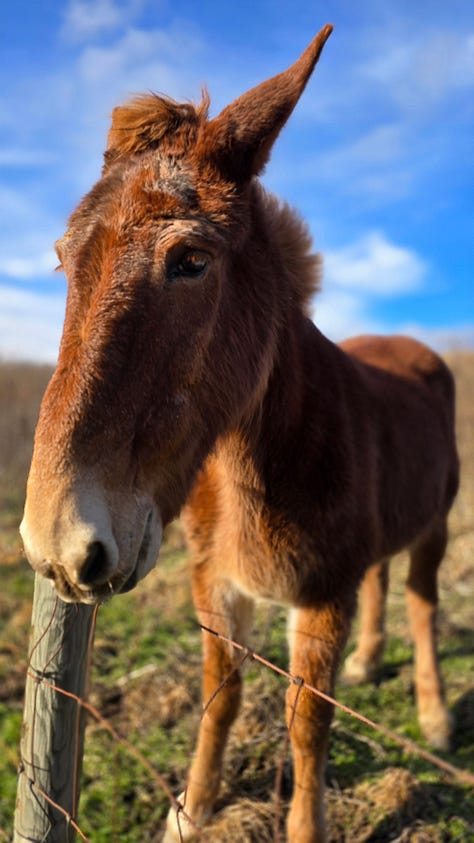
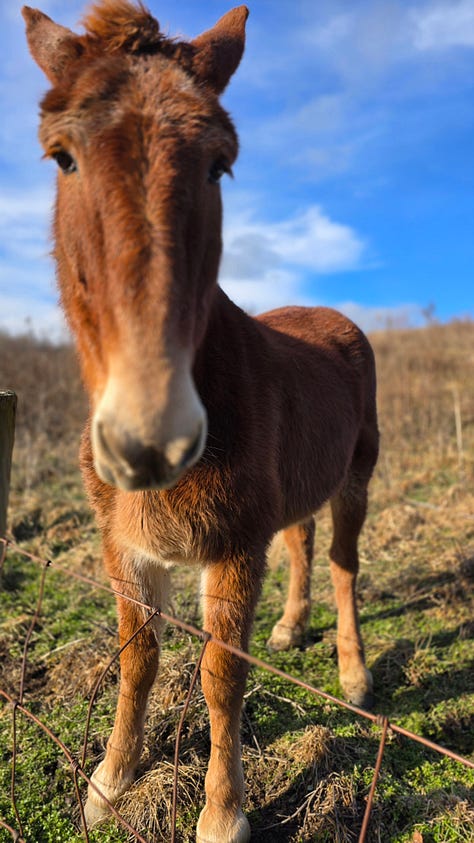
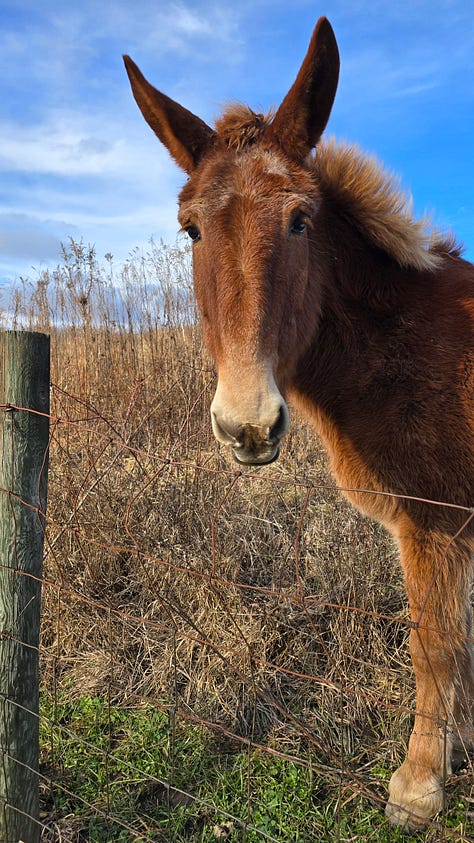
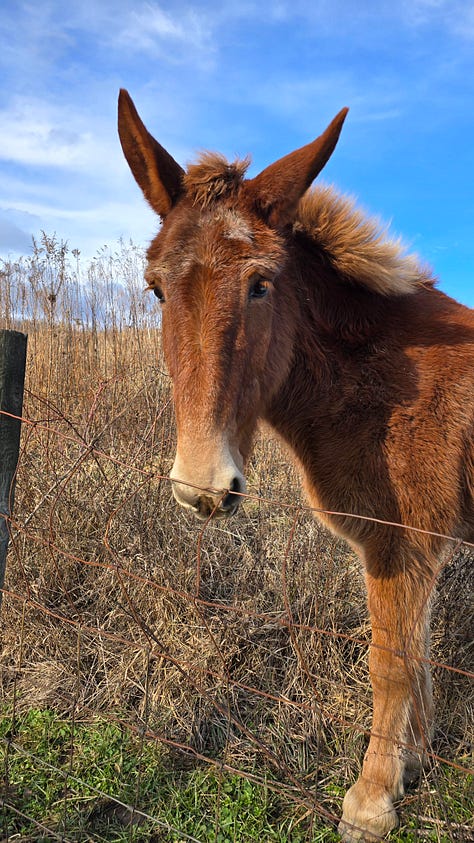
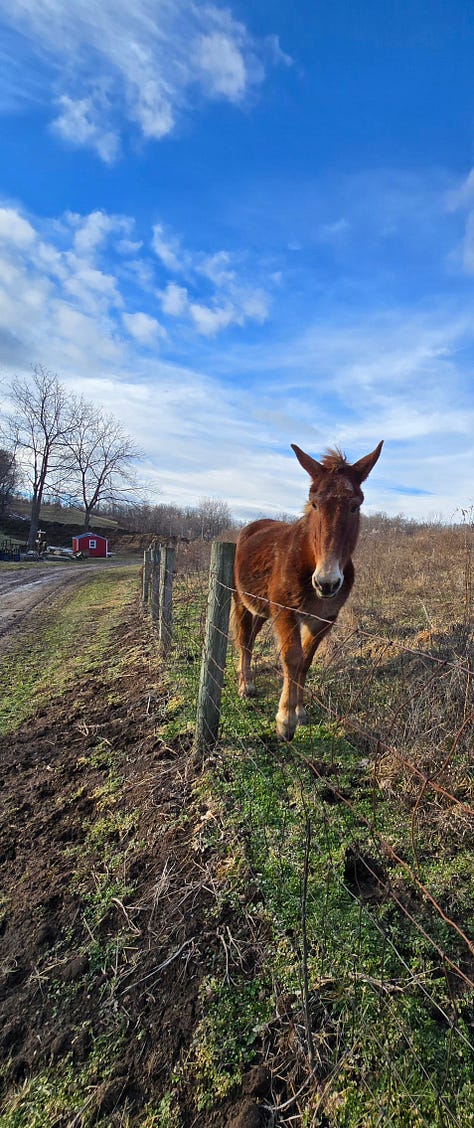
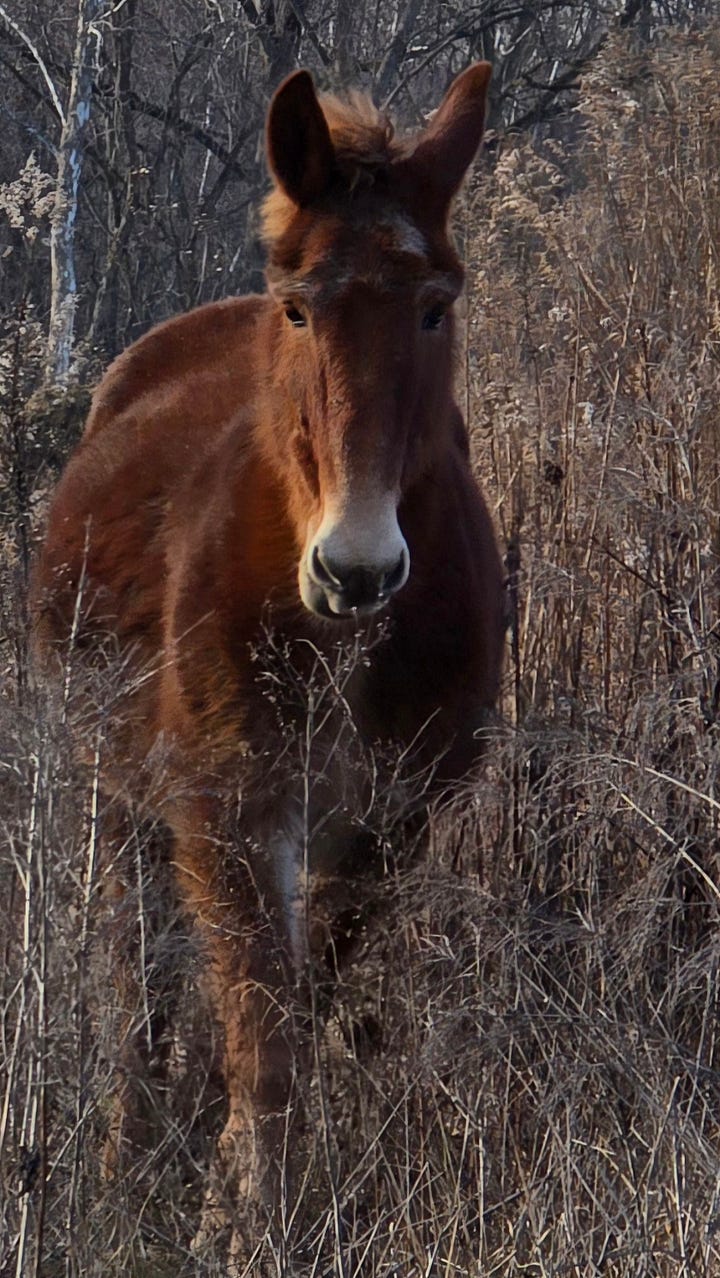
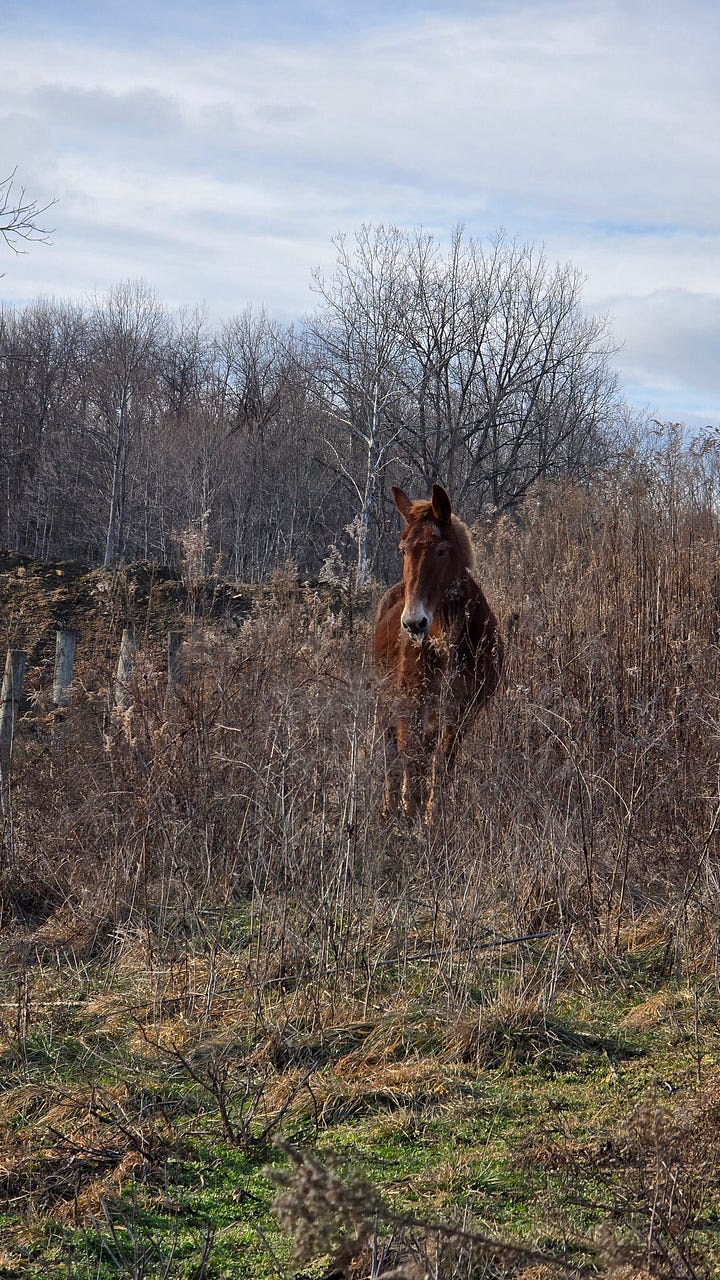
(I was hoping since I’d copied those grouped as on the page, they’d load that way, but no. No way I can find that WP will do side by side photos, even when picked up together. My apologies for those who scroll on their phones!)
There’s a story here – Penny got caught
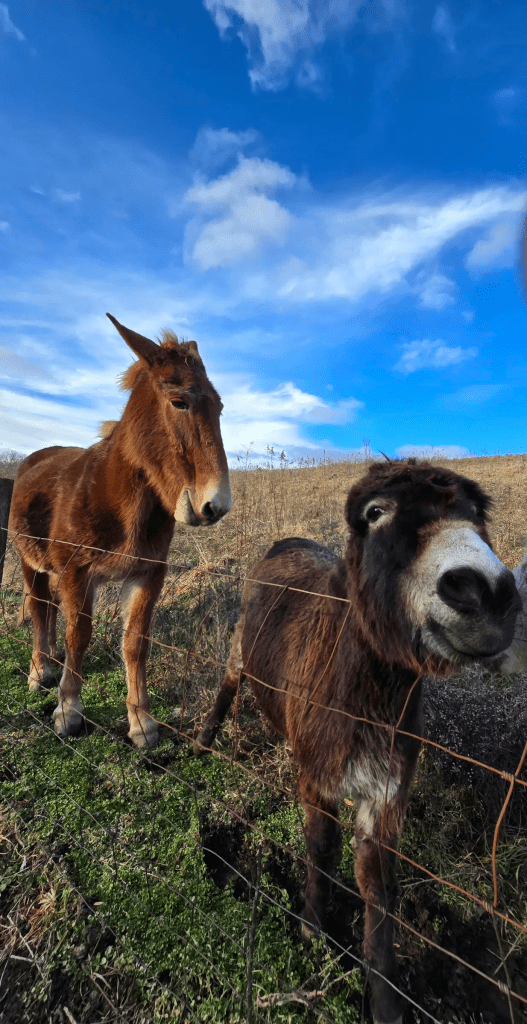
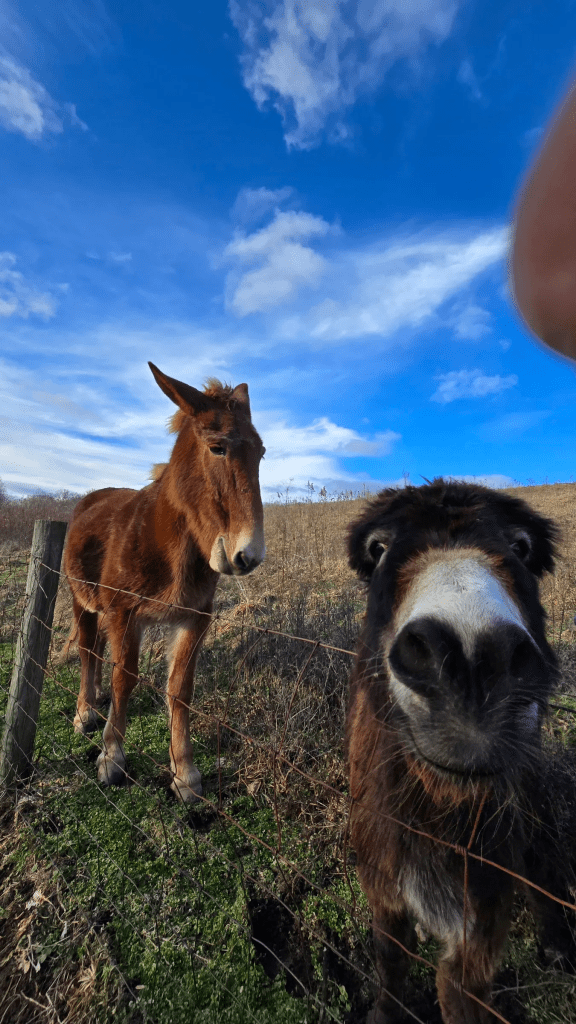
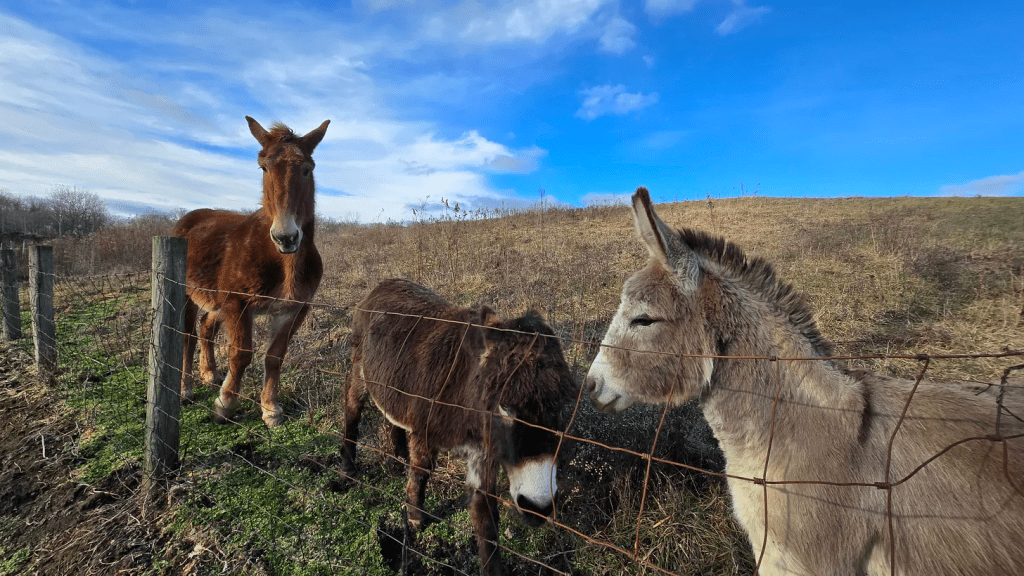
Jenny thought it was hilarious –
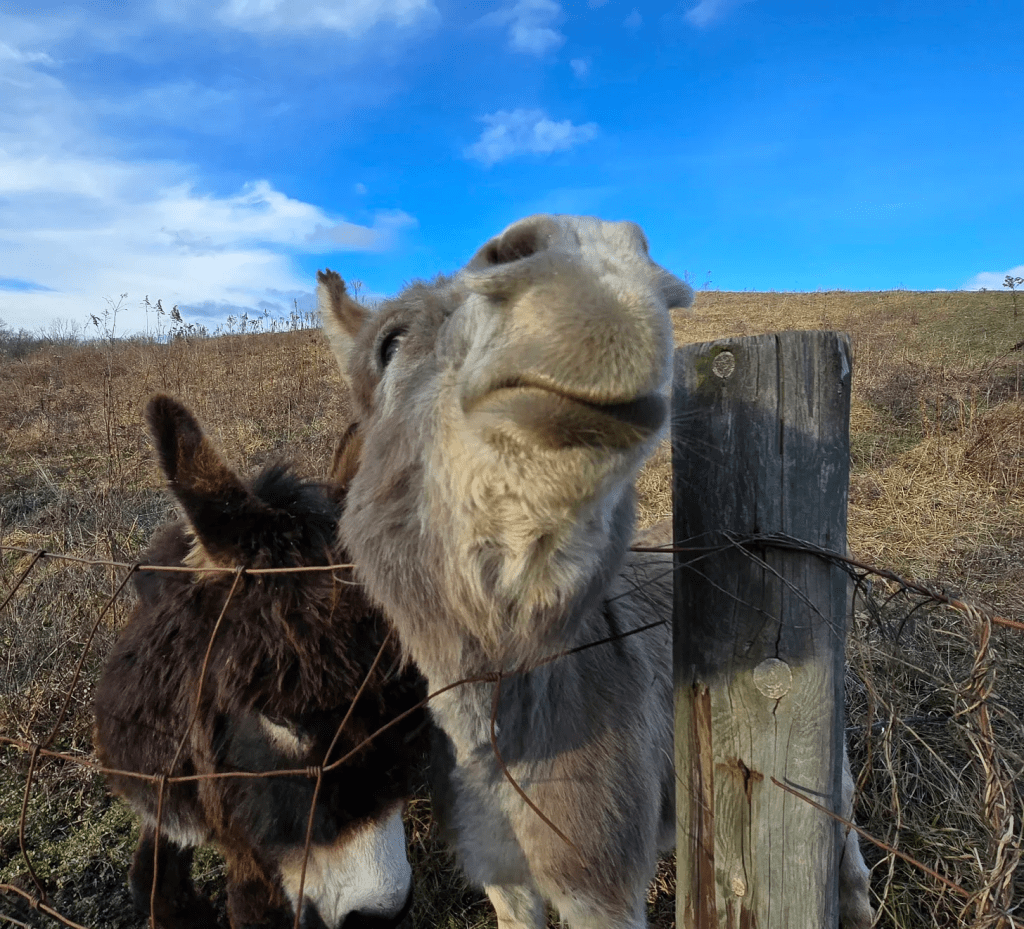
Penny thought Jenny might be over doing it a bit.
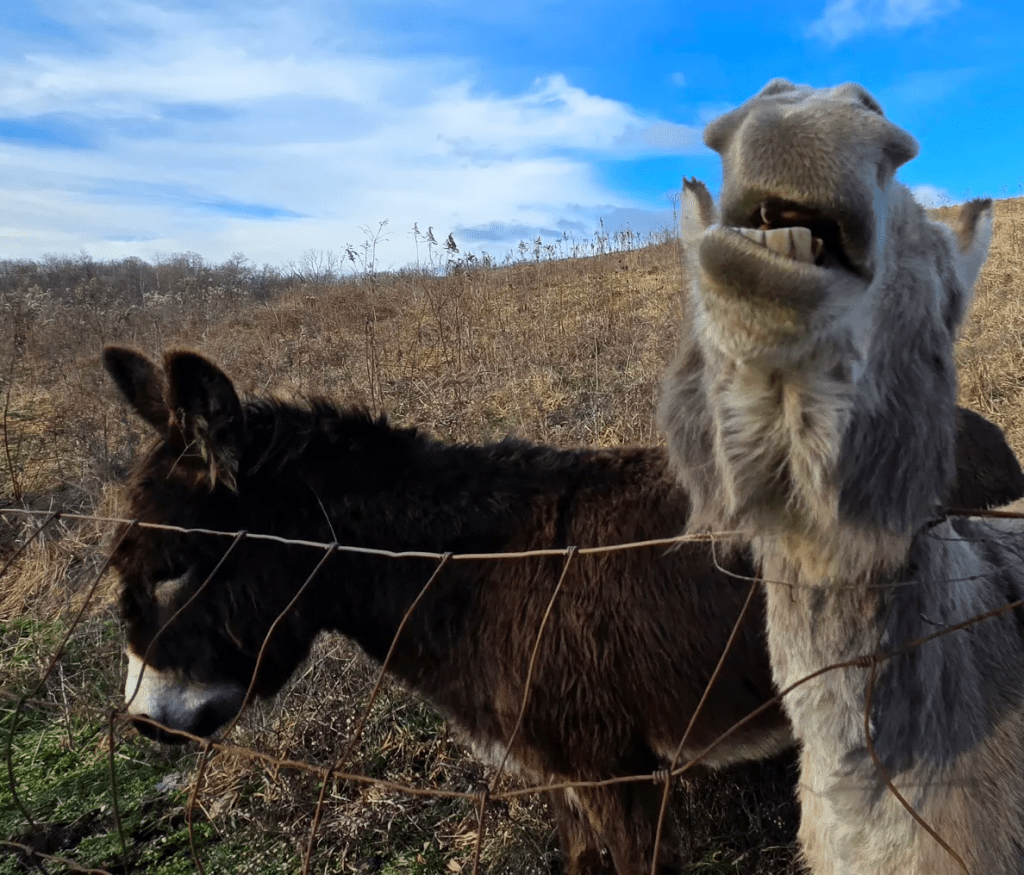
And told her so-
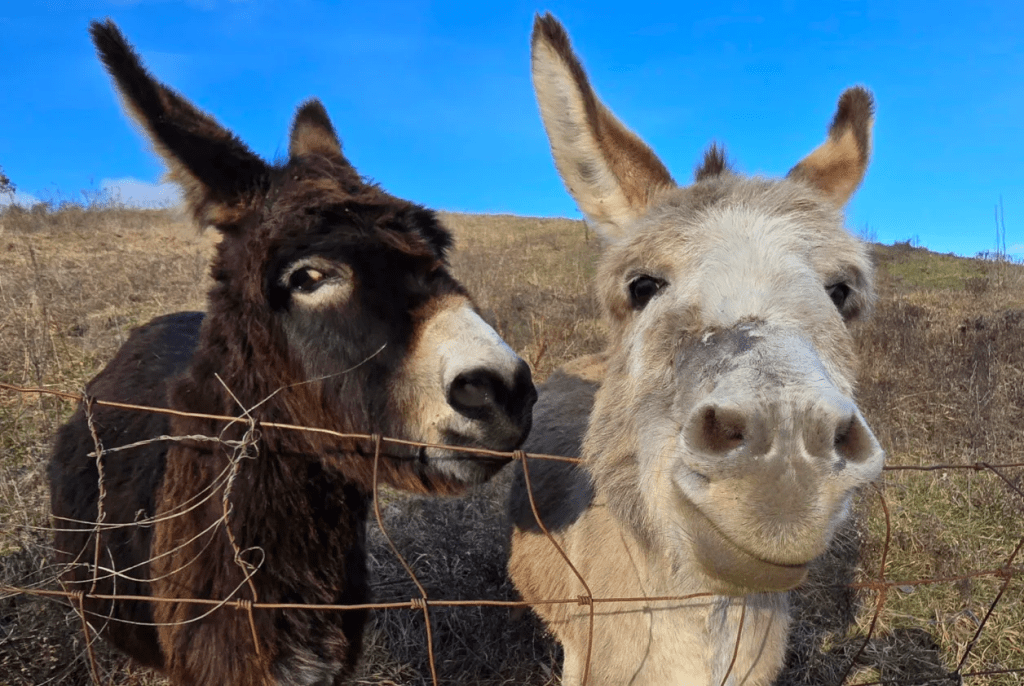
They agreed to disagree and got over it in 10 minutes
That’s all I got room for – Thanks for dropping by!
Kickass Women In History With The Smart Ones-
Kickass Women in History: Emma Tenayuca
by Carrie S · May 2, 2026 at 2:00 am
Emma Tenayuca was a labor organizer in Texas who is best known for leading a strike of pecan shellers in 1938. Workers called her “La Pasionaria“ which means “Passionflower.” From a young age, she survived violence and imprisonment in her quest to help workers get better working conditions and higher wages.
Tenayuca was born on December 21, 1916, and I know all of you December birthday people will identify with her plight – born too close to Christmas, she never got ‘birthday’ presents. Her family was Mexican American, and had lived in Texas for many generations. She was raised by grandparents who were interested in politics, and was also influenced by the speakers in the San Antonio town square. She was brought up with pride in her family and their roots, and she was encouraged to be educated and politically active by her family.

Tenayuca was arrested for the first time at 16, for protesting alongside striking workers from the Finck Cigar Company. She used her bilingual language skills to help people with their problems and worked with many organizations working towards better pay and better conditions for Mexican-Americans.
One of the most common positions for Mexican-American women in the area was in the pecan industry. Pecan shelling for 6-7 cents a pound was difficult work (the meat of the shell must remain intact) for little pay. Additionally, the process filled the factory rooms with a fine dust that contributed towards tuberculosis.
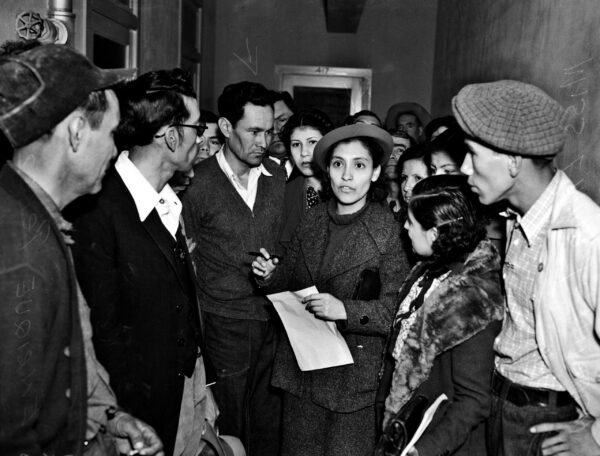
In 1938, the factories cut pay to 3 cents a pound and Tenayuca, who was 21 years old at the time, found herself leading a strike of approximately 12,000 workers. The strike faced violent opposition, as detailed in the article “Remembering Emma Tenayuca:”
When Pecan production ground to a halt, the owners fought back: Tenayuca and hundreds of strikers were gassed and arrested by San Antonio police. Some were beaten as well. With the NWA rallying community support, the strike turned into a city-wide uprising of the poorest and most oppressed people in San Antonio.
Thirty-seven days after the strike began the pecan producers agreed to arbitration. A few weeks later, the workers had won a wage increase to seven or eight cents per pound.
Tenayuca faced opposition as a woman, as a Mexican-American, as a labor organizer, and as a member of the Communist Party (she left the Party in 1946). From Americans Who Tell the Truth:
(snip-only a bit MORE; go read it!)
Collateral Arrests
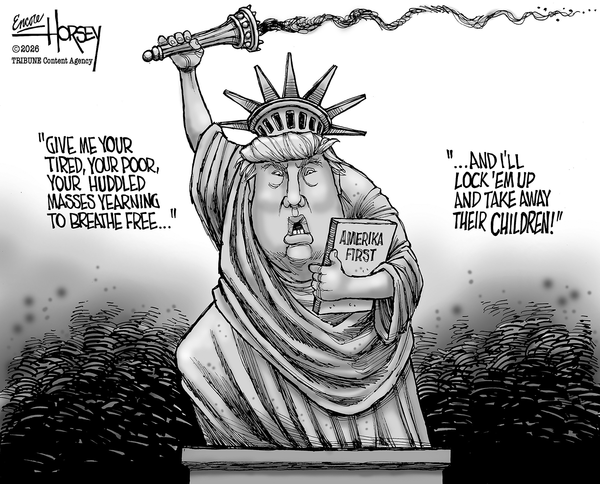
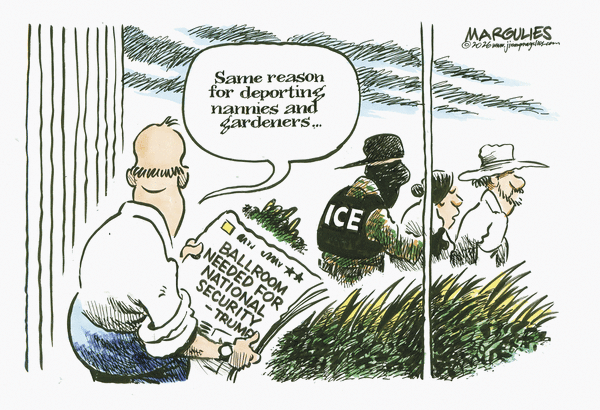
Immigration street sweeps led to more ‘collateral’ arrests of noncriminals
By:Tim Henderson-May 2, 2026
A quarter of immigration arrests since August were labeled by U.S. Immigration and Customs Enforcement as “collateral,” a type of arrest and detention that’s been challenged in court as an end run around civil rights.
Public outrage and lawsuits over the arrests may be tamping down the large-scale sweeps that foster them, but tens of thousands were arrested this way between August and early March.
Immigration arrests are usually based on warrants obtained ahead of time, showing either a removal order from immigration court or evidence of a crime or charge that makes the person subject to deportation.
But collateral arrests can result from street sweeps and raids in which a person is singled out for questioning based on appearance or proximity to someone wanted on a warrant. That person could be taken into custody if agents think they may be subject to deportation and also likely to flee if released.
Labeled for the first time ever, the collateral arrests are reported from August to early March in ICE arrest data obtained by the Deportation Data Project and analyzed by Stateline. In that time there were about 64,000 collateral arrests, a quarter of the 253,000 total arrests by ICE.
About 70% of the collateral arrests were for people with immigration-related crimes or violations alone, compared with 41% for arrests with warrants. Less than 2% of those with collateral arrests were convicted of a violent crime, one-third the rate of other arrests, and only 18% were convicted of any crime, compared with 33% for other arrests.
The collateral arrests contributed to an overall pattern of lower and lower shares of arrests for serious crimes, and more for immigration offenses alone.
Arrests climbed from about 12,000 in January 2025 to more than 40,000 in December, but fell back to 30,000 this February. The share of people with only immigration-related crimes and violations rose to more than half in December and January, the peak months for collateral arrests, and the share of violent criminals fell from 10% to 4% of arrests in that time.
(This chart is interactive. If you can’t see the arrest data here by mousing over states, you can on the page, linked in the title above, & also at the end of this post.)
New policy
ICE announced a new policy in January to issue warrants in real time if agents think an immigrant is deportable and “likely to escape,” though that policy faces a court challenge.
Total arrests and collateral arrests have been falling since December, whether because of the new policy or because of cutbacks in the large-scale street sweeps that tend to produce them.
One factor is public outrage over raids sweeping up noncriminals in places like Minneapolis and Chicago, said Colleen Putzel-Kavanaugh, an associate policy analyst for the nonpartisan Migration Policy Institute.
“The sort of large operations within big cities, as they were occurring, seems to have subsided somewhat,” Putzel-Kavanaugh said. “After the kind of public outcry following Minneapolis, it seems as though, at least for now, that tactic has kind of been paused.”
The Trump administration’s focus on mass deportation opened the way for more collateral street arrests with less investigation, she added.
“If it’s a more targeted arrest, they would take the time to sort of essentially have an investigation. It’s a pretty resource-intensive way that just would not yield the kind of numbers ICE was being told to produce,” she said.
The new policy was filed in court papers in February as a response to a lawsuit over ICE sweeps in the District of Columbia last year, alleging ICE agents “have flooded the streets of the nation’s capital, indiscriminately arresting without warrants and without probable cause District residents whom the agents perceive to be Latino.”
The case resulted in a preliminary injunction in December requiring a halt to warrantless arrests without establishing probable cause that the person is living here illegally and is a flight risk.
One plaintiff in the class-action case, José Escobar Molina, said in the lawsuit that agents in two cars pulled up to him as he approached his work truck on Aug. 21, grabbing him by the arms and legs and handcuffing him without asking any questions. Escobar, 47, said in the court papers that he’s lived in the district for 25 years and has had temporary protected status as a Salvadoran native the whole time. He was held overnight in Virginia before being released.
Other lawsuits are also challenging collateral arrests, such as an incident in Idaho in which agents with warrants for five people ended up arresting 105 immigrants at a Latino community event in October.
In North Carolina, four U.S. citizens and a visa holder sued in February, saying they were arrested in the Charlotte’s Web immigration crackdown in November without warrants, as is typical of collateral arrests.
“I have a lot of fear that this will happen to me again. I was essentially kidnapped based only on the color of my skin. That really weighs on me,” said Yoshi Cuenca Villamar, one of the citizens and a North Carolina native, in a statement announcing the lawsuit. He said he was doing landscaping work Nov. 15 when agents pushed him to the ground and handcuffed him, then held him in a car before releasing him.
One Illinois case that started in the first Trump administration challenged warrantless arrests and traffic stops used as a pretext for immigration arrests. A 2022 settlement required ICE to document “reasonable suspicion” of illegal status before arresting somebody. The case continues since a judge found in February that the new ICE policy of issuing warrants in real time after a detention violates the consent decree.
Shares of collateral arrests
In the months since August where collateral arrests are now labeled, the District of Columbia and Illinois stand out with high shares of collateral arrests. More than half the arrests in the district were collateral, as were 41% of those in Illinois. There were eight states in which at least 30% of arrests were collateral: Alabama, Maryland, West Virginia, Arizona, Pennsylvania, New Hampshire, Maine and Minnesota.
West Virginia, where there was a “statewide surge” of immigration enforcement in January with state and local cooperation, stands out for its high rate of total arrests as well as a large share of collateral arrests.
For the eight months between August and early March, West Virginia had 1,831 arrests, or 1 in 10 of the state’s noncitizen population as of 2024, the latest data available. That’s by far the largest share in the country, followed by 7% in Wyoming (where truck drivers were targeted for immigration arrests in February) and 4% in Mississippi.
West Virginia Republican Gov. Patrick Morrisey, in a statement, cited the cooperation of state and local agencies with ICE through the 287(g) program that assists with immigration enforcement. He praised ICE, saying “they have removed dangerous illegal immigrants from our communities and made our state safer for families and law-abiding citizens.”
Few of those arrested in the surge were violent criminals, however. More than half of those arrested during the surge were collateral arrests, and only 1% — nine immigrants — had a violent crime conviction, according to the Stateline analysis. More than three-quarters, about 500 people, had only an immigration-related violation or crime.
Judges didn’t always agree that collateral arrests and detentions in the West Virginia surge were legal under the U.S. Constitution. U.S. District Judge Joseph Goodwin, a Clinton appointee, ordered two detainees released in January. He noted that “similar seizures and detentions are occurring frequently across the country” without any evidence they’re necessary as required by the Constitution.
Clay Jones, Open Windows
World Press Freedom Day
Defend the free press and our democracy

It’s World Press Freedom Day, I celebrated with a great conversation on The Andy Borowitz Show with Andy and director Laura Nix about free speech, and the predictions made in the film DEMOCRACY UNDER SIEGE that have come true since its release.
Catch the podcast video along with the film for free on the website through May 4.
Starting May 5, you can find the film on Kinema.com for home and group viewing, as well as gifting to friends and family who would like to see it.
In the evening of May 5th there will be a Kinema Launch Event hosted by The Media and Democracy Project, 7 pm ET. Join an online screening, live conversation and Q&A with special guests discussing the threat of media consolidation in light of the upcoming media mergers. Free tickets are limited, sign up for the event here
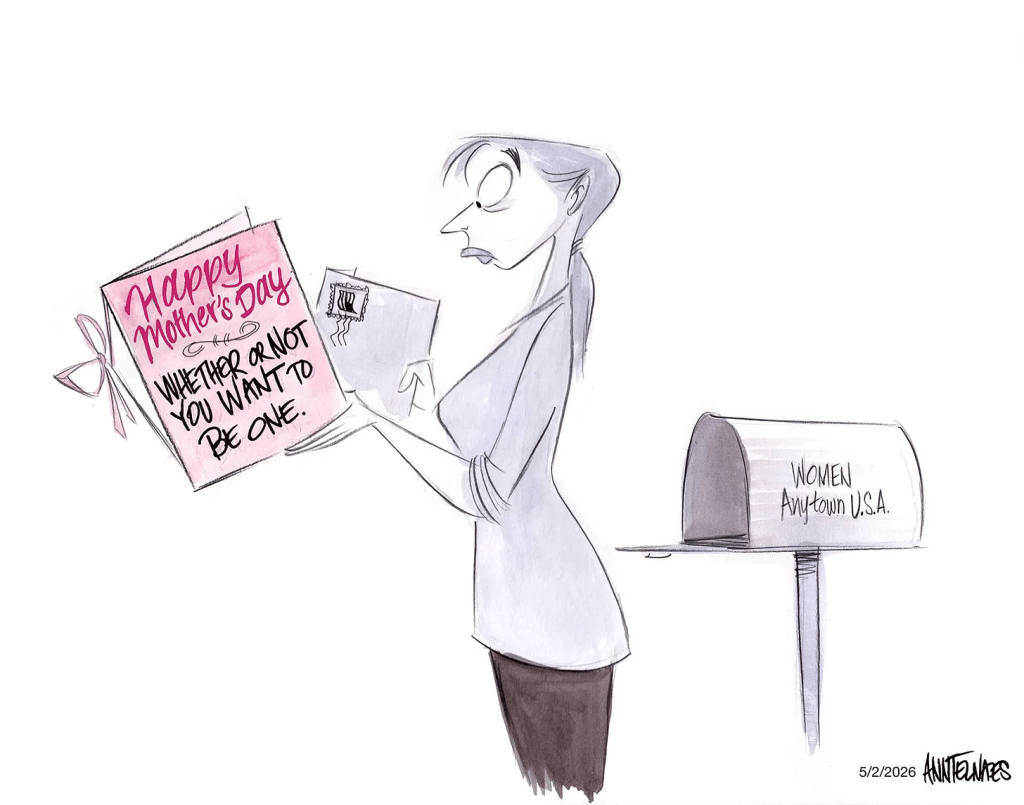
Court blocks mailing of Mifepristone
An early Mother’s Day wish
Because grown women couldn’t possibly make their own reproductive decisions without courts and politicians.
MAGA Malaise
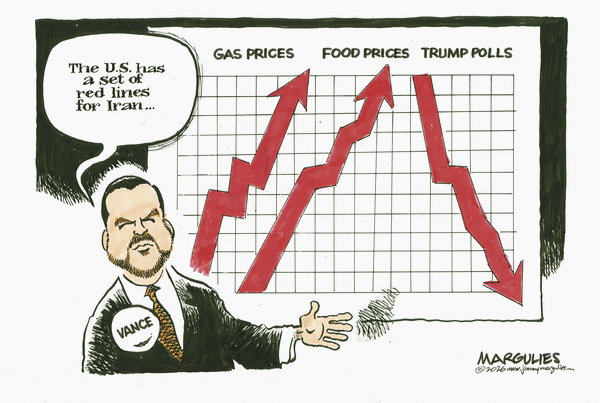
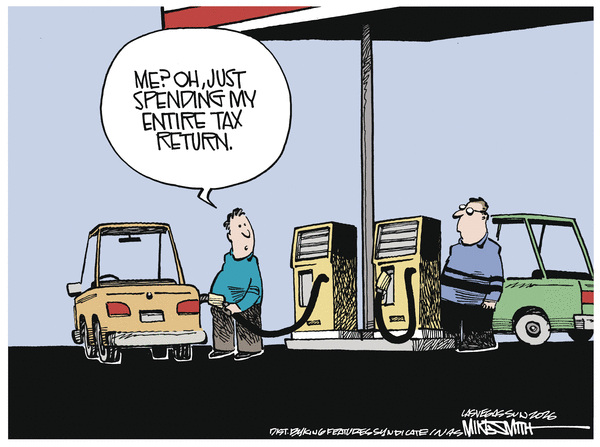
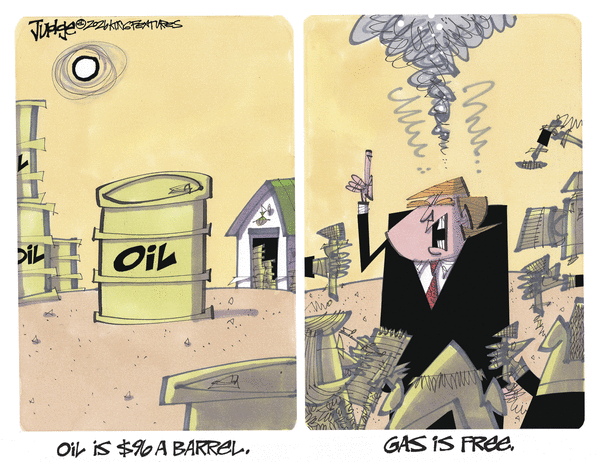
Gas prices and Trump’s approval ratings are going in opposite directions
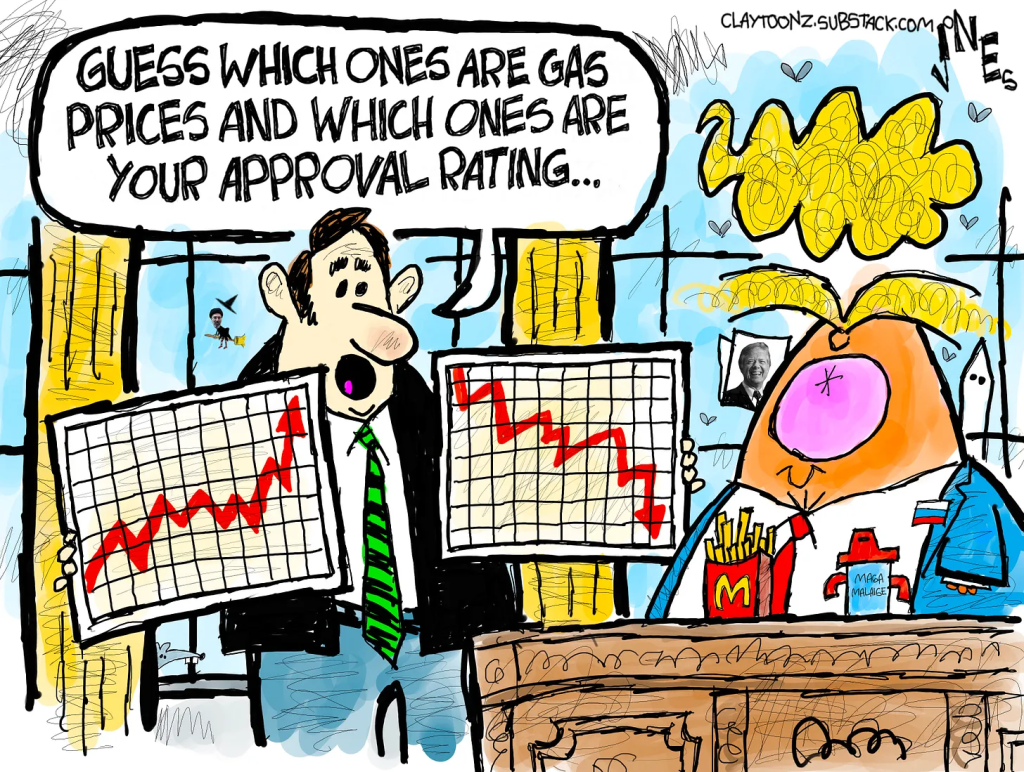
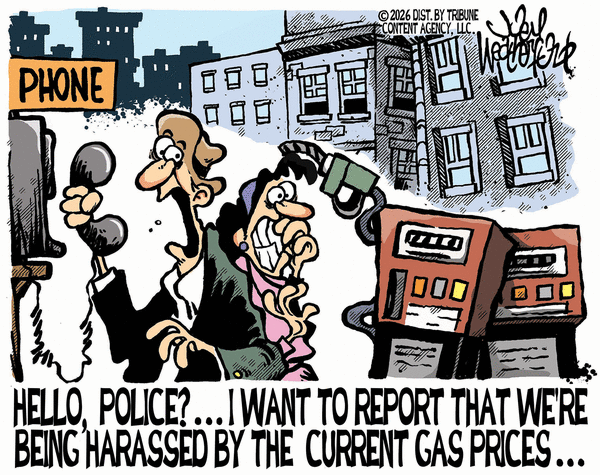
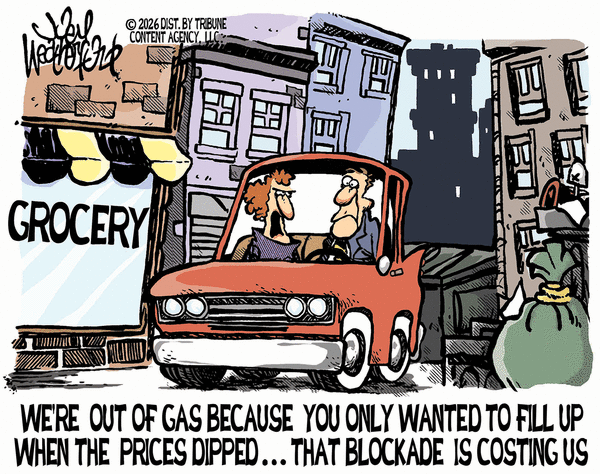
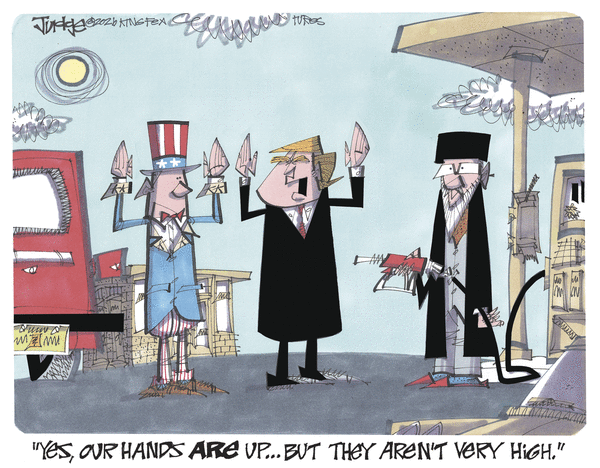
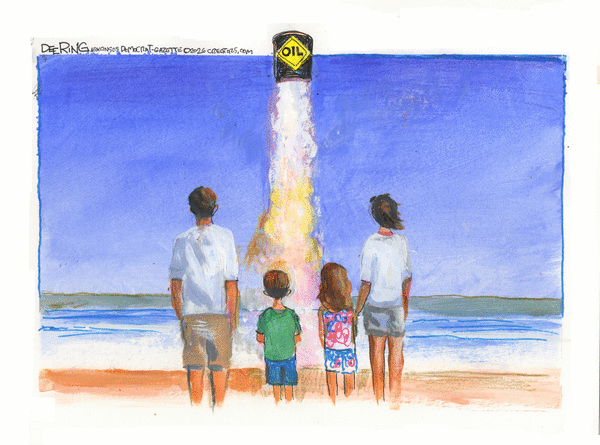
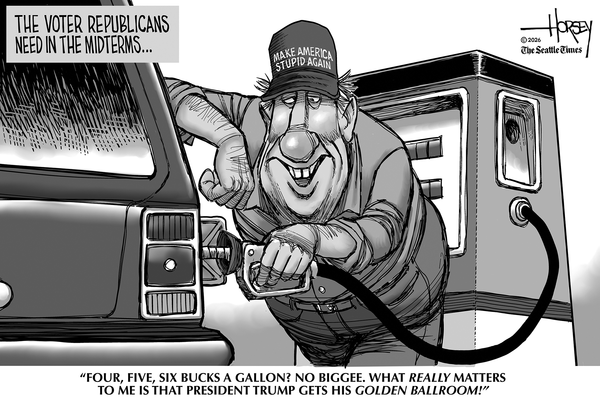
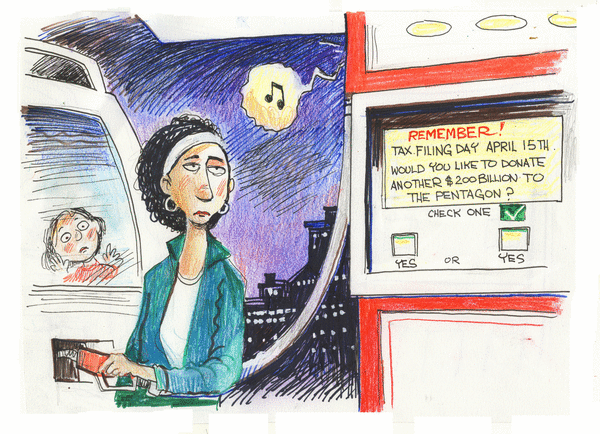
Today, the national average gas price is $4.43 a gallon. That’s the national average. If you are in California, a gallon of gas will cost you more than $4.43. If you’re in a place like South Carolina, it will probably be a little less. At any rate, it’s much more expensive than it should be, all because of Donald Trump.
One whatabout that MAGAts use is that gas prices were high when Joe Biden was president, at least for a minute. What they leave out is that Joe Biden didn’t do anything to cause high gas prices. When gas prices were high under Biden, they were high internationally, and again, not because of any negative policies inflicted by President Biden.
Today, gas prices are also high internationally, and it’s all because of Donald Trump. Donald Trump chose to start a war that didn’t need to be started. Trump is trying desperately to get a deal with Iran and get them to the negotiating table, which is where they were before he started dropping bombs on them. (snip-MORE)
Political cartoons / memes / and news I want to share. 5-4-2026


*** Scottie’s personal note here. From the youngest age I was called queer and this was in the 1960s. The first memory of being called that which I had no clue as to what it meant was when I was being held down and punched by my five-year-older hellspawn sibling who was telling me I was “queer”. I was only 3 or 4 at the time and was being trafficked to the man across the street along with her siblings boy friends / and taken to parties where I was drugged so I wouldn’t remember. Also at the same time along with her and her sister on cold nights when I begged for a warm place to sleep in their bed rather than the cold blanketless mat in the hallway that was my bed. I would have to “make them happy” for the privilege of a warm place to sleep in the Vermont winters. So when she called me that I asked what that was. She replied it was letting boys put their dicks in me and me sucking their dicks. I then said, but that is what I am told to do and I was very confused. This niceness of being punched and insulted lasted only a short while as the most understanding of my abusive hellspawn siblings who then became like the rest. She then became like the rest. She gloried over tiny me and the things I was made to do. She took my toys and gifts as the rest did. She later said I did not understand what it was like to live with her siblings who were also abusing me and farming me out. I asked her if she understood how hard it was for me to live among them during that time. She had no answer, because like in my childhood it was all about her. Hugs***




“It’s finally sweater-carrying weather.”

“Wow! New Yorkers really like out-of-towners!”


“Try to reduce your stress level, and if you somehow succeed please let me know how in God’s name you did it.”

“It’s like the sun comes out and you forget all about the impending doom!”

“After this, things are going to calm down for a little while, right?”


“Frankly, he’s so loud I think he must be compensating for something.”

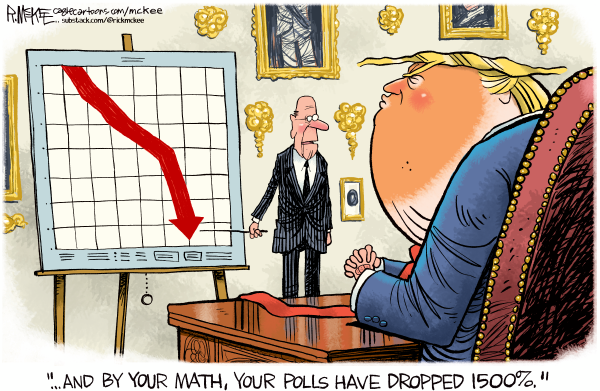


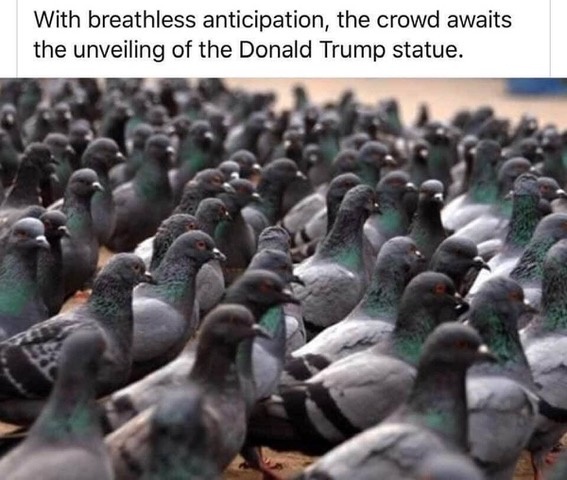


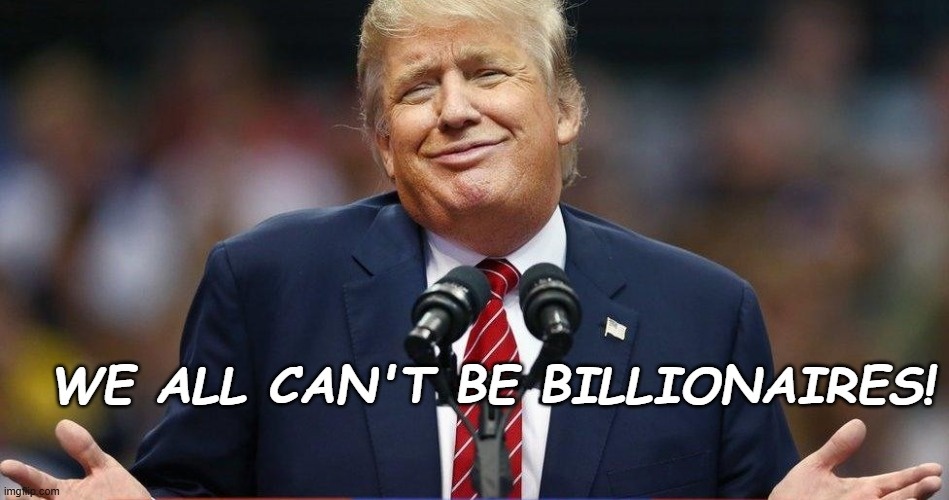

We in the United States are living through what is arguably the biggest financial scam in America’s history. Led by the Reality TV New York City mobster thug occupying the White House.
Do you think Donald J. Trump gives a flyin’ fuck about “American heroes” or the like?
If Donald J. Trump and his sycophant billionaire buddies could make money off it, he’d create a “Garden of Jeffrey Epstein’s Underage Girls.”


“I love this time of the year—you know, when you make sense of all our spending.”

“Oh, wow! A bottle of gasoline!”

“They’re looking for ten thousand passengers who are willing to give up their seats.”

“We could drive to spring break and spend hundreds on gas, or fly and never actually get there.”


“Will you be using my story as a foil to reveal one of the doctor’s flaws, or is this a regular E.R.?”

“Looks like they’re rolling out the new food pyramid.”

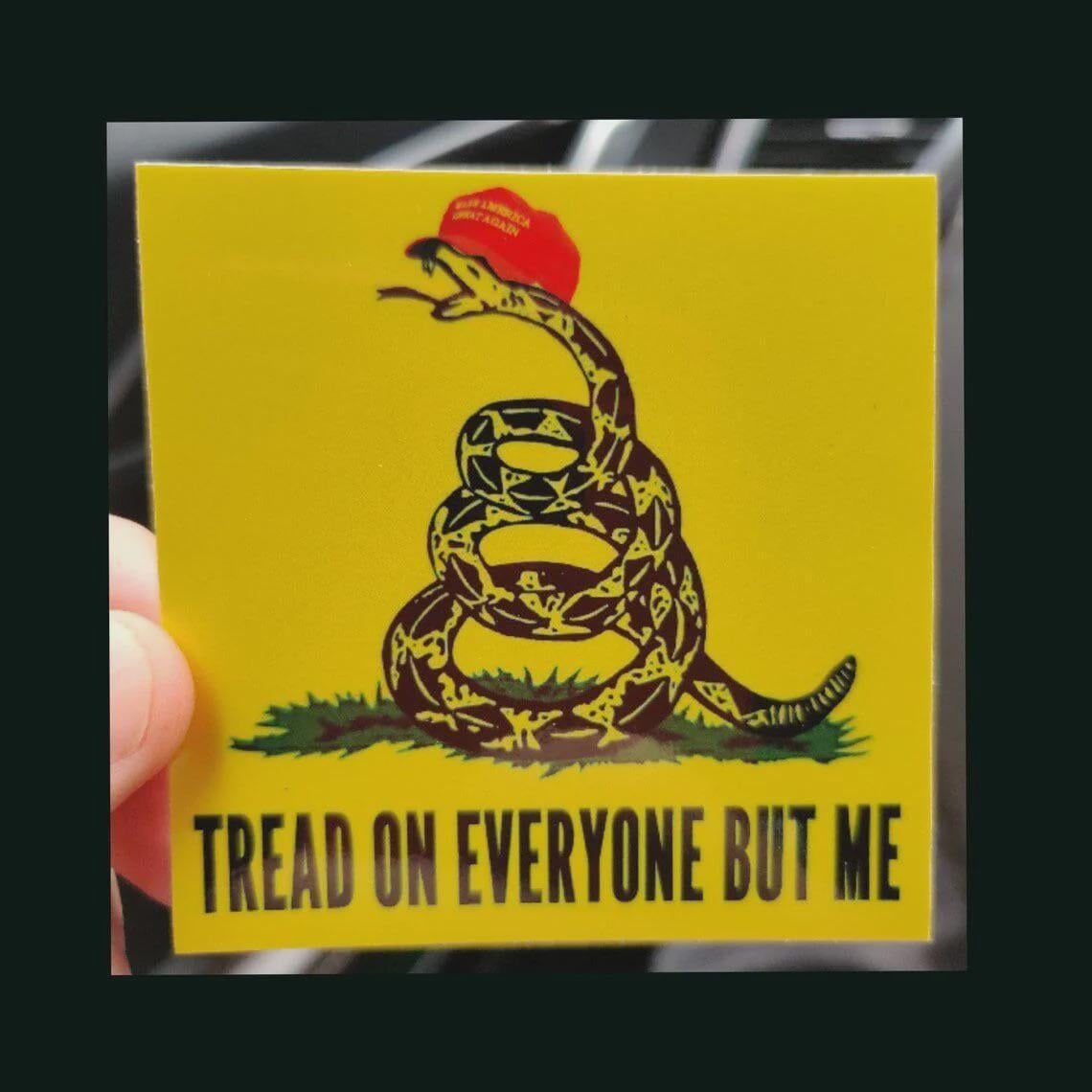

“I understand there’s a problem you need made a million times worse?”

Again With A Jackie Robinson Memorial-
Wichita nonprofit says it was vandalized overnight
- Kyra Case
- May 3, 2026 Updated 3 hrs ago
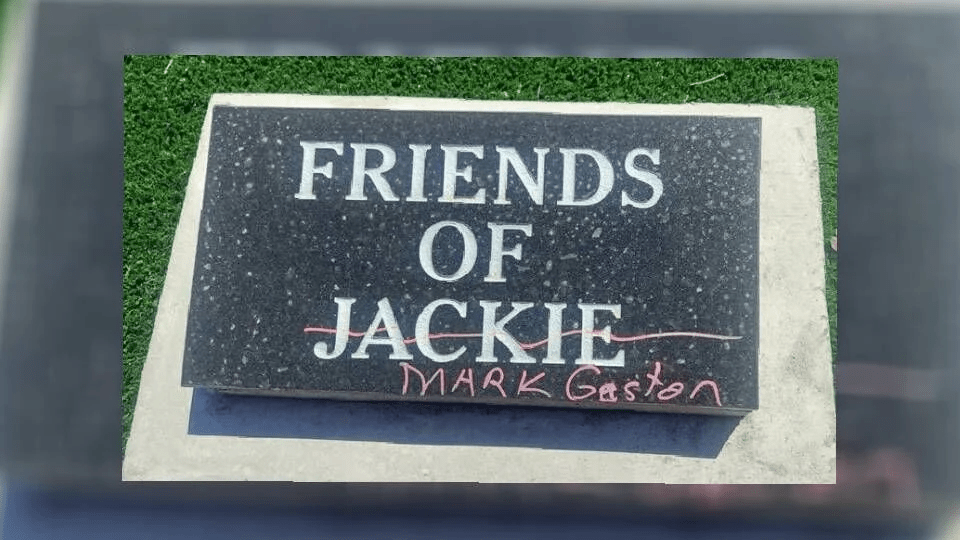
WICHITA, Kan. (KAKE) — Trash littered the Jackie Robinson Pavilion Sunday morning; a plaque with the words ‘FRIENDS OF JACKIE’ had the name ‘Jackie’ crossed out in pink marker — ‘Mark Goston’ written underneath.
“This kind of stuff is always upsetting, no matter where it happens, but it’s particularly annoying when it affects League 42,” the league wrote in a Facebook post. “We have worked hard to improve these facilities from when we started 13 years ago. And there is no comparison.”
This isn’t the first time a League 42 baseball facility has been vandalized. In 2024, Wichita police arrested 45-year-old Ricky Alderete in connection with the theft and burning of a statue of Jackie Robinson in McAdams Park.
The statue was donated to the non-profit baseball group League 42 in 2021. Soon after the theft, the founder and executive director of League 42, Bob Lutz, launched a GoFundMe campaign to raise funds to replace the statue.
The youth baseball league said it received a $100,000 gift from Major League Baseball to replace a statue of Jackie Robinson. The GoFundMe raised a total of $194,780.
After six months without the statue, a new Jackie Robinson statue was unveiled in August 2024.
Now, in light of the recent vandalism at the pavilion, the league is working with the City of Wichita and District 1 councilman Joseph Shepard, according to a Facebook post.
“… we will be discussing ways to combat this nonsense,” League 42 wrote. “I don’t understand why people can’t just leave things alone. We want to share our facilities, and we believe the Jackie Robinson Pavilion is a destination spot for Wichitans and for visitors to our city. But when our citizens do this kind of damage, what are we really showing off?”
KAKE crews have confirmed the trash has been cleaned.
2 Cornell Bird Lab Cams
Enjoy!
These birds dance:
“We have to be extra vigilant”.
‘Apartheid in the US’: Arizona’s secretary of state fights Trump’s plot to amass a ‘master list’ of voters
Database could be used to regulate opponents, from ‘shutting off bank accounts’ to healthcare, official warns
Ed Pilkington in Phoenix, Arizona
Donald Trump is attempting to select his own citizenry and control who can vote by gathering the personal details of all Americans, Arizona’s top election official has warned.
Adrian Fontes, Arizona’s Democratic secretary of state, fears that the Trump administration’s active efforts to forcibly extract voter files from 30 states including Fontes’s own are part of a bigger plan to gather vital information on all US citizens into a centralised database. “Trump is trying to amass a master list that will allow him to declare someone an enemy of the state,” he said.
In his 19th-floor office in Phoenix, Fontes said that in his view Trump wants to create the equivalent of “apartheid in the United States” and likened his actions to those of his counterpart in North Korea. With personal information on all Americans at his disposal, the president could regulate key aspects of the lives of his opponents, including “shutting off their bank accounts, or keeping them from getting healthcare”.
“This is Donald Trump trying to pick his own voters,” he said.
Fontes won a major victory in his running battle with the Trump administration on Tuesday when a federal judge threw out a lawsuit from the US justice department against Arizona over its refusal to hand over its voter roll. The judge, Susan Brnovich, a Trump appointee, ruled that the Department of Justice was not entitled to the document under federal law.
The suit was part of a push by the DoJ to obtain voter roll information from all 50 states, suing 30 including Arizona that have refused to co-operate. At least 13 states have voluntarily complied with the DoJ’s demands, but many others are resisting.
In those cases where courts have ruled on the dispute – California, Oregon, Michigan, Massachusetts and Rhode Island – all judges have found against the administration. Fontes – who was himself sued after he declined to hand over the data, pointing out that it would be illegal under state law to divulge sensitive personal information about almost 5 million Arizonan voters – has joined that list of vindicated parties.
“This is now the sixth federal court to reach the same conclusion. Arizona acted correctly in refusing this request, and today’s ruling vindicates that decision,” he said.
Fontes was elected secretary of state four years ago as part of a sweep by Democrats of top statewide positions. Katie Hobbs was elected governor and Kris Mayes as attorney general.
All three are now in re-election battles facing Republican challengers who have in varying degrees embraced the lie that the 2020 election was stolen from Trump.
Arizona has for years been pivotal to Trump’s efforts to stoke election denial conspiracy theories. Maricopa county, which covers Phoenix, is one of the largest and most electorally consequential swing counties in the country.
In 2020, it was the focus of a fierce battle in which Trump loyalists attempted to declare victory in the face of his defeat to Democratic rival Joe Biden. The Republican-controlled state senate contracted Cyber Ninjas, a private security firm that had no background in election administration, to conduct an audit into Maricopa county’s results.
The audit, which was widely debunked, concluded that Biden had won the election.
Arizona is now back in the crosshairs as the November midterm elections approach. The state has been the subject of at least three federal investigations into its election procedures, with the Trump administration continuing to press unfounded claims that electoral fraud is rife.
The DoJ claims that its data demands aim to root out rampant fraud and voting by noncitizens. Fontes rejects that argument .
“This doesn’t have anything to do with non-citizens, because non-citizens don’t vote. Every study shows that,” he said. “So what you have here is an unprecedented invasion into the privacy of Americans, sold under a false narrative of illegal voting.”
In March the FBI seized a vast stash of digital data that had been compiled by the Cyber Ninjas’ audit of Maricopa county in 2020. Though it is unclear what exactly was in the trove, it is possible that it included details of votes cast and images of actual ballots.
The material was handed over to FBI agents under a federal grand jury subpoena by the Republican president of the state senate, Warren Petersen. Fontes was scathing about Petersen’s decision to cooperate with the subpoena, suggesting it may have broken state data-protection laws.
“He was so quick to turn over the material as a political favor to Donald Trump,” Fontes said. “Clearly he had no intention of protecting Arizona voters or legal processes.”
Petersen’s compliance with the FBI subpoena is likely to be a factor in the mid-term election for Arizona attorney general. He is currently the frontrunner to become the Republican candidate challenging Mayes, the incumbent Democrat.
The third federal investigation into Arizona elections is being conducted by Homeland Security Investigations (HSI), the investigative arm of US Immigration and Customs Enforcement (ICE). It is also taking a renewed look at the 2020 presidential election result in a further bizarre move to relitigate a contest that was settled more than five years ago.
“It’s like herpes,” Fontes said, referring to the perpetual resurfacing of the election denial conspiracy in Arizona. “It just keeps coming back. And I just don’t think the state, or the nation, deserves that.”
Trump’s latest ploy to wrestle control over elections from the states is his executive order last month that tries to limit mail-in voting by creating a national voter file to which the US postal service would have to defer before delivering mail ballots. The order, which is being challenged as unconstitutional, is especially sensitive in Arizona, where 80% of votes are cast by mail in a system devised decades ago, ironically, by the Republican party.
“This is a bald-faced attempt at completely controlling American democracy according to the whims of one political actor, and that’s not just un-American, it’s absolutely anti-American,” Fontes said.
Fontes is gearing up for his own potentially bruising re-election battle in November, in which he is likely to be competing against an election denialist. The two Republicans vying for their party’s candidacy in the secretary of state’s race both have election-denial track records.
Alexander Kolodin, a lawyer, was placed on probation by the state bar association after he filed lawsuits challenging Biden’s 2020 victory that a judge slammed as being full of “gossip and innuendo”.
The other candidate, the former chair of the Arizona Republican party, Gina Swoboda, was the Trump campaign’s director of operations on election day in 2020. She claimed in a lawsuit that was dismissed for lack of evidence that more than 1 million ineligible voters may have been on the rolls.
Fontes said he was “cautiously optimistic” that he and his Democratic peers would sweep the state again in November. But he conceded that “we have to be extra vigilant”.
“We have to spend every single day from now until November focused on communicating as clearly as we can with every Arizona voter,” he said.
Two factors were in play this midterm cycle that would make re-election more difficult, he said: unlike in 2022, there is no US senate race in Arizona this year, so there is less of a draw to attract Democratic voters to the polls.
The other factor he pointed to was that since 2022, the rightwing activist group Turning Point USA has grown in influence. Turning Point, whose leader Charlie Kirk was killed by a gunman in September, is headquartered in Arizona and in Fontes’s view has largely surplanted the old Republican party in the state.
“We’ve got to be cautious because we’re going to be running against the conspiracy theories, lies and misrepresentations,” he said. “The stakes of this election are enormous, and every voter will be impacted by the outcome.”

