The Pentagon is moving to recruit hundreds of troops to appear as spectators next month at President Donald Trump’s UFC cage-fighting event on the White House lawn, and requiring those who attend to pay their own way and meet height and weight requirements, according to people familiar with the matter and internal memos reviewed by The Washington Post.
The Defense Department in recent days has solicited troops across the services to attend the June 14 event. Officials are seeking junior enlisted personnel and junior officers specifically, according to internal messages that make clear travel will be “member-procured.”
Junior troops make up the military’s lowest pay grades. One memo, circulated within the Air Force, stipulates that to be eligible, personnel “MUST MEET CURRENT WAIST-HEIGHT RATIO and current physical fitness standard.” Troops will be required to wear their short-sleeve dress uniforms, the memo adds.
I hate the YouTube algorithm and and myself more for giving into it and saving all the hateful abuse videos I get. I am crying now trying not to alert Ron who is in the next room with the door between us open. I had two open windows. In one I had so many tabs of abuse that the algorithm pushed them to me because I occasionally watch them. I deleted 8 of them before switching to the other open window. What does YouTube think I need to see / hear after all that deleting and not watching all those videos? The two videos below.
Am I the one to blame but if so what does that say about all the vulnerable children who are led down hate rabbit holes? At least the harm happening here is to me done myself aidded by the shit pushed into my feeds and I am so stupid that I click on them and leave the tab open while I try to move onto something else. But eventually I end up coming back to the ones that hurt me so much. Who is to blame? As always in my life, as in my childhood … I am, and I have always been according to those that hurt me. Goodnight. Scottie. Hugs
On Tuesday, Maine Secretary of State Shenna Bellows ruled that a proposed ballot initiative banning trans students from school sports and bathrooms will not appear before voters this November. The billionaire-funded campaign initially submitted 79,692 signatures—well over the 67,682 required to qualify—and the Secretary of State’s office certified the question for the ballot in March. But indications soon emerged that the signature-gathering process was riddled with improper procedures and, in at least one documented case and potentially many others, outright forgery. After a court remand, an evidentiary hearing, and a sworn-testimony review of the petitions, 12,542 signatures were invalidated, leaving the campaign 532 short of the threshold. Barring an appeal—which is likely though its success is far from certain—transgender students in Maine can rest a little easier this election cycle.
The infractions are striking. One out-of-state circulator left his petition forms unattended at a Topsham polling place on Election Day—twice—allowing voters to sign without a witness present, in direct violation of Maine law. Another circulator did the same at a Saco polling place, leaving her table for extended periods while crowds of voters signed unwitnessed petitions. When asked under oath whether she had destroyed the unwitnessed forms as required, she said yes—but a photograph submitted into evidence showed one of those forms was in fact turned in for validation. Most troubling of all, an out-of-state signature gatherer paid per signature submitted forms that appear to contain outright forgeries: one voter listed on her petition testified under oath that she had never signed it and had never even heard of the initiative. After the Oxford town clerk flagged additional suspicious signatures, an Elections Division review compared every name on the circulator’s forms against voter registration applications—and concluded that every single one of her validated signatures should have been thrown out as signed by another person.
Based on the evidence, Bellows ruled Tuesday that the initiative had failed to qualify for the November ballot. The decision marked a reversal of her own March certification, when her office initially determined that the petition contained enough valid signatures to move forward. That earlier ruling was challenged in Cumberland County Superior Court by three Maine voters, who alleged that thousands of signatures had been collected in violation of state law. In April, Justice Deborah Cashman agreed that the original review had been incomplete and remanded the case back to the Secretary of State’s office for further factfinding, ordering a new determination of validity within thirty days. That process produced the May 12 evidentiary hearing—where witnesses, including town clerks and voters whose names appeared on petitions, testified under oath—and ultimately the decision invalidating thousands more signatures than the initial review had caught. Bellows adopted that recommendation in full.
The initiative would have done far more than what its sports-focused branding suggested. It would have defined a person’s sex for school purposes as “a person’s biological status as male or female recorded at birth on the person’s original birth certificate”—a definition that would have stripped transgender students of legal recognition in Maine schools. It would have required public schools to “maintain separate restrooms, locker rooms, shower rooms, and other private spaces for each sex,” extending the ban well beyond athletics and into every gendered space in a school building. It would have created a private right of action allowing any student to sue their school for “direct injury” suffered from a violation of the act, effectively turning every transgender student’s presence in a bathroom or on a sports team into potential litigation. And it would have specifically carved transgender students out of the Maine Human Rights Act.
The anti-trans signature drive was not a grassroots effort. It was bankrolled by Illinois billionaire Richard Uihlein, the co-founder of Uline office supplies, who donated $800,000 to fund the entire effort. Uihlein has given more than $250 million to political causes since 2016, and is a major funder of the American Principles Project, which routinely spends tens of millions on anti-trans campaign ads during election years. He is not alone: an independent analysis published by Atmos and HEATED found that 80% of 45 major anti-trans organizations in the U.S. have received funding from fossil fuel companies or billionaires. The Maine initiative was part of that broader pattern—an attempt by a small handful of extraordinarily wealthy donors to use direct democracy as a workaround in states where elected legislatures have refused to engage in anti-trans legislation.
The decision was greeted with relief by the LGBTQ+ coalition that has fought the initiative since the day it was filed. “Maine has strict rules in place to protect the integrity of our elections and our system of direct democracy. The paid, out-of-state signature gathers and the billionaire who paid to try to put this question on the ballot failed to follow the rules,” said David Farmer, campaign manager for the Campaign for Free and Fair Schools, the coalition led by EqualityMaine, GLAD Law, and the Maine Women’s Lobby. “We believe that the appeals process and the reviews by the Secretary of State are working as the law intends. They are protecting the integrity of our elections.”
The Maine ruling is not the end of fight. Similar billionaire-backed initiatives have been certified for the November ballot in Washington and Colorado, where voters will decide whether to bar transgender students from sports as well as medical care restrictions. Both efforts are also funded by conservative megadonors, and both are part of the same strategy that produced the Maine initiative: use ballot initiatives to roll back trans rights in states whose elected legislatures have refused to do so. The Maine anti-trans campaign is expected appeal Bellows’ decision to Maine Superior Court within the ten-day window the law allows.
I really enjoy this creator and how he has done this entire series on the Christian god and the inconsistancies of the bible and the figures in it. In this series the god is a self centered older teenager who only thinks of themselves and their needs/ wants. The full series starts out with a future highly technological civilization having graduates from school take a psychological test as them an omnipotent being and their assistant is actually their teacher in real life. But in this case “god” is so narcissistic it causes problems in the simulator they are all connected with. But the series does show how narcissistic and only thinking of their feelings, wants, and needs this Christian god is. Sadly the creator has moved on from making the series and the spin-offs from them as his main YouTube product but he still produces these videos which I am grateful for. But try to remember that God is a student and Jefferies is in reality his teacher still trying to teach him how to be a good person. Reverse the roles of the characters and you get the joke. Hugs.
I love Ethel and her way of presenting facts and reality. She points out that studies in high schools indicate that the rates of trans children are 3.+ and those questioning are 2.+. Plus she points out the reason more trans people are out is the same reason more gay kids came out in the 2000s, it was the left handed issue again. When being left handed became OK to admit more people admitted and openly lived as left handed. Despite everything, trans kids feel safer coming out in the US than ever before. Hugs.
It’s horrifying that these Jewish settlers who want to eradicate entirely the Muslim population. One woman described Islam as a cancer and wants the Islamists killed or reeducated. Muslims who own businesses can’t even open their shops. But there is a small minority trying to protect the arabs. Hugs
Yet the tRump administration trashed the government’s stance of fighting right wing violence or right wing extremist violent groups. It started with the republicans forcing Obama to remove a government study on right wing extremists. Now the current DOJ and FBI have removed all mention of right wing violence or violent actions instead claiming the violence is all being done and caused by Antifa. The government wants to make the public believe that the people who are against fascism are the real extremist threat to the public. Antifa is antifascism / antifascist. It has no headquarts or central organization it is just people who since the 1930s have pushed back against fascism and fascists. The tRump white supremacists want the public to believe violent groups like the Proud Boys, the Oath Keepers, Nazi groups, the 3 percenters, and other militia groups that joined in the insurrection riot on Jan 6th and are extreme white supremacists. The current people in charge love the way they can steal the money from the treasury and take away people’s rights, so they want to keep the hate groups that support them to be the good guys and anyone who tries to stop the destruction of democracy they hope to make the bad people. Hugs
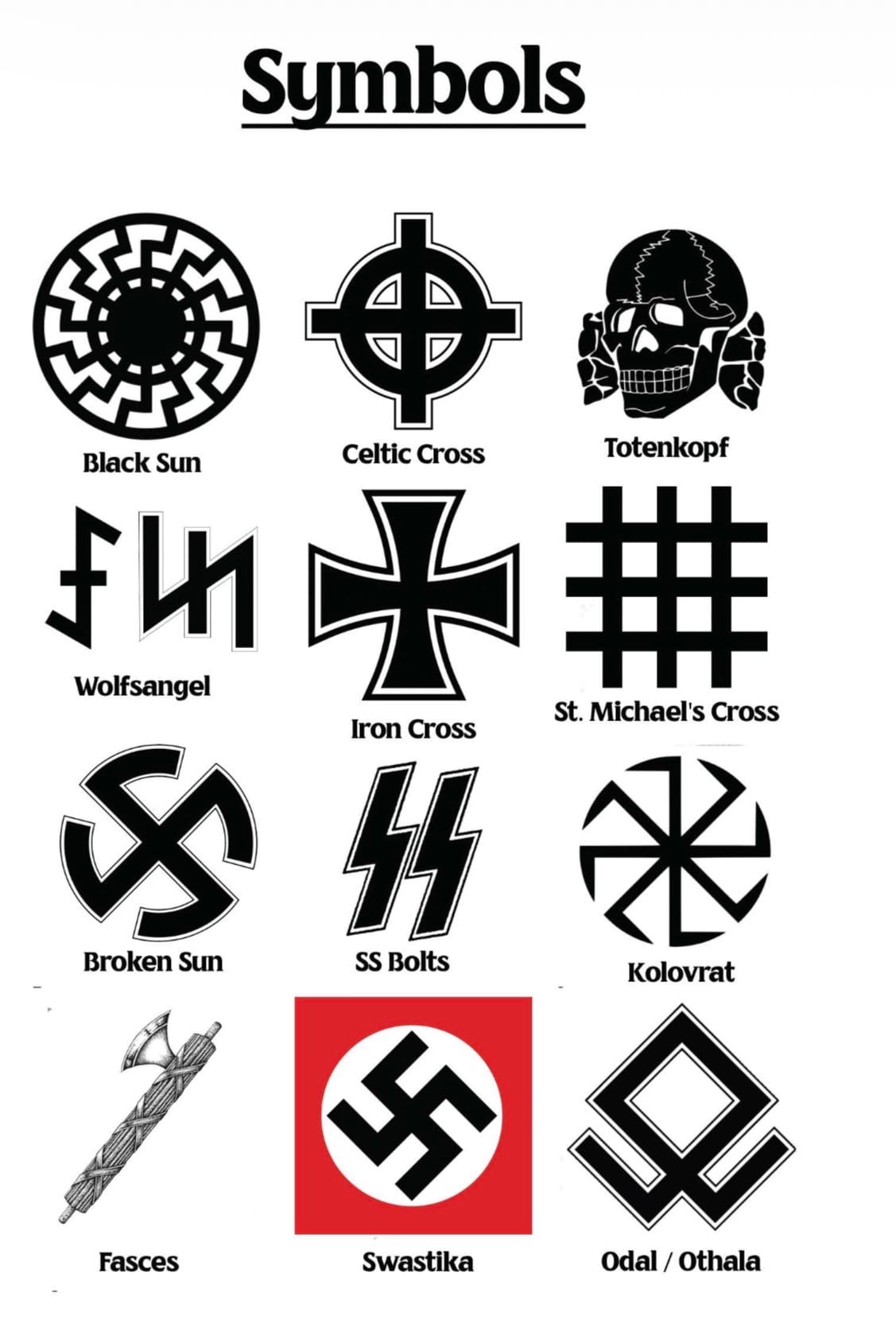
Disclaimer: WWFU typically redacts the imagery seen in this zine with an iron front or an X, and encourages others to do the same. This zine also contains slurs that we typically redact. For the sake of eduction and proper recognition, the following content is un-redacted.
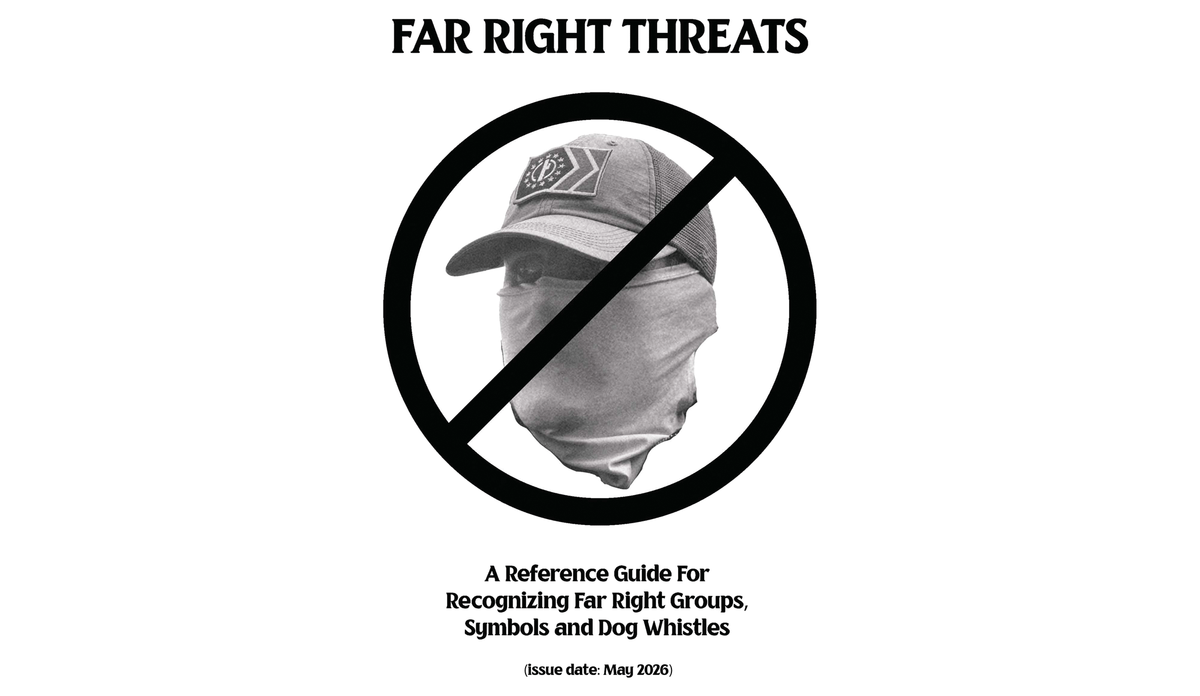
A Reference Guide For Recognizing Far Right Groups, Symbols and Dog Whistles
Introduction
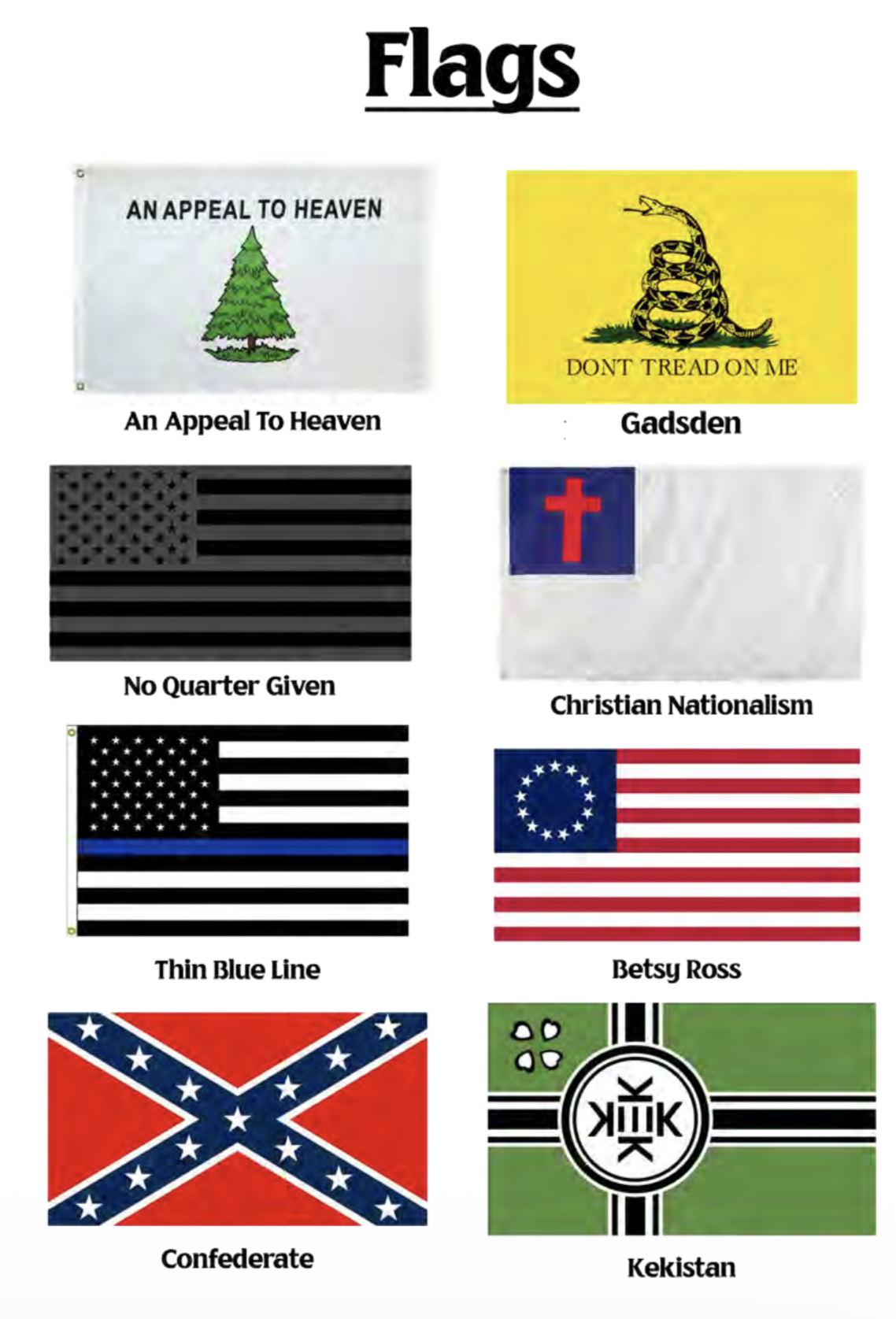
As of spring 2026, this zine serves as a reference guide to far-right symbols, dogwhistles, and groups, helping you recognize and understand them. The list focuses on the most active groups and the most commonly used phrases and symbols at this time.
Not all neo-Nazi and white supremacist groups openly brand themselves with swastikas or SS bolts. Recognizing their dogwhistles is essential to accurately identifying them as the community threats they are. Some groups and individuals deliberately project a public facing image of “patriotism” or opposition to “foreign wars” to appear more mainstream, while privately holding the same beliefs as more openly neo-Nazi organizations. Because some symbols are not exclusive to neo-Nazis, fascists, or white supremacists, it’s important to look for additional context clues and patterns of use.
Dogwhistles are coded messages communicated through words or phrases understood by a specific in-group, but not by outside observers. Neo-Nazis and white supremacists use dogwhistles to signal to one another while maintaining plausible deniability.
Phrases / Numbers
131: Anti Communist Action (ACA), the numbers referring to the letters of the alphabet.
Blue Lives Matter/All Lives Matter: These phrases are nothing more than a response to people saying “Black Live Matter” and as way to silence Black voices. Cops can always choose to take off their uniform, while Black people cannot take off their skin or escape the discrimination that comes with it. No one would go to an event to save the rainforests and say that all forests matter. If all lives matter, as racists love to say, then Black lives have to matter. All lives can’t matter until Black lives matter because they are the ones being targeted by police, racist attacks, and everyday discrimination.
TDOTR: The Day of the Rope, a fictional day from the book The Turner Diaries in which race traitors (women who marry non-white men, the press, politicians, LGBTQ people and more) are hanged from lampposts.
6MWE: “Six Million Wasn’t Enough” referring to the number of Jewish people murdered during the holocaust.
The Great Replacement Theory: White supremacist conspiracy theory that argues democratic and government officials are intentionally facilitating non-white immigration to replace the white population for political purposes. Similar phrases include “white genocide.”
It’s okay to be white: While no one is saying it’s not okay to be white, this phrase creates perceived victimhood and is a stepping stone to great replacement.
WPWW: White Pride World Wide
GTKRWN: Gas the Kikes, Race War Now
RAHOWA: Racial Holy War
RWDS: Right Wing Death Squad
Blood and Soil: A reference to race and nationality from Nazi Germany
14: A reference to the 14 words “we must secure the existence of our people and a future for white children” coined by David Lane.
88: 8 Represents the 8th letter of the alphabet, HH or “Heil Hitler.” Variations include H8 and 83 “Heil Christ.” You will often see the numbers 14 and 88 together (1488 or 14/88).
WP: White Power. Also sometimes signified by an “okay” hand gesture.
Reclaim America: White supremacist slogan advocating for the “reclaiming” of America from immigrants (referencing the racist Great Replacement conspiracy theory).
We’ll Have Our Home Again: Popular phrase used by neo-nazis and white supremacists based on a song of the same title and similar to “reclaim America.”
Groups / Orgs
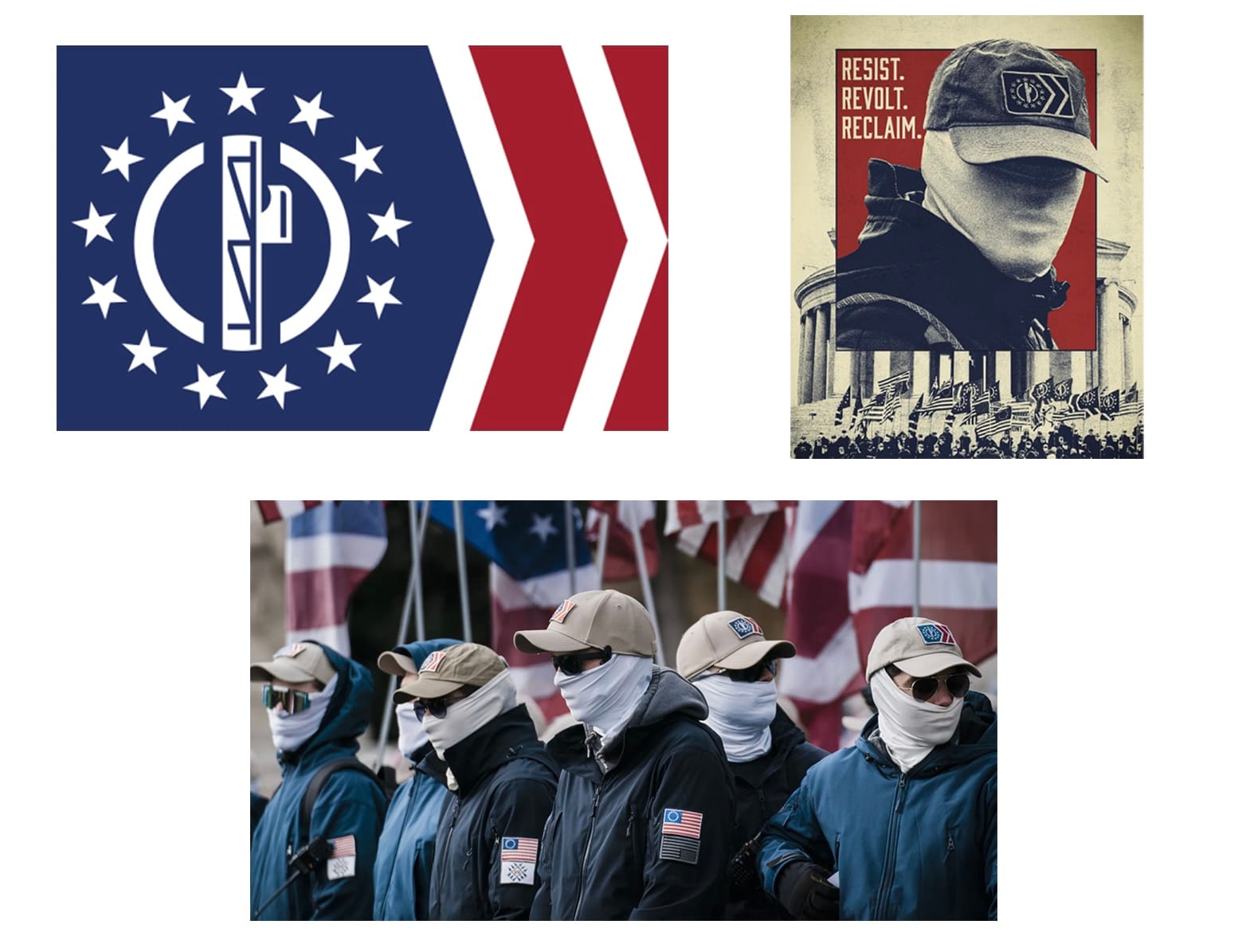
Patriot Front: A white nationalist group mostly focused on using patriotic imagery and rhetoric to spread propaganda and recruit. Founded by Thomas Rousseau, the group broke off from Vanguard America in 2017 after the deadly Charlottesville rally in Virginia. They care primarily about public image. Their style involves patriotic designs including red white and blue, fasces, khaki pants, and white masks with matching shirts, shields, the Confederate flag, the Betsy Ross flag, and the US flag. Despite their efforts to be palatable to a wider audience, outside of public view they espouse anti-semetic, pro-white and pro-nazi views. Patriot Front is currently one of the largest white nationalist groups in the US.
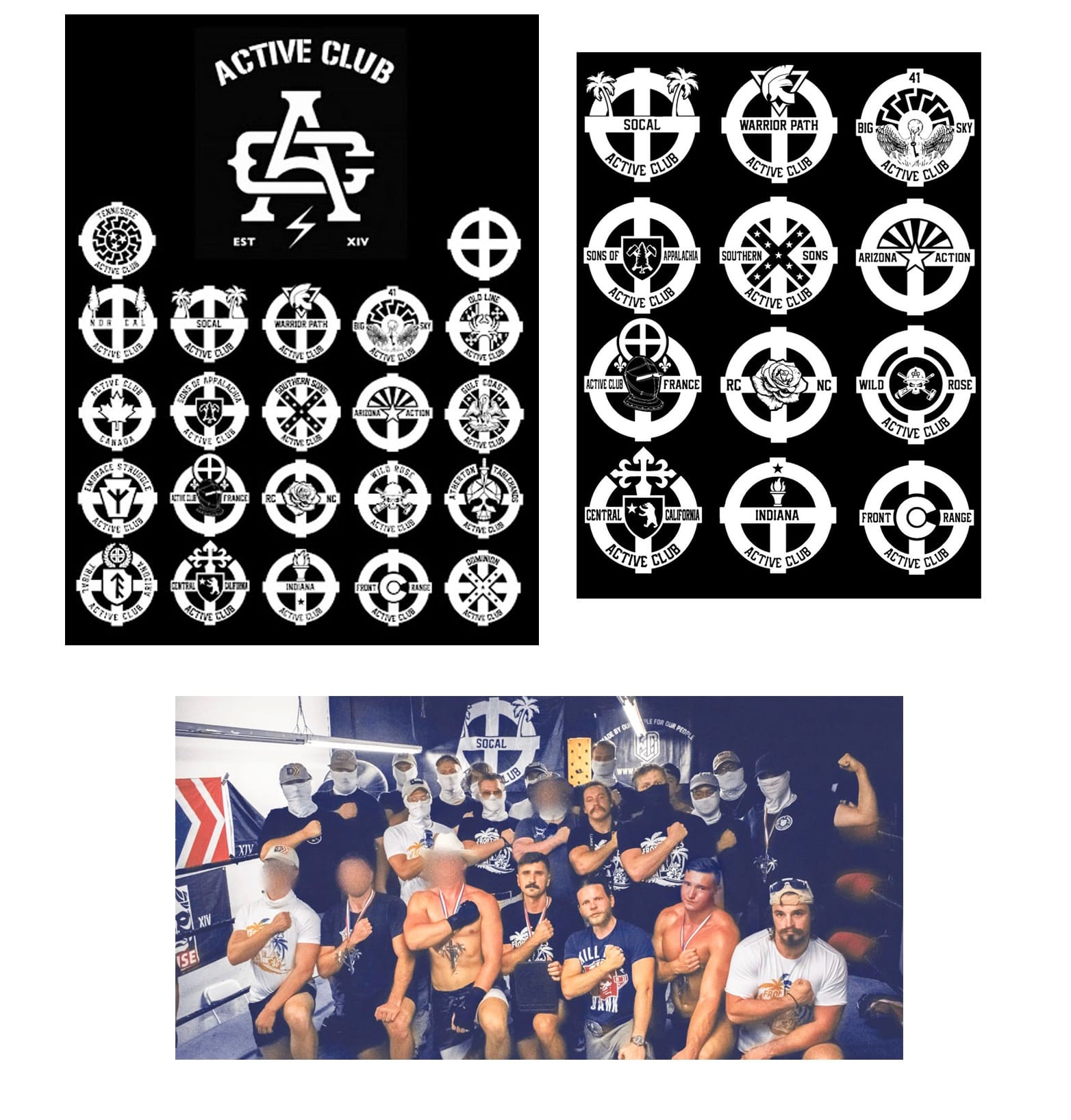
Active Clubs: Active Clubs are white supremacist fight clubs widespread across the US and throughout parts of Europe. They use the guise of fitness and training to try recruiting mostly younger white men into their clubs. Often members will march with other larger neo-nazi / white supremacist groups, and all chapters share the same logo of a Celtic Cross with text representative of their region. Many Active Clubs in the US are directly tied to Thomas Rousseau and Patriot Front.
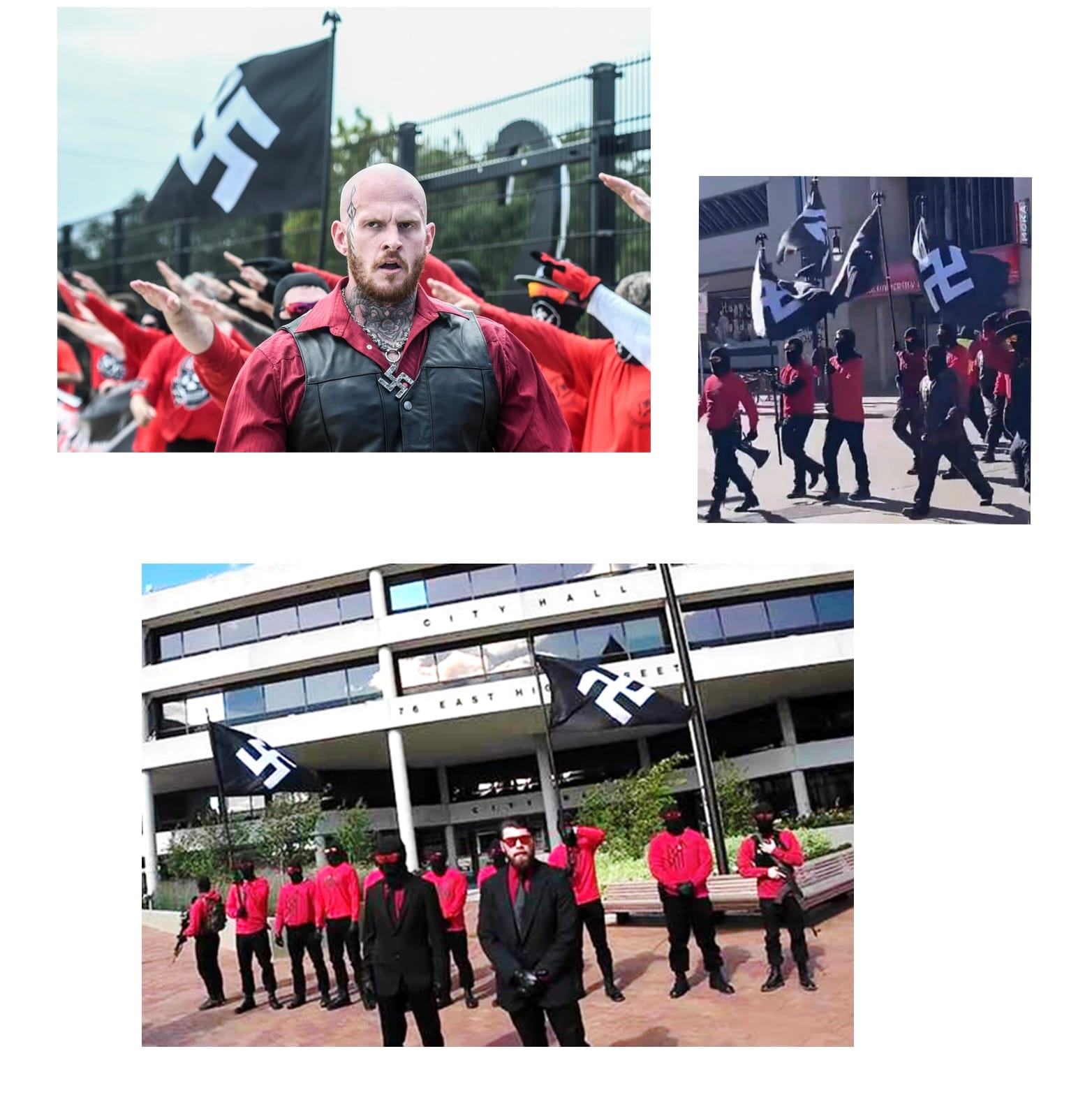
Blood Tribe: Blood Tribe is a neo-nazi group started by former marine Christopher Pohlhaus. They are known for being one of the most outward facing Nazi groups, holding semi-regular marches in cities across the US. They wear matching red and black outfits with black face coverings, and march with matching black and white swastika flags, and will loudly chant white supremacist and nazi slogans. Their goal is to instill a Fourth Reich in the US.
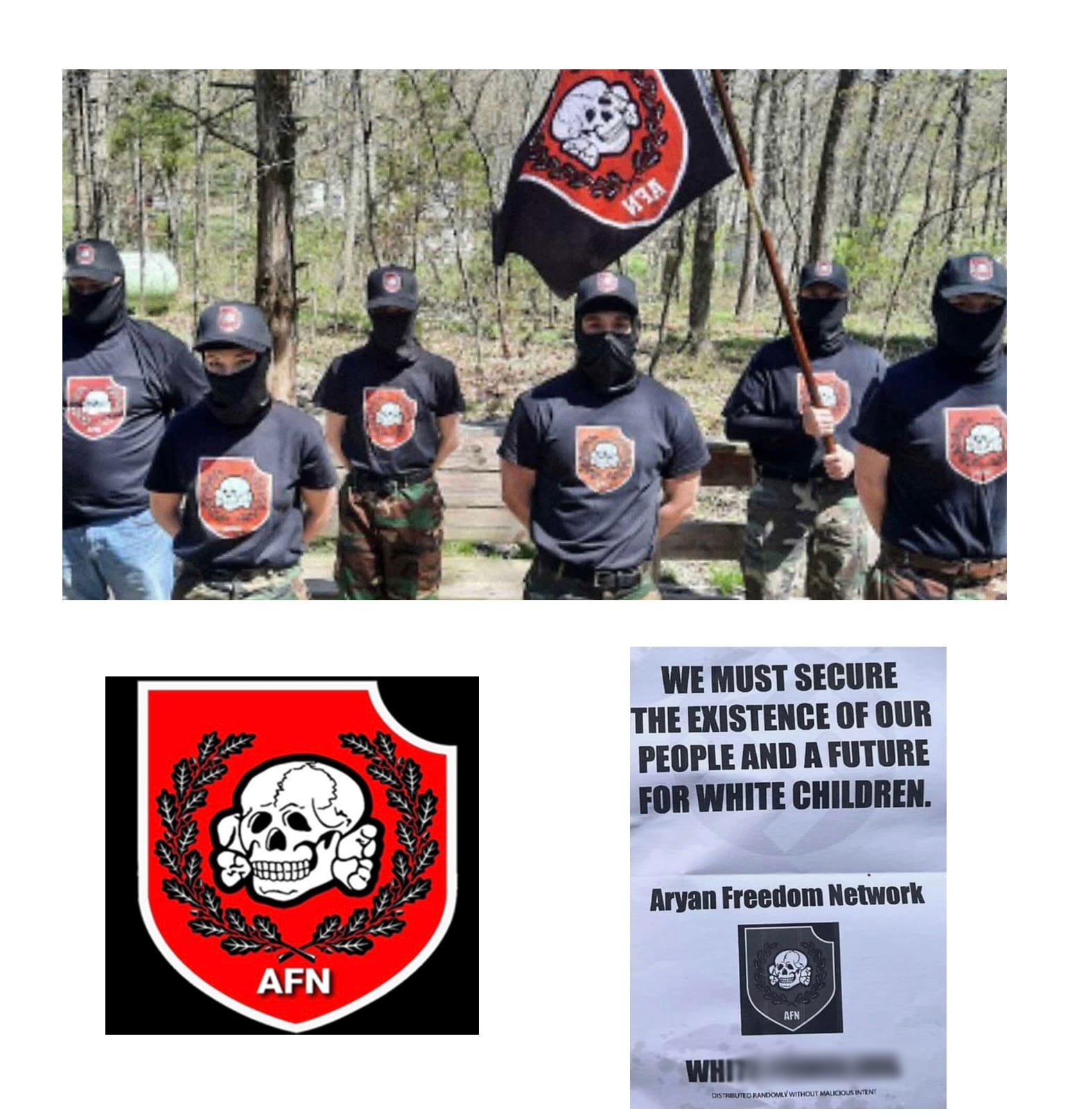
AFN: “Aryan Freedom Network” is a neo-nazi group present widespread across the US. The group has begun functioning as an umbrella organization, bringing in members from other groups like the Ku Klux Klan and outlaw bikers to function under their name. Outside of flyering neighborhoods with nazi propaganda, they operate mostly out of public view. They train often with firearms and make efforts to organize nationally across as many regions as possible.
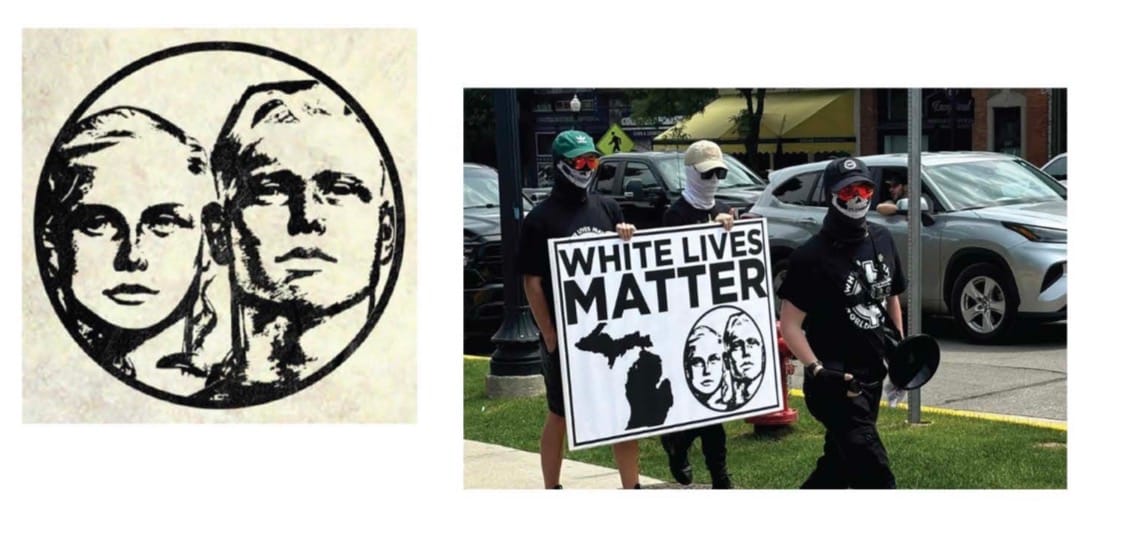
WLM: “White Lives Matter” is a white supremacist movement with chapters all around America and the globe, who focus their activism on low-risk tactics like stickers, flyers, and banners.
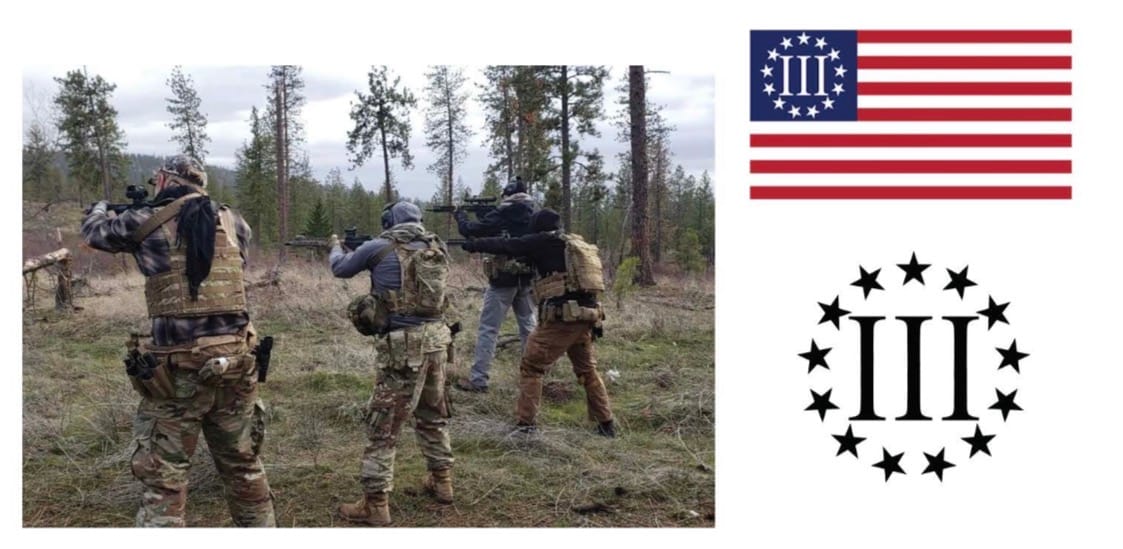
Three Percenters: This movement was created in 2008 with the false claim that only 3% of American forces fought the British in the revolutionary war, and therefore it would take only 3% of the population to overthrow the current US government. They are a far-right militia movement of anti-government extremists focused on gun ownership.
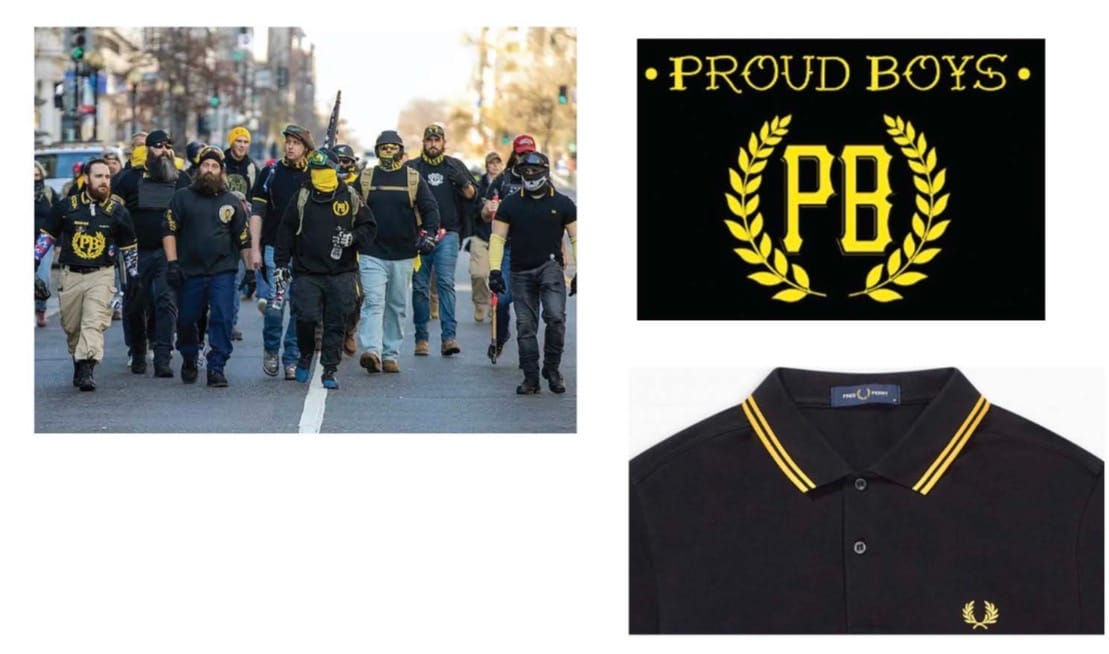
Proud Boys: A group of western chauvinists founded by Gavin McInnes in 2016. Although the Proud Boys aren’t explicitly white supremacist, their emphasis on the “western” values and culture is a thinly veiled substitute for “White” values and culture and is used to deflect accusations of racism. Their ideology can be considered a form of proto-fascism as it contains elements of ultra-nationalism, traditionalism, misogyny, and social Darwinism. Their membership has different levels and members are encouraged to participate in street brawls. Level 1 is to exclaim “I am a proud western chauvinist and I refuse to apologize for creating the modern world.” Level two is to recite 5 cereal brands while other members perform a “beat in.” Level 3 is to get a tattoo of “PROUD BOY,” and level 4 is to engage in violence for their cause, usually against LGBTQ or antifascists. They use the acronyms POYB (Proud of Your Boy) and FAFO (Fuck Around and Find Out) and can be spotted in black and yellow Fred Perry polo shirts, or other clothes with the black/yellow color combination. They also use the “okay” hand sign on a regular basis.
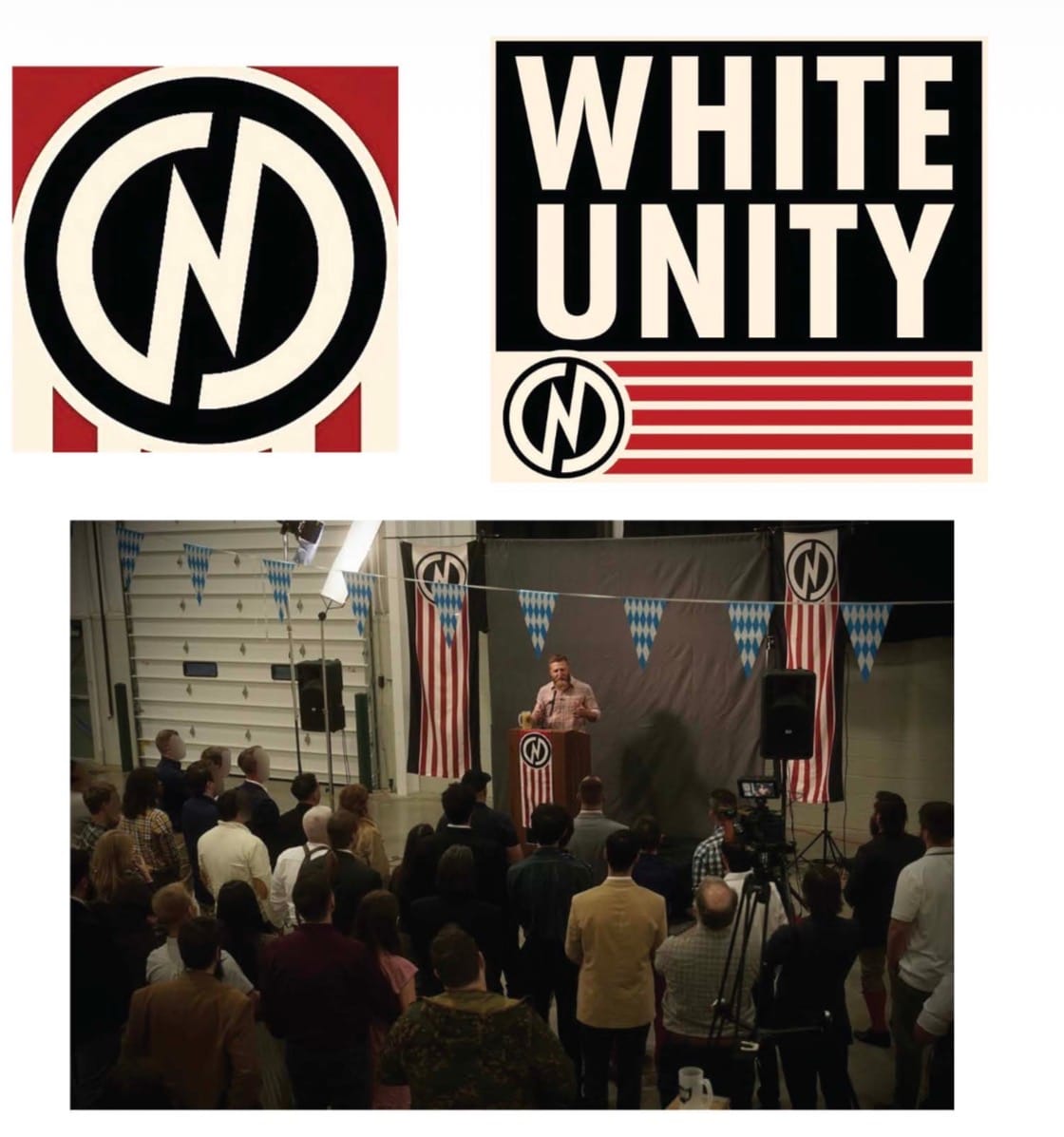
NOVA: “National Organization for Vital Action” is a white-supremacist organization with the goal of building a “nation within a nation” for whites only. They aim to connect as many neo-nazi and white-supremacist groups and individuals as possible in order to create a broad network of racists in America. Their public actions mostly consist of banner drops and stickers. In private, the group has expressed their willingness to use violence to achieve their end goals of a whites only nation.
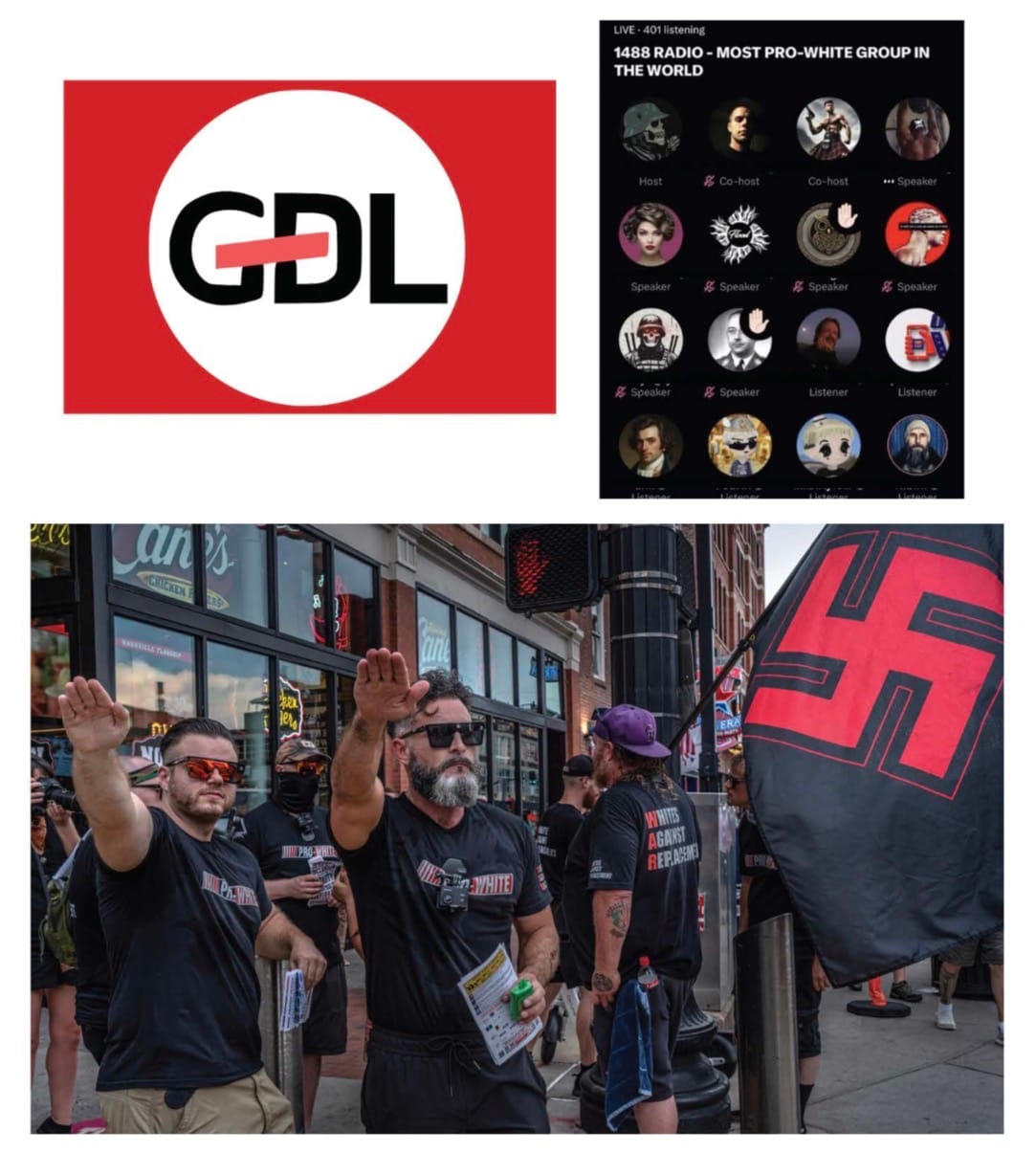
GDL: “Goyim Defense League”, founded by Jon Minadeo II, is a network of anti-semetic content creators who focus almost exclusively on anti-Jewish conspiracy theories and hatred. They primarily focus their efforts on online videos and live -streams, but are also active in-person, often flyering neighborhoods doing banner drops, harassing synagogues, and holding marches with swastika flags.
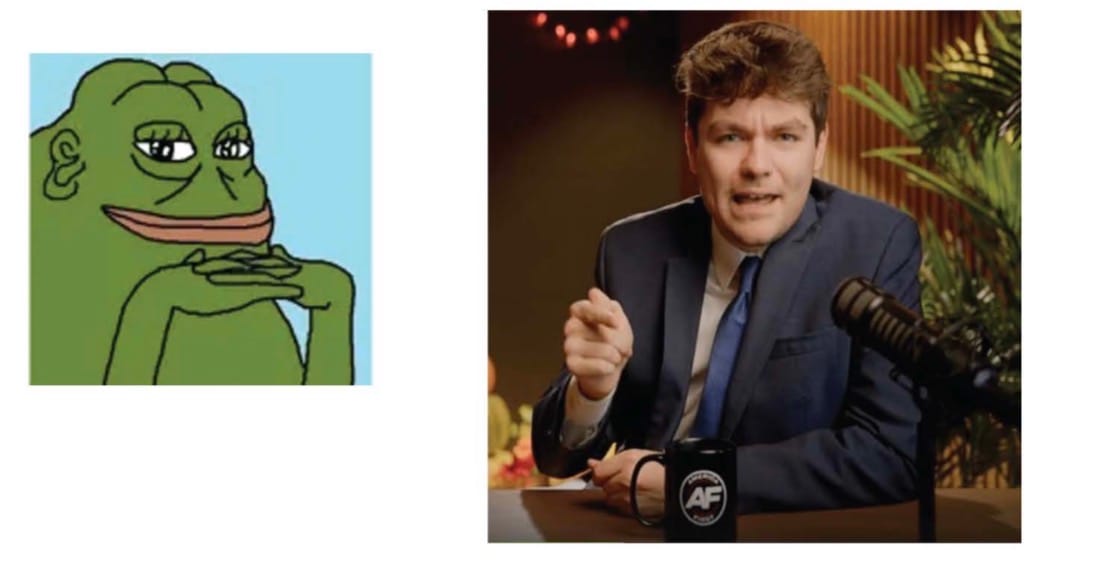
Groypers: “Groypers” are a term for followers of far-right, nazi influencer Nick Fuentes. Less of an organized group, it is a term given to adherents of the anti-immigrant, anti-semetic, and pro-white positions held by Nick Fuentes and pushed into the public. The primary function of Groypers is to push more “traditional conservatives” into a more radical, white supremacist sphere.
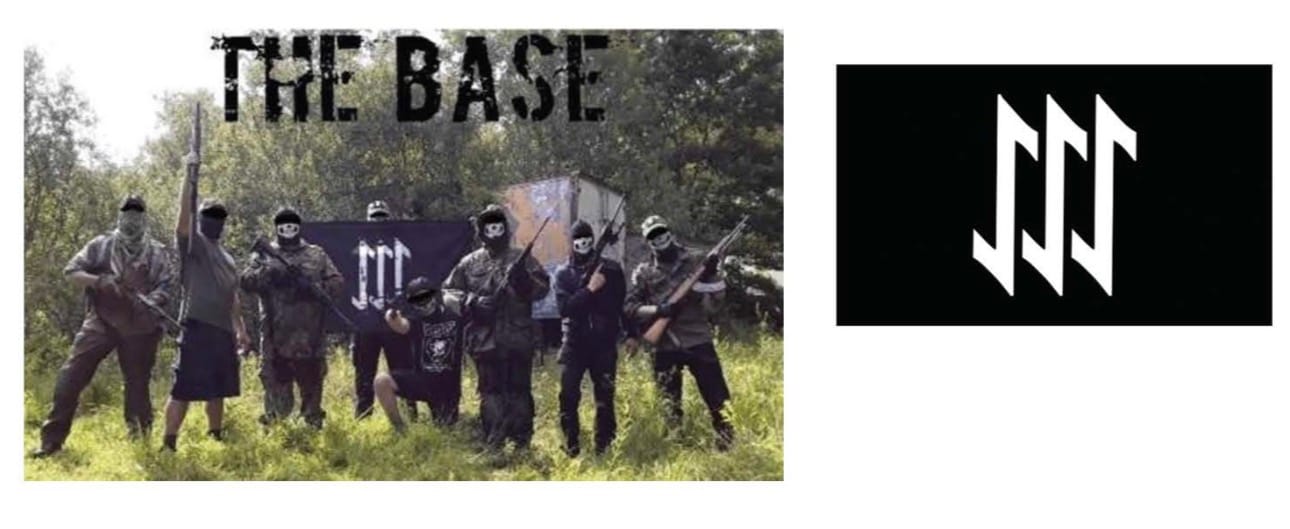
The Base: An accelerationist paramilitary nazi group formed by Rinaldo Nazzaro in 2018. They have similar aesthetics to Atomwaffen, but a different logo.
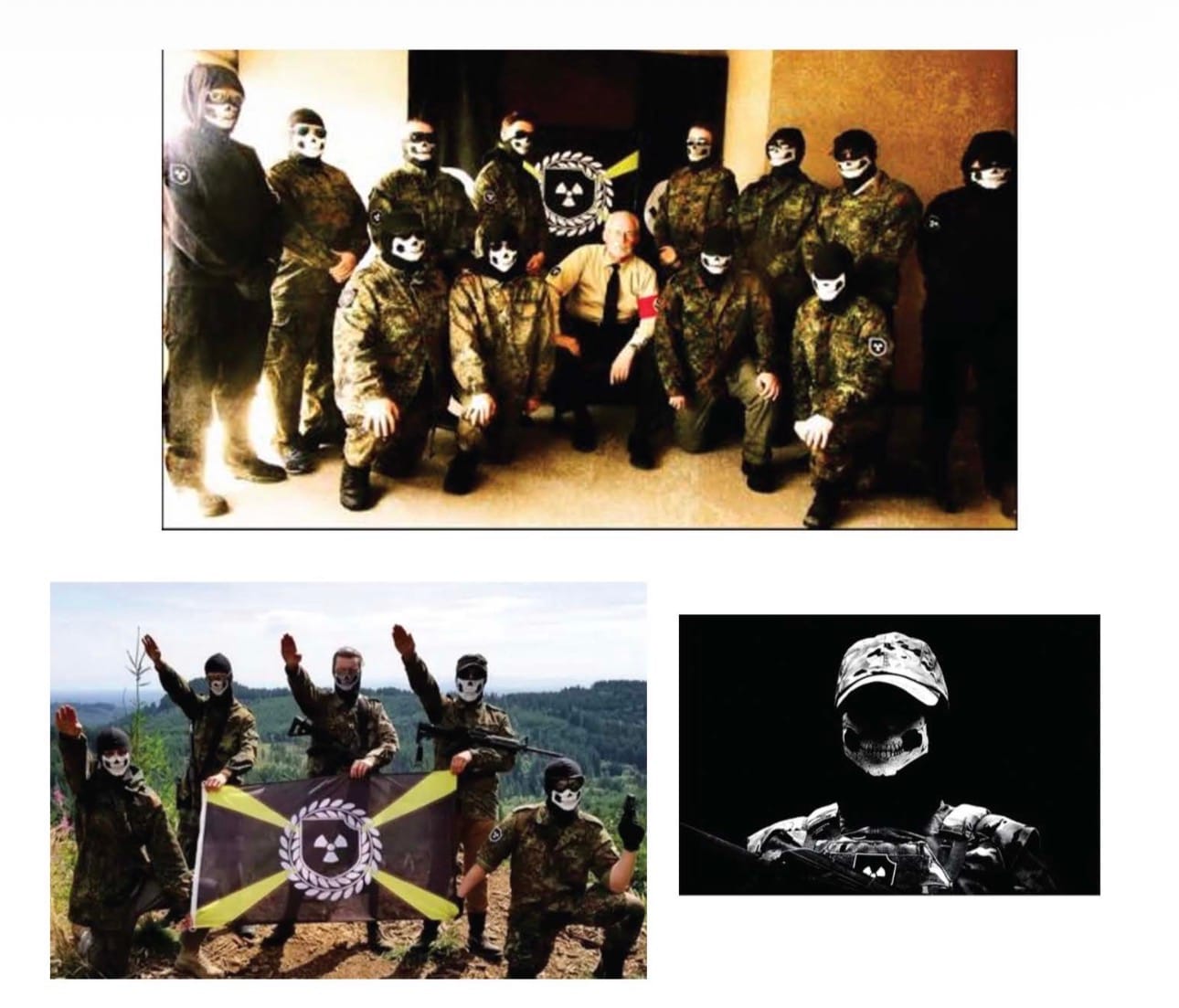
Atomwaffen Division: Also known as the National Socialist Order, Atomwaffen is an accelerationist (accelerating towards a race war in which they hope to overthrow the current government and society and replace it with a fascist order) nazi group responsible for several murders. After numerous arrests and infighting. the group dissolved, only recently attempting to reform in 2025, though failing to gain support. Responsible for popularizing the skull mask within neo-nazi groups, other symbols include the radioactive symbol and flecktarn (a German camo pattern similar to the “peas” pattern from WW2). Although now defunct, their influence remains significant.
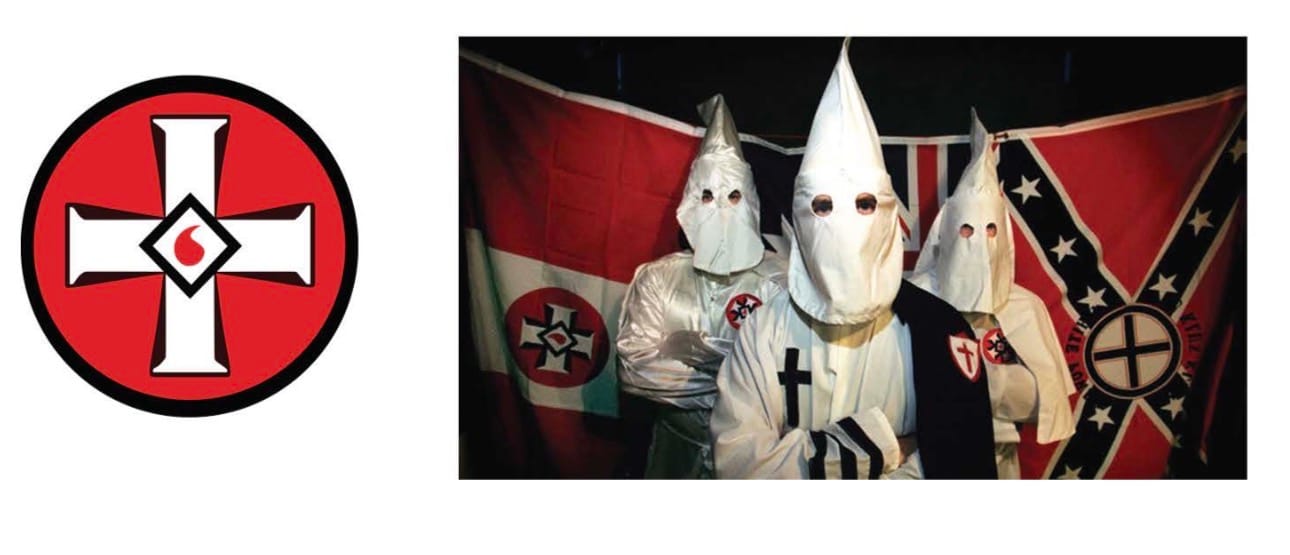
Ku Klux Klan: One of the longst running white supremacist organizations. They use the number 311 to represent 3 Ks, which is the 11th letter of the alphabet. Their iconic robes have become so recognizable they may no longer count as a dog whistle. They also use the blood drop cross and variations on the blood drop cross including just the blood drop, and the confederate flag.
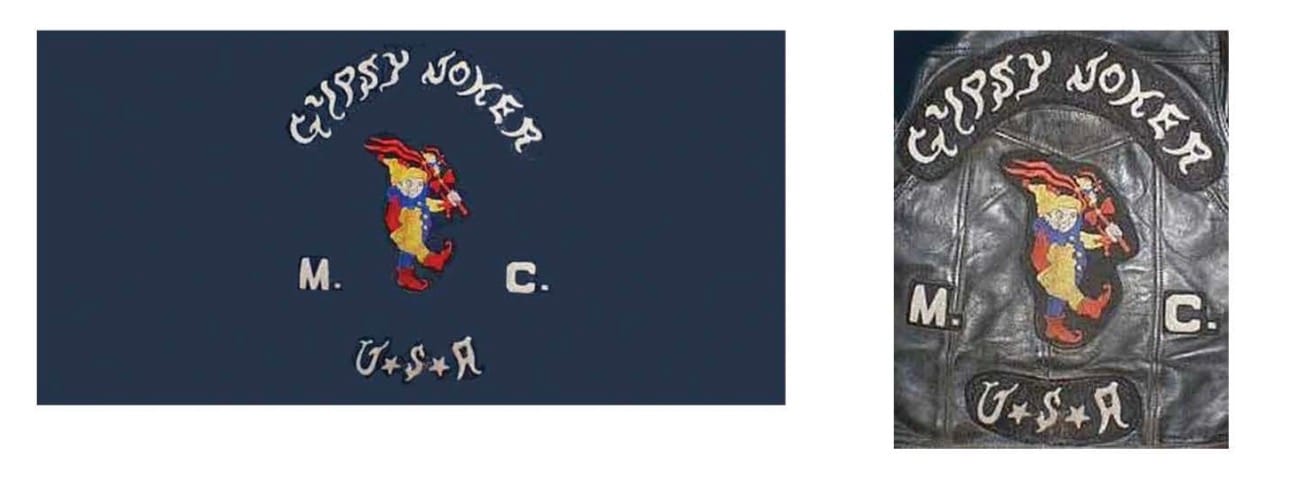
Gypsy Jokers: A one percenter motorcycle club with white supremacist sympathies who are known to traffic drugs and engage in low level organized crime and violence. They wear motorcycle gear adorned with nazi symbols and a back patch that says “Gypsy Jokers.” In recent years they have been known to associate with the Proud Boys.
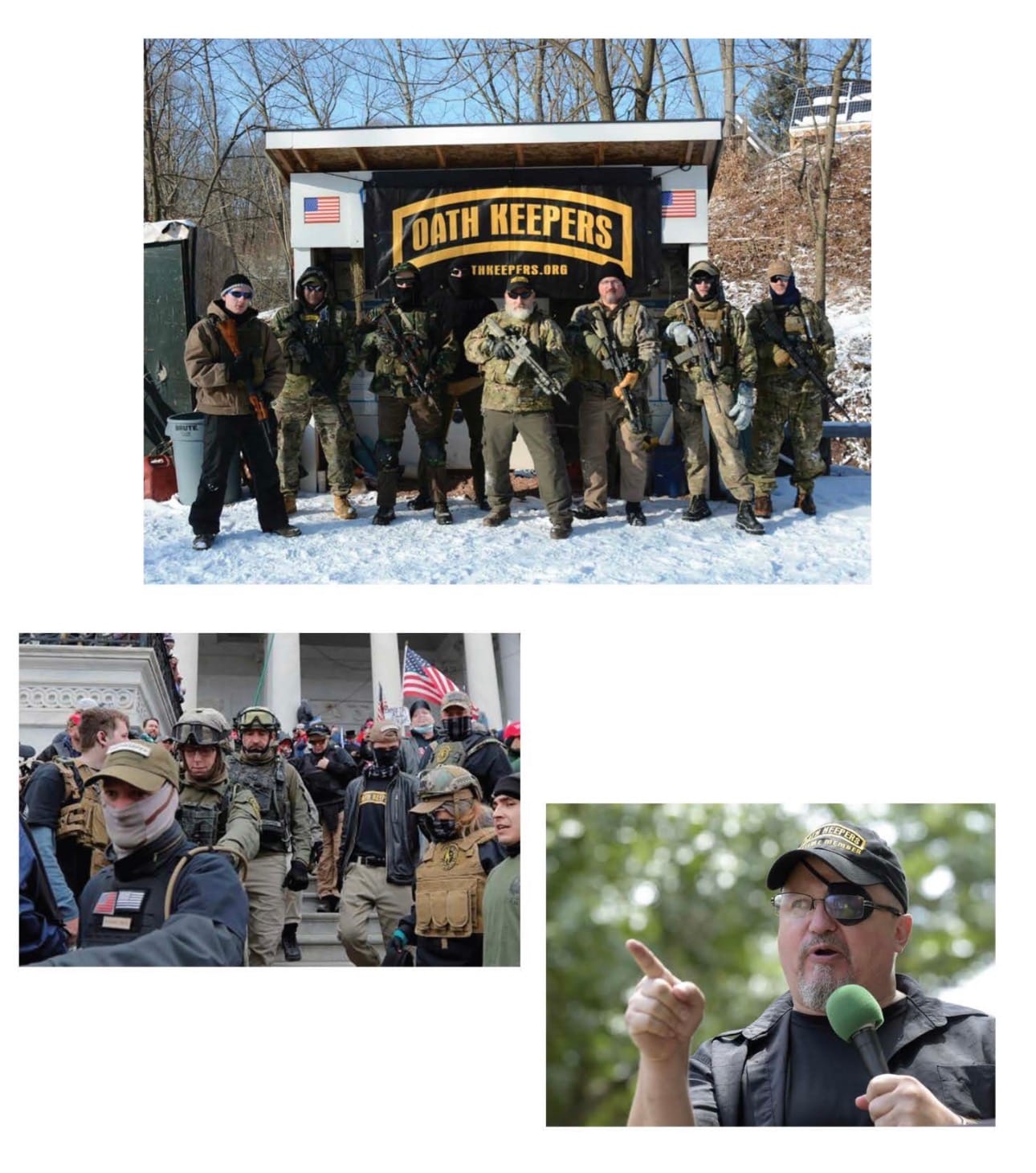
Oathkeepers: Far-right anti-government militia founded in 2009 by Stewart Rhodes. Oathkeepers played a key role in the January 6 insurrection at the US Capitol. Oathkeepers appeal directly to military and law enforcement personnel, encouraging them to keep their “oath” to defend the public from what they perceive as the new world order, by means of discipline and violence. They’re also associated with three percenters.
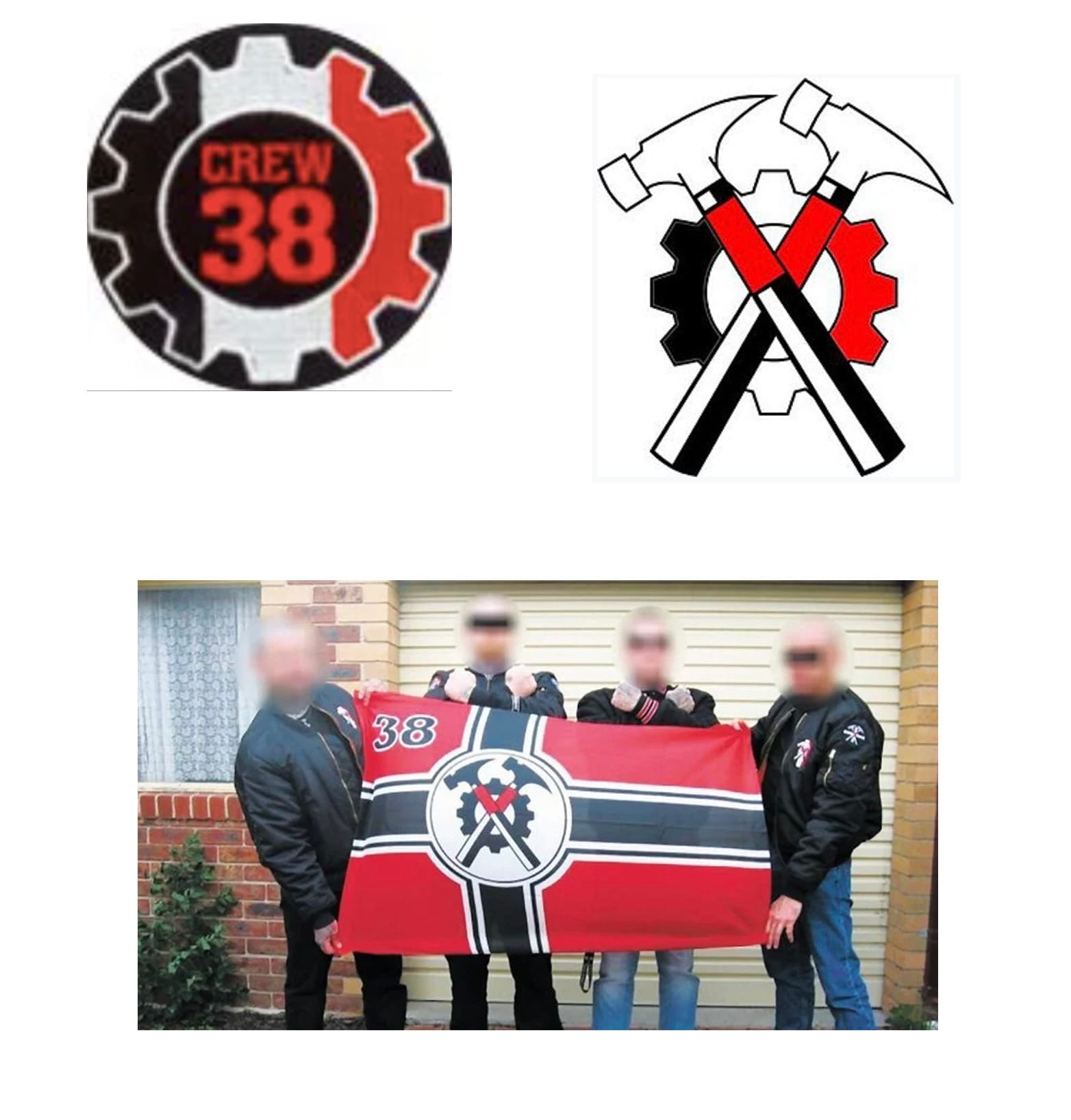
Hammerskins: A racist skinhead group, aka boneheads. The feeder group is known as Crew 38 (38 for “Crossed Hammers”). Hammerskins focus mostly on spreading racist music, but they also engage in street fighting and targeted attacks. Hammerskin Nation is considered one of the most violent racist skinhead groups in the US. They use a hand sign of crossed arms with fists to represent the crossed hammers.
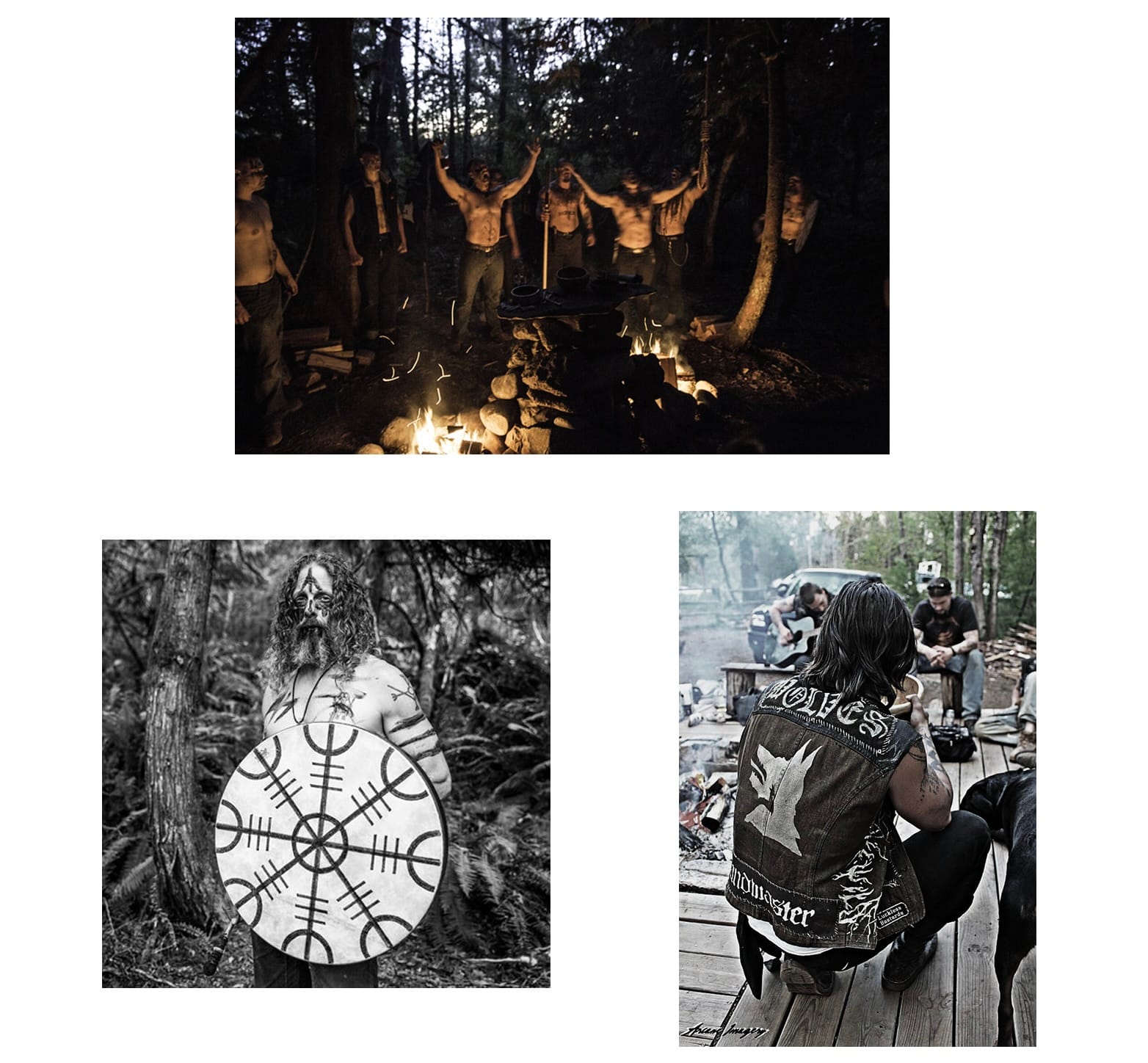
WoV: “Wolves of Vinland” is a group with heavy folkish influences that promotes white supremacy and misogyny, stressing Asatru or Paganism, including animal sacrifices and blood rituals in the woods. They have recently been partnering with Patriot Front and Active Clubs to hold fascist combat events. Their headquarters is in VA, but membership is not limited to that area. “Operation Werewolf” has been used as a recruiting tool and feeder group for WoV. They can be spotted with Celtic and Nordic imagery, runes, and wolf pack patches..
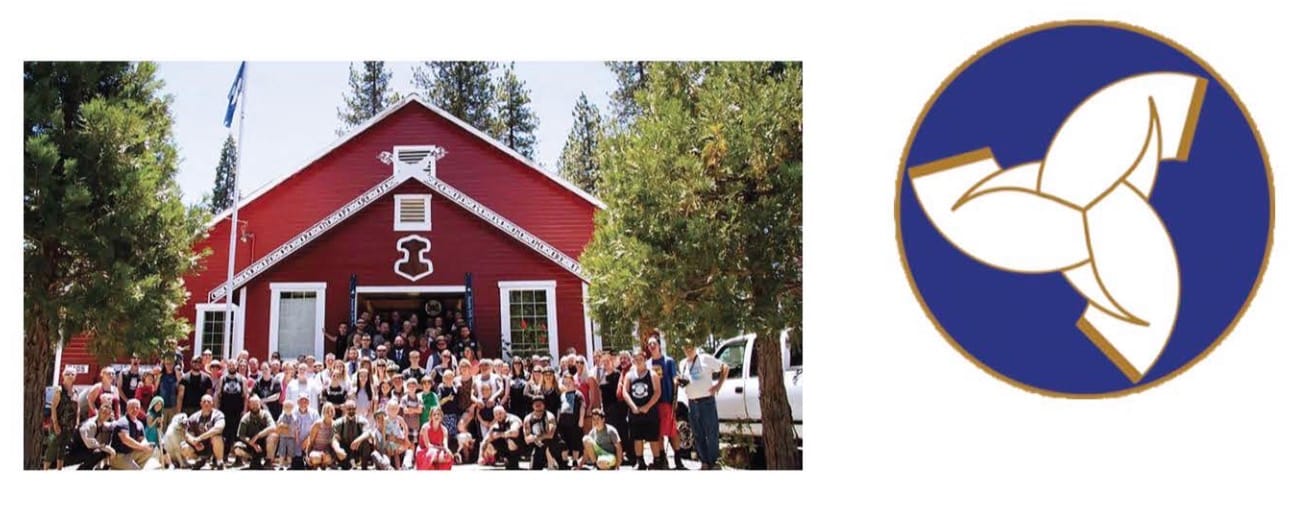
Asatru Folk Assembly: A norse pagan organization which advocates for pre-Christian European rituals and beliefs. The organization discourages “race-mixing” and promotes a whites-only vision of America, falsely claiming that white people were in North America first and were wiped out. Members of other neo-nazi groups such as Blood Tribe associate often with them.
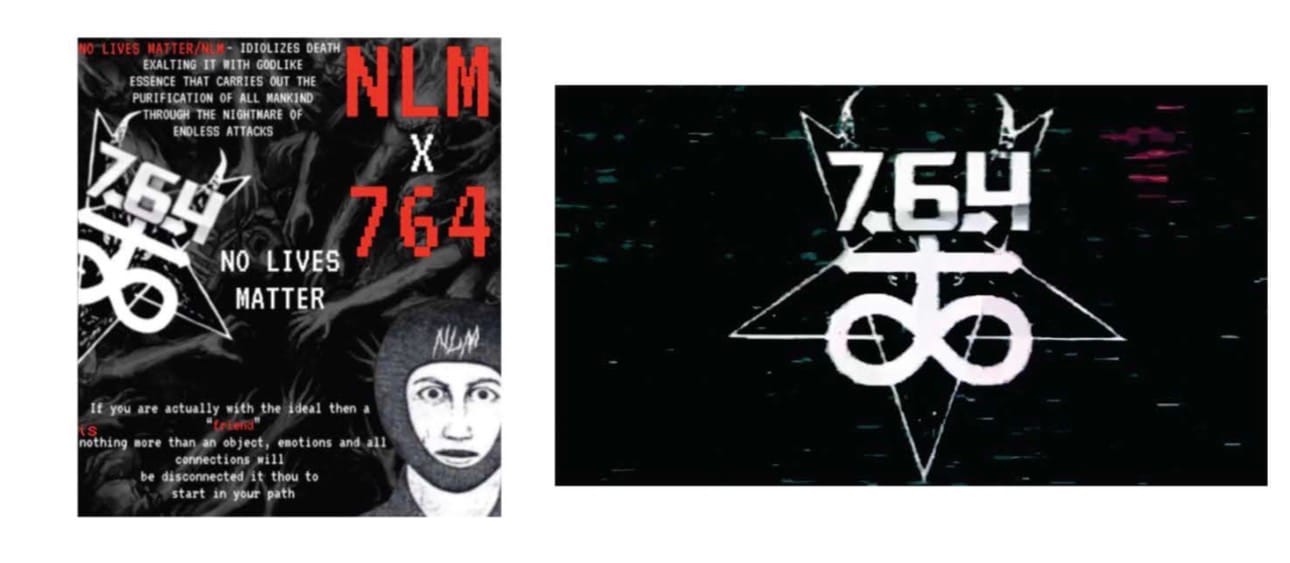
764 / No Lives Matter: 764 is an international, predatory network that espouses neo-nazi, satanic, nihilistic, and accelerationist beliefs. It targets and exploits children / young people and encourages them to commit mass acts of violence. Adherents have been responsible for acts such as murder, firebombings, and school shootings.
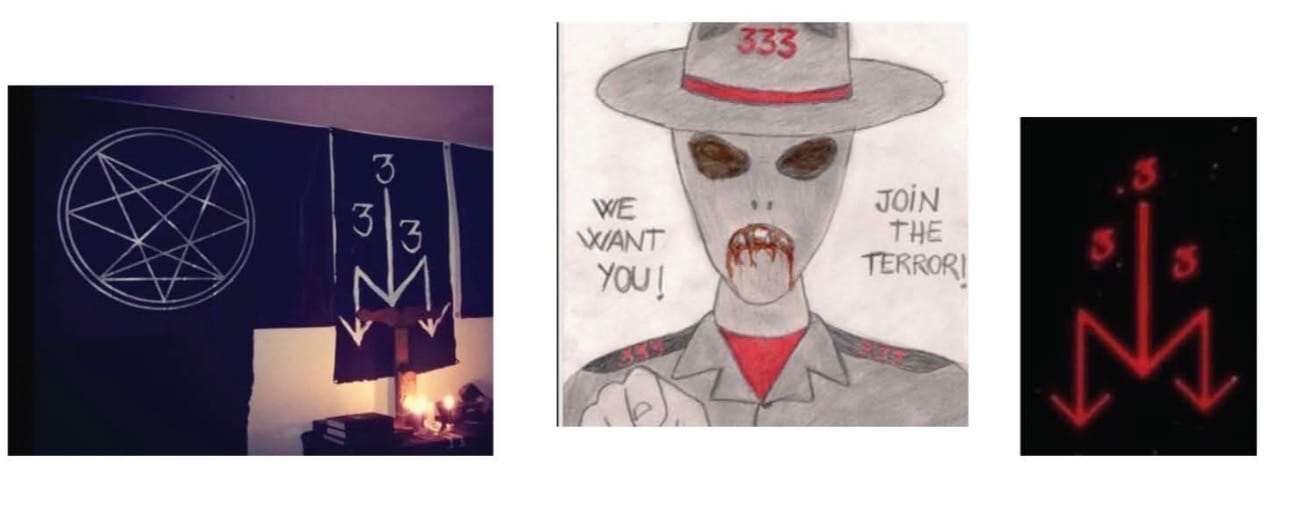
Tempel ov Blood / 09A: The Order of Nine Angles (09A), and it’s most violent chapter, The Tempel ov Blood (ToB), are satanic neo-Nazi cults that have had a significant influence on far-right accelerationist projects, like the now-defunct Atomwaffen. Suffice to say, 09A and ToB glorify nazism and violence, and are adept at radicalizing (and abusing) teenagers. Symbols include the seven-pt star inside a circle, a downward sort of pitchfork with 333 above it, and “Drill Sgt Grey” – a sinister space alien in a military outfit.
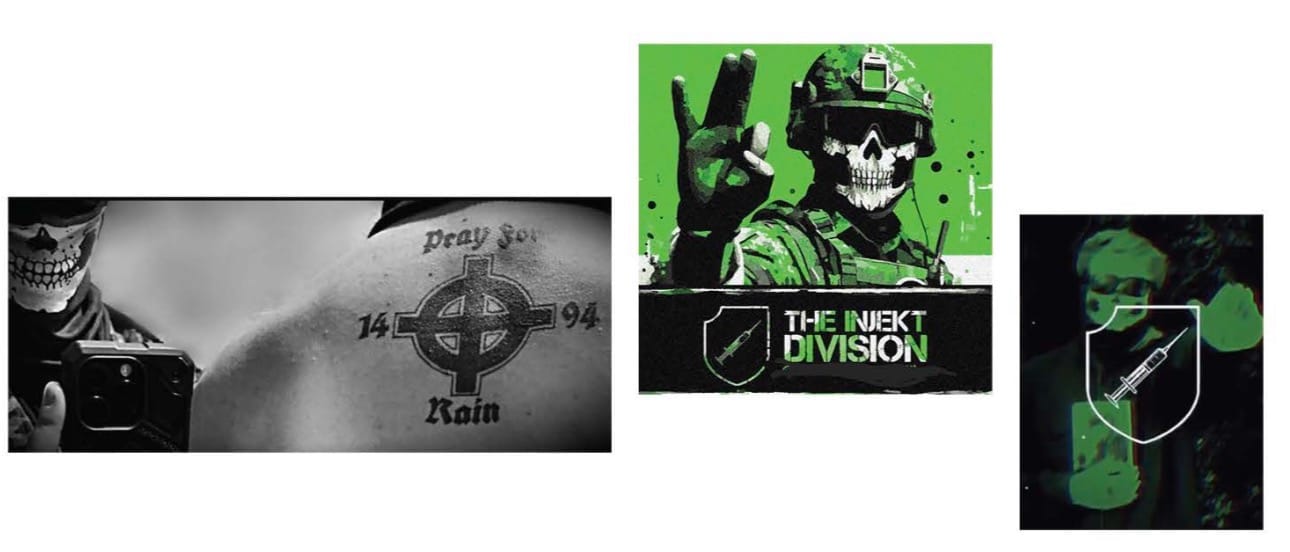
Injekt Division: An accelerationist nazi group that was formed by Coleman Blevins (aka Korb) in 2021. They are organized in decentralized cells, embracing a terror guerrilla ideology that looks to collapse the “System”. Their symbols include a syringe, 1494 and “Pray For Rain”.
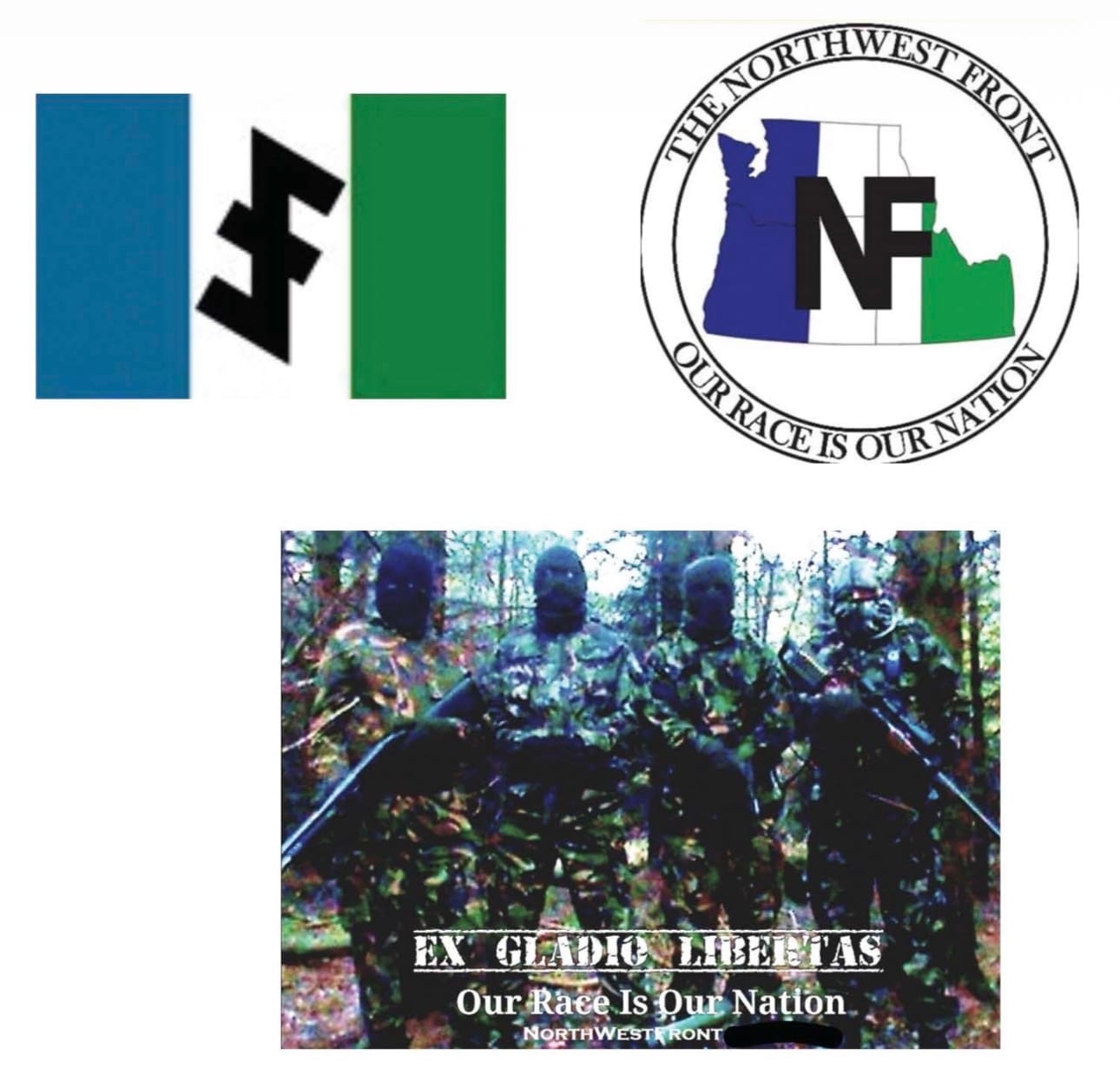
NWTI: “The Northwest Territorial Imperative” is a vision of a whites-only homeland in the Pacific NW. Proposed in the ’80s by Richard Butler of the Aryan Nations, it is an idea embraced by a wide variety of white supremacists, including secretive militant nazi groups dedicated to implementing the vision, such as Northwest Front (NF) or the Northwest Pioneer Association (NPA). NWTI is represented by an inverted Cascadian tri-color flag – having vertical stripes, rather than horizontal. Their flag sometimes includes a rune or swastika. Common associated phrases: “Come Home, White Man” and “Ex Gladio Libertas”.
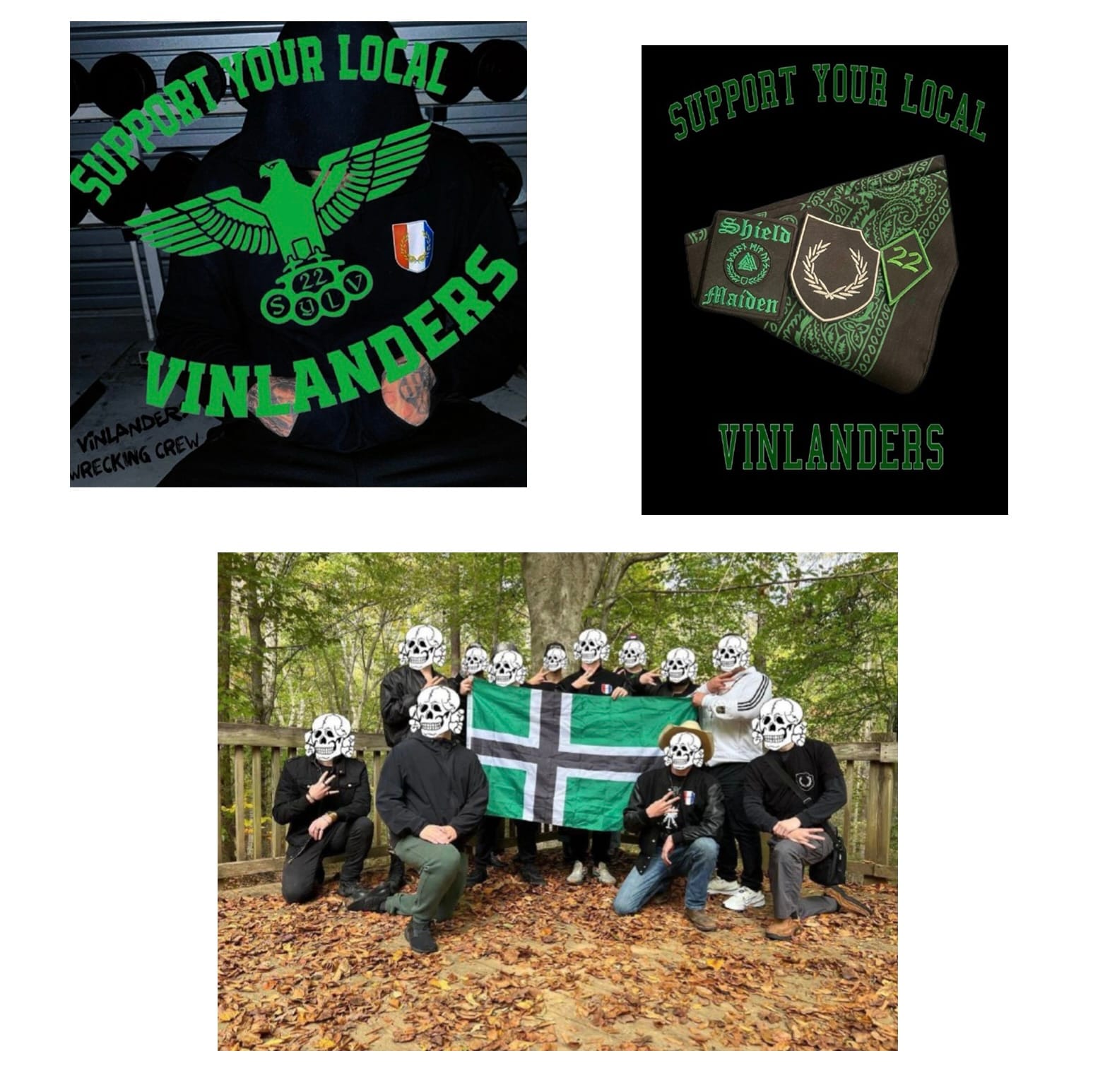
Vinlanders Social Club: Vinlanders Social Club (VSC / Firm 22) is a violent neo-Nazi bonehead gang formed in 2003. It uses Firm 22 as a support crew of men and women; the men being prospects for full VSC membership. VSC / Firm 22 went into decline in the 2010s, but has been attempting to build itself back up through proximity to the active club movement, much like the Hammerskins. Its symbols include a black cross on a green flag, 22, 1422, an eagle holding brass knuckles, a red, white & blue shield patch with a laurel, or just a laurel.
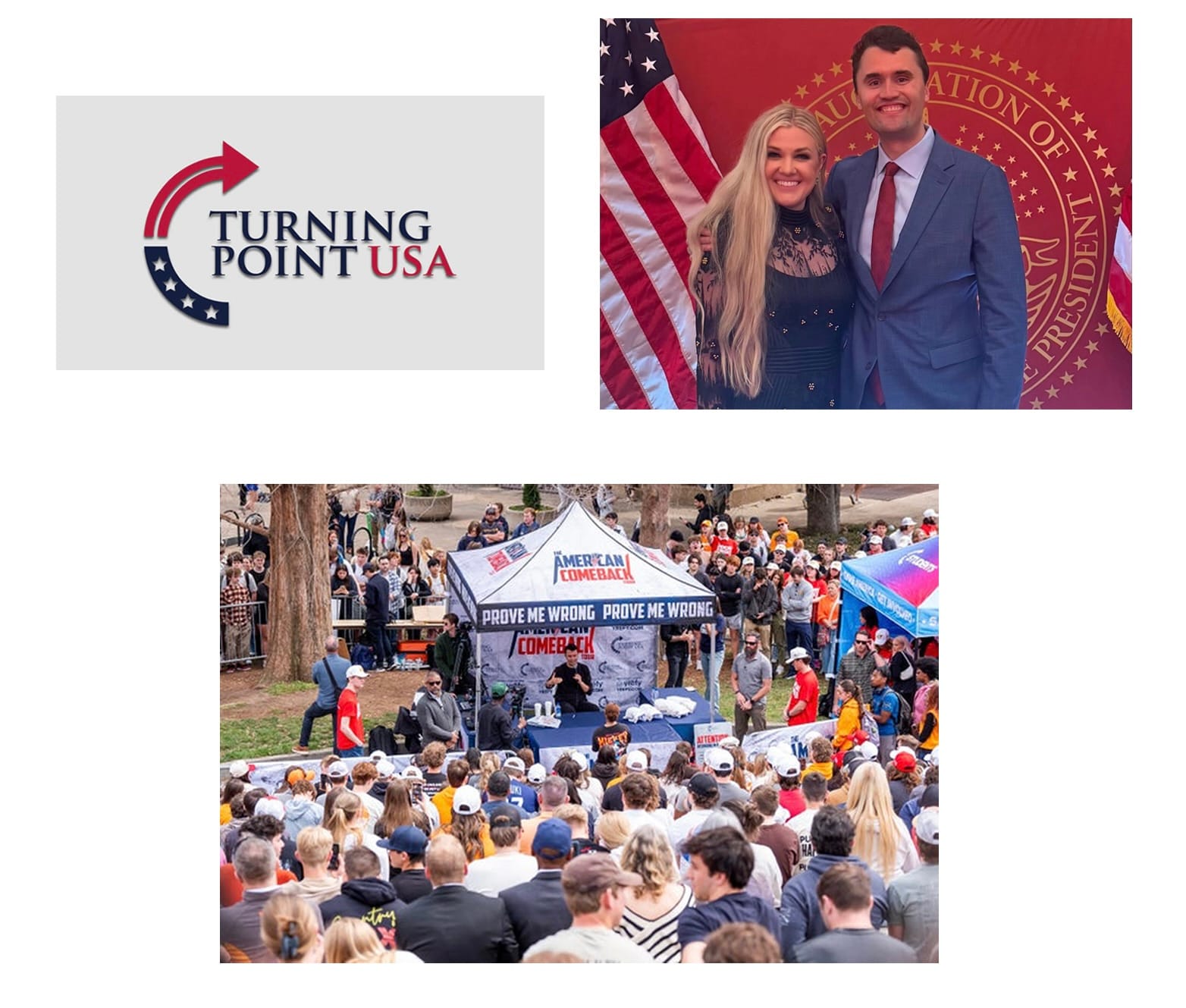
TPUSA: “Turning Point USA” is an organization which targets high schoolers and college students with far-right propaganda, talking points, and literature. Founded by Charlie Kirk, and now led by his widowed wife Erika Kirk, the organization has chapters in schools across the US, and regularly sets up tents on college campuses in order to recruit and create content by means of filming bad-faith political “debates.” With a roster of speakers and frequent events, TPUSA regularly promotes popular anti-trans white nationalist talking points, white Christianity, and racial divisions. Using the public image of more traditional conservatism, they function as a pipeline to more fascist far-right ideologies.
References and Further Reading
For current / past antifascist articles, contact info for sharing tips, and other resources, you can visit:
This is in regard to Kevin Hart’s roast show on Netflix. Over the past couple of years, I’ve read comments that Kevin Hart can be, um, problematic, by being, let’s say, careless how he speaks, or doesn’t call out others’s speech. I don’t go looking to see more about why, though, because it has read as celeb clickbait. I ran across this, and thought I’d share; it’s not celeb clickbait.So, if someone has watched or will watch Kevin Hart’s show, please let us know a counterpoint, or confirm!
If you haven’t pressed play on Kevin Hart’s Netflix roast yet, consider yourself warned. As more people check out Kevin Hart’s celebrity “G.O.A.T. Roast” that recently aired on Netflix, they are failing to find the humor due to the overwhelming amount of racist jokes that were lobbed across the stage from a myriad of white comics. And now, Pastor Jamal Bryant is calling Hart onto the carpet for letting it happen in the first place.
As we previously told you, the event was home to a plethora of shocking racial and stereotypical jokes targeted towards Hart and other Black comedians who were present. The “punchlines” were wide-ranging, from calling Hart a monkey, a slave, a crack baby, and burnt, to likening comedian Sheryl Underwood to a donkey and more. There was even an egregious George Floyd “joke” that was spoken, which soon prompted multiple members of his family to speak out in protest of it.
And all the while, Hart stood by laughing through it all, never once attempting to say when the jokes had gone too far.
Since then, fellow comedians like Michael Che and Lil Rel Howery have shared their two cents of disappointment with what took place. And now, Bryant is also airing out Hart and the other white comics for behaving the way they did.
Writing in a post to Threads, Bryant said of the event: “The Kevin Hart roast wasn’t comedy it was disrespect dressed as jokes. In this climate for it to go unchecked is to give consent.”
In the comment section, many couldn’t help but side with the New Birth Missionary Baptist Church leader and activist.
“I’ve watched Roasts before but this was outside of a roast, it went way over the line in racism period,” said one user.
“Yeah I missed the joke!!! To mock George Floyd was beyond racist! It was disgusting and when we laugh we allow them’ to think it’s ok!!!,” said another.
One other user agreed, adding: “We need to make it known that its unacceptable. I’m tired of Black ppl’s pain being the butt of jokes. I remember hugging my father so tightly after watching George Floyd’s unaliving. To know that the country we live in is ok with treating Black Men in such a manner will never sit right with me.”
Noted another person, “I think they went way too far! For the love of money !!”