
Category: Children / Kids / Minors / Teens / Family
Some Friday A.M. Comics For A Healthy BP
(trying to get a good blood pressure this morning! -A.)
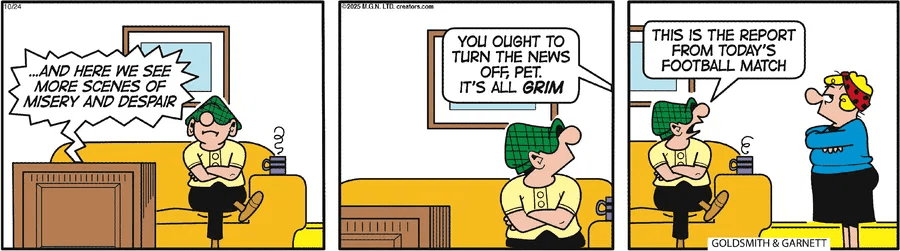
https://www.gocomics.com/andycapp/2025/10/24
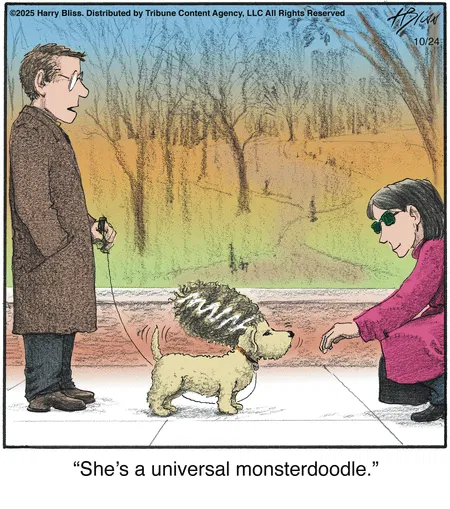
https://www.gocomics.com/bliss/2025/10/24

https://www.gocomics.com/broomhilda/2025/10/24
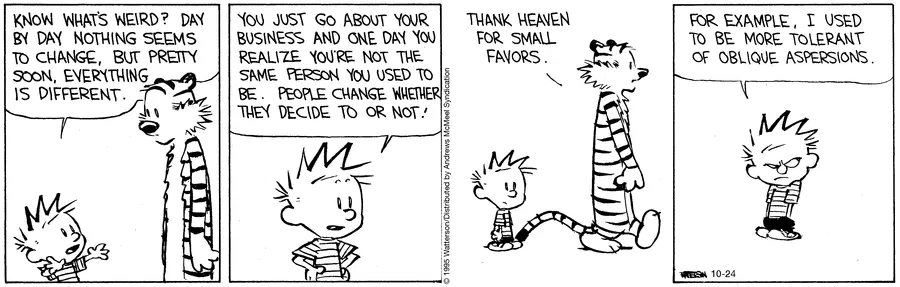
https://www.gocomics.com/calvinandhobbes/2025/10/24
(Whew! 114/71. It’s not 108/68, but it’s still fine. Now I can read some more comics, then the news… )

https://www.gocomics.com/closetohome/2025/10/24

An Author Speaks
Bestselling author Jodi Picoult pushes back after her musical is canceled by Indiana high school
By MARK KENNEDY
NEW YORK (AP) — Author Jodi Picoult has the dubious honor of being banned in two mediums this fall — her books and now a musical based on her novel “Between the Lines.”
“I’m pretty sure I’m the first author who has now had censorship occur in two different types of media,” Picoult says. “Honestly, I’m not out here to be salacious. I am writing the world as it is, and I am honestly just trying to write about difficult issues that people have a hard time talking about because that is what fiction and the arts do.”
The superintendent of Mississinewa High School in Gas City, Indiana, canceled a production last week of “Between the Lines,” saying concerns were raised over “sexual innuendo” and alcohol references in the musical. Jeremy Fewell, the superintendent, did not respond to a request for comment.
“It’s devastating for us to know that these kids who put in hundreds of hours of hard work had that torn away from them because of the objections of a single parent,” says Picoult.
“What I know, perhaps better than most people, as someone whose books have been banned, is when one parent starts deciding what is appropriate and what is inappropriate for the children of other parents, we have a big problem.”
Picoult noted that the same Indiana high school has previously produced “Grease,” where the sexual innuendo and alcohol abuse is much greater, including a pregnancy scare, sex-mad teens and the line “Did she put up a fight?”
“Between the Lines” centers on Delilah, an outsider in a new high school, who finds solace in a book and realizes she has the power to write her own story and narrate her own life. “It is a very benign message. And it’s actually a really important one for adolescents today,” says Picoult.
The original work, which features a nonbinary character, had already been edited with licensed changes to make it more palatable for a conservative audience, including removing any reference to the nonbinary character’s gender orientation.
The production was scheduled for Halloween weekend at the Gas City Performing Arts Center. The show has music and lyrics by Elyssa Samsel and Kate Anderson, and a story by Timothy Allen McDonald, based on the 2012 novel by Picoult and her daughter, Samantha van Leer. It played off-Broadway in 2022.
Picoult, the bestselling author of “My Sister’s Keeper” and “Small Great Things,” has also written about the moments leading up to a school shooting in “Nineteen Minutes,” which was banned 16 times in the 2024-2025 school year, according to PEN America, making her the nation’s fourth most-banned author.
“I had 20 books banned in one school district in Florida alone because of a single parent’s objection and she admitted she had not read any of the books,” said Picoult, a PEN America trustee. “She said that they were banned for ‘mature content and sexuality.’ There were books of mine that did not even have a single kiss in them.”
The uptick in book banning has spread to stages as well. The Dramatists Legal Defense Fund has documented recently challenged plays and musicals from states including Pennsylvania, Florida, Indiana, Kansas, Ohio and New Jersey after parents or teachers complained that the works’ social themes weren’t appropriate for minors.
The Northern Lebanon High School, in Fredericksburg, Pennsylvania, canceled a 2024 production of “The Addams Family,” citing concerns over scenes with violence, children smoking and subtle queer themes. Paula Vogel’s play “Indecent,” which explores a flashpoint in Jewish and queer theatrical history, was abruptly canceled in Florida’s Duval County in 2023 for “inappropriate” sexual dialogue.
Last year, the Educational Theatre Association asked more than 1,800 theatre educators in public and private schools across the U.S. about censorship. More than 75% of respondents reported pressure to reconsider their play and musical choices during the 2023-24 school year.
“We are not protecting kids,” said Picoult. “We are robbing them of materials that we use to deal with an increasingly complex world.”
Let’s talk about Trump, SNAP, Ramen, and his new record….
Centrist Dems Push Anti-Government Healthcare BS
Criminal Israel and the IDF set a Palestinian US citizen up to be attacked and murdered by West Bank illegal settlers. They routinely attack and beat / kill Palestinians while simply stealing their stuff at gun point.
This was the first report I watched on this. This one is longer because he tells the whole story and shows clips he took on his phone at the time. The mob was going to kill him after the IDF set the group up to be murdered at the hands of illegal settlers. The military told them to go to the spot where the settlers were hiding. Please watch to see the very illegal and horrific ways Israeli is treat people to simply drive them off of and steal their lands. Hugs
US Embassy ABANDONS Journo After Israeli Mob Attack
VIDEO: Disturbing Israeli Settler Attack Video Sparks Outrage, Elderly Palestinian Woman Hospitalized
A 55-year-old Palestinian woman, Umm Saleh Abu Alia, was hospitalized after being brutally attacked by a masked Israeli settler in Turmus Ayya, West Bank. Captured on video by US journalist Jasper Nathaniel, the unprovoked assault shows the woman struck unconscious and hit again on the ground. Settlers continue to harass Palestinian farmers during the olive harvest, while the Israel Defense Forces claim to have intervened. This horrifying incident highlights escalating tensions and ongoing violence in the occupied West Bank.
Israeli settlers burn trees, assault Palestinians in occupied West Bank olive harvest attacks
In the occupied West Bank, armed Israeli settlers systematically attack Palestinian olive harvesters and farmers, burning trees and beating farmers. These assaults, often protected by Israeli forces, have caused severe injuries. Palestinians, joined by international activists, continue harvesting to avoid surrendering their land, despite the violence and threats aimed at driving them away. For them, this is a fight for their very livelihood and homeland.
Israel’s Next Move: Create ‘Six Little Gazas’ In West Bank | Jasper Nathaniel | TMR
Some Important Info; May Not Be Everywhere Because the U.S. Gov’t Is Observing the Epstein Shutdown
Lead in protein powders. What you need to know by Katelyn Jetelina
The Dose Read on Substack
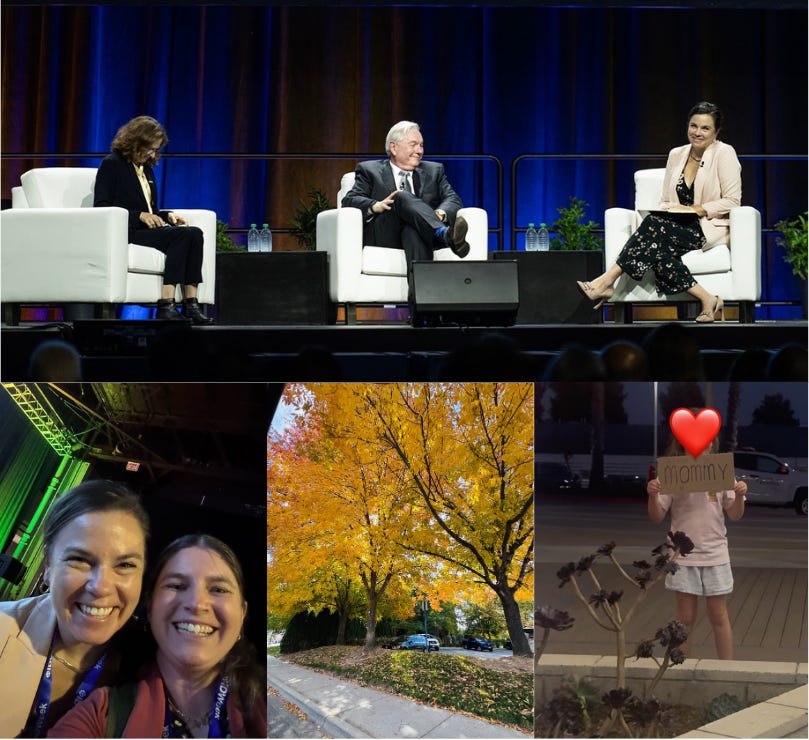
Happy Monday from Atlanta! I just tried to convince thousands at a public health conference that it’s time to reimagine systems—not just defend the status quo. I’m happy to report that tomatoes weren’t thrown my way. This is my fourth state in five days, and the highlight is actually seeing the seasons change and meeting a lot of you in person. I couldn’t be more excited to see my girls (and survive another round of the KPop Demon Hunters soundtrack).
This week’s Dose runs the gamut: from what’s really going on with lead in protein powders (and whether you should be worried), to a refreshing burst of leadership as 15 governors join forces to strengthen public health collaboration, to falsehoods swirling around mammograms. We’ll wrap with an infectious disease weather report and a quick note for dog owners on an FDA recall.
Let’s go!
Consumer Reports found lead in protein powders. How bad is it?
Last week, Consumer Reports released an analysis revealing elevated lead levels in several popular protein powders and shakes. Google searches for “lead in protein powder” spiked 300%, and influencers lit up social media. Depending on which news source you read, it was either a five-alarm fire or no big deal.
So what’s actually going on? Lead is everywhere—soil, food, water, and air. Thankfully, overall exposure has dropped dramatically since the 1970s, and modern lab tests can now detect vanishingly small amounts (down to parts per billion). But detection does not necessarily equal danger.
How bad is bad? That’s where things get tricky because not everyone agrees:
- California limit: 0.5 mcg/day. This number comes from a very conservative calculation: regulators took the “no observable effect” level for reproductive harm for inhaled lead exposure in workplaces and divided it by 1,000. Many experts argue that this threshold is unrealistic. It’s also not linked to adverse health outcomes.
- FDA’s limit: 2.2 mcg/day for kids, 8.8 mcg/day during pregnancy, and 12.5 mcg/day for other adults based on blood lead levels, toxicology data, and a built-in 10x safety factor.
- European Union limit: Allows up to 3 mg/kg (3 ppm) in food supplements—roughly 90 mcg per 30-gram scoop of protein powder. In this case, the FDA is far more cautious than Europe (and that’s not usually how things go).
Back to the report: of the 23 protein supplements they tested, two-thirds exceeded “Level of Concern.” One brand (Naked Nutrition Vegan Mass Gainer) hit nearly 16 times the limit. But because Consumer Reports used California’s exceptionally strict benchmark, those numbers sound scarier than they really are.
The average American already gets 5.3 mcg of lead daily from food and the environment. That’s another reason California’s cutoff doesn’t make much sense. Still, some products identified in the report could push intake close to the pregnancy (8.8 mcg) or adult (12.5 mcg) daily thresholds.
What this means for you: Don’t worry too much. While the FDA continues to reduce lead exposure through programs like Closer to Zero and the Total Diet Study (that is, if the funding continues), there are several things we can do in our own homes, especially for parents of kids and during pregnancy.
- Check to see if your protein supplement (or any supplement, really) has third-party testing for heavy metals (like USP or Informed Sport).
- Advocate for more pre-market regulatory oversight in the supplement industry (which has very little, if any at all) by writing to your local representative.
- Eat a diet that includes a variety of nutrient-dense foods, which helps limit exposure to specific food sources and ensures we get an array of protective nutrients.
- Prioritize getting your protein from whole food sources.
Big thanks to YLE’s Megan Maisano—Registered Dietitian Nutritionist— for writing this section.
Fourteen states and Guam join forces to launch Governors’ Public Health Alliance
Governors from 14 states and Guam announced the creation of the bipartisan Governors’ Public Health Alliance, which is a new effort to strengthen coordination and collaboration across state lines.
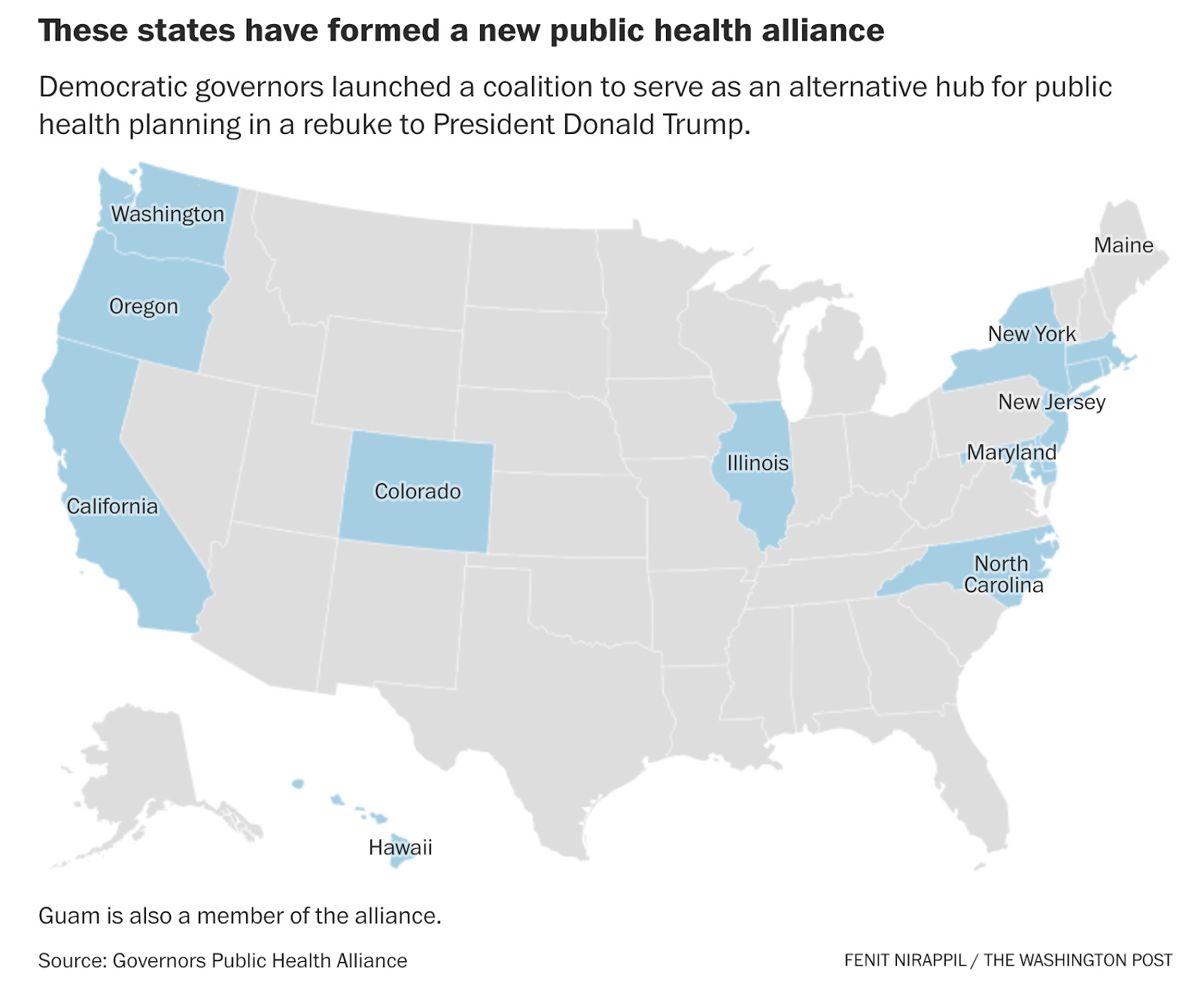
Why do we need this? In the U.S., authority over health rests with the states, not the federal government. Health (encompassing both health care and public health) is not only the highest budget item for a state but also the primary reason for state bankruptcy. In other words, governors hold enormous power over your health.
Today, though, federal support is shifting fast, funding is drying up, and states are being forced to get creative. States must decide whether to maintain their public health departments (due to funding cuts), how to continue purchasing vaccines (if the federal government stops recommending them), whether to negotiate drug prices (like insulin), and more. We saw a similar challenge during the pandemic with bulk purchasing of PPE.
In general, the more coordinating, collaborating, and innovative thinking, the better.
However, I’m growing increasingly concerned about the partisan gaps in public health. Although some Republicans are on the advisory board and the initiative was framed as bipartisan, no Republican-led states have joined. This worries me for my friends in red states, like Texas, but it also has implications for everyone, as diseases don’t care about borders.
What this means for you: If your state is included, you can rest assured your governor is talking to others, which is a helpful step toward innovative solutions. You could argue it was needed before this moment, too. Public health has been siloed for far too long.
Mammograms save lives. They’ve been wrongly targeted.
Happy Breast Cancer Awareness month! Unfortunately, this month has driven some influencers to post false claims about the harms of mammograms. So let’s clear this up.
Breast cancer is the second leading cause of cancer death in women in the U.S., and accounts for 1 in 3 new cancers among women each year. (It affects men too, just at lower rates.) There is strong scientific consensus in support of routine mammograms to prevent breast cancer and detect it early:
- Randomized trials show that mammograms reduce the risk of death from breast cancer by 12-20%, depending on age. For every 1,000 mammograms, one death is prevented.
- Regular mammograms starting at age 40 are recommended for everyone, but may have even greater benefit for Black women, who are 40% more likely to die from breast cancer than white women and more likely to have aggressive cancers, younger.
There’s some critical nuance here:
- With each mammogram, breast tissue is exposed to a small amount of ionizing radiation. But! We’re exposed to this type of radiation every day in our natural environment. At high doses, radiation exposure can change DNA and cause harm, but the amount of radiation exposure during a mammogram is about the same as flying from California to New York.
- Organizations disagree on whether mammograms every year or every other year are optimal. Screening recommendations are based on evaluating science to maximize benefit (lives saved) while reducing patient worry, unnecessary costs, and diagnosing and treating cancers and pre-cancers that ultimately wouldn’t cause health problems—also called “overdiagnosis.” This is a balancing act.
- Mammograms are just one tool for detecting cancer, and women with dense breasts or high risk for cancer (e.g., family history, known genetic predispositions, or other key risk factors) may benefit from additional screening, such as through an MRI.
What this means for you: The benefits of mammograms far outweigh the risks. The U.S. Preventive Task Force, the American College of Radiology, the American Society of Breast Surgeons, and the American College of Obstetricians and Gynecologists recommend routine mammograms starting at age 40 for women at average risk of breast cancer. If you have risk factors for breast cancer, dense breasts, or you’re 75 or older, talk to your doctor about your screening goals and plan. Don’t know your risk? Here’s one risk assessment tool.
For more, see YLE’s deep dive on breast cancer screening recommendations.
Infectious disease “weather report”
In the U.S., flu and RSV are still quiet. CDC data is still on pause because of the government shutdown, so we’re continuing to reference PopHive data. RSV activity is still low but growing in southern states, like Louisiana and Texas.
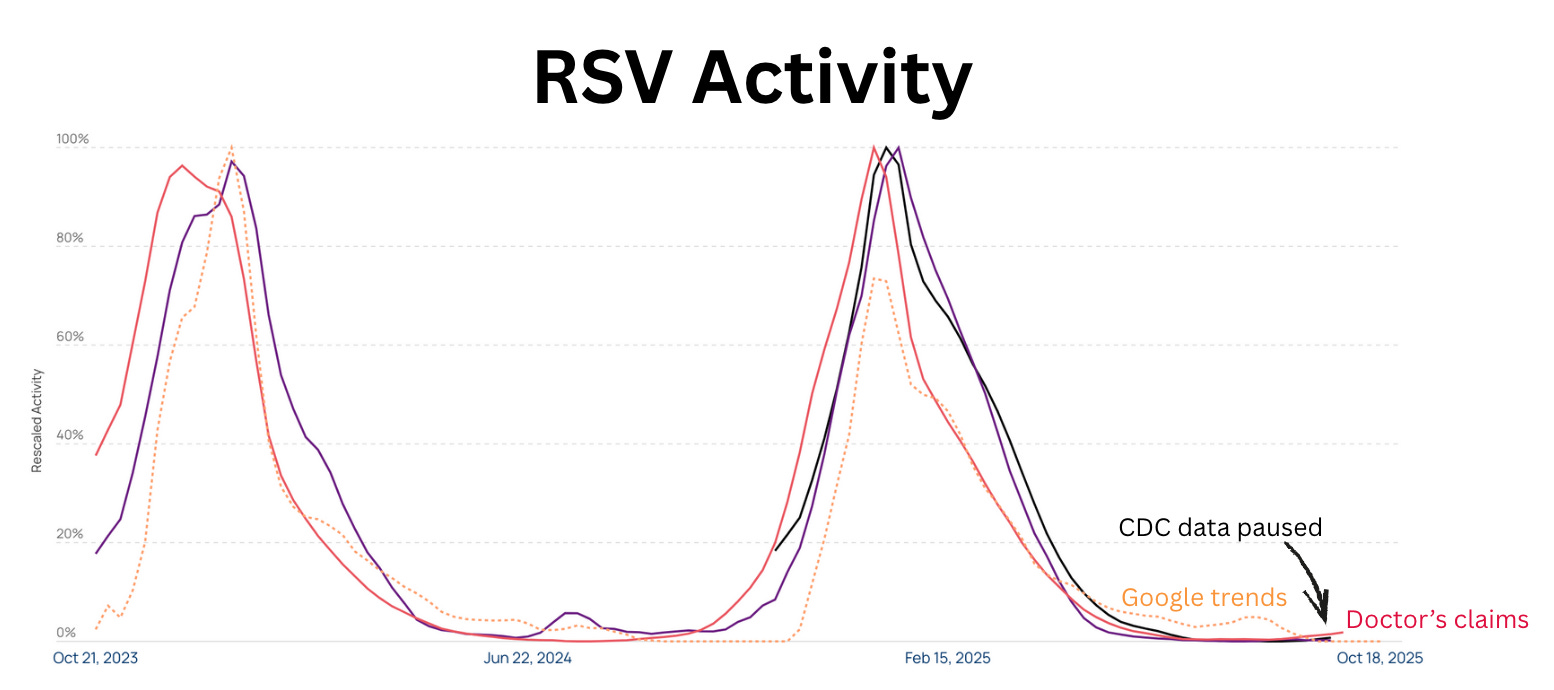
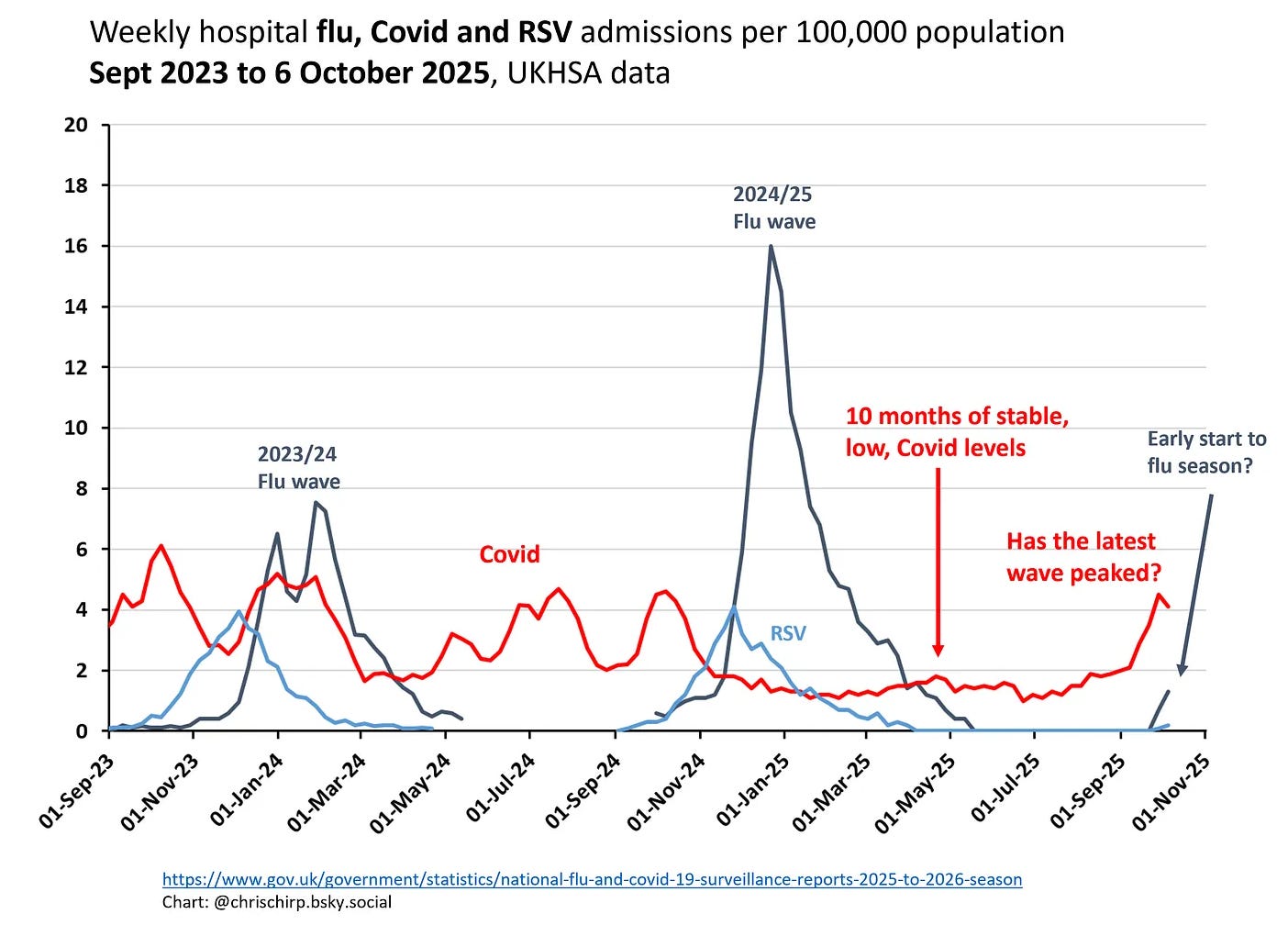
However, Covid-19 is having a moment in the U.K., with hospitalizations increasing exponentially after a 10-month lull. This isn’t driven by a dramatic variant, but rather by a lack of immunity building up over time. Flu might also be increasing, which suggests it’s coming soon (as expected) for the U.S.
Dog owners, check your pup’s food
The FDA recalled Raw Bistro frozen beef dog food for possible Salmonella contamination. The recalled products were sold directly to consumers and to select distributors between Sept. 1 and Sept. 17 in California, Colorado, Illinois, and Minnesota.
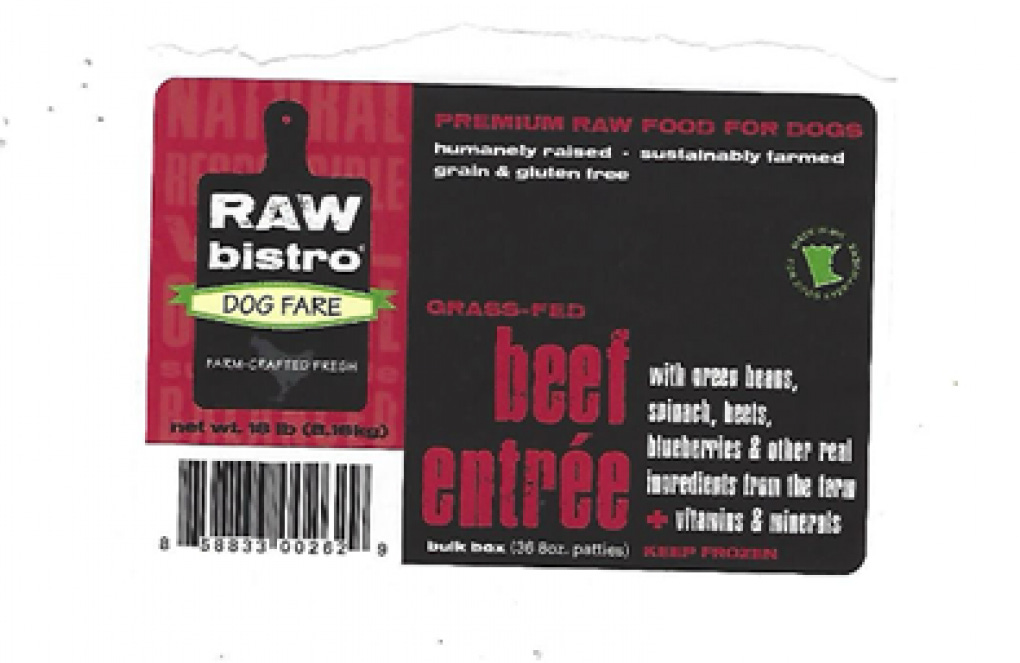
Salmonella can make dogs sick, just like humans. Contaminated food can cause illness days later in dogs. And dog owners can get sick from handling contaminated food or dog bowls.
What this means for you: Check the lot numbers on your dog’s food, and toss it if they are included in the FDA recall notice. Sanitize bowls if they held contaminated food, wash your hands, and watch for warning signs in your dog: lethargy, vomiting, diarrhea, and loss of appetite. If you notice these signs, take your pet to the vet.
That’s it for this week! Share your fall leave pics in the comments below so that I can continue to live vicariously through you.
Love, YLE
Your Local Epidemiologist (YLE) is founded and operated by Dr. Katelyn Jetelina, MPH PhD—an epidemiologist, wife, and mom of two little girls. YLE is a public health newsletter that reaches over 400,000 people in more than 132 countries, with one goal: to translate the ever-evolving public health science so that people are well-equipped to make evidence-based decisions. This newsletter is free to everyone, thanks to the generous support of fellow YLE community members. To support the effort, subscribe or upgrade below:
 Scottie's Playtime