The video below shows another shooting where the ICE thug fired into a car striking a person when he shifted his weapon to his other hand. The car was not moving and full of pepper spray. The man was not trying to drive. Yet ICE told a judge the man had weaponized his vehicle in an attempt to run over ICE thugs. The judge dismissed the case because ICE refused to hand over the body cam footage that showed what the ICE thug did and that DHS was lying. Again. Hugs
Full disclosure I love watching Digby when she is on The Majority Report. That lady knows her stuff. I don’t know much about Tom Sullivan but if she is willing to put him on her site I will give him the benefit of the doubt. As for Randy Fine. He is a fanatic Christian nationalist who wants the US to be run by his church doctrines, who help write and push for the don’t say gay bill in Florida saying he couldn’t tolerate that when LGBTQ+ people came out to their peers they were accepted instead of being ostracized and beaten up. Yes he wants to return to the days of being different from the straight cis majority got you harassed, harmed, and injured. I guess that means if you are too afraid to come out and live as who you are it will make you a good straight cis person willing to submit to his god? He also is desperately stupid and is full die hard maga. He is another racist who thinks might makes right. Hugs
Where are the Epstein files? A social media poster on Monday noted, “So when an ICE officer tells you to get out of the car, you’re supposed to get out of the car, what are you supposed to do when a judge tells you to release the Epstein files?”
Thus in the field failure to comply with orders barked by kitted-out and under-trained DHS enforcers merits a bullet to the head. Yet failure of AG Pam Bondi’s DOJ to comply with the Epstein Files Transparency Act, passed overwhelmingly by Congress and signed by Dear Leader, seems not to merit not even a slap on the wrist. Immediately after the killing of Renee Good in Minneapolis, the right claimed her death was the consequences of her own choices.
Donald Trump’s “Great Again”: For my friends, a pardon; for my enemies, a bullet to the head. God bless America.
Here’s a choice a fine Republican from Florida’s 6th District made on Monday: H.R.7012 – To authorize the annexation and subsequent admission to statehood of Greenland, and for other purposes.
Is it a troll by a Trump brown-noser? The image suggests that that is likely. But these days, who can tell? Rep. Randy Fine has one cosponsor. Greenland has a tenth the population of Wyoming and no love for Donald Trump. Fine would likely oppose statehood for Puerto Rico or the District.
“By acquiring Greenland, we would prevent our adversaries from controlling the Arctic Region and secure our northern flank from Russia and China,” writes Fine.
Malcolm Nance, former naval intelligence officer, foreign policy analyst and pundit, itemized for Fine a few consequences of annexing Greenland. One assumes from the worst-case rant (and a few misspellings) that Nance is emptying both barrels at the former gaming executive. Nance’s response on X is over the top, but satisfying nonetheless:
CONSEQUENCES FOR DUMBASSES: You are an F’ing idiot. If we invade Greenland we go to war with 31 nations. NATO stays together but without us. Its HQ is in Brussels, not the Pentagon. Our global reach across the Atlantic will end with our closest refueling base in Israel or Egypt. 100,000 American soldiers will be forced to board civil airliners and sent home or be taken as POWs/Detainee sWITHOUT WEAPONS OR EQUIPMENT. Canada will close its airspace and sea space. US Ballistic Missile Defense at Pettufik and Fylingdales ENDS, which means we see nothing except what space sensors can see. US Intelligence is reduced to Fort Meade, Ft Gordon and Colorado Springs and Hawaii. CIA spies will be rolled up by their former friends in HOURS. NO ONE WILL SHARE ANYTHING WITH US. ALL GLOBAL SHIPPING WILL BE CLOSED TO US. Denmark operates the largest shipping company in the world. SIX OUT OF TEN global shipping companies are in Europe … Worlds Biggest container ships? DENMARK! Australia, NZ, Canada are Commonwealth so they will cut ties with us or be neutral too.
PS Denmark & locals tun all life support and generators at Pittufik and Canada resupplies it … all 150 US Spece force personnel would become POWs to guys on sleds. FYI They have troops there now and 35,000 Caribou hunting rifles.
FYI France and UK have nukes. Hundreds of them so you cannot intimidate them with that.
Oh and they collapse the US economy by sanctioning us and selling off 2.3 Trillion in US treasuries simultaneously. Also no Botox, Ozempic or insulin. Its made in Denmark.
Ya fucking dope.
That’s fair. Over the top, but fair. (I especially appreciate Nance’s observation about the potential loss of strategic refueling bases.)
Marcy Wheeler already pointed out that Trump admitted to the New York Times that his need to possess Greenland stems from a personal problem.
Elon Musk’s own AI already reported that not owning Greenland is no impediment to building new U.S. bases there or expanding existing ones. As for mining, several reports observe that if whatever useful minerals lie buried in Greenland, if they were “getable,” mines would already be in operation:
Researchers say it would be extremely difficult and expensive to extract Greenland’s minerals because many of the island’s mineral deposits are located in remote areas above the Arctic Circle, where there is a mile-thick polar ice sheet and darkness reigns much of the year.
Not only that, but Greenland, a self-ruling territory of Denmark, lacks the infrastructure and manpower required to make this mining dream a reality.
“The idea of turning Greenland into America’s rare-earth factory is science fiction. It’s just completely bonkers,” said Malte Humpert, founder and senior fellow at The Arctic Institute. “You might as well mine on the moon. In some respects, it’s worse than the moon.”
So is our sitting president. Pray for consequences for him.
This is an important story of growth and rejection of your core identity. The fact that those closest to you can not accept you and that which makes up who you are. I have not changed the text of the story in any way as I want the voice of the author and his agony of his childhood to shine clearly. This is the way the right wing Christian Nationalist bigots want every family member to be and all children raised. Remember this was only the 1990s. In the 30 years since great progress was made in acceptance, tolerance and education of / about LGBTQ+ kids and how to raise them in loving acceptance of how they feel inside themselves. The Christian hate groups that make their living trying to return the country to a much more regressive hateful time rolling back all rights gained by minorities. And in a very short time they have had a huge effect on how LGBTQ+ people especially LGBTQ+ kids are treated. They stated their goal of driving these kids back into hiding terrified of being outed for fear of being beaten, harassed, and ostracized. That is what they want. Several Christian lawmakers who are trying to make being an out LGBTQ+ kid illegal along with showing any media that represents the LGBTQ+ community have said that when they were kids in school they used to gang up and beat the shit out of LGBTQ+ kids. I know in the 1970s I was not out but targeted as a “faggot” and constantly harassed and attacked. How any adult would want to return to such a time, to having any kid or adult be treated that way is horrendous. Especially from those trying hard to force the country to follow their idea of a Christian lifestyle. Hugs
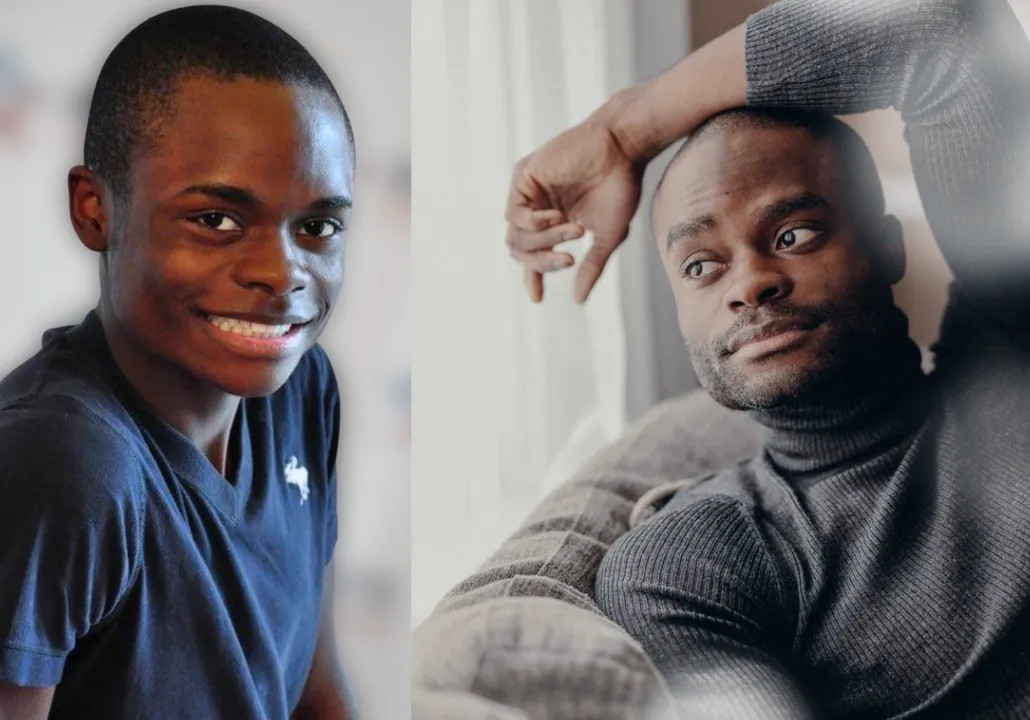
At 30, I’m finally living as myself. But the man whose acceptance I wanted most still can’t say the word gay.
Jan 10, 2026
Content warning: This story includes mentions of homophobia, childhood trauma and suicidal ideation.
By CorBen Williams
The seventh time I came out to my father wasn’t dramatic. It didn’t happen at a kitchen table or in a parking lot or after he’d found one of my journals. It happened casually, slipped into a conversation like it was nothing:
“As a gay man—” I began.
“You’re not gay,” he interrupted.
“Dad,” I replied. “We’ve done this too many times before.”
Even now, at 30 years old, married to the man I love, fully myself in ways I once thought impossible, my dad still can’t say who I am out loud. It hangs there, suspended between us, as though acknowledging my homosexuality would unravel something he’s built his entire life around.
I’m not sure what exactly. Control? Image? Masculinity? Maybe he simply doesn’t have the language.
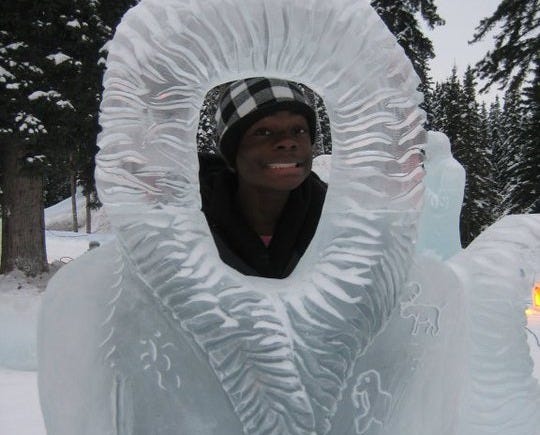
Photo courtesy of CorBen Williams.
I grew up in North Pole, Alaska, in a red-sided house at the end of a gravel turnaround. It was the kind of home where the winter light never quite reached the living room and silence carried through the walls like a second language.
North Pole felt like its own universe. A 2,500 person military town where there’s snow on the ground for up to 187 days a year and the Christmas lights never come down. About 70% of the town is white and roughly 30% of the voters are registered Republican, with almost half listed as “undeclared,” which in Alaska is usually just Republican without saying it out loud.
Most families were tied to the church or the base, so you learned fast what was considered normal and what was not. People knew your parents and your business.
Growing up Black and queer made me stand out without trying and forced me to learn early how to tuck parts of myself away.
My parents had both served in the military, and even though my mother had the warmth and softness to move past it, my father emulated parental rejection. Dad demanded respect and expected excellence in the way a man shaped by the military does: loud and without room for negotiation.
You could feel his energy before you heard his footsteps because there was always a tension that entered the room with him. He yelled more than he spoke, and as a kid I was told to listen to what he was saying, not how he was saying it, even when he was screaming in my face.
My father didn’t know what to do with a son who felt things deeply, and before I ever came out to him—the first of seven times—he had already shown me exactly which parts of myself were unsafe to reveal.
But that didn’t stop me from trying. The first time I came out, I was in first grade, sitting in the parking lot of a McDonald’s on Geist Road, right beside my future high school.
“Dad, I think I’m bisexual,” I said.
I knew my ass was gay. But I also knew enough about my father to try to ease him into it. He asked if I knew what that meant, and even though I did, I told him “no.”
“It means you like sucking penis,” he spat harshly.
I was six.
People think kids don’t understand things, but children clock everything. That moment didn’t confuse me about who I was. It clarified who he was. It showed me that there were parts of me he couldn’t handle and wouldn’t protect. I didn’t leave that day understanding my sexuality better. I left understanding the risk of telling the truth.
The second time, I was forced out when my father found my journal. I was 10 years old, and in those pages, I’d written unpolished thoughts about men, about how I felt around them, questions I didn’t yet know how to ask anyone.
He burst into my bedroom and tore the journal up in front of me, little pieces of paper flying around me as I sat in my bed. I tried not to cry.
“As long as you’re a kid in my house, you don’t get privacy,” I remember him barking. It showed me that I need to be wary about how much I trust people and what information I give them.
This rejection led me to the darkest part of my childhood.
“I am tired of living,” I remember muttering to my sixth grade teacher.
I was exhausted by my dad, exhausted from hiding, exhausted from feeling wrong in my own skin.
I should have stopped writing after that, but writing was how I survived. When you don’t have anyone to talk to, you talk to the page.
By 13, I had another journal. This one had drawings of a classmate and fantasies about kissing him. When my dad found it, he brought it up on the car ride home from school, saying “the correct way” to feel about other boys was “brotherly love” and nothing else.
But the third journal set off the biggest explosion.
It was filled with details, drawings and fantasies about my first hookup with a boy. The way I wrote about them, at 15, was more adult. The kind of writing he didn’t want to believe his son was capable of.
“I fucking told you about this shit,” he shouted, with the journal gripped tightly in his hand. “This isn’t appropriate. This isn’t what we do.”
My mom was sitting next to me, shocked, both of us caught off guard by how quickly he had gone from discovery to explosion. I almost cried, but I swallowed it down. My mom guided him into the other room to calm him down.
He didn’t speak to me for seven days. He couldn’t look at me. Each day felt like another nail in the coffin.
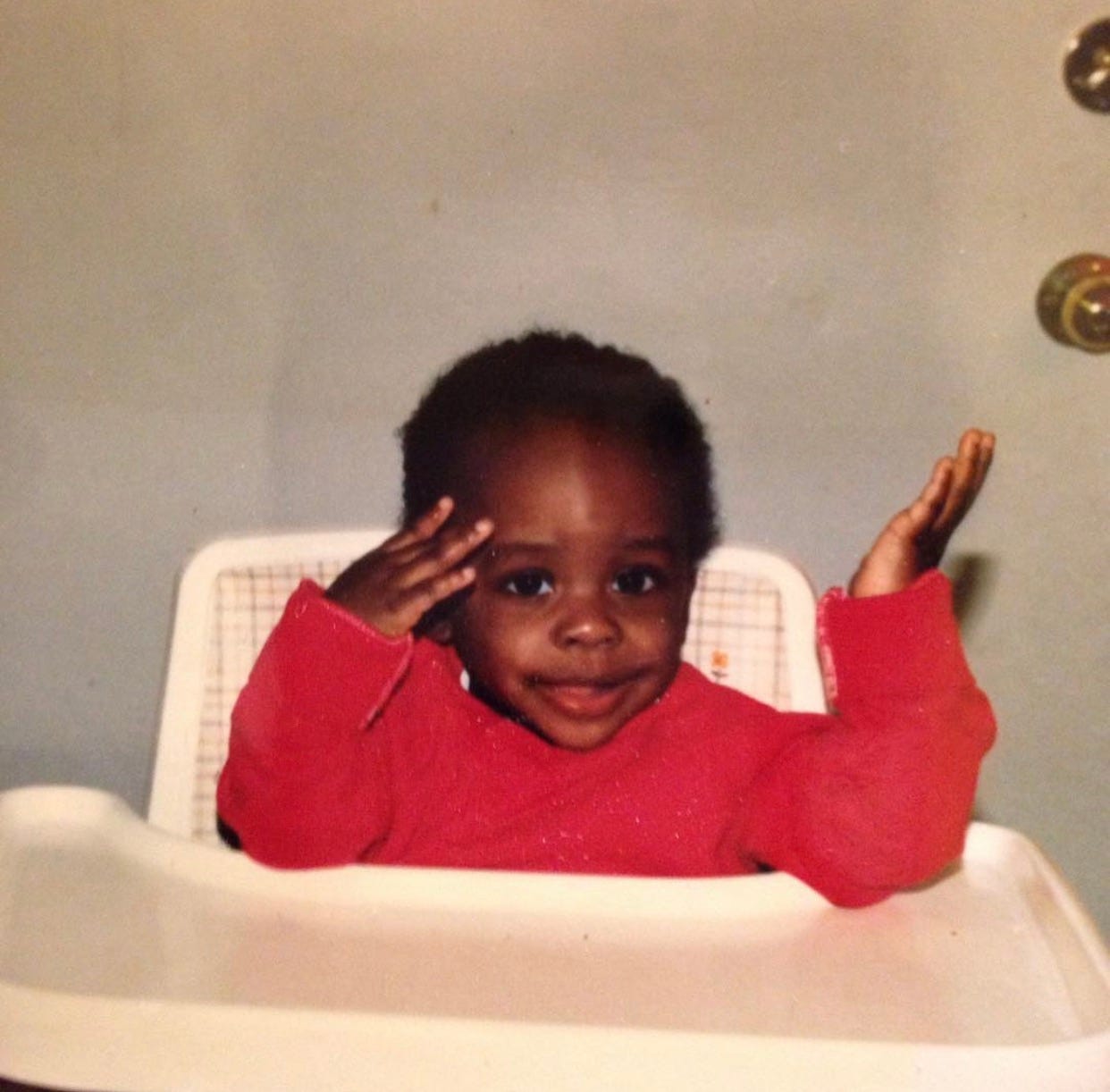
Photo courtesy of CorBen Williams.
I kept coming out to my dad anyway. At 17. At 22. At 24. Nothing changed.
Part of me used to think that I was an embarrassment to my family. I felt for so long that I needed to apologize for being the mistake. But in my late teens, I started to see it differently. I realized I just wanted his acceptance and his love in a way that I was never gonna get.
Because of this, I don’t think I ever really got to be a child. Even in first grade, when other kids were talking about Barbies and Legos, I felt like I was always bracing for impact, performing a version of boyhood that never fit. My childhood was spent preparing for adulthood and a career. People would always say to me, “You seem so much older. You seem so mature.”
I left North Pole for good and moved to New York City when I turned 19. I became a performer, a traveler, someone who learned to build softness and resilience, where my childhood had taught me to live in fight-or-flight mode. And then, almost when I wasn’t expecting it, I met Travis.
He was older. Wisconsin-born. A wildlife biologist. Patient in a way I didn’t even realize I needed. My mother said he softened me, brought grey into my black-and-white worldview. With him, I don’t brace for criticism. I don’t edit myself. I don’t shrink. I don’t hide my journals.
We’ve been together five years now, married for three. He’s met everyone in my life, except for my dad.
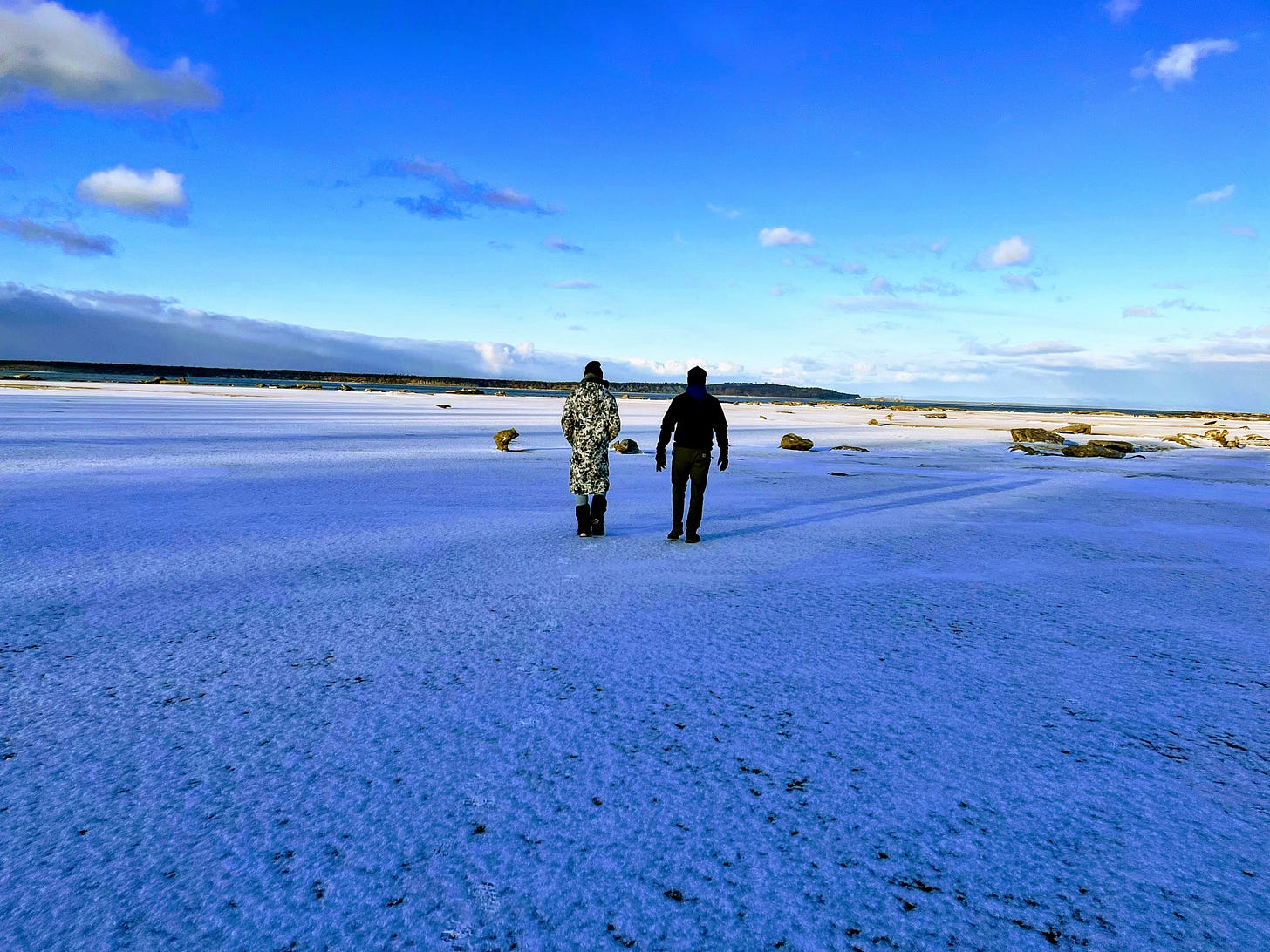
Photo courtesy of CorBen Williams.
Now, when I think about my upbringing in North Pole, I think about the path through the woods that led to my house, hoping someone on the other side would understand me. I think about how many times I tried to hand my father my truth, and how many times he handed it back to me with rage.
Even now, with the life I’ve built and the love I’ve chosen, acceptance is still complicated. I wish I could say that learning to love myself erased the sting of not being understood, but the truth is I still wrestle with where I fit—inside my family, inside Black spaces, inside queer spaces, inside the places that were never built with someone like me.
I’ve learned to be confident, to be gracious, to be the person who makes others feel seen, maybe because I know exactly what it feels like not to be. But some days, even as a grown man, I feel an instinct to shrink.
I’m learning that acceptance is a practice, one I have to return to again and again. I don’t have it all figured out. But I’m trying. And maybe that’s the real truth at the end of all this: I haven’t just been coming out to my father all these years—I’ve been slowly, steadily learning how to come home to myself.
Uncloseted Media and GAY TIMES reached out to CorBen’s father for comment, but he did not respond.
Sam Donndelinger assisted with the writing and reporting in this story.
If objective, nonpartisan, rigorous, LGBTQ-focused journalism is important to you, please consider making a tax-deductible donation through our fiscal sponsor, Resource Impact, by clicking this button:
Billionaire Toby Neugebauer laughed when the Amarillo City Council asked him how he planned to handle the waste his planned datacenter would produce.
“I’m not laughing in disrespect to your question,” Neugebauer said. He explained that he’d just met with Texas Governor Greg Abbott, who had made it clear that any nuclear waste Neugebauer’s datacenter generated needed to go to Nevada, a state that’s not taking nuclear waste at the moment. “The answer is we don’t have a great long term solution for how we’re doing nuclear waste.
(snip-you can hear a 404 Media podcast if you click through to the story on 404, up there in the post title.)
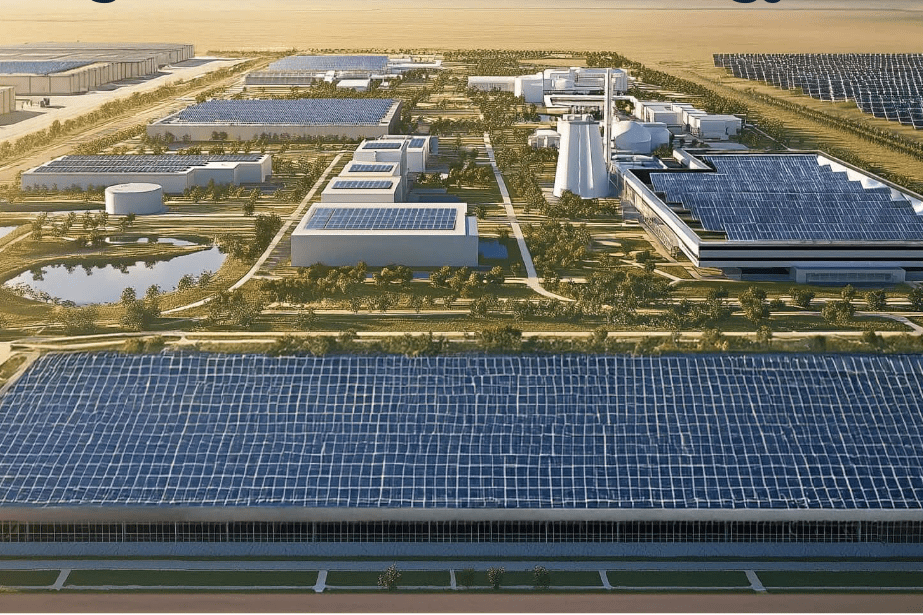
The meeting happened on October 28, 2025 and was one of a series of appearances Neugebauer has put in before Amarillo’s leaders as he attempts to realize Project Matador: a massive 5,769 acre datacenter being built in the Texas Panhandle and constructed by Fermi America, a company he founded with former Secretary of Energy Rick Perry.
If built, Project Matador would be one of the largest datacenters in the world at around 18 million square feet. “What we’re talking about is creating the epicenter for artificial intelligence in the United States,” Neugebauer told the council. According to Neugebauer, the United States is in an existential race to build AI infrastructure. He sees it as a national security issue.
“You’re blessed to sit on the best place to develop AI compute in America,” he told Amarillo. “I just finished with Palantir, which is our nation’s tip of the spear in the AI war. They know that this is the place that we must do this. They’ve looked at every site on the planet. I was at the Department of War yesterday. So anyone who thinks this is some casual conversation about the mission critical aspect of this is just not being truthful.”
But it’s unclear if Palantir wants any part of Project Matador. One unnamed client—rumored to be Amazon—dropped out of the project in December and cancelled a $150 million contract with Fermi America. The news hit the company’s stock hard, sending its value into a tailspin and triggering a class action lawsuit from investors.
Yet construction continues. The plan says it’ll take 11 years to build out the massive datacenter, which will first be powered by a series of natural gas generators before the planned nuclear reactors come online.
Amarillo residents aren’t exactly thrilled at the prospect. A group called 806 Data Center Resistance has formed in opposition to the project’s construction. Kendra Kay, a tattoo artist in the area and a member of 806, told 404 Media that construction was already noisy and spiking electricity bills for locals.
“When we found out how big it was, none of us could really comprehend it,” she said. “We went out to the site and we were like, ‘Oh my god, this thing is huge.’ There’s already construction underway of one of four water tanks that hold three million gallons of water.”
For Kay and others, water is the core issue. It’s a scarce resource in the panhandle and Amarillo and other cities in the area already fight for every drop. “The water is the scariest part,” she said. “They’re asking for 2.5 million gallons per day. They said that they would come back, probably in six months, to ask for five million gallons per day. And then, after that, by 2027 they would come back and ask for 10 million gallons per day.”
During an October 15 city council meeting, Neugebauer told the city that Fermi would get its water “with or without” an agreement from the city. “The only difference is whether Amarillo benefits.” To many people it sounded like a threat, but Neugebauer got his deal and the city agreed to sell water to Fermi America for double the going rate.
“It wasn’t a threat,” Neugebauer said during another meeting on October 28. “I know people took my answer…as a threat. I think it’s a win-win. I know there are other water projects we can do…we fully got that the water was going to be issue 1, 2, and 3.”
“We can pay more for water than the consumer can. Which allows you all capital to be able to re-invest in other water projects,” he said. “I think what you’re gonna find is having a customer who can pay way more than what you wanna burden your constituents with will actually enhance your water availability issues.”
According to Neugebauer and plans filed with the Nuclear Regulatory Commission, the datacenter would generate and consume 11 gigawatts of power. The bulk of that, eventually, would be generated by four nuclear reactors. But nuclear reactors are complicated and expensive to make and everyone who has attempted to build one in the past few decades has gone over budget and they weren’t trying to build nuclear power plants in the desert.
Nuclear reactors, like datacenters, consume a lot of water. Because of that, most nuclear reactors are constructed near massive bodies of water and often near the ocean. “The viewpoint that nuclear reactors can only be built by streams and oceans is actually the opposite,” Neugebauer told the Amarillo city council in the meeting on October 28.
As evidence he pointed to the Palo Verde nuclear plant in Arizona. The massive Palo Verde plant is the only nuclear plant in the world not constructed near a ready source of water. It gets the water it needs by taking on the waste and sewage water of every city and town nearby.
That’s not the plan with Project Matador, which will use water sold to it by Amarillo and pulled from the nearby Ogallala Aquifer. “I am concerned that we’re going to run out of water and that this is going to change it from us having 30 years worth of water for agriculture to much less very quickly,” Kay told 404 Media.
The Ogallala Aquifer runs under parts of Colorado, Kansas, Nebraska, New Mexico, Oklahoma, South Dakota, Texas, and Wyoming. It’s the primary source of water for the Texas panhandle and it’s drying out.
“They don’t know how much faster because, despite how quickly this thing is moving, we don’t have any idea how much water they’re realistically going to use or need, so we don’t even know how to calculate the difference,” Kay said. “Below Lubbock, they’ve been running out of water for a while. The priority of this seems really stupid.”
According to Kay, communities near the datacenter feel trapped as they watch the construction grind on. “They’ve all lived here for several generations…they’re being told that this is inevitable. Fermi is going up to them and telling them ‘this is going to happen whether you like it or not so you might as well just sell me your property.’”
Kay said she and other activists have been showing up to city council meetings to voice their concerns and tell leaders not to approve permits for the datacenter and nuclear plants. Other communities across the country have successfully pushed datacenter builders out of their community. “But Texas is this other beast,” Kay said.
Jacinta Gonzalez, the head of programs for MediaJustice and her team have helped 806 Data Center Resistance get up and running and teaching it tactics they’ve seen pay off in other states. “In Tucson, Arizona we were able to see the city council vote ‘no’ to offer water to Project Blue, which was a huge proposed Amazon datacenter happening there,” she said. “If you look around, everywhere from Missouri to Indiana to places in Georgia, we’re seeing communities pass moratoriums, we’re seeing different projects withdraw their proposals because communities find out about it and are able to mobilize and organize against this.”
“The community in Amarillo is still figuring out what that’s going to look like for them,” she said. “These are really big interests. Rick Perry. Palantir. These are not folks who are used to hearing ‘no’ or respecting community wishes. So the community will have to be really nimble and up for a fight. We don’t know what will happen if we organize, but we definitely know what will happen if we don’t.”
About the author
Matthew Gault is a writer covering weird tech, nuclear war, and video games. He’s worked for Reuters, Motherboard, and the New York Times. More from Matthew Gault



 Scottie's Playtime