Multiple sources shared details with the Daily Beast about a meeting in which the ABC News president delivered a message that left the co-hosts unnerved.
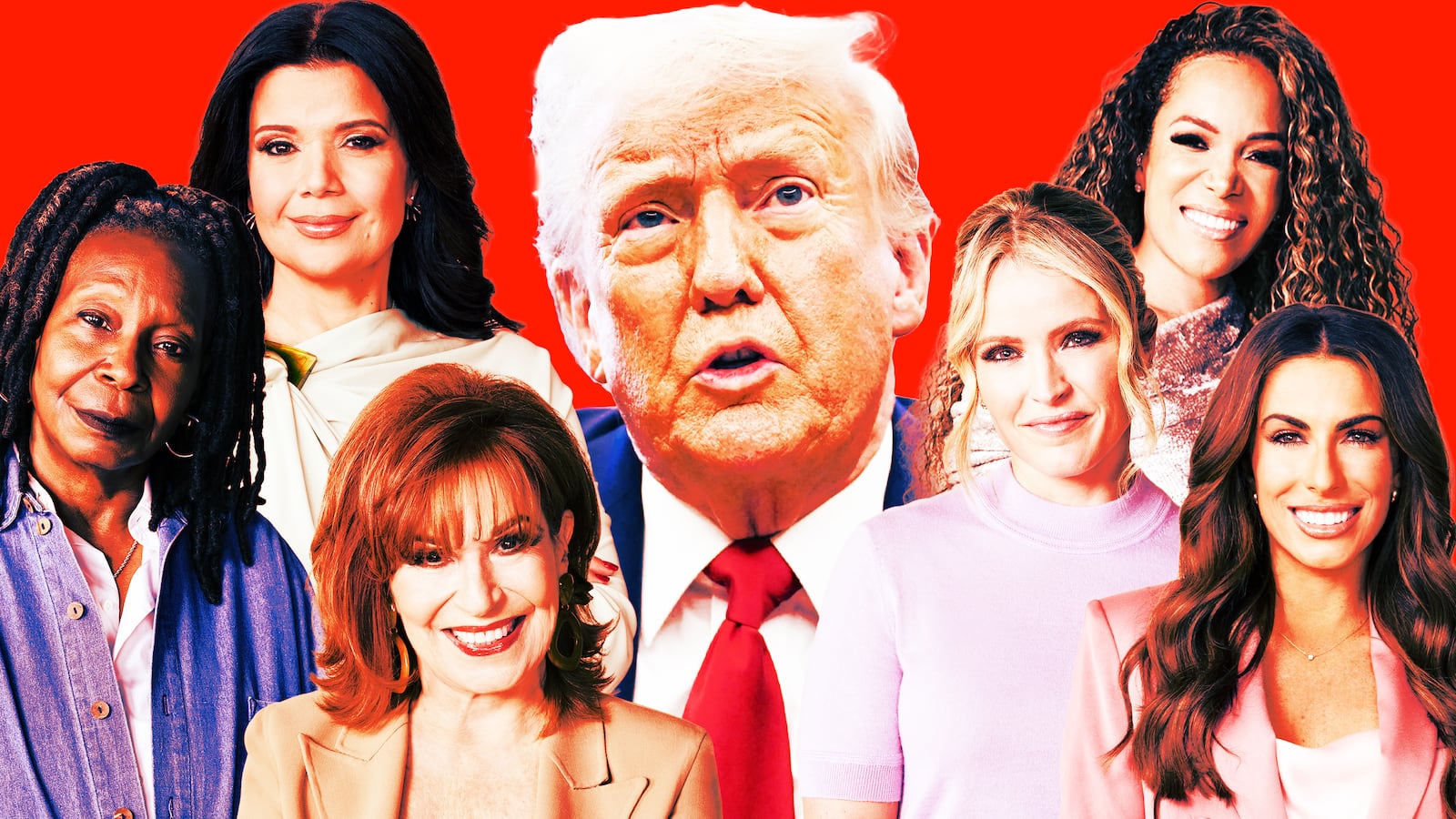
Photo Illustration by Thomas Levinson/The Daily Beast/Getty/ABC
Disney and ABC News have asked the hosts of The View to tone down their political rhetoric, multiple sources told the Daily Beast.
Since President Donald Trump’s election in 2024, the panel of co-hosts on The View—Whoopi Goldberg, Joy Behar, Sara Haines, Ana Navarro, Sunny Hostin, and Alyssa Farah Griffin—have consistently criticized Trump administration officials and policies.
But its constant focus on Trump and politics seems to have roiled the network’s top bosses, including Disney CEO Bob Iger and ABC News President Almin Karamehmedovic.
Almin Karamehmedovic lights the Empire State Building in Partnership with ABC News in Celebration of Nightline’s 45th Anniversary at The Empire State Building on March 28, 2025 in New York City.Roy Rochlin/Getty Images for Empire State Realty Trust
Karamehmedovic convened a meeting with The View‘s executive producer Brian Teta and its hosts, and suggested the panel needed to broaden its conversations beyond its predominant focus on politics, two sources familiar with the meeting said. Karamehmedovic highlighted episodes with celebrity guests that he said were highly rated, one source said, and encouraged them to lean into such coverage moving forward.
The move was not framed as an edict, one source said, but the suggestion alone rankled the hosts. The group pushed back forcefully, with hosts like Navarro noting the show’s audience routinely seeks out its perspective on politics, especially when the administration’s radical attempts to upend the government can potentially affect their daily lives.
One source familiar with the meeting characterized the hosts as telling their boss, “‘This is what our audience wants. Isn’t it gonna look kind of bad if we’re all of a sudden not talking about politics?’”
Ultimately, the women found the requests “silly” and that “they were just going to keep doing their thing.”
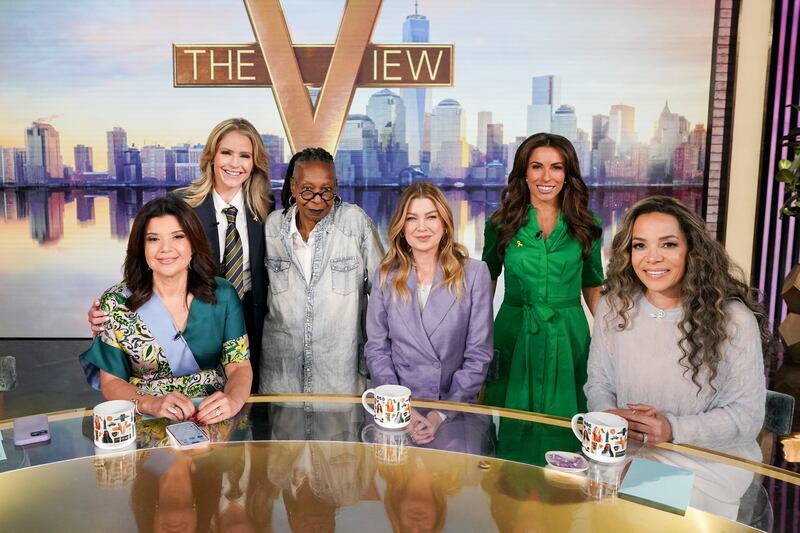
Ellen Pompeo is a guest on “The View” on March 17, 2025.Al Drago/ABC via Getty Images
Still, the conversation continued to stay at top of mind for at least one of the co-hosts. During Disney’s Upfront presentation day to advertisers last week, an annual glitzy gathering where media companies seek to woo brands to advertise with their shows, Navarro had a direct conversation with Iger, according to multiple sources.
Navarro thanked Iger for allowing the hosts to continue doing their jobs in a politically turbulent environment, the sources said. Iger confirmed he supported the show—but he also reaffirmed that the show needed to tone down its political rhetoric, the sources said.
The conversation made clear the suggestion to tone down the politics went all the way to the top, the sources said.
ABC News did not comment, and a Disney spokesperson did not respond to a request for comment. Navarro did not respond to multiple requests for comment.
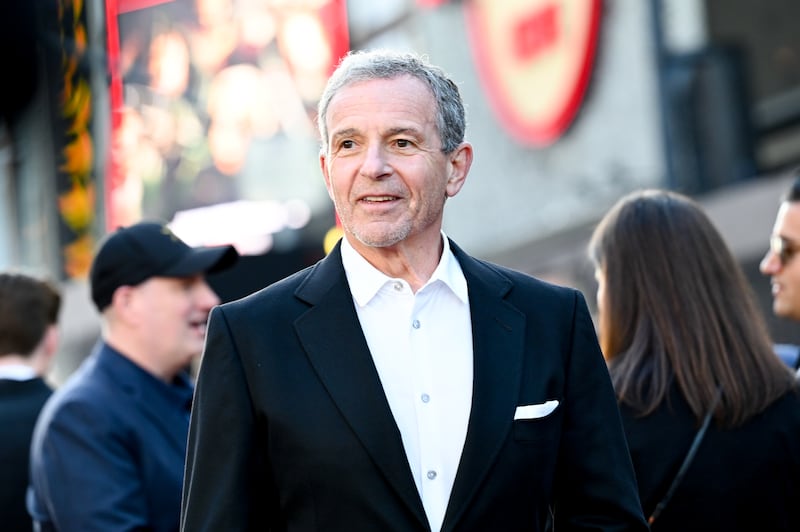
Bob Iger at the Los Angeles Premiere Of Marvel Studios’ “Thunderbolts*” at Dolby Theatre on April 28, 2025 in Los Angeles, California.Gilbert Flores/Variety via Getty Images
Another source familiar with the matter said ABC will “constantly have conversations with talent based on viewer feedback, and this instance was no different,” suggesting the show’s viewers have indicated that they want the show to be less political.
Despite suggestions otherwise by ABC’s top brass, the political coverage appears not to have affected the show’s ratings. The show was the No. 1 among daytime network talk shows and news programs during 2025’s first quarter, according to TheWrap, beating time slot competitor The Faulkner Focus on Fox Newsin both total viewers and women ages 25-54, its chief advertiser-focused demographic, throughout the quarter.
Even earlier this month, it maintained that No. 1 title, beating competitors like NBC’s TODAY Third Hour and TODAY with Jenna & Friends during the week of May 5, according to ABC.
The executives’ efforts to push The View in a less political direction highlight the current difficult circumstances facing media organizations as Trump and his administration set their sights on bending them to their will over critical coverage.
Trump got Disney to pay his presidential library $15 million and $1 million in legal fees in December when he sued the network and anchor George Stephanoupolous over an interview that mischaracterized a verdict that found him liable for sexual abuse as opposed to rape. Disney made the decision in part to avoid brand damage and risk stripping press freedom protections across the industry should it have lost at trial, according toThe New York Times.
Trump has also been at legal war with CBS and its parent company Paramount Global, suing the two for $20 billion over a 60 Minutes interview with Kamala Harris. CBS has called the lawsuit baseless, but as Paramount’s controlling shareholder Shari Redstone seeks to merge the company with David Ellison’s Skydance Media, the company has entered into mediation talks with Trump to secure a settlement.
Federal Communications Chairman Brendan Carr, an outspoken supporter of Trump, has also launched an investigation into Disney and ABC over its diversity, equity, and inclusion policies, and said the 60 Minutes interview would factor into the FCC’s review of the merger. And on Wednesday, Trump lashed out at an NBC News reporter and suggested NBC’s parent company Comcast “ought to be investigated.”
“Bob Iger writes a check for $15 million and then the FCC opens an investigation into DEI? What are they thinking?” one source said. “If anybody could stand up to Trump, it’s Bob Iger, and he already decided not to.”
The View, the long-running opinion talk show that became creator Barbara Walters’ crowning achievement in her celebrated run at ABC News, has long been a major player in the political media landscape. Democrats like Joe Biden, Barack Obama, and Harris have flocked to the show’s glass-adorned table to appeal to its predominantly female audience, and arun of Democrats and Republicans appearing on the show in 2019 promptedTheNew York Times Magazine to label it the “the most important TV show in America.”
Pundits speculated whether Harris’ admission at the table that she wouldn’t have done anything differently from President Joe Biden cost her the 2024 election, highlighting the show’s political relevance.
But just as common as its friendly approach to Democrats has been its vocal criticism of Trump and his policies. The show railed against the once-View regular—Trump appeared on the show more than a dozen times before effectively shunning it ahead of the 2016 election—and Goldberg warned last year his reelection could put the U.S. “in danger.”
But Trump won the election—a month after calling its panel “degenerates”—prompting the show to figure out its next move. The Daily Beast reported at the time that it planned to invite Trump to the table, though it had no plans to add an explicitly pro-Trump panelist.
Despite the conversations with Iger and Karamehmedovic, the hosts have continued to keep politics in focus this month. The women conducted a lengthy interview with former President Joe Biden and former first lady Jill Biden ahead of a book questioning his mental decline—though it was the Biden team that approached the show about the conversation, a Biden spokesperson told the Daily Beast.
Its “Hot Topics” segment on Tuesday also featured Behar questioning “when is Jake Tapper gonna write a book about the cognitive decline of the person who is in charge right now,” and Wednesday’s episode had a segment railing against “puppy killer” Homeland Security Kristi Noem for her bungled definition of the legal concept of habeas corpus.
But hints of a balancing act have emerged. During a robust discussion last week over the question of whether Democrats needed to focus on the question of Biden’s decline or move forward to fight Trump, Griffin appeared to strike a more balanced tone by highlighting how Trump’s low approval numbers were ahead of the Democratic Party.
“This table spends a lot of time criticizing Donald Trump and a lot of it is very valid and needs to happen, but it’s a fact his approval rating is 39 percent,” she said on Friday. “However, Democrats’ is 27 percent. People felt gaslit and lied to.”
That episode continued with a panel conversation about a Reddit post that asked whether Mother’s Day cards were appropriate for women who consider pets to be their “children.”
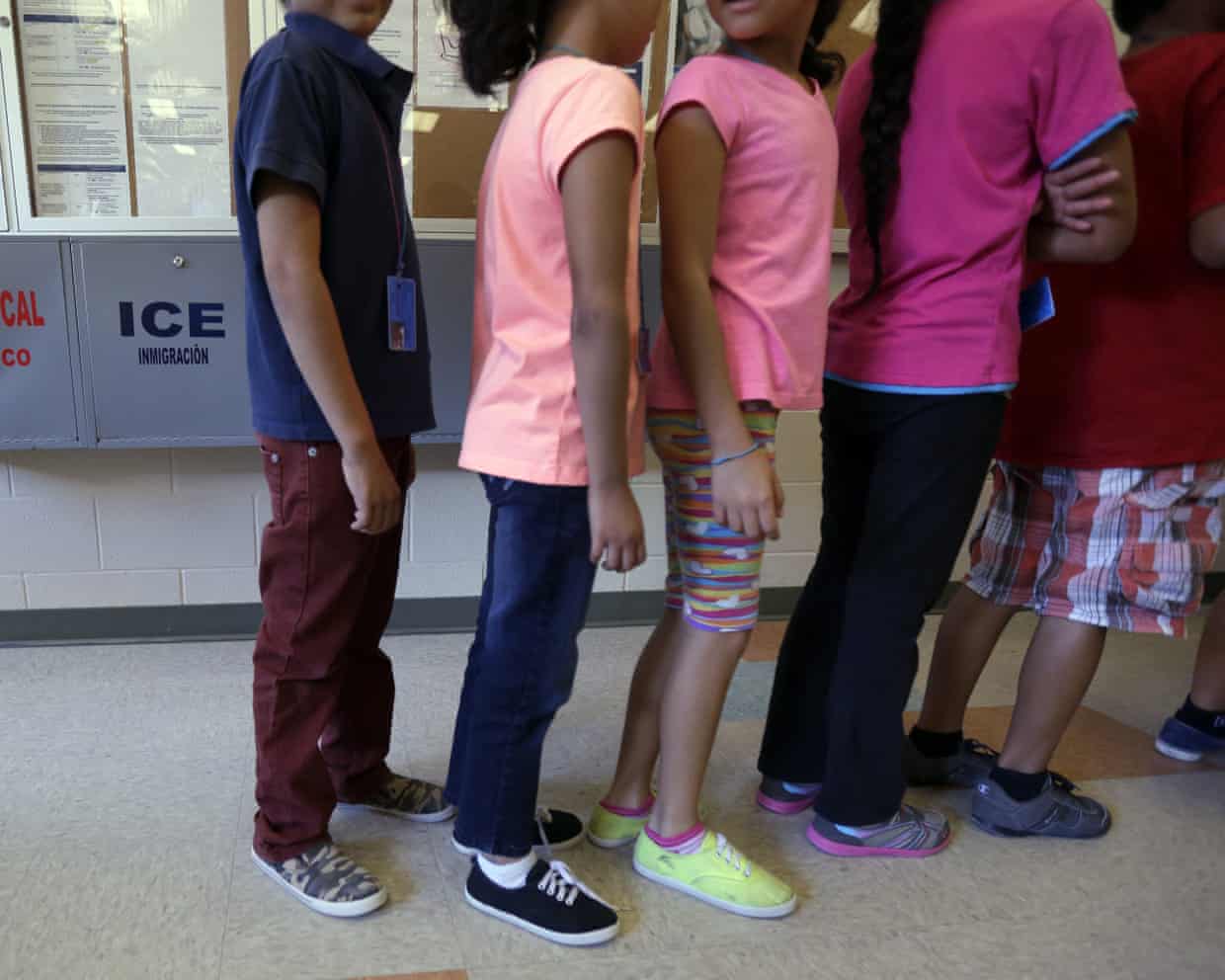
Detained children line up in the cafeteria at the Karnes County Residential Center in Karnes City, Texas, on 10 September 2014. Photograph: Eric Gay/AP
The Trump administration is trying to end a cornerstone immigration policy that requires the government to provide basic rights and protections to child immigrants in its custody.
The protections, which are drawn from a 1997 consent decree known as the Flores Settlement Agreement, limit the amount of time children can be detained by immigration officials. It also requires the government to provide children in its custody with adequate food, water and clean clothes.
The administration’s move to terminate the Flores agreement was long anticipated. In a court motion filed Thursday, the justice department argued that the Flores agreement should be “completely” terminated, claiming it has incentivized unauthorized border crossings and “prevented the federal government from effectively detaining and removing families”.
Donald Trump also tried to end these protections during his first term, making very similar arguments.
Ice arrests at immigration courts across the US stirring panic: ‘It’s terrifying’
Read more
The move to end protections follows a slew of actions by the Trump administration that target children, including restarting the practice of locking up children along with their parents in family detention. Immigration advocacy groups have alleged in a class-action lawsuit filed earlier this month that unaccompanied children are languishing in government facilities after the administration unveiled policies making it exceedingly difficult for family members in the US to take custody of them. The president and lawmakers have also sought to cut off unaccompanied children’s access to legal services and make it harder for families in detention to seek legal aid.
“Eviscerating the rudimentary protections that these children have is unconscionable,” said Mishan Wroe, senior attorney at the National Center for Youth Law. “At this very moment, babies and toddlers are being detained in family detention, and children all over the country are being detained and separated from their families unnecessarily.”
The effort to suspend the Flores agreement “bears the Trump administration’s hallmark disregard for the rule of law – and for the wellbeing of toddlers who have done no wrong”, said Faisal al-Juburi of the Texas-based legal non-profit Raices. “This administration would rather enrich private prison contractors with the $45bn earmarked for immigrant detention facilities in the House’s depraved spending bill than to uphold basic humanitarian protections for babies.”
The Trump administration in 2019 asked a judge to dissolve the Flores Settlement Agreement, but its motion was struck down. During the Biden administration, a federal judge agreed to partially lift oversight protections at the Department of Health and Human Services, but the agreement is still in place at the US Customs and Border Protection (CBP) and US Immigration and Customs Enforcement agencies.
“Children who seek refuge in our country should be met with open arms – not imprisonment, deprivation and abuse,” said Sergio Perez, executive director of the Center for Human Rights and Constitutional Law.
The settlement is named for Jenny Flores, a 15-year-old girl who fled civil war in El Salvador and was part of a class-action lawsuit alleging widespread mistreatment of children in custody in the 1980s.
Since the settlement agreement was reached in 1997, lawyers and advocates have successfully sued the government several times to end the mistreatment of immigrant children. In 2018, attorneys sued after discovering unaccompanied children had been administered psychotropic medication without informed consent.
In 2024, a court found that CBP had breached the agreement when it detained children and families at open-air detention sites at the US southern border without adequate access to sanitation, medical care, food, water or blankets. In some cases, children were forced to seek refuge in portable toilets from the searing heat and bitter cold.
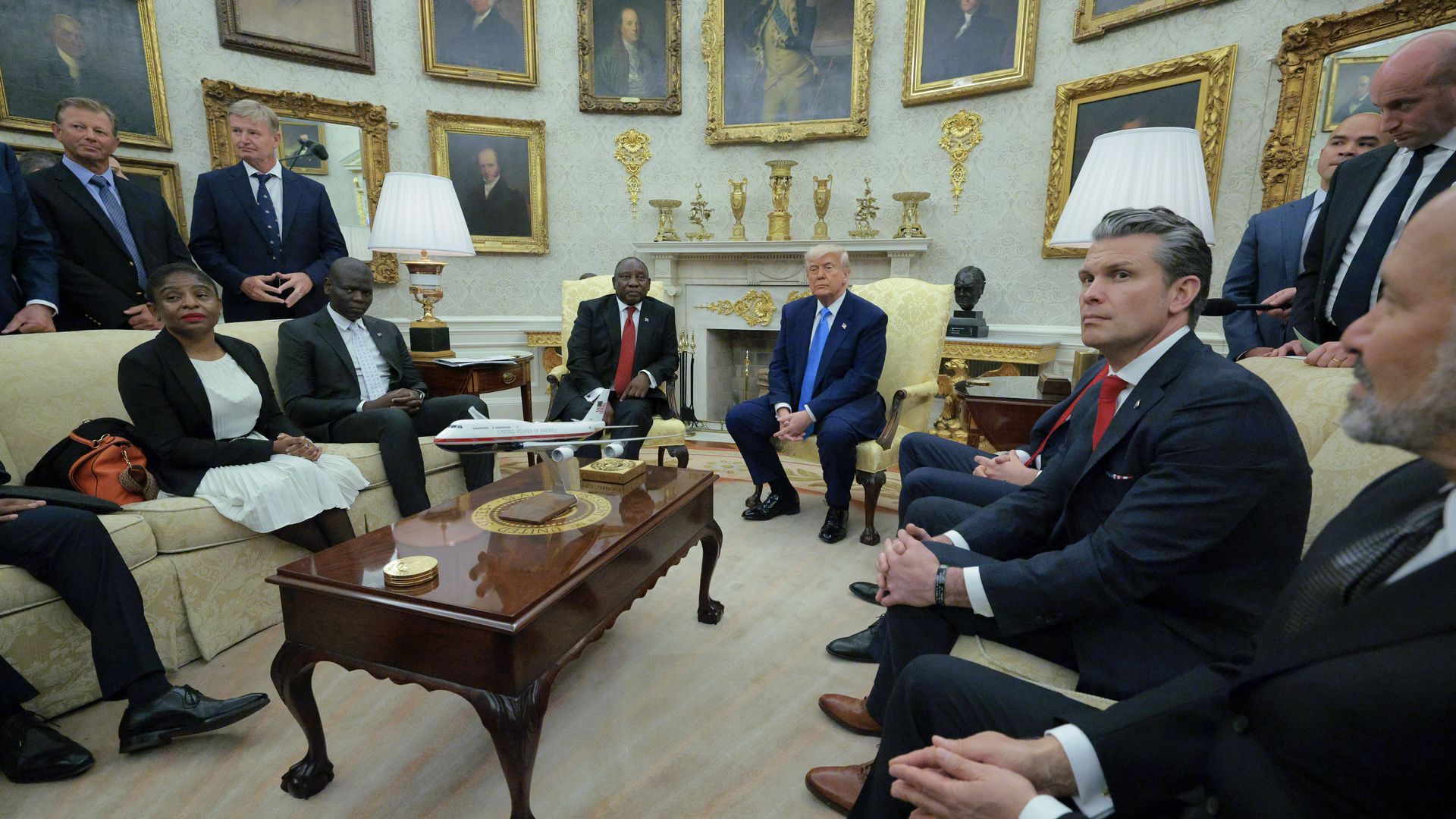
President Cyril Ramaphosa meets with President Trump in the Oval Office on May 21. Photo: Chip Somodevilla/Getty Images
In a shocking moment during President Trump‘s meeting with South African President Cyril Ramaphosa on Wednesday, Trump requested that videos be displayed purporting to show evidence of violence against white people in the country.
The big picture: Trump, who cut all foreign assistance to South Africa, has embraced the false accusations of genocide against white South Africans as justification for granting them refugee status in the U.S.
A South African court in February dismissed claims of a “white genocide” asnot real.
Driving the news: In a stunning scene reminiscent of the Oval Office showdown with Ukrainian President Volodymyr Zelensky, Trump asked for the lights to be dimmed before playing the videos.
While Trump watched the video, Ramaphosa looked away, appearing uncomfortable.
At one point, speaking over the video, Trump said the screen was displaying “burial sites.” Ramaphosa inquired where the scene was located, adding, “This I’ve never seen.”
Later on, Trump paged through articles from the “last few days” while repeating, “death, death, death.”
Catch up quick: In the question that preceded the video display, a reporter asked Trump what it would take for him to be convinced there was no genocide in South Africa — an inquiry Ramaphosa answered.
“It will take President Trump listening to the voices of South Africans,” Ramaphosa said.
Trump jumped in, saying there were “thousands of stories” and “documentaries.”
“It has to be responded to,” he said before the footage began.
Context: The video played in the Oval Office featured the voice of Julius Malema, a firebrand politician and leader of the Economic Freedom Fighters, who was ejected from Parliament.
Ramaphosa clarified that the utterances in the footage were not “government policy,” saying, “We have a multiparty democracy in South Africa that allows people to express themselves.”
South Africa’s Agriculture Minister John Steenhuisen — who is white — reiterated Ramaphosa’s point, emphasizing that the two people in the video are opposition leaders. He said his party, the Democratic Alliance, chose to join forces with Ramaphosa’s “to keep those people out of power.”
Trump interjected, “You do allow them to take land … and then when they take the land, they kill the white farmer, and when they kill the white farmer, nothing happens to them.”
South Africa recently passed the Expropriation Act, which allows the government to take some land and redistribute it as part of a long-running effort to lessen the racial and economic disparities created by apartheid.
Ramaphosa acknowledged there is “criminality” in the country — but said the majority of people killed have been Black people.
Trump claimed the “farmers are not Black” and said, without evidence, that people were being killed “in large numbers” and were decapitated. He repeatedly lashed out at reporters, saying, “The fake news in this country doesn’t talk about that.”
This is a developing story. Please check back for updates.
May 22, 1894 Eugene V. Debs, president of the American Railway Union, was imprisoned in Illinois for his role in the Pullman Palace Car Company strike and boycott, which had stalled most rail traffic west of Detroit. Read more about the Pullman strike
May 22, 1968 Federal marshals entered Boston’s Arlington Street Unitarian-Universalist Church to arrest Robert Talmanson, who had been convicted of refusing induction into the U.S. Armed Forces. He had been offered sanctuary there by the leaders of the church who shared his opposition to the Vietnam War. When the marshals tried to remove him, access to their car was blocked by 200-300 nonviolent sanctuary supporters. Draft resister Robert Talmanson dragged by authorities from Arlington Street Church.
May 22, 1978 Four thousand protesters occupied the site of the Trident nuclear submarine base in Bangor, Washington. The base was built for the maintenance and resupply of Ohio-class submarines. Though built as part of the U.S. nuclear deterrent, they were perceived by some as giving the U.S. a nuclear first-strike capability with their ability to each deliver 24 missiles with multiple warheads from very close to the borders of other countries. The 14 vessels are at sea 2/3 of the time and can travel as deeply as 800 feet for a time limited only by its food supply. Read more about Ground Zero
May 22, 2001 Delegates from 127 countries formally voted approval of the Stockholm Convention on Persistent Organic Pollutants (POPS), a treaty calling for the initial elimination of 12 of the most dangerous manmade chemicals, nine of which are pesticides. POPS are often toxic at very low levels, resist degradation and thus persist for decades or longer, because they become concentrated in living tissue, are readily spread by atmospheric and ocean currents.Swedish Prime Minister Goran Persson, lauding the agreement, said, “. . . we have to go further. Dangerous substances must be replaced by harmless ones step by step. If there is the least suspicion that new chemicals have dangerous characteristics it is better to reject them.” POPS background
Today I want to introduce you to a friend of mine from years ago, a community leader in Beirut Lebanon, a man named Kamal Mouzawak.
Kamal and me at Souk el Tayeb a couple of years ago (photo Thomas Schauer)
I’m proud to know Kamal and his team, and to have spent time with them after the horrific 2020 explosion that rocked Beirut and destroyed so many lives. The World Central Kitchen team, who arrived in Beirut to help with the recovered, joined up with Kamal’s team at Tawlet, a kitchen in the city serving foods from around Lebanon (more about that later), along with our mutual friend Aline Kamakian—a brilliant chef, food writer, and culinary advocate. Together, we worked to feed the people of Beirut who were the ones cleaning up the streets. It was a difficult time, but also an amazing one, to see the incredible efforts of Beirutis helping their neighbors get back on their feet, to clean up their neighborhoods, and to make sure they were all fed. (snip-a little video I can’t get a link or embed.)
Kamal has for many years been a leader in the community. In 2004 he started a farmers market in Beirut called Souk el Tayeb, working with farmers from around the rural areas of the country to reach the people of the city. From there his mission has expanded…well, why am I telling you, when I could let Kamal do it? My team had a moment to talk to him recently, since Kamal and Souk el Tayeb were the recipients of a grant from my Longer Tables Fund—specifically to support a new vision for the market, transforming it into a community space. I am so thrilled to be able to support my dear friend Kamal in his work to bring fresh produce to more of his community.
So friends, now I want to give the floor to the super thoughtful Kamal:
Longer Tables: First of all…what is Souk el Tayeb, and what is Tawlet?
Kamal: The whole story has been an evolution since the beginning, in 2004.
Souk el Tayeb is what we call a farmers’ market and Tawlet we call a farmers’ kitchen (“Souk el Tayeb” means “good market” and “tawlet” means “table” in Arabic). That naming is intentional, to stress the fact that this is not another store, and it’s not another restaurant. It’s not about selling vegetables. It’s not about cooking food and serving food in a restaurant or in whatever we want to call it. It’s about changing the world, making the world a better place.
And it was for people to understand is that food is not just a commodity that you buy on a supermarket shelf but something that someone planted, produced, cooked, transformed—and it’s an exchange between you and him or her through money, but the idea is Why not meet the producers of our food? It was a move for farmers to come from rural to urban in order to be where there’s a demand and purchasing power. It was about farmers coming to meet people who would buy their produce. (snip-MORE, and it’s really nice)
No, really, it is. The history of the Tenth Amendment explains [almost] everything happening in politics and government today.
But before I get to the [scintillating] topic of the Tenth Amendment, I have an announcement: Today is the birthday of Rebels, Robbers, and Radicals: The Story of the Bill of Rights.
(I have created birth announcements on publication day for every one of my books beginning with my firstborn novel in 2001.)
And now . . . all about the Tenth Amendment.
* * *
The Tenth Amendment consists of a single sentence:
The powers not delegated to the United States by the Constitution, nor prohibited by it to the States, are reserved to the States respectively, or to the people.
The Supreme Court has described the Tenth Amendment as stating a simple “truism”—“all power is retained which has not been surrendered.”
The problem with calling the Tenth Amendment a “truism” is that, since the start of the nation, there has been bitter disagreement over how much power has been retained by the states, and how much has been surrendered to the federal government. In fact, we fought a Civil War over that question. The Confederacy’s slogan “states’ rights!” was grounded in the Tenth Amendment.
* * *
The drafters of the Constitution debated whether to insert the word “explicitly” into the Tenth Amendment, so that it would read like this:
The powers not explicitly delegated to the United States by the Constitution, nor prohibited by it to the States, are reserved to the States respectively, or to the people.
The anti-Federalists (the party of Thomas Jefferson), wanted to insert the word “explicitly,” which they understood would sharply limit the power of the federal government. At one point during the early debates on the Constitution, Thomas Jefferson suggested that the federal government should consist of a committee. The Federalists (the party of George Washington and Alexander Hamilton), on the other hand, didn’t want to place such a limitation on federal power because they worried that a situation requiring a national response might arise that they could not foresee.
The Federalist won. The word “explicitly” was not included. Had the word “explicitly” been inserted, the United States most likely would have become a loose coalition of independently governed states sharing a Post Office, armed forces, and not much more.
* * *
Shortly after George Washington was elected president, he appointed Alexander Hamilton as secretary of the Treasury. This was a key post because the Revolutionary War left the nation almost bankrupt, and Hamilton understood commerce and finance. As a teenager in the Caribbean, he worked as a clerk in a trading company. After the Revolutionary War, he and a handful of other New Yorkers helped establish the Bank of New York, which allowed New York to grow into a hub of commerce and trade.
One of Hamilton’s first acts as secretary of the Treasury was to propose a plan that would allow the federal government to assume state debt. There was much resistance to the idea, even by the states that were heavily in debt from the Revolutionary War. Many saw this as a federal power grab because it gave the federal government powers not “delegated” and thus violated the Tenth Amendment.
Hamilton got his way. The federal government assumed state debt. He next proposed a national bank to help the United States prosper the way the Bank of New York helped New York prosper.
The resistance to Hamilton’s proposed national bank was fierce. At stake was the kind of nation the United States would become. Thomas Jefferson and the other anti-Federalists believed a national bank would turn the United States into another Great Britain, which at the time was a vast and powerful financial empire governed by a strong central government. Jefferson believed the way to liberty was for power to reside locally. For Jefferson, the point of the Revolutionary War was for Americans to free themselves from a faraway, out-of-touch, commerce-oriented government.
Slavery, of course, was the underlying issue. The economy of the South and the wealth of people like Thomas Jefferson was built on slave labor. They were afraid that if the federal government grew too powerful, it would end slavery.
It’s Really All About John Locke
To understand how Jefferson reconciled his demand for freedom as an unalienable right with his belief that local governments should decide whether to legalize slavery, we need some John Locke, who — like Thomas Jefferson — was full of contradictions. At the time of his death in 1704, Locke was the most famous philosopher in Europe. Thomas Jefferson took his ideas and much of his famous language from John Locke. The idea that it is a self-evident truth that we all possess unalienable rights is pure John Locke, as is the idea that, to prevent a tyrant, power should be divided between independent branches of government. To quote Steven B. Smith, a political science professor at Yale, “Locke’s writings seem to have been so completely adopted by Thomas Jefferson in the Declaration of Independence that Locke is often thought of as almost an honorary member of the American founding generation.”
Recall Thomas Hobbes’s theory about how government evolved: According to Hobbes, in the state of nature before government, there was violence and chaos. Government arose as a way to create order. For Hobbes, absolute monarchy is the best form of government because only a ruler with absolute power can maintain order. Government arises as a kind of social contract: People give up their freedom and submit to the rule of a king in exchange for protection and order.
John Locke offered a competing theory. In his view, in the state of nature before government, people lived in perfect freedom with unalienable rights. Moral law (or natural law) reigned supreme.
Among our inalienable rights, according to Locke, is the right to own property and a chief function of government is to protect private property rights, which, according to John Locke, derive from natural law. This immediately raises questions. In a state of nature without government, how do we know which property belongs to which person? Can I just claim the river for my own? Locke’s answer is that, “Our claim to property derives from our own work; the fact that we have expanded our labor on something gives us title to it. Labor is the source of all value.”
Okay, so I suppose this means that if a person in the state of nature gathers natural materials and uses their labor to make the material into a house, the person owns the house and has title to that property. But what if one person finds minerals in the earth and uses their labor to extract the minerals. Does the person then own the minerals? What about a forest? If I expend labor to cut down all the wood, does that mean I own it all? What about the servant who expends labor cleaning the master’s house. Does that servant now have claim to the master’s property? As Karl Marx later pointed out, the factory worker does not own the product of his own labor.
Liberty for John Locke was another unalienable right. Here is how Jefferson (and others) reconciled slavery with the belief that all people are born with an unalienable right to liberty: They believed it was part of natural law that Black people were inferior and best suited to laboring for others, which brings us to another problem with the entire idea. Different people will have different ideas of what is ‘moral.’ Locke’s answer is that rational people will all see things the same way, and irrational people are the ones we need government to protect us from.
See the problem? See how this leads to “Some people have unalienable rights and others do not.” It also leads to, “People who agree with me are rational. The purpose of government is to protect our freedom and property rights from those who are irrational.” This, combined with an ‘if I grab it first, I have title to it’ mentality, leads to the idea that one purpose of government is to protect the property rights of the wealthy.
Make no mistake — the idea of unalienable rights and checks on governmental power was a liberal idea and a step toward self-determination and dignity. My point is that the specifics of how this might be applied in the real world wasn’t very well thought out.
Another Lockean innovation is the movement away from feudalism — with its emphasis on a static social hierarchy — toward a market economy with opportunities for all. Locke said, “The world was created in order to be cultivated and improved” and “the world was given to the industrious.” He also believed that government should not stand in the way of industriousness, which you could say makes him the original free market capitalist. The problems here are the same: The idea that in the state of nature people lived happily in an unregulated market economy is fantasy.
Locke also says that people have the right to rebel against a tyrannical government, which raises even more questions. How do the people decide when rebellion is appropriate? What if people have different ideas about what is tyrannical? Wouldn’t this put us in an almost constant state of rebellion and civil war?
Locke’s ideas are naive, but, he did not have the benefit of modern neuroscience and modern psychology. He didn’t know what we know today about brain differences, and how these brain differences lead to personality differences. What is more important: Locke had never seen what actually happens in a world without positive law. Hindsight is always clearer.
And now . . . Back to the Story of the Tenth Amendment
Because George Washington and most members of Congress agreed with Hamilton about the need for a national bank, Hamilton got his way again. Hamilton’s bank did indeed allow the country to recover from years of war, but it remained controversial. Andrew Jackson, the country’s seventh president, dismantled the national bank because he believed it was unconstitutional under the Tenth Amendment. The national bank was reinstated in 1863 to help the North with the Civil War effort. In 1913, the Federal Reserve—the national bank we have today—was established. (In the end, Hamilton won.)
* * *
On December 20, 1860—less than two months after Lincoln was elected—South Carolina declared itself no longer part of the United States. The leaders of South Carolina ordered the U.S. Army to abandon its forts and military bases within South Carolina’s borders. The U.S. Army refused to budge. Within four months, the Civil War broke out. Mississippi, Florida, Alabama, Louisiana, Texas, and Georgia also seceded.
The leaders of the Confederate States of America argued that the Constitution says nothing about whether states have the power to secede or whether the federal government has the power to stop them. Under the Tenth Amendment, any powers not delegated to the federal government are retained by the states. Therefore, they argued that whether to remain part of the United States is up to the states.
Locke’s ideas thus underpinned some of the rationale of the Confederate States of America.
The Civil War ended after the South surrendered, but defeat on the battlefield did not persuade many of the Confederates that they were wrong as a matter of constitutional interpretation. Legal historian Cynthia Nicoletti suggested that the idea of “trial by battle” was inherently problematic. To this day, people believe self-governance means that states should be able to secede if their values cease to align with the nation.
* * *
In 1900, approximately two million children were working in mines, fields, and factories across the United States, often doing hard labor and performing dangerous jobs. As people became aware of the conditions children worked under, activist groups formed to address the problem. In 1908, a group called the National Child Labor Committee hired a photographer to visit fields, factories, and mines to report on child labor. More people became aware of the problem and pressured Congress to do something about it.
The Constitution gives Congress the power to regulate commerce between the states, so in 1916 — under the power of the commerce clause — Congress passed a law known as the Keating-Owen Child Labor Act, which sought to prevent child labor by banning the sale of any products that were produced by children under the age of fourteen, or by children between fourteen and sixteen who were forced to work more than eight hours per day.
The Supreme Court struck down the Keating-Owen Act as unconstitutional on the grounds that regulating how products were created was reserved by the Tenth Amendment to the states. Specifically, the Court said, “It was not intended as an authority to Congress to control the States in the exercise of their police power over local trade and manufacture, always existing and expressly reserved to them by the Tenth Amendment.”
The idea was that if states wanted to allow child labor, that was up to the states, and the federal government did not have the power to interfere. If people didn’t like it, they could refuse to buy products produced by child labor. Obviously, this was a poor solution. What would prevent the factories from exporting their goods to markets where people didn’t know the goods had been produced by child labor?
Some see the late 19th and early 20th century as a glorious time when industry and the economy boomed. There were almost no federal regulations. Business tycoons could do as they pleased. Tycoons — also called robber barons — grew wealthy. Income inequality widened. There was no minimum wage, no 40 hour workweek, no social security.
You might say that the business tycoons of the late 19th century lived in a state of nature without government. Did they follow natural law and behave rationally? Of course they didn’t. They cheated. Their wealth then gave them power. They monopolized huge industries through the formation of trusts, exploited workers, and engaged in unethical business practices. For example, a group of well-respected investors would agree to buy a lot of a particular company’s stock on a given day. Others would see what they did, assume the stock was valuable, and also buy it, pushing the price higher. When the price was artificially high, the speculators would sell their stock at a large profit. Soon the prices would fall again. The people who had been duped into buying when the price was artificially inflated would lose their money, and the people who duped them would grow wealthy.
Then in 1929 the market crashed, ushering in the Great Depression. Franklin D. Roosevelt believed that the solution to the nation’s financial woes, and the way to prevent future financial crises, was to regulate businesses and commerce to create fairness and protect investors. He ran for president in 1932 promising what he called a New Deal—a series of federal laws designed to get the United States out of the Depression, offer protections for workers, and regulate commerce to stop unfair business practices such as manipulating markets and fixing prices.
After Roosevelt was elected, he and Congress set to work to enact his New Deal.
During Roosevelt’s first several years in office, the Supreme Court repeatedly invalidated the New Deal legislation as unconstitutional under the Tenth Amendment. Then, in 1938, the Court did an about face and stopped invalidating New Deal legislation. Congress tried again to outlaw child labor and, in 1938, passed the Fair Labor Standards Act, which established among other things a minimum working age of sixteen, except in certain industries outside of mining and manufacturing. In a case called United States v. Darby, the Supreme Court held that the new labor laws were constitutional under Congress’s power to regulate commerce between the states. The Supreme Court thus overturned its previous 1918 case that had declared federal child labor laws unconstitutional.
Historians and scholars have offered various reasons for the Supreme Court’s sudden change of mind. It appears that the Court saw that Roosevelt and the New Deal were exceedingly popular and that Roosevelt was looking for ways to get around the Court, so the Court finally gave in.
The New Deal legislation created numerous federal regulatory agencies including the Securities and Exchange Commission, an independent federal agency designed to protect investors by regulating the sale of financial products such as stocks. Roosevelt signed into law the Public Utility Holding Company Act of 1935, which allowed the government to regulate utilities such as electricity and water to make sure those companies didn’t unfairly raise prices for people who depended on their services. Roosevelt’s 1935 Social Security Act offered a way for workers to pay into a pension so that they would have something to live on in their old age. The nation got a forty-hour workweek and worker protection laws.
Among the most far-reaching of Roosevelt’s programs was the G.I. Bill, formally known as the Servicemen’s Readjustment Act of 1944. It gave soldiers returning from duty the right to a government-paid college education, allowing ten million soldiers over a twelve-year period to attend college, thus helping lower-income families break out of poverty.
The New Deal had its critics. Right-wing activist Elizabeth Dilling denounced the New Deal as a piece of communism. One of the most famous journalists of the era, H.L. Mencken likened Roosevelt actions to a dictatorship. The New Deal critics not only despised the expansion of the federal government, they saw the New Deal as redistributing wealth, which — as they saw the situation — meant taking wealth from the people who expended their labor and were “industrious” and gave it to people who were not. This is the “makers and the takers” argument. The makers, of course, are business owners. Takers are those who accept government assistance.
Indeed, if your view is that, in the natural state, people lived free and happy, and government regulations infringe on liberty (which they do) you will despise the New Deal. You will hate agencies such as the CDC or the FDA. You will resent vaccine mandates because they infringe on your “liberty.” (You won’t consider the liberty of others not to be infected in public places and schools, because Locke’s idea that “each person is free” and the purpose of government is to protect our personal liberty was appealing, but not well thought out. One person’s “freedom” will often infringe on another’s.)
Roosevelt’s New Deal dramatically increased the size and complexity of the federal government and marked the beginning of what has been called the federal administrative state—a vast network of federal departments and regulatory agencies that has grown steadily since Roosevelt’s time.
* * *
While Roosevelt’s legislation helped create America’s first true middle class, the new suburbs were mostly white because of racial segregation. Among other things, legalized segregation meant that Black Americans found it difficult to get loans from banks, making it impossible for them to buy houses. Some sellers simply refused to sell them homes. Some neighborhoods made it clear that Black people were unwelcome.
Then, in 1954, the Supreme Court sent shock waves through the American South when it declared racial segregation unconstitutional. There was massive resistance on the grounds that the federal government, in telling people how they must live, was overreaching its authority.
A decade later, President Lyndon B. Johnson signed into law three key pieces of legislation: the Civil Rights Act of 1964, the Civil Rights Act of 1965, and the Voting Rights Act of 1965. This legislation further enlarged the size and power of the federal government because they gave the federal government the task of ensuring that all Americans were offered the opportunity to participate in civil and public life. Racial discrimination continued, but it was now illegal, so people who were wronged could bring their cases to federal court.
Those opposed to these new laws argued that the federal government overstepped its authority under the Tenth Amendment. In fact, when the Supreme Court invalidated part of the Voting Rights Act decades later, it did so by finding that the required procedures violated the Tenth Amendment.
The Republican Party’s opposition to the New Deal solidified in the 1930s. During the decades since, the opposition to the New Deal has been steadily gaining power. And here we are. A president — backed by Congress — working to roll back the authority of regulatory agencies.
Most of this material is from Chapter 10 of my new book, Rebels, Robbers, and Radicals.
And now a moment of reflection on my latest book’s birthday: After so many books (and several decades of writing) I understand that writing books is my way to leave my footprint on the earth. My contribution: Books that go to schools and libraries.
(Not that I am going anywhere. I intend to live forever. But occasionally I suppose we all think about mortality.)
May 19, 1934 10,000 participated in a “No More War” march in New York City.
May 19, 1952 Playwright and activist Lillian Hellman advised the U.S. House Committee on Un-American Activities (HUAC) that she refused to testify against friends and associates, saying, “I cannot and will not cut my conscience to fit this year’s fashions.” Lillian Hellman Learn more about Lillian Hellman Text of her letter to HUAC
May 19, 1997 Two international human rights workers, Mario Calderón and Elsa Alvarado, as well as her father, were shot dead in Bogotá, Colombia, by a paramilitary gang. Their one-year-old was hidden and thus spared, her mother wounded. The couple worked for the Center for Investigation and Popular Education (Centro de Investigación y Educación Popular, or CINEP), a non-governmental organization founded by the Jesuits (the Roman Catholic Society of Jesus) to foster education, understanding, justice and sustainable development in Colombia. Mario Calderón and Elsa Alvarado CINEP’s peace program
Photo: Acting NASA Administrator Janet Petro, who also serves as Kennedy Space Center director, a post she assumed in 2021. Trump elevated Petro to lead NASA after he ousted former Sen. Bill Nelson for believing in climate change.
Newly-released data shows that Oklahoma ranks 46th in per-pupil spending, but Walters, who is eyeing a run for governor, has called for cuts to his state’s “wasteful” education spending, including $250,000 to provide school districts with emergency inhalers.
In his KFOR interview, Walters did boast about getting new teachers a signing bonus, but as was widely reported the time, $290,000 of that money had to be clawed back because it had gone to teachers who did not qualify. Some of those teachers had already spent the money.
New: CBP seized a shipment of t-shirts from @cola.baby featuring a swarm of bees attacking a cop. The company also sells "ELIMINATE ICE" t-shirt and previously was threatened by LAPD for "FUCK THE LAPD" shirts and hats. Shirts to be "destroyed under CBP supervision"www.404media.co/cbp-seizes-s…
Rep. Beth Lear first appeared here in January 2024 when she defended her anti-trans bathroom bill by citing the “millstones” bible verse which calls for drowning anyone who hurts children.
She later blamed “depraved monster” Alfred Kinsey, liberals, and the ACLU for transgender people even existing.
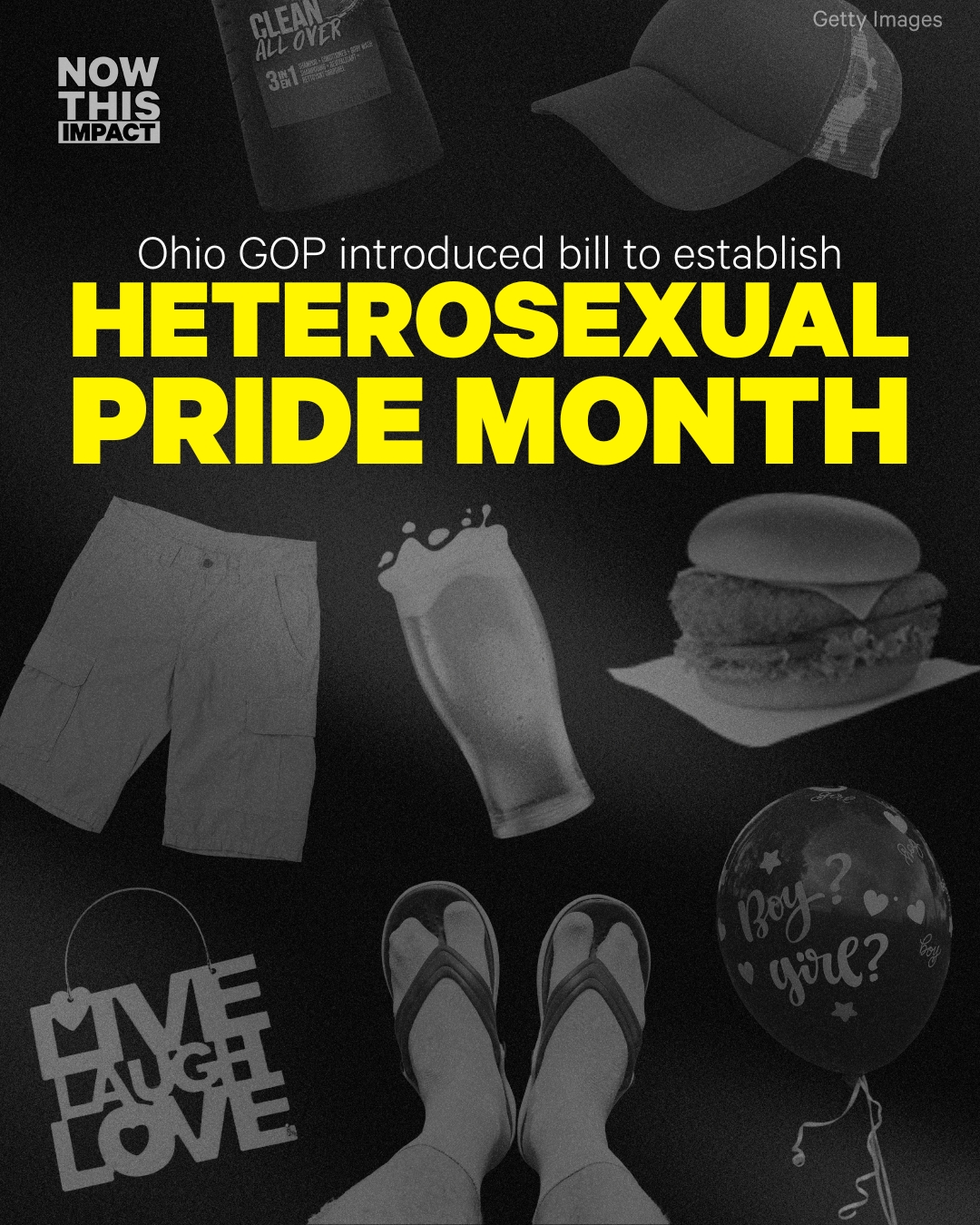
Rep. Josh Williams first appeared here in July 2024 for his bill that would criminalize drag shows in the presence of children. Williams reintroduced his bill last week.

 Photo Illustration by Thomas Levinson/The Daily Beast/Getty/ABC










 Scottie's Playtime