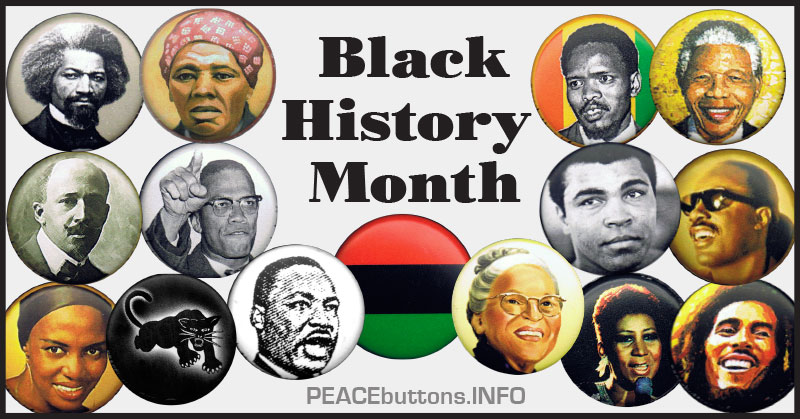
So far, it’s not illegal for us to acknowledge that February is Black History Month, so here we are, doing just that. Ha! There is even some Black History for this very date in Peace and Justice History:
February 1, 1960 Greensboro first day: Ezell A. Blair, Jr. (now Jibreel Khazan), Franklin E. McCain, Joseph A. McNeil, and David L. Richmond leave the Woolworth store after the first sit-in on February 1, 1960. Four black college students sat down at the Woolworth’s lunch counter in Greensboro, North Carolina, and were refused service because of their race. To protest the segregation of the eating facilities, they remained and sat-in at the lunch counter until the store closed. Four students returned the next day, and the same thing happened. Similar protests subsequently took place all over the South and in some northern communities. By September 1961, more than 70,000 students, both white and black, had participated, with many arrested, during sit-ins. On the second day of the Greensboro sit-in, Joseph A. McNeil and Franklin E. McCain are joined by William Smith and Clarence Henderson at the Woolworth lunch counter in Greensboro, North Carolina.
February 1, 1961 On the first anniversary of the Greensboro sit-in, there were demonstrations all across the south, including a Nashville movie theater desegregation campaign (which sparked similar tactics in 10 other cities). Nine students were arrested at a lunch counter in Rock Hill, South Carolina, and chose to take 30 days hard labor on a road gang. The next week, four other students repeated the sit-in, also chose jail.
In light of current events, I thought it’d be good to review how Black History Month came to be. Below is a bit on its beginnings.
Black History Month was first observed as Negro History Week in February 1926, but the inspiration for the commemoration began over a decade earlier through a steady stream of electrifying events, discoveries, and other celebrations of Black excellence. In 1915, American historian Dr. Carter G. Woodson attended the national celebration of the fiftieth anniversary of emancipation in Washington D.C. This event was widely attended and proved to be profoundly inspiring for Dr. Woodson who, later that year, joined forces with A. L. Jackson, William B. Hartgrove, George Cleveland Hall, and James E. Stamps to establish the Association for the Study of Negro Life and History, known today as the Association for the Study of African American Life and History (ASALH 2024). ASALH had the ambitious goal of educating the public about the achievements, inventions, and progress made by Black Americans, and though the Association’s intellectual efforts were remarkable – they began to publish The Journal of Negro History in 1916 and founded Negro History and Literature Week in 1924 – Dr. Woodson had a wider vision of his mission. Wishing to continue to discover and celebrate the history of the Black past, Dr. Woodson announced the celebration of Negro History Week through a press release.
Accounts of the contributions of Black Americans were notably absent from history books, credited to white men, or omitted altogether. Progressive communities and schools were ripe for the rich history that Negro History Week offered. Matching the popularity of the week, Woodson and the Association established an annual theme for the celebration to guide and inspire educators. Weary of those simply wishing to capitalize on a popular event, “Woodson warned teachers not to invite speakers who had less knowledge than the students themselves” (ASALH 2024). Additionally, ASALH expanded their offerings to provide study materials: pictures, lessons for teachers, plays for historical performances, and posters of important dates and people. This cemented the celebration of Black history in schools and communities, and Negro History Week grew in popularity throughout the following decades, with mayors across the United States endorsing it as a holiday.
Negro History Week grew into Black History Month in 1970 under the leadership of Black educators and students at Kent State University and would become a federally recognized event six years later. President Gerald Ford recognized Black History Month in 1976 during the celebration of the United States Bicentennial. He urged Americans to “seize the opportunity to honor the too-often neglected accomplishments of Black Americans in every area of endeavor throughout our history” (Franklin 2022). Today, nearly one hundred years after that initial celebration, it is prudent to reflect on the designed purpose of Black History Month and discover that after all this time, these lessons are still relevant, inspiring, and necessary. As Dr. Woodson said, “Real education means to inspire people to live more abundantly, to learn to begin with life as they find it and make it better” (Woodson 1933).
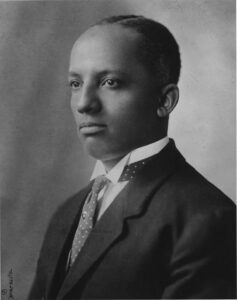
Pictured: Dr. Carter G. Woodson, The “father of Black history”
Photo Credit: Addison Norton Scurlock, Public domain, via Wikimedia Commons
ASALH. 2024. Carter G. Woodson Timeline: ASALH – the Founders of Black History Month. December 19. Accessed January 16, 2025. asalh.org/carter-g-woodson-timeline/.
Woodson, Carter G. 1933. The Mis-Education of the Negro. Trenton: Africa World Press.
==========
All right! So, we see that Black History Week then Month has been around for at least 20 years longer than our current POTUS, who seems to be ignoring the month’s existence. But, there’s no reason any of the rest of we the people have to! Including all history makes the US so much richer in knowledge. Most local historical and cultural organizations are going to have commemorations this month. What fun it will be, and how community-unifying for each of us to find an activity near us, and join in!
I often say that a lot of anti-trans anti-gay anti-LGBTQ+ people have their feelings because they don’t feel different from the cis straight majority so can’t understand or accept that such things because they simply don’t feel that way. If they don’t feel it it can’t be real which is the same with how many white people feel about racism. Remember the old question of how do you know you’re gay or trans or lesbian or nonbinary or what ever simply because the people who grew up straight and cis felt normal in society? But if you ask them when they knew or how they knew they were straight and / or cis they are confused. If a boy at 10 comes out as gay the parents freak out, but if that same kid starts showing interest in girls the parents are ecstatic about their boy growing up. Why the difference? Because one fulfills their expectations and the other … well it just is not like them. It simply comes down to tradition and what feels normal for them. Every person who asked me if I tried to change my sexual orientation and there have been so many, to them I ask have you? They act offended. Why would I do that and I reply, then why should I. Then if they persist for some reason that I should do conversion therapy I ask could they convert from their straight / cis desires to being LGBTQ+? Again they are stunned why they would do that and instantly claim not I couldn’t do that. Then again why ask me to do it? Hugs
Providing objective, nonpartisan, rigorous, original journalism that investigates America’s anti-LGBTQ landscape and elevates everyday American heroes. Expect two rigorously reported stories every weekend.
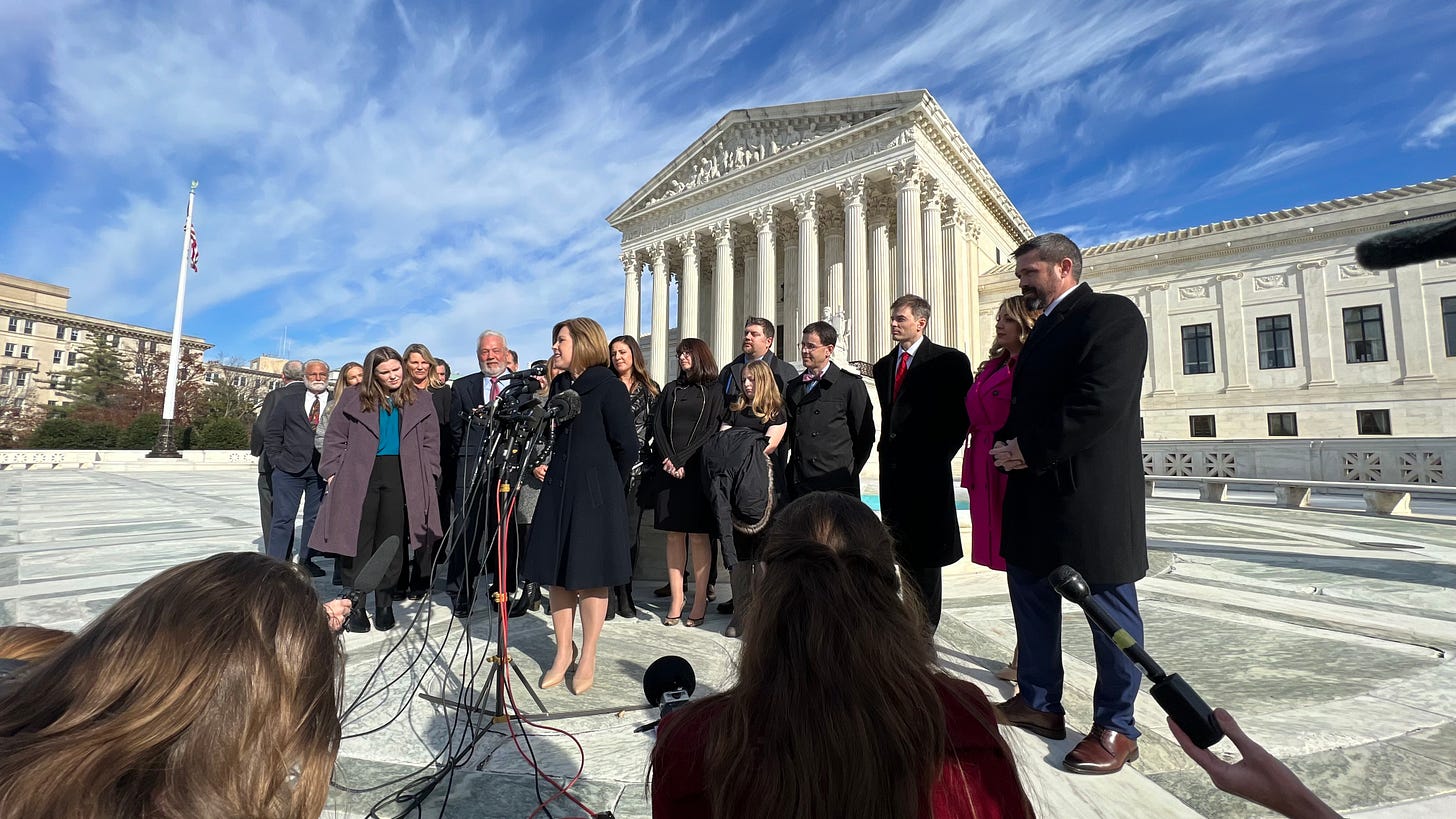
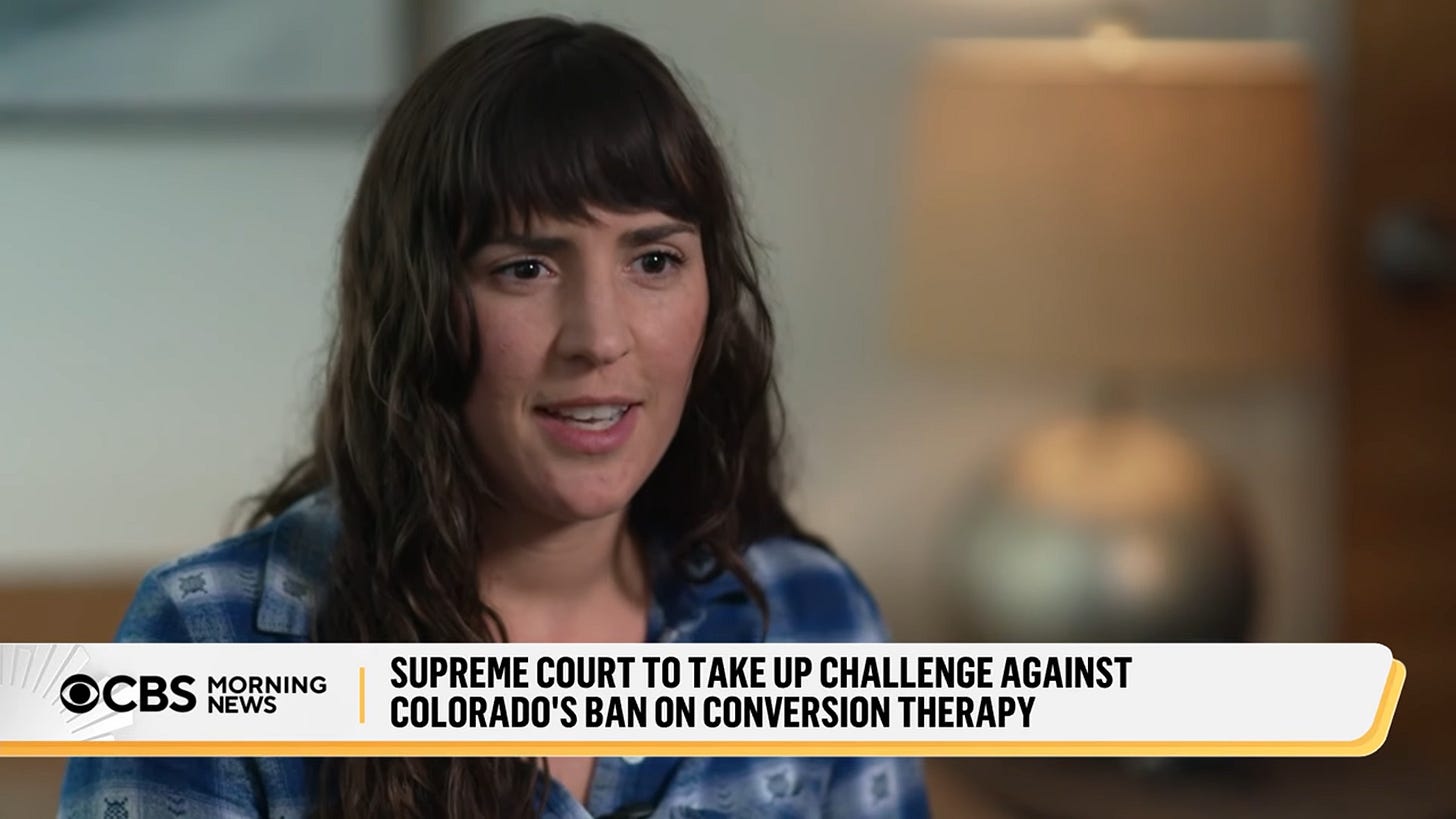
On Oct. 7, the U.S. Supreme Court heard oral arguments in Chiles v. Salazar, a case that challenges Colorado’s ban on conversion therapy.
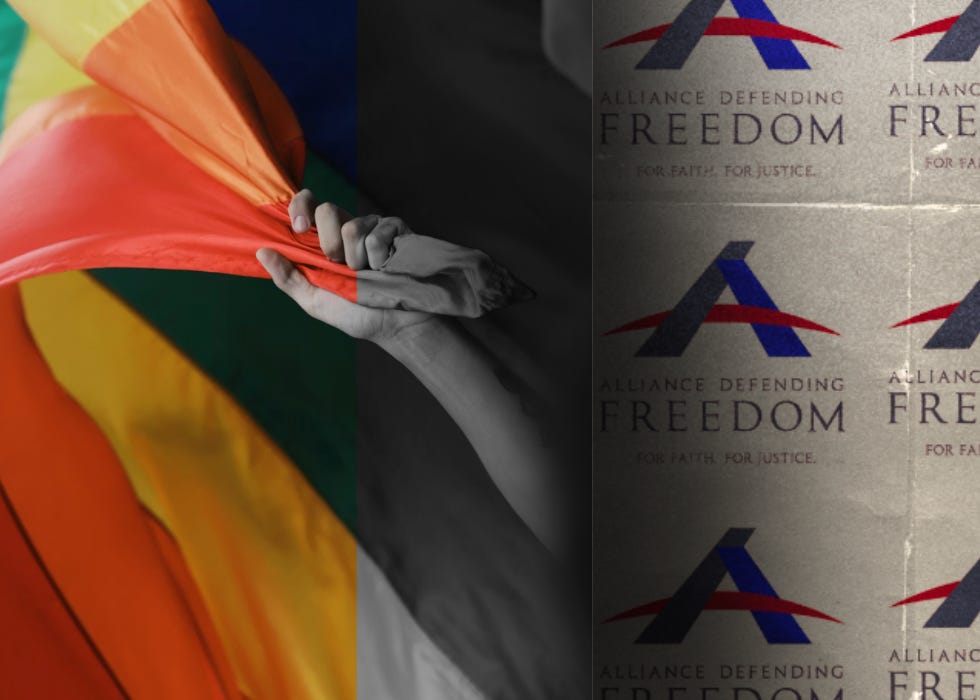
Shortly after, Alliance Defending Freedom (ADF) sent an email to their supporters quoting Paul in Ephesians 6:12: “For our struggle is not against flesh and blood, but against the rulers, against the authorities, against the powers of this dark world and against the spiritual forces of evil in the heavenly realms.”
The email goes on to say, “You might think that a law like this might be just a ‘Colorado problem.’ Sadly, laws like this exist in 22 other states,” referencing other parts of the U.S. that have instituted conversion therapy bans.
This sort of language about conversion therapy is nothing new for the Christian legal group representing Kaley Chiles. Unlike most legal organizations, ADF is sharply anti-LGBTQ. Since their inception over 30 years ago, the group has fought to maintain anti-sodomy laws, uphold the right to discriminate against gay couples and overturn Roe v. Wade.
In recent years, a major element of their fight has been to legalize the discredited practice of conversion therapy.
The Supreme Court appears poised to rule in favor of ADF, which could effectively invalidate conversion therapy bans for minors by licensed professionals across the U.S. This victory would add to the organization’s already-high win streak, which they say is around 80%.
“I don’t think anyone is undermining LGBTQ rights as relentlessly as ADF,” Peter Montgomery, research director at the advocacy group People for the American Way, told Uncloseted Media and GAY TIMES. “They’re shaping the culture for generations to come.”
Although nearly every major medical association has denounced conversion therapy, ADF is arguing that disallowing the practice is a violation of the U.S. Constitution’s First Amendment.
“This case is part of its crusade to turn religious freedom into a license to harm others,” says Amy Tai, the co-author of an amicus brief in Chiles v. Salazar that is urging the Supreme Court to uphold the Colorado law. “It is part of a larger effort and movement to harm LGBTQ people and strip them of their constitutional rights.”
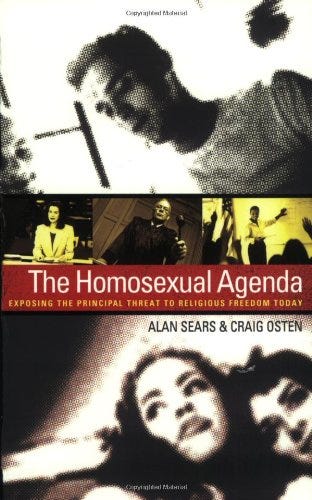
ADF, originally the Alliance Defense Fund, was founded by evangelical anti-gay activists in 1994. Alan Sears, their former CEO and president, co-authored “The Homosexual Agenda: Exposing the Principal Threat to Religious Freedom Today.” The book calls homosexuality a “disordered sexual behavior” and equates it with pedophilia and states that gay people on college campuses are involved in “the promotion of sexual relations between adults and children.”
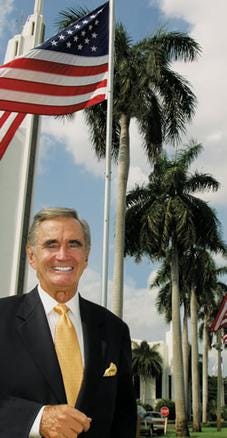
D. James Kennedy, another founder, has preached about “reparative” therapy for gay folks. In a 1993 fundraising letter for his Christian media organization Coral Ridge Ministries, he asked “Would you want your son, daughter, or grandchild sharing a shower, foxhole, or blood with a homosexual?”
A third founder was the late James Dobson, who advised several presidents and argued that conversion therapy could “cure” people.
Since ADF launched, many powerful political figures with anti-LGBTQ beliefs have worked for them. While working as an ADF spokesperson between 2002 and 2010, House Speaker Mike Johnson described gay folks as “destructive” and argued that support for homosexuality could lead to support for pedophilia.
Kristen Waggoner speaking at a press conference in 2018 (Groversawit)
And their current president, Kristen Waggoner, has delegitimized the harm conversion therapy causes by defining the practice as merely having conversations.
Today, their influence in the U.S. government is stronger than ever, with ties to all three branches. In addition to Speaker Johnson, Supreme Court Justice Amy Coney Barrett has been a paid speaker for ADF at least five times since 2011. And in May, President Donald Trump appointed Waggoner to the newly-formed Religious Liberty Commission.
All of these resources and connections are employed to advance an anti-LGBTQ agenda. “They want to see what they see as the God-defined order for gender and marriage be imposed into law,” Montgomery says. “They are trying to create a legal regime in which people can claim religious beliefs to opt out of laws that apply to everyone else.”
History of Fighting to Criminalize Homosexuality and Legalize Conversion Therapy
Over time, ADF has incorporated these viewpoints into their litigation to try and dismantle legal protections for LGBTQ people.
“Just 20 years ago, they were still arguing in court that states should be able to criminalize gay people,” says Montgomery.
In 2000, for example, ADF funded amicus briefs in Dale v. Boy Scouts of America, a case where an assistant scoutmaster sued the Boy Scouts after the organization revoked his membership for being gay. The Supreme Court ruled in favor of ADF.
In 2003, when support for gay marriage was still low in the U.S., they filed an amicus brief to uphold the criminalization of gay sex in Lawrence v. Texas, arguing that the state has a right to regulate “public health and morality.” The group lost the case and sodomy laws were banned nationwide.
As public opinion changed and gay marriage became legal across America in 2015, ADF shifted to more nuanced arguments. “Now, because they know that most Americans favor LGBTQ equality, they’ve really reframed their arguments [around] religious liberty and free speech,” says Montgomery.
The organization has since set its sights on overturning state bans on conversion therapy. In 2018, ADF Senior Counsel Matt Sharp argued against a California bill that classified conversion therapy as fraud. And in 2019, the group sued New York City for a similar law, which led the city to reverse the ban out of fear the case would reach the Supreme Court.
A few years later, in 2021, ADF fought to overturn a statewide conversion therapy ban in Washington, where they represented Christian therapist Brian Tingley. In this instance, they argued that Washington’s law censored Tingley from speaking about gender dysphoria.
A federal appeals court unanimously upheld Washington’s law, with Circuit Judge Ronald Gould shutting down ADF’s argument, writing that: “Washington, like other states, has concluded that health care providers should not be able to treat a child by such means as telling him that he is ‘the abomination we had heard about in Sunday school.’”
Learning from their mistakes, ADF tried again with Chiles v. Salazar, claiming the Colorado law discriminates against Chiles’ viewpoint. Chiles is an evangelical therapist who received her counseling training and education from a seminary.
In their arguments to the Supreme Court, ADF says the conversion therapy ban encourages therapists to help minors explore LGBTQ identities and condemns assisting patients to align with their assigned gender.
Though intended to ban conversion therapy for all LGBTQ people, ADF’s case focuses on gender identity, capitalizing on souring U.S. public opinion on trans rights.
“Chiles believes that people flourish when they live consistently with God’s design, including their biological sex,” ADF wrote in a petition to the Supreme Court.
“ADF has tried to draw a connection between laws prohibiting conversion therapy and states attempting to force mental health professionals or doctors to treat transgender youth,” Christopher Stoll, senior staff attorney at the National Center for LGBTQ Rights, told Uncloseted Media and GAY TIMES. But if the law passes, conversion therapy would become legal to practice on all LGBTQ people.
Another part of ADF’s success stems from manufacturing legal battles to advance cases that match their goals.
Chiles, for example, had not incurred any legal penalty from the Colorado district attorney. Instead, ADF filed a pre-enforcement lawsuit, claiming that she had censored herself and stopped accepting patients for conversion therapy following the law’s passage.
“All of these cases are, in a sense, made up cases. … They’re brought on behalf of therapists who have not actually been subject to any kind of investigation or penalty by either state or local governments,” says Stoll, who is representing Kansas City, Mo. as ADF and Missouri’s Attorney General challenge the city’s ban on conversion therapy.
This strategy is what makes ADF stand out. Montgomery says that unlike many other legal organizations, ADF also helps file lawsuits and writes the bills that directly challenge precedents and legislation they hope to change.
This was in part how they were effective in overturning Roe v. Wade. ADF drafted the Gestational Age Act, which banned abortion in Mississippi after 15 weeks of pregnancy. That law then became the central point of the Dobbs case, which overturned abortion rights nationwide.
“They’re just engineered to test these legal arguments, when really no dispute has arisen,” says Stoll.
When asked for comment, an Alliance Defending Freedom Media Relations Specialist redirected Uncloseted Media to a website criticizing the Southern Poverty Law Center, saying the group mischaracterizes ADF as a hate group.
How ADF Operates Globally
ADF’s efforts to dismantle conversion therapy and LGBTQ rights span far beyond the U.S. Alliance Defending Freedom International (ADFI) boasts about efforts in 70 countries, where they push anti-LGBTQ legislation as far as possible in each country.
In 2012, ADF’s then-legal counsel Piero Tozzi spoke at a conference in Jamaica, advocating for the prohibition of gay sex, stating that the “retention of the legislation prohibiting sodomy is a bulwark against this agenda.” And in 2013, members of ADF defended a statute in Belize that characterized LGBTQ sex as “carnal intercourse against the order of nature.”
“They’re one of the most powerful and influential Christian right religious extremist groups that we have operating in Europe,” Neil Datta, executive director of the European Parliamentary Forum on Sexual and Reproductive Rights, told Uncloseted Media and GAY TIMES.
Datta says with offices in six cities with international human rights centers, ADFI contacts political allies throughout the continent, feeding them legal briefs and direct arguments. Then, those partners take that information and rejig it to align with their country’s political discourse.
“They’re hiring Europeans, training them in the American model of social issues litigation from an anti-rights perspective, and then hoping that [they] will be running with this in European courts,” Datta says. “They bring know-how and capacity to the continent.”
Datta says the U.S. is where the organization conducts its litmus tests for anti-LGBTQ laws and legal arguments: “In the U.S., you have 50 little courts that you can try things out in,” he says. “[ADF] has their own range of different areas that they would like to be active in, and they hunt for opportunities where they can make some progress.”
That includes the defense of Finnish politician Päivi Räsänen, who in 2021 was tried for hate speech for condemning a Lutheran church for supporting a Pride event. With ADFI’s assistance, Räsänen was acquitted in 2023.
Making Headway to Ban Conversion Therapy Abroad
While ADFI has yet to succeed in overturning conversion therapy bans in Europe, Datta says some politicians with links to the group have promoted reintegrative therapy, another form of therapy that attempts to help folks suppress same-sex attraction. While the term attempts to distance itself from conversion therapy, it uses similar procedures to the condemned practice.
However, Datta says ADFI is taking steps to shift the discourse by lobbying against the Digital Services Act, a European Union regulation for online hate speech.
In October, ADFI penned a letter to the European Commission asking the organization to review the law. ADF has also posted various blogs on the legislation, one posing a hypothetical about gender identity, stating, “Let’s say you went on Facebook … to post something as common sense as believing that there are only two genders. … If someone were to report that as hate speech, the E.U. could pressure Meta … to remove the post lest it face those stiff financial penalties.”
ADFI has also expanded its horizons to Africa. In May, Bettina Roska, an ADFI legal officer based in Geneva, joined a consortium of anti-LGBTQ advocates in a Pan-African conference on “family values” in Nairobi, Kenya.
“They are trying to do the same thing in Africa, around the African Union, and the African human rights system,” Jamie Vernaelde, senior researcher at Ipas, a non-governmental organization that focuses on reducing the harm of U.S. foreign policy, told Uncloseted Media and GAY TIMES.
Back in the U.S., the Supreme Court will rule on Chiles v. Salazar before the end of its current term next year. Their decision will potentially clear the way for conversion therapy to be practiced nationwide and abroad.
Vernaelde says that if Chiles v. Salazar is successful, ADF is hoping to bring their fight against conversion therapy worldwide in the same way they are expanding their anti-abortion lawsuits. Today, the group is attempting to undo abortion protections in the U.K. with the help of allies in the country’s right-wing Reform party.
“This is a template that they can use in other places that they can spread as widely as they want through their networks,” says Vernaelde.
If objective, nonpartisan, rigorous, LGBTQ-focused journalism is important to you, please consider making a tax-deductible donation through our fiscal sponsor, Resource Impact, by clicking this button:
The public doesn’t like the lawless gang thugs actions of racist Christian nationalist ICE and is demanding action from their elected representatives, many of whom are either racists or Christian nationalists themselves, to act to stop the actions of illegal assault ICE is making on the civil rights of the US public. We can see both the right and the left elected members don’t really want to and I can only think it is something to do with big money donors, many of whom are highly racist and make a great profit off the situation we have currently. Hugs
As Democrats across the country propose state law changes to restrict federal immigration officers after the shooting death of a protester in Minneapolis, Tennessee Republicans introduced a package of bills Thursday backed by the White House that would enlist the full force of the state to support President Donald Trump’s immigration crackdown.
Democratic Gov. Kathy Hochul wants New York to allow people to sue federal officers alleging violations of their constitutional rights. Another measure aims to keep immigration officers lacking judicial warrants out of schools, hospitals and houses of worship.
Oregon Democrats plan to introduce a bill to allow residents to sue federal officers for violating their Fourth Amendment rights against unlawful search and seizure.
New Jersey’s Democrat-led Legislature passed three bills Monday that immigrant rights groups have long pushed for, including a measure prohibiting state law enforcement officers from cooperating with federal immigration enforcement. Democratic Gov. Phil Murphy has until his last day in office Tuesday to sign or veto them.
California lawmakers are proposing to ban local and state law enforcement from taking second jobs with the Department of Homeland Security and make it a violation of state law when ICE officers make “indiscriminate” arrests around court appearances. Other measures are pending.
“Where you have government actions with no accountability, that is not true democracy,” Democratic state Sen. Scott Wiener of San Francisco said at a news conference.
State Sen. Scott Wiener speaks during the San Francisco Congressional District 11 candidate forum in San Francisco on Wednesday, Jan. 7, 2026. (Scott Strazzante/San Francisco Chronicle via AP)
Democrats also push bills in red states
Democrats in Georgia introduced four Senate bills designed to limit immigration enforcement — a package unlikely to become law because Georgia’s conservative upper chamber is led by Lt. Gov. Burt Jones, a close Trump ally. Democrats said it is still important to take a stand.
“Donald Trump has unleashed brutal aggression on our families and our communities across our country,” said state Sen. Sheikh Rahman, an immigrant from Bangladesh whose district in suburban Atlanta’s Gwinnett County is home to many immigrants.
Democrats in New Hampshire have proposed numerous measures seeking to limit federal immigration enforcement, but the state’s Republican majorities passed a new law taking effect this month that bans “sanctuary cities.”
Georgia state Sen. Sheikh Rahman, D-Lawrenceville, speaks during a news conference at the Georgia State Capitol in Atlanta, Tuesday, Jan. 13, 2026. (Matthew Pearson/WABE via AP)
Tennessee GOP works with White House on a response
The bills Tennessee Republicans are introducing appear to require government agencies to check the legal status of all residents before they can obtain public benefits; secure licenses for teaching, nursing and other professions; and get driver’s licenses or register their cars.
They also would include verifying K-12 students’ legal status, which appears to conflict with a U.S. Supreme Court precedent. And they propose criminalizing illegal entry as a misdemeanor, a measure similar to several other states’ requirements, some of which are blocked in court.
“We’re going to do what we can to make sure that if you’re here illegally, we will have the data, we’ll have the transparency, and we’re not spending taxpayer dollars on you unless you’re in jail,” House Speaker Cameron Sexton said at a news conference Thursday.
Trump administration sues to stop laws
The Trump administration has opposed any effort to blunt ICE, including suing local governments whose “sanctuary” policies limit police interactions with federal officers.
Federal immigration officers confront protesters outside Bishop Henry Whipple Federal Building, Thursday, Jan. 15, 2026, in Minneapolis. (AP Photo/Adam Gray)
States have broad power to regulate within their borders unless the U.S. Constitution bars it, but many of these laws raise novel issues that courts will have to sort out, said Harrison Stark, senior counsel with the State Democracy Research Initiative at the University of Wisconsin Law School.
“There’s not a super clear, concrete legal answer to a lot of these questions,” he said. “It’s almost guaranteed there will be federal litigation over a lot of these policies.”
That is already happening.
California in September was the first to ban most law enforcement officers, including federal immigration officers, from covering their faces on duty. The Justice Department said its officers won’t comply and sued California, arguing that the laws threaten the safety of officers who are facing “unprecedented” harassment, doxing and violence.
The Justice Department also sued Illinois last month, challenging a law that bars federal civil arrests near courthouses, protects medical records and regulates how universities and day care centers manage information about immigration status. The Justice Department claims the law is unconstitutional and threatens federal officers’ safety.
Targeted states push back
Minnesota and Illinois, joined by their largest cities, sued the Trump administration this week. Minneapolis and Minnesota accuse the Republican administration of violating free speech rights by punishing a progressive state that favors Democrats and welcomes immigrants. Illinois and Chicago claim “Operation Midway Blitz” made residents afraid to leave their homes.
Homeland Security spokesperson Tricia McLaughlin accused Minnesota officials of ignoring public safety and called the Illinois lawsuit “baseless.”
___
Bauer reported from Madison, Wisconsin. Associated Press writers John O’Connor in Springfield, Illinois; Sophie Austin in Sacramento, California; Mike Catalini in Trenton, New Jersey; Anthony Izaguirre in Albany, New York; Claire Rush in Portland, Oregon; and Jeff Amy in Atlanta contributed.




 Georgia state Sen. Sheikh Rahman, D-Lawrenceville, speaks during a news conference at the Georgia State Capitol in Atlanta, Tuesday, Jan. 13, 2026. (Matthew Pearson/WABE via AP)


 Scottie's Playtime

