This last week started badly with Hailey having another case of meningitis, but ended incredibly, with Hailey bouncing back and me finding absolute treasures at Shelley Duvall’s house. (Long story. It’s on my blog.) And it was sprinkled with little bits of insanity as internet rapture jokes (did you know it’s supposed to rapture?) made me laugh while also lightly triggering my past religious trauma. Ah, the complicated pleasures of being alive!
I’m trying to focus less on the loud bullshit in the world that I can’t control, and focus more on the quiet good in the world that inspires me to keep going and to do small things to make the world better. It is really hard though because I tend to hyper-focus on “SOMEONE ON THE INTERNET IS WRONG AND/OR MEAN” rather than “Someone on the internet is kind and calming and has a good plan to help others that I can support.” How long will this well-intentioned plan last? Probably 4-6 hours, with my record. But it’s worth a shot.
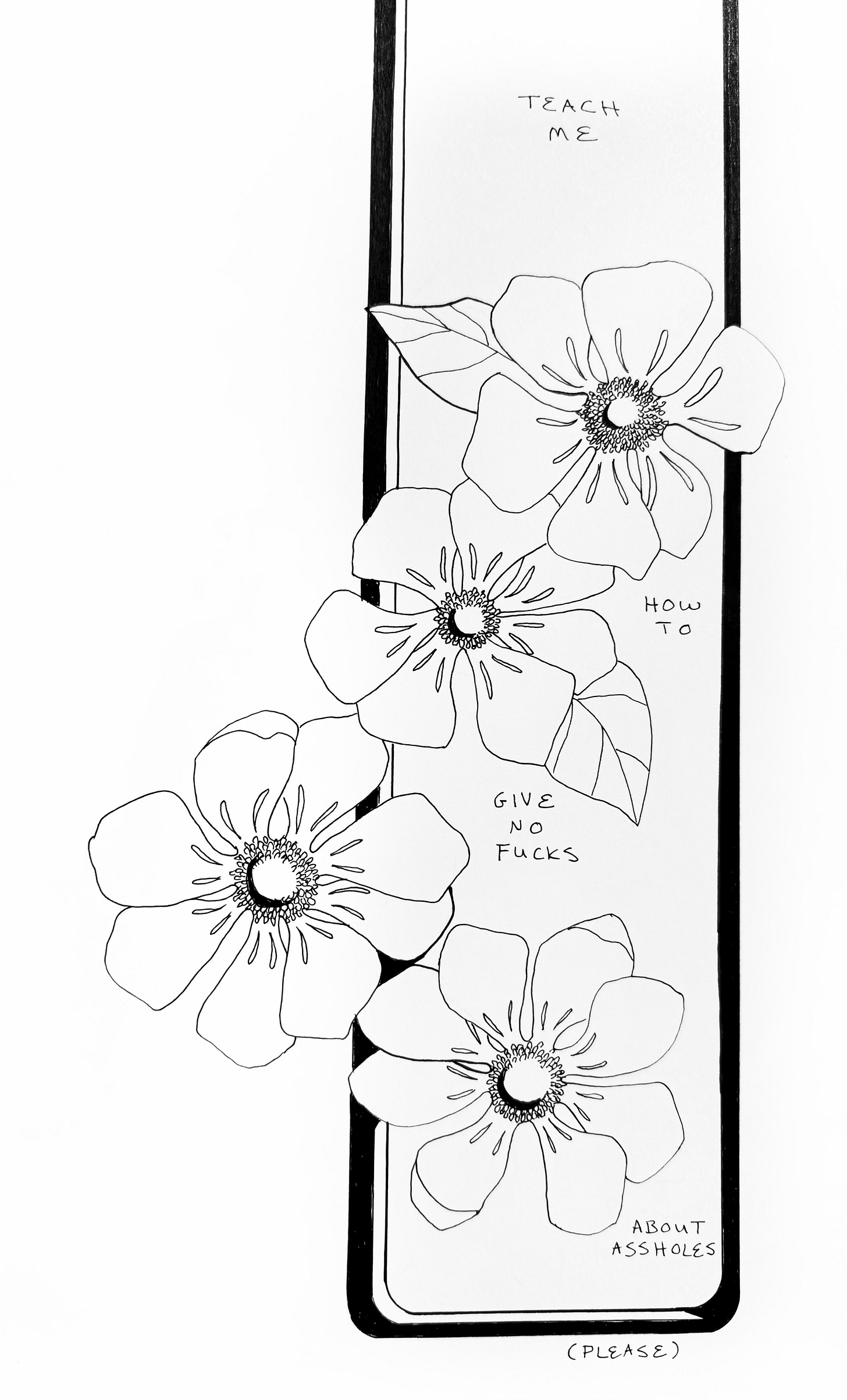
And that’s what this week’s doodle is about.
“Teach me how to give no fucks about assholes. (Please.)”
I super crazy love you. Thank you for being a bright spot to focus on in a sometimes dark little world. You make a difference.
The crowning of the new Miss International Queen ignited social media outrage, with viewers calling out racism and micro-aggressions among fellow contestants.
When Miss USA, Midori Monet, a statuesque Black trans beauty, was crowned Miss International Queen 2025, her victory was met with a frosty reception from her fellow contestants. What should have been a moment of celebration devolved into an awkward scene as the other contestants, all transgender women, largely ignored the newly crowned queen, instead flocking to Miss Cuba, the visibly displeased first runner-up.
And to make matters even messier, Miss Cuba, Olivia Lauren, later spoke out about Monet’s alleged behavior, and social media is sounding off about it. Grab a seat because it’s a lot to unpack.
The Miss International Queen, held annually in Pattaya, Thailand, is the world’s largest and most prestigious beauty pageant for transgender women. Since its launch in 2004, the competition has provided trans women with a platform to showcase their talent, raising global awareness and celebrating inclusion. But according to social media, Monét’s crowning moment was anything but celebratory.
In a now-viral TikTok clip, Monét and Cuba’s Oliva Lauren waited for the winner to be announced. When Monét was named Miss International Queen 2025, the stage erupted in excitement but not for Miss USA who was named the winner.
Social media immediately reacted. “The fact that most of the women ran to the runner-up and not the winner speaks volumes to their character,” one TikTok user wrote. This is an absolute representation of what Black women encounter daily.”
Another pointed out that Lauren had now lost to Monét twice — first at Miss International Queen USA, then again on the international stage.
Then things began to escalate. In a post-pagent interview, Miss Cuba openly called out what she described as “bullying” throughout the competition. “The two that you see standing next to me have made it impossible for me to enjoy 100% of it,” Lauren said, referring to Miss USA and Miss Vietnam. “They have tortured me throughout the whole thing, as well as my other sisters, each and every single day.” She described her experience as “very sour” and claimed she would continue to stand her ground to speak her truth.
But Monét, The Black winner kept it classy, offering a different perspective. In her own interview, she urged people to focus on love rather feeding into negativity. “There is so much hate going around. There is so much envy, bitterness, jealousy, all the things that plague this world. I want you to know that it’s okay to believe in yourself.”
Not missing a beat, the winner ended on a positive note: “Karma is real. Love is real. It’s not about what you do, but about your actions are about how you make people feel.”
The drama became a viral online conversation. While there were a few who questioned if Miss USA really did bully Miss Cuba, but most were like TikTok creator Timothais, who highlighted potential racial undertones in the way the drama unfolded, noting, “Now is it sour grapes? Who knows. But I can guarantee you if Miss Cuba had won, we wouldn’t have known anything about what happened to her backstage.” (snip-embedded on the page linked in the title above)
Some tiktokers accused Miss Cuba of being the real bully. “I really think Cuba was the bully, probably with micro aggressions,” one TikTok user wrote. “And Miss USA and the 2nd runner up was not having it. So, why not be the victim.” Others argued that the cold response toward Monét reflected deeper issues in pageant culture.
Still, another TikTok user chimed in: “Cuba was very messy and distasteful! Especially in the interview! That’s why she didn’t win.”
Others celebrated Miss USA for carrying herself with grace beyond the controversy. As one fan summed it up: “Style and grace transcends it all. She won for that reason. Congratulations to that beautiful Black queen.”
In the end, Miss Cuba apologized calling it all a … misunderstanding.
“Remember me as a revolutionary communist” were beloved author, labor organizer, and trans liberation fighter Leslie Feinberg’s final words on November 15, 2014.
Best known for hir seminal 1993 novel Stone Butch Blues, Leslie Feinberg forever changed the way we thought about transgender life in the United States. In the semi-autobiographical work, readers follow Jess Goldberg, a working class Jewish butch lesbian, as they navigate the hardships of being gender-nonconforming in a transphobic world, transition, passing, and trying to find queer community through it all. It is a novel so attuned to transmasculine experience that Stone Butch Blues to this day remains a shorthand and point of connection for many trans men, nonbinary people, and trans lesbians broadly.
That’s because Feinberg saw writing as a tool to break down the rigidity of previous understandings of transition. Instead, zie pushed for an expansive view of the term “transgender” — one that left space for the “gender outlaws” of the world who have existed beyond binary Western conceptions of gender since the beginning of time.
To say Feinberg permanently altered the fabric of the trans liberation movement would be an understatement. But to understand hir legacy and work, you need to know who zie was in life. Born September 1, 1949 and raised in Buffalo, New York, Feinberg grew up in a working-class Jewish family and was employed in factories at a young age. It’s through hir labor organizing alongside other butch lesbians and transmasculine people of the time that Feinberg became connected to broader liberation movements like Palestinian solidarity, the anti-racist movement, and transgender rights.
Feinberg’s work underscored the complexity of gender for many trans people, and zie didn’t shy away from trying to get cis people to understand. Following the breakout success of Stone Butch Blues, Feinberg went on to be one of the most visible trans organizers of the 1990s, appearing on popular television programs like The Joan Rivers Show to speak about realities of trans life. Zie went on to write several books on trans life and liberation, such as Drag King Dreams, Transgender Warriors: Making History From Joan of Arc to Dennis Rodman, and Trans Liberation: Beyond Pink or Blue. As a proud member of the Workers of the World Party, Feinberg emphasized how our struggles for freedom — whether it be gender, race, or class — are all intrinsically linked. Hir legacy insists that in order to free ourselves, we must understand that we are all fighting forms of injustice attached to the same chimera of oppression.
As we celebrate Feinberg’s birthday and Labor Day on September 1, it is a natural time to reflect on hir legacy, work, and contributions to trans people’s collective liberation. Below, we’ve compiled a non-comprehensive list of salient quotes from speeches, books, and articles Feinberg crafted during hir life.
“If you don’t name an oppression, you can’t fight it, you can’t organize around it. We want our own voices to be heard.”— The Joan Rivers Show
A 1993 episode of The Joan Rivers Show about trans people featured Leslie Feinberg alongside famed playwright Kate Bornstein and actor David Harrison. Rivers interviewed each of her guests on their experiences with gender, often asking invasive questions about “the surgery” and what people put down on forms and identity documents. But Feinberg took it as the ultimate opportunity to humanize trans people on national television, cutting through the sensationalizing to share the realities of life outside the Western gender binary. Feinberg even went so far as to point out the existence of gender variant people in cultures all over the world prior to colonization, such as Two-Spirit people — a radical thought for the daytime television audience of the 1990s.
“Understanding the amount of persecution and harassment we have in this society is gonna strengthen the fights from affirmative action to pay equity for all of us,” zie said.
Even when Rivers facetiously dug in with questions about why Feinberg didn’t conform to one gender or another, zie flipped the question and asked why the system existed at all. Rather than spouting off theory, Feinberg made the contradiction tangible by speaking on hir own lived experiences as a nonbinary butch. The whole episode is worth viewing in full.
“But very quickly I discovered that passing didn’t just mean slipping below the surface, it meant being buried alive.” — Stone Butch Blues
Feinberg’s seminal novel wasn’t just a reflection on being a trans in a transphobic society; the semi-biographical work offered a nuanced portrayal of the intersection of butch identity and nonbinary transness. Jess Goldberg, Stone Butch Blues’ protagonist, is forced to pass as a man for safety due to the dangers of being an openly gender non-conforming person in the 1950s and ’60s. But Jess is left feeling entirely isolated . A departure from the “born in the wrong body” narrative of transness, Feinberg instead paints a picture of being forced into a box for safety — and the subsequent loss of community that going stealth can present.
“I was still me on the inside, trapped in there with all my wounds and fears. But I was no longer me on the outside,” Jess reflects in the novel.
“I’m not saying we’ll live to see some sort of paradise. But just fighting for change makes you stronger. Not hoping for anything will kill you for sure.” — Stone Butch Blues
While Stone Butch Blues grapples with heavy themes like the loss of community, transphobia, and social isolation, it ends on a note of hope for our protagonist. In addition to highlighting the harsh realities of being trans, Feinberg always stood steadfast in our need to find strength in each other in the face of it. At the nadir of their isolation after moving to New York City, Jess meets Ruth, a trans woman who reminds them that the only way to survive in the face of transphobia is to rely on each other.
“As I look at them, each one, they are so beautiful and so strong they seem larger than life to me. But they’re not. They are real people. Flawed, like me. No heroic proportions. Just human.” — Drag King Dreams
Another work of fiction, Feinberg’s 2006 political novel Drag King Dreams follows Max Rabinowitz, a trans man who is suddenly catapulted back into social justice spaces by a tragedy after losing his joy for organizing.
The novel often invokes real-life trans figures such as Marsha P. Johnson to shore up its core thesis that all of our struggles for liberation are delicately interconnected. We might all be flawed, and it can be hard to work together at times, but when it counts, we need to put aside our differences and fight. At the culmination of the novel, Max realizes that you don’t need to be perfect to be a good comrade and make a difference.
“Maybe this is what legends are made of — real lives lifted up in retrospect to mythic proportions,” Feinberg writes.
“One banner particularly haunted me: it read ‘Stop the War Against Black America,’ which made me realize it wasn’t just distant wars that needed opposing.” — Transgender Warriors: Making History From Joan of Arc to Dennis Rodman
Feinberg always emphasized the interconnected nature of all forms of oppression in hir work. Zie underwood that, rather than fighting in individual silos, it’s imperative to understand the ways that suppressive societal forces work in tandem. In hir 1996 historical reflection on transness, Transgender Warriors: Making History From Joan of Arc to Dennis Rodman, Feinberg speaks about an experience they had at a protest for Palestinian liberation that opened their eyes to the symbiotic relationship between white supremacy, colonialism both abroad and domestically, and trans liberation.
“When our lives are suppressed, everyone is denied an understanding of the rich diversity of sex and gender expression and experience that exist in human society.” — Transgender Warriors: Making History From Joan of Arc to Dennis Rodman
By outlining the history of gender variance all over the world, Feinberg reminds readers that trans people are nothing new; we have always been here. Often, we were even revered.
“We have not always been forced to pass, to go underground, in order to work and live. We have a right to live openly and proudly,” Feinberg writes.
“No one’s sex reassignment or fluidity of gender threatens your right to self-identify and self-expression. On the contrary, our struggle bolsters your right to your identity. My right to be me is tied with a thousand threads to your right to be you.” — Trans Liberation: Beyond Pink or Blue
In this collection of speeches published in 1998, Feinberg reminds us that trans liberation has always been connected to the fight for cisgender gay, lesbian, and bisexual rights. Historically, and even to date, trans people have faced pushback from some cisgender people in the community who believe that the fight for trans rights will invalidate their own struggles. A constant advocate for solidarity between movements, Feinberg always asserted that without trans rights, there would be no gay rights.
The Supreme Court is expected to decide this fall whether they will formally take up a case that is asking them to reverse their decision in Obergefell v. Hodges.
In the U.S. today, there are over 800,000 married gay couples. And 67% of Americans say they support marriage equality, including 50% of Republicans.
Despite this, many of the groups that fought to prevent the Obergefell ruling are now ramping up their ongoing fight to overturn it.
If Obergefell were overturned, it could become illegal for gay couples to marry in the 32 states that still have bans on the books. As the Supreme Court mulls over whether or not to take a case asking them to overturn the historic ruling, we’ve documented every step that has been taken in the past five years to threaten gay marriage in the U.S.
Oct. 5, 2020
The Supreme Court of the United States (SCOTUS) rejects a petition to hear former Kentucky County Clerk Kim Davis’ appeal in Ermold v. Davis, a case brought by a same-sex couple after Davis denied them a marriage license in 2015. Justice Clarence Thomas, joined by Justice Samuel Alito, writes that the Obergefell ruling has “ruinous consequences for religious liberty” and that it “enables courts and governments to brand religious adherents who believe that marriage is between one man and one woman as bigots.” They express their desire to see Obergefell overturned, writing that SCOTUS “has created a problem that only it can fix.”
The following day, Liberty Counsel, a Christian legal group and Southern Poverty Law Center (SPLC)-designated hate group, announces their intent to file a petition with the Supreme Court to “address Obergefell” after Davis’ case moves to a trial court.
Nov. 5, 2020
Nevada overturns an 18-year-old ban on same-sex marriage, making it the first state to enshrine gay couples’ right to marry in their constitution. Nevadans vote 62% in favor of the reversal.
“It feels good that we let the voters decide,” Equality Nevada President Chris Davin told NBC News. “The people said this, not judges or lawmakers. This was direct democracy—it’s how everything should be,” he said, adding that the LGBTQ community wants something concrete to protect same-sex marriage in case “the federal level ever revokes it—which is what a lot of folks are worried about with the new Supreme Court.”
June 17, 2021
SCOTUS rules in favor of Catholic Social Services (CSS), which sued the city of Philadelphia for ending its foster-care placement contract with CSS because of their refusal to certify same-sex couples as foster parents. The ruling, which states that Philadelphia’s termination of CSS’s contract violates the Free Exercise Clause of the First Amendment, provides a carve-out to Obergefell.
June 24, 2022
Roe v. Wade is overturned. In a concurring opinion with the majority, Thomas sets his eyes on Obergefell and Lawrence v. Texas—a ruling that in essence legalized gay sex. He writes that the Court should reconsider those cases since they used similar arguments to Roe v. Wade.
“[W]e should reconsider all of this Court’s substantive due process precedents, including Griswold, Lawrence, and Obergefell. Because any substantive due process decision is ‘demonstrably erroneous.’”
Despite Thomas’ opinion, the majority explicitly states that “[n]othing in this opinion should be understood to cast doubt on precedents that do not concern abortion.”
Dec. 13, 2022
President Joe Biden signs the Respect For Marriage Act into law. This solidifies federal and interstate recognition of same-sex marriages even if Obergefell is overturned. The law is a backstop to the attacks on same-sex marriage.
Dec. 19, 2022
In a response to the passage of the Respect for Marriage Act, SPLC-designated anti-LGBTQ hate group Alliance Defending Freedom (ADF) says that “the chances of the Supreme Court overturning Obergefell are (unfortunately) slim to none.”
June 30, 2023
SCOTUS rules 6-3 that Colorado cannot force a website designer, who is represented by ADF, to create wedding websites for same-sex couples. The Court says doing so would violate the designer’s First Amendment right to free speech because her work is considered creative expression. This decision narrows how public-accommodation laws apply and creates another carve-out for Obergefell to be overturned.
Sept. 13, 2023
After a court ruling holds Kim Davis liable for damages to gay couples who she refused to sign marriage licenses for, Liberty Counsel discusses the potential to appeal the case up to the Supreme Court and use it to argue for Obergefell to be overturned.
July 8, 2024
The GOP’s national party platform, Make America Great Again!, drops explicit anti-Obergefell language from its plank. Despite this, the fight to overturn same-sex marriage continues to heat up.
Jan. 22, 2025
Tennessee lawmakers introduce a bill that would allow for “covenant marriages,” an explicitly religious form of marriage license that can only be given to a man and a woman and does not allow for divorce in most circumstances. Covenant marriages already exist in Arizona, Arkansas and Louisiana. Oklahoma, Texas and Missouri have recently introduced similar bills.
Jan. 27, 2025
Idaho’s House of Representatives passes a resolution calling on the Supreme Court to overturn Obergefell. The resolution was drafted by MassResistance, a far right group that wrote a book called “The Health Hazards of Homosexuality” and that has 24 chapters around the world. One of their newest chapters is in Kenya, where the group says it holds trainings for youth to “resist the LGBT agenda” in schools.
The Idaho resolution would go on to create a domino effect. Lawmakers in Michigan, Montana, North Dakota and South Dakota introduce similar measures in their states asking SCOTUS to overturn Obergefell.
Republican Rep. Josh Schriver, who introduced the resolution in Michigan, had previously posted to X: “Make gay marriage illegal again. This is not remotely controversial, nor extreme.”
June 10, 2025
At the Southern Baptist Convention (SBC), a national meeting of more than 10,000 church representatives from America’s largest Protestant denomination, the convention’s resolutions committee introduces a resolution calling on lawmakers and SCOTUS to overturn laws and court rulings, “including Obergefell v. Hodges, that defy God’s design for marriage and family.”
Liberty Counsel releases a statement titled “Obergefell ‘Marriage’ Opinion Must Be Overturned.” The group’s founder and chairman, Mathew Staver, says:
“The U.S. Constitution provides no foundation for ‘same-sex marriage.’ Obergefell was wrongly decided whereby the Court created a right that is nowhere to be found in the text. We will petition the U.S. Supreme Court because Kim Davis’ case underscores why the High Court should overturn Obergefell v. Hodges. Obergefell threatens the religious liberty of Americans who believe that marriage is a sacred union between one man and one woman.”
June 23, 2025
ADF publishes an article titled “Despite 10 Years of Obergefell, Kids Still Need a Mother and Father.” The article outwardly condemns gay marriage as bad for children, marking the group’s most explicit statement of opposition to the ruling in years. Weeks later, the group’s vice president of appellate advocacy publishes an essay arguing a similar premise.
July 24, 2025
Kim Davis files a petition asking SCOTUS to revisit and overturn Obergefell, saying the case was wrongfully decided. The petition will need just four votes from the justices to be heard by the Court.
Aug. 15, 2025
On a podcast, Hillary Clinton expresses her concern that Obergefell will be overturned:
“American voters, and to some extent the American media, don’t understand how many years the Republicans have been working in order to get us to this point. … It took 50 years to overturn Roe v. Wade. … The Supreme Court will hear a case about gay marriage; my prediction is they will do to gay marriage what they did to abortion—they will send it back to the states. … Anybody in a committed relationship out there in the LGBTQ community, you ought to consider getting married because I don’t think they’ll undo existing marriages, but I fear they will undo the national right.”
Sept. 7, 2025
In an interview with CBS News, conservative Justice Amy Coney Barrett argues SCOTUS rulings should not be based on “opinion polls” and that the Court should not be imposing its own values on the American people.
Fall 2025
In fall 2025, SCOTUS is expected to decide whether or not it will revisit Obergefell. If it grants a review, oral arguments will likely be heard in spring 2026 with a decision by late June 2026, during Pride Month.
Charlie Kirk’s suspected murderer was a 22-year-old white guy from Utah, but in the week since he was shot, at least six Historically Black Colleges and Universities have been forced to cancel classes due to bomb threats made against their students and faculty. Columnist Karen Attiah got fired from The Washington Post. Representative Ilhan Omar was nearly censured. Countless Black people have been harassed and, worse, countless immigrants have been threatened with the possibility of deportation, all for insufficiently respecting the life and death of a white supremacist.
Charlie Kirk’s suspected murderer was, again, a 22-year-old white guy from Utah who, I’ll bet, does not own either of my books and has most likely never read a single word I have written over my nearly two decades of public life, but this is what my mentions on Elon Musk’s apartheid-curious platform have looked like for a week:
Not that we needed more evidence, but the past week has been Exhibit One that this country hates Black people, and will do everything it can to silence, harass, and even murder us. A white man killed another white man for reasons we still don’t know, with a gun I don’t think he should have had, but Black people are catching death threats. That doesn’t make sense, unless you understand how deeply racist this country is. Black people are being fired from jobs and harassed online for insufficiently venerating a white supremacist, and having the temerity to describe his beliefs in public. It’s as if we’re all being asked to say our name is “Toby” instead of Kunta Kinte while being informed that the beatings will continue until morale improves. The white-led government, and many white employers, white-owned sports leagues, white public intellectuals, and a non-zero number of Black assimilationists and assorted would-be overseers are largely playing along with this racist gaslighting, proving once again that Black people have few, if any, real allies.
Somebody who considers themselves a good-white-ally(™) is just about to type “not all white people” or “also Matt Dowd” or “look at what happened to Jimmy Kimmel” in response to this article, as if I give a shit. What’s happening to white folks is that they’re being made to feel like Black people are made to feel every freaking day. Whenever white people catch a cold, Black people catch the flu, but God forbid I do a bit of triage before handing out chicken soup and Sprite to white folks feeling a bit under the weather these days.
The same thing is happening to the trans community, and the LGBTQ community more broadly, because when Kirk wasn’t railing against Black people, he was trying to stamp the LGBTQ community out of existence.
At this point, I’m supposed to turn and analyze what makes white males violently erupt against vulnerable people who have nothing to do with their problems. I’m supposed to talk about white gun culture and how it inevitably leads to racial and cultural violence. I’m supposed to talk about how Trump and his white supremacist government have given the very worst people in this country permission to carry out violence against any person they don’t like, with the promise of pardons should they undertake violence that pleases him. I know I’m supposed to address these topics, because these are the questions that have been floating around my professional networks for a week.
But even addressing those questions recenters the conversation around white folks and whiteness. It’s asking, “Now why did the monkey throw its poop at that fellow?” before you secure soap and a shower for the person covered in feces. At the moment, I’m just a little too beset by threats against myself and even my mother to think deeply about why white people do this. Analyzing why young white men are so dangerous to me is an intellectual luxury I do not have right now. I’m just trying to survive America for another week.
Luckily, after a fashion, I have some experience with this. This is not the first round of death threats I’ve gotten, and, unless they successfully kill me this time, it won’t be the last. I’ve been a Black man in the public eye for a while now, and you don’t get to be an old public Black person without developing a few coping mechanisms to keep you going. For a lot of people currently under threat, this is their first rodeo. There are, for instance, a number of staffers at The Nation who are for the first time having to live with what I live with every day, since the vice president went after our publication. There are folks who were never on the kind of violent watch lists Kirk created who now find themselves on the wrong end of the online rope.
It is terrifying to be in the eye of violent white folks. You have to take them seriously when they say they want you to come to harm. I cannot promise that you, or I, will survive what they’ll do next, but here are some tips to make it through this current phase of white America.
Stick Together
They cannot kill, fire, or silence all of us. The violent people are predators and if you look at every natural predator on this earth, their first move is always to separate their target from the herd.
People must resist the urge to say some people deserve to be harassed and menaced by the government and the online right, as if to distinguish the people who deserve death threats from those who are “doing it the right way.”
Silence in the face of white supremacy is complicity with white supremacy. If we all resolve to not stay silent, we become a truth-telling hydra. Every time the white wing gets one of us, there should be others ready to take our places. (snip-MORE-excellent information)
If you or a loved one are in crisis, please call or text 988 or text HOME to 741741 to connect with a live volunteer crisis counselor.
Sens. Tammy Baldwin, a Democrat, and Lisa Murkowski, a Republican, introduced a bipartisan bill on Wednesday to re-establish national emergency suicide prevention services for LGBTQ+ youth — which have been stripped by the Trump administration at a time when the vulnerable group needs it most.
In July, the Trump administration terminated the 988 hotline’s LGBTQ+ services, which connected young people in crisis with counselors trained in supporting LGBTQ+ youth. This new bill, backed by the LGBTQ+ youth suicide prevention organization Trevor Project as well as the American Foundation for Suicide Prevention, would modify the Public Health Service Act to reinstate those services and require the Secretary of Health and Human Services to maintain them. The bill now moves to committee.
The Trevor Project estimates that more than 1.8 million LGBTQ+ young people seriously consider suicide each year in the United States, as they face high rates of bullying, assault and discrimination. And when the 2024 presidential race was called for Donald Trump, calls and texts to the Trevor Project’s own crisis hotlines spiked by 700 percent, as LGBTQ+ youth felt afraid about the outcome of the election.
“Given that LGBTQ+ youth are more than four times as likely to attempt suicide than their peers, the need for these services remains pressing,” said Jaymes Black, CEO of The Trevor Project, in a statement. “This is not about politics, or identity; this is about doing what is best to support our country’s highest risk populations — and save young people’s lives nationwide.”
During his first term in 2020, President Trump signed a bipartisan law to create 988 as a more accessible resource for mental health emergencies. The free hotline launched in July 2022. Since then, millions of people in crisis have turned to 988. And nearly 1.5 million of those calls, texts and chats were sent by young Americans seeking specialized LGBTQ+ services.
“We are in the middle of a mental health crisis, and the 988 lifeline saves lives, plain and simple,” said Baldwin, who wrote the original legislation to create the 988 hotline. Cutting funds for specialized services within 988 puts the lifeline in jeopardy, she said in a statement.
“There is absolutely no good reason that Donald Trump took away this specialized help for our LGBTQ youth. Mental health does not see partisan lines or geography,” the Wisconsin Democrat added.
I will never see a Robin Williams movie, an interview, or a stand-up without a tear in my eye. He made me laugh, he made me cry, he made me feel anger and he made me feel hope, all behind a mask paper-thin. He reveled in the joy of others, while in his heart he felt so alone. How few knew his hidden hurts? I feel the absence of this great man and am saddened that his joie de vivre was only a mask he used to protect us all.
My morning trek to the daily grind found me hearing about Charlie Kirk. I thought about the demands he made upon his audience; that they think his way, act his way, love his way, pray his way. Somehow those who think differently are more than a target for his former speeches, we have become enemies of our own government.
Again, I don’t want to see anyone hurt. But, what about those he made to feel alone?
What about those he made to feel hated? What about those he told ‘You don’t matter’? What about those he accused of horrible motives, intentions to commit crimes, just because they were different?
Why is crass, abusive, hateful, prejudiced, and violent words and actions acceptable to anyone? Why is it cheered in certain circles?
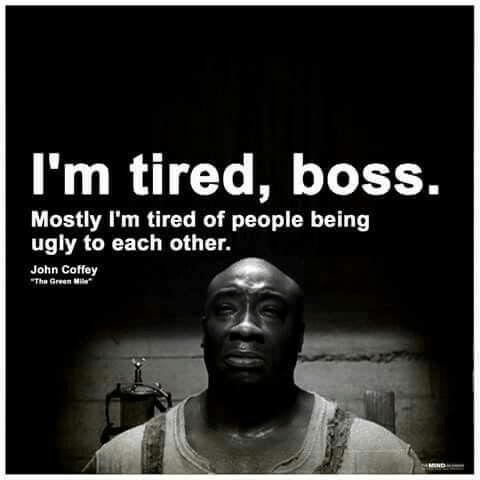
I have every right to be angry at those who sling abuse for political expediency. I have every right to be angry at those who whip the easily led mob into denying others their rights to be genuine, their hopes to feel love, their need for happiness. I’m so tired, so very tired of the justification, the hypocrisy, the gleeful ruination.
I so miss the promise of the 70’s. Change was supposed to come. I bought into the hype, only to see that the very fight continue. Maybe it’s not the era, maybe it’s just something in us that makes people keep doing this to each-other. I want to believe differently.
Charlie Kirk, the far-right commentator and ally of Donald Trump, was killed on Wednesday doing what he was known for throughout his career – making incendiary and often racist and sexist comments to large audiences.
If it was current and controversial in US politics, chances are that Kirk was talking about it. On his podcasts, and on the podcasts of friends and adversaries, and especially on college campuses, where he would go to debate students, Kirk spent much of his adult life defending and articulating a worldview aligned with Trump and the Maga movement. Accountable to no one but his audience, he did not shy away in his rhetoric from bigotry, intolerance, exclusion and stereotyping.
Here’s Kirk, in his own words. Many of his comments were documented by Media Matters for America, a progressive non-profit that tracks conservative media.
On race
If I see a Black pilot, I’m going to be like, boy, I hope he’s qualified.
– The Charlie Kirk Show, 23 January 2024
If you’re a WNBA, pot-smoking, Black lesbian, do you get treated better than a United States marine?
If I’m dealing with somebody in customer service who’s a moronic Black woman, I wonder is she there because of her excellence, or is she there because of affirmative action?
If we would have said that Joy Reid and Michelle Obama and Sheila Jackson Lee and Ketanji Brown Jackson were affirmative action picks, we would have been called racists. Now they’re coming out and they’re saying it for us … You do not have the brain processing power to otherwise be taken really seriously. You had to go steal a white person’s slot to go be taken somewhat seriously.
We record all of it so that we put [it] on the internet so people can see these ideas collide. When people stop talking, that’s when you get violence. That’s when civil war happens, because you start to think the other side is so evil, and they lose their humanity.
– Kirk discussing his work in an undated clip that circulated on X after his killing.
Prove me wrong.
– Kirk’s challenge to students to publicly debate him during the tour of colleges he was on when he was assassinated.
On gender, feminism and reproductive rights
Reject feminism. Submit to your husband, Taylor. You’re not in charge.
– Discussing news of Taylor Swift and Travis Kelce’s engagement on The Charlie Kirk Show, 26 August 2025
The answer is yes, the baby would be delivered.
– Responding to a question about whether he would support his 10-year-old daughter aborting a pregnancy conceived because of rape on the debate show Surrounded, published on 8 September 2024
We need to have a Nuremberg-style trial for every gender-affirming clinic doctor. We need it immediately.
I think it’s worth it to have a cost of, unfortunately, some gun deaths every single year so that we can have the second amendment to protect our other God-given rights. That is a prudent deal. It is rational.
– Event organized by TPUSA Faith, the religious arm of Kirk’s conservative group Turning Point USA, on 5 April 2023
On immigration
America was at its peak when we halted immigration for 40 years and we dropped our foreign-born percentage to its lowest level ever. We should be unafraid to do that.
The great replacement strategy, which is well under way every single day in our southern border, is a strategy to replace white rural America with something different.
We’ve been warning about the rise of Islam on the show, to great amount of backlash. We don’t care, that’s what we do here. And we said that Islam is not compatible with western civilization.






 Scottie's Playtime