Photo: Acting NASA Administrator Janet Petro, who also serves as Kennedy Space Center director, a post she assumed in 2021. Trump elevated Petro to lead NASA after he ousted former Sen. Bill Nelson for believing in climate change.
Newly-released data shows that Oklahoma ranks 46th in per-pupil spending, but Walters, who is eyeing a run for governor, has called for cuts to his state’s “wasteful” education spending, including $250,000 to provide school districts with emergency inhalers.
In his KFOR interview, Walters did boast about getting new teachers a signing bonus, but as was widely reported the time, $290,000 of that money had to be clawed back because it had gone to teachers who did not qualify. Some of those teachers had already spent the money.
New: CBP seized a shipment of t-shirts from @cola.baby featuring a swarm of bees attacking a cop. The company also sells "ELIMINATE ICE" t-shirt and previously was threatened by LAPD for "FUCK THE LAPD" shirts and hats. Shirts to be "destroyed under CBP supervision"www.404media.co/cbp-seizes-s…
Rep. Beth Lear first appeared here in January 2024 when she defended her anti-trans bathroom bill by citing the “millstones” bible verse which calls for drowning anyone who hurts children.
She later blamed “depraved monster” Alfred Kinsey, liberals, and the ACLU for transgender people even existing.
Rep. Josh Williams first appeared here in July 2024 for his bill that would criminalize drag shows in the presence of children. Williams reintroduced his bill last week.
I think there’s a blurb about this on Peace History, but I could be misrecalling. Anyway, here is far more of the story. Language alert, from the beginning.
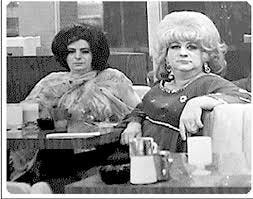
Queer History 111: Before the Stonewall Riots, There Was Compton’s Cafeteria by Wendy🏳️⚧️🏳️🌈🌈 Read on Substack
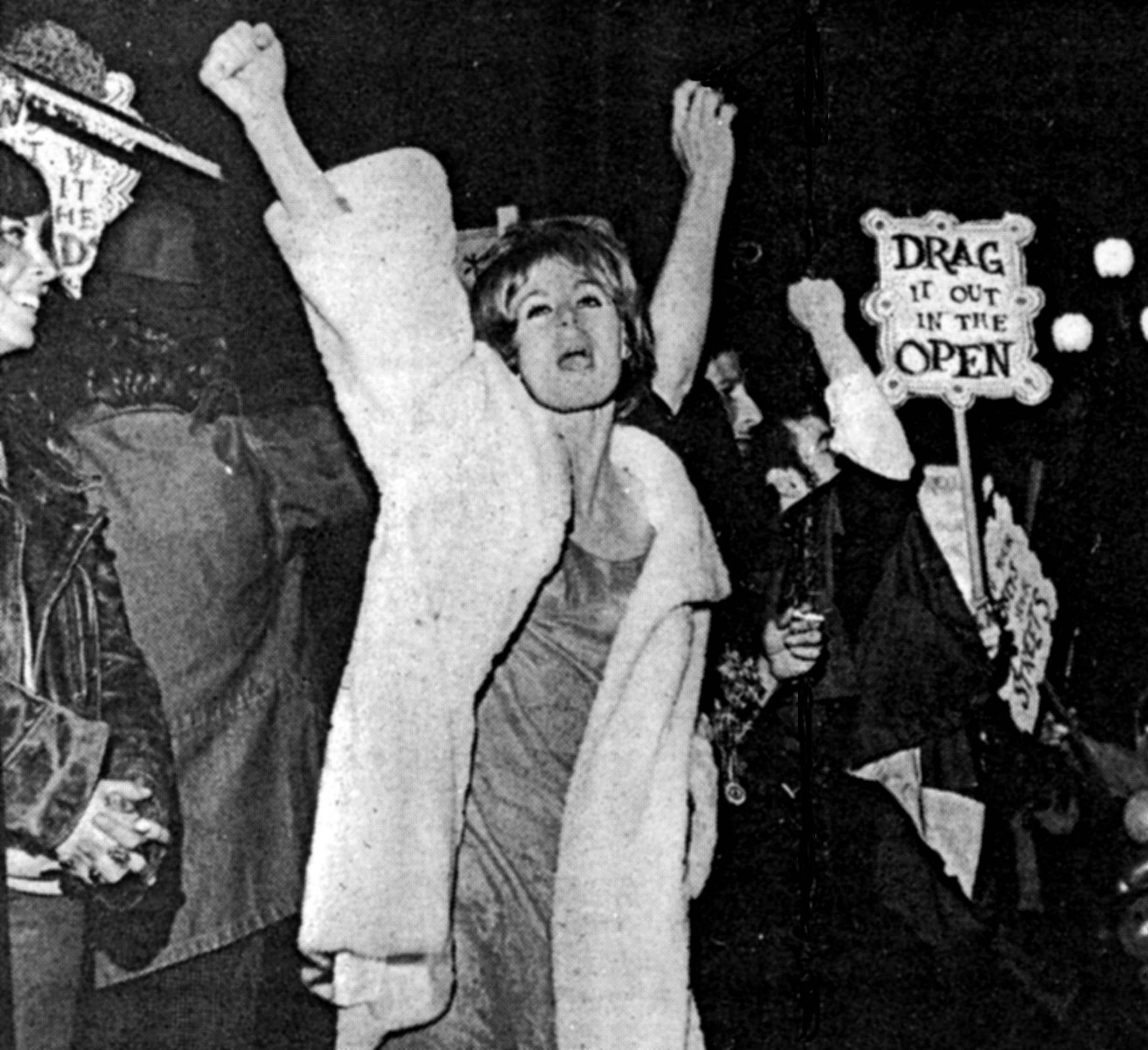
You’ve heard about Stonewall—everyone has. It’s become the sanitized, rainbow-washed origin story of the LGBTQ+ rights movement that gets trotted out every Pride month by corporations selling overpriced merchandise. But three years before Stonewall rocked New York City, a group of fierce-as-fuck transgender women and drag queens in San Francisco’s gritty Tenderloin district had already thrown the first punch in the fight for queer liberation. The Compton’s Cafeteria Riot of 1966 wasn’t just a footnote in history—it was a goddamn declaration of war against police brutality and societal oppression that’s been deliberately erased from our collective memory.
Let me tell you something straight up: these women weren’t politely asking for their rights with carefully worded petitions. They were fighting for their very existence in a society that treated them like garbage. And when pushed to their absolute limit one hot August night, they didn’t just push back—they burned the whole system down. Literally throwing coffee in cops’ faces, smashing windows, and lighting a police car on fire. This wasn’t a “disturbance” or an “incident”—it was a motherfucking riot, and it’s time we remember it for what it was.
The Tenderloin: Where Society Dumped Its “Undesirables”
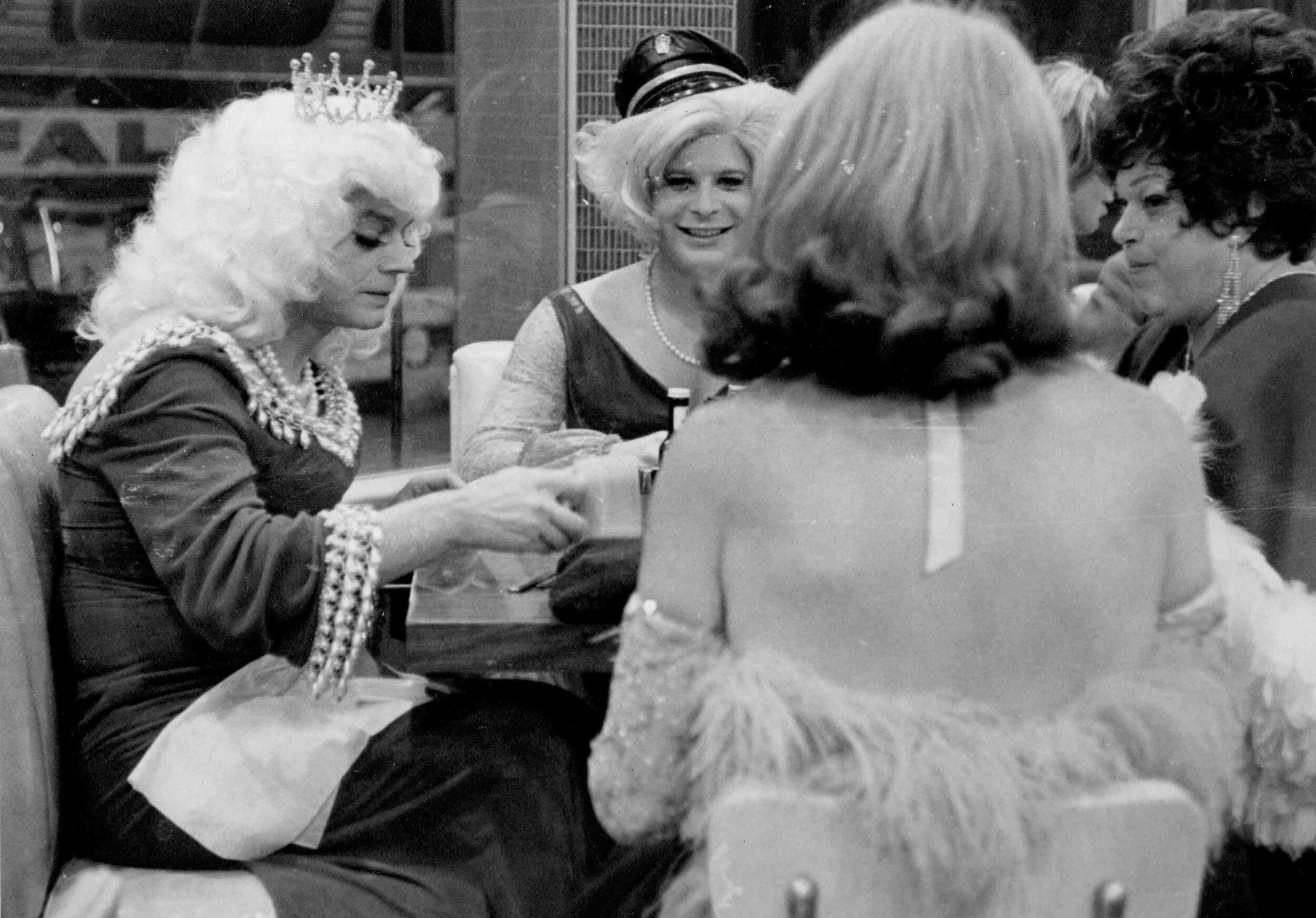
San Francisco’s Tenderloin district in the 1960s wasn’t the gentrified hipster paradise it’s becoming today. It was a last-resort neighborhood—the only place that would accept the people society had discarded. Transgender women, particularly trans women of color, found themselves with precious few options for survival. Denied employment, housing, and basic human dignity, many turned to sex work simply to eat and keep a roof over their heads.
“We couldn’t get jobs, couldn’t get housing, couldn’t even walk down the street without being arrested,” recalled Amanda St. Jaymes, a trans woman who lived in the Tenderloin during this era. “The cops would book us as ‘female impersonators’ and throw us in the men’s jail. Do you have any fucking idea what happened to us in there?”
The brutal reality was that transgender women faced constant police harassment under California’s “masquerade laws,” which made it illegal to dress in clothing of the “opposite sex.” Cops could and did arrest trans women for the crime of simply existing in public. These weren’t occasional incidents—this was systematic persecution backed by the full force of the law.
Gene Compton’s Cafeteria, a 24-hour diner at the corner of Taylor and Turk, was one of the few places trans women could gather safely—or so they thought. Open all night, it became an unofficial community center for transgender women, drag queens, gay hustlers, and other marginalized folks who had nowhere else to go. But the management often called the police when too many “queens” gathered, leading to regular harassment and arrests.
“The Night I Got Tired of Being Bullied”
On a hot night in August 1966 (the exact date has been lost to history), the simmering tension finally boiled over. When police attempted to arrest a transgender woman at Compton’s for the “crime” of being there, she threw her coffee in the officer’s face. What followed was an explosion of rage that had been building for decades.
“It wasn’t planned,” said Felicia Elizondo, a transgender activist who frequented Compton’s. “It was just the night I got tired of being bullied. We all got tired at the same fucking moment.”
The cafeteria erupted. Cups, saucers, and trays became projectiles. The plate glass windows of the restaurant were smashed. A newsstand was set on fire. The women fought back with everything they had—high heels, heavy purses, and righteous fury. When a police car pulled up outside, it was immediately surrounded, its windows broken and, according to some accounts, set ablaze.
“Those queens fought like hell,” remembered one witness. “You’d think a bunch of ‘girls’ couldn’t do much damage, but honey, when you’ve been beaten and raped by cops, when you’ve been refused medical care, when your own family has thrown you out like trash—you fight like someone with nothing left to lose.”
The riot spilled into the streets and continued through the night. Unlike at Stonewall, there were no photographers present, no reporters to document what happened. The next day, more transgender women and supporters returned to picket the cafeteria, which had banned transgender customers in response to the riot. This marked one of the first known instances of organized transgender direct action in U.S. history.
The Cover-Up and Erasure
Here’s where the story gets even more fucked up: this watershed moment was almost completely erased from history. No major newspapers covered it. Police records of the incident mysteriously disappeared. For decades, Compton’s Cafeteria Riot existed only in the memories of those who were there, many of whom didn’t survive the AIDS crisis of the 1980s and ’90s.
“They didn’t want people to know we fought back,” explained historian Susan Stryker, whose groundbreaking documentary “Screaming Queens” finally brought the riot to public attention in 2005. “Transgender resistance didn’t fit the narrative they wanted to tell about passive victims who needed saving.”
The erasure was so complete that even many LGBTQ+ historians were unaware of the riot until nearly 40 years after it occurred. When Stryker discovered a brief reference to the “uprising of drag queens” in the archives of gay liberation periodicals, she had to piece together what happened through painstaking interviews with survivors and witnesses.
Why was this history buried? Simple: it centered transgender women—particularly trans women of color—as the vanguard of the LGBTQ+ liberation movement. It challenged the comfortable narrative that the movement began with Stonewall and was led primarily by white gay men. The Compton’s story was inconvenient for those who wanted to sanitize queer history for mainstream consumption.
The Aftermath: Real Fucking Change
What makes the Compton’s Cafeteria Riot even more remarkable is that it actually led to concrete changes in San Francisco. In the aftermath, a network of transgender support services emerged. The city established the Tenderloin Health Clinic, which provided hormones and healthcare to transgender people—the first of its kind in the nation. The police department even initiated the first-ever training on interacting with transgender people.
Sergeant Elliott Blackstone, the SFPD’s first liaison to the “homophile community,” became an unlikely ally. After the riot, he worked with transgender activists to stop police harassment and helped establish programs to support transgender residents. “I just treated them like human beings,” Blackstone later said, “which nobody else was doing.”
The riot also galvanized the formation of organizations like Vanguard, one of the first gay youth organizations in the U.S., and the National Transsexual Counseling Unit, the first peer-run support organization for transgender people. These laid the groundwork for the transgender rights movement that continues today.
“We built something from nothing,” said Tamara Ching, a Tenderloin activist who lived through this era. “We created community when the whole damn world wanted us dead or invisible.”
The Women Who Led the Charge
The heroes of Compton’s didn’t get streets named after them or Hollywood biopics made about their lives. Many died in obscurity, their contributions uncelebrated. Women like Alexis Miranda, who later became an influential transgender activist; Tamara Ching, who fought for the rights of transgender sex workers; and Amanda St. Jaymes, who established support services for transgender women in the Tenderloin.
“Some of the fiercest women I ever knew didn’t live to see their impact,” recalls Felicia Elizondo, one of the few surviving veterans of the Tenderloin scene. “They died from violence, from AIDS, from the sheer exhaustion of fighting every day just to exist.”
Unlike Stonewall, where key figures like Marsha P. Johnson and Sylvia Rivera eventually received some recognition (though still not enough), many of the women who fought at Compton’s remain nameless in historical records. Their revolutionary act was nearly lost to history, remembered only by those who were there.
The anonymity of many Compton’s participants speaks to the precarious nature of transgender life in the 1960s—and still today. Many lived under assumed names, without identification documents, invisible to official records. They existed in the margins, which made their uprising all the more remarkable and all the more easily erased.
Why This Matters Now More Than Ever
If you think this is just ancient history, wake the fuck up. In 2023, we’re seeing the most aggressive legislative assault on transgender rights in modern history. Over 500 anti-trans bills have been introduced in state legislatures in recent years. Access to healthcare is being restricted. Transgender people are being banned from public spaces. Sound familiar?
“It’s the same playbook,” says Miss Major Griffin-Gracy, a transgender elder who has been fighting for rights since the 1960s. “Criminalize our existence, push us out of public spaces, make it impossible to live authentically. They’ve just dressed it up in fancier language.”
The courage of the women at Compton’s Cafeteria provides a powerful template for resistance in the face of overwhelming oppression. They didn’t wait for permission to fight back. They didn’t seek respectability. They recognized that when a system is designed to destroy you, sometimes you have to break the whole damn thing and start over.
“We’ve been here before,” warns historian Jules Gill-Peterson. “And the lesson from Compton’s isn’t to write polite letters to politicians. It’s that direct action gets the goods. It’s that sometimes you have to throw the first punch—or the first coffee cup.”
The Legacy: From Shadows to Celebration
Today, the corner of Taylor and Turk in the Tenderloin bears a plaque commemorating the riot. In 2017, the city of San Francisco renamed a section of Turk Street as “Compton’s Transgender Cultural District”—the first legally recognized transgender district in the world. It’s a belated recognition of the community that has called this area home for over half a century and the uprising that marked its coming of age.
But the real legacy of Compton’s isn’t in plaques or street names—it’s in the radical tradition of transgender resistance it established. From Compton’s to Stonewall to the modern movements against police brutality, the thread of transgender leadership in liberation struggles remains unbroken, even when unacknowledged.
“Those girls didn’t have Twitter or TikTok or any way to document what they did,” reflects contemporary transgender activist Raquel Willis. “But they changed the world anyway. Imagine what we can do now with all the tools and visibility we have.”
The next time you celebrate Pride, remember that it wasn’t born from corporate sponsorships and rainbow capitalism. It was born from a coffee cup thrown in a cop’s face by a transgender woman who had decided she wasn’t going to take any more shit. It was born from the broken windows of a cafeteria in the Tenderloin and the fiery determination of women who fought back when the world told them they shouldn’t even exist.
That’s the legacy of Compton’s Cafeteria Riot—not just a historical footnote, but a battle cry that still echoes today: We have always been here. We have always fought back. And we’re not going anywhere.
References
Stryker, S. (2008). Transgender History: The Roots of Today’s Revolution.
Stryker, S., & Silverman, V. (Directors). (2005). Screaming Queens: The Riot at Compton’s Cafeteria [Documentary].
Transgender Law Center. (2017). Compton’s Transgender Cultural District Report.
Dzodan, F. (2021). Before Stonewall: The Trans Women Who Sparked a Revolution.
Armstrong, E. A., & Crage, S. M. (2006). Movements and Memory: The Making of the Stonewall Myth.
Williams, C. (2014). Transgender History in the United States: A Special Unabridged Version of a Book Chapter.
Elizondo, F. (2015, August 26). Personal interview by Nicole Pasulka for Vice: “Ladies in the Streets: Before Stonewall, Transgender Uprising Changed Lives.”
John Oliver discusses the recent deportations by the Trump administration, the conditions in the facility people are being sent to abroad, and why even Henry Winkler could be in danger of being expelled from the U.S. Yeah, even national treasure Henry Winkler.
“They were shouting at me, threatening to rape me, chanting ‘death to Arabs’. I thought the police would protect me from the mob, but they did nothing to intervene,” she said.
At one point, she and the police officer were nearly cornered against a building, the video shows. “I felt sheer terror,” the woman recalled. “I realized at that point that I couldn’t lead this mob of men to my home. I had nowhere to go. I didn’t know what to do. I was just terrified.”
After several blocks, the officer hustled the woman into a police vehicle, prompting one man to yell, “Get her!” The crowd erupted in cheers as she was driven away.
Committee calls figure a ‘conservative estimate’ and warns Musk may seek to use his influence to avoid legal liability
“While the $2.37 billion figure represents a credible, conservative estimate, it drastically understates the true benefit Mr Musk may gain from legal risk avoidance alone as a result of his position in government,” the report states.
UPDATED: Super Hornet Assigned to USS Harry S. Truman Lost at Sea
The single-seat Super Hornet assigned to the “Knighthawks” of Strike Fighter Squadron (VFA) 136, “was actively under tow in the hangar bay when the move crew lost control of the aircraft. The aircraft and tow tractor were lost overboard,” reads the statement.
“Sailors towing the aircraft took immediate action to move clear of the aircraft before it fell overboard. An investigation is underway.”
DOGE employees gain accounts on classified networks holding nuclear secrets
Two members of Elon Musk’s Department of Government Efficiency were given accounts on classified networks that hold highly guarded details about America’s nuclear weapons, two sources tell NPR.
Luke Farritor, a 23-year-old former SpaceX intern, and Adam Ramada, a Miami-based venture capitalist, have had accounts on the computer systems for at least two weeks, according to the sources who also have access to the networks. Prior to their work at DOGE, neither Farritor nor Ramada appear to have had experience with either nuclear weapons or handling classified information.
Karoline Leavitt Boasts Trump Wouldn’t Hesitate to Arrest SCOTUS Justices
White House Press Secretary Karoline Leavitt suggested the Trump administration would consider arresting high-ranking judges—including Supreme Court justices—at a press briefing Monday.
“As you guys look at other judges, would you ever arrest somebody higher up on the judicial food chain, like a federal judge or even a Supreme Court justice?” Fox News reporter Peter Doocy asked.
Leavitt said no judge is safe from the administration’s crackdown on the judiciary.
“The first time, I had two things to do — run the country and survive; I had all these crooked guys,” Trump said in the interview published Monday. “And the second time, I run the country and the world.”
Johnson says it’s ‘game time’ as House committees draft first piece of Trump agenda
The $150 billion in defense programs includes $25 billion for Trump’s “Golden Dome” for missile defense, $34 billion in ship building and more than $20 billion in munitions purchases. The House Armed Services Committee plans to begin voting on Tuesday on this aspect of the bill.
On border security, the House Homeland Security Committee proposes $46.5 billion for new border barriers, $5 billion for new Customs and Border Protection facilities and $4 billion for new Customs officials and border personnel.
The committee proposes several billion dollars more in new technology to tighten security measures at the border and also includes $1 billion for security and planning for the 2028 Olympics, as well as $625 million for the 2026 FIFA World Cup.
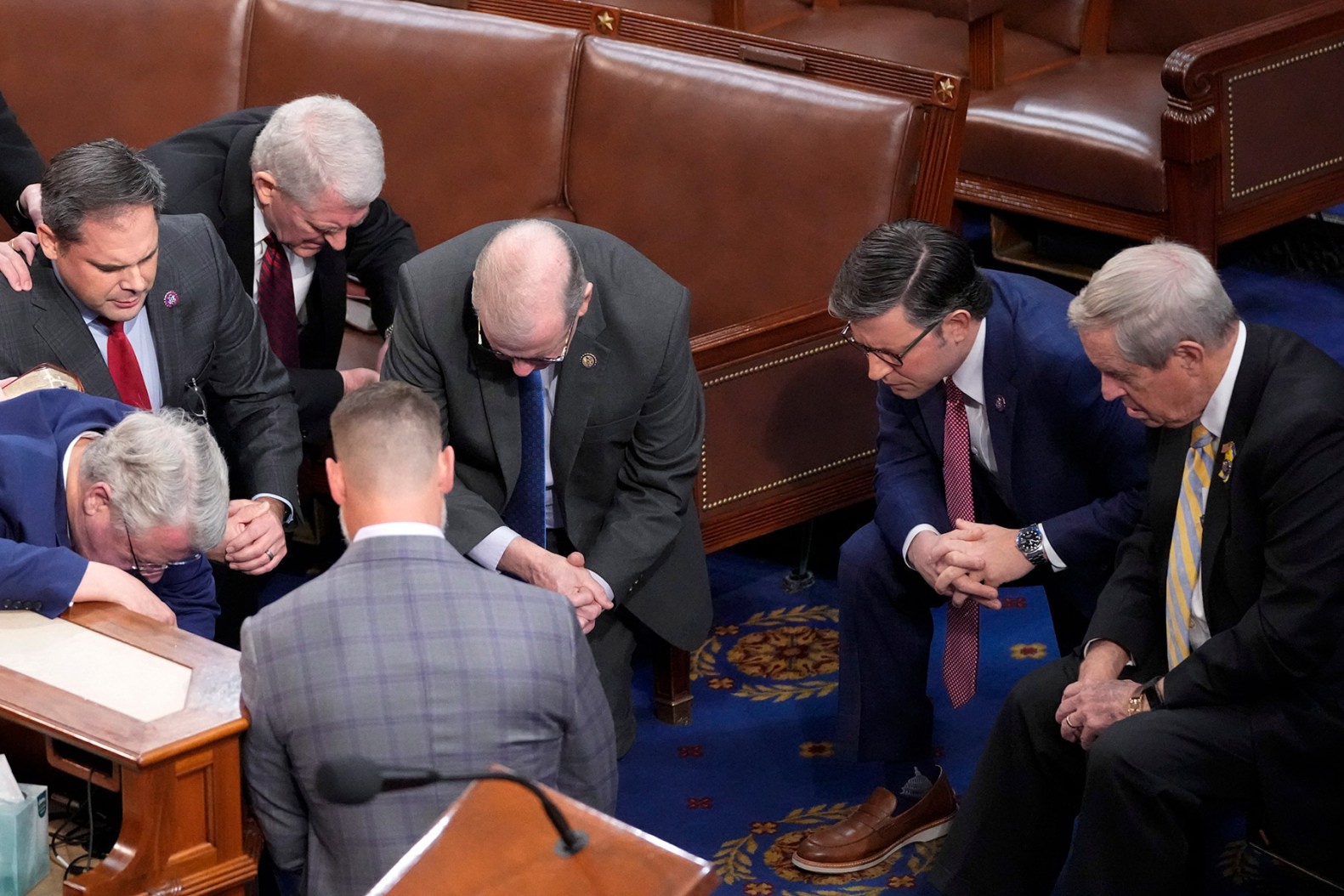
Rev. William Barber arrested in Capitol Rotunda after praying against Republican-led budget
Reached for comment, a Capitol police spokesperson said Barber and two others were charged with “crowding, obstructing and incommoding,” explaining demonstrations in congressional buildings are “not allowed in any form, to include but not limited to sitting, kneeling, group praying, singing, chanting, etc.”
Some quickly argued that Barber’s arrest appeared incongruous with President Donald Trump’s efforts to eliminate “anti-Christian bias” in federal agencies.
“Arresting Rev. Barber and others at the Capitol after announcing a task force to eradicate anti-Christian bias in government is an absolute travesty,” Anthea Butler, a professor of religion at the University of Pennsylvania, said in a text message. “Seems like this administration only wants Christians who are supporters of Trump to have access to pray in the Capitol and express their faith.”
April 25, 1945 Delegates from some 50 countries met in San Francisco for the United Nations Conference on International Organization. Over the next two months they would negotiate the principles and structure of the United Nations. Pres. Franklin D. Roosevelt had just died and had been working on his speech to the conference: “The work, my friends, is peace; more than an end of this war—an end to the beginning of all wars . . . As we go forward toward the greatest contribution that any generation of human beings can make in this world—the contribution of lasting peace—I ask you to keep up your faith . . . .”
April 25, 1969 The Reverend Ralph David Abernathy, head of the Southern Christian Leadership Conference, and 100 others were arrested while picketing a Charleston, South Carolina, hospital to support unionization by its workers. Read more about Reverend Ralph David Abernathy
April 25, 1974 A peaceful uprising by both the army and civilians, known as the Carnation Revolution (Revolução dos Cravos), ended 48 years of fascism in Portugal. People holding red carnations urged soldiers not to resist the overthrow and many placed the flowers in the muzzles of their rifles. The regime killed four before giving in to the popular resistance. Lisbon demonstration ’74 Read more about the Carnation Revolution
April 25, 1983 Women in Canberra, Australia, laid a wreath to remember women of all countries raped during wartime.
April 25, 1987 Tens of thousands marched on Washington, D.C. to demand an end to U.S.-sponsored and -supported wars in Central America.
April 25, 1993 Nearly one million marched for homosexual rights and liberation in Washington, D.C. Health Care Rally at April 25, 1993 The AIDS quilt on display as part of the event.
April 25, 2004 The March for Women’s Lives drew a record 1.15 million people to Washington, D.C. The marchers wanted to protect legal and safe access to reproductive services including abortion, birth control and emergency contraception. Organized by a coalition that included the National Organization for Women (NOW), Black Women’s Health Imperative, Feminist Majority, National Abortion Rights Action League (NARAL), the National Latina Institute for Reproductive Health, and Planned Parenthood, along with the American Civil Liberties Union (ACLU). The March for Women’s Lives was the largest protest in U.S. history. Read more
Byrne said he preferred to let school boards decide if local curricula include topics on consent. “(Teaching about consent) can still happen. We’re just not going to require that in this bill,” he said. “This is a sensitive subject for many. I believe it may be different thoughts in different communities, and … this leaves, for the most part, local control on making those decisions.”
Where are these communities where they may have ‘different thoughts’ on consent?
Any community that has thoughts that consent to sex isn’t important are the communities were teaching consent (i.e. the fucking law!) is absolutely critical.
Ironic how the very same people bitching about the LGBTQ shoving our lifestyles down their throats specifically choose not to teach children about consent.
The religious right has been fighting against consent as a factor in sexual relations for at least 30 years now. They used to claim that it was because they only believed in sex between married (opposite sex) couples, but it’s become clear that they are against teaching about consent because most of their leaders are rapists.
Yes. These are the people who refuse to convict men accused of raping ten year old girls because “she was asking for it “ (tight jeans, walking alone, going to a party at another family’s house) (not said: poor or non-white or intellectually or physically handicapped – defending the high school football players who gang-raped a Down’s syndrome girl student).
Why teach consent when you can teach “slashing a tire to get someone to ride home with you so you can divorce your wife and get married to the younger model instead” like Jesse Watters did?
Talk about weaponizing the government. tRump seems to think that the DOJ and all agencies work for him personally. The Department of Justice was founded not to be the presidents personal lawyer but the peoples attorneys to protect the rights of the public. The FBI was founded as the countries police not the private cops of tRump to do his dirty work. How far the US has fallen due to these people who think they are the superior race and that they are so great. Hugs
Graham Kates,
Katrina Kaufman
/ CBS News
The Department of Justice wants to stand in for President Trump in his ongoing appeal of a defamation case that could cost him tens of millions of dollars.
Lawyers for the taxpayer-funded agency and Mr. Trump’s personal attorneys said in a filing on April 11 that the Justice Department believes the federal Westfall Act shields Mr. Trump in the case, which has pitted him against the writer E. Jean Carroll.
A federal jury awarded Carroll $83.3 million in January 2024, after concluding that Mr. Trump made defamatory statements when denying that he sexually abused Carroll. That award came less than a year after a separate federal jury concluded Trump was liable for sexual abuse, and instructed him to pay her $5 million.
The Justice Department asserts that Mr. Trump was acting in his official capacity as president when he made the allegedly defamatory statements about Carroll in 2019, and therefore the court is required to substitute the United States for Mr. Trump in the case. Under the Westfall Act, federal employees are entitled to absolute immunity from personal lawsuits for conduct occurring within the scope of their employment.
Legal scholar James Pfander said Mr. Trump still needs to show that his actions, publicly denying Carroll’s claims, were within the scope of the presidency.
“As a legal issue ultimately for the courts, the [Justice Department’s] certification alone does not decide the question,” said Pfander, a Northwestern School of Law professor.
Pfander noted that the Westfall Act says it permits government employees to petition courts to certify they were acting within the scope of their office “at any time before trial.”
“By allowing an employee to pursue certification but limiting the time to ‘before trial,’ the statute would seem to suggest that a motion to substitute at the appellate stage of the litigation comes too late,” Pfander said.
A longtime advice columnist, Carroll published a book excerpt in New York magazine in 2019 accusing Mr. Trump of sexually assaulting her in a department store dressing room in the mid-1990s. Mr. Trump denied the allegations and called Carroll a “whack job.” He claimed he had never met Carroll, accused her of “totally lying” and said, “she’s not my type.”
Mr. Trump would go on to repeat similar denials in public appearances, social media posts and depositions.
The Justice Department initially supported Mr. Trump’s effort to have the case dismissed, arguing the Westfall Act protected Mr. Trump from liability because he was acting as a federal employee when he denied Carroll’s allegations.
A lawyer for the department argued in 2021 — while Mr. Trump was out of office after losing the 2020 election to former President Joe Biden — that even though Mr. Trump “made crude and offensive comments in response to the very serious accusations of sexual assault” the law protecting employees from such a suit should be upheld.
The agency reversed its position in July 2023. An official for the Justice Department wrote at the time that the decision factored in the jury’s conclusion in the $5 million case that Mr. Trump was liable for sexual abuse.
“The allegations that prompted the statements related to a purely personal incident: an alleged sexual assault that occurred decades prior to Mr. Trump’s Presidency,” former Principal Deputy Assistant Attorney General Brian Boynton wrote. “That sexual assault was obviously not job related.”
Paul Figley, a former deputy director of the Justice Department’s Torts Branch, said Boynton’s decision was unexpected.
“I was very surprised by the withdrawal because we always viewed the president as behaving within the scope of office for anything he did,” said Figley, an American University professor emeritus who worked at the Justice Department for more than three decades.
An exhibit included with the case’s latest filing shows that the Justice Department, now under the purview of Mr. Trump, has again reversed course.
“I find that Donald J. Trump was acting within the scope of his office or employment at the time of the incidents out of which the plaintiff’s claims arose,” wrote Kirsten Wilkinson, the director of the agency’s Torts Branch Civil Division.
Columbia Law School professor Caroline Polisi said she believes the decision fits a pattern within the Trump administration.
“This is not at all a surprising move for this Justice Department. Trump has shown time and time again that he considers this DOJ to be his personal attorney,” said Polisi, a federal criminal defense attorney
“On their face, the comments at issue were purely personal in nature, and therefore outside of his scope of duties as president, thus excluding him from governmental immunity,” said Polisi. “However, the fact that the former administration took the same position – at least initially – shows that the argument is not entirely frivolous, and that a court may entertain arguments on the issue.”
The highest ranks of the Justice Department are filled with lawyers who just last year were Mr. Trump’s personal attorneys, but Figley said Wilkinson does not fit that description. He noted she’s risen steadily while serving through multiple administrations, before being appointed director in January.
“That appointment was an obvious choice, she’d been the deputy director in that office for many years, and the previous director retired,” Figley said.
A lawyer for Mr. Trump also argued last year that the case should be dismissed due to a Supreme Court ruling granting presidents immunity from criminal prosecution for “official acts”while they are in office.
Roberta Kaplan, an attorney for Carroll, argued in a January brief that the Supreme Court’s ruling did not apply to Carroll’s claims.
“If there were ever a case where immunity does not shield a president’s speech, this one is it,” Kaplan wrote.
Kaplan declined to comment Wednesday on Mr. Trump’s latest move, telling CBS News her response was forthcoming in opposition papers she expects to file next week.