a bit of Betty

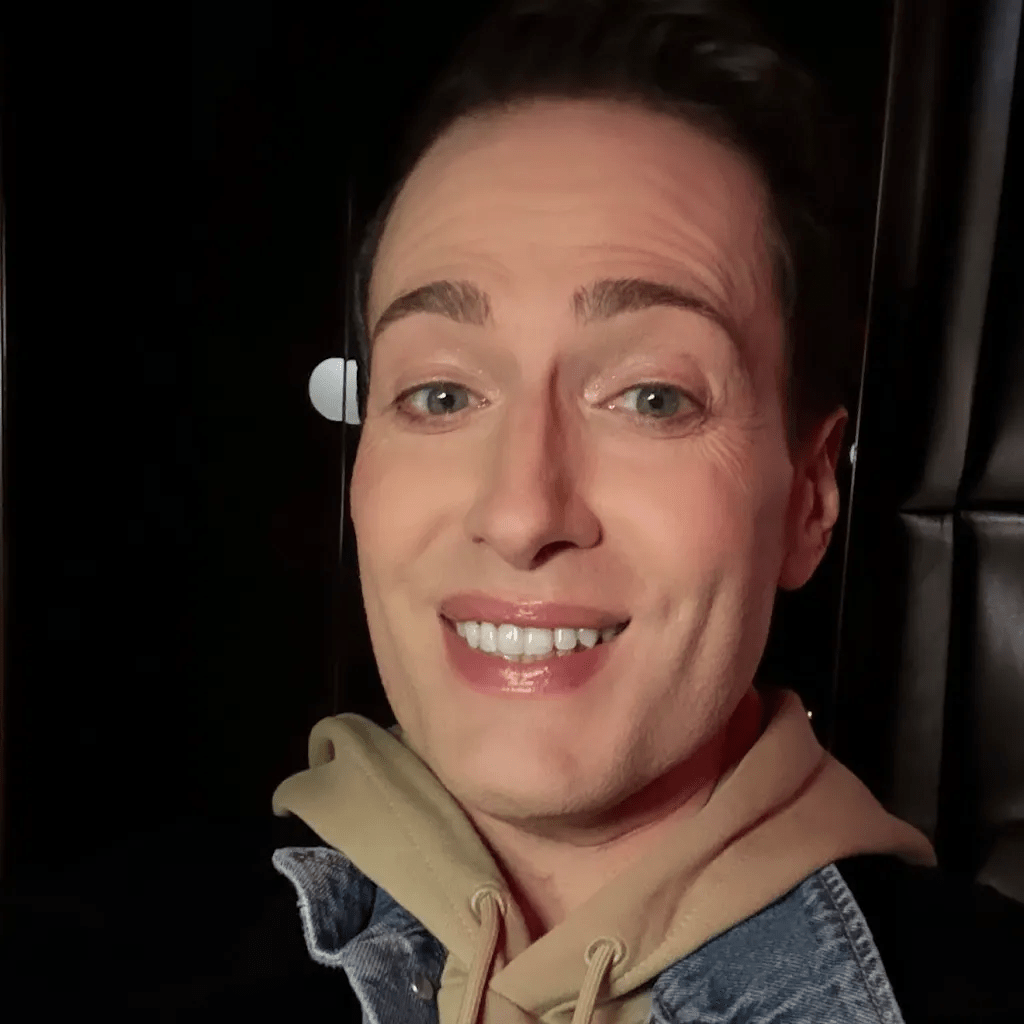
“…that used to be my stripper name…” LOL! Randy

That Sealed Order in the Abrega Garcia Case-

Unsealed: Abrego Garcia

Joyce Vance Dec 30, 2025

The sealed order in the Abrego Garcia case that I wrote about in Sunday night’s “The Week Ahead” column was unsealed today. This is in the government’s hastily manufactured criminal case against him, which seemed, at the time, to be some sort of face-saving gesture after they were forced to return him to the U.S. from El Salvador, where he was incarcerated in CECOT prison.

The case is before Federal District Judge Waverly D. Crenshaw, Jr. in the Middle District of Tennessee. It turned out that my conjecture that the sealed motion might have something to do with Abrego Garcia’s motions to dismiss the prosecution because it’s vindictive was on target. As we know from our discussion of this type of motion in the context of the Virginia prosecution of Jim Comey, it’s difficult for a defendant to prove, and cases are only rarely dismissed on this basis. But the timeline here has always seemed to suggest it could be a serious possibility in this one.

In the newly unsealed motion, the Judge goes straight to the heart of the government’s contention that the local U.S. Attorney made the decision to indict, so it was not influenced by any alleged vindictiveness on the part of higher-ups in Washington, writing, “The central question after Abrego established a prima facie case of vindictiveness is what information in the government’s control sheds light on its new decision to prosecute Abrego, after removing him from the United States without criminal charges. These documents show that McGuire [the local U.S. Attorney] did not act alone and to the extent McGuire had input on the decision to prosecute, he shared it with Singh [a Lawyer in Deputy Attorney General Todd Blanche’s office] and others. … Specifically, the government’s documents may contradict its prior representations that the decision to prosecute was made locally and that there were no outside influences.”

This, needless to say, is not good news for the government. To understand just how bad it is, let’s review a bit of the case’s history:

In October, Judge Crenshaw found that Abrego Garcia had come forward with evidence to suggest that a reasonable person might believe the indictment was motivated by vindictiveness on the part of the government. When that happens, the government has to offer evidence that the prosecution was undertaken for legitimate reasons, for instance, that newly discovered evidence made a case previously rejected as weak strong enough to be indicted.

Judge Crenshaw granted Abrego Garcia’s request to conduct discovery on the issue and have an evidentiary hearing. But he noted that it was entirely possible that “no fire will be discovered under all the smoke.”

The indictment stems from a 2022 traffic stop that did not result in Abrego Garcia’s arrest, or even a traffic ticket. The case file at Homeland Security Investigations remained open, but no action was ever taken on it, and the case was closed shortly after he was deported.

The timeline of the criminal prosecution gave rise to the presumption of vindictiveness in the Judge’s view:

  • Abrego Garcia was deported on March 15, 2025 (despite the existence of an order that prohibited it).
  • Abrego Garcia’s lawyers sued on March 24, 2025, and in less than two weeks, a district judge ordered his return to the U.S.
  • Both the Fourth Circuit and the U.S. Supreme Court sided with Abrego Garcia, holding the government responsible for “facilitating” his return. The Supreme Court ruled on April 10.
  • Just days after the Supreme Court’s decision, the investigation into the traffic stop was reopened by Homeland Security Investigations (HSI) under DHS Secretary Kristi Noem’s direction.
  • Ten days after that, an HSI agent reached out to the acting U.S. Attorney in Nashville.
  • The case was indicted on May 21, 2025, only 58 days after Abrego Garcia filed suit in Maryland seeking his return to the U.S.

As Judge Crenshaw noted back in October, “All of this stands in stark contrast to the 832 days the HSI investigation into Abrego remained pending, without referral to the U.S. Attorney’s Office in the Middle District of Tennessee for prosecution.” In other words, the case wasn’t even deemed significant enough to ask a prosecutor to take a look at it. It was only after Abrego Garcia’s lawsuit challenging the legality of his deportation—and the Supreme Court confirmation that he should be returned—that HSI seemed to take the case seriously. In the absence of any explanation from the government, the Judge correctly found these facts gave rise to a presumption of vindictiveness.

Sometimes, though, where there’s smoke, there is, in fact, fire.

The newly unsealed order relates to two motions filed by Abrego Garcia’s lawyers in the course of trying to obtain the discovery the court had ordered they were entitled to: one to compel the government to comply with some of the requests and one to obtain testimony from Deputy Attorney General Todd Blanche and some of the key people in his office. The government had submitted “over 3,000 documents” to the Judge for him to review privately, because the government maintained it wasn’t obligated to turn them over.

Judge Crenshaw has now ordered the government to “disclose to Abrego a sub-set of the over 3,000 documents that are relevant to the narrow issue of whether the government’s new decision to prosecute Abrego, after deciding not to do so, ‘was tainted by improper motivation’ arising from Abrego’s success in the Maryland civil case.” The government doesn’t have to turn over the remainder of the 3,000+ documents. The Judge asked for additional briefing on the government’s motion to prevent Blanche and his subordinates from testifying.

At the time the motion was filed, the government argued that the decision to prosecute was made by Acting U.S. Attorney Robert McGuire in Nashville, so it could not have been vindictiveness of the part of higher-ups in Washington. But as the Judge points out at length in this order, “at the time of Abrego’s arrest, Blanche linked Abrego’s criminal charges to his successful civil lawsuit in Maryland.” Blanche had “volunteered” in a television appearance that the government’s criminal investigation had started up after the judge in the civil case in Maryland accused the government of misconduct when it deported Abrego Garcia. So, Judge Crenshaw orders the government to provide the defendant with documents that “support Abrego’s argument. Specifically, some of the documents suggest not only that McGuire was not a solitary decision-maker, but he in fact reported to others in DOJ and the decision to prosecute Abrego may have been a joint decision, with others who may or may not have acted with an improper motivation.” If Abrego Garcia can use the discovery to successfully wipe out the government’s contention that the decision to indict wasn’t made in D.C., he may be on the road to getting his case dismissed.

Some of the documents the government must now turn over for the defense to use include:

  • An email from one of Blanche’s subordinates to the local U.S. Attorney that “made clear that Abrego’s criminal prosecution was a ‘top priority’ for the Deputy Attorney General’s office (Blanche).”
  • An email from the U.S. Attorney to his staff, advising them that “DAG (Blanche) and PDAG would like Garcia charged sooner rather than later.”
  • There is also an email from the Blanche subordinate to the local U.S. Attorney advising him that they should “‘close[ly] hold’ the draft indictment until the group ‘g[o]t clearance,’ to file.” The Judge comments that “The implication is that ‘clearance’ would come from the Office of the Deputy Attorney General, not just McGuire.”

These developments are all phrased in the polite language used in courts by judges and lawyers, but they are jaw dropping. The government represented to the court that the decision to prosecute Abrego Garcia was made locally, disconnected from his effort to enforce his constitutional rights and challenge his deportation. Their own emails appear to contradict that assertion. The government will still have the opportunity to come forward and explain away the presumption of vindictiveness. I’ve seen a number of cases during my 25 years at DOJ where a defendant argued vindictiveness. In every case, the government explained why the prosecution was legitimate, and in every case, it prevailed. I’ve never seen a case where the government made representations to a judge that were refuted by its own internal communications. It’s exceptionally unusual for prosecutors to have to take the witness stand to defend their own conduct. But Abrego Garcia’s case, which has been highly irregular from the start, may well be the one where that happens.

This is all about due process. Back in April, as Abrego Garcia’s situation was coming to light, Press Secretary Karoline Leavitt claimed that there was “a lot of evidence” Abrego Garcia was a convicted member of the gang MS-13, saying that “I saw it this morning.” We were supposed to take her word for it and leave Abrego Garcia to his fate of torture in a Salvadoran prison. That’s why the rule of law and due process matter. If it’s up to Trump, anyone can be swept up and swept away and have no recourse. Our ability to go to court to protect ourselves when the government gets it wrong is more and more important.

During his monumental filibuster earlier this year, New Jersey Senator Cory Booker said that this was our moral moment and that inaction was not enough. He asked: “Where does the Constitution live? On paper, or in our hearts?” Here at Civil Discourse, it lives in our hearts and stays on our minds.

Thank you for being here with me. I know you have lots of choices about where to get your news and analysis. I appreciate that you’re spending some of it with me. Your paid subscriptions make it possible for me to devote the time and resources it takes to write the newsletter. I’m proud that we’ve built a community together that’s dedicated to keeping the Republic.

We’re in this together,

Joyce

This is why Christian homeschooling hurts children

Josh Day Next Day

Enjoy, and be aware of your keyboard’s presence.

Political cartoons / memes / and news I want to share. 12-31-2025

Image from Assigned Male

Image from Assigned Male

Image from Assigned Male


Two people are standing outside wearing scarves and puffer coats.

“It’s ‘big scarf, oversized sweater, puffer jacket, no peripheral vision’ season.”

Al Goodwyn for 12/30/2025

Jon Russo for 12/29/2025


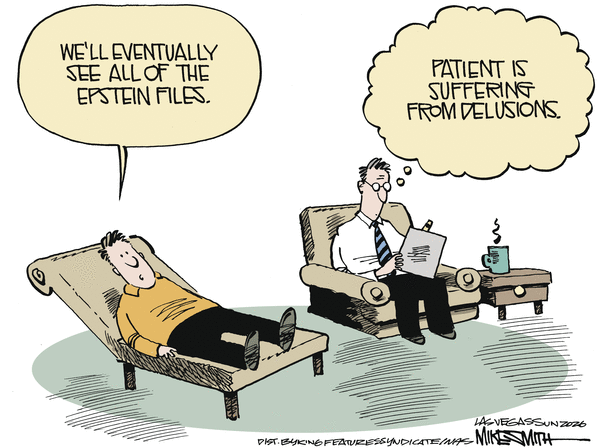
Mike Smith for 12/29/2025


Image from WIL WHEATON dot TUMBLR dot COM


#white people twitter from White People Twitter


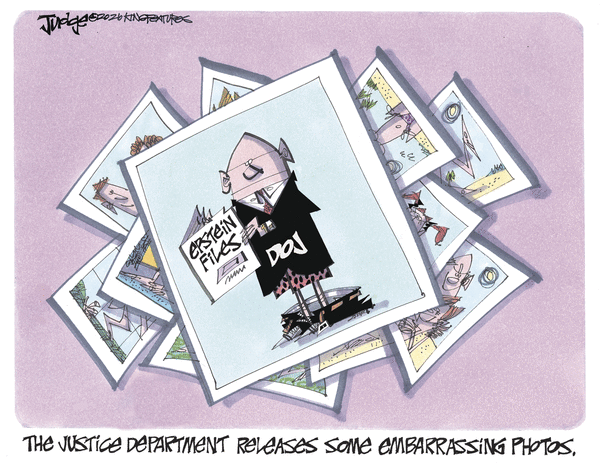
Lee Judge for 12/29/2025


Image from What Are You Really Afraid Of?

#politics from Cartoon Politics


Chris Britt for 12/29/2025


John Deering for 12/30/2025


The New Anti-Trans Rules Are SO Much Worse Than You Think

Minnesota Fraud Scandal EXPLAINED

NYC phone ban reveals some students can’t read clocks

https://gothamist.com/news/nyc-phone-ban-reveals-some-students-cant-read-clocks

Some New York City teachers say it’s high time for a refresher on old-fashioned clocks.

Tiana Millen, an assistant principal at Cardozo High School in Queens, said this year’s ban on smartphones revealed that many teens struggle to read traditional clocks. “That’s a major skill that they’re not used to at all,” she said.

Overall, Millen said, the phone ban has been a major success at the school, and has helped kids focus in class and socialize at lunch. Foot traffic is moving more swiftly in hallways. Without eyes glued to their phones, more students are getting to class on time. The problem is they don’t know it, she said, “because they don’t know how to read the clocks.”

For years, parents and teachers have blamed technology for a range of lapsed skills — from legible handwriting to sustained attention to reading whole books — even as their proficiency with technology far outstrips their elders. Still, while educators have widely praised New York’s statewide smartphone ban that went into effect this fall, multiple teachers told Gothamist it has also laid bare an unexpected gap: How to tell time.

“The constant refrain is ‘Miss, what time is it?’ said Madi Mornhinweg, who teaches high school English in Manhattan. “It’s a source of frustration because everyone wants to know how many minutes are left in class. … It finally got to the point where we I started saying ‘Where’s the big hand and where’s the little hand?’”

According to the education department, students learn how to read clocks in first and second grade. “At NYCPS, we recognize how essential it is for our students to tell the time on both analog and digital clocks,” education department spokesperson Isla Gething said. “As our young people are growing up in an increasingly digital world, no traditional time-reading skills should be left behind.” Officials said kids are taught to master terms including “o’clock,” “half-past” and “quarter-to” in early elementary years.

After dismissal outside Midwood High School in Brooklyn, many students said they do know how to read wall clocks — but they have classmates who can’t.

“They just forgot that skill because they never used it, because they always pulled out their phone,” said Cheyenne Francis, 14.

“I know how to read a clock,” she added.  ”The only time I guess I would struggle is if the time is wrong on the clock. Because sometimes they don’t set the proper time.”

Several students said clocks in their school are often broken.

Farzona Yakuba, 15, said she can tell time the old-fashioned way, but she empathizes with classmates who struggle.

“I feel like I’m one of those students sometimes because I know how to read the clock if I really need to. But I feel like most students here, they just get lazy and they ask. And I feel like I do that a lot,” she said.

Concern about students’ analog clock literacy predates the phone ban. In 2017, an Oklahoma study found only one in five kids ages 6-12 knew how to read clocks. England started replacing analog clocks in classrooms with digital ones in 2018. Grandfather and cuckoo clocks just aren’t as common as they used to be. Even kids who master clocks early on don’t have to practice that skill the way they used to.

“It’s underutilized,” said Travis Malekpour, who teaches social studies and math at Cardozo. He said he’s integrated telling time and managing calendars into some of his algebra lessons.

Kris Perry, executive director of Children and Screens: Institute of Digital Media and Child Development, said it makes sense that teens who have grown up in a fully digital environment haven’t had to practice analog clock-reading. She said the question is whether the shift amounts to a “a cognitive downgrade or just a replacement.”

She noted that brain scans have shown that holding books and handwriting generally lead to more brain activity than reading and typing on screens.

But several educators pointed out that while students’ clock-reading skills may be lagging, their digital skills are strong. Many schools have sophisticated coding and robotics programs, and teachers said they sometimes turn to kids for help with technology.

Mornhinweg said she recently had trouble opening a PDF for a lesson because of new software. She said her students calmly walked her through it.

“I was freaking out and they were like, ‘Miss it’s fine, this is what you do.’ I felt really old,” she said.

Correction: This story has been updated to reflect the subjects Travis Malekpour teaches.

Trump Says the U.S. Struck a ‘Big Facility’ in Campaign Against Venezuela

This is another act of war committed by the US on a sovereign country.   What tRump is doing attacking boats and seizing tankers now doing land attacks is no difference from what Putin / Russia is doing to Ukraine.   Plus only congress can authorize a war, not tRump.  tRump is very honest as to why he is committing war crimes, he wants the oil for US companies and to get it he needs Maduro to leave office.   The oil belongs to Venezuela and its people / government.   It is not US oil nor US land.   tRump is being a total school yard bully in that he attacks a smaller country that can’t fight back well while completely giving in to Putin who he fears.  Hugs


The administration provided no details of what the president said was an attack last week linked to U.S. efforts to disrupt drug trafficking from Latin America.

Such an attack would be the first on land since President Trump began his military campaign against Venezuela.Credit…Eric Lee for The New York Times

President Trump said in a radio interview that the United States had knocked out “a big facility” last week as part of his administration’s campaign against Venezuela, an apparent reference to an American attack on a drug trafficking site.

American officials said that Mr. Trump was referring to a drug facility in Venezuela and that it was eliminated, but provided no details. Military officials said they had no information to share, and the Central Intelligence Agency declined to comment. The White House declined to comment.

Mr. Trump made his statement on Friday during an interview with John Catsimatidis, the Republican billionaire and supporter of the president who owns the WABC radio station in New York. The two men were discussing the U.S. military campaign to disrupt drug trafficking from Latin America by striking boats suspected of carrying narcotics.

“They have a big plant or a big facility where the ships come from,” Mr. Trump said, without saying where it was or explicitly identifying Venezuela as the target. “Two nights ago we knocked that out.”

Asked about the incident on Monday, Mr. Trump declined to say how the attack had been carried out or by whom but said it was along a shoreline.

“There was a major explosion in the dock area where they load the boats up with drugs,” he told reporters at Mar-a-Lago, his club and residence in Florida. “They load the boats up with drugs. So we hit all the boats, and now we hit the area. It’s the implementation area, that’s where they implement, and that is no longer around.”

The attack appears to be the first known to have been carried out on land since he began his military campaign against Venezuela. U.S. officials declined to specify anything about the site the president said was hit, where it was located, how the attack was carried out or what role the facility played in drug trafficking. There has been no public report of an attack from the Venezuelan government or any other authorities in the region.

While some officials called the facility struck a drug production site, it is not clear what role in narcotics trafficking the facility would have played. Venezuela is well known for its role in trafficking drugs, especially cocaine produced in Colombia, but has not been a major producer of narcotics.

Mr. Trump has been promising strikes on land in Venezuela for weeks, part of an intensifying pressure campaign on Nicolás Maduro, the authoritarian leader of Venezuela, who is under indictment in the United States for his role in the drug trade.

Mr. Trump authorized the C.I.A. to begin planning covert operations inside Venezuela months ago.

The United States has been conducting military strikes on boats in the Caribbean and the Pacific since September. The administration maintains that the vessels are transporting cocaine. The operations have killed at least 105 people so far, and have been called extrajudicial killings by critics who say the U.S. military has no legal basis for lethal strikes against civilians. The administration has defended the attacks by asserting that the United States is in a conflict with what it calls narco-terrorists who can only be stopped with military force.

Those boat strikes were originally developed as part of a two-phase operation. The second phase, which has yet to be officially announced, was to include strikes on drug facilities in Venezuela, people familiar with the planning have said.

Since beginning the strikes, Mr. Trump has announced what he has called a blockade of Venezuela as the United States has begun trying to intercept oil tankers, cutting off a vital source of income for the Maduro government.

Mr. Trump has publicly acknowledged he has authorized the C.I.A. to plan for operations inside Venezuela.

Exactly what operations Mr. Trump had in mind for the C.I.A. were not clear, but they could include both sabotage operations and psychological operations meant to prod Mr. Maduro into making some mistake.

Eric Schmitt, Edward Wong and Maria Abi-Habib contributed reporting.

Tyler Pager is a White House correspondent for The Times, covering President Trump and his administration.

Julian E. Barnes covers the U.S. intelligence agencies and international security matters for The Times. He has written about security issues for more than two decades.

US offers Ukraine a 15-year security guarantee as part of peace plan, Zelenskyy says

https://apnews.com/article/russia-ukraine-war-trump-zelenskyy-peace-b784a9af1803995bfb7152eceb5477f1