Donald Trump’s ICE is doing exactly what he wants. And now they are holding a political prisoner for nearly a year in an ICE detention camp simply because 33-year-old Leqaa Kordia dared to champion views the Trump regime opposes. This should concern all Americans especially given the recent warning from concentration camp expert Andrea Pitzer—who explained on my SiriusXM show that history tells the Trump regime building massive ICE detention camps will ultimately be used to imprison political prisoners.
That should not be a surprise to anyone who follows the history of fascist and other right wing regimes. Trump is following the fascist playbook, complete with his own secret police that has terrorized and even killed Americans who defy him. The most glaring example being the murder of Renee Good and Alex Pretti—who were then smeared by Trump officials as “domestic terrorists.”
Shockingly, we just learned that Trump’s ICE shot and killed another US citizen, 23 year old Ruben Ray Martinez, almost a year ago in March of 2025. However, Trump’s secret police covered up their involvement until recent media reports broke the story open. The details surrounding the murder of Martinez–who worked at Amazon–are simply unbelievable with ICE claiming that for some unknown reason this young man with no criminal record suddenly used his car to attack ICE officers.
Beyond that ICE has terrorized American citizens who dared film them—which they are legally entitled to—assaulted protesters and engaged in conduct consistent with an occupying army, not federal agents.
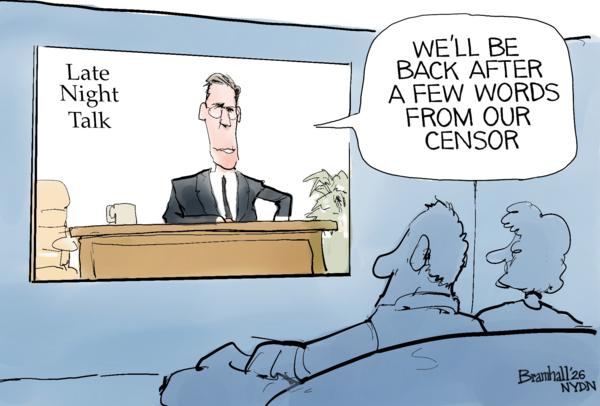
But it’s not ICE acting as a rogue agency—Trump wants them to do this. Trump—like Putin– wants to silence dissent as we’ve seen with his regime targeting all who oppose him from comedians like Jimmy Kimmel to seeking to criminally charge and imprison six Democratic members of Congress for warning members of the military to not follow illegal orders. A grand jury blocked that–at least for now.
That is why the case Leqaa Kordia demands far more attention given it’s a sneak preview of what we can expect from Trump for not just immigrants–but also U.S. citizens. Leqaa is a 33-year-old Palestinian woman with family in Gaza and the United States. Her mother is a US citizen living in Paterson, New Jersey—which is where Leqaa was staying and working as a waitress until she taken by ICE.
Leqaa Kordia
Kordia—who came to the US in 2016 on a student visa and was in the process of seeking permanent residence status via her mother –has no criminal record. The diminutive woman poses no threat to anyone. But to the Trump regime she is dangerous because she participated in peaceful protests advocating for Palestinian humanity. In the case, of Leqaa this issue is very personal in that she has lost nearly 200 relatives in Gaza.
But Leqaa’s case is not about Palestine—nor it is about Israel. Rather, it’s about freedom of speech—and the Trump’s regime targeting those who dare defy them.
How this case began was that in March of 2025, ICE informed Leqaa they wanted to speak to her. In response, she voluntarily appeared at the ICE office in Newark, New Jersey–where she was quickly arrested, thrown into an unmarked van and sent 1,500 miles away to the Prairieland Detention Facility in Texas far from her lawyer and family.
Since then, she has been detained in horrific conditions. As Leqaa detailed in a recent op-ed, the ICE facility she has been held in for nearly a year “is filthy, overcrowded and inhumane.” She slept in a plastic shell “surrounded by cockroaches and only a thin blanket.” And the food quality is so atrocious, it has caused her to vomit resulting in significant weight loss.
Worse, just a few weeks ago she experienced the first seizure of her life, collapsing to the floor. From there, ICE transported her to a hospital where her wrists and legs shackled to her bed for the three days. As she put it, “The entire time I was chained…I felt like an animal.” And simply to be cruel, ICE refused to tell her lawyers or family where she was or her medical condition.
None of this should be happening. As her lawyer Amal Thabateh explained to me, two different immigration judges ruled that Leqaa should be released on bond. But the Trump regime instead invoked a little used procedure to keep her in detention open ended.
To do that, serial liar DHS Secretary Kristi Noem smeared Leqaa as being a “terrorist” sympathizer for expressing concern for Palestinians in Gaza. They even claimed that releasing Leqaa—who again has no criminal record and was living with her US citizen mother in New Jersey–was somehow a threat to our nation. Of course, this is the same Noem who smeared with lies Renee Good and Alex Pretti as “terrorists” to justify their murders so we know she will say anything to defend the Trump regime’s crimes against humanity.
The idea Leqaa is a political prisoner is not just my view. Amnesty International lists her on their website demanding that the US government “release detained protester.” Her case is in the same section on the Amnesty website where they are calling for the release of dissidents in Russia, Belarus and other authoritarian regimes. This is where our nation is now viewed by human rights organizations.
Deeply alarming is that these ICE dentition centers are increasingly become death camps. At least 32 people died in ICE custody in 2025—the highest number in two decades. And in the past six weeks, six people have died in ICE custody including one man killed by ICE agents as they were restraining him. Will anyone be held accountable for this man’s death? That is like asking will anyone be held accountable for the death of Russian dissident Alexei Navalny killed in a Russian prison two years ago. We know that no one will be prosecuted because Russia is an authoritarian nation. As disturbing as it sounds, so is the United States under Trump.
But for those who refuse to submit to Trump and want to stand up for freedom of speech, I hope you will sign the Amnesty International petition calling for the US government to release Leqaa. Other ways to help this young woman include calling on your members of Congress to demand her release. You can also consider making a donation to her online fundraising page to help her and her family. Finally, you can follow Leqaa’s campaign for freedom on Instagram and amplify the updates.
As Andrea Pitzer repeatedly warned in our conversation on concentration camps, it does not end with people like Leqaa. It begins with people like Leqaa being held with in a camp for as long as the regime wants to keep her–in horrific conditions–simply because they want to silence her political views. They then continue until they reach people like us. But as the famous poem goes, by then it’s too late because when “they came for me…there was no one left to speak out.”
——
Below is my recent interview about Leqaa’s wrongful detention with her lawyer Amal Thabateh, who is with Creating Law Enforcement Accountability & Responsibility (CLEAR) Project and Laila El-Haddad, an award-winning Palestinian author, social activist, policy analyst and journalist.
The Dean’s Report by Dean Obeidallah is a reader-supported publication. To receive new posts and support my work, consider becoming a free or paid subscriber.
The international accompaniment movement teaches us that to sustain an emergency response to state violence, we must build durable, collective and supportive structures now.
Targeted state violence and rising fascism are being met with creative organizing by people in Minneapolis and across the country, from mass marches to neighborhood mutual aid to ICE watch foot patrols. These are all beautiful manifestations of resistance that have kept many people safe and demonstrated widespread repudiation of the Trump administration’s policies.
Yet as state-sanctioned violence becomes more coordinated, normalized and national in scope, we must continue adapting our response systems to shifting needs. Emergency response structures set up in moments of crisis can often lead to isolated, reactive decision making with responsibility falling on a few shoulders, creating the conditions for burnout, security failures, movement fragmentation and individual and organizational missteps or even collapse.
Here we can draw on some hard-earned lessons from our predecessors in the decades-long international accompaniment movement, who witness, stand with and provide security support for human rights defenders, communities and activists under attack by authoritarian regimes in Latin America.In response to sometimes devastating losses, accompaniment organizations developed a set of skills and strategies over many years for collaborative, sustainable decision making to respond to security incidents while under conditions of constant threat. We ourselves learned these skills in our many years of working with accompaniment organizations in Guatemala, Honduras and Colombia from 2008 to 2022.
We share here principles and practices from this legacy, which we hope organizations and networks, whether formal or informal, can use to develop emergency response structures that are sustainable, don’t overly burden a few individuals with the difficult decision making, actively build collective capacity and shared analysis, and support skill-building for more people in our movements.
What we present here are suggestions, and we invite you to adapt them to particular organizations and situations. They may take a bit more planning and preparation than may seem available in moments of urgency. But if we want to sustain our movements for what, unfortunately, is likely to be a long struggle, we must begin now to put durable, collective and supportive structures into practice.
1. No one person decides alone
Decision making in emergency security situations is emotionally and mentally taxing. Stress can narrow our literal and metaphorical fields of vision. And because the weight of a decision can be incredibly heavy to bear — especially if things go wrong — no one ever made a decision alone in the accompaniment organizations of which we were a part. We had clearly established protocols for which people, based on their roles in the organization, would come together for specific emergency response decisions.
For example, we established regional subcommittees based on where a security incident occurred. Each subcommittee was composed of a security lead, a representative from the advocacy team and on-the-ground volunteers, who worked together to assess, analyze and respond to emergency situations.
Applying this principle in a U.S. context, organizers of a publicly advertised protest could set a team of folks who gather at an office or a home to monitor social media and news reports for security incidents or threats, and be ready to make decisions about emergency response.
2. Prepare decision-making structures and roles beforehand
Emergency response or crisis moments are when people are most activated and are also the most likely to lead to organizational, interpersonal or movement conflict. This shouldn’t come as a surprise. After all, we are being subjected to situations of prolonged violence directed at ourselves and people we care for. We want to show up in the best way possible, yet often also feel frustration, impotence or rage.
In our accompaniment organizations, we mitigated stress and conflict (to the extent possible) by having clear processes and roles for decision making.
First, we frontloaded as many decisions as possible before an emergency, allowing us to focus on the situation at hand rather than spend time debating who would do what and delaying important support for the impacted individuals. Knowing who is going to be involved in emergency response reduces the need for conversation and shortens the response time.
The Peace Brigade International accompanies the Front of People in Defense of Land and Water in Amilcingo, Mexico. (Facebook/Peace Brigades International)
We have seen this play out in high-risk moments in our accompaniment work. For example, when we responded to nationwide protests that extended over months and saw daily murders of protesters by military and police forces, we set up a rotating decision-making group. Because roles and communication channels had already been agreed upon, colleagues didn’t have to debate who should verify information, call other allied organizations or set up our emergency response protocol. They could simply act.
Second, we made decisions in consensus. While clear decision-making structures are essential, that doesn’t necessarily mean they have to be hierarchical. We’ve found in our accompaniment work that decisions are easier to implement when everyone has a hand in shaping them. A consensus-based decision-making structure keeps any one person from carrying the whole mental load (see “No one person decides alone”) and lets us actually use the full brainpower in the room. We all come with different lived experiences, risk tolerances and ways of thinking, which means we’re bound to catch things others won’t and, luckily, vice versa.
This works best when folks talk it out together and create a clear timeline to decide. In the example above, if the group got stuck, they would start with a quick break to rest and regroup, and if that fails, go to a smaller predesignated subgroup — and, if even that doesn’t work, have a clear fallback decision-maker. Something else we’ve learned: Consensus tends to work better when we trust each other and each other’s criteria, so it helps to make the effort to get to know each other, grab a coffee or go for a walk before the emergencies happen.
3. Some participants in decision making should be offsite
It might seem logical that those directly involved in the emergency response should be onsite, able to see the situation firsthand and respond immediately. In fact, we learned in our accompaniment work that involving folks offsite as advisors or even decision makers can provide essential perspective, bring in crucial information and further spread the decision-making burden.
In one protest scenario, while tensions escalated on the ground, an off-site team a few blocks away tracked both police staging and local news sources and relayed that information back to organizers. This wider view allowed on-the-ground leadership to make informed choices without relying only on what was immediately visible.
4. Rotate the decision makers
Holding a decision-making role in an emergency situation is not easy; it means putting your body on high alert, navigating complex situations and grappling with violence directed at our communities. This, unsurprisingly, takes a toll on us over an extended period of time (more on this below).
Even if we believe we can hold this indefinitely, the reality is that, without moments to regulate our nervous systems, our bodies normalize the constant alertness, making it harder to activate when necessary and to properly analyze what is truly an emergency. We want our emergency decision makers to be well-rested, regulated and connected — for their wellbeing and ours, too.
That’s why we recommend that the decision makers in an emergency situation shift on an agreed-upon rotation. Depending on organizational structure, the best rotation might be every protest or event, or it might be a time period, like a week. This not only gives us a chance to skill up more folks in emergency response (always a benefit for our movements!), but it also gives us decision makers a chance to rest and recharge.
In the protest scenario previously mentioned, once things settled for the day, the people who had been making decisions rotated out. Some went home to sleep; others took quiet time away from phones and updates. A few days later, once they were rested enough to look at what they’d learned and what might need to change next time, they checked back in for the follow-up stage.
5. Institute Urgency Guides
Prolonged emergency situations make it harder over time to accurately recognize urgency. When everything feels critical, true emergencies can become blurred. Clear guidelines help mediate this by providing structure and clarity for decision making under sustained stress. In our accompaniment work, we used the following guidelines to categorize our responses:
On alert (prior to emergency): The situation seems to be escalating. We have seen a few signs indicating the risk level may be increasing (increased presence of armed actors, state or non-state, counter-protesters gathering, surveillance signs, suspected infiltration, etc.). Start to notify the security team (on and offsite) and start to implement increased security measures.
Immediate response (minutes to hours after): The emergency situation is active; the threat has not yet passed and there is potential for the situation to escalate or repeat. The physical and emotional well-being of impacted individuals is prioritized immediately.
Rapid (24 to 48 hours after): The specific situation has passed, but there is potential of it repeating in the near future. This could be because we will go to the same location in the next few days, or the event we are hosting will continue, or the aggressor is still nearby or indicating potential harm to our communities.
Follow-up (a few days to weeks after): The situation has passed. Here we focus on analysis and whether we need to adapt our organizational and movement strategy. This is also a great time to broaden the analysis by including allies in answering questions like: What was the aggressor’s desired impact? Have we seen this strategy used before? What are the increased security measures we may need to implement based on this situation?
We have used this for years in accompaniment spaces, allowing us to clearly mark stages in our response and who had to be involved. For example, when activists we were supporting suffered an assassination attempt, the attention moved from split-second decisions (immediate response) to checking in with impacted participants, ensuring medical attention, locating others who could be targeted next and finding safe houses, to adjusting security plans for the next day and watching for signs the situation might flare up again (rapid response). Later still, the group circled back to look at what had happened and what it meant going forward (follow up).
6. Establish ways to take care of yourself and your team before and after taking on decision-making roles.
When stepping into an emergency response decision-making role, it is essential to shore up your emotional resources before an emergency and repair your heart and mind afterward. This will look different for everyone, but all organizations and networks should dedicate time and space for everyone involved in emergency response to do this. You might employ the same tools for shoring up and for repairing: They could include a nice walk with your dog, tea with a close friend, reading a good book or taking a bath.
Whatever you need to rest and recharge, identify those activities and build them into your plans. We know this is hard, and to be clear, this level of care has not always been consistently present within accompaniment organizations; its absence often contributes to rapid turnover and diminished response capacity. Naming this matters. After more than a decade of collective work in emergency accompaniment, we have seen clearly that constant crisis response is not sustainable if people’s nervous systems are never given real opportunities to rest and regulate.
This is why we believe it is so important to speak directly about intentional, collective care practices not as an ideal, but as a necessary condition for the longevity and effectiveness of accompaniment and emergency response itself.
We don’t need to reinvent the wheel
These tools aren’t a panacea for the real risks presented by escalating state violence. They won’t stop all arrests, injuries, raids, deportations or assassinations. They won’t undo the harm already done or bring back the people we’ve lost. But the more we incorporate skillful emergency response tools into our repertoire, the more we can stay connected to one another under pressure, reduce preventable harm, and keep showing up again and again without burning out, fragmenting or turning on each other.
None of this work is new. We are drawing from the accumulated knowledge of mentors, organizers, human rights defenders, journalists, accompaniers, medics, lawyers and movement elders who have spent decades responding to fascist and authoritarian governments across regions and generations. From underground networks resisting military dictatorships, to civil rights organizers facing state-sanctioned terror, Indigenous land defenders, abolitionists, anti-colonial movements and transnational solidarity networks, people have long been building collective security, emergency response and care structures under conditions that mirror in many ways what we are facing now.
Luckily, this means we don’t have to reinvent the wheel. We just need to know how to look to the past, to other contexts and to each other for guidance and support. The more intentional we are,the better we’ll be able to keep up the struggle so that, one day soon, we will not just have survived fascism but defeated it.
It is always OK to ask to stop. Consent can be withdrawn at any time! You are not a sex toy or sex slave unless that is what turns you on. Even then you have the right to say stop. You are a person. Anyone who doesn’t stop when asked is an abuser that doesn’t deserve you. Hugs
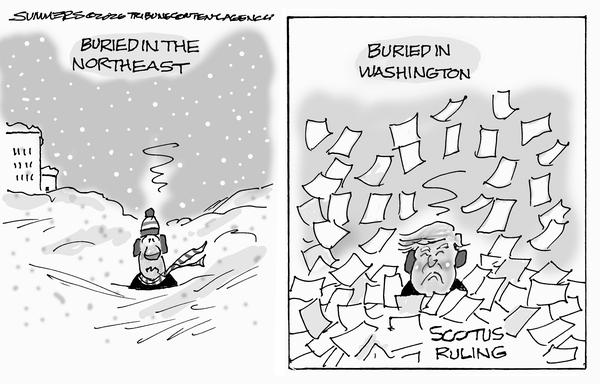
“If you don’t help dig out the car, then I can’t take you to school, and if you don’t go to school I’m going to lose my friggin’ mind. You don’t want Mommy to lose her friggin’ mind, do you?”
“They’re also my staying-indoors-all-winter clothes.”
Hello Everyone. Scottie recently asked me why I’ve not posted in a while. How do I tell this man who has been fighting the good fight for so many years that I’m just so damned tired? I’m so tired of being lied to, of being called names because I don’t believe the lies, of being caught between morality and caring for people caught in the trumpian trap. I’ve written this post over and over, and each time it seems so damned obvious that I run into the exhausted question of “what’s the damned point”? How can people be so blind, so hateful, so abusive and willing to be robbed by this unrepentent conman thief, this criminal in cheap suit, this shit-stain on the satin sheets? I actually looked into asking an AI why politics in the trump era is so damned exhausting. This is what it said:
Politics, particularly in the Trump era, are exhausting due to constant, high-stakes news coverage, extreme polarization, and the erosion of traditional political norms. This creates a 24/7 cycle of outrage, fear-based media consumption, and personal fatigue, with 65% of Americans reporting feeling “worn out” by the political environment. NPR +4
Key reasons for this exhaustion include:
Constant Crisis and High Drama: The political climate is defined by perpetual drama, making it difficult to find calm or “normal” moments, leading to a state of constant, low-level stress.
Breaking Norms: The Trump administration frequently violated long-held political, social, and legal norms, which created a sense of instability and constant, shocking developments.
Extreme Polarization and Tribalism: Politics has become an “us vs. them” mentality, where individuals may view opposing views as existential threats rather than just policy disagreements.
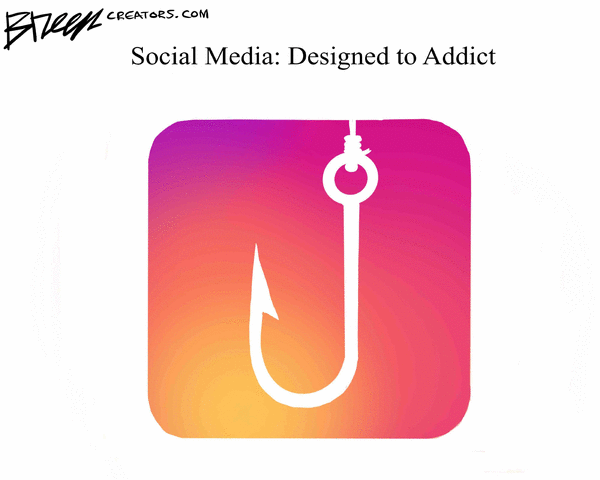
Information Overload: Social media algorithms and a 24-hour news cycle create a constant stream of political content, making it difficult to escape or disengage.
Personalized Politics: Political opinions have become closely linked to personal identity, making political debates feel deeply personal and emotionally charged.
Financial Stress: Economic concerns, such as rising costs for necessities, are often part of the political narrative, adding to the feeling of personal strain. The Conversation +6
I rambled for paragraphs, deleted, rambled for paragraphs again. The simple thing, the direct thing is likely best here. Dammit, I’m tired of just how bad it all is and not having a way to repair it. My only choice is to pull in, withdraw, ignore it all.
Ok, I’ve got chicken frying. Sorry to be such a downer, but I guess I’ve run out of impotent rage. Hugs.
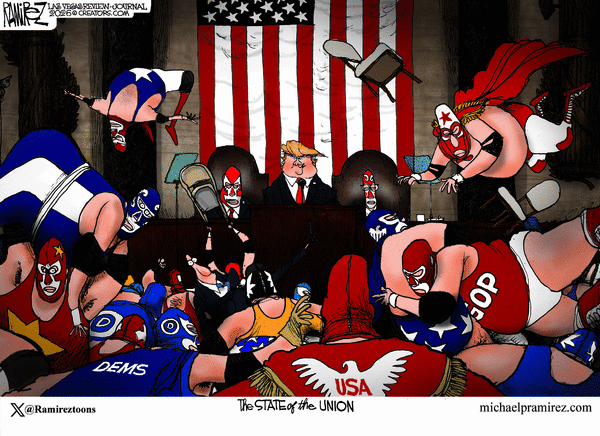
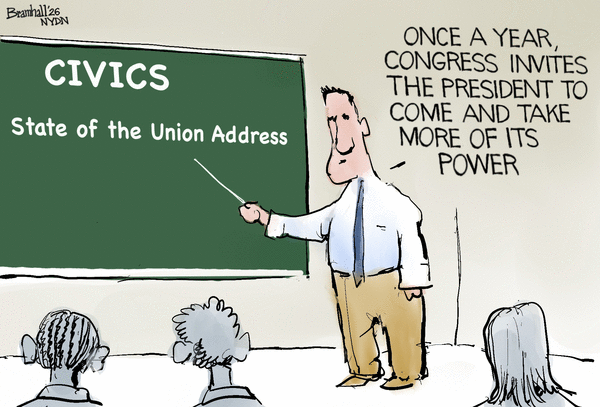
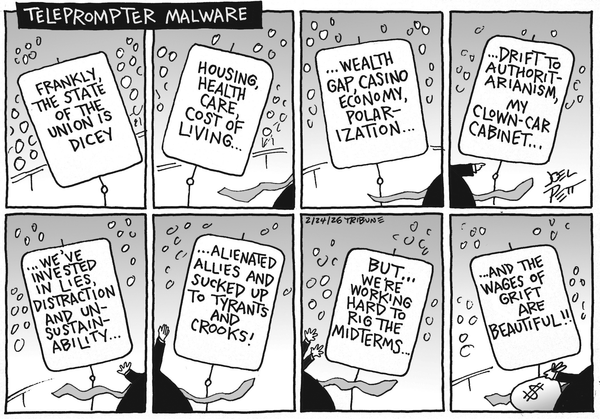
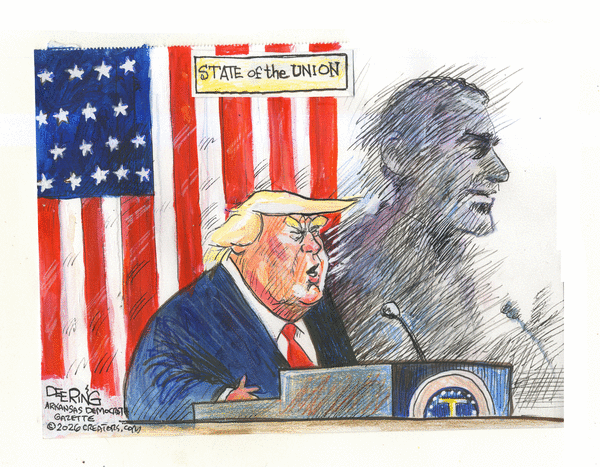
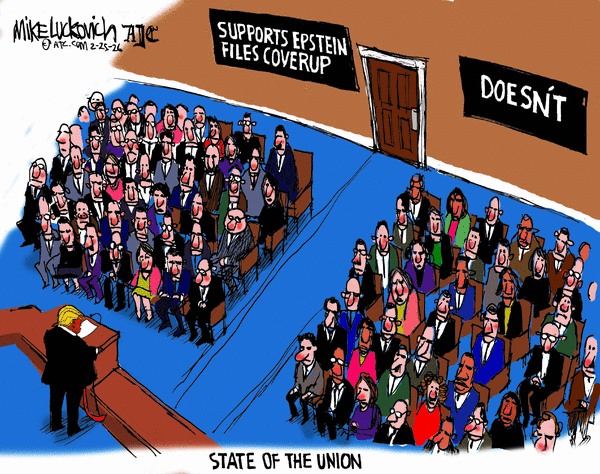
The primary focus this week is probably going to be on the State of the Union address. Will any of the Justices show up in the wake of Trump’s Friday afternoon press conference, where he excoriated the ones who ruled against him in the tariffs case and called them an embarrassment to their families? Will Trump continue to talk about his ability to destroy other countries? We will see what Tuesday brings.
But he heads into SOTU with a new Washington Post-ABC poll showing that his approval rating is at 39%—the last time it dipped below 60% was in the wake of January 6. Forty-seven percent of Americans strongly disapprove of the job the president is doing.
Late last week, there was reporting on a tremendously important story, one that should be topping every news cycle, but doesn’t seem to be. On this administration’s watch, a DHS agent shot and killed an American citizen living in Texas during a traffic stop last March. According to the report, released as part of a FOIA request, 23-year-old Ruben Ray Martinez is now the earliest known shooting by federal agents associated with the Trump administration’s mass deportation policy. We’re only finding out about it now.
Once upon a time, we would have taken the government’s version of an officer-involved shooting at face value. Here, according to the New York Times, the government’s report claims that, “Mr. Martinez initially did not follow officers’ instructions but eventually slowed to a stop after receiving verbal commands. Agents surrounded the vehicle and told him to get out of the car before Mr. Martinez accelerated and hit a federal agent, who landed on the roof of the car according to the documents. Another agent then fired multiple times through the driver’s side window. Mr. Martinez was transported to a hospital in Brownsville and later died.” NBC filed essentially the same report, but noted that the agent landed on the hood of the car when the driver accelerated after “Agents then surrounded the vehicle.”
Maybe the government’s story is true. Maybe it’s not. It doesn’t make a lot of sense—we’re to believe Martinez came to a stop and then, while surrounded by agents, managed to accelerate with enough force that he hit one of them, who ended up on either the hood or the roof of his vehicle. Were there bystanders nearby? The agent fired into a vehicle, an apparent violation of DHS policy. And was the agent still on the hood or roof when the other agent fired? Did they put him in danger? I’m having trouble envisioning it. The documents apparently reflect that the agent was treated for a knee injury at a local hospital and released.
One problem when the government consistently lies is that it’s hard to know when (if) it might be telling the truth. And the fact that this report was concealed for so long doesn’t do anything to calm suspicion. There was reporting of his death at the time it happened, but federal and state officials failed to disclose that ICE agents were involved.
The report that was released under FOIA does not disclose the reason Martinez was stopped by officers working on an immigration detail. He was a brown-skinned American citizen. We have a phrase that describes this in Alabama—driving while brown—and to state the obvious, it is not a legitimate reason for police, including federal agents, to make a traffic stop.
Martinez’s mom, Rachel Reyes, described her son as a hard-working young man who had no history of confronting law enforcement officials. She said he worked at an Amazon warehouse in San Antonio and was out celebrating his birthday when he was killed. “He was a good kid. He doesn’t have a criminal history. He never got in trouble. He was never violent.” She also said she was told by Texas Rangers that there was video that contradicted DHS’ version of events, but did not provide any details.
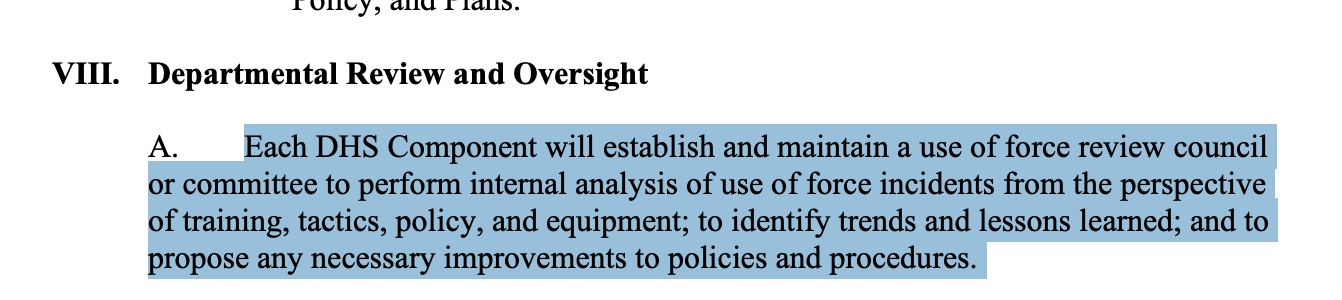
Under existing policy, every DHS component, including ICE, is required to have a “use of force review council or committee” to analyze incidents. The use of deadly force “must be reasonable in light of the facts and circumstances confronting the LEO [law enforcement officer] at the time force is applied.” It can only be used if agents reasonably believe there is an imminent threat of death or serious injury to an agent or someone else. It’s not clear whether a review was taken here and if so, what the results were.
There has been no outrage from Martinez’s senators, John Cornyn and Ted Cruz. It is essential that there be a full accounting for Martinez’s death. The facts matter.
There are also ongoing reports of deaths at immigration detention facilities, even as the government is reportedly ramping up to literally warehouse human beings, including children, in actual warehouses, being snapped up with your taxpayer dollars. The Texas Tribune, a local paper that still does independent journalism, has a report calling out horrific conditions in Texas prisons, including the death of Geraldo Lunas Campos, which we’ve previously discussed. The official report says he tried to hang himself. The medical examiner ruled it a homicide, and a witness allegedly backs that up. There have been six deaths in six weeks at ICE-run facilities in Texas.
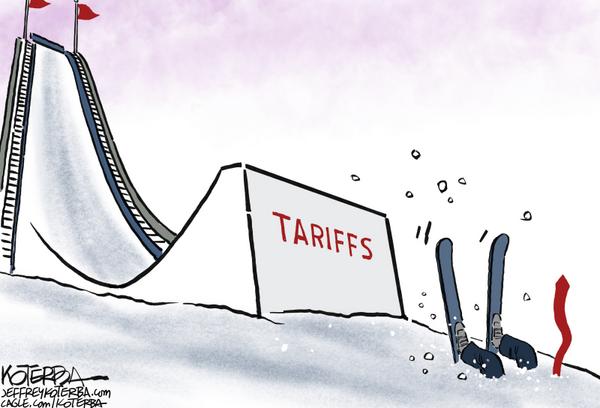
Although the Supreme Court released its decision in the tariffs case last week (6-3, IEEPA, the statute that doesn’t use the word “tariff” doesn’t authorize the president to issue them), we haven’t heard that last word on the issue yet. Trump is serious about tariffs. During the campaign, he called “tariff” the most beautiful word in the English language. He withdrew his support for incumbent Colorado Congressman Jeff Hurd, calling him a “RINO,” because he opposes tariffs. And Trump has said that he will issue new ones.
He has the authority to do that. Although Congress has the power to impose tariffs, it can and has loaned some of it to the president. What Congress intends to do that, it knows the right way—it uses the word “tariffs” in the statute and places limitations on their use, like a time limit or a limit on how high the percentage of the tax can be. It also provides conditions under which the tariffs the specific law allows for can be imposed by a president.
That was the whole reason Trump used IEEPA: Because it didn’t give him any tariff powers, it necessarily didn’t impose any limits on what he could do. It would be as if you told your teenager they could go to a movie so long as they were home by 10 p.m. and it didn’t cost more than $10. You also have a rule that it’s a good idea for family members to be happy. Using the happiness rule, the kid then goes to a movie that doesn’t get out until 11 p.m. and costs $15. It’s an imperfect analogy, but you get the point of what Trump did and why.
Now he’s stuck in a world where he can only use the specific tariff authority Congress has granted him. So here’s what he had to say, in a Truth Social post:
“Based on a thorough, detailed, and complete review of the ridiculous, poorly written, and extraordinarily anti-American decision on Tariffs issued yesterday, after MANY months of contemplation, by the United States Supreme Court, please let this statement serve to represent that I, as President of the United States of America, will be, effective immediately, raising the 10% Worldwide Tariff on Countries, many of which have been “ripping” the U.S. off for decades, without retribution (until I came along!), to the fully allowed, and legally tested, 15% level. During the next short number of months, the Trump Administration will determine and issue the new and legally permissible Tariffs, which will continue our extraordinarily successful process of Making America Great Again – GREATER THAN EVER BEFORE!!! Thank you for your attention to this matter. President DONALD J. TRUMP”
Trump seems to be contemplating tariffs under Section 122 of the Trade Act of 1974. That provision is designed to address short-term emergencies, not to implement trade policy, and it has never been used. He also seems to be contemplating other authorities for his new tariffs, and who knows what, if anything, he’ll actually end up doing—he repeatedly announced, repealed, waffled, and wavered on tariffs at the start of this term. One thing that is for sure is that if he actually enacts them, he’ll have a fight on his hands in court
He’s already lost conservative commentator Andy McCarthy, who says tariffs under Section 122 would be illegal. Neal Katyal, who argued the IEEPA case successfully tweeted “Seems hard for the President to rely on the 15 percent statute (sec 122) when his DOJ in our case told the Court the opposite: “Nor does [122] have any obvious application here, where the concerns the President identified in declaring an emergency arise from trade deficits, which are conceptually distinct from balance-of-payments deficits.” If he wants sweeping tariffs, he should do the American thing and go to Congress. If his tariffs are such a good idea, he should have no problem persuading Congress. That’s what our Constitution requires.”
Neal Katyal@neal_katyal
Seems hard for the President to rely on the 15 percent statute (sec 122) when his DOJ in our case told the Court the opposite: “Nor does [122] have any obvious application here, where the concerns the President identified in declaring an emergency arise from trade deficits, which
10:48 AM · Feb 21, 2026 · 565K Views
270 Replies · 1.72K Reposts · 5.63K Likes
While we are not done with tariffs, we can expect more Supreme Court decisions this week, on the 24th and 25th.
We were supposed to see Volume 2 of Jack Smith’s special counsel report, the one about classified documents, on Tuesday. That deadline was set after the Eleventh Circuit chastised Judge Cannon for dragging her feet in the matter. But when she finally got around to setting the date, she noted that Trump could appeal, which he, of course, did. Delay. Delay. Delay. He filed a motion in his personal capacity in January, asking Cannon to permanently block the report’s release (he argued Smith’s appointment was illegal, so we should pretend it never happened). DOJ chimed in to support the boss. Trump’s former co-defendants, Walt Nauta and Carlos De Oliveira, filed a request of their own, seeking a ruling that all copies of the report be destroyed.
Earlier this month, journalists who had previously intervened in the matter to force the release of the report went to the Eleventh Circuit. That court has expedited the matter, which means Trump and his supporters have briefs due next month. His delay game is still holding up, but unless the Supreme Court weighs in on his side again in a criminal matter, there’s a limited shelf life on this one.
Other events to watch for this week:
On Tuesday, Secretaries of State who have decided to participate will meet with the FBI on unspecified issues. We discussed that meeting here.
On Friday, a federal judge in Fulton County, Georgia, will hold a hearing on the county’s request to have items returned, including ballots and voter rolls, that were seized by the federal government during a search warrant executed on January 28.
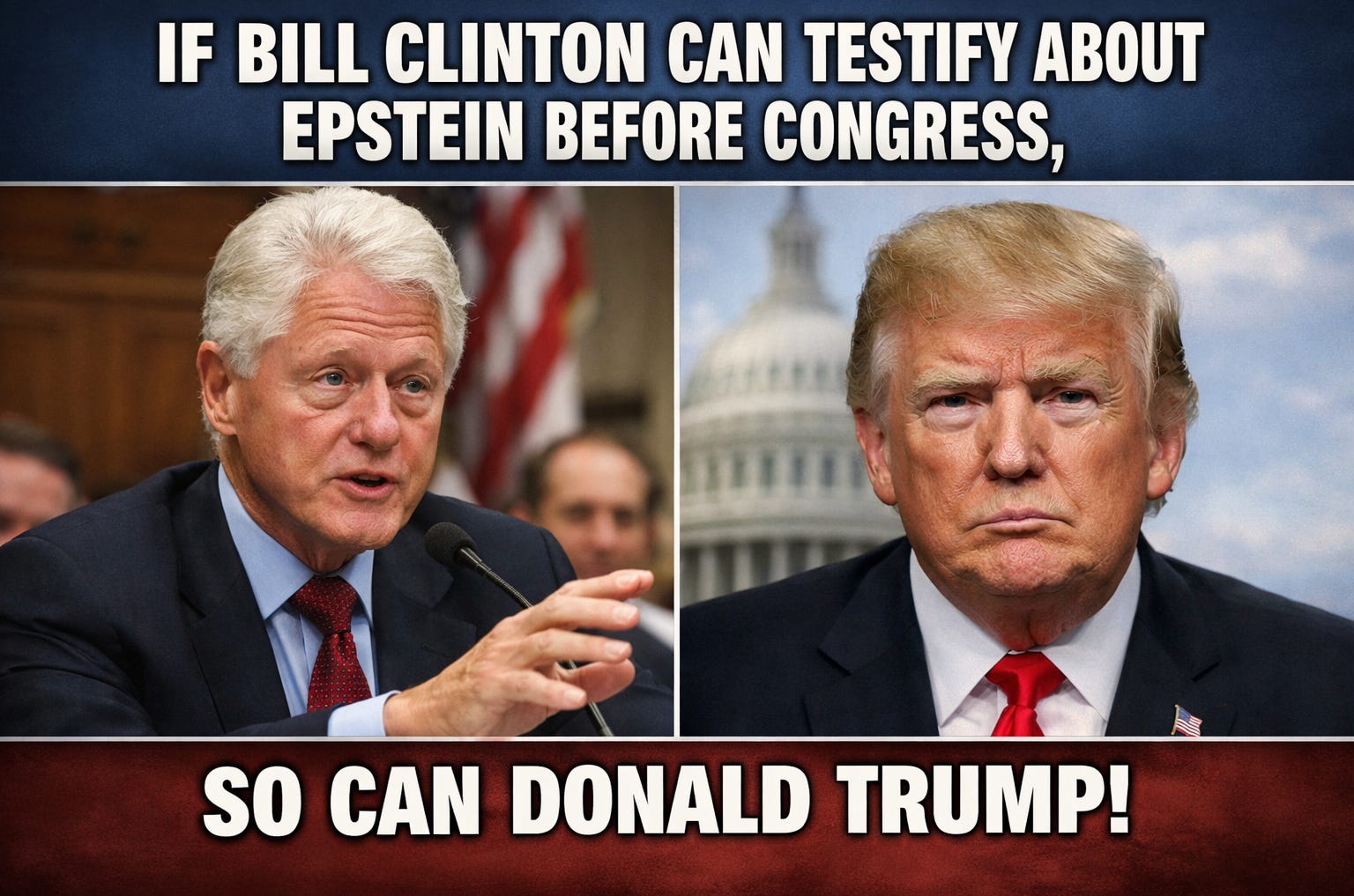
Thursday, Hillary Clinton testifies in front of the House Oversight Committee looking into Jeffrey Epstein. Friday, Bill Clinton testifies. Both have previously provided sworn statements. Their testimony will be behind closed doors. I’m in favor of taking testimony from everyone who appears to have had a close enough relationship with Epstein to participate in or observe his crimes. The Clintons have both denied any involvement. Please consider grabbing this meme and posting it (I made it, so it’s fair game) and calling your Republican representatives to highlight the hypocrisy they’re engaging in.
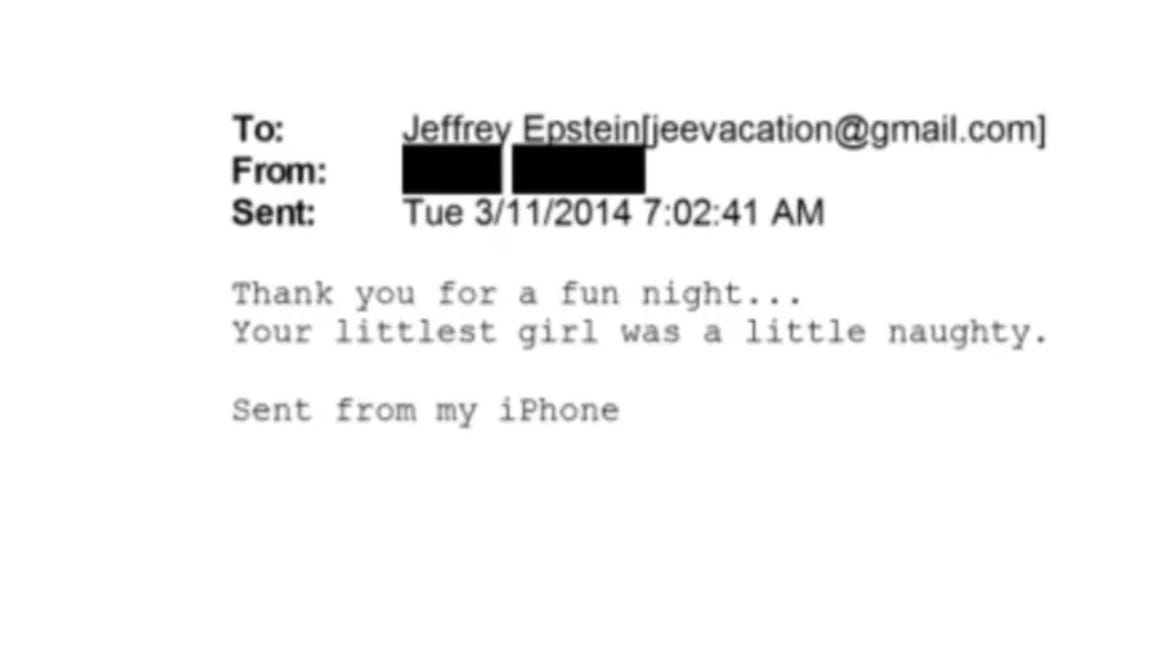
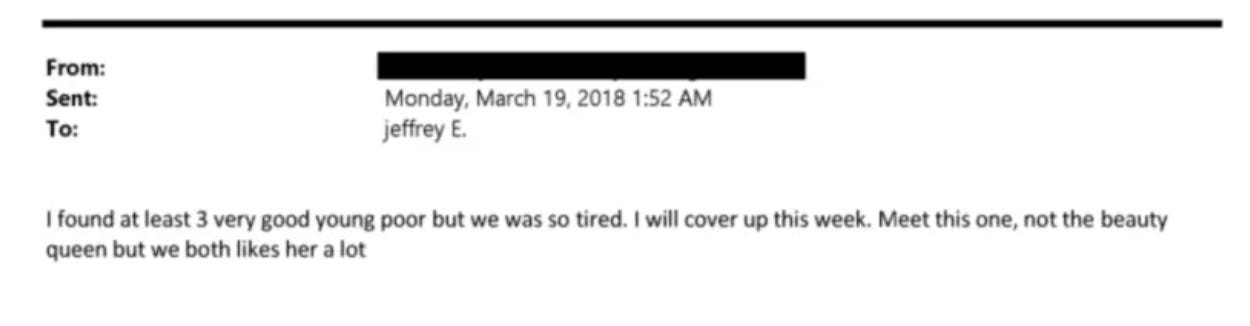
While Republicans are focused on the Clintons, we still don’t know who the redacted name in this email, which was flagged in a CNN report, belongs to:
We don’t know the name behind the redaction of the person who sent Epstein this email in 2018
The survivors deserve to have all of this made public. A number of them plan to attend the State of the Union as guests of members of Congress.
What else will we see this week? Maybe in the wake of his receipt of the Nobel Peace Prize from the actual winner, we’ll see athletes come to the White House to deliver their gold medals to Trump? My bingo card says he’ll float the idea during State of the Union ( I’m only partially joking).
I feel like it’s been a while since we’ve checked in on Monica Cole and the “One Million Moms” that are definitely in the room with her right now as we speak, but this one was just too good to pass up. As many of you may know, I am originally from the Massachusetts/Rhode Island area, and am thus possessed of a certain fondness for Dunkin’ Donuts. Especially since they started carrying coffee milk, the only kind of milk I will drink on its own because I am not a freak like Robert F. Kennedy Jr. and Kid Rock.
It’s like chocolate milk but coffee flavored and it is magical, thank me later.
Anyway! The One Million Moms are very upset about a Dunkin’ Donuts ad that features Megan Thee Stallion, on account of how it is just too sensual.
Let us watch!
If you are a normal human person, you are probably thinking that this is nothing and pretty much as wholesome as a Dunkin’ Donuts ad featuring Megan Thee Stallion could possibly be.
If you are Monica Cole, however, you are thinking:
One Million Moms has received complaints regarding the new ad campaign from Dunkin’ Donuts. The “Dunk N’ Pump” commercial features Megan Thee Stallion, aka hot-girl coach, Pro-Tina, launching the new Protein Refreshers. Unfortunately, the offensive ad also features a vulgar workout routine full of sexual innuendos with an extremely sensual message.
Megan wears a thong skimpy leotard with flesh-colored leggings in this disgusting ad along with the “backup performers” wearing similar outfits. While sipping on a Dunkin’ Protein Refresher, they perform inappropriate and crude moves and the commercial ends with Megan performing the splits.
This type of advertising is entirely unnecessary. Dunkin’ has deliberately chosen to produce controversial advertisements instead of wholesome ones.
Apparently, Dunkin’ executives do not care how damaging and destructive such ads are to our children. Everyone knows kids repeat what they hear and see. This ad demonstrates weak marketing, and Dunkin’ should have the corporate responsibility not to use an age-old euphemism that offends families.
Let them know that, as a parent and a consumer, you are disgusted by their recent irresponsible marketing choices.
Dunkin’ needs to know that parents disapprove!
Man, they are really, really running out of material if this is the most sensual ad they can find to complain about.
What is it she’s worried about? That “kids repeat what they hear and see?” That they will start wearing thong leotards, which do not even come in children’s sizes?
For the record, as I (by strange coincidence) mentioned Friday, I watched this episode of Saved By The Bell approximately 17,000 times as a child and never once purchased a thong leotard or sported mall bangs.
What battle will they be fighting next? The war on the Jane Fonda Workout?
Honestly, this ad is so innocuous that I am convinced that One Million Moms is just trying to take up newly minted MAGA weirdo Nicki Minaj’s beef with Megan as a bizarre show of solidarity. They’ve been really scraping the bottom of the barrel lately. The last commercial they were upset about was the State Farm Super Bowl ad featuring Danny McBride and Keegan-Michael Key, because it “features the scantily clad girl-group KATSEYE dancing provocatively.” For approximately two seconds.
As if that’s the most annoying State Farm ad anyone’s ever seen.
Sadly for Monica Cole, Elmore City, Oklahoma — the inspiration for the movie Footloose — rescinded its ban on dancing some time in the late ‘90s. However! The town of Purdy, Missouri, reportedly still has one on books, so she can just move there and live a life free of dancing, without having to bother anyone else.
This next cartoon is seriously important. It is how every parent of a gay kid who accepts their child’s sexuality feels. Can you imagine a father who accepts his gay son talking to them about lube? And I don’t even want to discuss the parents who refuse to accept their child’s sexuality and instead try to force them to change. Hugs



















 NPR +4
 The Conversation +6












 Scottie's Playtime