For me this was the hardest to watch. I have had to go without food while others ate. I was hospitalized and suffered clinical death due to malnutrition. At the table if I was allowed the meals could turn quickly for me from possible danger to happening harm. I spent a lot of time diving under the table to doge something thrown at me or in dodging the blows aimed at me. Being kicked under the table was common and if I yelped or complained I was the one punished. I learned to eat without looking at my food always looking around out the sides of my eyes because to look scared brought more violence. I was told I ruined their meals. I often could only choke a few bites out of fear and anxiety. I basically ate one meal a day which was at school and mostly was two hot dogs and a serving of french fries, and when school was out I would take a sandwich and stay away from the house. The only place I could eat freely and in peace was my grandparent’s home I went to on the weekends. What these people are going through is a war crime and a crime against humanity that the government of Israel and the military people must answer for. Never again applies to more than Jewish people. Hugs
In its largest employee perk rollout in years, Walmart is extending its 10% grocery discount to cover nearly all food categories for its 1.6 million U.S. workers—marking a significant boost to benefits at the nation’s largest private employer. Announced in a LinkedIn video by Kieran Shanahan, executive vice president and chief operating officer at Walmart U.S., the change is effective immediately and applies both in-store and online, signaling Walmart’s bid to support its workforce amid rising food prices and retention challenges.
In a separate LinkedIn post, JD Mahaffey, group director and global head of executive total rewards, expanded on the new benefit: Previously, Walmart’s 10% discount for employees was limited to fresh produce and select general merchandise, and most grocery items were excluded except during the November to December holiday season. With the new policy, nearly every food category is covered year-round, including staples such as dairy, frozen foods, dry groceries, meat, and seafood. In total, approximately 95% of regularly priced items in-store are now eligible for the discount.
All employees and eligible corporate staff receive a discount card after 90 days of employment. The move was prompted by persistent worker feedback that called for more comprehensive and accessible perks, particularly as food inflation has squeezed household budgets. “We’ve heard your feedback that these savings make a real difference for you and your families,” chief people officer Donna Morris wrote in a staff memo shared with Fortune. In fact, she described it as “one of our most requested benefits.”
Why is Walmart doing this now?
The expansion comes as economic pressures weigh on households nationwide. Recent government data shows food prices for staples such as eggs and meat have jumped sharply year over year. The move also coincides with heightened concerns over new tariffs that threaten to further raise prices across major retailers, Walmart included. More than half of grocery shoppers surveyed in August cited tariffs as their top worry about food costs.
By ramping up employee benefits, Walmart is responding to both external market forces and internal demand. It’s a strategic step designed to bolster recruitment and retention at a time when competition for retail talent is fierce. Analysts note the company’s efforts to improve its work culture, including earlier expansions of training programs, wage hikes for hourly staff, and the introduction of bonus programs for frontline workers.
COO Shanahan explained in the company video: “We know the impact this discount has for so many associates and their families, and one consistent piece of feedback we hear is to look at how we can make our associate discount program even better.”
How does Walmart compare with other retailers?
With the new perk, Walmart’s benefits now align more closely with those of leading competitors. Target offers a similar 10% discount on most merchandise plus 20% off select food items, while Kroger gives staff 10% off house-brand products and other categories. Hy-Vee (a Midwest grocer) and Trader Joe’s have even more generous policies, with discounts of up to 20% for employees.
The timing of the announcement is crucial, coming just days before Walmart’s quarterly earnings release and as the company grapples with both supply-chain challenges and inflation pressures. As economic uncertainty continues to roil the retail sector, Walmart’s expanded grocery discount stands out as both a smart business maneuver and a measure aimed at fostering goodwill among its massive employee base.
In May, Walmart issued a warning along with its earnings report that it may have to raise prices because of the anticipated impact of President Donald Trump’s tariffs. “We’re wired to keep prices low, but there’s a limit to what we can bear, or any retailer for that matter,” chief financial officer John David Rainey told the AP at the time.
Trump responded by ordering Walmart to “EAT THE TARIFFS.” This move by Walmart appears to confirm that Walmart can’t eat all of them, and it will at least be helping its employees take home something to eat for the pre-tariff prices they used to see.
Walmart did not immediately respond to a request for comment.
For this story, Fortune used generative AI to help with an initial draft. An editor verified the accuracy of the information before publishing. (snip)
This is an interview with two doctors who served in Gaza. They tell of Israeli soldiers taking the baby formula the doctors tried to take in. They talk of the starving babies they can’t feed because Israel refuses any baby formula into Gaza. They talk of the systemic targeting of women and children by drone copters. The male doctor describes a game the IDF plays with using teenaged boys 11 to 16 for target practice. One day they would target heads, the next day they targeted chest, then abdomens, then arms, then legs. The most horrifying was the days the hospital was brought teenagers again 11 to 16 who had been shot in the testicles. Yes Israeli soldiers felt it was a great idea to shoot boys in the balls and dicks to make sure they couldn’t create any more Palestinians. I have no use for the government of Israel nor any use for the people of the country who support this. The public knows what is happening, the military knows what they are doing. This is a genocide of the Palestinians so that Jewish people can have the land. Jewish people of all people should understand this is wrong. Never again did not mean just never again to the Jews, it means never again for any genocide. Yes the US government is complicit in this act and should be held to account, but while we did not do enough at least democrats were willing to try to stop it, tRump and the republicans endorse it. There are chapter markings on the progress bar to help you get to the most damning parts of the interviews. Israel is not letting new doctors go in to help. They are killing the doctors and aid workers. Hugs
At an elementary school in Washington, D.C., the speaker at the podium wanted to talk about children’s health and the impact of childhood obesity.
“Our generation is facing so many devastating health problems because of how we live and how we eat — illnesses like diabetes and heart disease and cancer — that cause so much suffering and cost our economy billions,” the speaker said. “And today, we need to ask ourselves: Are we going to hand down these problems to our next generation? Or are we going to do what we’ve always done in this country and leave something better for our children and our grandchildren?”
Someone could mistake these words as being spoken in 2025 by a Trump administration official advocating to “Make America Healthy Again” — the catch-all agenda that has zeroed in on kids’ health and in particular, chronic disease and childhood obesity.
Obama was promoting “Let’s Move!,” her initiative aimed at improving children’s nutrition at home and school and encouraging them to exercise more. The initiative is credited with making improvements to school lunch standards, creating more transparency in food labeling and bringing more awareness to childhood obesity.
But the first lady drew widespread partisan backlash for her efforts, as right-wing media personalities and Republicans vehemently criticized related regulation as government overreach. They have been more muted as the Trump administration, led in part by Health and Human Services Secretary Robert F. Kennedy Jr., now adopts similar messaging about children’s health.
“I do think that there’s a double standard going on, especially with RFK Jr.,” said Sydney Carr-Glenn, a political science professor at the College of the Holy Cross in Massachusetts who studies the intersectionality of race and gender for Black women in politics, including in the media. “People seem to be a little bit more accepting or a little bit more on board with this whole ‘Make America Healthy Again’ initiative.”
Last month, President Donald Trump announced he would revive the presidential fitness test, a once ubiquitous staple of school gym class. Just a few years ago, Let’s Move! offered programming to educators to encourage physical activity at school for at least 60 minutes each day.
President Donald Trump stands, flanked by Secretary of Commerce Howard Lutnick, golfer Bryson DeChambeau, WWE CCO Triple H and Secretary of Health and Human Services Robert F. Kennedy Jr., after signing an executive order restarting the Presidential Fitness Test in public schools in the Roosevelt Room of the White House in Washington, D.C., on July 31, 2025. (JIM WATSON/AFP/Getty Images)
In some ways, Michelle Obama’s health policy efforts walked so MAHA could run. But you won’t find many Republicans acknowledging that.
“We live in such polarized times now that you would think the Trump administration would look at the things that Michelle Obama achieved and maybe try to build upon that,” said Sharon Wright Austin, a political science professor at the University of Florida. “But there is no collaboration. There are no coalitions. I’m sure if you were to say to Trump, ‘You’re doing the same thing that Michelle Obama originally started doing when Barack Obama was president,’ he would probably not only deny it, but he probably would be pretty offended.”
Obama’s motivation to launch Let’s Move!, the first lady explained, was rooted in her experience as a working mother trying to feed her kids nutritious food. The self-described “mom-in-chief” recognized that if she struggled with what to feed her children, other families with fewer resources might, too.
Within months of moving into the White House, the first lady started a vegetable garden to help teach children about locally grown food and to start a conversation about their health. She launched “Let’s Move” in early 2010, and her husband issued a directive to establish a task force on childhood obesity. Michelle Obama was present months later when the task force released a report assessing how to reduce childhood obesity within a generation. It included roughly 70 voluntary recommendations.
First Lady Michelle Obama and White House Chefs join children from Bancroft and Tubman Elementary Schools to harvest vegetables during the third annual White House Kitchen Garden fall harvest on the South Lawn, on October 5, 2011. (Chuck Kennedy/The White House)
Zinga A. Fraser studies African American history and gender politics as an associate professor at Brooklyn College of the City University of New York. She noted that while Obama’s nutrition plans worked within a domesticated and gendered framework, her garden and health initiative was also part of a long history of Black women taking care of their communities through food sustainability.
“She understood what being a Black woman in that space looked like,” Fraser said of Obama’s role as first lady. “How she had to navigate and what it would be perceived as.”
Let’s Move! had several areas of focus: providing information to families about healthy food, improving the quality of food in schools, expanding access and affordability of healthy foods in communities, and increasing physical activity for children.
The first lady sought buy-in from key stakeholders early on. The American Beverage Association, a government lobbying group representing soft-drink makers, committed immediately to member companies voluntarily putting front-of-pack calorie labels on cans, bottles and vending machines within two years. Food service companies that operated in schools pledged to reduce the amount of fat, sugar and salt they put in kids’ meals over the next five years.
But the first lady was also politically savvy in broadening her initiative’s appeal to the general public. She danced on “The Ellen Degeneres Show” and did “mom dancing” on “The Tonight Show” with Jimmy Fallon. She released a “focus group” video with kids that featured comedian Will Ferrell. She shared a fitness video of herself working out. She appeared with members of the Miami Heat, including dunking a ball with LeBron James.
“She was strategic,” said Fraser, who is also director of the Shirley Chisholm Project on Brooklyn Women’s Activism. “She strategically used her positionality in many ways to move a needle, whether people saw it as influential or important at the time or not.”
It didn’t seem that Michelle Obama was entering controversial politics at first. She had settled on an area of public interest — children’s wellness — that was politically viable for a first lady, said Laurel Elder, a political science professor at Hartwick College in New York who has researched public opinion about presidential candidates and their spouses. There had already been a history of first ladies with projects like an anti-drug campaign and expanding literacy.
Elder noted that Obama was promoting a form of “new traditionalism” in the role of first lady.
“[The public] wants them to be traditional, but also the ‘new’ part is they really do have an expectation that the first lady should be out there and visible and should be leading campaigns in appropriate areas,” she said.
But as regulation policy emerged, so did the criticism. A child nutrition law passed at the end of 2010 included a phase-in of new federal school nutrition standards for milk, whole grains and sodium. The narrative that emerged was that the government was telling people what health choices to make.
“Your America is turning into a nanny state thanks to the Obama administration’s efforts to rein in the junk food industry,” said Sean Hannity on Fox News in 2010.
Glenn Beck, also on Fox News, described Michelle Obama’s efforts in 2010 as the beginning of efforts to police people for not eating healthier.
“You’re going to have to tax, you’re going to have to make it more and more difficult. But when those options don’t work, how do you get people to stop eating french fries, because french fries still beat carrots. What’s left? Well, now you have to start thinking about punishments — maybe a fine, maybe even jail. But it always starts with a nudge,” he said.
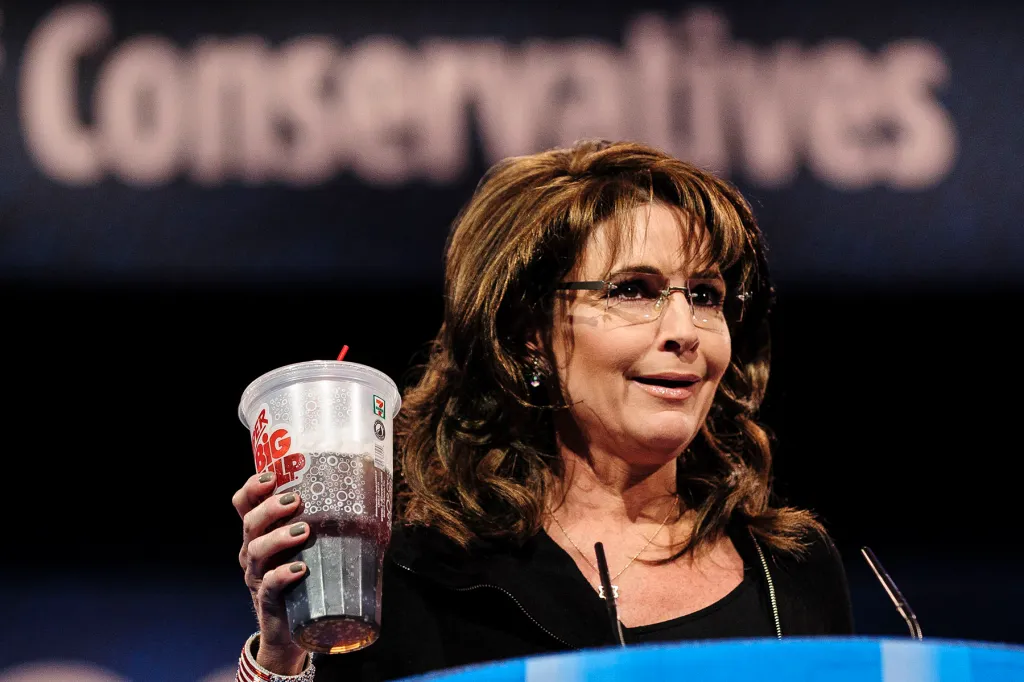
In 2013, former Republican vice presidential candidate Sarah Palin sipped a large soda during an appearance at the Conservative Political Action Conference, known as CPAC. She was responding to a proposed ban of large sodas by then New York City Mayor Michael Bloomberg, but the stunt became part of a larger commentary on the government’s role in people’s health choices.
Sarah Palin holds up a large soda as she speaks about New York City Mayor Michael Bloomberg’s proposed large soda ban, at the 2013 Conservative Political Action Conference, on March 16, 2013, in National Harbor, Maryland. (Pete Marovich/Getty Images)
A MAHA commission released a report this spring for addressing “the childhood chronic disease crisis.” Among its future policy focus will be poor diet, the “aggregation of environmental chemicals,” a lack of physical activity and chronic stress, and “overmedicalization.”
Kennedy told Fox News host Laura Ingraham earlier this year that while he didn’t want to take away “choice” from people, he believed in making changes to food assistance programs and school lunches. Several Republican-led states have recently begun restricting whether people on food assistance programs can buy processed foods and soda.
“We shouldn’t be subsidizing people to eat poison,” said Kennedy, who has separately started promoting that people should track their health metrics via “wearable” technology.
“You can’t cut benefits — Medicare, Medicaid, SNAP benefits, all of those things — to children and families and then still have an initiative where people are saying that they are about creating healthy environments for Americans,” Fraser said.
Natalia Mehlman Petrzela, a history professor at The New School in New York City, noted that when Beyoncé shot a related music video for the Let’s Move! initiative in 2011, she surrounded herself with young children dancing in a school cafeteria. It was common imagery for the first lady as well, as Michelle Obama swayed with kids to get them excited about nutrition and health. Trump’s recent announcement about the presidential fitness test featured former WWE wrestler and current Chief Content Officer Triple H doing a signature water spit at the White House.
First Lady Michelle Obama exercises with students and Olympic athletes during a “Let’s Move” event at the River Terrace Elementary School in Washington, D.C., on April 21, 2010. (Samantha Appleton/The White House)
“To me, that arc kind of says a lot about what’s changed in our wellness and fitness environment,” said Petrzela, who is author of “Fit Nation: The Gains and Pains of America’s Exercise Obsession.” “That now there’s this highly individualistic, ‘strong man’ approach to things, and I think, even more interestingly, it’s tied to that anti-institutional critique, which used to be coded as really left, and in the intervening years, has become, almost completely seen as right wing.”
Austin at the University of Florida said that while Michelle Obama has never been an elected official, she held immense power in her role as first lady and left the White House with high polling. Austin believes the first lady balanced the political challenges of intersectional identities, and her mission to help children continues to resonate 15 years later — even though the messengers have changed.
“It just goes to show that as a Black woman, you’re never going to get the respect that you deserve,” she said.
As I keep repeating these bathroom bills hurt cis women because it is based solely on how someone looks to some other people. If as in this case a cis woman did not look feminine enough for the server and so this woman was forced to show her breasts. How is that feminism work going TERF people. These bathroom bills and the hype of fake false stories of danger to women only make all women less safe. See now people that look like men legally might have to use a female’s bathroom, so all a cis man has to say is he is trans and they can legally be in the woman’s bathroom. Same for any female that wants to go into the men’s room only needs to claim to be a trams women. All due to hate and bigotry making a problem where none existed. Think of it, the only assaults I have heard about in female restrooms is from cis people attacking cis females because they think they are trans. Hugs
The 18-year-old high school student said she unzipped her hoodie to show she had breasts after a Buffalo Wild Wings server didn’t believe she is a woman.
A Minnesota teenager filed a charge of discrimination against a Buffalo Wild Wings restaurant Tuesday, alleging a server followed her into the women’s restroom and demanded she “prove” she was a girl.
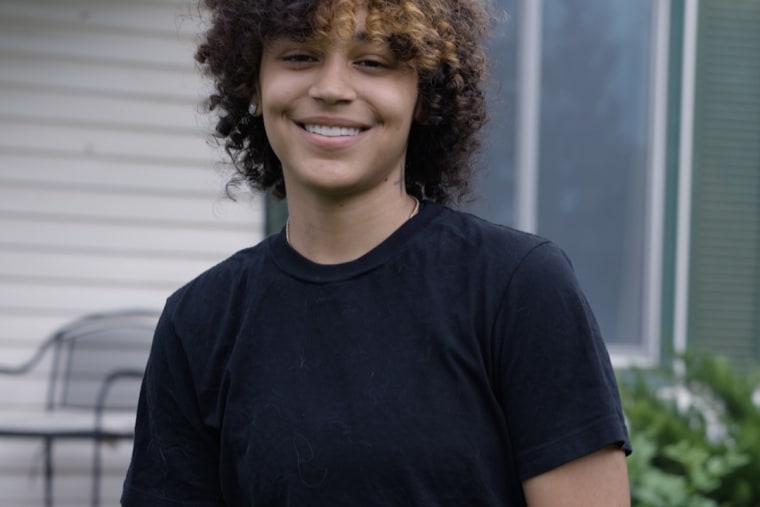
Gerika Mudra, 18, went to dinner in April with a friend in Owatonna, about an hour south of Minneapolis. When she went to the restroom, a server followed her inside and banged on the stall door while saying: “This is a women’s restroom. The man needs to get out of here,” according to Gender Justice, a Minnesota gender-equality organization that filed the charge on Mudra’s behalf.
Gerika Mudra, 18, says she was harassed by a server who accused her of being a boy in the girls’ bathroom.Gender Justice
Mudra, a biracial lesbian who isn’t transgender, said that she has been in similar situations before, when people have suggested she’s in the wrong restroom, but that when she tells them she’s a woman they leave her alone. However, when she came out of the stall at Buffalo Wild Wings and told the server, “I am a lady,” she said, the server responded, “You have to get out now,” Gender Justice said in a statement.
Mudra said she felt she had to prove to the server that she is a woman, so she unzipped her hoodie to show she has breasts. The server didn’t say anything in response but left the restroom, Mudra said.
“She made me feel very uncomfortable,” Mudra said. “After that, I just don’t like going in public bathrooms. I just hold it in. … I want to be able to use the bathroom in peace.”
Inspire Brands, which represents Buffalo Wild Wings, didn’t immediately respond to a request for comment.
Buffalo Wild Wings in Owatonna, Minn.Google Maps
Gender Justice filed the charge of discrimination with the Minnesota Department of Human Rights, arguing that what happened to Mudra violates the state’s Human Rights Act, which protects people from discrimination based on gender identity and sexual orientation, among other protected statuses.
Sara Jane Baldwin, senior staff attorney at Gender Justice, said at a news conference Tuesday that even though Mudra isn’t trans, the server’s actions “were based on assumptions that she made about” Mudra, and that Minnesota’s law protects against discrimination based on stereotypes or assumptions about protected characteristics like gender identity.
“Businesses have a legal obligation not to just have antidiscrimination policies on paper, but to train staff and ensure that those policies are followed in real time,” Baldwin said. “When that doesn’t happen, the business is liable for the harm caused.”
Gender Justice said Mudra’s experience “reflects a broader climate of fear and suspicion aimed at anyone who doesn’t conform to narrow expectations of what girls and women ‘should’ look like.” That suspicion has been driven largely by the wave of state legislation targeting trans people, particularly their access to school sports and bathrooms that align with their gender identities, though Minnesota hasn’t enacted any such legislation.
Nineteen states have laws that prohibit trans people from using bathrooms that align with their gender identities in K-12 schools, and in many of those states the restrictions apply to other government-owned buildings, as well, according to the Movement Advancement Project, an LGBTQ think tank. Twenty-seven states prohibit trans people from playing on school sports teams that align with their gender identities.
“This kind of gender policing is, unfortunately, nothing new,” Megan Peterson, executive director at Gender Justice, said in a statement. “And yet, in our current climate we have to ask: What if Gerika had been a trans person? Would this story have ended differently? That’s the terrifying reality too many trans people live with every day.”
Even if Mudra had been trans, she would be able to file a discrimination complaint under state law in Minnesota, which is one of 21 states and Washington, D.C., that explicitly prohibit discrimination based on sexual orientation and gender identity in public accommodations, according to the Movement Advancement Project. Two states explicitly prohibit discrimination based on sexual orientation only, and six additional states interpret existing measures against discrimination based on sex to also include discrimination based on sexual orientation and gender identity. Twenty-one states don’t have explicit protections from discrimination based on gender identity in public accommodations.
Black Indigenous Chefs Are Reclaiming Identity Through Food — One Dish at a Time by Michael Harriot
Black Native food workers are passing down culinary traditions, restoring lost connections and feeding body and soul. Read on Substack
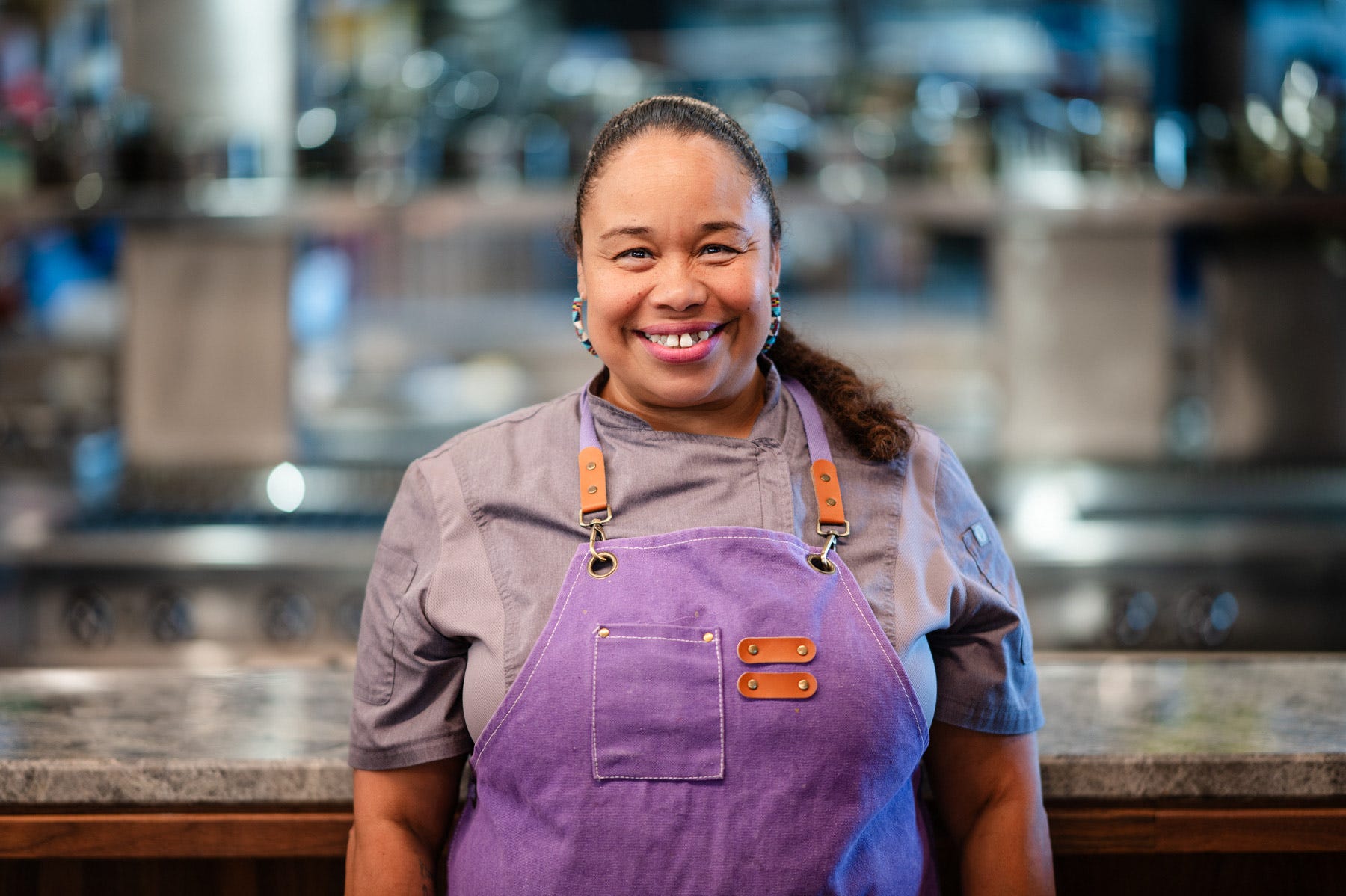
Crystal Wahpepah (Photo courtesy of Crystal Wahpepah)
The Indigenous food movement has seen a renaissance in North America, with restaurant openings, cookbook releases and community initiatives that announce the presence, expertise and heritage of Indigenous food workers. Amidst this moment, Black Native food workers have seen both the beauty and the harshness of living at the intersection of Blackness and Indigeneity, as the dominant settler colonial culture of the United States often tries to erase or flatten all parts of their identities.
But those attempts at erasure have also provided moments of reflection and insight, and a realization that the mission of Black Indigenous food workers is profoundly spiritual and political healing work. For Stephan Oak, a Black and Lakota forager and woodworker who lives in Detroit, the threads of connection that Black Indigenous people hold in their family stories that are “steeped in violence, but also steeped in love and resistance” are also guides that allow them to connect in the past, present, and future — a shared cosmology.
Crystal Wahpepah, who is Black and Kickapoo and the executive chef and owner of Wahpepah’s Kitchen in Oakland, Calif., says that often, through representation and education, Black Native people in the food industry come to a deeper peace about their identity and heritage. At Wahpepah’s Kitchen, over cornbread dishes from the Ute and Kickapoo people, wild rice from the Great Lakes tribes and bison from the Great Plains, people often find themselves.
“I meet so many people who are Black and Native but never felt connected to their Indigenous side, and when they meet me, they start talking about it, about culture, about those things that have been lost,” she says. Wahpepah is also opening a new restaurant, A Feather and a Fork, which is also the title of her upcoming cookbook.
That loss is something felt in both Black and Indigenous communities and can often feel pronounced because of family separation through residential schools, land expulsions, the trans-Atlantic slave trade and the domestic slave trade that broke up Black families across the country. “Because of colonial violence, there’s a fractured relationship to home or your connection to your ancestors,” says Oak. “The intent of the colonizer is to stop you from looking … to accept the identity of the conditions they’ve placed on you.”
Food is one of the ways Oak and others are reclaiming autonomy over their identities, especially as governments use food as a weapon by depriving communities of affordable, culturally relevant food. Oak points out that even amidst food deserts on reservations and urban Black communities, people find ways to be more self-sufficient and connect back to the land, which helps them reconnect with the essence of who they are. (snip-MORE; lots more but not too long)
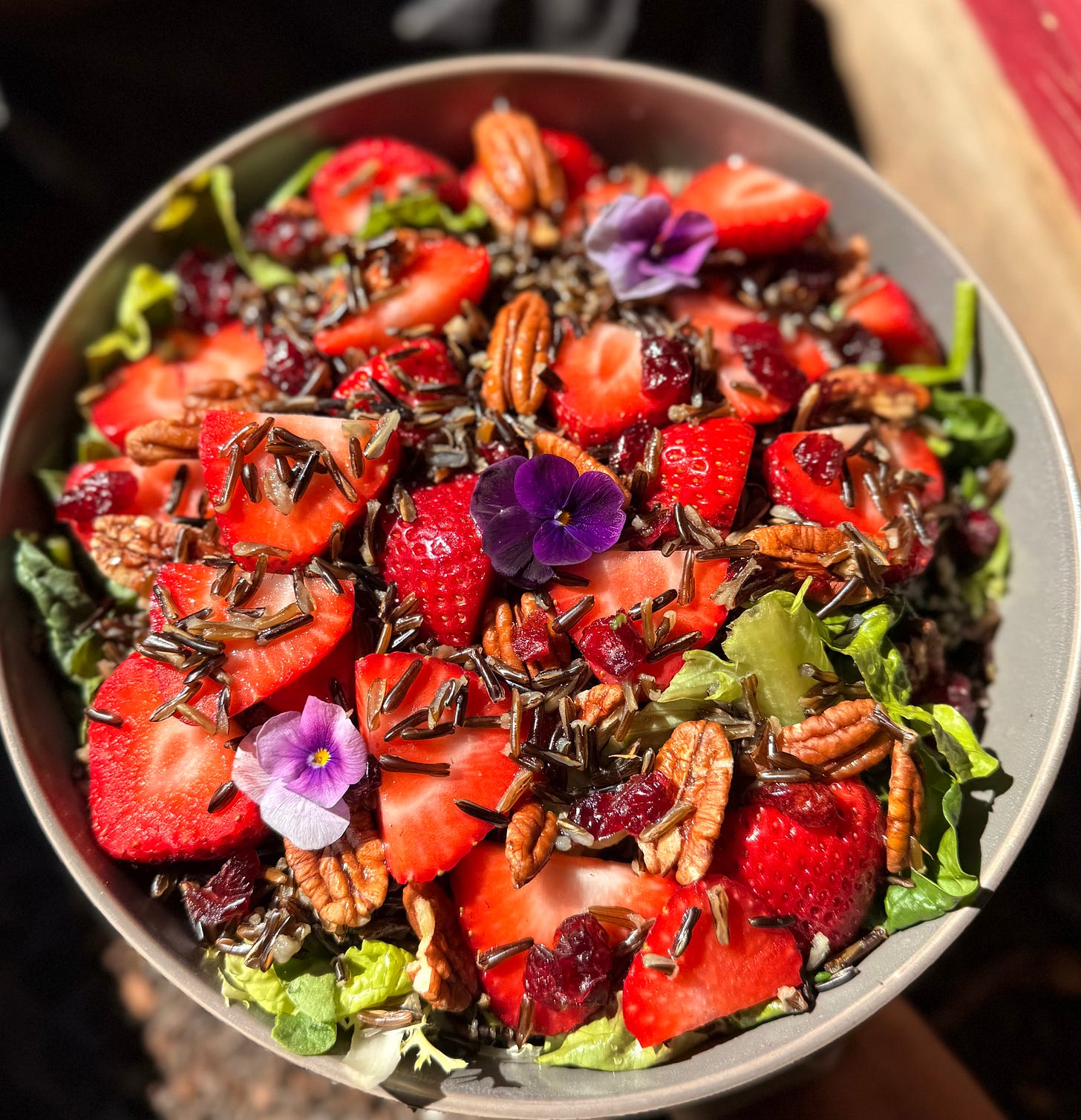
Crystal Wahpepah’s wild rice salad with strawberries and pecans (Courtesy of Crystal Wahpepah)
After over 21 months of Israel’s brutal assault on Gaza, the humanitarian crisis in the Strip has reached its worst point yet. 94% of Gaza’s hospitals have been destroyed or damaged. Dozens of children have died from malnutrition. And Israeli troops continue to kill scores of Palestinians as they try to receive food from the so-called “Gaza Humanitarian Foundation.”
In this second part of Zeteo’s live ‘Unshocked,’ Dr. Yasser Khan – a Canadian ophthalmologist and plastic surgeon who has traveled twice to Gaza since October 7, 2023 – describes to Mehdi and Naomi how Israel’s humanitarian assault on Gaza has turned injuries and disabilities in Gaza into, “a death sentence.”
Dr. Yasser Khan: “It was horrific, the most horrific things that I’ve ever seen.”
In the interview, Dr. Khan shares the stories of his many patients, the vast majority of whom he says were women and children.
Dr. Khan also discusses how upon returning from Gaza, many of his colleagues in the medical field refused to believe such stories, with some even going out of their way to tell him that, “‘he’s done nothing to be a hero.’”
Dr. Khan explains how he came to the conclusion that what he was seeing in Gaza was indeed a genocide and why he takes so much inspiration from the people in Gaza. Mehdi, Naomi, and Dr. Khan also take questions from a live audience.
Do consider becoming a paid subscriber so you can get early access to exclusive content like this.
Also, if you are interested in learning more about Israel’s assault on Gaza’s healthcare system, check out Zeteo’s most recently acquired documentary, ‘Gaza: Doctors Under Attack.’

 By Nick Lichtenberg Fortune Intelligence Editor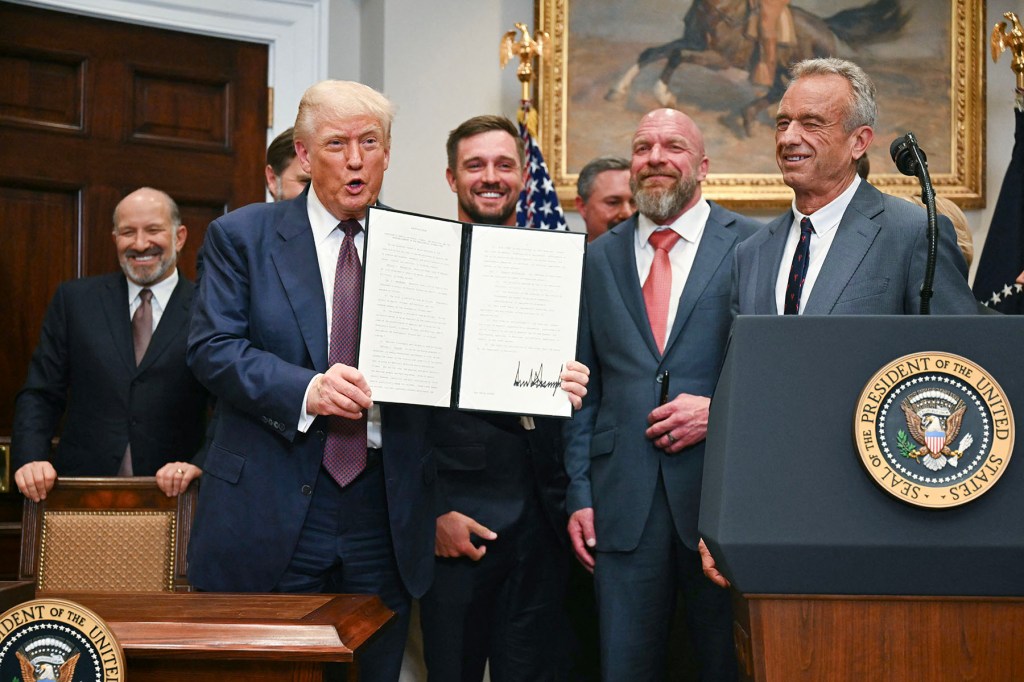




 Scottie's Playtime