Health update for Scottie

I almost went to bed at 3 pm, as I had not gone to bed or slept today.  Ron begged me to please try to stay awake as he was at his sister’s and insisted when he got home he would make supper.  

I struggled to stay awake and fell asleep many times at my desk until Ron got home.  I helped him prepare supper while falling asleep.  He did offer that if I couldn’t stay awake, he needed me to try to eat a quick sandwich.  But I was able to help help by peeling the potatoes.  

Ron made the four pork chops we bought today with shake and bake that I love, and he made brown gravy to go with the potatoes.  And he made corn.  I was so excited that I took one pork chop and a huge amount of potatoes and gravy.   A big mistake but I was looking to what I most enjoy.  

I cut up and ate about a total of about five pieces of the pork which was grand.  But I wolfed into the potatos.  I ate most of them but soon ran out of steam.  I only had a couple of small spoons full of corn. Then I sat there trying to make myself eat more.  

Ron walked by my office and noticed I was struggling and asked me how I was doing.  I explained to him how happy I was for the meal and how good it tasted … but I was already full.  He looked at what I ate and was thrilled.  I was like why, I took too much and did not finish it all.  A sin in my childhood that could get you beaten.  

He picked up my stuff as I helped and told me “Scottie you ate and ate a lot for you at this time of night”.  “I was very afraid you would just go to bed with out eating like you have done for weeks”.  He was very happy I ate.  But I am so tired I have to go to bed.  He is taking care of everything because when I tried to help I almost fell down.  I wanted to do comments today and to tell the story of Ron’s catheterization, but instead I got two days of the cartoons / memes roundup done.  So if I fail tomorrow at least they will be there for everyone.  Again much thanks to Ali who has been so wonderful not only with her posting, comment answering but also in sending me encouraging emails.  I would have closed the blog if not for her efforts.   Hugs

Some Majority Report clips about politics, bigotry, craziness.


Political cartoons / memes / and news I want to share. 4-27-2026


Here’s some good life advices from my upcoming book Mega Chicken Fun-Time Super Special (pre-order here)


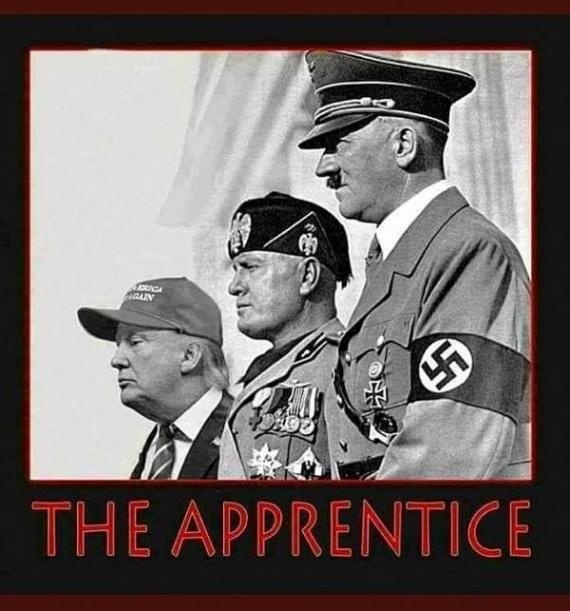
#Trump and Hitler from Social Justice In America


The tasteless, classless, orange clown is destroying our capital.

Ron Filipkowski (@ronfilipkowski.bsky.social) 2026-04-24T22:58:06.268Z


#politics from Cartoon Politics

#politics from Cartoon Politics


Image from Liberals Are Cool


Image from Liberals Are Cool


Image from Visual Fiber

#politics from Cartoon Politics


#donald trump from Saywhat Politics

#politics from Cartoon Politics


Most of us on the left would much prefer a conservative committed to liberal democracy and the rule of law than a rightwing autocrat committed to neither. This is really not difficult to understand. https://t.co/4WIHfOKvXX

— Darren Johnson (@DarrenJohnson66) April 16, 2026

#politics from Cartoon Politics


#trump is a threat to democracy from hopes & fears


Image from Saywhat Politics

Image from reynard61


#republican assholes from Social Justice In America


#leaving from Outspoken Black Man


#politics from Cartoon Politics


#politics from Cartoon Politics


#politics from Cartoon Politics


#politics from Cartoon Politics


image


Image from Liberals Are Cool

#war from AZspot


#politics from Cartoon Politics


Image from Progressive Power


#politics from Cartoon Politics


#politics from Cartoon Politics


#eat the rich from Dr. Doug Douglass

#eat the rich from Dr. Doug Douglass

#eat the rich from Dr. Doug Douglass


Image from Depsidase

#tax the corporations from Social Justice In America


#federal taxes from Social Justice In America


#tariff rebates for corporations from Republicans Are Domestic Terrorists


image


Image from Quaker Joe


Image from Visual Fiber

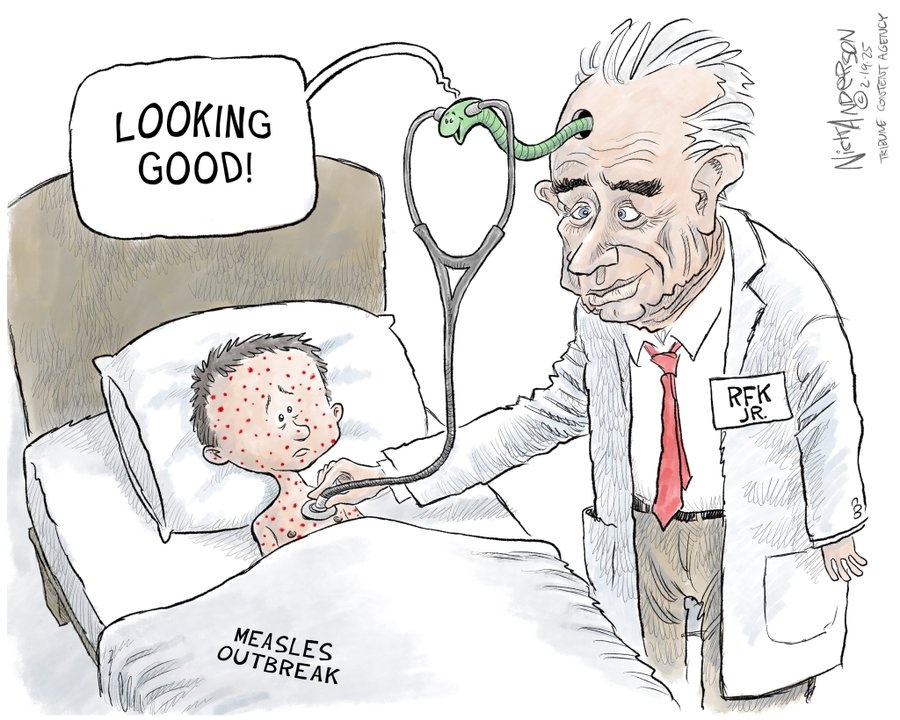
#rfk jr is not a doctor from Social Justice In America


#usps from Liberals Are Cool


Image from It seemed like a good idea at the time...


Image from Depsidase

#social services from Social Justice In America


#big ugly bill from Social Justice In America


#politics from Cartoon Politics


#politics from Cartoon Politics

#politics from Cartoon Politics


#redistricting from Social Justice In America


#politics from Cartoon Politics


Leavitt Claims Charlottesville Nazi Rally Was A “Hoax”

#anti-fascist from Autumn's Leaves

#anti-fascist from Autumn's Leaves

#white people twitter from White People Twitter


#Trump and Hitler from Rejecting Republicans


#traitor trump from Alan's Posts


#politics from Cartoon Politics


#politics from Cartoon Politics


#politics from Cartoon Politics


#fuck trump from A sudden, violent jerk....


#fuck republicans from MyRandomStuffPage


#politics from Cartoon Politics


#politics from Cartoon Politics


#politics from Cartoon Politics

#politics from Cartoon Politics


Image from Spineless Dems and Whiny Republicans


#politics from Cartoon Politics


#politics from Cartoon Politics


#politics from Cartoon Politics

#politics from Cartoon Politics

#politics from Cartoon Politics


#politics from Cartoon Politics


#politics from Cartoon Politics


Image from Post-Texas Stress Disorder


Political cartoons / memes / and news I wish to share. 4-26-2026

image

image

image


Image from Untitled


Neil deGrasse Tyson’s 5-Minute Takedown of Right Wing Hosts’ IDIOCY

Tyson makes great points how the privacy issues dealing with trans people and also the sports issues.  He suggests ways to handle each of these situations.  He explains it is better to solve the issues instead of forcing everyone to live as was done in the past.  Hugs

Today Is Arbor Day, 2026!

Trees are as close to immortality as the rest of us ever come.”

― Karen Joy Fowler

“You know me, I think there ought to be a big old tree right there. And let’s give him a friend. Everybody needs a friend.”

― Bob Ross

https://onetreeplanted.org/blogs/stories/inspirational-quotes-about-trees

Arbor Day Dates Across America

National Arbor Day is always celebrated on the last Friday in April, but many states observe Arbor Day on different dates throughout the year based on best tree planting times in their area. (snip-see the chart on the page)


Home
 » Holidays & Events » Minor Holidays Arbor Day 2026: What and When is Arbor Day?

Arbor Day 2026: What and When is Arbor Day?

What Is Arbor Day?

Arbor Day is a national holiday that recognizes the importance of trees. The most common way people celebrate Arbor Day is to get together in groups to plant trees. (snip)

How Did Arbor Day Start?

The day was the brainchild of Julius Sterling Morton, a Nebraskan journalist who later became the U.S. Agriculture Secretary under President Grover Cleveland. Morton was an enthusiastic promoter of tree planting, had long championed the idea of a day dedicated to planting trees.

When Was The First Arbor Day?

Arbor Day was first celebrated in Nebraska on April 10, 1874, following a proclamation by Gov. Robert W. Furnas. In less than a decade, the idea for the holiday caught on in other sates until, by 1882, its observance had become a national event. Nebraska made Arbor Day a legal holiday in 1885, moving it to April 22, Morton’s birthday. An estimated one million trees were planted during the first Arbor Day.

Many other countries around the world set aside one day each year to celebrate trees, though not all of them take place on the same day as Arbor Day. One of the oldest is Tu Bishvat, a minor Jewish holiday that usually falls in late January or early February. In ancient times, the people of Israel used this day to plant trees and celebrate their gifts by eating dried fruit and nuts, including figs, dates, raisins, carob, and almonds. (snip)


Advance Advice For May Day

May 1 General Strike: The Very Best Reason to Stay Home and Read

by Carrie S · Apr 23, 2026 at 2:00 am · View all 3 comments

NB: originally this post was published under Sarah’s byline. This post is by CarrieS.

On May 1, you can fight fascism by staying home with a good book. A coalition of organizations across the country is calling for a general strike. This strike calls for no school, no work, and no shopping.

May Day Strong is made up of a coalition including but not limited to Indivisible, 50501, Sunrise Movement, and MoveOn. Many of the coalitions joining May Day Strong are local, so in addition to visiting the May Day Strong website, you should also keep an eye on your local groups.

In addition to withdrawing your labor and your commerce, you can join your community to make the strike even more visible. There will be a lot of demonstrations around the country and local sources are often the best places to get information about them. Because this is a one-day strike, it’s important to be as visible as possible and demonstrate just how many workers, students, and shoppers are on the side of democracy.

Here’s what the strike demands (taken from the main webpage):

  • That we tax the rich so our families, not their fortunes, come first,
  • No ICE. No war. No private army serving authoritarian power.
  • Expand democracy. Hands off our vote.

How is this relevant to the SBTB community? In addition to the fact that we support the causes that this strike promotes, strikes are an important part of feminist history. Women have been crucial in the success of the labor movement in the U.S.A., as leaders, strikers, volunteers, and educators. Here a just a few examples:
  • I’ve previously written about Dolores Huerta, who co-founded the United Farm Workers Association.
  • Our Kickass Woman coming up in May will be Emma Tenayuca, a Mexican-American woman from Texas, who led a strike of 12,000 pecan shellers in 1938.
  • The Mink Brigade was the name given to wealthy society women who supported the garment workers’ strikes in the early 1900’s. By marching and picketing along with workers, they lent prestige and respectability to the cause, and their presence tended to reduce violence from police.
  • Black and white photo of Lucy Parsons, a dark-skinned woman in a striped dress with curly black hair
  • Lucy Parsons
  • Lucy Parsons led a march of 80,000 people in 1886 in the first May Day Parade. Among other causes, she championed the 8-hour workday.
  • Ai-jen Poo has been organizing domestic workers since 1996 and is currently the president of National Domestic Workers Alliance and the director of Caring Across Generations. Domestic workers had been considered too difficult to organize, making Ai-jen Poo’s success all the more remarkable.
  • My personal favorite, Emma Goldman, was a Russian Jewish immigrant who was described as “The most dangerous woman in America.” Despite dedicating her life to her work, she always prioritized joy. She is credited as saying, “If I can’t dance, I don’t want to be part of your revolution,” but what she actually said was:
    I did not believe that a Cause which stood for a beautiful ideal, for anarchism, for release and freedom from conventions and prejudice, should demand the denial of life and joy. . . If it meant that, I did not want it.

The Zinn Education Project has a wonderful list of women in the U.S.A. labor movement. You can also find stories of women in the labor movement at the National Park Service website.

I’m closing with my favorite version of “Bread and Roses,” performed by Judy Collins and choir. In 1911, Helen Todd, a suffragist and labor rights activist, used the phrase “Bread and roses” in one of her speeches:

Not at once; but woman is the mothering element in the world and her vote will go toward helping forward the time when life’s Bread, which is home, shelter and security, and the Roses of life, music, education, nature and books, shall be the heritage of every child that is born in the country, in the government of which she has a voice.

Rose Schneiderman

Rose Schneiderman, a remarkable woman who was born in Poland, came to America as a child, and campaigned for suffrage as well as improved safety condition for workers, used the phrase in her speeches, including this one from 1912:

What the woman who labors wants is the right to live, not simply exist — the right to life as the rich woman has the right to life, and the sun and music and art. You have nothing that the humblest worker has not a right to have also. The worker must have bread, but she must have roses, too. Help, you women of privilege, give her the ballot to fight with.

In 1911, James Oppenheim wrote a poem inspired by the slogan. Mimi Farina set to music in 1974. The song will forever be associated with the Lawrence Textile Strike, also known as the Bread and Roses Strike, of 1912. This strike was largely organized and conducted by women, who, along with children, made up the majority of the workforce in the mills.

Women have always been crucial to the success of strikes in America and worldwide. Why stop now? On May 1, protest, march, or stay home and read, but if you are able, join the strike.

No work, no school, and no shopping: by ceasing these three actions, we honor our past and our future.

More Decent News About Trans Rights


RFK Jr agenda suffers another loss as trans advocates hail ‘huge step forward’

Judge’s repeal of Trump ban on gender-affirming care for children ‘a meaningful win for patients’, experts say

A federal judge overturned the Trump administration’s ban on gender-affirming care for children on Saturday, decrying Robert F Kennedy Jr’s “wanton disregard” for the law that “causes very real harm to very real people”.

It’s another loss for Kennedy’s agenda as secretary for the US Department of Health and Human Services (HHS) under the second Trump administration – an agenda that has focused on restricting healthcare, including vaccines, abortion and gender-affirming care.

A different legal decision recently halted the agency’s attempt to raze vaccine recommendations, and new research and regulatory decisions have undermined controversial announcements by Trump and Kennedy on autism.

“Unserious leaders are unsafe,” Mustafa T Kasubhai, a US district judge in Oregon wrote in the opening to his final judgment on the gender-affirming care case, a 49-page decision that excoriated the administration for disregarding the law and overreach in its regulations. The judge also barred the administration from implementing similar policies under any other names to restrict care nationally by withholding funding.

Shannon Minter, legal director of the National Center for LGBTQ Rights, called the ruling “incredibly powerful” and “far-reaching”.

“It enjoins them from doing anything to interfere with the authority of states to regulate medical practice,” Minter said.

For healthcare providers and families who have been in limbo for months, “this is a huge, huge step forward”, said Jan Oosting, an associate professor of nursing at City University of New York (Cuny).

Khadijah Silver, director of gender justice and health equity at Lawyers for Good Government, who uses they and them pronouns, said they were “so overwhelmingly ecstatic” and “couldn’t actually process” that the ruling “was real life”.

In December, Kennedy announced that any health system providing pediatric gender-affirming care would be suspended from receiving Medicaid and Medicare funding. Medicaid and Medicare would also be banned from paying for any gender-affirming care, he said.

As nearly all major hospitals and health systems rely on Medicaid and Medicare, the proposed rule amounted to a ban on gender-affirming care for children, setting a precedent for the government limiting healthcare for any patients.

At the same time, Kennedy issued a declaration invoking a regulation to allow the HHS to exclude healthcare providers from Medicaid and Medicare when the providers no longer “meet professionally recognized standards of healthcare”. Unusually, the new rule was enforced immediately, without going through the usual rule-making process, including public comment.

Gender-affirming care often includes puberty blockers and hormones, but can also involve psychosocial support and, very rarely and after extensive medical consultation, surgery. It is widely agreed to be essential to the health of gender-expansive individuals. The Kennedy declaration claimed pediatric gender-affirming care for minors was “neither safe nor effective” and therefore fell below these standards.

Declarations like these are meant to be used for emergencies when the HHS needs to communicate the steps it’s taking to protect public health, Silver said, who added: “They have never once been abused in such a fashion to go against standards of medical care that are widely accepted … let alone to override the state’s primary authority in the regulation of medicine.”

Minter said: “This was an attempt by the federal government to impose a national ban and usurp the authority of states to regulate medical practice within their borders.”

Within eight days, the HHS general counsel, Mike Stuart, began referring health systems to the HHS office of inspector general for violating the new policy. The decision included several screenshots of posts from Stuart celebrating referrals of health systems for violating the rule.

At least 40 health systems have said the threat of losing federal funding is why they stopped providing care in recent weeks. Oregon and 21 other states sued the administration. In response, the US government argued that the Kennedy declaration was merely an individual’s personal opinion.

When the judge overturned the declaration, he called this argument “a bald-faced lie” and an attempt to “bully or gaslight” the court. The judge said the Kennedy declaration was “clearly unlawful” because it violated administrative law and the Medicare statute that forbids federal officials from exercising “any supervision or control over the practice of medicine or the manner in which medical services are provided”.

Following the judge’s preliminary injunction against the new rule in March, Children’s Minnesota began offering gender-affirming care again.

When another health system, Children’s Hospital Colorado, ceased care, patients and families sued the hospital. The case is currently before the Colorado supreme court, where judges have expressed concerns that forcing the hospital to resume care could bring federal backlash, endangering even more children. Silver noted that reversing the federal ban now could change the outcome of that case.

“This should be a huge relief and a tremendous source of protection” for families and children whose care was delayed or disrupted, Minter said. When health systems announced they would comply in advance with the directive and stop providing gender-affirming care, often effective immediately, it was “shocking and appalling behavior”, he said, but this decision “should remove that fear” and allow the care to resume.

Oosting noted that the “biggest source of fear, which was the threat of losing Medicare and Medicaid funding, is removed now, so I think that there will be reassessment by each individual hospital of what programs are going to be put back into play, what programs will have to be modified”. That’s especially true in states like New York that have laws against discrimination in healthcare, she said.

The proposed rule preventing Medicaid and Medicare from paying for gender-affirming care is also blocked by this decision, Minter said. The rule did not come before the judge because it hasn’t been finalized, but Minter reads the ruling as “effectively prohibiting those rules from being enforced as well”.

Challenges still exist for children who need gender-affirming care but may not be able to access it.

“Although this removes a major federal barrier, it doesn’t erase those state-level restrictions,” Oosting said. Some states have introduced bans on the care. In Ohio, the state’s supreme court will rule on whether a ban is constitutional in coming months.

Some families in states with bans or gaps in healthcare are once again able to access care by moving or traveling out of state – a “burdensome”, disruptive and expensive process, but an “important” one, Minter said.

Overturning the ban was a “meaningful win for patients and providers and, honestly, for healthcare integrity in the US”, Oosting said. It lessens fear and uncertainty around seeking and providing care, and it shows that “major changes in healthcare policy have to follow the law,” Oosting said – which has repercussions for other politicized changes to health regulations, like limitations on abortion. It was “a powerful tool to stop the federal government from that type of attempted overreach” in healthcare, Minter said.

The decision reinforces the fact that “the federal government can’t use Medicare and Medicaid restriction as a blunt-force instrument to control care and access to people’s bodies,” Oosting said. It’s significant not just for making gender-affirming care available again but also because it sets “the rules of the road – how far the federal government can go in terms of influencing what’s happening in a patient exam room”, she said.

ICE Death Toll Climbs To Horrific Heights


4th Amendment Workplaces

When ICE Shows Up, These Businesses Will Be Ready

Across the U.S., training, resources and hotlines have emerged to help workplaces exercise their rights in the case of an ICE raid.

By: Emily Nonko

Last April, at the James Beard Foundation’s Chef Action Summit, food industry leaders gathered to discuss the political and economic landscape with one concern hanging grimly in the air: undocumented and immigrant workers were increasingly afraid to come into work after ICE raids ramped up at the outset of Trump’s second term. 

But it just so happened the summit took place in Asheville, North Carolina, where activists had already asked, “What would it take to make this the safest state for immigrants in the south?” as Andrew Willis Garcés, senior strategist with the immigrant justice organization Siembra NC, puts it.

One answer: 4th Amendment Workplaces, a framework developed by Siembra NC and launched at the summit to help restaurants and other businesses train up on legally vetted protocols to defend employees against ICE. The idea quickly took hold — there are now over 1,000 4th Amendment Workplaces across North Carolina, with 4th Amendment Workplace resolutions passed in three cities and similar efforts underway across 12 states. 

It’s emerged as perhaps the most powerful workforce training to help businesses prepare for ICE raids, but it is not the only one. Across the country, training, resources and hotlines have been developed for workplaces, alongside an effort to harness the wider labor movement as a force against ICE. 

Though the ICE raids that make the news often take place on the street, workplaces are in fact a frequent target. “We’ve seen ICE this year go into workplaces more than a lot of other kinds of places where people are gathered,” Willis Garcés explains. “With workplaces, there’s usually an open door you can walk through.”

According to the American Immigration Council, ICE publicly reported at least 40 worksite enforcement actions resulting in over 1,100 arrests within the first seven months of the current Trump administration. Businesses employing noncitizen workers — restaurants, car washes, automotive shops, bakeries, nail salons — are typically targeted. ICE has also scaled up large raids at workplaces like meatpacking and manufacturing plants. 

These raids often represent legal violations, which 4th Amendment Workplaces raise awareness around. The Fourth Amendment to the U.S. Constitution guarantees “the right of the people to be secure in their persons, houses, papers and effects, against unreasonable searches and seizures” without a warrant based on probable cause — that is, reason to believe that a crime may have been committed.

In North Carolina, volunteers canvas businesses across the state to share what it means to be a 4th Amendment Workplace: identify invalid ICE warrants, secure private employee areas, document unconstitutional actions and defend all workers, no matter their immigration status. Resources include a workplace guide, organizing toolkit, posters signaling opposition to unconstitutional search and seizures, employee handouts and tips for designating private employee areas. 

Workplaces can request dedicated training, in which organizers help business owners and employees develop workplace-specific protocol, and lead them through roleplaying scenarios. “We help you think through … what would you do right after the fact? What would you do to preserve footage, how do you support families left behind, what’s the immediate triage that needs to happen [after a raid]?” explains Willis Garcés.

Scuppernong Books of Greensboro was an early adopter, participating in training, promoting itself as a 4th Amendment Workplace, hiring a lawyer, regularly keeping staff informed of ICE response protocol, even publishing a book on how to resist ICE. Co-owner Steve Mitchell says it is “absolutely essential” for business owners to step up on behalf of employees, especially if the owners are white and legally protected residents: “It’s important for people like us to say that this isn’t right, and we’re going to stand on this side of the issue.”

Even though there hasn’t been a heavy ICE presence in Greensboro, the bookstore’s work with Siembra NC “gives us some sense of confidence,” Mitchell says. “Whether that’s misplaced or not, it at least helps us know what our rights are in that situation.” He adds that using Siembra’s model has made the business feel connected to a broader network of activists.

Willis Garcés describes that model as “plug and play,” easily adaptable outside the state and across a variety of workplaces. Siembra NC recruited small businesses first, with the goal of expansion into higher-targer workplaces like factories and farms.

Today, some North Carolina farmers display giant vinyl banners about their constitutional rights, a riff on Siembra NC’s signage. In Oregon, organizers dubbed themselves “Baddies for the Fourth.” In Minneapolis, the 4th Amendment Workplace was a central demand in a public-pressure campaign around Target

There have been other efforts to develop localized training. In New York, Nonviolent Peaceforce trains mostly within the city’s Asian American community, which it has worked with since the pandemic. Last year, ICE raids erupted across the city’s Chinatown.

Nonviolent Peaceforce’s in-person training happens with trusted community partners and focuses on de-escalation and self-regulation tactics, alongside scenario and role-playing. “We came to develop scenarios really at the request of community members who felt that they really needed to know what it was like to be in the moment,” says Roz Lee, head of the organization’s U.S. efforts. She says simple tactics to slow things down — like introducing yourself, asking ICE agents their name, asking for a warrant and taking time to inspect it — can shift a potentially intense and traumatic interaction. 
Other groups have tied the urgency around ICE to larger labor organizing efforts. Emergency Workplace Organizing Committee (EWOC) emerged to help non-unionized labor organize in response to COVID-19. More recently, EWOC developed resources for resisting ICE, which are tied to broader workplace organizing tactics like facilitating conversation among employees, building a committee and planning collective action together. 

“These steps are very universal, whether you work in an office, in a kitchen, at a nonprofit,” says Wes Holing, an EWOC organizer. “If you’re talking about bread-and-butter issues, or you’re talking about a workplace that’s safe from ICE, you’re still ultimately fighting for a place that respects you as a person.” 

This January, EWOC partnered with Twin Cities Democratic Socialists of America to hold a No-Work Workshop to train workers on their rights and protections to participate in the Anti-ICE General Strike. It was part of a much larger mobilization among Minneapolis residents and businesses responding to Operation Metro Surge.

The city mobilized far beyond one-off trainings; instead, an entire ecosystem emerged. “The sheer volume, the sheer magnitude of mobilization … it felt like every single person I knew was extremely active,” says Mike Urbanski, who helps lead legal observer training with Monarca. Monarca is a project under the immigrant justice organization Unidos MN, which canvassed businesses in Twin Cities’ immigrant communities. They’d then direct people to Monarca’s ICE hotline as well as its two-hour, in-person training, which focuses on “upstander” legal observation tactics.

Monarca’s trainings were also shared through social media, word of mouth and within community spaces and houses of worship. “We could post a training with 1,000 people in Minneapolis and fill it within four or five days,” Urbanski says, “And most of those people would come, and another 100 people would just show up.” 
The Workers Solidarity Circle also canvassed and shared resources among Twin Cities businesses, channeling that energy into the Minneapolis Worker’s Assembly this February, which brought together over 300 unionized and non-unionized workers across sectors. “It was about building working class power and coordinated strike action, to really push people into action and not wait on managers, bosses or labor officials to save us,” says organizer Aminah Sheikh.

Now that Operation Metrosurge has wound down, organizers have turned their attention to this upcoming May Day: organizing strike committees, holding strike trainings, conducting labor education and committing unions and community organizations to strike on May 1st. Sheikh says there is a growing realization that workers must build political power far beyond their workplace. 

“Listen, in order for us to really stop — abolish — ICE, like people are saying, from the grassroots,” she says, “then we need to do economic disruption.”