The video below shows another shooting where the ICE thug fired into a car striking a person when he shifted his weapon to his other hand. The car was not moving and full of pepper spray. The man was not trying to drive. Yet ICE told a judge the man had weaponized his vehicle in an attempt to run over ICE thugs. The judge dismissed the case because ICE refused to hand over the body cam footage that showed what the ICE thug did and that DHS was lying. Again. Hugs
The Third Amendment to the United States Constitution prohibits the quartering of soldiers in private homes without the owner’s consent during peacetime and requires a legal process for such actions during wartime. It was ratified in 1791 as part of the Bill of Rights, largely in response to British practices before the American Revolution.
U.S. President Donald Trump has turned Greenland into a geopolitical hotspot with his demands to own it(Note: there is a video of this report on the page, if you prefer; click the title just above -A)
By EMMA BURROWS AP european security correspondent January 16, 2026, 12:17 AM
In their words: Greenlanders talk about Trump’s desire to own their Arctic island
(Snippet:)
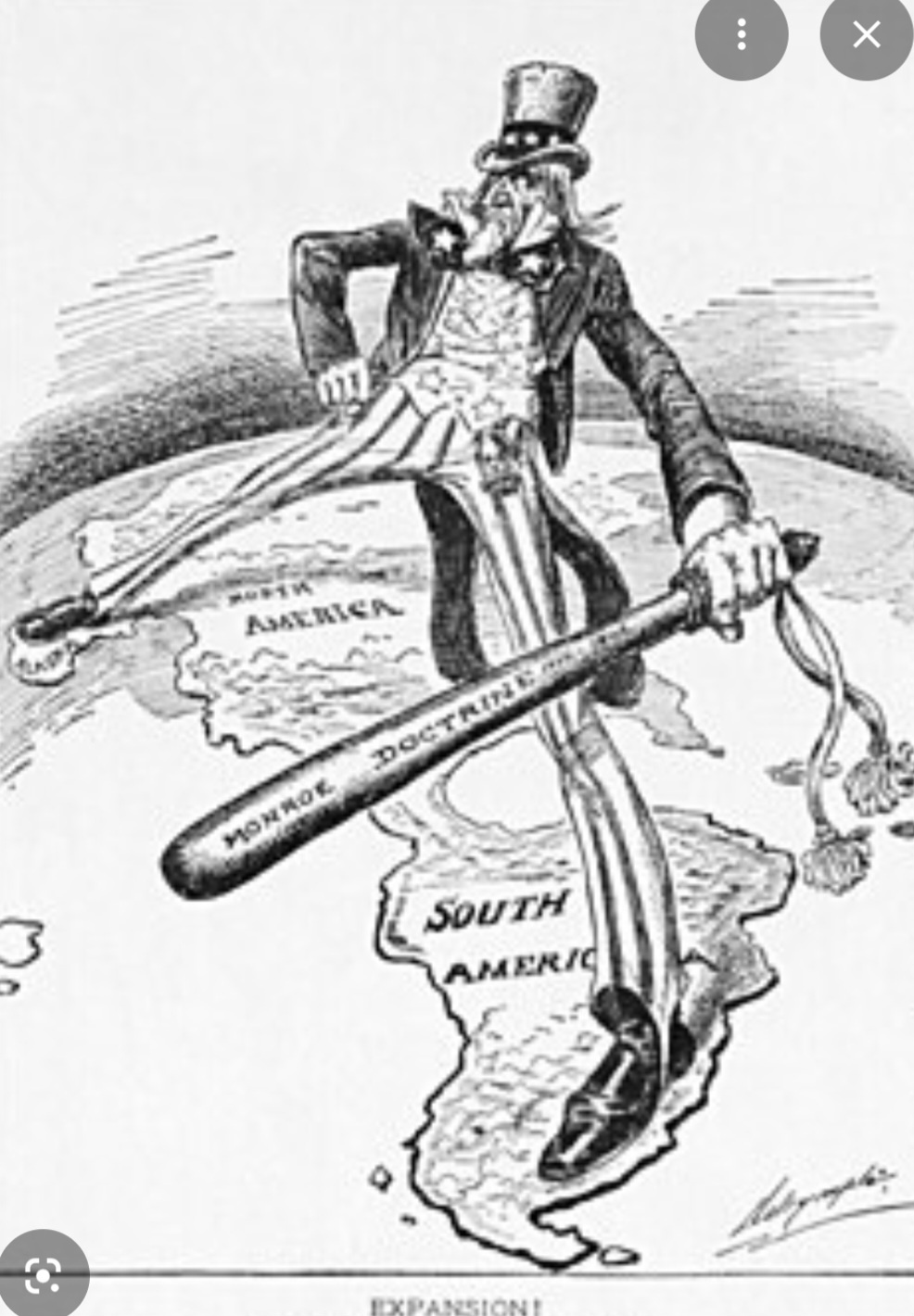
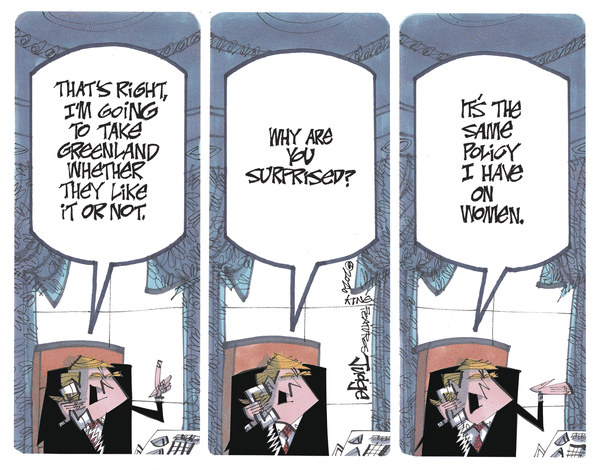
NUUK, Greenland — U.S. President Donald Trump has turned the Arctic island of Greenland into a geopolitical hotspot with his demands to own it and suggestions that the U.S. could take it by force.
The island is a semiautonomous region of Denmark, and Denmark’s foreign minister said Wednesday after a meeting at the White House that a “fundamental disagreement” remains with Trump over the island.
The crisis is dominating the lives of Greenlanders and “people are not sleeping, children are afraid, and it just fills everything these days. And we can’t really understand it,” Naaja Nathanielsen, a Greenlandic minister said at a meeting with lawmakers in Britain’s Parliament this week.
Here’s a look at what Greenlanders think:
Trump has dismissed Denmark’s defenses in Greenland, suggesting it’s “two dog sleds.”
By saying that, Trump is “undermining us as a people,” Mari Laursen told AP. (snip-MORE)
==========
(It’s like another world inside my state, which is sorta nice. -A)
TOPEKA — Union leader Jake Lowen told the hundreds of workers who gathered Wednesday in the first floor rotunda of the Statehouse to look around and take in “the house that labor built.”
He referenced the stonemasons who cut every piece of limestone in the walls. The iron and steel workers who raised the dome, with the help of operating engineers who ran the hoists built by machinists. Plumbers, boilermakers and electricians brought light, heat and water.
Lowen, the executive secretary-treasurer of the Kansas State AFL-CIO, said some of the workers who started building the Statehouse, which took 37 years to construct, never saw it finished. At least seven gave their lives in the process, he said.
“The work was hard and the price was high, and yet they persevered,” he told the crowd that was gathered for an annual “solidarity day” labor rally.
He said the workers were building a Statehouse by day and a movement by night. In 1890, the year they raised the Statehouse dome, workers formed the Kansas State Federation of Labor, he said. (snip-MORE)
I’ve updated the web version of the post, but I wanted to send out an email update too so that readers on the ground in the Twin Cities are aware of the resource.
I’ll republish Governor Walz’s quote for emphasis:
“Tonight, I want to share another way you can help: Witness.
Help us establish a record of exactly what’s happening in our communities.
You have an absolute right to peacefully film ICE agents as they conduct their activities.
So carry your phone with you at all times.
And if you see ICE in your neighborhood, take out that phone and hit record.
Help us create a database of the atrocities against Minnesotans – not just to establish a record for posterity, but to bank evidence for future prosecution.”
If you are local to the Twin Cities, and feel safe and able, this is a concrete way in which you can help.
Miles Taylor explains how in tRump’s first term he was shocked to find the president had checks on his authority / power. Once he heard about the insurrection act he kept talking as if it gave him total power and control over the US, the kind of power he has always craved person power to rule by decree like in his personal business. Hugs
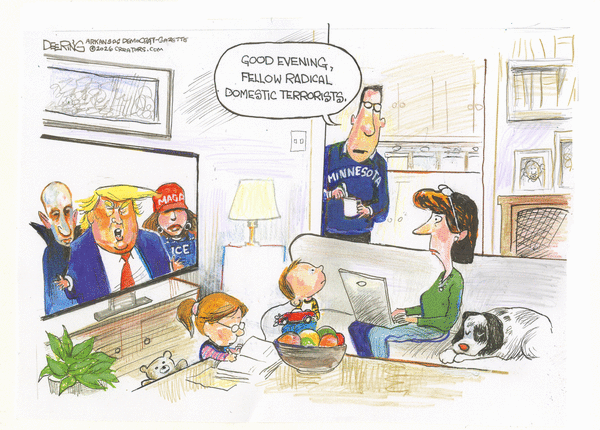
This is about the post Ali sent me the link to and I then posted. This is where I first heard it. I love when Sam shares the news. He says that being terrorism as anyone who holds anti-Christian, anti traditional family values (read LGBTQ+), anti capitalism, anti ICE, anti American exceptionalism sediments. If you have any of those ideas or feeling you are a terrorist according to Stephen Miller and Russell Vought. Hugs
Caller witnessed ICE arrest a US citizen. He also told a police officer and the cop did nothing. They stopped the guy because he looked Hispanic. Racial profiling which Kavanaugh originally said was OK but now says it is not when it is already too late. Racism on steroids. One guy handed them his wallet to prove his citizenship but the ICE gang thugs just threw it away. They make a bonus for each body so they don’t care if a person is a citizen or not. Hugs
I am sorry but ICE and DHS / FBI are on a mission to ethnically cleanse the US of non-white people. They feel it is OK to do anything to accomplish that. They are like religious fanatics in that way. Anything for their deity or god, and in this case their god is white supremacy. Nothing may be allowed to come between their goal of a white only US. Just as fanatical Christian hate groups want to cleanse the US of the LGBTQ+ and other religious groups so only their religion is the one people see or can use, the ICE white supremacist only want white people in the US and they want those white people to be obedient to authority, especially the white woman. At this point they will do anything including murder people to get what they desire. If we do not stop them now we will be stuck fighting them in every city and blue state in the US. Notice the claim by the government … does it sound familiar? Hugs
… the federal agency had claimed that two men were inside a van that officials said tried to ram ICE vehicles and run over agents during a Dec. 24 operation in Glen Burnie.
Department of Homeland Security officials have changed their account of last month’s shooting involving ICE agents in Glen Burnie. (U.S. Department of Homeland Security via X)
Department of Homeland Security officials changed their account of last month’s shooting involving ICE agents in Glen Burnie, a day after Anne Arundel County police disagreed with the federal government’s original version of events, according to a Baltimore Banner report.
Until Friday, the federal agency had claimed that two men were inside a van that officials said tried to ram ICE vehicles and run over agents during a Dec. 24 operation in Glen Burnie. Agents opened fire on the van and wounded its driver, identified as Tiago Alexandre Sousa-Martins, an immigrant from Portugal whose U.S. visa expired in 2009. The second man, Salomon Antonio Serrano-Esquivel of El Salvador, was also injured.
However, on Thursday, Anne Arundel County police said Serrano-Esquivel was not in the van during the incident. According to police, he was already in custody in an ICE vehicle.
Following the release of the new details by police, DHS spokesperson Tricia McLaughlin walked back the agency’s claims that Serrano-Esquivel was in the passenger’s seat of Sousa-Martin’s van, according to a statement obtained by the Banner.
Find out what’s happening in Glen Burniefor free with the latest updates from Patch.
On Friday, McLaughlin also said that Serrano-Esquivel was in ICE custody and was injured when Sousa-Martins rammed the ICE vehicle he was in.
According to federal authorities, ICE officers were conducting a targeted operation in Glen Burnie on Christmas Eve when they approached the van driven by Sousa-Martins. Federal officials claimed Sousa-Martins was told to turn off the engine; however, officials said he refused and tried to flee, ramming his van into several federal vehicles and attempting to run officers over.
The officers fired their weapons and hit Sousa-Martins, who crashed the van, according to the Department of Homeland Security’s statement.
The new version of events provided by both federal and local authorities echoed an account given to The Banner shortly after the shooting by an attorney who visited Serrano-Esquivel at the hospital.
Alex Major told the Banner that Serrano-Esquivel, a landscape worker, was pulled over by federal agents along with a family member in Southern Maryland and taken into custody Wednesday morning, hours before he was accused of riding in the van that rammed ICE officers.
A bystander’s video reviewed by The Banner also showed a white van following a crash. Agents removed one man from the vehicle and took him away on a stretcher. In the video, there was no sign of a second man inside the van.
I love Erin’s posts and reporting. The attack on trans rights and health was planned and coordinated by religious conservatives who felt they lost the culture war on gay acceptance and same sex marriage so they decided to jump quickly on the trans issue with lots of money. Their first attempt failed because they went after the idea of trans people itself. So then they changed to the old “protect the children” play book with the entire focus on protecting little cis girls but they never mention the trans boys that cis boys need to be protected from. See how patristical it is? It is all about males needing to protect the little womans. They don’t care about trans kids, they don’t care about female sports. It is about not letting trans kids transition with puberty blockers and the correct hormones as then the kids will grow up as they are fitting the societal view of what men and women look like. That scares the straight cis male religious guys because they are terrified they will be attracted to a trans woman. Imagine the horror if trans people moved freely in society not raising any question of their gender because they conformed to how society sees each gender. That sounds like a grand thing to me, but it terrifies these fanatical religious grifters that want to control how everyone lives to please their god. They make up untrue and scary what ifs, what if a man uses the letting trans people use the bathroom of their gender ID to go into a girls … notice they phrase it girls not womans because that make people more protective from the start, and they harm a little girl, your little girl? Well nothing stops a man from doing that now! Predators don’t need permission and won’t wait for it. And that has happened where a straight cis male dragged a little girl into the male bathroom and raped her while his friend watched. There was a famous court case on it. Look it up if you want. Want to know what has not happened, a trans woman going into the female’s bathroom and assaulting a female. Sorry. The right has tried hard to make one happen, but each claim of a trans person in a locker room or bathroom acting inappropriate has been debunked and disproven. This is all a made up scandal and crisis by people who can not accept the society progressing beyond the old traditional binary they grew up with and they think their holy books claim must be as their god insists on it. Weird how it is always how their god insists on what they already believe or promote. Handy that. So many people can not move past the idea that if it dangles you MUST be a boy regardless of how you feel and if it is an inny you must be a girl regardless of anything else idea. They can not seem to grasp personal feelings, needs, or medial science. Hugs
The bill would establish the Affirming Health Care Trust Fund, administered by the State Treasurer, to support clinics and providers outside the reach of federal funding threats.
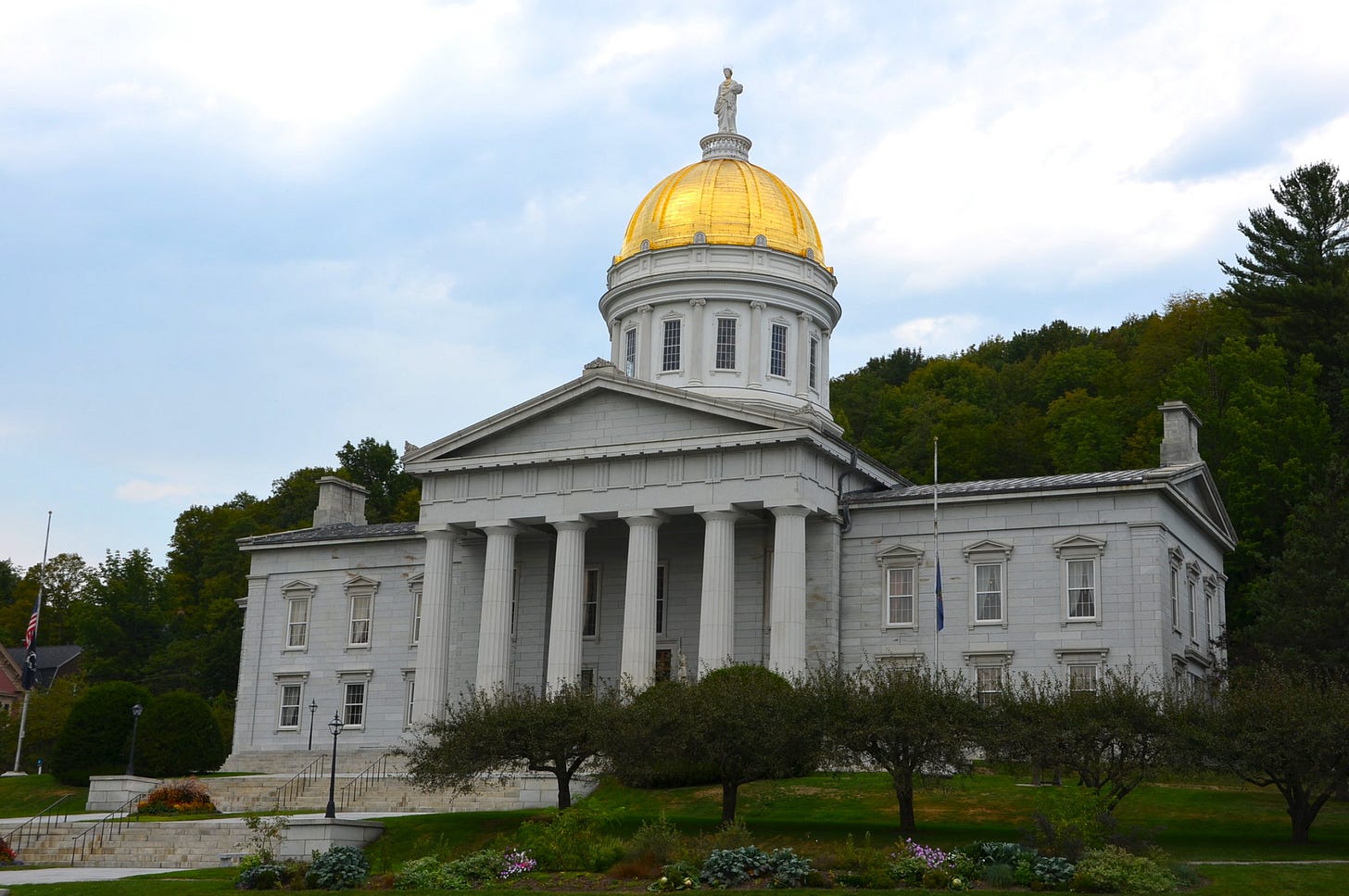
Vermont Bill Would Create State Trust Fund For Private Trans Youth Care Clinics As Trump Threatens Hospital Funding
The bill would establish the Affirming Health Care Trust Fund, administered by the State Treasurer, to support clinics and providers outside the reach of federal funding threats.
Erin In The Morning is a reader-supported publication. To receive new posts and support my work, consider becoming a subscriber.
Across the United States, gender-affirming care has come under sustained attack in Republican-led states and from the Trump administration. For transgender youth, those attacks have been especially severe, with roughly half of U.S. states now banning such care outright. At the federal level, the administration has waged an intense pressure campaign against hospitals, threatening funding and prompting many systems to drop their care programs altogether. That campaign has now escalated further, with the federal government moving to threaten hospitals’ entire Medicaid and Medicare funding if they continue providing transgender youth care. In response, some states and cities are beginning to fight back by establishing their own funding mechanisms for trans healthcare. The latest example comes from Vermont, where lawmakers have introduced a bill to create a trust fund for gender-affirming care designed to be entirely insulated from federal funding threats.
H.576, introduced by Representatives Daisy Berbeco, Tiffany Bluemle, and Troy Headrick, would establish the Affirming Health Care Trust Fund. Administered by the State Treasurer, the fund would provide direct monetary support to healthcare providers and nonprofits offering gender-affirming care in Vermont. It would cover costs for patients who would otherwise go without treatment, fund the establishment of Vermont-based clinics, and pay for malpractice and liability insurance for clinicians who continue offering care. The bill is part of an increasing movement towards private clinics as a mechanism to survive federal threats.
The bill also includes provisions designed to protect patient information from both federal pressure and out-of-state threats, going further than the recent “refuge” or “shield” laws passed in several blue states to protect transgender youth care. It explicitly bars the board and other state actors from disclosing patient-identifiable data, the identities of providers, or the identities of award recipients to the federal government. This is a significant protection given the wave of abusive legislation and attempts to subpoena transgender healthcare records nationwide. While federal preemption may ultimately be litigated, these provisions give clinics a stronger legal footing to resist such demands—particularly as similar subpoenas have been repeatedly quashed in recent court cases.
The bill comes as families scramble to locate alternatives to hospital systems that are abandoning them. With more than 20 hospitals closing their doors to transgender youth care out of fear and preemptive compliance with the Trump administration, many families have been forced to seek alternatives. Just this week, major hospital systems across Colorado, for example, have stopped providing care. Groups like the Trans Youth Emergency Project say they have the capacity to refer displaced patients to private clinics, and in many places those clinics do exist and are absorbing demand. But as hospital-based programs continue to shut down and demand rises, those private providers will need sustained support—and more clinics will need to be created. Bills like this are a targeted way to do exactly that.
If this bill passes, Vermont would be the latest state to protect care in this way—but it would not be the only one. Massachusetts passed a similar measure last year, allocating $1 million toward transgender youth care clinics, though that funding has already come under criticism as insufficient to meet statewide need in the wake of major clinic closures. In New York City, newly elected mayor Zohran Mamdani has pledged $65 million for transgender healthcare. If that funding is realized, it would position New York City as a major hub for private clinics capable of absorbing demand created by hospital closures across the country. This strategy could prove to be a critical backstop for private providers that are already emerging—and that are likely to come under increasing strain in the years ahead.
The bill allows funding from state appropriations, private donations, grants, and—importantly—federal funds under a future administration that is protective of transgender healthcare. It would take effect immediately upon passage, with the board required to convene by August 1, 2026. There are still hurdles ahead: the bill must advance through committee, pass both chambers, and ultimately receive meaningful funding to function as intended. But its introduction alone signals something important. At a moment when hospitals are retreating and families are being forced into crisis planning, Vermont lawmakers are putting forward a concrete framework to protect access to care rather than surrender it. For Vermonters who want to see their state take a clear stand, residents can find and contact their legislators through the Vermont General Assembly website to make clear where they stand on protecting transgender healthcare.
Erin In The Morning is a reader-supported publication. To receive new posts and support my work, consider becoming a subscriber.