
FunnySeriousFunny. Very well done. Carefully consume liquids while listening.
Tag: Justice
On Deciding Who To Support In A Primary
This is a thing for me: I’m one of those who says, “Watch the primary candidates. Pay attention, and make a decision based on who resonates with what I want. Do this without tearing apart the other primary candidates (in my party.)” Without tearing apart candidates who could end up winning the primary, because face it: in my state, and even here on Scottie’s Playtime, most people are not as liberal as I am. So, in the primary, I vote for who I want. In the general, so far, it’s always gonna be a Dem, and Dems have a hard enough time running against always well-funded Republicans, and who, in my state, are also the majority, passing laws to make it more difficult to elect anyone who isn’t a rightwingnutjob Republican. This is the thing I dislike about some “media” who count themselves as liberal: they make a choice based on a single issue (and, frankly, the gender of the candidates often figures in, like it or not; many like a “bro”) then proceed to eviscerate the primary oppo. This suppresses the actual vote because people take the message that everyone’s basically the same, so no point voting in the primary, or at all.
Here in Kansas, we’ve got an experienced woman running for Governor. She’s been in the legislature for a while, knows who she’d be working with, and is familiar with government law and procedure. So far, there really isn’t anything to undercut her, from what I know. She’s not as liberal as I am, but is left-moderate enough to allow me to communicate with her what I believe she should do in her work, and to actually consider it on some level. Then, we’ve got a young man running. Nothing wrong with him that I can see, either, except he’s not got as much experience in state governance. This will put him at a disadvantage working with our legislature, which might/maybe/could turn less red but likely will remain Republican majority. I haven’t decided who I prefer as yet. I know of her, not so much yet of him. I like what they each say, as far as we know from this report.
So, she did point out that he has accepted donations from CoreCivic and from their lawyers. He’s also said more than once that he will continue to oppose CoreCivic moving back into KS and opening an I.C.E. detention center. Personally, I believe a person can take some campaign contributions without becoming the donators’s best friend in government. It happens more frequently than people realize. In this system we have with no public campaign finance, the campaigns need money, and will have to take legal donations. Brava/o to anyone who truly has never done that; I know it can be done, but it’s a special district who will get out and support their candidate, with the price of running a campaign these days.
So I am not holding campaign contributions against anyone as yet. Actions speak louder than words. So far, there is nothing in either candidate’s actions that make me distrust either one. I also am not unhappy with the way this forum went as far as we know; where while the candidates pointed out differences between them, there was not out-&-out “crushing” or “destroying” or “ripping” of each other. Here’s (below) a news story about KS’s Dem. Gubernatorial campaign. What I’m most disappointed about is the number of lines given to reviewing the campaign contributions, rather than each of their answers to the other questions listed in the story below. There could have been plenty of space for that if they’d merely reported the campaign contribution issue along with the rest, rather than dwelling on it. But, even the KS Reflector is not a friend of Democrats; it’s the same sort of coverage we always get though better than known mainstream.
In the midst of the coarse political rhetoric that seems worse every passing year (and does not originate with actual Democrats!), I hope we can remember: in the primary, choose the one most close to your perfection, which means supporting them: discussing things in their favor, giving positive reasons for your support, and not eviscerating the other candidates. This works in all U.S. primary elections everywhere.After that, support the one who wins. Otherwise, we get a fkin’ Republican.
Kansas Democrats running for governor clash on CoreCivic, party establishment in forum
By:Sherman Smith-April 26, 2026
SHAWNEE — Kansas Sen. Cindy Holscher positioned herself at a Sunday night Democratic forum as the anti-establishment candidate for governor with a history of winning in legislative districts formerly held by Republicans.
Her top opponent in seeking the party’s nomination, Kansas Sen. Ethan Corson, argued he is the only one who could win in the November general election.
The candidates staked out nearly identical policy positions during the 50-minute forum at the Aztec Shawnee Theater. The questions were submitted in advance by Kansas Young Democrats.
Both support raising the state’s minimum wage, making it easier to vote, and access to reproductive health care.
And they both identified the Republican supermajorities in the state House and Senate as their real opponent.
Holscher, from Overland Park, said Republicans were unable to lower property taxes during this year’s legislative session, despite their ability to pass anything they want.
“So they keep going back to the culture war issues,” she said. “And this past session, instead of solving actual issues of affordability and putting more money in your pockets, what did we get? We got this bathroom bill. We got two Charlie Kirk bills. None of those are going to put money in your pockets.”
Corson, from Fairway, touted his endorsements from Gov. Laura Kelly, former Gov. Kathleen Sebelius, and Planned Parenthood Great Plains Votes.
“Leading candidates in the Republican Party want to take Kansas backwards on reproductive freedom, public education and so many other issues,” Corson said. “We cannot let that happen. That is why this campaign has earned the support of trusted leaders who understand both the stakes and what it takes to win a statewide election in Kansas.”
Holscher’s response: “I’m running on my record, not the coattails of the establishment.”
About 150 people showed up to hear the two Johnson County Democrats make their case for the August primary vote. A dozen or more people wore bright blue Holscher T-shirts, and at least a couple donned black Corson T-Shirts. An engaged crowd, and available alcohol, ensured a spirited reaction to comments.
They applauded Corson when he said the city of Leavenworth was wrong to approve a conditional use permit for CoreCivic to reopen its private prison as an immigration detention center.
“I believe that private prisons have no place in our carceral system,” Corson said. “I will never support a private prison being built in Kansas. I will never support an ICE detention facility being built in Kansas.”
But the loudest applause came when Holscher attacked Corson for having taken the maximum campaign donation from CoreCivic during his 2024 Senate campaign, and $5,000 from the law firm representing CoreCivic for his gubernatorial campaign.
“You can’t say you’re against private prisons or ICE detention facilities when your campaigns and personal life are intertwined with that very business,” Holscher said. “I have consistently stood with the community opposing ICE overreach. I have never taken CoreCivic money and never will.”
A spokesman for Holscher later clarified that Corson received donations of $4,000 from Anna Kimbrell on Nov. 19, 2025, and $1,000 from Ed Wilson on Oct. 27, 2025. The two are partners for Kansas City, Missouri, law firm Husch Blackwell, which represented CoreCivic in the company’s lawsuit against Leavenworth.
The start of the forum was delayed 45 minutes because the two candidates discovered the party had given them different sets of rules. Party chair Jeanna Repass declined to say what the discrepancy was, but she insisted it was “minor.”
Before the candidates took the stage amid the rumble of storms outside, there was a moment of silence for the attempted violence Saturday night at the White House Correspondents’ Dinner.
“Just remember,” Repass said, “we don’t solve our differences with violence. We do it by voting.”
Questions touched on affordability, water crisis, young voters and Medicaid expansion.
Corson said the state should invest in building 100,000 houses per year, including 5,000 in rural areas, and work to make higher education accessible to any young person who wants it.
“I’m going to be in my mid-40s, and my wife and I, every single month, are still paying our student loans,” Corson said. “So I understand what it means for higher education to be unaffordable, to feel inaccessible, and to feel like it’s crowding out all these other things that you want to do in your life, whether it’s buying your first home, starting a family.”
Holscher said she wants to hold landlords accountable for high rent and to put a cap on fees. She warned about the threat that water-thirsty data centers pose to farmers. And she pointed out that, as a member of the House in 2017, she helped pass a Medicaid expansion bill — although it was vetoed by then-Gov. Sam Brownback. She also said she worked with the bipartisan caucus that eventually overturned the Brownback tax experiment.
It was her birthday, and her supporters served cake in the lobby.
“If you want someone fighting for the people, you want someone building a broad coalition of nurses, of teachers, people in your neighborhood, farmers, veterans, union members — that’s who I have on my side, not the establishment,” Holscher said.
Coretta Scott King
An unsung hero.
From Joyce Vance In Regard To The Accused WHCD Shooter:
What You Need To Know About the Charges Against the Correspondents’ Dinner Attacker
Today, the government charged Cole Tomas Allen with attempt to assassinate the president, interstate transportation of a firearm, and discharging a firearm during a crime of violence. Prosecutors asked a judge in the District of Columbia to detain Allen in custody pending trial.
The charges filed against Allen differ from what U.S. Attorney Jeanine Pirro suggested they would be over the weekend, but, as we discussed, that was to be expected, with charging decisions remaining fluid as officials learn new information. A prosecutor indicated that the attempt to assassinate Trump was made with a 12-gauge pump action shotgun, but that Allen was also carrying a .38 caliber semi-automatic pistol, three knives, “and other dangerous paraphernalia.”
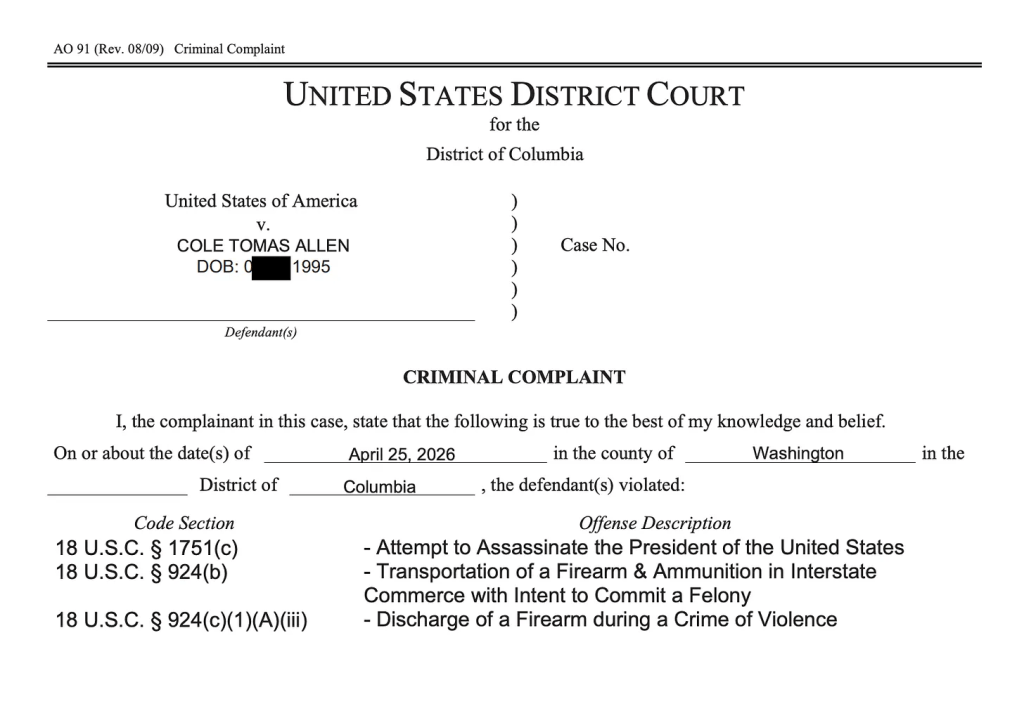
This is a criminal complaint, issued by a judge based on an agent’s affidavit, attesting to probable cause. The government will almost certainly follow up with a grand jury indictment in the next week or two. If they don’t, the judge will hold a preliminary hearing within 14 days if Allen remains in custody, 21 days if he’s released (which isn’t happening here), to determine whether probable cause exists. Federal prosecutors almost never go this route because it requires them to put their evidence on full display at this early stage in the proceedings, and unlike grand jury proceedings, where the defense doesn’t have a role, it permits cross-examination of the government’s witnesses. Expect a grand jury indictment shortly.
The lead charge here is “attempt” to assassinate the president, in violation of 18 U.S.C. 1751, so we need to understand a little bit about that crime and what prosecutors will have to prove. An attempt is referred to as an inchoate, or incomplete crime. With attempt charges, the key questions center around whether the defendant had the intent to commit the underlying crime and whether he took a substantial step—more than mere preparation—toward completing it. Here, based on the details in the government’s affidavit, which we’ll get to in a moment, its case looks solid. Allen evidenced an intent to kill the president. And the government has plenty of evidence to argue he went beyond “mere preparation” and took a substantial step toward committing the offense, since he was armed and running for the door to the ballroom, at the point when he was arrested.
The penalties for attempt and for the underlying offense are almost always the same under federal law, and that’s true here, with the statute providing for up to life imprisonment upon conviction.
Allen is also charged, as we expected last night, with violating 18 USC 924(c), which prohibits using a firearm “in furtherance of” a crime of violence. It carries a 10-year penalty if the firearm is fired, which is how Allen is charged. The complaint adds in one count of 18 U.S.C. 924(b), which makes it a crime for anyone who intends to commit a felony to transport a firearm across state lines. The punishment for that crime is up to 10 years in prison.
In order to get the complaint, the government had to provide the judge with a sworn affidavit from a federal agent. The 7-page affidavit provides some interesting details about the government’s evidence, but contains standard language advising the judge that “This affidavit is intended to show merely that there is sufficient probable cause for the requested complaint and does not set forth all of my knowledge about this matter.”
On March 2, President Trump announced he would attend the White House Correspondents’ Dinner, according to the affidavit. Allen then:
- Made a hotel reservation at the Washington Hilton on April 6 for the night before, the night of, and the night after the dinner.
- Traveled by train from his home near Los Angeles to Chicago, and from Chicago to Washington, D.C.
- Checked into the Washington Hilton hotel the night before the dinner and remained there overnight.
We also get detail that we’ve been lacking until now about what happened when Allen approached the security checkpoint ahead of the ballroom. The affidavit recites that, “ALLEN approached and ran through the magnetometer holding a long gun. As he did so, U.S. Secret Service personnel assigned to the checkpoint heard a loud gunshot. U.S. Secret Service Officer V.G. was shot once in the chest; Officer V.G. was wearing a ballistic vest at the time. Officer V.G. drew his service weapon and fired multiple times at ALLEN, who fell to the ground and suffered minor injuries but was not shot. ALLEN was subsequently arrested.” Both of the firearms in Allen’s possession were purchased in California, which explains the transportation charge.
The affidavit also gives us a look at Allen’s full “manifesto,” some parts of which will have legal significance for the prosecution. He begins with a series of apologies to family and friends, including one that confirms his intent to kill:
“I apologize to everyone who was abused and/or murdered before this, to all those who suffered before I was able to attempt this, to all who may still suffer after, regardless of my success or failure.”
And he specifies who his targets are, “Administration officials (not including Mr. Patel): they are targets, prioritized from highest-ranking to lowest.” He writes that Secret Service agents, hotel security, Capitol police, and the National Guard are “targets only if necessary,” if they get in his way, and that hotel employees and guests are “not targets at all.” This careful delineation will be used by the government to establish his intent to assassinate the president. Although he doesn’t mention Trump by name, he writes: “And I am no longer willing to permit a pedophile, rapist, and traitor to coat my hands with his crimes,” an apparent reference to the president.
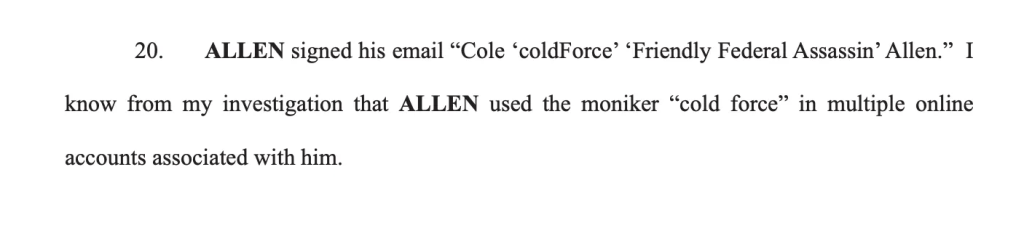
The government will offer the manifesto as evidence of the intent they have to show to convict on the attempt charge. He signed the manifesto “Cole ‘coldForce’ ‘Friendly Federal Assassin’ Allen.”
At the end, he seems to have added a rant about what he says is the Secret Service’s incompetence after he arrived at the hotel, discussing the absence of security or suspicion when he entered the hotel, before writing, “Like, if I was an Iranian agent, instead of an American citizen, I could have brought a damn Ma Deuce [This is a nickname for the M2 Browning, a heavy machine gun] in here and no one would have noticed s–t.”
The government brought its charges promptly, they appear to be based on solid evidence, and a career prosecutor was in the courtroom today, handling the case. All of which is as it should be.
Unfortunately, it’s also now all about the ballroom, after the president did a lightning-fast pivot at his hasty press conference after the incident Saturday night to say it was why the ballroom he is building at the White House is needed. We’ve already discussed why that doesn’t make sense—the president is an invited guest to the White House Correspondents’ Dinner, not the host. The dinner celebrates the freedom of the press, as in their freedom from government control, making the controversial ballroom about the last place on earth it would be appropriate to hold the dinner, unless the press association wanted to make a mockery of that treasured freedom.
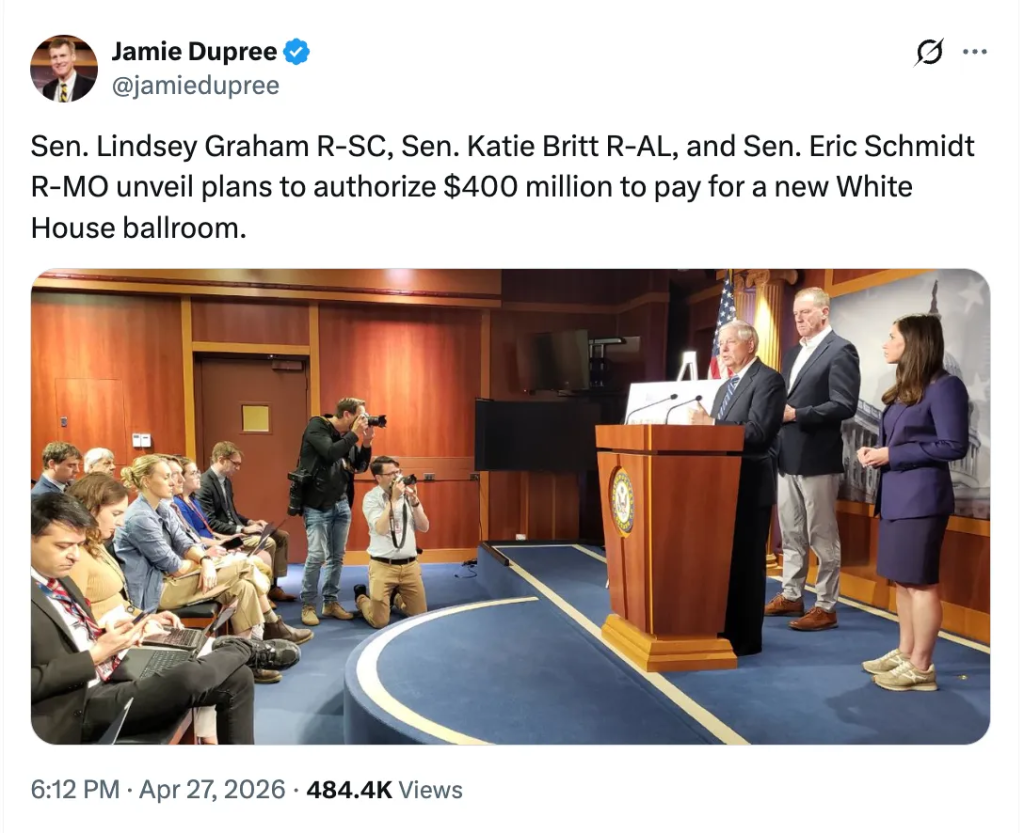
But that didn’t stop certain senators from deciding taxpayers need to foot the bill for the construction project Trump has previously said he’s using private funding to complete.
In 1786, Thomas Jefferson wrote, “Our liberty depends on the freedom of the press, and that cannot be limited without being lost.” Political violence is horrific and deserves the condemnation from both sides of the political spectrum this incident is receiving. It’s fortunate that this incident did not result in any loss of life. There still needs to be a careful after-action report to ensure any mistakes that were made are not repeated. What this cannot become is an excuse to muddy up the freedom of the press or restrict any of the other constitutional rights Americans enjoy.
(snip; about subscribing)
We’re in this together,
Joyce
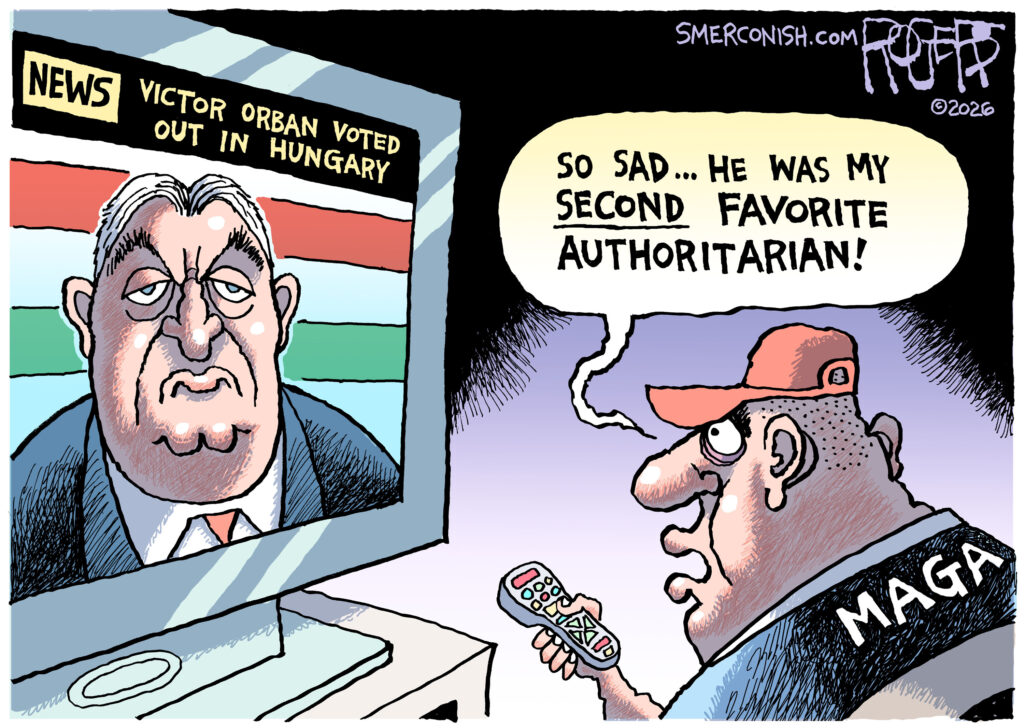
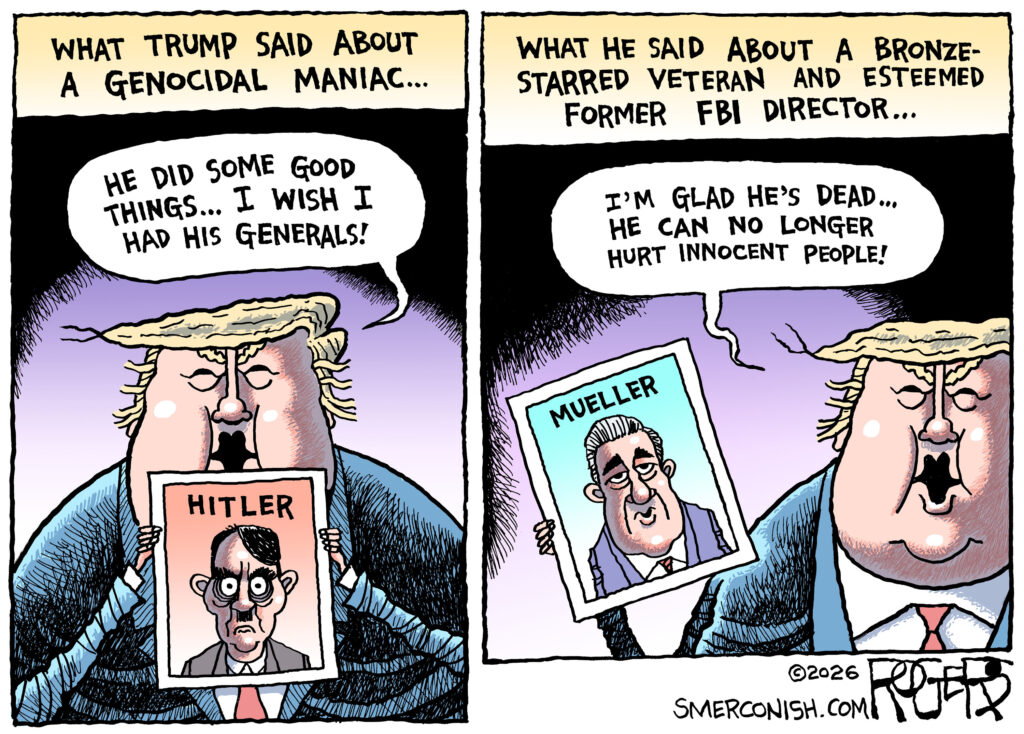
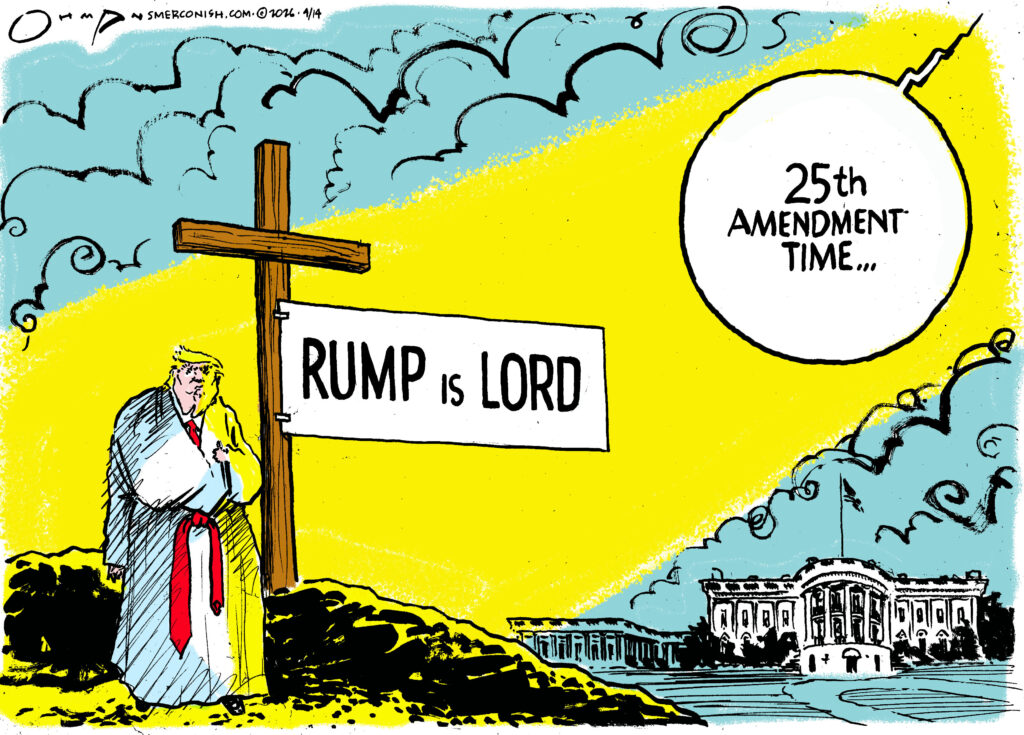
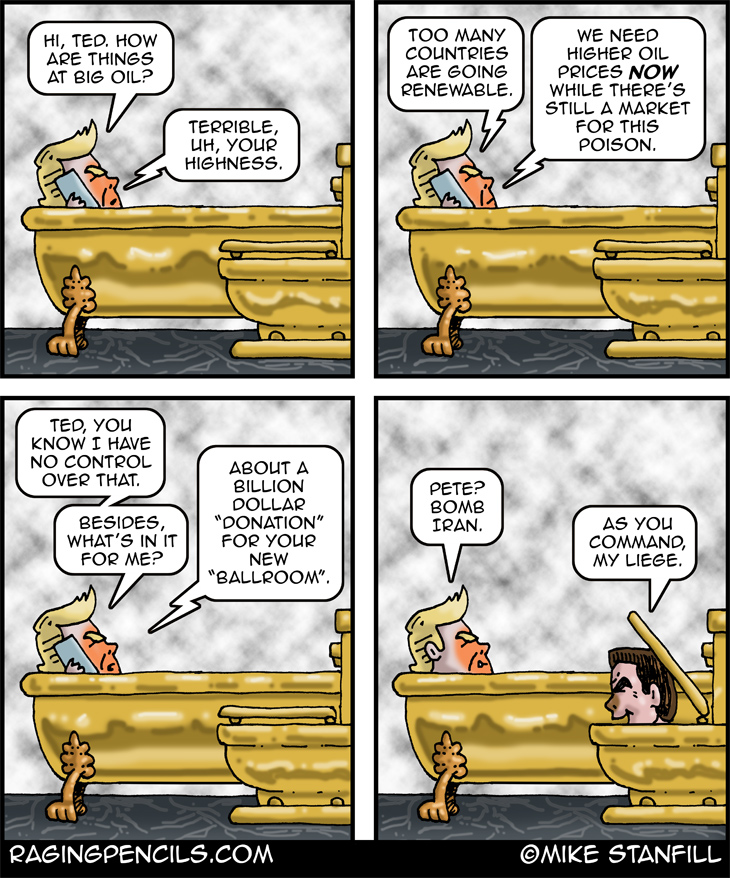
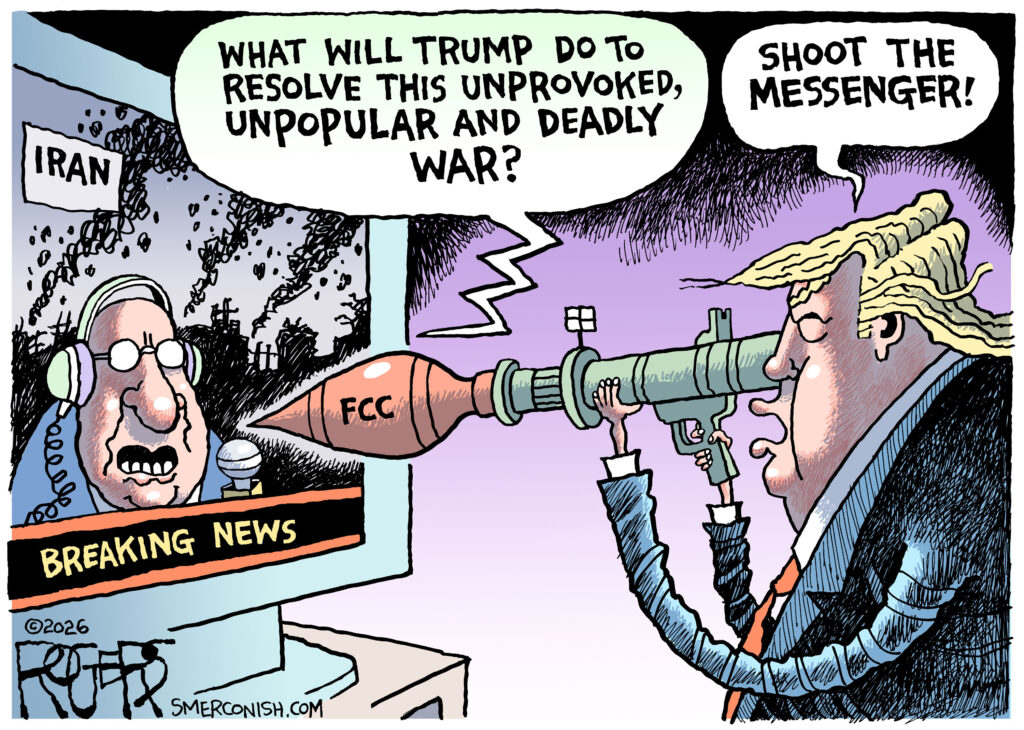
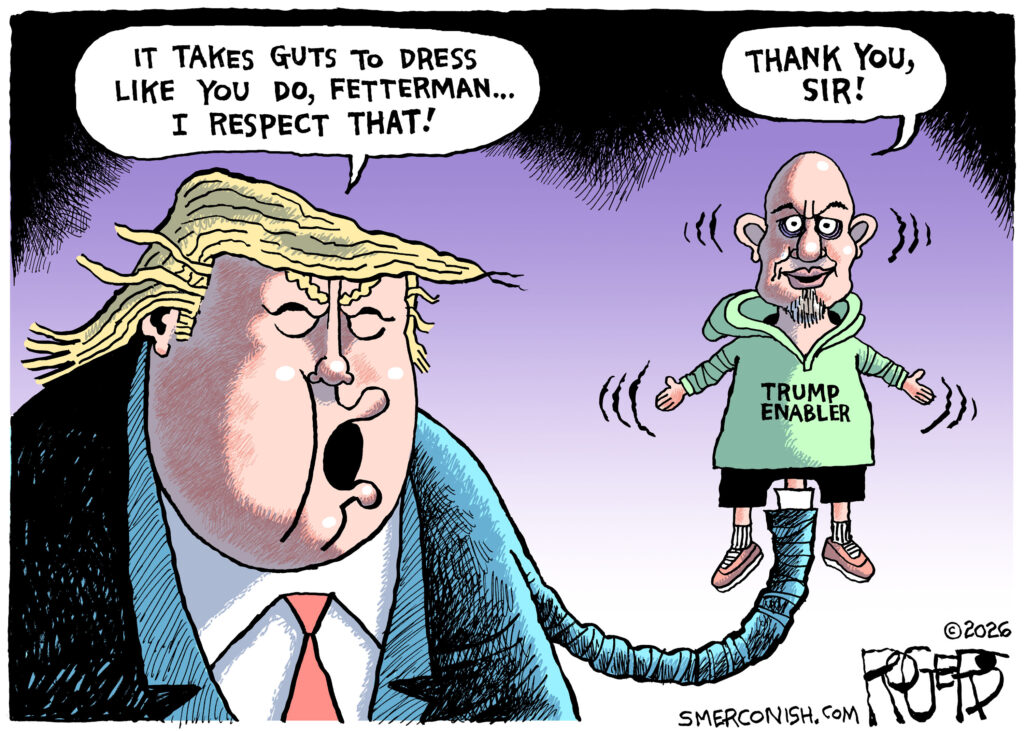
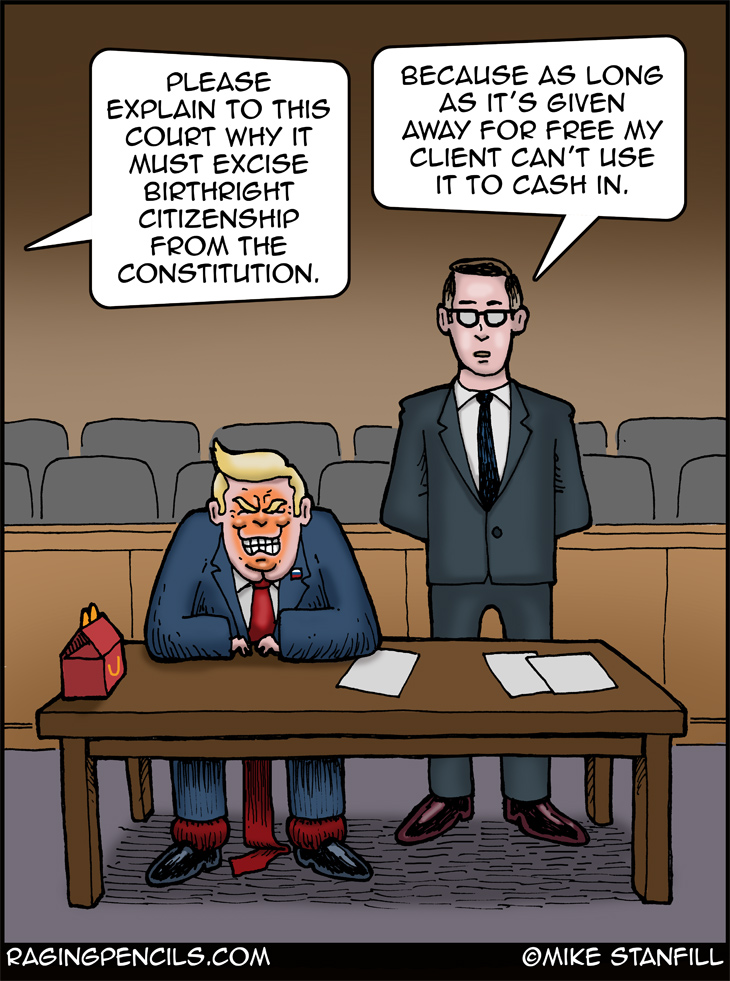
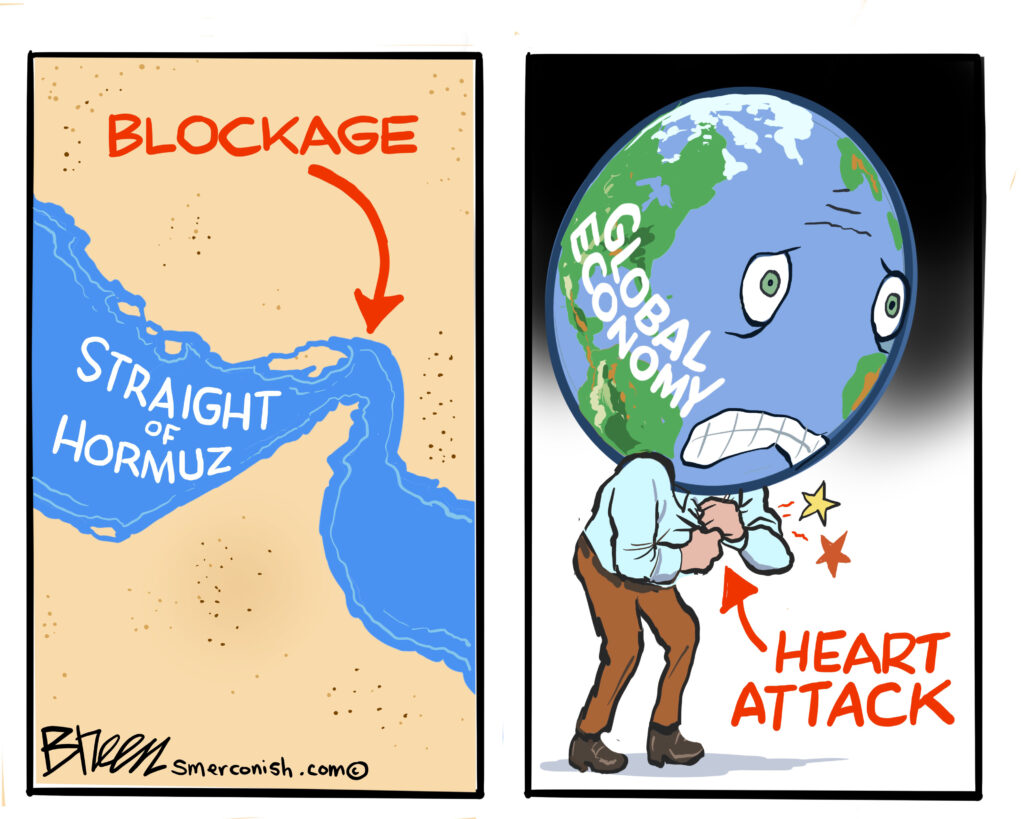
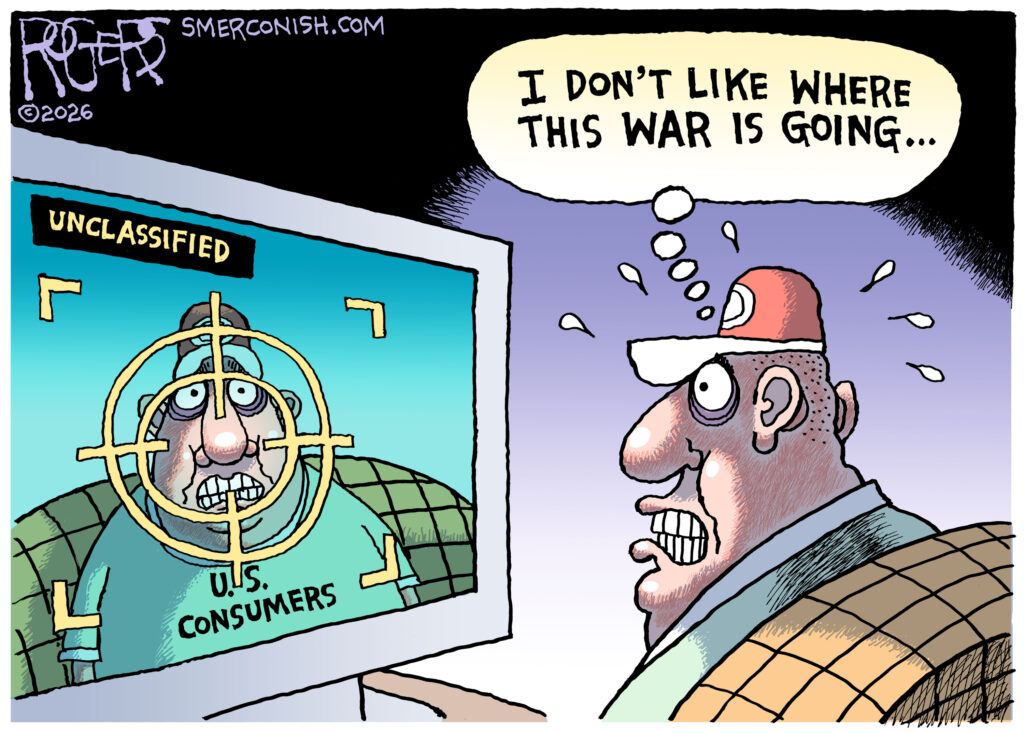
Political cartoons / memes /and news I want to share. 4-28-2026





















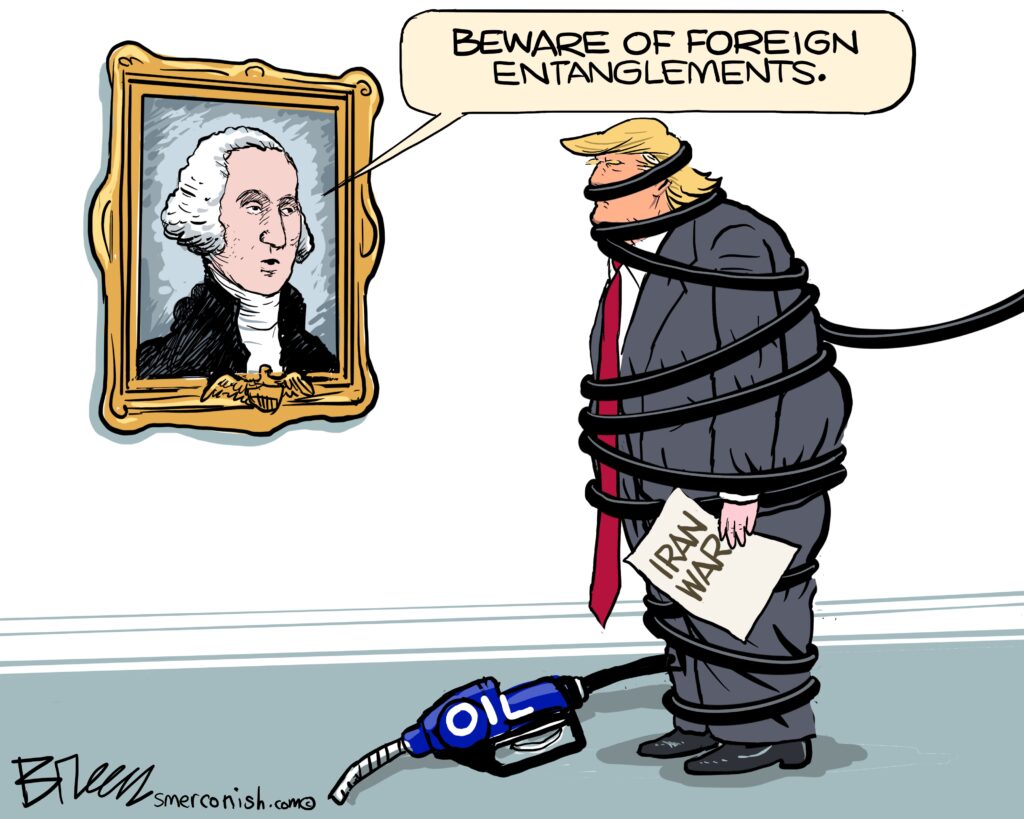



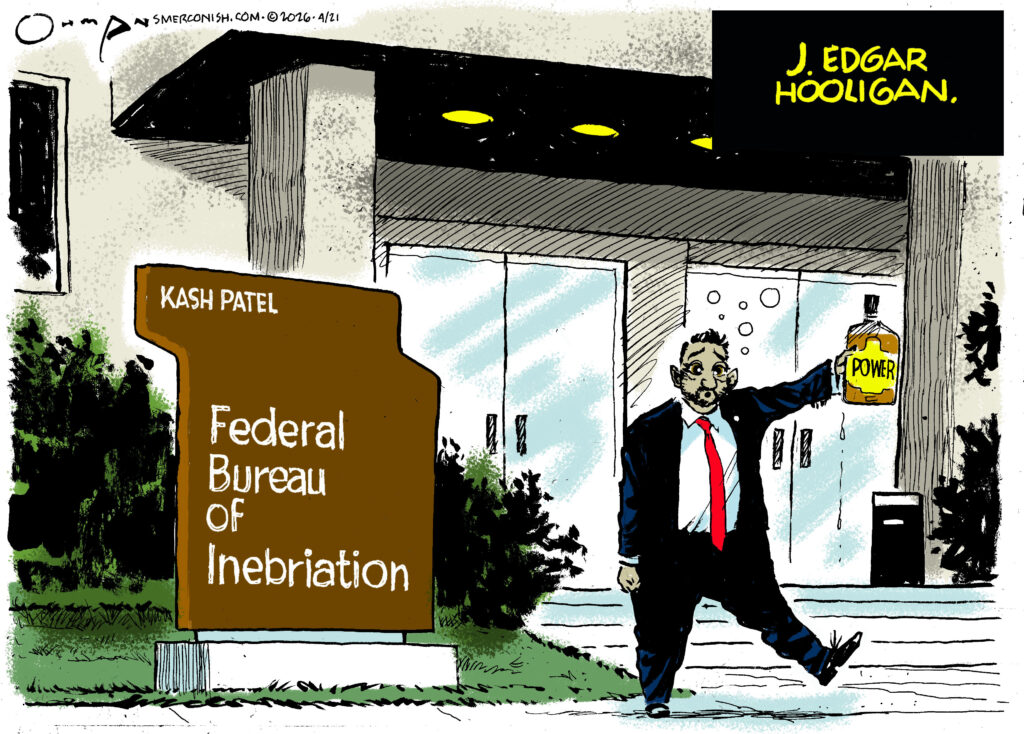


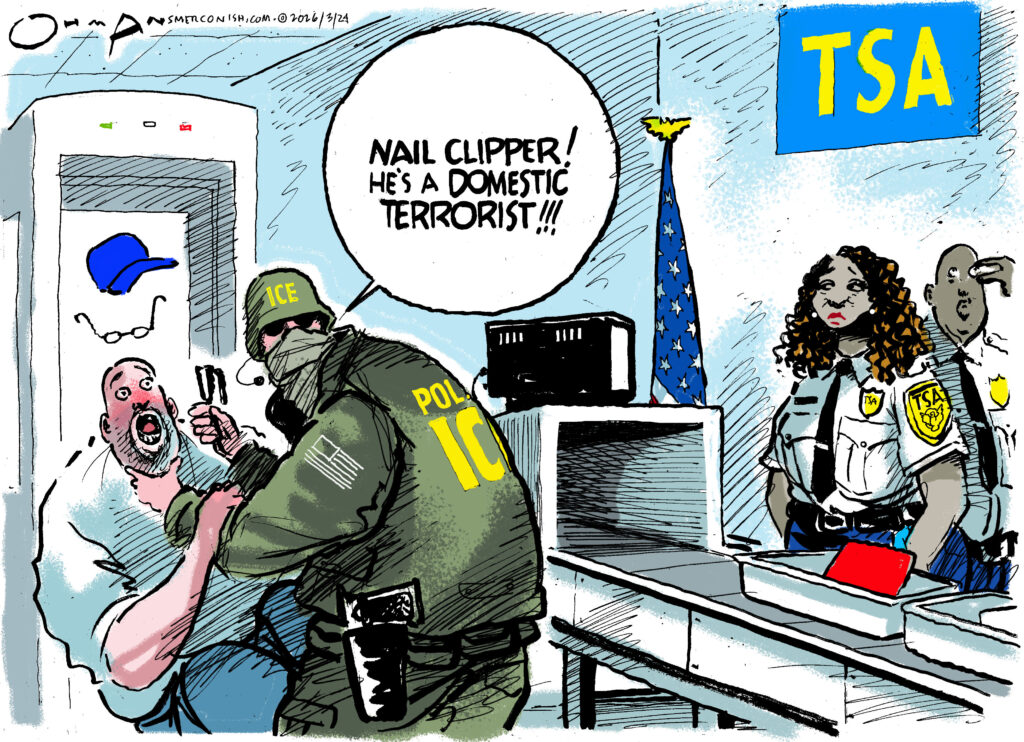





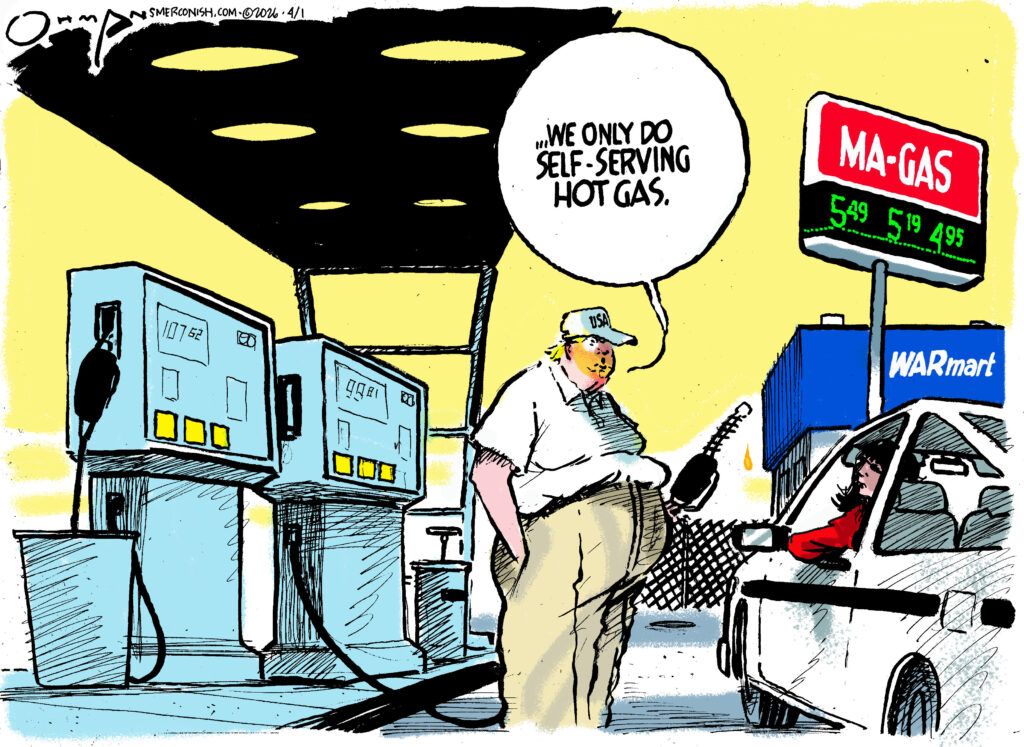





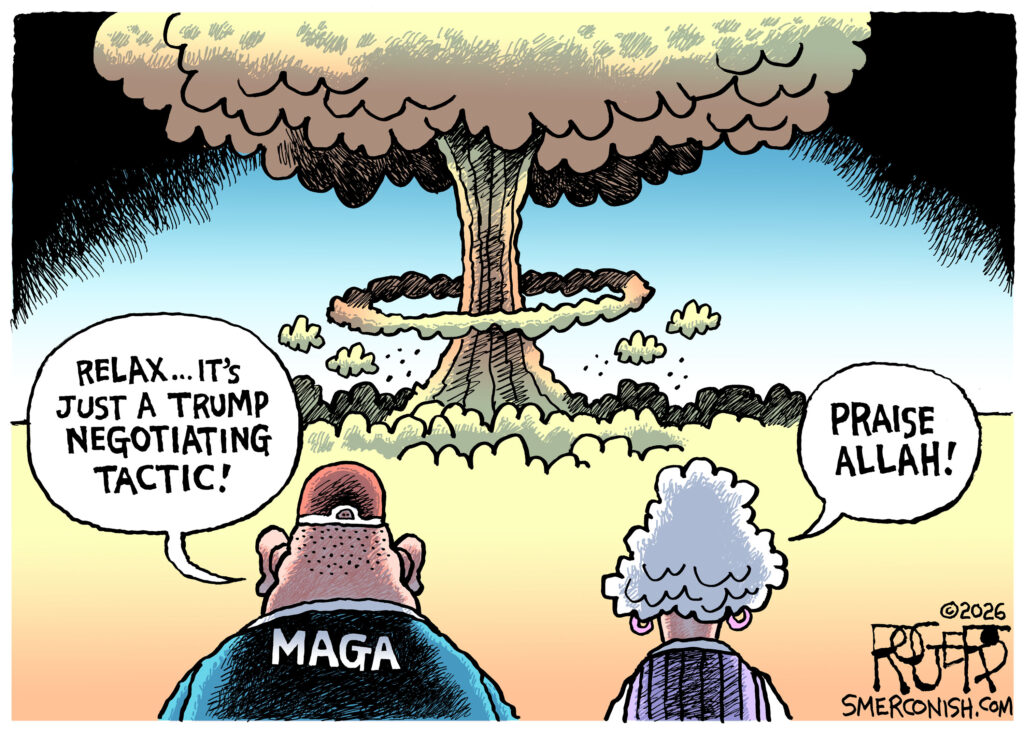
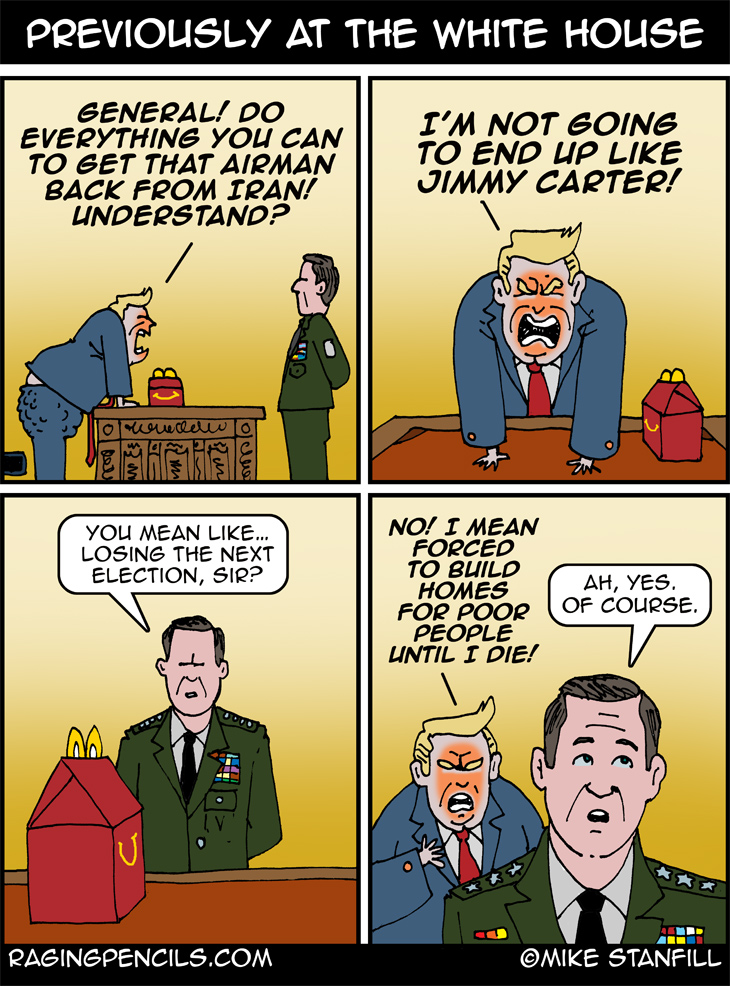


The News, The News, The News…
(Setting this up Sunday night for Monday AM; more storms expected overnight here, which could be feisty. This is an important read, and I thank Ten Bears for posting it Sunday. I only got to it shortly before bedtime Sunday.)
I don’t get to Emptywheel’s blog as often as I used to, I’m sorry to say. I’m going to give a snippet, and you should go read the rest; it’s not too long. This sort of reminds me of when the fact that GW wasn’t elected in any way, rather being given the presidency through a civil suit judgment was reported for a minute, but then everybody told everybody to shut up about it, even while GW was pushing USA PATRIOT.
Dinner and a Show: What Isn’t Being Discussed after WHCA ‘Nerd Prom’
by Rayne | Apr 26, 2026 | Media, Trump 2.0 | 115 comments
[NB: check the byline, thanks. /~Rayne]
Thanks to a brouhaha at the White House Correspondents’ Association’s (WHCA) annual dinner, the media outlets in attendance are derailed and will feature the tumult prominently on their print front page or their home or splash page online.
They will demote discussions about other critically important news, and they will compromise themselves in the process because they will have become part of the news instead of reporting information of importance to the public.
Already demoted on Google News’ headline page:

Notice how all the headlines on these stories — likely published by media outlets with representatives at tonight’s WHCA dinner — make it sound as if Trump called off the negotiations with Iran.
Instead, Iran’s representative left Pakistan before scary Victorian doll son-in-law Jared Kushner and real estate developer Steve Witkoff arrived on behalf of Trump.
The media won’t be discussing how much closer the Trump-caused global energy shock has become because Iran has no use for whatever Kushner and Witkoff were going to present — or for them as negotiators having been burned by them before.
The same media outlets with WHCA members warming seats and kneepads this evening at the “nerd prom” will deprecate coverage of the schism between Trump and the GOP Congressional Caucus and Ghislaine Maxwell’s possible presidential pardon.
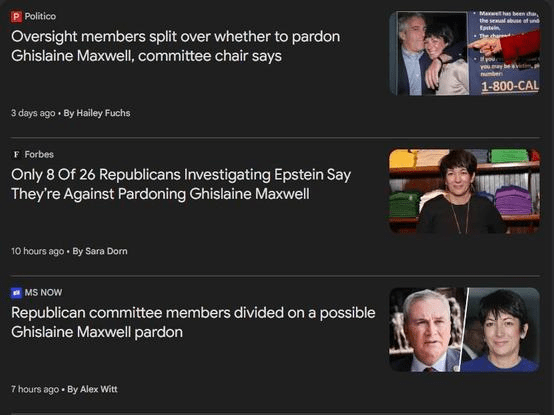
There will be less effort about the interesting timing of this story about Epstein’s groomer/fixer/partner:
Maxwell Sends Mystery USB to DOJ Days After Melania Bombshell
and the uptick in rumors regarding a pardon:
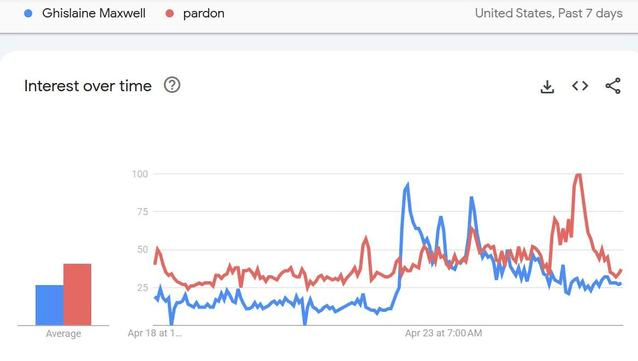
And certain media outlets are sure to fluff Trump by providing him with ample narcissistic supply (hello, now-Ellison-owned CNN and CBS) while others push Trump’s favorite talking points about needing a ballroom.
Never mind the same Secret Service that couldn’t prevent tonight’s altercation will also be on duty at the Versailles-like Hall of Mirrors Trump wants to contain his bloated narcissism.
Meanwhile, stories like the coverup of damage to US military positions and assets by Iran have already been knocked completely out of the way. This topic:

(snip-a bit MORE)
Looking At This Week With Joyce Vance
The Week Ahead
April 26, 2026
Stay with me tonight. This one runs a little long, but it’s all information you’ll need.
It’s likely that much of this week will be overshadowed by investigation into what happened Saturday night at the White House Correspondents’ Dinner, where Cole Thomas Allen, a 31-year-old California man with a master’s degree from Cal Tech, approached the ballroom at the Washington Hilton armed with a shotgun, a handgun and knives, and attempted to sprint through the magnetometer security checkpoint. He was stopped there. A Secret Service agent was shot, but was fortunately protected by a bulletproof vest. It’s not clear who shot him.
The White House Press Corps, still dressed in tuxedos and ball gowns, trooped into the press briefing room at the White House to hear from the President, who appeared, flanked by acting Attorney General Todd Blanche, FBI Director Kash Patel, and others. They, too, were still in tuxedos from the event.
It’s not clear who the “designated survivor” for the event was. CBS’ Margaret Brennan pointed out Sunday morning that “Five of the top six officials in the presidential line of succession were in attendance: Vice President JD Vance, House Speaker Mike Johnson, Secretary of State Marco Rubio, Treasury Secretary Scott Bessent, and Defense Secretary Pete Hegseth.”
Trump was in good spirits as he spoke, complimenting the press and laughing about the speech he had hoped to give after dinner. It was a much more affable Trump than we’ve seen in the course of the last year as he interacted with members of the media he has often been sharply critical, or dismissive of, during his first year in office. Trump went on the attack against the press even before his January 2025 inauguration, as we discussed at the time.
This was a different Trump who spoke in a very measured fashion, far more measured than usual, almost as if he saw this incident as providing the opportunity for a reset. He respectfully took questions from reporters like CNN’s Kaitlin Collins and NBC’s Garrett Haake. He was kindly toward the press; that’s the only way to characterize it. Whether that was a momentary blip or it suggests he will try to convince the media to rebuild its relationship with him remains to be seen. He did say that the Correspondents’ Dinner would be rescheduled within a month, without seeming to understand that the Correspondents’ Association puts on the dinner and controls the event.
At the press conference, Trump was asked why this keeps happening to him—this was the third attempt on his life since he announced his run for the presidency ahead of the 2024 election. He responded that he “has studied assassinations” and that it’s the “people who do the most” that assailants go after, using Abraham Lincoln as an example. Trump said that it “only happens to impactful people” and that he didn’t want to say he “was honored” by the repeated attempts on his life, but he let the implication hang in the room.
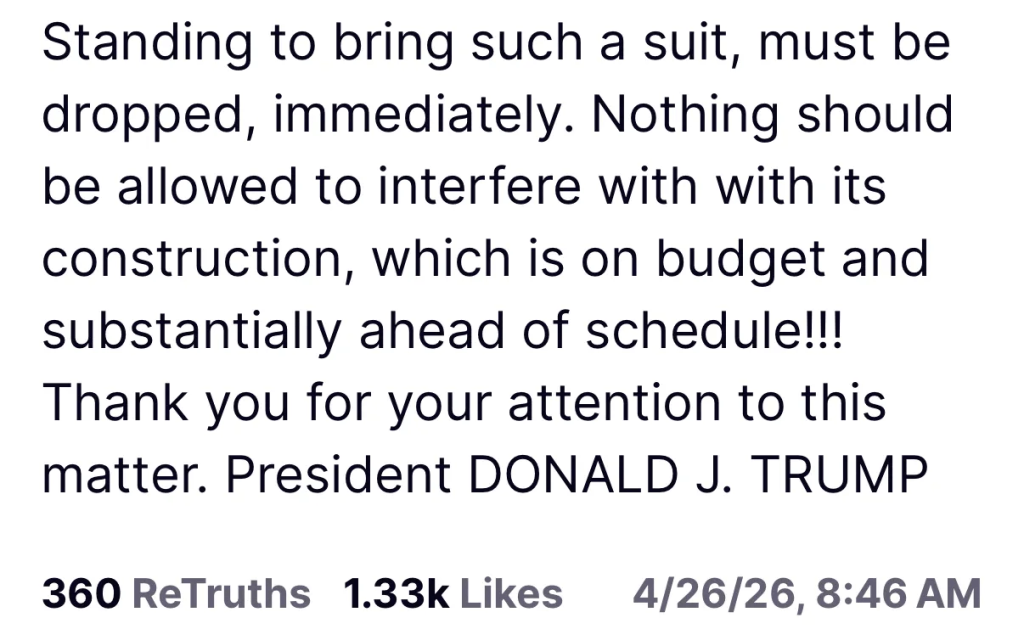
But he did not abandon politics. As he began his comments, Trump said the incident demonstrated why the ballroom he is building at the White House is needed.
Trump reiterated his comments in a Sunday morning post on Truth Social, claiming presidents have been demanding a ballroom like the one he’s building for 150 years.

His amen corner all took up the chant on Twitter, on cue.
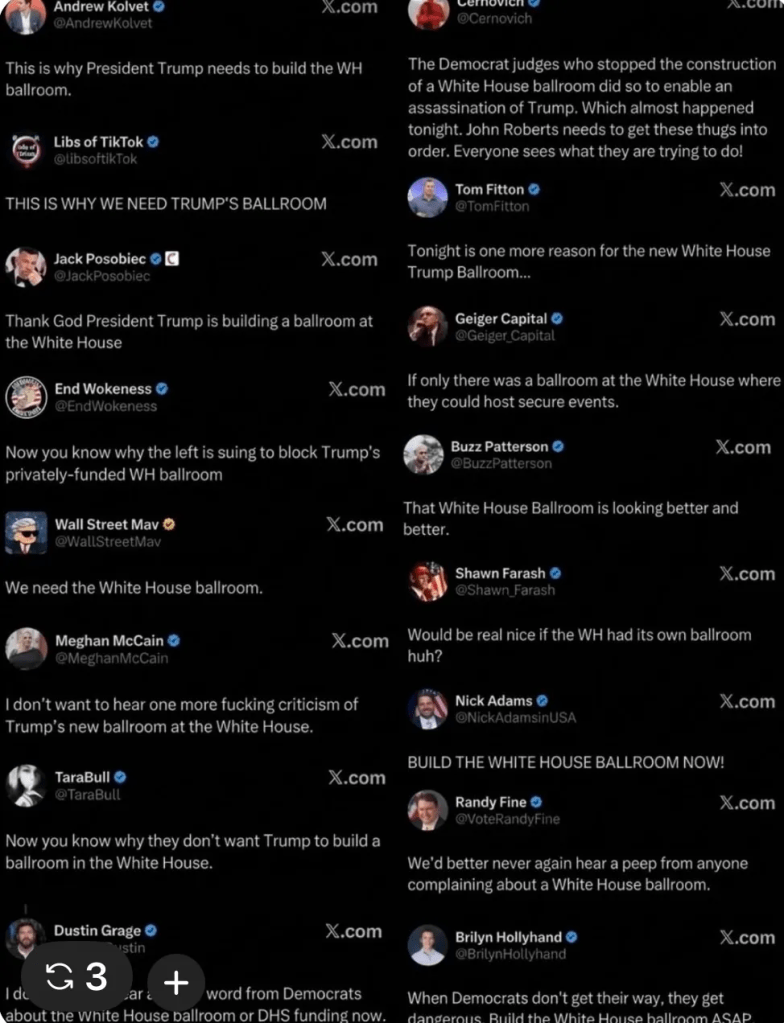
But, as we noted above, the dinner is run by the Correspondents’ Association, not the White House. There is no reason to believe they would use a White House ballroom for a dinner designed to celebrate freedom of the press and its independence from government. Trump can make the argument he needs a safe space to entertain, but it’s a disconnect from the event last night.
Miles Taylor commented on Threads that “The WHCD shooter will be used to justify things that have nothing to do with the WHCD shooter. Mark this moment.” That seems likely.
The immediate investigation will focus on whether the shooter was a lone wolf, as it appears, or whether there is an ongoing threat. There is reporting today that Allen was a member of a group called The Wide Awakes, who appear, based on their web presence, to be committed to “radically” reimagining the future, but look to be a group of creative, peaceful people. Law enforcement will want to determine whether someone or something radicalized Allen and directed him toward violence.
There are sure to be, and there should be, questions about the Secret Service and how this happened. Asked about that during the press conference, Trump responded that he was “very impressed by the Secret Service.” But this is the third time a would-be assassin has gotten close to Trump, and one would have expected them to tighten ranks after the first attempt. Trump, however, does not seem to have viewed any of it as a failure by the Service and he was complimentary of the D.C. police, as well, in a phoner on Fox News.
It’s important to note that the Secret Service stopped Allen at the perimeter they had established. They succeeded in that sense. The real question will be whether the perimeter should have been set further back. I’ve attended the dinner multiple times and one observes layers of security that require guests to walk up the hill to the circular drive in front of the Washington Hilton before entering the hotel, but there are parties and receptions occurring in advance of the perimeter before entering the ballroom area, and, as we now know, Allen avoided scrutiny as a guest who checked into the hotel the day before the dinner. There are real questions that will have to be confronted here to ensure protection for future dinners, to say nothing of the scads of parties that happen in connection with this dinner, and other national events that are held at the Hilton.
Late Saturday evening, D.C. U.S. Attorney Jeanine Pirro announced that Allen would be arraigned on Monday. She said he will be charged with one count of assault on a federal officer using a dangerous weapon and two counts of using a firearm during a crime of violence. That could be fluid as officials learn new information. But the charges she identifies are found at 18 USC 111, which carries a 20-year maximum penalty, and 18 USC 924(c), which carries a 7-year penalty if a firearm is brandished and a 10-year penalty if it’s fired.
The motive seemed to be coming into focus throughout the day as some of Allen’s anti-administration writings were released. On Meet the Press, acting Attorney General Todd Blanche said authorities believed the suspect may have been targeting Trump administration officials, including Trump himself. The basis for that belief appears to have been examination of electronic devices and some writings. But Blanche told CNN’s Dana Bash they were still looking at the motive.
As I heard seasoned journalists, many of them friends, discuss how frightening the shooting was on air Saturday night and Sunday morning, I couldn’t help but reflect on how much worse it is for America’s children. How many of them still suffer a lingering sense of trauma from the moment a shooter crashed into their classroom or their place of worship? If there’s ever been a time to pass sensible gun control laws, it’s now. If we’re going to play politics, as Trump did with immediately pivoting to justifying his ballroom, let’s play that kind and make some good trouble.
There will be in court developments in other matters to track, as well, this week:
This Wednesday will be the last regularly scheduled day for the Supreme Court to hear oral argument this term. The Court will take up two consolidated cases, Mullin v. Doe and Trump v. Miot, and consider whether the Trump administration acted properly when it revoked protected status for Syrians and Haitians living in this country. The cases involve decisions from New York and Washington, D.C., barring the administration from stripping more than 350,000 Haitians and 6,000 Syrians of protected legal status that protects them from deportation.
The cases hit the court just last month, on March 16. The Court allowed the lower courts’ decisions to remain in place, preventing deportations, determining that it would hear the case promptly, allotting an hour for oral argument. This has all happened very quickly, with the final brief being filed just last week on Monday.
There is also news on the voting front. Friday evening, Mississippi Governor Tate Reeves announced that he was calling a special session of the legislature so that new maps could be drawn.
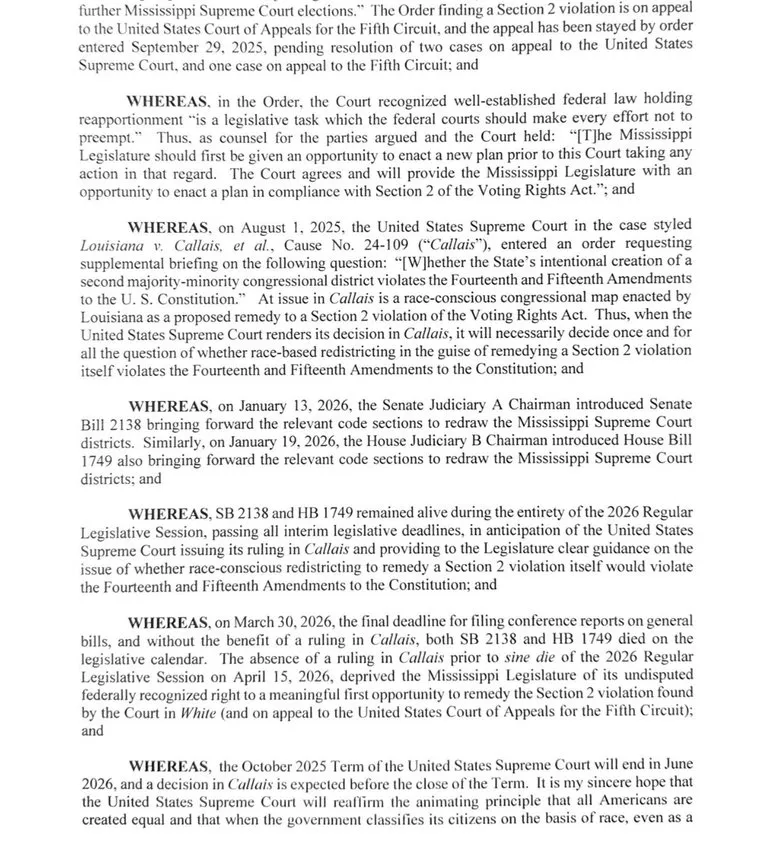
This redraw would be limited to state Supreme Court districts. A federal court found Mississippi’s state Supreme Court districts violated Section 2 of the Voting Rights Act and required the legislature to pass a remedial map. But it failed to do so during the regular session. A court hearing was scheduled for this week, and the court would have likely adopted its own map. So the Governor is calling this special session in hopes the court will hold off until the legislature has time to act.
In the election last November, voters ended the Republican supermajority in the legislature, but Republicans still hold a majority of the seats in both chambers and should be able to pass a map of their own devising. So the governor likely believes a map that comes out of the legislature will be superior to one created by the court.
And finally, the SAVE Act isn’t quite dead yet. We need to stay alert to any resurgence and be prepared to call our members of Congress to demand they resist its resuscitation. Trump is again demanding that his party end the filibuster and pass the Act, saying that not doing so will “lead to the worst results for a political party in the HISTORY of the United States Senate.” It reads as an acknowledgment that only voter suppression can save the Republican Party in the midterm elections.
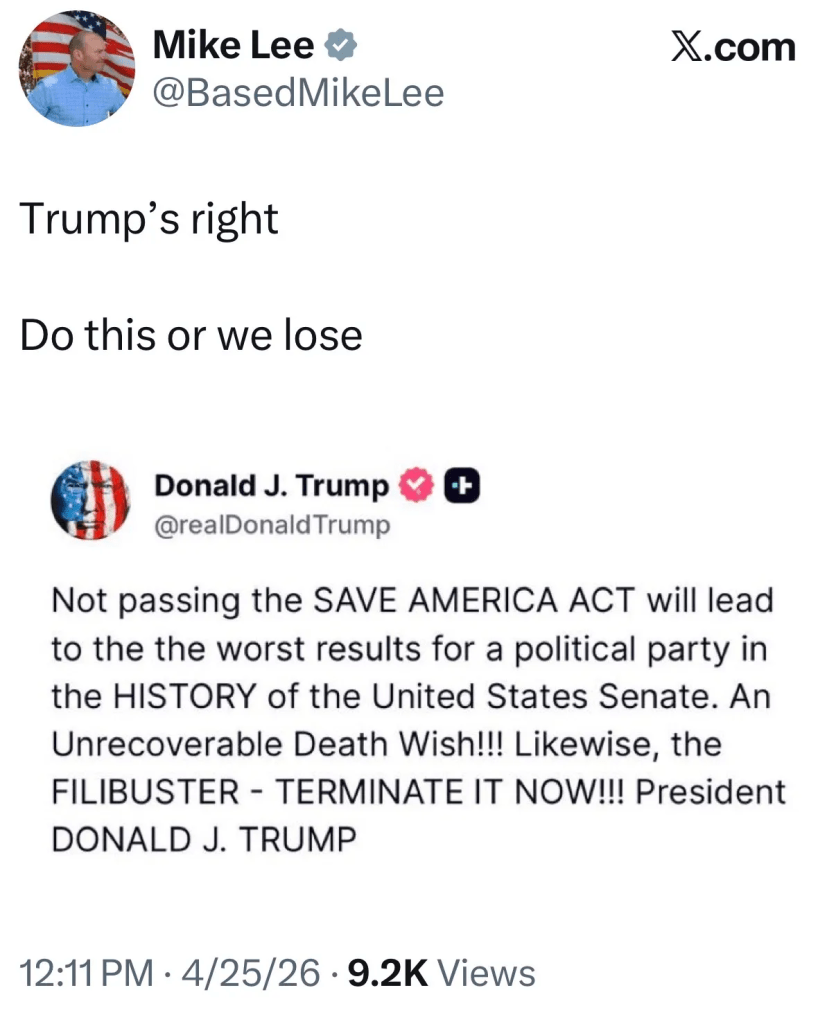
Utah Senator Mike Lee followed up on Trump’s command with this tweet. Lee is not up for reelection until 2028. But he, too, seems to sense that this will be a dangerous election for Republicans. The SAVE Act is one of the last-ditch efforts Republicans have to suppress the vote and hold onto power this year and again in 2028. There is no mention of crafting policies designed to win the hearts and minds of American voters. It’s just about keeping eligible American citizens from voting. We must do everything we can to resist that.
If you’ve found this useful, it’s exactly the work I do every week—reading the filings, tracking the arguments, and explaining what it means before it becomes obvious. The headlines will keep coming, but understanding them takes more than a glance. That’s what this space is for. My goal is to give you clear, careful analysis you can rely on. If that’s the kind of work you value, I hope you’ll choose to subscribe.
We’re in this together,
Joyce
A Sunday Read
There is frank recital of the grooming and threats that happened to these women, in case you might need to skip reading this one. If you or someone you know needs help, please call the Human Trafficking Hotline at 888-373-7888, or text INFO to 233733. See the website at https://humantraffickinghotline.org/en
They all survived Jeffrey Epstein. They have something to tell you
Saturday marks one year since Virginia Giuffre’s death – and other survivors are making a public reckoning possible
Saturday will mark one year since the death of Virginia Giuffre, one of the first women to surrender her anonymity, detail her experiences and publicly call for criminal charges against convicted child sex offender Jeffrey Epstein. For other Epstein survivors such as Liz Stein and Jess Michaels, Giuffre’s public reckoning made it possible to finally name what had happened to them.
“I saw myself in Virginia, in [Epstein survivor] Maria Farmer, in all of them,” said Danielle Bensky, who was pulled into Epstein’s orbit when she was 17. “And I thought: if they can be victimized, anyone can be. I was not alone. I finally understood that we were not going to be silent any more.
More than a dozen Epstein survivors will gather in Washington DC this weekend for a memorial vigil in Giuffre’s honor. But they will also be marking something larger: the emergence of a survivors’ movement Giuffre helped make possible – and that is only gaining momentum.
Epstein survivors have held press conferences and met with congressional lawmakers; in November, the Epstein Files Transparency Act passed, and the release of more than 3.5m pages of documents followed. However, in the more than two months since the justice department released its latest batch of files – more than 2m documents have yet to be released – prosecutors have not brought any new charges, despite federal lawmakers on both sides of the aisle continuing to demand accountability.
As for Ghislaine Maxwell – the only person convicted in connection with Epstein’s network – she was sentenced to 20 years in prison in 2022 and has exhausted her appeals. Rather than facing harsher scrutiny, however, Maxwell was controversially transferred from a low-security prison in Florida to a minimum-security federal camp in Texas in August.
While the lack of action has left survivors with little faith that the full scope of Epstein’s network will ever face justice, they don’t intend to back down.
Stein, Bensky, Lisa Phillips and Michaels discuss, in their own words, what made them come forward, the power of survivors banding together and where they want the movement to go.
- ‘If I could go back, I would tell someone’
- Liz Stein, human trafficking specialist and survivor advocate
- When I met Epstein and Maxwell, I was a senior in college. I had aspirations of going to law school. People had a lot of expectations for what my life would look like. But my life turned out the exact opposite. For decades, I buried what happened to me. I thought these were friends I had met in New York – that is how they made the relationship feel. So the narrative in my mind was that I had these unspeakable, horrific experiences with people I thought cared about me. I never wanted to think about it. I never wanted to talk about it. I just lived with it.I wasn’t ready for his face to appear on television the day he was arrested. And what followed confused me further, because the coverage focused on the girls in Florida – and I had these preconceived notions about what trafficking was and who it happened to. I wasn’t underage. I never went to the island. So I thought: that’s different, that’s separate. But I educated myself. I immersed myself in the national anti-trafficking movement, consuming every webinar and publication I could find. And when I did that, I thought: this is exactly what happened to me. And I was just enraged and saddened to know it wasn’t just me – that it was potentially hundreds of other young women.When I delivered my victim impact statement after Maxwell’s sentencing [for sex trafficking], I nearly shouted. I talked about my emotional health, my physical health, how this derailed my life. I wanted to project my voice so that no one in that courtroom could ignore what I was saying. And it was important to me to look at her directly while I spoke. I didn’t want her to see me cry. I didn’t want to give her that satisfaction.That moment changed something. I couldn’t imagine having this visibility and not fighting for justice. If I could go back, I would tell someone. And if they didn’t listen, I would tell someone else, and I would just keep telling until someone listened.What I want people to understand is that speaking out publicly is not a requirement. For those who aren’t ready, know that there are women standing in their truth on your behalf. And for those who are afraid, if you tell someone and they don’t listen, tell someone else. Just keep telling until someone listens. Even if it falls on deaf ears, you will still be proud of yourself for being willing to stand in your uncomfortable truth.
- ‘What changed everything was meeting other survivors’
- Danielle Bensky, choreographer, performer and survivor advocate
(snip-MORE [because of course we know there is])
Some Toons: Clay Jones, Open Windows
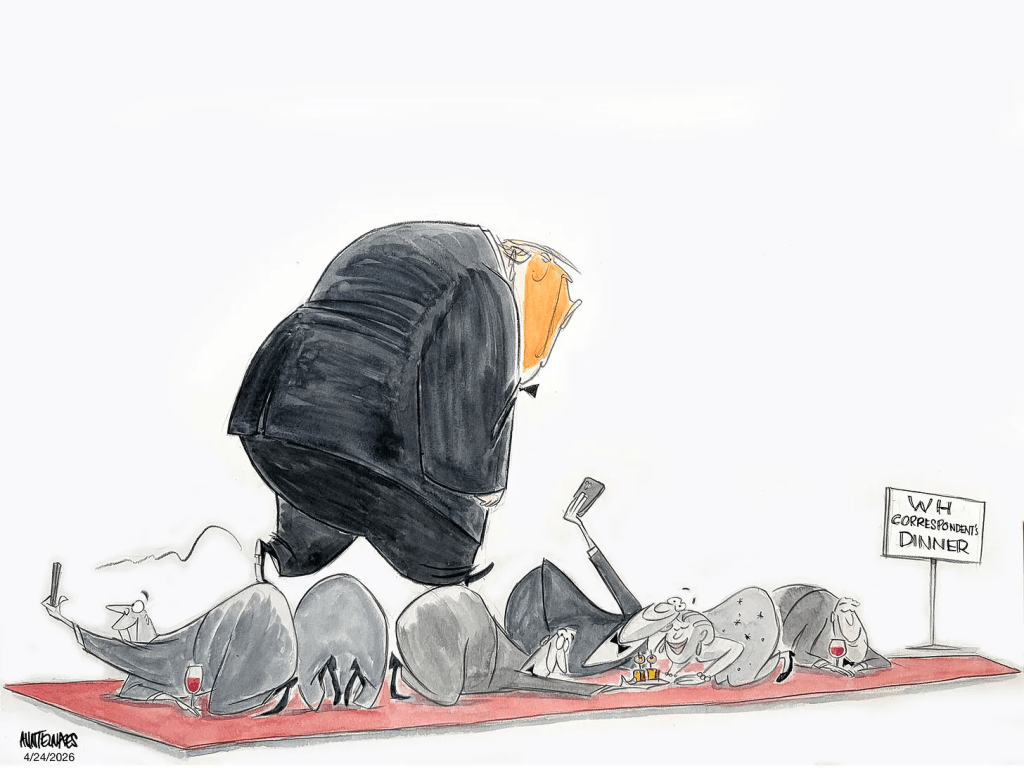
The WH Correspondents’ Dinner
Unethical and tone deaf
Never a good idea for journalists to become chummy with politicians and people in power but this year particularly, it’s allowing an autocrat to continue his attack against the free press.
Tucker Treason
Tucker’s breaking MAGAt hearts

Right-wing commentator, white nationalist, Vladimir Putin fan, former Fox News host, and former bowtie aficionado, Tucker Carlson, is now sorry that he helped elect Donald Trump to the presidency.
Tucker, who was often at Trump’s side during the presidential campaign in 2024 and who was a huge lobbyist to get JD Vance on the ticket, now says he will long be “tormented” for helping Donald Trump get to the White House and start a war with Iran.
Tucker is just one of several right-wing goons who have gone from being full-fledged MAGAts to personal enemies of Donald Trump. They include not just Tucker, but Marjorie Taylor Greene, Alex Jones, Megyn Kelly, and Candace Owens. (snip-MORE)
Prediction Markets
Are you betting on a Crystal ball?
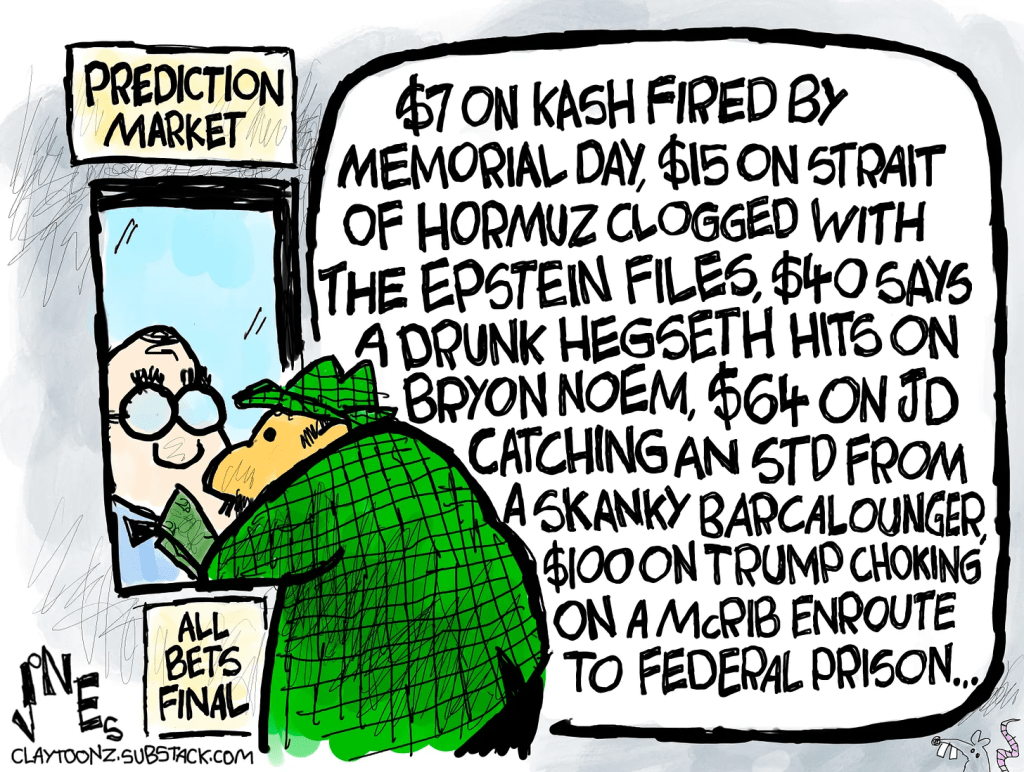
I was surprised a year or so ago when I learned that people were betting on professional wrestling. As you are probably aware, professional wrestling matches are pre-determined, as in, they are fake. I guess the only thing that prevents a writer of the matches from cleaning up is that the stakes are very low.
When I was a kid, my mother told me that people could not bet on who shot JR from the TV show Dallas because one of the writers could go to Vegas and place a large wager on it. That would have been insider trading. That’s not allowed, right?
Yesterday, a U.S. Army special forces soldier involved in the capture of President Nicolás Maduro of Venezuela was charged with using classified information to bet on events related to the mission. The soldier made more than $400,000 by betting on the prediction markets that the capture would happen. (snip-MORE)

