Andrew Perry said his body was a temple. His drinking and vaping suggest otherwise.
This newsletter is free and goes out to over 26,000 subscribers, but it’s only able to sustain itself due to the support I receive from a small percentage of regular readers. Would you please consider becoming one of those supporters? You can subscribe via Patreon or the Subscribe button below! You can also make one-time donations through Venmo, CashApp, or PayPal.
The Iowa Supreme Court has rejected a nursing student’s plea that he deserved a “religious exemption” to getting vaccinated against COVID. His school didn’t buy his excuse, leading to a lawsuit, but the courts have upheld the school’s argument that religion had nothing to do with this and the guy has been lying about it the whole time.
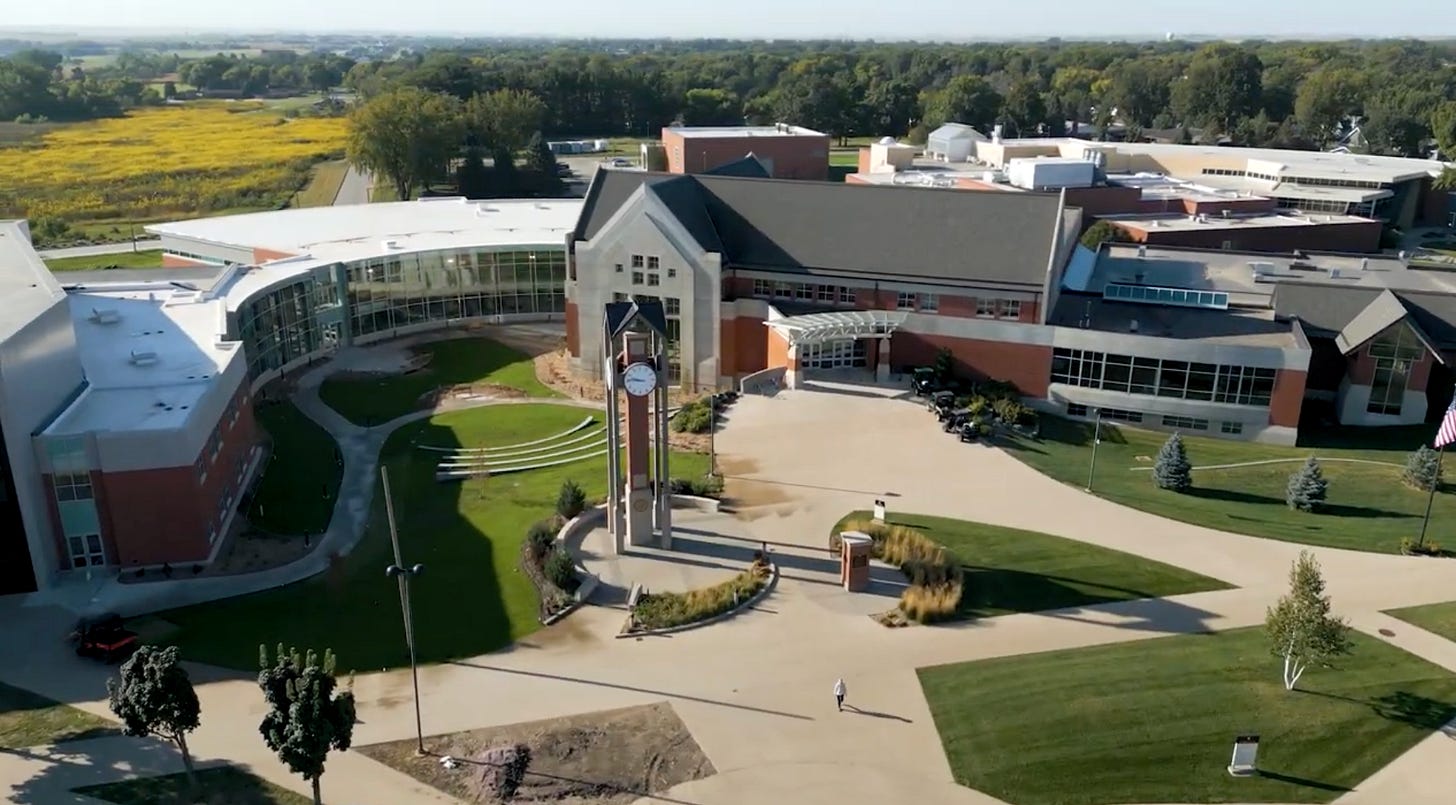
In November of 2021, Andrew Perry, a nursing student at (private Christian school) Dordt University in Sioux Center, refused to get vaccinated before starting his clinical rotations. He needed the exemption, he said, because it violated his religious beliefs, but the school said no.
It all boiled down to the idea that religious beliefs must be “sincerely held” for the exemption to be granted and Perry didn’t have any credibility, something the Iowa Supreme Court noted in their decision.
For example, the school said, Perry didn’t even care about the issue. His anti-vax parents put him up to this: His mother Galyn said she wouldn’t pay for school if he got vaccinated. Perry himself said in an email to the chair of the nursing department, “I personally do not have a problem with the vaccine” and even “volunteered and received training to help give the vaccine to others.” When pressed in court to explain why he didn’t want to get vaccinated, religion didn’t even come up. It was all about his mother’s threat to stop paying for his education. Perry even admitted to the school that he was thinking about getting the vaccine behind his mother’s back.
Even though both sides tried to work out a compromise, there was no way around the vaccination. The school explained this wasn’t their decision, but rather a requirement of all the sites where students were receiving their training.
Eventually, Perry settled on the idea that religion would be his way out. The school said he just needed to prove he had religious reasons for not getting the shot—like a “published position” against vaccines from his denomination or proof that he had received religious exemptions during his K-12 education. He had neither.
Instead, Perry said “his body is a temple of God and that he must be a steward of his own body. Thus… if he were to knowingly put something in his body that would only hold risk for his body, he would be violating that religious belief.”
That wasn’t enough. The school needed documentation. He didn’t provide it. So they said no.
Eventually, after realizing 20 other nursing schools weren’t going to accept credits from this private Christian school and would also require him to get vaccinated, he settled for admission into Palm Beach Atlantic University—another private Christian school—and left Dordt.
But where the decision really gets interesting is the description of what Perry said under oath when he was cross-examined about the sincerity of his religious claims.
The court noted that “Andrew clearly did not have issues with introducing other things into his body that were unhealthy or a risk to his health.” Specifically, the court noted that “Andrew conceded that he had been drunk with friends in the past” and also that “he vapes nicotine.” The court also noted Andrew’s testimony “that Gayln objects to his vaping, but has never threatened to cut him off financially if he did not stop vaping.” “Gayln also never threatened to cut off Andrew financially for drinking alcohol to excess.”
Beautiful. His “temple” can’t handle vaccinations but it’s apparently fine with nicotine and alcohol. His mother knew about those things but never even suggested cutting him off for all that. (Perry’s lawyer later argued that this was unfair because the school didn’t know about his vaping or drinking, so how dare they use that against him? but the court didn’t buy that argument either.)
Making matters worse, Perry claimed not getting vaccinated was his decision… even though he also testified that his mother threatened to cut him off financially over it. Yet, when asked what he would do if she changed her mind, he said he would be fine with getting vaccinated.
This guy is an opposing lawyer’s dream.
Ultimately, the court didn’t buy his argument that Jesus was the reason he couldn’t get vaccinated. It was about money, and there’s no My-Mom-Pays-My-Tuition exemption to getting vaccinated. (The lower court even said “Andrew’s argument would have carried more sincerity if he had contended he was trying to follow the religious commandment of ‘honor thy father and mother’; however, that is not a claim that he ever asserted in this case.”)
You almost feel bad for Andrew because he had to make up all these lies to satisfy his batshit crazy mother, but he’s an adult, and he went along with it. So too damn bad. He can live with the consequences of knowing he couldn’t even overcome the extremely low bar of using your religion to get out of following a rule everyone else has to obey.
His desire would have made it easier for COVID to spread—which should have been a deal breaker for someone who wants to go into the medical field—but thankfully the school refused to honor that idiotic request and they were vindicated in court.
You can watch the full oral arguments here:
It feels rare for a court to reject someone’s request for a religious exemption because you can’t probe their mind. But in this case, there was plenty of evidence that religion played no actual part of Perry’s refusal to take public health measures. He lied about his faith and everyone caught him. You can’t say your body is a temple only when mommy won’t pay for tuition.
Part of me feels bad for the situation Andrew Perry was placed in, but he’s not a child. He couldn’t deal with his overbearing, crazy, conspiracy-believing mother, so she became everyone else’s problem.
The Iowa Supreme Court got this right. They didn’t rule against his religion; they ruled against his sincerity. That makes a huge difference. While religious freedom is important, it shouldn’t be used as some magical phrase to get out of anything you want. It shouldn’t be a loophole, even though that’s often what it seems to be these days.
To be clear, a religious exemption shouldn’t be automatic. Someone’s faith shouldn’t make it easier for others to get infected with a virus. But at the very least, you should have to prove you’re serious about your faith if you’re going to use that excuse to harm others, and this family couldn’t even do that.
This is the fundamentalist Christian nationalist religious majority trying hard to find a reason that violating any religion not christianity was OK. They do not deny that the man’s religious beliefs were violated and ignored even after the courts had ruled to protect them. That shows a bias against the non-Christian religions. The SCOTUS has no qualms lying and using false misleading inform to create ruling in favor of the Christian religion and those that want to push / force it on to everyone else in the country. Hugs
For more than two decades, the Supreme Court has issued a long series of wins for plaintiffs seeking to protect their religious practices. On June 23, 2026, though, the majority delivered an uncommon defeat in this contentious area.
Landor v. Louisiana Department of Public Education and Safety, a 6-3 judgment, rejected the claim of Damon Landor, a Rastafarian whose hair was forcibly shaved in prison. Landor had worn long dreadlocks for almost 20 years as an expression of his beliefs – part of a biblical practice known as the “Nazarite vow.” Like lower court judges, the Supreme Court did not dispute that officials violated Landor’s rights. However, the high court’s majority ruled that he could not sue individual officials at the prison.
The case stands out for at least three other reasons.
First, Landor v. Louisiana underscores the complexity and far-reaching nature of religious freedom laws in the United States and the increasingly diverse faith traditions to which they apply. Christians now represent 62% of the American population, down from 78% in 2007, while 29% have no religious affiliation and 7% belong to other faith traditions.
Second, Landor’s case gained support from many groups typically at odds over how to protect religious freedoms – groups disappointed withthis week’s decision.
Finally, the case highlights the religious rights of the nearly 2 million people in U.S. prisons, jails and detention and correctional facilities – and the challenge of holding their public employees accountable when those rights are violated.
Toward the end of his sentence, Landor was transferred to a different correctional facility in the state. There – with three weeks left for Landor to serve – the warden ignored the judicial order, directing guards to shackle Landor and forcibly shave his head.
After finishing his sentence, Landor filed suit for money damages under the Religious Land Use and Institutionalized Persons Act. The act forbids the government and its officials from imposing “substantial burden(s)” on incarcerated people’s First Amendment right to the free exercise of religion. It also protects religious groups from discrimination through zoning restrictions.
Journey through the courts
In 2022, a federal trial court in Louisiana condemned Landor’s treatment but rejected his claim, concluding that money damages were not an appropriate remedy under the act.
The following year, the 5th U.S. Circuit Court of Appeals “emphatically condemn(ed) the treatment that Landor endured.” However, the panel unanimously affirmed the lower court’s decision, based on its earlier ruling that plaintiffs cannot sue government officials in their individual capacities for monetary damages – only the institution.
At issue was not whether Landor’s rights had been violated but whether he could sue an individual official, namely the warden, for monetary damages. During oral arguments on Nov. 10, 2025, the Supreme Court seemed skeptical.
Legal dilemma
That skepticism was reflected in the court’s ultimate ruling. It was essentially a procedural ruling about the Religious Land Use and Institutionalized Persons Act rather than a judgment on the merits of Landor’s religious freedom claim.
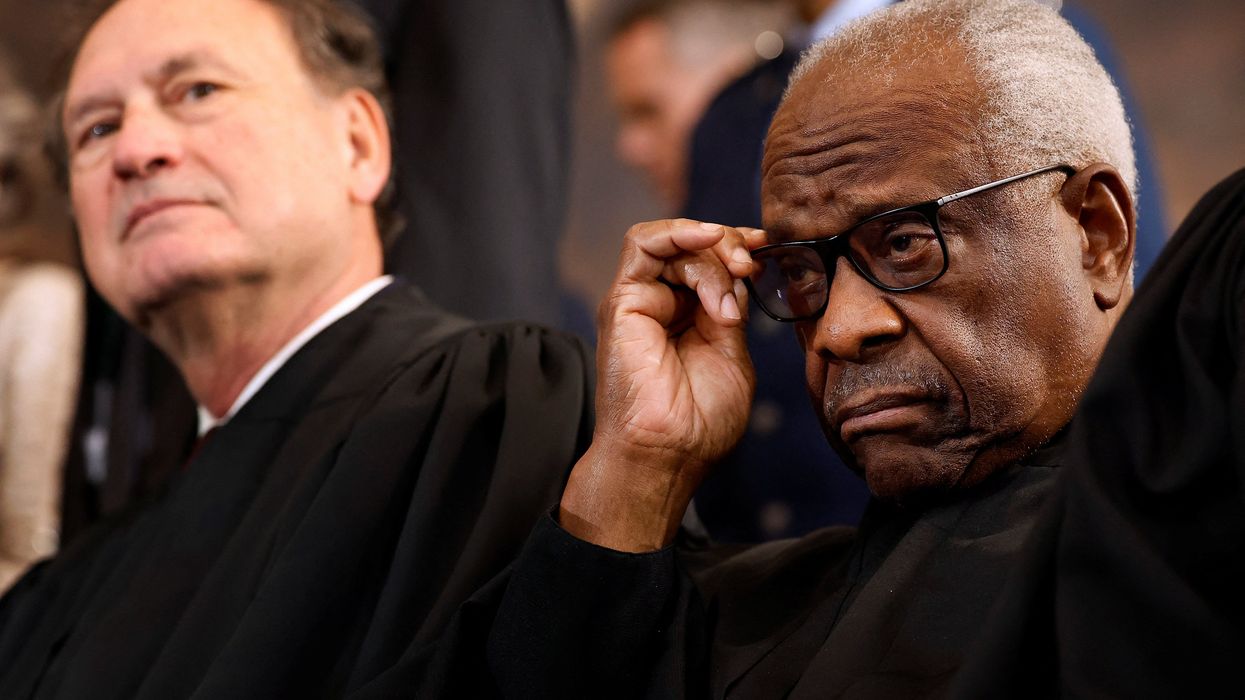
Justice Neil Gorsuch wrote the majority opinion, joined by Chief Justice John Roberts and Justices Clarence Thomas, Samuel Alito, Brett Kavanaugh and Amy Coney Barrett. Justice Ketanji Brown Jackson’s dissent was joined by Justices Sonia Sotomayor and Elena Kagan.
The majority’s argument that Landor could not sue centered on the spending clause of the U.S. Constitution – the source of Congress’ authority to create the Religious Land Use and Institutionalized Persons Act. The spending clause allows the legislature to spend money to provide for the “general Welfare of the United States.” If a state or institution uses federal funds, their officials agree to certain conditions; if they violate those conditions, Congress can remove funding.
But the spending clause does not give Congress authority to hold individual employees accountable, Gorsuch argued in his 18-page opinion. Prison officials had not “voluntarily and knowingly consented to answer private suits” under the act, and so they could not be held directly liable for monetary damages. Otherwise, Congress would have “effectively unbridled police power.”
Jackson’s 29-page dissent disagreed with the majority’s interpretation of the spending clause. The ruling, she contended, “jettisons ‘a long line of this Court’s precedents’” under which “Congress has been able to use its spending power to reach beyond direct recipients of federal funds.” As such, she worried that the court’s order imposed a “novel consent requirement.”
Jackson also lamented the decision’s potential consequences for inmates. Although the goal of the Religious Land Use and Institutionalized Persons Act was to protect prisoners’ faith practices, she worried that people “like Landor who suffer violations of their religious freedom in state prisons – no matter how blatant – will often be left remediless.”
Bigger picture
At a glance, the Landor case appears to be a procedural disagreement rather than one over religious freedom.
However, I argue Landor v. Louisiana must be viewed as a setback for religious liberty, raising a serious question about whether minority faiths have as much protection under the First Amendment as larger religions. The decision is also something of a surprise to me, because the Supreme Court has recently upheld free exercise rights in multiple high-profile cases, almost all of which involve Christianity – such as a football coach’s ability to pray on the field after public school games.
Portions of this article originally appeared in a previous article published on Nov. 6, 2025.
After Trump removed a key restriction on where ICE agents can make arrests, the Quakers are fighting back.
The Quakers are suing Trump’s Department of Homeland Security for allowing ICE raids in places of worship.
The lawsuit, filed in Maryland on Monday by multiple different Quaker groups from across the country, states that “the very threat of [immigration] enforcement deters congregants from attending services, especially members of immigrant communities,” and notes that the raids infringe on religious freedom.
“A week ago today, President Trump swore an oath to defend the Constitution and yet today religious institutions that have existed since the 1600s in our country are having to go to court to challenge what is a violation of every individual’s constitutional right to worship and associate freely,” said Skye Perryman, president and CEO of Democracy Forward, which is representing the Quaker groups in court. “The troubling nature of the policy goes beyond just houses of worship with sanctuary programs—it is that ICE could enter religious and sacred spaces whenever it wants.” (snip-MORE)