On Saturday, it tells us that Nicolás Maduro is such a uniquely dangerous despot — so criminal, so destabilizing, so irredeemable — that the United States had no choice but to remove him from power by force. Maduro, we are told, is a narco-dictator, a human rights abuser, a menace to his own people and to regional stability.
On Sunday, the same administration will continue putting Venezuelan asylum seekers on planes and deports them back to the country that, according to its own rhetoric, was so dangerous it required regime change.
This is not just hypocrisy. It is a logical impossibility masquerading as policy.
like 75% of dem messaging right now should be “the party led by epsteins best friend is breaking into pre-k childcare centers so they can record your toddlers and put the videos on internet”
Why I do these posts. This is three days of Joe My God that got away way from me. So why do I do these long news posts? Because I comb the Joe My God comment section for the best memes and snarkiest comments. It dawned on me I could post his news articles for those that want to read them. But three days is a lot to go throw and it is much easier just to quickly scan and snatch the comments rather than post them. So I need some inputs from everyone. Are these posts worth it? Or would you rather go to Joe My God yourselves. Or I can keep doing these. Up to you. Hugs
—————————————————————————————————————————-
tRumps Grifts / Scams / Ripping off the rubes / tRump’s ego / tRump’s Crimes / tRump’s health / Republican grifts & payouts for supporting tRump / other trump scammers
The Trump Golf Tracker estimates that the president’s golf trips have cost taxpayers some $110,600,000 so far in 2025. But that estimate, which was based on a 2019 Government Accountability Office (GAO) report on four golf trips during his first term, doesn’t even take into account the month of December.
The right wing media / the media arms of the GOP & Republican Party / The over the top thuggery and complete disrespect for common decency / Ask if you would like your child to act this way …. because maga does want their kids to be this crass as it makes them feel good / Kennedy Center debacle
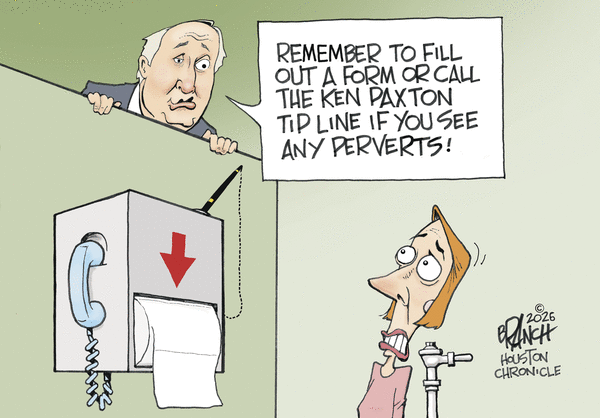
The video was shared by Vice President JD Vance. FBI director Kash Patel said he is aware of the video and the FBI is investigating. The YouTuber says he is uncovering new fraud in Minnesota, but media outlets like KSTP reported more than a year ago about more than 62 investigations into Minnesota child care centers.
What this is really about is they are afraid Walz will run for office and win as he is so well liked. They are trying to gin up a fake scandal to Benghazi him like they did with Hillary Clinton. I posted yesterday how fake and full of lies / misinformation the “report” the YouTuber did was. In the article above this one you can see how the Republican Party had a hand in helping the right wing influencer to push a fake story. The state has been investigating these things for several years. Hugs
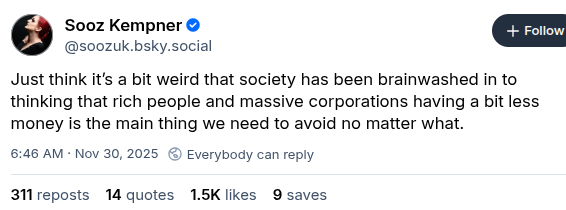
$175 billion for a “golden dome” that experts doubt would actually work, but only $2 billion in humanitarian aid for the United Nations. It’s what Jesus would want.
Space based weapons are forbidden by treaties that the US signed. That said do we have space based weapons … well I was sending commands somewhere for something when I was in the Army Sat coms / intel unit. You decide. Hugs
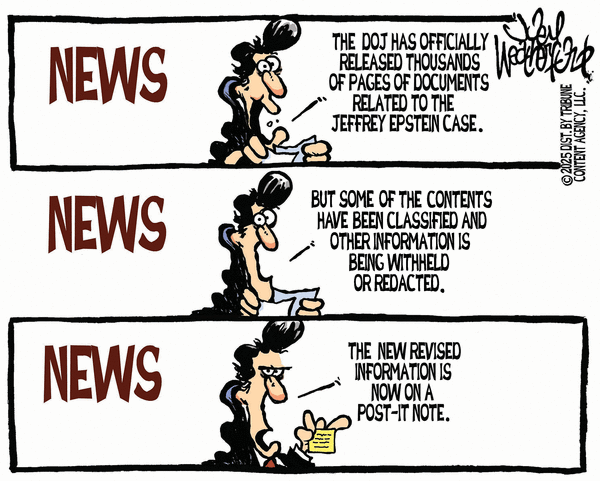
Maga hate fail / tRump lost in court / tRump supporters doing what they do not want you to know about / ICE lies / tRump’s DOJ / Misinformation / Trying to change history by spewing & omitting facts or what really happened
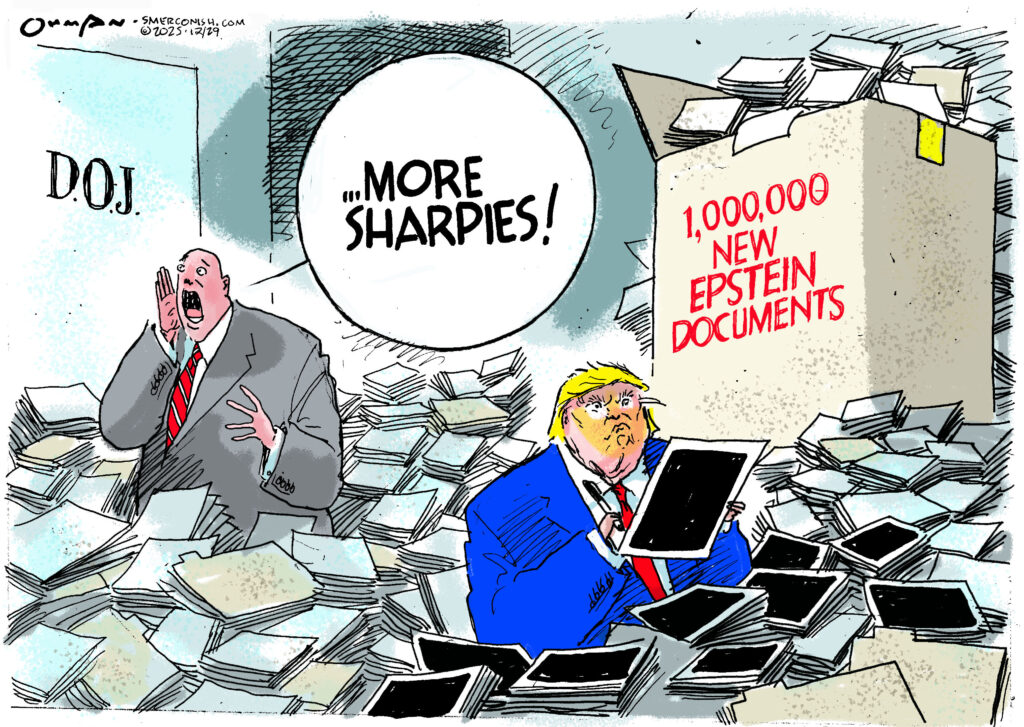
The emails, which were made public as part of a newly unsealed judicial order, largely reflected communications about the case that Robert E. McGuire, the acting U.S. attorney in Nashville, had with members of his staff and with Aakash Singh, a top official in Mr. Blanche’s office. They raised serious questions about whether the Justice Department had misled Judge Waverly D. Crenshaw Jr., who is overseeing the case, by telling him that local prosecutors had acted alone in charging Mr. Abrego Garcia.
Hate / Bigotry / DEI / White Supremacy / Christian Nationalism / US aid to only white countries or white dominated areas / US Healthcare / For Profit drug prices rip off the US public /
The civil probes are proceeding under the umbrella of the False Claims Act, which has traditionally been used to go after contractors who bill the government for work that was never performed or inflate the cost of services rendered.
The U.S. slashed its aid spending this year, and leading Western donors such as Germany also pared back assistance as they pivoted to increased defense spending, triggering a severe funding crunch for the United Nations.
U.N. data shows total U.S. humanitarian contributions to the U.N. fell to about $3.38 billion in 2025, equating to about 14.8% of the global sum. This was down sharply from $14.1 billion the prior year, and a peak of $17.2 billion in 2022.
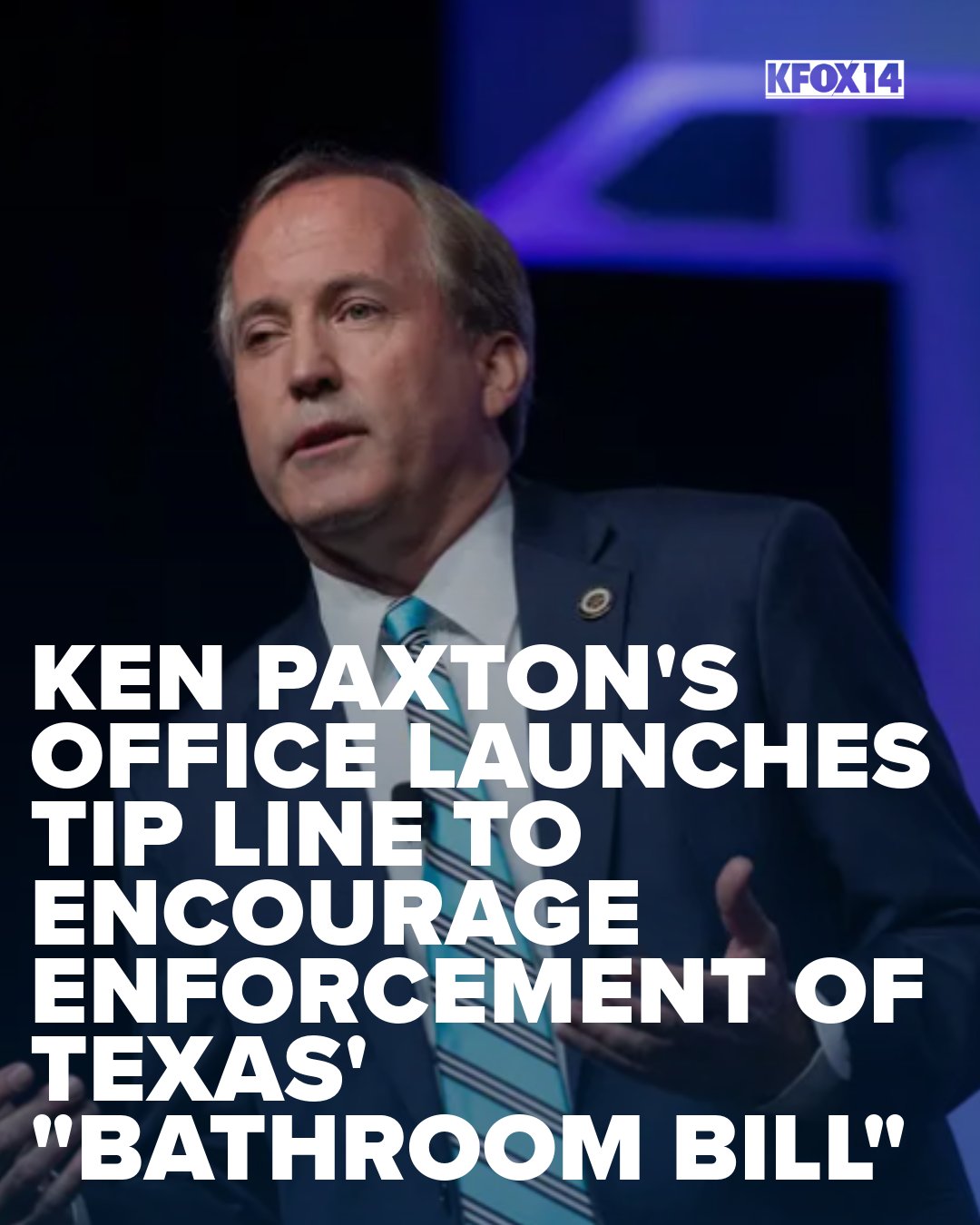
The idea behind the legislation originated with the Alliance Defending Freedom, a conservative Christian legal advocacy group that has gained prominence for its work to incorporate religion in public spaces.
West last appeared here for his bill that would create a database of abortion patients.
In 2024, we heard from West for his bill to ban Pride flags at public schools and government buildings.
He appeared here in 2023 for his bill that would make it a felony to perform drag in the view of minors. His bill called for a $20,000 fine and up to two years in prison.
West first appeared here in 2021 when Gov. Kevin Stitt signed his bill making it legal to run over protesters.
The tweet below refers to West’s attempt to pass this same bill earlier this year.
tRump’s attack on Colorado because they won’t bow to the whim of the tyrant. His withholding money is illegal but no republican will stand up to the demented king.
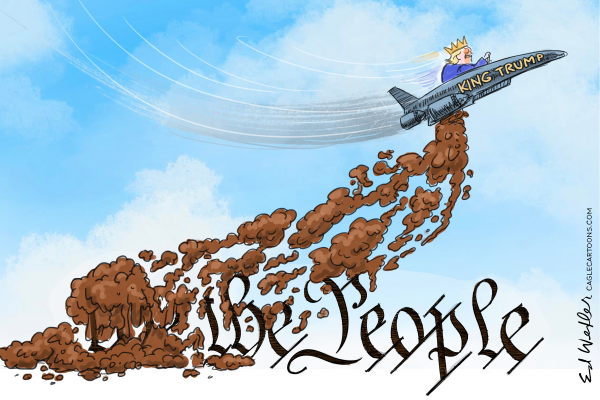
The delusion is in MAGA supporters still believing Trump is some anti-elite “drain the swamp” champion for the working class—when, in reality, his inauguration featured the world’s richest billionaires (Musk, Bezos, Zuckerberg, and others with over $1 trillion in combined wealth) seated prominently behind him on the platform, grinning like they own the place. It was a blatant display of oligarchy, not populism.
tRump’s illegal military war crime actions / tRump’s gift to the oil companies that paid him prior / This is a war crime and illegal / tRump trying to get other countries resources for his own profits / tRump grifts and seeking bribes
It has nothing to do with US national security and all the minerals / traffic rights to make ships pay / and the “rare earth” metals that tRump wants a piece of. It is about profit. Hugs
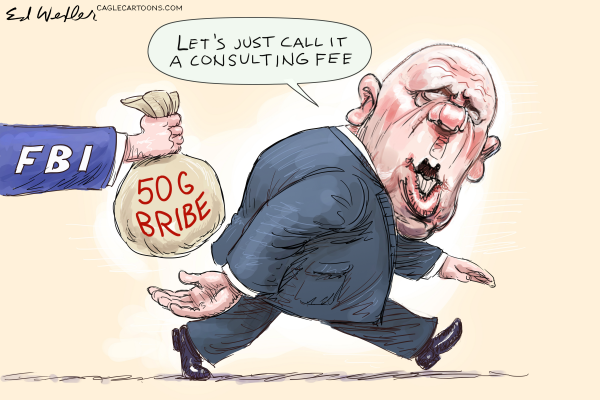
The paying tribute and bribes to tRump and his slush funds is so anti what the US should and used to stand for. It is the very thing the founding fathers were most against. The courts have gutted the holding of tRump to account but the emoluments cause is what this was designed to stop. Ask yourself if Biden / Obama / Clinton had been so blatant in demanding bribes would you tRump cult supporters be OK with it still? Hugs
The appeals court told her to have it completely wrapped up by the first week of January and this is not doing that. I expect more to happen fast with this. She ignored the appeals court order to please tRump.
“There was blood everywhere, screams, people crying, people who couldn’t take it and were urinating and vomiting on themselves,” the college student from Venezuela who sought U.S. asylum, said. “Four guards grabbed me, and they beat me until I bled until the point of agony. They knocked our faces against the wall. That was when they broke one of my teeth.”
Mr. Miller’s belief that seven decades of immigration has produced millions of people who take more than they give — an assertion that has been refuted by years of economic data — is at the heart of the Trump administration’s campaign to restrict immigration and deport immigrants already in the country.
tRump trying to hold on to power illegally / Jan 6th insurrectionists / trying to change the history everyone seen live / Scamming / Using the US treasury & taxpayer funds to pay off tRump cult members.
The U.S. Air Force will provide Jan. 6 rioter Ashli Babbitt with military funeral honors, reversing a Biden-era decision that denied her family’s request, according to a legal group that has represented her family.
In June 2025, the Pentagon agreed to pay the Babbitt family a $5 million “wrongful death” settlement. Below, see the latest from Proud Boys leader Enrique Tarrio, who is himself reportedly suing the DOJ for $100 million.
So Ron and his sister arrived two days ago. Lucky for me she is a doer who jumps in to do stuff and doesn’t wait for others to do for her. She has really helped Ron get a lot of stuff done. She helps when my back goes out. She is doing supper right now so I can catch up on the last few days of news. I really hope she finds a place to her tastes here as she is a good influence for Ron. Hugs, loves to all, and best wishes to all who wish them. Scottie
Thanks to Ron’s sister jumping in and doing all the extra stuff I have been trying to do I can rest my back while doing my posting. I could get used to this. Hugs
tRump’s illegal war for profit to please the corporations he told to give him a billion dollars for his campaign and he would do what ever they asked. Wow US military young adults sold for tRump’s profit. Hugs
The $1,776 per person bonuses, unveiled by Trump in his nationwide address Wednesday night, will be covered with funding approved in the Big Beautiful Bill that passed in July, according to the congressional officials and later confirmed by the Pentagon. The payouts — which will cost roughly $2.6 billion — will be a “one-time basic allowance for housing supplement to all eligible service members,” said the official.
The Trump administration announced several moves Thursday that will have the effect of essentially banning gender-affirming care for transgender young people, even in states where it is still legal.
The second would block all Medicaid and Medicare funding for any services at hospitals that provide pediatric gender-affirming care.
Really stupid things say and blame democrats for just because they think it sounds good not realizing how dumb it seems.
As Democracy Docket previously reported, in his previous role as a prosecutor in the Los Angeles district attorney’s office, Neff was put on leave after bringing charges against an election software executive based on information from conspiracy-driven election denier group True the Vote. The saga ultimately cost taxpayers $5 million to settle a lawsuit over the flawed prosecution.
Neff is also affiliated with True The Vote, the far-right QAnon group featured in Dinesh D’Souza’s debunked “2000 Mules” film.
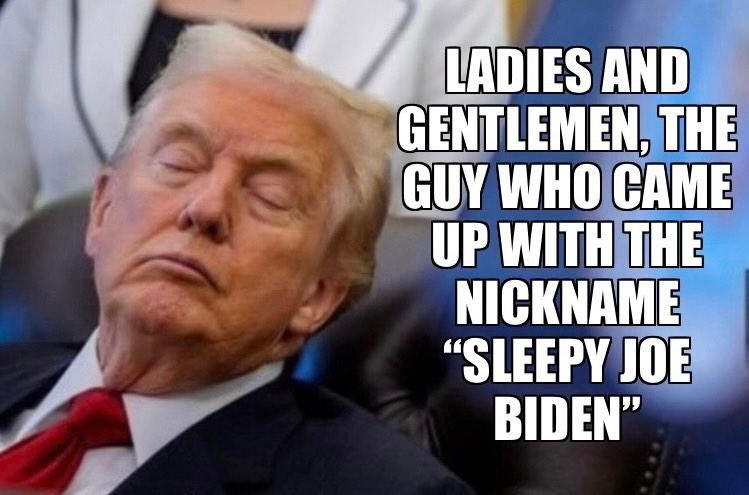
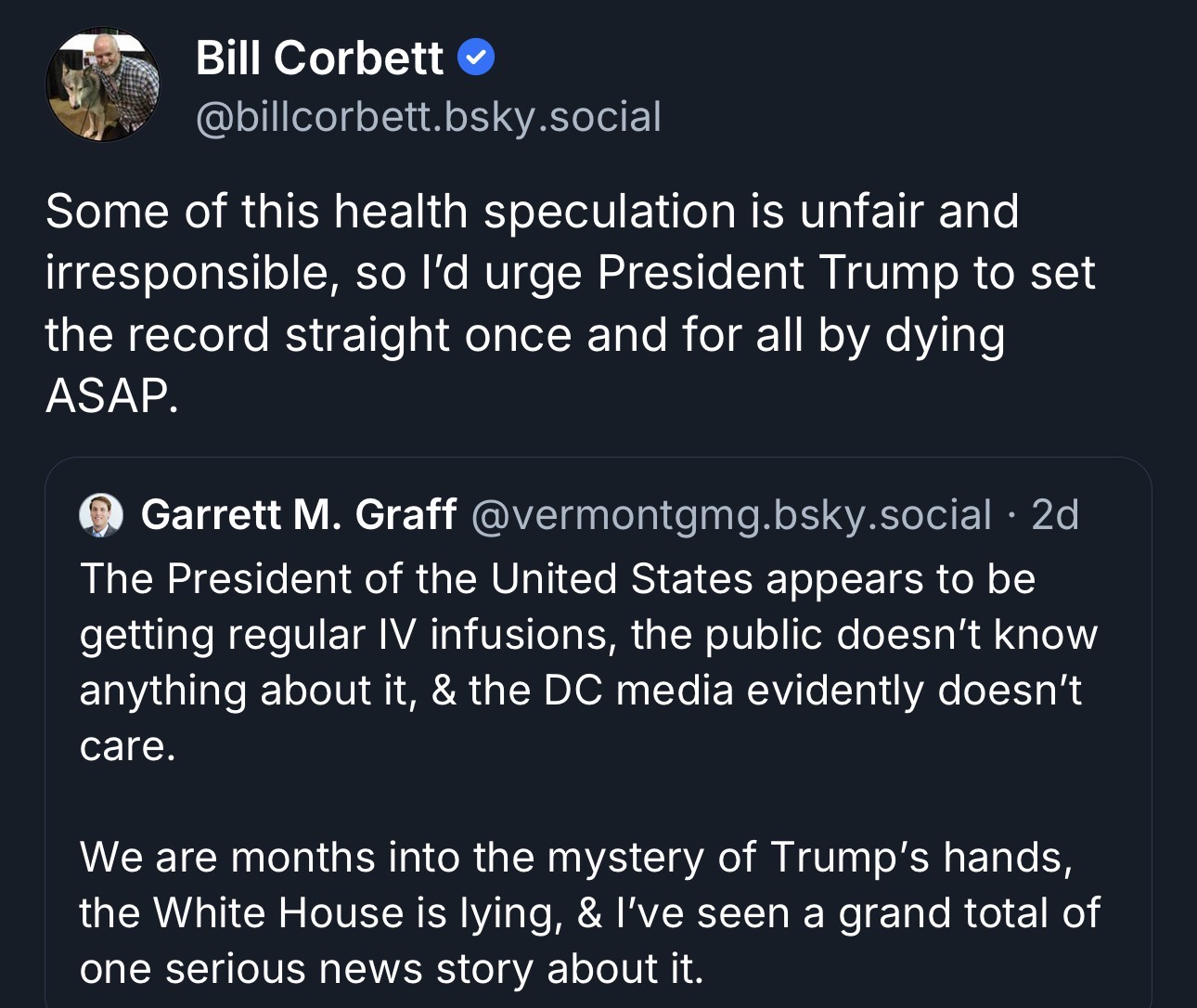
Slumped over in his chair at the Resolute desk, Trump’s face slackened—eyes drooping, the corners of his mouth sagging—as he fought off sleep. The elderly president has now been caught appearing to doze off at four official events in six weeks.
Everybody farts. Upwards of 23 times a day, in fact. It’s one of the most universal human experiences, cutting (the cheese) across age, culture, and personality. Yet for something so common, it somehow feels very different coming from a woman than it does from a man. But according to research highlighted in a now-legendary study, there indeed is a difference between man farts and lady (sic) farts. This unexpected fact about the battle of the sexes carries an even more unexpected health benefit.
Yes, this is a story about farts. But stay with us.
Back in 1998, Dr. Michael Levitt, a gastroenterologist known among colleagues as the “King of Farts,” set out to understand where that unmistakable scent of human flatulence comes from. To answer the question, he recruited 16 healthy adults with no gastrointestinal issues. Each participant wore a “flatus collection system,” described as a rectal tube connected to a bag.
After eating pinto beans and taking a laxative, the volunteers provided samples that were then analyzed using gas chromatographic mass spectroscopic techniques. Levitt and his team broke down the chemical components inside each bag and invited two judges to help evaluate the results. The judges did not know they were sniffing human gas (which in retrospect sounds diabolical). They rated each sample on an odor scale from zero to eight, with eight meaning “very offensive.”
Their assessments pointed clearly to one culprit. Sulfur-containing compounds were responsible for the strongest and most memorable odors, especially hydrogen sulfide, which produces that classic “rotten egg” smell.
So where does the gender difference come in?
Here is the twist researchers did not expect: although men tended to produce larger volumes of gas, women’s flatulence contained a “significantly higher concentration” of egg smelling hydrogen sulfide. When the judges rated the odor of each sample, they consistently marked women’s gas as having a “greater odor intensity” than men’s. (snip-MORE, but not much.)
Our handwriting is getting worse. More and more of our writing and communications are being done digitally, and young people, in particular, are getting a lot less practice when it comes to their calligraphy. Most schools have stopped teaching cursive, for example, while spending far more time on typing skills.
And yet, we still occasionally have to hand-address our physical mail, whether it’s a holiday card, a postcard, or a package.
We don’t always make it easy on the postal service when they’re trying to decipher where our mail should go. Luckily, they have a pretty fascinating way of dealing with the problem.
The U.S. Postal Service sees an unimaginable amount of illegible addresses on mail every single day. To be fair, not all of it comes down to sloppy handwriting. Labels and packaging can get wet, smudged, ripped, torn, or otherwise damaged, and that makes it extremely difficult for mail carriers to decipher the delivery address.
You’d probably imagine that if the post office couldn’t read the delivery address, they’d just return the package to the sender. If so, you’d be wrong. Instead, they send the mail (well, at least a photo of it) to a mysterious and remote facility in Salt Lake City, Utah called the U.S Postal Service Remote Encoding Center.
According to Atlas Obscura, the facility is open 24 hours per day. Expert workers take shifts deciphering, or encoding, scanned images of illegible addresses. The best of them work through hundreds per hour, usually taking less than 10 seconds per item. The facility works through over five million pieces of mail every day.
Every. Single. Day. (snip-MORE, but again, not too much more)













































































:max_bytes(150000):strip_icc():format(webp)/groundhog-day-climate-change-56a755483df78cf77294b63c.jpg)
:max_bytes(150000):strip_icc():format(webp)/republicans-climate-titanic-566336c33df78ce161a01579.jpg)
:max_bytes(150000):strip_icc():format(webp)/fugelsang-climate-wrestling-56a755693df78cf77294b818.jpg)
:max_bytes(150000):strip_icc():format(webp)/obama-climate-women-56614e785f9b583386c2f727.jpg)