The site isn’t exposing misleading reporting – it’s revealing the bubble Trump increasingly inhabits
‘Given that bubble, harsh reality via the media is a rude intrusion.’ Photograph: Jonathan Ernst/Reuters
Donald Trump has used the mainstream press as a punching bag for many years, but in recent weeks his jabs have become even more frequent – and more ill-tempered.
And last Friday, his White House unveiled the latest wrinkle: a new website that supposedly tracks media bias. It offers a “Hall of Shame” and “media offenders of the week” to focus on reporting that the president dislikes. It names individuals and news organizations, and it points to the Boston Globe and CBS News, among others, for doing supposedly misleading and biased work. It uses terms like “left wing lunacy” to describe some of its complaints.
The site’s first iteration is particularly focused on media reporting about Trump’s call for six Democratic members of Congress to be arrested, tried and punished for their supposedly “seditious” video reminding military and intelligence personnel that they are not obliged to follow illegal orders. Trump even boosted a social media post that shouted: “HANG THEM GEORGE WASHINGTON WOULD” (He later told Fox News he wasn’t “threatening death, but I think they’re in serious trouble”).
All this for a video in which the members of Congress sought to remind people that military members make an oath to the constitution, not to the president.
“Our laws are clear. You can refuse illegal orders,” Senator Mark Kelly of Arizona, a former astronaut and a US navy veteran, says on the video. Trump has been especially furious about Kelly, who seems like just the wrong person to go after, giving his background of service and high credibility.
The White House site crows that those journalists and outlets who reported on all this are now “exposed”.
There really is something being exposed here, but it’s not the reporting.
It’s Trump’s own increasing desperation and his decreasing ability to countenance anything other than flattery and sycophancy. That’s not what the mainstream press is – or should be – in the business of providing.
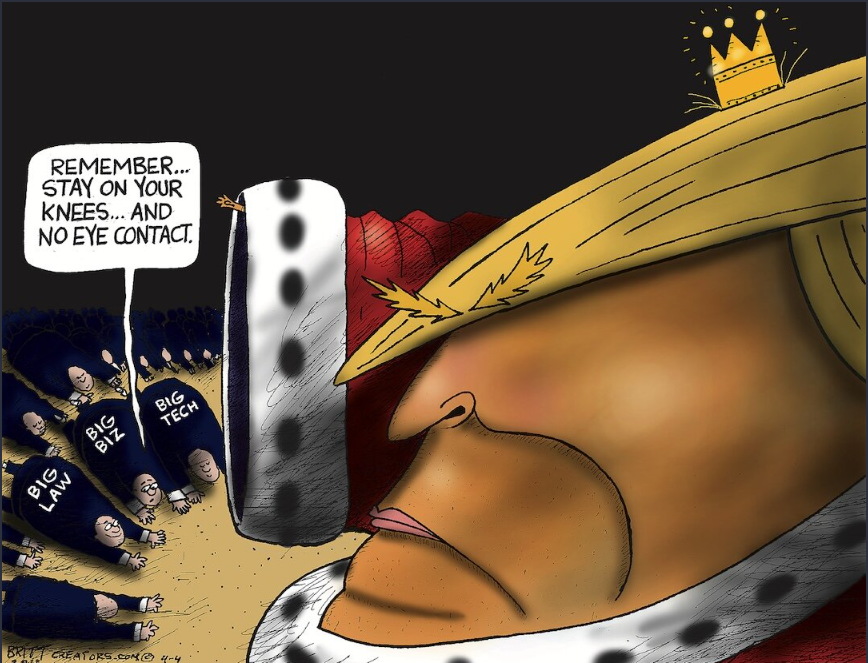
But as Jonathan Lemire reported this week in the Atlantic, this president has become more and more isolated lately. His social media appears mostly restricted to his own (poorly named) Truth Social site; his travel is generally not to meet with (or even see) ordinary Americans; instead he tends to hang out with the billionaires who want something from his administration and are willing to cozy up shamelessly to get it.
“President Trump has never before been in such an echo chamber,” according to Lemire. “His domestic travel has basically stopped. He sees rich donors and Maga media, not actual voters.”
Given that bubble, harsh reality via the media is a rude intrusion, and the new White House site is an evident effort to dispel the discomfort by disparaging it.
Who, I wonder, does Trump think he’s reaching with this effort?
The Maga faithful, of course, don’t need to be persuaded. They already are fully on board with anything their dear leader does. And most other Americans – even some of the millions who voted for him – already have his number.
Trump’s overall approval rating of 38% is the lowest since his return to the presidency, according to a recent Reuters/Ipsos poll. It has fallen dramatically since the start of that second term and is down two percentage points just since the beginning of November. Even his iron grip on the Republican party has weakened. All of that is a deep worry with the approach of the midterm elections – less than a year away.
Who can he blame?
Why, the press, of course. And that’s precisely what this new site is all about.
Will it work? Granted, trust in the mainstream press is low, so reporters and news organizations are a convenient target of criticism. And granted, media bias exists, though the most blatant is on the far right, the busy pro-Trump propagandists.
But I agree with Seth Stern, director of advocacy for the Freedom of the Press Foundation, who told the Washington Post that most people – whatever their politics – aren’t going to buy what this new “bias tracker” is selling.
“People understand the obvious conflict inherent in a presidential administration appointing itself the arbiter of media bias,” Stern said.
That’s especially true for media criticism from those doing the bidding of Trump, who has made his antipathy toward the press so central to his persona.
Calling out inaccurate and biased reporting is a fair pursuit. Journalists are far from flawless; they make mistakes, and the best of them correct those quickly and fully.
But that’s not what this new site is about. And trashing the media is not going to help Trump get out of the trouble – or the bubble – that he’s in.
Margaret Sullivan is a Guardian US columnist writing on media, politics and culture
Ten Bears made a post that points out something I think we all should be aware of. I know a lot of the people who come here also go to his site also. But incase anyone missed it this short video is a powerful reminder of what we are fighting in the second tRump dictatorship. Hugs
Commissioners in Randolph County, North Carolina dissolved the county library system’s entire board of trustees last week, after the trustees voted to keep a picture book about a transgender boy on library shelves.
In October, the Randolph County Public Library’s Board of Trustees voted to keep the picture book Call Me Max on shelves despite some objections from members of the public. The book, written by Kyle Lukoff and illustrated by Luciano Lozano, tells the story of a young trans boy who asks to be called Max at school, eventually leading him to come out to his parents. The Randolph County trustees voted 5-2 to keep the book available, with some trustees reportedly commenting that removing or relocating the book would be a “slippery slope” toward censorship.
In response, the Randolph County Board of Commissioners voted 3-2 on December 8 to dissolve the library board and its governing bylaws entirely, Blue Ridge Public Radio (BPR) reported. Commissioner Hope Haywood, who cast one of the two dissenting votes, told BPR that the other commissioners’ likely intended to appoint new members, but that she had wanted to establish plans to facilitate that process first.
“Three commissioners didn’t see it that way. Three commissioners felt like, just abolish the board and then figure it out,” Haywood told BPR.
Minutes and video of the December 8 meeting were not yet available at time of writing. According to coverage of the meeting by local news website Randolph Hub, commission chairman Darrell Frye made bizarre comments about a member of his family he said had killed themself after being “brainwashed” on social media, apparently in reference to being trans. “It’s about, to me, exposing a child before it’s able to make a decision. It’s personal to me,” Frye reportedly said. Commissioner Kenny Kidd opined that dissolving the board of trustees was “a black-and-white issue,” and that “the soul of our children” was at stake.
“We adhere to the rules for the disposition of materials. We have the responsibility to serve all sides of issues,” trustee Betty Armfield reportedly told the board, adding that it was “parents’ responsibility to choose what they believe are appropriate books for their children.”
Call Me Max will still be available to check out from Randolph libraries in the wake of the commissioners’ vote, the county public information officer told CBS affiliate station WFMY. Still, Lukoff — who won a 2020 Stonewall Book Award for another picture book about a trans boy, When Aidan Became a Brother — lamented the vote and what it represents on Instagram last week.
“A library’s entire board of trustees was fired and replaced because they refused to ban one of my books. It’s so terrible,” Lukoff wrote. “I just feel so bad for the people who live in that community and love their library,” he added in a later reply.
Anti-LGBTQ+ activists have increasingly targeted local and school libraries over the past several years, particularly amid the rise in popularity of “Drag Queen Story Hour” events, some of which have been the subject of bomb threats and harassment from far-right militia groups. Tennessee officials have ordered libraries across the state to remove books with LGBTQ+ themes or characters this year, while in South Carolina, the York County Library board voted last week to move all books dealing with gender identity to sections for patrons aged 13 and older. One conservative activist claimed that move was necessary for “protecting childhood innocence.”
Issues of access to LGBTQ+ materials are increasingly landing in courts. Earlier this year, former Wyoming librarian Terri Lesley settled a wrongful dismissal lawsuit with county officials for $700,000, after she was fired in 2023 for refusing to remove LGBQ+ books from children’s and young adult sections of her library. (Neither party admitted wrongdoing as a result of the settlement.)
“People that want to keep pushing an agenda to go against these library materials and the First Amendment, I hope they see this, and I hope it’s a deterrent,” Lesley told CBC Radio in October.
May 14, 2024; New York, NY, USA; Speaker of the House Mike Johnson (center), and Vivek Ramaswamy (right) look on while former President Donald Trump speaks to the media alongside his lawyer Todd Blanche before his criminal trial at Manhattan criminal court at the New York State Supreme Court on May 14, 2024. Mandatory Credit: Justin Lane/Pool via USA TODAY NETWORK | Justin Lane/Pool via USA TODAY N
Yesterday’s announcement from Donald Trump’s Department of Health and Human Services (HHS) shows just why the 2026 midterms will matter so much, and why the 11 months of waiting to get there could be so disastrous. We need a Congress that will stand up and snatch back the purse strings as the Founding Fathers originally intended.
In the United States Constitution, Congress is granted the power of the purse: the right to decide how much to spend and on what. Also, importantly, it gets to decide when to remove funding. In the 70s, that was used to pull funding from the Vietnam War. That power does not belong with the Executive Branch, which the Constitution says must “take Care that the Laws be faithfully executed.”
Unfortunately, the Founders likely never imagined people like House Speaker Mike Johnson (R-LA) or Senate Majority Leader John Thune (R-SD), who have been willing to roll over and allow Trump to usurp their power, in violation of the basic concepts behind the checks and balances built into the Constitution.
Congress is already working to block gender-affirming care. This week, the House of Representatives passed two gender-affirming care bans for minors, one from Rep. Marjorie Taylor Greene (R-GA) and one from Rep. Dan Crenshaw (R-TX). Those bans are horrific, and we can only pray that the Senate will stop them, but they are at least going through some sort of democratic process.
The Trump administration has a way to move towards a gender-affirming care ban if that is in line with the will of the people and democracy. The HHS proposal doesn’t represent a ban; instead, it’s an end-run on democracy, hoping to conduct a scorched-earth funding pull that they should have no authority to do.
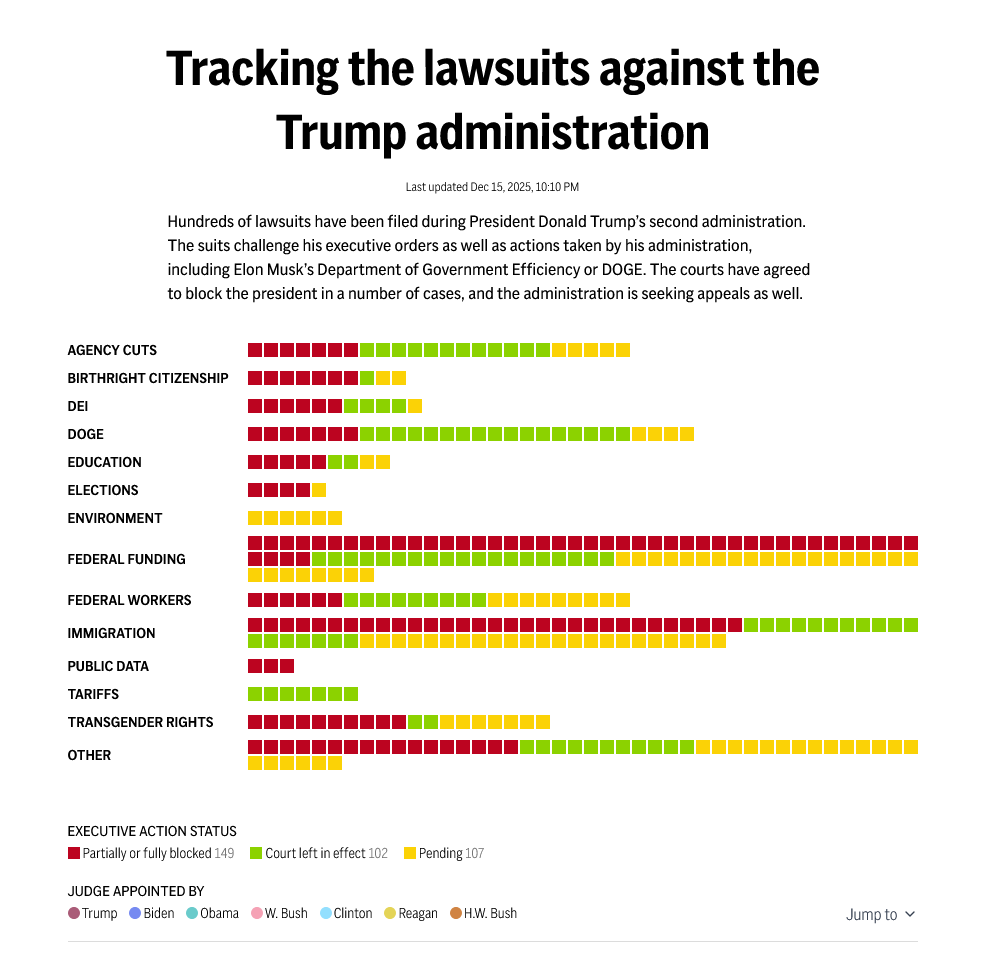
The HHS funding blocking proposal would pull all federal funding from any institution that conducts any gender-affirming care for trans people, even if patients pay for it without using federal funds. Hospitals will have to either comply with the HHS plans by ceasing gender-affirming care or risk losing all federal funding for all other treatments. Major hospital systems have already cut their programs because of these sorts of threats.
Trans youth and their families would be left seeking institutions that only provide gender-affirming care and forgo all government funding, if such a place even exists. Additionally, the removal of Medicaid coverage could see prices rise.
There will certainly be pushback against this plan, especially from cities and states that have marked themselves as trans sanctuaries. But those challenges will take time, and a small interruption in care or even just the threat of it does huge damage to trans youth. Denial of care has been linked to increased rates of depression and anxiety, and for those who have begun puberty, the physical changes that can happen in a short time can be extremely upsetting.
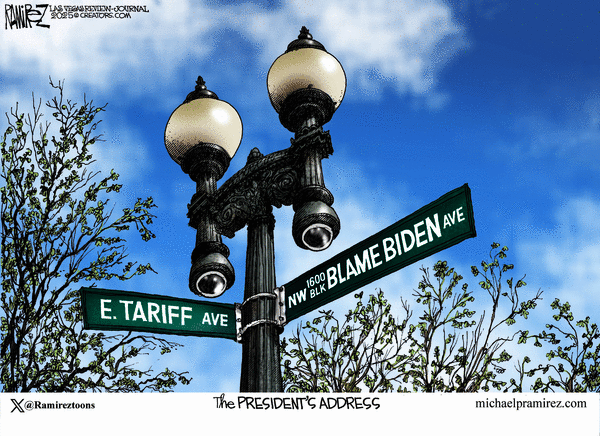
Trump keeps using threats of pulling federal funding to power his authoritarianism. That tactic is only working because Congress isn’t stopping him and saying, “No, that’s our job.” When Nixon pulled federal funds as a way to end programs with the Environmental Protection Agency (a process called impoundment), Congress passed the Congressional Budget and Impoundment Control Act, which closed loopholes and ensured that the president couldn’t rule this way. The Supreme Court went on to rule in 1975 that the president did not have the power to overrule Congress by impounding funds.
Michael Dorf, a constitutional law professor at Cornell University Law School, spoke with ABC News early in the Trump presidency, when he first started using this trick. “If Congress says you’re spending that much money on the federal programs, that’s how much is being spent. The president cannot stop it even temporarily,” he said. “Congress passed this statue this very particular rules of what exactly the president has to do if he wants to not spend money on money Congress has spent. He can ask Congress to for a recission, but there is a 45-day clock and a bunch of procedures, none of which have been followed by Trump.”
Congress’ move here wasn’t just granting itself new powers, but providing a safeguard to ensure that the power of the purse remained where the Constitution had put it. Republicans are quick to wheel out the Constitution and the will of the Founding Fathers, but all of that seems forgotten under Trump. Instead, Congress is leaving decisions to be drawn out in protracted judicial battles, which ultimately run the risk of landing in the Trump-packed Supreme Court.
All of those federal funding threats work well for Trump, as he and his administration can wave their hands and claim that they’re standing by their promise to cut bloated government spending (all while spending millions in taxpayer money on golfing and Kid Rock). But it all relies on a tactic that shouldn’t even be part of the presidential toolkit.
There might be a lot of justifiable hope in 2026 that things will work out. Elections this year have already shown a big swing away from Trump’s party. Republicans are resigning, opening more seats that the party could lose between now and 2027. And while Congress might be voting on gender-affirming care bans themselves, it took a capitulation to a hardline anti-trans Republican as she was heading out the door to get that to happen.
But we’re only halfway to those midterms, and there’s going to be a lot of pain if the current Congress can’t remember why they’re there for another year.
Subscribe to the LGBTQ Nation newsletter and be the first to know about the latest headlines shaping LGBTQ+ communities worldwide.
Is tRump a controlled asset or just a useful old idiot, does it matter. He is giving Putin everything he every wanted. The fact is he has decided to be Putin in the west while he lets Russia and China divide up Europe and the Asia. Hugs
The White House in Washington DC, USA. Illustrative image via Wikimedia Commons.
The United States has removed sanctions from several foreign companies previously accused of supplying equipment to Russia, including items linked to its defense and military-industrial sectors.
The changes were published on the US Treasury Department’s website on December 18, without any explanation for the move.
Cyprus-based investment firm and its owner delisted
Among the firms removed is Cyprus-based Veles International Limited and its owner, Dmytro Buhaienko. While the company is tied to an investment group based in Moscow, US sanctions remain in place against its Russian legal entities.
Veles was originally sanctioned in 2023 for operating in Russia’s financial sector and working with wealthy Russian private individuals.
Dubai and Turkish firms linked to military exports also dropped
Other companies taken off the sanctions list include Dubai-based 365 Days Freight Services FZCO and Türkiye’s Etasis, both of which had been linked to exports of restricted equipment used for military purposes in Russia.
When 365 Days was originally sanctioned in November 2023, the Treasury said the company “specializes in moving high-value goods and computer components” and “has shipped high-priority goods, including machines for the reception, conversion, and transmission of data, to Russia.”
Finnish supplier of optoelectronic equipment removed
The Treasury also lifted restrictions on Finland’s Hi-Tech Koneisto and its director, Yevheniia Dremova. The company had supplied optoelectronic and laboratory equipment to Russian firms already under sanctions.
CPS Proses Kontrol Urunleri, a Turkish company, had previously been sanctioned for sending German- and US-made machine tools to a Russian defense contractor. While the company itself is no longer under US sanctions, the Russian contractor it supplied remains restricted.
US authorities did not indicate whether the removals reflect changes in compliance, enforcement priorities, or broader sanctions policy toward Russia.
The delistings come as White House negotiators have met with Russian President Vladimir Putin in Moscow to push a US deal to end the war in Ukraine, and days after the Treasury extended authorization for Lukoil-branded gas stations outside Russia to continue operating.
Leonardo Garcia Venegas was detained by immigration agents while filming a raid on his worksite, despite having a REAL ID on him and telling the officers he was a citizen.
Reporting Highlights
Americans Detained: The government doesn’t track how many citizens are held by immigration agents. We found more than 170 cases this year where citizens were detained at raids and protests.
Held Incommunicado: More than 20 citizens have reported being held for over a day without being able to call their loved ones or a lawyer. In some cases their families couldn’t find them.
Cases Wilted: Agents have arrested about 130 Americans, including a dozen elected officials, for allegedly interfering with or assaulting officers, yet those cases were often dropped.
These highlights were written by the reporters and editors who worked on this story.
When the Supreme Court recently allowed immigration agents in the Los Angeles area to take race into consideration during sweeps, Justice Brett Kavanaugh said that citizens shouldn’t be concerned.
“If the officers learn that the individual they stopped is a U.S. citizen or otherwise lawfully in the United States,” Kavanaugh wrote, “they promptly let the individual go.”
About two dozen Americans have said they were held for more than a day without being able to phone lawyers or loved ones.
Videos of U.S. citizens being mistreated by immigration agents have filled social media feeds, but there is little clarity on the overall picture. The government does not track how often immigration agents hold Americans.
So ProPublica created its own count.
We compiled and reviewed every case we could find of agents holding citizens against their will, whether during immigration raids or protests. While the tally is almost certainly incomplete, we found more than 170 such incidents during the first nine months of President Donald Trump’s second administration.
Among the citizens detained are nearly 20 children, including two with cancer. That includes four who were held for weeks with their undocumented mother and without access to the family’s attorney until a congresswoman intervened.
Immigration agents do have authority to detain Americans in limited circumstances. Agents can hold people whom they reasonably suspect are in the country illegally. We found more than 50 Americans who were held after agents questioned their citizenship. They were almost all Latino.
Immigration agents also can arrest citizens who allegedly interfered with or assaulted officers. We compiled cases of about 130 Americans, including a dozen elected officials, accused of assaulting or impeding officers.
These cases have often wilted under scrutiny. In nearly 50 instances that we have identified so far, charges have never been filed or the cases were dismissed. Our count found a handful of citizens have pleaded guilty, mostly to misdemeanors.
Among the detentions in which allegations have not stuck, masked agents pointed a gun at, pepper sprayed and punched a young man who had filmed them searching for his relative. In another, agents knocked over and then tackled a 79-year-old car wash owner, pressing their knees into his neck and back. His lawyer said he was held for 12 hours and wasn’t given medical attention despite having broken ribs in the incident and having recently had heart surgery. In a third case, agents grabbed and handcuffed a woman on her way to work who was caught up in a chaotic raid on street vendors. In a complaint filed against the government, she described being held for more than two days, without being allowed to contact the outside world for much of that time. (The Supreme Court has ruled that two days is generally the longest federal officials can hold Americans without charges.)
George Retes, an American combat veteran, at the site of his arrest by immigration agents on California’s Central Coast. Retes was detained for three days without access to a lawyer and missed his daughter’s third birthday.
In response to questions from ProPublica, the Department of Homeland Security said agents do not racially profile or target Americans. “We don’t arrest US citizens for immigration enforcement,” wrote spokesperson Tricia McLaughlin.
A top immigration official recently acknowledged agents do consider someone’s looks. “How do they look compared to, say, you?” Border Patrol chief Gregory Bovino said to a white reporter in Chicago.
The White House told ProPublica that anyone who assaults federal immigration agents would be prosecuted. “Interfering with law enforcement and assaulting law enforcement is a crime and anyone, regardless of immigration status, will be held accountable,” said the Deputy Press Secretary Abigail Jackson. “Officers act heroically to enforce the law, arrest criminal illegal aliens, and protect American communities with the utmost professionalism.”
A spokesperson for Kavanaugh did not return an emailed request for comment.
An immigration raid on 79-year-old Rafie Ollah Shouhed’s car wash left him with broken ribs.Courtesy of Rafie Ollah Shouhed. Compiled by ProPublica.
Tallying the number of Americans detained by immigration agents is inherently messy and incomplete. The government has long ignored recommendations for it to track such cases, even as the U.S. has a history of detaining and even deporting citizens, including during the Obama administration and Trump’s first term.
We compiled cases by sifting through both English- and Spanish-language social media, lawsuits, court records and local media reports. We did not include arrests of protesters by local police or the National Guard. Nor did we count cases in which arrests were made at a later date after a judicial process. That included cases of some people charged with serious crimes, like throwing rocks or tossing a flare to start a fire.
Experts say that Americans appear to be getting picked up more now as a result of the government doing something that it hasn’t for decades: large-scale immigration sweeps across the country, often in communities that do not want them.
In earlier administrations, deportation agents used intelligence to target specific individuals, said Scott Shuchart, a top immigration official in the Biden, Obama and first Trump administrations. “The new idea is to use those resources unintelligently” — with officers targeting communities or workplaces where undocumented immigrants may be.
When federal officers roll through communities in the way the Supreme Court permitted, the constitutional rights of both citizens and noncitizens are inevitably violated, argued David Bier, the director of immigration studies at the libertarian Cato Institute. He recently analyzed how sweeps in Los Angeles have led to racial profiling. “If the government can grab someone because he’s a certain demographic group that’s correlated with some offense category, then they can do that in any context.”
Cody Wofsy, an attorney at the American Civil Liberties Union, put it even more starkly. “Any one of us could be next.”
The video Garcia Venegas made of an immigration raid on a construction site shows him walking away from the officer while trying to film and then stating that he’s a citizen before being detained.Courtesy of Garcia Venega
When Kavanaugh issued his opinion that immigration agents can consider race and other factors, the Supreme Court’s three liberal justices strongly dissented. They warned that citizens risked being “grabbed, thrown to the ground, and handcuffed simply because of their looks, their accents, and the fact they make a living by doing manual labor.”
Leonardo Garcia Venegas appears to have been just such a case. He was working at a construction site in coastal Alabama when he saw masked immigration agents from Homeland Security Investigations hop a fence and run by a “No trespassing” sign. Garcia Venegas recalled that they moved toward the Latino workers, ignoring the white and Black workers.
Garcia Venegas began filming after his undocumented brother asked agents for a warrant. In response, the footage shows, agents yanked his brother to the ground, shoving his face into wet concrete. Garcia Venegas kept filming until officers grabbed him too and knocked his phone to the ground.
Other co-workers filmed what happened next, as immigration agents twisted the 25-year-old’s arms. They repeatedly tried to take him to the ground while he yelled, “I’m a citizen!”
Officers pulled out his REAL ID, which Alabama only issues to those legally in the U.S. But the agents dismissed it as fake. Officers held Garcia Venegas handcuffed for more than an hour. His brother was later deported.
Leonardo Garcia Venegas told agents he was a citizen both times he was detained. His REAL ID was dismissed as a fake.
Garcia Venegas was so shaken that he took two weeks off of work. Soon after he returned, he was working alone inside a nearly built house listening to music on his headphones when he sensed someone watching him. A masked immigration agent was standing in the bedroom doorway.
This time, agents didn’t tackle him. But they again dismissed his REAL ID. And then they held him to check his citizenship. Garcia Venegas says agents also held two other workers who had legal status.
DHS did not respond to ProPublica’s questions about Garcia Venegas’ detentions, or to a federal lawsuit he filed last month. The agency has previously defended the agents’ conduct, saying he “physically got in between agents and the subject” during the first incident. The footage does not show that, and Garcia Venegas was never charged with obstruction or any other crime.
Garcia Venegas’ lawyers at the nonprofit Institute for Justice hope others may join his suit. After all, the reverberations of the immigration sweeps are being felt widely. Garcia Venegas said he knows of 15 more raids on nearby construction sites, and the industry along his portion of the Gulf Coast is struggling for lack of workers.
Kavanaugh’s assurances hold little weight for Garcia Venegas. He’s a U.S. citizen of Mexican descent, who speaks little English and works in construction. Even with his REAL ID and Social Security card in his wallet, Garcia Venegas worries that immigration agents will keep harassing him.
“If they decide they want to detain you,” he said. “You’re not going to get out of it.”
Men building a home in rural Baldwin County, Alabama. Garcia Venegas was detained by immigration agents twice while working on homes in the area.
George Retes was among the citizens arrested despite immigration agents appearing to know his legal status. He also disappeared into the system for days without being able to contact anyone on the outside.
The only clue Retes’ family had at first was a brief call he managed to make on his Apple Watch with his hands handcuffed behind his back. He quickly told his wife that “ICE” had arrested him during a massive raid and protest on the marijuana farm where he worked as a security guard.
Still, Retes’ family couldn’t find him. They called every law enforcement agency they could think of. No one gave them any answers.
Eventually, they spotted a TikTok video showing Retes driving to work and slowly trying to back up as he’s caught between agents and protestors. Through the tear gas and dust, his family recognized Retes’ car and the veteran decal on his window. The full video shows a man — Retes — splayed on the ground surrounded by agents.
George Retes’ family noticed his car in a compiled video posted to TikTok. This clip from that longer video shows his white vehicle surrounded by tear gas. Immigration agents later pinned him on the ground.nota.sra/TikTok
Retes’ family went to the farm, where local TV reporters were interviewing families who couldn’t find their loved ones.
“They broke his window, they pepper sprayed him, they grabbed him, threw him on the floor,” his sister told a reporter between sobs. “We don’t know what to do. We’re just asking to let my brother go. He didn’t do anything wrong. He’s a veteran, disabled citizen. It says it on his car.”
Retes was held for three days without being given an opportunity to make a call. His family only learned where he had been after his release. His leg had been cut from the broken glass, Retes told ProPublica, and lingering pepper spray burned his hands. He tried to soothe them by filling sandwich bags with water.
Retes recalled that agents knew he was a citizen. “They didn’t care.” He said one DHS official laughed at him, saying he shouldn’t have come to work that day. “They still sent me away to jail.” He added that cases like his show Kavanaugh was “wrong completely.”
DHS did not answer our questions about Retes. It did respond on X after Retes wrote an op-ed last month in the San Francisco Chronicle. An agency post asserted he was arrested for assault after he “became violent and refused to comply with law enforcement.” Yet Retes had been released without any charges. Indeed, he says he was never told why he was arrested.
Retes said that agents knew he was a citizen. “They didn’t care.”
The Department of Justice has encouraged agents to arrest anyone interfering with immigration operations, twiceordering law enforcement to prioritize cases of those suspected of obstructing, interfering with or assaulting immigration officials.
But the government’s claims in those cases have often not been borne out.
Daniel Montenegro was filming a raid at a Van Nuys, California, Home Depot with other day-laborer advocates this summer when, he told ProPublica, he was tackled by several officers who injured his back.
Bovino, the Border Patrol chief who oversaw the LA raids and has since taken similar operations to cities like Sacramento and Chicago, tweeted out the names and photos of Montenegro and three others, accusing them of using homemade tire spikes to disable vehicles.
“I had no idea where that story came from,” Montenegro told ProPublica. “I didn’t find out until we were released. People were like, ‘We saw you on Twitter and the news and you guys are terrorists, you were planning to slash tires.’ I never saw those spike tire-popper things.”
Officials have not charged Montenegro or the others with any crimes. (Bovino did not respond to a request for comment, while DHS defended him in a statement to ProPublica: “Chief Bovino’s success in getting the worst of the worst out of the country speaks for itself.”)
The government’s cases are sometimes so muddied that it’s unclear why agents actually arrested a citizen.
Andrea Velez was charged with assaulting an officer after she was accidentally dropped off for work during a raid on street vendors in downtown Los Angeles. She said in a federal complaint that officers repeatedly assumed she did not speak English. Federal officers later requested access to her phone in an attempt to prove she was colluding with another citizen arrested that day, who was charged with assault. She was one of the Americans held for more than two days.
DHS did not respond to our questions about Velez, but it has previously accused her of assaulting an officer. A federal judge has dismissed the charges.
Other citizens also said officers accused them of crimes and suddenly questioned their citizenship — including a man arrested after filming Border Patrol agents break a truck window, and a pregnant woman who tried to stop officers from taking her boyfriend.
“The often-inadequate guardrails that we have for state and local government — even those guardrails are nonexistent when you’re talking about federal overreach,” said Joanna Schwartz, a professor at UCLA School of Law.
More than 50 members of Congress have also written to the administration, demanding details about Americans who’ve been detained. One is Sen. Alex Padilla, a California Democrat. After trying to question Noem about detained citizens, federal agents grabbed Padilla, pulled him to the ground and handcuffed him. The department later defended the agents, saying they “acted appropriately.”
I can’t understand living just to hate and harm others who are not doing anything that harms you. To carry that bitterness and to work so hard to deny to others what you demand for yourself seems like poisoning one’s self. With so much to enjoy in diversity and inclusion why work so hard to create a homogeny of everyone being the same. Hugs
As the M4L annual summit kicks off this weekend, here’s how one of the group’s original chapters is sowing chaos and pushing anti-LGBTQ policies in Indian River County.
Mink Tyner says some people call her a “helicopter parent” because of how protective she is over her kids. Despite this, she wasn’t concerned about bringing her daughter, then 14, to the Indian River County, Florida, school board meeting in August 2023, where they were discussing changes to the state’s curriculum relating to race and slavery.
That’s why she was shocked when she saw community members at the podium reading excerpts of sexual content from books.
“I hate lights out now because my D has a mind of its own,” one woman read. Then a man came up and read, “When Doris had just turned 11, her current stepfather started having sex with her.” And a third person read, “He took a long long time peeling off my jeans and T-shirt, pink bra and panties, and a longer time stroking and kissing me.”
The meeting had turned into more of a stunt led by protestors affiliated with the local chapter of Moms for Liberty (M4L), a Southern Poverty Law Center-designated far-right extremist group.
“I’m not gonna have my kid in here listening to these adults doing this shit,” Tyner remembers thinking.
She took her daughter out of the room and pleaded with security to intervene, but they refused. So she spoke up to disrupt the meeting herself, only for security from the Sheriff’s office—who told Uncloseted Media their deputies responded “appropriately and in accordance with established procedures”—to escort her out.
As she was leaving, conservative pastor John Amanchukwu, who had attended the meeting with M4L, confronted her while recording a video that he would later post to X calling her “demonic” and lashing out about her being pro-LGBTQ: “You’re okay with DEI. … You’re okay with Pride Month. You’re okay with the rainbow flag. You’re okay with all that junk,” he yelled. Tyner responded by calling him a “fucking weirdo” and walked out.
That video opened a floodgate of harassment that tormented Tyner and her family for years: She received insults, accusations of pedophilia, and persistent threats of violence from a Facebook account displaying the name CURTIS COUSINS who called her a “fent-using fat fucking dyke” and told her she deserved to have “a potato peeler peel her clit right off to the bone.”
“I never know if this week or 10 years from now somebody’s gonna show up [to my business] based on some kind of misinformation that Moms for Liberty started about me [or] want to harm me and my family,” Tyner, who owns a tattoo shop, told Uncloseted Media.
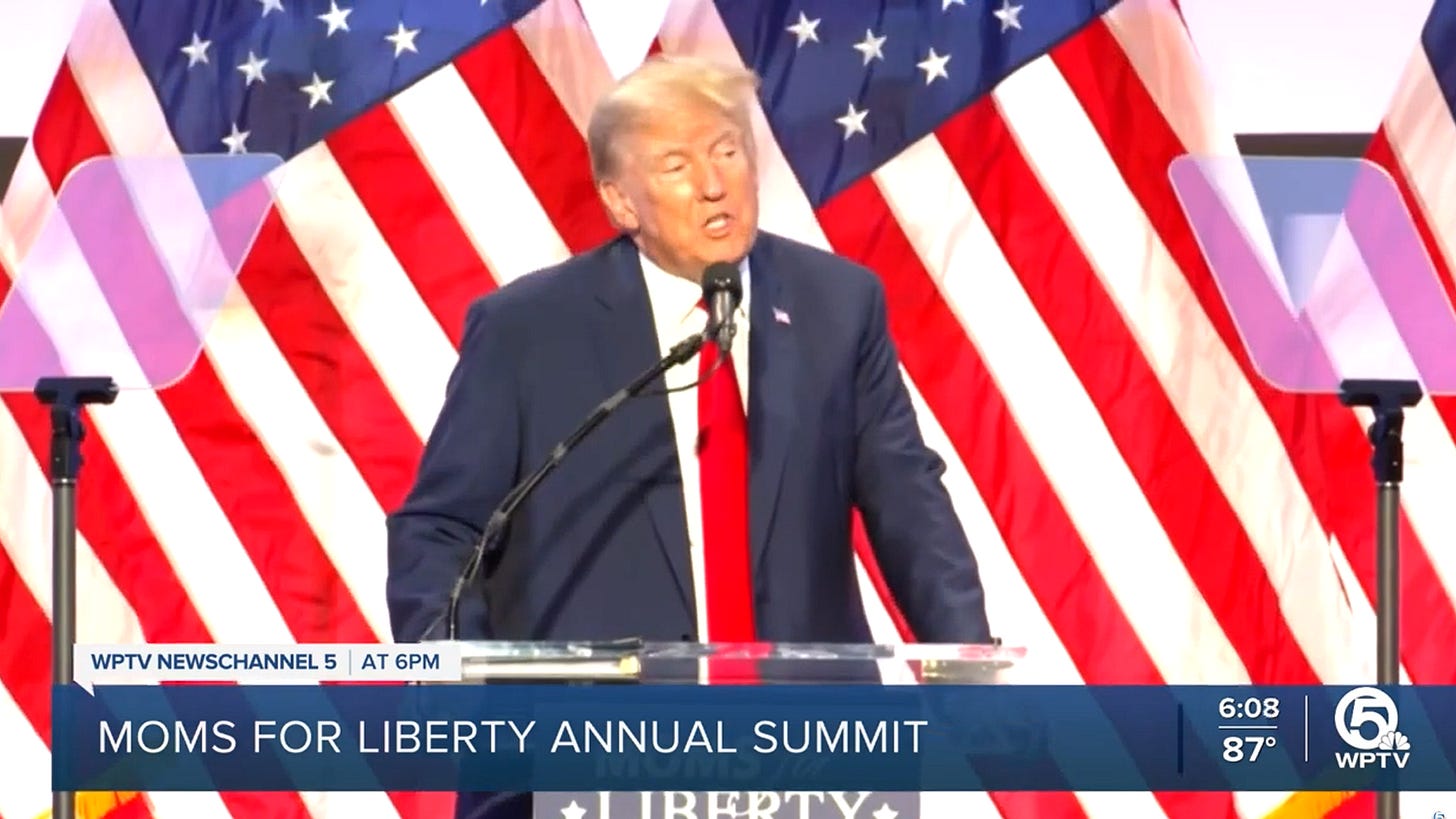
Indian River County is home to one of the first of M4L’s 320 chapters nationwide. The group’s annual summit is this weekend and will feature a variety of politicians with anti-LGBTQ track records, including Oklahoma’s former state superintendent Ryan Walters, who made headlines for making anti-trans comments after the death of 16-year-old trans teen Nex Benedict. Last year, conservative heavyweights spoke at the event, including President Trump, Tulsi Gabbard and Sebastian Gorka.
Over the last four years, M4L have built a reputation for chaos and controversy. Members have made the news for quoting Hitler, stripping at a school board meeting and offering bounties to report teachers who teach about “critical race theory.”
At one point in Indian River County, close allies of M4L made up a majority of the school board where they pressured the district to ban scores of books, many of which contain LGBTQ themes, and reverse a racial equity policy—all while harassing, doxing and defaming their adversaries.
Maurice Cunningham, a retired professor of political science from the University of Massachusetts, says what’s playing out in Indian River County is a microcosm for so many other chapters across the country.
“[The media are] falling like suckers for this story that they’re a grassroots moms organization. They are not, they are connected to … the far right establishment,” he says. “And that’s become … more and more apparent. So this whole grassroots thing is hogwash.”
Beginnings
Moms for Liberty was founded in Florida in 2021 by three current and former school board members: Tiffany Justice, Tina Descovich and Bridget Ziegler, the latter of whom has since left the group after being involved in a sex scandal wherein her husband allegedly prowled local bars to solicit women for threesomes.
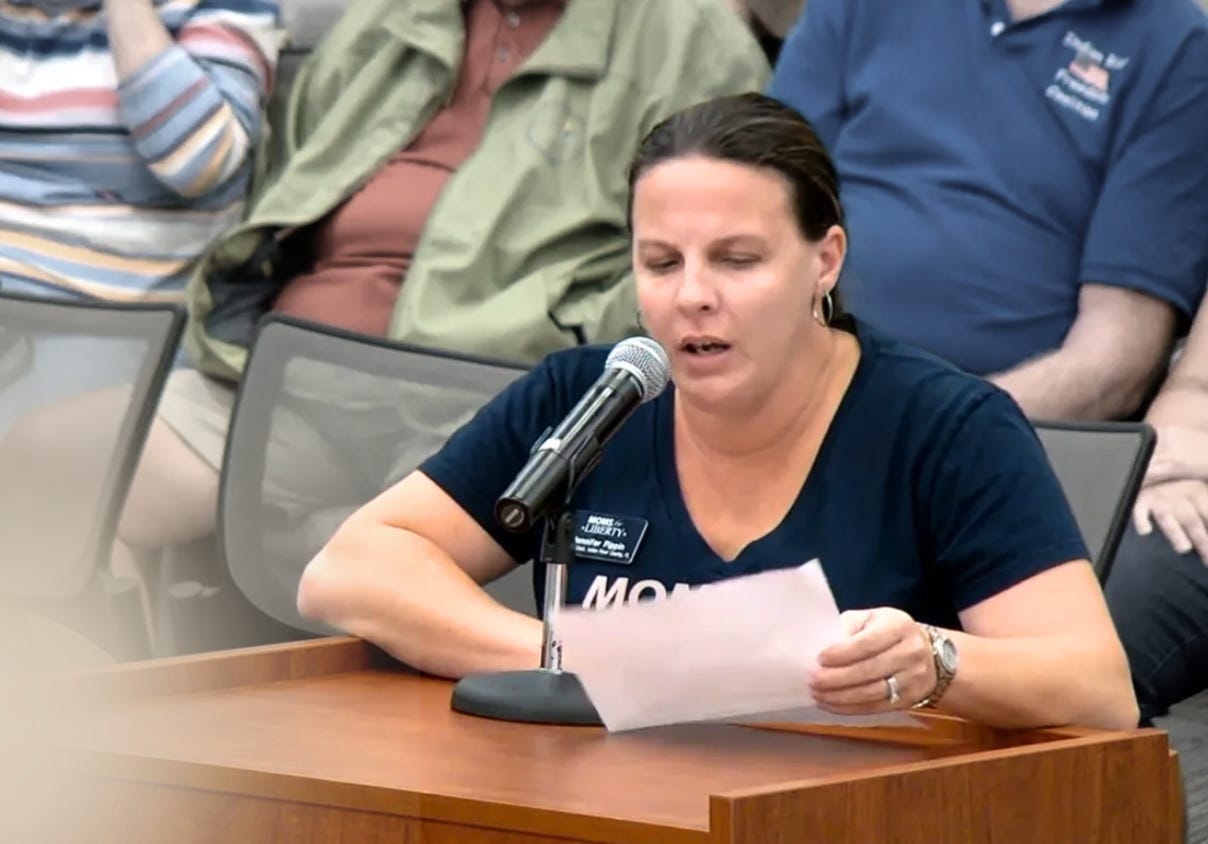
Shortly after M4L launched, Justice tapped Jennifer Pippin, who had made a name for herself for leading activism against COVID-19 restrictions, to lead the chapter for her home county, Indian River.
While the anti-mask circles that would later be folded into M4L always had a conservative lean, multiple county residents told Uncloseted Media that the group’s discriminatory views were not initially apparent.
Tyner, a lesbian who identifies as politically independent, actually felt welcomed by the group when she worked with them on their anti-mask mandate advocacy. However, that changed as M4L’s focus turned towards opposing LGBTQ inclusion measures in schools.
“Once they organized and got the appearance of a grassroots start … and many people in the community that were siding with them, it’s like they took the steering wheel and they just steered another direction,” she says.
When Tyner began speaking up against this rhetoric, she says she was blocked from the group’s Facebook pages. But as she continued to oppose them publicly, Justice offered to meet with her to address her concerns.
Over breakfast at a local cafe, Tyner says Justice gave her a “scripted” response in the hopes of winning back her support. She even invited Tyner to an M4L chapter meeting. However, Tyner declined as the meeting was allegedly to be hosted by a community member who had made an online post suggesting necrophilia and pedophilia are part of the LGBTQ umbrella.
“I was like, ‘Alright, this is not a good or a safe movement,” says Tyner.
Justice did not respond to a request for comment. In an email, Pippin told Uncloseted Media that M4L have “members and members children that are LGB in [their] chapter and across the country.”
Another local parent, who requested anonymity due to concerns about his job security, says while he’d initially been on board with M4L’s parental rights advocacy, he ran into conflict with the group when they started opposing the school district’s racial equity policies and tried to ban books with antiracist themes, including Ibram X. Kendi’s “Antiracist Baby”and “Stamped: Racism, Antiracism, and You.” Like Tyner, he says he was approached by Justice and Pippin to win him over again but was ultimately unconvinced.
After he split from M4L, he began publicly criticizing the group’s book bans. In retaliation, some M4L members accused him of supporting pedophiles.
When he reached out to Pippin to ask for the people making such accusations against him to be held accountable, he says she waved him off—all while blocking him on social media and accusing him of “bullying.” He also says that she doxed him after another dispute—a major factor in his decision to remain anonymous.
“Her response to me basically was ‘free speech,’ ‘we don’t control what our members say.’ And I’m like, ‘But Jennifer, you know me, and you know I’m not a pedophile, and this is unacceptable,’” he told Uncloseted Media.
Building Political Power
The Indian River County School District’s J.A. Thompson Administrative Center. Photo by Kiran891.
Efforts to ban LGBTQ and racial justice-related books in schools are part of M4L’s national ammo that helped them quickly explode in popularity.
Cunningham says M4L were boosted by high-profile connections on the right. Ziegler and Descovich both served as presidents of the Florida Coalition of School Board Members, a group billed as a conservative alternative to the Florida School Board Association. Ziegler’s husband, Christian, was vice chairman of Florida’s Republican Party at the time and worked as a media surrogate for the Trump campaign in 2016.
Since their launch, M4L have had their conferences and events sponsored by the Heritage Foundation and the Leadership Institute; were directly advised by Leadership Institute founder Morton Blackwell; and were a part of Project 2025’s advisory board. And this summer, Justice was hired as executive vice president of Heritage Action.
In 2022, the Indian River County chapter leveraged this influence to carve out power in local government: They got two close allies, Jacqueline Rosario and Dr. Gene Posca, elected to the school board, and they developed closerelationships with the Ron DeSantis-backed county sheriff Eric Flowers. Pippin was even appointed by Florida’s Department of Education to a statewide workgroup to develop compliance training for Florida’s classroom censorship policies, including the infamous “Don’t Say Gay” law.
As M4L became notorious for pushing exclusionary measures in schools, some officials—including school board member Peggy Jones—criticized the group. In retaliation, Jones reportedly received so many death threats that the district had to increase security detail at all school events where she was present.
In the midst of increasing chaos surrounding M4L, the group mounted a campaign of hundreds of requests to ban books containing “sexual content.”
While some librarians continued to hold the majority of books where bans were unsuccessful, M4L convinced Flowers to investigate one school library, alleging that keeping the books on the shelf could constitute a sex crime. While the investigation found that no crime had been committed, Flowers concluded that “we do not feel that this content is appropriate for young children,” putting even further pressure on local librarians.
Pippin at the school board meeting in August 2023. Photo via YouTube.
This kind of direct action proved very effective. Even the reading protest where Tyner was escorted out won them 34 additional book bans from a unanimous board vote.
“You can’t deny that the kind of tactics that they have have been useful,” Cunningham says. “Some of the places they’ve taken over, [including] Sarasota County, where Bridget Ziegler was on the board, became much more conservative over the past few years.”
Silencing Opposition
In addition to school board meetings, the group has a track record of trolling progressive events. Tyner and the anonymous parent remember an incident where a group of M4L members showed up to a local National Association for the Advancement of Colored People (NAACP) meeting that had been organized to discuss plans for opposition against new state regulations that required classes to portray slavery in a more positive light.Tyner says white M4L members attempted to shout down NAACP speakers, with one member allegedly using the n-word. Thomas Kenny, a M4L member who was at the event, said this “did not happen” and that one of their members using the n-word is “an absolute lie.”
Cunningham says these disruptions are part of M4L’s playbook. He pointed to the example of Jennifer Jenkins, the liberal school board member who unseated Tina Descovich in neighboring Brevard County, who says protestors spurred by M4L have turned up outside her home calling her a pedophile and burning “FU” in her lawn.
“They [use the] same kind of tactics … over and over again,” says Cunningham.
Pippin
Chapter leader Jennifer Pippin has mastered those tactics, becoming widely known as one of the most influential book banners in the country. She’s also made headlines for filing a complaint against the Kilted Mermaid, a Vero Beach wine bar, alleging that they had hosted an all-ages drag event with sexual content, which the bar owner denies. M4L rallied against the bar online, spamming the posts of one of the bar’s drag performers, telling the queen to “stay away from children.” This stunt caught the attention of Florida’s Attorney General James Uthmeier, who launched an investigation and issued subpoenas for video recordings of the bar on the day of the event as well as identifying documents for employees and performers.
Pippin has also claimed to be a nurse, despite no public records showing that she has a license, and appeared on the antisemitic and homophobic far-right news website TruNews, where she claimed, without evidence, that anti-M4L activists have been killing pets and livestock owned by the group’s members.
Fear
Tyner and the other anonymous parent both say that they’ve had to take a step back from the school board and local activism because of the toxic environment M4L have created.
“It’s been turned into such a circus,” Tyner says.
In the meantime, things have gotten worse for the LGBTQ community in Indian River County, and in Florida overall, between the “Don’t Say Gay” law and anti-LGBTQ legislation that requires teachers to deadname trans students unless they have signed parental permission slips. The anonymous parent says he’s watched many of the LGBTQ people in his life, including one of his own children, who is a teacher, leave the state due to the hostile environment.
“It’s not safe for a lot of people,” he says.
Greener Pastures?
Despite all of this, a sea change may be on the horizon. A 2024 Brookings report found that the success rates of M4L-endorsed candidates were on the decline, and in Indian River County’s elections last year, both of M4L’s school board candidates lost. With the continued controversies of the Trump administration and the growing popularity of groups that oppose M4L’s ideology, Cunningham feels the tide may be turning for M4L’s influence in Indian River County and across America.
“In school board races, the Moms for Liberty label is toxic, so try to not get attached to that,” he says. “They’ve had quite an impact … I don’t wanna downplay that. But in terms of popular appeal and growth, I think it’s much more limited than it is portrayed.”
Editor’s Note: In an email, Jennifer Pippin responded to the allegations made about her in this story. You can read them here.
If objective, nonpartisan, rigorous, LGBTQ-focused journalism is important to you, please consider making a tax-deductible donation through our fiscal sponsor, Resource Impact, by clicking this button:
Steve Bannon, former advisor to U.S. President Donald Trump, arrives for a hearing at Manhattan Criminal Court on February 11, 2025 in New York City. Michael M. Santiago/Getty Images
With Republicans and Democrats embroiled in a fight over redistricting around the country, GOP operatives are beginning to openly discuss their plan to leverage institutional power — from statehouses to the Supreme Court — to usher in a near-unbreakable House majority.
In Texas, Republicans are pushing forward a plan to create five new GOP House seats, which alone could be enough to prevent Democrats from retaking the House in the 2026 midterms. The new Texas maps are part of a larger redistricting play, in which Republicans think they can squeeze out a dozen new GOP seats from states such as Texas, Florida, Missouri and Indiana.
The redistricting play from Republicans, however, is only part of a larger campaign to totally change the state of play in the House of Representatives. If successful, that effort could see Republicans pick up more than 40 seats without having to win any more support from voters, according to GOP operatives.
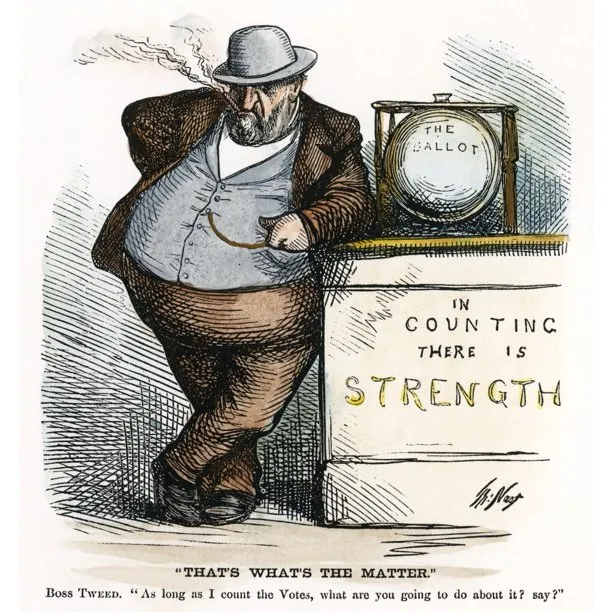
GOP strategist Alex deGrasse, an advisor to Rep. Elise Stefanik, R-N.Y., spoke about the emerging plan on Steve Bannon’s “War Room,” outlining three changes that Republicans are counting on to bail them out of potential democratic accountability: partisan gerrymandering; a Supreme Court ruling that guts the Voting Rights Act; and an unprecedented and unconstitutional mid-decade Census.
“You’ve got these three vectors,” deGrasse said. “Back of the envelope map this morning — when I woke up with a smile — was Democrats could lose 42 seats.”
Potentially the most important part of this plan hangs on the fate of Section Two of the Voting Rights Act of 1965. This section of the landmark civil rights law generally bans race-based discrimination in voting laws, and has been an important part of the legal framework that currently guarantees House districts where the majority of the voters are a minority group. This then allows members of that minority group the ability to elect their chosen representative.
The case before the court directly concerns one of Louisiana’s two majority-Black districts, with the group of voters who brought the case seeking to overturn the current map used in the state. Republicans, however, are hoping the Supreme Court will issue a maximalist ruling that would allow their party to dilute minority voters in the South, effectively eliminating Black representation in Congress in swaths of the country. This would also, in effect, eliminate many Democratic seats across the South.
The Republican dominated Supreme Court has steadily dismantled the Voting Rights Act in recent decades, with Shelby County v. Holder in 2013 allowing some states, mostly concentrated in the South, to change the rules and procedures around voting without a federal review.
The potential gains for Republicans here are huge. In 2024, there were 141 majority-minority House districts;119 of these districts elected Democrats to represent them.
The specific number of seats that Republicans would be able to pick up through a change in the Voting Rights Act would depend on the specifics of the ruling, as well as practical constraints on the GOP’s ability to gerrymander. Still,it’s clear Republicans are hoping to be given a free hand to eliminate majority-minority districts altogether.
“The other third aspect that we’re talking about here, Steve, is that voting rights are up in the Supreme Court; they said, ‘Hold on, do we need race-based seats? Does this go against the 14th and 15th Amendments? And does the Constitution supersede racial seat drawing?” deGrasse said.
The third part of the GOP plan, alongside the current round of redistricting and their hopes at the high court, has to do with President Donald Trump’s ordering of a new mid-decade Census.
Stephen Miller, Trump’s White House deputy chief of staff, signaled at the purpose of Trump’s mid-decade Census plan when he claimed on Fox News that “Democrats rigged the 2020 Census by including illegal aliens.” Miller made these claims despite the fact that Trump was president and in charge of the 2020 Census.
For context, non-citizens have been counted in every Census since 1790, and the framers of the Constitution explicitly included non-citizens in the Census by stating in Article One that it shall count the “whole number of persons in each state.” For the 2020 Census, Trump also pushed to have a question about citizenship included in the Census, acknowledging that the Census was meant to count all persons in the United States, including noncitizens.
Miller went on to reveal the goal of Trump’s mid-decade Census plan, saying that “20 to 30 House Democrat seats wouldn’t exist but for illegal aliens.”
Charlie Kirk, the right-wing activist who maintains a personal line of communication with Trump, indicated in an interview with the Daily Caller that the Census scheme would also help to lock Democrats out of the presidency and “potentially subtract 20 electoral votes from Democrats in the electoral college system, as congressional seat appropriation is directly correlated with Electoral College totals.” Kirk is a co-founder of Turning Point USA, an organization dedicated to indoctrinating high school and college-age students in conservative ideology. The organization was also among the groups Trump’s 2024 campaign delegated get-out-the-vote efforts to.
The GOP’s Census plan will almost certainly be challenged in court. Federal law holds that a mid-decade Census can be conducted, but not used for apportionment. And, since the country’s founding, the U.S. has conducted a Census once a decade for the purposes of apportionment.
Democrats in Texas say that this current push from the Republicans — to totally reconfigure American elections to retain power — should be a wake-up call.
Texas state Rep. Venton Jones, the House minority whip in Texas, told Salon that national Democrats need to realize that “there’s a bigger plan at play and we need to wake up and address that as a nation.”
“We have to continue to overperform to at least get back the majority and be ready for an electoral fight when that happens, because we’ve already seen what happens when this president, or even this Congress, doesn’t get what they want,” Jones said. “They don’t always play by the rules. They just change the rules to make it benefit them.”

‘Given that bubble, harsh reality via the media is a rude intrusion.’ Photograph: Jonathan Ernst/Reuters























 May 14, 2024; New York, NY, USA; Speaker of the House Mike Johnson (center), and Vivek Ramaswamy (right) look on while former President Donald Trump speaks to the media alongside his lawyer Todd Blanche before his criminal trial at Manhattan criminal court at the New York State Supreme Court on May 14, 2024. Mandatory Credit: Justin Lane/Pool via USA TODAY NETWORK | Justin Lane/Pool via USA TODAY N