Oh, Ste-eve!

(Click “Read on Substack”, enjoy! It’s less than 1 minute.)

Has anyone seen Steve???

– In Otter News Read on Substack

Trump Free Speech Crack Down Goes Next Level

Acting on Donald Trump’s orders, the FBI has reportedly begun showing up at the homes of peaceful protesters — a chilling escalation against Americans exercising their rights.


Israeli Settler-IDF Attacks on Palestinians in West Bank Intensify | Jasper Nathaniel | TMR

Jasper Nathaniel joins the program from the occupied West Bank and walks us through the horrific settler violence he survived over the weekend. October 20, 2025.


More ICE clips from The Majority Report

“They’re Not Sending Their Best”: ICE Chase Ends In Embarrassing Disaster For Agent

“Show Your Face P*ssy!” ICE Gets Shut Down My Angry Citizen

An Unalienable Right

The right to enough to eat. Meanwhile,

October 25, 2025 by Heather Cox Richardson
Read on Substack

Yesterday the Trump administration said it would not use any of the approximately $6 billion the U.S. Department of Agriculture (USDA) holds in reserve to fund the Supplemental Nutrition Assistance Program (SNAP). The government shutdown means that states have run out of funds to distribute to the more than 42 million Americans who rely on SNAP to put food on the table.

Roll Call’s Olivia M. Bridges notes that this position contradicts the shutdown plan the USDA released in late September. Then, it said: “Congressional intent is evident that SNAP’s operations should continue since the program has been provided with multi-year contingency funds that can be used for State Administrative Expenses to ensure that the State can also continue operations during a Federal Government shutdown. These multi-year contingency funds are also available to fund participant benefits in the event that a lapse occurs in the middle of the fiscal year.”

Yesterday’s USDA memo also says that any states that tap their own resources to provide food benefits will not be reimbursed.

Today, in yet another violation of the Hatch Act that prohibits the use of government resources for partisan ends, the USDA Food and Nutrition Service website reads: “Senate Democrats have now voted 12 times to not fund the food stamp program, also known as the Supplemental Nutrition Assistance Program (SNAP). Bottom line, the well has run dry. At this time, there will be no benefits issued November 01. We are approaching an inflection point for Senate Democrats. They can continue to hold out for healthcare for illegal aliens and gender mutilation procedures or reopen the government so mothers, babies, and the most vulnerable among us can receive critical nutrition assistance.”

It appears the administration is using those Americans who depend on food assistance as pawns to put more pressure on Democrats to cave to Trump’s will. Today, Annie Karni of the New York Times reported that Trump has joked, “I’m the speaker and the president,” and Trump ally Steven Bannon calls Congress “the state Duma,” a reference to Russia’s rubber-stamp assembly.

With Republicans refusing to negotiate with Democrats in the normal way, with House speaker Mike Johnson (R-LA) keeping the House out of session, and with Trump leaving for Asia for a week, Republicans are clearly making the calculation that Democrats who refused to give up their demand for the extension of the premium tax credit to stop dramatic hikes in the cost of healthcare premiums will cave when America falls into a hunger crisis.

What are we doing here, folks?

The nation’s nutrition program was once the symbol of government brokering between different interests to benefit everyone. When President Franklin Delano Roosevelt took office in 1933, one of the first crises he had to meet was the collapse of agricultural prices, which had been falling since the end of World War I and fell off a cliff after the stock market crash of October 1929. Farmers reacted to falling prices by increasing production, driving prices even lower.

In summer 1933, the government tried to raise prices by creating artificial scarcity. They paid farmers to plow their crops under and bought and slaughtered six million piglets, turning the carcasses into salt pork, lard, industrial grease, and fertilizer. The outcry over the slaughter of the pigs was immediate, and the escape of some intrepid animals into the streets of Omaha, Nebraska, and Chicago, Illinois, increased the protest at both the slaughter and the waste of food when Americans were going hungry.

So in fall 1933 the administration set up the Federal Surplus Relief Corporation, designed to raise commodity prices by buying surplus production and distributing that surplus through local charities. In a story about the history of nutrition assistance programs, journalist Matthew Algeo noted that in January 1934, the Federal Surplus Relief Corporation bought 234,600 hogs. This time, their meat went to hungry Americans.

But that fall, when officials from the FSRC announced they were planning to open a “goods exchange” or “commissary” outside Nashville, Tennessee, to distribute food directly to those who needed it, grocers protested that the government was infringing on private business and directly competing with them.

The next year, the agency became the Federal Surplus Commodities Corporation and began to distribute surplus food to schools to be used in school lunch programs. Needy students would not otherwise be able to afford food, so providing it for them did not compete with grocers. In 1937, Congress placed that agency within the Department of Agriculture.

To get food into the hands of Americans more generally, officials at the Department of Agriculture came up with the idea of “food stamps.” As Algeo explains, eligible recipients bought orange-colored stamps that could be redeemed for any food except alcohol, drugs, or food consumed on the premises. With the orange stamps, a buyer received blue stamps worth half the value of the orange stamps purchased. The blue stamps could be redeemed only for foods the government said were surplus: butter, flour, beans, and citrus fruits, for example.

Any grocery store could redeem the stamps, and grocers could then exchange all the stamps—orange and blue—for face value at any bank. The Treasury would pay back the banks.

It was a complicated system, but when the government launched it in May 1939 in Rochester, New York, it was a roaring success. By early December, Algeo notes, the government had sold more than a million dollars’ worth of orange stamps. That meant another half-million dollars’ worth of the blue stamps had been distributed, thus pumping a half a million dollars directly into the 1,200 grocery stores in Rochester, and from there into the local economy.

The program spread quickly. In the four years it existed, nearly 20 million Americans received benefits from it at a cost to the government of $262 million. With the economic boom caused by World War II, the government ended the program in 1943.

In 1959, Congress authorized the secretary of agriculture to restart a food stamp program, but it was not until 1961, after seeing the poverty in West Virginia during his campaign, that President John F. Kennedy announced a new program. Since then, the program has gone through several iterations, most notably when the Food Stamp Act of 1977 eliminated the requirement that beneficiaries purchase stamps, a requirement that had kept many of the nation’s neediest families from participating.

In 1990 the USDA began to replace stamps with Electronic Benefit Transfer (EBT) cards, and in 2008, Congress renamed the program the Supplemental Nutrition Assistance Program. In July 2025 the Republicans’ One Big Beautiful Bill Act cut about $186 billion from SNAP programs, and then in September 2025 the USDA announced it would no longer produce reports on food insecurity in the U.S., calling them “redundant, costly, politicized, and extraneous studies” that “do nothing more than fear monger.”

While a great deal has changed in nutrition support programs in the past sixty years, what has not changed is the importance of food assistance programs to retailers, and thus to local economies. In 2020, Ed Bolen and Elizabeth Wolkomir of the Center on Budget and Policy Priorities found that about 8% of the food U.S. families buy is funded by SNAP. In fiscal year 2019, that amounted to about $56 billion. Beneficiaries spent SNAP dollars at about 248,000 retailers. While about 80% of that money went to superstores or supermarkets—in 2025, Walmart alone captured about 25% of that money—the rest of it went to small businesses. Bolen and Wolkomir note that about 80% of stores that accept SNAP are small enterprises. SNAP benefits are an important part of revenue for those smaller businesses, especially in poorer areas, where they generate significant additional economic activity.

Not only will the loss of SNAP create more hunger in the richest country on earth, it will also rip a hole in local economies just as people’s health insurance premiums skyrocket.

And yet, at the same time the Department of Agriculture says it cannot spend its $6 billion in reserves to address the $8 billion needed for SNAP in November, the administration easily found $20 billion to prop up right-wing Trump ally Javier Milei in Argentina.

What are we doing here?

Notes:

https://rollcall.com/2025/10/24/usda-says-it-cant-use-contingency-fund-for-food-stamps/

George T. Blakey, “Ham That Never Was: The 1933 Emergency Hog Slaughter,” The Historian 30 (November 1967): 41–57. https://www.jstor.org/stable/24440624?seq=1

https://www.politico.com/f/?id=0000019a-17b3-dc69-abda-fff3f76a0000

https://www.politico.com/news/2025/10/24/snap-food-aid-shutdown-usda-00622690

https://web.archive.org/web/20130907005942/http://www.fns.usda.gov/cnd/Lunch/AboutLunch/ProgramHistory_4.htm

https://www.jandonline.org/article/S0002-8223(07)01619-7/fulltext

https://www.supermarketnews.com/grocery-trends-data/walmart-brings-in-the-most-snap-dollars-some-25-of-all-sales

https://www.cbpp.org/research/food-assistance/snap-boosts-retailers-and-local-economies

https://www.cnn.com/2025/10/18/politics/snap-food-stamps-november-government-shutdown

https://www.fns.usda.gov/

https://www.fns.usda.gov/newsroom/usda-0219.25

https://www.urban.org/urban-wire/snap-cuts-one-big-beautiful-bill-act-leave-almost-3-million-young-adults-vulnerable

Political cartoons / memes / and news I want to share. 10-25-2025


Image from Concealed Weapon

Image from Liberals Are Cool

#affordable care act from Republicans Are Domestic Terrorists

#affordable care act from Saywhat Politics

#affordable care act from Saywhat Politics


Image from Progressive Power


#minimum wage from Republicans Are Domestic Terrorists

Image from Depsidase


#jeff bezos from Social Justice In America


#caucacity from Liberals Are Cool

#SNAP from Liberals Are Cool


#Walton family oligarchs from Rejecting Republicans


Image from Liberals Are Cool

Image from Liberals Are Cool

#donald trump from RHP162


Image from No-Longer-Just-Another-Bondi-Blonde.


Image from Liberals Are Cool

Image from AZspot


Image from Liberals Are Cool

#twitter from worship the tarmac with your teeth


#trumpsterfire crime familly from Long Winded Bore

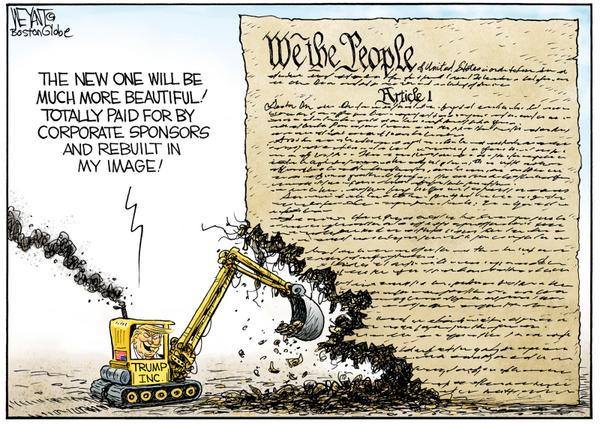
Trump's Little Remodel

John Deering for 10/24/2025

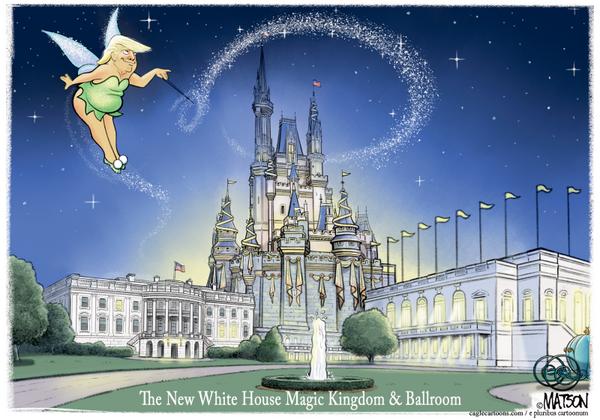
Coming soon to the White House?

Trump White House Magic Kingdom And Ballroom

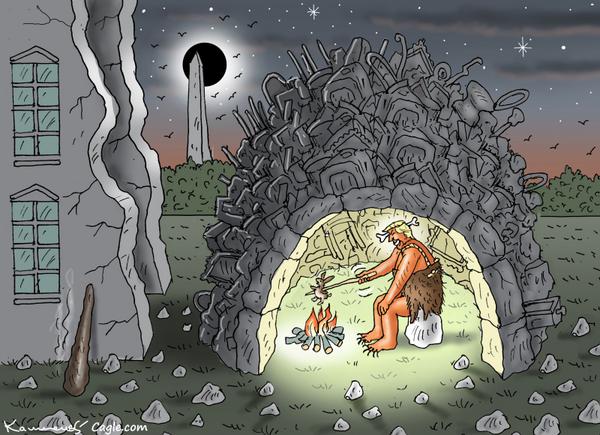
HAPPY NEANDERTHAL WHITE HOUSE HALLOWEEN

#east wing from Liberals Are Cool

The East Wing of the White House is now gone.

No permits. No historical society. No concepts of plans.

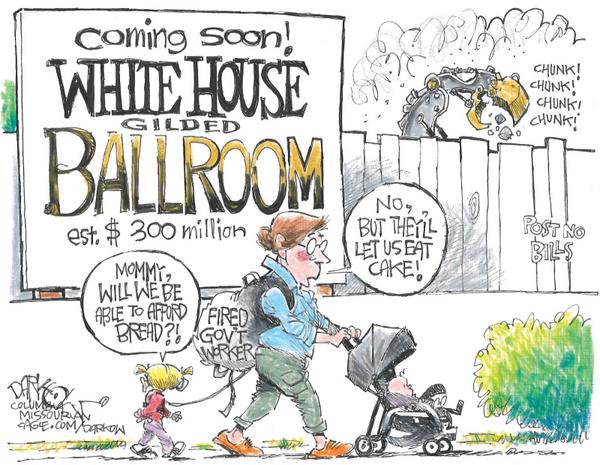
Budget keeps jumping by $100 million. Now said to cost $300 million.

Image from Liberals Are Cool


Let them eat cake

Image from Progressive Power


Image from No-Longer-Just-Another-Bondi-Blonde.

Image from RECORD GUY


#traitor trump from Alan's Posts

Image from No-Longer-Just-Another-Bondi-Blonde.


Image from Liberals Are Cool

#sports gambling from Liberals Are Cool

#sports gambling from Liberals Are Cool

#sports gambling from Liberals Are Cool

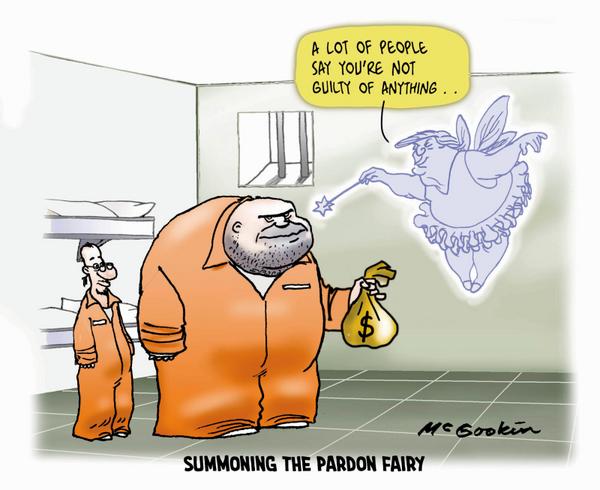
Trump Pardons Cronies

Image from RECORD GUY


image

CNN’s Kaitlan Collins asked Trump about the pardon and whether it had anything to do with Zhao’s involvement in the Trump family’s cryptocurrency venture.

This was his response:

image

More context:

image

Image from Liberals Are Cool


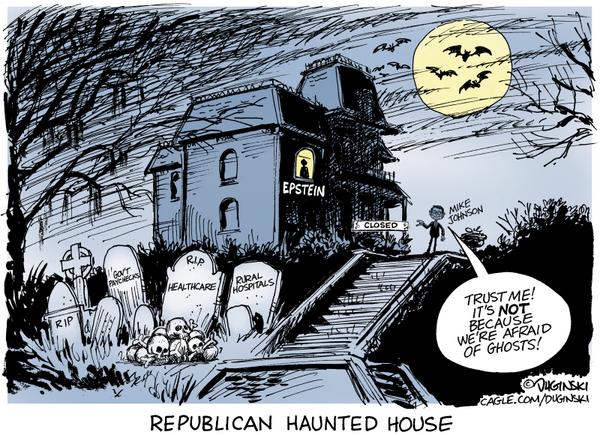
Mike Johnson and House haunted by Epstein

#michael wolff from Liberals Are Cool

#michael wolff from Liberals Are Cool

#michael wolff from Liberals Are Cool

#tylenol from Rejecting Republicans


#epstein didn't kill himself from Sleepy Demon's Cavalcade of Stuff


Image from Liberals Are Cool

Image from I defy categorization!


#gerrymandering from Liberals Are Cool

#gerrymandering from Liberals Are Cool

Image from Depsidase


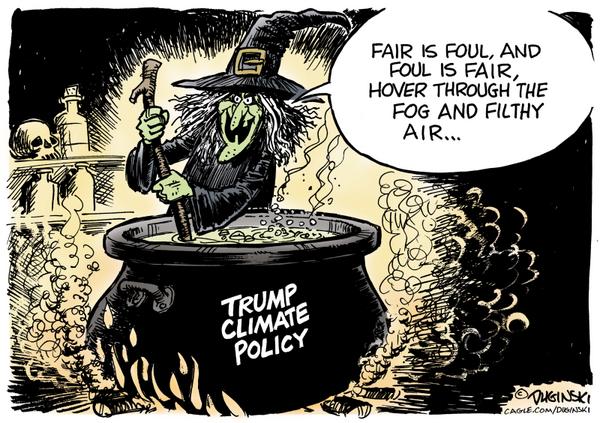
Trump Climate Policy Paradox

#ukraine from Liberals Are Cool

Image from Liberals Are Cool

Image from Liberals Are Cool

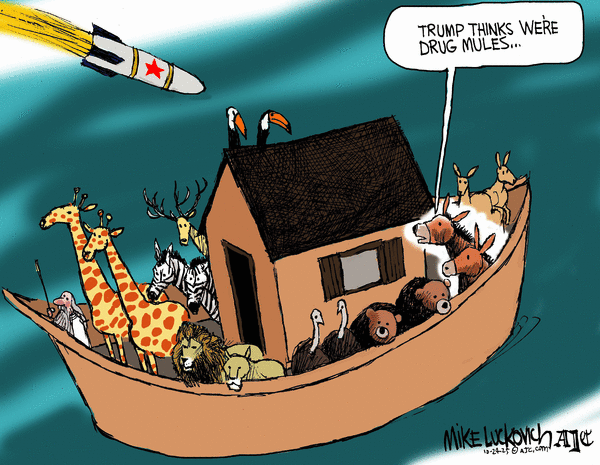
Mike Luckovich for 10/24/2025

#due process from Liberals Are Cool

Teaching tolerance isn’t indoctrination. It’s protection

https://www.advocate.com/voices/mahmoud-v-taylor

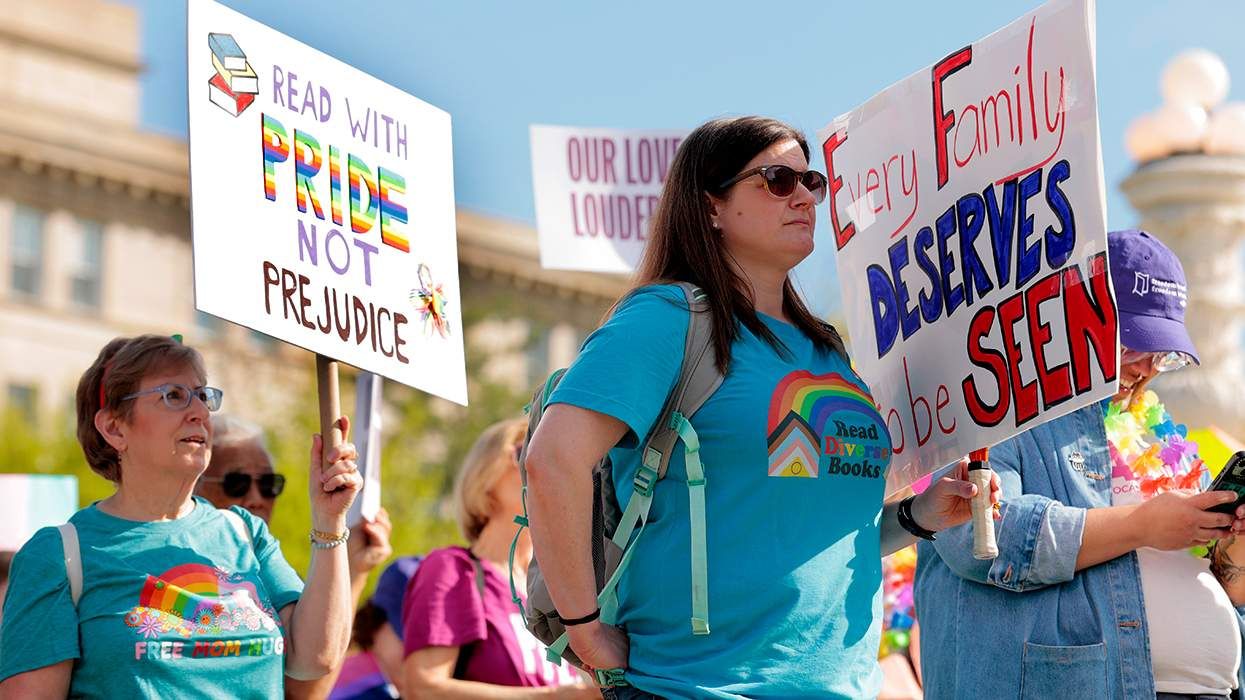
Mahmoud v Taylor LGBTQ rights protesters with signs outside US Supreme Court building washington DC April 2025

Anna Moneymaker/Getty Images

Protesters in support of LGBTQ+ rights and against book bans demonstrate outside of the U.S. Supreme Court Building while the justices heard arguments for the case of Mahmoud v. Taylor in Washington, DC., April 2025

Opinion: In Mahmoud v. Taylor, the justices gave bigotry a permission slip and ruled that parents can “opt out” of LGBTQ-inclusive lessons, further diminishing lessons and practices on inclusivity in civic society, argues Darek M. Ciszek.

The U.S. Supreme Court made a decision earlier this summer that has a significant impact on classrooms nationwide. In their 6-3 decision in Mahmoud v. Taylor, the majority completely missed the point as to why LGBTQ-inclusive education matters. By giving parents the option to pull their kids out of lessons that include LGBTQ+ characters or content, the Court prioritized personal religious objections over creating schools where students can learn without feeling invisible.

Justice Alito‘s majority opinion is especially troubling. He treats LGBTQ-inclusive education as if it were some optional “add-on” that schools can easily work around. As a former teacher, I can confidently say that is not how education works, especially when it comes to curriculum and lesson planning. And while Justice Thomas calls LGBTQ-inclusive education “ideological conformity,” he fails to see that most LGBTQ+ adults today grew up in a school system that forced us to conform to a cisgender and straight worldview. Ironically, I’d consider the Court’s narrow view of public education to be ideologically driven.


Let’s be clear about what LGBTQ-inclusive education is and isn’t. When teachers include books like Uncle Bobby’s Wedding in their curriculum, they are not trying to convert anyone’s child or attack anyone’s faith. They are trying to show students that families come in all colors, shapes, and sizes, reflecting our diverse society.

LGBTQ+ people are also part of every community. We have always been a part of human history, and we deserve to be represented in our nation’s schools. The goal is not to change what students believe at home; it is to teach them how to be respectful in a democratic and diverse world. Luckily, in her dissent, Justice Sotomayor got it right when she said that LGBTQ-inclusive education is “designed to foster mutual civility and respect.”

I could not agree more.


But here’s what the Court’s majority really got wrong: they ignored the anti-bullying efforts that motivate many LGBTQ+ inclusive education programs in the first place. According to the latest National School Climate Survey from GLSEN, 68% of American students reported feeling unsafe in school due to their SOGIE (sexual orientation, gender identity, and/or gender expression) characteristics.

That is two out of three LGBTQ+ youth.

These aren’t just statistics. These are real children trying to learn while dealing with a school environment that tells them, whether implicitly or explicitly, that their identities or families are somehow wrong or shameful.

When schools include diverse families in their lessons, they are not pushing an agenda. They are teaching kids that being different does not mean bad. They are giving LGBTQ+ students a chance to see themselves reflected in their education and helping other students see and understand those who are different from them.


Research shows inclusive education works. Studies have found that an LGBTQ-inclusive curriculum can improve the social and emotional well-being of LGBTQ+ youth. When kids learn about different types of families early on, they are more likely to treat their classmates with kindness instead of cruelty. In other words, when implemented correctly, LGBTQ-inclusive education can be an essential anti-bullying and student well-being strategy.


For instance, as a result of my doctoral research, I have learned that some schools around the world are starting to address LGBTQ+ bullying head-on, and, not surprisingly, it’s through curriculum and instruction. In Scotland, LGBTQ-inclusive education became required in 2021 across both primary and secondary, and most major subject areas. When I interviewed government staff about their experience implementing the new policy, I learned that they even worked with religious groups to inform the effort. Faith communities could agree that inclusion was important for reducing homophobic bullying, even if they had some religious concerns. Scottish students now learn how homophobic language hurts people and develop the social-emotional skills needed for creating safer schools. It’s not ideological instruction; it’s teaching kids critical peer relationship skills.

Similar to the Scottish experience, the U.S. Supreme Court could have left the door open for education authorities to find a balance that respects both religious families and vulnerable LGBTQ+ kids. Real inclusion programs do not ask anyone to abandon their faith. They ask people to treat others with respect and dignity, a lesson I believe everyone should support in class. Kids can learn that some families have two moms without being told their family is wrong. They can remember that using “gay” as an insult hurts people without abandoning their religious beliefs. Getting to know your neighbor does not go against faith.


Unfortunately for the U.S., the impact of the Court’s decision may be severe and widespread, especially in ideologically conservative states. Instead of dealing with complicated opt-out policies, I fear many school districts will probably remove LGBTQ+ inclusive materials entirely. Unfortunately, it can be easier to bow to political pressures than to fight, especially when faced with potential lawsuits or a loss of school funding. This means LGBTQ+ kids lose representation, and all students miss out on critical lessons in diversity and inclusion.

The Court’s decision also has broader implications beyond the LGBTQ+ community. By way of a new precedent, the case approves a heckler’s veto, allowing parents to claim a religious objection to any educational content they may not align with at home. This is because the majority opinion wasn’t apparent on how opting out of inclusive education would work in practice, or what would even qualify as a personal religious objection. We might start seeing opt-out forms for instruction on topics like human evolution, women’s rights, or civil rights history. Thanks to the Court, there is no line in the sand.


When we remove students from lessons about diverse communities, we fail everyone. But the call for truly inclusive education is not going anywhere. Our kids—all of our kids—deserve better.

Darek M. Ciszek is a PhD Candidate in Education at UCLA with a research focus on curriculum, learning, and social development.

Voices is dedicated to featuring a wide range of inspiring personal stories and impactful opinions from the LGBTQ+ community and its allies. Visit Advocate.com/submit to learn more about submission guidelines. Views expressed in Voices stories are those of the guest writers, columnists, and editors, and do not directly represent the views of The Advocate or our parent company, equalpride.

644 Cranes: “This is our cry, this is our prayer; peace in the world.” This Date in Peace & Justice History

October 25, 1955

Sadako Sasaki
Sadako Sasaki, following the Japanese custom of folding paper cranes – symbols of good fortune and longevity – persisted daily in folding cranes, hoping to create senbazuru (1000 paper cranes strung together) when a person’s dream is believed to come true, died.
The Sadako story    

Sadako was two years old when the atom bomb was dropped on Hiroshima and at 12 was diagnosed with Leukemia, “the atom bomb” disease. 
Children’s Peace Monument in Hiroshima showing Sadako holding a golden crane  Photo: Mark Bledstein

https://www.peacebuttons.info/E-News/peacehistoryoctober.htm#october25

“Tick-eater”

NBC NEWS: U.S. to send aircraft carrier strike group to Caribbean in an escalation of boat strikes

U.S. to send aircraft carrier strike group to Caribbean in an escalation of boat strikes
Hegseth said Friday that the U.S. struck a boat allegedly carrying drugs in the Caribbean Sea in at least the third such attack this week.

Read in NBC News: https://apple.news/AaFDYUEbITgmRhR1gkXg1MQ

Shared from Apple News

Best Wishes and Hugs,Scottie