
The Reuters Daily Briefing newsletter provides all the news you need to start your day. Sign up here.
The strategy, signed by Trump, also warned that Europe faces “civilizational erasure”, that it was a “core” U.S. interest to negotiate an end to the war in Ukraine, and that Washington wanted to reestablish strategic stability with Russia.“The adjustments that we see correspond in many ways to our vision,” Kremlin spokesman Dmitry Peskov told state television reporter Pavel Zarubin when asked about the new U.S. strategy.Such fulsome public agreement between Moscow and Washington on the tectonic plates of global politics is rare, though they did cooperate closely after the 1991 fall of the Soviet Union on returning nuclear weapons from former Soviet republics to Russia, and after the deadly Sept. 11, 2001, attacks on the United States.TRUMP’S STRATEGY LARGELY ACCORDS TO RUSSIA’S VIEW
During the Cold War, Moscow portrayed the United States as a decadent capitalist empire doomed by the historical certainties of Marxism, while U.S. Ronald Reagan in 1983 called the Soviet Union an “evil empire” and the “focus of evil in the modern world.”After the Soviet collapse, Moscow expressed hopes for a partnership with the West but as Washington moved to support the enlargement of the NATO alliance, as outlined in President Bill Clinton’s 1994 strategy, tensions began to mount. They were pushed to breaking point under President Vladimir Putin, who rose to the top Kremlin job on the last day of 1999.Asked about the pledge in the U.S. document to end “the perception, and preventing the reality, of the NATO military alliance as a perpetually expanding alliance”, the Kremlin’s Peskov said it was encouraging.But Peskov also cautioned that what he said was the U.S. “deep state” saw the world differently to Trump, who has used the term to refer to an allegedly entrenched network of U.S. officials who seek to undermine those who challenge the status quo, including Trump himself.Critics of Trump say there is no such thing as a “deep state,” and that Trump and his allies are trafficking in a conspiracy theory to justify an executive-branch power grab.WASHINGTON AND MOSCOW LOOK TO CHINA
Since Russia’s 2014 annexation of Crimea and its 2022 invasion of Ukraine, U.S. strategies have designated Moscow as an aggressor or a threat that was trying to destabilise the post-Cold War order by force.In comments to the state-run TASS news agency, Peskov said calling for cooperation with Moscow on strategic stability issues rather than describing Russia as a direct threat was a positive step.The Trump strategy describes what it calls the Indo-Pacific as one of the “key economic and geopolitical battlegrounds”, saying it would build up U.S. and allied military power to prevent a conflict with China over Taiwan.Russia pivoted to Asia – and China in particular – after the West imposed sanctions on Russia for the war in Ukraine and Europe sought to wean itself off Russian oil and gas.Trump in March told Fox News that “as a student of history, which I am — and I’ve watched it all — the first thing you learn is you don’t want Russia and China to get together.”Reporting by Lidia Kelly in Melbourne and Guy Faulconbridge in Moscow; Editing by Jacqueline Wong and Philippa Fletcher
Category: History


Some news articles I wanted to get to but did not have time. Now I am caught up to today
So Ron and his sister arrived two days ago. Lucky for me she is a doer who jumps in to do stuff and doesn’t wait for others to do for her. She has really helped Ron get a lot of stuff done. She helps when my back goes out. She is doing supper right now so I can catch up on the last few days of news. I really hope she finds a place to her tastes here as she is a good influence for Ron. Hugs, loves to all, and best wishes to all who wish them. Scottie
Thanks to Ron’s sister jumping in and doing all the extra stuff I have been trying to do I can rest my back while doing my posting. I could get used to this. Hugs
Affordability and costs of things in the US
tRump’s illegal war for profit to please the corporations he told to give him a billion dollars for his campaign and he would do what ever they asked. Wow US military young adults sold for tRump’s profit. Hugs

The $1,776 per person bonuses, unveiled by Trump in his nationwide address Wednesday night, will be covered with funding approved in the Big Beautiful Bill that passed in July, according to the congressional officials and later confirmed by the Pentagon. The payouts — which will cost roughly $2.6 billion — will be a “one-time basic allowance for housing supplement to all eligible service members,” said the official.
DEI / Hate / Bigotry / Racism / White Supremacy.
ICE Leader Jailed With ICE Detainees After Federal Charge For Strangling Decades-Younger Girlfriend
Franklin Graham At Pentagon Xmas Worship Service: “God Hates And God Is Also A God Of War” [VIDEO]
The Trump administration announced several moves Thursday that will have the effect of essentially banning gender-affirming care for transgender young people, even in states where it is still legal.
The second would block all Medicaid and Medicare funding for any services at hospitals that provide pediatric gender-affirming care.
Really stupid things say and blame democrats for just because they think it sounds good not realizing how dumb it seems.
DAMAGE CONTROL: White House Has Entire Cabinet Post Defenses Of WH Chief Of Staff Susie Wiles On X
As Democracy Docket previously reported, in his previous role as a prosecutor in the Los Angeles district attorney’s office, Neff was put on leave after bringing charges against an election software executive based on information from conspiracy-driven election denier group True the Vote. The saga ultimately cost taxpayers $5 million to settle a lawsuit over the flawed prosecution.
Neff is also affiliated with True The Vote, the far-right QAnon group featured in Dinesh D’Souza’s debunked “2000 Mules” film.
tRump’s many crimes
Boosting the fascist state and the dear leader.
Slumped over in his chair at the Resolute desk, Trump’s face slackened—eyes drooping, the corners of his mouth sagging—as he fought off sleep. The elderly president has now been caught appearing to doze off at four official events in six weeks.
Positive news / Good things / Pro-LGBTQ+ Stuff
Trump Vandalizes Another Historic US Building
Rick Scott STRUGGLES Explaining Republican Healthcare ‘Plan’
And now to more recent news. Yes! I finally caught up. Oh wow
This is incredible and the best I have felt in 5 months. I have had so much old news, many hundreds of back logged news I wanted to share. I recently found out that the mail stuff I would share was stuck on my phone so did not post. I cleared that. Today right now all old news mail articles are posted, the stuff I want to share is posted. I still have to do the video on what happened because I got long term Covid. Sadly I was able to do this because Ron was gone to Texas to help his sister and now they are on their way home. More pressure to do as much as I can with my pain and disability. So I have two more rooms to work on before they get here later this week. I want to do a video on the entire thing but may not. My goal was to clear all these tabs and then do videos …. but we will see, Hugs
Prices / affordability /
tRump Admin trying to hurt workers and lower incomes
Grifting / Cons / tRump family scams / tRump family news

DAMAGE CONTROL: White House Has Entire Cabinet Post Defenses Of WH Chief Of Staff Susie Wiles On X
Hate / DEI / Racism / ICE
Mr. Bessent opted instead for the more general, and much whiter.
The city, home to one of the largest Muslim populations in the United States, has recently become a repeated target for out-of-state activists who falsely claim it operates under “Sharia law.” The tensions began when Jake Lang, a Jan. 6 rioter who has described himself as a political prisoner, arrived on Michigan Avenue attempting to burn a Quran.
Federal law enforcement agencies are detaining US citizens who do not carry proof of their citizenship in what civil rights advocates describe as a flagrant violation of constitutional rights—and a top Trump administration official is claiming the government has the authority to do so. Bovino recently lied in court about being hit with a rock by anti-ICE protesters, despite video showing that never happened. According to reports, some Border officials privately refer to Bovino a “Little Napoleon” due to his height and volatile temper.
Things that are just wrong on too many levels / Medical Misinformation / tRump’s illegal war to steal oil / Rule by decree
The only one making concessions here is Ukraine
The pilot of a JetBlue flight reported on Friday that he narrowly avoided colliding with a U.S. military aircraft over the Caribbean after an Air Force refueling tanker passed in front of the commercial plane without broadcasting its position, according to air traffic control radio communications.


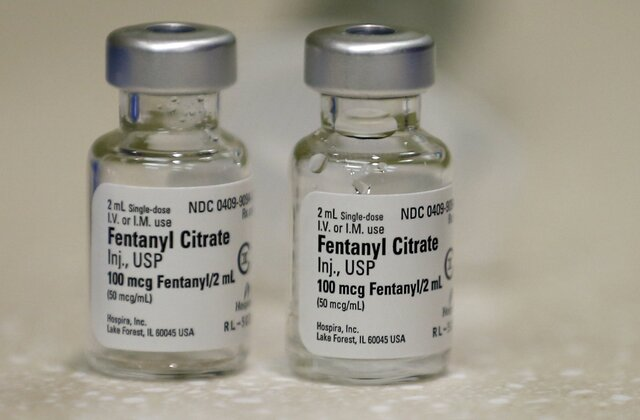
so fuking stupid, it’s an fda approved drug
It would reduce in prominence the headquarters of U.S. Central Command, U.S. European Command and U.S. Africa Command by placing them under the control of a new organization known as U.S. International Command. Those familiar with the plan said it aligns with the Trump administration’s national security strategy, released this month, that declares that the “days of the United States propping up the entire world order like Atlas are over.”
Their way to rid themselves of officers who will refuse to follow an illegal order and put command in the hands of those who will. All of this is to reduce the number of Admirals and Generals who could credibly disobey the illegal orders that will be coming soon.
This past September, the Trump administration terminated these agreements. The center’s former head, James Rubin, called this decision “a unilateral act of disarmament,” and no wonder: In effect, the United States was declaring that it would no longer oppose Russian influence campaigns, Chinese manipulation of local politics, or Iranian extremist recruitment drives. Nor would the American government use any resources to help anyone else do so either.
Things that are good and need to be mentioned.
Yes more recent news. But wow has the US gone nuts! The grifting, hate, and denying basic facts of reality is really scary.
Foreign nationals can now pay $1 million plus a $15,000 processing fee for the Trump Gold Card, which grants them U.S. residency “in record time,” the website states. Corporations, meanwhile, can also partake in the program by making a $2 million contribution and paying the $15,000 processing fee.
The St. Louis-based lawyer declined to share copies, citing his clients’ privacy, but said most are seeking $1 million to $10 million for alleged injuries and property damage during their arrest, prosecution and, in many cases, imprisonment. Earlier this year, US officials agreed to pay nearly $5 million this year to settle a claim brought by the family of Ashli Babbitt, who was shot and killed by a police officer inside the Capitol on Jan. 6.

In the lawsuit filed Wednesday, Uthmeier’s office alleged that for the “past five years and continuing to the present day, defendant has excluded or disfavored nonminorities in numerous employment practices and programs.”
The move is part of the administration’s wider campaign to scrub federal institutions of “corrosive ideology” recognizing historical racism and sexism. The directive instructs park staff to report by Friday any retail items that have content that “inappropriately disparages Americans past or living” or that includes “matters unrelated to the beauty, abundance or grandeur” of a natural feature in its description.
Hit the link for many photos of Key West homes now sporting rainbow picket fences. As for Ms. Walker, the self-proclaimed “Christian Republican” felt compelled to boast about her complaint on X.
Yet the Russian oil shadow fleet is left totally alone by the tRump admin? I wonder why the oil tankers off Venezuela are OK to attack yet the same sanctioned oil tankers of Russia are off limits? What is the difference between illegal sanctioned oil tankers? Oh yes Putin has something over on tRump. Hugs
“States have the statutory duty to preserve and protect their constituents from vote dilution,” said Assistant Attorney General Harmeet K. Dhillon of the Justice Department’s Civil Rights Division.
This is code for balck people voting which white supremacist feel makes their votes less important. Hugs
A New Zealander’s Counterpoint to 12/14/94’s “U.S. ‘Honoring'” New Zealand’s Nuclear Free Policies
Reblogged with my thanks to Barry.
I am down to just 12 old news stories before I get to something more recent. Old news is important also. At least to me.
The Department of Homeland Security recently signed a contract worth nearly $140 million to purchase six Boeing 737 planes for deportations — a move that will allow the agency to operate its own fleet after receiving a massive funding increase from Congress.
Feds Extradite Woman To The US To Face Smuggling Charges Then Declare She’s In The Country Illegally
The Department of Justice (DOJ) will potentially treat opponents of President Donald Trump’s policies as “domestic terrorists,” according to a leaked memo from Attorney General Pam Bondi to all U.S. law enforcement agencies.

Man Charged With Ripping Down PA Shop’s Rainbow Flag: “Call 1-800-Who Cares, No Gay People” [VIDEO]
Sunday Night Viewing
Well, I think there’s a football game on, but thanks to a commenter in this Wonkette piece, I just learned there is a Star Wars Holiday Special. I had no idea. Did not see it in ’78, don’t recall ads for it, or anything, but there are many movie/TV stars in it, and here it is:
December 14th
blundersonword mentioned “Imagine” the other day in a post, and here we are on the morning of Dec. 14th. There are several items in Peace&Justice History for 12/14, including mourning the loss to the world and the effort for peace across the world, with the murder of John Lennon. 14 years later, the US acknowledged and honored New Zealand’s nuclear weapons ban, and 15 years later, the Dayton Accords were achieved, which guided the cessation of conflict between Serbia, Croatia, and Bosnia-Herzegovina. Progress happens.
| December 14, 1917 U.S. peace activist and suffragist Kate Richards O’Hare was sentenced to five years’ imprisonment for a speech denouncing World War I. Occupying a neighboring jail cell was Emma Goldman, the well-known anarchist organizer, feminist, writer and anti-war critic was imprisoned for obstructing the draft. O’Hare was one of a number of prisoners Socialist Party leader Eugene Debs cited in his “Canton Speech” for which he in turn was imprisoned. More about activist Kate Richards O’Hare Read the speech |
| December 14, 1961 In a public exchange of letters with South Vietnamese President Ngo Dinh Diem, U.S. President John F. Kennedy formally announced the United States would increase aid to South Vietnam, including the expansion of the U.S. troop commitment. Kennedy, concerned with recent advances made by the communist insurgency movement in South Vietnam, wrote: “We shall promptly increase our assistance to your defense effort.”  President Ngo Dinh Diem  President Kennedy and Secretary of Defense McNamara Kennedy – Diem letter exchange |
December 14, 1980 At Yoko Ono’s request, John Lennon fans around the world mourned him with 10 minutes of silent prayer. In New York over 100,000 people converged on Central Park in tribute, and in Liverpool, England, his hometown, a crowd of 30,000 gathered outside of St. George’s Hall on Lime Street. johnlennon.com >“You may say I’m a dreamer. But I’m not the only one.” Time capsules to mark John Lennon’s legacy |
| December 14, 1985 Wilma Mankiller became the first woman to lead a major American Indian tribe when she took office as principal chief of the Cherokee Nation of Oklahoma.  Wilma Mankiller on the day in 1985 when her election as chief of the Cherokee Nation was announced |
| December 14, 1994 After eight years of negotiations, the United States finally agreed to honor New Zealand’s ban on nuclear weapons in its territory. U.S. Navy ships armed with nuclear weapons no longer visited New Zealand’s ports. |
| December 14, 1995 Leaders of the states that were parts of the former Yugoslavia signed the Bosnia peace treaty, formally ending four years of bloody and vicious ethnic/religious conflict. The Dayton Accords, as they are known, committed the Balkan states of Serbia, Croatia, Bosnia-Herzegovina to accept a division of territory, a process to deal with the more than 2 million refugees, and the introduction of 60,000 NATO peacekeeping forces. The negotiations were led by U.S. Assistant Secretary of State Richard Holbrooke, and held principally at Wright-Patterson Air Force Base near Dayton, Ohio. The Dayton Accords |
https://www.peacebuttons.info/E-News/peacehistorydecember.htm#december141980
 Scottie's Playtime