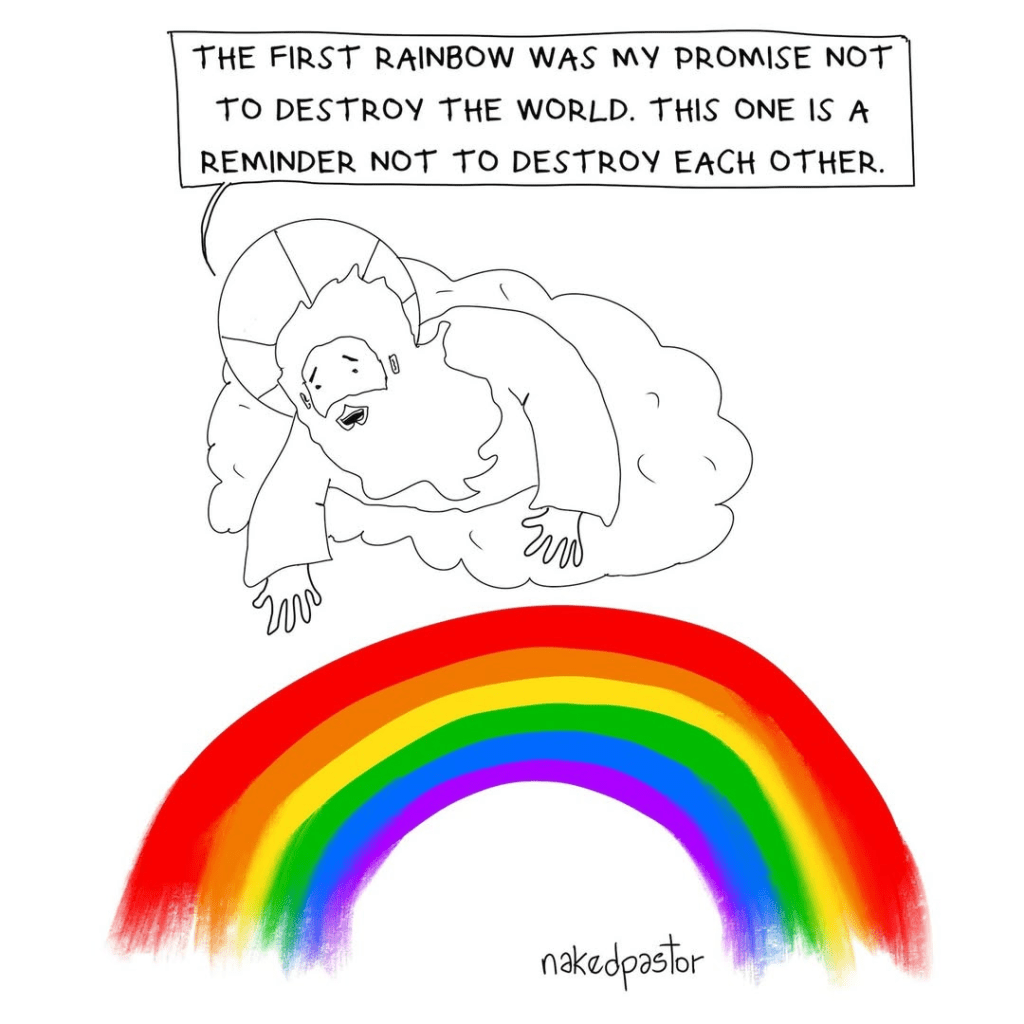
Scottie posted this meme yesterday and it prompted a further exploration than seemed easy in his list of images.
I think I’m going to shock some people here, maybe even get someone mad at me at this writing. I have to tell you all, I’m kinda a shy person. So, I’m not comfortable with some strange transgender person staring at my pecker when I pee.
I’m really just not comfortable with that. But, you know, I’m not comfortable with a strange man staring at my pecker when I’m trying to pee either. Nor am I comfortable with a strange woman staring at my pecker. In fact, I don’t flaunt my pecker about when I pee. And, I feel somehow disenfranchised because I don’t find the bathroom a place to flaunt my privates, yet the way some on the right talk about it there must be things going on in there that I’m not contributing to or enjoying. What am I doing different than those who are worried about this happening?
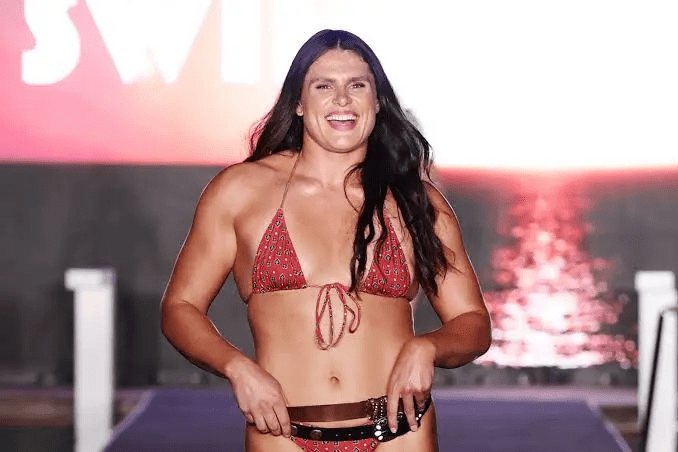
Some may also find this startling, but I heard that this person was found in the women’s bathroom. Many accused homophobes feel that people should not “pretend” to be a woman for the sole purpose of going into the women’s bathroom.
And, some uptight karens would say that the prevalence of this very person in a women’s bathroom is indicative of just how far things have come that “she” would feel comfortable going into a women’s bath. They say we should be shocked and outraged at Sports Illustrated for publishing these pictures.
And others would be wise to tell you that this is ILONA MAHER, a phenomenal women’s rugby star and arguably the best in the world. I would tell you that she is very strong, very aggressive, and very beautiful, and I would tell you that hassling Ms. Maher is surely contraindicated for a long life.
The uncomfortable facts are that sexual assaults perpetrated by trans people is extremely low. And, let’s consider just for a moment the great deal of bother a person needs to go through to transgender, and there are those who think it’s so they can go look at girls?! Further, the uncomfortable fact remains that 85%-90% of all sexual assaults are perpetrated by someone known by the victim — ie: not strangers, and often they are family members or close family friends and DO NOT happen in a public bathroom. And finally, a great many lgbtq folks actively avoid bathrooms, no matter how desperately they need relief, because they are all too often the victim of assault by other bathroom goers.
Personally, I’m not going into the bathroom to make friends, to admire others or to find comparisons to determine where I fall in the pissing contest of reactionary karens. I don’t care. We are all human, and like the kid’s book says, we all gotta poop.
Morgan Armstrong.Credit : Image provided by Horwitz Law
Morgan Armstrong, then 18, filed a lawsuit last year against Tennessee Christian Preparatory School after being suspended over a social media post in which she came out as gay
On June 22 of this year, a final judgment order was entered into court stating that a settlement was reached between both parties
They agreed that Armstrong’s suspension has been rescinded, and that the school will pay her $10,000
Over a year after a student sued a private Tennessee high school for suspending and prohibiting her from attending graduation after she came out as gay on social media, the school will now pay her $10,000 as part of a resolution to the case.
A final judgment order was entered into the Chancery Court for Bradley County, Tenn., on Monday, June 22, stating that a settlement was reached between Morgan Armstrong and Tennessee Christian Preparatory School.
Armstrong, then an 18-year-old graduating senior at the school, made the social media post on April 23, writing, “cats outta the bag,” according to a complaint obtained by PEOPLE and filed on May 19, 2025.
A screenshot of the post, which was included in the complaint, showed Armstrong and her girlfriend kissing and holding hands.
Armstrong defended the post in a May 29, 2025, interview with The Washington Post. “Everyone else gets to post their boyfriend or girlfriend. So just because I have a girlfriend and I’m a girl, why does that mean that I shouldn’t be able to?” she asked. “I love my girlfriend and I wanted to show it.”
Days after making the post, Armstrong was summoned to the administrator’s office and given a suspension letter, according to the complaint.
The suspension letter, which was included in the complaint, stated that Armstrong would not be allowed on campus or at any school events, including but not limited to graduation, which took place on May 10, 2025.
Although the school said that her diploma would be mailed to her on June 15, 2025, the complaint alleged that the school “explicitly threatened to sabotage Morgan’s college admissions process and to withhold Morgan’s diploma” if there was any “online slander” about the school or anybody associated with it.
Additionally, the school alleged in the letter that Morgan’s social media posting included “a disparaging remark reflecting the people at Tennessee Christian,” a claim that Armstrong disputes.
The complaint claimed that her suspension letter mentioned a private message that the senior sent to some of her friends that read: “go like and comment on my post guys bc if no one on my socials knew I was gay then they sure as hell do now so this is a big thing tbh, also I’m kinda scared about the facebook comments bc i have some ruthless trump supporting ‘jesus’ mfs on there.”
However, according to the complaint, that message did not refer to the school, but instead referred to some of Armstrong’s relatives — people who, according to Armstrong, “profess but do not practice Christian principles of love, acceptance, and compassion.”
The complaint alleged that the real reason why the school suspended her “was the fact that she had come out as gay” — and that even if she had violated the school’s social media policy, it would have been a first-time offense, and the maximum policy should have been a one-day in-school suspension.
Armstrong and her parents, who were named co-plaintiffs in the suit, sought to expunge Armstrong’s suspension record and disciplinary violation, allow her to take her final exams, forbid the school from withholding her diploma and prohibit the school from “sabotaging” Armstrong’s college admissions process.
In Monday’s final judgment order — which PEOPLE reviewed — both parties agreed that Armstrong’s suspension has been rescinded, even though they disagreed on the extent of her violation of Tennessee Christian Preparatory School’s policies.
The order also stated that the school had not spoken with other colleges or universities for the purpose of disparaging Armstrong, and agreed to be prohibited from making such remarks to the institutions.
The school will have to pay a $10,000 money judgment to Armstrong, the order read, and the lawsuit is now over.
In a statement shared with ABC affiliate WTVC, Tennessee Christian Preparatory School said: “Tennessee Christian and the Armstrong family disagree regarding the extent to which Morgan Armstrong violated school policies. Both parties acknowledge that this disagreement remains unresolved and have mutually agreed to move forward. No further comments will be made regarding this matter.”
Daniel Horwitz, an attorney for Armstrong and her family, said in a statement shared with PEOPLE, “School is a place where every student is entitled to feel welcome, accepted, and supported.”
Horwitz continued, “It is not a place where any administrator should feel comfortable disciplining or threatening kids for being gay. We were proud to represent Morgan and her family in this righteous lawsuit, and we are thrilled to have prevailed on their behalf. We hopeMorgan’s bravery will inspire others to stand up for themselves the way that she did.”
Tennessee Christian Preparatory School did not immediately respond to PEOPLE’s request for comment on Tuesday, June 23.
He calls Jews “a malevolent force throughout history,” praises Adolf Hitler as “a great man,” and urges Black Americans to “return to Africa.” Despite that history of hateful comments, he has now become the star of a pair of social-media videos for Tennessee Republican candidate for governor Monty Fritts [photo].
Still, Dane Chisholm, 28, of Rogersville, Tenn., is completely unapologetic about his controversial views. “For the soft and fake ‘Conservatives’ who worry about being called homophobic, racist or Nazi … go sit quietly in a corner,” Chisholm wrote in a June 20 post on X. “The real Christian men – who will save this world – are going to start handling things.”
Fritts, who is running an unapologetically Christian nationalist campaign, did not respond to a text from NewsChannel 5 Investigates about the star of his social-media posts.
Read the full article. Watch the unreal video below.
State Rep. Monty Fritts appeared here in January 2026 when he called for executing supporters of trans healthcare, saying that “such killings align with scripture.”
Fritts appeared here in March 2025 when the Tennessee House advanced his bill declaring July 2025 a “month of fasting and prayer for the physically able and spiritually inclined.”
Last year Fritts sponsored a “chemtrails” bill that would criminalize weather control with fines of “$100,000 per violation.”
Fritts appeared here in January 2025 for his bill making it a felony for state officials to adopt pro-migrant policies.
Fritts first appeared here in 2023 when the Tennessee House approved his bill allowing officiants to refuse to conduct same-sex, interfaith, and interracial marriages.
Under a single spotlight, a tall figure in a hooded robe strutted onto the stage, their back to the audience. After a suspenseful beat, three words in large bolded lettering lit up the screen behind them: “NATURE IS GAY.”
With a twirl to the crowd, Pattie Gonia unveiled their ginger-red hair and matching mustache, dancing in an earthy blue-and-green crop top and skirt barely covering their chiseled body. The crowd of over a thousand broke into roaring applause.A 2019 video of Bill Nye the Science Guy, pulled from his appearance on John Oliver’s “Last Week Tonight,” punctuated the dramatic reveal. “By the end of the century, if emissions keep rising, the average temperature on Earth could go up another 4 to 8 degrees,” Nye said. “What I’m saying is, the planet’s on fucking fire.”
These are just the first few seconds of environmental activist and drag queen Pattie Gonia’s “Save Her” tour, a one-of-a-kind show that calls for the protection of the dolls — and the planet. The drag queens and kings who created and star on the tour aim to counter the exclusion of their communities by promoting the inclusion of everyone.
For eight years, Pattie Gonia, who goes by Wyn Wiley out of drag, has amassed an impressive following of over 2 million people across their social channels and through their environmental activism on and off the stage. They’ve pushed boundaries, set records and earned accolades, including being featured as one of TIME’s most influential creators in 2025, named as one of National Geographic’s 33 “agents of change” and invited to speak at TED Talk. They have also raised millions of dollars for environmental and social justice non-profits, co-founded the environmental equity organization Outdoorist Oath and a job board to help the queer community and allies find work in the environmental sector.
Last year, Pattie Gonia completed a 100-mile trek from Point Reyes National Seashore to San Francisco’s Golden Gate Bridge in full drag — hair, heels and all — to raise $1 million for non-profit environmental and social justice organizations.
Pattie Gonia performs at the “Save Her! Environmental Drag Show” during Climate Week, Tuesday, Sept. 24, 2024, in Brooklyn, New York. (Alyssa Goodman/AP Photo)
Last month, they did it again, completing a five-day hike at Yosemite.
As show attendee and D.C. drag king Lionel Bitchie said, “She’s not one of the most followed drag queens for no reason.”
But they haven’t done all this work without ruffling a few orange-tinted feathers — and sparking division even among their own fans. During the 2024 presidential campaign season, they were targeted in a Trump campaign ad. Most recently, Pattie Gonia has been in the news for getting sued by the clothing brand Patagonia.
The lawsuit arose after Pattie Gonia filed a trademark application for exclusive rights to use the Pattie Gonia brand on commercial products and events, a move that Patagonia claims would compromise its brand identity. The drag queen responded on social media, posting that suing a climate activist is a “betrayal” of Patagonia’s core mission. Patagonia, for its part, acknowledged their shared goal of caring for the planet and the outdoors, but has held firm on the conditions to end the litigation.
Online, people in Pattie Gonia’s own fanbase have expressed conflict. While some view the lawsuit as harmful to the queer community and stopped using Patagonia’s products as a result, others disagree the clothing brand unfairly sued the drag artist.
Pattie Gonia said the timing of the lawsuit, filed on January 21, hits especially hard because it has come at a time when marginalized communities have been under fire. Several climate, gender and equity-related terms have been erased and banned from federal agencies. The Trump administration has rolled back key protections and visibility for LGBTQ+ communities, including limiting access to gender affirming care, removing mentions of LGBTQ+ history in national parks and banning transgender service members in the military. It also has slashed environmental safeguards for clean air and water, gutted funding for national parks and public lands, and expanded the use of polluting fossil fuel industries.
All the while, Pattie Gonia has embraced their own form of protest in the national “Save Her” tour, focusing it on climate activism and partnering with local drag queens at each of the tour’s stops, in more than 20 cities. At the 9:30 Club in Washington, D.C. — a historically inclusive space for Black performers steps from U Street’s former Black Broadway and a 20-minute drive from the White House — artists and attendees weren’t afraid to get political.
“A lot of time drag can be escapist, and not confronting the reality of dealing with fascism and climate decline, so I like drag that is a call to action and inspiring,” local drag artist and attendee Brooke N. Hymen said. “Pride month can be a celebration and it should be, but it should also be resistance against the forces that want to see us eliminated. And I feel like climate activism goes hand in hand with trans and queer activism.”
“Drag is political, so in a way this is like a rally,” Lionel Bitchie added.
One by one, each act gave their own climate-themed performance, with the majority of them stripping down to their “Fuck Donald Trump” pasties and underwear. Between acts, a parodied Smokey the Bear logo on stage read: “Only you can prevent fascist liars.”
Drag artists Brooke N. Hymen (left) and Lionel Bitchie (right) attended Pattie Gonia’s 9:30 Club show. “Drag is political, so in a way this is like a rally,” Bitchie said. (Jenae Barnes for The 19th)
“It’s a fantastic outlet for joy and rage all in one,” said attendee Kirby Callaway, who works in the environmental space. She said when she saw Pattie Gonia perform at a previous drag show, her “cheeks were hurting because I was smiling so much.”
“It’s so unique, [and] so much of the way that I interact with it in the real world is very doom and gloom,” Callaway said. “I don’t feel like a lot of places get to celebrate and find joy and laugh at these issues.”
Co-headliner and drag queen Sequoia (yes, like the tree) donned an upcycled outfit made of clothing relics from their closeted past and did a performance about the gender fluidity of plants and animals. The screen behind them displayed the words, “Nature is queer, and so am I.”
Going for a wildly humorous take on the issue, drag king Uncle Freak shuffled on stage to perform a striptease as a geriatric man, complete with a fake white mustache and a receding hairline that even NASA couldn’t find on the Hubble telescope. The environmental theme? How climate change worsens the effects of aging.
“Climate change accelerates biological aging in older adults by increasing vulnerability to extreme heat, dehydration and air pollution,” read the screen they pointed at with their cane on the stage.
But the show wasn’t all fun, games and nipple tassels. D.C. drag royalty King Molasses performed to Phil Collins’ ‘80’s hit “In the Air Tonight,” using the tune’s famous crescendo of intensity to parallel the “rising tension” of the climate crisis.
“In the Air felt very correct, in the sense of this urgency that we are now as a people finding ourselves in when it comes to saving the planet. By saving, I mean the impact of technology, of data centers, the climate skewing hotter, the ice caps melting, storms getting more severe,” the inaugural winner of the “King of Drag” reality TV show told The 19th. “There are so many things that are becoming more and more pressing at an alarming rate. And there will be a point where the consequences of our actions will be impossible to ignore.”
King Molasses performs to Phil Collins’ ‘80’s hit “In the Air Tonight.” (Maya Lopez)
Pattie Gonia came on and sang a heartfelt “bird song” about resilience and visibility in times of hardship. “No one can erase us, we’re here and we’re staying, we sing cause we made it, we made it through the night,” they sang as the crowd softened during the piano-accompanied tune and several people melted with tears and hugs.
Co-headliners Sequoia and Vera! joined Pattie at the climax of the show to perform a piece on social justice in front of the backdrop of an American flag. Written on each stripe, a different call to action: “Eat the rich. Protect the dolls. Free Palestine. Black lives still matter. No one is illegal on stolen land.”
Amid rampant erasure, censorship and oppression of the queer community and environmental advocates, the tour is more than a late-night rendezvous; it’s a rallying cry, Molasses said.
“The opportunity that this tour gives all of us artists is that drag allows us to play and show something that feels like entertainment,” Molasses said. “But if we can do it in a particular way, we are able to not only entertain but are able to call our community to action.”
Trump’s failure with the Lincoln Memorial Reflecting Pool is a perfect example of how this regime operates.
He said he wants to beautify Washington DC, though the city is already beautiful. This is like when he came into office in 2017, and before the afternoon was over, he took credit for rebuilding the military. We were spending over $800 billion a year on our military before Donald Trump came into office, so trust me…. We already had a military. If anything, our military is weaker today because Donald Trump just wasted a lot of its armaments on his stupid chosen illegal war. It’s also being led by a chauvinistic, racist, white Christian nationalist with the brain of a moldy sponge.
Back to the pool. Trump wanted to beautify it before July 4, when our nation celebrates its 250th birthday, not to be confused with June 14, which is Donald Trump’s birthday, which will now be commemorated every year by having shirtless men pummel each other in your backyard. (snip-MORE)
The UFC event at the White House last Sunday was not supposed to be political, even though it was held on Donald Trump’s birthday. But after winning his fight, UFC fighter Josh Hokit was being interviewed by podcaster and ring announcer, Joe Rogan, when he grinned and looked into the camera, and said, “And lastly, Michelle Obama is a man! Am I right, America?”
Of course, he is not right, and his racist and sexist conspiracy theory shouldn’t be given the dignity of a defense because it is just too ridiculous and stupid. But what Hokit did wasn’t just disrespectful to Michelle Obama and President Obama, but also to the White House, where he made the comment (hasn’t that place suffered enough during Trump 2.0?), and the country, as this was supposed to be for America’s 250th birthday.
The event itself was disrespectful enough to the White House and the Oval Office without Hokit’s hateful comment. (snip-MORE)
In this on Sam and crew show clips of tRump talking sexually about other world male leaders and make jokes about tRump’s sexuality. They also mention how he rambles disjointedly and his dementia seems worse. Hugs
Emma and Ken discuss the new memorandum on terrorism that targets activist, protestors, and people who post online. It is an attempt to stop people from expressing a negative opinion of the tRump administration and the horrific actions they are doing. They talk about how the administration really believes that just talking badly about ICE actions is doxing them and any doxing is terrorism. The administration feels that no one has 1st amendment rights and that anything done to protest the administration is terrorism. The fear it inspires is discussed along with the cost incurred by the defendants. Hugs
Sam and Emma are talking about how the tRump administration is using the FBI to attack and interfere with democratic voting groups who work to get voters to the polls, raise funds for democratic candidates, investigating civil rights some times with out warrants showing up on the doorsteps of volunteers implying they had committed a crime. The agents are demanding publicly sometimes in front of family members that people answer questions, give them communications, the agents are on fishing missions and intimidation. As Brian says telling people about an election is fraud. Hugs
I post this last one by Matt Binder filling in for Emma and Sam showing how Riley Gaines will say anything for money and just how stupid she really is. She has made money hand over fist using her hatred for trans people get right wing contracts and show deals talking about any talking point the right wing wants to push and emphasize. Hugs
While I detest the end song he plays I love Mark’s take on issues. He doesn’t pull his punches and lays out the facts. In this case it is important to watch to the end where he elaborates on the current attempt to genocide trans people by making them illegal as Russia has. Now requiring that no business, event or medical facility that takes any government money can allow any kind of support or positive affirmation of trans people. He talks about how important it is to let trans youth socially transition and live as the gender they identify with, and to get puberty blockers to not go through the wrong puberty. He mentions trans children figure out their gender the same way and ages that cis kids do. Hugs
Panic over the existence of LGBTQ+ people is becoming so ridiculous it’s almost impossible to tell if it’s satire or not. In this video we’ll look at some of the most ridiculous examples of right-wing hysteria over queer people. Well also talk about how conservatives have successfully weaponized their outrage against queer people and how culture influences politics.
The Humanist Report (THR) is a progressive political podcast that discusses and analyzes current news events and pressing political issues. Our analyses are guided by humanism and political progressivism. Each news story we cover is supplemented with thought-provoking, fact-based commentary that aims for the highest level of objectivity.
his summer, we are spoiled for choice when it comes to queer movies. From the long-awaited adaptation of Hayley Kiyoko’s novel Girls Like Girls — which was itself an adaptation of the music video of the same name — to Jane Schoenbrun’s Teenage Sex and Death at Camp Miasma, every vibe is covered, from romance to horror to comedy and beyond. Rarely has a summer movie season felt this varied and interesting when it comes to LGBTQ+ fare. To help you keep track of it all, we’ve compiled this helpful list, complete with release dates and information about where you can catch each title. After all, there’s no better way to beat the heat than in an air-conditioned movie theater.
She’s the He (2026) — in select theaters now, VOD to follow
She’s the He is a gender swap comedy about two cisgender boys who pretend to be trans girls in order to get laid before high-school graduation. If that sounds like a horribly regressive premise, fear not. This is a movie made by and for trans people, with the sort of knowing, raunchy comedy we’ve long been denied in the name of Representation.™ It’s riot, and you should see it, if not at this current moment, then during the promised summer VOD release window.
Blue Film (2026) — June 12, VOD
Although it premiered in the U.S. in May, the controversial Blue Film was only shown in a smattering of theaters and will finally arrive on VOD June 12. The movie, directed by Elliot Tuttle, follows a queer fetish camboy who shows up to an older john’s house, only to discover that his client is his former English teacher. It’s a film unafraid to touch the third rail, diving deep into both men’s loneliness and insecurities. We called it the best queer film of the year so far back in May, and that distinction still holds up.
Stop! That! Train! (2026) — June 12, theaters
If you love Airplane! and the Naked Gun but wish they were (even) gayer, Stop! That! Train! should scratch an itch. Starring a who’s who of Drag Race girls on a runaway train, along with Crazy Ex Girlfriend’s Rachel Bloom and RuPaul herself as President Judy Gagwell, the film is filled with the sort of inane jokes and sight gags that we don’t see nearly enough of in contemporary comedies. We should note the film has become embroiled in controversy about whether it used generative AI for certain VFX shots. Director Adam Shankman has stated on Instagram that every shot is “made by human hands” and that there are no shots “conceived by AI.”
Republican gubernatorial candidate Bobby Charles is one of the leading contenders to become Maine’s next governor, and his recent comments should alarm anyone who values evidence, competence, or basic reality.
Charles has suggested he would personally counsel women out of having abortions, claimed transgender identities are impossible because of Noah’s Ark, repeated the debunked “litter box” conspiracy theory about schools, and embraced a culture-war agenda that seems ripped straight from social media misinformation.
Yet despite these bizarre remarks, he’s a serious candidate with a real shot at winning the Republican nomination.





:max_bytes(150000):strip_icc():focal(664x255:666x257):format(webp)/Student-Banned-from-Graduation-at-Christian-School-After-Coming-Out-052925-b59993f838e54909ac4459183eb77e84.jpg)