“Northern Emerald-Toucanet”

Also Known As: Tucanete Esmeralda (Spanish), Tucancillo Verde (Spanish)

Aptly named for its striking green plumage, the Northern Emerald-Toucanet is actually quite camouflaged in the leafy forests where it makes its home. With its tropical take on countershading — darker green on the back and wings, lighter yellow-green below — this bird beautifully matches the color palette of forest leaves, whether seen from above or from below. With its accents of chestnut, blue, and white, and a large black and yellow bill, this pigeon-sized bird is a true beauty.

Similar to other toucans, Northern Emerald-Toucanets eat mostly fruit, capitalizing on the wide diversity of fruit-bearing trees in the humid forests of their home in Central America. These birds mostly swallow their food whole, including some larger-seeded fruits, which they repeatedly regurgitate and swallow until the flesh is consumed. Whether by regurgitation or defecation, these birds spread the seeds of their food trees throughout the forest. Many tropical trees have evolved to bear fruit specifically for this purpose, taking advantage of birds’ wings to spread their seeds far and wide. In fact, the process of moving through the digestive tract of an animal actually helps the seeds of many of these trees to germinate. In effect, these toucanets, along with a cohort of other fruit-eating birds and mammals, are gardeners of their own food forests. (snip)

Bird Gallery

The Northern Emerald-Toucanet is indeed a beautiful, vibrant green, top and bottom, with the back a deeper, darker hue and the underparts lighter and slightly yellowish. The long tail is iridescent blue and green, with a rusty or chestnut tip matched by the vent feathers beneath the tail. The eight subspecies across its geographic range vary in the coloration of the throat, either blue or white, and the bill. In all subspecies, the lower mandible is black. The upper mandible has some black as well, but may be almost entirely yellow. Some subspecies also have a reddish to brown patch near the nostrils.

Good News Here!

Heroic Chicago trans comedian recalls saving infant from ice-cold Lake Michigan: ‘I guess I’m going in’

“The most important part of this entire story is that the baby is okay,” Lio Cundiff told The Advocate.

A Chicago comedian is speaking out about a daring rescue that left him in the freezing waters of Lake Michigan, and saving an infant from drowning.

Six days before his February 24 birthday, on a bright winter afternoon along Chicago’s Lake Michigan waterfront, Lio Cundiff had a thought that now reads like a setup to a joke. “I was on the phone with my friend, looking at the water, and I was like, ‘Man, that looks so beautiful. I just want to jump in,’” he told The Advocate in an interview on Friday. Little did he know.

Cundiff, 31, had arrived early for work on February 18 near Belmont Harbor and wandered down to the water, as he often does. He loves the lake. He loves floating in it in the summer — ideally, he says, “with a beer.” He had been taking phone calls, sitting on a bench, “vibing,” he said.

Then he heard screaming. “I just look up, and I’m like, ‘Oh my God.’ I just saw a stroller headed straight to the lake, just blown by the wind,” he recalled.

In that instant, the punchline vanished. There was no bit to craft, no self-deprecating aside about his baby face or his anxiety about sending emails, both staples of his stand-up. There was only motion. He threw down his jacket and phone and ran.

“I was like, ‘I guess I’m going in.’ And I jumped in and just tried to keep us afloat as much as possible,” he said.

Early media reports suggested that Cundiff did not know how to swim. He bristles at that characterization. “I can swim,” he said, explaining that in the hospital he told a reporter he wasn’t the strongest swimmer and preferred “to float with a beer in my hand.” “They ran with, ‘I can’t swim,’” he said.

“I can swim. I just prefer not to,” he said through a chuckle.

The baby, eight months old, was zipped inside the stroller. Cundiff had to keep the entire frame buoyant while treading freezing cold water. At one point, both of their heads went under. He describes the memory in fragments, as though replaying a film whose ending he already knows but still cannot quite believe.

“There were a few minutes where I didn’t know if we were going to be able to keep afloat,” he said. “I grabbed her hand for a second. Her tiny little fingers. I rubbed them for two seconds, and I was like, ‘Okay.’ … ‘All right, we got to keep going.’”

A bystander named Lou dropped a jacket; later, a life buoy arrived. They were about thirty feet from a ladder. Cundiff’s muscles were tightening. When they finally reached it, and the baby began to cry, he felt something like release.

“As long as she’s crying, when she gets out, that’s all I needed,” he said. (snip-MORE on the page)


Trans Girl Scouts Sell 330,000 Boxes Of Cookies In Public Outpouring Of Support

The total boxes sold is the highest in the history of EITM’s trans girl scout cookie list.

Erin Reed Mar 05, 2026

Five years ago, as anti-trans legislation first began spreading across the United States, I kept thinking about the kids caught in the middle of it—transgender children suddenly facing a wave of hostility simply for existing. That year, I started something small in response: a trans Girl Scout cookie list. Only three scouts were on it. The internet responded immediately, helping them sell out their entire quota. Every year since, I’ve made the list again, and every year it has grown larger. Now, in 2026, the list has reached a staggering scale: 220 transgender Girl Scouts participating—and together they have already sold more than 330,000 boxes of cookies, with the number still climbing every minute.

One scout hoping to fund a troop trip to Alaska—and assemble backpacks for foster children—has sold 2,500 boxes of cookies, bringing those plane tickets within reach. Another scout, a competitive soccer player, was raising money so her troop could attend scouting camp without worrying about the cost; she has now sold 4,500 boxes, ensuring that trip is covered. One troop made up of transgender Girl Scouts set their sights on learning horseback riding and attending summer camp together—and sold 22,000 boxes to make it happen. And Pim, who simply wanted to go to Niagara Falls and to take her troop camping, has sold more cookies than the website can even track: more than 100,000 boxes.

And while we can’t know exactly how many of those sales came directly from our yearly list, we do know that these trans Girl Scouts have taken the internet by storm. Posts about them have racked up millions of impressions on Facebook and gone repeatedly viral on Bluesky. In the process, countless people looking for their next box of cookies discovered a cause worth supporting—and a group of scouts they were excited to cheer on.

The news about their staggering success comes during a broader regression around scouting organizations with respect to transgender people. In December, the United Kingdom’s Girlguiding—the British equivalent of the Girl Scouts—banned transgender girls from joining, reversing a policy that had been in place since 2018. In the United States, Defense Secretary Pete Hegseth forced Scouting America to agree to classify members by sex assigned at birth, eliminate diversity initiatives, and effectively out and segregate transgender scouts from their peers. Girl Scouts of the USA, however, has yet to see the same regression—the organization still stands by its transgender inclusion policy.

For these kids, that transgender inclusion policy has given them hope. At a time when thousands of anti-LGBTQ+ bills are being proposed and passed across the country, the cookie list is proof that people out there care. When every force in the world is acting against them, for once, their identity is not treated as a curse by society, but a blessing. Parents have told me that their children have been overwhelmed with joy watching the numbers climb, realizing that strangers across the country support them. And that’s worth protecting. (snip-MORE on the page)

Why It’s Good When Someone Pays Close Attention To Legislatures

Here’s an example of another “ingenious” bill in the Great State of Kansas. From my Topeka Buzz email, where there’s lots of similarly ingenious work. I post these because I’ve read that this stuff is being brought up in almost every state, so do all you can to keep track in yours.

Senate Passes Mail Voting Bill With Built-In Self-Destruct Clause
SB 394 passed the Senate 26-11 Thursday with one senator voting present and two absent. The bill adds signature requirements to mail ballot envelopes — spaces for the voter, any helper, and anyone signing on a voter’s behalf, plus a perjury-warning affidavit. But the headline provision is the court-triggered repeal: if any court issues a final, non-appealable order blocking the signature-check rule in K.S.A. 25-1124(h), the Secretary of State must publish notice in the Kansas Register and most state laws authorizing mail voting automatically void, except where federal law requires it. Three Republicans—Mike Argabright (R), Joseph Claeys (R), and Brenda Dietrich (R)—voted no alongside the Democratic caucus, while Ronald Ryckman (R) and Pat Pettey (D) were absent. The bill effectively tells the courts: strike down our signature rules and we’ll take mail voting with them. It now heads to the House.
Medicaid and SNAP Eligibility Overhaul Clears Senate
SB 363 — the Medicaid and SNAP eligibility-tightening bill we flagged when it came out of the Government Efficiency Committee — passed the Senate 25-12 Thursday with one present vote and two absent. The bill requires cross-agency data matching for eligibility verification, cuts retroactive Medicaid from three months to two, limits self-attestation, raises the SNAP work requirement age to 64, and mandates quarterly legislative reporting starting in 2027. One provision cuts the other direction: KDHE must seek federal approval for continuous Medicaid coverage for people with permanent intellectual or developmental disabilities who receive home services. The bill now heads to the House, where anti-hunger advocates and disability groups are likely to press their case that the eligibility barriers will cause coverage losses that outweigh any savings from reduced improper payments.
Identical Constitutional Amendments Filed in Both Chambers to Eliminate State Taxes
Legislators introduced matching constitutional amendments Thursday — SCR 1624 in the Senate and HCR 5034 in the House — proposing a “Freedom from Taxes Fund” in the Kansas Constitution. The plan would repeal certain sales and use tax exemptions and deposit the added revenue as untouchable principal in a state investment fund; only the interest earnings could be spent, and only to replace revenue from taxes being eliminated. The phased sequence: motor vehicle property taxes and registration fees first, then certain state-mandated property taxes, then state income and privilege taxes. A temporary Kansas Citizens Freedom Review Board would review exemptions, and each tax elimination would require the State Treasurer to certify sufficient interest earnings and the Legislature to approve by concurrent resolution. The dual filing signals serious intent, but both resolutions would need two-thirds votes in each chamber to reach the ballot — a high bar for a proposal that critics will argue relies on investment returns to replace billions in tax revenue.

For Lunchtime/BreakTime Reading

Losing the Plot: The “Leftists” Who Turn Right

What do we make of former friends who fell down the rabbit hole of the Right?

Kathryn Joyce and Jeff Sharlet December 12, 2023

How to name the rude currents eroding the Left, those which have claimed the hearts, minds and Substacks of so many former friends and fellow travelers? There are the journalist-provocateurs and the readers who have followed them rightward, the Trumpers-come-lately marching on to Glenn Greenwald’s Rumble or vanishing into Max Blumenthal’s Grayzone. There are those not quite yet there, such as Ana Kasparian of The Young Turks, currently mourning the leftism she now believes ​“gaslit” her about a ​“crime wave” it refuses to admit. ​“I’m going through something very real and very sincere,” she told a ​“disaffected Democrats” podcast in July, ​“and it’s uncomfortable.” It is, indeed. 

Consider the dislocation that flickers across the face of journalist Matt Taibbi in a TV interview this summer for the conspiracist, right-wing Epoch Times. Acclaimed by the Left during Occupy Wall Street as a scourge of corporate power, Taibbi is best known for his years at Rolling Stone. When the day eventually comes, the ​“vampire squid relentlessly jamming its blood funnel into anything that smells like money”— Taibbi’s unforgettable embodiment of Goldman Sachs in a 2010 article—will haunt his obituary.

While Taibbi insists his politics haven’t changed — an oddly conservative way to insist one hasn’t become conservative — his surroundings certainly have. Wearing a velvety brown jacket, jeans and his default smirk, he sat for his Epoch Times interview amid the libertarian FreedomFest conference. This year, in addition to Taibbi, it featured as speakers presidential candidates RFK Jr. (an Independent) and Vivek Ramaswamy (a Republican), along with former candidate Tulsi Gabbard (now a former Democrat, too), united in their contempt for ​“wokeness.” Epoch Times’ Jan Jekielek anointed Taibbi an ​“American Thought Leader” for Taibbi’s critique of a timid, consensus-driven press that, he says, is reminiscent of the Soviet Union. 

As Taibbi charges that the media is unwilling ​“to raise questions about things that have been ​‘decided,’” Jekielek’s eyes light up. It reminds him of his own experience bucking consensus, he says, when, as a university student, he realized the core tenet of evolutionary science ​“simply was untrue.” Gulp. In the midst of nodding along, Taibbi’s normally expressive, still-boyish face seems to freeze, his fingers to tense on his knee. It’s a moment recognizable from countless movies. Imagine the record scratch, the freeze frame, the familiar Hollywood voiceover: ​“You’re probably wondering how I got here.”

Taibbi’s far from the first. Consider the case of David Horowitz, once a founding sponsor of this magazine, more recently author of Blitz: Trump Will Smash the Left and Win. Or, after him, Christopher Hitchens, whose knowledge of Iraqi Ba’athism led him, after 9/11, to align first with U.S. neoconservatives and ultimately with the very kind of religious nationalists he’d so long derided. We might mark 9/11 as a moment when many who believed they were for peace gave in to the notion that it can only be won through war. Post-October 7 may prove another such moment.

But the present left-to-right acceleration began in earnest with the onset of the Trump years, in 2017.

There are the intellectuals-in-exile, the scholars whose once contained complaints about free speech or diversity initiatives metastasized into a broad contrarianism that found new patrons. There are the not-so-funny-anymore, the comedians once known for their left politics — Chappelle and Roseanne and Russell Brand — pulled rightward by ​“jokes” about trans people, pandemic panics and pedophiles. There’s the ​“new New Right’s” very own Kennedy — Robert F., Jr., of the bulging biceps. RFK Jr. may seem, with his campaign pushups, little more than a joke to young leftists, but his history as a champion of intersectional environmentalism is long: as a leader of activist organizations, a lawyer for poor communities of color and a host for the defunct progressive radio network Air America. But in recent years, he’s been having second thoughts: We all know about Bobby and the vaxx, but did you know he’s recently ​“learned” we must seal the Southern border to protect our food supply from a ​“tsunami” of ​“defecating” migrants, shitting on our greens?

These left-to-right sliders (or at least left-ish-to-right) — themselves migrants across the political divide — find themselves in strange constellation with those they might once have disdained. Pop feminist icon Naomi Wolf now conferences with hard-right student organizer Charlie Kirk over the prospect of ​“capital punishment” for Joe Biden and Kamala Harris. YouTuber Jimmy Dore, another once-left comedian who lost hold of the joke, now marvels over his meeting of the minds with Tucker Carlson: ​“We should do a show together!” Call it The Horseshoe Hour.

Except ​“horseshoe theory,” which imagines a political spectrum bending to meet at its extremes, doesn’t describe this drift. It goes in one direction. 

It’s easy to dismiss many of these high-profile defectors as crackpots or spotlight-seekers, as never truly serious in their political principles or as plain grifters. Because of course there is money to be made by saying, ​“Once I was blind, but now I see.” It permits the Steve Bannons of the world to affirm their political faith not as an argument, but just the truth. But, in some ways, the peculiarities of the celebrity drifters are beside the point.

The point is who they bring along.

Over the past seven years, they — the intellectuals, the comedians, their fans, the growing cohort of voters now leaning toward RFK Jr. (22% in one November poll) — have taken ​“red pills” a la The Matrix, tumbled down rabbit holes in the Wonderland sense. In moments of great flux — the 1960s from which Horowitz fled, the post-9/11 years, the current clusterfuck of crises so vast and interconnected that they might more simply be called our condition — such portals, from one reality to another, are plentiful. And currently they’re mostly riddling the Left as fascism gathers force, drawing together tendencies that didn’t previously align. There’s the rabbit hole of a Manichaean anti-imperialism, in which the enemy of my enemy is my friend, and the twisting logic by which some come to believe first in Vladimir Putin and then in the self-declared ​“illiberal democracy” of Hungary’s Viktor Orbán. There’s the gender confusion of ​“trans-exclusionary radical feminists,” who begin with a defense of women’s-only spaces and then fall, like J.K. Rowling, into alliances with the Christian Right. There’s the race vs. class debate, and the declaration that identity is just a distraction. There’s #MeToo, and the backlash of those who can’t let go of fallen heroes. There are genuine critiques of the concept of ​“white fragility” that collapse into white fragility, no quotation marks.

Matt Taibbi’s own slide began in 2017, after the release of his book about the police killing of Eric Garner, I Can’t Breathe, was derailed by the resurrection of his misogynistic exploits as a young expat reporter in post-Soviet Moscow. Taibbi’s apologies didn’t quell the criticism. Then he started talking about ​“cancel culture”; then liberal media bias; then, late in 2022, he made himself the mouthpiece for Elon Musk’s Twitter Files project. In March, he found himself in a congressional hearing, nodding along as Rep. Jim Jordan (R-Ohio) described Democrats as a McCarthyite mob. In November, Taibbi and two other Twitter Files reporters received a $100,000 award from a program of the Young America’s Foundation, long a bridge between establishment conservatives and each generation’s shoutiest right-wing youth.

In similar fashion, Naomi Wolf ​’s path from a liberal third-wave feminist writer of ​“big ideas” books to a regular guest on Steve Bannon’s War Room and Fox News began— or perhaps sped up — with a career humiliation. As Naomi Klein recounts in her recent book Doppelganger: A Trip Into the Mirror World, the premise of Wolf’s 2019 book Outrages collapsed on live air over a misunderstanding of an archaic legal term. By 2021, Wolf had emerged as a key purveyor of Covid-19 conspiracy theories, warning that ​“vaccine passports equal slavery forever.”

“We’re seeing people turn right for a number of different reasons,” argues journalist Eoin Higgins, author of a forthcoming book on formerly left-wing journalists who’ve aligned with reactionary tech billionaires. ​“There are financial incentives, there are attention incentives, there are culture war differences as people are becoming more conservative on culture; there’s a sense of being betrayed by progressives and the Left. There are so many different reasons that reducing this to people going too far [left] and going to the Right is an oversimplification.”

Maybe there’s a kind of gravity to the slide, the black hole of fascism sucking toward it all the loose particles of those whose commitments were never complex or whose convictions were snapped by despair. And the accusation that arises with almost every left-to-right slider, that they’re sell-outs, just doing it for the money? Yes, some are. Yes, and—because even when it starts that way, the transaction is transformational.

In the wake of Bernie Sanders’ loss in the 2020 presidential election, a small collection of leftists reconstituted themselves as ​“post-left,” still opposed to capitalism but scornful of ​“identitarian politics” and so disgusted with the liberal-left — from Democrats to the Democratic Socialists of America — that they saw little issue allying with the Right.

UnHerd, a U.K.-based ​“heterodox” opinion website founded by a Brexit supporter, covered the movement in a piece titled ​“Twilight of the American Left.” To the post-left, explained contributor Park MacDougald, the real U.S. ruling class is a Democratic oligarchy that uses the threat of creeping fascism and white nationalism to consolidate power, and deploys “‘identity politics,’ ​‘antiracism,’ ​‘intersectionality’ and other pillars of the progressive culture war” as ​“mystifications whose function is to demoralize and divide the proletariat.” Leftists, in this view, merely serve as that regime’s ​“unwitting dupes.”

But distinct from other ​“class-first” leftists, the post-left didn’t believe a real Left remained at all. Hence the double-edged title of the now defunct podcast What’s Left?, cohosted by Australian social media personality Aimee Terese, a former Sanders supporter who sought to “[heighten] the contradictions between left-liberal-identitarians and materialists” and who spent much of 2020 attacking progressive movements. After the primaries, the podcast gave voice to disillusioned Sanders supporters who railed against Sanders and other leftists for ​“sheep-dogging” people into the Democratic Party. Terese’s posts were shared by the likes of Mike Pompeo and Donald Trump Jr. The podcast began interviewing a range of right-wing leaders: ​“postliberal” scholars such as Harvard’s Adrian Vermeule, right-populists like hillbilly elegist J.D. Vance and former Mitt Romney campaign staffer Oren Cass, who recast himself as a champion of, as his book puts it, The Once and Future Worker.

But Terese went further than her guests, embracing some of the most vicious far-right rhetoric online: ​“demographic replacement” conspiracy theories, calls to ​“trust the (race) science” or for the homeless to be ​“warehoused.” These days, Terese cohosts a new podcast with friends from the ever-more-reactionary Independent Women’s Forum and The Federalist. She’s posted praise for the Confederacy, as well as a swastika, even as she aligns slightly more with Israel because her self-declared Islamophobia comes first. Such is the ouroboros of fascist contrarianism, the snake that bites its own tail.

It’s no insult to use the F-word with regard to such beliefs. Terese herself calls fascism ​“the necessary corrective called forth by the existence of insane communists.” It’s an unwitting rephrasing of the Italian novelist Ignazio Silone’s famous description of fascism as a ​“counter-revolution against a revolution that never took place.”

And yet the internet makes it possible for left-to-righters to believe that revolution has taken place. Such is the illusion cast by, say, Libs of TikTok, which scours social media for foolish statements — they do exist — to decontextualize and amplify. If you silo yourself in that rabbit hole, it’s easy to believe the most caricatured expressions of ​“wokeness” are overrunning our schools. It is a ​“very online” thing. But it isn’t only online. Schools targeted by Libs of TikTok have become subject to bomb threats — so far, fake ones, but resulting in very real closures. In their book Meme Wars, Joan Donovan, Emily Dreyfuss and Brian Friedberg describe a ​“wires to weeds” cycle that is its own kind of ouroboros: ​“Someone makes an appeal online (wires) that leads to a real-life event (weeds), and at this event … spectacle breaks out, which leads to media attention, which leads to conversation and action online (wires), which leads to a new event in the real world (weeds),” and so on. And each spectacle further cements a new underlying ideology.

In Manhattan, that sort of spectacle — call it the ​“cool factor” of bigoted rebellion — has been on display in real life in the widely chronicled, scene-y subculture of Dimes Square, where a group of mostly young, often arty people began to converge in 2020, in bars and pandemic-discounted lofts, eager to party despite Covid restrictions. Inspired by transgressing one boundary, they made a movement out of transgressing others. Reporters contrasted the young ​“downtown scene” as the inverse of earnest leftist politics, now recast as middle-aged moralism. One of the scene’s patron saints, playwright Matthew Gasda, said the combination of ​“repressive Covid governance following years of Trump-era moral panics” had ​“produced a moment of ideological uncertainty and openness” in which some leftists found common cause with conservatives and used ​“strategic irony” to counter what they viewed as a scolding, ​“woke” Left. Some declared the police killings that inspired the Black Lives Matter movement a racial ​“psy-op.” Slurs — ​“retard” is ubiquitous, along with anti-queer terms and even the N-word — became a marker of ​“heterodox” thinking.

Anna Khachiyan and Dasha Nekrasova, the glamorous (their word) cohosts of the podcast Red Scare, which had formerly espoused a quasi-socialist politics, became the scene’s queen tastemakers. They were beautiful, they came from Moscow and Minsk, they read difficult books and rolled their eyes and talked about far-right ​“race realists” like Steve Sailer, author of an anti-Obama book called America’s Half-Blood Prince.

In theory, artists shocking the bourgeoisie is an old story. ​“This sort of thing has been seen before,” says John Ganz, author of a forthcoming book on political volatility in the early 1990s. ​“A certain cultural elite thinking the transgression and vulgarity of fascism or right-wing populism is amusing and upsets all the right people. When Celine published his crazy antisemitic rant in the ​’30s, lots of French intellectuals thought he must be being ironic: ​‘This is such a wonderful provocation of middle-class sensibilities and hypocrisy.’” But, Ganz continues, ​“The problem is they also have to keep coming up with stuff to be provocative.”

In a 2017 article, political scientist Joseph E. Lowndes tells a cautionary tale about Telos, a once-Marxist journal founded in the 1960s that, by the 1990s, had become home to far-right thinkers who provided the intellectual backbone for the alt-right. Frustrated by their sense that all forms of dissent were co-opted and neutralized by capitalism, Telos’ editors had searched farther and farther afield for movements that truly challenged social norms. Much of what they found was on the nationalist, racist Right.

It was an instructive story for the Trumpocene, Lowndes writes: ​“Globally, there are two major responses to this era of vast inequality, or two off ramps from neoliberalism: one left, one right.” The right-wing response, he continues, is ascendant worldwide, transforming populist promises into nationalist policies. Meanwhile, too much of the Left is making the dangerous gamble that it can build power by avoiding issues ​“that divide the working class.” That path, Lowndes warns, leads not to socialism, but ​“toward a politics that will be played out entirely on the landscape that the fascists are trying to create.”

They have the money to do so, some of it from sources associated with venture capitalist Peter Thiel, whose strategic far-right funding has included the Senate campaigns of Arizona’s Blake Masters and Ohio’s J.D. Vance, an anti-immigration Super PAC and a contrarian Dimes Square film festival.

After 2016, right-wing intellectuals, flush with patronage, set about to retcon a theory of Trumpism. What was the movement that had just upended U.S. politics? Ideas came from the new New Right — critics of the political theory of liberalism — for both letting boundless social liberty undermine the country’s social foundation and for letting free markets immiserate the working and middle classes. They proposed a ​“realignment,” combining more generous economic policies with stricter social conservatism — a call since repackaged for mass consumption as Republicans try to rebrand as the party of the ​“multiracial working class.”

In October 2022, Ohio’s Franciscan University of Steubenville, perhaps the most conservative Catholic college in the country, hosted a conference lauding FDR and Amazon union leader Christian Smalls. It was an academic affair, but Vance interrupted his Senate campaign to deliver its closing address.

The conference was organized by Sohrab Ahmari, an Iranian-American immigrant who converted to Catholicism on his way to becoming one of the most public faces of this realignment, as cofounder of the ​“heterodox” journal Compact. Launched in 2022, Compact’s mission was to prosecute ​“a two-front war against the Left and the Right” by promoting ​“a strong social-democratic state that defends community — local and national, familial and religious — against a libertine left and a libertarian right.” The premise, Ahmari told one of us last year, was building a coalition that could agree to disagree on abortion and LGBTQ rights, but whose consensus on a social welfare state would ​“lower the temperature” of the culture wars.

What Compact’s project has looked like in concrete terms is eclectic: a blend of articles about labor and corporate monopoly alongside self-described ​“neoreactionaries,” anti-“woke” leftists who view corporate diversity statements as a smokescreen for capital, anti-immigration social democrats, anti-“gender ideology” feminists — and all that wrapped around Trump endorsements.

Online, leftists lampooned the interrelated post-left and new New Right projects. That the post-left was nothing more than ​“an internet clique waiting on a check”— perhaps from someone like Thiel. Or that Compact existed ​“to expand GOP agitprop production by .04% into a new microniche.” Or that the ​“New Right working class realignment” came with the disclaimer: ​“PRODUCT INTENDED FOR AESTHETIC/ENTERTAINMENT PURPOSES ONLY & NOT LIABLE FOR POLICY OUTCOMES.”

But aesthetics aren’t nothing and the blurring of political boundaries lends space for full-fledged fascists to develop crossover appeal. In 2022, Compact warmly profiled the hashtag movement #MAGACommunism, which derides leftists for ​“demonizing MAGA supporters as inherently racist, xenophobic, and so on,” arguing that they should instead be seen as ​“the only mass working-class and antiestablishment movement that currently exists in America.” What do such figures mean by ​“working class”? ​“Racists,” says one prominent #MAGACommunist, Jackson Hinkle, ​“hate me because I’m white.” He has 2 million Twitter followers. This October, numerous leftists warned that Hinkle was among the far-right actors opportunistically promoting the Palestinian cause to further their reach — he gained roughly 1.6 million of his followers in the first weeks of the war — and achieve their own, deeply different goals.

In mid-2022, just months after Compact launched, its main leftist founding editor, Edwin Aponte, was gone from the project. Later that year, he spoke with one of us, for a report at Salon, about why he’d joined in the first place.

“Why would this even be attractive to me?” he asked. He’s a Marxist; he sees culture as secondary to material conditions. Sanders’ first campaign had struck him as a mass movement coming around to his point of view. ​“And it all fell apart. … Famous stuff on the Left: To lose your mind after the failure of your movement.”

In the shifting aftermath, Aponte gravitated toward ​“right-leaning, right-curious leftists and Marxists” who echoed his thinking that ​“the cultural things actually don’t matter.” He felt he’d been isolated on the Left for his views and believed the same was true on the Right for Compact’s other founding editors, Ahmari and Matthew Schmitz.

Compact’s founders, Aponte said, pitched the project to him as one that sought ​“a strong, centralized and generous social democracy” and told him they weren’t interested in ​“relitigating settled issues” like abortion. (Ahmari and Schmitz insisted to Salon, in 2022, that their agreement ​“wasn’t to preclude articles about abortion, but to refract abortion — and all other cultural issues — through a material lens.”) After a draft of the Dobbs decision overturning Roe v. Wade was leaked that spring, Compact published what Aponte saw as a ​“triumphalist” proposal by a right-wing nationalist critic of neoliberalism: ​“One country can help us cut through the noise,” declared the author, thinking not of the abortion debate, now settled in his mind, but of next steps. ​“When Hungary set out to reverse its catastrophic population declines, it picked one goal that has enabled the rest: promoting marriage.”

Record scratch; freeze frame; voiceover: What, wondered Aponte, am I doing here?

Aponte realized the desire he shared with his right-wing co-editors for a social democratic state derived, for them, from a very different dream of the order that would result. Yes, like much of the postliberal new New Right, they saw the benefits of economic policy made with the working class in mind. ​“But more importantly,” Aponte suddenly understood, for his new comrades it was all ​“a way to forcefully apply their moral and cultural ideas”: ​“It’s a moral authoritarianism as centrally informing what the state would be. And everything flows from there.”

Back then, Aponte feared what would happen if politicians who shared those beliefs, such as Blake Masters or J.D. Vance, won their Senate races — as Vance did. He could see these ideas were spreading, in weird directions, among postleftists, people who used to tweet about how ​“identity politics” were a diversion from materialist concerns. ​“The next thing you know, they turn into actual racists, transphobes and homophobes. I’ve seen it. It’s real.”

The truth of it all, he says, isn’t in this theory or that. ​“People go where people accept them, or are nice to them, and away from people who are mean to them.” It wasn’t always coherent, but it didn’t have to be. ​“Historically speaking, authoritarian reactionary movements have been the result of, or have gained support and energy from, such incoherence and such contradictions,” Aponte said. ​“So, some dark shit is happening, and it sucks because I feel like I’ve had a hand in that.”

Since then, Aponte’s realization is finding echoes. On X (formerly Twitter) in September, a Dimes Square habitué wrote, ​“It is certainly not the case that everyone who participated in this scene to get clout for their lit mag is a ​‘fascist’ or should be ​‘canceled.’ However — it is also the case that simultaneously it is becoming the soil and recruiting ground for an actual 1930s style far-right movement that is organized and funded by venture capital.” The anonymous poster claimed that several prime movers now ​“explicitly endorse and advocate mass genocide.” A classic Page Six blind item, made over as murderous: ​“Everyone who is in the scene knows this at this point — presumably soon it will be public knowledge.”

That same month, Compact’s Schmitz tweeted his dismay that the post-left converts to the ​“dissident right” had ​“simply inverted the leftist frame,” swapping supposed ​“misandry” for misogyny and embracing ​“an increasingly open politics of white identity.”

“Fascists have been pushing red-brown politics for generations — sometimes openly, sometimes by repackaging their ideas to sound leftist,” writes Matthew Lyons, author of Insurgent Supremacists: The U.S. Far Right’s Challenge to State and Empire. The forerunners of fascism emerged from France in the late 19th century, when a movement arose combining anti-Marxists, Catholic traditionalists and disaffected leftists who’d grown pessimistic about democracy. The tendency has been overstated at times, but it’s rippled through Left movements since, from strange marriages of convenience within the Weimar Republic to Trotskyite-turned-fascist Lyndon LaRouche leaching off Left support from countless causes.

Today, Grayzone, the megasite created by once-leftist journalist Max Blumenthal, supports Putin’s authoritarian Russia and its international alliances, notably including Syrian president Bashar al-Assad, on putatively anti-imperialist grounds. But any far-left and far-right alliance against imperialism and globalization rests on shaky ground. While the Left sees globalization as entrenching inequality, argues economist Simon Choat, Trumpish anti-globalization is primarily concerned with the erosion of ​“supposedly traditional and homogeneous cultural and ethnic communities.” The Left critique calls for freedom of movement for people as well as capital; the Right seeks to reverse it through new forms of nationalism and xenophobia. Not to mention that ​“globalist,” in the Right’s usage, is an antisemitic dog-whistle.

This isn’t horseshoe theory. If there’s a commonality between far Left and far Right, says Lyons, it’s a common opposition to the status quo — but one that’s based on fundamentally different reasons. ​“And there are many more commonalities between the far Right and center in terms of investment in hierarchies and inequalities, which are not reflected in horseshoe theory.”

“It’s not the Left going to an extreme,” says Lowndes. ​“It’s choosing one element of left politics and abandoning all of its other historic principles.”

The publication of Naomi Klein’s Doppelganger has popularized an alternative interpretation: diagonalism, a theory developed by historian Quinn Slobodian and political theorist William Callison to describe 2020 Germany, where a coalition of primarily small business owners and apolitical ​“lifestyle leftists” joined to protest pandemic restrictions.

Diagonalism, argue Slobodian and Callison, functions like a post-Covid version of ​“digitally mediated” movements such as Brexit. It rejects conventional labels of left and right, even as it borrows elements from both, sharing ​“a conviction that all power is conspiracy.” It’s often marked by ​“a dedication to disruptive decentralization, a desire for distributed knowledge and thus distributed power, and a susceptibility to right-wing radicalization.”

The people who comprise diagonalist movements come in various forms: movement hustlers gamifying politics; left-to-right ideologues who claim they didn’t leave the Left, the Left left them; and far-right esoterics. It has drawn wellness enthusiasts as well as neo-Nazis, and has praised QAnon. Unlike a horseshoe, the diagonalist path draws from not just the Left but also the center and the greater hinterlands, where everyday people hadn’t previously thought much about politics at all.

But even for those with deeper political commitments, Callison told the podcast Conspirituality, ​“these left-to-right travelers tend to do something sort of sleight of hand, where they begin to put civil freedom above social justice. What should remain for them is a belief in the need for redistributive equality, or some kind of end state where economic inequality has been ameliorated somehow. But that seems to fade deep into the background, instead replaced by a kind of obsession with matters of speech and platforming.”

Diagonalist politics aren’t ending with Covid. They’re already transferring onto issues such as environmental protections. The ​“medical freedom” of the body becomes the corporate freedom of capitalism. RFK Jr., a former Riverkeeper, now calls himself a ​“radical free marketeer.” In his campaign, he told a podcast, ​“Climate has become a crisis like Covid that the Davos groups and other totalitarian elements in our society have used as a pretext for clamping down totalitarian controls.” It’d be just cynical if it wasn’t so sad: the retreat to 20th-century Cold War rhetoric in the face of a 21st-century totalizing threat, the ultimate denial of the passage of time, a morbid symptom of fascism’s growing attraction.

n October, Matthew Gasda, the playwright whose Dimes Square helped solidify the movement, wrote in Compact about his own regrets. The scene had once struck him as having ​“a nondenominational interest in questioning the way things worked.” He’d found it thrilling that ​“old political boundaries were temporarily porous and fluid.” But something had changed. ​“Edgelords” who’d once used ​“strategic irony” to challenge the status quo ​“began to believe their own rhetoric.”

This change is not entirely surprising — think of the white power ​“OK” symbol’s origins as a ​“joke” with which to ​“own” earnest ​“libs.” But how was Gasda to have known? He was just an artist. But then ​“new ideological silos were constructed” and now ​“significant downtown figures soft-peddle eugenics; others glamorize revolutionary terrorism; others worship political strongmen.” Gasda began to fear that, as he told a Compact podcast, ​“Memetic violence is going to produce real violence.” The podcast host noted that within online dissident right circles, cheering Kyle Rittenhouse — who killed two people during a Black Lives Matter protest in 2020 — had become a litmus test. ​“Certain masks seem to be coming off,” Gasda said.

In 2022, Red Scare’s Anna Khachiyan promoted ​“based literary publication” The Asylum, one of a new crop of ​“dissident right” journals. Alongside an extended interview with her ran a celebration of Rittenhouse — as an exemplar of ​“an heroic ethos that is manifested through action” — and an exploration of whether the blood libel, the centuries-old conspiracy theory that Jews ritually murder Christian children, might actually be true.

This fall, Nekrasova posted a picture of herself reading a book on ​“selective breeding” by Costin Alamariu — a Yale Ph.D. and the man behind far-right internet personality Bronze Age Pervert, who’s developed a following among right-wing political staffers for his advocacy of an Aryan warrior state.

Where does it end? Ask Oliver Bateman, a journalist who grew up in a conservative community, moved left and then post-left, for a time cohosting the What’s Left? podcast with Aimee Terese. By 2021, says Bateman, much of the post-left camp began acknowledging they were no longer on the Left at all. The breaking points centered around the racial justice protests following the murder of George Floyd and pandemic shutdowns. In time, says Bateman, even the fig leaf of leftist economic politics fell away. Post-leftists, now rebranded as the dissident right, began arguing against unions. ​“Labor pimps,” declared Terese. By the time the podcast ended in 2022, Terese was defending Alex Jones as he faced a defamation lawsuit over his claims that the Sandy Hook mass school shooting was a ​“false flag.”

Today, says Bateman, there’s no line between post-left and plain-old Right. ​“It’s just all this goofy soup, and the people that got off the crazy train are just”— like himself — ​“leftover Democrats.”

As for the rest? 

“This is all building toward a new push for people knowing their place,” says Bateman. ​“They’re fighting all the same battles the Right fought in the ​’80s, ​’70s, ​’60s: relitigating civil rights, gays, race in America, race and IQ. It’s this train that only goes in one direction, unless you have any sense of what the map looks like. Some of these podcasts are meme-ing George Wallace back into the discourse. They’re relitigating Germany in the ​’30s. Everything is in play. You can only be ironic for so long — you can only post so many George Wallace memes — before you start thinking that two sets of water fountains aren’t a bad idea.” 

It’s easy to feel contempt for such people. It’s more honest to acknowledge our losses. We may say, ​“They were never really Left” — Tulsi Gabbard’s connection to Hindu nationalism is a prime example — or, ​“Good riddance, we’re better off without them.” But are we?

What they’ve become, yes. But was any movement ever made stronger by subtraction?

Meanwhile, the Right knows the power of addition. For Steve Bannon, his new War Room regular Naomi Wolf is just one more wedge he can use to peel pandemic-aggrieved suburban ​“wellness moms” away from the Democratic Party, just as he’s pulled the ​“white working class” toward Trump.

For every Wolf, for every Taibbi, there are so many everyday people following them rightward. Not selling out but breaking up, sometimes cracking up, giving into knowingness and the elation of ​“seeing through” the con— of Covid, or pronouns, or ​“the Russia hoax” or ​“Trump Derangement Syndrome.” 

We, the authors of this article, each count such losses in our own lives, and maybe you do, too: friends you struggle to hold onto despite their growing allegiance to terrifying ideas, and friends you give up on, and friends who have given up on you and the hope you shared together.

Hope, after all, is earnest, and earnest can be embarrassing, especially now as the odds seem to lengthen. But as media critic Jay Rosen puts it, what matters more than odds are stakes. We, the authors of this article — such an earnest phrase — have spent much of the past 20 years documenting the mutations of the Right in the United States and around the world. We’ve taken courage from the fault lines such close examination reveals: that there is no singular Right, but many, so often squalling, like the GOP House conference that just spent a month searching for a speaker. 

But in this age of Trump, his presence and his shadow, we’ve witnessed more right-wing factions converging than splitting, putting aside differences and adopting new and ugly dreams. They, of course, do not see the dreams as ugly, but beautiful. Utopian, even, with MAGA as merely prelude to what the intellectuals among them sometimes refer to as ​“sovereignty,” ​“greatness” or ​“the common good”: sweet-sounding phrases that find their purest expression in the image of the gallows erected outside the Capitol on Jan. 6, 2021. The greater the spectacle, the stronger its gravity. That’s what makes fascism so scary when it genuinely flares. It consumes. It grows.

KATHRYN JOYCE is investigative editor at In These Times and author of The Child Catchers: Rescue, Trafficking and the New Gospel of Adoption and Quiverfull: Inside the Christian Patriarchy Movement.

JEFF SHARLET’S most recent book is The Undertow: Scenes from a Slow Civil War. He is the Frederick Sessions Beebe ​’35 Professor in the Art of Writing at Dartmouth College.

A Women’s History Month Entry

from Peace & Justice History, and the Jeannette Rankin Peace Center.

March 4, 1917
Montana elected Republican Jeannette Rankin as the first woman to sit in the U.S. House of Representatives three years before American women nationwide could legally vote.
A persistent advocate for women’s rights, particularly suffrage, Rankin voted in Congress against American entry into both world wars, and late in life led marches against the
Vietnam war.
Rep. Jeannette Rankin with her colleagues in the 61st Congress.
More about Jeanette RankinVisit the Jeanette Rankin Peace Center 

Who was Jeannette Rankin?

Jeannette Rankin was the first woman ever elected to the U.S. Congress, and a native of Missoula, Montana. She was elected in 1916, before women nationwide had the right to vote. In 1917 she joined a handful of representatives who voted against entry into World War I asserting, despite harsh criticism and certain damage to her career, that, “the first time the first woman had a chance to say no against war she should say it.” In 1941 she bravely stood alone in Congress in voting against entry into World War II, but she did not stand alone in society in her opposition to institutional violence and war. Her stand against war as a viable resolution to international conflicts provoked questions on the basic assumptions about peace, war, and conflict, which we continue to grapple with today. Rankin’s staunch opposition to war made her a spokesperson for veteran’s rights, as well, since she recognized them as pawns in the games of politicians. It was she who first introduced the GI Bill to Congress, which guaranteed post-discharge education and other benefits to those who served in the military. Her long career was also distinguished by her deep commitment to the country’s women, poor, and its children. She put forth an alternate vision for this country as one which championed peace and justice. She worked tirelessly in opposition to war and oppression by attending rallies, and by giving speeches in person and on television into her 90s.

The Jeannette Rankin Peace Center is proud to carry the name of this pioneer Montanan whose life’s work exemplified a steadfast devotion to peace, justice, and democratic equality. Jeannette Rankin was, in many ways, the first lady of U.S. politics. Her legacy lives on today through those who carry on her work and honor her memory. University of Montana’s Archives and Special Collections houses a collection of oral history interviews that were conducted by Dawn Walsh for the Jeannette Rankin Peace Center. The interviewees were former and current members of the Missoula Women for Peace and detail their interest and activities related to peace activism. These interviews are available in both audio and text format through University of Montana Scholar Works. (snip-MORE)

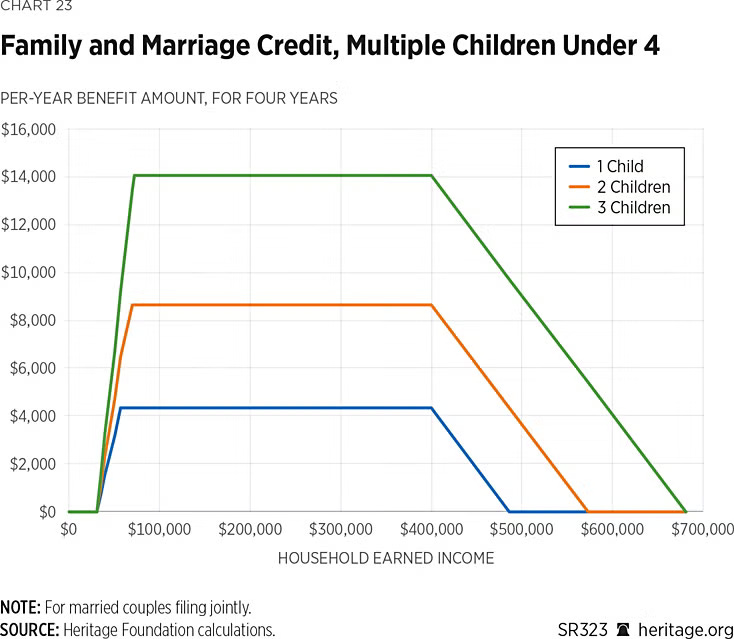
The Conservative Proposal To Take Money from Poor Single Moms and Give It to Married Couples

There is a video at the site linked.  How ever as you read through this remember that this is the group that wrote project 2025 and the main author of that Christian nationalist screed is Russell Vought who has a powerful position in the tRump administration.  This is entirely about pushing a fundamentalist Christian lifestyle and worldview on the US public with heavy emphasis on quiverful which ishave as many children as possible for Christian families most of whom in that movement lived impoverished on one income.  The idea is more kids butts in church pews now leads to more adult butts in those pews increasing tithes and money in the collection plates.  Church attendance has decreased steadily and this is designed to increase it again.   Plus it removes rights for women and LGBTQ+ families.   The parents get the money only if women / the mothers marry young, forgo an advanced education, stay out of the work place, and have child after child after child like a breeding stock farm animal.  It is only for the “right or correct types of families” and harms those who are not the “right” kinds of families.  Plus it is totally racist with the poor people being cut out of the funds.  The fact is minorities make on average far less than white families due to inherent racism and CRT, which is a real thing.  Hugs


https://www.throughline.news/p/the-conservative-proposal-to-take

The Heritage Foundation has an idea: Take from the poor and give to the rich

ICE Suffers Double Legal Blow Within Hours

https://www.newsweek.com/ice-suffers-double-legal-blow-within-hours-11610938

Mar 03, 2026 at 08:52 AM EST

Immigration and Customs Enforcement (ICE) faced a major legal setback as federal judges in New Jersey and Texas criticized the agency over prolonged detentions and repeated violations of court orders.

A federal judge in New Jersey wrote a withering critique of the agency and the Department of Justice (DOJ) over what he described as widespread violations of court orders in immigration matters. Meanwhile, in Texas, another federal judge ordered that an ICE detainee be given a bond hearing or be released, continuing a string of rulings challenging the agency’s mandatory detention policy.

Newsweek has contacted the Department of Homeland Security (DHS) for comment.  

A Department of Homeland Security agent wearing an Immigration and Customs Enforcement patch and badge at Royalston Square on January 22 in Minneapoli… | Jim Watson – Pool/Getty Images

These back-to-back rulings place ICE’s operations under increased court scrutiny amid ongoing tensions between immigration authorities and federal judges. Courts across the country have increasingly pushed back against what they view as procedural lapses or administrative overreach in detention practices under the Trump administration’s expansion of mandatory detention and mass deportations.

DHS has frequently criticized federal judges whose rulings slowed or blocked deportations, often labeling them as “activist judges.” Trump officials have argued that these judicial interventions interfere with enforcement priorities and complicate efforts to remove individuals quickly, framing the courts as obstacles to the administration’s immigration agenda.

New Jersey Judge Slams ICE Over Repeated Court-Order Violations

New Jersey District Judge Michael Farbiarz issued a strongly worded order pointing to dozens of instances in which ICE and the DOJ failed to comply with judicial directives concerning the detention and transfer of immigration detainees, according to a court filing reviewed by Newsweek.

The case involves Baljinder Kumar, who filed a habeas petition challenging his detention without a bail hearing. A January 26 injunction barred ICE from transferring Kumar out of the district, but the agency moved him to Texas on January 31, per the filings.

Farbiarz noted the scale of the problem, writing in a court opinion that “no-transfer injunctions issued by New Jersey district judges have been recently violated 17 times by the Respondents,” about “three every two weeks.”

The court acknowledged an investigation by the U.S. Attorney’s Office, which concluded that the transfers “occurred inadvertently due to logistical delays in communicating the court order to the relevant custodians or to administrative oversight of the court order,” and that ICE had “agreed to return the petitioner to the District of New Jersey to regain compliance.”

Court filings showed violations of more than 50 orders over roughly 10 weeks, including cases in which detainees were moved or deported despite explicit court prohibitions.

“The revelation that the Department of Homeland Security violated dozens of judicial orders in New Jersey is shamefully unsurprising. This isn’t just inadvertent or sloppy; the Trump administration has repeatedly flouted judicial orders and attacked the integrity of judges,” ACLU-NJ Executive Director Amol Sinha said in a statement.

Texas Ruling Orders Bond Hearing or Release for ICE Detainee

A federal judge in the Western District of Texas has ordered ICE to either hold a bond hearing or release a Mexican national who has been detained for more than eight months without a final removal order at the Camp East Montana detention facility, according to court filings.

On March 2, Senior U.S. District Judge David C. Guaderrama ruled that Victor Zamudio Sanchez’s continued detention without a hearing violated the Fifth Amendment’s Due Process Clause.

Guaderrama wrote in court documents, “Respondents, by detaining Petitioner without the opportunity for a custody redetermination hearing, have deprived Petitioner of his procedural due process rights.”

The judge directed that if Sanchez was not released by March 9, ICE must provide a bond hearing before an immigration judge.

At that hearing, the government would be required to prove, “by clear and convincing evidence, the dangerousness or flight risk justifying Petitioner’s continued detention,” according to the filing.

Sanchez, who has lived in the United States for more than two decades, has been held without a meaningful opportunity to challenge his confinement, the court said. Guaderrama emphasized that the prolonged detention, absent any individualized assessment, posed a serious risk of “erroneous deprivation of [Petitioner’s liberty] interest.”

The court found that Sanchez had been caught in a procedural limbo, with ICE failing to issue a timely Notice to Appear and repeatedly denying him a bond hearing. While the agency eventually initiated formal removal proceedings, the judge ruled that Sanchez’s indefinite detention violated the Fifth Amendment’s Due Process Clause, ordering ICE either to release him or provide a bond hearing.

The administration has interpreted federal law to allow ICE to hold many noncitizens without bond hearings, applying mandatory detention to people who entered the United States without inspection, even if they have lived in the country for years. This represents a departure from decades of practice, when many detainees could seek release while their cases proceeded.

A Nationwide Book Ban Bill Has Been Introduced in the House of Representatives

Again all this is about is a Christian nationalist desire to mimic Russia and remove all LGBTQ+ representation from the public view in the name of “protecting children from porn” as if just being or media representing LGBTQ+ people is pornographic and sexual.  These people feel anything not straight and cis is sexualizing and abusing children simply because they do not want the LGBTQ+ people to exist. Hugs

Side note.  Ron got home last night 3-2-2026 about 6 pm.  I made him a supper of a salad and two hamburgers with the fixings.  He was so happy.  I was happy.  We went to bed and snuggled which made Tupac who has snuggled me every night a bit unhappy but he pressed in from the other side.  All day Ron and I have been together, unloading the car, doing laundry, Ron started on the floors in the kitchen, and we are making a pork tenderloin, potatoes, brown gravy, carrots, and greenbeans for supper.  It is so good to have my husband home.  I understood why he had been gone for the better part of three months but it sure is grand to have him home.  I feel better, anxieties lower, and happy feeling up. Also for those worried I was not eating which I was not, I ate like a pig at a trough tonight, having a first heaping plate of everything and then going back for a second heaping plate.  The end of the second one was a bit challenging to finish but I did.  I offered to pick up the last bits of left overs but ron said he would do it.  I think he noticed I was trying to hide that I was swaying and wobbleing when I walked due to my pain levels. Hugs

Discussion of gender is not sexualization. Making books available to students that represent the diversity of their experiences and showcase the numerous ways to be a person in the world is not sexualizing them. Such an interpretation says far more about the adults and the perspectives they’re applying to books than it does about the books or their intended audiences.


Following this week’s State of the Union Address, House Republicans worked quickly to advance legislation to ban books from public schools nationwide. House Resolution 7661 (H.R. 7661), also known as the “Stop the Sexualization of Children Act” would modify the Elementary and Secondary Education Act of 1965 by prohibiting use of funds under the act “to develop, implement, facilitate, host, or promote any program or activity for, or to provide or promote literature or other materials to, children under the age of 18 that includes sexually oriented material, and for other purposes.”

The bill was introduced by House Representative Mary Miller (Republican, Illinois). 17 additional Representatives cosigned it.

H.R. 7661 is an anti-trans bill, and tucked within its provisions are those that ban books for those under 18 that “include sexually oriented material.” This is the same vague language used in numerous states across the U.S. to ban books from public schools and public libraries. This bill includes “lewd” and “lascivious” dancing as prohibited topics or themes. No such books for young readers exist, but facts don’t matter to a regime seeking total and complete control.

The bill goes on to further define “sexually oriented material” as anything broaching the topics of “gender dysphoria or transgenderism.” The latter is an intentionally harmful word used as a cudgel to harm trans people. Such a broad definition also ensures that this kind of bill could be applicable in any situation where it would benefit the banners. It isn’t a stretch to see a bill like this used to outright ban all books by or about LGBTQ+ people under the guise of it being “sexually oriented.”

Though this legislation would apply to institutions using funds from the Elementary and Secondary Education Act of 1965, there’s little question that it would expand to include all public libraries, not just those in public schools. We’ve already seen this very thing play out across the country.

Katy Independent School District (TX) banned any books about “gender fluidity” among its bans of “sexually explicit materials.” Just last month, the Texas school district outside Houston banned over 140 LGBTQ+ books under the policy. Greenville Public Library (SC) has banned all books for those under 18 with “trans” themes or topics, a ban later replicated and expanded in York County Library to include “gender identity” books (also in South Carolina). Greenville’s library was sued by the state’s chapter of the ACLU on behalf of several library patrons.

These local-level policies, alongside state-level policies like Iowa’s Senate File 496 and Idaho’s House Bill 710–both still working their way through numerous lawsuits–provided the roadmap for the proposal of federal-level book ban legislation. It was only a matter of time, and the ongoing onslaught of anti-trans legislation and rhetoric that has grown exponentially under the Trump-Vance regime made this the prime moment.


Discussion of gender is not sexualization. Making books available to students that represent the diversity of their experiences and showcase the numerous ways to be a person in the world is not sexualizing them. Such an interpretation says far more about the adults and the perspectives they’re applying to books than it does about the books or their intended audiences.

You can read the full text of H.R. 7661 here, including its list of cosponsors. Right now, your best way to have your voice heard about this hateful and discriminatory bill is to call your House representatives and urge them to veto this bill at every opportunity. There are years’ worth of resources from which you can pull about where and how all of these bills are calculated and targeted, and you can pull from the numerous ongoing lawsuits challenging similar bills and policies at the local and state level. Let your lawmakers know that you’re watching them and their voting records, especially if they’re among the roster of those proposing the legislation.

These bills aren’t about removing books; books are just one of the tools. These bills are about the complete and total erasure and removal of queer people from American life.


Don't be fooled by this bill's name– this is a book banning bill that will exclude LGBTQ books from all public schools NATIONWIDE.Call your congresspeople and tell them to VOTE NO on this nakedly bigoted book banning bullshit. http://www.congress.gov/bill/119th-c…

Maggie Tokuda-Hall (@maggietokudahall.bsky.social) 2026-02-26T19:43:17.091Z

The conflation of porn and LGBTQ (but specifically trans) issues is purposeful. It's part of the Project 2025 plan to criminalize LGBTQ+ ppl.It starts with books. It moves to bathrooms. Then it moves to govt IDs. We're in it already.You don't need to be an expert to see where this goes next.

Maggie Tokuda-Hall (@maggietokudahall.bsky.social) 2026-02-26T19:43:17.092Z

Nazi Republican Mary Miller who has quoted Hitler in the past now wants to ban strippers in public schools…and she's all in with banning any book that dares mention LGBTQ+ issues…www.lgbtqnation.com/2026/02/gop-…

Joe "Damn Right I'm Antifa" Bacon (@josephebacon.bsky.social) 2026-02-27T02:30:45.421Z

Judges question Pam Bondi’s social media posts on Minnesota arrests

First the judges started questioning the truth of government officials and attorneys.  Then the judges accused the DOJ / ICE of ignoring court rulings and orders.  Now in this case Bondi’s posts clearly violate a judges orders and the constant posting on social media is designed to color or bias the public and potential jurors.   The coruptin of this administration if beyoung anything we have ever seen in the US.  I just read that Kash Patel has ordered the elete tatical teams around the country to rotate providing complete security and transportation.  Not the regular FBI but the strategic elite teams. Hugs

“The government failed to respect Ms. Flores’s dignity and privacy, exposed her to a risk of doxxing, and generally thumbed its nose at the notion that defendants are innocent until proven guilty. The post also directly violated a court order sealing the case,” the judge wrote. “Notwithstanding, the government now seeks an accommodation from the Court that it blatantly failed to give Ms. Flores and her codefendants.”


https://www.politico.com/news/2026/02/27/pam-bondi-minnesota-arrests-00805316?_bhlid=fc73e4f71e1d20238e2ebc88c873317d213e9e99&utm_campaign=the-smile-3-3&utm_medium=newsletter&utm_source=www.readthesmile.com

The attorney general’s posts included names and photographs of the defendants.

Attorney General Pam Bondi listens as President Donald Trump speaks.

Attorney General Pam Bondi’s posts made the government’s request for court-ordered discretion for its agents “eyebrow-raising, to say the least,” one judge wrote. | Allison Robbert/AP

By Josh Gerstein

Two federal judges have raised concerns about Attorney General Pam Bondi’s use of social media to publicize a wave of arrests last month of people charged with interfering with federal officers during an immigration enforcement surge in Minnesota.

In an order earlier this week, Magistrate Judge Dulce Foster said Bondi’s posts on X including the names and, in many instances, photographs of the defendants shortly after their arrests “violated a court order” placing those cases under seal.

Foster leveled the criticism in connection with the prosecution of Nitzana Flores, a South Haven, Minnesota, resident accused of assaulting two Border Patrol officers during a scuffle last month in Minneapolis surrounding the arrest of another person for allegedly ramming a government vehicle.

The judge said Bondi’s posting of the names and arrest photos undercut prosecutors’ request for an order to prohibit defense attorneys from publicly disclosing personal information about immigration agents involved in the case against Flores. The requested order would also prohibit any defense counsel from sharing that information with their client.

Foster said Bondi’s social media posts made the government’s request for court-ordered discretion for its agents “eyebrow-raising, to say the least.”

“The government failed to respect Ms. Flores’s dignity and privacy, exposed her to a risk of doxxing, and generally thumbed its nose at the notion that defendants are innocent until proven guilty. The post also directly violated a court order sealing the case,” the judge wrote. “Notwithstanding, the government now seeks an accommodation from the Court that it blatantly failed to give Ms. Flores and her codefendants.”

Foster modified the government’s proposal by broadening it to cover any party, victim or witness, while narrowing it to details such as phone numbers, residential addresses, email addresses and dates of birth. The judge also declined to restrict what evidence Flores can see and declined to prohibit disclosure of identities, which would include names and photographs.

At a hearing in a separate Minneapolis case last week, another magistrate judge, Shannon Elkins, directed prosecutors to “address whether the public posting of photographs violated the Court’s sealing order.” The government missed a deadline Tuesday to respond. Elkins later agreed to extend the deadline until Monday.

Justice Department spokespeople did not respond to requests for comment, but there are signs that Bondi got the magistrates’ messages.

On Friday, Bondi was careful not to jump the gun when announcing a new, massive wave of arrests in connection with a disruptive immigration-related protest at a St. Paul church last month. The new indictment Bondi announced added 30 defendants to the nine people already charged, who include former CNN anchor Don Lemon.

“YOU CANNOT ATTACK A HOUSE OF WORSHIP,” Bondi wrote in an X post that went up within a minute of the indictment being unsealed in the court’s online docket. “If you do so, you cannot hide from us — we will find you, arrest you, and prosecute you. This Department of Justice STANDS for Christians and all Americans of faith.”

While booking photos or mugshots are public in many states, the federal government has traditionally cited privacy concerns to resist making them public in federal criminal cases. In 2012, the Obama administration instituted a nationwide Justice Department policy to refuse release of such photos, except where necessary to track down a fugitive or for investigative reasons.

That policy appears to have been abandoned after President Donald Trump returned to office last year. The Justice Department has for decades routinely publicized the names, ages and hometowns of people arrested by including that information in press releases.

Then And Now

Now

https://www.theguardian.com/world/live/2026/mar/02/us-israel-war-iran-live-updates-attacks-strikes-tehran-lebanon-beirut-hezbollah-dubai-latest-news

Middle East crisis liveUS-Israel war on Iran

Earlier, Donald Trump laid out US objectives, saying mission could go on for four-five weeks, adding US has ‘capability to go far longer’

From 46m ago 17.01 EST

US urges citizens to immediately depart over a dozen Middle Eastern countries

The US state department has urged Americans to immediately depart more than a dozen Middle Eastern countries amid US-Israeli strikes against Iran.

US citizens were urged to depart using commercial means from BahrainEgyptIranIraqIsrael, the [occupied] West Bank and GazaJordanKuwaitLebanonOmanQatarSaudi ArabiaSyriaUnited Arab Emirates and Yemen, according to Mora Namdar, the department’s assistant secretary for consular affairs.

Hundreds of thousands of travellers are currently stranded in the Gulf states, as the airspace over some of the world’s busiest international airports, including Dubai and Abu Dhabi, closed over the weekend.

Thousands of flights cancelled as world faces worst travel chaos since Covid crisisRead moreShare

Updated at 17.31 EST 17.44 EST

Israel says it is working to intercept new missiles launched from Iran

The Israeli military has said it has detected incoming missiles launched from Iran and its defensive systems are working to intercept the threat.Share

Updated at 17.45 EST 17.41 EST

Chris Stein

The US Senate’s Democratic minority leader Chuck Schumer said a briefing from Trump administration officials about the US war with Iran “raised many more questions than it answered”.

“Look, a whole lot of questions were asked. I found their answers completely and totally insufficient,” Schumer told reporters as he exited the meeting. He departed without taking questions.

US secretary of state Marco Rubio as well as CIA director John Ratcliffe are among those briefing Congress leaders in a classified facility in the Capitol.

A reminder that you can follow our US politics live blog for more US-focused reaction and developments:

Rubio says US ‘preemptively’ attacked Iran after learning Israel was about to strike as Democrats decry ‘Trump’s war’ – liveRead more

(snip-go to The Guardian, because they are running live, and things keep happening.)

=====

Then

https://www.theguardian.com/world/2011/feb/25/thousands-join-day-of-rage-across-middle-east?CMP=share_btn_url

Thousands join ‘day of rage’ across the Middle East

This article is more than 15 years old

 In Iraq, six killed as frustration erupts over corruption
 Yemen holds its biggest pro-democracy rally
 Egyptians demand accelerated reforms

In Yemen’s capital, Sana’a, an anti-government protester chants slogans demanding the resignation of President Ali Abdullah Saleh. The president ordered security services to protect protesters. Photograph: Muhammed Muheisen/AP

Protests erupted in cities across the Middle East and North Africa. At least six people were reported killed and dozens injured in Iraq; thousands took to the streets in the Yemeni capital, Sana’a; and Egyptians gathered in Cairo’s Tahrir Square to demand an accelerated reform programme.

Iraq

Anger over corruption and abysmal basic services erupted in a “day of rage”, with the most serious clashes in Mosul and Hawija, in the north, and Basra in the south. At least six people were killed – three in Mosul and three in Hawija – and 75 injured in clashes with security services as protesters tried to attack government buildings.

Thousands of people made their way to the city’s Tahrir Square, but soldiers had closed it off with razor wire, using percussion grenades and firing in the air in an attempt to disperse crowds.

Lina Ali, 27, told Reuters: “The education system is bad. The health system is also bad. Services are going from bad to worse.” Protesters complained of high unemployment, a shortage of drinking water and frequent power cuts.

In Basra, the city’s governor, Shaltagh Abboud, said he would resign after 18 people were wounded in skirmishes between the 4,000 protesters and state security. A curfew was imposed until 6am tomorrow. There were also clashes in Falluja and Nassiriya.

Nouri al-Maliki, the prime minister, warned demonstrators they would become victims of al-Qaida and pro-Saddam violence.

Muntadar al-Zaidi, the Iraqi journalist who threw his shoes at George Bush, was arrested in Baghdad after travelling from Beirut to take part in the Day of Rage.

Yemen

Tens of thousands of protesters in Sana’a called for an end to the 32-year reign of President Ali Abdullah Saleh. It was the biggest pro-democracy rally in Yemen’s recent history. But small, yet violent, protests have been taking place across the country since Egypt’s Hosni Mubarak resigned two weeks ago.

Local media reported 30,000 anti-government demonstrators in Sana’a and more than 100,000 nationwide. Students, tribesmen, opposition activists and young professionals flooded the streets around Sana’a University, where protesters have been camped out since Sunday. “The people want the regime to fall,” they shouted, rising from their knees after a Friday prayer to mourn the deaths of two men shot dead on Tuesday by pro-Saleh supporters. The protest was peaceful, though at times tense. Protesters want better living conditions as well as political reform.

One banner read simply: “Look at the gap between the rich and poor.”

Riot police who tried to seize an anti-government protester had to fire in the air to dispel angry students demanding his release.

A few miles away, state media were out in force to film 10,000 middle-aged men, many carrying batons, marching up and down the streets yelling: “Saleh means stability.” These government loyalists, including impoverished tribesmen bussed in from far away, have been in Sana’a’s Tahrir Square for more than a month, holding rallies for which they have been given food, drink, and the placards, and accommodated in giant beige marquees. Anti-government protesters claim the loyalists are balataj, hired thugs, but Yemeni authorities deny any connection with the armed men.

Saleh has told his security forces to protect both sets of demonstrators and prevent any further clashes between them.

Egypt

Activists returned to Tahrir Square in their thousands to demand a faster pace to reforms. They want a new cabinet to replace one that includes many figures from the Mubarak regime. According to Al Jazeera they singled out the prime minister, Ahmed Shafik, who, they said, was hand-picked by Mubarak; and they want the former president, believed to be holed up in his Sharm el-Sheikh villa, to be put on trial and held accountable for his 31 years of rule,. They also want political prisoners released.

The ruling military council has promised elections within six months. “We do not want Shafik any more, even if they shoot us with bullets,” activists chanted. “Revolution until victory, revolution against Shafik and the palace.”

Tunisia

In the centre of Tunis, tens of thousands demanded the resignation of the prime minister, Mohamed Ghannouchi, seen as an ally of the ousted president. The uprising that forced former president Zine al-Abidine Ben Ali to flee on 14 January after 23 years in power was the catalyst for regional revolt. “Shame on the government!” and “Ghannouchi step down,” they shouted. Witnesses said it was the biggest protest since Ben Ali’s departure, when demonstrations were banned. Activists also protested against the bloody crackdown by forces loyal to Libya’s Muammar Gaddafi. Thousands of Libyans have fled to Tunisia.

Jordan

In the capital, Amman, 5,000 protested, demanding political reform. “Reform has become a necessity that cannot wait,” said Sheikh Hamza Mansour, the head of the Islamic Action Front, the country’s largest opposition group, at a rally. “It’s the demand of all Jordanians,” he added. Protestors chanted: “The people want to reform the regime”, “we want a fair electoral law”, and “people want an elected government”.

Bahrain

There were tens of thousands of anti-government protesters in Manama, adding to pressure for sweeping democratic change during two weeks of demonstrations in the strategic Gulf island kingdom. At least two marches converged on Manama’s landmark Pearl Square, the focal point of the uprising – the largest show of opposition strength so far.

Security forces made no immediate attempt to halt the marchers in an apparent sign that Bahrain’s rulers do not want to risk more bloodshed and denunciations from their Western allies.

Bahrain is the first Gulf state to be thrown into turmoil by the Arab world’s wave of change. The government had declared Friday a day of mourning for the seven people killed in clashes since 14 February.

Many protesters waved Bahrain’s red-and-white flag, chanting: “No dialogue before the government is dissolved,” and “For Bahrain’s future, we are not afraid to be killed.”

One procession split into separate groups of men and black-robed women, passing skyscrapers adorned with images of the nation’s ruling family.

Some demonstrators called on the US to do more to support their cause. “These people are fighting for freedom,” said Hussain Isa al-Saffar, 25. “The US … should be supporting freedom here.”

The White House said the national security adviser, Tom Donilon, spoke with Bahrain’s crown prince, Salman bin Hamad bin Isa Al Khalifa, on Thursday stating the US’s support for reforms through dialogue with opposition groups. The US chairman of the joint chiefs of staff, Admiral Mike Mullen, also held talks with Bahraini leaders Thursday.

In Pearl Square, a massive Bahraini flag was hoisted along with the phrase “martyrs’ square” in Arabic, a reference to those killed by security forces. Graphic photos of the dead were posted in the square, and a noose was fashioned around a portrait of Bahrain’s prime minister.

Palestine

The Palestinian Authority (PA) had authorised a Day of Rage to protest against the US veto of a UN security council resolution condemning Israeli settlements, but that was called off without explanation.

An unofficial protest on Thursday in Ramallah, the main city in the West Bank, demanded unity between the two main factions, Fatah and Hamas, as well as “liberation”.

Analysts say the Fatah-dominated PA and Gaza’s Hamas government are nervously watching uprisings elsewhere in the region. Palestinians in both Gaza and the West Bank complain of repression.