Erin In The Morning is a reader-supported publication. To receive new posts and support my work, consider becoming a subscriber.
In the latest episode of their podcast A Touch More, all-star athletes Megan Rapinoe and Sue Bird denounced the International Olympic Committee’s new rule requiring sex testing for athletes competing in the women’s category.
The anti-trans policy will subject athletes competing in the women’s division—and only women’s, not men’s—to invasive sex testing to determine whether they have an SRY gene. Why this is where the International Olympic Committee chose to draw the gender line is arguably arbitrary.
No major medical organization endorses this litmus test as a reliable marker of athletic skill or “biological sex.” Even the scientist who discovered the SRY gene has slammed this practice in sports, saying “science does not support” this “overly simplistic” approach. Rather, it’s an arbitrary line in the sand used to cram unscientific ideas about gender and sex into manmade, binary boundaries.
Nonetheless, if a woman tests positive for the gene, she could be forced to compete in the “male” category. This has had dire consequences the last few times it was deployed against women’s athletes. From 1992 to 1999, cisgender women were forced into testing and found out, on the world stage, that they had intersex conditions they never knew about. The spectacle led to ostracization, disqualification, and at least one suicide before such testing was abolished.
“What we’re doing is subjecting everybody, all women and all people who are identifying as women, to this really invasive testing that only to me just says like, oh, so we’re just trying to whittle it down to a certain type of woman,” Rapinoe said.
Rapinoe is one of the most high-profile athletes in the country, a soccer player with three Olympic competitions under her belt and a decorated career in the U.S. Women’s National Team (USWNT). Bird, meanwhile, is among the most successful athletes in history—the retired WNBA legend spent her 20-season professional career as a point guard for the Seattle Storm, and is a record-breaking Olympian in her own right. The athletic power couple has been engaged since 2020. Together, they’ve long been outspoken advocates for the LGBTQ community.
Rapinoe connected the anti-trans vitriol in sports to the right wing’s broader attacks on queer and trans people, calling the push for sex testing “hateful.”
“They sort of like, lost the battle on gay marriage,” Rapinoe said. “So, it’s just like, we’re going to have this whole campaign for all these years to just hate trans people, which is such a small percentage of the population.”
Countless women, cisgender and transgender alike, have faced harassment and persecution because of the anti-trans athlete witch hunt.
“It’s just a total acquiescence to the Trump Administration,” Rapinoe said. “It’s just horrible, and I’m just sickened by it.”
The IOC rule is part of a broader pattern. In the United States, sports bans have served as a Trojan Horse for more sweeping anti-trans policies. The DOJ’s recent lawsuit over “women’s sports,” for example, also demands that transgender students be banned from bathrooms and locker rooms.
“Can we please stop obsessing over trans people and, I don’t know, maybe focus our time, energy, and resources into real problems women’s sports face?” Bird chimed in. She rejected the idea that sex testing, as the IOC claims, “protects women,” instead calling it a “fear-mongering” political ploy meant to generate support from conservative voters.
“That’s all this is,” Bird said. “If you crack this door open, it gets blown open. You’re now policing women’s bodies across the board.”
Erin In The Morning is a reader-supported publication. To receive new posts and support my work, consider becoming a subscriber.
2. Each of the following moves would consolidate a candidate’s base, except:
A. Expressing agreement with the great replacement theory
B. Expressing solidarity with the Proud Boys and January 6 insurrectionists
C. Expressing enthusiasm, which was a big no-no in 2004 Iowa, apparently
3. Which violation of American values would cause the electorate to doubt the candidate’s fitness for the presidency?
A. Violating the human rights of families by tearing children away from their parents at the border
B. Violating the bodies of twenty-six women
C. Violating the unspoken decibel limit on cheering at an event meant for cheering, which is definitely a good rule that applies equally to everyone
4. If exposed to the public, which revelations would instantly decimate campaign fundraising?
A. The candidate being caught with boxes full of state secrets next to their toilet
B. The candidate being caught sleeping with a porn star just after his wife had a baby
C. The candidate being caught up in a moment, just a fleeting moment, which at the time seemed normal, not the end of everything the candidate had ever worked for since the candidate was twelve
5. Which of the following statements warrants being aired 633 times by national news outlets in a span of four days?
6. Which of the following audio recordings would be so damaging that it becomes a years-long political meme and defines the candidate for the rest of their life?
A. A recording where the candidate extorts Ukraine for election assistance
B. A recording where the candidate brags about grabbing women “by the pussy”
C. A recording where the mics picked up the candidate but not the roar of the crowd, which, if you were there, was really loud and made screaming much more normal in context, actually
7. Which action would cause an immediate, double-digit drop in the polls?
A. Starting a movement to hang the vice president
B. Starting a coup d’etat attempt against the United States of America
C. Starting to say “yee-haw” because it felt so right after rattling off the upcoming state primaries, but then realizing halfway through the first syllable that, dammit Howard, someone from Vermont can’t pull off “yee-haw,” and then panicking and switching to “yeah!” or “yay!” all at once, but it was too late and a lump in your throat made it come out like the death knell of a tortured bobcat
8. True or False: It makes perfect sense that the twenty-five-year abortion record of the presidential candidate who ended Roe v. Wade has less Wikipedia content than the three-second audio record of a candidate who just, you know, was pumped up in the face of a setback in the Iowa caucuses, so pumped that he lost control of his body in a burst of unvarnished optimism:
A. True
B. False
C. There has not been a difference between truth and falsehood, right and wrong, or sanity and insanity since early 2004
9. Which charges would provoke widespread calls to suspend a campaign?
A. Being charged in New York with thirty-four felony counts for covering up sex with a porn star
B. Being charged in Florida with forty felony counts for stealing state secrets and lying to the FBI
C. Being charged in Georgia with ten felony counts for conspiring to steal an election
D. Being charged in DC with four felony counts for trying to stop the electoral vote certification in Congress in order to seize power from the lawful president-elect, Joe Biden, in violation of the US Constitution and the peaceful transfer of power
E. Being charged with all eighty-eight felony counts above, all in a five-month period
F. Being charged with a zeal to oppose the invasion of Iraq and establish universal health care, which looks pretty good these days if you ask some people but was apparently too sincere for the petty, vindictive shitheads who actually vote in this country.
10. Which of the following statements would make voters question a presidential candidate’s mental capacity?
Scottie and I each post from Pro Publica’s excellent news reportage; especially news that gets the barest mention everywhere else. Their excellent reporters can use a hand now. Please read and sign:
This is weird even for Matt Gaetz. The idea of the government making human-alien hybrids. What is this for? Who is it for? If Gaetz is not lying which I think he is, some nut job passed a conspiracy off on Gaetz. Hugs
James Prigioni makes popular gardening videos on YouTube. In one, he wanted to see if he could grow a whole tomato plant by planting the seeds from a tomato on a McDonald’s burger. He picked up a Deluxe Quarter Pounder with cheese, pulled out a tomato slice, and removed two seeds. After rubbing the seeds on a paper towel to remove the protective coating, which can inhibit sprouting, they were ready to plant.
Trying out different seed-planting methods
But like any good scientist, Prigioni wanted to try a different method for testing McDonald’s tomato seeds. So he pulled a slice of tomato from a second Quarter Pounder and, instead of extracting the seeds, planted the entire slice.
With the help of a heat mat and a grow lamp, both sets of seedlings germinated and sprouted in soil-filled red Solo cups in about a week. After they were fully established, Prigioni separated the plants so they could thrive individually before being planted outside.
He planted one of the plants in the ground outside and another in a 5-gallon bucket. He then showed how he culled the lower leaves as they developed blight and used a tomato cage to support the plants as they produced fruit and grew heavier. He also added extra fertilized soil and mulch to the bucket plant.
The harvest was unexpected
After three months, the plants were producing abundant fruit. The bucket plant didn’t perform as well as the in-ground plant, which Prigioni said was due to insufficient watering during very hot days. The bucket plant also ripened faster, likely due to the stress it had been under. Still, it was an impressive harvest, especially for a plant that started on a McDonald’s burger.
The in-ground McDonald’s plant was even more incredible, with dozens of tomatoes dripping from it.
“I expected this tomato to grow,” Prigioni said, “but I did not expect this.”
The fruit from both plants tasted good and sweet, he said. By the fourth month, the in-ground plant was starting to struggle with its health, but not with its fruit production.
“The plant had so many tomatoes on it that it seemed like it was having a little difficulty ripening that much fruit at one time,” Prigioni said. “I mean, I have had some plants with a lot of tomatoes on them, but never in my life have I seen a single tomato plant with this much fruit on it. I was completely blown away.”
How the McDonald’s tomatoes compared
He said one of his favorite parts of the experiment was seeing what kind of tomatoes would grow from the seeds. He thought it might be a beefsteak variety, but it turned out to be a Roma type. However, he surmised that the McDonald’s tomato was likely a hybrid, based on its ripening characteristics.
Prigioni also shared how the McDonald’s tomato plants compared with his other tomato plants.
“In another area of the garden, I grew Roma tomatoes that I got from Lowe’s, and I planted them at the same time as the McDonald’s tomatoes,” he said. “The harvest from them wasn’t quite as large, but the fruit ripened way more evenly, and I was able to harvest a lot more fresh fruit right off the vine that was ripe.”
“Overall, I was shocked with the level of production,” he continued. “And this is probably my favorite experiment that I’ve ever done. I mean, to be able to take a cheeseburger, grab a tomato from it, then grow a tomato plant, and then harvest pounds and pounds of tomatoes from it is just such a unique and refreshing experience.”
Perhaps an unexpected result, but a great way to challenge our assumptions and demonstrate the power of nature, even in the context of fast food.
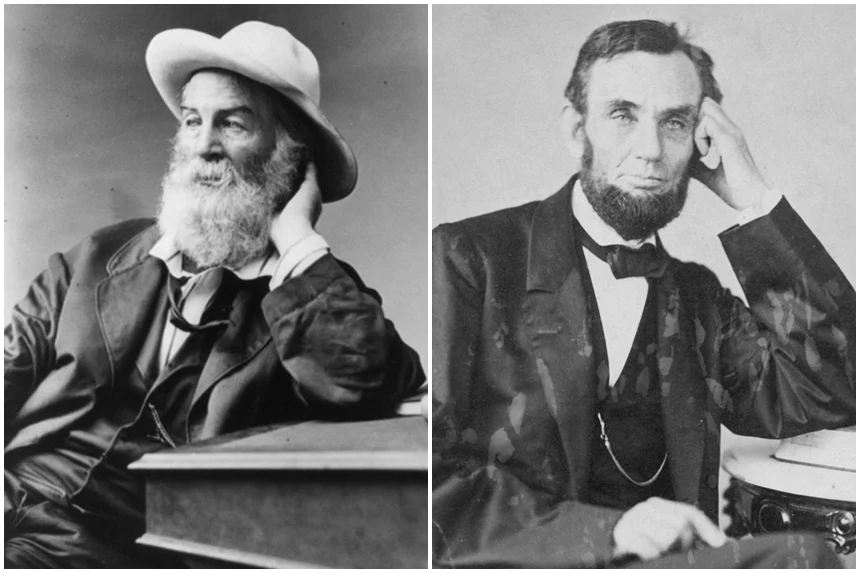
Abraham Lincoln’s faith in the Declaration of Independence ultimately influenced Walt Whitman’s harsh but optimistic appraisal of the American experiment.
Walt Whitman and Abraham Lincoln (Library of Congress)
“The United States are destined either to surmount the gorgeous history of Feudalism, or else prove the most tremendous failure of time,” wrote American poet Walt Whitman in his 1871 work, Democratic Vistas. Despite writing in the wake of a brutal civil war and a failing Reconstruction Era, Whitman remained optimistic. “Not the least doubtful am I on any prospects of their material success.”
Known more for his poetry, exemplified by Leaves of Grass (1855), Whitman’s dark 1871 treatise on the nation remains a harsh but ultimately optimistic appraisal of the American experiment. It serves as a useful tool for thinking about the nation’s current state on the 250th anniversary of the Declaration of Independence.
Whitman’s revolutionary patriotism had long been part of his worldview. He celebrated the Declaration of Independence and the Revolution in the preface to Leaves of Grass, noting that a poet must “enter the essences of the real things and past and present events,” among them “the haughty defiance of ’76, and the war and peace and formation of the constitution.”
But for all his celebration of the Declaration and the nation’s founding, he did not mince words regarding the nation’s failings. He wrote of a “hollowness” at the center of American life at the time, calling the business classes depraved and the government saturated in corruption. (snip-go see the rest!)
Donald Trump is threatening to bomb Iran back to the Stone Age, which, if he does, would be a war crime.
Trump’s chosen war is with the government of Iran, not the people, yet he continues to threaten to destroy its infrastructure. The more Donald Trump and Pete Hegseth brag about their success in the war, the more it seems that Iran fights back.
Trump tells us that the war is won and that Iran’s ability to wage war is nearly depleted if not already destroyed, yet missiles still rain on Israel and our other allies in the Gulf. And if Iran doesn’t have any weaponry left, then how did they shoot down two American jets? If the war is already won, then why are we still fighting? (snip-click on the title to get the rest!)
The problem is the money AIPAC uses to either entrap politicians and these podcasters / influencers or uses its money to threaten and punish them. Hugs
This is a great clip on the situation with the democratic party, democratic leadership, and the democratic message. Also the polls on democratic leader ship is in the negative numbers. One reason is the Israeli genocide in Gaza and the minority leader in the Senate, Chuck Schumer has said his number 1 priority is making sure the left keeps supporting israel. The democratic party leadership has been totally captured by the big money donors, corporations, and large lobbying groups like the Israeli lobby AIPAC. It doesn’t make the people feel they are important to him or the party leaders. Hugs
The largest medical association in the United States supports gender-affirming care — a stance it has reiterated in different ways over the last 10 years. But as Republicans press leading medical organizations on health care for transgender youth, the American Medical Association (AMA) is the latest group caught between political rhetoric and the complex realities of specialized care that few people receive.
As patients, families and doctors navigate this care in an increasingly confusing and hostile landscape, what medical groups say matters. But lately, what they’ve had to say — and how politicians interpret it — has only caused more uncertainty.
The AMA’s stance was already in question after a January meeting between leaders of major medical groups and Dr. Mehmet Oz, the head of the Centers for Medicare and Medicaid Services. After that meeting, which was first reported by The New York Times, one group in attendance — the American Society of Plastic Surgeons (ASPS) — muddied the waters about whether it had taken a more restrictive stance on gender-affirming care.
Questions soon followed for the AMA, the nation’s most prominent organization representing doctors.
Twenty Republican state attorneys general are pushing for the AMA to broadly oppose gender-affirming care for minors, in response to news coverage about their recommendations around youth surgeries. The attorneys suggest that the AMA may be violating state consumer protection laws by confusing, or even misleading, medical providers and patients about their stance. They mention wanting to “avoid a formal investigation” into the issue.
The attorneys, led by Steve Marshall in Alabama, wrote a letter in February asking whether the group recommends hormone therapy or puberty blockers to treat gender dysphoria in minors.
“If you agree that there is insufficient evidence to support using surgical interventions to treat gender dysphoria in minors — as your recent statement indicates — we do not understand how you can find that there is sufficient evidence to support using hormonal interventions to treat gender dysphoria in minors,” their letter reads.
This is an escalation of a familiar tactic, said Khadijah Silver, director of gender justice and health equity at Lawyers for Good Government. And if it works, it will be a major weapon in the political fight to delegitimize gender-affirming care, they said.
“If you can convince the public that they have shifted stance, that’s extremely powerful,” they said, referring to the AMA.
In some ways, that impact is already being felt.
In a recent congressional hearing on rising health care costs, the board of trustees chair for the American Medical Association was asked about how patients across the country are struggling to find doctors. Two hours into the hearing, he was also asked about gender-affirming care for trans youth — a topic that affects few Americans, but takes up a lot of political air.
Rep. Erin Houchin, a Republican from Indiana, asked why the medical group changed its position on surgeries for trans youth.
But the AMA maintains that it has not changed its position.
“In surgery and minors, our belief is that it should generally be deferred until adulthood. But, we respect the physician-patient-family relationship in determining that,” Dr. David H. Aizuss answered in response to the question from the congresswoman.
That exchange took only a few minutes out of a hearing that spanned the gamut of crises facing the U.S. health care system, like skyrocketing insurance premiums and a worsening physician shortage. But it represents a growing tension between Republicans and medical groups, as elected officials who oppose gender-affirming care push for major health care organizations to do the same.
The American Medical Association declined to comment on the attorneys general’s letter, which had asked for a response by March 25. In a broader statement, the medical group said it supports gender-affirming care.
“We support evidence-based treatment for medical care, including gender affirming care,” an AMA spokesperson said in an email. “Currently, the evidence for surgical intervention in minors is insufficient for us to make a definitive statement. In the absence of clear evidence, surgical interventions in minors should be generally deferred to adulthood. Treatment decisions should be made between the physician and the patient (and family) based on the best medical evidence and clinical judgment.”
That position aligns with the World Professional Association for Transgender Health (WPATH), an authority on medical care for trans people. WPATH recommends that patients generally wait until adulthood before seeking surgery. Trans youth rarely undergo surgery of any kind; of the small number performed on adolescents, the majority are mastectomies.
If an adolescent does need surgery, WPATH recommends they meet extensive criteria — including a full understanding of reproductive side effects, a year’s worth of hormone therapy, sustained gender incongruence, plus emotional and cognitive maturity.
The questions surrounding surgery come on the heels of the American Society of Plastic Surgeons’ response to the January meeting with Oz. In what the Times described as a “tense” meeting, Oz pressed leaders of organizations including the AMA and the ASPS on why they recommend gender-affirming care for trans youth. At that meeting, the surgeons group said it would be changing its position, per the Times.
Weeks after the meeting, ASPS released a nine-page statement saying that gender-affirming surgery should be delayed for minors until a patient is at least 19. The surgeons’ group cited insufficient evidence that benefits for surgery outweigh risks, and pointed to a controversial report created by the Trump administration to back its position.
The surgeons group noted that it still opposes criminalization of such medical care. The Trump administration celebrated the announcement.
“Today marks another victory for biological truth in the Trump administration,” said former Deputy Health and Human Services Secretary Jim O’Neill, in a press release. Oz, who has compared gender-affirming care for minors to lobotomies, applauded the American Society of Plastic Surgeons “for placing itself on the right side of history.”
In the following days, the surgeon’s group appeared to backtrack. The American Society of Plastic Surgeons reportedly told NPR that its position “does not include a blanket recommendation for surgery for minors.” The ASPS did not respond to a request for comment on this story.
The AMA has had its own trouble communicating its position. In a recent internal newsletter from the board chair, the association said that its policy on gender-affirming care has not changed at all; and that it requested a correction from The New York Times in response to the outlet’s coverage of its initial statement on youth surgeries. However, the Times says it has received no such requests.
This back-and-forth is taking place against an intense political backdrop: Six states have made it a felony for doctorsto provide gender-affirming care to trans youth. Hospitals across the country have shuttered gender clinics in response to pressure from the administration. As a result, some young patients are cut off in the middle of treatment and medical professionals are grappling with how the law impacts them.
And despite ample news coverage, gender-affirming care is still not widely understood.
Very few transgender youth seek and access surgeries. More rely on hormone therapy and puberty blockers to treat gender dysphoria, which is a medical condition that can cause significant distress for trans people.
Puberty blockers delay the hormones that cause kids to go through puberty, which can be an intense and emotionally fraught time for trans youth. Many families say this treatment is crucial for their child’s wellbeing and prevents distress caused by dysphoria. There are potential risks, like decreased bone density, which is monitored by medical providers. Some providers recommend weight-bearing exercise or diet optimization to boost calcium and vitamin D levels while on puberty blockers.
Hormone therapy, which involves taking testosterone or estrogen to cause physical changes that align one’s body with their gender identity, is another treatment that some trans youth receive to alleviate dysphoria. As with puberty blockers, clinics require a mental health assessment as well as parental or guardian consent for the treatment.
The Endocrine Society and the American Academy of Pediatrics are under federal investigation over their support for gender-affirming care. Both medical groups have sued, as the government seeks information to determine if they have made “false or unsubstantiated representations” regarding the care.
The attorneys’ general letter to the American Medical Association is leveling up that pressure on medical groups, Silver said.
“Because the care is so politicized, any association that stands up and asserts its support for physicians who provide the care, will be made an example of,” they said.
Ketanji Brown Jackson stood out from several justices appearing to be skeptical of the president’s argument against the Citizenship Clause in the 14th Amendment.
As the Supreme Court continues to debate President Donald Trump’s case to end birthright citizenship, Justice Ketanji Brown Jackson is going viral after clips of her questioning Trump’s interpretation of the 14th Amendment began circling the internet.
(embedded social media post-see it on the page)
As we previously told you, the high court heard arguments on Wednesday (April 1) for the landmark case. Jackson stood out from several justices, appearing to be skeptical of the president’s argument against the Citizenship Clause in the 14th Amendment. Specifically, the first Black woman Supreme Court Justice grilled Solicitor General D. John Sauer about how enforcing Trump’s January 2025 executive order would actually work.
“How does this work? Are you suggesting when a baby is born people have to present documents,” Jackson asked. “Is this happening in the delivery room? How are we determining when or whether a newborn child is a citizen of the US under your rule?”
The Root reported that the president attempted to axe birthright citizenship on his first day back in the White House and was met with serious backlash from folks who saw the order as an attack against immigrants and an attack on the U.S. Constitution.
Online, folks praised Jackson for getting straight to business. “Had his a** sounding like he just smoked a whole carton of Newport box short cigarettes,” @PatrickJnmarie said.
(embedded post, visible on the story page)
Pew Research estimated that 320,000 infants were born on American soil to immigrant parents without authorization in 2023. Under Trump’s order, babies of millions of migrants who enter the country– legally or not– wouldn’t automatically be eligible for citizenship. This is a complete turnaround from the way the U.S. has viewed birthright citizenship since 1868.
“This isn’t just a misstep it’s a fundamental misunderstanding of the Fourteenth Amendment to the United States Constitution,” @Popular_EY said.
Other folks online gave President Joe Biden credit for choosing Jackson for her position on the court. “Shoutout to President Joe Biden. You did good, kid,” @CarolDright said. “God love ya.” @WmAG_V agreed, writing, “Joseph Robinette Biden Jr did his MF job when he got Justice KBJ on the bench!”
Jackson became the first Black woman to serve as Supreme Court justice back in 2022. Since then, she’s positioned herself as a liberal leader unafraid to go against her fellow justices on the bench. “Justice Ketanji is head and shoulders above trumps DEI pics on the Supreme Court,” @ClaudetteGGibs1 tweeted.
(embedded tweet or whatever they are on X, on the story page)
But while many Black folks rallied behind Jackson’s Wednesday remarks, she was also met with conservative and MAGA supporters like Fla. Gov. Ron Desantis, who called her bluff.
Still, it seems Jackson is supported by plenty of Black Americans rooting for her. “Ketanji Brown Jackson has more real, hands-on experience in the justice system than any current Supreme Court Justice—including the Chief,” @lab_ftwtx pointed out. “She’s been a public defender, a trial judge, and an appellate judge. She’s actually worked at every level, not just one side of it. Facts.”