Enjoy!
Josh Day Next Day!
Enjoy!

Enjoy!
These past months have been difficult. I was so very shocked to see the death of Renee Good, how chaos and hate seem to be the republican drug of choice, and how horrible it is to consider that we have but begun this 4-year trip through hell. Recently somehow this song found its way into my youtube playlist. All I could think as these young voices invaded my troubled thoughts was what are we leaving for them?
America the Beautiful followed, a song we all know if not by memory then certainly we recognize it when we hear it sung before the football game on Friday Night. “O Beautiful, for Spacious Skies, For Amber Waves of Grain…” proudly sung by the proud and mighty citizens, the mothers and fathers, grandfathers with war wounds and grandmothers who know loss and pain yet hope. It is a calm and flowing song, one that somehow has always given me a peaceful heart for in that long ago poem is a promise of home.
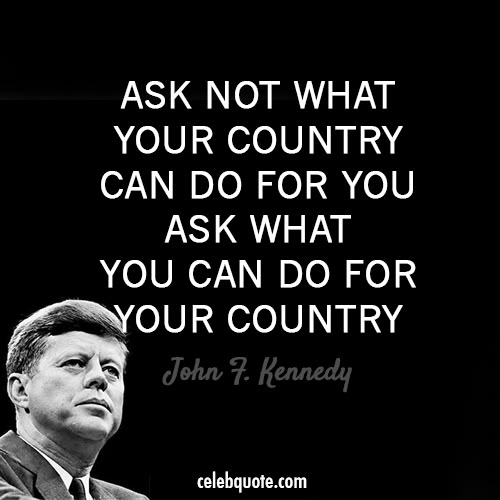
President Kennedy, long ago, asked Americans to consider what they could do for their country. I think many think that is defined as joining the military, and that is certainly one great thing a person can do but there are far more. And, I think it is primarily why tRumpf has sought to destroy the legacy of the Kennedy Presidency by paving over the Rose Garden and defacing the Kennedy Center for Performing Arts.
See, I don’t think Kennedy asked us to serve in the military. I think President Kennedy asked us to Love Our Country! Like the song America the Beautiful, he asked us to recognize the beauty of our home, he asked us to treasure it, he asked us to see it not as a resource to be stripped bare but the precious refuge of our grandparents and where our children rest their heads as they dream of their future. I think Kennedy voiced a challenge, a warning and a condemnation that there will come those who seek to strip our precious home like a thief in the night – a conman who lied his way past the door and is filling his pockets.
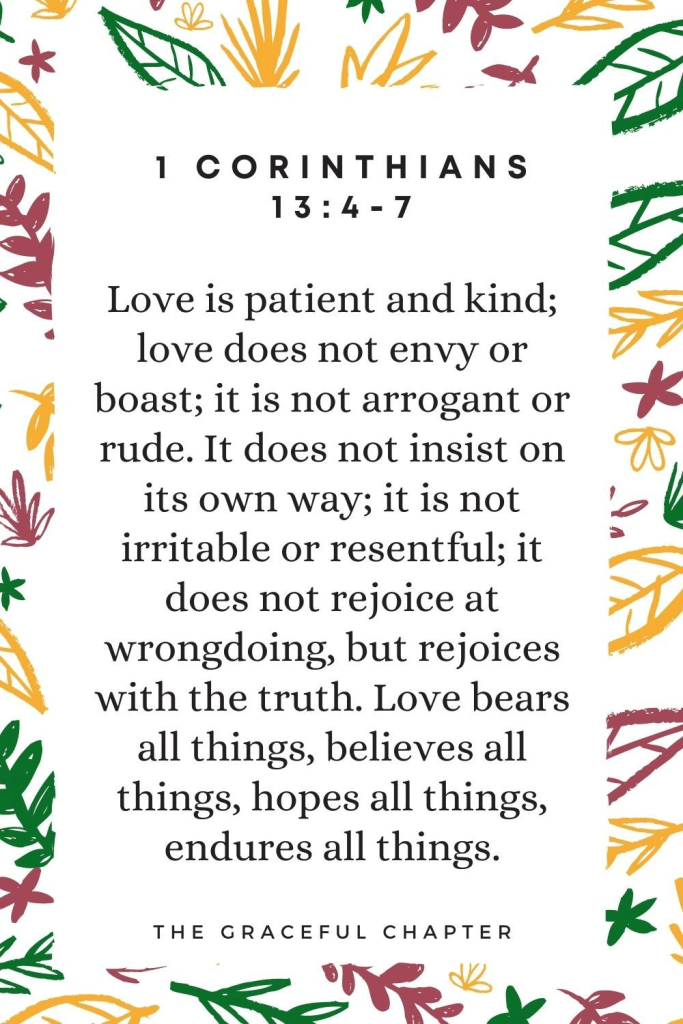
It is a sadness that so many in this beautiful home we share have determined that they can only hate the others who would hope to enjoy living here. To look upon another’s misery with spite, blaming the wounded for their wounds and glorying in the overflowing pockets of the thieves who seek to steal the silverware is a sickness that I don’t understand. I don’t understand those who say they have love in their heart yet show contempt in their words and actions for others. Especially I can not find understanding for those who claim to love Jesus yet fail in every definition of love that he gives us. Perhaps it is no wonder they are cruel, because surely their hearts are convicted and defensive in their misery as they have given away their love for their country and their Christianity for a red hat.
randy
And, it involves Girl Scout cookies (😋)!
PLEASE buy from people who have not filled their goals!
Did you know that for a long time, Girl Scouts has openly included transgender and nonbinary individuals in its membership? I first learned of this five years ago while searching for a source for my annual Girl Scout cookie purchase. At that time, a wave of anti-trans sentiment was intensifying, prompting me to seek out transgender Girl Scouts from whom to order. One major benefit of their online ordering system is that it allows for trans girl scouts to sell their cookies with relative privacy and no contact between the scout and the purchaser when it comes to online orders.
My initial effort was a success, meeting the goals of every single scout featured on the page. The achievement felt wonderful during what seemed like one of the most severe legislative attacks on transgender children in recent memory. Unbeknownst to us, each subsequent year would bring greater such attacks. Since then, every year I’ve repeated this initiative, we’ve surpassed our previous sales, leading to coverage in multiple major media outlets. Last year, scouts on our list sold 50,000+ girl scout cookies!
It is that time of year again. Please consider choosing a trans girl scout to get your cookies from this year – the kids are under attack this year more than ever, so lets give them some joy. And for those of you who have a trans scout yourself, you can submit your scout’s info here.
Note: When purchasing from one of these trans girl scouts, please choose the “ship the cookies” option and not the “deliver the cookies” by hand option. And make sure to refresh the page, more will be added every few days. I will also be rearranging their order periodically.
With no further adieu, here are the scouts! Please check back as many more often request to be added after publication, and I will keep this post updated with any that join in:
Troop 65426:
Troop 65426 is an inclusive troop with two trans scouts and two nonbinary scouts (Junior and Cadette levels). They’re raising funds for an educational trip to Europe and to support a local agency that trains service dogs for people with autism, PTSD, and other disabilities. You can buy cookies from them here!
Yaz:
Yaz is working on their Silver Award by running self-defense classes for local LGBTQIA+ youth. They’re also creating an LGBTQIA+ Acceptance patch. You can buy cookies from them here!
Omri:
Omri is a Brownie Girl Scout who loves gymnastics, figure skating, and swimming. She also enjoys researching the Titanic and mythical creatures, and her troop is saving cookie money for a trip to Rollhouse! You can buy cookies from her here!
Wxy:
Wxy is an 11-year-old nonbinary scout who loves cats (current obsession: Garfield). They helped start a kids filmmaking program for their troop’s Bronze Award project so everyone can tell their story, and they’re fundraising to replace seven refrigerators at Camp Hoover. You can buy cookies from them here!
Phoenix:
Phoenix is a first-year Junior, and their troop is saving up for a big Savannah trip next year. They’re also excited for horseback riding, camping, Sea World, and service projects. You can buy cookies from them here!
Ace:
Ace is an out-and-proud nonbinary scout who’s active with their troop, service unit, and council, and also shows up for their local LGBTQ youth group. They’re currently working on their Silver Award and leadership hours, always ready to support their rainbow friends. You can buy cookies from them here!
(snip-the rest of the list for this post is on the page. Please go check it out, and at least simply send some good energy into the universe for these kiddos! And thanks!)
Astronomy Picture of the Day
Discover the cosmos! Each day a different image or photograph of our fascinating universe is featured, along with a brief explanation written by a professional astronomer.

2026 January 7
Simeis 147: The Spaghetti Nebula Supernova Remnant
Image Credit & Copyright: Saverio Ferretti
Explanation: Its popular nickname is the Spaghetti Nebula. Officially cataloged as Simeis 147 and Sharpless 2-240, it is easy to get lost following the looping and twisting filaments of this intricate supernova remnant. Seen toward the boundary of the constellations of the Bull (Taurus) and the Charioteer (Auriga), the impressive gas structure covers nearly 3 degrees on the sky, equivalent to 6 full moons. That’s about 150 light-years at the stellar debris cloud’s estimated distance of 3,000 light-years. The supernova remnant has an estimated age of about 40,000 years, meaning light from this powerful stellar explosion first reached the Earth when woolly mammoths roamed free. Besides the expanding remnant, this cosmic catastrophe left behind a pulsar, a fast-spinning neutron star that is the remnant of the original star’s core. The featured image was captured last month from Forca Canapine, Italy.
Portal Universe: Random APOD Generator
Tomorrow’s picture: hidden galaxy in the giraffe
=========
Food reviews, other interesting bits from Australian travel Josh took. Of course protect your screen and keyboard in prep for those little unexpected reactions/remarks he makes while telling a story!
























































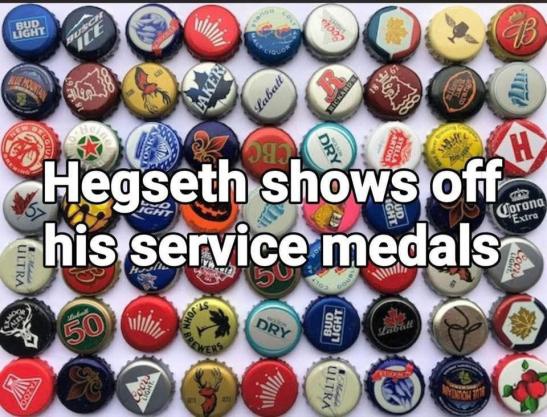




A curtained off section of a larger room is NOT a SCIF. The incompetence of this administration knows no bounds.
And the fact that X is pulled up on the screen behind them is just…embarrassing.
Who thought this was a good photo to release?
Looks like Pete Hegseth is either checking the online cocktail menu or lurking for exes on Facebook. Both can be true.





A good explainer written with a sense of humor. Nice things are not always bad things. -A.
Robyn Pennacchia Jan 05, 2026
Since returning to office, Donald Trump’s personal wealth has nearly doubled, from $3.9 billion in 2024 to $7.3 billion this past September, which includes $2 billion from his cryptocurrency ventures that no one had been buying into prior to his reelection. Donald Trump Jr. is now worth six times what he was in 2024, also due in part to the family crypto scam.
But did you hear? Zohran Mamdani’s wife, Rama Duwaji, wore some cute boots to his inauguration like a common Imelda Marcos! Quelle horreur!
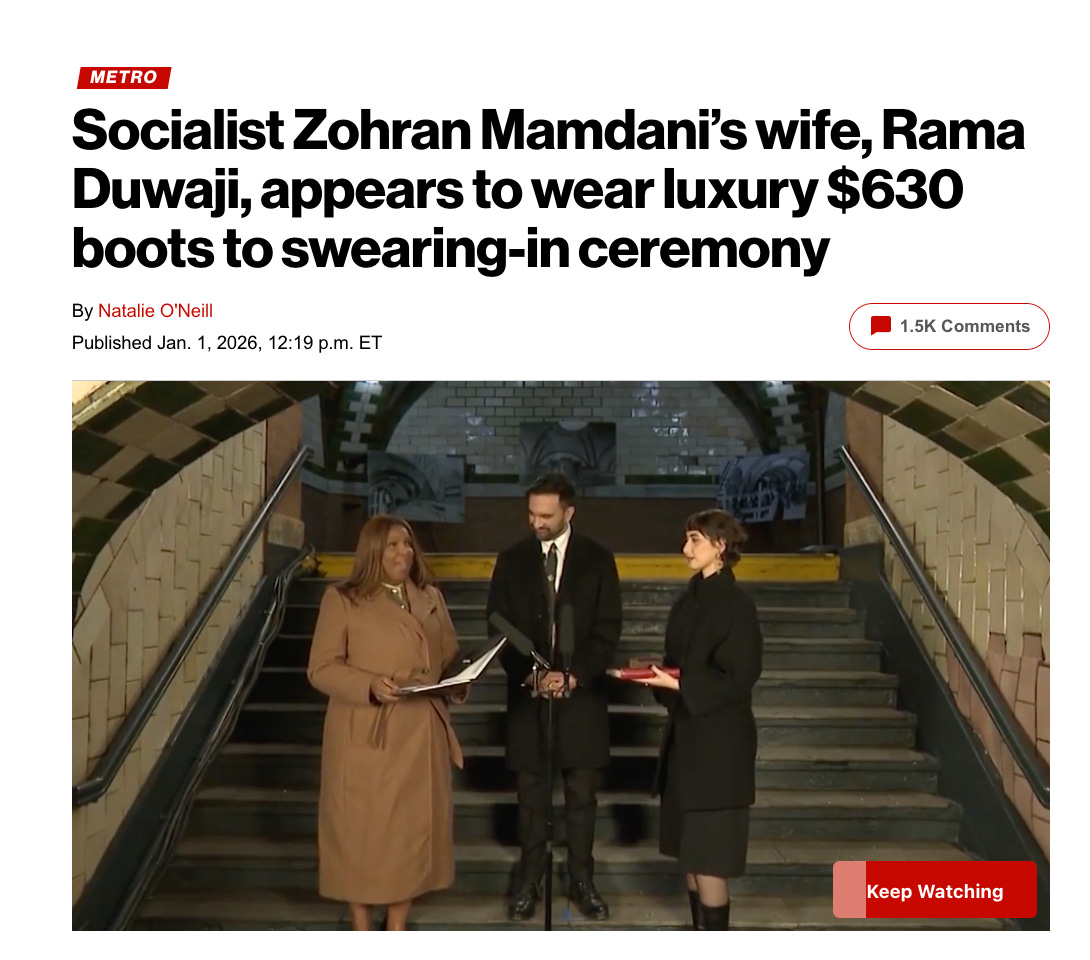
The New York Post breathlessly reported:
Their “affordability” agenda got off on the wrong foot.
New York City’s first lady Rama Duwaji appeared to wear $630 “artisan” leather boots from a high-end designer to her Democratic socialist husband Zohran Mamdani’s mayoral swearing-in ceremony — a luxury look that flew in the face of the politician’s “everyman” image, eagle-eyed critics said Thursday.
Duwaji, a 28-year-old artist, gave more socialite than socialist on New Year’s Day as she apparently rocked one of the fashion house Miista’s pricey boot designs — one which is said to be crafted from “vegetable tan cow leather” and feature an “ultra-cushioned memory foam insole.”
Not “vegetable tan cow leather”! NOT A MEMORY FOAM INSOLE!
Not that it matters, really, but $630 for boots is not “luxury.” I mean that technically. Obviously $630 is a good amount of money, but it’s not luxury. It’s what’s called “bridge” — meaning that it’s high quality and expensive, but not at the same level as actual luxury brands, which cost at least twice that. It’s not Chanel or Versace or Alexander McQueen or Louis.
Now, it turns out that the boots (and the entire outfit) were actually rented/loaned for the occasion, as her stylist Gabriella Karefa-Johnson explained in a blog post about the event:
Rama wore a vintage Balenciaga coat from Albright Fashion Library and archival earrings from New York Vintage, both rented during a single marathon day spent diving into the racks and cupboards of the city’s best small, circular fashion businesses. […]
C’mon formal shorts!! Those are from The Frankie Shop, and the boots are *ON LOAN* from Miista.
I’m just going to have to get comfortable with the fact that people on the internet do not understand what being lent a SAMPLE that has been borrowed before and will be borrowed again means but, you know what, that’s okay.
This is a big part of what stylists do. Most of the time, when you see a celebrity wearing something fancy on the red carpet or at an event like this, it’s not something from their own closet, it’s on loan from a designer (because cheap advertising) or something like the Albright Fashion Library. This is also how a lot of wardrobing for television and movies works.
But even if they weren’t on loan, the idea that “it’s hypocrisy for a Democratic socialist or even a regular liberal to wear nice boots!” is absurd. It only seems like “hypocrisy” to people who think socialism means everyone should be poor and miserable and standing in bread lines all day wearing cardboard boxes on their feet instead of shoes.
The reality is … that’s capitalism. Like, for most people, that is capitalism, except you don’t even get any free bread out of it. Indeed, most of the people in the comments on the Post’s tweet for the article were talking about how they, the proud capitalists that capitalism is definitely working out really well for, only spend $40 on boots at Walmart or Amazon. Actually, buying shoes that will only last a season (and will fuck up your feet) because that’s all you can afford, instead of boots that cost a lot up front but last forever, is a perfect example of why it costs more to be poor than it does to be rich. (This is not to say that you can’t get decent boots for a not-crazy price — I do very well at Nordstrom Rack and Marshalls, thank you very much — but you get my point.)
What we want is for people to not have to spend $2,000 a month on health insurance or on rent so that they can have nice things, so that they can buy a nice pair of boots or a warm winter coat. So that they can go out to dinner sometimes without worrying about breaking the bank. That is the whole damn point! That’s the “hearts starve as well as bodies; give us bread, but give us roses too” of it all.
Right now, 60 percent of Americans cannot afford $1,000 for an emergency expense. That’s not socialism that did that, that’s capitalism as practiced in the United States of America. Our economy literally has poverty built into the system. We literally cannot function without people to work the kind of jobs that currently do not pay enough for survival. Austerity is a way of life for a very large percentage of us, which also means that those whose income is dependent on other people having expendable income are also screwed.
New NYC Mayor Zohran Mamdani’s affordability plans don’t just benefit the poor, they benefit everyone. If people aren’t taking certain jobs because transportation costs too much to make it worth their while or they can’t afford to live in the city, everyone’s quality of life goes down. A city where only rich people can afford to live is a city where rich people have absolutely nothing to do, which kind of defeats the whole point of being rich in the first place.
The commenters complaining about all the people they could supposedly feed with the $630 those boots cost are also missing the point. Besides clearly not being how socialism is supposed to work, caring for the poor by way of charity and philanthropy is lovely, but it’s not the most effective and efficient way of doing so. Taxes are. Social programs are. GoFundMe raises about $650 million a year for medical causes, with some people getting far more than they could ever need and others getting nothing. That is a stupid way of doing things. You want to spend less on healthcare? Make the entire United States one giant insurance group with a shit ton of leverage and bulk buying power, make medical school free and invest tax money into creating more internship programs. That is how you take care of people, not by not buying a pair of shoes.
Capitalists want philanthropy to replace taxation. Right-wing libertarians frequently argue that if you just didn’t tax the rich, they would happily give huge chunks of their fortunes away to the poor, which is patently ridiculous (and, again, not effective or efficient even if things did shake out that way).
Champagne socialists are good, actually. Why on earth would it be better to be a miserly rich person than a rich person who actually believes they should be taxed at a fair rate because they want to see everyone living well? The idea that the Left wants a world in which everyone lives like they’ve taken a vow of poverty and no one gets to be “successful” is a fantasy created by rich assholes who don’t want to share and don’t care if they live in a society where everyone has at least their basic needs met.
We actually love success, which is why we want more of it for more people, rather than just one percent of one percent of people. We love people, which is why we want a safety net that keeps them from falling so far they can’t get back up again. We love ingenuity, which is why we want people to be able to go into business for themselves without having to worry about what will happen to their kids if they can’t afford good health insurance on their own right away. We want their kids to feel like it’s not hopeless to try their best in school because they don’t think they’ll be able to afford to go to college without being in debt the rest of their lives. We don’t think it’s enough that people can “dream” of being billionaires but factually never be able to afford their own home.
And yes, we even want some people to be able to afford to actually buy $630 shoes, so that other people can get paid a fair wage for designing, making and selling those $630 shoes.
Hope that clears things up!

Tiny, nimble, and sporting a bold black mask and “bib” under its bill, the Golden-winged Warbler might be mistaken for a Black-capped Chickadee at first glance. But it’s the long, thin bill and the splashes of vivid golden-yellow on its crown and wings that distinguish this long-distance migratory warbler.
Though they are denizens of shrubby, early successional habitats (areas that are in the early stages of regenerating following a disturbance, such as a fire or a clearcut) in the nesting season, Golden-winged Warblers and their recently fledged young relocate to nearby mature forests that provide adequate cover for fledglings from predators. The loss of quality brushy, young forest habitat across much of its breeding range has contributed to sharp declines in an already uncommon warbler.
Another threat comes from a close relative, the Blue-winged Warbler, which shares more than 99 percent of its genetic material with the Golden-winged Warbler. The two species regularly hybridize, and the once-uncommon Blue-winged Warbler has surged northward into the Golden-winged’s range. The Golden-winged Warbler has become much scarcer and is at risk of being genetically “swamped” by its more numerous and widespread relative where their ranges meet.
To gain a foothold and begin to recover from the loss of more than 60 percent of its population, the Golden-winged Warbler needs active habitat conservation throughout its annual life cycle, from the shrubby, early successional habitats where it nests to the open forests of Latin America and the Caribbean, where it spends its nonbreeding season.
Birds around the world are facing threats, and many species are declining. The Golden-winged Warbler has experienced a drop in its population of more than 60 percent, including a loss of nearly all of its population in the Appalachians. In addition to competition and hybridization with the Blue-winged Warbler, the Golden-winged Warbler faces challenges throughout its full annual cycle from habitat loss and degradation, and collisions. (snip-More on the page, including the songs)
Why I do these posts. This is three days of Joe My God that got away way from me. So why do I do these long news posts? Because I comb the Joe My God comment section for the best memes and snarkiest comments. It dawned on me I could post his news articles for those that want to read them. But three days is a lot to go throw and it is much easier just to quickly scan and snatch the comments rather than post them. So I need some inputs from everyone. Are these posts worth it? Or would you rather go to Joe My God yourselves. Or I can keep doing these. Up to you. Hugs
—————————————————————————————————————————-
tRumps Grifts / Scams / Ripping off the rubes / tRump’s ego / tRump’s Crimes / tRump’s health / Republican grifts & payouts for supporting tRump / other trump scammers
The Trump Mobile website recently scrubbed its “100% made in America” claim.
The Trump Golf Tracker estimates that the president’s golf trips have cost taxpayers some $110,600,000 so far in 2025. But that estimate, which was based on a 2019 Government Accountability Office (GAO) report on four golf trips during his first term, doesn’t even take into account the month of December.
Epstein Files / Sexualizing women
The video was shared by Vice President JD Vance. FBI director Kash Patel said he is aware of the video and the FBI is investigating. The YouTuber says he is uncovering new fraud in Minnesota, but media outlets like KSTP reported more than a year ago about more than 62 investigations into Minnesota child care centers.
What this is really about is they are afraid Walz will run for office and win as he is so well liked. They are trying to gin up a fake scandal to Benghazi him like they did with Hillary Clinton. I posted yesterday how fake and full of lies / misinformation the “report” the YouTuber did was. In the article above this one you can see how the Republican Party had a hand in helping the right wing influencer to push a fake story. The state has been investigating these things for several years. Hugs
Can these people hear what comes out of their mouths? How nuts are they? Why are they relevant anymore? Hugs
The chart posted shows that overall drug deaths dropped between 2023 and 2024, when the Biden administration was in the White House.
Before tRump started blowing up boats for oil. Hugs
$175 billion for a “golden dome” that experts doubt would actually work, but only $2 billion in humanitarian aid for the United Nations. It’s what Jesus would want.
Space based weapons are forbidden by treaties that the US signed. That said do we have space based weapons … well I was sending commands somewhere for something when I was in the Army Sat coms / intel unit. You decide. Hugs
The emails, which were made public as part of a newly unsealed judicial order, largely reflected communications about the case that Robert E. McGuire, the acting U.S. attorney in Nashville, had with members of his staff and with Aakash Singh, a top official in Mr. Blanche’s office. They raised serious questions about whether the Justice Department had misled Judge Waverly D. Crenshaw Jr., who is overseeing the case, by telling him that local prosecutors had acted alone in charging Mr. Abrego Garcia.
The civil probes are proceeding under the umbrella of the False Claims Act, which has traditionally been used to go after contractors who bill the government for work that was never performed or inflate the cost of services rendered.
The U.S. slashed its aid spending this year, and leading Western donors such as Germany also pared back assistance as they pivoted to increased defense spending, triggering a severe funding crunch for the United Nations.
U.N. data shows total U.S. humanitarian contributions to the U.N. fell to about $3.38 billion in 2025, equating to about 14.8% of the global sum. This was down sharply from $14.1 billion the prior year, and a peak of $17.2 billion in 2022.
The idea behind the legislation originated with the Alliance Defending Freedom, a conservative Christian legal advocacy group that has gained prominence for its work to incorporate religion in public spaces.
West last appeared here for his bill that would create a database of abortion patients.
In 2024, we heard from West for his bill to ban Pride flags at public schools and government buildings.
He appeared here in 2023 for his bill that would make it a felony to perform drag in the view of minors. His bill called for a $20,000 fine and up to two years in prison.
West first appeared here in 2021 when Gov. Kevin Stitt signed his bill making it legal to run over protesters.
The tweet below refers to West’s attempt to pass this same bill earlier this year.
Last week Trump claimed that he was bringing down drug prices by 3000%.
Popolo is a Trump megadonor with business interests in the Netherlands. News about the removal of the displays first surfaced last month.
tRump’s attack on Colorado because they won’t bow to the whim of the tyrant. His withholding money is illegal but no republican will stand up to the demented king.
In the past two week, Trump denied FEMA relief for Colorado and ordered the dismantling of the nation’s premier climate research facility.
Enjoy some stuff I saved up to bring here today. Look/listen to whatever you care to, whenever you want. A few are shorts; 1 is a comic. The longer ones are worthy when you have a few minutes or can listen while you’re doing another thing. Relax and laugh! Open comments thread.
Note on 1/3: My apologies-this video has been taken down. Here is the link to Josh Johnson’s YouTube page; look around there. You’ll enjoy anything you choose! Again, I’m so sorry. It was there yesterday! 💐 Ali
https://www.youtube.com/@JoshJohnsonComedy
https://www.gocomics.com/lards-world-peace-tips/2026/01/01


 Scottie's Playtime

