
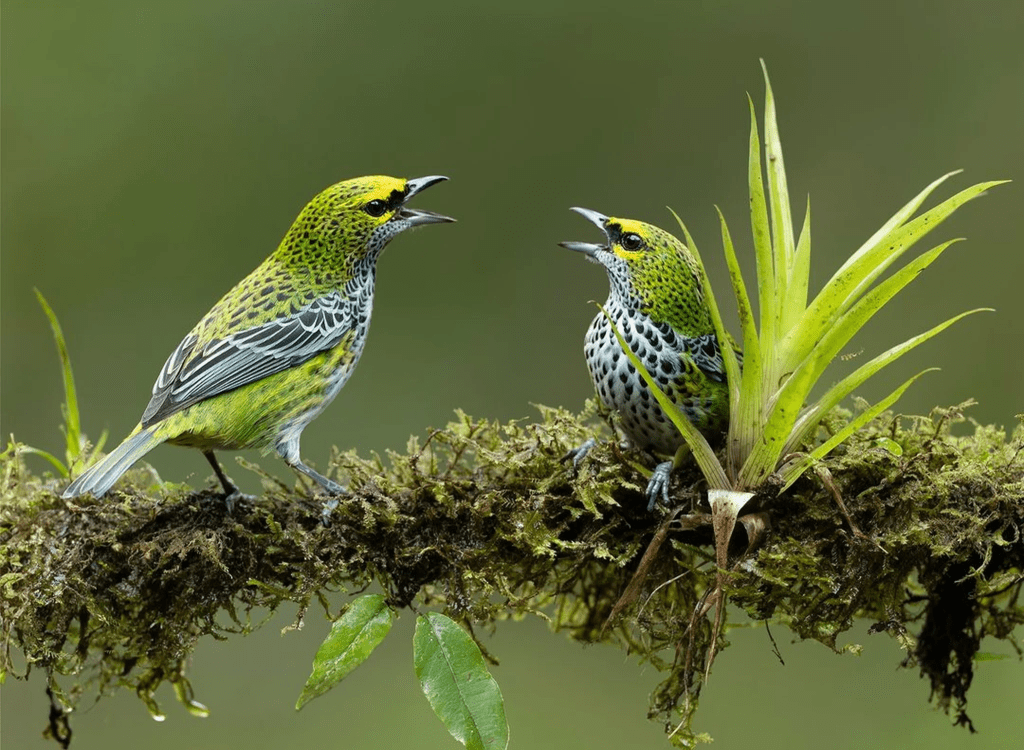
- Speckled Calliste
- Yellow-browed Tanager
- Tangara Pintoja (Spanish)
- Tangara Moteada (Spanish)
- Saíra-pintada (Portuguese)
About
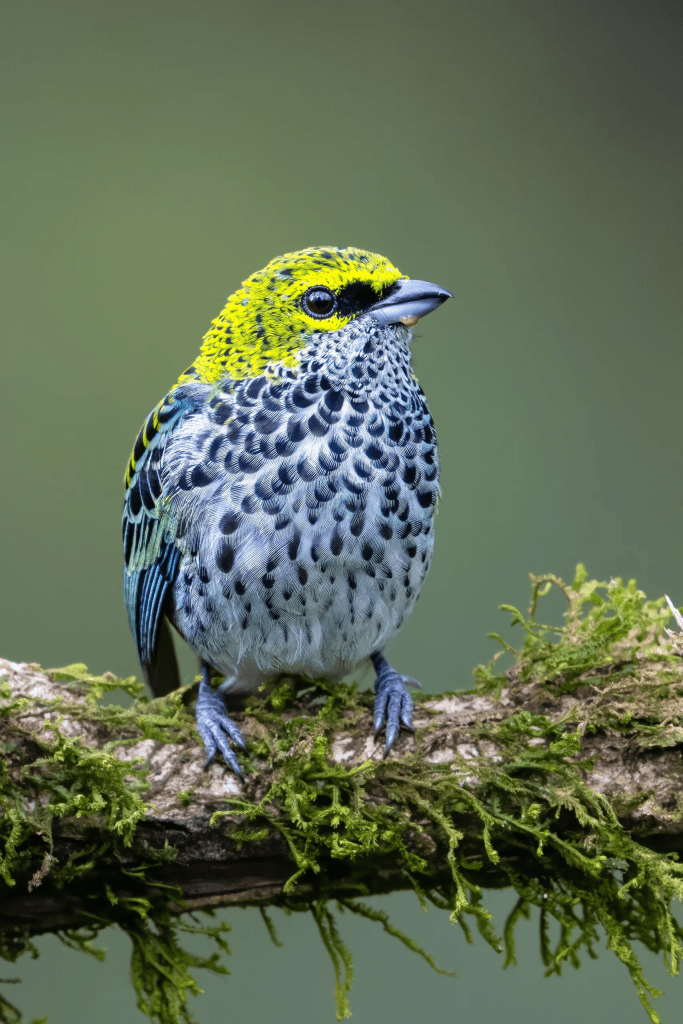
The Speckled Tanager is a preternaturally beautiful bird, even among the other stunning Central and South American tanagers of the family Thraupidae. The black speckles that give this species its name come from black feathers with brightly colored edges, giving the impression of scales over the bird’s body. The edges blend together to create a palette of iridescent yellow-green and green-blue over the body of the bird.
Striking as these patterns and hues may be, they actually provide good camouflage for this bird up in the green, backlit forest canopies where it spends most of its time. The tanager’s speckles, like the spots on a jaguar or the camo pattern on a hunter’s jacket, are a form of disruptive patterning, a camouflage strategy that breaks up or obscures an animal’s outline, allowing it to blend with its background. Up among the bright green leaves, these birds can easily go unseen. Up close, however, their plumage is hard to ignore.
Threats
Birds around the world are declining, and many of them face urgent threats. The Speckled Tanager lives primarily in old-growth forest, and healthy populations depend on the persistence of forests throughout their range in Central and South America. Though not considered a species of conservation concern, this bird is declining, and deforestation is one likely cause. (snip-MORE)








































































































































































 Scottie's Playtime