Can’t air anything that might upset the dear cult leader right? All broadcast corporate media must please the dictator to make a profit, or pay the dictator tribute. What a waste. Again if a democrat had tried this republicans would have howled every few minutes on their paid media arms of their party. Not a peep out of the democratic party about it? Hugs
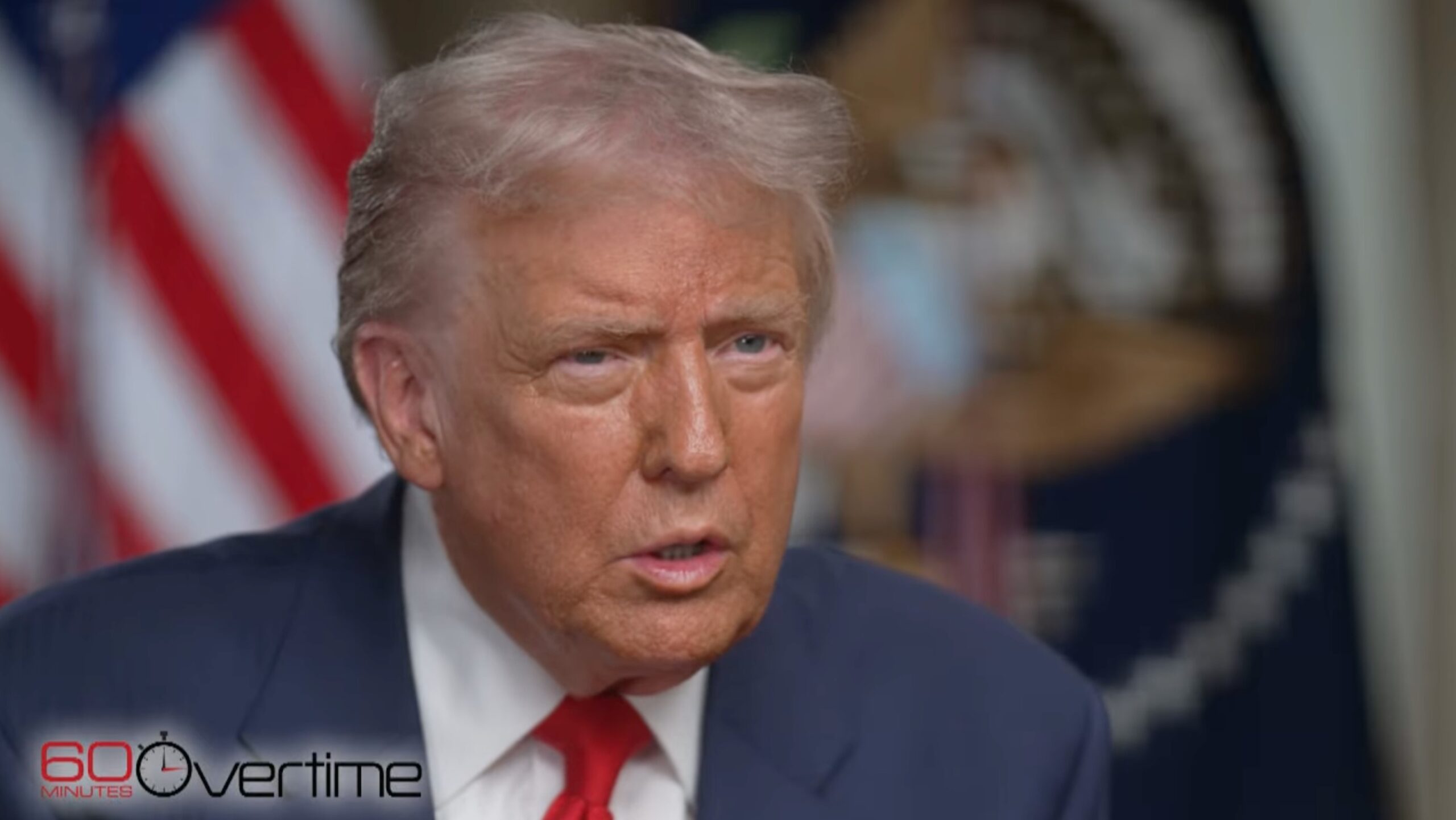
60 Minutes postponed a segment on the maximum security prison in El Salvador that President Donald Trump sent suspected gangsters and illegal immigrants to, only a few hours before the report was set to air on Sunday.
The CBS program had been planning to air the segment titled “Inside CECOT,” referring to El Salvador’s Centro de Confinamiento del Terrorismo.
Here is the brief editor’s note that 60 Minutes posted to X about the report getting bumped:
“The broadcast lineup for tonight’s edition of 60 Minutes has been updated. Our report ‘Inside CECOT’ will air in a future broadcast.”
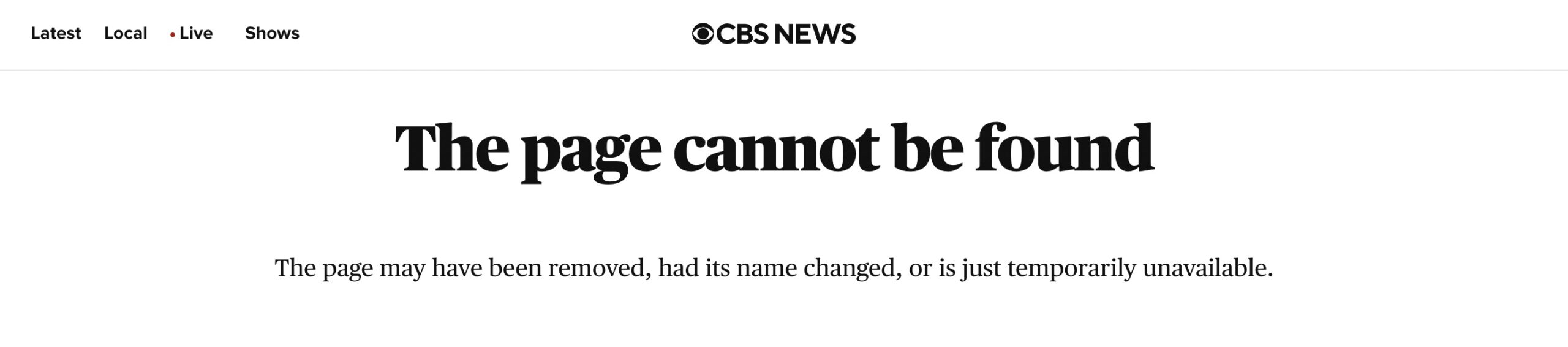
The CBS News website also yanked its teaser clip of the report down from its website. Here is what that page looks like now:
A CBS News spokesperson toldPuck reporter Dylan Byers that its editorial team “determined it needed additional reporting.”
The segment was being reported by correspondent Sharyn Alfonsi and produced by Oriana Zill de Granados.
Paramount Skydance, the parent company of CBS, shared the following teaser for the report on Friday:
Earlier this year, the Trump administration deported hundreds of Venezuelan migrants to El Salvador, a country most had no ties to, claiming they were terrorists. This move sparked an ongoing legal battle, and nine months later the U.S. government still has not released the names of all those deported and placed in CECOT, one of El Salvador’s harshest prisons.
It added Alfonsi would be speaking to “some of the now released deportees, who describe the brutal and torturous conditions they endured inside CECOT.”
CECOT has been described by outlets like ABC News as a “mega-prison.” It opened in 2023 as part of Salvadoran President Nayib Bukele’s push to arrest and imprison more gang members. Inmates taunted a handful of Democratic and Republican lawmakers when they toured CECOT in May.
Is tRump a controlled asset or just a useful old idiot, does it matter. He is giving Putin everything he every wanted. The fact is he has decided to be Putin in the west while he lets Russia and China divide up Europe and the Asia. Hugs
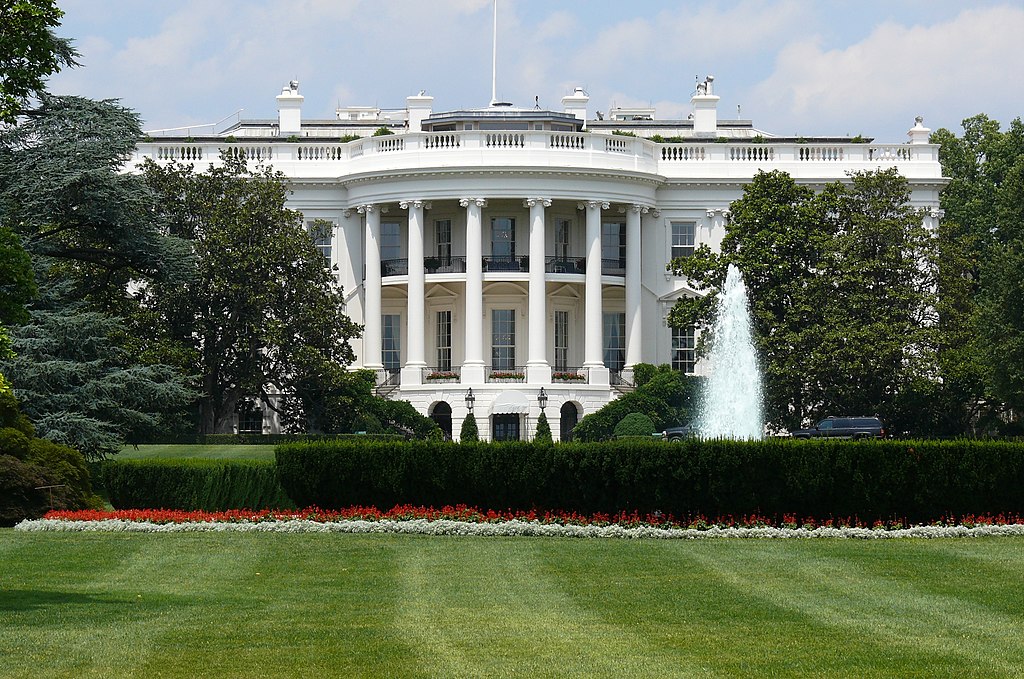
The White House in Washington DC, USA. Illustrative image via Wikimedia Commons.
The United States has removed sanctions from several foreign companies previously accused of supplying equipment to Russia, including items linked to its defense and military-industrial sectors.
The changes were published on the US Treasury Department’s website on December 18, without any explanation for the move.
Cyprus-based investment firm and its owner delisted
Among the firms removed is Cyprus-based Veles International Limited and its owner, Dmytro Buhaienko. While the company is tied to an investment group based in Moscow, US sanctions remain in place against its Russian legal entities.
Veles was originally sanctioned in 2023 for operating in Russia’s financial sector and working with wealthy Russian private individuals.
Dubai and Turkish firms linked to military exports also dropped
Other companies taken off the sanctions list include Dubai-based 365 Days Freight Services FZCO and Türkiye’s Etasis, both of which had been linked to exports of restricted equipment used for military purposes in Russia.
When 365 Days was originally sanctioned in November 2023, the Treasury said the company “specializes in moving high-value goods and computer components” and “has shipped high-priority goods, including machines for the reception, conversion, and transmission of data, to Russia.”
Finnish supplier of optoelectronic equipment removed
The Treasury also lifted restrictions on Finland’s Hi-Tech Koneisto and its director, Yevheniia Dremova. The company had supplied optoelectronic and laboratory equipment to Russian firms already under sanctions.
CPS Proses Kontrol Urunleri, a Turkish company, had previously been sanctioned for sending German- and US-made machine tools to a Russian defense contractor. While the company itself is no longer under US sanctions, the Russian contractor it supplied remains restricted.
US authorities did not indicate whether the removals reflect changes in compliance, enforcement priorities, or broader sanctions policy toward Russia.
The delistings come as White House negotiators have met with Russian President Vladimir Putin in Moscow to push a US deal to end the war in Ukraine, and days after the Treasury extended authorization for Lukoil-branded gas stations outside Russia to continue operating.
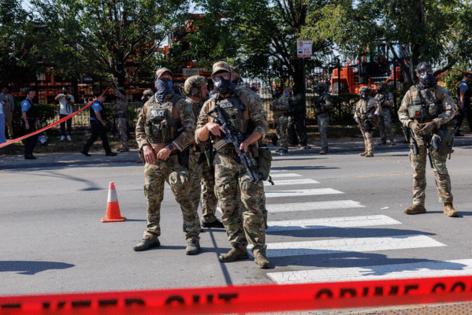
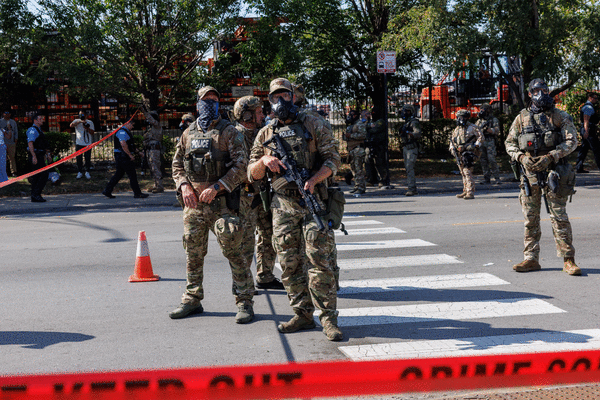
Commentary: The masking of ICE agents is indefensible
Amy Dru Stanley and Craig Becker, Chicago Tribune on Published in Op Eds
Last month, a federal judge observed that masked figures were creating terror on American streets — not criminals but agents of Immigrations and Customs Enforcement. “Law enforcement in the United States has usually been performed in the open,” wrote Judge William G. Young, a Ronald Reagan appointee to the U.S. District Court in Massachusetts.
“Images of plain-clothed, masked federal agents — faceless agents of the federal government — snatching a non-violent person off the streets” have created “fear in citizens and non-citizens alike.”
We’ve all seen the arrests in our neighborhoods and felt that fear. We’ve watched the raids unfold on the news: on the streets, on college campuses, in workplaces, in homes, outside courtrooms, in Home Depot parking lots. ICE agents wearing masks, violently detaining people, holding them captive, disappearing the suspects.
And we’ve heard the explanation that masking protects the ICE agents. “If you expose them,” President Donald Trump has said, “you put them in great danger, tremendous danger.”
But that rationale is indefensible, as it would apply to every public official and employee involved in the criminal justice system, all of whom face the threat of retaliatory violence. Moreover, severe penalties exist for attacking or intimidating law enforcement officers. Surely a judge who sentences convicted criminals to prison is as much at risk as ICE agents, yet the notion is absurd that judges should be anonymous or allowed to mask their faces in the courtroom.
Anti-masking bills have been introduced in Congress — including the “No Secret Police Act” and “No Anonymity in Immigration Enforcement Act”— but the measures have no chance of enactment under GOP control. Recently, Chicago and California banned masked arrests, but the U.S. Department of Homeland Security has stated: “We will NOT comply.”
What is needed is for the courts to act — to declare masked arrests unconstitutional, as unreasonable seizures barred by the Fourth Amendment. The U.S. Supreme Court has held that “reasonableness depends on not only when a seizure is made, but also how it is carried out.” Guarantees exist against seizures without probable cause or warrants, and the court has found that law enforcement agents violate the Fourth Amendment if they seize someone with unreasonable force or execute a warrant to search someone’s home without first knocking and announcing their presence. Such protections, essential in a democracy, should be extended to bar the carrying out of masked arrests. That ban is necessary to identify bad actors, and reduce the risk of harm and thereby uphold constitutional guarantees against unreasonable seizures and interference with freedom of expression.
ICE use of masks has spread more than fear. It has led to criminal impersonation: men pretending to be ICE agents carrying out kidnappings and sexual assaults. But threats to liberty and security lie in masked ICE policing itself — that faceless agents will use excessive force on immigrants or retaliate against witnesses who protest their raids by exercising free speech rights, and that no redress for the wrongs can be sought because the ICE agents can’t be identified. That masked men can act with impunity, as in authoritarian regimes.
Aggressive recruitment of new ICE agents, who are deployed with little training, heightens the risks of the masked raids. As the crackdown spreads — with the White House demanding 3,000 arrests by ICE a day— so, too, is protest against the masking. “More raids means more unidentified federal law enforcement intimidating and in some cases terrorizing our communities,” states the American Civil Liberties Union, noting the difficulty of distinguishing ICE arrests from kidnappings.
Masking also presents dangers for the ICE agents, who may be mistaken for imposters. Obscuring identity has long been a tactic used in certain undercover operations. But as former ICE official Scott Shuchart warned about the masked arrests, there is now “a kind of vigilante problem where people either don’t know, or at least aren’t sure, that these officers who are dressed up like bank robbers are actually law enforcement officers.” In such circumstances, violent self-defense might result.
Judicial prohibition of masked arrests is supported by trends toward greater transparency in policing nationwide. “In evaluating the reasonableness of police procedures under the Fourth Amendment,” the Supreme Court has, by its own account, “looked to prevailing rules in individual jurisdictions.” ICE agents’ masking is sharply discordant with rules requiring local police to wear badges and nameplates and barring them from preventing the public from reading the information. The increasing use of body-worn cameras similarly serves police accountability.
According to the U.S. Department of Homeland Security, however, assaults on ICE agents are up by more than 1,000% this year and masking has been informally tolerated to prevent doxxing, harassment and violence. Meanwhile, the U.S. Justice Department has begun to prosecute people who follow agents or publicize their addresses. Yet ICE has issued no policy requiring mask use to protect agents — nor any official guidelines on masking at all. Appearing on Fox News in July, the acting ICE director, Todd Lyons, equivocated. “I’m not a fan of the masks,” he said. “I think we could do better, but we need to protect our agents and officers.”
The unreasonableness of masked arrests is highlighted by state legislation outlawing the wearing of disguises by private individuals on public property. It reflects the understanding that masking promotes lawlessness — and as the Supreme Court has recognized, “Decency, security and liberty alike demand that government officials shall be subjected to the same rules of conduct that are commands to the citizen.”
Currently, some 22 states have anti-masking rules on the books, as do many local governments, rules now being enforced to suppress peaceful dissent rather than criminal activity. In extreme instances, felony charges have been threatened against masked students protesting the war in Gaza. No doubt the repressive use of the restrictions will broaden. Last June, Trump posted on social media: “From now on, MASKS WILL NOT BE ALLOWED to be worn at protests. What do these people have to hide, and why???”
Anti-masking rules governing private conduct are almost a century old, with most originating in efforts to quell the terrors of the Ku Klux Klan. With much to hide, the Klan has attacked anti-masking laws in the very terms now used by ICE to defend masked arrests: “Members wear their masks to protect their anonymity,” the Klan has argued, “because of the harassment, threats of violence, violence.”
The depth of community protest against ICE agents’ masking may well be rooted in historical memory of faceless Klansmen riding through the night, seizing their captives. As Judge Young warned recently, “Masks are associated with cowardly desperados and the despised Ku Klux Klan. In all our history we have never tolerated an armed masked secret police.”
We should not do so now.
____
Amy Dru Stanley is a history professor at the University of Chicago. Craig Becker is a lawyer with Democracy Defenders Fund.
I can’t understand living just to hate and harm others who are not doing anything that harms you. To carry that bitterness and to work so hard to deny to others what you demand for yourself seems like poisoning one’s self. With so much to enjoy in diversity and inclusion why work so hard to create a homogeny of everyone being the same. Hugs
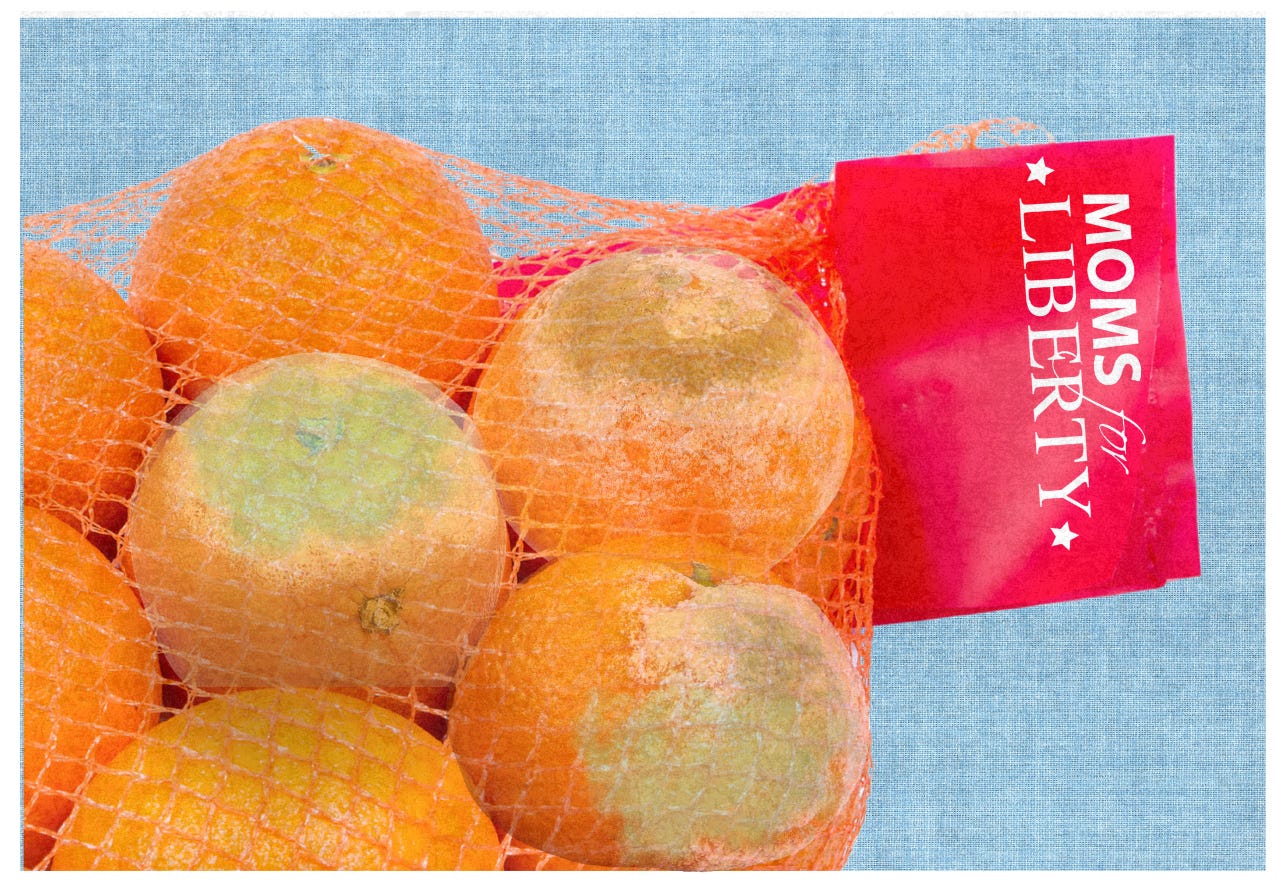
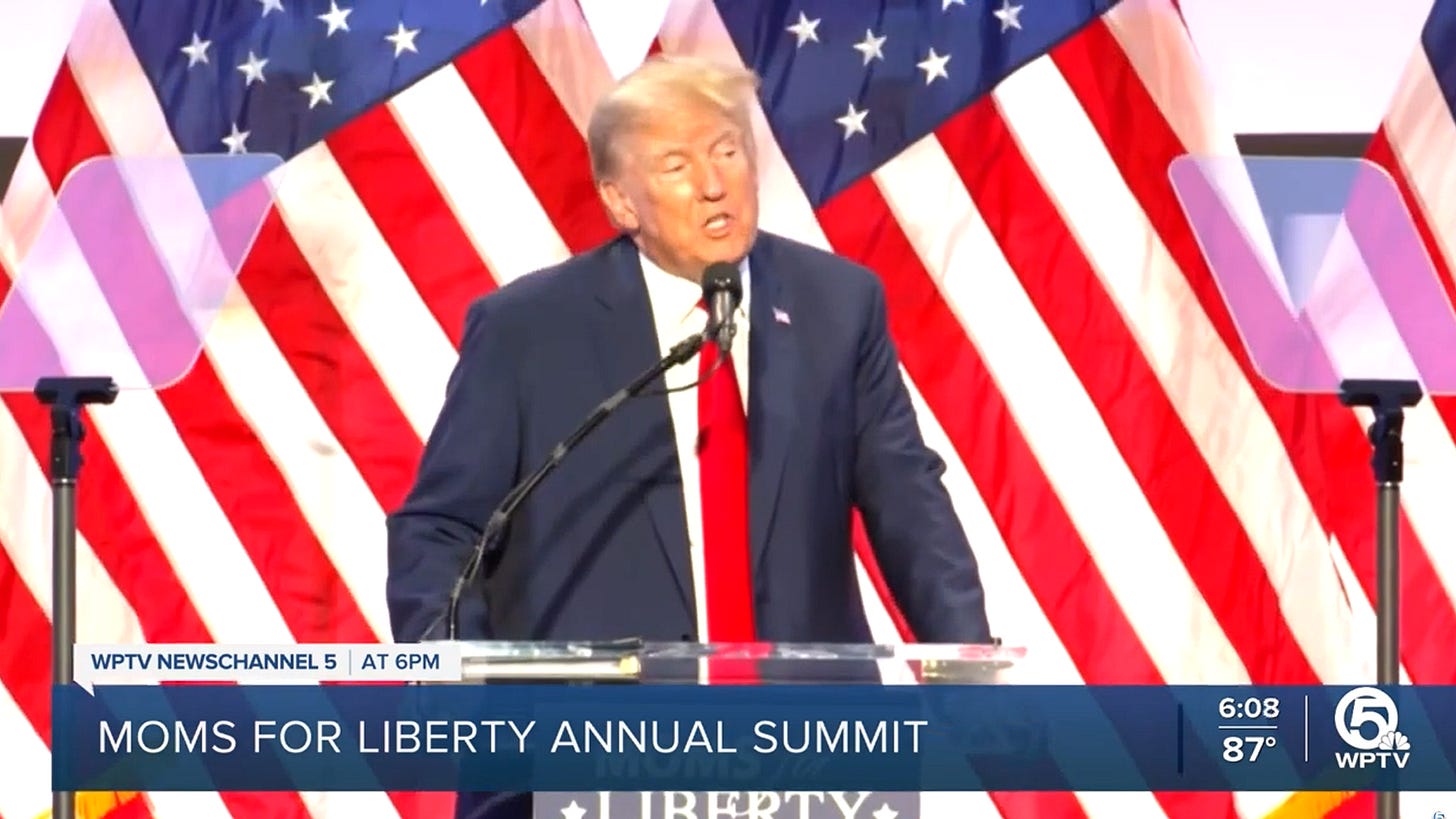
As the M4L annual summit kicks off this weekend, here’s how one of the group’s original chapters is sowing chaos and pushing anti-LGBTQ policies in Indian River County.
Mink Tyner says some people call her a “helicopter parent” because of how protective she is over her kids. Despite this, she wasn’t concerned about bringing her daughter, then 14, to the Indian River County, Florida, school board meeting in August 2023, where they were discussing changes to the state’s curriculum relating to race and slavery.
That’s why she was shocked when she saw community members at the podium reading excerpts of sexual content from books.
“I hate lights out now because my D has a mind of its own,” one woman read. Then a man came up and read, “When Doris had just turned 11, her current stepfather started having sex with her.” And a third person read, “He took a long long time peeling off my jeans and T-shirt, pink bra and panties, and a longer time stroking and kissing me.”
The meeting had turned into more of a stunt led by protestors affiliated with the local chapter of Moms for Liberty (M4L), a Southern Poverty Law Center-designated far-right extremist group.
“I’m not gonna have my kid in here listening to these adults doing this shit,” Tyner remembers thinking.
She took her daughter out of the room and pleaded with security to intervene, but they refused. So she spoke up to disrupt the meeting herself, only for security from the Sheriff’s office—who told Uncloseted Media their deputies responded “appropriately and in accordance with established procedures”—to escort her out.
As she was leaving, conservative pastor John Amanchukwu, who had attended the meeting with M4L, confronted her while recording a video that he would later post to X calling her “demonic” and lashing out about her being pro-LGBTQ: “You’re okay with DEI. … You’re okay with Pride Month. You’re okay with the rainbow flag. You’re okay with all that junk,” he yelled. Tyner responded by calling him a “fucking weirdo” and walked out.
That video opened a floodgate of harassment that tormented Tyner and her family for years: She received insults, accusations of pedophilia, and persistent threats of violence from a Facebook account displaying the name CURTIS COUSINS who called her a “fent-using fat fucking dyke” and told her she deserved to have “a potato peeler peel her clit right off to the bone.”
“I never know if this week or 10 years from now somebody’s gonna show up [to my business] based on some kind of misinformation that Moms for Liberty started about me [or] want to harm me and my family,” Tyner, who owns a tattoo shop, told Uncloseted Media.
Indian River County is home to one of the first of M4L’s 320 chapters nationwide. The group’s annual summit is this weekend and will feature a variety of politicians with anti-LGBTQ track records, including Oklahoma’s former state superintendent Ryan Walters, who made headlines for making anti-trans comments after the death of 16-year-old trans teen Nex Benedict. Last year, conservative heavyweights spoke at the event, including President Trump, Tulsi Gabbard and Sebastian Gorka.
Over the last four years, M4L have built a reputation for chaos and controversy. Members have made the news for quoting Hitler, stripping at a school board meeting and offering bounties to report teachers who teach about “critical race theory.”
At one point in Indian River County, close allies of M4L made up a majority of the school board where they pressured the district to ban scores of books, many of which contain LGBTQ themes, and reverse a racial equity policy—all while harassing, doxing and defaming their adversaries.
Maurice Cunningham, a retired professor of political science from the University of Massachusetts, says what’s playing out in Indian River County is a microcosm for so many other chapters across the country.
“[The media are] falling like suckers for this story that they’re a grassroots moms organization. They are not, they are connected to … the far right establishment,” he says. “And that’s become … more and more apparent. So this whole grassroots thing is hogwash.”
Beginnings
Moms for Liberty was founded in Florida in 2021 by three current and former school board members: Tiffany Justice, Tina Descovich and Bridget Ziegler, the latter of whom has since left the group after being involved in a sex scandal wherein her husband allegedly prowled local bars to solicit women for threesomes.
Shortly after M4L launched, Justice tapped Jennifer Pippin, who had made a name for herself for leading activism against COVID-19 restrictions, to lead the chapter for her home county, Indian River.
While the anti-mask circles that would later be folded into M4L always had a conservative lean, multiple county residents told Uncloseted Media that the group’s discriminatory views were not initially apparent.
Tyner, a lesbian who identifies as politically independent, actually felt welcomed by the group when she worked with them on their anti-mask mandate advocacy. However, that changed as M4L’s focus turned towards opposing LGBTQ inclusion measures in schools.
“Once they organized and got the appearance of a grassroots start … and many people in the community that were siding with them, it’s like they took the steering wheel and they just steered another direction,” she says.
When Tyner began speaking up against this rhetoric, she says she was blocked from the group’s Facebook pages. But as she continued to oppose them publicly, Justice offered to meet with her to address her concerns.
Over breakfast at a local cafe, Tyner says Justice gave her a “scripted” response in the hopes of winning back her support. She even invited Tyner to an M4L chapter meeting. However, Tyner declined as the meeting was allegedly to be hosted by a community member who had made an online post suggesting necrophilia and pedophilia are part of the LGBTQ umbrella.
“I was like, ‘Alright, this is not a good or a safe movement,” says Tyner.
Justice did not respond to a request for comment. In an email, Pippin told Uncloseted Media that M4L have “members and members children that are LGB in [their] chapter and across the country.”
Another local parent, who requested anonymity due to concerns about his job security, says while he’d initially been on board with M4L’s parental rights advocacy, he ran into conflict with the group when they started opposing the school district’s racial equity policies and tried to ban books with antiracist themes, including Ibram X. Kendi’s “Antiracist Baby”and “Stamped: Racism, Antiracism, and You.” Like Tyner, he says he was approached by Justice and Pippin to win him over again but was ultimately unconvinced.
After he split from M4L, he began publicly criticizing the group’s book bans. In retaliation, some M4L members accused him of supporting pedophiles.
When he reached out to Pippin to ask for the people making such accusations against him to be held accountable, he says she waved him off—all while blocking him on social media and accusing him of “bullying.” He also says that she doxed him after another dispute—a major factor in his decision to remain anonymous.
“Her response to me basically was ‘free speech,’ ‘we don’t control what our members say.’ And I’m like, ‘But Jennifer, you know me, and you know I’m not a pedophile, and this is unacceptable,’” he told Uncloseted Media.
Building Political Power
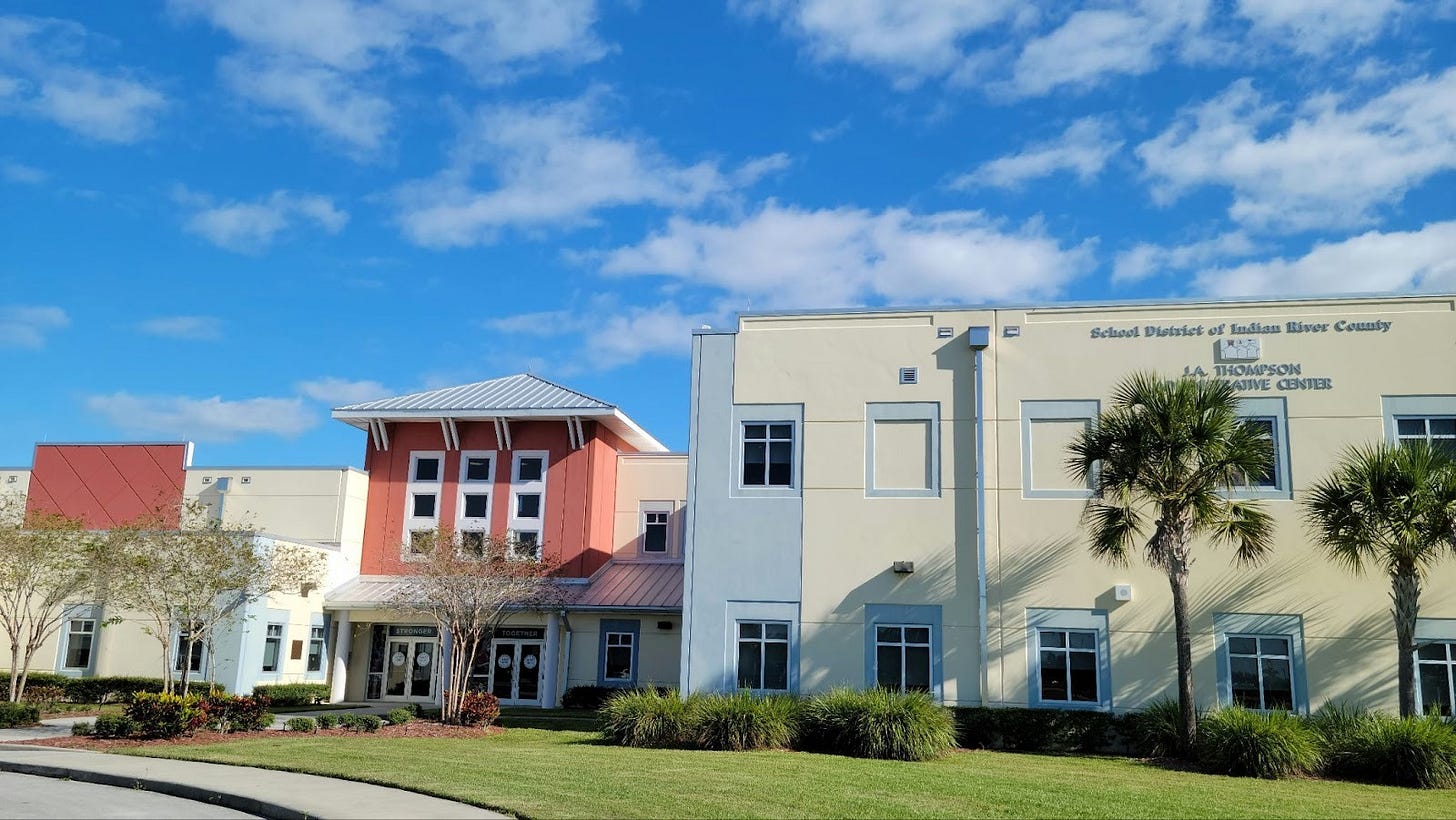
The Indian River County School District’s J.A. Thompson Administrative Center. Photo by Kiran891.
Efforts to ban LGBTQ and racial justice-related books in schools are part of M4L’s national ammo that helped them quickly explode in popularity.
Cunningham says M4L were boosted by high-profile connections on the right. Ziegler and Descovich both served as presidents of the Florida Coalition of School Board Members, a group billed as a conservative alternative to the Florida School Board Association. Ziegler’s husband, Christian, was vice chairman of Florida’s Republican Party at the time and worked as a media surrogate for the Trump campaign in 2016.
Since their launch, M4L have had their conferences and events sponsored by the Heritage Foundation and the Leadership Institute; were directly advised by Leadership Institute founder Morton Blackwell; and were a part of Project 2025’s advisory board. And this summer, Justice was hired as executive vice president of Heritage Action.
In 2022, the Indian River County chapter leveraged this influence to carve out power in local government: They got two close allies, Jacqueline Rosario and Dr. Gene Posca, elected to the school board, and they developed closerelationships with the Ron DeSantis-backed county sheriff Eric Flowers. Pippin was even appointed by Florida’s Department of Education to a statewide workgroup to develop compliance training for Florida’s classroom censorship policies, including the infamous “Don’t Say Gay” law.
As M4L became notorious for pushing exclusionary measures in schools, some officials—including school board member Peggy Jones—criticized the group. In retaliation, Jones reportedly received so many death threats that the district had to increase security detail at all school events where she was present.
In the midst of increasing chaos surrounding M4L, the group mounted a campaign of hundreds of requests to ban books containing “sexual content.”
While some librarians continued to hold the majority of books where bans were unsuccessful, M4L convinced Flowers to investigate one school library, alleging that keeping the books on the shelf could constitute a sex crime. While the investigation found that no crime had been committed, Flowers concluded that “we do not feel that this content is appropriate for young children,” putting even further pressure on local librarians.
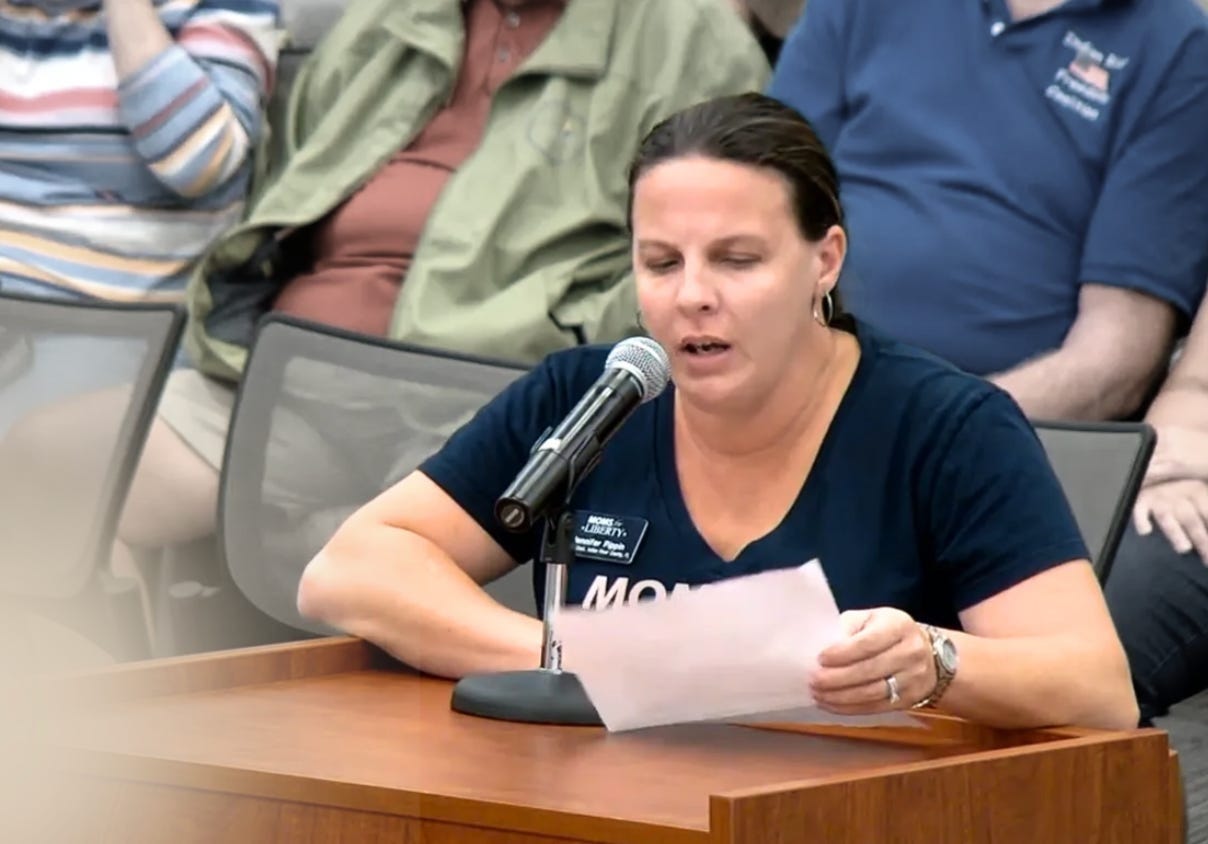
Pippin at the school board meeting in August 2023. Photo via YouTube.
This kind of direct action proved very effective. Even the reading protest where Tyner was escorted out won them 34 additional book bans from a unanimous board vote.
“You can’t deny that the kind of tactics that they have have been useful,” Cunningham says. “Some of the places they’ve taken over, [including] Sarasota County, where Bridget Ziegler was on the board, became much more conservative over the past few years.”
Silencing Opposition
In addition to school board meetings, the group has a track record of trolling progressive events. Tyner and the anonymous parent remember an incident where a group of M4L members showed up to a local National Association for the Advancement of Colored People (NAACP) meeting that had been organized to discuss plans for opposition against new state regulations that required classes to portray slavery in a more positive light.Tyner says white M4L members attempted to shout down NAACP speakers, with one member allegedly using the n-word. Thomas Kenny, a M4L member who was at the event, said this “did not happen” and that one of their members using the n-word is “an absolute lie.”
Cunningham says these disruptions are part of M4L’s playbook. He pointed to the example of Jennifer Jenkins, the liberal school board member who unseated Tina Descovich in neighboring Brevard County, who says protestors spurred by M4L have turned up outside her home calling her a pedophile and burning “FU” in her lawn.
“They [use the] same kind of tactics … over and over again,” says Cunningham.
Pippin
Chapter leader Jennifer Pippin has mastered those tactics, becoming widely known as one of the most influential book banners in the country. She’s also made headlines for filing a complaint against the Kilted Mermaid, a Vero Beach wine bar, alleging that they had hosted an all-ages drag event with sexual content, which the bar owner denies. M4L rallied against the bar online, spamming the posts of one of the bar’s drag performers, telling the queen to “stay away from children.” This stunt caught the attention of Florida’s Attorney General James Uthmeier, who launched an investigation and issued subpoenas for video recordings of the bar on the day of the event as well as identifying documents for employees and performers.
Pippin has also claimed to be a nurse, despite no public records showing that she has a license, and appeared on the antisemitic and homophobic far-right news website TruNews, where she claimed, without evidence, that anti-M4L activists have been killing pets and livestock owned by the group’s members.
Fear
Tyner and the other anonymous parent both say that they’ve had to take a step back from the school board and local activism because of the toxic environment M4L have created.
“It’s been turned into such a circus,” Tyner says.
In the meantime, things have gotten worse for the LGBTQ community in Indian River County, and in Florida overall, between the “Don’t Say Gay” law and anti-LGBTQ legislation that requires teachers to deadname trans students unless they have signed parental permission slips. The anonymous parent says he’s watched many of the LGBTQ people in his life, including one of his own children, who is a teacher, leave the state due to the hostile environment.
“It’s not safe for a lot of people,” he says.
Greener Pastures?
Despite all of this, a sea change may be on the horizon. A 2024 Brookings report found that the success rates of M4L-endorsed candidates were on the decline, and in Indian River County’s elections last year, both of M4L’s school board candidates lost. With the continued controversies of the Trump administration and the growing popularity of groups that oppose M4L’s ideology, Cunningham feels the tide may be turning for M4L’s influence in Indian River County and across America.
“In school board races, the Moms for Liberty label is toxic, so try to not get attached to that,” he says. “They’ve had quite an impact … I don’t wanna downplay that. But in terms of popular appeal and growth, I think it’s much more limited than it is portrayed.”
Editor’s Note: In an email, Jennifer Pippin responded to the allegations made about her in this story. You can read them here.
If objective, nonpartisan, rigorous, LGBTQ-focused journalism is important to you, please consider making a tax-deductible donation through our fiscal sponsor, Resource Impact, by clicking this button:
He has additionally espoused a view of the United States as a white, Christian nation, claiming that white people are undergoing a “cultural genocide” and deliberate replacement.
Multiple Trump nominees have had histories of racist, violent, white supremacist, and even pro-Nazi tweets. But almost all of them still end up being confirmed by Senate Republicans.
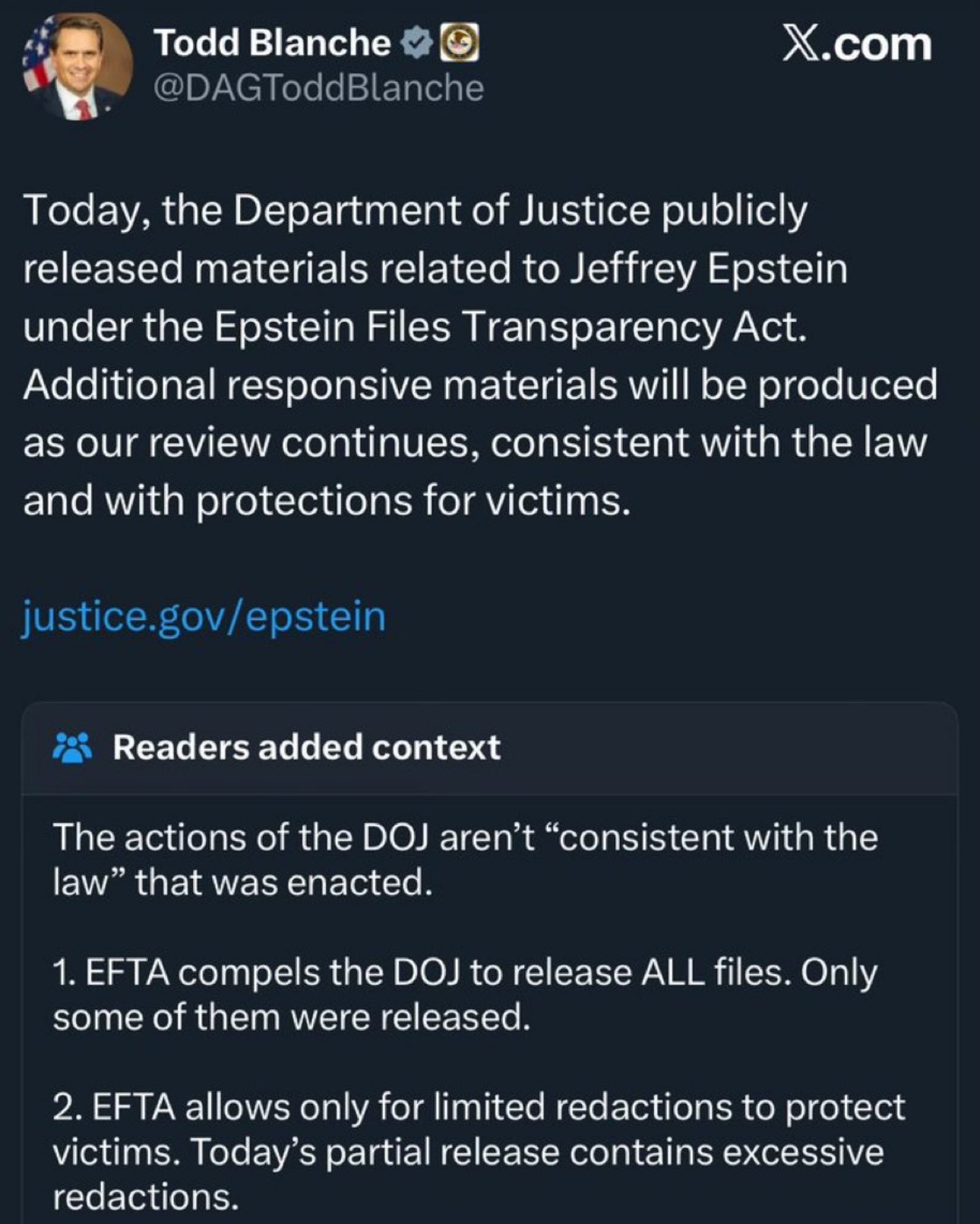
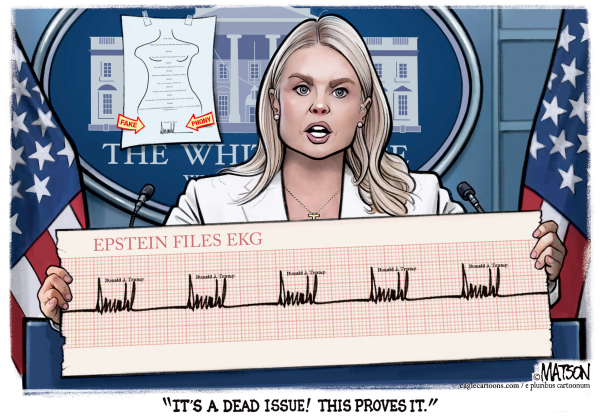
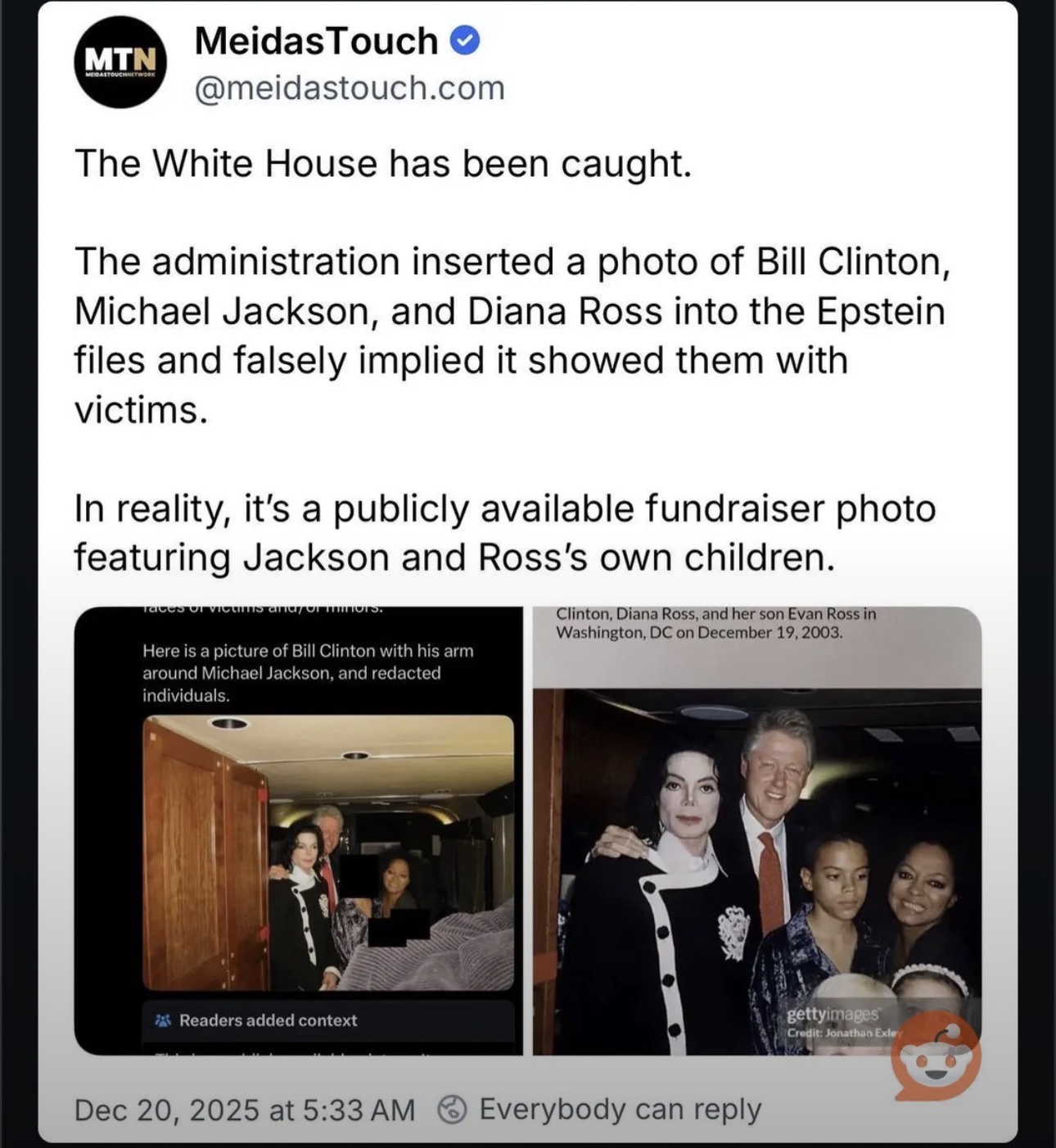
NPR identified more than a dozen files released by the DOJ on Friday that are no longer available Saturday afternoon, including one that shows President Trump’s photo on a desk among several other photographs. The removed files also show various works of art, including those containing nudity.
A video posted to Instagram by the University of South Florida’s Muslim Student Association (MSA) shows three men interrupting students during their morning prayer, spitting and yelling at them, and waving strips of bacon at them. USF said that their police department is currently gathering evidence and anticipates asking the state attorney to bring criminal charges.
Last Tuesday morning, Nov. 18, several MSA members gathered on top of a parking garage on USF’s Tampa campus for Fajr, Islam’s morning prayer. A livestream by Warriors for Christ—an organization recognized by the SPLC as a hate group—shows Muslim students kneeling in prayer as one of the men, identified in the video only as Ricardo, approaches with a painted cardboard box that reads “KAABA 2.0 JESUS IS LORD.” The Kaaba is a stone building at the center of the holiest site in Islam. While praying, Muslims face the geographical direction of the Kaaba.
The man sets up the box in front of the crowd while two other men, identifiable via their social medias (where they posted the video along with many other similar videos at other locations) as Richard Penkoski of Oklahoma and Christopher Svochak of Illinois, start to “insult” the Muslim prophet, Muhammad, in obscene and sexual ways. One of the men calls them all terrorists. “Go back to Mecca,” he shouts.
At one point, Penkoski brings out a small Wawa container with bacon in it and waves it around while snacking from it.
“We do care about you, so we brought you some bacon,” Penkoski says. “It’s really good. Bacon? Bacon? Anybody?”
Like all pork products, bacon is considered haram, meaning Islam’s rules forbid eating it. All of the students remain kneeling and continue on with their prayer.
“I spit on the grave of Muhammad,” the man identified as Ricardo says before spitting on the ground within a few feet of the students, who are still praying on the ground.
“Take that towel off of your head,” he says, pointing to a woman in the back wearing a religious head covering. At this point, after several minutes of the men shouting at the largely silent students, Ricardo lunges towards a student and points his finger in his face, prompting the student to briefly grab his wrist. Immediately, all three Christian men say this is evidence that Islam is a violent religion.
“This is not how you preach,” one of the students can be heard saying. “Brother, you’re harassing us,” he says to Penkoski.
“You’re not my brother,” Penkoski responds. “This isn’t harassment; this is free speech. But thank you for doing what you did to give us more ammo to prove you’re a bunch of violent psychopaths.”
The video continues like this until the students leave and the Christian content creators do the same. “That was awesome. That was fun,” one of the men can be heard saying as they walk away.
“By the way, don’t ever spit on the ground. It’s actually illegal,” one of the Christians says to the man identified as Ricardo. “What? Spitting on the ground?” “Yes, it’s illegal.” “Well, uh, I didn’t know that.”
Penkoski later posted a screenshot from the MSA group chat, in which one member gives an update on legal proceedings with the state attorney’s office.
“It’s not a hate crime,” Penkoski writes in the caption. “For a ‘hate crime’ to exist, there has to be an actual crime first.”
Florida Statute 871.01, which makes disrupting religious assembly a crime, reads: “Whoever willfully and maliciously interrupts or disturbs any school or any assembly of people met for the worship of God, … commits a misdemeanor of the first degree.” In Florida, a first-degree misdemeanor is punishable by up to a $1,000 fine and one year in prison.
Florida Statute 775.085 contains rules for hate crime enhancement when there is evidenced prejudice against “race, color, ancestry, ethnicity, religion, sexual orientation, national origin, homeless status, or advanced age of the victim.” This bumps first-degree misdemeanors up to third-degree felonies. Third-degree felonies are punishable by up to $5,000 in fines and five years in prison.
Florida Statute 784.0493 deals with harassment based on religious or ethnic heritage. It makes it illegal (first-degree misdemeanor) to “willfully and maliciously harass or intimidate another person based on the person’s wearing or displaying of any indicia relating to any religious or ethnic heritage.”
The man, identified as Ricardo repeatedly told two women with religious head coverings to “get that towel off your head,” and called one a “wicked woman” and a “Jezebel dog.”
As the men left the parking garage, Svochak spoke to the camera, saying Jesus helped him and Penkoski beat drug addiction.
“What did he save you from?” Penkoski asks Ricardo. “I used to be a heathen,” Ricardo replies.
The state attorney typically decides what initial charges to bring. The 13th Circuit State Attorney’s Office has plans to speak with Creative Loafing Tampa Bay this morning, but as a policy it waits to start a case until police send investigative information along.
A statement issued by USF says that campus police are still trying to identify the men in the video. USF also said that it has reached out to the affected students, and will issue trespass warnings to the men who interrupted the prayer. They anticipate referring the perpetrators to the state attorney for criminal charges.
This wouldn’t be the first time Penkoski found himself in court over a stunt. The Christian content creator takes videos of himself and others “street preaching,” often insulting and demeaning nearby targets. Penkoski uploads the videos to his social media accounts and makes other targeted posts and includes a donation link through a Venmo account under his wife’s name.
In 2022, Penkoski was accused of targeting two leaders of Oklahoma for Equality, who later filed for a protective order against him. They were granted the protective order, but it was overturned on appeal by the Oklahoma Supreme Court in a 5-4 decision, since Penkoski was targeting organizations rather than individuals.
Penkoski has also been the plaintiff in several legal battles, including an attempt to overturn federal marriage equality for gay couples, a suit against the mayor of Washington D.C. for allowing a “Black Lives Matter” mural, and a lawsuit against a school district that sent his daughter home for wearing a shirt that said “homosexuality is a sin.”
Svochak gave this reporter a statement about his religious beliefs over Instagram DM, but would not answer specific questions. Svochak, who is affiliated with the recognized hate group Warriors for Christ, said that he is trying to spread Jesus’ message of love.
DEARBORN, MI — A pair of dueling demonstrations unfolded along Schaefer Road and Michigan Avenue on Tuesday, Nov. 18, as anti-Islam activists and pro-Muslim counter-protesters clashed in front of a heavy police presence before moving toward Dearborn City Hall for the evening council meeting.
The city, home to one of the largest Muslim populations in the United States, has recently become a repeated target for out-of-state activists who falsely claim it operates under “Sharia law.”
The tensions began when Jake Lang, a Jan. 6 rioter who has described himself as a political prisoner, arrived on Michigan Avenue attempting to burn a Quran.
Lang tried several times to ignite the book, holding it up with a lighter, but counter-protesters repeatedly knocked it from his hands.
At one point, Lang stepped into the center of Michigan Avenue and tapped the Quran with a slab of bacon before a Muslim counter-protester snatched the book and ran off with it.
Lang’s group later marched toward City Hall ahead of the 7 p.m. meeting.
Curtis Hertel, chair of the Michigan Democratic Party, released the following statement.
“Attempting to burn a religious document is an unacceptable act of hate,” Hertel said. “Dearborn is a beloved, multicultural city with tens of thousands of people who are cherished friends, family members, and neighbors.”
A pro-Muslim and pro-Palestinian supporter holds a sign reading “Defeat Trump’s Fascist Movement” during a counterprotest in Dearborn on Nov. 18, 2025.Fuad Shalhout — MLive.com
A Dearborn police officer told MLive there were about seven police cars stationed nearby to help keep the situation calm.
At the same time this was happening, Michigan gubernatorial candidate Anthony Hudson, who had previously organized a separate protest without affiliation to Lang, walked with supporters along the sidewalk.
Hudson’s and Lang’s demonstrations were unrelated but appeared in the city on the same afternoon, drawing a mix of residents, activists, and counter-protesters on both sides of Michigan Avenue.
Yet after visiting three mosques in the area, Hudson declared “that there are many false and misleading narratives about Dearborn being spread and that all he found from Muslims in Dearborn was hospitality.” He further stated that he was opposed to outsiders coming to Dearborn with plans to burn the Quran.
As a result, Lang spray-painted the word “cuck” on what appeared to be Hudson’s campaign bus in Dearborn, accusing the Republican candidate of “selling out” for visiting mosques and expressing sympathy toward Muslims.
Hudson later denied the bus belonged to him.
Michigan gubernatorial candidate Anthony Hudson walks with supporters during a protest on Michigan Avenue in Dearborn on Nov. 18, 2025.Fuad Shalhout — MLive.com
One Hudson supporter, Kelly Elias, said she drove several hours from Northern Michigan because she wanted to see the situation firsthand.
“I just wanted to come and see what the mainstream media (is reporting) — if they’re lying to us. I’m Arabic too. I’m from the God of love. I don’t want to hurt anybody. If we’re in danger or if there’s any problem, I want to know. But if not, let’s be peaceful with each other and solve this problem. We need to work together and be just. Love each other. We don’t need any problems. Anybody with hate.”
Elias described herself as culturally mixed.
“I’m Lebanese, I’m Syrian, Italian,” she said. “I’m a mix.”
She said she has long viewed Dearborn positively.
“I’ve always thought it was a wonderful area. I’ve had friends here. I worked in Detroit. I lived in Detroit,” Elias said.
On the other side of the street, Muslim and pro-Palestinian counter-protesters rallied in response to Lang’s actions and the broader anti-Islam messaging.
Dearborn resident Karrar Haidar explained why he attended the protest.
“To show the American people that we are a religion of peace and we can coexist as the Abrahamic religions have coexisted in previous times,” Haidar said. “Some people are a little bit more extreme in their ideology, but we’re here to show them that we also have a voice and this is our country, too.
“Everybody comes from some sort of immigration, and we’re all happy to be here. We all pay our taxes, we go to work and try to provide for our family.”
Haidar also addressed claims that Dearborn is governed by Sharia law.
“If they really do believe Sharia is the jurisdiction here in Dearborn, when you walk in, you see a monument in regards of Maryam and Prophet Jesus,” he said.
He said protesters coming to Dearborn misunderstand the community.
“I think they lost their core beliefs with Christianity,” Haidar said. “I feel like there’s a form of Christianity that exists in this country that is more toward spreading hate. Because if you go towards Ford Road, you’ll see a mosque and two churches side by side, standing strong in solidarity. So, I don’t know what their ideology is. I think it’s more of a political extremist view rather than a religious one.”
Muslim demonstrators pray outside Dearborn City Hall during protests on Nov. 18, 2025.Fuad Shalhout — MLive.com
As both sides continued chanting and walking toward City Hall, police kept a perimeter on the sidewalks and along Michigan Avenue, intervening briefly when tensions escalated over Lang’s attempted Quran burning.
One person was seen arrested at the Dearborn City Hall. No injuries were immediately reported.
Fuad Shalhout
Fuad Shalhout is the business and community reporter at MLive.com-The Flint Journal. He joined MLive in July 2022 and covers a range of topics from new business openings, property sales and human interest…
Sarah Rainsford,Eastern and Southern Europe correspondentand
Guy Delauney,Balkans correspondent
AP Photo/Jerome Delay
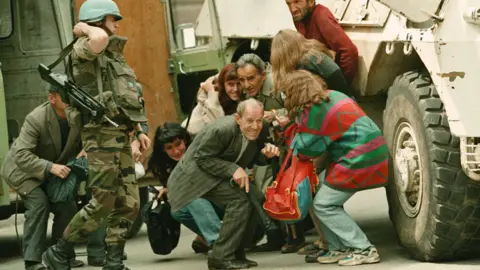
Civilians risked their lives to cross Sarajevo’s main boulevard during the Bosnian war
The public prosecutor’s office in Milan has opened an investigation into claims that Italian citizens travelled to Bosnia-Herzegovina on “sniper safaris” during the war in the early 1990s.
Italians and others are alleged to have paid large sums to shoot at civilians in the besieged city of Sarajevo.
The Milan complaint was filed by journalist and novelist Ezio Gavazzeni, who describes a “manhunt” by “very wealthy people” with a passion for weapons who “paid to be able to kill defenceless civilians” from Serb positions in the hills around Sarajevo.
Different rates were charged to kill men, women or children, according to some reports.
More than 11,000 people died during the brutal four-year siege of Sarejevo.
Yugoslavia was torn apart by war and the city was surrounded by Serb forces and subjected to constant shelling and sniper fire.
Similar allegations about “human hunters” from abroad have been made several times over the years, but the evidence gathered by Gavazzeni, which includes the testimony of a Bosnian military intelligence officer, is now being examined by Italian counter terrorism prosecutor Alessandro Gobbis.
The charge is murder.
CHRISTOPHE SIMON/AFP
More than 11,000 civilians died in the siege of Sarajevo
The Bosnian officer apparently revealed that his Bosnian colleagues found out about the so-called safaris in late 1993 and then passed on the information to Italy’s Sismi military intelligence in early 1994.
The response from Sismi came a couple of months later, he said. They found out that “safari” tourists would fly from the northern Italian border city of Trieste and then travel to the hills above Sarajevo.
“We’ve put a stop to it and there won’t be any more safaris,” the officer was told, according to Ansa news agency. Within two to three months the trips had stopped.
Ezio Gavazzeni, who usually writes about terrorism and the mafia, first read about the sniper tours to Sarajevo three decades ago when Italian newspaper Corriere della Sera reported the story, but without firm evidence.
He returned to the topic after seeing “Sarajevo Safari”, a documentary film from 2022 by Slovenian director Miran Zupanic which alleges that those involved in the killings came from several countries, including the US and Russia as well as Italy.
Gavazzeni began to dig further and in February handed prosecutors his findings, said to amount to a 17-page file including a report by former Sarajevo mayor Benjamina Karic.
MICHAEL EVSTAFIEV/AFP
Snipers would shoot at civilians from areas controlled by the Bosnian Serbs overlooking Sarajevo
An investigation in Bosnia itself appears to have stalled.
Speaking to Italy’s La Repubblica newspaper, Gavazzeni alleges that “many” took part in the practice, “at least a hundred” in all, with Italians paying “a lot of money” to do so, up to €100,000 (£88,000) in today’s terms.
In 1992, late Russian nationalist writer and politician Eduard Limonov was filmed firing multiple rounds into Sarajevo from a heavy machine gun.
He was being given a tour of hillside positions by Bosnian Serb leader Radovan Karadzic, who was later convicted of genocide by an international tribunal in the Hague.
Limonov didn’t pay for his war tourism, though. He was there as an admirer of Karadzic, telling him: “We Russians should take example from you.”
Italian prosecutors and police are said to have identified a list of witnesses as they try to establish who might have been involved.
However, members of the British forces who served in Sarajevo in the 1990s have told the BBC that they never heard of any so-called “sniper tourism” during the Bosnian conflict.
They indicated that any attempts to bring in people from third countries who had paid to shoot at civilians in Sarajevo would have been “logistically difficult to accomplish”, due to the proliferation of checkpoints.
British forces served both inside Sarajevo and in the areas surrounding the city, where Serb forces were stationed and they saw nothing at the time to suggest that “sniper tourism” was taking place.
One soldier described the allegations that foreigners had paid to shoot at civilians as an “urban myth”.














































 USF logo. By Seán Kinane/WMNF News (Aug. 2015).
 (L-R) Richard Penkoski, Christopher Svochak, and Ricardo.Credit:























 Scottie's Playtime
