Texas State Board of Education advisers signal push to the right in social studies overhaul

Texas State Board of Education advisers signal push to the right in social studies overhaul

Some advisers have criticized diversity efforts, questioned the historical contributions of people of color, and promoted debunked beliefs.
The Texas State Board of Education launched the process of redesigning the state's social studies standards earlier this year.The Texas State Board of Education launched the process of redesigning the state’s social studies standards earlier this year. Trace Thomas for The Texas Tribune

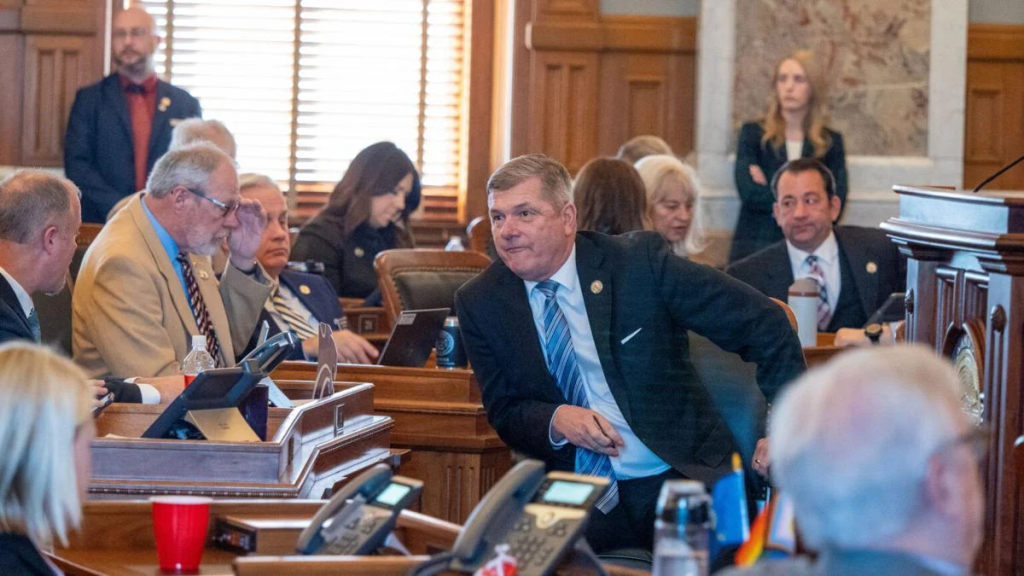
The Texas State Board of Education is reshaping how public schools will teach social studies for years to come, but its recent selection of the panelists who will advise members during the process is causing concern among educators, historians and both Democrats and Republicans, who say the panel’s composition is further indication that the state wants to prioritize hard-right conservative viewpoints.

The Republican-dominated education board earlier this year officially launched the process of redesigning Texas’ social studies standards, which outline in detail what students should know by the time of graduation. The group, which will meet again in mid-November, is aiming to finalize the standards by next summer, with classroom implementation expected in 2030.

A majority of the 15 members in September agreed on the instructional framework schools will use in each grade to teach social studies, already marking a drastic shift away from Texas’ current approach. The board settled on a plan with a heavy focus on Texas and U.S. history and less emphasis on world history, geography and cultures. Conservative groups like Texas Public Policy Foundation and the Heritage Foundation championed the framework, while educators largely opposed it. 

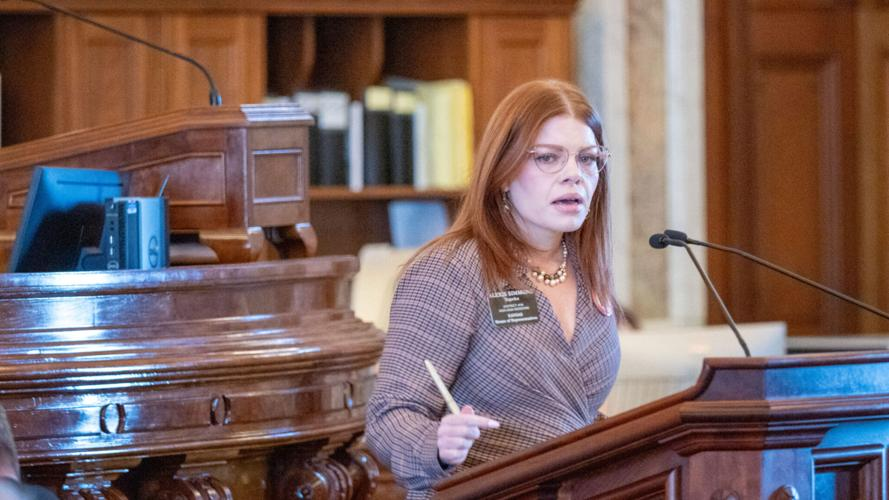
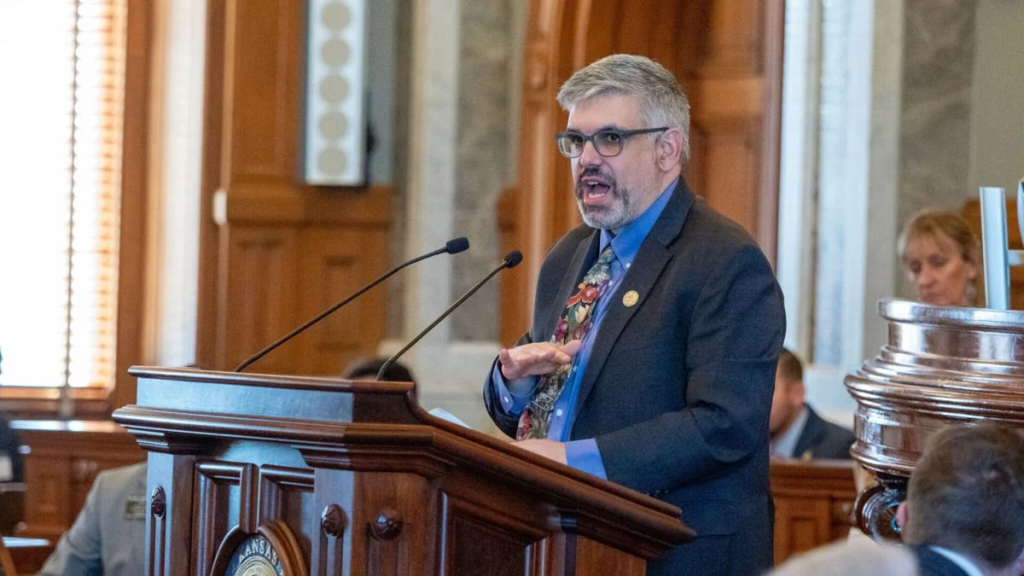
In the weeks that followed, the board selected a panel of nine advisers who will offer feedback and recommendations during the process. The panel appears to include only one person currently working in a Texas public school district and has at least three people associated with far-right conservative activism. That includes individuals who have criticized diversity efforts, questioned school lessons highlighting the historical contributions of people of color, and promoted beliefs debunked by historians that America was founded as a Christian nation. 

That group includes David Barton, a far-right conservative Christian activist who gained national prominence arguing against common interpretations of the First Amendment’s establishment clause, which prevents the government from endorsing or promoting a religion. Barton believes that America was founded as a Christian nation, which many historians have disproven. 

Critics of Barton’s work have pointed to his lack of formal historical training and a book he authored over a decade ago, “The Jefferson Lies,” that was pulled from the shelves due to historical details “that were not adequately supported.” Brandon Hall, an Aledo Republican who co-appointed Barton, has defended the decision, saying it reflected the perspectives and priorities of his district. 

Another panelist is Jordan Adams, a self-described independent education consultant who holds degrees from Hillsdale College, a Michigan-based campus known nationally for its hard-right political advocacy and efforts to shape classroom instruction in a conservative Christian vision. Adams’ desire to flip school boards and overhaul social studies instruction in other states has drawn community backlash over recommendations on books and curriculum that many felt reflected his political bias. 

Adams has proclaimed that “there is no such thing” as expertise, describing it as a label to “shut down any type of dialogue and pretend that you can’t use your own brain to figure things out.” He has called on school boards to craft policies to eliminate student surveys, diversity efforts and what he considers “critical race theory,” a college-level academic and legal framework examining how racism is embedded in laws, policies and institutions. Critical race theory is not taught in K-12 public schools but has become a shorthand for conservative criticism of how schools teach children about race.

In an emailed response to questions from The Texas Tribune, Adams pointed to his earlier career experience as a teacher and said he understands “what constitutes quality teaching.” Adams also said he wants to ensure “Texan students are taught using the best history and civics standards in America” and that he views the purpose of social studies as forming “wise and virtuous citizens who know and love their country.”

“Every teacher in America falls somewhere along the political spectrum, and all are expected to set their personal views aside when teaching. The same goes for myself and my fellow content advisors,” Adams said. “Of course, given that this is public education, any efforts must support the U.S. Constitution and Texas Constitution, principles of the American founding, and the perpetuation of the American experiment in free self-government.”

Republicans Aaron Kinsey and LJ Francis, who co-appointed Adams, could not be reached for interviews.

David Randall, executive director of the Civics Alliance and research director of the National Association of Scholars, was also appointed a content adviser. He has criticized standards he felt were “animated by a radical identity-politics ideology” and hostile to America and “groups such as whites, men, and Christians.” Randall has written that vocabulary emphasizing “systemic racism, power, bias, and diversity” cannot coexist with “inquiry into truth — much less affection for America.” He has called the exclusion of the Bible and Christianity in social studies instruction “bizarre,” adding that no one “should find anything controversial” about teaching the role of “Judeo-Christian values” in colonial North America. 

Randall told the Tribune in an email that his goal is to advise Texas “as best I can.” He did not respond to questions about his expertise and how he would work to ensure his personal beliefs do not bleed into the social studies revisions.

Randall was appointed by Republican board members Evelyn Brooks and Audrey Young, both of whom told the Tribune that they chose him not because of his political views but because of his national expertise in history and civics, which they think can help Texas improve social studies instruction.

“I really can’t sit here and say that I agree with everything he has said. I don’t even know everything that he has said.” Brooks said. “What I can say is that I can refer to his work. I can say that he emphasizes integrating civics.”

The advisory panel also consists of a social studies curriculum coordinator in the Prosper school district and university professors with expertise ranging from philosophy to military studies. The group notably includes Kate Rogers, former president of the Alamo Trust, who recently resigned from her San Antonio post after Lt. Gov. Dan Patrick criticized her over views she expressed in a doctoral dissertation suggesting she disagreed with state laws restricting classroom instruction on race and slavery.

Seven of the content advisers were selected by two State Board of Education members each, while Texas’ Commissioner of Higher Education Wynn Rosser chose the two other panelists. Board member Tiffany Clark, a Democrat, did not appoint an adviser, and she told the Tribune that she plans to hold a press conference during the board’s November meeting to address what happened.

Staci Childs, a Democrat from Houston serving on the State Board of Education, said she had anticipated that the content advisory group would include “extremely conservative people.” But her colleagues’ choices, she said, make her feel like “kids are not at the forefront right now.” 

Pam Little, who is the board’s vice chair, is one of two members who appear to have chosen the only content adviser with active experience working in a Texas K-12 public school district. The Fairview Republican called the makeup of the advisory panel “disappointing.”

“I think it signals that we’re going in a direction where we teach students what we want them to know, rather than what really happened,” Little said. 

The board’s recent decisions show that some members are more focused “on promoting political agendas rather than teaching the truth,” said Rocío Fierro-Pérez, political director of the Texas Freedom Network, a progressive advocacy organization that monitors the State Board of Education’s decisions.

“Whether your political beliefs are conservative, liberal, or middle of the road really shouldn’t disqualify you from participating in the process to overhaul these social studies standards,” Fierro-Pérez said. “But it’s wildly inappropriate to appoint unqualified political activists and professional advocates with their own agendas, in leading roles and guiding what millions of Texas kids are going to be learning in classrooms.” 

Other board members and content advisers insist that it is too early in the process to make such judgments. They say those discussions should wait until the actual writing of the standards takes place, which is when the board can directly address concerns about the new framework.

They also note that while content advisers play an integral role in offering guidance, the process will include groups of educators who help write the standards. State Board of Education members will then make final decisions. Recent years have shown that even those within the board’s 10-member Republican majority often disagree with one another, making the final result of the social studies revisions difficult to predict.

Donald Frazier, a Texas historian at Schreiner University in Kerrville and chair of Texas’ 1836 Project advisory committee, who was also appointed a content adviser, said that based on the panelists’ conversations so far, “I think that there’s a lot more there than may meet the eye.”

“There’s people that have thought about things like pedagogy and how children learn and educational theory, all the way through this panel,” Frazier said. “There’s always going to be hand-wringing and pearl-clutching and double-guessing and second-guessing. We’ve got to keep our eye on the students of Texas and what we want these kids to be able to do when they graduate to become functioning members of our society.”

The makeup of the advisory panel and the Texas-heavy instructional framework approved in September is the latest sign of frustration among conservative Republicans who often criticize how public schools approach topics like race and gender. They have passed laws in recent years placing restrictions on how educators can discuss those topics and pushed for instruction to more heavily emphasize American patriotism and exceptionalism. 

Under the new framework, kindergarteners through second graders will learn about the key people, places and events throughout Texas and U.S. history. The plan will weave together in chronological order lessons on the development of Western civilization, the U.S., and Texas during grades 3-8, with significant attention on Texas and the U.S. after fifth grade. Eighth-grade instruction will prioritize Texas, as opposed to the broader focus on national history that currently exists. The framework also eliminates the sixth-grade world cultures course.

When lessons across all grades are combined, Texas will by far receive the most attention, while world history will receive the least — though world history would receive more time under the new framework than the one currently used.

During a public comment period in September, educators criticized the new plan’s lack of attention to geography and cultures outside of America. They opposed how it divides instruction on Texas, U.S. and world history into percentages every school year, as opposed to providing students an entire grade to fully grasp one or two social studies concepts at a time. They said the plan’s strict chronological structure could disrupt how kids identify historical trends and cause-and-effect relationships, which can happen more effectively through a thematic instructional approach.  

But that criticism did not travel far with some Republicans, who argue that drastic changes in education will almost always prompt negative responses from educators accustomed to teaching a certain way. They point to standardized test results showing less than half of Texas students performing at grade level in social studies as evidence that the current instructional approach is not working. They also believe the politicization of education began long before the social studies overhaul, but in a way that prioritizes left-leaning perspectives.

“Unfortunately, I think it boils down to this: What’s the alternative?” said Matthew McCormick, education director of the conservative Texas Public Policy Foundation. “It always seems to come down to, if it’s not maximally left-wing, then it’s conservative indoctrination. That’s my perspective. What is the alternative to the political and policymaking process? Is it to let teachers do whatever they want? Is it to let the side that lost the elections do what they want? I’m not sure. There’s going to be judgments about these sorts of things.”

This is not the first time the board has garnered attention for its efforts to reshape social studies instruction. The group in 2022 delayed revisions to the standards after pressure from Republican lawmakers who complained that they downplayed Texan and American exceptionalism and amounted to far-left indoctrination. Texas was also in the national spotlight roughly a dozen years prior for the board’s approval of standards that reflected conservative viewpoints on topics like religion and economics. 

Social studies teachers share the sentiment that Texas can do a better job equipping students with knowledge about history, geography, economics and civics, but many push back on the notion that they’re training children to adhere to a particular belief system. With challenges like budget shortfalls and increased class sizes, they say it is shortsighted to blame Texas’ academic shortcomings on educators or the current learning standards — not to mention that social studies instruction often takes a backseat to subjects like reading and math.

“I think we’re giving a lot more credit to this idea that we’re using some sort of political motivation to teach. We teach the standards. The standards are there. That’s what we teach,” said Courtney Williamson, an eighth-grade social studies teacher at a school district northwest of Austin.

When students graduate, some will compete for global jobs. Others may go to colleges across the U.S. or even internationally. That highlights the importance, educators say, of providing students with a broad understanding of the world around them and teaching them how to think critically. 

But with the recent moves requiring a significant overhaul of current instruction — a process that will likely prove labor-intensive and costly — some educators suspect that Texas leaders’ end goal is to establish a public education system heavily reliant on state-developed curricula and training. That’s the only way some can make sense of the new teaching framework or the makeup of the content advisory panel.

“I’m really starting to notice an atmosphere of fear from a lot of people in education, both teachers and, I think, people higher up in districts,” said Amy Ceritelli-Plouff, a sixth-grade world cultures teacher in North Texas. “When you study history, you look at prior conflicts and times in our history when there has been extremism and maybe too much government control or involvement in things; it starts with censoring and controlling education.” 

Disclosure: Schreiner University, Texas Freedom Network and Texas Public Policy Foundation have been financial supporters of The Texas Tribune, a nonprofit, nonpartisan news organization that is funded in part by donations from members, foundations and corporate sponsors. Financial supporters play no role in the Tribune’s journalism. Find a complete list of them here.

A Date & An SoS That Will Live In Infamy, 1st Airplane Takeoff From A Ship, & 10 Million Did Not Sign, On This Date In Peace & Justice History

November 14, 1910
Eugene Ely performed the first airplane takeoff from a ship. His Curtiss pusher flew from the deck of the U.S.S. Birmingham in Hampton Roads, Virginia.By January he would execute the first (takeoff and) landing on a warship, the U.S.S. Pennsylvania. Captain Washington I. Chambers of the Navy Department had been interested in the military uses for the seven-year-old invention.
Naval flight training started shortly thereafter.


More of the whole story. 
November 14, 1954
“Ten Million Americans Mobilized for Justice” began a campaign to collect 10 million signatures on a petition urging the Senate not to censure Senator Joseph McCarthy (R-Wisconsin). The motion of censure against Senator McCarthy was for obstructing a Senate committee and for acting inexcusably and reprehensibly toward a U.S. soldier appearing before his own committee.
McCarthy had used his Senate Permanent Investigations Subcommittee to publicly denounce thousands as subversive, especially within the federal government, many without any justification. The political views of most were painted as treasonable and conspiratorial, rather than differing political views.
The petition effort fell about nine million signatures short.

More on Joe McCarthy 
November 14, 2000
Florida Secretary of State Katherine Harris, simultaneously co-chair of George W. Bush’s Florida presidential campaign organization and the public official responsible for the conduct of the election itself, certified Governor Bush’s fragile 300-vote lead over Vice President Al Gore in the 2000 presidential election.

Katherine Harris
Florida Judge Terry Lewis gave Harris the authority to accept or reject a follow-up manual recount from some counties where the count was open to question. Harris rejected the manual recounts.

“Apparently, Sunday night is the new big news night.”

The Overnight News by Joyce Vance
Read on Substack

Apparently, Sunday night is the new big news night. To keep us up to date on today’s developments, it’s a rare Monday morning update.

Late last night, Trump issued pardons. However, it’s an unusual list that leaves us reading tea leaves, because these aren’t individuals being prosecuted by the federal government or even people who are at risk of being prosecuted, given the current administration—those are the people who usually want and need a pardon. These pardons don’t apply to ongoing state prosecutions of fake slates of electors in places like Arizona and Nevada.

These names still don’t appear on the White House’s official pardon list. News of the pardons came from a tweet made by Trump’s man at DOJ, Ed Martin. And it wasn’t subtle: “No MAGA left behind.”

The list names a cast of familiar characters, including Rudy Giuliani, Boris Epshteyn, John Eastman, Mark Meadows, Sidney Powell, Ken Chesebro, Michael Roman, Christina Bobb, Kelli Ward, and Jenna Ellis. They are all people who advanced Trump’s effort to claim victory after losing the 2020 election. But that’s not the full extent of it. The document Martin posted purports to be a broad pardon, akin to those following the Civil War that pardons everyone involved (although here, there is no requirement to take a loyalty oath to the United States as there was following the war). It’s part of Trump’s ongoing effort to rewrite the history of January 6 and the insurrection and a signal that anyone who serves him will be protected and rewarded.

Late last night, the First Circuit rejected the administration’s request for a stay of a lower court order requiring it to make SNAP payments from emergency funds. That left the ball in the Supreme Court’s hands. Justice Jackson promptly issued a briefing schedule that requires both sides, as well as any amici, to file their briefs on the matter today. This proceeding is limited to the question of whether the district court’s order that the administration must proceed with November SNAP payments should be stayed (paused) while the lawsuit proceeds.

The First Circuit panel made the stakes plain in its opinion: 42 million people, or one in every eight Americans, rely on these benefits to keep hunger at bay.

From the First Circuit’s decision

First thing Monday morning, Justice Jackson issued a briefing order requiring the DOJ to file its response to the First Circuit’s decision by 4:00 p.m. and giving the plaintiffs until 8:00 a.m. Tuesday morning to respond. The government is “the applicant” at this stage of the case.

Federal Law enforcement abuses in Chicago. The Justice Department filed a notice of appeal over Chicago federal Judge Sara Ellis’ preliminary injunction restricting the use of force against protesters and journalists. If you stop for just a moment and zoom out, the utter lunacy here comes into focus. The government is fighting for the right to use excessive force against peaceful protesters. Why not take the obvious position that while it disagrees with the Judge’s assessment of the facts, it intends to fully comply with the law regarding treatment of people exercising their First Amendment rights? But that is not the government’s view of the matter.

Finally, marriage equality is safe, at least for now. The Supreme Court issued its list of grants and denials on cases from Friday’s conference this morning. The case I wrote to you about last night, involving Kentucky court clerk Kim Davis, who objected to issuing marriage licenses to same sex couples, was on the denial list, so the Court will not hear Davis’ appeal. That means there were not four Justices who wanted to hear the case, which, as I mentioned, doesn’t have particularly attractive facts for undoing longstanding precedent. This denial doesn’t tell us anything about whether the Court might be interested in undoing gay Americans’ rights if the “right” case comes along.

Last night, I started the newsletter by writing, “It’s going to be another blockbuster, high-stakes legal week. If you feel a bit overwhelmed, like I did Friday night at dinner when legal opinions were breaking out everywhere while I tried to have a meal with friends, remember that I’ll be here for you all week to try and keep things organized and understandable.” I didn’t expect it to be this soon, but the courts, for a change, are moving at lightning speed. Thank you for being here with me and reading Civil Discourse.

We’re in this together,

Joyce

I Have No Words

Conservative activist Laura Loomer, a Trump ally, says she has a new Pentagon press pass

Laura Loomer arrives at Philadelphia International Airport, Sept. 10, 2024, in Philadelphia. (AP Photo/Chris Szagola, File)

NEW YORK (AP) — With the Pentagon’s press room largely cleared of mainstream reporters, conservative activist and presidential ally Laura Loomer says she has been granted a credential to work there.

Loomer has an influential social media presence and the ear of President Donald Trump, frequently campaigning for the firings of government officials she deems insufficiently loyal to his administration. Some targets have been in the field of national security, including Dan Driscoll, secretary of the Army. (snip-MORE)

Open Windows

(I remember these.)

Dick Cheney by Ann Telnaes

The original Darth Vader dies Read on Substack

I’ve been in the editorial cartooning profession for over 30 years so I covered both George W Bush administrations. I can safely say I drew more cartoons of his vice president than I did of GW.

(Yes, I titled my book “DICK”)

Once I heard Dick Cheney say these words, I felt I had his caricature down.

SCOTUS, & Billboards, & Election Day. Oh, My!

The Week Ahead by Joyce Vance

November 2, 2025 Read on Substack

This Wednesday, the Supreme Court will hear the Trump tariffs case, arguably one of the most important cases it will hear all term.

But, it’s important to understand that this is not a case about tariffs in general or about whether they are good policy. It’s a case about specific tariffs that President Trump imposed in February and whether he had the statutory authority to impose them. In other words, this is yet another example of Trump attempting to seize power that neither the Constitution nor our laws grant him and going to the Supreme Court in hopes they will validate it nonetheless. After argument, the Supreme Court will decide whether Trump had the legal authority to impose these tariffs in two cases.

We’ve been tracking this issue since Trump first threatened to impose tariffs, waffling back and forth seemingly from minute to minute. We studied the U.S. Court of Appeals for the Federal Circuit’s decision that rejected Trump’s effort to impose tariffs using IEEPA (I-E-Pa), the 1977 International Emergency Economic Powers Act, for the very simple reason that the Act, unlike other statutes that do give a president the right to impose tariffs, doesn’t mention tariffs at all. It does not give the president any authority to impose them under the statute that he has expressly said he used to do so. This is the kind of textualist argument conservative justices have backed in other cases, and to abandon that approach here would be a sharp and hypocritical departure for them. Last term, Justice Gorsuch wrote that the justices’ primary focus should be on the text of the statute.

The Constitution gives the power to impose taxes, which includes tariffs, to Congress. Because IEEPA doesn’t extend that power to the president, his use of it here is just a power grab, the kind of practice the Supreme Court should push back against if it intends to remain relevant to the American experiment. The Federal Circuit’s decision pointed out that while other laws expressly give the president the power to impose tariffs, IEEPA does not. Congress knows how to give the president the power to impose tariffs when it wants to and because it did not do so here, that should be the end of the inquiry. The administration should lose here. So what we hear in oral argument, even though it won’t necessarily signal where individual judges will end up, is worth following closely to see what tea leaves can be read for this case. It may also give us some sense of whether the Court intends to act as a check in other cases involving Trump’s power grabs.

The “major questions” will also be in play on Wednesday. You may recall it from recent terms of Court, where a conservative majority has recently used it to say there must be clear guidance from Congress before a federal agency can act on a major question of economic or political significance. Here’s the wrinkle: The Court has only used the doctrine to hamstring the Biden administration, and not to hinder Trump.

  • In 2022, the Court decided National Federation of Independent Business v. Department of Labor, Occupational Safety and Health Administration, invalidating the Biden administration’s Covid testing/vaccination mandate for employers of more than 100 people. Without explicitly referencing the major questions doctrine, the Court wrote Congress had not given the president the authority to impose a vaccine mandate.
  • In 2022, the Court decided West Virginia v. Environmental Protection Agency, rejecting the EPA’s authority to regulate greenhouse gas emissions from coal-fired power plants because Congress had not specifically authorized a regulation with such major political and economic consequences.
  • In 2023, the Court rejected Biden’s student loan relief package in Biden v. Nebraska, holding that even though a federal statute allowed the Secretary of Education to “waive or modify” student loan debt, that authorization was insufficient for the Biden policy because this was a major question.

The Federal Circuit used these cases as precedent against the Trump administration. “Tariffs of unlimited duration on imports of nearly all goods from nearly every country with which the United States conducts trade” is “both ‘unheralded’ and ‘transformative,’” the court wrote, concluding that as a result, the administration needed to be able to “point to clear congressional authorization” for its tariffs. The absence of any language in the statute authorizing them was fatal to Trump’s case in the lower court. But the sardonic joke among appellate lawyers has been that the major questions doctrine only applies to Democratic administrations. On Wednesday, we will see whether that holds up and if the Court’s conservative majority is willing to twist itself into pretzel logic to support this administration’s political objectives.

There are other issues to look at this week:

As the Trump administration continues its extraterritorial strikes on supposed drug traffickers, there is increasing concern about the legality of that conduct. Georgetown law professor Steve Vladeck and I will take up that issue on Monday evening at 9 p.m. ET/8 CT in a Substack Live (if you subscribe to Civil Discourse, you’ll receive an email inviting you to join us when we go live, so mark your calendars and be ready).

As we head into the week, there are billboards up on the expressway heading toward U.S. Southern Command, in Doral, Florida, that tell troops “Don’t let them make you break the law” in response to those attacks.

New billboards are going up near Miami, Chicago, and Memphis, Tennessee, as well, a warning to troops being deployed in American cities. The billboards are part of a campaign by veterans to support and encourage the troops to uphold military order.

If you’ve forgotten about DOGE, unfortunately, it’s time to remember. There are reports that the Pentagon’s DOGE unit “is leading efforts to overhaul the U.S. military drone program, including streamlining procurement, expand homegrown production, and acquire tens of thousands of cheap drones in the coming months.” And the Bulwark reported that Rear Admiral Kurt Rothenhaus was recently removed from his post as chief of naval research, the top post at the Office of Naval Research (ONR), and replaced by Rachel Riley, who has been working in DOGE-related roles in the Trump administration. Although she was a Rhodes Scholar, Riley, 33, has “no apparent naval experience.”

There are also reports of DOGE interfering with the Department of Agriculture. Senator Dick Durbin tweeted that “President Trump and the DOGE cowboys want to close and diminish critical agricultural research at the University of Illinois. The only other soybean lab like that in the world is in…China. Our President is ceding our agriculture research leadership to China.”

Remember back in February, when Trump floated the idea that everyone could get a $5,000 check from all of DOGE’s “savings”? That didn’t work out so well, did it? You may want to remember this for Thanksgiving dinner.

Tuesday is election day. There is the Virginia governor’s race and the New York City mayoral race. Also, the governorship is at issue in New Jersey. A California ballot initiative will determine whether that state will engage in defensive redistricting designed to offset the aggressive way the Trump administration has demanded Republican states use it to spike the balance between the two parties in the House in their favor, effectively letting politicians choose their voters, instead of the other way around. There is also a race in Pennsylvania, where three Democratic members of the state Supreme Court face retention votes that could be highly significant in the potential 2028 battleground state.

Vote.org, a nonpartisan voter registration and engagement platform, announced a “huge spike” in voter registration ahead of the elections, with their online registration platform being used more than twice as many times as they were during the comparable 2021 election cycle.

They reported that:

  • More than 80% of those users are under the age of 35
  • Nearly half (46%) are just 18 years old
  • Compared to 2021, there are more young voters, more women, and more voters of color using the platform

It’s good news for pro-democracy Americans.

The house will remain out of sessionyet again this week.

Epstein. Epstein. Epstein.

But as we all know, that means SNAP is still in danger, which means many of our fellow citizens could begin to go hungry this week if the administration tries to skirt compliance with or obtains an injunction staying decisions by a court in Massachusetts, and a more specific one in Rhode Island, which require the administration to use emergency dollars to fund SNAP. There, Chief Judge John J. McConnell Jr. ordered the USDA to distribute contingency funds and to report to the Court on its progress by 12:00 p.m. on Monday, November 3. Expect more litigation this week.

ICE agents are still engaging in “enforcement actions” in American communities and residential neighborhoods. Stories of abuses are circulating; it’s a critical moment for using our skills to ferret out misinformation and focus on the truth. This photo is from a Day of the Dead celebration in New Orleans.

It is clear that this is a week that will require us to summon our courage and continue to pay close attention. The times are far too important for us to look away. Remind yourself that dictators use overwhelm as a tactic for getting people to give up and submit to their rule. Let’s not do that to us.

We’re in this together,

Joyce

Sheriff Struggles To Explain Why He Jailed Retired Cop For Posting Anti-Trump Meme


Maga doing what they do, be arrogant thugs.   Hugs

Karoline Leavitt Goes Full Fascist With Chilling Fox New Interview

Let’s talk about why the GOP caving on an ACA vote wasn’t enough….

Be Curious, Part II

This post continues my thoughts on the quote from “Ted Lasso” who said “be curious, not judgemental”.

Some time ago I learned that the psychotic magic of any supervisor or manager is the ability to take the attitude and issues of the workers in stride and gather them towards getting a task done. I’ve worked with some interesting people; rapists, drug dealers, people who were mentally disturbed, folks who used drugs and alcohol, the violent and even just the stubborn and immature.

Each of these men and women brought their own magic along with their own baggage, and I have been routinely blessed and amazed with what they can do. When working with rough people – those who rose above were a joy, others ultimately did not fit the organization, some went to jail, a few actually died.

But, this year, wow – it has really pushed me to lengths and depths I’d hoped never to see, and that has taken its toll on me. I’ve experienced depression, anger, and pain that required me to see a very unaffordable doctor – but not before I finally lost my temper. In that moment, the fear of the shop failing, the anger of the current political environment, the depression and the debilitating pain came together to have me behaving in an unprofessional, if verbally artistic and vulgar, manner.

Others who have been subject to this person’s ways were very understanding, two were quite giggly about it and no one was critical of me for my lost temper. Quite frankly, the guy is a prototypical engineer: thinks he’s smarter than everyone. But he’s also taking care of a recently disabled wife, is in financial hardship, frustrated that he’s tied the end of his career to this business. Once you get beyond his insecurities, he’s fairly funny, has had a lot of interesting experiences, and is surprisingly smart.

I knew I was wrong; took a short cut to feel self-righteous. Yet somehow I became a part of a group because I lost my temper and did something stupid. I responded unprofessionally because I was hurting, I was angry, I felt abused and disrespected. I responded unprofessionally not because of what he said that time, any time, but because of my own inability to deal constructively with my problems, and the task did not get completed.

That person is outside of my authority. And yes, the ceo should have put better controls on him so he wouldn’t abuse his people. But, it got me thinking. The aftermath of this had me curious about group mentality, shared grievances, and how maga people are acting.

Right or wrong, they feel they have grievances. They feel angry, abused, disrespected. I find it very interesting that they have chosen to latch on to the first charismatic fool that blasts out their pain for them to the point that they refuse to recognize this foundering wreck for what he is! Maga’ts follow his words like mana, respond violently when countered, and all for a person who doesn’t share their goals or their reality. In short, their pain and emotional turmoil has caused them to lose their curiosity.

Now there is fair evidence to say that magats have not been abused and disrespected, to which I would argue that they have. These folks have taken the words of faux news and those such to heart; they have had their fears stoked, they are defensive and angry because they confuse their fears and angers for a reality that doesn’t bear investigation.

So disillusioned and angry with reality in the scope of the manipulation their preferred information sources provide that they sometimes aggressively believe everyone is a liar except, ironically, those lying to them. Worse, they misconstrue opinion bias for research, and really don’t appreciate being told that.

So, some of you who have weathered this are screaming in your head “who cares!” – and some of you have actually screamed this out-loud. This is not our fault, I can hear you say – but it is our problem. As any of us who have tried to reach these folks can attest, seeking to change their outlook, to get them to consider things differently, to listen to f’ing reason! is incredibly difficult.

And, somehow, 70million of these fools voted in the last election. 70million defensive, angry, uninformed and misinformed people who can’t listen to anyone not associated with tRump are voting on our future. They think we are wimps, naive snowflakes because a 30-second news-cycle bombastically bullshitted them, and they liked it.

I find that very curious and extremely frightening, and I have no idea what to do about it.

Part III coming soon to a Scottie’s Blogs near you. 🙂

Hugs.

Randy.