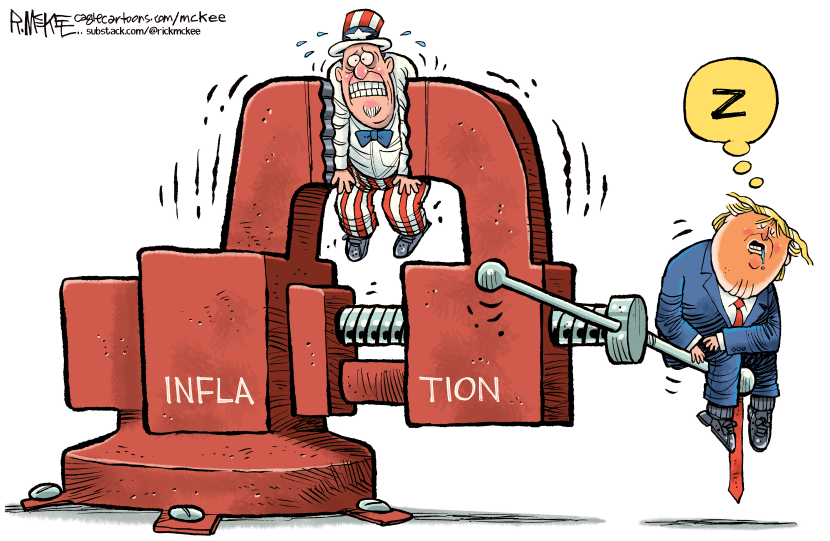
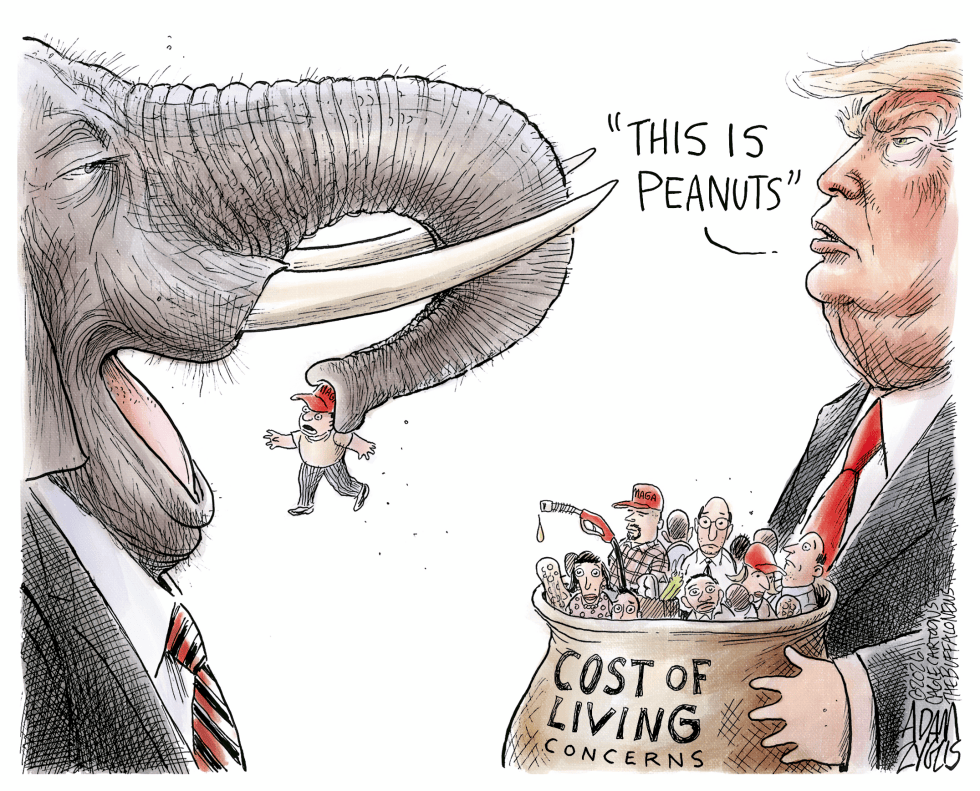
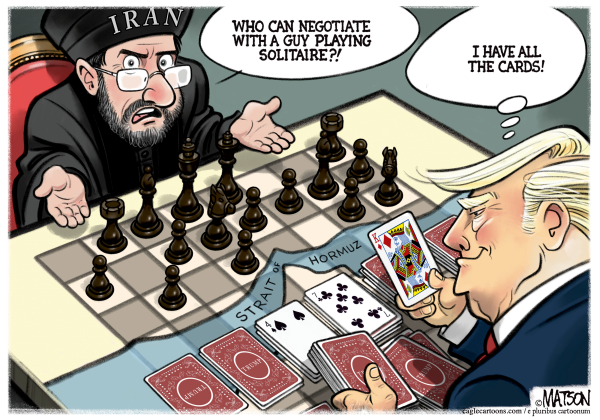
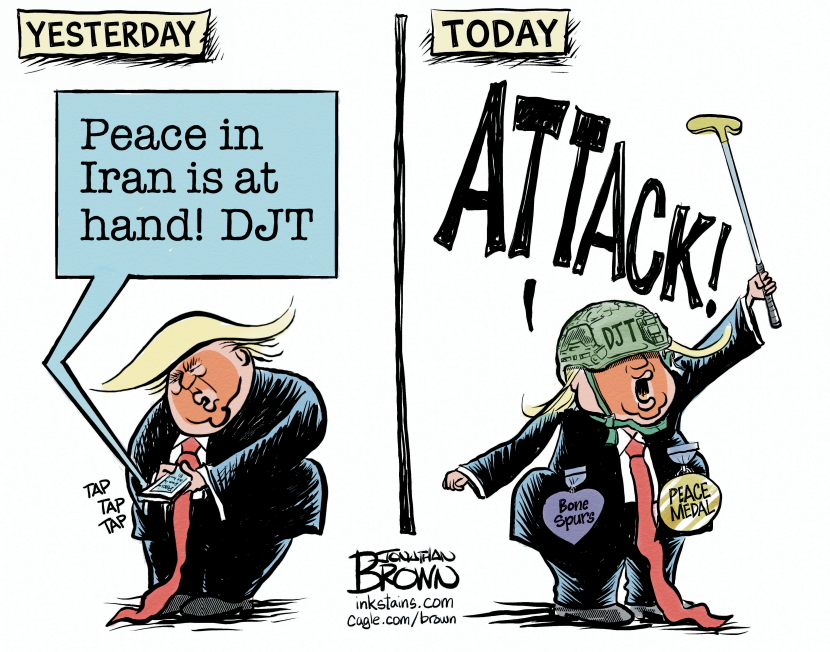
A new report by The New York Times details how Israeli Prime Minister Benjamin Netanyahu persuaded Donald Trump into going to war with Iran. Details in the story show that Donald Trump was oversold on the idea. But Trump wasn’t just oversold; he wanted to be told what he wanted to hear, even if it was wrong.
There was deep skepticism from his inner circle about going to war, and despite polling his top advisers, he often only heard “what he wanted to hear,” and his team wound up serving as an echo chamber for his gut instincts.
According to story written byJonathan Swan and Maggie Haberman, JD Vance was the most vocal in his opposition to the United States going to war with Iran, while CIA Director Jim Ratcliffe, Secretary of State Marco Rubio, and Gen. Dan Caine, Chairman of the Joint Chiefs of Staff, warned Trump that Netanyahu had “oversold” him on what could be achieved by the bombing campaign. Defense Secretary Pete Hegseth, on the other hand, was gung-ho on going to war. (snip-MORE, and it’s hot)
As predicted, Donald Trump taco’ed out again after threatening to commit genocide against the Iranian people.
Make no mistake about it, threatening to destroy an entire civilization is threatening genocide. Donald Trump was threatening to commit war crimes. (snip-MORE, also hot)
At a New York party, attendees spent Trans Day of Visibility dancing, DJing, and learning how to become less visible online.
Imani Thompson, digital security trainer and organizer of the event / Photo by Janus Rose
It’s Trans Day of Visibility, and I’m at an event space in the heart of New York City’s Commie Corridor to learn how to become less visible online.
The crowd gathered at the aptly-named Trans Pecos in Ridgewood, Queens is here for “404: Deadname Not Found,” a digital self-defense workshop which promises to teach trans people how to find and remove their sensitive personal information from the internet (and which also has no relation to this website). The vibe is giving OpSec rave happy hour—attendees sip colorful drinks, groove to DJ sets, and huddle around laptops using online tools to track down their own digital footprints.
The goal of the exercise is to find holes in your digital defenses, a practice cybersecurity folks call “red-teaming.” A slide deck guides participants through this “self-doxing” ritual, instructing them to use websites like IntelBase, PimEyes, and haveibeenpwned to find addresses, selfies, passwords, old names and aliases, and other personal info that might have been left sitting around on the open internet.
It makes for great cocktail party banter. One participant raises their arms in triumph upon receiving a clean bill of health while checking if their information was leaked in a data breach. Others swivel laptop screens and compare notes on the various places their digital detritus had cropped up. In my case, I was lucky: I mostly found data brokers with incorrect information, a long-forgotten MySpace page, and a woman whose spam calls I’ve been receiving for the past 10 years. Finally, participants are directed to various pages where they can request data to be removed, or sign up for discounted services like Kanary and DeleteMe that do the removals on your behalf.
Behind the fun and light atmosphere, everyone here knows the unspoken reality that drives tonight’s activities: an unrelenting wave of discriminatory bills and executive orders that are rapidly demolishing trans rights across the US. “Trans Visibility” is a nice idea, but it turns out it really sucks to be visible in a fascist surveillance state where the highest levels of government are obsessively trying to destroy your ability to live.
“In this world of hyper-surveillance, I want to make sure all my stuff is safe and that no one is trying to harvest my data for anything,” Anna, a workshop participant, told 404 Media. Anna asked to use a pseudonym to protect her identity, which is not surprising given that the goal of the workshop is to make it harder to be doxed. “Especially now that there’s lots of incentives for the federal government to get into that business, I just wanna make sure all of that is under wraps.”
Like the event’s name suggests, many attendees are looking for traces of their “deadnames,” which is how some trans folks refer to the names they were given pre-transition. Trans people face a disproportionatelyhigh risk of being doxed online, and deadnames and other sensitive info are frequently dug up on right-wing hate forums like KiwiFarms and social media sites like Elon Musk’s X, where harassment campaigns and hate speech are allowed and even encouraged.
“We have to protect ourselves,” said Ryan, who also used a pseudonym. “It’s great to know how to find stuff like this, because you never know what’s still out there.”
Imani Thompson, a digital security trainer who organized the event as part of her series Cache Me Outside, says she started hosting the free workshops at queer bars in Brooklyn a year ago, after noticing trans and intersex friends who were noticeably shaken by the opening salvos of the second Trump administration.
“I hadn’t seen cybersecurity events that looked like they would attract or resonate with the crowds I felt needed this information the most,” she told 404 Media. “I wanted to make this fun and un-intimidating and doing digital security training at the bar is kind of silly and fun and gives us a built-in VPN and protection from sensitive convos being recorded.”
There are specific reasons many trans people are anxious about their personal data and online presence these days. For one, trans identities often don’t fit neatly into government boxes, and the name and gender they are assigned at birth may or may not match their government-issued IDs. Recently, a new law in Kansas resulted in hundreds of trans people being told that theirdrivers licenses and IDs had been invalidated overnight, forcing them to obtain new documents that revert to the sex marker assigned at birth. JournalistMarissa Kabas later reported that the 300 trans IDs in question had been flagged and not immediately invalidated, but the goal of the law and its ensuing chaos was clear: requiring trans people to have IDs that don’t match their appearance or lived reality, forcing them to out themselves and introducing friction and discrimination into their everyday lives.
The same Kansas law also implemented the first state-level “bathroom bounty,” making it a crime for trans people to use appropriate bathrooms and changing rooms and promising rewards to random passersby who feel “aggrieved” by someone they think might be trans. Lawmakers in Idaho have passed an even harsher bill, which would charge repeat trans bathroom-users with a felony and up to 5 years of jail time. These bills threaten not only trans people, but anyone whose appearance might fall outside of someone’s normative expectations of “male” and “female.” And they are especially dangerous at a time when facial recognition can near-instantly identify someone with a quick search.
Thompson also worries about the information that queer folks can reveal while asking for help online. Trans people experienceunemployment,housing insecurity, andviolence at exponentially higher rates than cis people, and it’s not uncommon to see Gofundme pages and Venmo accounts flooding social media feeds. These posts will sometimes include personal details like a person’s name, face, transition status, location, immigration status, and even how much they have in their bank account—great for getting donations, but not so great for the doxable breadcrumbs they leave behind.
“I think the risk is tenfold for the dolls and Black trans siblings because of disproportionate scrutiny in light of these bathroom bills and also how we do mutual aid,” said Thompson. “Whenever I see a mutual aid request being reposted or processed it makes me nervous, because we’re basically doxing our most vulnerable friends.” To reduce risk, she recommends people take down mutual aid posts as soon as needs are met and set their Venmo activity to private. “I feel like the intention in listing off how all these systems of oppression impact our friends are meant to create a sense of urgency and care, but then months later it’s still floating around and is a goldmine for someone who wants to claim they were made to feel unsafe in a bathroom so they can claim $3k or further an agenda.”

The privacy attitudes on display at the event contrast with the dominant media narratives about trans communities a decade ago. Fresh off the Supreme Court victory in Obergefell vs. Hodges that legalized same-sex marriage, many at that time were convinced that trans visibility would pave the way to equality, as glossy magazine covers featuring stars like Laverne Cox declared a “Trans Tipping Point.” But while conditions for some trans people marginally improved, we all know what happened next: a wave of reactionary anti-trans state laws, culminating in the re-election of Donald Trump and a series of executive orders aimed at destroying trans peoples’ access to healthcare, sports, bathrooms—essentially the ability to live a normal life.
At the same time, protection can’t be a retreat back into the closet. “It’s still important for trans voices to be heard in online spaces,” said Anna. “It’s not like I wanna go into the shadows or anything. I just don’t want people to know my personal data, my personal records, any of that.”
“Being Black, I also understand the distinction between visibility and hypervisibility and the precarity and lack of agency that hypervisibility creates,” said Thompson. “It’s tricky to find language around digital security that doesn’t imply queerness is something to hide or a shameful thing, because of course it’s not. I think having agency and purpose in how we can show up online and interact with tech as well as literacy around how technology and surveillance operates makes us better equipped.”
Janus Rose is New York City-based journalist, educator and artist whose work explores the impacts of A.I. and technology on activists and marginalized communities. Previously a senior editor at VICE, she has been published in digital and print outlets including e-Flux Journal, DAZED Magazine, The New Yorker, and Al Jazeera.
Leading off: Very liberal Americans, who have rated the Democratic Party poorly relative to other partisans since 2024, have swung sharply back toward congressional Democrats over the last few months. A new poll also finds voters who dislike both parties now prefer Democrats by 31 points. These gains should reassure a party that has faced internal strife since Trump’s second term began, but look less due to renewed faith in the Democrats and more like anti-Trump consolidation. That might not matter for the midterms — a vote won is a vote won — but it will matter for 2028 and beyond.
On deck this week: Tuesday’s Deep Dive will cover some new research on the level of ideological thinking in the electorate and the value (or not) of ideological moderation by the Democrats, and Friday’s Chart of the Week will respond to whatever’s in the news. I’m also finalizing questions for our April Strength In Numbers/Verasight poll this week — so subscribers, send in your question recommendations if you haven’t already! (Email or comments are fine.)
On with the data.
1. Anti-Trump sentiment, not pro-Democratic enthusiasm, is uniting Democrats again
A new YouGov/The Economist poll, fielded from March 27 – 30, finds that Democratic voters have grown significantly warmer toward their members of Congress over the last few months. Earlier in 2026, Democrats said their party’s MOCs were favorable at a rate just 30 points higher than the rate they said their party was unfavorable. That gap has now grown to +55 — rivaling the favorability of Republican MOCs among Republican voters.
Aggregate Democratic views have increased because very liberal Americans have become sharply more favorable toward congressional Democrats since January. This group evaluated the party’s members of Congress favorably by a net +28 points margin — up from a -13 deficit in January. That’s a 41-point shift in two months:
Among Americans who are liberal but not very liberal, moderate, or conservative (basically everyone else), views of congressional Democrats barely budged.
Overall, U.S. adults give the Democrats a favorability rating of -21, 5 points higher than the rating they currently give Republicans.
That is a meaningful change. Last summer, Strength In Numbers documented that Democratic party favorability was unusually weak even as the party remained competitive on the generic ballot. We dug into the survey microdata and found out that this was because many left-leaning Americans were frustrated with their own side after the 2024 loss. Charles Franklin, who conducts the Marquette University Law School Poll, has been tracking the same dynamic in both national and Wisconsin polling. Among Democratic identifiers in Wisconsin, his data shows a net +56 favorability rating for their party, compared to +74 among Republican identifiers for the GOP.
Franklin finds that while Democrats still disagree about what they’re for, they are virtually unanimous in what they’re against: Donald Trump.
The simplest explanation for Democrats’ gains is that politically active party members on the left — who have had a lot of complaints about how the party is handling Trump 2.0 — are now responding to the same thing many other Americans are right now. That is, the president has moved public policy on many issue domains far to the right and up on the authoritarian axis (certainly far past the policy temperature “set point,” to use the language of the thermostatic model), and progressives are setting their differences with the Democrats aside for the moment as they focus on defeating an increasingly unpopular Republican president. This looks more like anti-Trump unity than pro-Democratic enthusiasm.
But it’s not just the base
The Democrats’ consolidation of left-wing liberalism is one piece of a broader backlash to Trumpism that shows up in the polling data right now. Another notable finding this week is from a new CNN/SSRS survey that found that about one-quarter of the public holds an unfavorable view of both parties. These are the so-called “double haters.” This group prefers Democrats on the 2025 generic ballot by 31 points.
This is a big deal for two reasons. First, that’s a massive shift; Double haters broke for Trump in 2016 and again in 2024. Now they’re swinging hard the other way.
Like Franklin’s polling, the CNN report also finds that Democrats’ gains are driven largely by opposition to the GOP, not enthusiasm for Democrats themselves. When asked what they dislike about Democrats, 22% of double haters called the party “do-nothing” and 11% said they aren’t standing up enough to Trump and the GOP, while 10% said they’re too liberal.
Will 2026 be a Democratic fake out?
So we’ve got two layers of anti-Trump consolidation happening at once. YouGov’s data shows the Democratic left is coming home, and the CNN poll shows voters who dislike both parties — a swing group that has been decisive in recent elections — are breaking heavily toward Democrats for the first time in years. Neither group is necessarily enthusiastic about Democrats. But both are currently heavily voting against Republicans. According to the CNN poll, 79% of voters who plan to support Democrats say their vote is a message of opposition to Trump. (Only 46% of Republican voters say they’ll vote to show support for the president.)
This could make for a big electoral win for Democrats in November, despite the division in the party and its overall nominally unpopular rating. According to CNN, Democratic-aligned voters are 17 points more likely than Republicans to call themselves “extremely motivated” to vote in 2026 — even though they’re 14 points less likely to view their own party favorably. Meanwhile, the Democrats have opened up a large lead in the U.S. House generic congressional ballot for 2026. They are up +6 in both the CNN and YouGov surveys, and closer to +5 on average.
This is the pattern I’d expect in a midterm environment that favors the out-party. But with many Americans (including the vaunted “double-haters”) still viewing the Democrats as weak and ineffectual, a big electoral victory will not completely solve their deeper problems of identity and division.
The trend in this data is good for the Democrats, in other words — but don’t misread a positive trend for a positive level.
2. What Strength In Numbers published last week
Readers of Strength In Numbers got three articles last week — a lighter load, since I was out sick Monday and Tuesday.
This week’s Deep Dive asked a question I’ve been getting a lot lately: if Trump is 20+ points underwater, why aren’t Democrats leading the generic ballot by 20?
Erin In The Morning is a reader-supported publication. To receive new posts and support my work, consider becoming a subscriber.
In the latest episode of their podcast A Touch More, all-star athletes Megan Rapinoe and Sue Bird denounced the International Olympic Committee’s new rule requiring sex testing for athletes competing in the women’s category.
The anti-trans policy will subject athletes competing in the women’s division—and only women’s, not men’s—to invasive sex testing to determine whether they have an SRY gene. Why this is where the International Olympic Committee chose to draw the gender line is arguably arbitrary.
No major medical organization endorses this litmus test as a reliable marker of athletic skill or “biological sex.” Even the scientist who discovered the SRY gene has slammed this practice in sports, saying “science does not support” this “overly simplistic” approach. Rather, it’s an arbitrary line in the sand used to cram unscientific ideas about gender and sex into manmade, binary boundaries.
Nonetheless, if a woman tests positive for the gene, she could be forced to compete in the “male” category. This has had dire consequences the last few times it was deployed against women’s athletes. From 1992 to 1999, cisgender women were forced into testing and found out, on the world stage, that they had intersex conditions they never knew about. The spectacle led to ostracization, disqualification, and at least one suicide before such testing was abolished.
“What we’re doing is subjecting everybody, all women and all people who are identifying as women, to this really invasive testing that only to me just says like, oh, so we’re just trying to whittle it down to a certain type of woman,” Rapinoe said.
Rapinoe is one of the most high-profile athletes in the country, a soccer player with three Olympic competitions under her belt and a decorated career in the U.S. Women’s National Team (USWNT). Bird, meanwhile, is among the most successful athletes in history—the retired WNBA legend spent her 20-season professional career as a point guard for the Seattle Storm, and is a record-breaking Olympian in her own right. The athletic power couple has been engaged since 2020. Together, they’ve long been outspoken advocates for the LGBTQ community.
Rapinoe connected the anti-trans vitriol in sports to the right wing’s broader attacks on queer and trans people, calling the push for sex testing “hateful.”
“They sort of like, lost the battle on gay marriage,” Rapinoe said. “So, it’s just like, we’re going to have this whole campaign for all these years to just hate trans people, which is such a small percentage of the population.”
Countless women, cisgender and transgender alike, have faced harassment and persecution because of the anti-trans athlete witch hunt.
“It’s just a total acquiescence to the Trump Administration,” Rapinoe said. “It’s just horrible, and I’m just sickened by it.”
The IOC rule is part of a broader pattern. In the United States, sports bans have served as a Trojan Horse for more sweeping anti-trans policies. The DOJ’s recent lawsuit over “women’s sports,” for example, also demands that transgender students be banned from bathrooms and locker rooms.
“Can we please stop obsessing over trans people and, I don’t know, maybe focus our time, energy, and resources into real problems women’s sports face?” Bird chimed in. She rejected the idea that sex testing, as the IOC claims, “protects women,” instead calling it a “fear-mongering” political ploy meant to generate support from conservative voters.
“That’s all this is,” Bird said. “If you crack this door open, it gets blown open. You’re now policing women’s bodies across the board.”
Erin In The Morning is a reader-supported publication. To receive new posts and support my work, consider becoming a subscriber.
2. Each of the following moves would consolidate a candidate’s base, except:
A. Expressing agreement with the great replacement theory
B. Expressing solidarity with the Proud Boys and January 6 insurrectionists
C. Expressing enthusiasm, which was a big no-no in 2004 Iowa, apparently
3. Which violation of American values would cause the electorate to doubt the candidate’s fitness for the presidency?
A. Violating the human rights of families by tearing children away from their parents at the border
B. Violating the bodies of twenty-six women
C. Violating the unspoken decibel limit on cheering at an event meant for cheering, which is definitely a good rule that applies equally to everyone
4. If exposed to the public, which revelations would instantly decimate campaign fundraising?
A. The candidate being caught with boxes full of state secrets next to their toilet
B. The candidate being caught sleeping with a porn star just after his wife had a baby
C. The candidate being caught up in a moment, just a fleeting moment, which at the time seemed normal, not the end of everything the candidate had ever worked for since the candidate was twelve
5. Which of the following statements warrants being aired 633 times by national news outlets in a span of four days?
6. Which of the following audio recordings would be so damaging that it becomes a years-long political meme and defines the candidate for the rest of their life?
A. A recording where the candidate extorts Ukraine for election assistance
B. A recording where the candidate brags about grabbing women “by the pussy”
C. A recording where the mics picked up the candidate but not the roar of the crowd, which, if you were there, was really loud and made screaming much more normal in context, actually
7. Which action would cause an immediate, double-digit drop in the polls?
A. Starting a movement to hang the vice president
B. Starting a coup d’etat attempt against the United States of America
C. Starting to say “yee-haw” because it felt so right after rattling off the upcoming state primaries, but then realizing halfway through the first syllable that, dammit Howard, someone from Vermont can’t pull off “yee-haw,” and then panicking and switching to “yeah!” or “yay!” all at once, but it was too late and a lump in your throat made it come out like the death knell of a tortured bobcat
8. True or False: It makes perfect sense that the twenty-five-year abortion record of the presidential candidate who ended Roe v. Wade has less Wikipedia content than the three-second audio record of a candidate who just, you know, was pumped up in the face of a setback in the Iowa caucuses, so pumped that he lost control of his body in a burst of unvarnished optimism:
A. True
B. False
C. There has not been a difference between truth and falsehood, right and wrong, or sanity and insanity since early 2004
9. Which charges would provoke widespread calls to suspend a campaign?
A. Being charged in New York with thirty-four felony counts for covering up sex with a porn star
B. Being charged in Florida with forty felony counts for stealing state secrets and lying to the FBI
C. Being charged in Georgia with ten felony counts for conspiring to steal an election
D. Being charged in DC with four felony counts for trying to stop the electoral vote certification in Congress in order to seize power from the lawful president-elect, Joe Biden, in violation of the US Constitution and the peaceful transfer of power
E. Being charged with all eighty-eight felony counts above, all in a five-month period
F. Being charged with a zeal to oppose the invasion of Iraq and establish universal health care, which looks pretty good these days if you ask some people but was apparently too sincere for the petty, vindictive shitheads who actually vote in this country.
10. Which of the following statements would make voters question a presidential candidate’s mental capacity?
Ann Arbor (Informed Comment) – On Easter Sunday, God’s chosen in the White House issued a vulgar and unbalanced posting on his “Truth Social” that epitomizes the insanity of his Iran War. Attending to it closely will help us understand how Trump has strengthened the government of the Islamic Republic and put it in control of global energy. Trump fondly imagines that he can dislodge Iran from this new ascendancy, but he is wrong, since it depends on sabotage, a sabotage that cannot be policed.
This is embarrassing, Delete it, President @realDonaldTrump – unless you want everyone to think you’ve lost your marbles.
The foul language and clear mental imbalance visible in this announcement sparked a further round of calls for Trump’s removal under Article 25 of the Constitution, which is nothing more than an internet meme since Trump has surrounded himself on his cabinet with people even more certifiable than he is, and who wouldn’t dare move against him.
Trump, having imbibed whatever substance it is that makes him manic, announced that “Tuesday will be Power Plant Day, and Bridge Day, all wrapped up in one, in Iran. There will be nothing like it!!!”
He is repeating a threat he made previously, to bomb Iran’s civilian electricity-generating plants as well as its civilian bridges.
Iran has 98 major power plants fueled by fossil gas, which generate 85% of the country’s electricity. The largest, the Damavand power plant south of the capital, Tehran, has a generating capacity of over 2.8 gigawatts.
One of Iran’s power plants is nuclear, at Bushehr. If Trump or Israel bombs it, the consequent radiation pollution will deeply harm the Arab Gulf states, not only through airborne particles but also by contaminating sea water, which is drawn on by the region’s desalinization plants. This exposure to radiation would certainly increase cancer risk in the region. There are mountains between Bushehr and the Iranian interior, so the radioactive particles would be blown west toward other countries such as the United Arab Emirates, Saudi Arabia and Qatar.
Striking civilian power plants, and above all nuclear ones, endangers the noncombatant population of children, women and unarmed men and violates International Humanitarian Law.
In fact, the International Criminal Court in the Hague issued “warrants of arrest for two individuals, Mr Sergei Kuzhugetovich Shoigu and Mr Valery Vasilyevich Gerasimov, in the context of the situation in Ukraine for alleged international crimes . . .” on June 24, 2024. They were indicted for “for the war crime of directing attacks at civilian objects (article 8(2)(b)(ii) of the Rome Statute) and the war crime of causing excessive incidental harm to civilians or damage to civilian objects (article 8(2)(b)(iv) of the Rome Statute), and the crime against humanity of inhumane acts under article 7(1)(k) of the Rome Statute.”
Among the “civilian objects” that these Russian officials ordered attacked in Ukraine were power plants and structures such as the Kryukovsky Bridge.
So Trump is talking like a war criminal, which tells you why he has placed sanctions on International Criminal Court judges.
Trump already struck the unfinished B1 bridge linking Tehran to Karaj. Since it was not finished, it could not possibly have had a military purpose, contrary to the lies of the lying liars in the Trump administration who gave that as the excuse for hitting it.
Trump continued, “Open the Fuckin’ Strait, you crazy bastards, or you’ll be living in Hell– JUST WATCH!
It is not clear how a body of water such as a strait could copulate. However, it can engender revenue, and does so for Iran. A lot of revenue.
Iran has not actually closed the Strait of Hormuz entirely. It is exporting its own petroleum through that narrow aperture, mainly to China. Trump has been forced by the global oil shortage to lift sanctions on the Iranian tankers, and so Iran is also selling again to India. Before Israeli Prime Minister Benjamin Netanyahu rushed Trump into war on Iran on February 28, Iran was exporting about 1.4 million barrels a day to China. The price of petroleum was about $67 a barrel then, but Iran had to offer a steep discount to offset American sanctions, and so was probably only getting $57 or less a barrel. So Iran was getting something like $29 billion a year for its petroleum from China and a few other customers (90% goes to China).
China is now likely having to pay $110 a barrel for Iranian petroleum.
Iran’s oil income just went up to $55 billion a year if these prices and this volume of trade persists, which is plausible. So the “crazy bastards” in charge of Iran have nearly doubled their income off the Netanyahu-Trump war because of the fertility, under their control, of the “fuckin’ Strait.” The Iranian oil industry is state-owned, so all the money goes to the clerics and the Iranian Revolutionary Guards Corps, as well as to the conventional army and the elected institutions, the parliament and president. This extra income helps the government tamp down resistance, strengthening it against civil society. In any case, many Iranians under foreign attack are rallying around the flag. Of course there are also tax losses from the economic disruption of the war, but the vastly increased oil income helps make up for them as far as the government is concerned. If the price of oil goes to $200 a barrel, as it may well, Iran’s government could get $100 billion a year for its petroleum.
Not only that, but Iran has instituted a toll system, wherein countries that have good relations with Iran and pay a fee can transit the Strait without fear of an Iranian drone attack. In contrast, countries that Iran believes contribute to the American war effort against Tehran such as the Emirates and Kuwait, are blockaded by the threat of such strikes. These tolls could be an ongoing and lucrative source of income for the government. Before the war, 138 ships transited the Strait daily. If that traffic resumes but each has to pay Iran a $2 million toll, that would bring in $96 billion a year, i.e. four times what Iran was getting for its petroleum before the war.
So here’s the thing. With the advent of Iran’s Shahed drones, which can be manufactured inexpensively and of which it has tens and thousands, there is no way for anyone, including Trump and the US military, to stop Iran from sabotaging ships that won’t pay the $2 million. At least, I don’t see how it could be done. You’d need tens of thousands of interceptors, and we hardly have any left. Moreover, interceptors cost $1.5 million apiece, so it makes much more sense to allow each ship to pay Iran the $2 million.
Container ship in Strait of Hormuz. (U.S. Navy photo by Mass Communication Specialist 2nd Class Indra Beaufort).Public Domain. Via Picryl .
Trump has shown Iran how it can go into the protection business in the Gulf for the long term. Nice oil shipping industry you have here, it would be a shame if anything happened to it. And off that, Iran actually increases its GDP substantially.
If Trump takes out Iran’s electricity and bridges, he can interfere with its economy and its society in a big way. But he can’t stop the drones or the protection racket that way. Moreover, Iran has made it clear that its response will be to take out the power plants in the Gulf Arab states as well as in Israel. Since the US and Israel are running low on interceptors, and since even small Shahed drones have great range and can do a lot of damage, Iran’s threat is credible.
If Trump takes out Iran’s petroleum-production capability, Iran will crash oil production in the Gulf, taking 20 million barrels a day off the market for years to come. That would certainly be another Great Depression and likely would spell the end of the oil industry, since everyone in the world would migrate to electric vehicles quickly.
So although Trump meant the phrase ironically and blasphemously, the Iranian authorities may well end up saying “Praise be to Allah” over Trump’s monumental stupidity.
Tomorrow is Ron’s heart catheterization. Today I have reached a breaking point. After I did the things that had to be done this morning I am dissociating. I find my mind simply shutting down. I am losing time not hearing or seeing anything. My mind keeps parking itself in neutral. I have to keep it together one more day. I made Ron his lunch and got him into bed making sure he had his CPAP on. I took out a pork tenderloin for supper, and I will make potatoes and what ever vegitable Ron wants for supper. I am so tired and sore. Hopefully one more day. Hugs
The president of the United States greeted the country with this Truth Social post about his intentions in Iran on Easter Sunday: “Tuesday will be Power Plant Day, and Bridge Day, all wrapped up in one, in Iran. There will be nothing like it!!! Open the Fuckin’ Strait, you crazy bastards, or you’ll be living in Hell – JUST WATCH! Praise be to Allah. President DONALD J. TRUMP
No one seems to have got so far into the post as to notice that he said “Praise be to Allah,” which he would most certainly say was a jest, if asked. But imagine Joe Biden, or worse still, Barack Obama, saying that “in jest” and how Republicans would have responded. Trump is completely off the rails and Republicans are turning a blind eye, pretending it’s not happening.
Earlier this week, Trump’s “spiritual advisor” Paula White-Cain compared him to Jesus. Trump, too, was “betrayed and arrested and falsely accused,” she said. No one in the Republican Party seems to have believed they need to strenuously resist that characterization.
And so, we enter the new week with an unstable president at the helm in wartime. Meanwhile, at home, there are plenty of issues mounting. But Trump seems to have largely gotten away with knocking his connection to Jeffrey Epstein and allegations about his personal conduct off the front burner.
Laura Loomer is influencing policy changes at DOJ
After Trump fired Attorney General Pam Bondi, there appears to be another significant personnel change in the works at DOJ, this one inspired at least in part by Laura Loomer’s dislike of the number three official at DOJ, Associate Attorney General Stanley Woodward. Trump appears to be on the verge of replacing him with the current Assistant Attorney General for the Civil Rights Division, Harmeet Dhillon, who has upended its work and overseen a mass exodus of career personnel.
Woodward was the defense lawyer for one of Trump’s co-defendants in the Mar-a-Lago case, Walt Nauta. His client hung in there with Trump, instead of flipping and offering testimony against him in exchange for a deal. That worked out well for Nauta, but only because Trump won the election. Most lawyers acting in the client’s best interests in that type of situation would have worked toward a plea. Lost in the plot from that case was the conflict of interest Woodward had that could easily have kept him from representing Nauta and might have resulted in another lawyer voluntarily stepping aside. Woodward had previously represented one of the witnesses who decided to cooperate with the prosecution after receiving advice from a lawyer who wasn’t connected to other defendants. Judge Cannon permitted Woodward to represent Nauta despite that conflict, after Nauta waived it. Woodward has also represented White House adviser Peter Navarro, who was prosecuted for obstructing Congress when he ignored a subpoena from the January 6 committee, FBI Director Kash Patel when he testified before a grand jury about Trump’s retention of classified documents, and one of the defendants in the Oath Keepers prosecution.
All that to say, Woodward was a known quantity for Trump when he appointed him. But that doesn’t seem to have been enough to save his job, just over a year into it.
There’s been some suggestion on social media that Laura Loomer is, at least in part, responsible for the change. Loomer is a conservative activist and online influencer who has claimed the ability to impact Trump’s hiring and firing decisions in the past. Last August, Trump was asked about that and said, “She makes recommendations on things and people. And sometimes I listen to those recommendations, like I do with everybody. I listen to everybody. And then I make a decision.” Loomer has never been a fan of Woodward’s.
Her concerns center on Woodward’s wife, apparently, not Woodward. She has had them since before he was confirmed.
Woodward’s wife apparently has the audacity to have her own views on issues, and they are…not racist. Loomer reiterated her take just before Trump made his move at DOJ, also attacking Todd Blanche, the former Trump criminal defense lawyer who is now in charge of the Justice Department in an acting capacity. Blanche and Woodward may have been surprised to learn that, according to Loomer, they’re now Democrats.
That’s a lot of maneuvering, that benefits Dhillon, who has overseen the dismantling of much of the Civil Rights Division’s work, including voter and election protection, and gone on the attack for the administration. That might have made her an attractive candidate for the position to Trump without more. If confirmed by the Senate as “the Associate,” as the number three position at DOJ is called, Dhillon would supervise her old division, Civil Rights, as well as the Civil Division, the Antitrust Division, the Environment and Natural Resources Division, and an administrative division that oversees grant funding. It’s a substantial role and could be a stepping stone to a still higher office.
This is more than a personnel squabble within DOJ and warrants our close attention. Since taking over the Civil Rights Division, Dhillon has made a number of decisions with significant consequences that run contrary to the history of the Division, including:
Setting priorities for the Division that included putting an end to DEI, supporting gun rights, protecting religious liberty by filing lawsuits challenging what DOJ views as anti‑Christian discrimination, and opposing transgender participation in women’s sports.
Pressuring colleges and universities over DEI programs and allegations of antisemitism. In one notable instance, the president of the University of Virginia was forced out for failing to move quickly enough to end DEI.
Ending, as her predecessor Jeff Sessions did, consent decrees with Police Departments. In her case, it was Minneapolis (George Floyd) and Louisville (Breonna Taylor), in cases involving systematic misconduct. She ended investigations in other jurisdictions, changing the environment to one that is far more tolerant of police misconduct.
Abandoning employment discrimination cases, as well as the work of the disability section to protect access, and work combating housing discrimination.
Countermanding early work in the U.S. Attorney’s office in Minneapolis to investigate ICE agent Jonathan Ross, who fired the shots that killed Renee Good. Much of the career leadership in that office resigned in the wake of that decision.
We don’t yet know who Trump will nominate to be the next Attorney General. Dhillon was confirmed 52-45 for the Civil Rights job, garnering no votes from Democrats but mustering support from every Republican. She’s been effective at pushing her priorities, which are Trump’s priorities, and at pushing career people out the door. A Justice Department under her leadership might make people long for Bondi’s simpering incompetence.
To come full circle, this was Dhillon’s response to Trump’s “Fuckin’ Strait” post this morning:
The Trump Administration appeals Anthropic’s victory.
Thursday morning, the government filed its notice of appeal after Anthropic won a victory against it in the lower court. That means it will try to overturn Judge Lin’s injunction, which prevents Trump/Hegseth’s designation of Anthropic as a supply-chain risk. We’ll likely see an effort to get an order from the Ninth Circuit to set that injunction aside while the litigation is underway this week
The federal civil rights investigation and prosecution we won’t see.
The Buffalo Medical Examiner ruled that the death of a legally blind elderly Burmese refugee dropped off by Border Patrol at a closed shop late at night in winter was a homicide. The facts of the case are terrible. And there’s a federal criminal law designed to address this kind of civil rights violation by federal agents acting “under color of law.”
NBC reported that Nurul Amin Shah Alam died of a burst ulcer caused by severe stress brought on by dehydration and hypothermia, which was brought on by the agents’ abandonment of him. The statute permits prosecution of agents who deprive a person of their rights because they are an alien. If DOJ were operating properly, there would be an open investigation. The potential charge is a serious one, based on the denial of rights, not a homicide. The punishment under the law, “if death results” from agents’ actions, can be life imprisonment or even the death penalty. Any other DOJ would be focused on getting this case and doing justice.
The DHS shutdown is still on.
The House failed to take action to pass the Senate’s bipartisan funding deal to reopen the Department of Homeland Security last week. That means the shutdown will continue at least until Monday, when Congress is back in Session. The Senate compromise withhold money the administration wanted to push Trump’s immigration agenda, but would fund DHS until the end of the fiscal year.
TSA workers in the Portland, Maine, airport cheerfully told me last week that they had received some back pay, but had no assurances of receiving paychecks going forward. Hard-working TSA employees are being forced to bear the brunt of Trump’s inability to run the government. It’s surprising Democrats aren’t driving this message every day. And, with hurricane and fire seasons approaching, FEMA funding is sure to be an issue soon, as well.
And, DOJ still hasn’t released all of the Epstein Files.
I have no intention of forgetting that there is more to that story.
Thank you for being here with me at Civil Discourse. It’s going to take all of us, staying informed and working together, to keep the Republic. If you’ve been enjoying the free posts, upgrading to a paid subscription is a great way to help keep the newsletter coming and to contribute to the time and resources it takes to stay on top of law, politics, and this administration.
I wish! 😄 Leading Kansas writes this time in regard to data centers, and about addressing our local governments in our own behalf.It works the same in every state.
This cartoon was drawn for the Fredericksburg Advance. But don’t yell at them for it; you can yell at me.
If you live in Virginia, you have been bombarded with flyers about the special election on redistricting. And it’s not just flyers but also TV commercials, which are also popping up online. We are getting these things from both sides.
There is a special election in November on a state constitutional amendment that would give Democrats as many as four seats in Congress. The measure would also temporarily bypass the state’s redistricting commission to redraw maps in the middle of the decade.
The state’s Supreme Court approved the measure to be on the ballot less than a week before early voting began. State Republicans repeatedly tried to stop Democrats from moving forward with the referendum. The irony here is that Republicans claim that voting yes will disenfranchise voters, while they literally tried to keep this off the ballot so people couldn’t vote on it.
This is a direct response to Donald Trump and Republicans redistricting mid-decade to give themselves more seats. Donald Trump even said he was entitled to have more congressional seats. This is one reason why we need to No Kings protest. Donald Trump already believes he’s entitled to win elections he’s lost. (snip-MORE, and it’s on point)
Energy company Deep Fission is in the process of building a new and untested type of underground nuclear reactor in Parsons, KS
The Trump administration has reduced regulations to encourage nuclear power production
The reactor will likely power data centers for artificial intelligence
Large data centers consume huge amounts of water and energy and produce different types of pollution, leading to health risks for nearby residents
In November 2025 a two-year-old energy company called Deep Fission broke ground in Parsons, Kansas. They hope this project will enable them to install the second ever energy producing nuclear reactor in the state, after Wolf Creek, potentially with more reactors on the way in the future. If the early “characterization” drilling goes to plan, they claim the reactor could begin pumping electricity into the grid in the near future.
Parsons is a city of 10,000 in southeastern Kansas, near the Oklahoma border. I’ve lived in Kansas for most of my life and I had not heard of Parsons until last week. So, why is Deep Fission in Parsons, Kansas, and why now? Not coincidentally, the Great Plains Industrial Park, also located in Parsons, has lately been advertised as a prime location for new data centers to power the trillion-dollar (yes, trillion with a T) artificial intelligence boom forced upon us by large technology corporations and their venture capitalist backers. Which means the Parsons nuclear reactor project would likely come as a package with one or more new data centers, along with potential economic prosperity and a host of legitimate concerns that community members have already raised.
Part 2: The New Nuclear Power
While the Department of Energy set a goal for the Parsons reactor to go online in July of this year, Deep Fission themselves are aiming to connect to the grid by 2027 or 2028. Two years is still an unusually rapid rollout for a nuclear power plant, which usually takes 6-10 years from groundbreaking to full operation.
Nuclear energy is typically labeled as “clean” energy compared to coal, oil, and natural gas, meaning that it releases fewer pollutants into the air and water than fossil fuel consumption. Still, there are two main concerns. First is the disposal of nuclear waste, which ranges from the lightly contaminated clothing of plant workers to the lethally radioactive spent fuel a plant produces over time. This latter “accounts for just 3% of the total volume of waste, but contains 95% of the total radioactivity.”
A relatively new method in the US and Europe for disposing of our most dangerous nuclear waste is to bury it very deep underground, so that it can be surrounded by solid rock to provide the same level of pressure containment as required at structure at a surface nuclear reactor facility. The father-daughter team that eventually founded Deep Fission originally created Deep Isolation to dispose of nuclear waste. Deep Fission takes their concept a step further by placing the entire reactor, and therefore its most dangerously radioactive elements, into a borehole drilled one mile underground.
The second main concern related to nuclear energy production is, of course, accidents or attacks. It is true that large-scale nuclear accidents are very rare, but when they happen, they become instant, globally recognized disasters whose names we all know: Chernobyl, Three Mile Island, Fukushima. The effects are so widespread as to be practically impossible to quantify. The reactor explosion and meltdown in Chernobyl, for example, caused several dozen deaths directly related to radiation exposure, but various studies have predicted anywhere from thousands up to a million eventual additional cancer deaths. Not to mention the environmental and economic cost to the entire region around Chernobyl. And radioactive boars still terrorize people and farmland in the region around the Fukushima plant in Japan.
But those issues are known, and regulations have historically attempted to shore up potential dangers posed by new plants. In contrast, nothing like the underground nuclear reactor in Parsons, Kansas has ever been attempted before, and thanks to Executive Order 14301, will not need to go through long established design and testing phases that other types of nuclear reactors have been subject to in the past. John Young, a mining environmental regulatory specialist who lives in Sedgwick County, asks, “Why abandon the current regulatory process for something created out of whole cloth with no public input? And no one can define the current regulatory pathways for Federal and State authorizations.
“What,” Young asks in frustration, “could possibly go wrong?”
Part 3: Data Centers and Artificial Intelligence
So that is a glimpse into the nuclear energy side of things. Next we must address concerns around data centers and artificial intelligence. Data centers come in different sizes, like the smaller center being proposed in Wellington, KS, which would reportedly “use roughly 30% of the city’s electrical capacity while generating an estimated $1.3 million in annual electric utility revenue” while consuming only two gallons of water per day. Larger data centers consume resources less modestly. “Around the country, and the world, there is a land race among the big tech companies for sites for their data centers,” claims a November 2024 investigative report by Rolling Stone. Data centers are much newer than nuclear energy technology, yet the ways in which they harm communities near them have already become apparent.
Water: “Large data centers can consume up to 5 million gallons per day, equivalent to the water use of a town populated by 10,000 to 50,000 people,” according to a June 2025 study by the Environmental and Energy Study Institute (EESI). And data centers built explicitly to power AI represent the fastest growing portion of the market.
Last year, researchers at the University of California, Riverside calculated that ChatGPT—one of several popular Large Language Models (LLMs) vying for marketplace dominance—answered about 10,000 queries per second. The processing load to do so guzzled about 6,000 liters (or about 1,000 toilet flushes) of fresh water per second, all day, every day. That is only generating written text. AI photos require more water, and still more for AI video. “The extraction process is permanent,” explains the University of Alabama at Birmingham Institute for Human Rights. Water used to cool data centers evaporates as it cools hot components, meaning it can no longer be used by people in the region who need water for drinking, cooking, bathing, laundry, and general survival.
Pollution: Unfortunately, it is not only consumption of water to worry about. The evaporation of water cooling data centers leaves behind higher concentrations of nitrates and other contaminants leaked through agricultural fertilizers and pesticides into local water supplies, drastically increasing incidents of “rare cancers, muscle disorders, and miscarriages” among people who live nearby. Geographically, Parsons, Kansas sits atop the Alluvial and Ozark Aquifers.
Reports of noise pollution have increased near data centers as well. Residents in different Virginia towns experienced disturbing high and low frequency humming in a wide radius around two new data centers.
These same experts predict that the disempowerment will not only come at the individual level, but also at the societal level, as lawmakers turn their attention and favor even more toward tech companies and AI services that increasingly take over tasks that used to be performed by human beings.
The purpose of this article is not to overwhelm with doomsaying or inevitability. If the Deep Fission underground reactor works as advertised, it could genuinely provide cleaner energy than fossil fuel and mitigate some of the effects of climate change. But to get there safely, we need to demand transparency and regulatory protections from political and corporate leaders. If enough of us speak up in place like Parsons, Topeka, Sedgwick County, and every corner of our town, state, country, and world, we embolden those watching, each other, and ourselves to continue building the world we want and deserve.