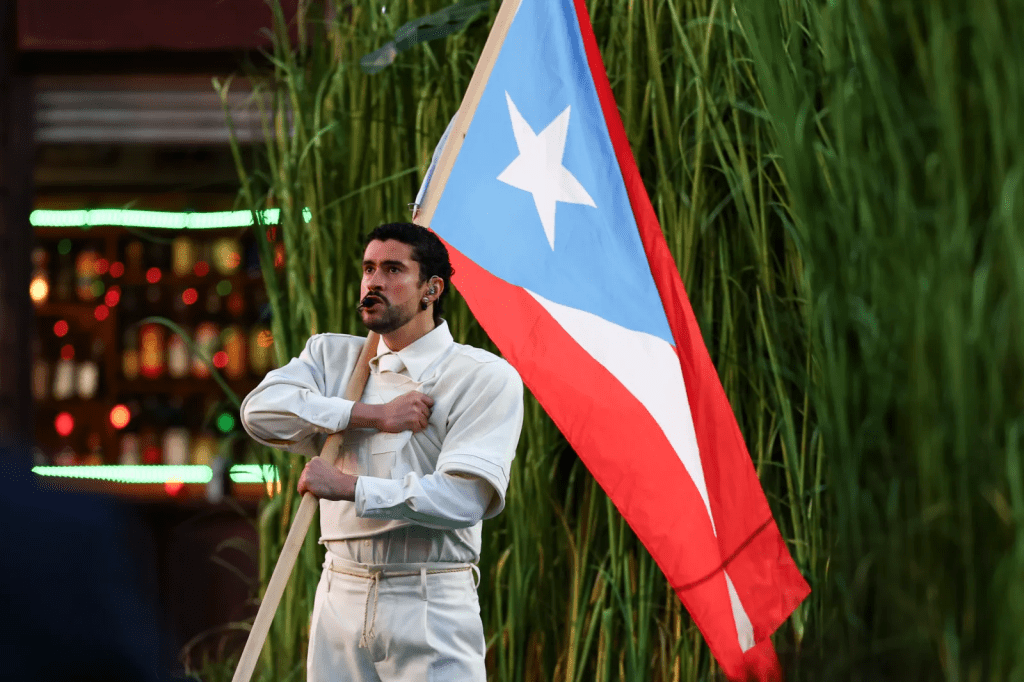
Duolingo saw a sharp rise in Spanish learners following Bad Bunny’s Super Bowl Halftime Show, according to a post shared by the language-learning app on social media.
“Duolingo saw a 35 percent increase in Spanish learners last night. Better late than never,” the company wrote on Threads on February 9, under its official account, @duolingo. The post, which included a graph showing a clear spike in Spanish lessons, has been liked more than 7,500 times to date.
The surge followed Bad Bunny’s history‑making performance at the Super Bowl Halftime Show, where he became the first artist to sing primarily in Spanish during the most-watched sporting event in the U.S. Duolingo’s official Threads account shared the data shortly after the night ended, highlighting the immediate impact the performance appeared to have on language learning behavior.
Bad Bunny’s Super Bowl appearance came months after he used a Spanish-language monologue on Saturday Night Live (SNL) to tell audiences they had “four months to learn” Spanish ahead of the game. Despite online backlash from some commentators at the time, the data shared by Duolingo suggests many viewers embraced the message, with interest in learning Spanish rising sharply during the Halftime Show.
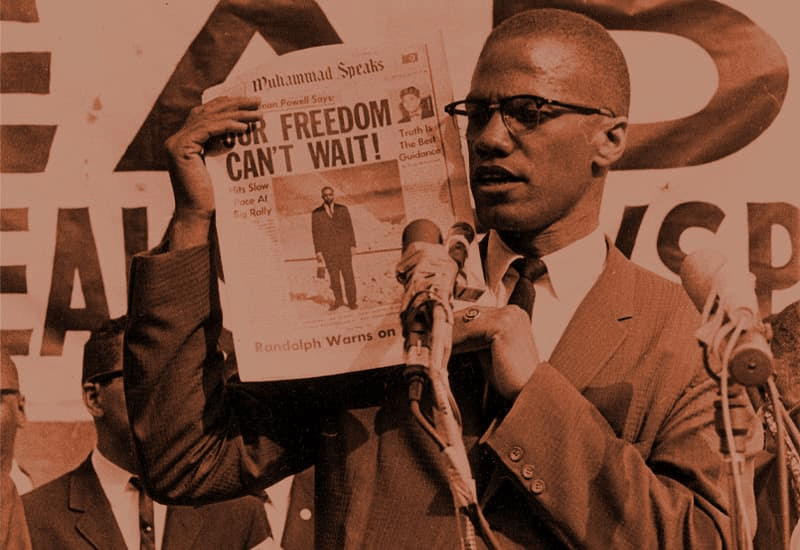
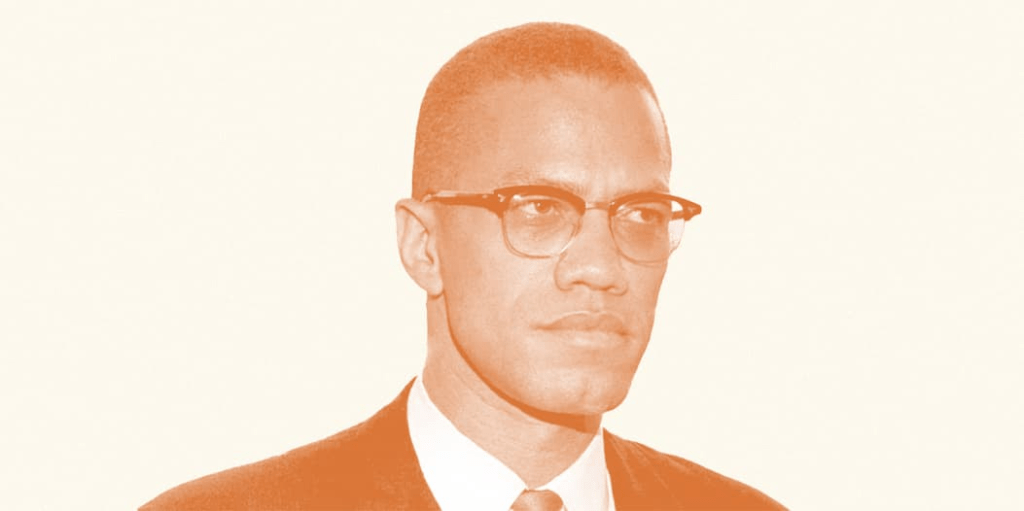
On Sunday, February 21, 1965, a little after 3pm, as he was preparing to address his Organization of Afro-American Unity in New York’s Audubon Ballroom, the controversial civil rights leader and revolutionary Malcolm X was shot dead by members of the Nation of Islam, the religious group X had broken from the year before. He was 39.
“In the aftermath, rivers of ink spilled across New York City’s many newspapers,” wrote Ted Hamm. The legendary journalist Jimmy Breslin was callous and dismissive; Langston Hughes “somewhat cryptic.”
James Baldwin, who was in London at the time, famously shouted at the reporters who found him after X’s death: “You did it! It is because of you—the men that created this white supremacy—that this man is dead. You are not guilty, but you did it. … Your mills, your cities, your rape of a continent started all this.”
Later, Baldwin told the story this way:
“There we were, at the table, all dressed up, and we’d ordered everything, and we were having a very nice time with each other. The headwaiter came, and said there was a phone call for me, and Gloria rose to take it. She was very strange when she came back—she didn’t say anything, and I began to be afraid to ask her anything. Then, nibbling at something she obviously wasn’t tasting, she said, ‘Well, I’ve got to tell you because the press is on its way over here. They’ve just killed Malcolm X.’ The British press said that I accused innocent people of this murder. What I tried to say then, and will try to repeat now, is that whatever hand pulled the trigger did not buy the bullet. That bullet was forged in the crucible of the West, that death was dictated by the most successful conspiracy in the history of the world, and its name is white supremacy.”
“I was certainly saddened by the shocking and tragic assassination of your husband,” Martin Luther King, Jr. wrote to Betty Shabazz, X’s wife, after the murder.
“While we did not always see eye to eye on methods to solve the race problem, I always had a deep affection for Malcolm and felt that he had a great ability to put his finger on the existence and root of the problem. He was an eloquent spokesman for his point of view and no one can honestly doubt that Malcolm had a great concern for the problems that we face as a race.”
More than sixty years later, some details about the assassination remain unclear. But Malcolm X has endured as a cultural icon, death being, in the end, not quite enough to silence him.
EVERGREEN QUOTE:“You’re not supposed to be so blind with patriotism that you can’t face reality. Wrong is wrong no matter who does it or who says it.”–Malcolm X
Again it is a fundamentalist / evangelical Christian who wants to force everyone to follow their church doctrines by enshrining them in the civil laws. Their hate seems to drive them far more than Jesus’s love. All studies ahve show that not only does conversion therapy not work it is very harmful to those that experience it. These people don’t care because they want the LGBTQ+ gone, erased from society. When will they learn it is inherent and can’t be changed by outside forces or because a person wants it to? I like to ask people who believe in it if they could be converted to gay or trans and the response is always no that would be crazy. Then why try to convert LGBTQ+ kids / people. Because they see it as a choice and a sin, and nothing on can say will change their minds. Horrible people doing horrible things. Hugs
Ohio Republican lawmakers have introduced legislation that would punish state agencies and local governments for being too supportive of LGBTQ+ youth. Among a slew of provisions, conversion therapy would be reinstated where it has been banned, teachers may be prevented from using a student’s preferred pronouns, and parents wouldn’t be able to lose custody due to refusing to support their child’s gender identity.
“State institutions, government institutions cannot promote that woke ideology,” state Rep. Gary Click, R-Vickery, said in an interview Tuesday. Click believes government agencies have been overly affirming of LGBTQ+ children, which he claims has hurt parents. “It is not conversion therapy to help children discover their identity and who they are biologically,” Click said. Click has focused significant time in the legislature targeting LGBTQ+ people.
Click, a former pastor, last appeared here in December 2025 when he introduced the “Charlie Kirk American Heritage Act,” which would mandate teaching public school students about “the positive influence of Christianity on American culture.”
He first appeared here in 2018 when he led the invocation at Trump rally by asking Jesus to protect Trump from “wicked jungle journalism.”
In 2023, Click appeared here when he convened a hearing against transgender rights during which his invited guest testified that non-Christian lawmakers are “possessed by demons.”
Click is a regular on Tony Perkins’ podcast.
Andy does not know the what it means to be a Christian and he does not know the definition of love. You cannot lie to people and love them at the same time. Boys cannot become girls nor can girls become boys. You cannot lie in the name of Jesus and call yourself Christian. https://t.co/0APK0LHlce
🚨The woke media describes ripping children from the parents as “overly affirming!” 🦄 🌈An “educator” calls it an attack on autonomy 😱 LISTEN UP LIBS! OUR CHILDREN DO NOT BELONG TO THE GOVERNMENT OR TO YOU‼️#AFFIRMINGFAMILIESFIRST#HB693@MegEBrock@CCVPolicy@Heritage…
Tennessee lawmakers have advanced a host of anti-LGBTQ bills that would run counter to U.S. Supreme Court precedent. Two measures, both proposed by Rep. Gino Bulso, R-Franklin, would challenge landmark cases that legalized same-sex marriage and established protections for discrimination based on sexual orientation or gender identity.
Rep. Gloria Johnson, D-Knoxville, questioned the legality to going against Bostock v. Clayton County, which established that LGBTQ people are protected from discrimination under the Civil Rights Act of 1964. Tom Lee, member of the Board of Directors of the Tennessee Pride Chamber, spoke against the bill, arguing that it could allow discrimination against LGBTQ couples.
“Imagine if under this bill a private employer said, ‘Well, you can’t take family leave because I, as a private citizen, don’t recognize — using the language of the bill — your purported marriage,’” Lee said. “Or a bank says, ‘You’ll pay the higher rate (for unmarried couples). We’re not bound by the 14th Amendment. You’re not married in our eyes.’”
The Banning Bostock Act would codify that laws prohibiting sex discrimination would not prohibit discrimination against a person for being homosexual or transgender, nor would it prohibit discrimination because of sexual orientation, sexual behavior, gender identity, or gender non-conforming behavior.
Meanwhile, the next bill would allow private citizens, businesses, and organizations to refuse to recognize same-sex marriage, and protect attorneys from being punished for refusing to celebrate or perform a same sex marriage.
Bulso first appeared here in February 2024 for his ultimately failed bid to ban Pride flags, which he is now attempting again. In April 2024, we heard from Bulso when he objected to a ban on marriages between first cousins because gays can’t make babies. Last year Bulso launched a failed bid to fill the US House seat left open by the abrupt resignation of Rep. Mark Green.
Why is the most intense bigotry always seem to be pushed by Christians? I don’t understand the hate because no one is walking around nude in bathrooms, and women’s bathrooms do not have urinals just enclosed stalls. No one can see in the stalls. All the talk of protecting little girls is BS because if a man ws going to hurt a child he wouldn’t have to pretend to be trans, he would just walk in and do it. Nope this is all about making trans lives miserable and keeping them out of the public / society. This is all about forcing their religious views on everyone else. There church doctrines don’t accept trans people so no one can accept trans people or be trans in public according to them. They see no problem forcing their religious views on everyone else but scream to their highest heaven when they are told they have to respect other people’s views. Hugs
Just last week, the Kansas legislature passed some of the most far-reaching measures to push trans and gender-nonconforming people out of public life to date. Bathroom bans that bar trans people from restrooms aligned with their gender identity have become grimly common; over 20 states have such a law on the books. But Kansas’s new anti-trans bathroom bill adds a dangerous twist: a bounty hunter provision.
The law would permit private citizens to sue and seek monetary reward based on claiming to encounter a trans person in the bathroom. That’s on top of some of the harshest punishments of any existing bathroom bans, such as criminal charges, steep fines and even jail time.
The language of the bill, while vague, says that any person who alleges to be “aggrieved” by the presence of a trans person they encounter in a restroom facility can file a civil suit against that individual for “damages” of at least $1,000. Kansas Republicans rushed through the bathroom ban, skirting public comment by essentially sneaking the bill into another piece of legislation aimed at denying trans people correct government IDs.
The following veto message is from Governor Kelly regarding her veto of House Substitute for Senate Bill 244:
“This poorly drafted bill will have numerous and significant consequences far beyond the intent to limit the right for trans people to use the appropriate bathroom. Under this bill: If your grandfather is in a nursing home in a shared room, as a granddaughter, you would not be able to visit him. If your wife is in a shared hospital room, as a husband, you would not be able to visit her.
“If your sister is living in a dorm at K-State, as a brother, you would not be able to visit her in her room. If you feel you have to accompany your nine-year-old daughter to the restroom at a sporting event, as a father, you would have to either enter the women’s restroom with her or let her use the restroom alone.
“I believe the Legislature should stay out of the business of telling Kansans how to go to the bathroom and instead stay focused on how to make life more affordable for Kansans. “Therefore, under Article 2, Section 14(a) of the Constitution, I hereby veto House Substitute for Senate Bill 244.”
The bill passed with a veto-proof majority in both chambers, so an override is probably likely. The bill’s author is GOP Rep. Susan Humphries, whose bio notes that she is a graduate of Texas Christian University. Humphries last appeared here in 2024 for her bill that would somehow ban minors from visiting any website that mentions LGBTQs.
Horrific abuse of civil rights. ICE is trying to scare people. People have legal right to protest and to follow / record ICE gang thugs. The ICE gang thugs have no authority to arrect citizens as they do not have police powers. Again are we a free people, do we have rights anymore? Hugs
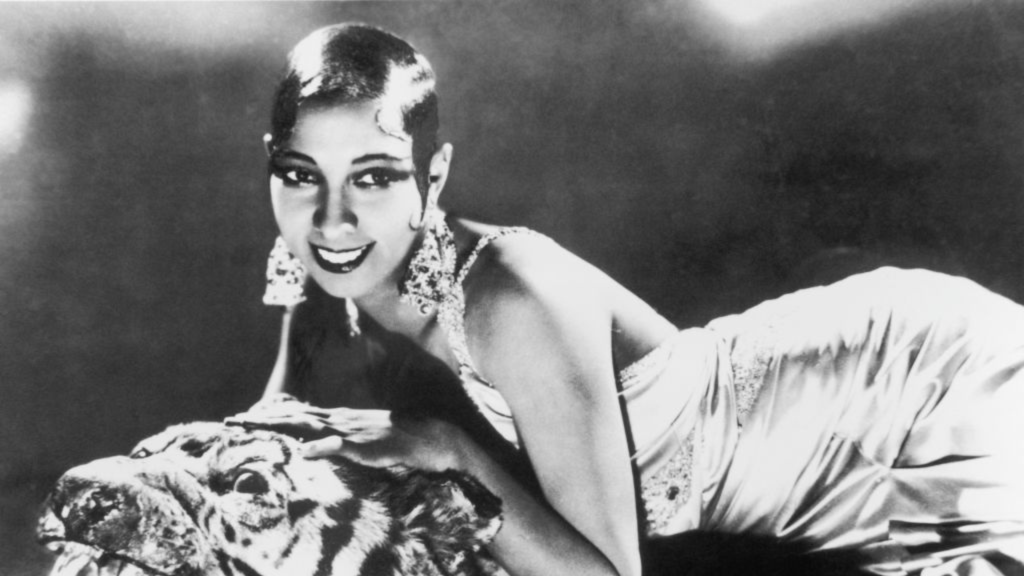
circa 1925: Portrait of American-born singer and dancer Josephine Baker (1906 – 1975) lying on a tiger rug in a silk evening gown and diamond earrings. (Photo by Hulton Archive/Getty Images)
When most people think of history’s American spies, they imagine a sleuthy white man, tracking troop movements, planting bugs and obtaining secrets under the radar of the enemy. What’s rarely imagined, let alone taught, is the role Black Americans played in espionage from the Revolutionary War through modern times.
Enslaved and free Black men and women slipped into rooms they weren’t meant to enter, cozied up to marks who underestimated them and quietly ran intelligence networks that relied on invisibility in plain sight. Here are Black spies whose intelligence work shaped history.
Mary Elizabeth Bowser
Screenshot: YouTube “Mary Elizabeth Bowser: Unsung Heroes of the Civil War | Ancestral Finding Postcard”
Dubbed the “baddest bitch in history” by Comedy Central, Bowser became known as one of the Union’s most daring Civil War spies. Literate and underestimated, Bowser worked as an undercover agent from inside the Confederacy’s most vulnerable locations — Confederate President Jefferson Davis’s home, according to African American Registry.
Masking her intelligence by pretending to be bat sh*t crazy, “Crazy Bet,” as she was known, used a rumored photographic memory to collect important military information and pass it on to Ulysses S. Grant.
James Armistead Lafayette
Fascimile of the Marquis de Lafayette’s original certificate commending James Armistead for his revolutionary war service, 1784. From the New York Public Library. (Photo by Smith Collection/Gado/Getty Images).
James Armistead Lafayette was born enslaved but became a master of deception during the American Revolution. According to America’s Army Museum, he disguised himself as a runaway, infiltrated British camps, delivered key intelligence to the Marquis de Lafayette and fed false information to the enemy. His double agent work was crucial at Yorktown in 1781.
With Marquis de Lafayette’s support, he later won his freedom and dropped his enslaver’s name.
Josephine Baker
circa 1925: Portrait of American-born singer and dancer Josephine Baker (1906 – 1975) lying on a tiger rug in a silk evening gown and diamond earrings. (Photo by Hulton Archive/Getty Images)
Josephine Baker was a known boundary-breaking dancer, singer and international icon, but few knew she was also a World War II spy for the French Resistance. Though she spied on behalf of France rather than the U.S., Baker belongs in this conversation about Black espionage.
At the height of her fame, Baker used her celebrity to move through elite European society and collect information on Nazi Germany and other Axis powers, according to History.com. Baker hid intelligence in invisible ink on sheet music and pinned notes inside her clothing, later explaining, “nobody would think I was a spy.”
Her bravery earned her France’s highest military honors.
Debra Evans Smith
Screenshot: YouTube
While working in Records Management, Debra Evans Smith attended the FBI Academy after gaining nine pounds to meet the minimum weight requirement.
When only one percent of Black women were spies, Smith was drawn to counterintelligence. She volunteered for surveillance, learned Russian, and spent four years handling Russian counterintelligence in Los Angeles, conducting interviews and investigations in the language, according to the FBI. For her, the work was never about individual cases—it was about serving the country.
If you’ve never heard of Abraham Gallaway, that’s no accident. According to historian Dr. David Cecelski, Gallaway may have been the most important Southern war hero, but his legacy was erased when North Carolina rewrote its own history in the late 1800s, depicting enslaved people as “docile.” Gallaway’s story did not fit their narrative.
Born enslaved in 1837 near Wilmington, N.C., he escaped at 19. Gallaway became a “master spy” for the Union Army during the Civil War, providing military intelligence from within the South and establishing a spy network. He also became a state senator, according to 6 ABC. Today, his story is preserved at the North Carolina Museum of History.
Mary Louvestre
Mary Louvestre (sometimes spelled Touvestre) was a free Black woman who would not take no for an answer. Working as a seamstress in Virginia, she stole documents about troop movements and walked to deliver them to Union officials in Washington, D.C. When officers brushed her off, hesitating to meet with her, she kept going back until they listened.
Darrell M. Blocker
Darrell M. Blocker spent 32 years in U.S. intelligence, retiring in 2018 as the most senior Black officer in the CIA’s Directorate of Operations and earning the Distinguished Career Intelligence Medal. A second-generation intelligence professional, Blocker’s work took him to dangerous territory in places like Iran and North Korea, according to the International Spy Museum.
Having lived in 10 foreign countries, he has held titles including Deputy Director of the Counterterrorism Center and managed the CIA’s Ebola response.
A portrait of Harriet Tubman, African-American abolitionist and a Union spy during the American Civil War, circa 1870. (Photo by HB Lindsey/Underwood Archives/Getty Images)
Harriet Tubman was more than the Underground Railroad’s “Moses.” She made power moves in the Union Army, using her reputation to recruit Black scouts. Tubman gathered intel no one else could. According to Brandeis University, she became the first woman to lead a U.S. military raid in 1863, which freed 750 people and sealed her acumen as a true strategist.
George E. Hocker, Jr.
YouTube: “2025 Mary’s Woods MLK Jr Celebration”
George E. Hocker, Jr., a Washington, D.C. native, joined the CIA in 1957 while studying at Howard University. Working as a file clerk to fund his education, he stopped short of aspirations to work as a spy because CIA leaders told him Black people were not intelligent enough or able to “blend in.”
He believed them … until the 1963 March on Washington inspired him to pursue his dream despite racism. During the Cold War, Hocker gathered intelligence in Africa and later went to Latin America, risking his life on dangerous assignments. Hoker never lost sight of the fight at home, stating, “While I was fighting for my country’s interests abroad, my fellow Black Americans were facing war zones of their own at home,” as quoted in Newsweek.
Robert Smalls
Robert Smalls, 1887. African-American politician, publisher, businessman and maritime pilot. Born into slavery, he escaped, and commandeered and piloted a Confederate transport ship which became a Union warship. His example and persuasion helped convince President Abraham Lincoln to accept African-American soldiers into the Union Army. From “Men of Mark: Eminent, Progressive and Rising” by William J. Simmons. Creator: Unknown. (Photo by Heritage Art/Heritage Images via Getty Images)
Born into slavery in 1839 in Beaufort, South Carolina, Robert Smalls rose to become a skilled pilot on the Confederate transport CSS Planter by his early twenties. In a bold act of courage in 1862, he seized the ship, picked up his family, and navigated past Confederate forts under the guise of a captain, delivering the vessel safely to Union forces. Smalls went on to become the first African American to command a U.S. naval vessel, and after the war, he purchased his former enslaver’s house, reclaiming a space that had once symbolized his bondage.
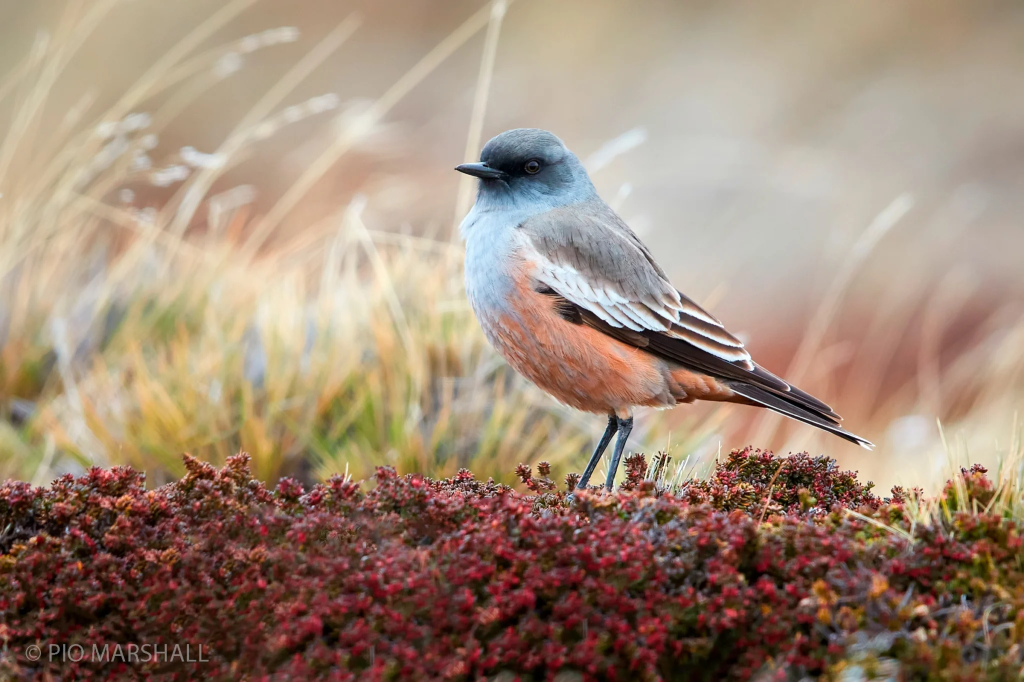
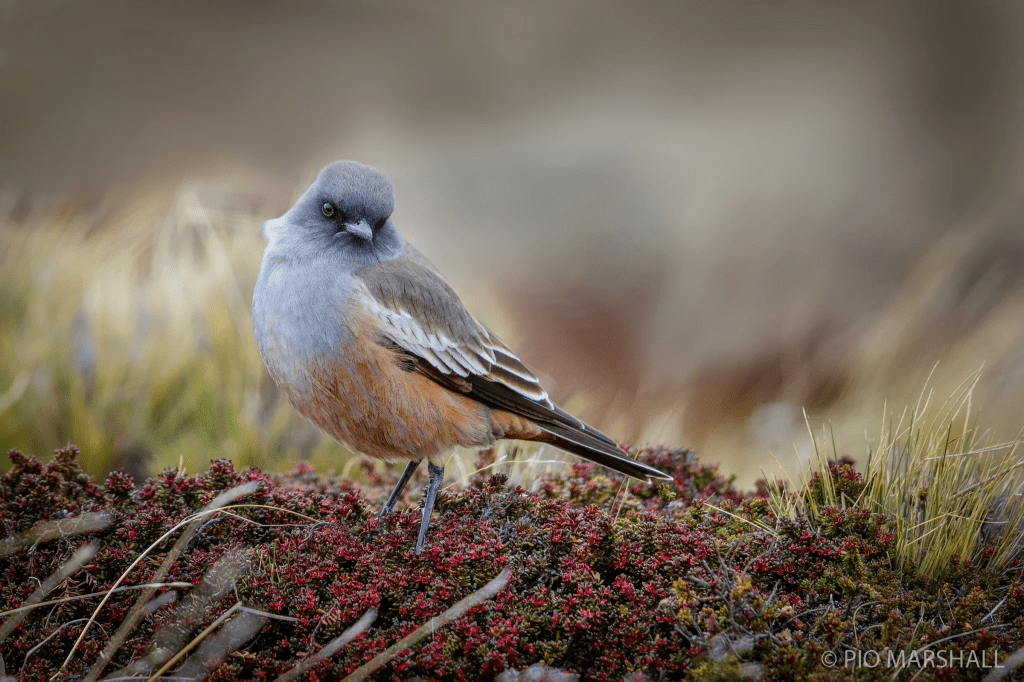
A handsome bird of open landscapes, the Chocolate-vented Tyrant is an unusual species to be included among the so-called “flycatchers.” Inhabiting flat grassland and scrub, this bird is primarily a ground-dweller, rarely seen higher than a fencepost or tussock. Furthermore, this flycatcher is not one to catch insects on the wing (to “fly-catch” in ornithology lingo), preferring instead to hunt its prey on the ground. In keeping with this terrestrial lifestyle, the Chocolate-vented Tyrant has notably long legs and is more likely to run or walk than to hop or fly. In combination with its large size and rusty belly, the tyrant’s appearance and behavior are reminiscent of birds in the thrush family, such as the American Robin.
The Chocolate-vented Tyrant breeds in the cold, dry, and infamously windy Patagonian Steppe, also known as the Patagonian Desert. In an environment largely devoid of trees, this bird takes advantage of the open sky to perform an expansive aerial display, similar to other birds like the Red Knot and American Woodcock that use flat, open habitat in the breeding season. The Chocolate-vented Tyrant is also known to forage alongside wintering shorebirds — yet another habit unusual for its family, but typical of others, like the groups of sandpipers and plovers it sometimes joins.
Threats
Birds around the world are declining, and many of them, including the Chocolate-vented Tyrant, are facing urgent threats. Throughout the tyrant’s range in South America, livestock grazing, agricultural expansion, and invasive species all hinder this bird’s ability to thrive. Furthermore, sparse protected areas may be insufficient to support the species, particularly on its nonbreeding grounds in the Pampas, the vast grasslands region east of the Andes.
Habitat Loss
The Chocolate-vented Tyrant is losing habitat in both its breeding and nonbreeding ranges. On the Patagonian Steppe, where this species breeds, overgrazing by sheep disrupts the limited vegetation afforded by a dry climate, resulting in erosion and eventually desertification. The Pampas faces similar threats from overgrazing by cattle, as well as the clearing of native habitat in favor of agriculture.
The Chocolate-vented Tyrant is a habitat specialist, making it particularly vulnerable to threats like habitat loss and degradation. In addition to protecting habitat through our network of reserves, ABC also works to reduce the threat of invasive species and restore habitat. At ABC, we’re inspired by the wonder of birds and driven by our responsibility to find solutions to meet their greatest challenges. With science as our foundation, and with inclusion and partnership at the heart of all we do, we take bold action for birds across the Americas.
Creating & Maintaining Reserves
Habitat is the foundation for birds’ survival. Working with dozens of partners and local communities throughout Latin America, ABC supports a growing network of protected areas in more than a dozen countries. Totaling more than 1.3 million acres, nearly one-third of the world’s birdlife (more than 3,000 species) is protected by an ABC-supported reserve.



 February 13, 2026


 Scottie's Playtime