I love Ethel and her way of presenting facts and reality. She points out that studies in high schools indicate that the rates of trans children are 3.+ and those questioning are 2.+. Plus she points out the reason more trans people are out is the same reason more gay kids came out in the 2000s, it was the left handed issue again. When being left handed became OK to admit more people admitted and openly lived as left handed. Despite everything, trans kids feel safer coming out in the US than ever before. Hugs.
Some news about No Labels from my state; what’s happening with parties in your state? And great news regarding suicide prevention efforts aimed at LGBTQ+. I bet my state isn’t the only one!
No Labels Kansas is no more as a political party, despite bizarre bid to hijack the organization
Party didn’t fulfill plan to nominate candidates for president, vice president
TOPEKA — Demise of the No Labels Kansas political party was inevitable after it neglected to fulfill the organization’s central objective when formed in January 2024 to nominate candidates for U.S. president and vice president.
The failure of No Labels Kansas to field candidates for any type of statewide office or to win at least 1% of the total votes cast for that office in a general election meant the organization would eventually lose its standing in Kansas among the state’s five political parties. Instead of leaving Kansans to speculate when that might occur in 2026, No Labels Kansas secretary and treasurer Shane Mathis requested May 15 the termination of state recognition of the political party.
“Because No Labels Kansas declined to nominate candidates for those offices in 2024 and has no intention of doing so in the future, its central organizational purpose no longer exists,” Mathis said.
Secretary of State Scott Schwab complied Monday with the request and notified county election clerks and commissioners of state law requiring voter registration records be amended so 5,955 people registered with No Labels Kansas would be reclassified as unaffiliated.
In Kansas, the Republican Party dominates with 897,000 registered voters compared with the 575,000 unaffiliated and 495,000 Democratic Party registrants.
While founders of No Labels Kansas didn’t make a dent in Kansas elections, the existence of its organizational shell led a pair of longtime Republican operatives to attempt a hijacking of No Labels Kansas so it might be transformed into an organization with a broader mission that included nomination of candidates for state offices. (snip-MORE)
TOPEKA — A Wichita organization created an online training program for suicide prevention and mental health education to improve the care that LGBTQ+ Kansans receive when reaching out to crisis resources, including the 988 Suicide and Crisis Lifeline.
The organization, Center of Daring, focuses on inclusivity and leadership training. Its 10-part training program takes nine hours to complete and is available for free on the center’s website, according to an April 28 press release announcing the program.
“We believe this training series will fill a deep need here at a time when many LGBTQ+ Kansans don’t feel safe in our state,” said Liz Hamor, the Center of Daring founder, in the release.
Through learning activities, videos and surveys, the training covers trauma-informed intervention, intersectionality and promoting equity within a crisis response organization. The training was designed with input from LGBTQ+ residents and Kansas crisis care providers, according to the press release.
The 988 helpline is a mental health crisis resource available 24/7. It went nationwide in 2022. Kansas’ line received more than 34,000 calls, 12,000 texts and 9,000 chats in 2025, according to a state-mandated annual report.
The 988 Suicide and Crisis Lifeline is a free, confidential hotline available 24/7 for individuals in crisis or those looking to help someone else. To speak with a certified listener, call or text 988 or visit 988lifeline.org.
WASHINGTON (AP) — Barney Frank, the longtime Democratic congressman and leading liberal who brought new visibility to gay rights and crafted the most significant reforms to the financial system in a generation, has died. He was 86.
Frank died late Tuesday, according to Jim Segel, Frank’s former campaign manager and close friend.
After representing broad swaths of Boston’s suburbs in Congress for 32 years, Frank and his husband moved to Ogunquit, Maine. He entered hospice there in April with congestive heart failure and is survived by his husband, Jim Ready, and sisters, the longtime Democratic strategist Ann Lewis and Doris Breay, along with brother David Frank.
A self-described “left-handed gay Jew,” Frank was known for his acerbic wit, combative style and focus on marginalized communities. He represented the party’s left wing while keeping close with Democratic leaders who sometimes frustrated progressives.
He is best known as a pioneer for LGBT rights. After decades of grappling with his sexuality, he publicly came out as gay in 1987, the first member of Congress to do so voluntarily. With his 2012 marriage to Ready, he became the first incumbent lawmaker on Capitol Hill to marry someone of the same sex.
Do you remember last month when everyone was so excited about Moon Joy as we watched Artemis II? I have a confession to make.
I did not watch it.
Perhaps a combination of my anxiety plus a little leftover trauma of watching in Challenger live in Elementary school? Regardless, I couldn’t enjoy it until I knew that they were safely back home, but then I did a deep dive and that is why I am forever experiencing pop-culture moments behind the rest of the world. It’s also why this week I decided to draw something that might have been more timely before, but I suspect you will forgive me.
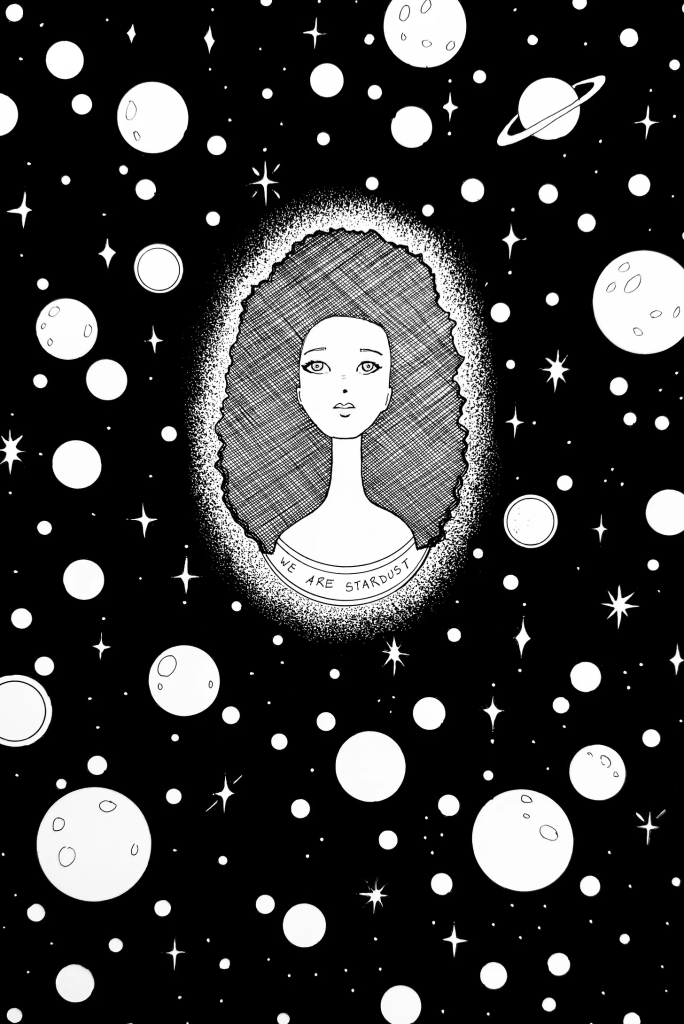
It reminded me of how amazing space is…of exploration and joy…and of the idea that we are each an actual part of the magic of that universe, even when we feel that we are so tiny and unremarkable.
So this is just a reminder to you that you are truly made of stardust. Nearly all of the elements in your body where made in a star, and many have come through several supernovas. The actual iron in your body is from a star going supernova. So if today you are feeling small, remember that you are magic in astounding ways.
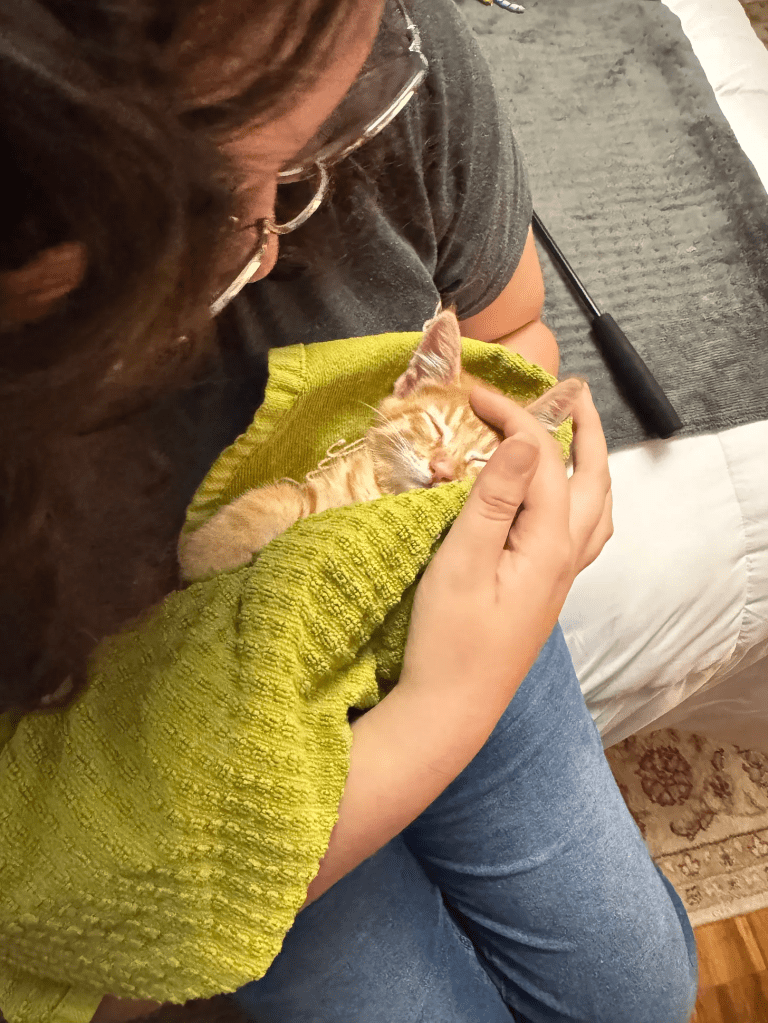
PS. I know I normally just talk art here but I thought maybe you’d want to see this. Yesterday I started fostering a feral rescue kitten to try to fill the kitty-sized hole in my heart right now and I’m pretty sure this tiny, nameless orange gentleman will not be leaving us because omg, y’all.
And why judges should never be elected, but should be nominated by those who practice law, then confirmed by elected legislators and governors. All should be public so we the people know what and when it’s happening. When judges have to run for the bench, politics overtakes and minimizes law, tainting decisions.
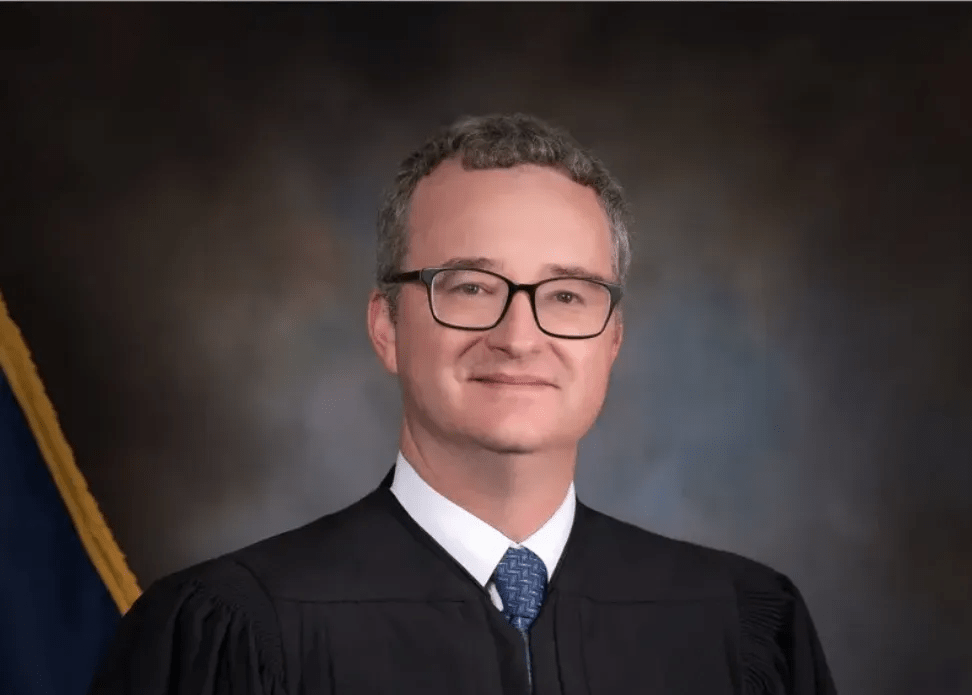
This weekend, a Kansas judge issued a scathing 117-page rebuke of the state’s ban on gender-affirming care for transgender youth—and in doing so, methodically dismantled the case against that care. In his ruling, Judge Carl Folsom III worked through the testimony of the state’s witnesses one by one, finding that its anti-transgender “experts”—routinely paraded by groups like the Alliance Defending Freedom, SEGM, and Genspect—offered opinions built on “cherry-picked information, conjecture, and research taken out of context,” and granting their testimony little to no weight. He then laid out 349 individual findings of fact, drawn from scientific evidence and the testimony of credible medical experts, documenting the safety and efficacy of gender-affirming care. He ultimately found that the ban likely violates the Kansas Constitution—which guarantees broader protections than its federal counterpart. That distinction matters enormously: because the ruling rests on state constitutional grounds, it is largely insulated from the U.S. Supreme Court and its decision in Skrmetti, which closed the federal courthouse door to these challenges but left the state one wide open.
“Allowing a transgender adolescent with gender dysphoria to experience their endogenous puberty when puberty blockers are medically indicated according to the Endocrine Society Clinical Practice Guideline is highly likely to result in irreversible physical changes that create enormous short- and long-term distress and gender dysphoria,” Folsom wrote. “Thus, there was substantial evidence that S.B. 63 not only fails to protect minors, but also endangers them, by prohibiting the use of GnRH agonists when medically indicated.”
Before weighing the evidence, the judge first had to determine who could credibly be considered an expert. Republican Attorney General Kris Kobach brought forward a litany of anti-trans witnesses familiar from litigation defending these bans. Among them was James Cantor, a Toronto psychologist who has built a career testifying for states defending care bans despite no clinical experience treating transgender minors—and who was once quietly dropped from a Florida Board of Medicine hearing after it emerged he had served on the advisory council of the Prostasia Foundation, a group that has worked to destigmatize pedophilia. Folsom wrote that Cantor “has not conducted any original scientific research on the efficacy or safety of gender dysphoria treatments,” and noted he is not licensed to treat anyone under 16 and has never diagnosed a minor with gender dysphoria. The judge then catalogued a record of self-contradiction: Cantor “stated that ‘peer-review is the line between acceptable and not’ but himself relied on non-peer reviewed sources,” cited systematic reviews while ignoring that “the authors of those reviews stated that their work should not be used to prevent the provision of gender-affirming medical care,” and “makes several statements which have no scientific support,” including that gender dysphoria might be a misdiagnosis of borderline personality disorder. “The Court gives Dr. Cantor’s testimony little weight,” Folsom concluded.
The judge turned next to Farr Curlin, a Duke University doctor and theologian who was an author of the Trump administration’s HHS report on pediatric gender dysphoria—a document authored anonymously by a roster of hate-group affiliates and career anti-trans activists, and which deadnames Christine Jorgensen, one of the first Americans to get gender affirming surgery. Curlin, Folsom noted, “is not a pediatrician, nor is he a psychiatrist or endocrinologist,” and “has never treated anyone for gender dysphoria.” Curlin testified that gender-affirming care is “ethically problematic”—but under questioning, the breadth of what Curlin considers unethical became clear. He believes that prescribing birth control for contraception is also “ethically problematic,” because “blocking the capacity for reproduction seems contrary to the purposes of health.” He believes in vitro fertilization is “ethically problematic” as well. He testified that when gender-affirming care reduces fertility, it “prevents the realization of the basic good of marriage, since sexual capacities make possible the one flesh union of marriage.” By his own admission, Folsom noted, Curlin’s views are “radically counter to current medical orthodoxy.” The judge found his opinions “appear motivated by his personal views as opposed to a methodology applicable in the field of medical ethics,” and gave his testimony “little-to-no weight.”
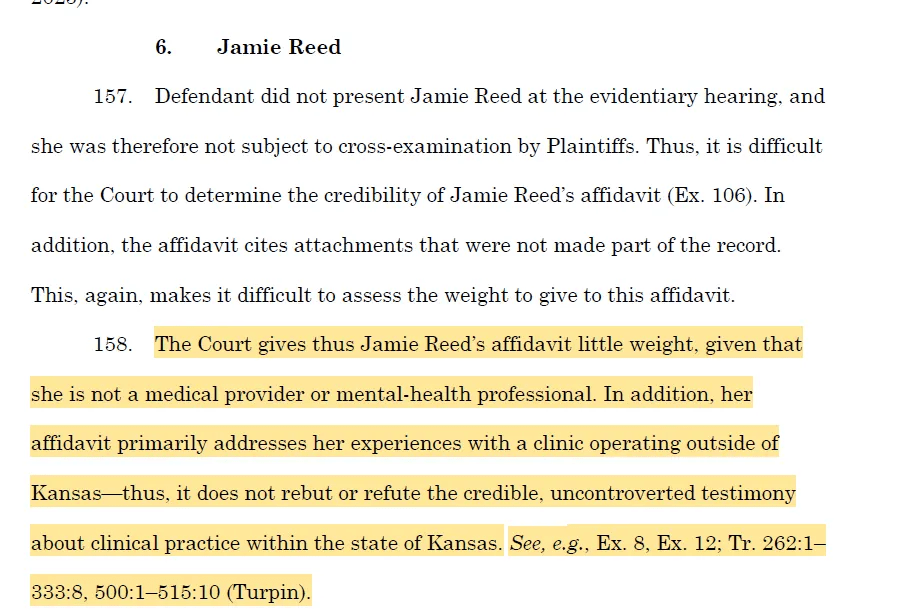
The judge also had pointed words for the state’s roster of prominent anti-trans activists. Chloe Cole, the country’s most prominent anti-trans detransitioner, testified about receiving care as a minor in California—but Folsom noted that Cole “admittedly did not receive care in Kansas,” and that the plaintiffs’ expert Dr. Angela Turpin testified the care Cole described “would not have occurred in Kansas” and would have been inconsistent with the clinical guidelines Kansas providers actually follow. Her testimony was given “less weight.” Corinna Cohn, another anti-trans detransitioner who has testified for care bans across the country and who has publicly denied that transgender people existed before 1939 or were victims of the Holocaust, did not appear at the hearing at all. The judge noted that Cohn’s affidavit described “care accessed as an adult” and treatment “in Wisconsin”—nothing to do with minors, or with Kansas—and gave it “little weight.” And then there was Jamie Reed, the self-styled “whistleblower” who built a national profile on lurid, largely unsubstantiated accusations against a St. Louis gender clinic and who has gone on Fox News to describe being transgender as a delusion. Reed also did not testify and could not be cross-examined. Folsom gave her affidavit “little weight,” and had scathing remarks towards her lack of expertise:
“The Court gives thus Jamie Reed’s affidavit little weight, given that she is not a medical provider or mental-health professional. In addition, her affidavit primarily addresses her experiences with a clinic operating outside of Kansas—thus, it does not rebut or refute the credible, uncontroverted testimony about clinical practice within the state of Kansas,” read the order.
Folsom then turned to set the record straight on the care banned by Kansas. Working through the testimony of the credible medical experts, he set out 349 separate numbered findings of fact, each documenting some component of what the science actually shows about gender-affirming care. Among them: that “the currently available body of medical research, as a whole, shows that gender-affirming medical care is effective at improving mental-health outcomes for adolescents with gender dysphoria,” supported by “over 20 scientific studies” finding the treatments “effective at alleviating gender dysphoria and improving a variety of mental-health outcomes, including anxiety, depression, and suicidality.” Folsom found that “for many adolescents, gender-affirming medical care provides significant relief from gender dysphoria and decreases depression, anxiety, suicidality, and thoughts of self-harm.” On the question of regret, the talking point most relied upon by the law’s defenders, the court found, based on the Kansas clinic’s own long-term follow-up data, that 99.2% of patients who received gender-affirming care “continue to identify as transgender into adulthood,” and that of the remaining 0.8%, “most did not regret the medical treatment they received.”
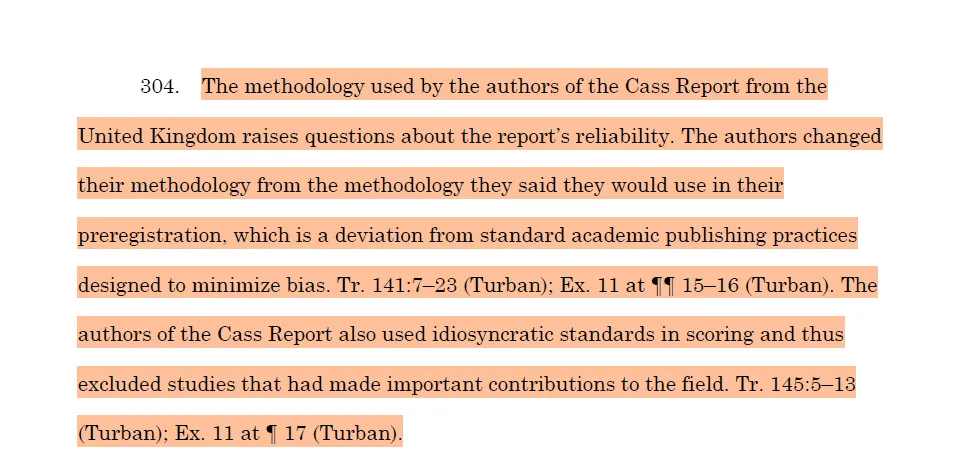
Folsom reserved some of his sharpest fact-finding for the Cass Review and claims over European care. The state’s experts pointed to systematic reviews from the United Kingdom, Sweden, Finland, Germany, and Norway as “proof” the science had turned. Folsom found otherwise. “None of these systematic reviews recommend categorically banning gender-affirming medical care for adolescents,” he wrote, and “the United Kingdom, Sweden, Finland, Germany, and Norway have not categorically prohibited gender-affirming medical care for minors”—as Kansas had. On the Cass Review specifically, Folsom found that its authors “changed their methodology from the methodology they said they would use in their preregistration, which is a deviation from standard academic publishing practices designed to minimize bias,” and “used idiosyncratic standards in scoring and thus excluded studies that had made important contributions to the field.” Far from recommending a ban, the court found, the Cass Report “reaches conclusions that are similar to those in the Endocrine Society Guideline and WPATH Standards of Care” and “concludes that there are young people who absolutely benefit from gender-affirming care.” On Germany, the state had the facts backwards: Folsom found that “Germany’s recent guideline endorses the provision of gender-affirming medical care”—a reference to the 2025 guidelines from 26 medical organizations across Germany, Austria, and Switzerland, the largest European medical consensus on transgender youth care ever produced.
The judge’s ruling rested on the Kansas constitution. Folsom found the plaintiffs likely to succeed on the claim that SB 63 violates the fundamental right of parents, guaranteed by Section 1 of the Kansas Constitution Bill of Rights, to make medical decisions for their children. Section 1, he wrote, quoting the Kansas Supreme Court, “protects the core right of personal autonomy—which includes the ability to control one’s own body, to assert bodily integrity, and to exercise self-determination” and “allows Kansans to make their own decisions regarding their bodies, their health, their family formation, and their family life.” Because SB 63 strips parents of that right, Folsom applied strict scrutiny, the most demanding standard in constitutional law, and found the state had failed to meet it. That reasoning was used recently before in Kansas politics for another issue. The same Section is what protects abortion rights in the state. In previous abortion-related decisions, the Kansas Supreme Court held that Section 1 secures “an inalienable natural right of personal autonomy”—language the court used to strike down abortion restrictions, and that Kansas voters chose to keep in 2022 when they rejected a constitutional amendment that would have stripped it away.
For now, gender-affirming care is legal again in Kansas. The injunction is temporary, blocking SB 63 while the case is litigated, and Attorney General Kris Kobach has said he will appeal, calling the ruling “a stark example of judicial activism.” But the appeal faces a structural problem. Because the decision rests entirely on the Kansas Constitution, the U.S. Supreme Court and its ruling in Skrmetti have no power to disturb it—a state’s highest court is the final word on its own constitution. And the Kansas Supreme Court, where the case is ultimately likely to land, has five of seven justices appointed by Democratic governors and has repeatedly upheld the same Section 1 personal-autonomy right that Folsom relied on here.
Yet the tRump administration trashed the government’s stance of fighting right wing violence or right wing extremist violent groups. It started with the republicans forcing Obama to remove a government study on right wing extremists. Now the current DOJ and FBI have removed all mention of right wing violence or violent actions instead claiming the violence is all being done and caused by Antifa. The government wants to make the public believe that the people who are against fascism are the real extremist threat to the public. Antifa is antifascism / antifascist. It has no headquarts or central organization it is just people who since the 1930s have pushed back against fascism and fascists. The tRump white supremacists want the public to believe violent groups like the Proud Boys, the Oath Keepers, Nazi groups, the 3 percenters, and other militia groups that joined in the insurrection riot on Jan 6th and are extreme white supremacists. The current people in charge love the way they can steal the money from the treasury and take away people’s rights, so they want to keep the hate groups that support them to be the good guys and anyone who tries to stop the destruction of democracy they hope to make the bad people. Hugs
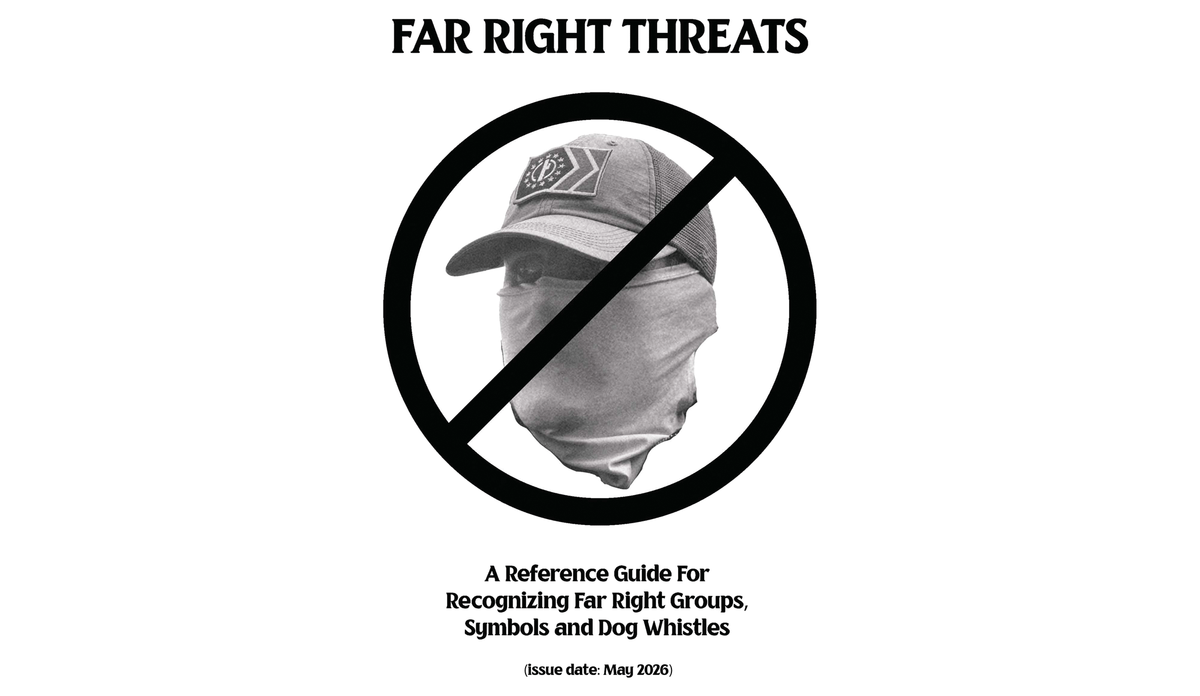
Disclaimer: WWFU typically redacts the imagery seen in this zine with an iron front or an X, and encourages others to do the same. This zine also contains slurs that we typically redact. For the sake of eduction and proper recognition, the following content is un-redacted.
A Reference Guide For Recognizing Far Right Groups, Symbols and Dog Whistles
Introduction
As of spring 2026, this zine serves as a reference guide to far-right symbols, dogwhistles, and groups, helping you recognize and understand them. The list focuses on the most active groups and the most commonly used phrases and symbols at this time.
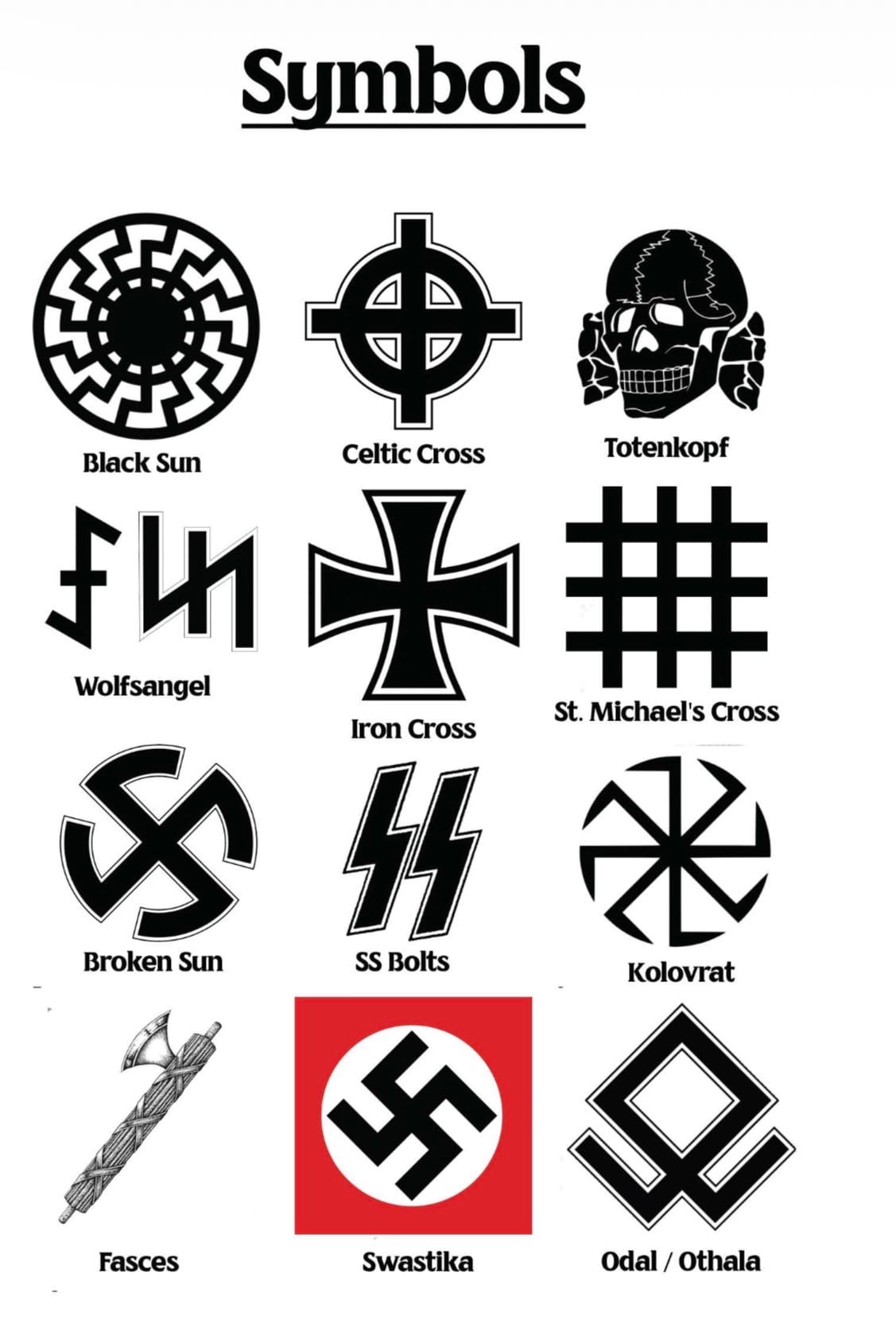
Not all neo-Nazi and white supremacist groups openly brand themselves with swastikas or SS bolts. Recognizing their dogwhistles is essential to accurately identifying them as the community threats they are. Some groups and individuals deliberately project a public facing image of “patriotism” or opposition to “foreign wars” to appear more mainstream, while privately holding the same beliefs as more openly neo-Nazi organizations. Because some symbols are not exclusive to neo-Nazis, fascists, or white supremacists, it’s important to look for additional context clues and patterns of use.
Dogwhistles are coded messages communicated through words or phrases understood by a specific in-group, but not by outside observers. Neo-Nazis and white supremacists use dogwhistles to signal to one another while maintaining plausible deniability.
Phrases / Numbers
131: Anti Communist Action (ACA), the numbers referring to the letters of the alphabet.
Blue Lives Matter/All Lives Matter: These phrases are nothing more than a response to people saying “Black Live Matter” and as way to silence Black voices. Cops can always choose to take off their uniform, while Black people cannot take off their skin or escape the discrimination that comes with it. No one would go to an event to save the rainforests and say that all forests matter. If all lives matter, as racists love to say, then Black lives have to matter. All lives can’t matter until Black lives matter because they are the ones being targeted by police, racist attacks, and everyday discrimination.
TDOTR: The Day of the Rope, a fictional day from the book The Turner Diaries in which race traitors (women who marry non-white men, the press, politicians, LGBTQ people and more) are hanged from lampposts.
6MWE: “Six Million Wasn’t Enough” referring to the number of Jewish people murdered during the holocaust.
The Great Replacement Theory: White supremacist conspiracy theory that argues democratic and government officials are intentionally facilitating non-white immigration to replace the white population for political purposes. Similar phrases include “white genocide.”
It’s okay to be white: While no one is saying it’s not okay to be white, this phrase creates perceived victimhood and is a stepping stone to great replacement.
WPWW: White Pride World Wide
GTKRWN: Gas the Kikes, Race War Now
RAHOWA: Racial Holy War
RWDS: Right Wing Death Squad
Blood and Soil: A reference to race and nationality from Nazi Germany
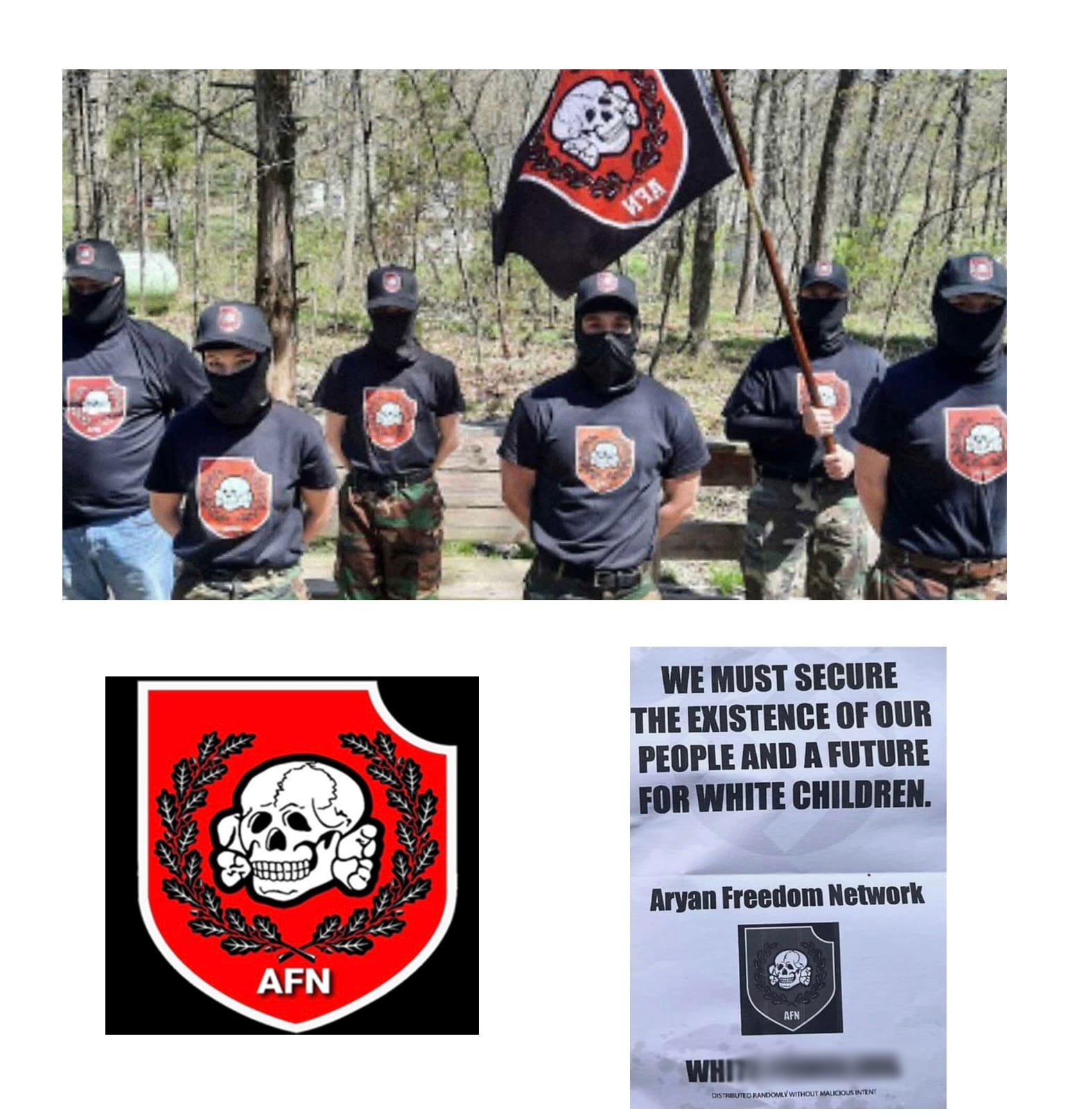
14: A reference to the 14 words “we must secure the existence of our people and a future for white children” coined by David Lane.
88: 8 Represents the 8th letter of the alphabet, HH or “Heil Hitler.” Variations include H8 and 83 “Heil Christ.” You will often see the numbers 14 and 88 together (1488 or 14/88).
WP: White Power. Also sometimes signified by an “okay” hand gesture.
Reclaim America: White supremacist slogan advocating for the “reclaiming” of America from immigrants (referencing the racist Great Replacement conspiracy theory).
We’ll Have Our Home Again: Popular phrase used by neo-nazis and white supremacists based on a song of the same title and similar to “reclaim America.”
Groups / Orgs
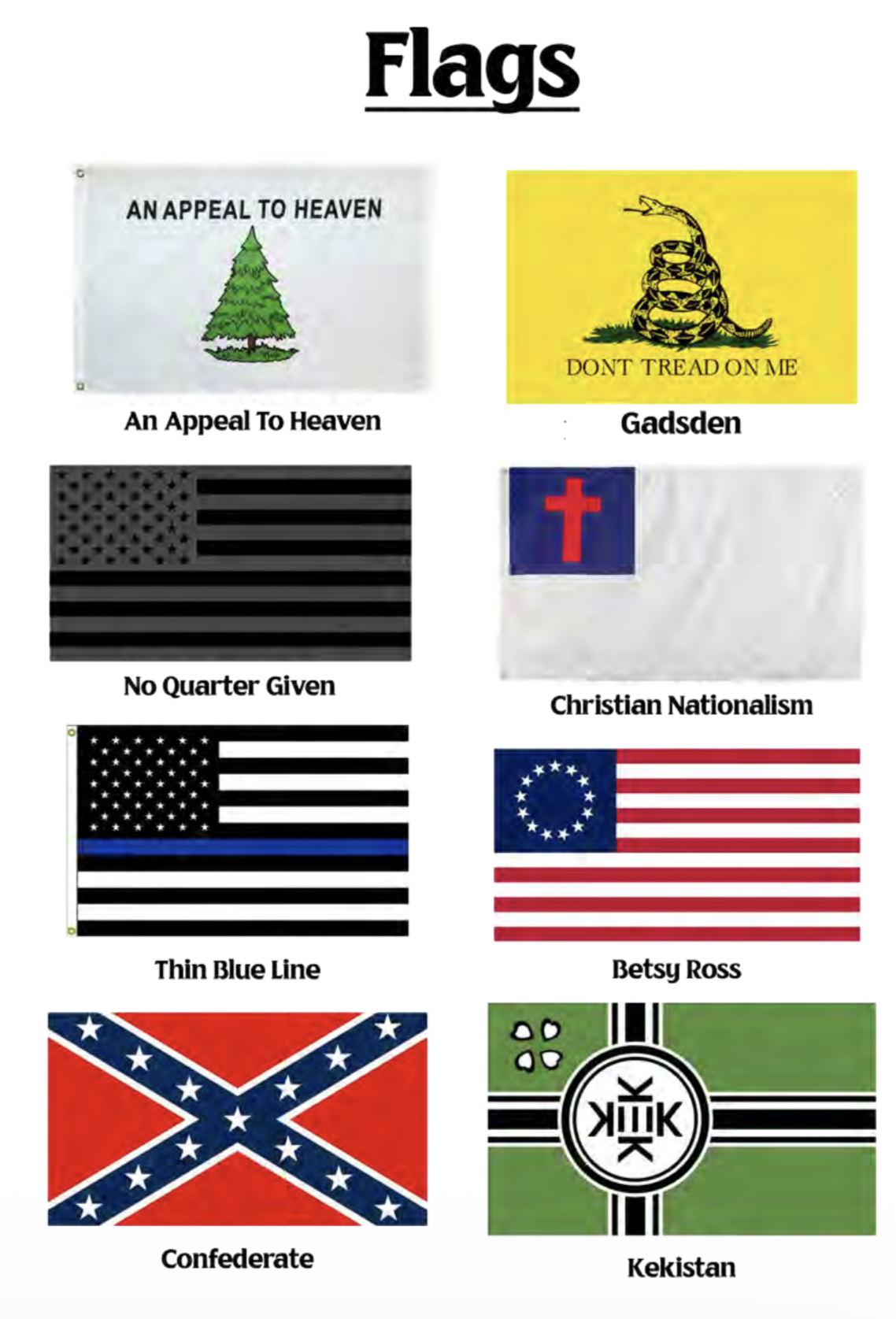
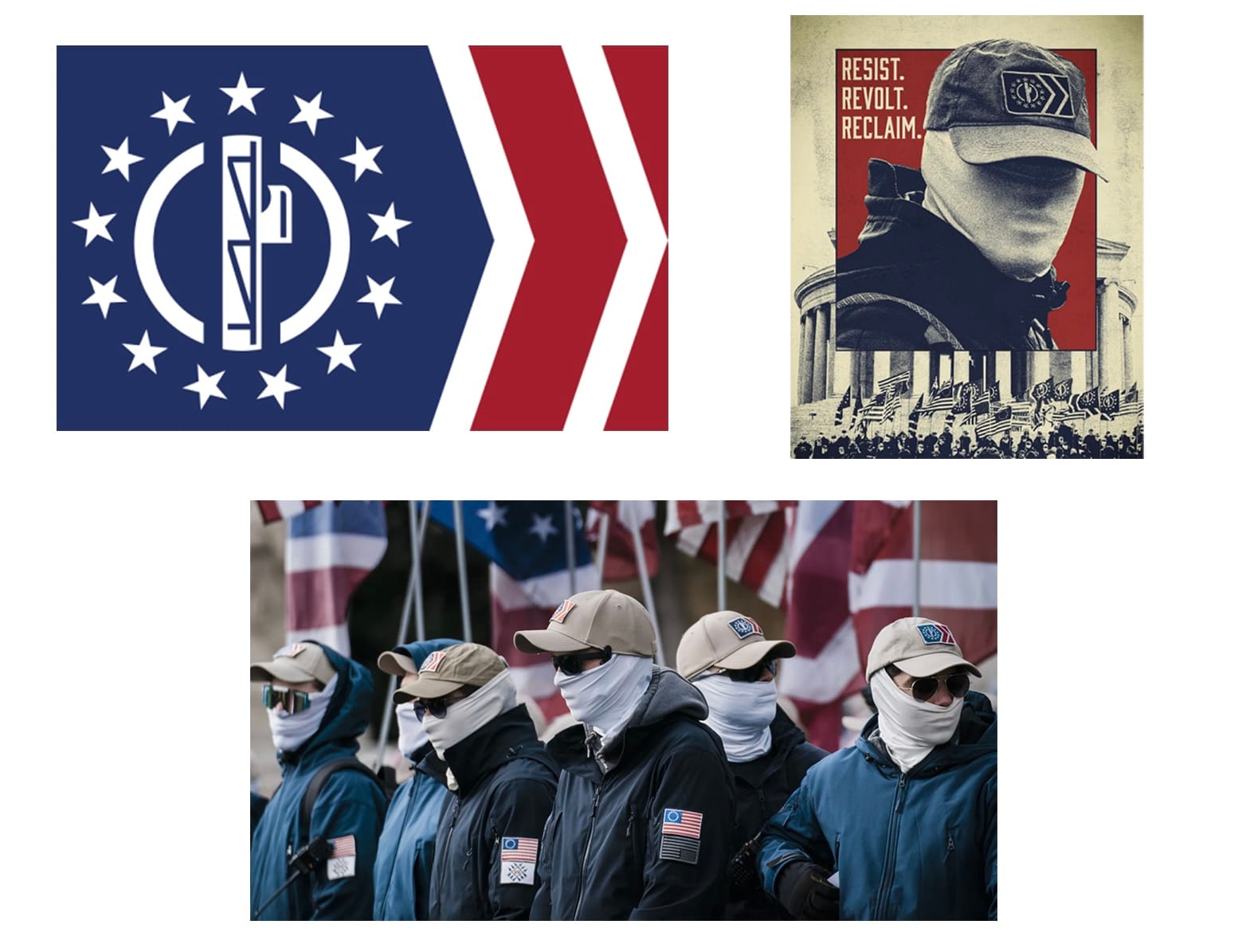
Patriot Front: A white nationalist group mostly focused on using patriotic imagery and rhetoric to spread propaganda and recruit. Founded by Thomas Rousseau, the group broke off from Vanguard America in 2017 after the deadly Charlottesville rally in Virginia. They care primarily about public image. Their style involves patriotic designs including red white and blue, fasces, khaki pants, and white masks with matching shirts, shields, the Confederate flag, the Betsy Ross flag, and the US flag. Despite their efforts to be palatable to a wider audience, outside of public view they espouse anti-semetic, pro-white and pro-nazi views. Patriot Front is currently one of the largest white nationalist groups in the US.
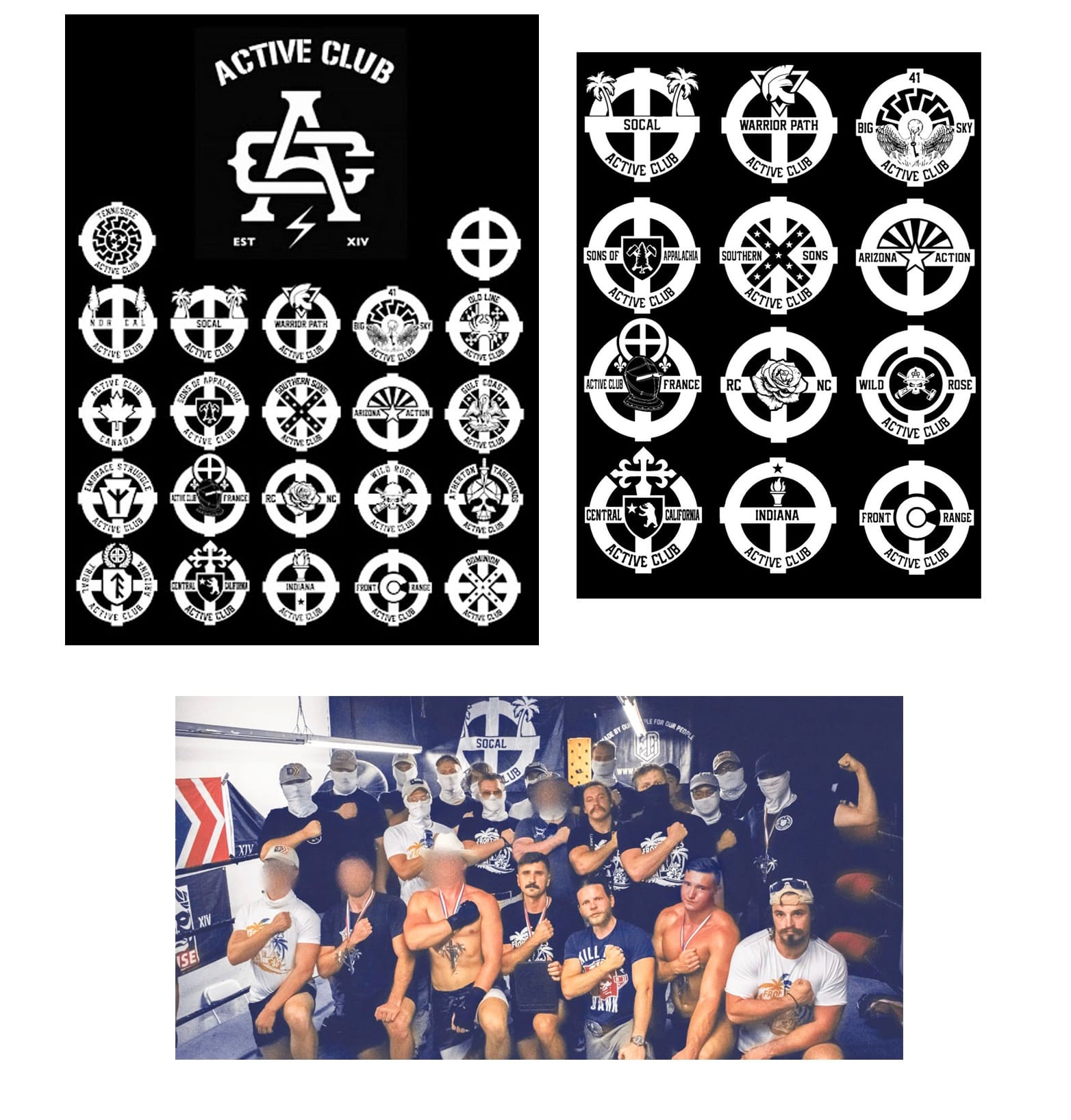
Active Clubs: Active Clubs are white supremacist fight clubs widespread across the US and throughout parts of Europe. They use the guise of fitness and training to try recruiting mostly younger white men into their clubs. Often members will march with other larger neo-nazi / white supremacist groups, and all chapters share the same logo of a Celtic Cross with text representative of their region. Many Active Clubs in the US are directly tied to Thomas Rousseau and Patriot Front.
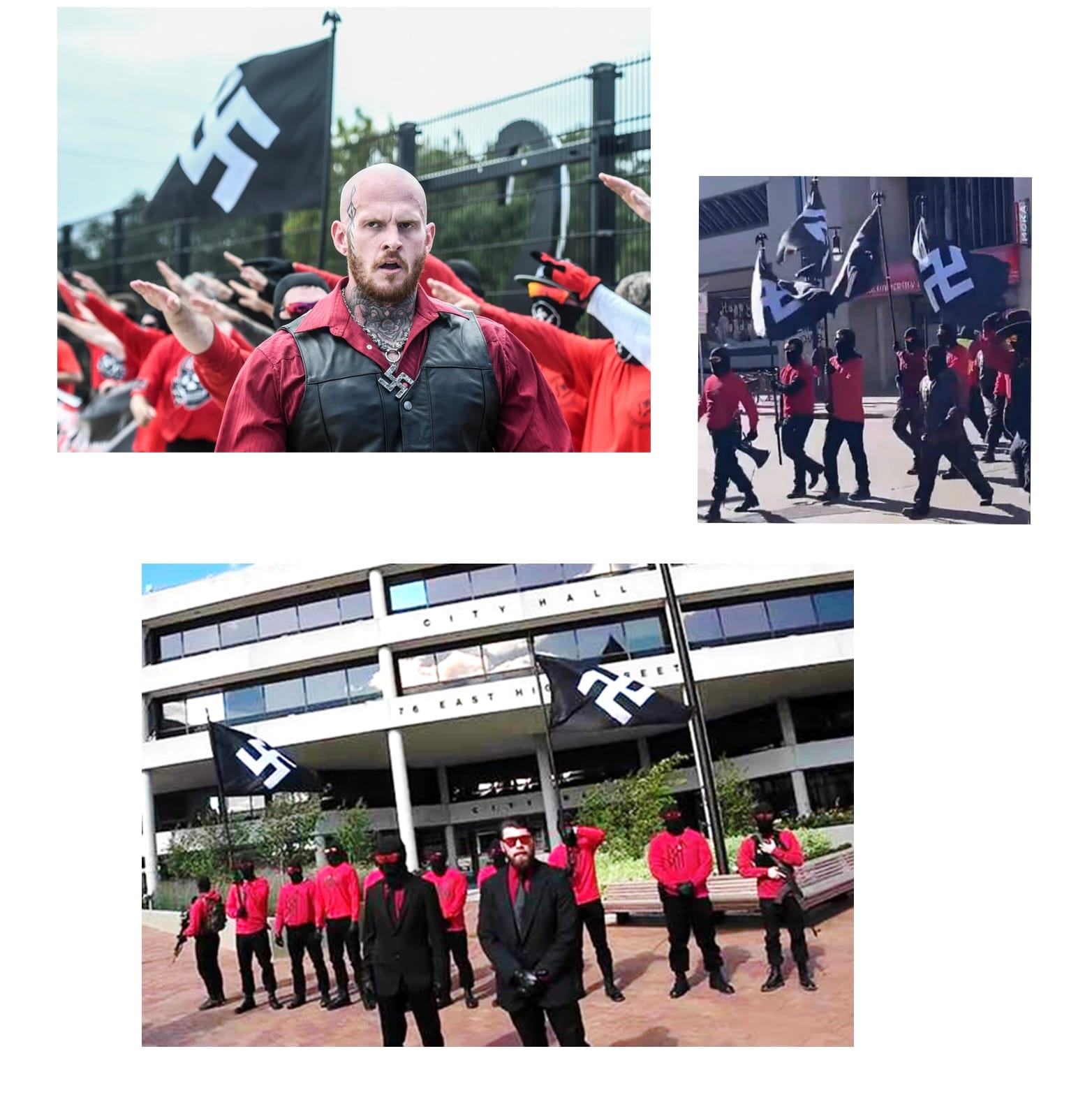
Blood Tribe: Blood Tribe is a neo-nazi group started by former marine Christopher Pohlhaus. They are known for being one of the most outward facing Nazi groups, holding semi-regular marches in cities across the US. They wear matching red and black outfits with black face coverings, and march with matching black and white swastika flags, and will loudly chant white supremacist and nazi slogans. Their goal is to instill a Fourth Reich in the US.
AFN: “Aryan Freedom Network” is a neo-nazi group present widespread across the US. The group has begun functioning as an umbrella organization, bringing in members from other groups like the Ku Klux Klan and outlaw bikers to function under their name. Outside of flyering neighborhoods with nazi propaganda, they operate mostly out of public view. They train often with firearms and make efforts to organize nationally across as many regions as possible.
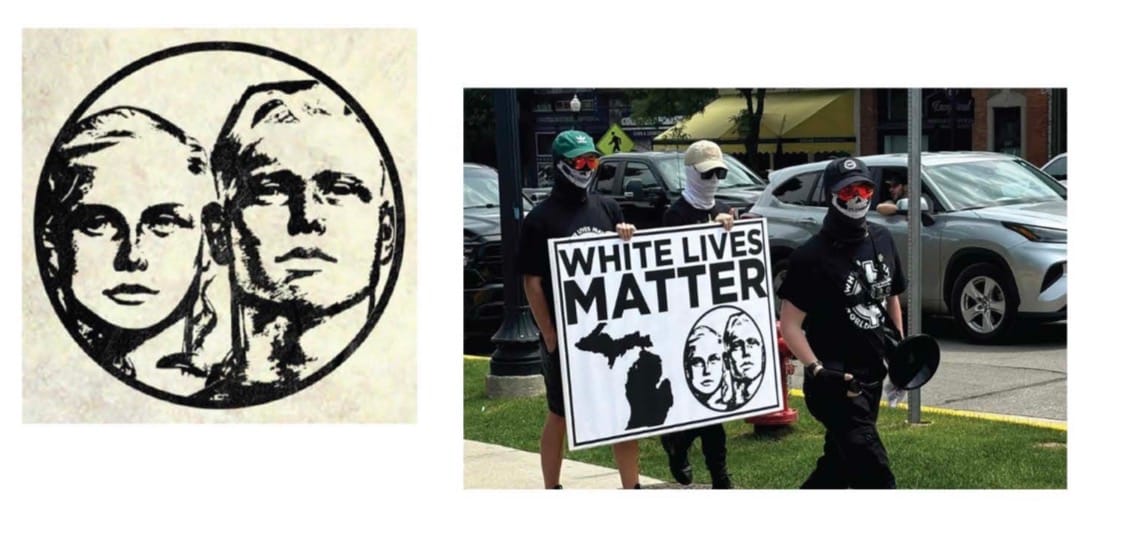
WLM: “White Lives Matter” is a white supremacist movement with chapters all around America and the globe, who focus their activism on low-risk tactics like stickers, flyers, and banners.
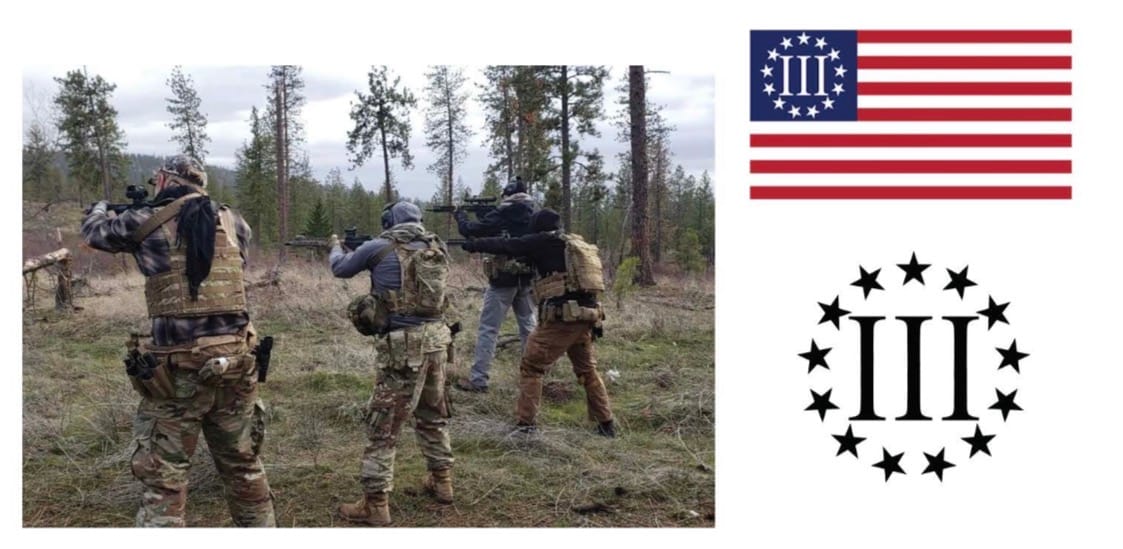
Three Percenters: This movement was created in 2008 with the false claim that only 3% of American forces fought the British in the revolutionary war, and therefore it would take only 3% of the population to overthrow the current US government. They are a far-right militia movement of anti-government extremists focused on gun ownership.
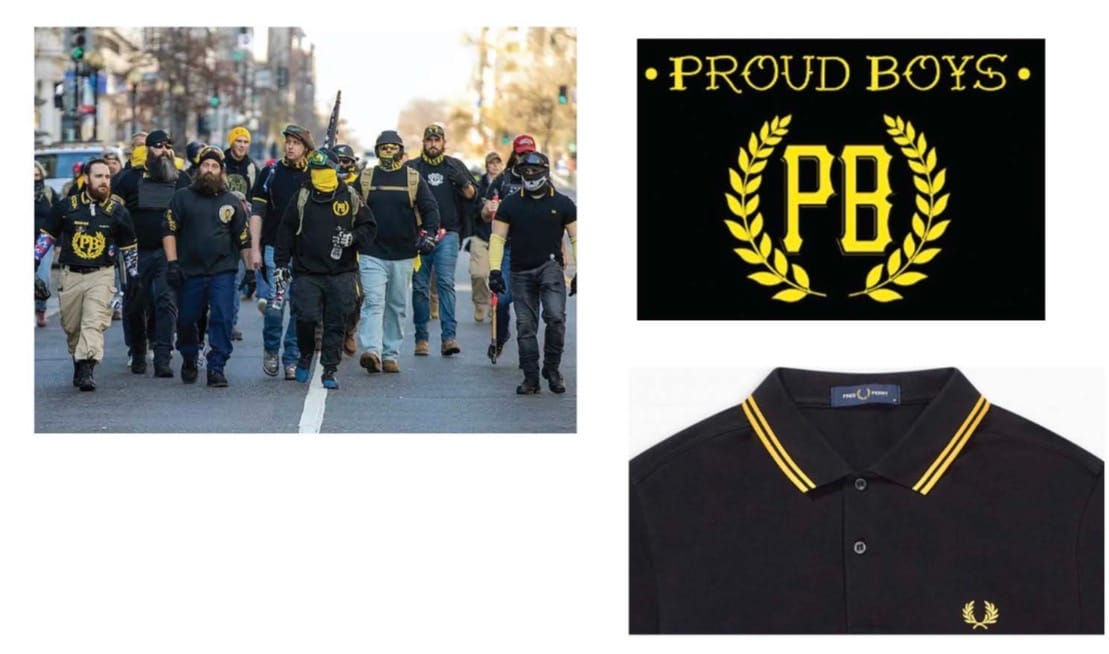
Proud Boys: A group of western chauvinists founded by Gavin McInnes in 2016. Although the Proud Boys aren’t explicitly white supremacist, their emphasis on the “western” values and culture is a thinly veiled substitute for “White” values and culture and is used to deflect accusations of racism. Their ideology can be considered a form of proto-fascism as it contains elements of ultra-nationalism, traditionalism, misogyny, and social Darwinism. Their membership has different levels and members are encouraged to participate in street brawls. Level 1 is to exclaim “I am a proud western chauvinist and I refuse to apologize for creating the modern world.” Level two is to recite 5 cereal brands while other members perform a “beat in.” Level 3 is to get a tattoo of “PROUD BOY,” and level 4 is to engage in violence for their cause, usually against LGBTQ or antifascists. They use the acronyms POYB (Proud of Your Boy) and FAFO (Fuck Around and Find Out) and can be spotted in black and yellow Fred Perry polo shirts, or other clothes with the black/yellow color combination. They also use the “okay” hand sign on a regular basis.
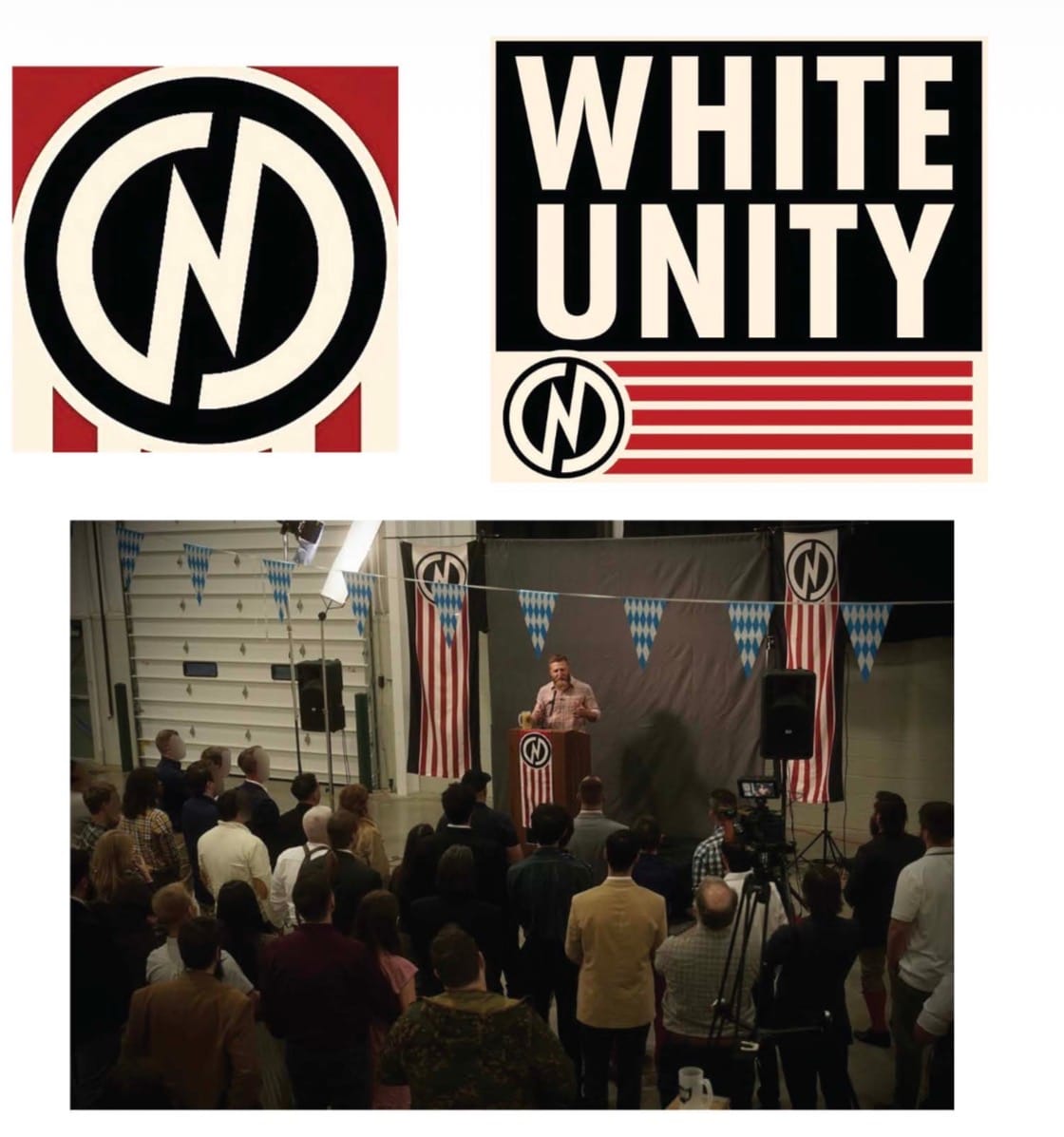
NOVA: “National Organization for Vital Action” is a white-supremacist organization with the goal of building a “nation within a nation” for whites only. They aim to connect as many neo-nazi and white-supremacist groups and individuals as possible in order to create a broad network of racists in America. Their public actions mostly consist of banner drops and stickers. In private, the group has expressed their willingness to use violence to achieve their end goals of a whites only nation.
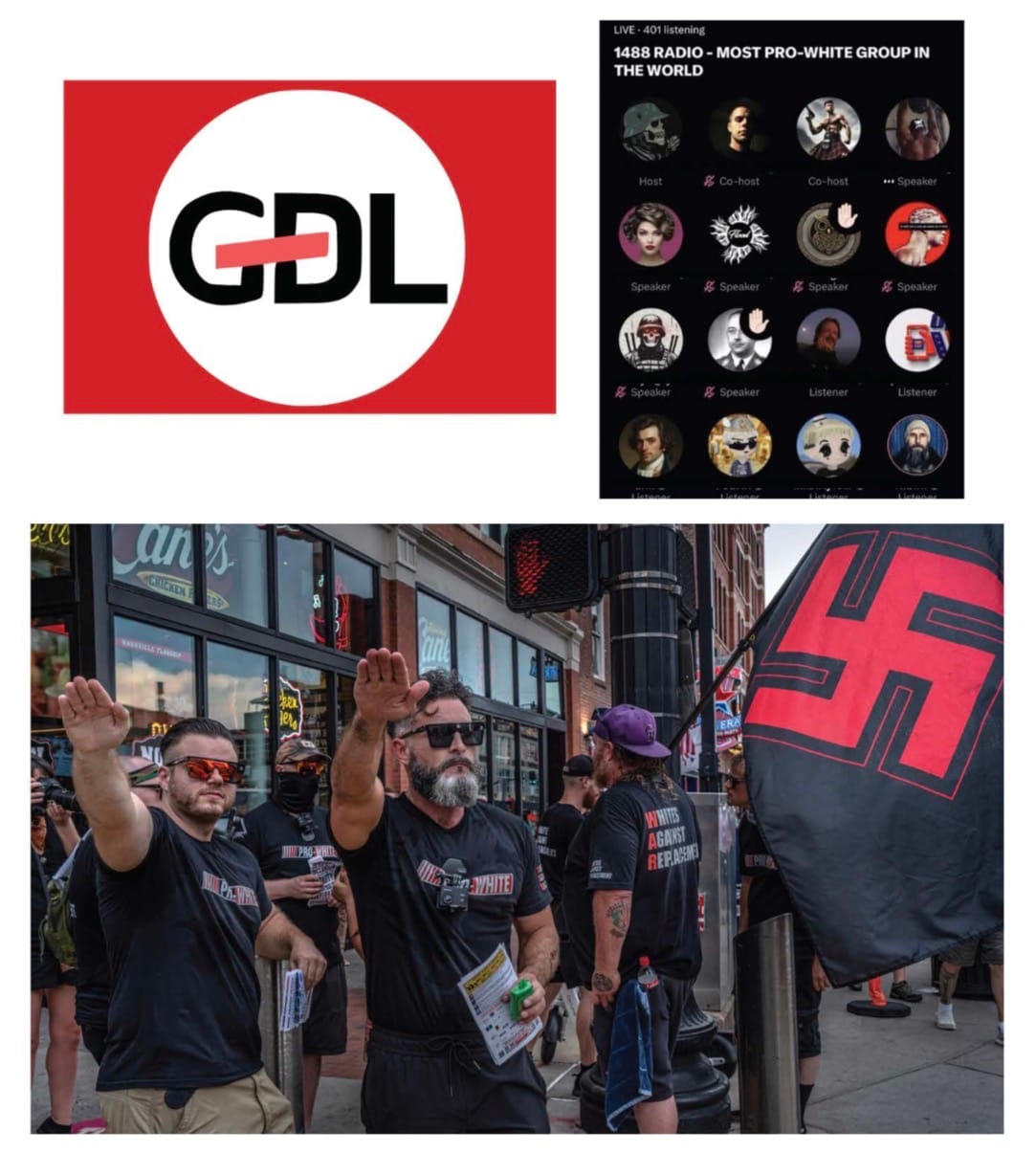
GDL: “Goyim Defense League”, founded by Jon Minadeo II, is a network of anti-semetic content creators who focus almost exclusively on anti-Jewish conspiracy theories and hatred. They primarily focus their efforts on online videos and live -streams, but are also active in-person, often flyering neighborhoods doing banner drops, harassing synagogues, and holding marches with swastika flags.
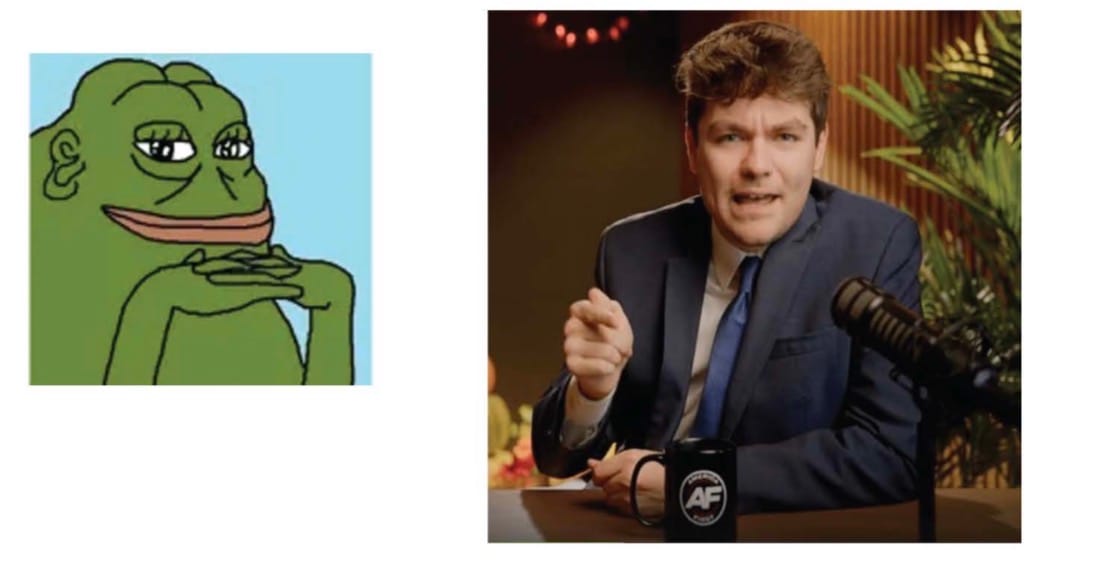
Groypers: “Groypers” are a term for followers of far-right, nazi influencer Nick Fuentes. Less of an organized group, it is a term given to adherents of the anti-immigrant, anti-semetic, and pro-white positions held by Nick Fuentes and pushed into the public. The primary function of Groypers is to push more “traditional conservatives” into a more radical, white supremacist sphere.
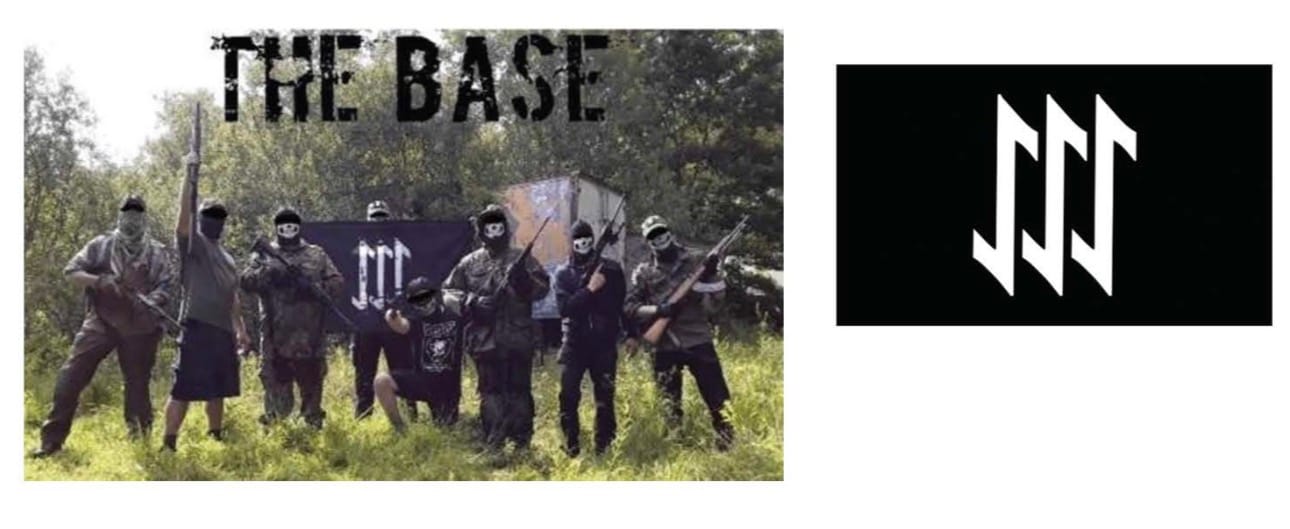
The Base: An accelerationist paramilitary nazi group formed by Rinaldo Nazzaro in 2018. They have similar aesthetics to Atomwaffen, but a different logo.
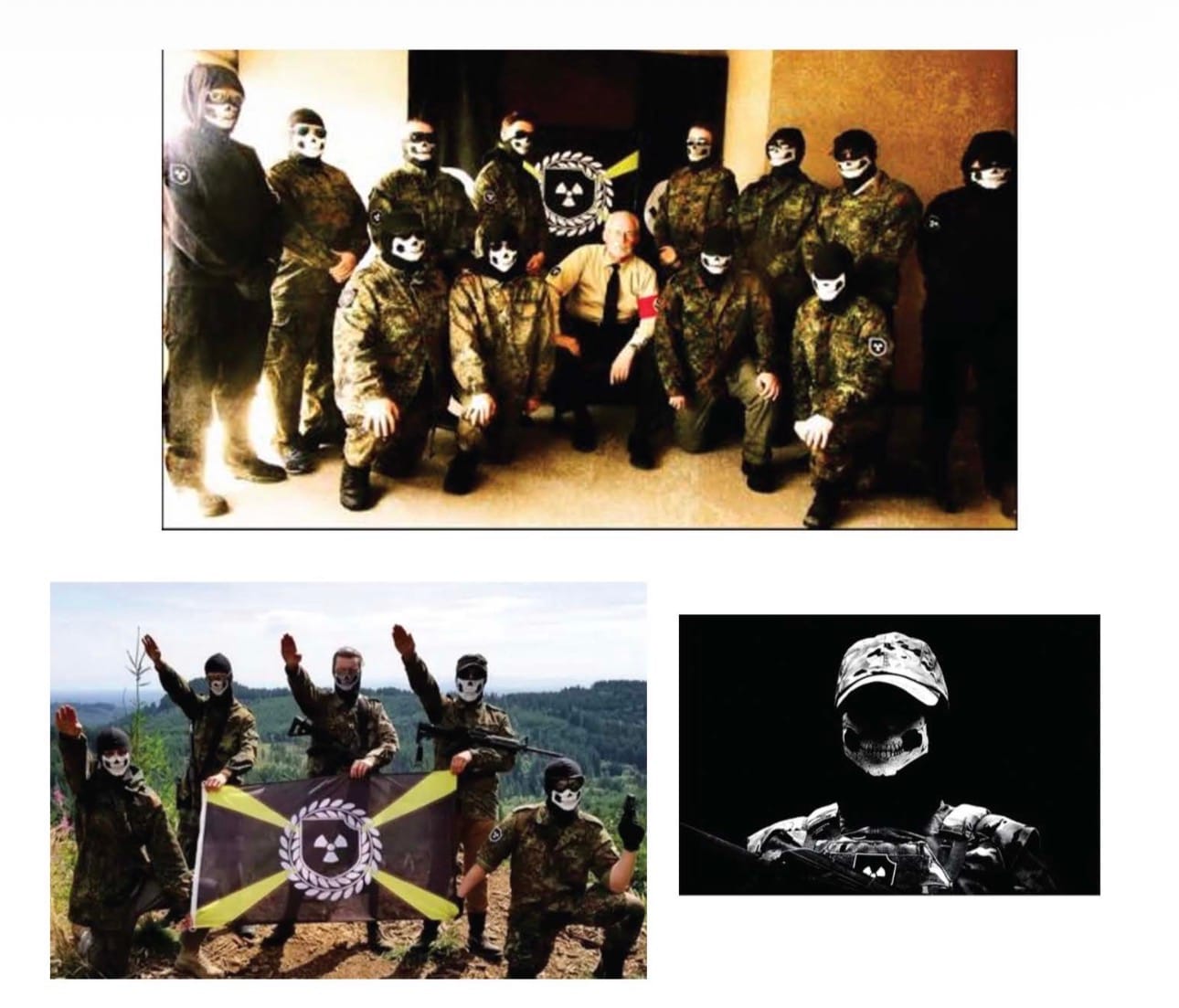
Atomwaffen Division: Also known as the National Socialist Order, Atomwaffen is an accelerationist (accelerating towards a race war in which they hope to overthrow the current government and society and replace it with a fascist order) nazi group responsible for several murders. After numerous arrests and infighting. the group dissolved, only recently attempting to reform in 2025, though failing to gain support. Responsible for popularizing the skull mask within neo-nazi groups, other symbols include the radioactive symbol and flecktarn (a German camo pattern similar to the “peas” pattern from WW2). Although now defunct, their influence remains significant.
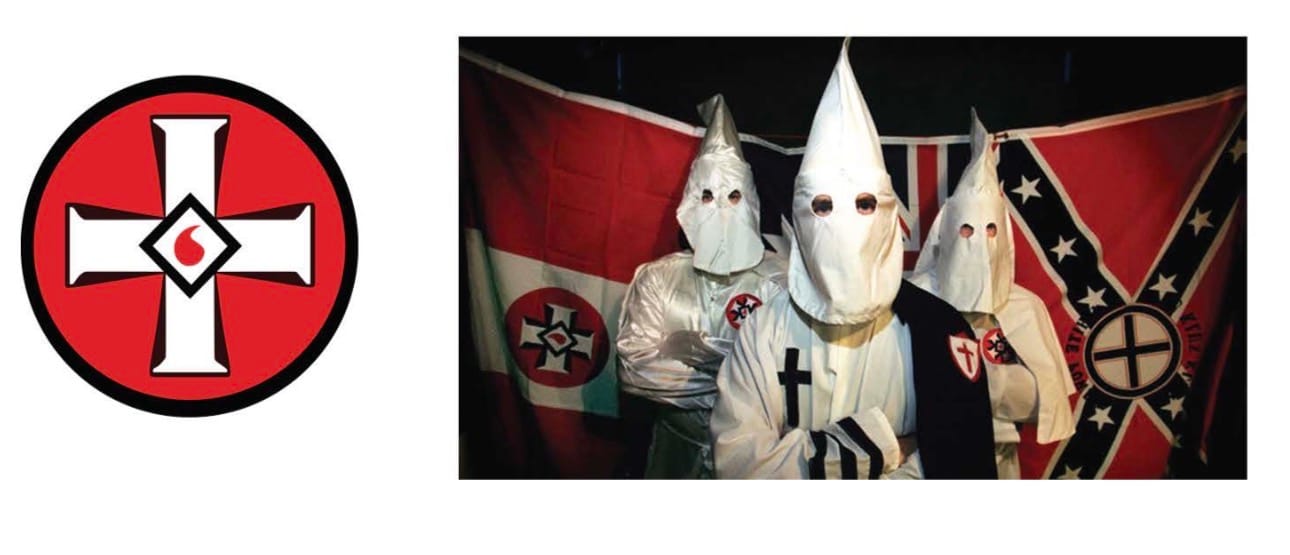
Ku Klux Klan: One of the longst running white supremacist organizations. They use the number 311 to represent 3 Ks, which is the 11th letter of the alphabet. Their iconic robes have become so recognizable they may no longer count as a dog whistle. They also use the blood drop cross and variations on the blood drop cross including just the blood drop, and the confederate flag.
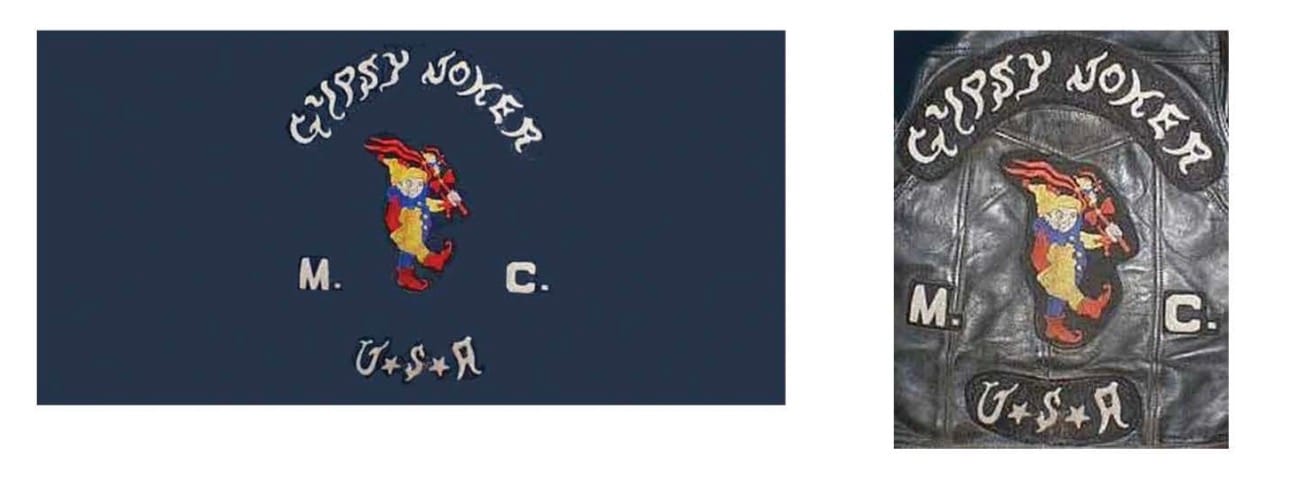
Gypsy Jokers: A one percenter motorcycle club with white supremacist sympathies who are known to traffic drugs and engage in low level organized crime and violence. They wear motorcycle gear adorned with nazi symbols and a back patch that says “Gypsy Jokers.” In recent years they have been known to associate with the Proud Boys.
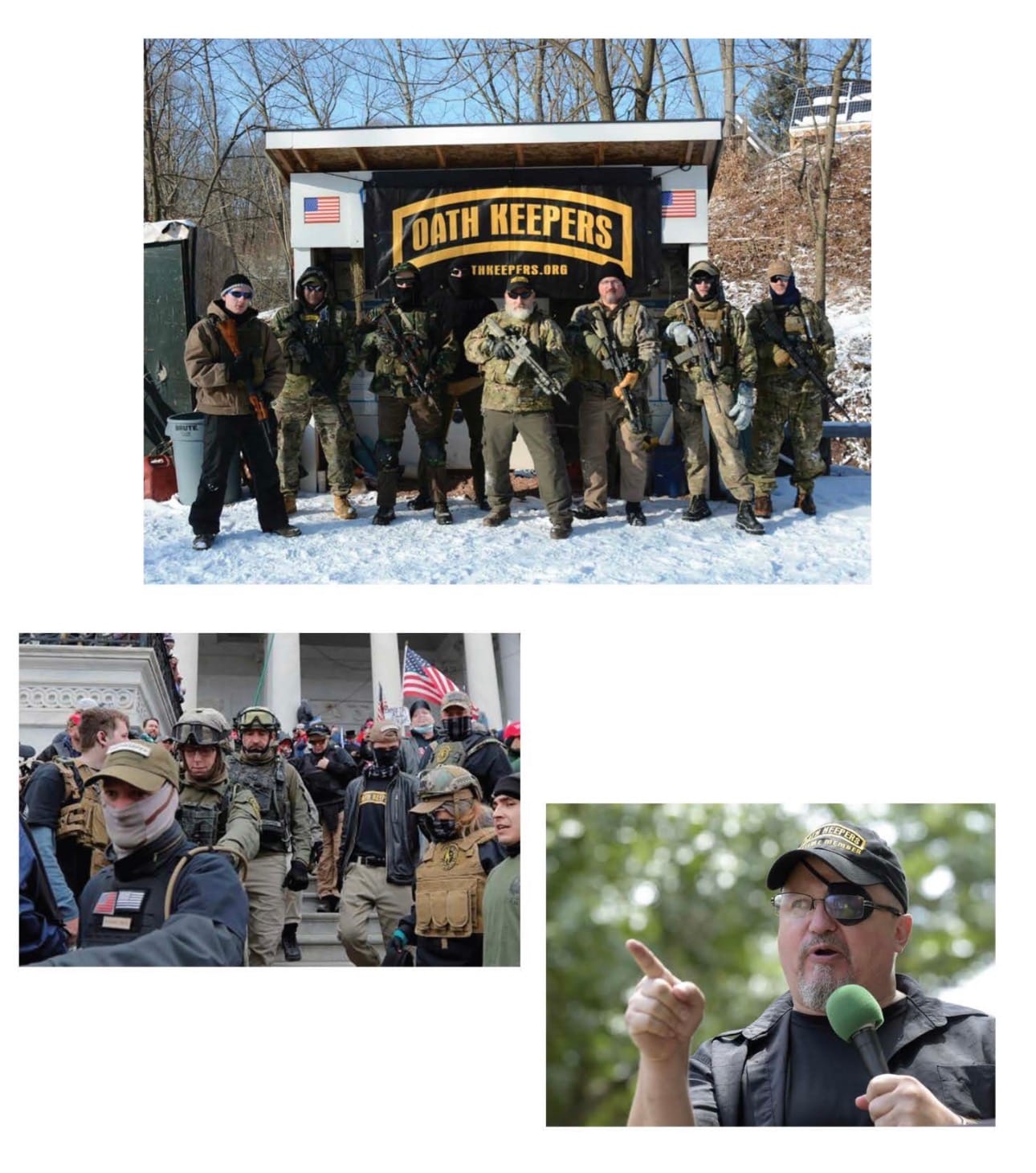
Oathkeepers: Far-right anti-government militia founded in 2009 by Stewart Rhodes. Oathkeepers played a key role in the January 6 insurrection at the US Capitol. Oathkeepers appeal directly to military and law enforcement personnel, encouraging them to keep their “oath” to defend the public from what they perceive as the new world order, by means of discipline and violence. They’re also associated with three percenters.
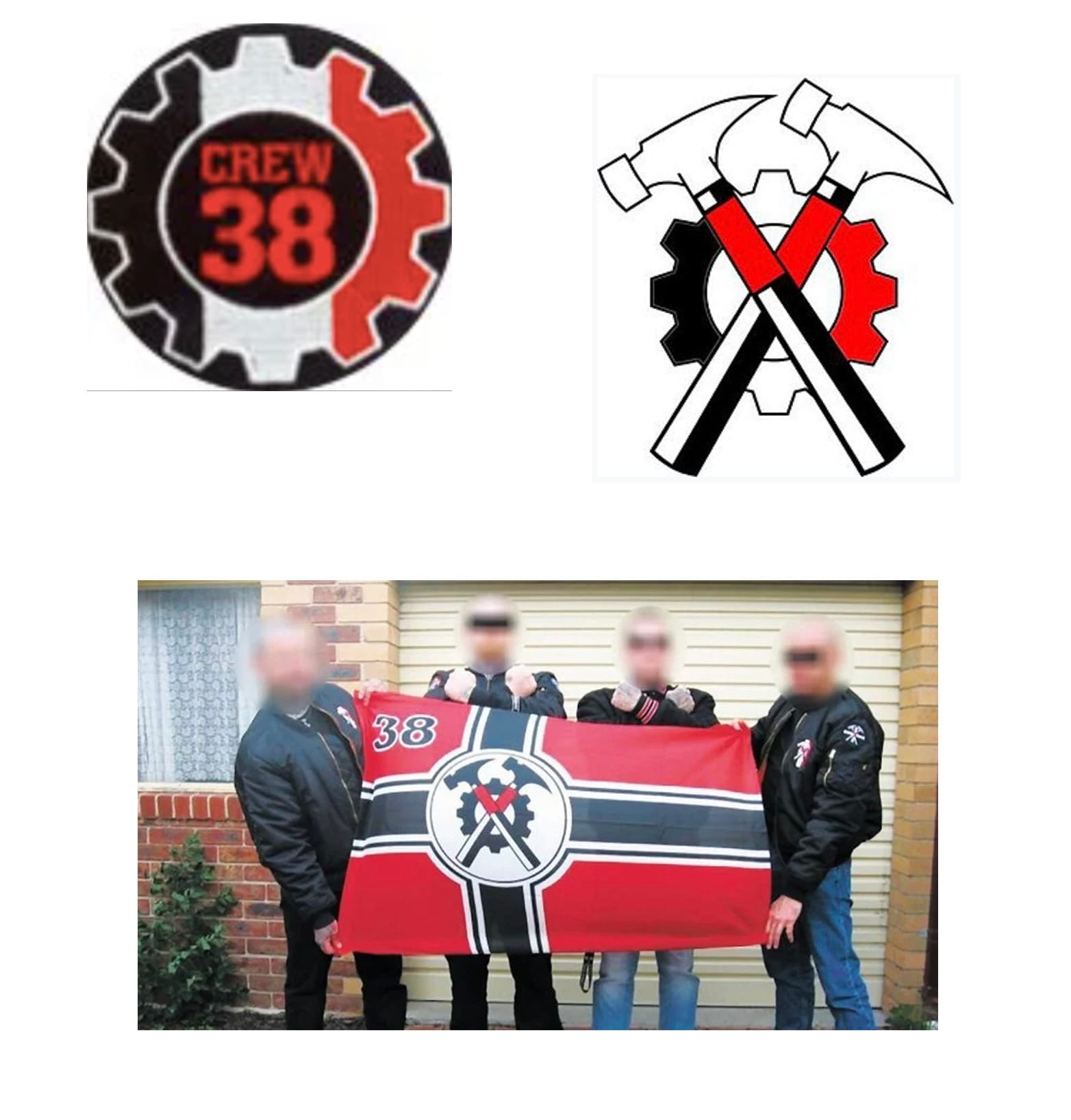
Hammerskins: A racist skinhead group, aka boneheads. The feeder group is known as Crew 38 (38 for “Crossed Hammers”). Hammerskins focus mostly on spreading racist music, but they also engage in street fighting and targeted attacks. Hammerskin Nation is considered one of the most violent racist skinhead groups in the US. They use a hand sign of crossed arms with fists to represent the crossed hammers.
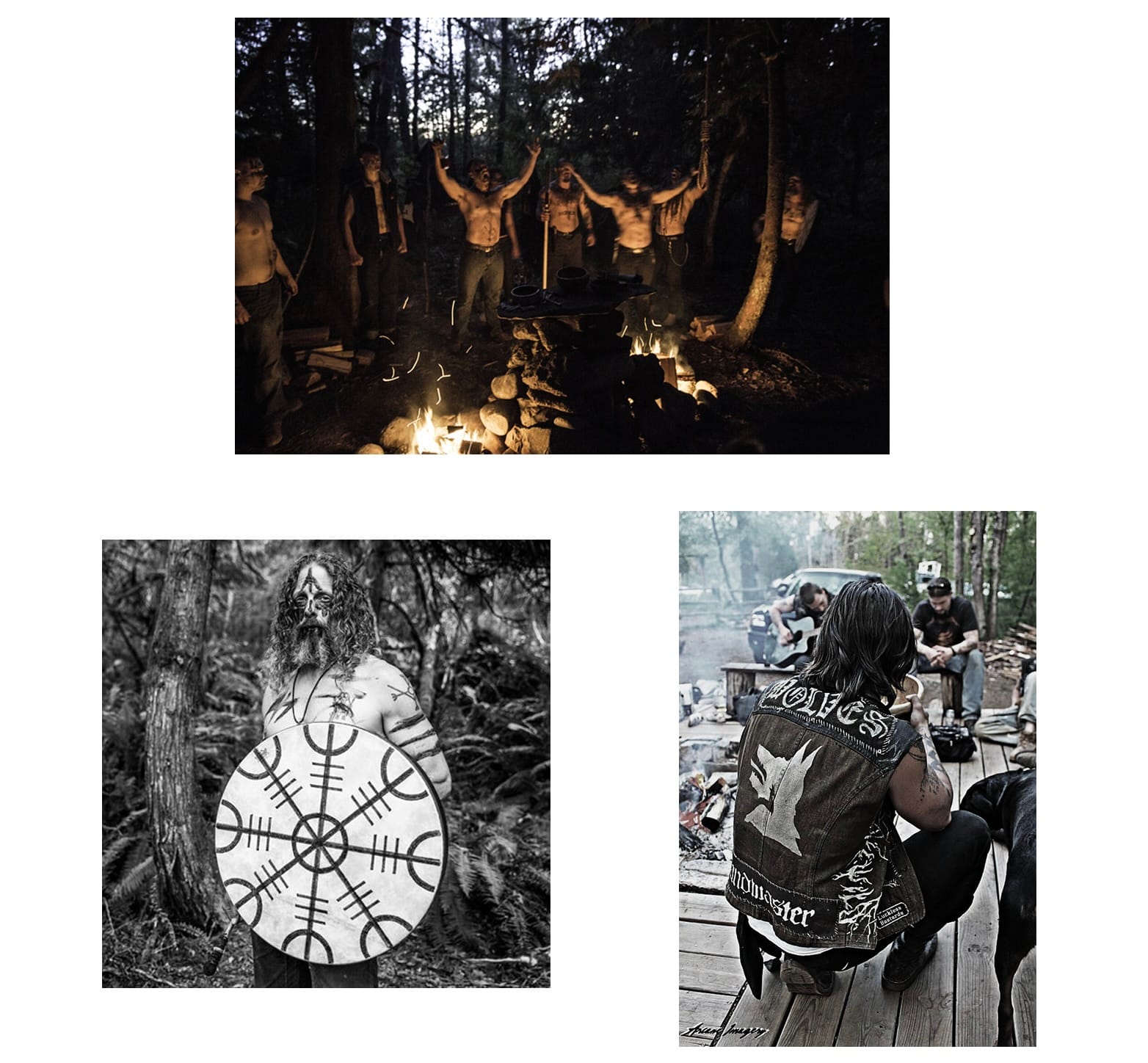
WoV: “Wolves of Vinland” is a group with heavy folkish influences that promotes white supremacy and misogyny, stressing Asatru or Paganism, including animal sacrifices and blood rituals in the woods. They have recently been partnering with Patriot Front and Active Clubs to hold fascist combat events. Their headquarters is in VA, but membership is not limited to that area. “Operation Werewolf” has been used as a recruiting tool and feeder group for WoV. They can be spotted with Celtic and Nordic imagery, runes, and wolf pack patches..
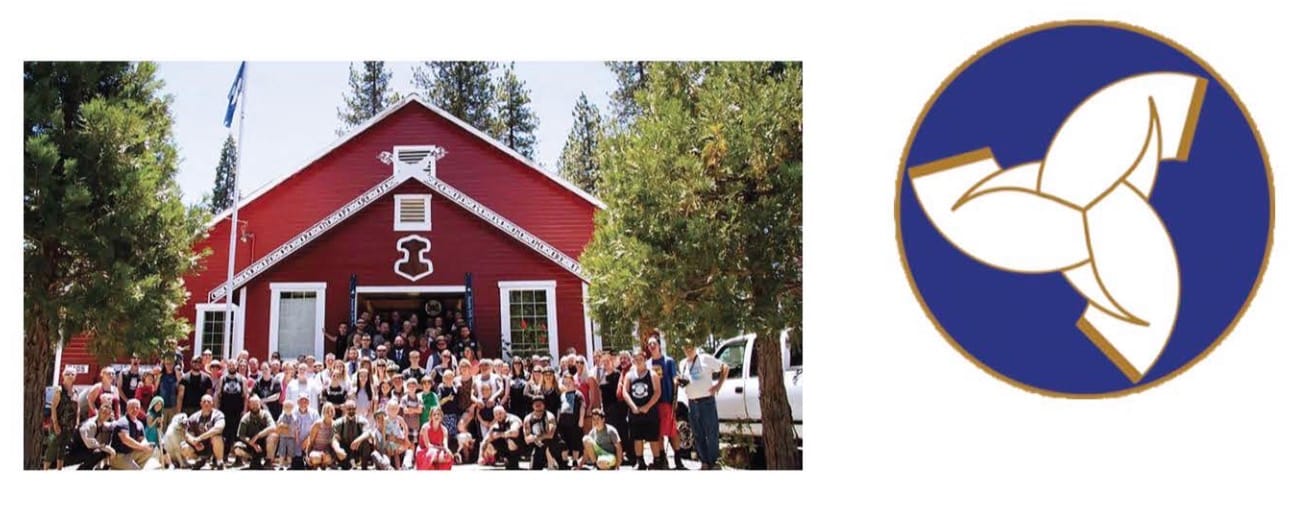
Asatru Folk Assembly: A norse pagan organization which advocates for pre-Christian European rituals and beliefs. The organization discourages “race-mixing” and promotes a whites-only vision of America, falsely claiming that white people were in North America first and were wiped out. Members of other neo-nazi groups such as Blood Tribe associate often with them.
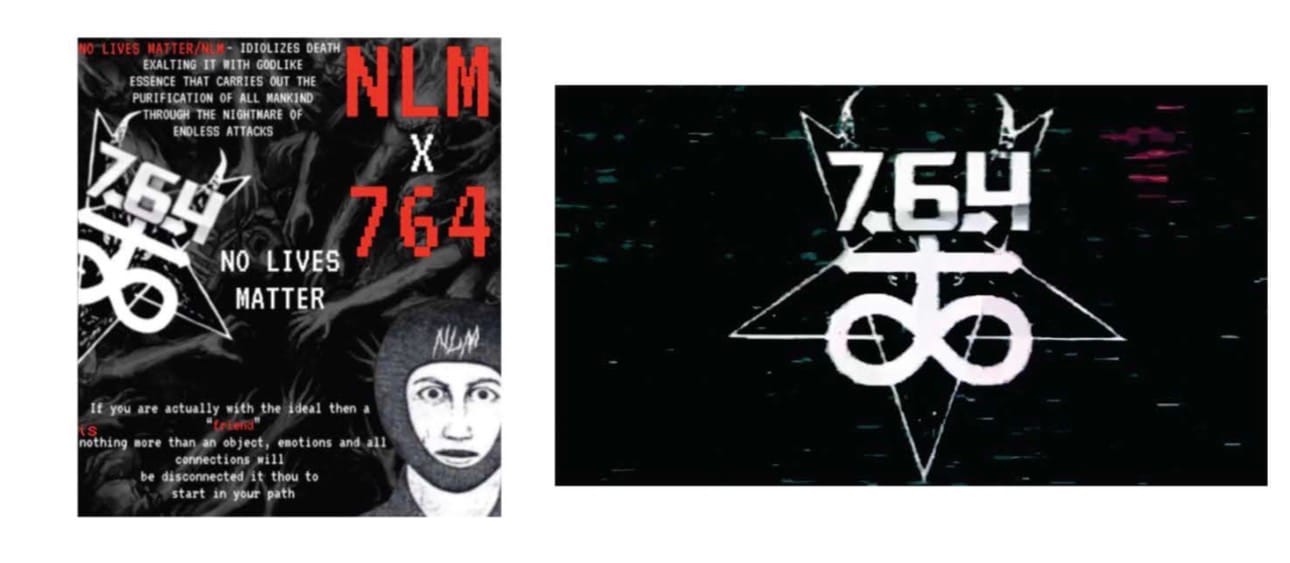
764 / No Lives Matter: 764 is an international, predatory network that espouses neo-nazi, satanic, nihilistic, and accelerationist beliefs. It targets and exploits children / young people and encourages them to commit mass acts of violence. Adherents have been responsible for acts such as murder, firebombings, and school shootings.
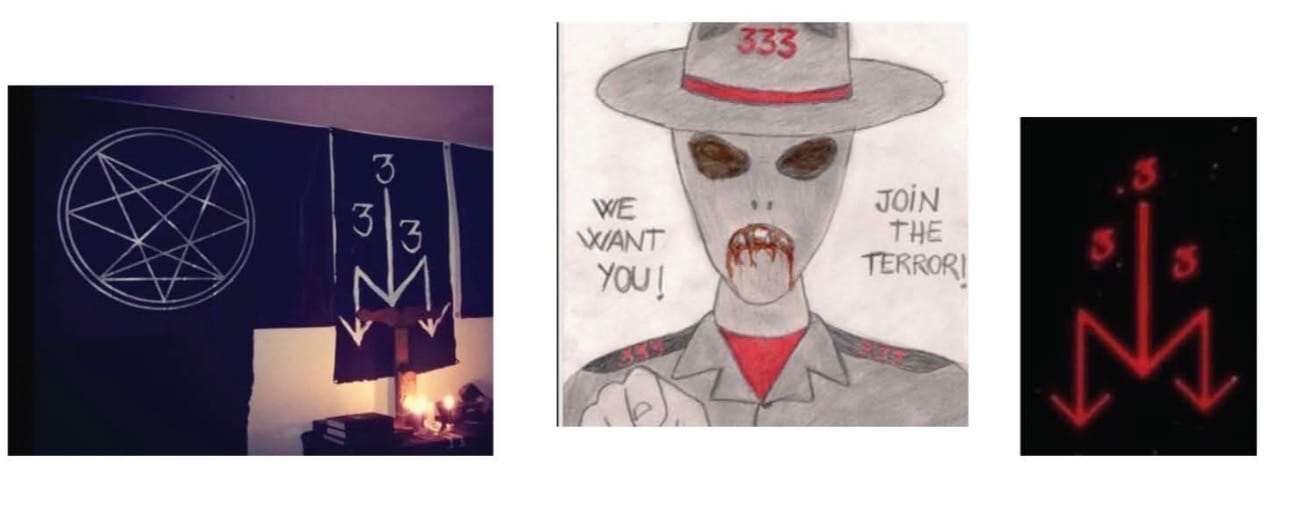
Tempel ov Blood / 09A: The Order of Nine Angles (09A), and it’s most violent chapter, The Tempel ov Blood (ToB), are satanic neo-Nazi cults that have had a significant influence on far-right accelerationist projects, like the now-defunct Atomwaffen. Suffice to say, 09A and ToB glorify nazism and violence, and are adept at radicalizing (and abusing) teenagers. Symbols include the seven-pt star inside a circle, a downward sort of pitchfork with 333 above it, and “Drill Sgt Grey” – a sinister space alien in a military outfit.
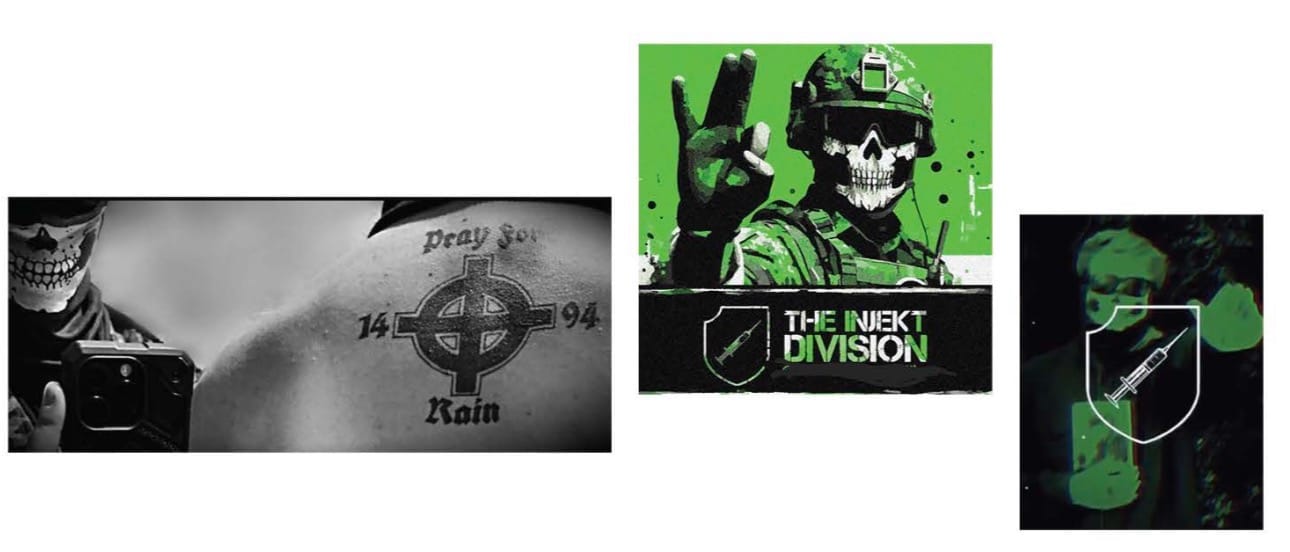
Injekt Division: An accelerationist nazi group that was formed by Coleman Blevins (aka Korb) in 2021. They are organized in decentralized cells, embracing a terror guerrilla ideology that looks to collapse the “System”. Their symbols include a syringe, 1494 and “Pray For Rain”.
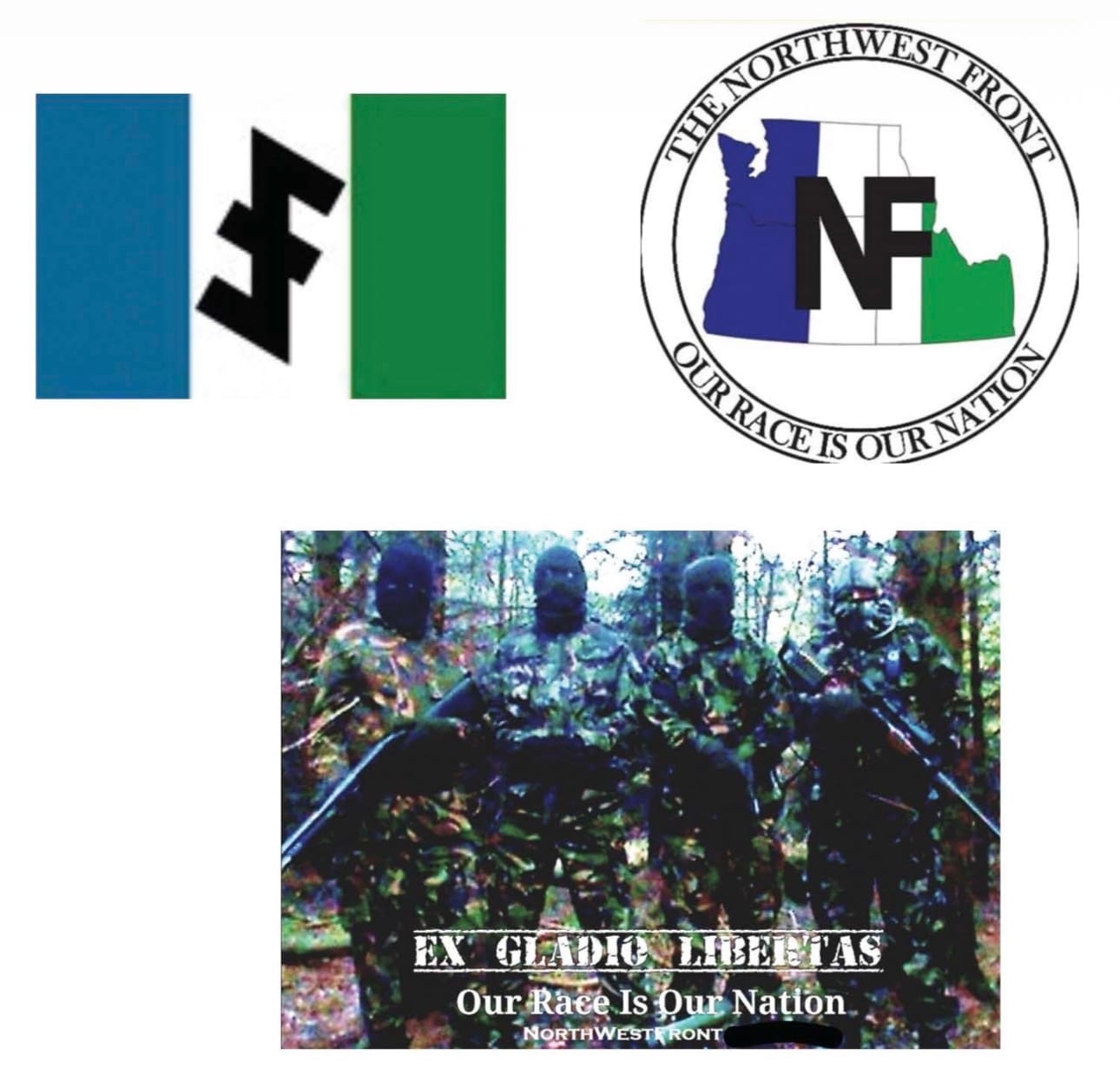
NWTI: “The Northwest Territorial Imperative” is a vision of a whites-only homeland in the Pacific NW. Proposed in the ’80s by Richard Butler of the Aryan Nations, it is an idea embraced by a wide variety of white supremacists, including secretive militant nazi groups dedicated to implementing the vision, such as Northwest Front (NF) or the Northwest Pioneer Association (NPA). NWTI is represented by an inverted Cascadian tri-color flag – having vertical stripes, rather than horizontal. Their flag sometimes includes a rune or swastika. Common associated phrases: “Come Home, White Man” and “Ex Gladio Libertas”.
Vinlanders Social Club: Vinlanders Social Club (VSC / Firm 22) is a violent neo-Nazi bonehead gang formed in 2003. It uses Firm 22 as a support crew of men and women; the men being prospects for full VSC membership. VSC / Firm 22 went into decline in the 2010s, but has been attempting to build itself back up through proximity to the active club movement, much like the Hammerskins. Its symbols include a black cross on a green flag, 22, 1422, an eagle holding brass knuckles, a red, white & blue shield patch with a laurel, or just a laurel.
TPUSA: “Turning Point USA” is an organization which targets high schoolers and college students with far-right propaganda, talking points, and literature. Founded by Charlie Kirk, and now led by his widowed wife Erika Kirk, the organization has chapters in schools across the US, and regularly sets up tents on college campuses in order to recruit and create content by means of filming bad-faith political “debates.” With a roster of speakers and frequent events, TPUSA regularly promotes popular anti-trans white nationalist talking points, white Christianity, and racial divisions. Using the public image of more traditional conservatism, they function as a pipeline to more fascist far-right ideologies.
References and Further Reading
For current / past antifascist articles, contact info for sharing tips, and other resources, you can visit:
I can’t get the entire article here; I think I used up all my NYFT freebies for life back in 2004. However, I got a blurb, and because it’s pertinent to our interests, I’m still posting the link for anyone who’d like to see the story. It’s surprising, as is the story after this one.
TOPEKA — A few spaces are exempt from Kansas’ new bathroom law that requires people to use the facilities in government buildings that match their sex assigned at birth, Attorney General Kris Kobach said in an opinion he released Wednesday.
Kobach’s opinion, which carries no legal authority, exempted some government spaces — such as skilled nursing rooms at the Kansas Office of Veterans’ Services — from complying with the bathroom law that went into effect in February.
He issued the opinion in response to an April letter from Justin Whitten, Gov. Laura Kelly’s chief counsel, who asked for clarification on defining “multiple-occupancy private spaces” and “facilities” as written in Senate Bill 244.
“This was a poorly written and ambiguous law, which is why the governor’s office sought an attorney general opinion,” said Olivia Taylor-Puckett, spokeswoman for Kelly. “The AG’s opinion provides new clarity on the more limited scope of SB 244 as inapplicable to places that are more ‘residential in character’ like a cabin or hospital room.”
The bill became law in February after passing through contentious legislative debate, including a veto from Kelly that was overturned. At the time, Kelly questioned vague language in the bill and how it would apply to some state facilities.
The law sets high fines for agencies that fail to comply and smaller fines escalating to class B misdemeanors for those who violate the law. Critics said the law doesn’t specifically address implementation, leaving agencies statewide struggling to determine what to do to comply.
In an April letter, Whitten asked Kobach to render an opinion on whether spaces like hospital rooms, prison cells and bedrooms in public buildings are considered “multiple-occupancy private spaces” under the law.
The letter asked for definition of “facilities,” and whether Kansas Department of Wildlife and Parks cabins throughout the state and Kansas Office of Veterans’ Services nursing facility rooms must adhere to the law.
“SB 244 makes no distinction based on a ‘facility’s’ purpose and instead focuses on the existence of a mere possibility of whether an individual may be in a state of undress in front of another individual,” Whitten’s letter said.
Arguments that the hospital is the “facility” rather than the patient room are “untenable,” he said. The hospital building would fit under the law’s definition of a public building, while the room would be the private space, Whitten said.
“If your answer relies on finding an ambiguity in Senate Bill 244 with the term ‘facilities,’ we ask that you work with the Legislature in the 2027 session to clarify this ambiguity,” he said.
Kobach’s opinion
Citing a dictionary definition of “facility” and saying that “in the absence of a contrary definition, words in a statute should be given their ‘ordinary, contemporary, common meaning,’ ” Kobach said neither the skilled nursing rooms or the Kansas Department of Wildlife and Parks rental cabins meet the definition of “facility,” which exempts them from the law.
Kobach said SB 244 listed examples of rooms the bill applies to.
“The debate surrounding SB 244 focused on the types of rooms listed in the statute — restrooms, locker rooms, changing rooms, and shower rooms — and the risks to safety and privacy when individuals of one biological sex use facilities designated for individuals of the opposite biological sex,” his opinion said.
Kobach said the Legislature’s intent didn’t include stopping a married couple from sharing a nursing home or assisted living facility room or to prevent people in those facilities from receiving guests of the opposite sex.
Prison cells, however, more closely match the type of facilities addressed in the law, Kobach said, which means multiple-occupancy cells must only be shared by prisoners of the same sex.
Taylor-Puckett said attorney general opinions are generally given “persuasive but not binding weight in a courtroom.” She recommended that individuals and entities should consult with their attorney with regard to any decisions about complying with SB 244.
‘Poorly drafted’
Harper Seldin, senior staff attorney for the American Civil Liberties Union, said he was glad to see some spaces exempted from the law but that the opinion reinforced what civil rights activists contended from the beginning: The vagueness of the law makes it difficult to enforce and understand.
“This uncertainty about whether people just living their lives are going to run afoul of this law, I think demonstrates both that the law was meant to terrorize and also that it’s poorly drafted,” he said.
Some Kansans and legislators objected to SB 244 being termed an “anti-trans” bill. But Seldin said the interpretation reinforces that it is a bill targeted at transgender and intersex people.
“These interpretations really continue to try to find ways to push transgender and intersex people out of public life, while making sure that people who aren’t transgender don’t feel any disruption whatsoever,” he said. “It does seem to very strongly suggest that this law was really targeted at transgender people and is not actually responsive to any concerns about safety or privacy.”
Seldin said any concerns about safety and privacy aren’t related to reality in Kansas.
Seldin is representing two Lawrence transgender men who are challenging the bathroom law in court, with the next hearing scheduled for Sept. 29 through Oct. 2. That will be an evidentiary hearing regarding the ACLU’s request for a temporary injunction of the law, Seldin said.
We were eight, nine, ten-years-old, and we called it “Smear the Queer.”
The game went like this: there were a group of kids—nearly always all boys—and a football. The pigskin got tossed up, a boy would grab it, the rest of us would chase and tackle him, and either he would surrender the ball or one of us would take it, and the chasing and tackling would start all over again.
That was the whole game. It was basically freeform rugby with no points, but this was Central Texas in the mid-90s and none of us were aware of rugby, so we thought of it as reverse tag with violence.
We called it “Smear the Queer” because that’s what the older boys called it. They called it that because the boys older than them called it that. Or that’s what their older brothers called it. Or that’s what their fathers and uncles called it.
At that age, I don’t think there was any discussion on the etymology of the word “queer” or why the ball carrier was called “the queer.” That was just the name of the game, and if you had a group of young boys and a football and enough interest, a kid might say “Smear the Queer?” and the game would start.
We were conditioned to think of being gay as a bad thing before we knew what it meant to be gay. By the time we got to middle school, it was made crystal clear to us that there were two things it was absolutely wrong for a boy to be: either gay or a girl.
If another boy called you gay or a girl, it was either because they were being “friendly” (or what passed for “friendly” among boys then) and playfully teasing you with the easiest insult — or they really didn’t like you and were going for the jugular with the worst insult. The intent was based on context, but at the end of the day, being gay or being a girl were not good things.
By that age, homophobic and sexist language had seeped into casual conversations among most of our peers. “That’s gay” was the most common way of saying a situation sucked.
“Wanna come over and play video games after school?”
“Can’t. Got detention.”
“That’s gay.”
“Yeah.”
At the close of the ‘90s, the words “faggot” and “pussy” were at the center of teenage boy lexicon. And a lot of the teenage girls used them, too. These terms flew freely in the hallways of middle school and sometimes in the classroom. Some teachers and parents might put a stop to it, and some teachers and parents willfully ignored it.
I got called “faggot” so many times in those years that I was pretty much resigned to it long before high school.
I was called a faggot for being in choir. I was called a faggot for getting good grades. I was called a faggot for reading. I was called a faggot for listening to Mariah Carey. I was called a faggot for my girlish laugh. I was called a faggot for my mannerisms. I was called a faggot if I did something nice. I was called a faggot for being smaller than the other boys. I was called a faggot for not wearing the right clothing. I was called a faggot for the way I walked. I was called a faggot for the way I talked. I was called a faggot if I followed the rules. I was called a faggot because a boy just didn’t like me. I was called a faggot because a boy in my grade might just feel like saying “faggot” and I was conveniently there.
I never said “faggot” or “that’s gay” myself because it felt wrong. I had a gay uncle. He had a boyfriend. They would come over and hang out and drink and smoke with my mother and stepfather. They were always welcome. The four of them would have a grand ole time.
This did not stop my mother and stepfather from asking my uncle and his boyfriend to sit me down when I was nine or so and make it clear that I needed to act like a boy and never act like a girl because everyone could see the writing on the wall and they wanted to prevent me from getting my ass kicked by other boys.
I didn’t understand their intent at the time. I felt very confused. I thought I had been acting like a boy. Apparently not enough. I needed to try harder. I had no idea what “try harder” meant.
What I remember most is my uncle’s boyfriend giving me a serious look and saying the following: “Don’t be a faggot, kid.”
The world that was supposedly the opposite of “being gay” was professional sports. Football, basketball, baseball. Emmitt Smith, Troy Aikman, Michael Jordan, Kobe Bryant, Allen Iverson, Barry Bonds, Mark McGwire, etc.
These men were considered the opposite of gay. They were big and strong and famous and talented and handsome and all the girls loved them and all the boys wanted to be them.
At least where I grew up, the thought of gay men in professional sports was so far removed from rationality that it never came up in conversation. Male celebrities in music, film, and television? All fair game for speculation. But not sports. There was no way a man could be gay if he were a pro athlete. Impossible.
When Jason Collins came out 13 years ago this spring, you could have knocked me over with a feather. My peers and I had grown up, and the world had rapidly changed in such a short time. And yet, it was still a jarring, welcome surprise.
By then, homophobic language was largely frowned upon, even by many conservatives who opposed LGBTQ rights. It felt like everyone personally knew someone in their lives who were openly gay. And the vast majority of folks, regardless of politics, were then enjoying entertainment made by openly-gay celebs.
“Don’t Ask, Don’t Tell” had recently been repealed, which meant gay, lesbian, and bisexual folks could serve openly in the military. Tammy Baldwin had recently become the first openly-LGBTQ person elected to the U.S. Senate in Wisconsin, and she had seven openly-LGBTQ colleagues in the House, not including Barney Frank, who had retired from Congress on the same day she was sworn-in.
It felt at the time like same-sex marriage could possibly be legalized nationwide within the decade but maybe not. It wasn’t anywhere near certain. Possible, yes, but no guarantee. Yet, just that it was possible felt incredible.
But male sports? Many years away, it was assumed. Americans could accept gay and bisexual male soldiers dying on their behalf but openly-gay men in the NFL, NBA, MLB, and NHL? Not for a long time to come.
It wasn’t that most of us thought there weren’t closeted gay men in the leagues. We assumed there were. Statistically, how could there not be closeted gay men playing pro sports?
But they weren’t going to come out while still playing. Nope, not for a long time. Pro sports were (and remain) the last cultural bastion of American masculinity, the sole extracurricular distraction of tens of millions of American men who don’t want anything uncomfortable messing up their entertainment.
Make music. Make movies. Serve in the military. Run for office. Get married. Go be gay and live your life. Just stay away from male sports.
It mattered little to them that Sue Wicks and Sheryl Swoopes and other women had come out in the WNBA by then. It mattered little to them that lesbian and bisexual women were, by 2013, out in every major pro women’s sports league. All were courageous, all were leaders, all faced discrimination, and yet, a strange misogyny permitted Americans—particularly men—to have an uneasy, conditional acceptance of openly-gay women in major pro sports but not openly-gay men.
This was the environment in which Jason Collins came out. Everything about it astonished me. The cover of Sports Illustrated? Doing so while a free agent after the season had ended and making a huge gamble on his career? Doing so as a Black man in a country with a long history of diminishing and dehumanizing Black masculinity?
I was in awe of him. I remain in awe of him.
No teams signed him in the offseason. Maybe it was his production on the court. Maybe there were no teams who thought he’d be a good fit for their needs. Maybe—just maybe—even with the general support he received, it was because he was now an openly-gay man and no teams wanted that controversy.
Even with NBA superstars like LeBron James, Kobe Bryant, Dwayne Wade, Steve Nash, and many others praising his courage and saying all that mattered was the game itself and meeting the standard of excellence, he still got passed over.
It was ten months later when, finally, the Brooklyn Nets signed Mr. Collins to a ten-day contract. February 23rd, 2014. Jason Kidd—the coach of the Nets and a former teammate and good friend of Mr. Collins—pushed for the contract. He played that night for 11 minutes against the Lakers. The first openly-gay man to compete in any of the four major male pro sports leagues in North America.
He would eventually be signed for the remainder of the season with the Nets and retired from pro basketball that November.
But here’s what really gets me about Jason Collins: he never rested on his laurels, nor did he decide coming out while an active gay male pro athlete was enough, even though, I would argue, he’d have been well within his right to do so.
Jason Collins had that quality inherent in all great leaders: a heart for service. He always thought about others. He always wanted to lift up others.
It was only revealed after he came out that he had worn No. 98 on his jersey while with the Celtics and Wizards—when he was still closeted—in honor of Matthew Shepard, the 21-year-old, openly-gay man who was beaten, tortured, and murdered in Laramie, Wyoming in 1998.
He returned to No. 98 after coming out and signing with the Nets. It became the highest-selling jersey in the NBA for a time. He had that level of impact with his courage.
He consistently supported others in the broader LGBTQ community, even when he had no personal connection to us.
Several times over the years, Jason Collins—the retired NBA pro—reached out to me—a little-known trans woman political writer— over social media just to offer words of encouragement and make sure I felt supported and loved — because he saw the vile hatred trans folks were experiencing.
He would tell me he was proud of me. He would remind me that I should keep my chin up and be proud of myself. I remember one random occasion in 2020, as tired and stressed as I was during the presidential campaign, when I opened a DM from Jason that simply read: “Sending you a big hug today.”
Jason Collins went out of his way to be a big brother to queer folks he didn’t know just because he wanted to ensure we didn’t feel alone in tough moments. He felt protective of us because he knew, more than just about anyone, that sharp pang of loneliness in the public arena.
Many of us received an email this past Monday evening from Jason’s husband, Brunson Green, informing us that Jason was headed to hospice care and requesting we record a video offering words of love and what he means to us.
I cried after the reading the email and got to writing. It didn’t feel like enough. How do I tell this man how much he’s meant to me, meant to all of us? I decided to rewrite it (yet again) and film it and send it by the following evening. I wanted to do it right. He deserved at least that. He deserved way more than what I could offer.
Jason passed the next day before I could send it. I will forever regret not telling him all this, even though he likely wouldn’t have seen it in the mountain of videos his family received from countless people who loved and admired him.
What gives me comfort is knowing he was surrounded by those who loved him most, supported by millions who have thought about him this week, said a prayer for him, acknowledged his greatness and his humanity, given thanks for his selflessness and public service.
The federal government is escalating efforts to seek private medical data for children undergoing gender-affirming care, as at least one hospital faces the first known criminal probe of its kind.
Last week, NYU Langone Hospitals in New York City received a grand jury subpoena for information about young patients who received gender-affirming care at their facilities anytime in the past six years.
A grand jury subpoena indicates that a federal criminal investigation is underway. This would be a first in regards to gender-affirming care.
The subpoena came from the U.S. Attorney’s Office in the Northern District of Texas, part of the Justice Department. The office is also seeking the names of hospital employees involved in providing gender-affirming care. The government has previously sought medical records of transgender kids from other states, and so have Texas officials, but not like this.
Parents of trans youth under the age of 18 who have received care at NYU Langone got a notification from the hospital alerting them to the grand jury subpoena. According to that notification and to the hospital’s public statement, NYU Langone is one of several institutions that received a subpoena May 7. The hospital said it is still evaluating how it will respond to it.
New York law prevents the disclosure of medical records related to gender-affirming care and abortion except in limited circumstances and broadly prohibits law enforcement from cooperating with investigations into gender-affirming care. This sets up a potential legal fight over the subpoena.
Several legal battles are currently playing out in response to other attempts from the government to obtain trans kids’ medical records.
Eleven families just filed a class-action lawsuit to block the Justice Department from obtaining confidential information about young trans patients seeking gender-affirming care. The agency sent more than 20 subpoenas last summer to doctors and clinics involved in providing such care, with the intent to investigate “healthcare fraud, false statements, and more.” Both the Justice Department and the Federal Trade Commission (FTC) have sought to investigate gender-affirming care as medical fraud.
Multiple judges halted these DOJ subpoenas in their tracks, after hospitals fought back. A federal judge in Massachusetts called the agency’s investigations into gender-affirming care “motivated only by bad faith.” A judge in Colorado, who blocked a similar subpoena, said patient medical records must be protected from “improper disclosure.”
Separately, a federal judge this month temporarily blocked the FTC from investigating two medical groups that support gender-affirming care for transgender people. Those groups, the World Professional Association for Transgender Health (WPATH) and the Endocrine Society, were served civil investigative demands for years of internal records and financial information. Both groups sued.
Over the past year, hospitals in states like New York, where gender-affirming care is legally protected, have come under pressure by the federal government to halt care for trans youth. For patients, that care has been spotty: earlier this year, NYU Langone halted gender-affirming care for young patients, citing “the current regulatory environment” as a key reason. More than 40 hospitals across the country have done the same, per STAT News.
Gender-affirming care for trans youth primarily refers to hormone therapy and puberty blockers used to treat gender dysphoria, which is a medical condition that can cause significant distress. Very few transgender youth seek and access surgeries. Restricting gender-affirming care is a top priority of the Trump administration, which has proposed regulations to greatly restrict the care for youth and stated its opposition to trans identity as a whole.