
And, I saw a comment on the YT page under the video that leads me to believe he will drop another set tonight (Wed., 12/24.) So, there may be a Merry Josh Johnson post on Christmas morning!
Category: Love
A Steve Hofstetter Short
It’s pretty funny!
The Moral High Ground
A little tougher than much of what I usually post, though I always enjoy Evan Hurst’s work personally, and highly recommend everyone to do so, as well. Anyway, this is share worthy.
‘This Is What The Wall Street Journal Has Come To? Legitimization Of Three-Way Sodomy?!’
ANOTHER Christmas miracle from the comedy gods.
Evan Hurst Dec 19, 2025
I had a whole other thing to finish writing for y’all this week, a Christmas/holiday post about the kinds of awful conservative Christians whose faith is based on God building a wall around heaven to keep out those they view as irredeemable sinners — you know, LGBTQ+ people, women who think freely, people who aren’t Nazis. I’ll finish writing it next week, or something.
But right now I am too busy laughing at this story Rupert Murdoch’s Wall Street Journal published and promoted on its socials this week:

I did not know what I wanted for Christmas — you know, besides for every ICE agent in the country to stub their toe — but now I know that what my heart desires most is to witness a Religious Right meltdown over RUPERT MURDOCH’S WALL STREET JOURNAL publishing the story of “Chad, Brad and Thad couldn’t figure out how to make Chad’s mid-century modern go with Thad’s medieval sex swing and Brad’s collection of giant English settees. But they did it, and it’s FABULOUS.”
And praise Jesus, for Santa has brought it to me!
Y’all, sometimes the Moral High Ground is a very serious newsletter about serious subjects. Other times it is just about laughing at these motherfuckers and their small, sad brains and fears and prejudices and general status as the planet’s biggest losers. On December 19, 2025, as we head into the heaviest part of the holiday week, the Moral High Ground is the second thing.
The article is super fun, if you like real estate/interior design features, especially ones that are super-gay. Chad, Brad and Thad are actually David Gobberdiel, Ryan Tungate, and Michael Cowell, and they have a fabulous 4,000-square-foot duplex in Northalsted in Chicago. The Wall Street Journal helpfully explains terms for its readers who might not know:
The throuple, which is a committed romantic or sexual relationship between three people, took things slow at first.
David and Ryan didn’t live with Michael at first. (They were the original couple, as is often the case with throuples, two become three.) But then blah blah blah pandemic Michael didn’t leave, etc.
But $1.71 million later, they had a house, all three of ‘em!
The end result really is gorgeous, and despite how the WSJ helpfully explains certain things for people, it treats all of it is completely jejune, which is AS IT SHOULD BE. If Chad, Brad and Thad are happy, who the fuck should care?
For instance:
Real-estate agents are noticing more throuples and polycules buying homes together, often with everyone’s name on the deed. “Monogamy in this economy?” says Kathy “Kiki” Sloan, an employing broker with Property Dominator in Denver.
A polycule is bigger than a throuple, it’s more like a rhombus on top of a Venn diagram on top of a buncha wingdings. See? I am helpful like the Wall Street Journal, which explains it like this:
Designers are taking note, creating homes that balance privacy and togetherness for throuples and polycules, a group of people involved in consensual, interconnected, non-monogamous relationships.
Just as I said.
Anyway, the WSJ explains how Dane, Blaine and Shane spent $405,000 — must be nice, guys — to interior design their place up all-fancy-like and in a way that incorporated all their styles. “Designing for a couple is tricky enough. Add a third partner, and it is like a high-stakes game of design Tetris.” Did WSJ have to go with that exact visual? Oh hell yeah they did, and I recommend them for a Pulitzer, or at the very least a FIFA Pulitzer.
Also they have a 96” x 96” mattress. For all the Tetris.
So as I was saying, the article is great, but what I really wanted to see was the religious right meltdown. While there’s not much yet in the way of organized hate groups or right-wing podcasters bitching, there’s some good clean fun from Twitter, like this weenus who writes for the right-wing Western Journal, who provided the headline for today’s newsletter:

Hahahahahahahahahahahaha, I am so happy right now.
That tweet has one reply, which simply says:
AT@j2tiger
@Josh_Manning@WSJ Three people can’t sodomize each other simultaneously. Someone’s gotta be at the end of the train. Learn math.
4:43 PM · Dec 18, 2025
LEARN MATH.
I am dying laughing.
Queerty found some loser on Facebook whining that “Why do publications like the WSJ prominently run stories about fringe subjects?” and “How many of your readers actually have a problem with their design tastes conflicting in their ‘throuple’?” As we are always discussing here, the Main Character Syndrome of these assholes is immense, the way they think their totally boring lives should be the center of attention in every story.
They found another who bellyached, “Everybody understands that this post is about promoting the far-left agenda, not about design tastes, right?” And here they thought Trump had made that illegal!
And it just gets more fun from there.

Oh no, not a rebuke!
Poor Jordan also whined in the comments that “It is shameful to normalize and celebrate what is degeneracy in the eyes of God. You should repent.” Boo hoo.
Now meet “Butthurt,” who is, well, butthurt:

Sorry, “Butthurt,” but there’s just not as much demand in the interior design journalism space for full-length features on Southern Baptist Becky who found the cutest “As for me and my house, we will serve the LORD” wallpaper to go with their “Bless this mess!” dish towels.
Oh, the fundamentalists and Nazis of Twitter are losing it.
“It’s way past pride month for this crap,” whined “Grover Dill.” So … he wouldn’t bitch had they published this in June? Please advise.
This person writes about with about as much fluency as the president:
Catronwalk@catalewalk
@WSJ a “throuple”!!!?! This is “immorality” “blasphemy” personified as stated in scripture! Trash. Makes you feel magnanimous WSJ!?!?!?
1:54 PM · Dec 17, 2025
4 Likes
MAKES YOU FEEL MAGNANIMOUS WSJ!?!?!?
(By the way, not gonna go down a theological rabbithole here, but there is no Bible verse that says throuples are bad. In fact — IN FUCKING FACT — the Bible is absolutely full of polygamous arrangements. It’s just that most of them involve men having multiple wives and concubines. I’d argue that today’s throuples and polycules are far more nurturing, loving and egalitarian. Of course, the religious right hates things that are nurturing, loving and egalitarian.)
This jerkoff either asked AI or a thesaurus to write their comment:
A flagship paper treating interior design friction by a socially marginal polyamorous throuple ‘feature-worthy’ reveals metastatic cultural rot, and an abdication of moral and editorial restraint.
Forsooth and herewith!
This person is very upset because WHAT ABOUT TRADITIONAL-HETEROSEXUAL-PENIS-IN-VAGINA-THROUPLINGS?
Leonardo Danger@300aacblackout
@WSJ Now do a feel-good story about two women and one guy. Oh wait, you would never do that because gay is best.
4:30 PM · Dec 17, 2025
1 Like
Would Leonardo cry so much if WSJ had written an article about a white fundamentalist Christian man with a bunch of underage sister-wives? Just curious.
Finally, this guy is just repulsed, I tell you, repulsed, with British spellings!
John DiCarlo@JohnDicarlo20
@WSJ This article is a new low for the WSJ. Promoting deviant sexual behaviour. Welcome to the bottom of the slippery slope. I am repulsed, and I can see why you turned off the comments on your digital paper. I am disgusted.
1:17 PM · Dec 17, 2025
8 Likes
Oh, bless their hearts.
What’s fun about this is that these people are genuinely upset, and they think they’re upset about something that matters. They think there’s a God in the sky who actually is as small-minded as they are, a God who would truly be upset about Kevin, Devin and Tevin living in whatever kind of joyful matrimony they all choose to as consenting adults.
As usual, these people are creating God in their own tiny, hateful loser image, and you can tell, because of how God has all the same fears and insecurities they have.
Let’s not forget jealousy either.
Because again, Abraham, Isaac and Jacob’s house is faaaaabulous.
Ain’t ONE heterosexually-yoked fundamentalist Christian couple on earth whose tacky-ass McMansion in the suburbs looks that good.
And they know it.
What if these guys are also happier than every heterosexually-yoked fundamentalist Christian couple on earth?
Oh fuuuuuuuck.
Hope all your weeks are merry merry, whatever you are or are not celebrating at the moment!
…
Bluesky? I’m there! Insta! I’m there too! You can even follow me on the old Facebook.
…
Thank you, love you all!
-Evan
Josh Day Next Day
Earlier (yesterday by now,) I told Scottie I’m taking some time off posting because it’s become busy at my place, but I can’t not post Josh Day! Enjoy, and all keyboard protection protocols should be in place. 🤣
And now to more recent news. Yes! I finally caught up. Oh wow
This is incredible and the best I have felt in 5 months. I have had so much old news, many hundreds of back logged news I wanted to share. I recently found out that the mail stuff I would share was stuck on my phone so did not post. I cleared that. Today right now all old news mail articles are posted, the stuff I want to share is posted. I still have to do the video on what happened because I got long term Covid. Sadly I was able to do this because Ron was gone to Texas to help his sister and now they are on their way home. More pressure to do as much as I can with my pain and disability. So I have two more rooms to work on before they get here later this week. I want to do a video on the entire thing but may not. My goal was to clear all these tabs and then do videos …. but we will see, Hugs
Prices / affordability /
tRump Admin trying to hurt workers and lower incomes
Grifting / Cons / tRump family scams / tRump family news

DAMAGE CONTROL: White House Has Entire Cabinet Post Defenses Of WH Chief Of Staff Susie Wiles On X
Hate / DEI / Racism / ICE
Mr. Bessent opted instead for the more general, and much whiter.
The city, home to one of the largest Muslim populations in the United States, has recently become a repeated target for out-of-state activists who falsely claim it operates under “Sharia law.” The tensions began when Jake Lang, a Jan. 6 rioter who has described himself as a political prisoner, arrived on Michigan Avenue attempting to burn a Quran.
Federal law enforcement agencies are detaining US citizens who do not carry proof of their citizenship in what civil rights advocates describe as a flagrant violation of constitutional rights—and a top Trump administration official is claiming the government has the authority to do so. Bovino recently lied in court about being hit with a rock by anti-ICE protesters, despite video showing that never happened. According to reports, some Border officials privately refer to Bovino a “Little Napoleon” due to his height and volatile temper.
Things that are just wrong on too many levels / Medical Misinformation / tRump’s illegal war to steal oil / Rule by decree
The only one making concessions here is Ukraine
The pilot of a JetBlue flight reported on Friday that he narrowly avoided colliding with a U.S. military aircraft over the Caribbean after an Air Force refueling tanker passed in front of the commercial plane without broadcasting its position, according to air traffic control radio communications.


so fuking stupid, it’s an fda approved drug

It would reduce in prominence the headquarters of U.S. Central Command, U.S. European Command and U.S. Africa Command by placing them under the control of a new organization known as U.S. International Command. Those familiar with the plan said it aligns with the Trump administration’s national security strategy, released this month, that declares that the “days of the United States propping up the entire world order like Atlas are over.”
Their way to rid themselves of officers who will refuse to follow an illegal order and put command in the hands of those who will. All of this is to reduce the number of Admirals and Generals who could credibly disobey the illegal orders that will be coming soon.
This past September, the Trump administration terminated these agreements. The center’s former head, James Rubin, called this decision “a unilateral act of disarmament,” and no wonder: In effect, the United States was declaring that it would no longer oppose Russian influence campaigns, Chinese manipulation of local politics, or Iranian extremist recruitment drives. Nor would the American government use any resources to help anyone else do so either.
Things that are good and need to be mentioned.
Sunday Night Viewing
Well, I think there’s a football game on, but thanks to a commenter in this Wonkette piece, I just learned there is a Star Wars Holiday Special. I had no idea. Did not see it in ’78, don’t recall ads for it, or anything, but there are many movie/TV stars in it, and here it is:
December 14th
blundersonword mentioned “Imagine” the other day in a post, and here we are on the morning of Dec. 14th. There are several items in Peace&Justice History for 12/14, including mourning the loss to the world and the effort for peace across the world, with the murder of John Lennon. 14 years later, the US acknowledged and honored New Zealand’s nuclear weapons ban, and 15 years later, the Dayton Accords were achieved, which guided the cessation of conflict between Serbia, Croatia, and Bosnia-Herzegovina. Progress happens.
| December 14, 1917 U.S. peace activist and suffragist Kate Richards O’Hare was sentenced to five years’ imprisonment for a speech denouncing World War I. Occupying a neighboring jail cell was Emma Goldman, the well-known anarchist organizer, feminist, writer and anti-war critic was imprisoned for obstructing the draft. O’Hare was one of a number of prisoners Socialist Party leader Eugene Debs cited in his “Canton Speech” for which he in turn was imprisoned. More about activist Kate Richards O’Hare Read the speech |
| December 14, 1961 In a public exchange of letters with South Vietnamese President Ngo Dinh Diem, U.S. President John F. Kennedy formally announced the United States would increase aid to South Vietnam, including the expansion of the U.S. troop commitment. Kennedy, concerned with recent advances made by the communist insurgency movement in South Vietnam, wrote: “We shall promptly increase our assistance to your defense effort.”  President Ngo Dinh Diem  President Kennedy and Secretary of Defense McNamara Kennedy – Diem letter exchange |
December 14, 1980 At Yoko Ono’s request, John Lennon fans around the world mourned him with 10 minutes of silent prayer. In New York over 100,000 people converged on Central Park in tribute, and in Liverpool, England, his hometown, a crowd of 30,000 gathered outside of St. George’s Hall on Lime Street. johnlennon.com >“You may say I’m a dreamer. But I’m not the only one.” Time capsules to mark John Lennon’s legacy |
| December 14, 1985 Wilma Mankiller became the first woman to lead a major American Indian tribe when she took office as principal chief of the Cherokee Nation of Oklahoma.  Wilma Mankiller on the day in 1985 when her election as chief of the Cherokee Nation was announced |
| December 14, 1994 After eight years of negotiations, the United States finally agreed to honor New Zealand’s ban on nuclear weapons in its territory. U.S. Navy ships armed with nuclear weapons no longer visited New Zealand’s ports. |
| December 14, 1995 Leaders of the states that were parts of the former Yugoslavia signed the Bosnia peace treaty, formally ending four years of bloody and vicious ethnic/religious conflict. The Dayton Accords, as they are known, committed the Balkan states of Serbia, Croatia, Bosnia-Herzegovina to accept a division of territory, a process to deal with the more than 2 million refugees, and the introduction of 60,000 NATO peacekeeping forces. The negotiations were led by U.S. Assistant Secretary of State Richard Holbrooke, and held principally at Wright-Patterson Air Force Base near Dayton, Ohio. The Dayton Accords |
https://www.peacebuttons.info/E-News/peacehistorydecember.htm#december141980
Baking with Trae-
He’s fully mastered puff pastry!
Fancy Fixins: Hillbilly Makes Cream Horns
Music For Change
Sounds like activism: musicians who fight for change – in pictures
Photographer Janette Beckman and curator Julie Grahame have organized a one-time fundraiser for the ACLU that showcases images of musicians who have recorded protest songs or are known for their activism. Forty-three photographers have donated images of 50 artists, from John Lennon to Nina Simone to Bad Bunny, and 100% of the profits will go towards the ACLU and their efforts to protect equality, freedom and rights. In addition to the images there is a playlist of songs for the fundraiser.Bob Marley, who performed at Crystal Palace Bowl in 1980, is known for songs such as Get Up, Stand Up, War, Redemption Song and Concrete Jungle that advocate for social issues, human rights and resistance. Photograph: David Corio
Curated by Briana Ellis-Gibbs
(I posted a few here; go see the whole piece with all the photos. It’s motivating! A.)

Bruce Springsteen, New York, 2017
Songs such as American Skin (41 Shots), The Ghost of Tom Joad and Born in the USA highlight systemic injustice, racism and the struggles of working-class people and immigrantsPhotograph: Danny Clinch, Transparent Clinch Gallery
=====

Doechii, New York, 2025
She is known for songs like Anxiety that advocate for mental health awareness and has used awards show speeches to speak out against government overreach and oppression. Photograph: Sacha Lecca
=====
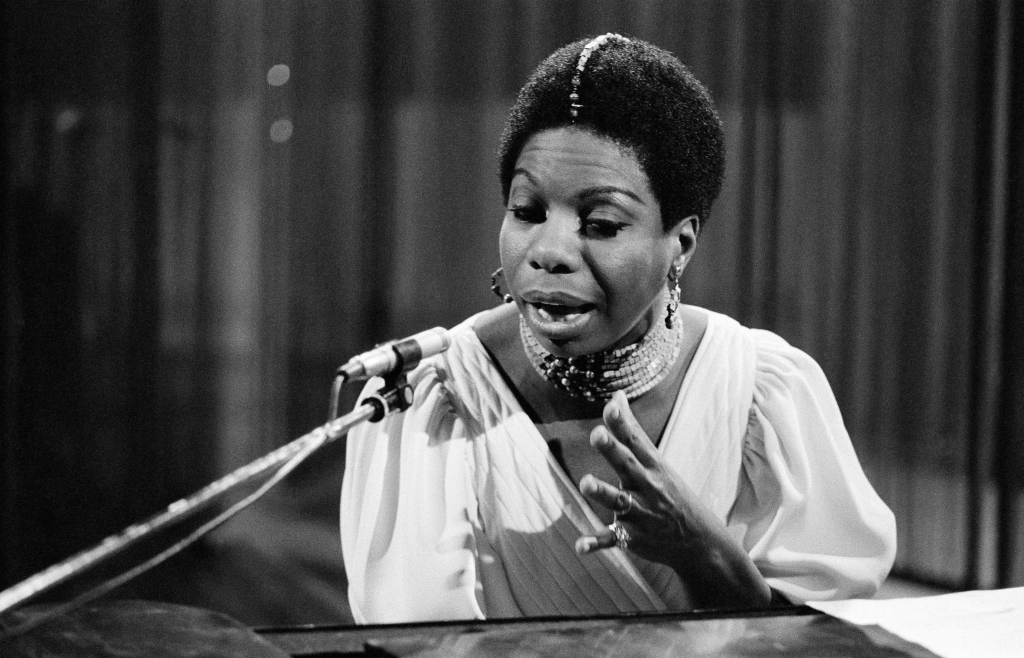
Nina Simone, London, 1968
One of Simone’s most prominent songs, Mississippi Goddam, was a direct response to systemic racial inequality in the US exemplified in the handling of the 1963 16th Street Baptist Church bombing and Medgar Evers’s murder. The song became an anthem for the civil rights movement. Photograph: Michael Putland
=====

Dolly Parton, Tennessee, 2003
Her songs, including A Woman’s Right and Coat of Many Colors, have addressed social issues, and she has been outspoken and financially generous as a philanthropist. Photograph: Clay Patrick McBride
(snip-Go See The Rest!)
Good Tidings Of Deeds & Surprises, From Jenny Lawson
Ow, my heart
Read this if you want to feel happy.
Jenny Lawson (thebloggess) Dec 09, 2025
Hello, friend!
I’m a little late on this because yesterday I opened up the James Garfield Miracle and so I’ve been giving out free stuffed animals to people who need them. It’s a weird, long story but basically an ancient taxidermied boar inspired a holiday giveaway for kids by strangers to strangers 16 years ago and we just kept doing it each year. It’s on the blog right now if you need help or want to help. Over 275 kids have been sent new plushies in the last 18 hours.

I’m giving out 150 myself and that’s funded by in part by you here in my substack and by the 2026 calendar I made with this years drawings so if you are reading here then you have already helped with this years James Garfield Miracle and I love you. I may not ever get to hug you all in person but I hope you can feel this:

I still have more stuffed animals to give out because people keep beating me to filling the wishlists and HOW AMAZING IS THAT?

There was even a person who once was a recipient as a child years ago and is now filling wishlists for others.
(Below was supposed to be another happy, sniffly image but my computer was apparently uncomfortable with my emotions and offered me this instead and it made me laugh so now you have to see it.)

Aaaanyway, I have to get back to it, but first, the drawing for this week is one I started long ago and just finished because somehow it feels really fitting.

“Together we rise, we soar, we touch the stars. We cannot quit. Together.”
I feel so lucky today.
I super crazy love you.
~ me
 Scottie's Playtime